

Characterization of rag1 mutant zebrafish leukocytes
Open accessThe DOI matches its Crossref record; 29 of the 29 references it cites were found in a registry or an index.
Abstract
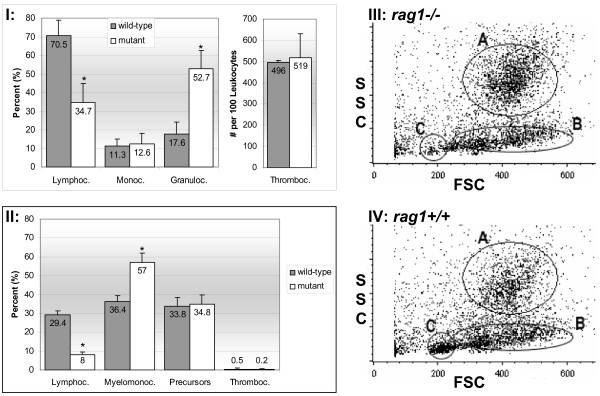
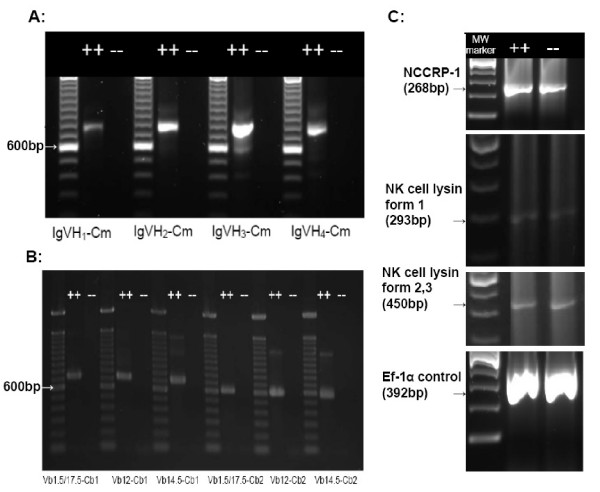
BACKGROUND: Zebrafish may prove to be one of the best vertebrate models for innate immunology. These fish have sophisticated immune components, yet rely heavily on innate immune mechanisms. Thus, the development and characterization of mutant and/or knock out zebrafish are critical to help define immune cell and immune gene functions in the zebrafish model. The use of Severe Combined Immunodeficient (SCID) and recombination activation gene 1 and 2 mutant mice has allowed the investigation of the specific contribution of innate defenses in many infectious diseases. Similar zebrafish mutants are now being used in biomedical and fish immunology related research. This report describes the leukocyte populations in a unique model, recombination activation gene 1-/- mutant zebrafish (rag1 mutants). RESULTS: Differential counts of peripheral blood leukocytes (PBL) showed that rag1 mutants had significantly decreased lymphocyte-like cell populations (34.7%) compared to wild-types (70.5%), and significantly increased granulocyte populations (52.7%) compared to wild-types (17.6%). Monocyte/macrophage populations were similar between mutants and wild-types, 12.6% and 11.3%, respectively. Differential leukocyte counts of rag1 mutant kidney hematopoietic tissue showed a significantly reduced lymphocyte-like cell population (8%), a significantly increased myelomonocyte population (57%), 34.8% precursor cells, and 0.2% thrombocytes, while wild-type hematopoietic kidney tissue showed 29.4% lymphocytes/lymphocyte-like cells, 36.4% myelomonocytes, 33.8% precursors and 0.5% thrombocytes. Flow cytometric analyses of kidney hematopoietic tissue revealed three leukocyte populations. Population A was monocytes and granulocytes and comprised 34.7% of the gated cells in rag1 mutants and 17.6% in wild-types. Population B consisted of hematopoietic precursors, and comprised 50% of the gated cells for rag1 mutants and 53% for wild-types. Population C consisted of lymphocytes and lymphocyte-like cells and comprised 7% of the gated cells in the rag1 mutants and 26% in the wild-types. Reverse transcriptase polymerase chain reaction (RT-PCR) assays demonstrated rag1 mutant kidney hematopoietic tissue expressed mRNA encoding Non-specific Cytotoxic cell receptor protein-1 (NCCRP-1) and Natural Killer (NK) cell lysin but lacked T cell receptor (TCR) and immunoglobulin (Ig) transcript expression, while wild-type kidney hematopoietic tissue expressed NCCRP-1, NK lysin, TCR and Ig transcript expression. CONCLUSION: Our study demonstrates that in comparison to wild-type zebrafish, rag1 mutants have a significantly reduced lymphocyte-like cell population that likely includes Non-specific cytotoxic cells (NCC) and NK cells (and lacks functional T and B lymphocytes), a similar macrophage/monocyte population, and a significantly increased neutrophil population. These zebrafish have comparable leukocyte populations to SCID and rag 1 and/or 2 mutant mice, that possess macrophages, natural killer cells and neutrophils, but lack T and B lymphocytes. Rag1 mutant zebrafish will provide the platform for remarkable investigations in fish and innate immunology, as rag 1 and 2 mutant mice did for mammalian immunology.
Overview
The claims and statistics of this paper haven’t been checked yet.
Free: it reads the open-access text and checks the first 5 claims that cite a source we can check. Create a free account to check every claim.
Integrity signals
Registry
Cites
Statistics
Figures
Verification
Claims the paper makes
The claims and statistics of this paper haven’t been checked yet.
Free: it reads the open-access text and checks the first 5 claims that cite a source we can check. Create a free account to check every claim.
Claims other papers make about this one
Each is checked against this paper’s own text: does it say what the citing paper says it does?
The cited source says what the claim attributes to it.
In the citing paper
“The FSC-SSC scatter plots of channel catfish ak leukocytes demonstrated cell populations comparable to those in zebrafish, carp and salmonids [30,31,32].”
From Trained Immunity Provides Long-Term Protection against Bacterial Infections in Channel Catfish (2022) · cites this paper as [30]
Self-check
Percentages, sums and reported differences re-computed from the paper’s own numbers.
The self-check needs the paper’s full text.
Citations
Cites
RAG-1-deficient mice have no mature B and T lymphocytes
Mombaerts, P., Iacomini, J., Johnson, R. S., Herrup, K., Tonegawa, S., & Papaioannou, V. E. (1992) · Cell · doi:10.1016/0092-8674(92)90030-g · Cited by 2,931
The V(D)J recombination activating gene, RAG-1
Schatz, D. G., Oettinger, M. A., & Baltimore, D. (1989) · Cell · doi:10.1016/0092-8674(89)90760-5 · Cited by 1,164 · cited 1×
“A functional RAG1 protein is required for V(D)J recombination when generating functional immunoglobulin and T cell receptor (TCR) genes [7].”
BackgroundT cell– and B cell–independent adaptive immunity mediated by natural killer cells
O'Leary, J. G., Goodarzi, M., Drayton, D. L., & von Andrian, U. H. (2006) · Nature Immunology · doi:10.1038/ni1332 · Cited by 919
Transplantation and in vivo imaging of multilineage engraftment in zebrafish bloodless mutants
Traver, D., Paw, B. H., Poss, K. D., Penberthy, W. T., Lin, S., & Zon, L. I. (2003) · Nature Immunology · doi:10.1038/ni1007 · Cited by 800 · cited 3×
“The cell populations we identified appeared to directly correlate with the four main cell populations identified by Traver [10]: erythrocytes, lymphocytes, precursors, and myelomonocytes.”
BackgroundResultThe Syntenic Relationship of the Zebrafish and Human Genomes
Barbazuk, W. B., Korf, I., Kadavi, C., Heyen, J., Tate, S., Wun, E., Bedell, J. A., McPherson, J. D., & Johnson, S. L. (2000) · Genome Research · doi:10.1101/gr.144700 · Cited by 650 · cited 1×
“Zebrafish can mount innate and adaptive immune responses much like higher vertebrates and their genome demonstrates a high degree of synteny to the human genome [1,2].”
BackgroundThe Use of Zebrafish to Understand Immunity
Trede, N. S., Langenau, D. M., Traver, D., Look, A. T., & Zon, L. I. (2004) · Immunity · doi:10.1016/s1074-7613(04)00084-6 · Cited by 603
The journal of veterinary medical science
日本獣医学会 (1991) · Medical Entomology and Zoology · Cited by 514
Lieschke, G. J., Oates, A. C., Crowhurst, M. O., Ward, A. C., & Layton, J. E. (2001) · Blood · doi:10.1182/blood.v98.10.3087 · Cited by 495
Target-Selected Inactivation of the Zebrafish rag1 Gene
Wienholds, E., Schulte-Merker, S., Walderich, B., & Plasterk, R. H. A. (2002) · Science · doi:10.1126/science.1071762 · Cited by 399
Myelopoiesis in the zebrafish, Danio rerio
Bennett, C. M., Kanki, J. P., Rhodes, J., Liu, T. X., Paw, B. H., Kieran, M. W., Langenau, D. M., Delahaye-Brown, A., Zon, L. I., Fleming, M. D., et al. (2001) · Blood · doi:10.1182/blood.v98.3.643 · Cited by 391
Research works printed but not linked: 2
- [28]RJ Roberts (ed) Fish Pathology 2001 Third London: W.B. Saunders, Harcourt Publishers Ltd
- [29]MK Stoskopf Fish Medicine 1993 Philadelphia: W.B. Saunders Company
Cited by
The zebrafish as a model to study intestinal inflammation
Brugman, S. (2016) · Developmental & Comparative Immunology · doi:10.1016/j.dci.2016.02.020 · Cited by 308
Zebrafish: Model for the Study of Inflammation and the Innate Immune Response to Infectious Diseases
Novoa, B., & Figueras, A. (2012) · Advances in Experimental Medicine and Biology · doi:10.1007/978-1-4614-0106-3_15 · Cited by 293
“Petrie-Hanson et al. (2009) have shown that in comparison to wild-type zebrafish, rag1 mutants have a significantly reduced lymphocyte-like cell population (lacking functional T and B lymphocytes) but have a similar macrophage/monocyte population and a significantly increased neutrophil population.”
ResultHost-Pathogen Interactions Made Transparent with the Zebrafish Model
H. Meijer, A., & P. Spaink, H. (2011) · Current Drug Targets · doi:10.2174/138945011795677809 · Cited by 252
“Enhanced transcription of complement and coagulation genes and increased abundance of neutrophils suggests that an enhanced innate immune response in rag1 mutant fish may compensate for having a compromised adaptive immune system [93, 94].”
BackgroundForward and Reverse Genetic Approaches for the Analysis of Vertebrate Development in the Zebrafish
Lawson, N. D., & Wolfe, S. A. (2011) · Developmental Cell · doi:10.1016/j.devcel.2011.06.007 · Cited by 179
Boehm, T. L. J., Hess, I., & Swann, J. B. (2012) · Trends in Immunology · doi:10.1016/j.it.2012.02.005 · Cited by 159
Single-cell transcriptional analysis reveals ILC-like cells in zebrafish
Hernández, P. P., Strzelecka, P. M., Athanasiadis, E. I., Hall, D., Robalo, A. F., Collins, C. M., Boudinot, P., Levraud, J.-P., & Cvejic, A. (2018) · Science Immunology · doi:10.1126/sciimmunol.aau5265 · Cited by 129
“As in mice, rag1−/− zebrafish lack T and B lymphocytes (23) but retain NK cells (24).”
BackgroundPhagocytosis by Thrombocytes is a Conserved Innate Immune Mechanism in Lower Vertebrates
Nagasawa, T., Nakayasu, C., Rieger, A. M., Barreda, D. R., Somamoto, T., & Nakao, M. (2014) · Frontiers in Immunology · doi:10.3389/fimmu.2014.00445 · Cited by 124
“While the ingesting capacity of each thrombocyte is lower than that of macrophages or neutrophils, thrombocytes are often the second most dominant blood cells after erythrocytes in the circulating blood of fish (nearly half the total phagocytes in blood as observed in the present study (43, 48, 55, 56), occasionally r…”
BackgroundGeneration of Rag1 ‐knockout immunodeficient rats and mice using engineered meganucleases
Ménoret, S., Fontanière, S., Jantz, D., Tesson, L., Thinard, R., Rémy, S., Usal, C., Ouisse, L., Fraichard, A., & Anegon, I. (2013) · The FASEB Journal · doi:10.1096/fj.12-219907 · Cited by 94
“The Rag1-KO rat displayed a phenotype comparable to that of humans (18), mice (28), and zebrafish (29) with RAG1 or RAG2 deficiencies.”
BackgroundYoon, S., Mitra, S., Wyse, C. A., Alnabulsi, A., Zou, J., Weerdenburg, E. M., van der Sar, A. M., Wang, D., Secombes, C. J., & Bird, S. (2015) · PLoS ONE · doi:10.1371/journal.pone.0126378 · Cited by 94
“These terms were used based on previous studies of zebrafish leukocytes by flow cytometry [52, 53].”
MethodZebrafish Nk-lysins: First insights about their cellular and functional diversification.
Pereiro, P., Varela, M., Díaz-Rosales, P., Romero, A., Dios, S., Figueras, A., & Novoa, B. (2015) · Developmental and Comparative Immunology · doi:10.1016/j.dci.2015.03.009 · Cited by 80
Single-cell transcriptional analysis of normal, aberrant, and malignant hematopoiesis in zebrafish
Moore, F. E., Garcia, E. G., Lobbardi, R., Jain, E., Tang, Q., Moore, J. C., Cortes, M., Molodtsov, A., Kasheta, M., Luo, C. C., et al. (2016) · Journal of Experimental Medicine · doi:10.1084/jem.20152013 · Cited by 77
“Beyond normal hematopoiesis, immune-compromised zebrafish have been developed as models of severe combined immunodeficiency (Wienholds et al., 2002; Jima et al., 2009; Petrie-Hanson et al., 2009; Tang et al., 2014).”
JUNG, I. H., KIM, D. H., YOO, D. K., BAEK, S. Y., JEONG, S. H., JUNG, D. E., PARK, S. W., & CHUNG, Y.-Y. (2018) · In Vivo · doi:10.21873/invivo.11307 · Cited by 70
Weerdenburg, E. M., Abdallah, A. M., Mitra, S., de Punder, K., van der Wel, N. N., Bird, S., Appelmelk, B. J., Bitter, W., & van der Sar, A. M. (2012) · Cellular Microbiology · doi:10.1111/j.1462-5822.2012.01755.x · Cited by 67
“Possibly, the increased numbers of granulocytes that are present in ragI-/- zebrafish (Petrie-Hanson et al., 2009) may lead to enhanced innate immunity and improved clearance of the M. marinum wild-type strain E11 that is used in this study.”
Perspectives on antigen presenting cells in zebrafish
Lewis, K. L. T., Cid, N. D., & Traver, D. J. (2014) · Developmental & Comparative Immunology · doi:10.1016/j.dci.2014.03.010 · Cited by 81
“Furthermore, Rag1 mutant fish, which completely lack B and T lymphocytes, are remarkably resistant to secondary infection and are suggested to achieve specific protective immunity through innate mechanisms (Petrie-Hanson et al., 2009; Hohn and Petrie-Hanson, 2012).”
BackgroundCharacterization of mononuclear phagocytic cells in medaka fish transgenic for a cxcr3a:gfp reporter
Aghaallaei, N., Bajoghli, B., Schwarz, H., Schorpp, M., & Boehm, T. L. J. (2010) · Proceedings of the National Academy of Sciences · doi:10.1073/pnas.1000467107 · Cited by 69
Coronado, M., Solís, C. J., Hernández, P. P., & Feijóo, C. G. (2019) · Frontiers in Immunology · doi:10.3389/fimmu.2019.00610 · Cited by 61
“The following strains of fish were used in this study: Tab5, Tg(lck:lck-eGFP) (28), Tg(lysC:DsRed) (29), Tg(mpeg1:Dendra2) (30), and rag1 mutants (31).”
MethodAli, A. O., Hohn, C. M., Allen, P. J., Ford, L., Dail, M. B., Pruett, S. B., & Petrie‐Hanson, L. (2014) · Marine Pollution Bulletin · doi:10.1016/j.marpolbul.2013.12.036 · Cited by 60
Self-citationRag1−/− Mutant Zebrafish Demonstrate Specific Protection following Bacterial Re-Exposure
Hohn, C., & Petrie-Hanson, L. (2012) · PLoS ONE · doi:10.1371/journal.pone.0044451 · Cited by 57
“ized the rag1 mutant zebrafish to confirm lack of T cell receptor (TCR) and immunoglobulin (Ig) transcript expression [19].”
BackgroundMethodSelf-citationZebrafish and Medaka: Two Teleost Models of T-Cell and Thymic Development
Bajoghli, B., Dick, A. M., Claasen, A., Doll, L., & Aghaallaei, N. (2019) · International Journal of Molecular Sciences · doi:10.3390/ijms20174179 · Cited by 58
Evaluation of visible implant elastomer tags in zebrafish (Danio rerio)
Hohn, C. M., & Petrie‐Hanson, L. (2013) · Biology Open · doi:10.1242/bio.20136460 · Cited by 51
“Wild-type and rag12/2 mutant zebrafish (Tübingen strain) were housed in the Mississippi State University College of Veterinary Medicine (MSU-CVM) specific pathogen free (SPF) fish hatchery (Hohn and Petrie-Hanson, 2007; Petrie-Hanson et al., 2009).”
MethodSelf-citationAppendage Regeneration in Vertebrates: What Makes This Possible?
Daponte, V., Tylżanowski, P., & Forlino, A. (2021) · Cells · doi:10.3390/cells10020242 · Cited by 54
“However, homozygous rag1 mutant fish, lacking functional T and B lymphocytes, reach adulthood and are fertile [162,163], suggesting that these cells are likely not necessary for an efficient immune response.”
BackgroundGarcía-Valtanen, P., Martínez-López, A., López-Muñoz, A., Bello-Perez, M., Medina-Gali, R. M., Ortega-Villaizán, M. D. M., Varela, M., Figueras, A., Mulero, V., Novoa, B., et al. (2017) · Frontiers in Immunology · doi:10.3389/fimmu.2017.00121 · Cited by 44
“In contrast, equivalent tissue sections from rag1+/+ fish showed limited leukocyte presence (Figure 5), confirming previous reports (45).”
ResultDifferentiation of zebrafish spermatogonial stem cells to functional sperm in culture
Kawasaki, T., Siegfried, K. R., & Sakai, N. (2015) · Development · doi:10.1242/dev.129643 · Cited by 52
“sox17::egfp transgenic fish (Mizoguchi et al., 2008) and rag1 mutants (rag1t26683; Wienholds et al., 2002; Petrie-Hanson et al., 2009) were provided by Dr Y. Kikuchi (Hiroshima University, Japan) and Dr L. PetrieHanson (Mississippi State University, MS, USA), respectively.motomutant fish were…”
BackgroundMethodVarela, M., Forn‐Cuní, G., Dios, S., Figueras, A. J., & Novoa, B. (2015) · Journal of Innate Immunity · doi:10.1159/000431287 · Cited by 42
A Review of Immune System Components, Cytokines, and Immunostimulants in Cultured Finfish Species
Bruce, T. J., & Brown, M. L. (2017) · Open Journal of Animal Sciences · doi:10.4236/ojas.2017.73021 · Cited by 38
Biology and functions of fish thrombocytes: A review
Ortiz, M., & Esteban, M. Á. (2024) · Fish & Shellfish Immunology · doi:10.1016/j.fsi.2024.109509 · Cited by 44
Innate lymphoid cells, mediators of tissue homeostasis, adaptation and disease tolerance
Branzk, N., Gronke, K., & Diefenbach, A. (2018) · Immunological Reviews · doi:10.1111/imr.12718 · Cited by 45
Dóró, E., Jacobs, S. H., Hammond, F. R., Schipper, H., Pieters, R. P. M., Carrington, M., Wiegertjes, G. F., & Forlenza, M. (2019) · eLife · doi:10.7554/elife.48388 · Cited by 35
Zebrafish: an animal model for research in veterinary medicine
Nowik, N., Podlasz, P., Jakimiuk, A., Kasica, N., Sienkiewicz, W., & Kaleczyc, J. (2015) · Polish Journal of Veterinary Sciences · doi:10.1515/pjvs-2015-0086 · Cited by 40
“In mutant mice, comparing to the zebrafish, levels of macrophages, natural killer cells and neutrophils are standard, but there are neither T nor B lymphocytes (Petrie-Hanson et al. 2009).”
BackgroundInfluentialTokunaga, Y., Shirouzu, M., Sugahara, R., Yoshiura, Y., Kiryu, I., Ototake, M., Nagasawa, T., Somamoto, T., & Nakao, M. (2017) · Scientific Reports · doi:10.1038/s41598-017-08000-2 · Cited by 35
A Population of Injury-Responsive Lymphoid Cells Expresses mpeg1.1 in the Adult Zebrafish Heart
Moyse, B., & Richardson, R. J. (2020) · ImmunoHorizons · doi:10.4049/immunohorizons.2000063 · Cited by 32
“1 lymphoid cells expressmarkers of ighmBcells, and their distinct lymphocyte-like morphology and abundance in hematopoietic tissues supports this finding (36, 50).”
ResultZebrafish as a model for systems biology
Mushtaq, M. Y., Verpoorte, R., & Kim, H. K. (2013) · Biotechnology and Genetic Engineering Reviews · doi:10.1080/02648725.2013.801238 · Cited by 34
Valenzuela‐Muñoz, V., Pereiro, P., Álvarez-Rodríguez, M., Gallardo‐Escárate, C., Figueras, A. J., & Novoa, B. (2019) · Scientific Reports · doi:10.1038/s41598-019-50766-0 · Cited by 28
Zebrafish Kidney Phagocytes Utilize Macropinocytosis and Ca2+-Dependent Endocytic Mechanisms
Hohn, C. M., Lee, S.-R., Pinchuk, L. M., & Petrie‐Hanson, L. (2009) · PLoS ONE · doi:10.1371/journal.pone.0004314 · Cited by 30
Self-citationExpression of T-cell markers during Atlantic halibut (Hippoglossus hippoglossus L.) ontogenesis
Øvergård, A., Fiksdal, I. U., Nerland, A. H., & Patel, S. (2010) · Developmental & Comparative Immunology · doi:10.1016/j.dci.2010.09.009 · Cited by 23
Conserved IL-2Rγc Signaling Mediates Lymphopoiesis in Zebrafish
Sertori, R., Liongue, C., Basheer, F., Lewis, K. L. T., Rasighaemi, P., de Coninck, D., Traver, D. J., & Ward, A. C. (2016) · The Journal of Immunology · doi:10.4049/jimmunol.1403060 · Cited by 26
“5, Vb12) and Ig heavy chains (igVH1, igVH4) (46, 47).”
Jung, I. H., Chung, Y.-Y., Jung, D., Kim, Y. J., Kim, D. H., Kim, K. S., & Park, S. W. (2016) · Neoplasia · doi:10.1016/j.neo.2016.06.007 · Cited by 23
“1476-5586 http://dx.doi.org/10.1016/j.neo.2016.06.007”
BackgroundInfluentialMuire, P. J., Hanson, L. A., Wills, R., & Petrie-Hanson, L. (2017) · PLOS ONE · doi:10.1371/journal.pone.0184077 · Cited by 21
Self-citationImpairment of the immune system in GH-overexpressing transgenic zebrafish (Danio rerio)
Batista, C. R., Figueiredo, M. A., Almeida, D. V., Romano, L. A., & Marins, L. F. (2014) · Fish & Shellfish Immunology · doi:10.1016/j.fsi.2013.12.022 · Cited by 24
“Moreover, RAG-1 is involved in the maturation of T and B lymphocytes [42] and IKAROS is a transcription factor regulating the differentiation of T cells [43].”
BackgroundTrained Immunity Provides Long-Term Protection against Bacterial Infections in Channel Catfish
Petrie-Hanson, L., & Peterman, A. E. (. (2022) · Pathogens · doi:10.3390/pathogens11101140 · Cited by 19
Self-citationGeneration and Characterization of a Zebrafish IL-2Rγc SCID Model
Sertori, R., Jones, R., Basheer, F., Rivera, L. R., Dawson, S. L., Loke, S., Heidary, S., Dhillon, A. S., Liongue, C., & Ward, A. C. (2022) · International Journal of Molecular Sciences · doi:10.3390/ijms23042385 · Cited by 18
“Homozygote rag1 mutants lacked mature T and B cells, but showed comparable expression of NK cell markers to wild-types indicative of a T-B-NK + SCID phenotype, consistent with their human equivalent [26].”
BackgroundMethodDinken, C. P., Keretz, K. R., Schramm, H. L., Petrie‐Hanson, L., Schilling, M. W., & Allen, P. J. (2022) · Transactions of the American Fisheries Society · doi:10.1002/tafs.10365 · Cited by 15
Self-citationWhite, D. T., Saxena, M. T., & Mumm, J. S. (2019) · Advanced Drug Delivery Reviews · doi:10.1016/j.addr.2019.01.011 · Cited by 15
“Intriguingly, depletion of adaptive immune cells (B and T cells) has little impact on viability [30] or response to secondary infection [31,32], and unlike humans, zebrafish rapidly succumb to infection in the absence of key innate signaling components [33,34].”
BackgroundCharacterization of two thymosins as immune-related genes in common carp (Cyprinus carpio L.)
Xiao, Z., Shen, J., Feng, H., Liu, H., Wang, Y., Huang, R., & Guo, Q. (2015) · Developmental & Comparative Immunology · doi:10.1016/j.dci.2015.01.003 · Cited by 14
Loss of runx1 function results in B cell immunodeficiency but not T cell in adult zebrafish
Chi, Y., Huang, Z., Chen, Q., Xiong, X., Chen, K., Xu, J., Zhang, Y., & Zhang, W. (2018) · Open Biology · doi:10.1098/rsob.180043 · Cited by 15
Fin healing and regeneration in sturgeon
Allen, P. J., Baumgartner, W. A., Brinkman, E., Devries, R. J., Stewart, H. A., Aboagye, D. L., Ramee, S. W., Ciaramella, M. A., Culpepper, C. M., & Petrie‐Hanson, L. (2018) · Journal of Fish Biology · doi:10.1111/jfb.13794 · Cited by 13
Self-citationOccurrence of foamy macrophages during the innate response of zebrafish to trypanosome infections
Jacobs, S. H., Dóró, É., Hammond, F. R., Nguyen-Chi, M., Lutfalla, G., Wiegertjes, G., & Forlenza, M. (2021) · eLife · doi:10.7554/elife.64520 · Cited by 7
Zebrafish: A Relevant Genetic Model for Human Primary Immunodeficiency (PID) Disorders?
Basheer, F., Sertori, R., Liongue, C., & Ward, A. C. (2023) · International Journal of Molecular Sciences · doi:10.3390/ijms24076468 · Cited by 11
Zebrafish Model of Severe Combined Immunodeficiency (SCID) Due to JAK3 Mutation
Basheer, F., Lee, E., Liongue, C., & Ward, A. C. (2022) · Biomolecules · doi:10.3390/biom12101521 · Cited by 9
“RT-PCR using primers specific for T cell and B cell rearrangements [34,35] showed normal T and B cell rearrangement in wild-type jak3wt/wt individuals, whereas jak3mdu9/mdu9 mutants showed no T cell rearrangement and variable B cell rearrangement (Figure 3A).”
MethodBelló-Pérez, M., Adamek, M., Coll, J. M., Figueras, A. J., Novoa, B., & Falcó, A. (2021) · Biology · doi:10.3390/biology10020078 · Cited by 9
Muire, P. J., Hanson, L. A., & Petrie‐Hanson, L. (2025) · International Journal of Molecular Sciences · doi:10.3390/ijms26030962 · Cited by 7
“A homozygous breeding colony of rag1 − / − mutant (MT) zebrafish was previously established [1] and bred at the CVM-SPF hatchery and the experimental fish were progeny from that colony.”
Self-citationStatistical Analysis Software Programs in Biomedical Research
Johnson, M. (2014) · Materials and Methods · doi:10.13070/mm.en.4.1282 · Cited by 7
Chen, S., Shih, H., Lin, S., Hsiao, C., Li, Z.-C., & Cheng, Y. (2013) · Journal of Cell Science · doi:10.1242/jcs.132613 · Cited by 6
“Other critical factors in hematopoiesis are Rag1, which is essential for the differentiation of T and B lymphocytes (Petrie-Hanson et al., 2009), and Runx1, which regulates the formation of hematopoietic progenitors, myeloid cells and the vasculature (Jin et al.”
BackgroundChen, T. T., & Chen, M. J. (2020) · Wiley eBooks · doi:10.1002/9781119143802.ch145 · Cited by 7
Salloum, Y., Gros, G., Quintero-Castillo, K., Garcia-Baudino, C., Rabahi, S., Kurup, A. J., Diabangouaya, P., Pérez-Pascual, D., Morales, R. A., Boekhorst, J., et al. (2025) · The EMBO Journal · doi:10.1038/s44318-025-00588-w · Cited by 6
“Second, we utilized rag1 -/- larvae, which lack adaptive lymphocytes but still possess ILCs (Petrie-Hanson et al, 2009). il26 levels in rag1 -/- were similar to those in WT larvae (Fig.”
Sakaguchi, H., Matsuda, M., & Iwanami, N. (2025) · Frontiers in Immunology · doi:10.3389/fimmu.2024.1517467 · Cited by 8
Peterman, B., & Petrie-Hanson, L. (2021) · Journal of Aquaculture, Marine Biology & Ecology · doi:10.37722/jambe.2021101 · Cited by 4
“These findings demonstrate that resident gut NCCs and macrophages in rag1-/- zebrafish increase in number and undergo immune-modulation or training and contribute to increased survival after exposure to an enteric pathogen four weeks post immune-modulation.”
BackgroundMethodInfluentialSelf-citationZebrafish as a Model Organism for Research in Rare Genetic Neuromuscular Diseases
Akyürek, E. E., Erba, M., Barba, F. D., Sandonà, D., & Sacchetto, R. (2025) · International Journal of Molecular Sciences · doi:10.3390/ijms26188832 · Cited by 5
Zebrafish: A Tractable Model for Analysis of T Cell Development
Sertori, R., Zhang, Y., & Wiest, D. L. (2022) · Methods in molecular biology · doi:10.1007/978-1-0716-2740-2_22 · Cited by 3
Akram, N., Ertl, R., Ghanei-Motlagh, R., Secombes, C. J., El‐Matbouli, M., Holzer, A. S., & Saleh, M. (2025) · International Journal of Molecular Sciences · doi:10.3390/ijms26178148 · Cited by 2
“RAG1 , essential for V(D)J recombination, is critical for adaptive immune cell development; its loss in zebrafish results in the deficiency of B and T cells, with only innate immunity remaining [121].”
Krishnavajhala, A., Muire, P. J., Hanson, L., Wan, H., McCarthy, F., Zhou, A., & Petrie-Hanson, L. (2017) · International Journal of Immunology · doi:10.11648/j.iji.20170502.11 · Cited by 3
“Rag1 -/- mutant zebrafish lack mature T and B cells, as do young fish, making them an excellent model to study the adaptive component of innate immunity in fish [5].”
BackgroundMethodChurchman, E. M., Lange, M. D., Sankappa, N. M., Quiroz, V. L., DeSilva, A. E., Justice, M., Abernathy, J. W., & Liles, M. R. (2025) · Fish & Shellfish Immunology · doi:10.1016/j.fsi.2025.110600 · Cited by 1
Allogeneic Transplantation of Testicular Hyperplasia in rag1 Mutant Zebrafish
Kawasaki, T., & Sakai, N. (2016) · BIO-PROTOCOL · doi:10.21769/bioprotoc.1992 · Cited by 1
Innate lymphoid cells (ILCs) in teleosts against data on ILCs in humans
Stosik, M. P., Tokarz–Deptuła, B., & Deptuła, W. (2024) · Fish & Shellfish Immunology · doi:10.1016/j.fsi.2024.109415 · Cited by 2
Novel and unscrutinized immune entities of the zebrafish gut
Andersen‐Civil, A. I. S., Mantel, M., Soh, J., Mostowy, S., Brugman, S., & Vanwalleghem, G. C. (2025) · FEBS Letters · doi:10.1002/1873-3468.70161 · Cited by 2
“Rag1 and Rag2-deficient mice with no mature T or B cells have previously been used to study ILCs, and, conveniently, T and B lymphocytes are also lacking in rag1 -deficient zebrafish [25,27].”
Chen, W., Yan, F., Qin, S., & Dong, H. (2018) · Fish Physiology and Biochemistry · doi:10.1007/s10695-018-0574-1 · Cited by 1
Sengul, E., Potts, H. G., Stockdale, W. T., Carter, R., Bevan, L., Nozdrina, M., Alonaizan, R., Hu, Z., Goodship, A., Ying, J., et al. (2025) · bioRxiv (Cold Spring Harbor Laboratory) · doi:10.1101/2025.04.24.650152 · Cited by 1
“Studies involving macrophage ablation in zebrafish and neonatal mice have focused on the early days after injury, showing that disrupting the initial macrophage influx inhibits regeneration 9,13,25,38 .”
Evolution of Adaptive Immunity
Danilova, N. (2013) · Wiley eBooks · doi:10.1002/9780470015902.a0024598
Visualising blood flagellates infections in transparent zebrafish
Jacobs, S. H. (2020) · doi:10.18174/519090
“, 2006) and are a powerful model species owing to, among others, their genetic tractability, large number of transgenic lines marking several immune cell types, knock-out mutant lines and most importantly, the transparency of developing embryos allowing high-resolution in vivo visualisation of cell behaviour (Benard e…”
BackgroundInfluential(2012) · Fish Pathology · doi:10.1002/9781118222942.refs
Umetsu, D. T. (2018) · Faculty Opinions – Post-Publication Peer Review of the Biomedical Literature · doi:10.3410/f.734444136.793553644
Mostowy, S., & Gomes, M. C. (2019) · Faculty Opinions – Post-Publication Peer Review of the Biomedical Literature · doi:10.3410/f.734444136.793555994
van Dijk, K. S. E., Begon‐Pescia, C., de Bruin, B., Özbilgiç, R., Elks, P. M., Chi, M. N., & Forlenza, M. (2026) · eLife · doi:10.7554/elife.110669
van Dijk, K. S. E., Begon‐Pescia, C., de Bruin, B., Özbilgiç, R., Elks, P. M., Chi, M. N., & Forlenza, M. (2026) · eLife · doi:10.7554/elife.110669.1
Rodriguez-Vidal, J. F., Alcaraz‐Pérez, F., Bernal-Bermúdez, B., García‐Moreno, D., Ayala, A. G., Cabas, I., Mulero, V., & Cayuela, M. L. (2026) · Research Square · doi:10.21203/rs.3.rs-11107439/v1
Metadata
- Authors
- Petrie-Hanson, L., Hohn, C., & Hanson, L.
- Affiliations
- Mississippi State University (US)
- Venue
- BMC Immunology
- Published
- 2009
- Volume
- 10
- Issue
- 1
- Pages
- 8
- ISSN
- 1471-2172 (ISSN-L)
- PMC
- PMC2645361
- OpenAlex
- W2029879701
- Cited by
- 77
- References
- 29
- Citations by year
- 2026: 3 · 2025: 8 · 2024: 2 · 2023: 2 · 2022: 5 · 2021: 4 · 2020: 3 · 2019: 7 · 2018: 7 · 2017: 5 · 2016: 4 · 2015: 7 · 2014: 5 · 2013: 4 · 2012: 5
- FWCI
- 1.63
- Type
- journal article
- Language
- en
- Open access
- gold
- doi.org
- Licence
- cc-by
- Locations
- BMC Immunology (publishedVersion, cc-by)
- PubMed Central (publishedVersion, cc-by)
- PubMed (publishedVersion)
- DOAJ (DOAJ: Directory of Open Access Journals) (submittedVersion, cc-by-sa)
- Topics
- Life Sciences › Biochemistry, Genetics and Molecular Biology › Cell Biology › Zebrafish Biomedical Research Applications
- Life Sciences › Immunology and Microbiology › Immunology › Aquaculture disease management and microbiota
- Life Sciences › Immunology and Microbiology › Immunology › Invertebrate Immune Response Mechanisms
- Keywords
- innate immunity, leukocyte populations, lymphocyte deficiency, granulocytes, myelomonocytes, hematopoietic precursors, natural killer cells, zebrafish mutant model, lymphocyte development, monocytes/macrophages
- MeSH terms
- Animals, Flow Cytometry, Gene Expression Regulation, Hematopoiesis, Kidney, Leukocyte Count, Leukocytes, Mutation, Zebrafish, Homeodomain Proteins, Reverse Transcriptase Polymerase Chain Reaction
About these checks
Registry, retraction, Cites and statistics results are computed, not judged, with one exception: a printed reference that no index lists is read once by a model before it counts as a citation error. Claims are extracted by a model and kept only when their quote appears verbatim in the text; each cited source is then checked, with a model’s help, for whether it says what the claim relies on. Those verdicts can be wrong — read the claim’s quote and the cited source before relying on one.
Statistics and arithmetic are recomputed, not judged.
Confidence bands are shown only for fields calibrated on our annotated test set. None is calibrated yet, so no band is shown.
What counts as a claim ›How we measure confidence ›How we check this ›
Are you an author, or do you see a problem with this page? Request a review
Data sources
Bibliographic data: Semantic Scholar, OpenAlex, Crossref.
Contains information from the Semantic Scholar Academic Graph Datasets, made available under the ODC Attribution License (ODC-BY 1.0).
Semantic Scholar’s data is described in: Kinney, R., et al. (2023). The Semantic Scholar Open Data Platform. arXiv:2301.10140.
