

Intestinal dysbiosis and reduced immunoglobulin-coated bacteria associated with coeliac disease in children
Open accessThe DOI matches its Crossref record; 34 of the 34 references it cites were found in a registry or an index.
Abstract
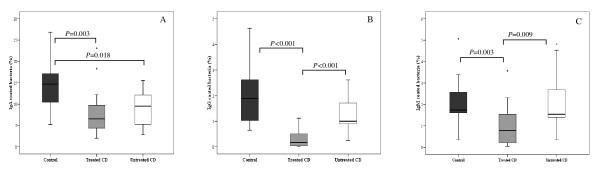
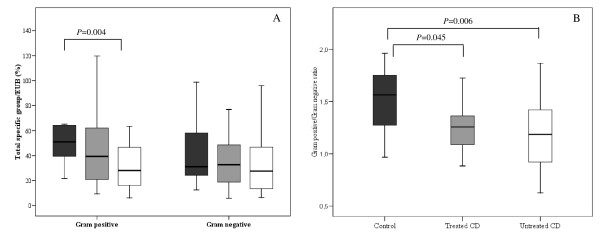
Background: Coeliac disease is a chronic intestinal inflammatory disorder due to an aberrant immune response to dietary gluten proteins in genetically predisposed individuals. Mucosal immune response through IgA secretion constitutes a first line of defence responsible for neutralizing noxious antigens and pathogens. The aim of this study was the characterization of the relationships between immunoglobulin-coated bacteria and bacterial composition of faeces of coeliac disease (CD) patients, untreated and treated with a gluten-free diet (GFD) and healthy controls. Results: IgA-coated faecal bacterial levels were significantly lower in both untreated and treated CD patients than in healthy controls. IgG and IgM-coated bacterial levels were also significantly lower in treated CD patients than in untreated CD patients and controls. Gram-positive to Gram-negative bacteria ratio was significantly reduced in both CD patients compared to controls. Bifidobacterium , Clostridium histolyticum , C. lituseburense and Faecalibacterium prausnitzii group proportions were less abundant ( P < 0.050) in untreated CD patients than in healthy controls. Bacteroides-Prevotella group proportions were more abundant ( P < 0.050) in untreated CD patients than in controls. Levels of IgA coating the Bacteroides-Prevotella group were significantly reduced ( P < 0.050) in both CD patients in comparison with healthy controls. Conclusions: In CD patients, reduced IgA-coated bacteria is associated with intestinal dysbiosis, which altogether provide new insights into the possible relationships between the gut microbiota and the host defences in this disorder.
Overview
The claims and statistics of this paper haven’t been checked yet.
Free: it reads the open-access text and checks the first 5 claims that cite a source we can check. Create a free account to check every claim.
Integrity signals
Registry
Cites
Statistics
Figures
Verification
Claims the paper makes
The claims and statistics of this paper haven’t been checked yet.
Free: it reads the open-access text and checks the first 5 claims that cite a source we can check. Create a free account to check every claim.
Claims other papers make about this one
Each is checked against this paper’s own text: does it say what the citing paper says it does?
The cited source says what the claim attributes to it.
In the citing paper
“Chronic autoimmune inflammatory diseases, including celiac disease,17 type 2 diabetes18 and obesity19 are associated with intestinal dysbiosis.”
From Probiotics and the gut microbiota in intestinal health and disease (2010) · cites this paper as [17]
Self-check
Percentages, sums and reported differences re-computed from the paper’s own numbers.
The self-check needs the paper’s full text.
Citations
Cites
Amann, R. I., Binder, B. J., Olson, R. J., Chisholm, S. W., Devereux, R., & Stahl, D. A. (1990) · Applied and Environmental Microbiology · doi:10.1128/aem.56.6.1919-1925.1990 · Cited by 4,021 · cited 1×
“The EUB 338 probe, targeting a conserved region within the bacterial domain, was used as a positive control [22] and the NON 338 probe was used as a negative control to eliminate background fluorescence [23].”
MethodGreen, P. H. R., & Jones, R. (2006) · Cited by 2,453
Reduced diversity of faecal microbiota in Crohn’s disease revealed by a metagenomic approach
Manichanh, C., Rigottier-Gois, L., Bonnaud, E., Gloux, K., Pelletier, E., Frangeul, L., Nalin, R., Jarrin, C., Chardon, P., Marteau, P., et al. (2006) · Gut · doi:10.1136/gut.2005.073817 · Cited by 2,277 · cited 1×
“Comparative analysis of biopsy and faecal samples of IBD patients, based on genomiclibrary sequencing analysis, also showed reductions in Firmicutes belonging to the class Clostridia in active and in remission Crohn’s disease patients as compared to healthy or ulcerative colitis groups [19,20].”
ResultWallner, G., Amann, R., & Beisker, W. (1993) · Cytometry · doi:10.1002/cyto.990140205 · Cited by 1,212 · cited 1×
“The EUB 338 probe, targeting a conserved region within the bacterial domain, was used as a positive control [22] and the NON 338 probe was used as a negative control to eliminate background fluorescence [23].”
MethodManz, W., Amann, R., Ludwig, W., Vancanneyt, M., & Schleifer, K.-H. (1996) · Microbiology · doi:10.1099/13500872-142-5-1097 · Cited by 1,175 · cited 1×
“Eub 338 Domain bacteria GCT GCC TCC CGT AGG AGT 50 [13] Non 338 Negative control ACA TCC TAC GGG AGG C 50 [14] Bif 164 Bifidobacterium CAT CCG GCA TTA CCA CCC 50 [24] Lab 158 Lactobacillus/Enterococcus GGT ATT AGC A(C/T)C TGT TTC CA 45 [25] Bac 303 Bacteroides/Prevotella CCA ATG TGG GGG ACC TT 45 [ 26 ] Ecol 1513 Esch…”
MethodFranks, A. H., Harmsen, H. J. M., Raangs, G. C., Jansen, G. J., Schut, F., & Welling, G. W. (1998) · Applied and Environmental Microbiology · doi:10.1128/aem.64.9.3336-3345.1998 · Cited by 1,056 · cited 2×
“... control ACA TCC TAC GGG AGG C 50 [14] Bif 164 Bifidobacterium CAT CCG GCA TTA CCA CCC 50 [24] Lab 158 Lactobacillus/Enterococcus GGT ATT AGC A(C/T)C TGT TTC CA 45 [25] Bac 303 Bacteroides/Prevotella CCA ATG TGG GGG ACC TT 45 [26] Ecol 1513 Escherichia coli CAC CGT AGT GCC TCG TCA TCA 50 [27] Chis 150 Clostridium h…”
MethodLangendijk, P. S., Schut, F., Jansen, G. J., Raangs, G. C., Kamphuis, G. R., Wilkinson, M. H., & Welling, G. W. (1995) · Applied and Environmental Microbiology · doi:10.1128/aem.61.8.3069-3075.1995 · Cited by 975
VSL#3 Probiotic-Mixture Induces Remission in Patients with Active Ulcerative Colitis
Bibiloni, R., Fedorak, R. N., Tannock, G. W., Madsen, K. L., Gionchetti, P., Campieri, M., De Simone, C., & Sartor, R. B. (2005) · The American Journal of Gastroenterology · doi:10.1111/j.1572-0241.2005.41794.x · Cited by 744 · cited 8×
“In contrast, IBD patients displayed a higher percentage of immunoglobulincoated faecal bacteria in active disease and shortly after remission, supporting the concept that the mucosal tolerance to the gut microbiota is deregulated in these patients [5].”
BackgroundInfluentialGophna, U., Sommerfeld, K., Gophna, S., Doolittle, W. F., & Veldhuyzen van Zanten, S. J. O. (2006) · Journal of Clinical Microbiology · doi:10.1128/jcm.01004-06 · Cited by 550 · cited 3×
“These components of the microbiota are producers of butyrate, which is an important energy source for colonocytes and exerts anti-inflammatory effects, for instance by inhibiting the lipopolysaccharide-induced cytokine response [19].”
BackgroundResultDrago, S., El Asmar, R., Di Pierro, M., Grazia Clemente, M., Sapone, A. T. A., Thakar, M., Iacono, G., Carroccio, A., D'Agate, C., Not, T., et al. (2006) · Scandinavian Journal of Gastroenterology · doi:10.1080/00365520500235334 · Cited by 502 · cited 2×
“Gliadin also activates the zonulin pathway leading to an increase in intestinal permeability [1].”
Background
Cited by
Items 101–200 of 336
Voisine, J., & Abadie, V. (2021) · Frontiers in Immunology · doi:10.3389/fimmu.2021.674313 · Cited by 87
Oral Versus Gastrointestinal Mucosal Immune Niches in Homeostasis and Allostasis
Suárez, L. J., Arboleda, S., Angelov, N., & Arce, R. M. (2021) · Frontiers in Immunology · doi:10.3389/fimmu.2021.705206 · Cited by 83
Verdu, E. F., & Schuppan, D. (2021) · Gastroenterology · doi:10.1053/j.gastro.2021.08.016 · Cited by 85
Novel perspectives on therapeutic modulation of the gut microbiota
McCarville, J. L., Caminero, A., & Verdu, E. F. (2016) · Therapeutic Advances in Gastroenterology · doi:10.1177/1756283x16637819 · Cited by 76
Gut-microbiota derived bioactive metabolites and their functions in host physiology
Debnath, N., Kumar, R., Kumar, A., Mehta, P. K., & Yadav, A. K. (2021) · Biotechnology and Genetic Engineering Reviews · doi:10.1080/02648725.2021.1989847 · Cited by 77
Smith‐Brown, P., Morrison, M., Krause, L., & Davies, P. S. W. (2016) · PLoS ONE · doi:10.1371/journal.pone.0161211 · Cited by 82
“Here, we found Prevotella and species related to Prevotella copri were higher in our non-secretor children and the children of non-secretor mothers, and these bacteria have also been reported to be present at higher levels in untreated Coeliac disease [46] and new onset rhematoid arthritis patients [47] but appear to…”
BackgroundYan, Y., Zhou, X., Guo, K., Zhou, F. L., & Hong-qi, Y. (2020) · Frontiers in Immunology · doi:10.3389/fimmu.2020.01125 · Cited by 76
“The Bacteroides genus is sometimes associated with health conditions (21); some of its strains such as Bacteroides dorei and Bacteroides fragilis are suggested to promote the development of diseases such as diabetes and coeliac disease (22, 23).”
BackgroundInnate immunity: Actuating the gears of celiac disease pathogenesis
Kim, S. M., Mayassi, T., & Jabrì, B. (2015) · Best Practice & Research Clinical Gastroenterology · doi:10.1016/j.bpg.2015.05.001 · Cited by 86
Janzon, A., Goodrich, J. K., Koren, O., the TEDDY Study Group, Waters, J. L., & Ley, R. E. (2019) · mSystems · doi:10.1128/msystems.00612-19 · Cited by 81
“Indeed, low levels in IgA coating of the gut microbiome in infants is associated with development of allergies and asthma during childhood (13) and with Crohn’s disease in children (14).”
BackgroundThe Microbiome in Celiac Disease
Krishnareddy, S. (2018) · Gastroenterology Clinics of North America · doi:10.1016/j.gtc.2018.09.008 · Cited by 83
Gut Microbiota Affects Sensitivity to Acute DSS-induced Colitis Independently of Host Genotype
Brinkman, B. M., Becker, A., Ayiseh, R. B., Hildebrand, F., Raes, J., Huys, G., & Vandenabeele, P. (2013) · Inflammatory Bowel Diseases · doi:10.1097/mib.0b013e3182a8759a · Cited by 72
Biase, A. R. D., Marasco, G., Ravaioli, F., Dajti, E., Colecchia, L., Righi, B., D’Amico, V., Festi, D., Iughetti, L., & Colecchia, A. (2020) · Journal of Gastroenterology and Hepatology · doi:10.1111/jgh.15183 · Cited by 80
The diagnostic and prognostic potential of gut bacteria in inflammatory bowel disease
Ocansey, D. K. W., Hang, S., Yuan, X., Qian, H., Zhou, M., Olovo, C. V., Zhang, X., & Mao, F. (2023) · Gut Microbes · doi:10.1080/19490976.2023.2176118 · Cited by 75
Caminero, A., Nistal, E., Herrán, A. R., Pérez-Andrés, J., Ferrero, M. A., Vaquero Ayala, L., Vivas, S., Ruiz de Morales, J. M. G., Albillos, S. M., & Casqueiro, F. J. (2015) · British Journal of Nutrition · doi:10.1017/s0007114515002767 · Cited by 70
Probiotics and the Microbiome in Celiac Disease: A Randomised Controlled Trial
Harnett, J., Myers, S. P., & Rolfe, M. I. (2016) · Evidence-based Complementary and Alternative Medicine · doi:10.1155/2016/9048574 · Cited by 79
“A major goal of this research is to determine the roles played by specific components of the gut microbiota in this condition and to investigate the potential for beneficial therapeutic intervention [1–10].”
BackgroundProbiotics for Celiac Disease: A Systematic Review and Meta-Analysis of Randomized Controlled Trials
Seiler, C., Kiflen, M., stefanolo, J. P., Bai, J. C., Berčík, P., Kelly, C. P., Verdu, E. F., Moayyedi, P., & Pinto-Sánchez, M. I. (2020) · The American Journal of Gastroenterology · doi:10.14309/ajg.0000000000000749 · Cited by 73
Pharmacological approaches in celiac disease
McCarville, J. L., Caminero, A., & Verdu, E. F. (2015) · Current Opinion in Pharmacology · doi:10.1016/j.coph.2015.09.002 · Cited by 81
The Gut Microbiome, Metformin, and Aging
Induri, S. N. R., Kansara, P., Thomas, S. C., Xu, F., Saxena, D. B., & Li, X. (2021) · The Annual Review of Pharmacology and Toxicology · doi:10.1146/annurev-pharmtox-051920-093829 · Cited by 71
Duerr, C. U., & Hornef, M. W. (2011) · Seminars in Immunology · doi:10.1016/j.smim.2011.11.002 · Cited by 75
“[106] De Palma G, Nadal I, Medina M, Donat E, Ribes-Koninckx C, Calabuig M, et al.”
BackgroundShi, Y., Zhao, X., Zhao, J., Zhang, H., Zhai, Q., Narbad, A., & Chen, W. (2018) · Journal of Applied Microbiology · doi:10.1111/jam.13687 · Cited by 61
“…disease (IBD), irritable bowel syndrome, necrotizing enterocolitis and chronic diarrhoea (Fouhy et al. 2012; Cox et al. 2014; Nobel et al. 2015), as well as extra-intestinal disorders such as type 2 diabetes, food allergy, asthma and obesity (Swidsinski et al. 2008b; Tannock 2008; De et al. 2010).”
BackgroundHuman Secretory IgM: An Elusive Player in Mucosal Immunity
Michaud, E., Mastrandrea, C. J., Rochereau, N., & Paul, S. (2020) · Trends in Immunology · doi:10.1016/j.it.2019.12.005 · Cited by 71
The Gut Microbiota-Host Partnership as a Potential Driver of Kawasaki Syndrome
Esposito, S., Polinori, I., & Rigante, D. (2019) · Frontiers in Pediatrics · doi:10.3389/fped.2019.00124 · Cited by 67
“have described a difference in the microbiota composition with a reduction of Bifidobacterium, Clostridium histolyticum, Clostridium lituseburense, Faecalibacterium prausnitzii, and an abundance of Bacteroides and Prevotella strains (34).”
BackgroundGarcía-Mazcorro, J. F., Rivera-Gutiérrez, X., Cobos-Quevedo, O., Grube-Pagola, P., Meixueiro-Daza, A., Hernández-Flores, K. G., Cabrera-Jorge, F. J., Vivanco-Cid, H., Dowd, S. E., & Remes-Troche, J. M. (2018) · Nutrients · doi:10.3390/nu10111641 · Cited by 67
“[60] showed interesting differences in IgA-coated fecal bacteria in treated and untreated CD patients, thus suggesting that a simple molecular characterization of microbes is not enough to fully capture the complex relationship.”
BackgroundSanz, Y. (2015) · Annals of Nutrition and Metabolism · doi:10.1159/000440991 · Cited by 62
Self-citationEkmekçiu, I., von Klitzing, E., Fiebiger, U., Neumann, C., Bächer, P., Scheffold, A., Bereswill, S., & Heimesaat, M. M. (2017) · Frontiers in Cellular and Infection Microbiology · doi:10.3389/fcimb.2017.00167 · Cited by 65
“…such as inflammatory bowel diseases (IBD; Baumgart and Carding, 2007), irritable bowel syndrome (IBS; Carroll et al., 2010), and coeliac disease (De Palma et al., 2010), as well as extra-intestinal pathologies such as allergy and asthma (Noverr and Huffnagle, 2004), arthritis (Taurog et al.,…”
BackgroundCeliac disease: should we care about microbes?
Caminero, A., & Verdu, E. F. (2019) · American Journal of Physiology-Gastrointestinal and Liver Physiology · doi:10.1152/ajpgi.00099.2019 · Cited by 64
Intestinal microbiota during early life – impact on health and disease
Nylund, L., Satokari, R., Salminen, S., & de Vos, W. M. (2014) · Proceedings of the Nutrition Society · doi:10.1017/s0029665114000627 · Cited by 59
“Microbiota dysbiosis of CD patients may be characterised by an increased microbiota diversity((152,153,160,161)), but these findings have been contradicted recently((157)).”
BackgroundGut Microbiota-Derived Metabolites in the Development of Diseases
Shen, G., Wu, J., Ye, B., & Qi, N. (2021) · Canadian Journal of Infectious Diseases and Medical Microbiology · doi:10.1155/2021/6658674 · Cited by 61
“Emerging data show that an aberrant gut microbiota composition is associated with several diseases, such as metabolic disorders and inflammatory bowel disorder (IBD) [5].”
BackgroundEffects of Diet on Gut Microbiota Profile and the Implications for Health and Disease
Lee, Y. K. (2013) · Bioscience of Microbiota Food and Health · doi:10.12938/bmfh.32.1 · Cited by 64
“Bacteroides-Prevotella, Escherichia coli, Klebsiella pneumonia and Streptococcus viridans High [38, 39]”
BackgroundSon, J. S., Khair, S., Pettet, D. W., Ouyang, N., Tian, X., Zhang, Y., Zhu, W., Mackenzie, G. G., Robertson, C. E., Ir, D., et al. (2015) · PLOS ONE · doi:10.1371/journal.pone.0127985 · Cited by 58
“with a reduction of immunoglobulin coated bacteria in humans [56, 57].”
BackgroundProteinaceous Molecules Mediating Bifidobacterium-Host Interactions
Ruíz, L., Delgado, S., Ruas‐Madiedo, P., Margollés, A., & Sánchez, B. (2016) · Frontiers in Microbiology · doi:10.3389/fmicb.2016.01193 · Cited by 60
“Levels of IgA-coated gut commensals are altered in dysbiosis states such as those described in coeliac disease (De Palma et al., 2010), inflammatory bowel disease (van der Waaij et al., 2004), or autoimmunity disorders (Talja et al., 2014).”
BackgroundImpaired selection of IgA and intestinal dysbiosis associated with PD-1-deficiency
Maruya, M., Kawamoto, S., Kato, L. M., & Fagarasan, S. (2013) · Gut Microbes · doi:10.4161/gmic.23595 · Cited by 55
Multidimensional Disadvantages of a Gluten-Free Diet in Celiac Disease: A Narrative Review
Marciniak, M., Szymczak‐Tomczak, A., Mahadea, D., Eder, P., Dobrowolska, A., & Krela‐Kaźmierczak, I. (2021) · Nutrients · doi:10.3390/nu13020643 · Cited by 64
Ryan, J. J., Monteagudo-Mera, A., Contractor, N., & Gibson, G. R. (2021) · Nutrients · doi:10.3390/nu13030938 · Cited by 59
Suskun, C., Kılıç, Ö., Çiftdoğan, D. Y., Güven, Ş., Karbuz, A., Parlakay, A. Ö., Kara, Y., Kaçmaz, E., Şahin, A., Boğa, A., et al. (2022) · European Journal of Pediatrics · doi:10.1007/s00431-022-04494-9 · Cited by 56
Rintala, A., Riikonen, I., Toivonen, A., Pietilä, S., Munukka, E., Pursiheimo, J.-P., Elo, L. L., Arikoski, P., Luopajärvi, K., Schwab, U., et al. (2018) · Scandinavian Journal of Gastroenterology · doi:10.1080/00365521.2018.1444788 · Cited by 49
“Thereby, our results suggest that 246 early fecal microbiota composition would not be associated with the pathogenesis of CD, while 247 the previous findings concerning the differences in the gut microbiota between CD patients and 248 healthy individuals might have risen for example from dietary changes after the dise…”
ResultSmall intestine and microbiota
Cotter, P. D. (2010) · Current Opinion in Gastroenterology · doi:10.1097/mog.0b013e328341dc67 · Cited by 48
Gut microbiome investigation in celiac disease: from methods to its pathogenetic role
Sacchetti, L., & Nardelli, C. (2020) · Clinical Chemistry and Laboratory Medicine (CCLM) · doi:10.1515/cclm-2019-0657 · Cited by 46
Gut microbiota as prognosis markers for patients with HBV-related acute-on-chronic liver failure
Wang, K., Zhang, Z., Mo, Z., Yang, X., Lin, B., Peng, L., Yang, X., Lei, C.-Y., Zhuang, X., Lü, L., et al. (2021) · Gut Microbes · doi:10.1080/19490976.2021.1921925 · Cited by 59
“Faecalibacterium prausnitzii depletion has been associated with several intestinal disorders including in ammatory bowel diseases[34], chronic intestinal in ammatory disorder[35], and colorectal cancer[36].”
BackgroundThe Role of Gluten in Gastrointestinal Disorders: A Review
Cenni, S., Sesenna, V., Boiardi, G., Casertano, M., Russo, G., Reginelli, A., Esposito, S., & Strisciuglio, C. (2023) · Nutrients · doi:10.3390/nu15071615 · Cited by 54
Fleck, A.-K., Schuppan, D., Wiendl, H., & Klotz, L. (2017) · International Journal of Molecular Sciences · doi:10.3390/ijms18071526 · Cited by 53
“These microbes have been described to contribute to various chronic inflammatory diseases, including IBD [141] or celiac diseases [142].”
BackgroundZonulin as a Biomarker for the Development of Celiac Disease
DaFonte, T. M., Valitutti, F., Kenyon, V., Locascio, J. J., Montuori, M., Francavilla, R., Passaro, T., Crocco, M., Norsa, L., Piemontese, P., et al. (2023) · PEDIATRICS · doi:10.1542/peds.2023-063050 · Cited by 51
Kovatcheva‐Datchary, P., Tremaroli, V., & Bäckhed, F. (2013) · Springer eBooks · doi:10.1007/978-3-642-30144-5_87 · Cited by 51
Barroso, M., Beth, S. A., Voortman, T., Jaddoe, V. W. V., van Zelm, M. C., Moll, H. A., & Jong, J. C. K. (2018) · Gastroenterology · doi:10.1053/j.gastro.2018.02.024 · Cited by 50
Gut microbiota in Celiac Disease: microbes, metabolites, pathways and therapeutics
Olshan, K. L., Leonard, M. M., Serena, G., Zomorrodi, A. R., & Fasano, A. (2020) · Expert Review of Clinical Immunology · doi:10.1080/1744666x.2021.1840354 · Cited by 50
Salivary and fecal microbiota and metabolome of celiac children under gluten-free diet
Angelis, M. D., Vannini, L., Cagno, R. D., Cavallo, N., Minervini, F., Francavilla, R., Ercolini, D., & Gobbetti, M. (2016) · International Journal of Food Microbiology · doi:10.1016/j.ijfoodmicro.2016.07.025 · Cited by 47
Joo, M.-K., Lee, J.-W., Woo, J., Kim, H. J., Kim, D., & Choi, J. (2024) · Gut Microbes · doi:10.1080/19490976.2024.2319844 · Cited by 47
Fecal and Duodenal Microbiota in Pediatric Celiac Disease
Abdukhakimova, D., Dossybayeva, K., & Poddighe, D. (2021) · Frontiers in Pediatrics · doi:10.3389/fped.2021.652208 · Cited by 45
“(20) investigated both active and treated CD children, in addition to healthy controls: they reported a significantly decreased gram+/gram– ratio in both groups of CD children, compared to controls; interestingly, treated CD children showed intermediate values between active CD children and healthy controls, but the d…”
ResultTriarico, S., Agresti, P., Rinninella, E., Mele, M. C., Romano, A., Attinà, G., Maurizi, P., Mastrangelo, S., & Ruggiero, A. (2022) · Pathogens · doi:10.3390/pathogens11040448 · Cited by 45
“A lot of studies have already analyzed the dysbiosis of the gut microbiota especially in the study of inflammatory bowel disease (IBD), celiac disease and other systemic diseases [27,28].”
BackgroundMa, B., Barathan, M., Ng, M. H., & Law, J. X. (2025) · International Journal of Molecular Sciences · doi:10.3390/ijms26073148 · Cited by 44
“Increased levels of these products have been reported in patients with CD, suggesting compromised membrane integrity and cellular health [112].”
Gut microbes and adverse food reactions: Focus on gluten related disorders
Galipeau, H. J., & Verdu, E. F. (2014) · Gut Microbes · doi:10.4161/19490976.2014.969635 · Cited by 44
“CD.(103) Analysis of specific microbial composition in feces and duodenal biopsies by real-time PCR showed that the Bacteroides and Clostridium leptum (C.”
BackgroundResultInfluentialThe microbiota as a component of the celiac disease and non-celiac gluten sensitivity
Nylund, L., Kaukinen, K., & Lindfors, K. (2016) · Clinical Nutrition Experimental · doi:10.1016/j.yclnex.2016.01.002 · Cited by 41
“in celiac disease patients [9,15], although a recent prospective study reported a complete lack of the members of phylum Bacteroidetes in celiac disease predisposed infants [16].”
BackgroundResultGluten-Free Diet and Its ‘Cousins’ in Irritable Bowel Syndrome
Rej, A., & Sanders, D. S. (2018) · Nutrients · doi:10.3390/nu10111727 · Cited by 41
Hossain, M. S., Dai, J., & Qiu, D. (2021) · Aquaculture Research · doi:10.1111/are.15178 · Cited by 44
Intestinal Microbiota in Common Chronic Inflammatory Disorders Affecting Children
Torun, A., Hupalowska, A., Trzonkowski, P., Kierkuś, J., & Pyrzyńska, B. (2021) · Frontiers in Immunology · doi:10.3389/fimmu.2021.642166 · Cited by 42
Common ground: shared risk factors for type 1 diabetes and celiac disease
Verdu, E. F., & Danska, J. S. (2018) · Nature Immunology · doi:10.1038/s41590-018-0130-2 · Cited by 39
The Role of HLA in the Association between IgA Deficiency and Celiac Disease
Poddighe, D., & Capittini, C. (2021) · Disease Markers · doi:10.1155/2021/8632861 · Cited by 43
“Indeed, in a previous study, reduced IgA-coated bacteria in CD patients were associated with intestinal dysbiosis [88].”
BackgroundKrupa‐Kozak, U., Drabińska, N., & Jarocka‐Cyrta, E. (2017) · Nutrition Journal · doi:10.1186/s12937-017-0268-z · Cited by 39
Retraction: Composition and roles of intestinal microbiota in children
Guarino, A., Wudy, A., Basile, F. W., Ruberto, E., & Buccigrossi, V. (2012) · The Journal of Maternal-Fetal & Neonatal Medicine · doi:10.3109/14767058.2012.663231 · Cited by 44
“lituseburense and Faecalibacterium prausnitzii and an abundance of Bacteroides-Prevotella were observed in cases compared to controls [25].”
BackgroundRetractedOlteanu, G., Pană, M.-A., Busnatu, Ș., Lupuliasa, D., Neacșu, S. M., Mititelu, M., Musuc, A. M., Ioniță-Mîndrican, C.-B., & Boroghină, S. C. (2024) · International Journal of Molecular Sciences · doi:10.3390/ijms25105561 · Cited by 39
Antibodies in breast milk: Pro‐bodies designed for healthy newborn development
Verhasselt, V., Tellier, J., Carsetti, R., & Tepekule, B. (2024) · Immunological Reviews · doi:10.1111/imr.13411 · Cited by 42
Francavilla, R., Cristofori, F., Vacca, M., Barone, M., & Angelis, M. D. (2020) · Expert Review of Gastroenterology & Hepatology · doi:10.1080/17474124.2020.1745630 · Cited by 39
Gut microbiota in gastrointestinal diseases during pregnancy
Liu, Z.-Z., Sun, J., & Wang, W. (2022) · World Journal of Clinical Cases · doi:10.12998/wjcc.v10.i10.2976 · Cited by 40
GATA4 controls regionalization of tissue immunity and commensal-driven immunopathology
Earley, Z. M., Lisicka, W., Sifakis, J. J., Aguirre‐Gamboa, R., Kowalczyk, A., Barlow, J. T., Shaw, D. G., Discepolo, V., Tan, I. L., Gona, S., et al. (2023) · Immunity · doi:10.1016/j.immuni.2022.12.009 · Cited by 37
“Previous reports identified decreased IgA coating of fecal bacteria in celiac patients, and an increased prevalence of celiac disease in IgA-deficient patients.(53,54) Whether GATA4 deficiency drives this IgA defect in celiac patients remains to be investigated.”
Kaliciak, I., Drogowski, K., Garczyk, A., Kopeć, S., Horwat, P., Bogdański, P., Stelmach-Mardas, M., & Mardas, M. (2022) · Nutrients · doi:10.3390/nu14102083 · Cited by 39
García‐Santisteban, I., Cilleros‐Portet, A., Moyua-Ormazabal, E., Kurilshikov, A., Zhernakova, A., García‐Etxebarria, K., Fernández‐Jiménez, N., & Bilbao, J. R. (2020) · Nutrients · doi:10.3390/nu12051420 · Cited by 36
MozafaryBazargany, M., Khonsari, M., Sokoty, L., Ejtahed, H., & Qorbani, M. (2023) · Clinical and Experimental Medicine · doi:10.1007/s10238-022-00987-x · Cited by 34
Sex chromosome chimerism and the freemartin syndrome in Rideau Arcott sheep
Brace, M. D., Peters, O., Menzies, P., King, W. A., & Nino-Soto, M. I. (2008) · Cytogenetic and Genome Research · doi:10.1159/000118752 · Cited by 38
García-Mazcorro, J. F., Noratto, G. D., & Remes-Troche, J. M. (2018) · Nutrients · doi:10.3390/nu10101421 · Cited by 41
Humoral immune responses against gut bacteria in dogs with inflammatory bowel disease
Soontararak, S., Chow, L., Johnson, V., Coy, J. W., Webb, C. B., Wennogle, S. A. J., & DOW, S. W. (2019) · PLoS ONE · doi:10.1371/journal.pone.0220522 · Cited by 33
Review article: exposure to microbes and risk of coeliac disease
Størdal, K., Kahrs, C. R., Tapia, G., Agardh, D., Kurppa, K., & Stene, L. C. (2020) · Alimentary Pharmacology & Therapeutics · doi:10.1111/apt.16161 · Cited by 36
Pierro, F. D. (2021) · Microorganisms · doi:10.3390/microorganisms9112341 · Cited by 35
“For example, the Bacteroides cluster has been correlated with nonalcoholic steatohepatitis or NASH [26], low-grade inflammation [21], colorectal cancer [27], chronic inflammatory bowel disease [28], celiac disease [29], and immuno-senescence [30].”
BackgroundHarnett, J., Myers, S. P., & Rolfe, M. I. (2017) · Gut Pathogens · doi:10.1186/s13099-017-0173-1 · Cited by 32
Celiac Disease: An Academy of Nutrition and Dietetics Evidence-Based Nutrition Practice Guideline
McDermid, J. M., Almond, M. A., Roberts, K. M., Germer, E. M., Geller, M. G., Taylor, T. A., Sinley, R. C., & Handu, D. (2023) · Journal of the Academy of Nutrition and Dietetics · doi:10.1016/j.jand.2023.07.018 · Cited by 39
Potential risk factors for celiac disease in childhood: a case-control epidemiological survey
Bittker, S. S., & Bell, K. (2019) · Clinical and Experimental Gastroenterology · doi:10.2147/ceg.s210060 · Cited by 32
“Children with active CD typically have “microbial signatures” in their microbiomes that differ from controls and have greater dysbiosis than controls.(114,115)”
BackgroundCrosstalk between gut microbiota and osteoarthritis: A critical view
Korotkyi, O., Kyriachenko, Y., Kobyliak, N. M., Falalyeyeva, T. M., & Остапченко, Л. І. (2020) · Journal of Functional Foods · doi:10.1016/j.jff.2020.103904 · Cited by 31
Michaud, E., Waeckel, L., Gayet, R., Goguyer‐Deschaumes, R., Chanut, B., Jospin, F., Bathany, K., Monnoye, M., Genet, C., Prier, A., et al. (2022) · EMBO Molecular Medicine · doi:10.15252/emmm.202115386 · Cited by 31
Chiodini, R. J., Dowd, S. E., Galandiuk, S., Davis, B. R., & Glassing, A. (2016) · Microbiology · doi:10.1099/mic.0.000336 · Cited by 33
“…dysbiosis is a common manifestation in a variety of gastrointestinal disturbances, including obesity (Cani & Delzenne, 2009), coeliac disease (De Palma et al., 2010), irritable bowel disease (Cremon et al., 2010), colorectal cancer (Pagnini et al., 2011), diet (Turnbaugh et al., 2009) and…”
BackgroundKeratins Are Altered in Intestinal Disease-Related Stress Responses
Helenius, T. O., Antman, C., Asghar, M. N., Nyström, J. H., & Toivola, D. M. (2016) · Cells · doi:10.3390/cells5030035 · Cited by 31
“Under normal conditions, the intestinal microflora consists of a balance of gram-negative and gram-positive bacteria, shifted slightly to the dominance of gram-positive bacteria [70].”
BackgroundBevilacqua, A., Costabile, A., Bergillos-Meca, T., Gonzalez, I., Landriscina, L., Ciuffreda, E., D’Agnello, P., Corbo, M. R., Sinigaglia, M., & Lamacchia, C. (2016) · PLoS ONE · doi:10.1371/journal.pone.0162770 · Cited by 30
Bocchio, F., Mancabelli, L., Milani, C., Lugli, G. A., Tarracchini, C., Longhi, G., Conto, F. D., Turroni, F., & Ventura, M. (2024) · Microbiome Research Reports · doi:10.20517/mrr.2024.52 · Cited by 49
Sex differences in zonulin in affective disorders and associations with current mood symptoms
Maget, A., Dalkner, N., Hamm, C., Bengesser, S., Fellendorf, F. T., Platzer, M., Queissner, R., Birner, A., Lenger, M., Mörkl, S., et al. (2021) · Journal of Affective Disorders · doi:10.1016/j.jad.2021.07.021 · Cited by 32
HLA-DQ: Celiac diseasevsinflammatory bowel disease
Boscá-Watts, M. M., Mínguez, M., Planelles, D., Navarro, S., Rodriguez, A., Santiago, J. M., Tosca-Cuquerella, J., & Mora, F. (2018) · World Journal of Gastroenterology · doi:10.3748/wjg.v24.i1.96 · Cited by 31
Tailoring gut immune responses with lipoteichoic acid-deficient Lactobacillus acidophilus
Lightfoot, Y. L., & Mohamadzadeh, M. (2013) · Frontiers in Immunology · doi:10.3389/fimmu.2013.00025 · Cited by 30
Maier, E., Anderson, R. C., & Roy, N. C. (2017) · Nutrients · doi:10.3390/nu9121349 · Cited by 29
Singh, P., Rawat, A., Al‐Jarrah, B., Saraswathi, S., Gad, H., Elawad, M., Hussain, K., Hendaus, M. A., Almasri, W., Malik, R. A., et al. (2021) · International Journal of Molecular Sciences · doi:10.3390/ijms22041511 · Cited by 33
Yang, J., Lin, Y., Wei, Z., Wu, Z., Zhang, Q., Hao, J., Wang, S., & Li, A. (2023) · Fishes · doi:10.3390/fishes8010030 · Cited by 28
Gut Microbiota and Its Role in Anti-aging Phenomenon: Evidence-Based Review
Li, R., & Roy, R. (2023) · Applied Biochemistry and Biotechnology · doi:10.1007/s12010-023-04423-y · Cited by 26
“The dynamic network and balance between the two cascade systems: the pro-inflammatory (the one promoting inflammation) and the anti-inflammatory (repressing inflammation) is hampered with gradual ageing [72].”
BackgroundNagy‐Szakal, D., & Kellermayer, R. (2011) · Gut Microbes · doi:10.4161/gmic.2.3.16107 · Cited by 26
Fungal Dysbiosis in Children with Celiac Disease
Mouzan, M. I. E., Al‐Hussaini, A. A., Fanelli, B. C., Assiri, A. A., Alsaleem, B., Mofarreh, M. A. A., Sarkhy, A. A. A., & Alasmi, M. (2021) · Digestive Diseases and Sciences · doi:10.1007/s10620-021-06823-8 · Cited by 25
DuPont, H. L., Jiang, Z., Alexander, A. S., Dupont, A. W., & Brown, E. L. (2022) · Microorganisms · doi:10.3390/microorganisms11010093 · Cited by 29
Majeed, M. A., Nagabhushanam, K., Mundkur, L., Paulose, S., Divakar, H., Rao, S., & Arumugam, S. (2023) · Medicine · doi:10.1097/md.0000000000033751 · Cited by 26
Expression pattern of T-helper 17 cell signaling pathway and mucosal inflammation in celiac disease
Lahdenperä, A. I., Fälth‐Magnusson, K., Högberg, L., Ludvigsson, J., & Vaarala, O. (2013) · Scandinavian Journal of Gastroenterology · doi:10.3109/00365521.2013.863966 · Cited by 27
Brazier, L., Elguero, É., Koumavor, C. K., Renaud, N., Prugnolle, F., Thomas, F., Ategbo, S., Moyen, E., Obengui, Leroy, E. M., et al. (2017) · PLoS ONE · doi:10.1371/journal.pone.0185569 · Cited by 24
Wang, Z., Liang, L., Liu, L., Wang, Z., Wang, Y., Yu, Z., Wu, B., & Chen, Y. (2023) · Microbiology Spectrum · doi:10.1128/spectrum.02819-22 · Cited by 24
Zoghi, S., Abbasi, A., Heravi, F. S., Somi, M. H., Nikniaz, Z., Moaddab, S. Y., & Leylabadlo, H. E. (2022) · Critical Reviews in Food Science and Nutrition · doi:10.1080/10408398.2022.2121262 · Cited by 32
Khan, A., Li, S., Han, H., Jin, W.-L., Ling, Z., Ji, J., Iram, S., Liu, P., Xiao, S., Salama, E., et al. (2023) · Food Research International · doi:10.1016/j.foodres.2023.112960 · Cited by 23
A review of the auditory-gut-brain axis
Graham, A. S., Ben‐Azu, B., Tremblay, M., Torre, P., Senekal, M., Laughton, B., van der Kouwe, A. J. W., Jankiewicz, M., Kaba, M., & Holmes, M. (2023) · Frontiers in Neuroscience · doi:10.3389/fnins.2023.1183694 · Cited by 23
Chiodini, R. J., Dowd, S. E., Davis, B. R., Galandiuk, S., Chamberlin, W., Kuenstner, J. T., McCallum, R. W., & Zhang, J. (2013) · Journal of Clinical Gastroenterology · doi:10.1097/mcg.0b013e31827b4f94 · Cited by 23
Shi, Y., Luo, J., Narbad, A., & Chen, Q. (2023) · Microorganisms · doi:10.3390/microorganisms11010179 · Cited by 26
Metadata
- Authors
- De Palma, G., Nadal, I., Medina, M., Donat, E., Ribes-Koninckx, C., Calabuig, M., & Sanz, Y.
- Affiliations
- Consejo Superior de Investigaciones Científicas (ES)
- Hospital Universitari i Politècnic La Fe (ES)
- Hospital General Universitario De Valencia (ES)
- Corresponding author
- Sanz, Yolanda
- Venue
- BMC Microbiology
- Published
- 2010-02-24
- Volume
- 10
- Issue
- 1
- Pages
- 63-63
- ISSN
- 1471-2180 (ISSN-L)
- PMC
- PMC2843610
- OpenAlex
- W2092648379
- Cited by
- 330
- References
- 34
- Citations by year
- 2026: 3 · 2025: 15 · 2024: 23 · 2023: 20 · 2022: 20 · 2021: 45 · 2020: 20 · 2019: 25 · 2018: 22 · 2017: 18 · 2016: 21 · 2015: 20 · 2014: 24 · 2013: 23 · 2012: 11
- FWCI
- 6.77
- Type
- journal article
- Language
- en
- Open access
- gold
- doi.org
- Licence
- cc-by
- Locations
- BMC Microbiology (publishedVersion, cc-by)
- PubMed Central (publishedVersion, cc-by)
- PubMed (publishedVersion)
- Americanae (AECID Library) (submittedVersion, cc-by-nc-sa)
- DIGITAL.CSIC (Spanish National Research Council (CSIC)) (submittedVersion)
- DOAJ (DOAJ: Directory of Open Access Journals) (submittedVersion)
- Hispana (submittedVersion)
- LA Referencia (Red Federada de Repositorios Institucionales de Publicaciones Científicas) (submittedVersion, cc-by-nc-sa)
- Funders
- Ministerio de Ciencia e Innovación (CSD2007-00063)
- Topics
- Life Sciences › Biochemistry, Genetics and Molecular Biology › Molecular Biology › Gut microbiota and health
- Health Sciences › Medicine › Gastroenterology › Celiac Disease Research and Management
- Health Sciences › Medicine › Gastroenterology › Gastrointestinal motility and disorders
- Keywords
- celiac disease, gut dysbiosis, IgA, gut microbiota, fecal bacteria, gluten-free diet, Faecalibacterium prausnitzii, Clostridium, Bifidobacterium, Gram-positive to Gram-negative ratio, mucosal immunity, children
- MeSH terms
- Antibodies, Bacterial, Bacteria, Celiac Disease, Child, Child, Preschool, Feces, Humans, Immunoglobulins, Infant, Case-Control Studies, Statistics, Nonparametric, Metagenome
About these checks
Registry, retraction, Cites and statistics results are computed, not judged, with one exception: a printed reference that no index lists is read once by a model before it counts as a citation error. Claims are extracted by a model and kept only when their quote appears verbatim in the text; each cited source is then checked, with a model’s help, for whether it says what the claim relies on. Those verdicts can be wrong — read the claim’s quote and the cited source before relying on one.
Statistics and arithmetic are recomputed, not judged.
Confidence bands are shown only for fields calibrated on our annotated test set. None is calibrated yet, so no band is shown.
What counts as a claim ›How we measure confidence ›How we check this ›
Are you an author, or do you see a problem with this page? Request a review
Data sources
Bibliographic data: Semantic Scholar, OpenAlex, Crossref.
Contains information from the Semantic Scholar Academic Graph Datasets, made available under the ODC Attribution License (ODC-BY 1.0).
Semantic Scholar’s data is described in: Kinney, R., et al. (2023). The Semantic Scholar Open Data Platform. arXiv:2301.10140.
