

Intestinal dysbiosis and reduced immunoglobulin-coated bacteria associated with coeliac disease in children
Open accessThe DOI matches its Crossref record; 34 of the 34 references it cites were found in a registry or an index.
Abstract
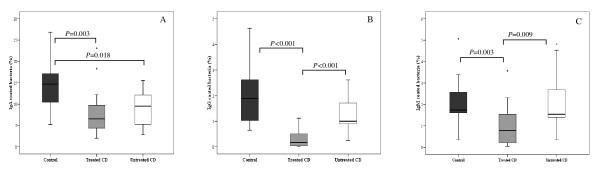
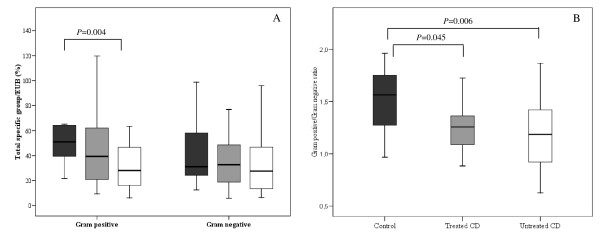
Background: Coeliac disease is a chronic intestinal inflammatory disorder due to an aberrant immune response to dietary gluten proteins in genetically predisposed individuals. Mucosal immune response through IgA secretion constitutes a first line of defence responsible for neutralizing noxious antigens and pathogens. The aim of this study was the characterization of the relationships between immunoglobulin-coated bacteria and bacterial composition of faeces of coeliac disease (CD) patients, untreated and treated with a gluten-free diet (GFD) and healthy controls. Results: IgA-coated faecal bacterial levels were significantly lower in both untreated and treated CD patients than in healthy controls. IgG and IgM-coated bacterial levels were also significantly lower in treated CD patients than in untreated CD patients and controls. Gram-positive to Gram-negative bacteria ratio was significantly reduced in both CD patients compared to controls. Bifidobacterium , Clostridium histolyticum , C. lituseburense and Faecalibacterium prausnitzii group proportions were less abundant ( P < 0.050) in untreated CD patients than in healthy controls. Bacteroides-Prevotella group proportions were more abundant ( P < 0.050) in untreated CD patients than in controls. Levels of IgA coating the Bacteroides-Prevotella group were significantly reduced ( P < 0.050) in both CD patients in comparison with healthy controls. Conclusions: In CD patients, reduced IgA-coated bacteria is associated with intestinal dysbiosis, which altogether provide new insights into the possible relationships between the gut microbiota and the host defences in this disorder.
Overview
The claims and statistics of this paper haven’t been checked yet.
Free: it reads the open-access text and checks the first 5 claims that cite a source we can check. Create a free account to check every claim.
Integrity signals
Registry
Cites
Statistics
Figures
Verification
Claims the paper makes
The claims and statistics of this paper haven’t been checked yet.
Free: it reads the open-access text and checks the first 5 claims that cite a source we can check. Create a free account to check every claim.
Claims other papers make about this one
Each is checked against this paper’s own text: does it say what the citing paper says it does?
The cited source says what the claim attributes to it.
In the citing paper
“Chronic autoimmune inflammatory diseases, including celiac disease,17 type 2 diabetes18 and obesity19 are associated with intestinal dysbiosis.”
From Probiotics and the gut microbiota in intestinal health and disease (2010) · cites this paper as [17]
Self-check
Percentages, sums and reported differences re-computed from the paper’s own numbers.
The self-check needs the paper’s full text.
Citations
Cites
Amann, R. I., Binder, B. J., Olson, R. J., Chisholm, S. W., Devereux, R., & Stahl, D. A. (1990) · Applied and Environmental Microbiology · doi:10.1128/aem.56.6.1919-1925.1990 · Cited by 4,021 · cited 1×
“The EUB 338 probe, targeting a conserved region within the bacterial domain, was used as a positive control [22] and the NON 338 probe was used as a negative control to eliminate background fluorescence [23].”
MethodGreen, P. H. R., & Jones, R. (2006) · Cited by 2,453
Reduced diversity of faecal microbiota in Crohn’s disease revealed by a metagenomic approach
Manichanh, C., Rigottier-Gois, L., Bonnaud, E., Gloux, K., Pelletier, E., Frangeul, L., Nalin, R., Jarrin, C., Chardon, P., Marteau, P., et al. (2006) · Gut · doi:10.1136/gut.2005.073817 · Cited by 2,277 · cited 1×
“Comparative analysis of biopsy and faecal samples of IBD patients, based on genomiclibrary sequencing analysis, also showed reductions in Firmicutes belonging to the class Clostridia in active and in remission Crohn’s disease patients as compared to healthy or ulcerative colitis groups [19,20].”
ResultWallner, G., Amann, R., & Beisker, W. (1993) · Cytometry · doi:10.1002/cyto.990140205 · Cited by 1,212 · cited 1×
“The EUB 338 probe, targeting a conserved region within the bacterial domain, was used as a positive control [22] and the NON 338 probe was used as a negative control to eliminate background fluorescence [23].”
MethodManz, W., Amann, R., Ludwig, W., Vancanneyt, M., & Schleifer, K.-H. (1996) · Microbiology · doi:10.1099/13500872-142-5-1097 · Cited by 1,175 · cited 1×
“Eub 338 Domain bacteria GCT GCC TCC CGT AGG AGT 50 [13] Non 338 Negative control ACA TCC TAC GGG AGG C 50 [14] Bif 164 Bifidobacterium CAT CCG GCA TTA CCA CCC 50 [24] Lab 158 Lactobacillus/Enterococcus GGT ATT AGC A(C/T)C TGT TTC CA 45 [25] Bac 303 Bacteroides/Prevotella CCA ATG TGG GGG ACC TT 45 [ 26 ] Ecol 1513 Esch…”
MethodFranks, A. H., Harmsen, H. J. M., Raangs, G. C., Jansen, G. J., Schut, F., & Welling, G. W. (1998) · Applied and Environmental Microbiology · doi:10.1128/aem.64.9.3336-3345.1998 · Cited by 1,056 · cited 2×
“... control ACA TCC TAC GGG AGG C 50 [14] Bif 164 Bifidobacterium CAT CCG GCA TTA CCA CCC 50 [24] Lab 158 Lactobacillus/Enterococcus GGT ATT AGC A(C/T)C TGT TTC CA 45 [25] Bac 303 Bacteroides/Prevotella CCA ATG TGG GGG ACC TT 45 [26] Ecol 1513 Escherichia coli CAC CGT AGT GCC TCG TCA TCA 50 [27] Chis 150 Clostridium h…”
MethodLangendijk, P. S., Schut, F., Jansen, G. J., Raangs, G. C., Kamphuis, G. R., Wilkinson, M. H., & Welling, G. W. (1995) · Applied and Environmental Microbiology · doi:10.1128/aem.61.8.3069-3075.1995 · Cited by 975
VSL#3 Probiotic-Mixture Induces Remission in Patients with Active Ulcerative Colitis
Bibiloni, R., Fedorak, R. N., Tannock, G. W., Madsen, K. L., Gionchetti, P., Campieri, M., De Simone, C., & Sartor, R. B. (2005) · The American Journal of Gastroenterology · doi:10.1111/j.1572-0241.2005.41794.x · Cited by 744 · cited 8×
“In contrast, IBD patients displayed a higher percentage of immunoglobulincoated faecal bacteria in active disease and shortly after remission, supporting the concept that the mucosal tolerance to the gut microbiota is deregulated in these patients [5].”
BackgroundInfluentialGophna, U., Sommerfeld, K., Gophna, S., Doolittle, W. F., & Veldhuyzen van Zanten, S. J. O. (2006) · Journal of Clinical Microbiology · doi:10.1128/jcm.01004-06 · Cited by 550 · cited 3×
“These components of the microbiota are producers of butyrate, which is an important energy source for colonocytes and exerts anti-inflammatory effects, for instance by inhibiting the lipopolysaccharide-induced cytokine response [19].”
BackgroundResultDrago, S., El Asmar, R., Di Pierro, M., Grazia Clemente, M., Sapone, A. T. A., Thakar, M., Iacono, G., Carroccio, A., D'Agate, C., Not, T., et al. (2006) · Scandinavian Journal of Gastroenterology · doi:10.1080/00365520500235334 · Cited by 502 · cited 2×
“Gliadin also activates the zonulin pathway leading to an increase in intestinal permeability [1].”
Background
Cited by
Rinninella, E., Raoul, P., Cintoni, M., Franceschi, F., Miggiano, G. A. D., Gasbarrini, A., & Mele, M. C. (2019) · Microorganisms · doi:10.3390/microorganisms7010014 · Cited by 3,462
Dysbiosis of the gut microbiota in disease
Carding, S., Verbeke, K., Vipond, D. T., Corfe, B. M., & Owen, L. J. (2015) · Microbial Ecology in Health & Disease · doi:10.3402/mehd.v26.26191 · Cited by 1,710
“Coeliac disease and CRC have also been associated with alterations in microbiota composition with increased diversity and richness observed compared to control subjects (41, 42).”
BackgroundFaecalibacterium prausnitzii and human intestinal health
Miquel, S., Martín, R., Rossi, O., Bermúdez-Humarán, L., Chatel, J., Sokol, H., Thomas, M., Wells, J., & Langella, P. (2013) · Current Opinion in Microbiology · doi:10.1016/j.mib.2013.06.003 · Cited by 1,228
“prausnitzii has been shown to be significantly reduced in patients [34] and after a gluten-free diet in healthy adults [35].”
BackgroundThe Human Gut Microbiome – A Potential Controller of Wellness and Disease
Kho, Z. Y., & Lal, S. K. (2018) · Frontiers in Microbiology · doi:10.3389/fmicb.2018.01835 · Cited by 1,104
Enterotypes in the landscape of gut microbial community composition
Costea, P. I., Hildebrand, F., Arumugam, M., Bäckhed, F., Blaser, M. J., Bushman, F. D., de Vos, W. M., Ehrlich, S. D., Fraser, C. M., Hattori, M., et al. (2017) · Nature Microbiology · doi:10.1038/s41564-017-0072-8 · Cited by 1,138
Fasano, A. (2011) · Physiological Reviews · doi:10.1152/physrev.00003.2008 · Cited by 1,003
Probiotics and the gut microbiota in intestinal health and disease
Gareau, M. G., Sherman, P. M., & Walker, W. A. (2010) · Nature Reviews Gastroenterology & Hepatology · doi:10.1038/nrgastro.2010.117 · Cited by 907
“Chronic autoimmune inflammatory diseases, including celiac disease”
Intestinal microbiota in human health and disease: the impact of probiotics
Gerritsen, J., Smidt, H., Rijkers, G. T., & de Vos, W. M. (2011) · Genes & Nutrition · doi:10.1007/s12263-011-0229-7 · Cited by 724
“…for at least 6 weeks 11 Patients with pouchitis, on antibiotic treatment 8 Patients with pouchitis FAP patients: 5 Patients with healthy pouches Conventional culturing Ohge et al. (2005) lituseburense and F. prausnitzii were less abundant in coeliac disease patients (De Palma et al. 2010).”
BackgroundDiet-Induced Dysbiosis of the Intestinal Microbiota and the Effects on Immunity and Disease
Brown, K., DeCoffe, D., Molcan, E., & Gibson, D. L. (2012) · Nutrients · doi:10.3390/nu4081095 · Cited by 676
“[156–159], Lactobacillus spp.”
New concepts in the generation and functions of IgA
Pabst, O. (2012) · Nature reviews. Immunology · doi:10.1038/nri3322 · Cited by 656
Antimicrobial Properties of Chitosan and Chitosan Derivatives in the Treatment of Enteric Infections
Yan, D., Li, Y., Liu, Y., Li, N., Zhang, X., & Yan, C. (2021) · Molecules · doi:10.3390/molecules26237136 · Cited by 608
“Besides, the most part of commensal bacteria is coated with low-affinity, ‘innate’ IgA [235,236].”
BackgroundDeciphering microbial interactions in synthetic human gut microbiome communities
Venturelli, O. S., Carr, A. V., Fisher, G., Hsu, R. H., Lau, R., Bowen, B. P., Hromada, S., Northen, T., & Arkin, A. P. (2018) · Molecular Systems Biology · doi:10.15252/msb.20178157 · Cited by 544
The gut microbiota influences anticancer immunosurveillance and general health
Routy, B., Gopalakrishnan, V., Daillère, R., Zitvogel, L., Wargo, J. A., & Kroemer, G. (2018) · Nature Reviews Clinical Oncology · doi:10.1038/s41571-018-0006-2 · Cited by 523
Microbial Translocation Across the GI Tract
Brenchley, J. M., & Douek, D. C. (2012) · Annual Review of Immunology · doi:10.1146/annurev-immunol-020711-075001 · Cited by 496
“Previous studies have implicated an altered balance in the composition of the microbiota (dysbiosis) in many diseases, such as obesity (16, 17), celiac disease (18), type 2 diabetes (19), atopic eczema (20, 21), asthma (22), inflammatory bowel disease (IBD) (23, 24), and chronic diarrhea (25).”
BackgroundMicrobial translocation in HIV infection: causes, consequences and treatment opportunities
Sandler, N. G., & Douek, D. C. (2012) · Nature Reviews Microbiology · doi:10.1038/nrmicro2848 · Cited by 472
Structure and function of the healthy pre-adolescent pediatric gut microbiome
Hollister, E. B., Riehle, K., Luna, R. A., Weidler, E. M., Rubio-Gonzales, M., Mistretta, T.-A., Raza, S., Doddapaneni, H. V., Metcalf, G. A., Muzny, D. M., et al. (2015) · Microbiome · doi:10.1186/s40168-015-0101-x · Cited by 406
“dorei, have been linked to abdominal infections, metabolic disease, and inflammation in the context of celiac disease and other GI disorders [33, 34].”
BackgroundSecretory IgA: Designed for Anti-Microbial Defense
Brandtzaeg, P. (2013) · Frontiers in Immunology · doi:10.3389/fimmu.2013.00222 · Cited by 378
“In human feces, some 40% of the anaerobic bacteria are normally coated with IgA (187) and this phenomenon can be observed in early childhood (188).”
BackgroundMartín, R., Miquel, S., Benevides, L., Bridonneau, C., Robert, V., Hudault, S., Chain, F., Berteau, O., Azevedo, V., Chatel, J. M., et al. (2017) · Frontiers in Microbiology · doi:10.3389/fmicb.2017.01226 · Cited by 398
“…(IBD), irritable bowel syndrome (IBS), colorectal cancer (CRC), obesity, and celiac disease among others (Balamurugan et al., 2008; Sokol et al., 2008; Neish, 2009; De Palma et al., 2010; Furet et al., 2010; Rajilic-Stojanovic et al., 2011) as well as in frail elderly (van Tongeren et al., 2005).”
BackgroundPrecup, G., & Vodnar, D.-C. (2019) · British Journal of Nutrition · doi:10.1017/s0007114519000680 · Cited by 378
Triggers and drivers of autoimmunity: lessons from coeliac disease
Sollid, L. M., & Jabri, B. (2013) · Nature Reviews Immunology · doi:10.1038/nri3407 · Cited by 331
Secretory immunity with special reference to the oral cavity
Brandtzaeg, P. (2013) · Journal of Oral Microbiology · doi:10.3402/jom.v5i0.20401 · Cited by 318
“In human feces some 40% of the anaerobic bacteria are normally coated with IgA (147) and this phenomenon can be observed in early childhood (148).”
BackgroundTurroni, F., Ventura, M., Buttó, L. F., Duranti, S., O’Toole, P. W., Motherway, M. O., & van Sinderen, D. (2014) · Cellular and Molecular Life Sciences · doi:10.1007/s00018-013-1318-0 · Cited by 336
“lituseburense, and Faecalibacterium prausnitzii, coupled to increased proportions of Bacteroidetes/Prevotella [52, 53].”
BackgroundDi Cagno, R., De Angelis, M., De Pasquale, I., Ndagijimana, M., Vernocchi, P., Ricciuti, P., Gagliardi, F., Laghi, L., Crecchio, C., Guerzoni, M. E., et al. (2011) · BMC Microbiology · doi:10.1186/1471-2180-11-219 · Cited by 317
“More in depth characterization of the GI microbiota and related metabolites is strongly needed for CD patients and the role of bacteria during CD development and treatment has to be elucidated [8,9,23].”
BackgroundThe microbiota–gut–brain axis in gastrointestinal disorders: stressed bugs, stressed brain or both?
De Palma, G., Collins, S. M., Bercik, P., & Verdu, E. F. (2014) · The Journal of Physiology · doi:10.1113/jphysiol.2014.273995 · Cited by 293
(2016) · PubMed · Cited by 287
Gut microbiota: next frontier in understanding human health and development of biotherapeutics
Prakash, S., Rodes, L., Coussa-Charley, M., Tomaro-Duchesneau, C., Tomaro-Duchesneau, C., Coussa-Charley, & Rodes (2011) · Biologics: Targets and Therapy · doi:10.2147/btt.s19099 · Cited by 256
“Fecal samples from patients with celiac disease had reduced the proportions of Bifidobacterium, Clostridium histolyticum, Clostridium lituseburense, Faecalibacterium prausnitzii, and increased proportions of Bacteroides/Prevotella.(35) In addition, increased proportions of total and Gram-negative bacteria, with an inc…”
Genome-Wide Association Studies of the Human Gut Microbiota
Davenport, E. R., Cusanovich, D. A., Michelini, K., Barreiro, L. B., Ober, C., & Gilad, Y. (2015) · PLOS ONE · doi:10.1371/journal.pone.0140301 · Cited by 251
Guandalini, S., & Assiri, A. (2014) · JAMA Pediatrics · doi:10.1001/jamapediatrics.2013.3858 · Cited by 253
Chahwan, B., Kwan, S., Isik, A., van Hemert, S., Burke, C., & Roberts, L. (2019) · Journal of Affective Disorders · doi:10.1016/j.jad.2019.04.097 · Cited by 256
Novel players in coeliac disease pathogenesis: role of the gut microbiota
Verdu, E. F., Galipeau, H. J., & Jabri, B. (2015) · Nature Reviews Gastroenterology & Hepatology · doi:10.1038/nrgastro.2015.90 · Cited by 247
Richards, J. L., Yap, Y. A., McLeod, K. H., Mackay, C. R., & Mariño, E. (2016) · Clinical & Translational Immunology · doi:10.1038/cti.2016.29 · Cited by 250
The relationship between phenolic compounds from diet and microbiota: impact on human health
Valdés, L., Cuervo, A., Salazar, N., Ruas-Madiedo, P., Gueimonde, M., & González, S. (2015) · Food & Function · doi:10.1039/c5fo00322a · Cited by 235
Martinez-Medina, M., & Garcia-Gil, L. J. (2014) · World Journal of Gastrointestinal Pathophysiology · doi:10.4291/wjgp.v5.i3.213 · Cited by 223
Ochratoxin A induces liver inflammation: involvement of intestinal microbiota
Wang, W., Zhai, S., Xia, Y., Wang, H., Ruan, D., Zhou, T., Zhu, Y., Zhang, H., Zhang, M., Ye, H., et al. (2019) · Microbiome · doi:10.1186/s40168-019-0761-z · Cited by 219
Oral microbiome: possible harbinger for children’s health
Xiao, J., Fiscella, K. A., & Gill, S. R. (2020) · International Journal of Oral Science · doi:10.1038/s41368-020-0082-x · Cited by 223
Amar, J., Lange, C., Payros, G., Garret, C., Chabo, C., Lantieri, O., Courtney, M., Marre, M., Charles, M. A., Balkau, B., et al. (2013) · PLoS ONE · doi:10.1371/journal.pone.0054461 · Cited by 219
“Indeed, a body of evidence shows that gut microbiota dysbiosis plays a key role in various diseases such as type 1 diabetes [17], bowel diseases [18,19] and celiac disease [20].”
BackgroundWacklin, P., Laurikka, P., Lindfors, K., Collin, P., Salmi, T., Lähdeaho, M.-L., Saavalainen, P., Mäki, M., Mättö, J., Kurppa, K., et al. (2014) · American Journal of Gastroenterology · doi:10.1038/ajg.2014.355 · Cited by 201
Review article: the future of microbiome‐based therapeutics
Gulliver, E. L., Young, R. B., Chonwerawong, M., D'Adamo, G. L., Thomason, T., Widdop, J. T., Rutten, E. L., Rossetto Marcelino, V., Bryant, R. V., Costello, S. P., et al. (2022) · Alimentary Pharmacology & Therapeutics · doi:10.1111/apt.17049 · Cited by 180
The developing intestinal microbiome and its relationship to health and disease in the neonate
Torrazza, R. M., & Neu, J. (2011) · Journal of Perinatology · doi:10.1038/jp.2010.172 · Cited by 191
New insights into the interactions between Blastocystis, the gut microbiota, and host immunity
Deng, L., Wojciech, L., Gascoigne, N. R. J., Peng, G., & Tan, K. S. W. (2021) · PLOS Pathogens · doi:10.1371/journal.ppat.1009253 · Cited by 180
“The increase of Bacteroides seems to be associated with lower bacterial diversity [26], colorectal cancer [27,28], celiac disease [29], and low-grade inflammation [30], showing that colonization with Blastocystismay be related to a healthy gut microbiota.”
BackgroundInvestigating the biological and clinical significance of human dysbioses
Frank, D. N., Zhu, W., Sartor, R. B., & Li, E. (2011) · Trends in Microbiology · doi:10.1016/j.tim.2011.06.005 · Cited by 175
“Indeed, recent applications of culture-independent sequencing technologies to studies of human health and disease have revealed dysbioses associated with diverse conditions, including antibiotic-associated diarrhea [5, 6], bacterial vaginosis [7–9], celiac disease [10], colorectal cancer [11, 12], cystic fibrosis [13,…”
BackgroundGut Microbiota and Celiac Disease
Marasco, G., Di Biase, A. R., Schiumerini, R., Eusebi, L. H., Iughetti, L., Ravaioli, F., Scaioli, E., Colecchia, A., & Festi, D. (2016) · Digestive Diseases and Sciences · doi:10.1007/s10620-015-4020-2 · Cited by 168
“Furthermore, an increased prevalence of CD was associated with neonatal infections [34], with modifications of the intestinal microbiota during pediatric age [35, 36] and with recurrent infections involving rotavirus [37, 38].”
BackgroundResultInfluentialNistal, E., Caminero, A., Vivas, S., Ruiz de Morales, J. M., Sáenz de Miera, L. E., Rodríguez-Aparicio, L. B., & Casqueiro, J. (2012) · Biochimie · doi:10.1016/j.biochi.2012.03.025 · Cited by 172
Duodenal-Mucosal Bacteria Associated with Celiac Disease in Children
Sánchez, E., Donat, E., Ribes-Koninckx, C., Fernández-Murga, M. L., & Sanz, Y. (2013) · Applied and Environmental Microbiology · doi:10.1128/aem.00869-13 · Cited by 171
“in CD patients compared with controls (19, 20, 48), this bacterial group was not isolated with the culture conditions applied, probably due to exposure to oxygen during the process of homogenization of biopsy specimens and the use of nonselective media for Bacteroides, which could have helped to limit the growth of le…”
BackgroundSelf-citationRhee, S. H. (2014) · Intestinal Research · doi:10.5217/ir.2014.12.2.90 · Cited by 160
“Nevertheless, a well-orchestrated balance between Gramnegative and Gram-positive bacteria is maintained in the healthy human gut with a predominance of Gram-positive bacteria.(32) Gram-negative bacteria, however, are suggested to be considerably increased in IBD patients(33-35) and accumulated at high concentrations i…”
BackgroundCeliac Disease and the Microbiome
Valitutti, F., Cucchiara, S., & Fasano, A. (2019) · Nutrients · doi:10.3390/nu11102403 · Cited by 157
D'Argenio, V., Casaburi, G., Precone, V., Pagliuca, C., Colicchio, R., Sarnataro, D., Discepolo, V., Kim, S. M., Russo, I., Del Vecchio Blanco, G., et al. (2016) · American Journal of Gastroenterology · doi:10.1038/ajg.2016.95 · Cited by 154
Caminero, A., Herrán, A. R., Nistal, E., Pérez-Andrés, J., Vaquero, L., Vivas, S., Ruiz de Morales, J. M. G., Albillos, S. M., & Casqueiro, J. (2014) · FEMS Microbiology Ecology · doi:10.1111/1574-6941.12295 · Cited by 154
“Gut microbiome involved in gluten metabolism in humans coli (Collado et al., 2009; De Palma et al., 2010; Sanz et al., 2011 ).”
Gut microbiota in various childhood disorders: Implication and indications
Saeed, N. K., Al‐Beltagi, M., Bediwy, A. S., El-Sawaf, Y., & Toema, O. (2022) · World Journal of Gastroenterology · doi:10.3748/wjg.v28.i18.1875 · Cited by 174
Duodenal microbiota composition and mucosal homeostasis in pediatric celiac disease
Cheng, J., Kalliomäki, M., Heilig, H. G., Palva, A., Lähteenoja, H., de Vos, W. M., Salojärvi, J., & Satokari, R. (2013) · BMC Gastroenterology · doi:10.1186/1471-230x-13-113 · Cited by 152
“or duodenal epithelium [12,14,15] which were not found to differ between CD and HC in this study.”
BackgroundResultOlivares, M., Castillejo, G., Varea, V., & Sanz, Y. (2014) · British Journal of Nutrition · doi:10.1017/s0007114514000609 · Cited by 149
Self-citationCrohn’s disease and the mycobacterioses: A quarter century later. Causation or simple association?
Chiodini, R. J., Chamberlin, W., Sarosiek, J., & McCallum, R. W. (2012) · Critical Reviews in Microbiology · doi:10.3109/1040841x.2011.638273 · Cited by 175
“Dysbiosis of the gastrointestinal microbiome has been described in obesity (Cani & Delzenne, 2009), coeliac disease (De Palma et al., 2010), irritable bowel syndrome (Cremon et al., 2010, Salonen et al., 2010) and colorectal cancer (Pagnini et al., 2011, Sobhani et al., 2011).”
BackgroundKellermayer, R., Dowd, S. E., Harris, R. A., Balasa, A., Schaible, T. D., Wolcott, R. D., Tatevian, N., Szigeti, R., Li, Z., Versalovic, J., et al. (2011) · The FASEB Journal · doi:10.1096/fj.10-172205 · Cited by 146
The Gut Microbiota in Celiac Disease and probiotics
Chibbar, R., & Dieleman, L. A. (2019) · Nutrients · doi:10.3390/nu11102375 · Cited by 169
“As already discussed, CeD was associated with decreased Bifidobacteria counts, lending support to the hypothesis that dysbiosis is risk factor for celiac disease [43,44].”
BackgroundResultSafarchi, A., Al-Qadami, G. H., Tran, C. D., & Conlon, M. A. (2025) · Frontiers in Microbiology · doi:10.3389/fmicb.2025.1559521 · Cited by 158
Nabavi-Rad, A., Sadeghi, A., Aghdaei, H. A., Yadegar, A., Smith, S. M., & Zali, M. R. (2022) · Gut Microbes · doi:10.1080/19490976.2022.2108655 · Cited by 156
Unraveling the Ties between Celiac Disease and Intestinal Microbiota
Sanz, Y., Palma, G. D., & Laparra, M. (2011) · International Reviews of Immunology · doi:10.3109/08830185.2011.599084 · Cited by 140
“The Bifidobacterium genus was less abundant in untreated CD patients than in healthy controls, while the Bacteroides–Prevotella group was more abundant in untreated CD patients than in controls [17].”
BackgroundResultSelf-citationCanova, C., Zabeo, V., Pitter, G., Romor, P., Baldovin, T., Zanotti, R., & Simonato, L. (2014) · American Journal of Epidemiology · doi:10.1093/aje/kwu101 · Cited by 133
Caminero, A., McCarville, J. L., Zevallos, V. F., Pigrau, M., Yu, X. B., Jury, J., Galipeau, H. J., Clarizio, A. V., Casqueiro, J., Murray, J. A., et al. (2019) · Gastroenterology · doi:10.1053/j.gastro.2019.02.028 · Cited by 136
Epigenetic Modifications of Histones in Periodontal Disease
Martins, M. D., Jiao, Y., Larsson, L., Almeida, L. O., Garaicoa‐Pazmiño, C., Le, J. M., SQUARIZE, C. H., Inohara, N., Giannobile, W. V., & CASTILHO, R. M. (2015) · Journal of Dental Research · doi:10.1177/0022034515611876 · Cited by 147
“…(dysbiosis) dynamically alter cellular and molecular events, leading to the development of periodontal disease, inflammatory bowel disease, irritable bowel syndrome, celiac disease, and colitis, among other diseases (Baumgart and Carding 2007; Kornman 2008; De Palma et al. 2010; Jiao et al. 2014).”
BackgroundThe Gastric and Intestinal Microbiome: Role of Proton Pump Inhibitors
Minalyan, A., Gabrielyan, L., Scott, D., Jacobs, J., & Pisegna, J. R. (2017) · Current Gastroenterology Reports · doi:10.1007/s11894-017-0577-6 · Cited by 127
Villa, C. R., Ward, W. E., & Comelli, E. M. (2017) · Critical Reviews in Food Science and Nutrition · doi:10.1080/10408398.2015.1010034 · Cited by 129
“…a lower ratio of Lactobacillus-Bifidobaterium to Bacteroides/PrevotellaE.coli in their duodenum compared to controls independent of whether the disease was active, although these bacterial deviations were corrected following a long-term gluten-free diet (Nadal et al., 2007; De Palma et al., 2010).”
Quagliariello, A., Aloisio, I., Bozzi Cionci, N., Luiselli, D., D’Auria, G., Martinez-Priego, L., Pérez-Villarroya, D., Langerholc, T., Primec, M., Mičetić-Turk, D., et al. (2016) · Nutrients · doi:10.3390/nu8100660 · Cited by 127
“Several studies demonstrated an increase in gram-negative bacteria, mainly belonging to the Bacteroidetes phylum, at the expense of microorganisms of the Actinobatceria and Firmicutes phyla in subjects with active disease [7,8,10], in agreement with the results registered in other chronic inflammatory gastrointestinal…”
BackgroundResultMaier, E., Anderson, R., & Roy, N. (2014) · Nutrients · doi:10.3390/nu7010045 · Cited by 112
“The health of humans is impacted by the symbiotic relationship with their microbiota, while a dysbiosis of the resident microbiota is associated with various disorders, such as inflammatory bowel diseases [1–3], colorectal cancer [4,5], coeliac disease [6] and obesity [7].”
BackgroundFreire, R. H., Ingano, L. A. M., Serena, G., Çetinbaş, M., Anselmo, A. N., Sapone, A., Sadreyev, R. I., Fasano, A., & Senger, S. (2019) · Scientific Reports · doi:10.1038/s41598-019-43426-w · Cited by 129
Implications of Diet and The Gut Microbiome in Neuroinflammatory and Neurodegenerative Diseases
Hirschberg, S., Gisevius, B., Duscha, A., & Haghikia, A. (2019) · International Journal of Molecular Sciences · doi:10.3390/ijms20123109 · Cited by 117
Chen, T.-L., Chen, S., Wu, H.-W., Lee, T.-C., Lu, Y.-Z., Wu, L.-L., Ni, Y.-H., Sun, C.-H., Yu, W.-H., Buret, A. G., et al. (2013) · Gut Pathogens · doi:10.1186/1757-4749-5-26 · Cited by 111
Primec, M., Klemenak, M., Gioia, D. D., Aloisio, I., Cionci, N. B., Quagliariello, A., Gorenjak, M., Mičetić‐Turk, D., & Langerholc, T. (2018) · Clinical Nutrition · doi:10.1016/j.clnu.2018.06.931 · Cited by 131
A microbiota-centric view of diseases of the upper gastrointestinal tract
Nardone, G., Compare, D., & Rocco, A. (2017) · The Lancet. Gastroenterology & hepatology · doi:10.1016/s2468-1253(16)30108-x · Cited by 118
Kendong, S. M. A., Ali, R. A. R., Nawawi, K. N. M., Ahmad, H. F., & Mokhtar, N. M. (2021) · Frontiers in Cellular and Infection Microbiology · doi:10.3389/fcimb.2021.744606 · Cited by 122
Masanta, W. O., Heimesaat, M. M., Bereswill, S., Tareen, A. M., Lugert, R., Groß, U., & Zautner, A. E. (2013) · Clinical and Developmental Immunology · doi:10.1155/2013/526860 · Cited by 123
Antibiotics in the pathogenesis of diabetes and inflammatory diseases of the gastrointestinal tract
Fenneman, A. C., Weidner, M., Chen, L. A., Nieuwdorp, M., & Blaser, M. J. (2022) · Nature Reviews Gastroenterology & Hepatology · doi:10.1038/s41575-022-00685-9 · Cited by 117
Kalliomäki, M., Satokari, R., Lähteenoja, H., Vähämiko, S., Grönlund, J., Routi, T., & Salminen, S. (2012) · Journal of Pediatric Gastroenterology and Nutrition · doi:10.1097/mpg.0b013e318241cfa8 · Cited by 110
Wheat/Gluten-Related Disorders and Gluten-Free Diet Misconceptions: A Review
Sabença, C., Ribeiro, M., de Sousa, T., Poeta, P. A. C. Q. D., Bagulho, A. S., & Igrejas, G. (2021) · Foods · doi:10.3390/foods10081765 · Cited by 121
Nanoparticles in the Food Industry and Their Impact on Human Gut Microbiome and Diseases
Ghebretatios, M., Schaly, S., & Prakash, S. (2021) · International Journal of Molecular Sciences · doi:10.3390/ijms22041942 · Cited by 110
“One study characterized the bacterial composition of celiac disease patients finding lower levels of IgA-coated fecal bacteria [43].”
BackgroundInfluentialMartín, R., Bermúdez-Humarán, L. G., & Langella, P. (2018) · Frontiers in Microbiology · doi:10.3389/fmicb.2018.00346 · Cited by 105
“…diseases (IBDs), irritable bowel syndrome (IBS), colorectal cancer (CRC), obesity, and celiac disease (Balamurugan et al., 2008; Sokol et al., 2008; Neish, 2009; De Palma et al., 2010; Furet et al., 2010; Rajilic-Stojanovic et al., 2011) as well as in frail elderly (van Tongeren et al., 2005).”
BackgroundConn, K. A., Borsom, E. M., & Cope, E. K. (2024) · Gut Microbes · doi:10.1080/19490976.2024.2371950 · Cited by 115
Contribution of the Intestinal Microbiota to Human Health: From Birth to 100 Years of Age
Cheng, J., Palva, A., de Vos, W. M., & Satokari, R. M. (2011) · Current topics in microbiology and immunology · doi:10.1007/82_2011_189 · Cited by 109
Type 1 Diabetes and Celiac Disease: Clinical Overlap and New Insights into Disease Pathogenesis
Cohn, A. H., Sofia, M. A., & Kupfer, S. S. (2014) · Current Diabetes Reports · doi:10.1007/s11892-014-0517-x · Cited by 105
Marasco, G., Cirota, G. G., Rossini, B., Lungaro, L., Biase, A. R. D., Colecchia, A., Volta, U., GIORGIO, R. D., Festi, D., & Caio, G. (2020) · Nutrients · doi:10.3390/nu12092674 · Cited by 103
Role of Gut Microbiota and Probiotics in Colorectal Cancer: Onset and Progression
Torres-Maravilla, E., Boucard, A.-S., Mohseni, A. H., Taghinezhad-S, S., Cortes-Perez, N. G., & Bermúdez-Humarán, L. G. (2021) · Microorganisms · doi:10.3390/microorganisms9051021 · Cited by 96
“For example, between 2018 and 2021, a search for “microbiota dysbiosis” and “diseases” in PubMed returned 5,617 published articles describing links between dysbiosis of the gut microbiota and diseases such as obesity [21], autism spectrum disorders [22], cardiovascular diseases [23], diarrhea [24], alcoholic liver dis…”
BackgroundRole of microbiota short-chain fatty acids in the pathogenesis of autoimmune diseases
Rasouli‐Saravani, A., Jahankhani, K., Moradi, S., Gorgani, M., Shafaghat, Z., Mirsanei, Z., Mehmandar‐Oskuie, A., & Mirzaei, R. (2023) · Biomedicine & Pharmacotherapy · doi:10.1016/j.biopha.2023.114620 · Cited by 107
Akobeng, A. K., Singh, P., Kumar, M., & Khodor, S. A. (2020) · European Journal of Nutrition · doi:10.1007/s00394-020-02324-y · Cited by 105
Ochratoxin A: its impact on poultry gut health and microbiota, an overview
Zhai, S., Zhu, Y., Feng, P., Li, M., Wang, W., Yang, L., & Yang, Y. (2021) · Poultry Science · doi:10.1016/j.psj.2021.101037 · Cited by 97
The gut microbiome and microbial translocation in multiple sclerosis
Mirza, A., & Mao‐Draayer, Y. (2017) · Clinical Immunology · doi:10.1016/j.clim.2017.03.001 · Cited by 99
Iino, C., Endo, T., Mikami, K., Hasegawa, T., Kimura, M., Sawada, N., Nakaji, S., & Fukuda, S. (2019) · Hepatology International · doi:10.1007/s12072-019-09987-8 · Cited by 99
“prausnitzii have been found in patients with intestinal and metabolic disorders such as inflammatory bowel diseases, irritable bowel syndrome, and celiac disease [22, 23].”
BackgroundUlluwishewa, D., Anderson, R. C., Young, W., McNabb, W. C., van Baarlen, P., Moughan, P. J., Wells, J. M., & Roy, N. C. (2015) · Cellular Microbiology · doi:10.1111/cmi.12360 · Cited by 89
“…prevalence in the microbiota of patients with inflammatory bowel disease (Swidsinski et al., 2008; Mondot et al., 2011) and coeliac disease (De Palma et al., 2010; Miquel et al., 2013) where the intestinal barrier function is known to be compromised (Vogelsang et al., 1998; Suenaert et al.,…”
BackgroundHerrán, A. R., Pérez-Andrés, J., Caminero, A., Nistal, E., Vivas, S., de Morales, J. M. R., & Casqueiro, J. (2017) · Research in Microbiology · doi:10.1016/j.resmic.2017.04.008 · Cited by 95
Gut Microbiota in Celiac Disease: Is There Any Role for Probiotics?
Pecora, F., Persico, F., Gismondi, P., Fornaroli, F., Iuliano, S., de’Angelis, G. L., & Esposito, S. (2020) · Frontiers in Immunology · doi:10.3389/fimmu.2020.00957 · Cited by 98
Blastocystis: A Mysterious Member of the Gut Microbiome
Aykur, M., Malatyalı, E., Demirel, F., Koçak, B. C., Gentekaki, E., Tsaousis, A. D., & Al, F. D. (2024) · Microorganisms · doi:10.3390/microorganisms12030461 · Cited by 99
“Additionally, the increase in Bacteroides in the gut microbiome in people with various diseases, such as celiac disease and colorectal cancer, appears to be associated with low bacterial diversity [124–127].”
BackgroundArasaradnam, R. P., Westenbrink, E. W., McFarlane, M. J., Harbord, R., Chambers, S., O’Connell, N., Bailey, C., Nwokolo, C. U., Bardhan, K. D., Savage, R. S., et al. (2014) · PLoS ONE · doi:10.1371/journal.pone.0107312 · Cited by 92
“This suggests a possible role for gut microflora dysbiosis in the pathophysiology of coeliac disease which has been found in several studies including paediatric coeliac disease [29,30,31,32].”
ResultCeliac Disease and Neurological Manifestations: From Gluten to Neuroinflammation
Giuffrè, M., Gazzin, S., Zoratti, C., Llido, J. P., Lanza, G., Tiribelli, C., & Moretti, R. (2022) · International Journal of Molecular Sciences · doi:10.3390/ijms232415564 · Cited by 93
The role of the microbiome in gastrointestinal inflammation
Sanders, D. J., Inniss, S., Sebepos‐Rogers, G., Rahman, F. Z., & Smith, A. M. (2021) · Bioscience Reports · doi:10.1042/bsr20203850 · Cited by 91
Drabińska, N., Jarocka‐Cyrta, E., Markiewicz, L. H., & Krupa‐Kozak, U. (2018) · Nutrients · doi:10.3390/nu10020201 · Cited by 85
“It has also been suggested that a gluten-free diet (GFD) itself can cause changes in the composition of intestinal bacteria [8,9].”
BackgroundCristofori, F., Indrio, F., Miniello, V. L., De Angelis, M., & Francavilla, R. (2018) · Nutrients · doi:10.3390/nu10121824 · Cited by 76
Zafeiropoulou, K., Nichols, B., Mackinder, M., Biskou, O., Rizou, E., Karanikolou, A., Clark, C., Buchanan, E., Cardigan, T., Duncan, H., et al. (2020) · Gastroenterology · doi:10.1053/j.gastro.2020.08.007 · Cited by 95
Nistal, E., Caminero, A., Herrán, A. R., Pérez-Andres, J., Vivas, S., Ruiz de Morales, J. M., Sáenz de Miera, L. E., & Casqueiro, J. (2016) · Journal of Applied Microbiology · doi:10.1111/jam.13111 · Cited by 79
“Several studies have shown alterations in specific bacterial groups in the small intestinal mucosa of children with CD, supporting that CD is associated with intestinal dysbiosis (Nadal et al. 2007; Collado et al. 2008, 2009; De Palma et al. 2010; Lorenzo Pisarello et al. 2015).”
BackgroundIm, E., Riegler, F. M., Pothoulakis, C., & Rhee, S. H. (2012) · American Journal of Physiology-Gastrointestinal and Liver Physiology · doi:10.1152/ajpgi.00120.2012 · Cited by 79
Wu, H., Wang, J., Teng, T., Yin, B., He, Y., Jiang, Y., Liu, X., Yu, Y., Li, X., & Zhou, X. (2022) · Journal of Affective Disorders · doi:10.1016/j.jad.2022.11.058 · Cited by 81
Dietary Gluten as a Conditioning Factor of the Gut Microbiota in Celiac Disease
Bascuñán, K. A., Araya, M., Roncoroni, L., Doneda, L., & Elli, L. (2019) · Advances in Nutrition · doi:10.1093/advances/nmz080 · Cited by 89
Metadata
- Authors
- De Palma, G., Nadal, I., Medina, M., Donat, E., Ribes-Koninckx, C., Calabuig, M., & Sanz, Y.
- Affiliations
- Consejo Superior de Investigaciones Científicas (ES)
- Hospital Universitari i Politècnic La Fe (ES)
- Hospital General Universitario De Valencia (ES)
- Corresponding author
- Sanz, Yolanda
- Venue
- BMC Microbiology
- Published
- 2010-02-24
- Volume
- 10
- Issue
- 1
- Pages
- 63-63
- ISSN
- 1471-2180 (ISSN-L)
- PMC
- PMC2843610
- OpenAlex
- W2092648379
- Cited by
- 330
- References
- 34
- Citations by year
- 2026: 3 · 2025: 15 · 2024: 23 · 2023: 20 · 2022: 20 · 2021: 45 · 2020: 20 · 2019: 25 · 2018: 22 · 2017: 18 · 2016: 21 · 2015: 20 · 2014: 24 · 2013: 23 · 2012: 11
- FWCI
- 6.77
- Type
- journal article
- Language
- en
- Open access
- gold
- doi.org
- Licence
- cc-by
- Locations
- BMC Microbiology (publishedVersion, cc-by)
- PubMed Central (publishedVersion, cc-by)
- PubMed (publishedVersion)
- Americanae (AECID Library) (submittedVersion, cc-by-nc-sa)
- DIGITAL.CSIC (Spanish National Research Council (CSIC)) (submittedVersion)
- DOAJ (DOAJ: Directory of Open Access Journals) (submittedVersion)
- Hispana (submittedVersion)
- LA Referencia (Red Federada de Repositorios Institucionales de Publicaciones Científicas) (submittedVersion, cc-by-nc-sa)
- Funders
- Ministerio de Ciencia e Innovación (CSD2007-00063)
- Topics
- Life Sciences › Biochemistry, Genetics and Molecular Biology › Molecular Biology › Gut microbiota and health
- Health Sciences › Medicine › Gastroenterology › Celiac Disease Research and Management
- Health Sciences › Medicine › Gastroenterology › Gastrointestinal motility and disorders
- Keywords
- celiac disease, gut dysbiosis, IgA, gut microbiota, fecal bacteria, gluten-free diet, Faecalibacterium prausnitzii, Clostridium, Bifidobacterium, Gram-positive to Gram-negative ratio, mucosal immunity, children
- MeSH terms
- Antibodies, Bacterial, Bacteria, Celiac Disease, Child, Child, Preschool, Feces, Humans, Immunoglobulins, Infant, Case-Control Studies, Statistics, Nonparametric, Metagenome
About these checks
Registry, retraction, Cites and statistics results are computed, not judged, with one exception: a printed reference that no index lists is read once by a model before it counts as a citation error. Claims are extracted by a model and kept only when their quote appears verbatim in the text; each cited source is then checked, with a model’s help, for whether it says what the claim relies on. Those verdicts can be wrong — read the claim’s quote and the cited source before relying on one.
Statistics and arithmetic are recomputed, not judged.
Confidence bands are shown only for fields calibrated on our annotated test set. None is calibrated yet, so no band is shown.
What counts as a claim ›How we measure confidence ›How we check this ›
Are you an author, or do you see a problem with this page? Request a review
Data sources
Bibliographic data: Semantic Scholar, OpenAlex, Crossref.
Contains information from the Semantic Scholar Academic Graph Datasets, made available under the ODC Attribution License (ODC-BY 1.0).
Semantic Scholar’s data is described in: Kinney, R., et al. (2023). The Semantic Scholar Open Data Platform. arXiv:2301.10140.
