

The DOI matches its Crossref record; 63 of the 63 references it cites were found in a registry or an index.
Duodenal and faecal microbiota of celiac children: molecular, phenotype and metabolome characterization
Open accessAbstract
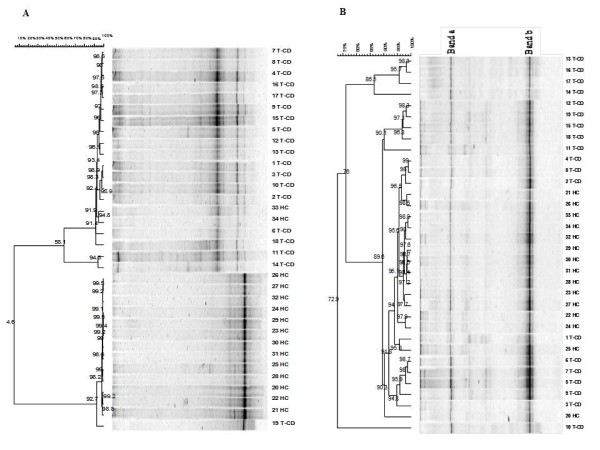
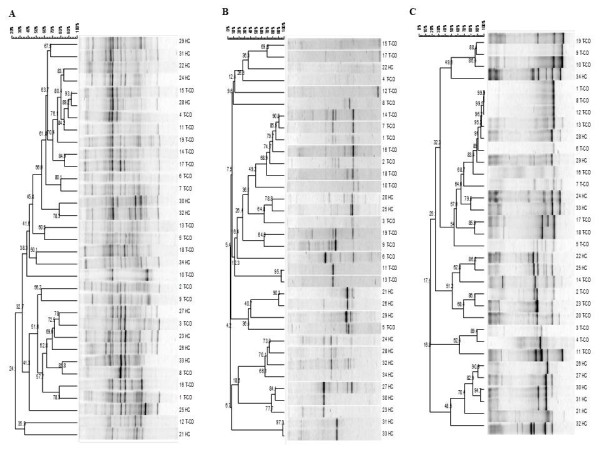
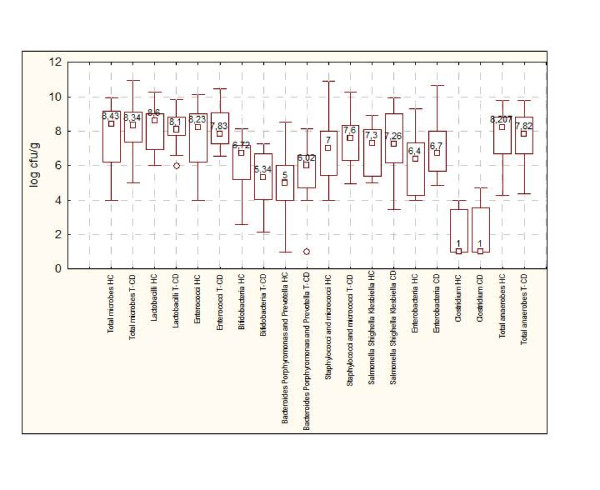
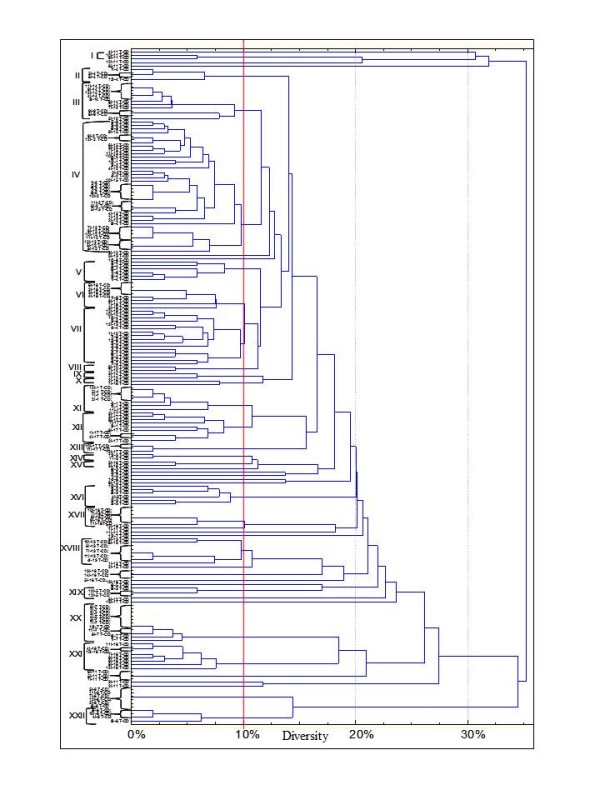
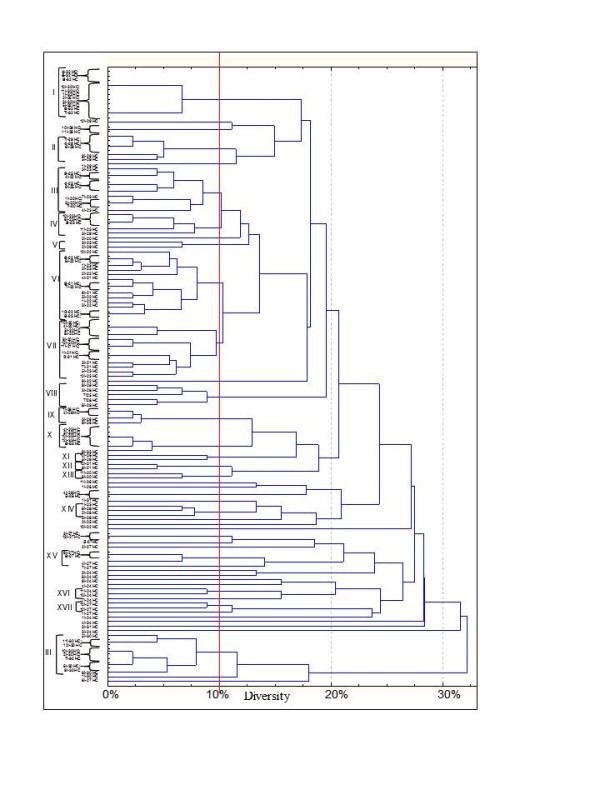
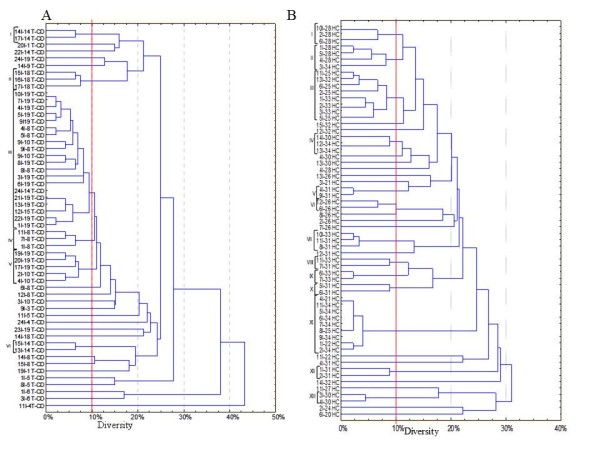
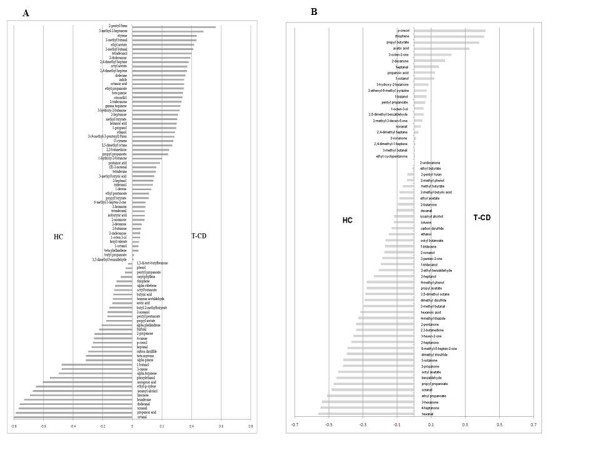
Background: Epidemiology of celiac disease (CD) is increasing. CD mainly presents in early childhood with small intestinal villous atrophy and signs of malabsorption. Compared to healthy individuals, CD patients seemed to be characterized by higher numbers of Gram-negative bacteria and lower numbers Gram-positive bacteria. Results: This study aimed at investigating the microbiota and metabolome of 19 celiac disease children under gluten-free diet (treated celiac disease, T-CD) and 15 non-celiac children (HC). PCR-denaturing gradient gel electrophoresis (DGGE) analyses by universal and group-specific primers were carried out in duodenal biopsies and faecal samples. Based on the number of PCR-DGGE bands, the diversity of Eubacteria was the higher in duodenal biopsies of T-CD than HC children. Bifidobacteria were only found in faecal samples. With a few exceptions, PCR-DGGE profiles of faecal samples for Lactobacillus and Bifidobacteria differed between T-CD and HC. As shown by culture-dependent methods, the levels of Lactobacillus , Enterococcus and Bifidobacteria were confirmed to be significantly higher ( P = 0.028; P = 0.019; and P = 0.023, respectively) in fecal samples of HC than in T-CD children. On the contrary, cell counts (CFU/ml) of presumptive Bacteroides , Staphylococcus , Salmonella , Shighella and Klebsiella were significantly higher ( P = 0.014) in T-CD compared to HC children. Enterococcus faecium and Lactobacillus plantarum were the species most diffusely identified. This latter species was also found in all duodenal biopsies of T-CD and HC children. Other bacterial species were identified only in T-CD or HC faecal samples. As shown by Randomly Amplified Polymorphic DNA-PCR analysis, the percentage of strains identified as lactobacilli significantly ( P = 0.011) differed between T-CD (ca. 26.5%) and HC (ca. 34.6%) groups. The metabolome of T-CD and HC children was studied using faecal and urine samples which were analyzed by gas-chromatography mass spectrometry-solid-phase microextraction and 1 H-Nuclear Magnetic Resonance. As shown by Canonical Discriminant Analysis of Principal Coordinates, the levels of volatile organic compounds and free amino acids in faecal and/or urine samples were markedly affected by CD. Conclusion: As shown by the parallel microbiology and metabolome approach, the gluten-free diet lasting at least two years did not completely restore the microbiota and, consequently, the metabolome of CD children. Some molecules (e.g., ethyl-acetate and octyl-acetate, some short chain fatty acids and free amino acids, and glutamine) seems to be metabolic signatures of CD.
Overview
The claims and statistics of this paper haven’t been checked yet.
Run the check — free, no account needed. It reads the open-access text and checks the sources it cites.
Integrity signals
Registry
Cites
Statistics
Figures
Verification
Claims the paper makes
The claims and statistics of this paper haven’t been checked yet.
Run the check — free, no account needed. It reads the open-access text and checks the sources it cites.
Claims other papers make about this one
Each is checked against this paper’s own text: does it say what the citing paper says it does?
In the citing paper
“Evidences on healthy subjects showed that gluten-free diet has been associated with the reduction of beneficial gut bacteria populations, the increase in opportunistic pathogens and with immune-suppressive effects [100,101,102].”
From Autism, Gastrointestinal Symptoms and Modulation of Gut Microbiota by Nutritional Interventions (2019) · cites this paper as [101]
Self-check
Percentages, sums and reported differences re-computed from the paper’s own numbers.
The self-check needs the paper’s full text.
Citations
Cites
Gentleman R: R: A language for data analysis and graphics
Ihaka, R., & Gentleman, R. (1996) · Journal of Computational and Graphical Statistics · doi:10.1080/10618600.1996.10474713 · Cited by 11,747
Muyzer, G., de Waal, E. C., & Uitterlinden, A. G. (1993) · Applied and Environmental Microbiology · doi:10.1128/aem.59.3.695-700.1993 · Cited by 11,490
Cani, P. D., Bibiloni, R., Knauf, C., Waget, A., Neyrinck, A. M., Delzenne, N. M., & Burcelin, R. (2008) · Diabetes · doi:10.2337/db07-1403 · Cited by 4,819
Molecular Microbial Ecology Manual
Microbioly, N. S. I. (1996) · Springer eBooks · doi:10.1007/978-94-009-0215-2 · Cited by 1,692
van Gelder, H. A. E. (1961) · Springer eBooks · doi:10.1007/978-94-011-9562-1_10 · Cited by 1,657
Mucosal flora in inflammatory bowel disease
Swidsinski, A. V., Ladhoff, A., Pernthaler, A., Swidsinski, S., Loening-Baucke, V. A., Ortner, M., Weber, J., Hoffmann, U., Schreiber, S., Dietel, M., et al. (2002) · Gastroenterology · doi:10.1053/gast.2002.30294 · Cited by 1,344
Dysbiosis of the faecal microbiota in patients with Crohn’s disease and their unaffected relatives
Joossens, M., Huys, G., Cnockaert, M., De Preter, V., Verbeke, K., Rutgeerts, P., Vandamme, P., & Vermeire, S. (2011) · Gut · doi:10.1136/gut.2010.223263 · Cited by 1,063
Sartor, R. B. (2004) · Gastroenterology · doi:10.1053/j.gastro.2004.03.024 · Cited by 1,053
Molecular Microbial Ecology Manual
Kowalchuk, G. A., de Bruijn, F. J., Head, I. M., Akkermans, A. D. L., & van, E. J. (2004) · Springer eBooks · doi:10.1007/978-1-4020-2177-0 · Cited by 808
Walter, J., Hertel, C., Tannock, G. W., Lis, C. M., Munro, K., & Hammes, W. P. (2001) · Applied and Environmental Microbiology · doi:10.1128/aem.67.6.2578-2585.2001 · Cited by 782
Cited by
Sorted by citations
The ecology of the microbiome: Networks, competition, and stability
Coyte, K. Z., Schlüter, J., & Foster, K. R. (2015) · Science · doi:10.1126/science.aad2602 · Cited by 2,812
Dysbiosis and the immune system
Levy, M., Kolodziejczyk, A. A., Thaiss, C. A., & Elinav, E. (2017) · Nature Reviews Immunology · doi:10.1038/nri.2017.7 · Cited by 1,769
De Angelis, M., Piccolo, M., Vannini, L., Siragusa, S., De Giacomo, A., Serrazzanetti, D. I., Cristofori, F., Guerzoni, M. E., Gobbetti, M., & Francavilla, R. (2013) · PLoS ONE · doi:10.1371/journal.pone.0076993 · Cited by 887
Self-citationDiet-Induced Dysbiosis of the Intestinal Microbiota and the Effects on Immunity and Disease
Brown, K., DeCoffe, D., Molcan, E., & Gibson, D. L. (2012) · Nutrients · doi:10.3390/nu4081095 · Cited by 700
Food Components and Dietary Habits: Keys for a Healthy Gut Microbiota Composition
Rinninella, E., Cintoni, M., Raoul, P. C., Lopetuso, L. R., Scaldaferri, F., Pulcini, G., Miggiano, G. A. D., Gasbarrini, A., & Mele, M. C. (2019) · Nutrients · doi:10.3390/nu11102393 · Cited by 707
Metadata
- Authors
- Di Cagno, R., De Angelis, M., De Pasquale, I., Ndagijimana, M., Vernocchi, P., Ricciuti, P., Gagliardi, F., Laghi, L., Crecchio, C., Guerzoni, M. E., Gobbetti, M., & Francavilla, R.
- Affiliations
- University of Bologna (IT)
- University of Bari Aldo Moro (IT)
- ORCID
- Venue
- BMC Microbiology
- Published
- 2011-10-04
- Volume
- 11
- Issue
- 1
- Pages
- 219-219
- ISSN
- 1471-2180 (ISSN-L)
- PMC
- PMC3206437
- OpenAlex
- W2048710178
- Cited by
- 317
- References
- 63
- Citations by year
- 2026: 15 · 2025: 19 · 2024: 11 · 2023: 20 · 2022: 24 · 2021: 29 · 2020: 20 · 2019: 28 · 2018: 23 · 2017: 21 · 2016: 31 · 2015: 25 · 2014: 21 · 2013: 19 · 2012: 10
- FWCI
- 6.50
- Type
- journal article
- Language
- en
- Open access
- gold
- doi.org
- Licence
- cc-by
- Locations
- BMC Microbiology (publishedVersion, cc-by)
- Europe PMC (PubMed Central) (publishedVersion, cc-by)
- PubMed Central (publishedVersion, cc-by)
- PubMed (publishedVersion)
- Archivio istituzionale della ricerca (Alma Mater Studiorum Università di Bologna) (submittedVersion, cc-by)
- DOAJ (DOAJ: Directory of Open Access Journals) (submittedVersion, cc-by-sa)
- Open Research (University of Surrey) (submittedVersion)
- Topics
- Life Sciences › Biochemistry, Genetics and Molecular Biology › Molecular Biology › Gut microbiota and health
- Health Sciences › Medicine › Gastroenterology › Celiac Disease Research and Management
- Life Sciences › Agricultural and Biological Sciences › Food Science › Probiotics and Fermented Foods
- Keywords
- celiac disease, pediatric celiac disease, duodenal microbiota, fecal microbiota, gluten-free diet, Lactobacillus, Bifidobacterium, Enterococcus faecium, Lactobacillus plantarum, gut metabolome, urinary metabolites, fecal metabolites, bacterial diversity, Enterobacteriaceae, small intestinal villous atrophy
- MeSH terms
- Bacteria, Celiac Disease, Child, Child, Preschool, Duodenum, Feces, Female, Humans, Male, Phenotype, Phylogeny, Urine, Case-Control Studies, Metagenome, Metabolome, Volatile Organic Compounds
About these checks
Registry, retraction, Cites and statistics results are computed, not judged, with one exception: a printed reference that no index lists is read once by a model before it counts as a citation error. Claims are extracted by a model and kept only when their quote appears verbatim in the text; each cited source is then checked, with a model’s help, for whether it says what the claim relies on. Those verdicts can be wrong — read the claim’s quote and the cited source before relying on one.
Statistics and arithmetic are recomputed, not judged.
Confidence bands are shown only for fields calibrated on our annotated test set. None is calibrated yet, so no band is shown.
What counts as a claim ›How we measure confidence ›How we check this ›
Are you an author, or do you see a problem with this page? Request a review
