

Surface proteins that promote adherence of Staphylococcus aureusto human desquamated nasal epithelial cells
Open accessThe DOI matches its Crossref record; 35 of the 35 references it cites were found in a registry or an index.
Abstract
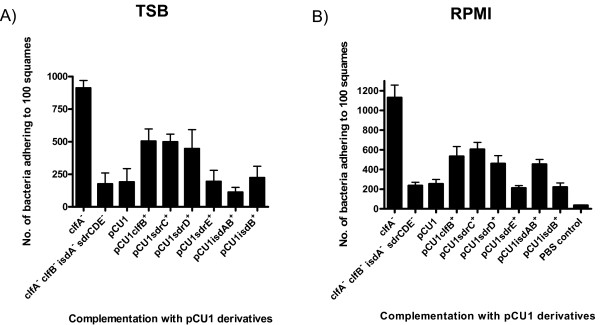
Background: The natural habitat of Staphylococcus aureus is the moist squamous epithelium in the anterior nares. About 20% of the human population carry S. aureus permanently in their noses and another 60% of individuals are intermittent carriers. The ability of S. aureus to colonize the nasal epithelium is in part due to expression of surface proteins clumping factor B (ClfB) and the iron-regulated surface determinant A (IsdA), which promote adhesion to desquamated epithelial cells present in the anterior part of the nasal vestibule. S. aureus strain Newman defective in IsdA and ClfB exhibited reduced but not completely defective adherence to squamous cells in indicating that other cell surface components might also contribute. Results: Surface proteins IsdA, ClfB, and the serine-aspartic acid repeat proteins SdrC, SdrD and SdrE were investigated to determine their contribution to the adherence of S. aureus to desquamated nasal epithelial cells. This was achieved by expression of ClfB, IsdA, SdrC, SdrD and SdrE on the surface of the surrogate Gram-positive host Lactococcus lactis and by isolating mutants of S. aureus Newman defective in one or more factor. The level of adherence of strains to squamous cells isolated from the nares of volunteers was measured. Results consistently showed that ClfB, IsdA, SdrC and SdrD each contributed to the ability of S. aureus to adhere to squamous cells. A mutant lacking all four proteins was completely defective in adherence. Conclusion: The ability of S. aureus Newman to adhere to desquamated nasal epithelial cells is multifactorial and involves SdrD and SdrC as well as ClfB and IsdA.
Overview
The claims and statistics of this paper haven’t been checked yet.
Free: it reads the open-access text and checks the first 5 claims that cite a source we can check. Create a free account to check every claim.
Integrity signals
Registry
Cites
Statistics
Figures
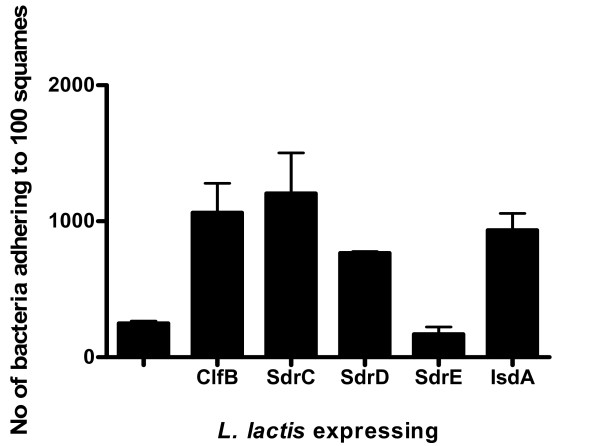
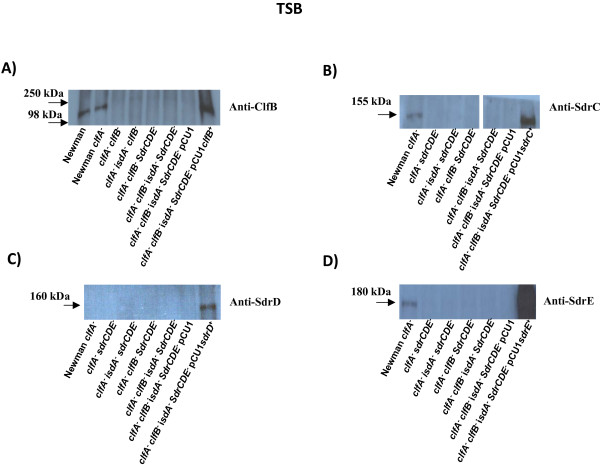
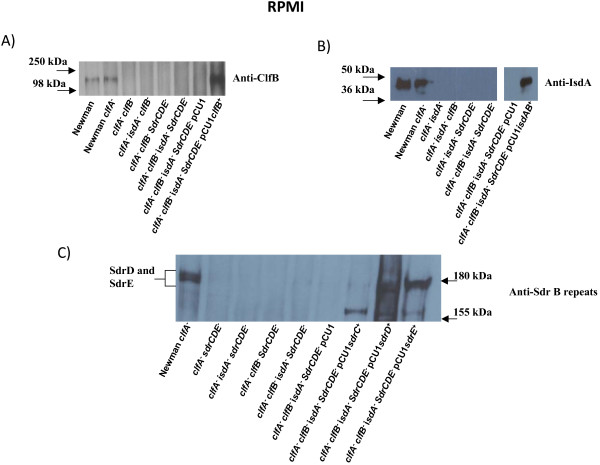
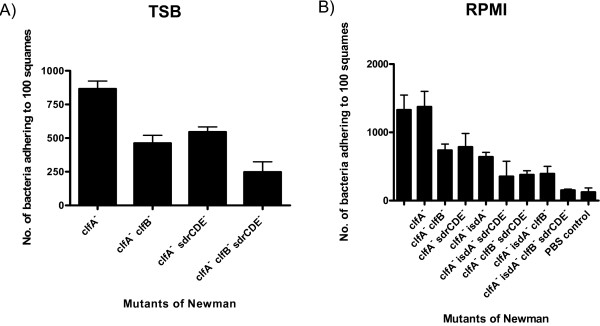
Verification
Claims the paper makes
The claims and statistics of this paper haven’t been checked yet.
Free: it reads the open-access text and checks the first 5 claims that cite a source we can check. Create a free account to check every claim.
Claims other papers make about this one
Each is checked against this paper’s own text: does it say what the citing paper says it does?
The cited source says what the claim attributes to it.
In the citing paper
“Consistent with this hypothesis, IsdA facilitates binding to human desquamated epithelial cells, and promotes nasal colonization in rats [122, 126, 127].”
From Metal ion acquisition in Staphylococcus aureus: overcoming nutritional immunity (2012) · cites this paper as [126]
In the citing paper
“SdrD promotes S. aureus adhesion to exfoliated nasal epithelial cells [63] and human keratin-forming cells in vitro [64]. It also promotes abscess formation in vivo [65].”
From A Review of Biofilm Formation of Staphylococcus aureus and Its Regulation Mechanism (2022) · cites this paper as [63]
Self-check
Percentages, sums and reported differences re-computed from the paper’s own numbers.
The self-check needs the paper’s full text.
Citations
Cites
Nasal carriage of Staphylococcus aureus: epidemiology, underlying mechanisms, and associated risks
Kluytmans, J., van Belkum, A., & Verbrugh, H. (1997) · Clinical Microbiology Reviews · doi:10.1128/cmr.10.3.505 · Cited by 2,595 · cited 1×
“aureus permanently in their noses and another 60% of individuals are intermittent carriers [1].”
BackgroundNasal Carriage as a Source of Staphylococcus aureus Bacteremia
von Eiff, C., Becker, K., Machka, K., Stammer, H., & Peters, G. (2001) · New England Journal of Medicine · doi:10.1056/nejm200101043440102 · Cited by 1,984
The cornified envelope: a model of cell death in the skin
Candi, E., Schmidt, R., & Melino, G. (2005) · Nature Reviews Molecular Cell Biology · doi:10.1038/nrm1619 · Cited by 1,776 · cited 1×
“Loricrin accounts for 70 – 85% of the cornified envelope [23-25].”
BackgroundWertheim, H. F., Vos, M. C., Ott, A., van Belkum, A., Voss, A., Kluytmans, J. A., van Keulen, P. H., Vandenbroucke-Grauls, C. M., Meester, M. H., & Verbrugh, H. A. (2004) · The Lancet · doi:10.1016/s0140-6736(04)16897-9 · Cited by 892 · cited 1×
“However when infected, carriers suffer significantly fewer fatalities, suggesting that carriage stimulates a degree of protective immunity [8].”
BackgroundWeidenmaier, C., Kokai-Kun, J. F., Kristian, S. A., Chanturiya, T., Kalbacher, H., Gross, M., Nicholson, G., Neumeister, B., Mond, J. J., & Peschel, A. (2004) · Nature Medicine · doi:10.1038/nm991 · Cited by 560 · cited 6×
“Thus colonization of the cotton rat requires both WTA [26] and surface proteins [15] albeit at different stages in the process [21] and in different parts of the nares.”
BackgroundInfluentialSteinert, P. M., & Marekov, L. N. (1995) · Journal of Biological Chemistry · doi:10.1074/jbc.270.30.17702 · Cited by 516 · cited 1×
“Loricrin accounts for 70 – 85% of the cornified envelope [23-25].”
BackgroundStaphylococcus aureus Nasal Carriage and Infection in Patients on Hemodialysis
Yu, V. L., Goetz, A., Wagener, M., Smith, P. B., Rihs, J. D., Hanchett, J., & Zuravleff, J. J. (1986) · New England Journal of Medicine · doi:10.1056/nejm198607103150204 · Cited by 475 · cited 2×
“aureus has been shown to reduce infection rates in dialysis, diabetic and AIDS patients [4-6].”
BackgroundClumping factor B (ClfB), a new surface‐located fibrinogen‐binding adhesin of Staphylococcus aureus
Ní Eidhin, D., Perkins, S., Francois, P., Vaudaux, P., Höök, M., & Foster, T. J. (1998) · Molecular Microbiology · doi:10.1046/j.1365-2958.1998.01050.x · Cited by 418
Self-citationThe role of Staphylococcus aureus surface protein SasG in adherence and biofilm formation
Corrigan, R. M., Rigby, D., Handley, P., & Foster, T. J. (2007) · Microbiology · doi:10.1099/mic.0.2007/006676-0 · Cited by 341 · cited 4×
“However SasG is not expressed by many strains including Newman [14].”
BackgroundInfluentialSelf-citationO´Brien, L., Kerrigan, S. W., Kaw, G., Hogan, M., Penadés, J., Litt, D., Fitzgerald, D. J., Foster, T. J., & Cox, D. (2002) · Molecular Microbiology · doi:10.1046/j.1365-2958.2002.02935.x · Cited by 309
Self-citation
Research works printed but not linked: 1
- Sambrook J Russell DW Molecular cloning, a labratory manual 2001 3 Cold Spring Harbor, New York: Cold Spring Harbour Laboratory Press
Cited by
Items 101–200 of 232
Bacterial Anti-adhesives: Inhibition of Staphylococcus aureus Nasal Colonization
Leonard, A. C., Petrie, L. E., & Cox, G. (2019) · ACS Infectious Diseases · doi:10.1021/acsinfecdis.9b00193 · Cited by 39
Superantigens Modulate Bacterial Density during Staphylococcus aureus Nasal Colonization
Xu, S. X., Kasper, K. J., Zeppa, J. J., & McCormick, J. K. (2015) · Toxins · doi:10.3390/toxins7051821 · Cited by 32
“aureus initiates colonization [7,8].”
Ishii, K., Tabuchi, F., Matsuo, M., Tatsuno, K., Sato, T., Okazaki, M., Hamamoto, H., Matsumoto, Y., Kaito, C., Aoyagi, T., et al. (2015) · Scientific Reports · doi:10.1038/srep17092 · Cited by 36
Kiedrowski, M. R., Paharik, A. E., Ackermann, L. W., Shelton, A. U., Singh, S. B., Starner, T. D., & Horswill, A. R. (2016) · Cellular Microbiology · doi:10.1111/cmi.12543 · Cited by 34
“The surface adhesins SasG (Roche et al., 2003), IsdA (Corrigan et al., 2009), SdrC and SdrD (Corrigan et al., 2009), as well as the fibronectin binding proteins (Mongodin et al., 2002), have also been demonstrated to have roles in adherence to host cells.”
BackgroundInfluentialBannoehr, J., Brown, J. K., Shaw, D. J., Fitzgerald, R. J., van den Broek, A., & Thoday, K. L. (2011) · Veterinary Dermatology · doi:10.1111/j.1365-3164.2011.01021.x · Cited by 31
“Staphylococcal adherence has been shown to vary noticeably between healthy human donors, and it has been suggested that the expression level of cytokeratin 10 may differ between human corneocyte donors, resulting in adherence variation.(24,28) It has been shown previously that L.”
ResultUhlemann, A., Kennedy, A. D., Martens, C., Porcella, S. F., DeLeo, F. R., & Lowy, F. D. (2012) · Genome Biology and Evolution · doi:10.1093/gbe/evs094 · Cited by 30
Brignoli, T., Manetti, A. G. O., Rosini, R., Haag, A. F., Scarlato, V., Bagnoli, F., & Delany, I. (2019) · Frontiers in Microbiology · doi:10.3389/fmicb.2019.00863 · Cited by 34
Surface adhesins and exopolymers of selected foodborne pathogens
Jaglic, Z., Desvaux, M., Weiß, A., Nesse, L. L., Meyer, R. L., Demnerová, K., Schmidt, H., Giaouris, E. D., Šipailienė, A., Teixeira, P., et al. (2014) · Microbiology · doi:10.1099/mic.0.075887-0 · Cited by 34
Macori, G., Bellio, A., Bianchi, D. M., Chiesa, F., Gallina, S., Romano, A., Zuccon, F., Cabrera‐Rubio, R., Cauquil, A., Merda, D., et al. (2019) · Genes · doi:10.3390/genes11010033 · Cited by 30
Liu, H., Lv, J., Qi, X., Ding, Y., Li, D., Hu, L., Wang, L., & Yu, F. (2015) · The Brazilian Journal of Infectious Diseases · doi:10.1016/j.bjid.2015.07.003 · Cited by 30
Antibody-Based Agents in the Management of Antibiotic-Resistant Staphylococcus aureus Diseases
Speziale, P., Rindi, S., & Pietrocola, G. (2018) · Microorganisms · doi:10.3390/microorganisms6010025 · Cited by 27
“Other CWA proteins involved in bacterial adherence to nares are SdrC, SdrD, and SasG [15,16], as well as the recently discovered SasX [17].”
BackgroundXu, Z., Li, Y., Xu, A., Soteyome, T., Yuan, L., Ma, Q., Seneviratne, G., Li, X., & Liu, J. (2024) · Microbiological Research · doi:10.1016/j.micres.2024.127782 · Cited by 29
Jonsson, I., Juuti, J. T., François, P., AlMajidi, R., Pietiäinen, M., Girard, M., Lindholm, C., Saller, M. J., Driessen, A. J. M., Kuusela, P., et al. (2010) · PLoS ONE · doi:10.1371/journal.pone.0014209 · Cited by 30
“The levels of IsdA and ClfB proteins were also lower in the wall of the mutant (grown in iron-sufficient BHI medium), but the difference was less marked (Figure 2A). pKTH3832 restored wild-type levels of the three proteins, indicating that their decrease was dependent on Ecs.”
BackgroundInfluentialHost-microbe interactions in chronic rhinosinusitis biofilms and models for investigation
Vanderpool, E. J., & Rumbaugh, K. P. (2023) · Biofilm · doi:10.1016/j.bioflm.2023.100160 · Cited by 27
“Equipped with attachment factors such as clumping factors A & B, iron-regulated surface determinant A, and serine-aspartate repeat proteins SdrC and SdrD, SA adheres to the squamous epithelial surface of the anterior nares [83].”
BackgroundHou, W., Kang, S., Chang, J., Tian, X., & Shi, C. (2022) · Foods · doi:10.3390/foods11213438 · Cited by 29
“nasal epithelial cells and medical equipment [32,33].”
BackgroundDepke, M., Burian, M., Schäfer, T., Bröker, B. M., Ohlsen, K., & Völker, U. (2011) · International Journal of Medical Microbiology · doi:10.1016/j.ijmm.2011.09.013 · Cited by 20
Ortega‐Peña, S., Rodríguez–Martínez, S., Cancino-Diaz, M. E., & Cancino‐Díaz, J. C. (2022) · Life · doi:10.3390/life12030341 · Cited by 31
“aureus by proteolysis avoiding the formation of biofilms (adhesion and aggregation) [76,77].”
Zou, J., Wang, X., Tian, M., Cao, S., Hou, W., Wang, S., Han, X., Ding, C., & Yu, S. (2015) · Veterinary Microbiology · doi:10.1016/j.vetmic.2015.03.003 · Cited by 20
Soltani, E., Farrokhi, E., Zamanzad, B., Abadi, M. S. S., Deris, F., Soltani, A., & Gholipour, A. (2019) · BMC Research Notes · doi:10.1186/s13104-019-4055-0 · Cited by 23
Genetic variability in the sdrD gene in Staphylococcus aureus from healthy nasal carriers
Ajayi, C., Åberg, E., Askarian, F., Ericson, J. U., Johannessen, M., & Hanssen, A.-M. (2018) · BMC Microbiology · doi:10.1186/s12866-018-1179-7 · Cited by 29
“It is expressed during nasal colonisation [16] and increase bacterial adherence to desquamated nasal cells [17].”
Human β-defensin 3 (DEFB103) and its influence on Staphylococcus aureus nasal carriage
Fode, P., Stegger, M., & Andersen, P. S. (2011) · International Journal of Infectious Diseases · doi:10.1016/j.ijid.2011.02.003 · Cited by 21
Ke, S., Kil, H., Roggy, C., Shields, T., Quinn, Z., Quinn, A. P., Small, J. M., Towne, F. D., Brooks, A. E., & Brooks, B. D. (2024) · Antibiotics · doi:10.3390/antibiotics13111046 · Cited by 17
Afzal, M., Vijay, A. K., Stapleton, F. J., & Willcox, M. D. P. (2022) · Antibiotics · doi:10.3390/antibiotics11081011 · Cited by 23
“aureus to nasal epithelial cells [38], human keratinocytes [39], and contributes to abscess formation [40].”
BackgroundFoster, T. J., & Geoghegan, J. A. (2024) · Elsevier eBooks · doi:10.1016/b978-0-12-818619-0.00026-5 · Cited by 20
Self-citationZubair, S., Fischer, A., Liljander, A., Meens, J., Hegerman, J., Gourlé, H., Bishop, R. P., Roebbelen, I., Younan, M., Mustafa, M. I., et al. (2015) · Standards in Genomic Sciences · doi:10.1186/s40793-015-0098-6 · Cited by 18
“A published study demonstrated that a mutant lacking these four proteins did not exhibit the adherence phenotype [38].”
BackgroundOlia, A. H. G., Ghahremani, M., Ahmadi, A., & Sharifi, Y. (2020) · Infection Genetics and Evolution · doi:10.1016/j.meegid.2020.104262 · Cited by 19
Jin, Y., Yu, X. M., Zhang, S., Kong, X., Chen, W., Luo, Q., Zheng, B., & Xiao, Y. (2020) · Frontiers in Microbiology · doi:10.3389/fmicb.2020.596942 · Cited by 15
Non-Canonical Host Intracellular Niche Links to New Antimicrobial Resistance Mechanism
Kember, M., Grandy, S., Raudonis, R., & Cheng, Z. (2022) · Pathogens · doi:10.3390/pathogens11020220 · Cited by 15
Moche, M., Schlüter, R., Bernhardt, J., Plate, K., Riedel, K., Hecker, M., & Becher, D. (2015) · Journal of Proteome Research · doi:10.1021/acs.jproteome.5b00148 · Cited by 15
Su, M., Davis, M. H., Peterson, J., Solís‐Lemus, C., Satola, S. W., & Read, T. D. (2021) · PeerJ · doi:10.7717/peerj.11764 · Cited by 17
Goncheva, M. I., Gibson, R. M., Shouldice, A. C., Dikeakos, J. D., & Heinrichs, D. E. (2023) · iScience · doi:10.1016/j.isci.2023.105975 · Cited by 16
“Of interest, IsdAhas been shown to allow S. aureus adherence to squamous epithelial cells in the nares, 31,32 and the widespread expression of the protein during infection has made it an attractive target for inclusion as a vaccine component.”
BackgroundAuxotrophic mutant of Staphylococcus aureus interferes with nasal colonization by the wild type
Barbagelata, M. S., Álvarez, L., Gordiola, M., Tuchscherr, L. P. N., von Eiff, C., Becker, K., Sordelli, D. O., & Buzzola, F. R. (2011) · Microbes and Infection · doi:10.1016/j.micinf.2011.06.010 · Cited by 17
Zhang, Y., Zhang, Y., Chen, C., Cheng, H., Deng, X., Li, D., Bai, B., Yu, Z., Deng, Q., Guo, J. Q., et al. (2022) · BMC Microbiology · doi:10.1186/s12866-022-02535-9 · Cited by 15
Eshaghi, M., Bibalan, M. H., Pournajaf, A., Gholami, M., & Talebi, M. (2017) · Infectious Diseases in Clinical Practice · doi:10.1097/ipc.0000000000000506 · Cited by 15
“The researchers found that sasX promotes adhesion to human nasal epithelial cells and nasal colonization in a mouse model.(13) In addition, sasX mediated bacterial aggregation and biofilm formation, leading to decreased phagocytosis and increased survival in human blood and resistance to human neutrophils.”
BackgroundProtective Activity of the CnaBE3 Domain Conserved among Staphylococcus aureus Sdr Proteins
Becherelli, M., Prachi, P., Viciani, E., Biagini, M., Fiaschi, L., Chiarot, E., Nosari, S., Brettoni, C., Marchi, S., Biancucci, M., et al. (2013) · PLoS ONE · doi:10.1371/journal.pone.0074718 · Cited by 13
“aureus Sdr proteins [12], which are involved in adherence to epithelial cells [10,11], contain putative CnaB domains [12], and have been reported to be protective against S.”
BackgroundMethodIdentification of conserved antigens from staphylococcal and streptococcal pathogens
Stapleton, M. R., Wright, L., Clarke, S. R., Moseby, H., Tarkowski, A., Vendrengh, M., & Foster, S. J. (2012) · Journal of Medical Microbiology · doi:10.1099/jmm.0.040915-0 · Cited by 13
“11 On: Wed, 07 Nov 2018 06:18:13 extracellular matrix and corneocyte envelope proteins and desquamated human nasal epithelial cells (Clarke et al., 2004, 2006, 2009; Clarke & Foster, 2008; Corrigan et al., 2009).”
BackgroundInfluentialMisra, N., Wines, T. F., Knopp, C. L., McGuire, M. A., & Tinker, J. (2017) · FEMS Microbiology Letters · doi:10.1093/femsle/fnx082 · Cited by 15
Chantraine, C., Gomes, P. D. S. F. C., Mathelié‐Guinlet, M., Gomes, D. E. B., Zheng, Z., Clowry, J., Turley, M. B., Irvine, A. D., Geoghegan, J. A., Bernardi, R. C., et al. (2025) · Science Advances · doi:10.1126/sciadv.adu7457 · Cited by 14
“The serine-aspartate repeat protein D (SdrD) was identified as a potential partner for DSG-1, which has been shown to promote S. aureus adhesion to human keratinocytes ( 29 ) and desquamated nasal epithelial cells ( 30 ), although its mechanisms remain unknown.”
Chaves‐Moreno, D., Wos‐Oxley, M. L., Jáuregui, R., Medina, E., Oxley, A. P. A., & Pieper, D. H. (2015) · PLoS ONE · doi:10.1371/journal.pone.0145861 · Cited by 12
Staphylococcus aureus Colonization of the Human Nose and Interaction with Other Microbiome Members
Laux, C., Peschel, A., & Krismer, B. (2019) · ASM Press eBooks · doi:10.1128/9781683670131.ch45 · Cited by 15
Hau, S. J., Kellner, S. G., Eberle, K. C., Waack, U., Brockmeier, S. L., Haan, J. S., Davies, P. R., Frana, T. S., & Nicholson, T. L. (2017) · Applied and Environmental Microbiology · doi:10.1128/aem.02073-17 · Cited by 13
“experimentally verified (23-25), many genes are thought to contribute to adherence and 86 colonization of S.”
BackgroundPerspectives on DNA Vaccines. Targeting Staphylococcal Adhesins to Prevent Implant Infections
Arciola, C. R., Speziale, P., & Montanaro, L. (2009) · The International Journal of Artificial Organs · doi:10.1177/039139880903200913 · Cited by 12
Mei, M., Lu, M., Li, S., Ren, X., Xing, B., Hu, Y., Wu, Y., Chen, H., Wang, L., Li, Y., et al. (2024) · International Journal of Biological Macromolecules · doi:10.1016/j.ijbiomac.2024.129208 · Cited by 11
Zhang, L., Xiang, H., Gao, J., Hu, J., Miao, S., Wang, L., Deng, X., & Li, S. (2009) · Protein Expression and Purification · doi:10.1016/j.pep.2009.09.007 · Cited by 10
“as ClfB and IsdA [12].”
Francis, D., Hari, G. V., Subash, A. K., Bhairaddy, A., & Joy, A. (2023) · Advances in protein chemistry and structural biology · doi:10.1016/bs.apcsb.2023.08.002 · Cited by 14
Tulinski, P., Duim, B., Wittink, F. R. A., Jonker, M. J., Breit, T. M., van Putten, J. P. M., Wagenaar, J. A., & Fluit, A. C. (2014) · BMC Genomics · doi:10.1186/1471-2164-15-915 · Cited by 12
“It has been shown that ClfB, IsdA proteins and WTA are essential factors for S. aureus adherence to human cell lines in vitro [10,19], nasal colonization of rodents [14,16,25], and for nasal colonization of humans [17].”
Nanonewton forces between Staphylococcus aureus surface protein IsdB and vitronectin
Mathelié‐Guinlet, M., Viela, F., Pietrocola, G., Speziale, P., & Dufrêne, Y. F. (2020) · Nanoscale Advances · doi:10.1039/d0na00636j · Cited by 10
Using Knock-Out Mutants to Investigate the Adhesion of Staphylococcus aureus to Abiotic Surfaces
Spengler, C., Nolle, F., Thewes, N., Wieland, B., Jung, P., Bischoff, M., & Jacobs, K. (2021) · International Journal of Molecular Sciences · doi:10.3390/ijms222111952 · Cited by 13
“aureus to adhere to endothelial cells and to human-desquamated nasal epithelial cells, respectively [34,35].”
BackgroundRisser, F., López-Morales, J., & Nash, M. A. (2022) · ACS Bio & Med Chem Au · doi:10.1021/acsbiomedchemau.2c00042 · Cited by 15
Kim, D. H., Son, B. G., Lim, J. J., Lee, J. J., Kim, D.-G., Lee, H.-J., Min, W., Rhee, M. H., Kim, K. D., Chang, H. H., et al. (2012) · Microbial Pathogenesis · doi:10.1016/j.micpath.2012.09.002 · Cited by 10
Microbial insights from Antarctic and Mediterranean shallow-water bone-eating worms
Hewitt, O. H., Díez‐Vives, C., & Taboada, S. (2020) · Polar Biology · doi:10.1007/s00300-020-02731-1 · Cited by 10
Cao, J., & Zheng, Y. (2021) · Food & Function · doi:10.1039/d0fo02491k · Cited by 10
Morgenstern, A. R., Peterson, L. F., Arnold, K. A., & Brewer, M. G. (2024) · mSphere · doi:10.1128/msphere.00685-23 · Cited by 10
“Expression of the following genes: DSG1 , HSPA8 , HSPD1 , ITGA5 , and ITGB1 was quantified since these have been indicated to interact with S. aureus and reported to be expressed by keratinocytes (34–37).”
BackgroundHow does Staphylococcus aureus successfully colonize the nasal cavity
Chen, P., Ma, Y., & Xiao, Y. (2025) · Critical Reviews in Microbiology · doi:10.1080/1040841x.2025.2486171 · Cited by 10
“S. aureus surface proteins Sdrc/D/e (corrigan et al., 2009; Askarian et al., 2016), surface protein G(SasG) (Roche et al., 2003), and staphylococcal protein A(SpA) (cole et al., 2016) also play an active roles in S. aureus colonization of the nasal cavity in mice, whereas other MScRAMMs such as…”
Yuan, Y., Chen, K., Sun, C., Ahmed, S., & Ojha, S. C. (2023) · BMC Microbiology · doi:10.1186/s12866-023-03052-z · Cited by 10
“Bacterial adhesion to host mucosal epithelial cells is a critical initial step in the pathogenesis of bacterial infection [42].”
BackgroundRobson, J. L., Thorn, R. M. S., Williams, A. C., Collard, T. J., & Qualtrough, D. (2023) · Scientific Reports · doi:10.1038/s41598-023-44130-6 · Cited by 8
Pathogenesis of Staphylococcus aureus in Humans
Lu, T., & DeLeo, F. R. (2015) · Wiley eBooks · doi:10.1002/9781118644843.ch39 · Cited by 11
Functional diversity of staphylococcal surface proteins at the host-microbe interface
Schwermann, N., & Winstel, V. (2023) · Frontiers in Microbiology · doi:10.3389/fmicb.2023.1196957 · Cited by 7
“aureus surface protein G (SasG) which also confer attachment to desquamated epithelial cells (Clarke et al., 2009; Corrigan et al., 2009; Askarian et al., 2016; Mills et al., 2022).”
Backgroundde Jesus, A. C. S., Ferrari, R. G., Panzenhagen, P., dos Santos, A. M. P., Portes, A. B., & Conte‐Júnior, C. A. (2025) · Antibiotics · doi:10.3390/antibiotics14040364 · Cited by 13
Crystal Structure of an Invasivity-Associated Domain of SdrE in S. aureus
Luo, M., Zhang, X., Zhang, S., Zhang, H., Yang, W. J., Zhu, Z., Chen, K., Bai, L., Wei, J., Huang, A., et al. (2017) · PLoS ONE · doi:10.1371/journal.pone.0168814 · Cited by 7
Burford-Gorst, C. M., & Kidd, S. P. (2024) · Antibiotics · doi:10.3390/antibiotics13090845 · Cited by 7
Bayati, S. A. (2018) · International Journal of Current Microbiology and Applied Sciences · doi:10.20546/ijcmas.2018.701.229 · Cited by 10
“Host immune responses against persistent biofilm infections are largely ineffective and lead to chronic disease (Corrigan et al., 2009).”
BackgroundCross talk between bacterial and human gene networks enriched using ncRNAs in IBD disease
Elahimanesh, M., & Najafi, M. (2023) · Scientific Reports · doi:10.1038/s41598-023-34780-x · Cited by 6
Askarian, F., Sangvik, M., Hanssen, A.-M., Snipen, L. G., Ericson, J. U., & Johannessen, M. (2013) · Pathogens and Disease · doi:10.1111/2049-632x.12099 · Cited by 5
Surface Proteins of Staphylococcus aureus
Foster, T. J. (2019) · ASM Press eBooks · doi:10.1128/9781683670131.ch38 · Cited by 6
Self-citationYu, G.-X. (2010) · BMC Bioinformatics · doi:10.1186/1471-2105-11-508 · Cited by 5
“A mutant strain that lacks SdrD proteins can cause defective in adherence [73].”
BackgroundThe global regulator SpoVG modulates Staphylococcus aureus virulence through Agr-dependent pathways
Ma, K., Xu, L., Zhang, S., Wu, Z., Wang, H., & Xue, T. (2025) · Virulence · doi:10.1080/21505594.2025.2561827 · Cited by 7
IJAR, Chalabi, R., Mohammed, R., Adnan, R., & Bayati, S. A. (2017) · International Journal of Advanced Research · doi:10.21474/ijar01/4228 · Cited by 4
Novel Requirement for Staphylococcal Cell Wall-Anchored Protein SasD in Pulmonary Infection
Grousd, J. A., Dresden, B. P., Riesmeyer, A. M., Cooper, V. S., Bomberger, J. M., Richardson, A. R., & Alcorn, J. F. (2022) · Microbiology Spectrum · doi:10.1128/spectrum.01645-22 · Cited by 4
Surface Proteins of Staphylococcus aureus
Jan‐Roblero, J., García-Gómez, E., Rodríguez–Martínez, S., Cancino-Diaz, M. E., & Cancino‐Díaz, J. C. (2017) · InTech eBooks · doi:10.5772/65976 · Cited by 8
Sortases, Surface Proteins, and Their Roles in Staphylococcus aureus Disease and Vaccine Development
Schneewind, O., & Missiakas, D. M. (2019) · ASM Press eBooks · doi:10.1128/9781683670285.ch15 · Cited by 4
Genome Sequence of Duck Pathogen Mycoplasma anatis Strain 1340
Guo, Z., Chen, P., Ren, P., Kuang, S., Zhou, Z., Li, Z., Liu, M., Shi, D.-B., Xiao, Y., Wang, X., et al. (2011) · Journal of Bacteriology · doi:10.1128/jb.05891-11 · Cited by 4
“02, Genemark, and Z-Curve programs (2).”
Bastakoti, S., Ajayi, C., Julin, K., Johannessen, M., & Hanssen, A.-M. (2023) · BMC Microbiology · doi:10.1186/s12866-023-02919-5 · Cited by 4
Staphylococcus aureus colonisation and host-microbe interactions
Sangvik, M. (2013) · NVA (Nasjonalt vitenarkiv) · Cited by 4
Selection of Staphylococcus aureus in a murine nasopharyngeal colonization model
Salgado, B. A. B., Waters, E. M., Moran, J. C., Kadioglu, A., & Horsburgh, M. J. (2022) · Frontiers in Cellular and Infection Microbiology · doi:10.3389/fcimb.2022.874138 · Cited by 2
Luqman, A., & Ohlsen, K. (2025) · Medical Microbiology and Immunology · doi:10.1007/s00430-025-00840-4 · Cited by 3
Waryah, C. B., Gogoi-Tiwari, J., Wells, K., & Mukkur, T. K. S. (2016) · Folia Microbiologica · doi:10.1007/s12223-016-0459-6 · Cited by 2
“…of mouse monoclonal antibodies against ClfA, SdrD and rabbit anti-FnBP-A was determined by the Prof Foster’s laboratory (Josefsson et al. 2001; Loughman et al. 2008; Corrigan et al. 2009), whereas that of goat anti-PNAG was determined by Prof Pier’s laboratory and confirmed in our laboratory.”
MethodAdvances in Immune Pathways and Pathogenesis of Atopic Dermatitis
Li, H., Lee, D. J., & Yuen, M. (2018) · Current Dermatology Reports · doi:10.1007/s13671-018-0238-5 · Cited by 2
Johnson, D. I. (2017) · Springer eBooks · doi:10.1007/978-3-319-67651-7_9 · Cited by 2
Examining the role of IgA in a persistent model of Staphylococcus aureus colonization
Pérez-Betancourt, Y., Shi, M., & Missiakas, D. M. (2026) · PLoS Pathogens · doi:10.1371/journal.ppat.1013924 · Cited by 1
“Sera collected prior to colonization (naïve controls) or at week 12 post-inoculation were also examined for reactivity toward four-teen secreted antigens of S. aureus , four of which, ClfB, IsdA, SasG, and SdrC, represent bone fide colonization factors [14–17].”
Cell Wall Structure and Pathogenicity
Oelschlaeger, T. A., Dobrindt, U., & Hacker, J. (2010) · Springer eBooks · doi:10.1007/978-3-642-05062-6_11 · Cited by 1
Staphylococcus aureus and Its Proteins
Abdurrahman, G., & Bröker, B. M. (2022) · Springer eBooks · doi:10.1007/978-981-16-0784-4_14 · Cited by 1
Brangulis, K., Akopjana, I., Bogans, J., Kazāks, A., & Tārs, K. (2023) · Ticks and Tick-borne Diseases · doi:10.1016/j.ttbdis.2023.102287 · Cited by 1
“…with the ability to interact with various molecules and components such as integrins, fibrinogen, fibronectin, desquamated nasal epithelial cells, platelets, and vitronectin (Clarke et al., 2004; Corrigan et al., 2009; Miajlovic et al., 2010; Pietrocola et al., 2020; Zapotoczna et al., 2013).”
BackgroundCell Wall-Anchored Surface Proteins of Staphylococcus aureus
Foster, T. J. (2024) · Springer eBooks · doi:10.1007/978-981-99-9428-1_2 · Cited by 2
Self-citationPCR IN TRAUMATOLOGY AND ORTHOPAEDICS: METHOD DESCRIPTION AND APPLICABILITY
Polyakova, E. M., & Божкова, С. А. (2014) · Traumatology and Orthopedics of Russia · doi:10.21823/2311-2905-2014-0-3-104-114 · Cited by 1
Staphylococcus aureus Pathogenesis and Virulence Factor Regulation
Torres, V. J., Benson, M. A., & Voyich, J. M. (2016) · ASM Press eBooks · doi:10.1128/9781555818524.ch4 · Cited by 1
Host-pathogen interactions of secreted and surface Staphylococcus aureus factors
Vazquez, V. (2010) · Digital Commons-TMC (Texas Medical Center)
Stancic, D. (2014) · The Sydney eScholarship Repository (The University of Sydney)
Bacteria - host interplay in Staphylococcus aureus infections
Kwiecinski, J. M. (2013) · Gothenburg University Publications Electronic Archive (Gothenburg University) · Cited by 1
Molecular determinants involved during Staphylococcus aureus colonization and/or infection
Askarian, F. (2014) · NVA (Nasjonalt vitenarkiv)
Staphylococcal Virulence Factors
Heilmann, C., & Götz, F. (2012) · Springer eBooks · doi:10.1007/978-1-4614-1031-7_3 · Cited by 1
van der Kooi‐Pol, M. M. (2013)
Lamers, R. P. (2011) · STARS (University of Central Florida) · Cited by 1
The transition between sessile and motile bacterial lifestyles
Tsompanidou, E. (2012) · University of Groningen research database (University of Groningen / Centre for Information Technology)
Host and Bacterial Determinants of Staphylococcus aureus Nasal Colonization in Humans
Muthukrishnan, G. (2014) · STARS (University of Central Florida)
Development of a Cholera Toxin CTA2/B Based Staphylococcus aureus Vaccine to Prevent Bovine Mastitis
Misra, N. (2017) · ScholarWorks (Boise State University) · doi:10.18122/b26q7c
“is transiently colonized in 60%, and permanently in 20%, of the population [17].”
BackgroundInfluentialInvestigating the Survival Response of Staphylococcus aureus to the Antimicrobial Lipid Sphingosine
Chen, Y. (2018) · University of Liverpool · doi:10.17638/03020133
Surface colonisation and survival of Staphylococcus aureus
Salgado, B. (2019) · University of Liverpool · doi:10.17638/03046539
Metadata
- Authors
- Corrigan, R. M., Miajlovic, H., & Foster, T. J.
- Affiliations
- Trinity College Dublin (IE)
- Corresponding author
- Foster, Timothy J
- Venue
- BMC Microbiology
- Published
- 2009-01-30
- Volume
- 9
- Issue
- 1
- Pages
- 22-22
- ISSN
- 1471-2180 (ISSN-L)
- PMC
- PMC2642834
- OpenAlex
- W2082111828
- Cited by
- 226
- References
- 35
- Citations by year
- 2026: 4 · 2025: 8 · 2024: 10 · 2023: 13 · 2022: 17 · 2021: 10 · 2020: 7 · 2019: 20 · 2018: 11 · 2017: 14 · 2016: 17 · 2015: 14 · 2014: 12 · 2013: 15 · 2012: 16
- FWCI
- 12.38
- Type
- journal article
- Language
- en
- Open access
- gold
- doi.org
- Licence
- cc-by
- Locations
- BMC Microbiology (publishedVersion, cc-by)
- PubMed Central (publishedVersion, cc-by)
- PubMed (publishedVersion)
- White Rose Research Online (University of Leeds, The University of Sheffield, University of York) (acceptedVersion)
- Arrow@dit (Dublin Institute of Technology) (submittedVersion, cc-by-nc-sa)
- DOAJ (DOAJ: Directory of Open Access Journals) (submittedVersion, cc-by-sa)
- Trinity's Access to Research Output (TARA) (Trinity College Dublin) (submittedVersion)
- Funders
- Health Research Board
- Science Foundation Ireland
- Topics
- Health Sciences › Medicine › Infectious Diseases › Antimicrobial Resistance in Staphylococcus
- Life Sciences › Biochemistry, Genetics and Molecular Biology › Molecular Biology › Biochemical and Structural Characterization
- Life Sciences › Biochemistry, Genetics and Molecular Biology › Molecular Biology › Bacterial biofilms and quorum sensing
- Keywords
- Staphylococcus aureus, bacterial adhesion, nasal epithelial cells, clumping factor B, ISDA, SdrE, nasal carriage, Lactococcus lactis, bacterial surface proteins
- MeSH terms
- Bacterial Adhesion, Cells, Cultured, Epithelial Cells, Genetic Complementation Test, Humans, Mutation, Nasal Mucosa, Staphylococcus aureus, Lactococcus lactis, Adhesins, Bacterial
About these checks
Registry, retraction, Cites and statistics results are computed, not judged, with one exception: a printed reference that no index lists is read once by a model before it counts as a citation error. Claims are extracted by a model and kept only when their quote appears verbatim in the text; each cited source is then checked, with a model’s help, for whether it says what the claim relies on. Those verdicts can be wrong — read the claim’s quote and the cited source before relying on one.
Statistics and arithmetic are recomputed, not judged.
Confidence bands are shown only for fields calibrated on our annotated test set. None is calibrated yet, so no band is shown.
What counts as a claim ›How we measure confidence ›How we check this ›
Are you an author, or do you see a problem with this page? Request a review
Data sources
Bibliographic data: Semantic Scholar, OpenAlex, Crossref.
Contains information from the Semantic Scholar Academic Graph Datasets, made available under the ODC Attribution License (ODC-BY 1.0).
Semantic Scholar’s data is described in: Kinney, R., et al. (2023). The Semantic Scholar Open Data Platform. arXiv:2301.10140.
