

ADHD candidate gene (DRD4 exon III) affects inhibitory control in a healthy sample
Open accessThe DOI matches its Crossref record; 66 of the 66 references it cites were found in a registry or an index.
Abstract
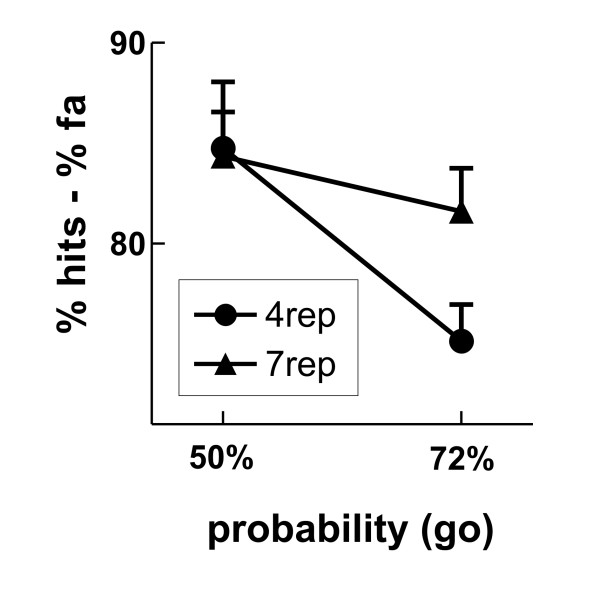
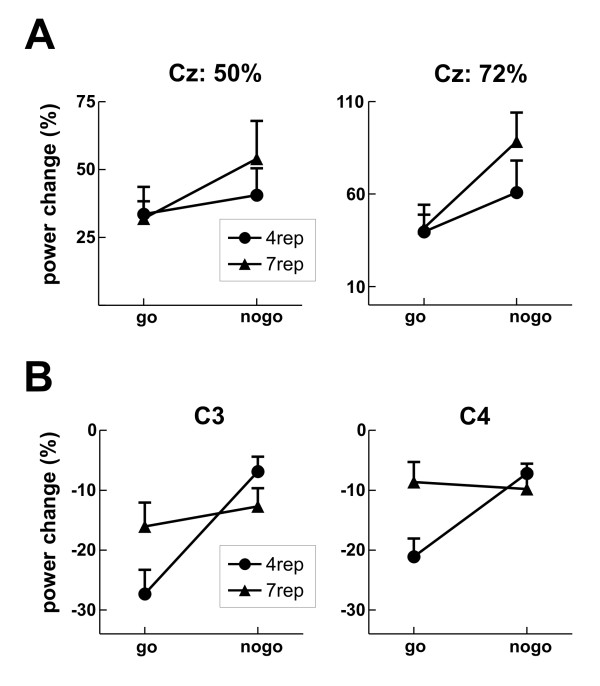
Background: Dopamine is believed to be a key neurotransmitter in the development of attention-deficit/hyperactivity disorder (ADHD). Several recent studies point to an association of the dopamine D4 receptor (DRD4) gene and this condition. More specifically, the 7 repeat variant of a variable number of tandem repeats (VNTR) polymorphism in exon III of this gene is suggested to bear a higher risk for ADHD. In the present study, we investigated the role of this polymorphism in the modulation of neurophysiological correlates of response inhibition (Go/Nogo task) in a healthy, high-functioning sample. Results Homozygous 7 repeat carriers showed a tendency for more accurate behavior in the Go/Nogo task compared to homozygous 4 repeat carriers. Moreover, 7 repeat carriers presented an increased nogo-related theta band response together with a reduced go-related beta decrease. Conclusions These data point to improved cognitive functions and prefrontal control in the 7 repeat carriers, probably due to the D4 receptor's modulatory role in prefrontal areas. The results are discussed with respect to previous behavioral data on this polymorphism and animal studies on the impact of the D4 receptor on cognitive functions.
Overview
The claims and statistics of this paper haven’t been checked yet.
Free: it reads the open-access text and checks the first 5 claims that cite a source we can check. Create a free account to check every claim.
Integrity signals
Registry
Cites
Statistics
Figures
Verification
Claims the paper makes
The claims and statistics of this paper haven’t been checked yet.
Free: it reads the open-access text and checks the first 5 claims that cite a source we can check. Create a free account to check every claim.
Claims other papers make about this one
Each is checked against this paper’s own text: does it say what the citing paper says it does?
The cited source says what the claim attributes to it.
In the citing paper
“Genetic polymorphisms in the dopamine D4-receptor gene (DRD4), associated with reduced functional activity (Asghari et al., 1995), have been related to decreased performance on the Stop-signal task (Congdon et al., 2008), although conflicting results have also been reported (Kramer et al., 2009).”
From Response Inhibition and Interference Control in Obsessive–Compulsive Spectrum Disorders (2014) · cites this paper as Kramer et al., 2009
Self-check
Percentages, sums and reported differences re-computed from the paper’s own numbers.
The self-check needs the paper’s full text.
Citations
Cites
Event-related EEG/MEG synchronization and desynchronization: basic principles
Pfurtscheller, G., & Lopes da Silva, F. H. (1999) · Clinical Neurophysiology · doi:10.1016/s1388-2457(99)00141-8 · Cited by 7,328 · cited 5×
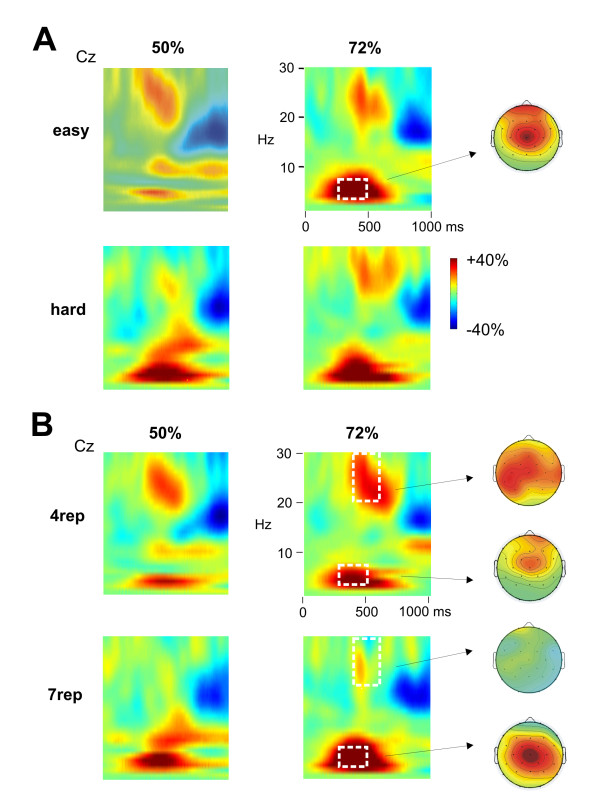
“Based on previous studies, we were interested in changes in the theta band (4 - 8 Hz) reflecting prefrontal control functions [40,44,58] and the beta band, which is rather related to the motor output itself [46].”
BackgroundMethodInfluentialVan Tol, H. H. M., Bunzow, J. R., Guan, H.-C., Sunahara, R. K., Seeman, P., Niznik, H. B., & Civelli, O. (1991) · Nature · doi:10.1038/350610a0 · Cited by 2,014 · cited 2×
“The D4 receptor belongs to the D2-like dopamine receptor class and has received special interest in the past, because the atypical neuroleptic clozapine binds with high affinity and specificity to this receptor [14].”
BackgroundGevins, A. (1997) · Cerebral Cortex · doi:10.1093/cercor/7.4.374 · Cited by 1,623 · cited 4×
“DNA was amplified with fluorescent primers: DRD4_ExIII_for: 5'-Fam-GCGACTACGTGGTCTACTCG-3', DRD4_ExIII_rev: 5'-AGGACCCTCATGGCCTTG-3'.”
BackgroundResultInfluentialHuynh, H., & Feldt, L. S. (1976) · Journal of Educational Statistics · doi:10.3102/10769986001001069 · Cited by 1,559 · cited 1×
“For all statistical effects involving more than one degree of freedom in the numerator, the Huynh-Feldt correction was applied to correct for possible violations of the sphericity assumption [66] and the corrected probabilities are reported.”
MethodNieuwenhuis, S., Yeung, N., van den Wildenberg, W., & Ridderinkhof, K. R. (2003) · Cognitive, Affective, & Behavioral Neuroscience · doi:10.3758/cabn.3.1.17 · Cited by 1,250 · cited 3×
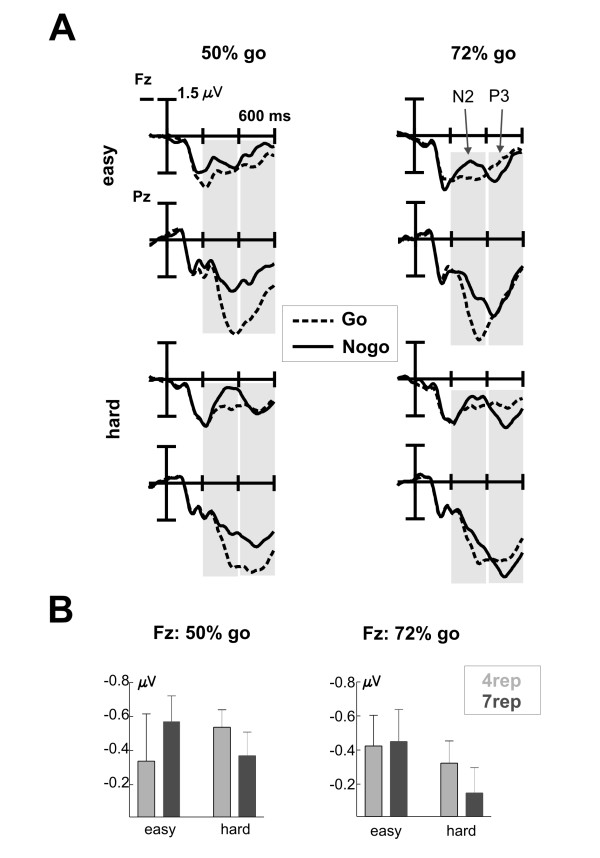
“Electrophysiological studies on the Go/Nogo-paradigm have focussed in particular on the frontal N2/P3 complex in nogo-trials [35,36], supposedly related to the inhibition and its evaluation, respectively [12,37], but see [38,39].”
BackgroundMethodResultERP components in Go/Nogo tasks and their relation to inhibition
Falkenstein, M., Hoormann, J., & Hohnsbein, J. (1999) · Acta Psychologica · doi:10.1016/s0001-6918(99)00008-6 · Cited by 1,102 · cited 4×
“Electrophysiological studies on the Go/Nogo-paradigm have focussed in particular on the frontal N2/P3 complex in nogo-trials [35,36], supposedly related to the inhibition and its evaluation, respectively [12,37], but see [38,39].”
BackgroundMethodResultInfluentialMultiple dopamine D4 receptor variants in the human population
Tol, H. H. M. V., Wu, C. M., Guan, H.-C., Ohara, K., Bunzow, J. R., Civelli, O., Kennedy, J., Seeman, P., Niznik, H. B., & Jovanovic, V. (1992) · Nature · doi:10.1038/358149a0 · Cited by 955 · cited 1×
“The VNTR investigated in the present study is an extensive polymorphic 48bp sequence in exon III that is coding for the third intracellular loop in the D4 receptor [16,24,25].”
BackgroundOscillatory γ-Band (30–70 Hz) Activity Induced by a Visual Search Task in Humans
Tallon-Baudry, C., Bertrand, O., Delpuech, C., & Pernier, J. (1997) · The Journal of Neuroscience · doi:10.1523/jneurosci.17-02-00722.1997 · Cited by 928
Modulation of intracellular cyclic AMP levels by different human dopamine D4 receptor variants
Asghari, V., Sanyal, S., Buchwaldt, S., Paterson, A., Jovanovic, V., & Van Tol, H. H. M. (1995) · Journal of Neurochemistry · doi:10.1046/j.1471-4159.1995.65031157.x · Cited by 858 · cited 2×
“Given the observed reduced dopaminergic response in the 7rep variant [26], these results hint at a possible mechanism to explain the polymorphism's effect on prefrontal functions.”
BackgroundFrontal midline EEG dynamics during working memory
Onton, J., Delorme, A., & Makeig, S. (2005) · NeuroImage · doi:10.1016/j.neuroimage.2005.04.014 · Cited by 850 · cited 5×
“These results are in line with previous findings of an inhibition-related increase in the theta band [40], which is probably stemming from activity in the PFC and/or ACC [43-45].”
BackgroundResultInfluential
Research works printed but not linked: 1
- Marco-Pallares J Cucurell D Cunillera T Krämer UM Camara E Nager W Bauer P Schüle R Schöls L Münte TF Genetic variability in the dopamine system (DRD4, COMT) modulates neurophysiological responses to gains and losses in humans Biol Psychiatry in press 19251248
Cited by
Logue, S. F., & Gould, T. J. (2014) · Pharmacology Biochemistry and Behavior · doi:10.1016/j.pbb.2013.08.007 · Cited by 477
“In addition, homozygous 7-repeat carriers were more accurate in a go/no-go task compared to homozygous 4-repeat carriers (Kramer et al. 2009).”
BackgroundThe Molecular Genetics of Executive Function: Role of Monoamine System Genes
Barnes, J. J. M., Dean, A. J., Nandam, L. S., O'Connell, R. G., & Bellgrove, M. A. (2011) · Biological Psychiatry · doi:10.1016/j.biopsych.2010.12.040 · Cited by 164
Response Inhibition and Interference Control in Obsessive–Compulsive Spectrum Disorders
van Velzen, L. S., Vriend, C., de Wit, S. J., & van den Heuvel, O. A. (2014) · Frontiers in Human Neuroscience · doi:10.3389/fnhum.2014.00419 · Cited by 169
“Genetic polymorphisms in the dopamine D4-receptor gene (DRD4), associated with reduced functional activity (Asghari et al., 1995), have been related to decreased performance on the Stop-signal task (Congdon et al., 2008), although conflicting results have also been reported (Kramer et al., 2009).”
ResultSweitzer, M. M., Halder, I., Flory, J. D., Craig, A. E., Gianaros, P. J., Ferrell, R. E., & Manuck, S. B. (2013) · Social Cognitive and Affective Neuroscience · doi:10.1093/scan/nss020 · Cited by 94
The role of the lateral prefrontal cortex in inhibitory motor control
Krämer, U. M., Solbakk, A.-K., Funderud, I., Løvstad, M., Endestad, T., & Knight, R. T. (2013) · Cortex · doi:10.1016/j.cortex.2012.05.003 · Cited by 99
“Including blocks with 80% compared to 50% of go-trials served as a manipulation of inhibition difficulty with 80% go-trials being the condition with a high bias for fast responses and thereby more demanding in terms of inhibitory control (Krämer et al., 2009; Swick et al., 2008).”
MethodSelf-citationBiological and social influences on cognitive control processes dependent on prefrontal cortex
Diamond, A. (2011) · Progress in Brain Research · doi:10.1016/b978-0-444-53884-0.00032-4 · Cited by 97
“Moreover, evidence shows a lack of relation between the presence of the 7-repeat allele variant of DRD4 and hyperactivity or impulsivity, deficits which reflect a striatal abnormality (Bellgrove et al., 2005; Johnson et al., 2008; Kramer et al., 2009).”
Psychopathological aspects of dopaminergic gene polymorphisms in adolescence and young adulthood
Nemoda, Z., Szekely, A., & Sasvari-Szekely, M. (2011) · Neuroscience & Biobehavioral Reviews · doi:10.1016/j.neubiorev.2011.04.002 · Cited by 78
Parenting and Child DRD4 Genotype Interact to Predict Children’s Early Emerging Effortful Control
Smith, H. J., Sheikh, H. I., Dyson, M. W., Olino, T. M., Laptook, R. S., Durbin, C. E., Hayden, E. P., Singh, S. M., & Klein, D. N. (2012) · Child Development · doi:10.1111/j.1467-8624.2012.01818.x · Cited by 72
“Moreover, as previously described, this facet of EC may show the strongest association with DRD4 polymorphic variants (e.g., Congdon et al., 2008), although contradictory findings have also been reported (e.g., Kramer et al., 2009).”
BackgroundElectrophysiological markers of genetic risk for attention deficit hyperactivity disorder
Tye, C., McLoughlin, G., Kuntsi, J., & Asherson, P. (2011) · Expert Reviews in Molecular Medicine · doi:10.1017/s1462399411001797 · Cited by 70
The role of parenting and dopamine D4 receptor gene polymorphisms in children's inhibitory control
Smith, H. J., Kryski, K. R., Sheikh, H. I., Singh, S. M., & Hayden, E. P. (2013) · Developmental Science · doi:10.1111/desc.12046 · Cited by 67
Warneke, W., Klaus, S., Fink, H., Langley‐Evans, S. C., & Voigt, J. (2013) · Pharmacology Biochemistry and Behavior · doi:10.1016/j.pbb.2013.11.016 · Cited by 58
Dopaminergic genes modulate response inhibition in alcohol abusing adults
Filbey, F. M., Claus, E. D., Morgan, M., Forester, G., & Hutchison, K. E. (2011) · Addiction Biology · doi:10.1111/j.1369-1600.2011.00328.x · Cited by 53
“Impulsivity is a multi-dimensional construct with several processes, including response inhibition or the ability to inhibit a pre-potent response (Dick et al. 2010; Lejuez et al. 2010).”
Mulligan, R. C., Kristjansson, S. D., Reiersen, A. M., Parra, A. S., & Anokhin, A. P. (2014) · Neuropsychologia · doi:10.1016/j.neuropsychologia.2014.07.033 · Cited by 34
“…differ on accuracy during " No-Go " trials or on rate of commission errors (Barkley et al., 2006; Colzato et al., 2010; Heinzel et al., 2012; Johnson et al., 2008; Kramer et al., 2009), the traditional measures of inhibitory control associated with these tasks (Strauss, Sherman, & Spreen, 2006).”
BackgroundMethodResultInfluentialBinge drinking affects brain oscillations linked to motor inhibition and execution
López‐Caneda, E., Holguín, S. R., Correas, Á., Carbia, C., González-Villar, A. J., Maestú, F., & Cadaveira, F. (2017) · Journal of Psychopharmacology · doi:10.1177/0269881116689258 · Cited by 36
“Likewise, delta and/or theta oscillations elicited by NoGo stimuli are reduced in subjects with high-risk for different disinhibitory spectrum disorders such as attention-deficit/hyperactivity disorder (Krämer et al., 2009) or alcoholism (Kamarajan et al.”
BackgroundChmielewski, W. X., & Beste, C. (2016) · Scientific Reports · doi:10.1038/srep26289 · Cited by 28
Micalizzi, L., & Knopik, V. S. (2017) · Development and Psychopathology · doi:10.1017/s0954579417001687 · Cited by 28
“This may not be surprising, as polymorphisms in the dopaminergic system are independently linked to EF humans (Congdon, Constable, Lesch, & Canli, 2009; Congdon, Lesch, & Canli, 2008; Krämer et al., 2009), and MSDP alters dopamine release in humans (Changuex, 2010; Muneoka et al.”
BackgroundAltink, M. E., Rommelse, N. N. J., Slaats-Willemse, D. I. E., Vásquez, A. A., Franke, B., Buschgens, C. J. M., Fliers, E. A., Faraone, S. V., Sergeant, J. A., Oosterlaan, J., et al. (2011) · The World Journal of Biological Psychiatry · doi:10.3109/15622975.2011.595822 · Cited by 28
Maitra, S., Sarkar, K., Ghosh, P., Karmakar, A., Bhattacharjee, A., Sinha, S., & Mukhopadhyay, K. (2014) · Cellular and Molecular Neurobiology · doi:10.1007/s10571-014-0038-9 · Cited by 22
“Healthy individuals of Spain homozygous for the 7R allele, displayed higher accuracy for the go/no-go task as compared to those homozygous for the 4R allele (Kramer et al. 2009).”
BackgroundDRD2 and DRD4 genes related to cognitive deficits in HIV-infected adults who abuse alcohol
Villalba, K., Dévieux, J. G., Rosenberg, R., & Cadet, J. L. (2015) · Behavioral and Brain Functions · doi:10.1186/s12993-015-0072-x · Cited by 21
Qiu, X., Ledger, J. M., Zheng, C., Martin, G. B., & Blache, D. (2015) · Physiology & Behavior · doi:10.1016/j.physbeh.2015.10.022 · Cited by 25
Li, J. J., Chung, T. A., Vanyukov, M., Wood, D., Ferrell, R., & Clark, D. (2014) · Journal of the International Neuropsychological Society · doi:10.1017/s1355617714001039 · Cited by 22
“Genes associated with dopamine receptors and transporters have been linked to performance in response inhibition (Ghahremani et al., 2012; Krämer et al., 2009) and working memory (Bertolino et al.”
BackgroundMarkos, S. M., Failla, M. D., Ritter, A. C., Dixon, C. E., Conley, Y. P., Ricker, J. H., Arenth, P. M., Juengst, S. B., & Wagner, A. K. (2016) · Journal of Head Trauma Rehabilitation · doi:10.1097/htr.0000000000000224 · Cited by 21
Gene polymorphisms associated with temperament
Qiu, X., Martin, G. B., & Blache, D. (2017) · Journal of Neurogenetics · doi:10.1080/01677063.2017.1324857 · Cited by 21
“…related to the variance in behavioral phenotypes, including impulsive behavior, novelty seeking and ADHD in humans (Congdon, Lesch & Canli, 2008; Kramer et al., 2009; Reiner & Spangler, 2011) and other animal species including monkeys (Bailey, Breidenthal, Jorgensen, McCracken & Fairbanks,…”
BackgroundTracking post-error adaptation in the motor system by transcranial magnetic stimulation
Amengual, J. L., Marco‐Pallarés, J., Richter, L., Oung, S., Schweikard, A., Mohammadi, B., Rodríguez‐Fornells, A., & Münte, T. F. (2013) · Neuroscience · doi:10.1016/j.neuroscience.2013.07.024 · Cited by 18
Self-citationZhang, T., Wang, C., Tan, F., Mou, D., Zheng, L., & Chen, A. (2016) · Brain and Cognition · doi:10.1016/j.bandc.2016.04.003 · Cited by 16
Xie, Z., Maddox, W. T., Knopik, V. S., McGeary, J. E., & Chandrasekaran, B. (2014) · Neuropsychologia · doi:10.1016/j.neuropsychologia.2014.12.013 · Cited by 17
“…or enhanced executive attention (Gizer and Waldman, 2012; Kieling et al., 2006; Swanson et al., 2000), inhibitory control (Congdon et al., 2008; Krämer et al., 2009; Langley et al., 2004; Loo et al., 2008), and short-term memory or working memory (Altink et al., 2012; Boonstra et al., 2008;…”
Gong, P., Zhang, H., Chi, W., Ge, W., Zhang, K., Zheng, A., Gao, X., & Zhang, F. (2012) · Cellular and Molecular Neurobiology · doi:10.1007/s10571-012-9817-3 · Cited by 13
“Keywords Digital working memory Spatial working memory Functional variant Dopamine system”
Yin, P., Cao, A., Yu, L., Guo, L.-J., Sun, R., & Lei, G.-F. (2014) · Neuroscience Letters · doi:10.1016/j.neulet.2014.08.008 · Cited by 13
Volkow, N. D., Tomasi, D. G., Wang, G., Telang, F., Fowler, J. S., Goldstein, R. Z., Klein, N., Wong, C., Swanson, J. M., & Shumay, E. (2013) · PLoS ONE · doi:10.1371/journal.pone.0063492 · Cited by 13
“Indeed consistent with our findings a study in college students reported that those with the 7R variant showed greater response inhibition than those without the 7R variant [42].”
ResultInteraction Effects of the COMT and DRD4 Genes with Anxiety-Related Traits on Selective Attention
Алфимова, М. В., Коровайцева, Г. И., Лежейко, Т. В., & Голимбет, В. Е. (2014) · The Spanish Journal of Psychology · doi:10.1017/sjp.2014.46 · Cited by 8
“…and in patients with attention deficit hyperactivity disorder, the DRD4 7R allele was associated with less accurate and faster reactions while others found the opposite pattern (Congdon, Lesch, & Canli, 2008; Kebir, Tabbane, Sengupta, & Joober, 2009; Kramer et al., 2009; Szekely et al., 2011).”
BackgroundRichards, J. S., Vásquez, A. A., van Rooij, D., van der Meer, D., Franke, B., Hoekstra, P. J., Heslenfeld, D. J., Oosterlaan, J., Faraone, S. V., Hartman, C. A., et al. (2016) · The World Journal of Biological Psychiatry · doi:10.3109/15622975.2016.1173724 · Cited by 8
“…response inhibition and its neural correlates (Swanson et al. 2000; Cornish et al. 2005; Stoltenberg et al. 2006; Congdon et al. 2008; Baehne et al. 2009; Congdon et al. 2009; Kramer et al. 2009; Braet et al. 2011; Cummins et al. 2012; Filbey et al. 2012; Landro et al. 2014; Mulligan et al. 2014).”
The Influence of Dopamine Receptor D4 Polymorphism on Resting EEG in Healthy Young Females
Lee, T., Yu, Y. W. ‐., Hong, C., Tsai, S., Wu, H., & Chen, T. (2012) · The Open Neuroimaging Journal · doi:10.2174/1874440001206010019 · Cited by 8
“1874-4400/12 2012 Bentham Open Keywords: Electroencephalography (EEG), mutual information, connectivity, power spectrum, DRD4, polymorphism.”
Gene polymorphisms associated with temperament in Merino sheep
Qiu, X. (2015) · Cited by 3
Perry, G. M. L., & Faraone, S. V. (2014) · Cambridge University Press eBooks · doi:10.1017/cbo9781139035491.016 · Cited by 2
Atabay, M. M., Öz, Z. S., & Kurtman, E. (2014) · Molecular Biology Reports · doi:10.1007/s11033-014-3389-x · Cited by 1
“Several recent studies have reported an association of the dopamine D4 receptor gene (DRD4) with many neurological and psychiatric disorders, including ADHD, alcoholism, drug dependence, pathological gambling and bulimia nervosa [3–6] The DRD4 gene is located on chromosome 11p15.”
BackgroundInfluentialElectrocortical endophenotypes of anxiety
Mueller, E. M. (2019) · Oxford University Press eBooks · doi:10.1093/oso/9780198793014.003.0015 · Cited by 1
Shirakawa, Y., Kita, Y., SUZUKI, K., Kaga, Y., Kitamura, Y., Okuzumi, H., & Inagaki, M. (2023) · Japanese Journal of Physiological Psychology and Psychophysiology · doi:10.5674/jjppp.2302si · Cited by 1
How Genes and the Environment Shape what Mothers Say, Think, and Do
Mileva‐Seitz, V. R. (2012) · TSpace (University of Toronto) · Cited by 1
Villalba, K. (2014) · FIU - Digital Commons (Florida International University) · doi:10.25148/etd.fi14110727
Gene × Environment Interaction: The Environmental Revolution
Young, G. C. (2016) · Springer eBooks · doi:10.1007/978-3-319-24094-7_10
(2025) · Wiley eBooks · doi:10.1002/9781118941430.refs
Metadata
- Authors
- Krämer, U. M., Rojo, N., Schüle, R., Cunillera, T., Schöls, L., Marco-Pallarés, J., Cucurell, D., Camara, E., Rodriguez-Fornells, A., & Münte, T. F.
- Affiliations
- University of California, Berkeley (US)
- Universitat de Barcelona (ES)
- Hertie Institute for Clinical Brain Research (DE)
- Center for Behavioral Brain Sciences (DE)
- Corresponding author
- Münte, Thomas F
- Venue
- BMC Neuroscience
- Published
- 2009-12
- Volume
- 10
- Issue
- 1
- Pages
- 150-150
- ISSN
- 1471-2202 (ISSN-L)
- PMC
- PMC2803796
- OpenAlex
- W2109156079
- Cited by
- 42
- References
- 66
- Citations by year
- 2025: 1 · 2023: 1 · 2019: 2 · 2017: 3 · 2016: 5 · 2015: 3 · 2014: 10 · 2013: 5 · 2012: 6
- FWCI
- 2.47
- Type
- journal article
- Language
- en
- Open access
- gold
- doi.org
- Licence
- cc-by
- Locations
- BMC Neuroscience (publishedVersion, cc-by)
- PubMed Central (publishedVersion, cc-by)
- PubMed (publishedVersion)
- Dipòsit Digital de la Universitat de Barcelona (Universitat de Barcelona) (publishedVersion, cc-by)
- RECERCAT (Consorci de Serveis Universitaris de Catalunya) (publishedVersion, other-oa)
- DOAJ (DOAJ: Directory of Open Access Journals) (submittedVersion)
- RECERCAT (Consorci de Serveis Universitaris de Catalunya) (submittedVersion, cc-by)
- Funders
- Deutsche Forschungsgemeinschaft (KR 3691/1-1, SFB 779)
- Topics
- Health Sciences › Medicine › Psychiatry and Mental health › Attention Deficit Hyperactivity Disorder
- Life Sciences › Neuroscience › Cellular and Molecular Neuroscience › Neurotransmitter Receptor Influence on Behavior
- Life Sciences › Neuroscience › Cognitive Neuroscience › Neural and Behavioral Psychology Studies
- Keywords
- attention deficit hyperactivity disorder, DRD4 gene, dopamine D4 receptor, 7-repeat allele, inhibitory control, response inhibition, go/no-go task, theta band, beta band, prefrontal control
- MeSH terms
- Adolescent, Adult, Attention Deficit Disorder with Hyperactivity, Cognition, Evoked Potentials, Female, Genotype, Heterozygote, Humans, Inhibition, Psychological, Male, Middle Aged, Polymorphism, Genetic, Reference Values, Prefrontal Cortex, Minisatellite Repeats, Receptors, Dopamine D4, Young Adult
About these checks
Registry, retraction, Cites and statistics results are computed, not judged, with one exception: a printed reference that no index lists is read once by a model before it counts as a citation error. Claims are extracted by a model and kept only when their quote appears verbatim in the text; each cited source is then checked, with a model’s help, for whether it says what the claim relies on. Those verdicts can be wrong — read the claim’s quote and the cited source before relying on one.
Statistics and arithmetic are recomputed, not judged.
Confidence bands are shown only for fields calibrated on our annotated test set. None is calibrated yet, so no band is shown.
What counts as a claim ›How we measure confidence ›How we check this ›
Are you an author, or do you see a problem with this page? Request a review
Data sources
Bibliographic data: Semantic Scholar, OpenAlex, Crossref.
Contains information from the Semantic Scholar Academic Graph Datasets, made available under the ODC Attribution License (ODC-BY 1.0).
Semantic Scholar’s data is described in: Kinney, R., et al. (2023). The Semantic Scholar Open Data Platform. arXiv:2301.10140.
