

The DOI matches its Crossref record; 49 of the 49 references it cites were found in a registry or an index.
Immunohistological detection of Chlamydia pneumoniae in the Alzheimer's disease brain
Open accessAbstract
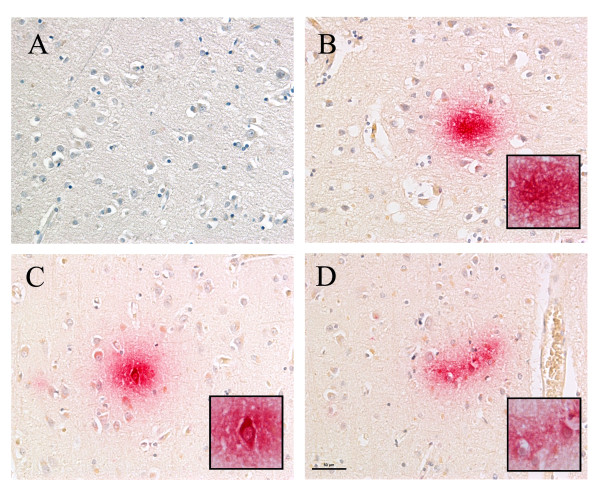
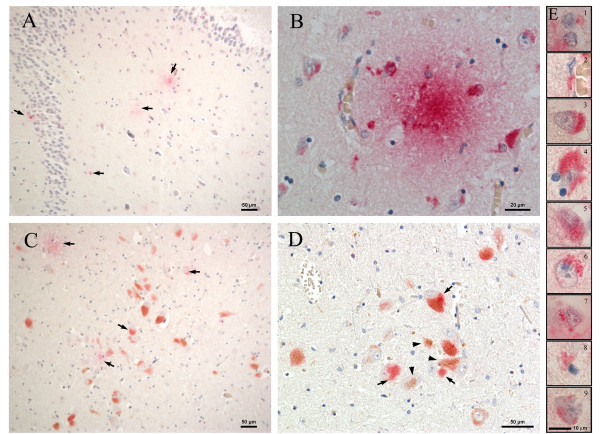
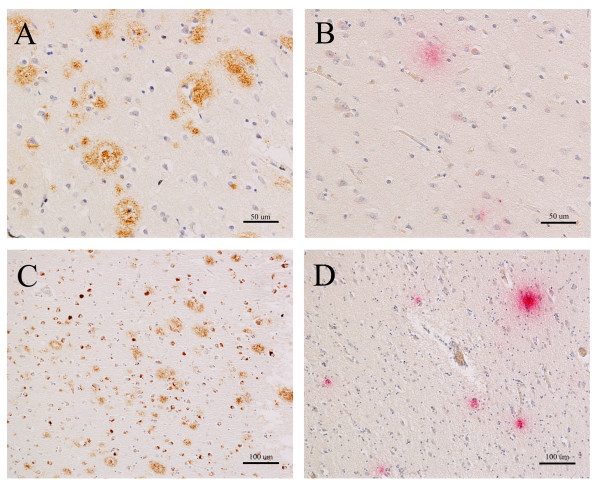
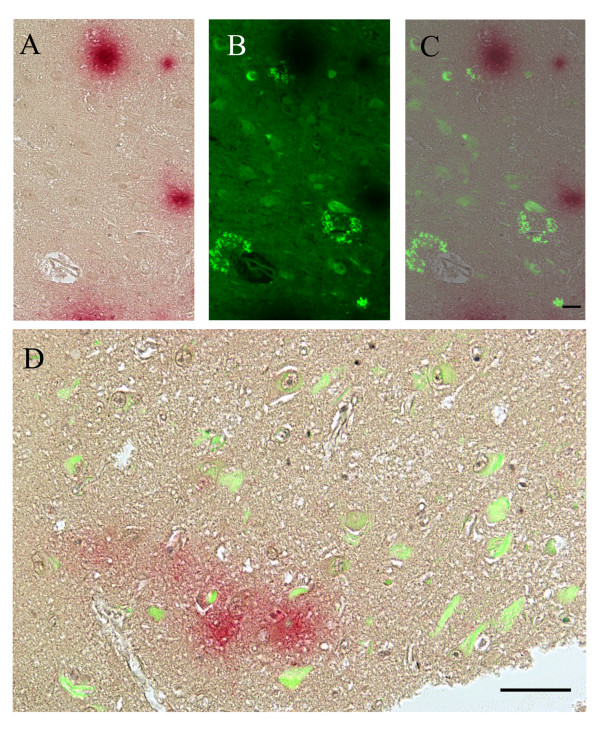
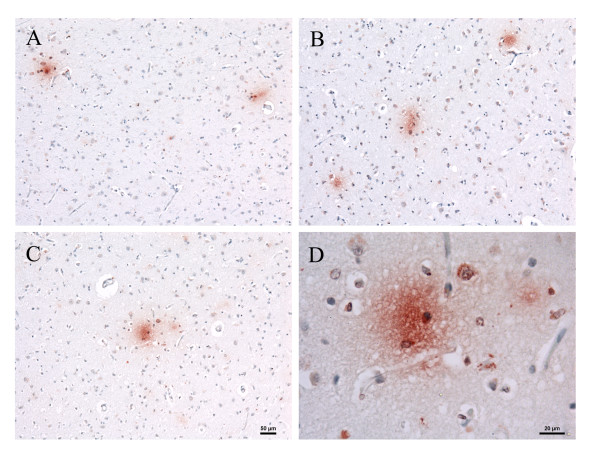
Background: Sporadic late-onset Alzheimer's disease (AD) appears to evolve from an interplay between genetic and environmental factors. One environmental factor that continues to be of great interest is that of Chlamydia pneumoniae infection and its association with late-onset disease. Detection of this organism in clinical and autopsy samples has proved challenging using a variety of molecular and histological techniques. Our current investigation utilized immunohistochemistry with a battery of commercially available anti-C. pneumoniae antibodies to determine whether C. pneumoniae was present in areas typically associated with AD neuropathology from 5 AD and 5 non-AD control brains. Results: Immunoreactivity for C. pneumoniae antigens was observed both intracellularly in neurons, neuroglia, endothelial cells, and peri-endothelial cells, and extracellularly in the frontal and temporal cortices of the AD brain with multiple C. pneumoniae-specific antibodies. This immunoreactivity was seen in regions of amyloid deposition as revealed by immunolabeling with two different anti-beta amyloid antibodies. Thioflavin S staining, overlaid with C. pneumoniae immunolabeling, demonstrated no direct co-localization of the organism and amyloid plaques. Further, the specificity of C. pneumoniae labeling of AD brain sections was demonstrated using C. pneumoniae antibodies pre-absorbed against amyloid β 1-40 and 1-42 peptides. Conclusions: Anti-C. pneumoniae antibodies, obtained commercially, identified both typical intracellular and atypical extracellular C. pneumoniae antigens in frontal and temporal cortices of the AD brain. C. pneumoniae, amyloid deposits, and neurofibrillary tangles were present in the same regions of the brain in apposition to one another. Although additional studies are required to conclusively characterize the nature of Chlamydial immunoreactivity in the AD brain, these results further implicate C. pneumoniae infection with the pathogenesis of Alzheimer's disease.
Overview
The claims and statistics of this paper haven’t been checked yet.
Run the check — free, no account needed. It reads the open-access text and checks the sources it cites.
Integrity signals
Registry
Cites
Statistics
Figures
Verification
Claims the paper makes
The claims and statistics of this paper haven’t been checked yet.
Run the check — free, no account needed. It reads the open-access text and checks the sources it cites.
Claims other papers make about this one
Each is checked against this paper’s own text: does it say what the citing paper says it does?
The source backs part of the claim, not all of it — or backs it for a different population, condition or comparison.
In the citing paper
“C. pneumoniae antigens have been detected inside both astrocytes and microglia in post-mortem human brains9,11,67,68.”
From Chlamydia pneumoniae can infect the central nervous system via the olfactory and trigeminal nerves and contributes to Alzheimer’s disease risk (2022) · cites this paper as [67]
Experimental — accuracy not yet measured
Self-check
Percentages, sums and reported differences re-computed from the paper’s own numbers.
The self-check needs the paper’s full text.
Citations
Cites
Mirra, S. S., Heyman, A., McKeel, D., Sumi, S. M., Crain, B. J., Brownlee, L. M., Vogel, F. S., Hughes, J. P., Belle, G. V., Berg, L., et al. (1991) · Neurology · doi:10.1212/wnl.41.4.479 · Cited by 4,961
Diffusible, nonfibrillar ligands derived from Aβ 1–42 are potent central nervous system neurotoxins
Lambert, M. P., Barlow, A. K., Chromy, B. A., Edwards, C., Freed, R., Liosatos, M., Morgan, T. E., Rozovsky, I., Trommer, B., Viola, K. L., et al. (1998) · Proceedings of the National Academy of Sciences · doi:10.1073/pnas.95.11.6448 · Cited by 3,506
Consortium to Establish a Registry for Alzheimer's Disease (CERAD)
Fillenbaum, G., & Heyman, A. (2002) · doi:10.1002/0470846410.ch42(iii · Cited by 2,859
The Alzheimer's Disease-Associated Amyloid β-Protein Is an Antimicrobial Peptide
Soscia, S. J., Kirby, J. E., Washicosky, K. J., Tucker, S. M., Ingelsson, M., Hyman, B., Burton, M. A., Goldstein, L. E., Duong, S., Tanzi, R. E., et al. (2010) · PLoS ONE · doi:10.1371/journal.pone.0009505 · Cited by 1,060
Classification and basic pathology of Alzheimer disease
Duyckaerts, C., Delatour, B., & Potier, M.-C. (2009) · Acta Neuropathologica · doi:10.1007/s00401-009-0532-1 · Cited by 1,031
Age, Neuropathology, and Dementia
Savva, G. M., Wharton, S. B., Ince, P. G., Forster, G., Matthews, F. E., & Brayne, C. (2009) · New England Journal of Medicine · doi:10.1056/nejmoa0806142 · Cited by 900
Epidemiology and Clinical Characteristics of Community-Acquired Pneumonia in Hospitalized Children
Michelow, I. C., Olsen, K. D., Lozano, J., Rollins, N. K., Duffy, L. B., Ziegler, T. T., Kauppila, J., Leinonen, M., & McCracken, G. H. (2004) · PEDIATRICS · doi:10.1542/peds.113.4.701 · Cited by 709
Takahashi, R. H., Milner, T. A., Li, F., Nam, E. E., Edgar, M. A., Yamaguchi, H., Beal, M. F., Xu, H., Greengard, P., & Gouras, G. K. (2002) · The American Journal of Pathology · doi:10.1016/s0002-9440(10)64463-x · Cited by 706
Herpes simplex virus type 1 in brain and risk of Alzheimer's disease
Itzhaki, R. F., Lin, W., Shang, D., Wilcock, G. K., Faragher, B. E., & Jamieson, G. A. (1997) · The Lancet · doi:10.1016/s0140-6736(96)10149-5 · Cited by 671
Rasmussen, S. J., Eckmann, L., Quayle, A. J., Shen, L., Zhang, Y., Anderson, D. J., Fierer, J., Stephens, R. S., & Kagnoff, M. F. (1997) · Journal of Clinical Investigation · doi:10.1172/jci119136 · Cited by 514
Identification and localization of Chlamydia pneumoniae in the Alzheimer's brain
Balin, B. J., Gérard, H. C., Arking, E. J., Appelt, D. M., Branigan, P. J., Abrams, J. T., Whittum-Hudson, J. A., & Hudson, A. P. (1998) · Medical Microbiology and Immunology · doi:10.1007/s004300050071 · Cited by 506
Self-citationMechanisms of host cell exit by the intracellular bacterium Chlamydia
Hybiske, K., & Stephens, R. S. (2007) · Proceedings of the National Academy of Sciences · doi:10.1073/pnas.0703218104 · Cited by 489
Herpes simplex virus type 1 DNA is located within Alzheimer's disease amyloid plaques
Wozniak, M., Mee, A., & Itzhaki, R. (2009) · The Journal of Pathology · doi:10.1002/path.2449 · Cited by 464
Zhong, G., Fan, P., Ji, H., Dong, F., & Huang, Y. (2001) · The Journal of Experimental Medicine · doi:10.1084/jem.193.8.935 · Cited by 373
Intraneuronal Aβ accumulation and origin of plaques in Alzheimer's disease
Gouras, G. K., Almeida, C. G., & Takahashi, R. H. (2005) · Neurobiology of Aging · doi:10.1016/j.neurobiolaging.2005.05.022 · Cited by 338
Mechanism of amyloid plaque formation suggests an intracellular basis of Aβ pathogenicity
Friedrich, R. P., Tepper, K., Rönicke, R., Soom, M., Westermann, M., Reymann, K., Kaether, C., & Fändrich, M. (2010) · Proceedings of the National Academy of Sciences · doi:10.1073/pnas.0904532106 · Cited by 303 · cited 1×
“extracellular deposition, also have been demonstrated [ 3-6 ].”
BackgroundLue, L. F., Brachova, L., CIVIN, W. H., & Rogers, J. (1996) · PubMed · Cited by 299
Lue, L.-F., Brachova, L., Civin, H. W., & Rogers, J. (1996) · Journal of Neuropathology and Experimental Neurology · doi:10.1097/00005072-199655100-00008 · Cited by 246 · cited 1×
“These cytokine responses to infection parallel similar responses to amyloid accumulation [40].”
BackgroundChlamydia pneumoniae induces Alzheimer-like amyloid plaques in brains of BALB/c mice
Little, C. S., Hammond, C. J., MacIntyre, A., Balin, B. J., & Appelt, D. M. (2004) · Neurobiology of Aging · doi:10.1016/s0197-4580(03)00127-1 · Cited by 243
Self-citationChlamydia Inhibit Host Cell Apoptosis by Degradation of Proapoptotic BH3-only Proteins
Fischer, S. F., Vier, J., Kirschnek, S., Klos, A., Hess, S., Ying, S., & Häcker, G. A. (2004) · The Journal of Experimental Medicine · doi:10.1084/jem.20040402 · Cited by 201
Chlamydia pneumoniaeand atherosclerosis
Belland, R. J., Ouellette, S. P., Gieffers, J., & Byrne, G. I. (2004) · Cellular Microbiology · doi:10.1046/j.1462-5822.2003.00352.x · Cited by 199
Infiltration of the brain by pathogens causes Alzheimer’s disease
Itzhaki, R. F., Wozniak, M. A., Appelt, D. M., & Balin, B. J. (2004) · Neurobiology of Aging · doi:10.1016/j.neurobiolaging.2003.12.021 · Cited by 188
Self-citationChlamydophila (Chlamydia) pneumoniae in the Alzheimer's brain
Gérard, H. C., Dreses-Werringloer, U., Wildt, K. S., Deka, S., Oszust, C., Balin, B. J., Frey, W. H., Bordayo, E. Z., Whittum-Hudson, J. A., & Hudson, A. P. (2006) · FEMS Immunology & Medical Microbiology · doi:10.1111/j.1574-695x.2006.00154.x · Cited by 186
Self-citationEarly Olfactory Involvement in Alzheimer’s Disease
Christen‐Zaech, S., Kraftsik, R., Pillevuit, O., Kiraly, M., Martins, R. N., Khalili, K., & Judith Miklossy, A. (2003) · Canadian Journal of Neurological Sciences / Journal Canadien des Sciences Neurologiques · doi:10.1017/s0317167100002389 · Cited by 184
Miklossy, J., Khalili, K., Gern, L., Ericson, R. L., Darekar, P., Bolle, L., Hurlimann, J., & Paster, B. J. (2005) · Journal of Alzheimer's Disease · doi:10.3233/jad-2004-6608 · Cited by 163
Chlamydia pneumoniae Multiply in Neutrophil Granulocytes and Delay Their Spontaneous Apoptosis
van Zandbergen, G., Gieffers, J., Kothe, H., Rupp, J., Bollinger, A., Aga, E., Klinger, M. H. F., Brade, H., Dalhoff, K., Maass, M., et al. (2004) · The Journal of Immunology · doi:10.4049/jimmunol.172.3.1768 · Cited by 151
Alzheimerʼs disease—a spirochetosis?
Miklossy, J. (1993) · Neuroreport · doi:10.1097/00001756-199307000-00002 · Cited by 136
Alzheimer Disease -- A Spirochetosis?
Judith Miklossy, A. (1994) · Birkhäuser Boston eBooks · doi:10.1007/978-1-4615-8149-9_7 · Cited by 130
MacIntyre, A., Abramov, R., Hammond, C. J., Hudson, A. P., Arking, E. J., Little, C. S., Appelt, D. M., & Balin, B. J. (2002) · Journal of Neuroscience Research · doi:10.1002/jnr.10519 · Cited by 98
Self-citationPhysiological Roles of Amyloid-?? and Implications for its Removal in Alzheimer???s Disease
Bishop, G. M., & Robinson, S. R. (2004) · Drugs & Aging · doi:10.2165/00002512-200421100-00001 · Cited by 94
Alzheimer's disease: An olfactory connection?
Mann, D. M. A., Tucker, C. M., & Yates, P. O. (1988) · Mechanisms of Ageing and Development · doi:10.1016/0047-6374(88)90058-9 · Cited by 72
MacIntyre, A., Hammond, C. J., Little, C. S., Appelt, D. M., & Balin, B. J. (2002) · FEMS Microbiology Letters · doi:10.1111/j.1574-6968.2002.tb11470.x · Cited by 68
Self-citationGieffers, J., Pohl, D., Treib, J., Dittmann, R., Stephan, C., Klotz, K.-F., Hanefeld, F. A., Solbach, W., Haass, A., & Maass, M. (2001) · Annals of Neurology · doi:10.1002/ana.1020 · Cited by 66
D'Andrea, M. R., Nagele, R. G., Wang, H.-Y., & Lee, D. H. S. (2002) · Neuroscience Letters · doi:10.1016/s0304-3940(02)00875-3 · Cited by 64
Dreses‐Werringloer, U., Bhuiyan, M., Zhao, Y., Gérard, H. C., Whittum‐Hudson, J. A., & Hudson, A. P. (2008) · International Journal of Medical Microbiology · doi:10.1016/j.ijmm.2008.07.002 · Cited by 54
Du, C., Yao, S., Ljunggren‐Rose, A., & Sriram, S. (2002) · The Journal of Experimental Medicine · doi:10.1084/jem.20020393 · Cited by 52
Chlamydia pneumoniae infection of brain cells: An in vitro study
Boelen, E., Steinbusch, H. W. M., van der Ven, A. J. A. M., Grauls, G., Bruggeman, C. A., & Stassen, F. R. M. (2006) · Neurobiology of Aging · doi:10.1016/j.neurobiolaging.2006.02.014 · Cited by 46
Campbell, L. A., & Kuo, C. (2003) · Seminars in Respiratory Infections · doi:10.1053/srin.2003.50006 · Cited by 44
Inhibition of apoptosis in neuronal cells infected with Chlamydophila (Chlamydia) pneumoniae
Appelt, D. M., Roupas, M. R., Way, D. S., Bell, M. G., Albert, E. V., Hammond, C. J., & Balin, B. J. (2008) · BMC Neuroscience · doi:10.1186/1471-2202-9-13 · Cited by 39
Self-citationSriram, S., Ljunggren‐Rose, A., Yao, S., & Whetsell, W. O. (2005) · The Journal of Infectious Diseases · doi:10.1086/431518 · Cited by 37
Little, C. S., Bowe, A., Lin, R., Litsky, J., Fogel, R. M., Balin, B. J., & Fresa-Dillon, K. L. (2005) · Infection and Immunity · doi:10.1128/iai.73.3.1723-1734.2005 · Cited by 35
Self-citationVikatmaa, P., Lajunen, T. K., Ikonen, T. S., Pussinen, P. J., Lepäntalo, M., Leinonen, M., & Saikku, P. (2009) · Cardiovascular Pathology · doi:10.1016/j.carpath.2008.10.012 · Cited by 28
Fernández-Obregón, A. C., & Patton, D. L. (2007) · PubMed · Cited by 27
Chlamydia pneumoniae antibodies in various subtypes of ischemic stroke in Indian patients
Bandaru, V. C. S. S., Laxmi, V., Neeraja, M., Alladi, S., Meena, A., Borgohain, R., Keerthi, A. S., & Kaul, S. (2008) · Journal of the Neurological Sciences · doi:10.1016/j.jns.2008.05.008 · Cited by 26
Kammerman, E. M., Neumann, D. M., Ball, M. J., Lukiw, W. J., & Hill, J. M. (2005) · Medical Hypotheses · doi:10.1016/j.mehy.2005.07.033 · Cited by 24
Chlamydiae Host Cell Interactions Revealed Using DNA Microarrays
Mahony, J. B. (2002) · Annals of the New York Academy of Sciences · doi:10.1111/j.1749-6632.2002.tb05952.x · Cited by 23
Characterization of Antiapoptotic Activities of Chlamydia pneumoniae in Infected Cells
Fischer, S. F., & Häcker, G. A. (2003) · Annals of the New York Academy of Sciences · doi:10.1196/annals.1299.105 · Cited by 16
Stuart, E. S., Troidle, K. M., & MacDonald, A. (1994) · Current Microbiology · doi:10.1007/bf01569052 · Cited by 12
Uptake and intra-inclusion accumulation of exogenous immunoglobulin by Chlamydia-infected cells
Pollack, D. V., Croteau, N. L., & Stuart, E. S. (2008) · BMC Microbiology · doi:10.1186/1471-2180-8-213 · Cited by 5
Cited by
Sorted by citations
Interactions between the microbiota, immune and nervous systems in health and disease
Fung, T. C., Olson, C. A., & Hsiao, E. Y. (2017) · Nature Neuroscience · doi:10.1038/nn.4476 · Cited by 1,900
Association between periodontal pathogens and systemic disease
Bui, F. Q., Almeida-da-Silva, C. L. C., Huynh, B. C., Trinh, A., Liu, J., Woodward, J., Asadi, H., & Ojcius, D. M. (2019) · Biomedical Journal · doi:10.1016/j.bj.2018.12.001 · Cited by 882
Brain-Gut-Microbiota Axis in Alzheimer’s Disease
Kowalski, K., & Mulak, A. (2019) · Journal of Neurogastroenterology and Motility · doi:10.5056/jnm18087 · Cited by 826
Poole, S., Singhrao, S. K., Kesavalu, L. N., Curtis, M. A., & Crean, S. (2013) · Journal of Alzheimer s Disease · doi:10.3233/jad-121918 · Cited by 610
Role of gut-brain axis, gut microbial composition, and probiotic intervention in Alzheimer's disease
Kesika, P., Suganthy, N., Sivamaruthi, B. S., & Chaiyasut, C. (2021) · Life Sciences · doi:10.1016/j.lfs.2020.118627 · Cited by 479
Metadata
- Authors
- Hammond, C. J., Hallock, L. R., Howanski, R. J., Appelt, D. M., Little, C. S., & Balin, B. J.
- Affiliations
- Philadelphia College of Osteopathic Medicine (US)
- Corresponding author
- Balin, Brian J
- Venue
- BMC Neuroscience
- Published
- 2010-09-23
- Volume
- 11
- Issue
- 1
- Pages
- 121-121
- ISSN
- 1471-2202 (ISSN-L)
- PMC
- PMC2949767
- OpenAlex
- W2056188402
- Cited by
- 156
- References
- 49
- Citations by year
- 2026: 5 · 2025: 11 · 2024: 6 · 2023: 4 · 2022: 21 · 2021: 12 · 2020: 17 · 2019: 11 · 2018: 9 · 2017: 8 · 2016: 12 · 2015: 7 · 2014: 11 · 2013: 11 · 2012: 4
- FWCI
- 4.76
- Type
- journal article
- Language
- en
- Open access
- gold
- doi.org
- Licence
- cc-by
- Locations
- BMC Neuroscience (publishedVersion, cc-by)
- PubMed Central (publishedVersion, cc-by)
- PubMed (publishedVersion)
- Digital Commons - PCOM (Philadelphia College of Osteopathic Medicine) (submittedVersion, cc-by)
- DOAJ (DOAJ: Directory of Open Access Journals) (submittedVersion, cc-by-sa)
- Funders
- Drexel University
- Topics
- Life Sciences › Neuroscience › Cellular and Molecular Neuroscience › Alzheimer's disease research and treatments
- Life Sciences › Neuroscience › Neurology › Neuroinflammation and Neurodegeneration Mechanisms
- Health Sciences › Medicine › Psychiatry and Mental health › Dementia and Cognitive Impairment Research
- Keywords
- Chlamydia pneumoniae, Alzheimer's disease, late-onset Alzheimer's disease, chlamydia, amyloid plaques, amyloid-beta, neurofibrillary tangles, frontal and temporal cortex, antibody specificity, neuroinflammation, Alzheimer's disease pathogenesis
- MeSH terms
- Aged, Alzheimer Disease, Brain, Brain Chemistry, Cerebral Cortex, Chlamydia Infections, Coloring Agents, Female, Humans, Immunohistochemistry, Male, Thiazoles, Tissue Banks, Reproducibility of Results, Amyloid beta-Peptides, Neurofibrillary Tangles, Chlamydophila pneumoniae, Benzothiazoles, Plaque, Amyloid
About these checks
Registry, retraction, Cites and statistics results are computed, not judged, with one exception: a printed reference that no index lists is read once by a model before it counts as a citation error. Claims are extracted by a model and kept only when their quote appears verbatim in the text; each cited source is then checked, with a model’s help, for whether it says what the claim relies on. Those verdicts can be wrong — read the claim’s quote and the cited source before relying on one.
Statistics and arithmetic are recomputed, not judged.
Confidence bands are shown only for fields calibrated on our annotated test set. None is calibrated yet, so no band is shown.
What counts as a claim ›How we measure confidence ›How we check this ›
Are you an author, or do you see a problem with this page? Request a review
