

The DOI matches its Crossref record; 49 of the 49 references it cites were found in a registry or an index.
Immunohistological detection of Chlamydia pneumoniae in the Alzheimer's disease brain
Open accessAbstract
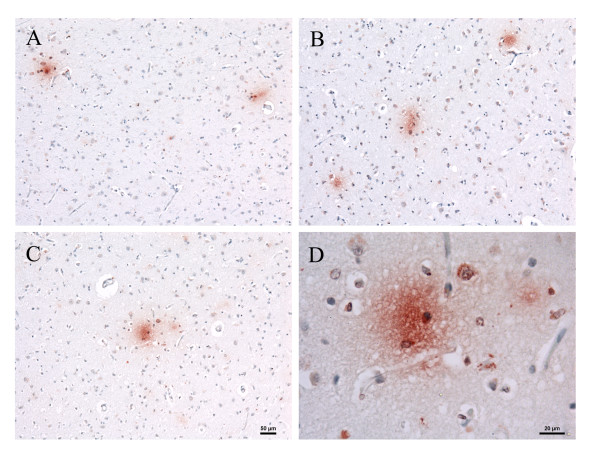
Background: Sporadic late-onset Alzheimer's disease (AD) appears to evolve from an interplay between genetic and environmental factors. One environmental factor that continues to be of great interest is that of Chlamydia pneumoniae infection and its association with late-onset disease. Detection of this organism in clinical and autopsy samples has proved challenging using a variety of molecular and histological techniques. Our current investigation utilized immunohistochemistry with a battery of commercially available anti-C. pneumoniae antibodies to determine whether C. pneumoniae was present in areas typically associated with AD neuropathology from 5 AD and 5 non-AD control brains. Results: Immunoreactivity for C. pneumoniae antigens was observed both intracellularly in neurons, neuroglia, endothelial cells, and peri-endothelial cells, and extracellularly in the frontal and temporal cortices of the AD brain with multiple C. pneumoniae-specific antibodies. This immunoreactivity was seen in regions of amyloid deposition as revealed by immunolabeling with two different anti-beta amyloid antibodies. Thioflavin S staining, overlaid with C. pneumoniae immunolabeling, demonstrated no direct co-localization of the organism and amyloid plaques. Further, the specificity of C. pneumoniae labeling of AD brain sections was demonstrated using C. pneumoniae antibodies pre-absorbed against amyloid β 1-40 and 1-42 peptides. Conclusions: Anti-C. pneumoniae antibodies, obtained commercially, identified both typical intracellular and atypical extracellular C. pneumoniae antigens in frontal and temporal cortices of the AD brain. C. pneumoniae, amyloid deposits, and neurofibrillary tangles were present in the same regions of the brain in apposition to one another. Although additional studies are required to conclusively characterize the nature of Chlamydial immunoreactivity in the AD brain, these results further implicate C. pneumoniae infection with the pathogenesis of Alzheimer's disease.
Overview
The claims and statistics of this paper haven’t been checked yet.
Run the check — free, no account needed. It reads the open-access text and checks the sources it cites.
Integrity signals
Registry
Cites
Statistics
Figures
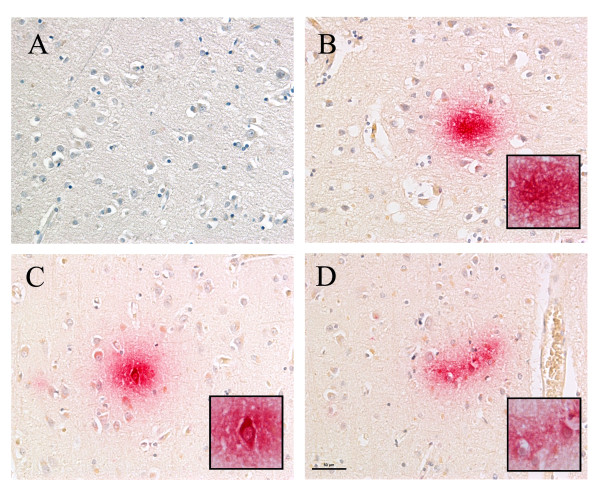
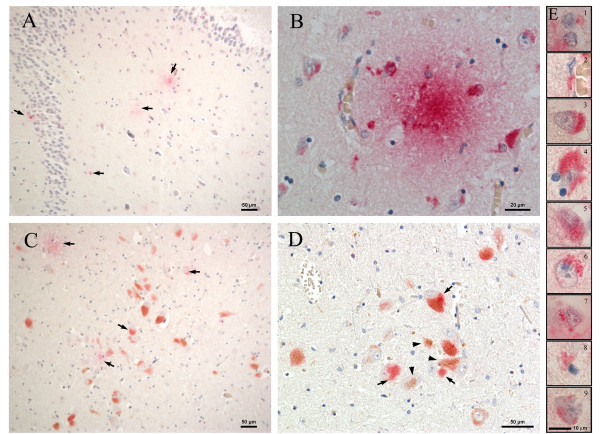
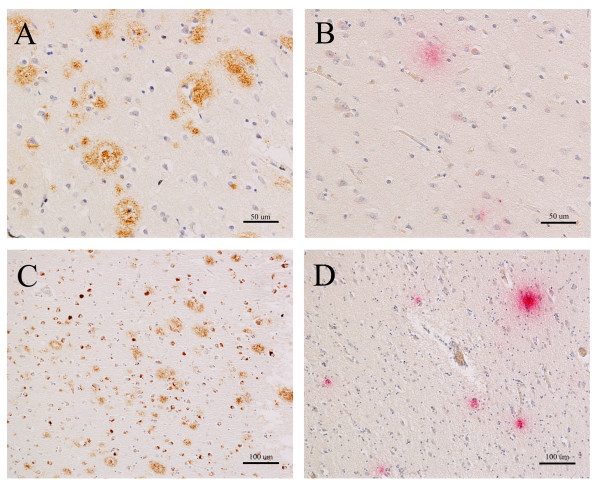
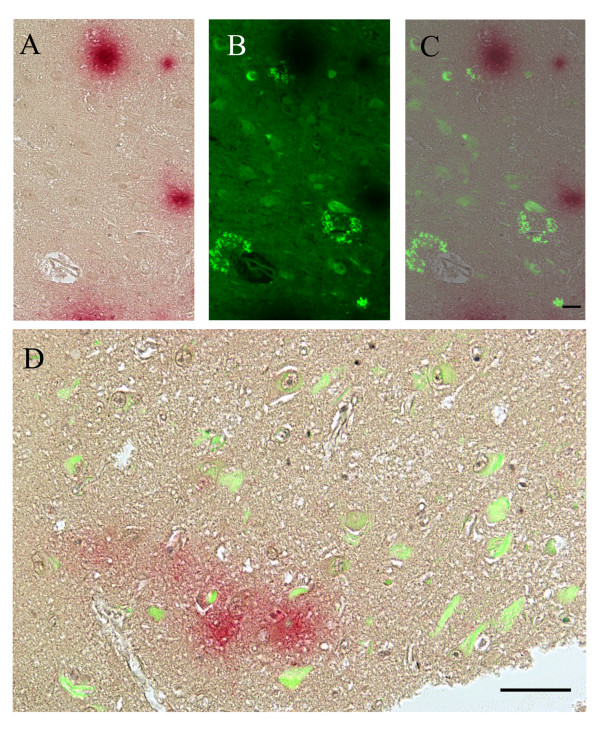
Verification
Claims the paper makes
The claims and statistics of this paper haven’t been checked yet.
Run the check — free, no account needed. It reads the open-access text and checks the sources it cites.
Claims other papers make about this one
Each is checked against this paper’s own text: does it say what the citing paper says it does?
The source backs part of the claim, not all of it — or backs it for a different population, condition or comparison.
In the citing paper
“C. pneumoniae antigens have been detected inside both astrocytes and microglia in post-mortem human brains9,11,67,68.”
From Chlamydia pneumoniae can infect the central nervous system via the olfactory and trigeminal nerves and contributes to Alzheimer’s disease risk (2022) · cites this paper as [67]
Experimental — accuracy not yet measured
Self-check
Percentages, sums and reported differences re-computed from the paper’s own numbers.
The self-check needs the paper’s full text.
Citations
Cites
Mirra, S. S., Heyman, A., McKeel, D., Sumi, S. M., Crain, B. J., Brownlee, L. M., Vogel, F. S., Hughes, J. P., Belle, G. V., Berg, L., et al. (1991) · Neurology · doi:10.1212/wnl.41.4.479 · Cited by 4,961
Diffusible, nonfibrillar ligands derived from Aβ 1–42 are potent central nervous system neurotoxins
Lambert, M. P., Barlow, A. K., Chromy, B. A., Edwards, C., Freed, R., Liosatos, M., Morgan, T. E., Rozovsky, I., Trommer, B., Viola, K. L., et al. (1998) · Proceedings of the National Academy of Sciences · doi:10.1073/pnas.95.11.6448 · Cited by 3,506
Consortium to Establish a Registry for Alzheimer's Disease (CERAD)
Fillenbaum, G., & Heyman, A. (2002) · doi:10.1002/0470846410.ch42(iii · Cited by 2,859
The Alzheimer's Disease-Associated Amyloid β-Protein Is an Antimicrobial Peptide
Soscia, S. J., Kirby, J. E., Washicosky, K. J., Tucker, S. M., Ingelsson, M., Hyman, B., Burton, M. A., Goldstein, L. E., Duong, S., Tanzi, R. E., et al. (2010) · PLoS ONE · doi:10.1371/journal.pone.0009505 · Cited by 1,060
Classification and basic pathology of Alzheimer disease
Duyckaerts, C., Delatour, B., & Potier, M.-C. (2009) · Acta Neuropathologica · doi:10.1007/s00401-009-0532-1 · Cited by 1,031
Age, Neuropathology, and Dementia
Savva, G. M., Wharton, S. B., Ince, P. G., Forster, G., Matthews, F. E., & Brayne, C. (2009) · New England Journal of Medicine · doi:10.1056/nejmoa0806142 · Cited by 900
Epidemiology and Clinical Characteristics of Community-Acquired Pneumonia in Hospitalized Children
Michelow, I. C., Olsen, K. D., Lozano, J., Rollins, N. K., Duffy, L. B., Ziegler, T. T., Kauppila, J., Leinonen, M., & McCracken, G. H. (2004) · PEDIATRICS · doi:10.1542/peds.113.4.701 · Cited by 709
Takahashi, R. H., Milner, T. A., Li, F., Nam, E. E., Edgar, M. A., Yamaguchi, H., Beal, M. F., Xu, H., Greengard, P., & Gouras, G. K. (2002) · The American Journal of Pathology · doi:10.1016/s0002-9440(10)64463-x · Cited by 706
Herpes simplex virus type 1 in brain and risk of Alzheimer's disease
Itzhaki, R. F., Lin, W., Shang, D., Wilcock, G. K., Faragher, B. E., & Jamieson, G. A. (1997) · The Lancet · doi:10.1016/s0140-6736(96)10149-5 · Cited by 671
Rasmussen, S. J., Eckmann, L., Quayle, A. J., Shen, L., Zhang, Y., Anderson, D. J., Fierer, J., Stephens, R. S., & Kagnoff, M. F. (1997) · Journal of Clinical Investigation · doi:10.1172/jci119136 · Cited by 514
Cited by
Sorted by citations
Interactions between the microbiota, immune and nervous systems in health and disease
Fung, T. C., Olson, C. A., & Hsiao, E. Y. (2017) · Nature Neuroscience · doi:10.1038/nn.4476 · Cited by 1,900
Association between periodontal pathogens and systemic disease
Bui, F. Q., Almeida-da-Silva, C. L. C., Huynh, B. C., Trinh, A., Liu, J., Woodward, J., Asadi, H., & Ojcius, D. M. (2019) · Biomedical Journal · doi:10.1016/j.bj.2018.12.001 · Cited by 882
Brain-Gut-Microbiota Axis in Alzheimer’s Disease
Kowalski, K., & Mulak, A. (2019) · Journal of Neurogastroenterology and Motility · doi:10.5056/jnm18087 · Cited by 826
Poole, S., Singhrao, S. K., Kesavalu, L. N., Curtis, M. A., & Crean, S. (2013) · Journal of Alzheimer s Disease · doi:10.3233/jad-121918 · Cited by 610
Role of gut-brain axis, gut microbial composition, and probiotic intervention in Alzheimer's disease
Kesika, P., Suganthy, N., Sivamaruthi, B. S., & Chaiyasut, C. (2021) · Life Sciences · doi:10.1016/j.lfs.2020.118627 · Cited by 479
The Infectious Etiology of Alzheimer’s Disease
Sochocka, M., Zwolińska, K., & Leszek, J. (2017) · Current Neuropharmacology · doi:10.2174/1570159x15666170313122937 · Cited by 399
Zhan, X., Stamova, B. S., & Sharp, F. R. (2018) · Frontiers in Aging Neuroscience · doi:10.3389/fnagi.2018.00042 · Cited by 361
The Impact of Systemic Inflammation on Alzheimer’s Disease Pathology
Xie, J., Van Hoecke, L., & Vandenbroucke, R. E. (2022) · Frontiers in Immunology · doi:10.3389/fimmu.2021.796867 · Cited by 324
The Physiological Roles of Amyloid-β Peptide Hint at New Ways to Treat Alzheimer's Disease
Brothers, H. M., Gosztyla, M. L., & Robinson, S. R. (2018) · Frontiers in Aging Neuroscience · doi:10.3389/fnagi.2018.00118 · Cited by 314
Infectious Agents and Neurodegeneration
Chiara, G. D., Marcocci, M. E., Sgarbanti, R., Civitelli, L., Ripoli, C., Piacentini, R., Garaci, E., Grassi, C., & Palamara, A. T. (2012) · Molecular Neurobiology · doi:10.1007/s12035-012-8320-7 · Cited by 232
The Potential Role of Gut Microbiota in Alzheimer’s Disease: From Diagnosis to Treatment
Varesi, A., Pierella, E., Romeo, M., Piccini, G. B., Alfano, C., Bjørklund, G., Oppong, A., Ricevuti, G., Esposito, C., Chirumbolo, S., et al. (2022) · Nutrients · doi:10.3390/nu14030668 · Cited by 225
Emerging role of gut microbiota dysbiosis in neuroinflammation and neurodegeneration
Solanki, R., Karande, A. A., & Ranganathan, P. (2023) · Frontiers in Neurology · doi:10.3389/fneur.2023.1149618 · Cited by 194
Bacterial Infection and Alzheimer's Disease: A Meta-Analysis
Maheshwari, P., & Eslick, G. D. (2014) · Journal of Alzheimer's Disease · doi:10.3233/jad-140621 · Cited by 183
Can oral infection be a risk factor for Alzheimer's disease?
Olsen, I., & Singhrao, S. K. (2015) · Journal of Oral Microbiology · doi:10.3402/jom.v7.29143 · Cited by 192
The Possibility of an Infectious Etiology of Alzheimer Disease
Ashraf, G. M., Tarasov, V. V., Makhmutovа, A., Chubarev, V. N., Avila-Rodriguez, M., Bachurin, S. O., & Aliev, G. (2019) · Molecular Neurobiology · doi:10.1007/s12035-018-1388-y · Cited by 175
Teixeira, F. B., Saito, M. T., MATHEUS, F. C., Prediger, R. D., Yamada, E. S., Maia, C. D. S. F., & Lima, R. R. (2017) · Frontiers in Aging Neuroscience · doi:10.3389/fnagi.2017.00327 · Cited by 189
Do infections have a role in the pathogenesis of Alzheimer disease?
Itzhaki, R. F., Golde, T. E., Heneka, M. T., & Readhead, B. (2020) · Nature Reviews Neurology · doi:10.1038/s41582-020-0323-9 · Cited by 174
Pathogenic microbes, the microbiome, and Alzheimer’s disease (AD)
Hill, J. M., Clément, C., Pogue, A. I., Bhattacharjee, S., Zhao, Y., & Lukiw, W. J. (2014) · Frontiers in Aging Neuroscience · doi:10.3389/fnagi.2014.00127 · Cited by 170
Kell, D. B., & Pretorius, E. (2015) · Integrative Biology · doi:10.1039/c5ib00158g · Cited by 170
Can Infections Cause Alzheimer's Disease?
Mawanda, F., & Wallace, R. B. (2013) · Epidemiologic Reviews · doi:10.1093/epirev/mxs007 · Cited by 151
Atherosclerosis and Alzheimer - diseases with a common cause? Inflammation, oxysterols, vasculature
Lathe, R., Tsitrina, A. A., & Kotelevtsev, Y. V. (2014) · BMC Geriatrics · doi:10.1186/1471-2318-14-36 · Cited by 141
Respiratory infection promotes T cell infiltration and amyloid-β deposition in APP/PS1 mice
McManus, R. M., Higgins, S. C., Mills, K. H. G., & Lynch, M. A. (2013) · Neurobiology of Aging · doi:10.1016/j.neurobiolaging.2013.07.025 · Cited by 134
Infectious agents and Alzheimer's disease
Piekut, T., Hurła, M., Banaszek, N., Szejn, P., Dorszewska, J., Kozubski, W., & Prendecki, M. (2022) · Journal of Integrative Neuroscience · doi:10.31083/j.jin2102073 · Cited by 123
Direct Visualization of Fungal Infection in Brains from Patients with Alzheimer's Disease
Pisa, D., Alonso, R., Juarranz, Á., Rábano, A., & Carrasco, L. (2014) · Journal of Alzheimer s Disease · doi:10.3233/jad-141386 · Cited by 113
Microbial Infections Are a Risk Factor for Neurodegenerative Diseases
Lotz, S. K., Blackhurst, B. M., Reagin, K. L., & Funk, K. E. (2021) · Frontiers in Cellular Neuroscience · doi:10.3389/fncel.2021.691136 · Cited by 100
Roodveldt, C., Labrador‐Garrido, A., González‐Rey, E., Lachaud, C. C., Guilliams, T., Fernández-Montesinos, R., Benitez-Rondan, A., Robledo, G., Hmadcha, A., Delgado, M., et al. (2013) · PLoS ONE · doi:10.1371/journal.pone.0079160 · Cited by 99
Vojtechova, I., Machacek, T., Kristofikova, Z., Stuchlik, A., & Petrasek, T. (2022) · PLOS Pathogens · doi:10.1371/journal.ppat.1010929 · Cited by 92
Percy, M. E., Kruck, T. P. A., Pogue, A. I., & Lukiw, W. J. (2011) · Journal of Inorganic Biochemistry · doi:10.1016/j.jinorgbio.2011.08.001 · Cited by 89
The gut microbiome and Alzheimer’s disease: Complex and bidirectional interactions
Tarawneh, R. M., & Penhos, E. (2022) · Neuroscience & Biobehavioral Reviews · doi:10.1016/j.neubiorev.2022.104814 · Cited by 92
Etiology and Pathogenesis of Late-Onset Alzheimer’s Disease
Balin, B. J., & Hudson, A. P. (2014) · Current Allergy and Asthma Reports · doi:10.1007/s11882-013-0417-1 · Cited by 86
Self-citationChlamydia pneumoniae: An Etiologic Agent for Late-Onset Dementia
Balin, B. J., Hammond, C. J., Little, C. S., Hingley, S. T., Al-Atrache, Z., Appelt, D. M., Whittum-Hudson, J. A., & Hudson, A. P. (2018) · Frontiers in Aging Neuroscience · doi:10.3389/fnagi.2018.00302 · Cited by 77
Self-citationCarter, C. (2017) · Journal of Alzheimer s Disease Reports · doi:10.3233/adr-170017 · Cited by 74
Neuromicrobiology: How Microbes Influence the Brain
de la Fuente‐Núñez, C., Meneguetti, B. T., Franco, O. L., & Lu, T. K. (2017) · ACS Chemical Neuroscience · doi:10.1021/acschemneuro.7b00373 · Cited by 75
Nagu, P., Parashar, A., Behl, T., & Mehta, V. (2021) · Journal of Molecular Neuroscience · doi:10.1007/s12031-021-01829-3 · Cited by 68
Does Helicobacter pylori Infection Increase Incidence of Dementia? The Personnes Agées QUID Study
Baudron, C. R., Letenneur, L., Langlais, A., Buissonnière, A., Mégraud, F., Dartigues, J., Salles, N., & Study, F. T. P. A. Q. (2012) · Journal of the American Geriatrics Society · doi:10.1111/jgs.12065 · Cited by 66
Chacko, A., Delbaz, A., Walkden, H., Basu, S., Armitage, C. W., Eindorf, T., Trim, L. K., Miller, E., West, N. P., St John, J. A., et al. (2022) · Scientific Reports · doi:10.1038/s41598-022-06749-9 · Cited by 65
Novel targets in Alzheimer’s disease: A special focus on microglia
Balducci, C., & Forloni, G. (2018) · Pharmacological Research · doi:10.1016/j.phrs.2018.01.017 · Cited by 62
Kell, D. B., Potgieter, M., & Pretorius, E. (2015) · F1000Research · doi:10.12688/f1000research.6709.2 · Cited by 59
Lynch, M. A. (2013) · Immunology · doi:10.1111/imm.12156 · Cited by 64
Periodontitis: a potential risk factor for Alzheimer's disease
Cerajewska, T. L., Davies, M., & West, N. X. (2015) · BDJ · doi:10.1038/sj.bdj.2014.1137 · Cited by 63
Activation of epidermal growth factor receptor is required for Chlamydia trachomatis development
Patel, A. L., Chen, X., Wood, S. T., Stuart, E. S., Arcaro, K. F., Molina, D. P., Petrović, S., Furdui, C. M., & Tsang, A. W. (2014) · BMC Microbiology · doi:10.1186/s12866-014-0277-4 · Cited by 56
Pretorius, E., Bester, J., & Kell, D. B. (2016) · Journal of Alzheimer s Disease · doi:10.3233/jad-160318 · Cited by 60
The Use of Antimicrobial and Antiviral Drugs in Alzheimer’s Disease
Iqbal, U., Zeng, E., & Pasinetti, G. M. (2020) · International Journal of Molecular Sciences · doi:10.3390/ijms21144920 · Cited by 55
Clinical and Preclinical Studies of Fermented Foods and Their Effects on Alzheimer’s Disease
Kumar, M. R., Azizi, N. F., Yeap, S. K., Abdullah, J. O., Khalid, M., Omar, A. R., Osman, M. A., Leow, T. C., Mortadza, S. A. S., & Alitheen, N. B. (2022) · Antioxidants · doi:10.3390/antiox11050883 · Cited by 60
Foroughi, M. R., Torabinejad, M., Angelov, N., Ojcius, D. M., Parang, K., Ravnan, M. C., & Lam, J. T. (2025) · Infection · doi:10.1007/s15010-025-02568-y · Cited by 60
Tang, Z., Liang, D., Cheng, M., Su, X., Liu, R., Zhang, Y., & Wu, H. (2020) · Journal of Molecular Neuroscience · doi:10.1007/s12031-020-01629-1 · Cited by 56
Infectious burden and cognitive decline in the northern Manhattan study
Wright, C. B., Gardener, H., Dong, C., Yoshita, M., DeCarli, C., Sacco, R. L., Stern, Y., & Elkind, M. S. V. (2015) · Journal of the American Geriatrics Society · doi:10.1111/jgs.13557 · Cited by 52
Wang, J., Ye, F., Cheng, X., Zhang, X., Liu, F., Liu, G., Ni, M., Qiao, S., Zhou, W., & Zhang, Y. (2016) · Journal of Alzheimer s Disease · doi:10.3233/jad-160138 · Cited by 52
Exploring pathological link between antimicrobial and amyloid peptides
Tang, Y., Zhang, Y., Zhang, D., Liu, Y., Nussinov, R., & Zheng, J. (2024) · Chemical Society Reviews · doi:10.1039/d3cs00878a · Cited by 53
Pietro, M. D., Filardo, S., Romano, S., & Sessa, R. (2019) · Microorganisms · doi:10.3390/microorganisms7050140 · Cited by 51
Carter, C. (2010) · International Journal of Alzheimer s Disease · doi:10.4061/2010/140539 · Cited by 47
Lim, C., Hammond, C. J., Hingley, S. T., & Balin, B. J. (2014) · Journal of Neuroinflammation · doi:10.1186/s12974-014-0217-0 · Cited by 45
Self-citationCarter, C. (2010) · Neurochemistry International · doi:10.1016/j.neuint.2010.12.003 · Cited by 44
Dhami, M., Raj, K., & Singh, S. (2023) · Aging and Health Research · doi:10.1016/j.ahr.2023.100128 · Cited by 44
Shim, S.-M., Cheon, H., Jo, C., Koh, Y. H., Song, J., & Jeon, J. (2016) · Journal of Alzheimer s Disease · doi:10.3233/jad-160563 · Cited by 38
Salin, O., Törmäkangas, L., Leinonen, M., Saario, E., Hagström, M., Ketola, R. A., Saikku, P., Vuorela, H. J., & Vuorela, P. M. (2011) · Journal of Agricultural and Food Chemistry · doi:10.1021/jf2032473 · Cited by 41
Al-Atrache, Z., Lopez, D. B., Hingley, S. T., & Appelt, D. M. (2019) · BMC Neuroscience · doi:10.1186/s12868-019-0489-5 · Cited by 37
Self-citationSchlegel, P., Novotný, M., Klímová, B., & Vališ, M. (2019) · Journal of Alzheimer s Disease · doi:10.3233/jad-190460 · Cited by 39
Bocharova, O. V., Pandit, N. P., Molesworth, K., Fisher, A., Mychko, O., Makarava, N., & Baskakov, I. V. (2021) · Journal of Biological Chemistry · doi:10.1016/j.jbc.2021.100845 · Cited by 34
Joshi, Y. B., Giannopoulos, P. F., Chu, J., & Praticò, D. (2013) · Neurobiology of Aging · doi:10.1016/j.neurobiolaging.2013.11.016 · Cited by 29
The Viral Hypothesis in Alzheimer’s Disease: Novel Insights and Pathogen-Based Biomarkers
Naughton, S. X., Raval, U., & Pasinetti, G. M. (2020) · Journal of Personalized Medicine · doi:10.3390/jpm10030074 · Cited by 30
A 16S rRNA gene sequencing based study of oral microbiota in migraine patients in China
Jiang, W., Wang, T., Liu, C., Deng, M., Ren, X., Wang, F., Zhang, Y., Yu, X., Yao, L., & Wang, Y. (2021) · Bioengineered · doi:10.1080/21655979.2021.1933840 · Cited by 25
Alzheimer's disease – the ‘microbial hypothesis’ from a clinical and neuroimaging perspective
Frölich, L. (2020) · Psychiatry Research Neuroimaging · doi:10.1016/j.pscychresns.2020.111181 · Cited by 24
Woods, J. J., Skelding, K. A., Martin, K. L., Aryal, R., Sontag, E., Johnstone, D. M., Horvat, J. C., Hansbro, P. M., & Milward, E. A. (2019) · Brain Behavior and Immunity · doi:10.1016/j.bbi.2019.10.014 · Cited by 23
An agent-based model to investigate microbial initiation of Alzheimer’s via the olfactory system
Sundar, S., Battistoni, C., McNulty, R., Morales, F., Gorky, J. M., Foley, H. C., & Dhurjati, P. (2020) · Theoretical Biology and Medical Modelling · doi:10.1186/s12976-020-00123-w · Cited by 24
Rubin, K., & Glazer, S. (2016) · Immunobiology · doi:10.1016/j.imbio.2016.09.017 · Cited by 22
Cheok, Y. Y., Lee, C. Y. Q., Cheong, H. C., Looi, C. Y., & Wong, W. F. (2020) · Microorganisms · doi:10.3390/microorganisms8010127 · Cited by 24
Microbiome influences on neuro-immune interactions in neurodegenerative disease
Menees, K. B., Otero, B. A., & Tansey, M. G. (2022) · International review of neurobiology · doi:10.1016/bs.irn.2022.07.006 · Cited by 24
Chlamydia pneumoniae in Alzheimer's disease pathology
Subedi, L., Gaire, B. P., Koronyo, Y., Koronyo‐Hamaoui, M., & Crother, T. R. (2024) · Frontiers in Neuroscience · doi:10.3389/fnins.2024.1393293 · Cited by 24
Walkden, H., Delbaz, A., Nazareth, L., Batzloff, M., Shelper, T., Beacham, I. R., Chacko, A., Shah, M., Beagley, K. W., Tello Velasquez, J., et al. (2020) · PLOS Neglected Tropical Diseases · doi:10.1371/journal.pntd.0008017 · Cited by 21
Khoshbayan, A., Taheri, F., Moghadam, M. T., Chegini, Z., & Shariati, A. (2021) · Microbial Pathogenesis · doi:10.1016/j.micpath.2021.104803 · Cited by 20
Systemic Inflammation Causes Microglial Dysfunction With a Vascular AD phenotype
Bathini, P., Dupanloup, I., Zenaro, E., Terrabuio, E., Fischer, A., Ballabani, E., Doucey, M., & Alberi, L. A. (2022) · Brain Behavior & Immunity - Health · doi:10.1016/j.bbih.2022.100568 · Cited by 22
Tang, Y., Zhang, D., Gong, X., & Zheng, J. (2022) · Chemical Science · doi:10.1039/d2sc01447e · Cited by 19
Ou, H., Chien, W., Chung, C., Chang, H., Kao, Y., Wu, P.-C., & Tzeng, N. (2021) · Frontiers in Aging Neuroscience · doi:10.3389/fnagi.2021.701899 · Cited by 17
Exploring the Mechanisms and Association between Oral Microflora and Systemic Diseases
Issrani, R., Reddy, J., El‐Metwally, T. H., Prabhu, N., Alruwaili, M. K., Munisekhar, M. S., Alshammari, S. M., & Alghumaiz, S. F. (2022) · Diagnostics · doi:10.3390/diagnostics12112800 · Cited by 19
Gaire, B. P., Koronyo, Y., Vit, J., Hutton, A., Subedi, L., Fuchs, D.-T. S., Swerdlow, N., Rentsendorj, A., Shahin, S., Martinon, D., et al. (2026) · Nature Communications · doi:10.1038/s41467-026-68580-4 · Cited by 16
Zhan, X., Hakoupian, M., Jin, L., & Sharp, F. R. (2021) · Frontiers in Aging Neuroscience · doi:10.3389/fnagi.2021.705594 · Cited by 16
The study of memory and executive dysfunction in patients infected with Helicobacter pylori
Rezvani, F., Sayadnasiri, M., & Rezaei, O. (2017) · Neurological Research · doi:10.1080/01616412.2017.1363349 · Cited by 15
Evidence for horizontal gene transfer betweenChlamydophila pneumoniaeand Chlamydia phage
Rosenwald, A., Murray, B., Toth, T., Madupu, R., Kyrillos, A., & Arora, G. S. (2014) · Bacteriophage · doi:10.4161/21597073.2014.965076 · Cited by 15
Role of Chlamydia pneumoniae in community-acquired pneumonia in hospitalized Jordanian adults
Al-Aydie, S. N., Obeidat, N. M., & Al‐Younes, H. M. (2016) · The Journal of Infection in Developing Countries · doi:10.3855/jidc.6590 · Cited by 14
Roberts, J. A., Elkind, M. S. V., Liu, M., Wright, C. B., Rundek, T., & Gutierrez, J. (2023) · Journal of the Neurological Sciences · doi:10.1016/j.jns.2023.120856 · Cited by 13
A reappraisal on amyloid cascade hypothesis: The role of chronic infection in Alzheimer’s disease
Phuna, Z. X., & Madhavan, P. (2023) · International Journal of Neuroscience · doi:10.1080/00207454.2022.2045290 · Cited by 12
Does Dementia Have a Microbial Cause?
Landry, R. L., & Embers, M. E. (2022) · NeuroSci · doi:10.3390/neurosci3020019 · Cited by 14
Nicolson, G. L., Settineri, R. A., & Ellithorpe, R. R. (2014) · Functional Foods in Health and Disease · doi:10.31989/ffhd.v4i1.26 · Cited by 13
Periodontitis: a potential risk factor for Alzheimer's disease
Cerajewska, T. L., Davies, M., & West, N. X. (2016) · BDJ Team · doi:10.1038/bdjteam.2016.62 · Cited by 12
Renegade cellular and bacterial genetic sequences in monkey-derived stealth adapted viruses
Wj, M. (2019) · Journal of Human Virology & Retrovirology · doi:10.15406/jhvrv.2019.07.00211 · Cited by 11
Nazareth, L., Walkden, H., Chacko, A., Delbaz, A., Shelper, T., Armitage, C. W., Reshamwala, R., Trim, L. K., St John, J. A., Beagley, K. W., et al. (2021) · Frontiers in Cellular and Infection Microbiology · doi:10.3389/fcimb.2020.607779 · Cited by 12
Underly, R. G., Song, M.-S., Dunbar, G. L., & Weaver, C. L. (2016) · Frontiers in Aging Neuroscience · doi:10.3389/fnagi.2015.00259 · Cited by 10
Feed your microbiome and improve sleep, stress resilience, and cognition
Chichlowski, M., Cotter, J., Fawkes, N., & Pandey, N. (2022) · Exploration of Medicine · doi:10.37349/emed.2022.00097 · Cited by 11
Shah, A., Morris, J. A., & Wray, M. (2020) · Medical Hypotheses · doi:10.1016/j.mehy.2020.110035 · Cited by 11
Norins, L. C. (2021) · Antibiotics · doi:10.3390/antibiotics10030327 · Cited by 8
Amyloid and Tau Protein Concentrations in Children with Meningitis and Encephalitis
Sulik, A., Toczyłowski, K., Kulczyńska‐Przybik, A., & Mroczko, B. (2022) · Viruses · doi:10.3390/v14040725 · Cited by 9
Ni, J., & Wu, Z. (2021) · Frontiers in Cellular Neuroscience · doi:10.3389/fncel.2021.638686 · Cited by 9
Carter, C. (2011) · ISRN Neurology · doi:10.5402/2011/394678 · Cited by 9
Parker, A., James, S. A., Purse, C., Brion, A., Goldson, A. J., Telatin, A., Baker, D., & Carding, S. R. (2022) · Frontiers in Aging Neuroscience · doi:10.3389/fnagi.2022.828429 · Cited by 8
Viruses Disguised as Self and/or as Bacteria
Martin, W. J. (2020) · Microbiology & Infectious Diseases · doi:10.33425/2639-9458.1076 · Cited by 8
Armitage, C. W., O'Meara, C. P., & Beagley, K. W. (2015) · Scandinavian Journal of Immunology · doi:10.1111/sji.12295 · Cited by 8
Role of Microbiota in Neurodegenerative Diseases
Sobol, C. V. (2018) · Russian Journal of Developmental Biology · doi:10.1134/s1062360418060061 · Cited by 7
Roberts, J. A., Elkind, M. S. V., Liu, M., Assuras, S., Levin, B. E., Guzmán, V., Rundek, T., & Gutierrez, J. (2025) · Alzheimer s & Dementia · doi:10.1002/alz.70457 · Cited by 6
The oral - X axis: from periodontal dysbiosis to systemic disease
Jin, W., Tang, L., Yang, J., Hu, X., Guo, W., Ai, H., Zuo, Y., & Jin, Z. (2026) · Frontiers in Immunology · doi:10.3389/fimmu.2026.1806445 · Cited by 7
Metadata
- Authors
- Hammond, C. J., Hallock, L. R., Howanski, R. J., Appelt, D. M., Little, C. S., & Balin, B. J.
- Affiliations
- Philadelphia College of Osteopathic Medicine (US)
- Corresponding author
- Balin, Brian J
- Venue
- BMC Neuroscience
- Published
- 2010-09-23
- Volume
- 11
- Issue
- 1
- Pages
- 121-121
- ISSN
- 1471-2202 (ISSN-L)
- PMC
- PMC2949767
- OpenAlex
- W2056188402
- Cited by
- 156
- References
- 49
- Citations by year
- 2026: 5 · 2025: 11 · 2024: 6 · 2023: 4 · 2022: 21 · 2021: 12 · 2020: 17 · 2019: 11 · 2018: 9 · 2017: 8 · 2016: 12 · 2015: 7 · 2014: 11 · 2013: 11 · 2012: 4
- FWCI
- 4.76
- Type
- journal article
- Language
- en
- Open access
- gold
- doi.org
- Licence
- cc-by
- Locations
- BMC Neuroscience (publishedVersion, cc-by)
- PubMed Central (publishedVersion, cc-by)
- PubMed (publishedVersion)
- Digital Commons - PCOM (Philadelphia College of Osteopathic Medicine) (submittedVersion, cc-by)
- DOAJ (DOAJ: Directory of Open Access Journals) (submittedVersion, cc-by-sa)
- Funders
- Drexel University
- Topics
- Life Sciences › Neuroscience › Cellular and Molecular Neuroscience › Alzheimer's disease research and treatments
- Life Sciences › Neuroscience › Neurology › Neuroinflammation and Neurodegeneration Mechanisms
- Health Sciences › Medicine › Psychiatry and Mental health › Dementia and Cognitive Impairment Research
- Keywords
- Chlamydia pneumoniae, Alzheimer's disease, late-onset Alzheimer's disease, chlamydia, amyloid plaques, amyloid-beta, neurofibrillary tangles, frontal and temporal cortex, antibody specificity, neuroinflammation, Alzheimer's disease pathogenesis
- MeSH terms
- Aged, Alzheimer Disease, Brain, Brain Chemistry, Cerebral Cortex, Chlamydia Infections, Coloring Agents, Female, Humans, Immunohistochemistry, Male, Thiazoles, Tissue Banks, Reproducibility of Results, Amyloid beta-Peptides, Neurofibrillary Tangles, Chlamydophila pneumoniae, Benzothiazoles, Plaque, Amyloid
About these checks
Registry, retraction, Cites and statistics results are computed, not judged, with one exception: a printed reference that no index lists is read once by a model before it counts as a citation error. Claims are extracted by a model and kept only when their quote appears verbatim in the text; each cited source is then checked, with a model’s help, for whether it says what the claim relies on. Those verdicts can be wrong — read the claim’s quote and the cited source before relying on one.
Statistics and arithmetic are recomputed, not judged.
Confidence bands are shown only for fields calibrated on our annotated test set. None is calibrated yet, so no band is shown.
What counts as a claim ›How we measure confidence ›How we check this ›
Are you an author, or do you see a problem with this page? Request a review
