

The DOI matches its Crossref record; 9 of the 9 references it cites were found in a registry or an index.
Apolipoprotein-E forms dimers in human frontal cortex and hippocampus
Abstract
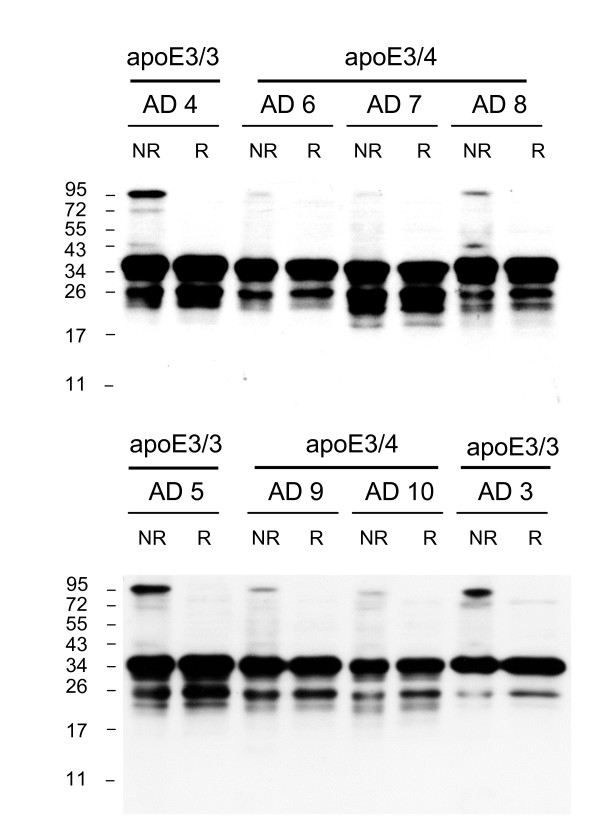
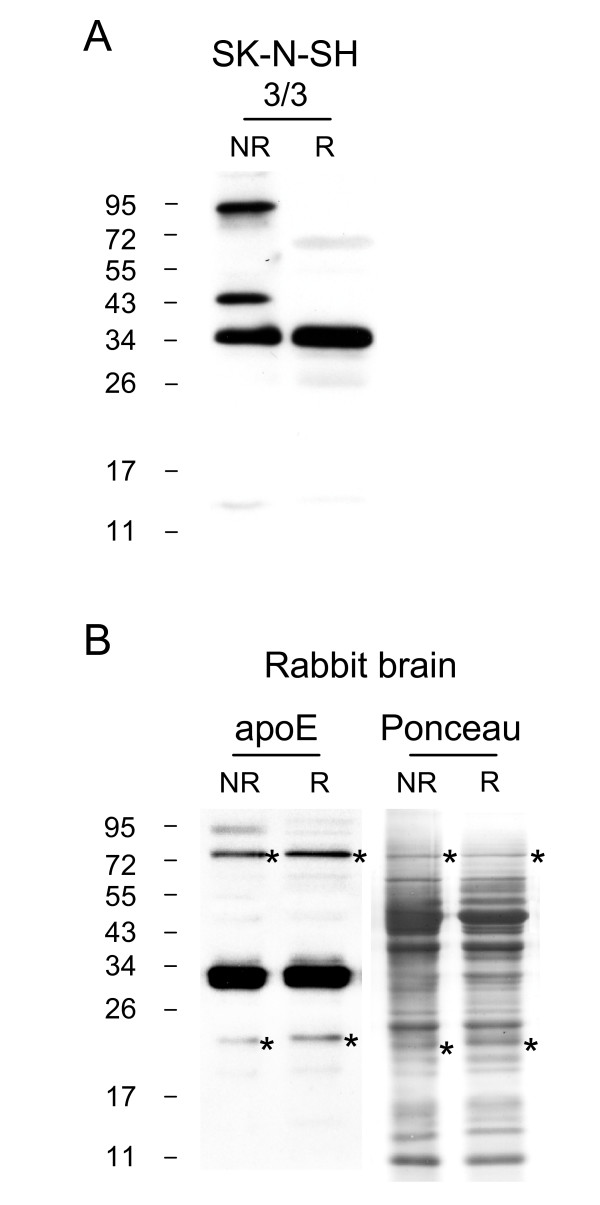
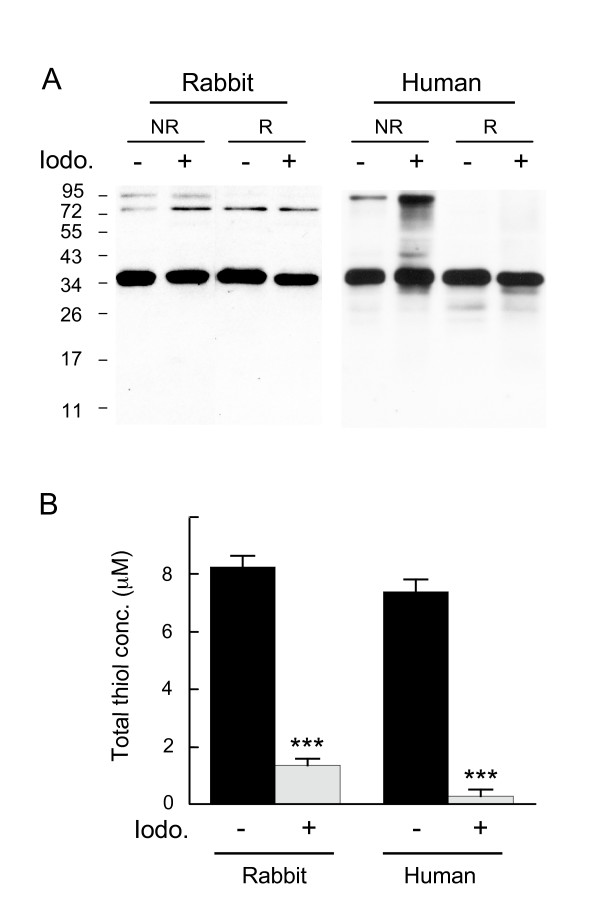
Background: Apolipoprotein-E (apoE) plays important roles in neurobiology and the apoE4 isoform increases risk for Alzheimer's disease (AD). ApoE3 and apoE2 are known to form disulphide-linked dimers in plasma and cerebrospinal fluid whereas apoE4 cannot form these dimers as it lacks a cysteine residue. Previous in vitro research indicates dimerisation of apoE3 has a significant impact on its functions related to cholesterol homeostasis and amyloid-beta peptide degradation. The possible occurrence of apoE dimers in cortical tissues has not been examined and was therefore assessed. Human frontal cortex and hippocampus from control and AD post-mortem samples were homogenised and analysed for apoE by western blotting under both reducing and non-reducing conditions. Results: In apoE3 homozygous samples, ~12% of apoE was present as a homodimer and ~2% was detected as a 43 kDa heterodimer. The level of dimerisation was not significantly different when control and AD samples were compared. As expected, these dimerised forms of apoE were not detected in apoE4 homozygous samples but were detected in apoE3/4 heterozygotes at a level approximately 60% lower than seen in the apoE3 homozygous samples. Similar apoE3 dimers were also detected in lysates of SK-N-SH neuroblastoma cells and in freshly prepared rabbit brain homogenates. The addition of the thiol trapping agent, iodoacetamide, to block reactive thiols during both human and rabbit brain sample homogenisation and processing did not reduce the amount of apoE homodimer recovered. These data indicate that the apoE dimers we detected in the human brain are not likely to be post-mortem artefacts. Conclusion: The identification of disulphide-linked apoE dimers in human cortical and hippocampal tissues represents a distinct structural difference between the apoE3 and apoE4 isoforms that may have functional consequences.
Overview
The claims and statistics of this paper haven’t been checked yet.
Run the check — free, no account needed. It reads the open-access text and checks the sources it cites.
Integrity signals
Registry
Cites
Statistics
Figures
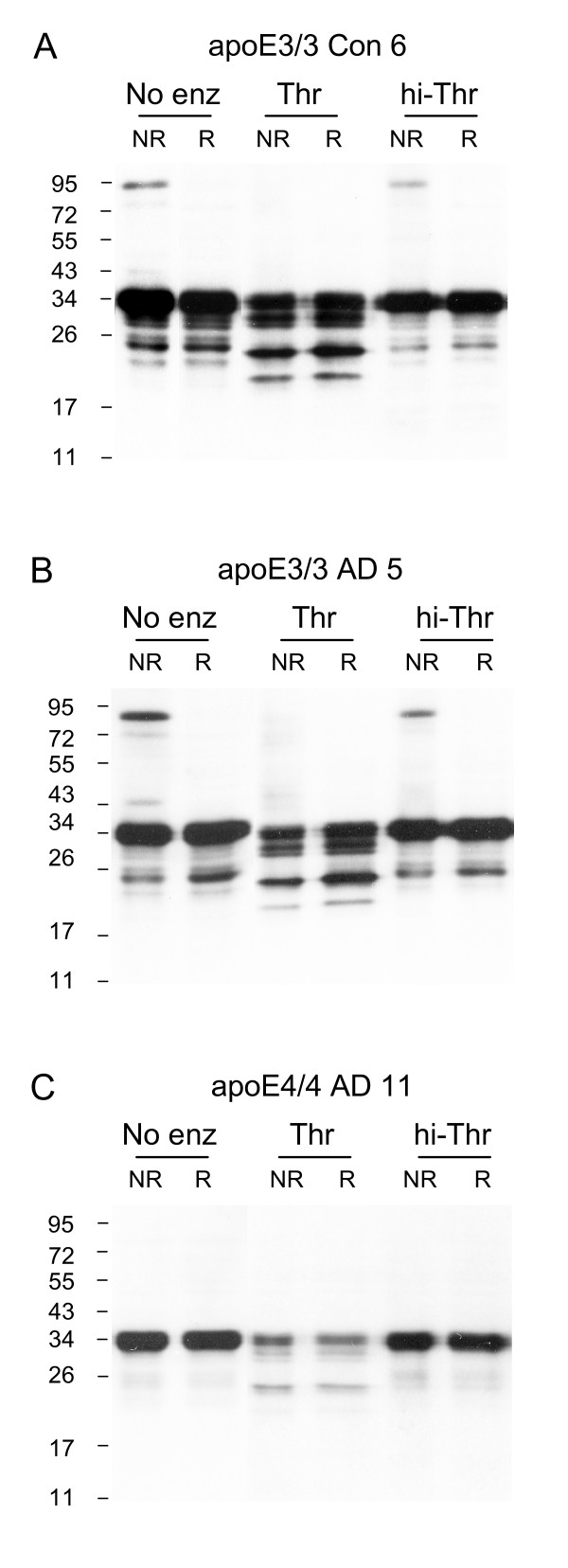
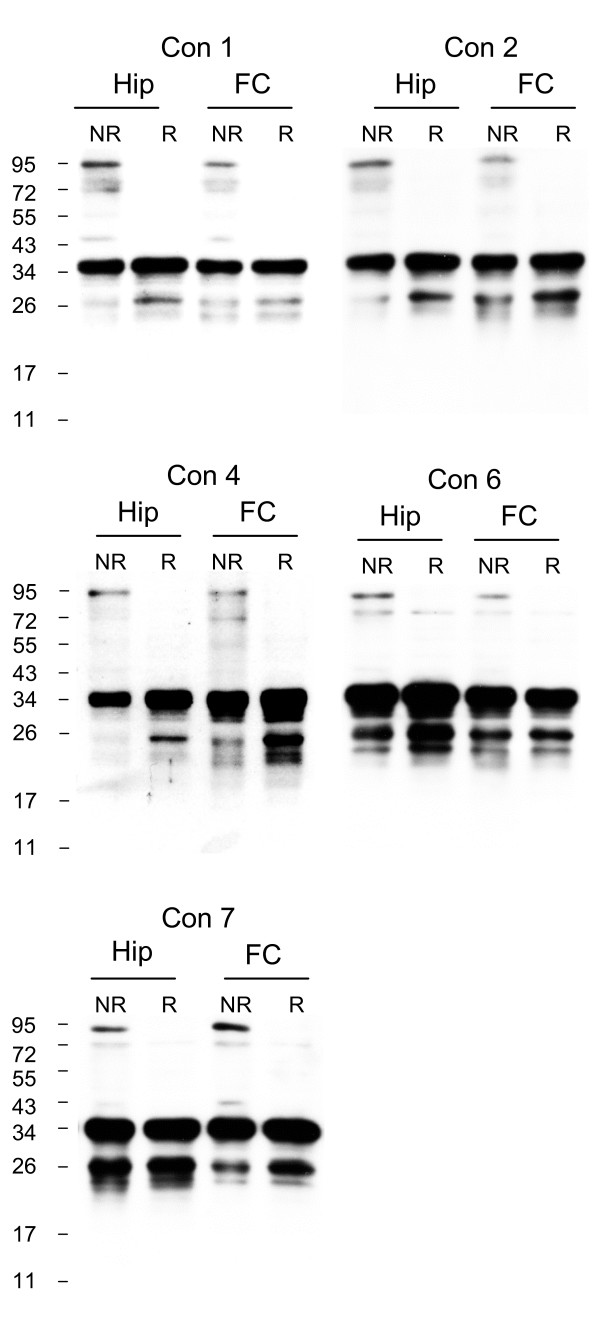
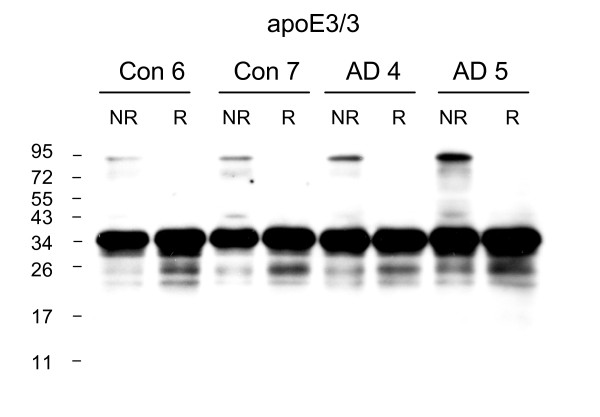
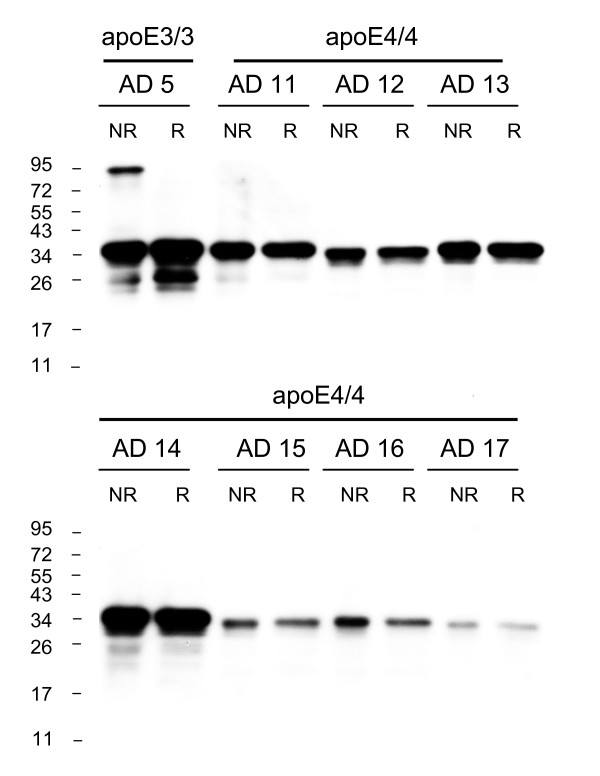
Verification
Claims the paper makes
The claims and statistics of this paper haven’t been checked yet.
Run the check — free, no account needed. It reads the open-access text and checks the sources it cites.
Claims other papers make about this one
Each is checked against this paper’s own text: does it say what the citing paper says it does?
The cited source says what the claim attributes to it.
In the citing paper
“ApoE3 has been reported to form homodimers in human plasma and in the CNS [120, 121].”
From ApoE lipoproteins in the central nervous system under homeostasis and role in Alzheimer’s disease and related disorders (2026) · cites this paper as [120]
Self-check
Percentages, sums and reported differences re-computed from the paper’s own numbers.
The self-check needs the paper’s full text.
Citations
Cites
Differences in the pattern of hippocampal neuronal loss in normal ageing and Alzheimer's disease
West, M. J., Coleman, P. D., Flood, D. G., & Troncoso, J. C. (1994) · The Lancet · doi:10.1016/s0140-6736(94)92338-8 · Cited by 1,267 · cited 1×
“Samples were taken from the frontal cortex or hippocampus; both areas that are affected by AD [50].”
BackgroundApoE Promotes the Proteolytic Degradation of Aβ
Jiang, Q., Lee, C. Y. D., Mandrekar, S., Wilkinson, B., Cramer, P., Zelcer, N., Mann, K., Lamb, B., Willson, T. M., Collins, J. L., et al. (2008) · Neuron · doi:10.1016/j.neuron.2008.04.010 · Cited by 876
Bell, R. D., Sagare, A. P., Friedman, A. E., Bedi, G. S., Holtzman, D. M., Deane, R., & Zlokovic, B. V. (2007) · Journal of Cerebral Blood Flow & Metabolism · doi:10.1038/sj.jcbfm.9600419 · Cited by 670
Isoform-specific binding of apolipoprotein E to beta-amyloid.
LaDu, M. J., Falduto, M. T., Manelli, A. M., Reardon, C. A., Getz, G. S., & Frail, D. E. (1994) · Journal of Biological Chemistry · doi:10.1016/s0021-9258(17)31529-6 · Cited by 540
Rall, S. C., Weisgraber, K. H., Innerarity, T. L., & Mahley, R. W. (1982) · Proceedings of the National Academy of Sciences · doi:10.1073/pnas.79.15.4696 · Cited by 345
Nascent astrocyte particles differ from lipoproteins in CSF
LaDu, M. J., Gilligan, S. M., Lukens, J. R., Cabana, V. G., Reardon, C. A., Van Eldik, L. J., & Holtzman, D. M. (1998) · Journal of Neurochemistry · doi:10.1046/j.1471-4159.1998.70052070.x · Cited by 285 · cited 1×
“ApoE in the CNS is primarily produced by astrocytes, although microglia and neurons may also contribute under certain circumstances [1,6-8,8-11].”
BackgroundTOKUDA, T., CALERO, M., MATSUBARA, E., VIDAL, R., KUMAR, A., PERMANNE, B., ZLOKOVIC, B., SMITH, J. D., LADU, M. J., ROSTAGNO, A., et al. (2000) · Biochemical Journal · doi:10.1042/bj3480359 · Cited by 272
Minagawa, H., Gong, J., Jung, C., Watanabe, A., Lund‐Katz, S., Phillips, M. C., Saito, H., & Michikawa, M. (2009) · Journal of Neuroscience Research · doi:10.1002/jnr.22073 · Cited by 90
Clément-Collin, V., Barbier, A., Dergunov, A. D., Visvikis, A., Siest, G., Desmadril, M., Takahashi, M., & Aggerbeck, L. P. (2006) · Biophysical Chemistry · doi:10.1016/j.bpc.2005.07.009 · Cited by 32
Research works printed but not linked: 43
- Mahley RW: Apolipoprotein E: cholesterol transport protein with expanding role in cell biology. Science. 1988, 240: 622-630. 10.1126/science.3283935. · DOI · Paper page
- Ladu MJ, Reardon C, Van Eldik L, Fagan AM, Bu G, Holtzman D, Getz GS: Lipoproteins in the central nervous system. Ann N Y Acad Sci. 2000, 903: 167-175. 10.1111/j.1749-6632.2000.tb06365.x. · DOI · Paper page
- Corder EH, Saunders AM, Strittmatter WJ, Schmechel DE, Gaskell PC, Small GW, Roses AD, Haines JL, Pericak-Vance MA: Gene dose of apolipoprotein E type 4 allele and the risk of Alzheimer's disease in late onset families. Science. 1993, 261: 921-923. 10.1126/science.8346443. · DOI · Paper page
- Strittmatter WJ, Saunders AM, Schmechel D, Pericak-Vance M, Enghild J, Salvesen GS, Roses AD: Apolipoprotein E: high-avidity binding to beta-amyloid and increased frequency of type 4 allele in late-onset familial Alzheimer disease. Proc Natl Acad Sci USA. 1993, 90: 1977-1981. 10.1073/pnas.90.5.1977. · DOI · Paper page
- Xu Q, Li Y, Cyras C, Sanan DA, Cordell B: Isolation and characterization of apolipoproteins from murine microglia. Identification of a low density lipoprotein-like apolipoprotein J-rich but E-poor spherical particle. J Biol Chem. 2000, 275: 31770-31777. 10.1074/jbc.M002796200. · DOI
- Xu PT, Gilbert JR, Qiu HL, Ervin J, Rothrock-Christian TR, Hulette C, Schmechel DE: Specific regional transcription of apolipoprotein E in human brain neurons. Am J Pathol. 1999, 154: 601-611. · DOI
- Boschert U, Merlo-Pich E, Higgins G, Roses AD, Catsicas S: Apolipoprotein E expression by neurons surviving excitotoxic stress. Neurobiol Dis. 1999, 6: 508-514. 10.1006/nbdi.1999.0251. · DOI
- Metzger RE, LaDu MJ, Pan JB, Getz GS, Frail DE, Falduto MT: Neurons of the human frontal cortex display apolipoprotein E immunoreactivity: implications for Alzheimer's disease. J Neuropathol Exp Neurol. 1996, 55: 372-380. 10.1097/00005072-199603000-00013. · DOI
- Elliott DA, Kim WS, Jans DA, Garner B: Apoptosis induces neuronal apolipoprotein-E synthesis and localization in apoptotic bodies. Neurosci Lett. 2007, 416: 206-210. 10.1016/j.neulet.2007.02.014. · DOI
- Mahley RW, Nathan BP, Pitas RE: Apolipoprotein E. Structure, function, and possible roles in Alzheimer's disease. Ann N Y Acad Sci. 1996, 777: 139-145. 10.1111/j.1749-6632.1996.tb34412.x. · DOI
- Miyata M, Smith JD: Apolipoprotein E allele-specific antioxidant activity and effects on cytotoxicity by oxidative insults and beta-amyloid peptides. Nat Genet. 1996, 14: 55-61. 10.1038/ng0996-55. · DOI · Paper page
- Strittmatter WJ, Weisgraber KH, Goedert M, Saunders AM, Huang D, Corder EH, Dong LM, Jakes R, Alberts MJ, Gilbert JR, et al.: Hypothesis: microtubule instability and paired helical filament formation in the Alzheimer disease brain are related to apolipoprotein E genotype. Exp Neurol. 1994, 125: 163-171. 10.1006/exnr.1994.1019. discussion 172-164 · DOI
- Mahley RW, Rall SC: Apolipoprotein E: far more than a lipid transport protein. Annu Rev Genomics Hum Genet. 2000, 1: 507-537. 10.1146/annurev.genom.1.1.507. · DOI · Paper page
- Arai H, Kashiwagi S, Nagasaka Y, Uchida K, Hoshii Y, Nakamura K: Oxidative modification of apolipoprotein E in human very-low-density lipoprotein and its inhibition by glycosaminoglycans. Arch Biochem Biophys. 1999, 367: 1-8. 10.1006/abbi.1999.1222. · DOI
- Jordan J, Galindo MF, Miller RJ, Reardon CA, Getz GS, LaDu MJ: Isoform-specific effect of apolipoprotein E on cell survival and beta-amyloid-induced toxicity in rat hippocampal pyramidal neuronal cultures. J Neurosci. 1998, 18: 195-204. · DOI · Paper page
- Beffert U, Aumont N, Dea D, Lussier-Cacan S, Davignon J, Poirier J: Apolipoprotein E isoform-specific reduction of extracellular amyloid in neuronal cultures. Brain Res Mol Brain Res. 1999, 68: 181-185. 10.1016/S0169-328X(99)00073-X. · DOI
- Xu Q, Brecht WJ, Weisgraber KH, Mahley RW, Huang Y: Apolipoprotein E4 domain interaction occurs in living neuronal cells as determined by fluorescence resonance energy transfer. J Biol Chem. 2004, 279: 25511-25516. 10.1074/jbc.M311256200. · DOI
- Morrow JA, Segall ML, Lund-Katz S, Phillips MC, Knapp M, Rupp B, Weisgraber KH: Differences in stability among the human apolipoprotein E isoforms determined by the amino-terminal domain. Biochemistry. 2000, 39: 11657-11666. 10.1021/bi000099m. · DOI · Paper page
- Marques MA, Tolar M, Harmony JA, Crutcher KA: A thrombin cleavage fragment of apolipoprotein E exhibits isoform-specific neurotoxicity. Neuroreport. 1996, 7: 2529-2532. 10.1097/00001756-199611040-00025. · DOI
- Tolar M, Marques MA, Harmony JA, Crutcher KA: Neurotoxicity of the 22 kDa thrombin-cleavage fragment of apolipoprotein E and related synthetic peptides is receptor-mediated. J Neurosci. 1997, 17: 5678-5686. · DOI
- Huang Y, Liu XQ, Wyss-Coray T, Brecht WJ, Sanan DA, Mahley RW: Apolipoprotein E fragments present in Alzheimer's disease brains induce neurofibrillary tangle-like intracellular inclusions in neurons. Proc Natl Acad Sci USA. 2001, 98: 8838-8843. 10.1073/pnas.151254698. · DOI · Paper page
- Elliott DA, Tsoi K, Holinkova S, Chan SL, Kim WS, Halliday GM, Rye KA, Garner B: Isoform-specific proteolysis of apolipoprotein-E in the brain. Neurobiol Aging. 2010.
- Weisgraber KH, Shinto LH: Identification of the disulfide-linked homodimer of apolipoprotein E3 in plasma. Impact on receptor binding activity. J Biol Chem. 1991, 266: 12029-12034. · DOI · Paper page
- LaDu MJ, Lukens JR, Reardon CA, Getz GS: Association of human, rat, and rabbit apolipoprotein E with beta-amyloid. J Neurosci Res. 1997, 49: 9-18. 10.1002/(SICI)1097-4547(19970701)49:1<9::AID-JNR2>3.0.CO;2-H. · DOI
- Montine KS, Bassett CN, Ou JJ, Markesbery WR, Swift LL, Montine TJ: Apolipoprotein E allelic influence on human cerebrospinal fluid apolipoproteins. J Lipid Res. 1998, 39: 2443-2451. · DOI
- Rebeck GW, Alonzo NC, Berezovska O, Harr SD, Knowles RB, Growdon JH, Hyman BT, Mendez AJ: Structure and functions of human cerebrospinal fluid lipoproteins from individuals of different APOE genotypes. Exp Neurol. 1998, 149: 175-182. 10.1006/exnr.1997.6710. · DOI
- Sun Y, Wu S, Bu G, Onifade MK, Patel SN, LaDu MJ, Fagan AM, Holtzman DM: Glial fibrillary acidic protein-apolipoprotein E (apoE) transgenic mice: astrocyte-specific expression and differing biological effects of astrocyte-secreted apoE3 and apoE4 lipoproteins. J Neurosci. 1998, 18: 3261-3272. · DOI · Paper page
- Innerarity TL, Mahley RW, Weisgraber KH, Bersot TP: Apoprotein (E-A-II) complex of human plasma lipoproteins. II. Receptor binding activity of a high density lipoprotein subfraction modulated by the apo(E--A-II) complex. J Biol Chem. 1978, 253: 6289-6295. · DOI · Paper page
- Yamauchi K, Tozuka M, Hidaka H, Nakabayashi T, Sugano M, Kondo Y, Nakagawara A, Katsuyama T: Effect of apolipoprotein AII on the interaction of apolipoprotein E with beta-amyloid: some apo(E-AII) complexes inhibit the internalization of beta-amyloid in cultures of neuroblastoma cells. J Neurosci Res. 2000, 62: 608-614. 10.1002/1097-4547(20001115)62:4<608::AID-JNR16>3.0.CO;2-4. · DOI
- Yamauchi K, Tozuka M, Nakabayashi T, Sugano M, Hidaka H, Kondo Y, Katsuyama T: Higher avidity binding of apolipoprotein (E-AII) complex than of apolipoprotein E monomer to beta-amyloid. J Neurosci Res. 1999, 58: 301-307. 10.1002/(SICI)1097-4547(19991015)58:2<301::AID-JNR10>3.0.CO;2-9. · DOI
- Bradley WA, Gilliam EB, Gotto AM, Gianturco SH: Apolipoprotein-E degradation in human very low density lipoproteins by plasma protease(s): chemical and biological consequences. Biochem Biophys Res Commun. 1982, 109: 1360-1367. 10.1016/0006-291X(82)91927-1. · DOI
- Bode W: Structure and interaction modes of thrombin. Blood Cells Mol Dis. 2006, 36: 122-130. 10.1016/j.bcmd.2005.12.027. · DOI
- Huntington JA: Molecular recognition mechanisms of thrombin. J Thromb Haemost. 2005, 3: 1861-1872. 10.1111/j.1538-7836.2005.01363.x. · DOI
- Caillet-Boudin ML, Dupont-Wallois L, Soulie C, Delacourte A: Apolipoprotein E and Tau phosphorylation in human neuroblastoma cells. Neurosci Lett. 1998, 250: 83-86. 10.1016/S0304-3940(98)00448-0. · DOI
- Dupont-Wallois L, Soulie C, Sergeant N, Wavrant-de Wrieze N, Chartier-Harlin MC, Delacourte A, Caillet-Boudin ML: ApoE synthesis in human neuroblastoma cells. Neurobiol Dis. 1997, 4: 356-364. 10.1006/nbdi.1997.0155. · DOI
- Simons M, Keller P, De Strooper B, Beyreuther K, Dotti CG, Simons K: Cholesterol depletion inhibits the generation of beta-amyloid in hippocampal neurons. Proc Natl Acad Sci USA. 1998, 95: 6460-6464. 10.1073/pnas.95.11.6460. · DOI
- Runz H, Rietdorf J, Tomic I, de Bernard M, Beyreuther K, Pepperkok R, Hartmann T: Inhibition of intracellular cholesterol transport alters presenilin localization and amyloid precursor protein processing in neuronal cells. J Neurosci. 2002, 22: 1679-1689. · DOI
- Kim WS, Suryo Rahmanto A, Kamili A, Rye KA, Guillemin GJ, Gelissen IC, Jessup W, Hill AF, Garner B: Role of ABCG1 and ABCA1 in regulation of neuronal cholesterol efflux to apolipoprotein-E discs and suppression of amyloid-beta peptide generation. J Biol Chem. 2007, 282: 2851-2861. 10.1074/jbc.M607831200. · DOI · Paper page
- Kim WS, Weickert CS, Garner B: Role of ATP-binding cassette transporters in brain lipid transport and neurological disease. J Neurochem. 2008, 104: 1145-1166. 10.1111/j.1471-4159.2007.05099.x. · DOI
- Mirra SS, Heyman A, McKeel D, Sumi SM, Crain BJ, Brownlee LM, Vogel FS, Hughes JP, van Belle G, Berg L: The Consortium to Establish a Registry for Alzheimer's Disease (CERAD). Part II. Standardization of the neuropathologic assessment of Alzheimer's disease. Neurology. 1991, 41: 479-486. · DOI · Paper page
- NIA: Consensus recommendations for the postmortem diagnosis of Alzheimer's disease. The National Institute on Aging, and Reagan Institute Working Group on Diagnostic Criteria for the Neuropathological Assessment of Alzheimer's Disease. Neurobiol Aging. 1997, 18: S1-2. 10.1016/S0197-4580(97)00057-2. · DOI · Paper page
- Furukawa Y, Fu R, Deng HX, Siddique T, O'Halloran TV: Disulfide cross-linked protein represents a significant fraction of ALS-associated Cu, Zn-superoxide dismutase aggregates in spinal cords of model mice. Proc Natl Acad Sci USA. 2006, 103: 7148-7153. 10.1073/pnas.0602048103. · DOI
- Ellman GL: Tissue sulfhydryl groups. Arch Biochem Biophys. 1959, 82: 70-77. 10.1016/0003-9861(59)90090-6. · DOI
Cited by
Sorted by citations
Apolipoprotein E4 Impairs Neuronal Insulin Signaling by Trapping Insulin Receptor in the Endosomes
Zhao, N., Liu, C.-C., Van Ingelgom, A. J., Martens, Y. A., Linares, C., Knight, J. A., Painter, M. M., Sullivan, P. M., & Bu, G. (2017) · Neuron · doi:10.1016/j.neuron.2017.09.003 · Cited by 289
La Cunza, N., Tan, L. X., Thamban, T., Germer, C. J., Rathnasamy, G., Toops, K. A., & Lakkaraju, A. (2021) · JCI Insight · doi:10.1172/jci.insight.142254 · Cited by 65
Association of African Ancestry–Specific APOE Missense Variant R145C With Risk of Alzheimer Disease
Le Guen, Y., Raulin, A.-C., Logue, M. W., Sherva, R., Belloy, M. E., Eger, S. J., Chen, A., Kennedy, G., Kuchenbecker, L., O’Leary, J. P., et al. (2023) · JAMA · doi:10.1001/jama.2023.0268 · Cited by 50
Giannisis, A., Al-Grety, A., Carlsson, H., Howell, J. C., Hu, W. T., Kultima, K., & Nielsen, H. M. (2023) · Alzheimer's Research & Therapy · doi:10.1186/s13195-023-01262-1 · Cited by 11
Strickland, M. R., & Holtzman, D. M. (2026) · Molecular Neurodegeneration · doi:10.1186/s13024-026-00970-0
Metadata
- Authors
- Elliott, D. A., Halliday, G. M., & Garner, B.
- Venue
- BMC Neuroscience
- Published
- 2010-02-20
- Volume
- 11
- Issue
- 1
- ISSN
- 1471-2202
- PMC
- PMC2837047
- Cited by
- 31
- References
- 9
- Language
- en
About these checks
Registry, retraction, Cites and statistics results are computed, not judged, with one exception: a printed reference that no index lists is read once by a model before it counts as a citation error. Claims are extracted by a model and kept only when their quote appears verbatim in the text; each cited source is then checked, with a model’s help, for whether it says what the claim relies on. Those verdicts can be wrong — read the claim’s quote and the cited source before relying on one.
Statistics and arithmetic are recomputed, not judged.
Confidence bands are shown only for fields calibrated on our annotated test set. None is calibrated yet, so no band is shown.
What counts as a claim ›How we measure confidence ›How we check this ›
Are you an author, or do you see a problem with this page? Request a review
