

Overlapping functions of the starch synthases SSII and SSIII in amylopectin biosynthesis in Arabidopsis
Open accessThe DOI matches its Crossref record; 51 of the 51 references it cites were found in a registry or an index.
Abstract
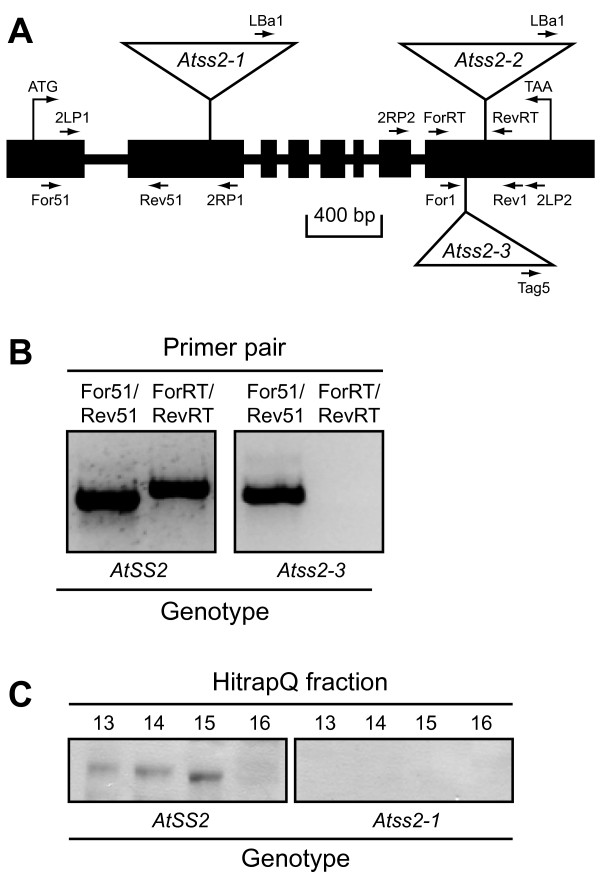
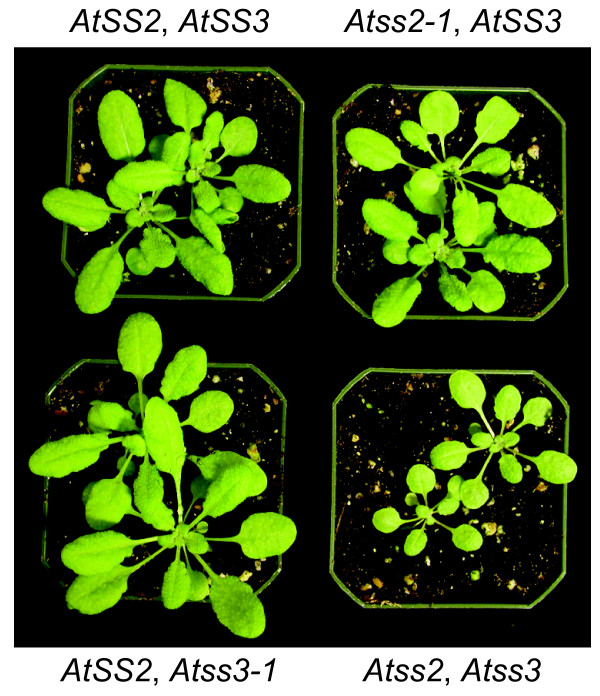
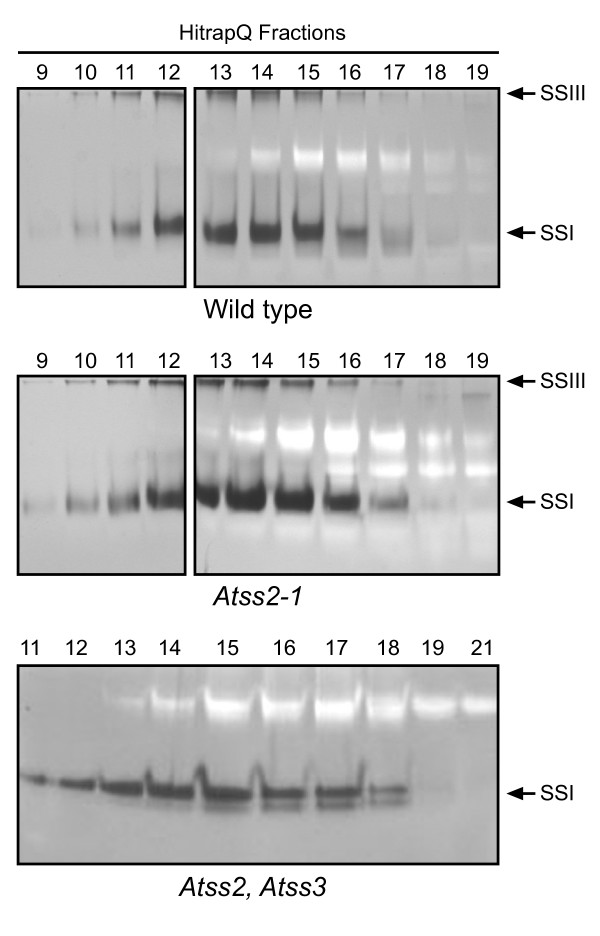
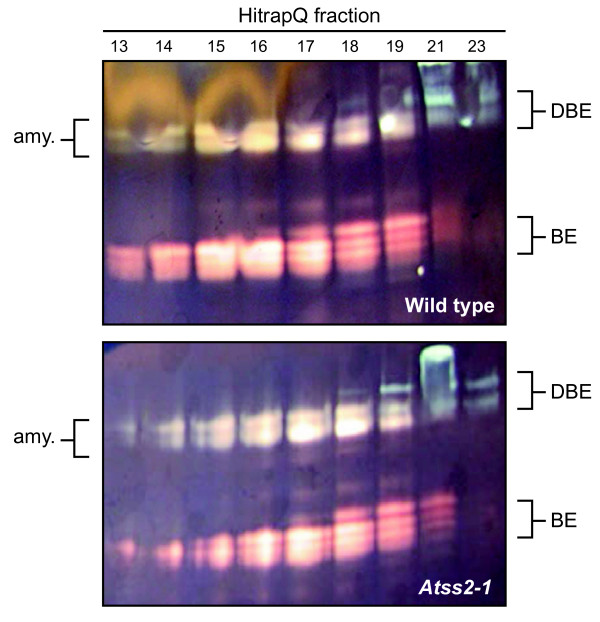
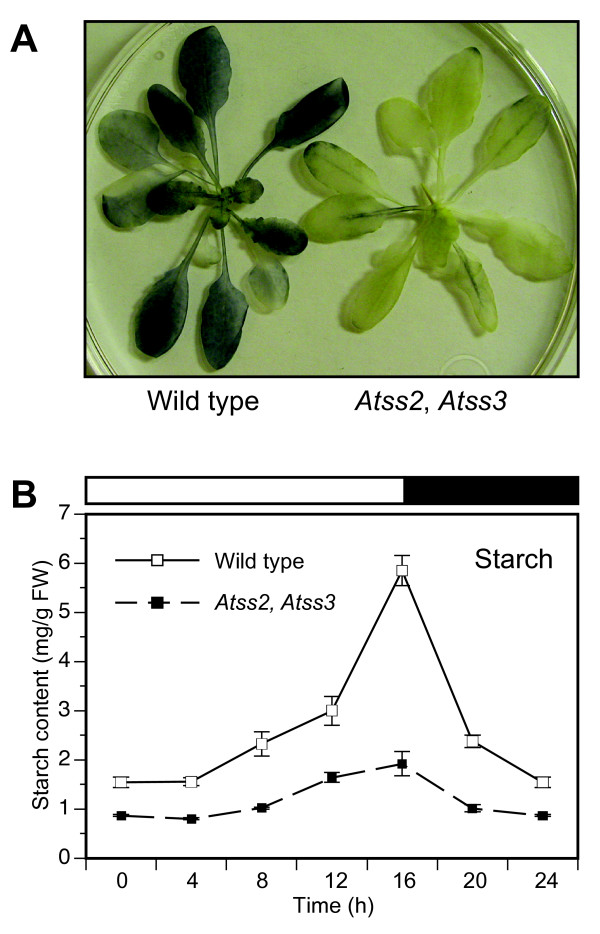
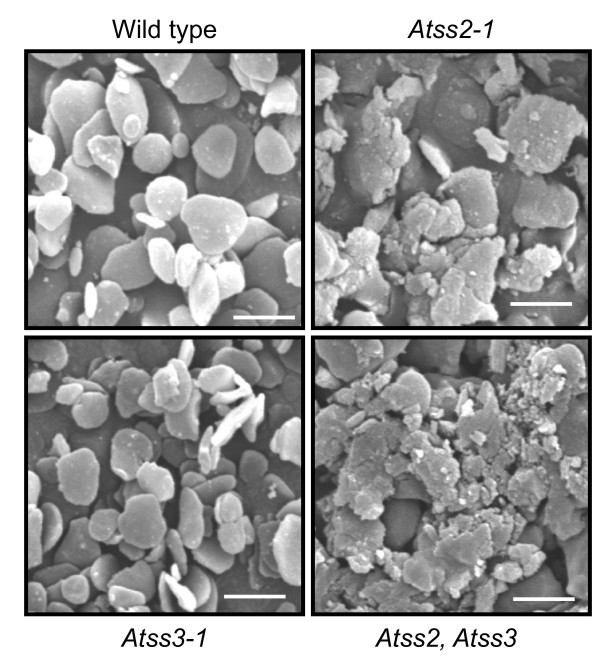
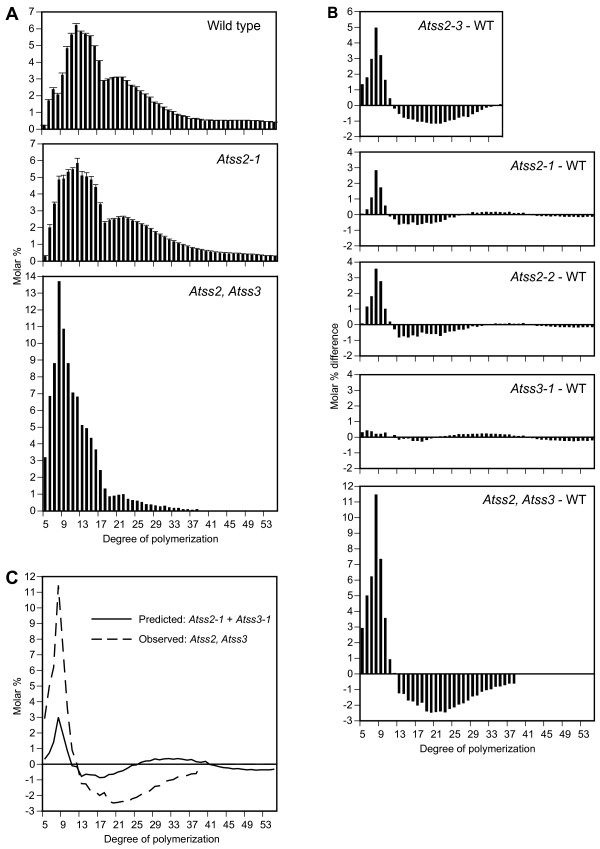
Background: The biochemical mechanisms that determine the molecular architecture of amylopectin are central in plant biology because they allow long-term storage of reduced carbon. Amylopectin structure imparts the ability to form semi-crystalline starch granules, which in turn provides its glucose storage function. The enzymatic steps of amylopectin biosynthesis resemble those of the soluble polymer glycogen, however, the reasons for amylopectin's architectural distinctions are not clearly understood. The multiplicity of starch biosynthetic enzymes conserved in plants likely is involved. For example, amylopectin chain elongation in plants involves five conserved classes of starch synthase (SS), whereas glycogen biosynthesis typically requires only one class of glycogen synthase. Results: Null mutations were characterized in AtSS2, which codes for SSII, and mutant lines were compared to lines lacking SSIII and to an Atss2,Atss3 double mutant. Loss of SSII did not affect growth rate or starch quantity, but caused increased amylose/amylopectin ratio, increased total amylose, and deficiency in amylopectin chains with degree of polymerization (DP) 12 to DP28. In contrast, loss of both SSII and SSIII caused slower plant growth and dramatically reduced starch content. Extreme deficiency in DP12 to DP28 chains occurred in the double mutant, far more severe than the summed changes in SSII- or SSIII-deficient plants lacking only one of the two enzymes. Conclusion: SSII and SSIII have partially redundant functions in determination of amylopectin structure, and these roles cannot be substituted by any other conserved SS, specifically SSI, GBSSI, or SSIV. Even though SSIII is not required for the normal abundance of glucan chains of DP12 to DP18, the enzyme clearly is capable of functioning in production such chains. The role of SSIII in producing these chains cannot be detected simply by analysis of an individual mutation. Competition between different SSs for binding to substrate could in part explain the specific distribution of glucan chains within amylopectin.
Overview
The claims and statistics of this paper haven’t been checked yet.
Free: it reads the open-access text and checks the first 5 claims that cite a source we can check. Create a free account to check every claim.
Integrity signals
Registry
Cites
Statistics
Figures
Verification
Claims the paper makes
The claims and statistics of this paper haven’t been checked yet.
Free: it reads the open-access text and checks the first 5 claims that cite a source we can check. Create a free account to check every claim.
Claims other papers make about this one
Each is checked against this paper’s own text: does it say what the citing paper says it does?
The cited source says what the claim attributes to it.
In the citing paper
“Granule-bound starch synthases (GBSS) catalyzes amylose biosynthesis, and SSS and SBE are essential for amylopectin biosynthesis in higher plants (Zhang et al., 2008; Zeeman et al., 2010).”
From Comparative Transcriptome Analysis Reveals Critical Function of Sucrose Metabolism Related-Enzymes in Starch Accumulation in the Storage Root of Sweet Potato (2017) · cites this paper as Zhang et al., 2008
Self-check
Percentages, sums and reported differences re-computed from the paper’s own numbers.
The self-check needs the paper’s full text.
Citations
Cites
Predicting Subcellular Localization of Proteins Based on their N-terminal Amino Acid Sequence
Emanuelsson, O., Nielsen, H., Brunak, S., & von Heijne, G. (2000) · Journal of Molecular Biology · doi:10.1006/jmbi.2000.3903 · Cited by 4,263 · cited 2×
“The computational programs ChloroP and TargetP [33] [34] predict that the first 55 amino acids of the polypeptide coded for by AtSS2 are likely to function as a chloroplast targeting peptide, and the predicted molecular weight of the mature protein is approximately 81 kDa.”
Starch granules: structure and biosynthesis
Buléon, A., Colonna, P., Planchot, V., & Ball, S. (1998) · International Journal of Biological Macromolecules · doi:10.1016/s0141-8130(98)00040-3 · Cited by 2,091 · cited 1×
“Starch is made up of two types of glucan homopolymer, amylose and amylopectin [1].”
Emanuelsson, O., Nielsen, H., & Heijne, G. V. (1999) · Protein Science · doi:10.1110/ps.8.5.978 · Cited by 1,814 · cited 2×
“The computational programs ChloroP and TargetP [33] [34] predict that the first 55 amino acids of the polypeptide coded for by AtSS2 are likely to function as a chloroplast targeting peptide, and the predicted molecular weight of the mature protein is approximately 81 kDa.”
Microscopy of starch: evidence of a new level of granule organization
Gallant, D. J., Bouchet, B., & Baldwin, P. M. (1997) · Carbohydrate Polymers · doi:10.1016/s0144-8617(97)00008-8 · Cited by 1,049 · cited 1×
“A specific distribution of α-(1→4)-linked glucan chain lengths, together with clustered positioning of α-(1→6) branch linkages, provides structure to amylopectin that allows crystallization and formation of insoluble starch granules [2-4].”
Polymodal distribution of the chain lengths of amylopectins, and its significance
Hizukuri, S. (1986) · Carbohydrate Research · doi:10.1016/s0008-6215(00)90643-8 · Cited by 997 · cited 1×
“A specific distribution of α-(1→4)-linked glucan chain lengths, together with clustered positioning of α-(1→6) branch linkages, provides structure to amylopectin that allows crystallization and formation of insoluble starch granules [2-4].”
Molecular identification and isolation of the Waxy locus in maize
Shure, M., Wessler, S., & Fedoroff, N. (1983) · Cell · doi:10.1016/0092-8674(83)90225-8 · Cited by 811 · cited 1×
“For example, elimination of GBSS by mutation or antisense gene expression conditions loss of the amylose component of starch granules without major effects on amylopectin [19,20].”
From Bacterial Glycogen to Starch: Understanding the Biogenesis of the Plant Starch Granule
Ball, S. G., & Morell, M. K. (2003) · Annual Review of Plant Biology · doi:10.1146/annurev.arplant.54.031902.134927 · Cited by 748 · cited 1×
“Starch is produced by the coordinated actions of the following enzymes: 1) ADPGlc pyrophosphorylase (ADPGPP), which provides the nucleotide sugar donor ADPGlc; 2) starch synthase (SS), which catalyzes the transfer of a glucosyl unit from ADPGlc to a growing polymer chain through an α-(1 → 4) glycoside bond; 3) starch…”
Starch synthesis in the cereal endosperm
James, M. G., Denyer, K., & Myers, A. M. (2003) · Current Opinion in Plant Biology · doi:10.1016/s1369-5266(03)00042-6 · Cited by 556 · cited 1×
“Starch is produced by the coordinated actions of the following enzymes: 1) ADPGlc pyrophosphorylase (ADPGPP), which provides the nucleotide sugar donor ADPGlc; 2) starch synthase (SS), which catalyzes the transfer of a glucosyl unit from ADPGlc to a growing polymer chain through an α-(1 → 4) glycoside bond; 3) starch…”
Self-citationRecent Progress toward Understanding Biosynthesis of the Amylopectin Crystal
Myers, A. M., Morell, M. K., James, M. G., & Ball, S. G. (2000) · Plant Physiology · doi:10.1104/pp.122.4.989 · Cited by 542 · cited 1×
“Starch is produced by the coordinated actions of the following enzymes: 1) ADPGlc pyrophosphorylase (ADPGPP), which provides the nucleotide sugar donor ADPGlc; 2) starch synthase (SS), which catalyzes the transfer of a glucosyl unit from ADPGlc to a growing polymer chain through an α-(1 → 4) glycoside bond; 3) starch…”
Self-citationUmemoto, T., Yano, M., Satoh, H., Shomura, A., & Nakamura, Y. (2002) · Theoretical and Applied Genetics · doi:10.1007/s001220200000 · Cited by 417 · cited 4×
“SSII deficiency in numerous species results in increased frequency of short glucan chains (DP6 to DP11) within amylopectin, decreased abundance of DP12 to DP25 chains, and in most instances an elevated amylose to amylopectin ratio [18,21-27].”
Influential
Cited by
Formation of starch in plant cells
Pfister, B., & Zeeman, S. C. (2016) · Cellular and Molecular Life Sciences · doi:10.1007/s00018-016-2250-x · Cited by 423
“, a japonica rice variety [152, 153]) and maize [154] and in Arabidopsis leaves [119, 122, 134].”
BackgroundInfluentialStarch Metabolism in Arabidopsis
Streb, S., & Zeeman, S. C. (2012) · The Arabidopsis Book · doi:10.1199/tab.0160 · Cited by 352
Amylose in starch: towards an understanding of biosynthesis, structure and function
Seung, D. (2020) · New Phytologist · doi:10.1111/nph.16858 · Cited by 311
“…to increase amylose content in Arabidopsis leaves and various crops: including other starch synthases (Wang et al., 1993; Delvall e et al., 2005; Fujita et al., 2007; Zhang et al., 2008; Szydlowski et al., 2009), and isoamylase (Dauvill ee et al., 2001; Tziotis et al., 2004; Blennow et al., 2020).”
BackgroundEffects of environmental factors on cereal starch biosynthesis and composition
Thitisaksakul, M., Jiménez, R. C., Arias, M. C., & Beckles, D. M. (2012) · Journal of Cereal Science · doi:10.1016/j.jcs.2012.04.002 · Cited by 259
Szydlowski, N., Ragel, P., Raynaud, S., Lucas, M. M., Roldán, I., Montero, M., Muñoz, F. J., Ovecka, M., Bahaji, A., Planchot, V., et al. (2009) · The Plant Cell · doi:10.1105/tpc.109.066522 · Cited by 255
“…as elimination of a specific class results in the alteration of one or more starch features, such as amylopectin structure, amylopectin/amylose ratio, shape, morphology, or number of starch granule (Craig et al., 1998; Delvallé et al., 2005; Zhang et al., 2005, 2008; Roldán et al., 2007).”
BackgroundInfluentialSelf-citationBiochemistry and Genetics of Starch Synthesis
Keeling, P. L., & Myers, A. M. (2010) · Annual Review of Food Science and Technology · doi:10.1146/annurev.food.102308.124214 · Cited by 231
Self-citationStarch: A Flexible, Adaptable Carbon Store Coupled to Plant Growth
Smith, A. M., & Zeeman, S. C. (2020) · Annual Review of Plant Biology · doi:10.1146/annurev-arplant-050718-100241 · Cited by 230
Hennen-Bierwagen, T. A., Lin, Q., Grimaud, F., Planchot, V., Keeling, P. L., James, M. G., & Myers, A. M. (2009) · Plant Physiology · doi:10.1104/pp.109.135293 · Cited by 210
“An unexplained observation in maize, Arabidopsis, and barley is that loss of SSIIa has a major effect on amylopectin structure even though the total reduction of SS enzyme activity is minimal (Gérard et al., 2001; Morell et al., 2003; Zhang et al., 2004, 2008).”
BackgroundSelf-citationSeung, D., Soyk, S., Coiro, M., Maier, B. A., Eicke, S., & Zeeman, S. C. (2015) · PLOS Biology · doi:10.1371/journal.pbio.1002080 · Cited by 202
“Loss of SS2 causes significant changes in the chain length distribution of amylopectin, as well as changes in granule morphology [47,48].”
BackgroundStarch biosynthesis in developing seeds
Tetlow, I. J. (2011) · Seed Science Research · doi:10.1017/s0960258510000292 · Cited by 202
“phenotype with reduced growth rate and lowered starch content (Zhang et al., 2008).”
BackgroundA Journey Through a Leaf: Phenomics Analysis of Leaf Growth in Arabidopsis thaliana
Vanhaeren, H., Gonzalez, N., & Inzé, D. (2015) · The Arabidopsis Book · doi:10.1199/tab.0181 · Cited by 168
Toyosawa, Y., Kawagoe, Y., Matsushima, R., Crofts, N., Ogawa, M., Fukuda, M., Kumamaru, T., Okazaki, Y., Kusano, M., Saito, K., et al. (2016) · Plant Physiology · doi:10.1104/pp.15.01232 · Cited by 161
“Leaf transitory starch biosynthesis has been investigated in single mutants of SSI, SSII, SSIII, and SSIV and in various double and triple SS mutants (Ral et al., 2004; Delvallé et al., 2005; Zhang et al., 2005, 2008; Szydlowski et al., 2009, 2011).”
BackgroundHomologs of PROTEIN TARGETING TO STARCH Control Starch Granule Initiation in Arabidopsis Leaves
Seung, D., Boudet, J., Monroe, J. D., Schreier, T. B., David, L. C., Abt, M. R., Lu, K., Zanella, M., & Zeeman, S. C. (2017) · The Plant Cell · doi:10.1105/tpc.17.00222 · Cited by 148
“This notion is supported by three lines of evidence: First, while mutants lacking the other SS isoforms have altered amylopectin structure (Delvallé et al., 2005; Zhang et al., 2005, 2008; Pfister et al., 2014), ss4mutants have only minor alterations (Roldán et al., 2007).”
BackgroundResultLi, L., Foster, C. M., Gan, Q., Nettleton, D. S., James, M. G., Myers, A. M., & Wurtele, E. S. (2009) · The Plant Journal · doi:10.1111/j.1365-313x.2009.03793.x · Cited by 156
“In this background, although SSIII is eliminated, starch accumulation is decreased (Zhang et al., 2008).”
BackgroundSelf-citationMetabolic footprint of epiphytic bacteria on Arabidopsis thaliana leaves
Ryffel, F., Helfrich, E. J. N., Kiefer, P., Peyriga, L., Portais, J., Piel, J., & Vorholt, J. A. (2015) · The ISME Journal · doi:10.1038/ismej.2015.141 · Cited by 158
Evolutionary, structural and expression analysis of core genes involved in starch synthesis
Qu, J., Xu, S., Zhang, Z., Chen, G., Zhong, Y., Liu, L., Zhang, R., Xue, J., & Guo, D. (2018) · Scientific Reports · doi:10.1038/s41598-018-30411-y · Cited by 142
Starch granule initiation and morphogenesis—progress in Arabidopsis and cereals
Seung, D., & Smith, A. M. (2018) · Journal of Experimental Botany · doi:10.1093/jxb/ery412 · Cited by 131
Starch biosynthesis in rice endosperm requires the presence of either starch synthase I or IIIa
Fujita, N., Satoh, R., Hayashi, A., Kodama, M., Itoh, R., Aihara, S., & Nakamura, Y. (2011) · Journal of Experimental Botany · doi:10.1093/jxb/err125 · Cited by 128
“These include maize ss2 (sug-2; Zhang et al., 2004) and ss3 (du1; Wang et al., 1993a, b), rice ss3a (Fujita et al., 2007), wheat ss2a (Yamamori et al., 2000), barley ss2 (Morell et al., 2003), and Arabidopsis ss2/ss3 (Zhang et al., 2008) mutants.”
Zhang, G., Cheng, Z., Zhang, X., Guo, X., Su, N., Jiang, L., Mao, L., & Wan, J. (2011) · Genome · doi:10.1139/g11-010 · Cited by 121
Self-citationCrumpton‐Taylor, M., Pike, M. J., Lu, K., Hylton, C. M., Feil, R., Eicke, S., Lunn, J. E., Zeeman, S. C., & Smith, A. M. (2013) · New Phytologist · doi:10.1111/nph.12455 · Cited by 107
Seung, D., Schreier, T. B., Bürgy, L., Eicke, S., & Zeeman, S. C. (2018) · The Plant Cell · doi:10.1105/tpc.18.00219 · Cited by 105
“The SS1, SS2, and SS3 isoforms are involved primarily in amylopectin synthesis, and Arabidopsis mutants lacking any of these isoforms have altered amylopectin structure (Delvallé et al., 2005; Zhang et al., 2005, 2008).”
BackgroundLin, Q., Huang, B., Zhang, M., Zhang, X., Rivenbark, J. G., Lappe, R. R., James, M. G., Myers, A. M., & Hennen‐Bierwagen, T. A. (2011) · PLANT PHYSIOLOGY · doi:10.1104/pp.111.189704 · Cited by 103
“In contrast, SSI and SSII are required for the normal abundance of discrete, continuous spans of chain length, which can be explained by substrate preference (Morell et al., 2003; Zhang et al., 2004, 2008; Delvallé et al., 2005; Nakamura et al., 2005; Fujita et al., 2006).”
BackgroundSelf-citationLiu, F., Romanova, N. A., Lee, E. A., Regina, A., Evans, M., Gilbert, E. P., Morell, M. K., Emes, M. J., & Tetlow, I. J. (2012) · Biochemical Journal · doi:10.1042/bj20120573 · Cited by 117
Progress in Arabidopsis starch research and potential biotechnological applications
Santelia, D., & Zeeman, S. C. (2010) · Current Opinion in Biotechnology · doi:10.1016/j.copbio.2010.11.014 · Cited by 116
Kölling, K., Thalmann, M., Müller, A., Jenny, C., & Zeeman, S. C. (2015) · Plant Cell & Environment · doi:10.1111/pce.12512 · Cited by 92
Szydlowski, N., Ragel, P., Hennen‐Bierwagen, T. A., Planchot, V., Myers, A. M., Mérida, Á., d’Hulst, C., & Wattebled, F. (2011) · Journal of Experimental Botany · doi:10.1093/jxb/err172 · Cited by 103
“…mechanism evidently is not possible in ss2- ss3- double mutants or the triple mutant ss1- ss2- ss3- line, because, in those instances, the total starch level is drastically reduced including a large decrease in the total amylose content in leaves (Zhang et al., 2008; Szydlowski et al., 2009).”
InfluentialSelf-citationZhang, K., Wu, Z., Tang, D., Luo, K., Lu, H., Liu, Y., Dong, J., Wang, X., Lv, C., Wang, J., et al. (2017) · Frontiers in Plant Science · doi:10.3389/fpls.2017.00914 · Cited by 88
“Granule-bound starch synthases (GBSS) catalyzes amylose biosynthesis, and SSS and SBE are essential for amylopectin biosynthesis in higher plants (Zhang et al., 2008; Zeeman et al., 2010).”
BackgroundStarch in the Arabidopsis plant
Smith, A. M. (2012) · Starch - Stärke · doi:10.1002/star.201100163 · Cited by 98
Abt, M. R., Pfister, B., Sharma, M., Eicke, S., Bürgy, L., Neale, I., Seung, D., & Zeeman, S. C. (2020) · The Plant Cell · doi:10.1105/tpc.19.00946 · Cited by 88
Recent understanding of starch biosynthesis in cassava for quality improvement: A review
Tappiban, P., Smith, D. R., Triwitayakorn, K., & Bao, J. (2018) · Trends in Food Science & Technology · doi:10.1016/j.tifs.2018.11.019 · Cited by 87
Miura, S., Crofts, N., Saito, Y., Hosaka, Y., Oitome, N. F., Watanabe, T., Kumamaru, T., & Fujita, N. (2018) · Frontiers in Plant Science · doi:10.3389/fpls.2018.00645 · Cited by 80
“…13 ≤ DP ≤ 24, and is highly conserved in rice (Umemoto et al., 2002; Nakamura et al., 2005), maize (Zhang et al., 2004; Liu et al., 2012), wheat (Yamamori et al., 2000), barley (Morell et al., 2003), sweet potato (Katayama et al., 2002; Kitahara et al., 2005), and Arabidopsis (Zhang et al., 2008).”
BackgroundInfluentialPotato starch synthases: Functions and relationships
Firouzabadi, F. N., & Visser, R. G. F. (2017) · Biochemistry and Biophysics Reports · doi:10.1016/j.bbrep.2017.02.004 · Cited by 90
“Interestingly, the apparent redundant function of SSII and SSIII in amylopectin biosynthesis has recently been revealed [33].”
BackgroundThe QQS orphan gene of Arabidopsis modulates carbon and nitrogen allocation in soybean
Li, L., & Wurtele, E. S. (2014) · Plant Biotechnology Journal · doi:10.1111/pbi.12238 · Cited by 81
Comprehensive survey of redox sensitive starch metabolising enzymes in Arabidopsis thaliana
Glaring, M. A., Skryhan, K., Kötting, O., Zeeman, S. C., & Blennow, A. (2012) · Plant Physiology and Biochemistry · doi:10.1016/j.plaphy.2012.06.017 · Cited by 87
Ma, L., Xue, N., Fu, X., Zhang, H., & Li, G. (2016) · New Phytologist · doi:10.1111/nph.14300 · Cited by 74
STARCH SYNTHASE 4 is required for normal starch granule initiation in amyloplasts of wheat endosperm
Hawkins, E., Chen, J., Watson‐Lazowski, A., Ahn‐Jarvis, J. H., Barclay, J. E., Fahy, B. F., Hartley, M., Warren, F. J., & Seung, D. (2021) · New Phytologist · doi:10.1111/nph.17342 · Cited by 68
Zhong, Y., Qu, J. Z., Liu, X., Ding, L., Liu, Y., Bertoft, E., Petersen, B. L., Hamaker, B. R., Hebelstrup, K. H., & Blennow, A. (2022) · Carbohydrate Polymers · doi:10.1016/j.carbpol.2022.119327 · Cited by 67
Physicochemical Characterization and Properties of Cassava Starch: A Review
Chamorro, A. F., Palencia, M., & Lerma, T. A. (2025) · Polymers · doi:10.3390/polym17121663 · Cited by 76
“It has a degree of polymerization on the order of 10 4 to 10 5 glucose units per molecular chain [20], and branch chain dimensions in the range of 0.3 to 0.5 nm [21].”
InfluentialTakahata, Y., Tanaka, M., Otani, M., Katayama, ., Kitahara, K., Nakayachi, O., Nakayama, H., & Yoshinaga, M. (2010) · Plant Cell Reports · doi:10.1007/s00299-010-0842-8 · Cited by 61
Pfister, B., Lu, K., Eicke, S., Feil, R., Lunn, J. E., Streb, S., & Zeeman, S. C. (2014) · PLANT PHYSIOLOGY · doi:10.1104/pp.114.241455 · Cited by 68
“Thus, SS2 is suggested to elongate shorter chains (e.g. those made by SS1) to a length of between DP 13 and 20 (Edwards et al., 1999; Yamamori et al., 2000; Umemoto et al., 2002; Morell et al., 2003; Zhang et al., 2004, 2008).”
BackgroundResultInfluentialWang, Y., Li, Y., Zhang, H., Zhai, H., Liu, Q., & He, S. (2017) · Scientific Reports · doi:10.1038/s41598-017-02481-x · Cited by 69
Vandromme, C., Spriet, C., Dauvillée, D., Courseaux, A., Putaux, J., Wychowski, A., Krzewinski, F., Facon, M., d’Hulst, C., & Wattebled, F. (2018) · New Phytologist · doi:10.1111/nph.15356 · Cited by 63
Self-citationCrofts, N., Sugimoto, K., Oitome, N. F., Nakamura, Y., & Fujita, N. (2017) · Plant Molecular Biology · doi:10.1007/s11103-017-0614-8 · Cited by 61
Recreating the synthesis of starch granules in yeast
Pfister, B., Sánchez‐Ferrer, A., Díaz, A., Lu, K., Otto, C., Holler, M., Shaik, F. R., Meier, F., Mezzenga, R., & Zeeman, S. C. (2016) · eLife · doi:10.7554/elife.15552 · Cited by 55
“However, the tendency of SS3 to increase the abundance of intermediatelength chains in the absence of SS2 (Zhang et al., 2008) was also apparent in yeast (Figure 5D).”
BackgroundResultCompetition between Granule Bound Starch Synthase and Starch Branching Enzyme in Starch Biosynthesis
Han, H., Yang, C., Zhu, J., Zhang, L., Bai, Y., Li, E., & Gilbert, R. G. (2019) · Rice · doi:10.1186/s12284-019-0353-3 · Cited by 51
He, L., Lu, X., Tian, J., Yang, Y., Li, B., Li, J., & Guo, S. (2012) · Proteome Science · doi:10.1186/1477-5956-10-42 · Cited by 50
“Other SS isoforms cannot fulfill this function [49].”
BackgroundSeung, D., Lu, K., Fischer‐Stettler, M., Streb, S., & Zeeman, S. C. (2016) · Journal of Biological Chemistry · doi:10.1074/jbc.m116.730648 · Cited by 48
Identification and Phylogenetic Analysis of a Novel Starch Synthase in Maize
Liu, H., Guiling, Y., Wei, B., Wang, Y., Zhang, J., Hu, Y., Liu, Y., Yu, G., Zhang, H., & Huang, Y. (2015) · Frontiers in Plant Science · doi:10.3389/fpls.2015.01013 · Cited by 53
Functional Analysis of Starch Metabolism in Plants
Cho, Y., & Kang, K.-K. (2020) · Plants · doi:10.3390/plants9091152 · Cited by 53
“SSIII mainly catalyzes the synthesis of amylopectin B2 to B4 chain, some of its functions overlap with that of SSII in amylopectin biosynthesis [13,14].”
BackgroundBrust, H., Lehmann, T., d’Hulst, C., & Fettke, J. (2014) · PLoS ONE · doi:10.1371/journal.pone.0102364 · Cited by 48
“Arabidopsis double mutants lacking either SSI or SSII together with SSIII displayed a more pronounced CLD phenotype, which was characteristic for the respective single mutants and suggests partially overlapping enzymatic functions of the isoforms [17,19].”
InfluentialSelf-citationBiosynthesis of Reserve Starch
Nakamura, Y. (2015) · Springer eBooks · doi:10.1007/978-4-431-55495-0_5 · Cited by 51
Fujita, N., Hanashiro, I., Suzuki, S., Higuchi, T., Toyosawa, Y., Utsumi, Y., Itoh, R., Aihara, S., & Nakamura, Y. (2012) · Journal of Experimental Botany · doi:10.1093/jxb/ers235 · Cited by 49
Parameters of Starch Granule Genesis in Chloroplasts of Arabidopsis thaliana
Malinova, I., Qasim, H. M., Brust, H., & Fettke, J. (2018) · Frontiers in Plant Science · doi:10.3389/fpls.2018.00761 · Cited by 44
Soluble Starch Synthase Enzymes in Cereals: An Updated Review
Irshad, A., Guo, H., Rehman, S. U., Wang, X., Wang, C., Raza, A., Zhou, C., Li, Y., & Liu, L. (2021) · Agronomy · doi:10.3390/agronomy11101983 · Cited by 44
“The ssII/ssIII double mutant produced shorten chains with a low number of water-soluble glucans in Arabidopsis [42].”
BackgroundBischof, S., Umhang, M., Eicke, S., Streb, S., Qi, W., & Zeeman, S. C. (2013) · The Plant Cell · doi:10.1105/tpc.113.109793 · Cited by 45
Kang, X., Gao, W., Cui, B., & El‐Aty, A. M. A. (2023) · International Journal of Biological Macromolecules · doi:10.1016/j.ijbiomac.2023.124315 · Cited by 41
Proteome Profile of Starch Granules Purified from Rice (Oryza sativa) Endosperm
Xing, S., Meng, X., Zhou, L., Mujahid, H., Zhao, C., Zhang, Y., Wang, C., & Peng, Z. (2016) · PLoS ONE · doi:10.1371/journal.pone.0168467 · Cited by 41
“Individual starch synthase isoforms can have unique roles [13] or overlapping functions in starch biosynthesis [22].”
BackgroundPfister, B., Zeeman, S. C., Rugen, M. D., Field, R. A., Ebenhöh, O., & Raguin, A. (2020) · Photosynthesis Research · doi:10.1007/s11120-019-00704-y · Cited by 37
Miao, H., Sun, P., Liu, Q., Jia, C., Liu, J., Hu, W., Jin, Z., & Xu, B. (2017) · Frontiers in Plant Science · doi:10.3389/fpls.2017.00454 · Cited by 35
Fujita, N., Miura, S., & Crofts, N. (2022) · Rice · doi:10.1186/s12284-022-00570-8 · Cited by 34
“Our understanding of the mechanisms of starch biosynthesis rapidly improved after the 2000s because of the isolation, identification, and characterization of mutants lacking starch biosynthetic enzymes in major crops such as maize, rice, wheat, barley, potato, and beans, in addition to model organisms such as Arabidop…”
BackgroundInfluentialMehrpouyan, S., Menon, U., Tetlow, I. J., & Emes, M. J. (2021) · The Plant Journal · doi:10.1111/tpj.15094 · Cited by 34
Wilkens, C., Svensson, B., & Møller, M. S. (2018) · Frontiers in Plant Science · doi:10.3389/fpls.2018.01652 · Cited by 33
“SSII is thought to be important for the formation of chains with intermediate lengths (DP12–25), since SSII deficiency in numerous species results in increased frequency of short glucan chains (DP6–DP11) within amylopectin, decreased abundance of DP12 to DP25 chains, and in most instances an elevated amylose to amylop…”
BackgroundHe, S., Hao, X., Wang, S., Zhou, W., Ma, Q., Lu, X., Chen, L., & Zhang, P. (2022) · Journal of Experimental Botany · doi:10.1093/jxb/erac022 · Cited by 38
Preiss, J. (2017) · Elsevier eBooks · doi:10.1016/b978-0-08-100868-3.00001-9 · Cited by 31
A novel GRAS transcription factor, ZmGRAS20, regulates starch biosynthesis in rice endosperm
Cai, H., Chen, Y., Zhang, M., Cai, R., Cheng, B., Ma, Q., & Zhao, Y. (2016) · Physiology and Molecular Biology of Plants · doi:10.1007/s12298-016-0404-9 · Cited by 28
“SSII and SSIII of rice isoforms was proved to synthesize the intermediate chains of amylopectin (Craig et al. 1998; Zhang et al. 2004, 2005, 2008).”
BackgroundRegina, A., Li, Z., Morell, M. K., & Jobling, S. A. (2014) · Elsevier eBooks · doi:10.1016/b978-0-444-53730-0.00019-1 · Cited by 28
Çakır, B., Tian, L., Crofts, N., Chou, H., Koper, K., Ng, C.-Y., Tuncel, A., Gargouri, M., Hwang, S., Fujita, N., et al. (2019) · The Plant Journal · doi:10.1111/tpj.14180 · Cited by 21
Wu, W., & Yan, Y. (2018) · Botanical studies · doi:10.1186/s40529-018-0239-5 · Cited by 20
Kumar, P., Madhawan, A., Sharma, A., Sharma, V., Das, D. K., Parveen, A., Fandade, V., Sharma, D., & Roy, J. K. (2024) · Plant Physiology and Biochemistry · doi:10.1016/j.plaphy.2024.108407 · Cited by 21
Nakkanong, K., Yang, J. H., & Zhang, M. F. (2012) · Scientia Horticulturae · doi:10.1016/j.scienta.2011.12.020 · Cited by 19
Jaiswal, S., & Chibbar, R. N. (2016) · Carbohydrate Polymers · doi:10.1016/j.carbpol.2016.11.059 · Cited by 21
Vandromme, C., Spriet, C., Putaux, J., Dauvillée, D., Courseaux, A., d’Hulst, C., & Wattebled, F. (2023) · New Phytologist · doi:10.1111/nph.18923 · Cited by 18
“However, we observed a slight increase in DP 5 – 10 glucans in the ss3 mutant, associated with a slight reduction in DP 13 – 20 glucans, which is in agreement to previously reported results (Zhang et al ., 2008).”
ResultSelf-citationArabidopsis thaliana B‐GATA factors repress starch synthesis and gravitropic growth responses
Sala, J., Mosesso, N., Isono, E., & Schwechheimer, C. (2023) · New Phytologist · doi:10.1111/nph.18992 · Cited by 19
Lu, K., Streb, S., Meier, F., Pfister, B., & Zeeman, S. C. (2015) · PLANT PHYSIOLOGY · doi:10.1104/pp.15.00792 · Cited by 23
“Each construct was transformed into Arabidopsis be2be3 plants by Agrobacterium tumefaciens-mediated transformation (strain GV3101; Zhang et al., 2008).”
BackgroundMethodTranscript profiling for regulation of sweet potato skin color in Sushu8 and its mutant Zhengshu20
Yang, Y., Shi, D., Wang, Y., Zhang, L., Chen, X., Yang, X., Xiong, H., Bhattarai, G., Ravelombola, W., Olaoye, D., et al. (2019) · Plant Physiology and Biochemistry · doi:10.1016/j.plaphy.2019.12.035 · Cited by 21
Singh, A., Compart, J., AL‐Rawi, S. A., Mahto, H., Ahmad, A. M., & Fettke, J. (2022) · The Plant Journal · doi:10.1111/tpj.15855 · Cited by 18
Evolution and Expression Analysis of Starch Synthase Gene Families in Saccharum spontaneum
Ma, P., Yuan, Y., Shen, Q., Jiang, Q., Hua, X., Zhang, Q., Zhang, M., Ming, R., & Zhang, J. (2019) · Tropical Plant Biology · doi:10.1007/s12042-019-09225-3 · Cited by 16
Grisolia, M. J., Peralta, D. A., Valdez, H., Barchiesi, J., Gomez‐Casati, D. F., & Busi, M. V. (2016) · Plant Molecular Biology · doi:10.1007/s11103-016-0551-y · Cited by 17
Starch Biosynthesis in Leaves and Its Regulation
d’Hulst, C., Wattebled, F., & Szydlowski, N. (2015) · Springer eBooks · doi:10.1007/978-4-431-55495-0_6 · Cited by 19
Self-citationSchwarte, S., Wegner, F., Havenstein, K., Groth, D., Steup, M., & Tiedemann, R. (2015) · Plant Molecular Biology · doi:10.1007/s11103-015-0293-2 · Cited by 15
“…al. 2003; Tenorio et al. 2003; Ballicora et al. 2004; Schulze et al. 2004; Delatte et al. 2005; Delvallé et al. 2005; Wattebled et al. 2005, 2008; Zhang et al. 2005, 2008; Dumez et al. 2006; Roldán et al. 2007; Rathore et al. 2009; Hädrich et al. 2012; Sonnewald and Kossmann 2013; Nougué et al.…”
BackgroundInfluentialBranching patterns in leaf starches from Arabidopsis mutants deficient in diverse starch synthases
Zhu, F., Bertoft, E., Szydlowski, N., d’Hulst, C., & Seetharaman, K. (2014) · Carbohydrate Research · doi:10.1016/j.carres.2014.09.011 · Cited by 15
Self-citationCastellanos, J. F., Khan, A. A., & Fettke, J. (2023) · Molecules · doi:10.3390/molecules28176219 · Cited by 13
“SS1, SS2, and SS3 are involved in the synthesis of amylopectin, a polymer made of α1,4 linked glucan chains connected by α-1,6 linkages [6,7].”
BackgroundHong-hui, D. U., Yang, T., Ma, C., Dan, F. E. N. G., Zhang, N., Si, H., & Wang, D. (2012) · Journal of Integrative Agriculture · doi:10.1016/s2095-3119(12)60455-9 · Cited by 13
NnABI4-Mediated ABA Regulation of Starch Biosynthesis in Lotus (Nelumbo nucifera Gaertn)
Wu, P., Liu, A., Zhang, Y., Feng, K., Zhao, S., & Li, L. (2021) · International Journal of Molecular Sciences · doi:10.3390/ijms222413506 · Cited by 13
Sharma, V., Fandade, V., Kumar, P., Parveen, A., Madhawan, A., Bathla, M., Mishra, A., Sharma, H., Rishi, V., Satbhai, S. B., et al. (2022) · Plant Molecular Biology · doi:10.1007/s11103-022-01260-1 · Cited by 13
“SSI is involved in the elongation of the short-chain of glucans of DP 6–10, while SSII is responsible for the synthesis of chain DP 12–20 (Delvallé et al. 2005; Zhang et al. 2008).”
BackgroundPatterson, J. A., Tetlow, I. J., & Emes, M. J. (2018) · Frontiers in Plant Science · doi:10.3389/fpls.2018.01338 · Cited by 13
“, 1998) and, more recently, Arabidopsis leaves (Zhang et al., 2008; Szydlowski et al., 2011; Pfister et al., 2014).”
BackgroundSevere anemia: a risk factor for glomerular injury in sickle cell disease.
Faulkner, M., Turner, E., de Deus, J., Phillips, K. L., Weaver, C., Taiwo, O., & Omitowoju, O. (1995) · PubMed Central · Cited by 12
James, M. G., & Myers, A. M. (2009) · Springer eBooks · doi:10.1007/978-0-387-79418-1_22 · Cited by 13
Self-citationTuning heterologous glucan biosynthesis in yeast to understand and exploit plant starch diversity
Pfister, B., Shields, J. M., Kockmann, T., Grossmann, J., Abt, M. R., Stadler, M., & Zeeman, S. C. (2022) · BMC Biology · doi:10.1186/s12915-022-01408-x · Cited by 11
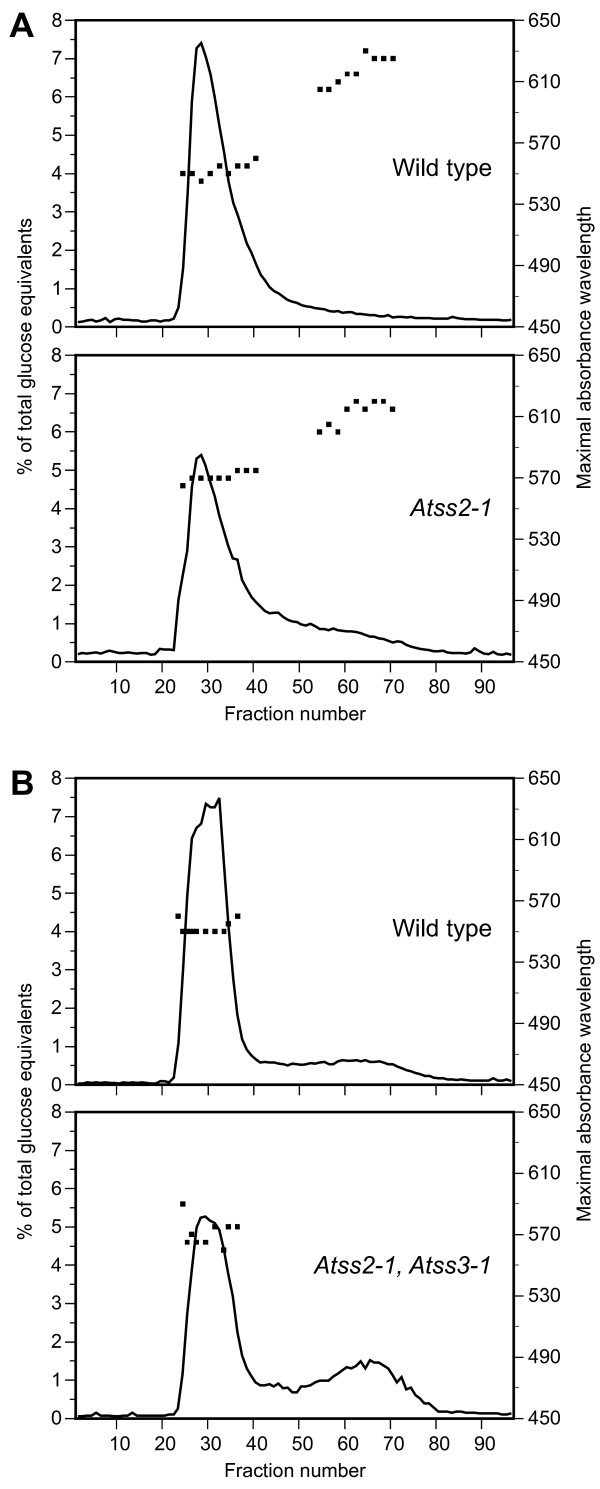
“5 Chain-length distributions (CLDs) of glucans and their wavelengths of maximum absorption after iodine complexion (λmax; gray boxes).”
BackgroundInfluentialO’Conner, S., Neudorf, A., Zheng, W., Qi, M., Zhao, X., Du, C., Nettleton, D. S., & Li, L. (2018) · Springer eBooks · doi:10.1007/978-3-319-92958-3_6 · Cited by 15
“The Starch Synthase III ss3 knockout (KO) mutant of 111 Arabidopsis is high in starch, but has a normal morphological phenotype (Zhang et al. 2008; 112 Zhang et al. 2005).”
BackgroundOrigin and evolution of the main starch biosynthetic enzymes
Chang, H., Bai, J., Zhang, H., Huang, R., Chu, H., Wang, Q., Liu, H., Cheng, J., & Jiang, H. (2023) · Synthetic and Systems Biotechnology · doi:10.1016/j.synbio.2023.05.006 · Cited by 10
“Particularly, the CBM53 domains in N-terminus region have evolved from one to three in SS-X2 and SSIII, which may be responsible for protein-protein interactions or non-catalytic glucan binding function [44,45].”
BackgroundNúñez-López, L., Aguirre‐Cruz, A., Barrera-Figueroa, B. E., & Peña-Castro, J. M. (2015) · PeerJ · doi:10.7717/peerj.817 · Cited by 9
“…al., 2011; Streb and Zeeman, 2012), altered shape and size have been reported in mutants of starch 340 breakdown enzymes GWD1 (also known as SEX1) and SEX4 (Zeeman et al., 2002) and starch PeerJ reviewing PDF | (v2014:12:3657:1:1:NEW 4 Feb 2015) 341 synthase 2 and 3 (SS2, SS3; Zhang et al., 2008).”
BackgroundDeschamps, P., Ball, S. G., & Dauvillée, D. (2023) · Elsevier eBooks · doi:10.1016/b978-0-12-821430-5.00003-1 · Cited by 9
Starch Biosynthesis in Higher Plants
Tetlow, I. J., & Emes, M. J. (2011) · Elsevier eBooks · doi:10.1016/b978-0-08-088504-9.00538-9 · Cited by 10
A transposable element insertion disturbed starch synthase gene SSIIb in maize
Liu, H., Liu, H., Wei, L., Yang, X., & Lin, Z. (2014) · Molecular Breeding · doi:10.1007/s11032-014-0107-2 · Cited by 8
“Amylopectin contains a degree of polymerization (DP) and the branched glucan chains of amylopectin can be packed in specific lengths to form the crystalized insoluble starch granule (Zhang et al. 2008).”
BackgroundStarch Biosynthesis in Higher Plants: The Enzymes of Starch Synthesis
Tetlow, I. J., & Emes, M. J. (2011) · Elsevier eBooks · doi:10.1016/b978-0-444-64046-8.00213-5 · Cited by 8
Li, Q., Sun, S. S., & Liu, Q. (2013) · Journal of the Science of Food and Agriculture · doi:10.1002/jsfa.6230 · Cited by 8
Goldstein, A., Annor, G. A., Blennow, A., & Bertoft, E. (2017) · International Journal of Biological Macromolecules · doi:10.1016/j.ijbiomac.2017.04.107 · Cited by 7
Zaffer, S., Reddy, V. S. K., Shikari, A. B., & Ray, A. (2025) · Plant Physiology and Biochemistry · doi:10.1016/j.plaphy.2025.109543 · Cited by 6
Starch biosynthesis and crop bioengineering
Blennow, A., Hebelstrup, K. H., & Petersen, B. L. (2025) · Grain & Oil Science and Technology · doi:10.1016/j.gaost.2025.04.003 · Cited by 6
Metadata
- Authors
- Zhang, X., Szydlowski, N., Delvallé, D., D'Hulst, C., James, M. G., & Myers, A. M.
- Affiliations
- Iowa State University (US)
- Centre National de la Recherche Scientifique (FR)
- Corresponding author
- Myers, Alan M
- Venue
- BMC Plant Biology
- Published
- 2008-09-23
- Volume
- 8
- Issue
- 1
- Pages
- 96-96
- ISSN
- 1471-2229 (ISSN-L)
- PMC
- PMC2566982
- OpenAlex
- W2168346592
- Cited by
- 137
- References
- 51
- Citations by year
- 2026: 4 · 2025: 6 · 2024: 3 · 2023: 8 · 2022: 9 · 2021: 3 · 2020: 8 · 2019: 4 · 2018: 14 · 2017: 10 · 2016: 9 · 2015: 16 · 2014: 9 · 2013: 5 · 2012: 10
- FWCI
- 4.16
- Type
- journal article
- Language
- en
- Open access
- gold
- doi.org
- Licence
- cc-by
- Locations
- BMC Plant Biology (publishedVersion, cc-by)
- PubMed Central (publishedVersion, cc-by)
- PubMed (publishedVersion)
- HAL (submittedVersion)
- DOAJ (DOAJ: Directory of Open Access Journals) (submittedVersion)
- The Knowledge Bank (The Ohio State University) (submittedVersion, cc-by)
- Funders
- National Science Foundation (0209789)
- European Commission
- Topics
- Life Sciences › Biochemistry, Genetics and Molecular Biology › Biochemistry › Glycogen Storage Diseases and Myoclonus
- Health Sciences › Nursing › Nutrition and Dietetics › Food composition and properties
- Life Sciences › Agricultural and Biological Sciences › Plant Science › Polysaccharides and Plant Cell Walls
- Keywords
- amylopectin biosynthesis, amylopectin chain length distribution, amylose/amylopectin ratio, enzyme redundancy, starch granule structure, Arabidopsis thaliana, starch biosynthesis, glycogen synthase
- MeSH terms
- Amylopectin, Amylose, Crosses, Genetic, DNA, Bacterial, Escherichia coli, Glucosyltransferases, Mutation, Phenotype, Plant Proteins, Recombinant Proteins, Starch Synthase, Gene Expression Regulation, Enzymologic, Mutagenesis, Insertional, Genes, Plant, Arabidopsis, Gene Expression Regulation, Plant, Plant Leaves, RNA, Plant, Reverse Transcriptase Polymerase Chain Reaction, Arabidopsis Proteins
About these checks
Registry, retraction, Cites and statistics results are computed, not judged, with one exception: a printed reference that no index lists is read once by a model before it counts as a citation error. Claims are extracted by a model and kept only when their quote appears verbatim in the text; each cited source is then checked, with a model’s help, for whether it says what the claim relies on. Those verdicts can be wrong — read the claim’s quote and the cited source before relying on one.
Statistics and arithmetic are recomputed, not judged.
Confidence bands are shown only for fields calibrated on our annotated test set. None is calibrated yet, so no band is shown.
What counts as a claim ›How we measure confidence ›How we check this ›
Are you an author, or do you see a problem with this page? Request a review
Data sources
Bibliographic data: Semantic Scholar, OpenAlex, Crossref.
Contains information from the Semantic Scholar Academic Graph Datasets, made available under the ODC Attribution License (ODC-BY 1.0).
Semantic Scholar’s data is described in: Kinney, R., et al. (2023). The Semantic Scholar Open Data Platform. arXiv:2301.10140.
