

Overlapping functions of the starch synthases SSII and SSIII in amylopectin biosynthesis in Arabidopsis
Open accessThe DOI matches its Crossref record; 51 of the 51 references it cites were found in a registry or an index.
Abstract
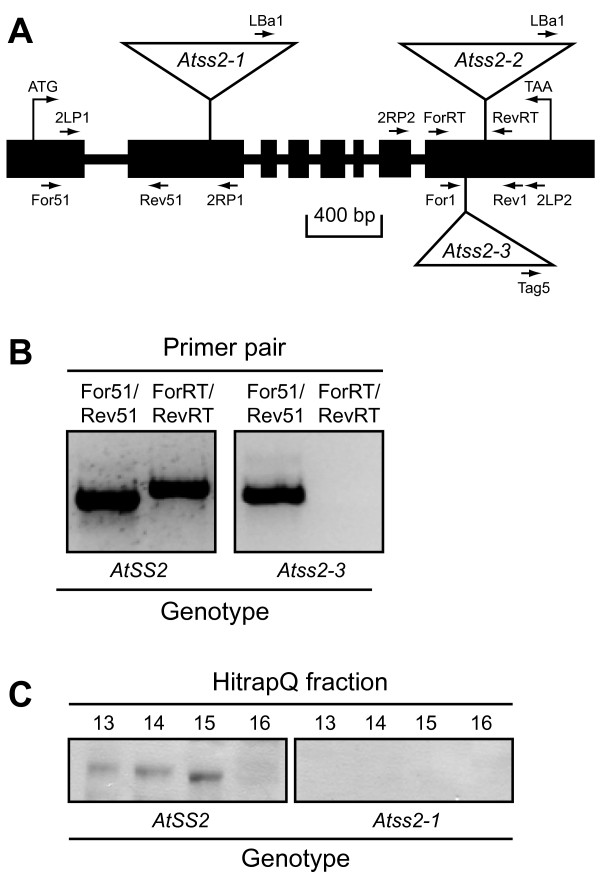
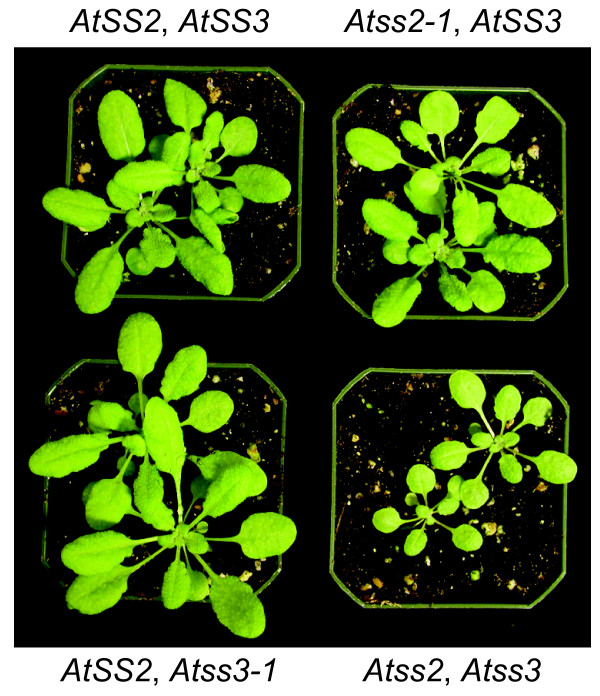
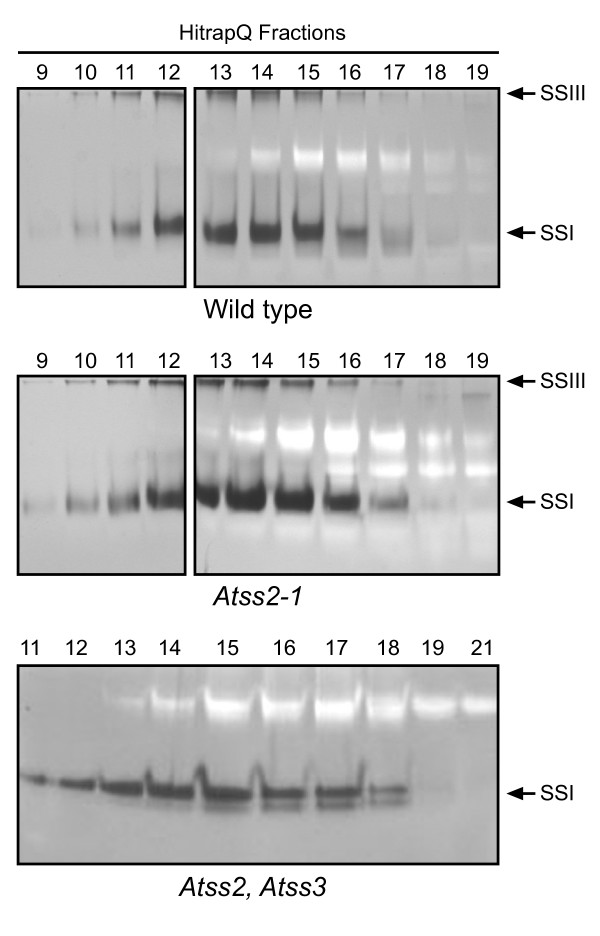
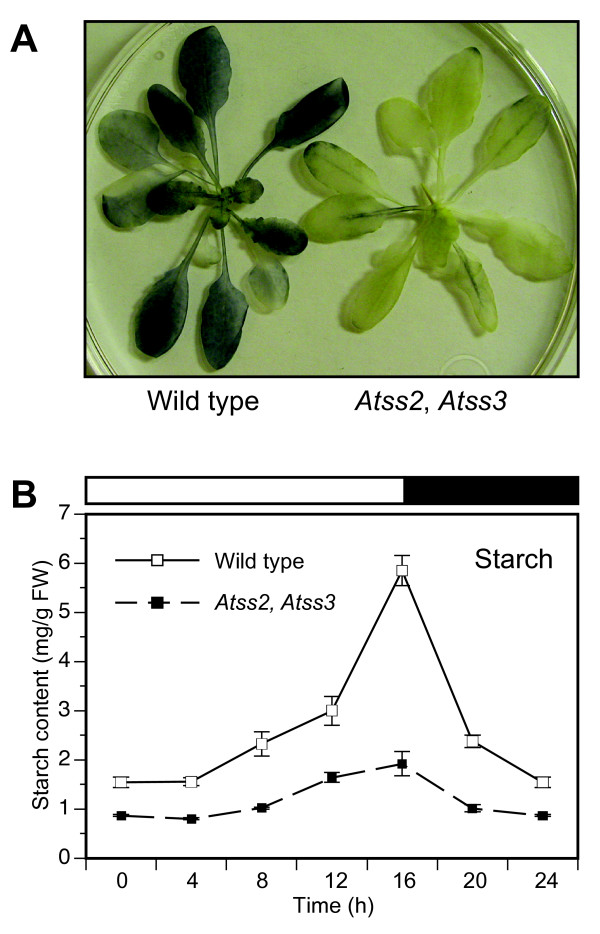
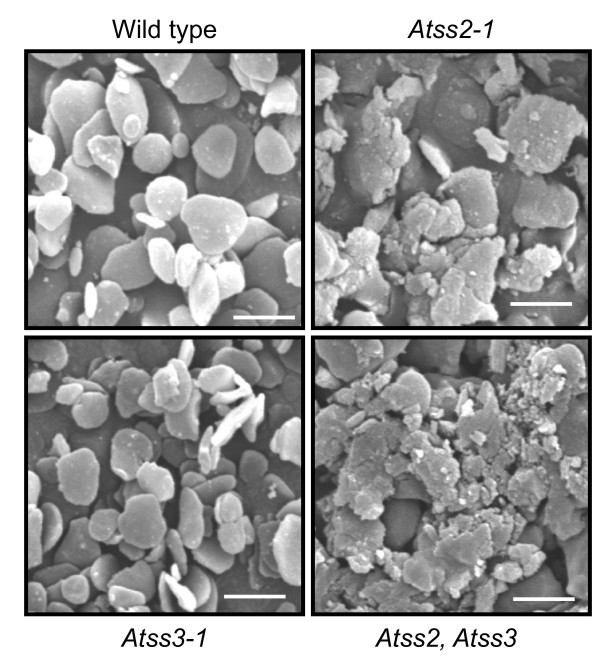
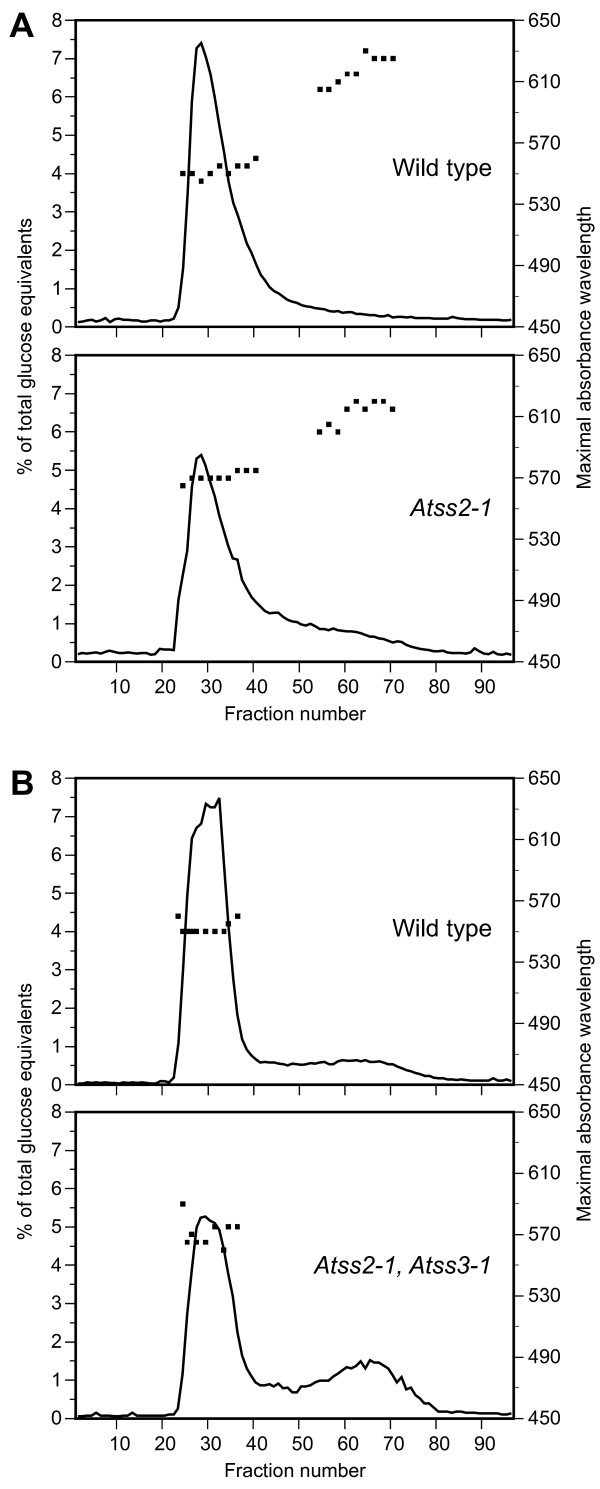
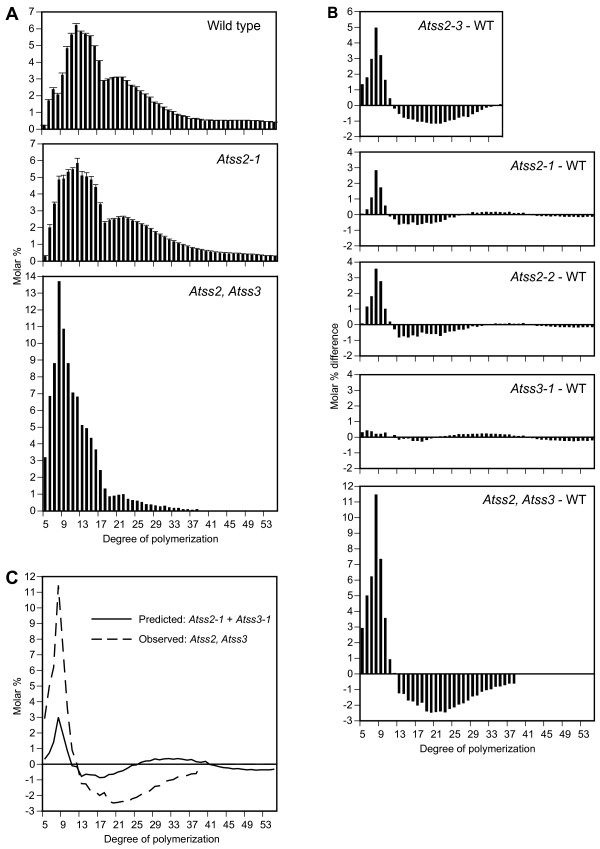
Background: The biochemical mechanisms that determine the molecular architecture of amylopectin are central in plant biology because they allow long-term storage of reduced carbon. Amylopectin structure imparts the ability to form semi-crystalline starch granules, which in turn provides its glucose storage function. The enzymatic steps of amylopectin biosynthesis resemble those of the soluble polymer glycogen, however, the reasons for amylopectin's architectural distinctions are not clearly understood. The multiplicity of starch biosynthetic enzymes conserved in plants likely is involved. For example, amylopectin chain elongation in plants involves five conserved classes of starch synthase (SS), whereas glycogen biosynthesis typically requires only one class of glycogen synthase. Results: Null mutations were characterized in AtSS2, which codes for SSII, and mutant lines were compared to lines lacking SSIII and to an Atss2,Atss3 double mutant. Loss of SSII did not affect growth rate or starch quantity, but caused increased amylose/amylopectin ratio, increased total amylose, and deficiency in amylopectin chains with degree of polymerization (DP) 12 to DP28. In contrast, loss of both SSII and SSIII caused slower plant growth and dramatically reduced starch content. Extreme deficiency in DP12 to DP28 chains occurred in the double mutant, far more severe than the summed changes in SSII- or SSIII-deficient plants lacking only one of the two enzymes. Conclusion: SSII and SSIII have partially redundant functions in determination of amylopectin structure, and these roles cannot be substituted by any other conserved SS, specifically SSI, GBSSI, or SSIV. Even though SSIII is not required for the normal abundance of glucan chains of DP12 to DP18, the enzyme clearly is capable of functioning in production such chains. The role of SSIII in producing these chains cannot be detected simply by analysis of an individual mutation. Competition between different SSs for binding to substrate could in part explain the specific distribution of glucan chains within amylopectin.
Overview
The claims and statistics of this paper haven’t been checked yet.
Free: it reads the open-access text and checks the first 5 claims that cite a source we can check. Create a free account to check every claim.
Integrity signals
Registry
Cites
Statistics
Figures
Verification
Claims the paper makes
The claims and statistics of this paper haven’t been checked yet.
Free: it reads the open-access text and checks the first 5 claims that cite a source we can check. Create a free account to check every claim.
Claims other papers make about this one
Each is checked against this paper’s own text: does it say what the citing paper says it does?
The cited source says what the claim attributes to it.
In the citing paper
“Granule-bound starch synthases (GBSS) catalyzes amylose biosynthesis, and SSS and SBE are essential for amylopectin biosynthesis in higher plants (Zhang et al., 2008; Zeeman et al., 2010).”
From Comparative Transcriptome Analysis Reveals Critical Function of Sucrose Metabolism Related-Enzymes in Starch Accumulation in the Storage Root of Sweet Potato (2017) · cites this paper as Zhang et al., 2008
Self-check
Percentages, sums and reported differences re-computed from the paper’s own numbers.
The self-check needs the paper’s full text.
Citations
Cites
Predicting Subcellular Localization of Proteins Based on their N-terminal Amino Acid Sequence
Emanuelsson, O., Nielsen, H., Brunak, S., & von Heijne, G. (2000) · Journal of Molecular Biology · doi:10.1006/jmbi.2000.3903 · Cited by 4,263 · cited 2×
“The computational programs ChloroP and TargetP [33] [34] predict that the first 55 amino acids of the polypeptide coded for by AtSS2 are likely to function as a chloroplast targeting peptide, and the predicted molecular weight of the mature protein is approximately 81 kDa.”
Starch granules: structure and biosynthesis
Buléon, A., Colonna, P., Planchot, V., & Ball, S. (1998) · International Journal of Biological Macromolecules · doi:10.1016/s0141-8130(98)00040-3 · Cited by 2,091 · cited 1×
“Starch is made up of two types of glucan homopolymer, amylose and amylopectin [1].”
Emanuelsson, O., Nielsen, H., & Heijne, G. V. (1999) · Protein Science · doi:10.1110/ps.8.5.978 · Cited by 1,814 · cited 2×
“The computational programs ChloroP and TargetP [33] [34] predict that the first 55 amino acids of the polypeptide coded for by AtSS2 are likely to function as a chloroplast targeting peptide, and the predicted molecular weight of the mature protein is approximately 81 kDa.”
Microscopy of starch: evidence of a new level of granule organization
Gallant, D. J., Bouchet, B., & Baldwin, P. M. (1997) · Carbohydrate Polymers · doi:10.1016/s0144-8617(97)00008-8 · Cited by 1,049 · cited 1×
“A specific distribution of α-(1→4)-linked glucan chain lengths, together with clustered positioning of α-(1→6) branch linkages, provides structure to amylopectin that allows crystallization and formation of insoluble starch granules [2-4].”
Polymodal distribution of the chain lengths of amylopectins, and its significance
Hizukuri, S. (1986) · Carbohydrate Research · doi:10.1016/s0008-6215(00)90643-8 · Cited by 997 · cited 1×
“A specific distribution of α-(1→4)-linked glucan chain lengths, together with clustered positioning of α-(1→6) branch linkages, provides structure to amylopectin that allows crystallization and formation of insoluble starch granules [2-4].”
Molecular identification and isolation of the Waxy locus in maize
Shure, M., Wessler, S., & Fedoroff, N. (1983) · Cell · doi:10.1016/0092-8674(83)90225-8 · Cited by 811 · cited 1×
“For example, elimination of GBSS by mutation or antisense gene expression conditions loss of the amylose component of starch granules without major effects on amylopectin [19,20].”
From Bacterial Glycogen to Starch: Understanding the Biogenesis of the Plant Starch Granule
Ball, S. G., & Morell, M. K. (2003) · Annual Review of Plant Biology · doi:10.1146/annurev.arplant.54.031902.134927 · Cited by 748 · cited 1×
“Starch is produced by the coordinated actions of the following enzymes: 1) ADPGlc pyrophosphorylase (ADPGPP), which provides the nucleotide sugar donor ADPGlc; 2) starch synthase (SS), which catalyzes the transfer of a glucosyl unit from ADPGlc to a growing polymer chain through an α-(1 → 4) glycoside bond; 3) starch…”
Starch synthesis in the cereal endosperm
James, M. G., Denyer, K., & Myers, A. M. (2003) · Current Opinion in Plant Biology · doi:10.1016/s1369-5266(03)00042-6 · Cited by 556 · cited 1×
“Starch is produced by the coordinated actions of the following enzymes: 1) ADPGlc pyrophosphorylase (ADPGPP), which provides the nucleotide sugar donor ADPGlc; 2) starch synthase (SS), which catalyzes the transfer of a glucosyl unit from ADPGlc to a growing polymer chain through an α-(1 → 4) glycoside bond; 3) starch…”
Self-citationRecent Progress toward Understanding Biosynthesis of the Amylopectin Crystal
Myers, A. M., Morell, M. K., James, M. G., & Ball, S. G. (2000) · Plant Physiology · doi:10.1104/pp.122.4.989 · Cited by 542 · cited 1×
“Starch is produced by the coordinated actions of the following enzymes: 1) ADPGlc pyrophosphorylase (ADPGPP), which provides the nucleotide sugar donor ADPGlc; 2) starch synthase (SS), which catalyzes the transfer of a glucosyl unit from ADPGlc to a growing polymer chain through an α-(1 → 4) glycoside bond; 3) starch…”
Self-citationUmemoto, T., Yano, M., Satoh, H., Shomura, A., & Nakamura, Y. (2002) · Theoretical and Applied Genetics · doi:10.1007/s001220200000 · Cited by 417 · cited 4×
“SSII deficiency in numerous species results in increased frequency of short glucan chains (DP6 to DP11) within amylopectin, decreased abundance of DP12 to DP25 chains, and in most instances an elevated amylose to amylopectin ratio [18,21-27].”
Influential
Cited by
Items 101–144 of 144
Ilse, T. E., Zhang, H., Heutinck, A., Liu, C., Eicke, S., Sharma, M., Pfister, B., Santelia, D., & Zeeman, S. C. (2025) · PLANT PHYSIOLOGY · doi:10.1093/plphys/kiaf206 · Cited by 6
Morita, R., Crofts, N., Miura, S., Ikeda, K., Aoki, N., Fukayama, H., & Fujita, N. (2022) · Plant and Cell Physiology · doi:10.1093/pcp/pcac143 · Cited by 6
Starch Metabolism in Green Plants
Busi, M. V., Gomez‐Casati, D. F., Martín, M., Barchiesi, J., Grisolia, M. J., Hedín, N., & Carrillo, J. B. (2015) · Springer eBooks · doi:10.1007/978-3-319-16298-0_78 · Cited by 6
Investigation of starch metabolism in Cassava (Manihot esculenta Crantz)
Hostettler, C. (2014) · Repository for Publications and Research Data (ETH Zurich) · doi:10.3929/ethz-a-010273670 · Cited by 9
“, 2005), though the double mutant Atss2ss3 displayed a strong reduction in DP12 to DP28 chains, and it was suggested that these two isoforms have some redundancy in their activities (Zhang et al., 2008).”
BackgroundStarch Metabolism in Green Plants
Busi, M. V., Gomez‐Casati, D. F., Martín, M., Barchiesi, J., Grisolia, M. J., Hedín, N., & Carrillo, J. B. (2014) · Springer eBooks · doi:10.1007/978-3-319-03751-6_78-1 · Cited by 6
Yoo, S., Lee, B.-H., Li, L., Perris, S. D. N., Spalding, M. H., Han, S. Y., & Jane, J. (2015) · International Journal of Biological Macromolecules · doi:10.1016/j.ijbiomac.2015.09.008 · Cited by 5
Adly, W. M. R. M., Abdelkader, H. S., Mohamed, M. A., EL-Denary, M. E., Sayed, E.-S. T. A. E.-S., & Fouad, A. S. (2023) · Egyptian Journal of Botany · doi:10.21608/ejbo.2023.212700.2341 · Cited by 4
“The ability of SSR to characterize improved starch accumulation was also recorded in rice (Bao et al., 2006), maize (Zhang et al., 2008), and sweet potato (Zhang et al., 2016; Diaz et al., 2022).”
BackgroundSubasinghe, R. M. (2013) · The Atrium (University of Guelph) · Cited by 10
Research Progress on the Regulatory Mechanism of the Waxy Gene in Rice Starch Synthesis
Chen, F., Song, Y., Jiang, Y., Cao, P., Yu, Y., Dong, M., Xie, Y., Yuan, C., Zhu, Y.-L., & Qiao, Z. (2025) · Current Issues in Molecular Biology · doi:10.3390/cimb47090678 · Cited by 3
Wang, L., Foster, C. M., Mentzen, W. I., Tanvir, R., Meng, Y., Nikolau, B. J., Wurtele, E. S., & Li, L. (2024) · International Journal of Molecular Sciences · doi:10.3390/ijms251910850 · Cited by 2
Starch Synthase 3 isoforms are essential for normal starch granule initiation in wheat endosperm
Ding, J., Fahy, B. F., Matsushima, R., Jiang, Q., & Seung, D. (2026) · New Phytologist · doi:10.1111/nph.70973 · Cited by 2
“Arabidopsis ss3 mutants have altered amylopectin structure in leaf starch (Zhang et al ., 2008).”
Xing, Y., Zhang, H., Bo, Y., Chen, Y., Li, X., Liu, C., Shi, X., Liu, C., & Zhou, Y. (2026) · Food Research International · doi:10.1016/j.foodres.2026.118939 · Cited by 2
Genetically Modified Potato as a Source of Novel Carbohydrates
Upadhyaya, C. P., Bagri, D. S., & Upadhyaya, D. C. (2018) · InTech eBooks · doi:10.5772/intechopen.71079 · Cited by 2
“Interestingly, the apparent redundant function of SSII and SSIII in amylopectin biosynthesis is also reported by researchers [27].”
BackgroundButler, V., & Tetlow, I. J. (2024) · Elsevier eBooks · doi:10.1016/b978-0-323-96102-8.00009-7 · Cited by 3
Cao, M., Chen, G., Wang, C., Zhen, S., Li, X., Zhang, W., Zeller, F. J., Hsam, S. L. K., Hu, Y., & Yan, Y. (2015) · Australian Journal of Agricultural Research · doi:10.1071/cp14256 · Cited by 2
“Silence of SSII and SSIII together can lead to synergistic defects, which are more severe than those due to mutation in only one of the two enzymes with regard to starch content and amylopectin structure (Zhang et al. 2008).”
BackgroundGerçek, Y. C., Boztaş, K., Aydın, C., Morgil, H., Barış, İ., Öz, G., & Tulum, I. (2022) · Biologia · doi:10.1007/s11756-021-00976-7 · Cited by 1
Liu, Q., Zhou, Y., Castellanos, J. F., & Fettke, J. (2024) · The Plant Journal · doi:10.1111/tpj.17016 · Cited by 1
Time Course of Starch Biosynthesis Enzymes Activity and Root Tuber Starch of Four Cassava Cultivars
Huang, H., Luo, Y., Huang, Q., Tian, Y., Li, H., & Hou, X. (2017) · Journal of Agricultural Studies · doi:10.5296/jas.v5i1.10810 · Cited by 1
Desarrollo y evaluación de nuevo germoplasma de maíz (Zea mays L.) para uso especial en Argentina
Corcuera, V. R. (2012) · RiuNet (Universitat Politècnica de València) · doi:10.4995/thesis/10251/16382 · Cited by 6
Goldstein, A. (2015) · University of Minnesota Digital Conservancy (University of Minnesota)
Núñez-López, L., Aguirre‐Cruz, A., Barrera-Figueroa, B. E., & Peña-Castro, J. M. (2015) · doi:10.7287/peerj.preprints.802v1
Iteratively Acting Glycosyltransferases
Luzhetska, M., & Bechthold, A. (2011) · Pan Stanford Publishing eBooks · doi:10.1201/b11409-8
Starch Biosynthesis in Higher Plants
Tetlow, I. J., & Emes, M. J. (2011) · Elsevier eBooks · doi:10.1016/b978-0-08-088504-9.00255-5
Investigation into the dynamic nature of the pyrenoid of Chlamydomonas reinhardtii
Fletcher, E. (2020) · White Rose eTheses Online (University of Leeds, The University of Sheffield, University of York) · Cited by 1
Molecular Regulation of Starch Metabolism
Mérida, Á. (2022) · Progress in botany · doi:10.1007/124_2022_65
Hedín, N., Barchiesi, J., Zanor, M. I., Permingeat, H. R., Gomez‐Casati, D. F., & Busi, M. V. (2023) · Current Research in Biotechnology · doi:10.1016/j.crbiot.2023.100131
Adegbaju, M. S., Adegbaju, I. E., Memunat, I. A., Saccoh, F., Falade, A. A., Lloyd, J. R., & Morenikeji, O. B. (2025) · Advanced Pharmaceutical Bulletin · doi:10.34172/apb.43630
The role of transketolase and transaldolase in carbon partitioning to lignin in Arabidopsis thaliana
(2022) · UpSpace Institutional Repository (University of Pretoria)
Zheng, M., Liu, X., Shi, Z., Yuan, X., Gao, Y., Zhao, X., & Huang, Q. (2026) · Genes · doi:10.3390/genes17020250
Debiton, C. (2010) · theses.fr (ABES) · doi:10.70675/6a752bddzaa76z442az8594z1e622d212b5e · Cited by 4
“…(Yamamori et Endo, 1996). b) Propriétés Plusieurs mutants de la SSIIa ont été décrits chez d nombreux organismes : Arabidopsis thaliana (Zhang et al., 2008), le pois mutant rug5 (Craig et al., 1998), la pomme de terre (Edwards et al., 1999), l’orge mutant sex6 (Morell et al., 2003), le…”
BackgroundSzydlowski, N. (2009) · theses.fr (ABES) · doi:10.70675/9ae386d6z83a3z432ez8509zf88ed6dd8259
Self-citationContribution à la compréhension des mécanismes d’initiation et de synthèse de l’amidon
Facon, M. (2014) · theses.fr (ABES) · doi:10.70675/9e4105b3z61f3z419cz99aazeed5cc2b4aa9
Findinier, J. (2015) · theses.fr (ABES) · doi:10.70675/eecf2bcdz6d21z4b6fz85f4zdcd7e3542532 · Cited by 1
Dynamique enzymatique et contrôle de la formation et de la distribution des branchements de l’amidon
Wychowski, A. (2017) · theses.fr (ABES) · doi:10.70675/385dec46z7967z4820zbb6czfa7bc67ae800 · Cited by 1
Dissection génétique du déterminisme de la granulométrie de l’amidon chez Chlamydomonas reinhardtii
Laurent, S. (2018) · theses.fr (ABES) · doi:10.70675/867ff944ze6a9z4294z92bezb2ab43f1f2ff
Regulatory factors of starch metabolism in cereal endosperm
Tian, T., Wang, P., Zhang, Y., Wang, Q., Li, K., Guo, L., Chen, T., & Yang, D. (2026) · Plant Molecular Biology · doi:10.1007/s11103-026-01722-w
“There are three major isozymes of starch synthase— SSI, SSIIa, and SSIIIa (Delvallé et al. 2005; Zhang et al. 2008) (Table 1), while SS4 and SS5 are known to involve in the initiation of starch granule formation (Roldán et al. 2007) (Table 1 ).”
O'Brien, C., Carswell, M., Rowland, A. M., Scarbrough, D., Huang, X., Fahy, B. F., Fettke, J., Habig, J. W., & Seung, D. (2026) · bioRxiv (Cold Spring Harbor Laboratory) · doi:10.64898/2026.08.24.746836
“SS1, SS2, and SS3 are involved in amylopectin synthesis, while Granule Bound Starch Synthase (GBSS) is involved in amylose synthesis (Delvallé et al., 2005; Zhang et al., 2008; Seung, 2020).”
Metadata
- Authors
- Zhang, X., Szydlowski, N., Delvallé, D., D'Hulst, C., James, M. G., & Myers, A. M.
- Affiliations
- Iowa State University (US)
- Centre National de la Recherche Scientifique (FR)
- Corresponding author
- Myers, Alan M
- Venue
- BMC Plant Biology
- Published
- 2008-09-23
- Volume
- 8
- Issue
- 1
- Pages
- 96-96
- ISSN
- 1471-2229 (ISSN-L)
- PMC
- PMC2566982
- OpenAlex
- W2168346592
- Cited by
- 137
- References
- 51
- Citations by year
- 2026: 4 · 2025: 6 · 2024: 3 · 2023: 8 · 2022: 9 · 2021: 3 · 2020: 8 · 2019: 4 · 2018: 14 · 2017: 10 · 2016: 9 · 2015: 16 · 2014: 9 · 2013: 5 · 2012: 10
- FWCI
- 4.16
- Type
- journal article
- Language
- en
- Open access
- gold
- doi.org
- Licence
- cc-by
- Locations
- BMC Plant Biology (publishedVersion, cc-by)
- PubMed Central (publishedVersion, cc-by)
- PubMed (publishedVersion)
- HAL (submittedVersion)
- DOAJ (DOAJ: Directory of Open Access Journals) (submittedVersion)
- The Knowledge Bank (The Ohio State University) (submittedVersion, cc-by)
- Funders
- National Science Foundation (0209789)
- European Commission
- Topics
- Life Sciences › Biochemistry, Genetics and Molecular Biology › Biochemistry › Glycogen Storage Diseases and Myoclonus
- Health Sciences › Nursing › Nutrition and Dietetics › Food composition and properties
- Life Sciences › Agricultural and Biological Sciences › Plant Science › Polysaccharides and Plant Cell Walls
- Keywords
- amylopectin biosynthesis, amylopectin chain length distribution, amylose/amylopectin ratio, enzyme redundancy, starch granule structure, Arabidopsis thaliana, starch biosynthesis, glycogen synthase
- MeSH terms
- Amylopectin, Amylose, Crosses, Genetic, DNA, Bacterial, Escherichia coli, Glucosyltransferases, Mutation, Phenotype, Plant Proteins, Recombinant Proteins, Starch Synthase, Gene Expression Regulation, Enzymologic, Mutagenesis, Insertional, Genes, Plant, Arabidopsis, Gene Expression Regulation, Plant, Plant Leaves, RNA, Plant, Reverse Transcriptase Polymerase Chain Reaction, Arabidopsis Proteins
About these checks
Registry, retraction, Cites and statistics results are computed, not judged, with one exception: a printed reference that no index lists is read once by a model before it counts as a citation error. Claims are extracted by a model and kept only when their quote appears verbatim in the text; each cited source is then checked, with a model’s help, for whether it says what the claim relies on. Those verdicts can be wrong — read the claim’s quote and the cited source before relying on one.
Statistics and arithmetic are recomputed, not judged.
Confidence bands are shown only for fields calibrated on our annotated test set. None is calibrated yet, so no band is shown.
What counts as a claim ›How we measure confidence ›How we check this ›
Are you an author, or do you see a problem with this page? Request a review
Data sources
Bibliographic data: Semantic Scholar, OpenAlex, Crossref.
Contains information from the Semantic Scholar Academic Graph Datasets, made available under the ODC Attribution License (ODC-BY 1.0).
Semantic Scholar’s data is described in: Kinney, R., et al. (2023). The Semantic Scholar Open Data Platform. arXiv:2301.10140.
