

FORCA, a promoter element that responds to crosstalk between defense and light signaling
Open accessThe DOI matches its Crossref record; 58 of the 58 references it cites were found in a registry or an index.
Abstract
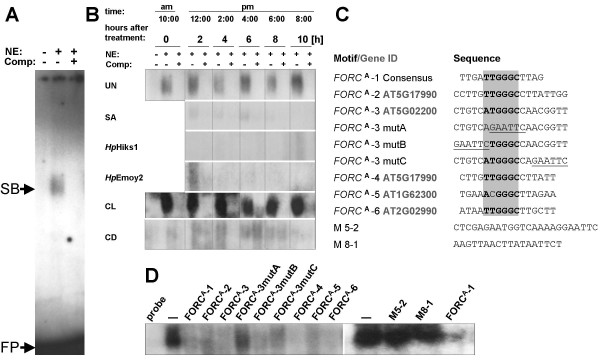
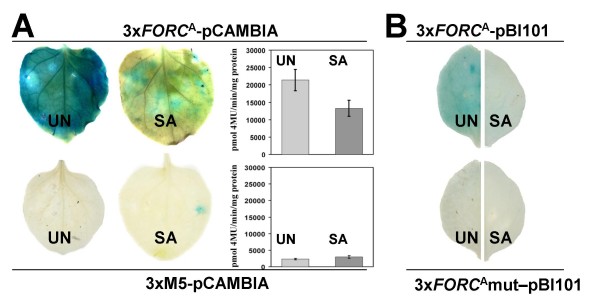
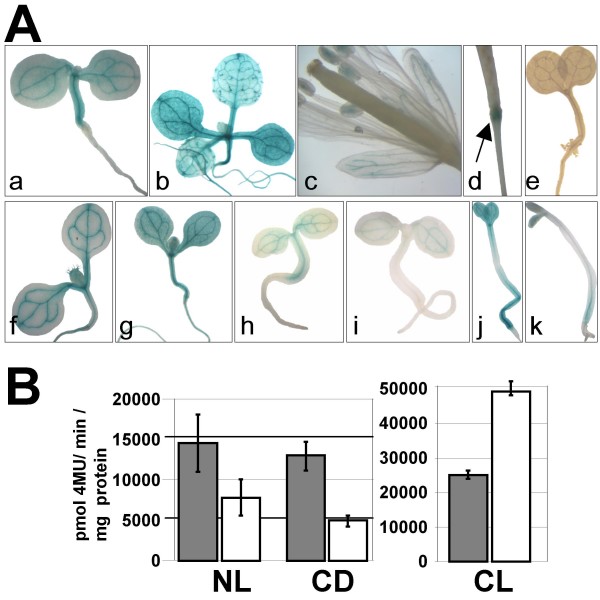
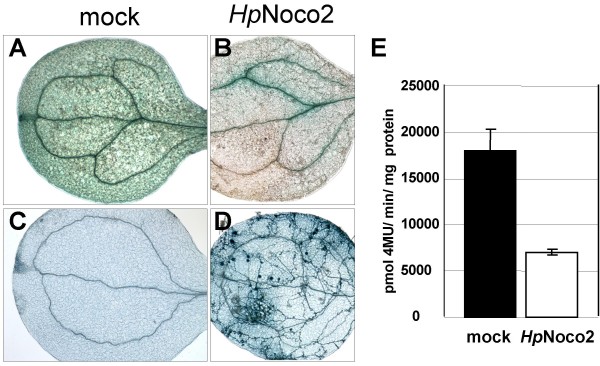
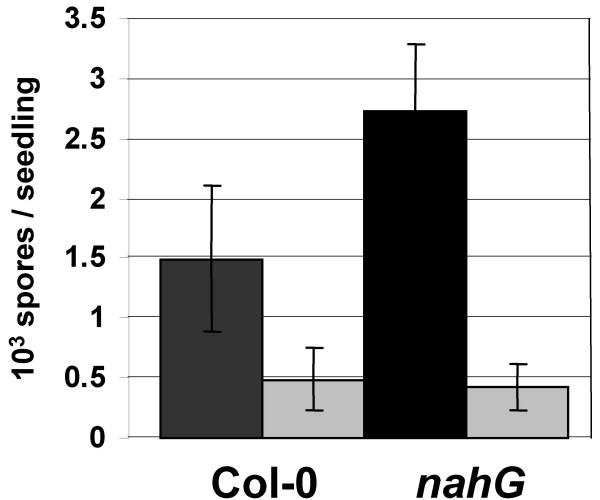
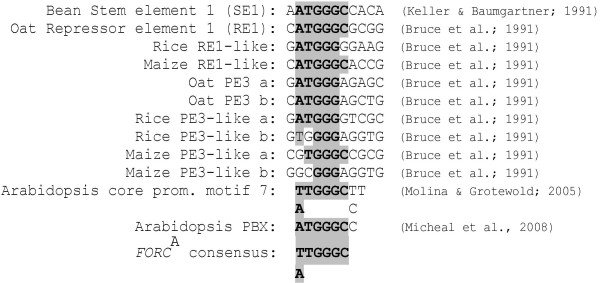
Background: Recognition of pathogenic microorganisms triggers in plants comprehensive transcriptional reprogramming. In order to identify transcriptome-level control elements required for plant immune responses we are examining several sets of genes found by microarray experiments to be co-activated in Arabidopsis thaliana (Arabidopsis) seedlings infected with the oomycete Hyaloperonospora parasitica. Promoter motifs conserved in clusters of co-expressed genes may be involved in mediating coordinated gene activity patterns. Although numerous studies identified such conserved promoter motifs in co-expressed gene sets, reports confirming their function as regulatory elements are rare. Results: FORC A is a hexameric promoter motif that is conserved in clusters of Arabidopsis genes co-expressed in response to fungal or oomycete pathogens as well as defined light treatments. FORC A is generally more frequently present in Arabidopsis promoter regions than statistically expected. It constitutively interacts in a DNA-sequence specific manner with nuclear Arabidopsis proteins. These interactions are suppressed by defense-related stimuli and enhanced by prolonged exposure to constant light. Furthermore FORC A mediates constitutive reporter gene expression in transiently transformed Nicotiana benthamiana leaves as well as in stably transformed Arabidopsis plants. Its responsiveness to defense-stimuli is modulated by the duration of light exposure. In plants grown under normal light conditions or constant darkness defense-related stimuli result in suppression of FORC A-mediated reporter gene expression, while in plants grown under constant light exposure, defense-induction results in enhanced FORC A-mediated expression. In addition, we found plants subjected to constant light exposure to exhibit reduced susceptibility to virulent H. parasitica. Conclusion: We propose that FORC A is a regulatory cis-element that is present in a wide variety of Arabidopsis promoters. It integrates light- and defense-related signals and participates in adjusting the transcriptome to changes in environmental conditions.
Overview
The claims and statistics of this paper haven’t been checked yet.
Free: it reads the open-access text and checks the first 5 claims that cite a source we can check. Create a free account to check every claim.
Integrity signals
Registry
Cites
Statistics
Figures
Verification
Claims the paper makes
The claims and statistics of this paper haven’t been checked yet.
Free: it reads the open-access text and checks the first 5 claims that cite a source we can check. Create a free account to check every claim.
Claims other papers make about this one
Each is checked against this paper’s own text: does it say what the citing paper says it does?
The check wasn’t confident either way, so it gives no verdict — never disputed.
In the citing paper
“Some of the identified motifs are well-documented in the literature but do not have a significant match in this database, such as the third motif (39) in Fig. 3B.”
From DNA language models are powerful predictors of genome-wide variant effects (2023) · cites this paper as [39]
Experimental — accuracy not yet measured
Self-check
Percentages, sums and reported differences re-computed from the paper’s own numbers.
The self-check needs the paper’s full text.
Citations
Cites
Molecular Cloning: A Laboratory Manual
Sambrook, J., Fritsch, E., & Maniatis, T. (1989) · UCLA - Biblioteca de Ciencias de la Salud · Cited by 133,589
Molecular cloning: A laboratory manual
Deininger, P. (1990) · Analytical Biochemistry · doi:10.1016/0003-2697(90)90595-z · Cited by 84,682
Floral dip: a simplified method forAgrobacterium‐mediated transformation ofArabidopsis thaliana
Clough, S. J., & Bent, A. F. (1998) · The Plant Journal · doi:10.1046/j.1365-313x.1998.00343.x · Cited by 21,934 · cited 1×
“Agrobacterium-mediated transformation of Col-0 (T0) was performed by the floral-dip method [54].”
Jones, J. D. G., & Dangl, J. L. (2006) · Nature · doi:10.1038/nature05286 · Cited by 13,177 · cited 1×
“Two functionally distinct classes of pathogen molecules are known to elicit plant immune responses [1-3].”
Contrasting Mechanisms of Defense Against Biotrophic and Necrotrophic Pathogens
Glazebrook, J. (2005) · Annual Review of Phytopathology · doi:10.1146/annurev.phyto.43.040204.135923 · Cited by 4,367 · cited 1×
“Crosstalk between distinct branches of this network has been found to be involved in fine-tuning defense outputs and maximizing the effectiveness of immune responses [7].”
Host-Microbe Interactions: Shaping the Evolution of the Plant Immune Response
Chisholm, S. T., Coaker, G., Day, B., & Staskawicz, B. J. (2006) · Cell · doi:10.1016/j.cell.2006.02.008 · Cited by 2,957 · cited 1×
“Two functionally distinct classes of pathogen molecules are known to elicit plant immune responses [1-3].”
Genevestigator V3: A Reference Expression Database for the Meta‐Analysis of Transcriptomes
Hruz, T., Laule, O., Szabo, G., Wessendorp, F., Bleuler, S., Oertle, L., Widmayer, P., Gruissem, W., & Zimmermann, P. (2008) · Advances in Bioinformatics · doi:10.1155/2008/420747 · Cited by 1,910
Bacterial disease resistance in Arabidopsis through flagellin perception
Zipfel, C., Robatzek, S., Navarro, L., Oakeley, E. J., Jones, J. D. G., Felix, G., & Boller, T. (2004) · Nature · doi:10.1038/nature02485 · Cited by 1,790 · cited 1×
“Multiple studies reported the existence of statistically conserved promoter motifs in clusters of co-expressed genes [20,21,35], but only a few reports provided evidence for their roles as regulatory promoter elements as well as binding sites of nuclear proteins [22,23].”
A Central Role of Salicylic Acid in Plant Disease Resistance
Delaney, T. P., Uknes, S., Vernooij, B., Friedrich, L., Weymann, K., Negrotto, D., Gaffney, T., Gut-Rella, M., Kessmann, H., Ward, E., et al. (1994) · Science · doi:10.1126/science.266.5188.1247 · Cited by 1,752 · cited 16×
“Two week-old seedlings were sprayinoculated with Hp spore suspensions (6 × 10⁴ to 1 × 10⁵ spores ml-1 of water for HpHiks1 and HpEmoy2 and 2 × 10⁴ spores ml-1 for HpNoco2) with Preval paint sprayers.”
InfluentialOrchestrated Transcription of Key Pathways in Arabidopsis by the Circadian Clock
Harmer, S. L., Hogenesch, J. B., Straume, M., Chang, H.-S., Han, B., Zhu, T., Wang, X., Kreps, J. A., & Kay, S. A. (2000) · Science · doi:10.1126/science.290.5499.2110 · Cited by 1,640 · cited 3×
“While in some cases, their function has been experimentally proven [22,23], reports confirming that such conserved promoter motifs are binding sites of nuclear proteins that can affect gene expression are still rare.”
Cited by
Light acts as a stressor and influences abiotic and biotic stress responses in plants
Roeber, V. M., Bajaj, I., Rohde, M., Schmülling, T., & Cortleven, A. (2021) · Plant, Cell & Environment · doi:10.1111/pce.13948 · Cited by 304
Roden, L. C., & Ingle, R. A. (2009) · The Plant Cell · doi:10.1105/tpc.109.069922 · Cited by 224
cis-Regulatory elements in plant cell signaling
Priest, H. D., Filichkin, S. A., & Mockler, T. C. (2009) · Current Opinion in Plant Biology · doi:10.1016/j.pbi.2009.07.016 · Cited by 182
Schenke, D., Böttcher, C., & Scheel, D. (2011) · Plant Cell & Environment · doi:10.1111/j.1365-3040.2011.02381.x · Cited by 160
DNA language models are powerful predictors of genome-wide variant effects
Benegas, G., Batra, S. S., & Song, Y. S. (2023) · Proceedings of the National Academy of Sciences · doi:10.1073/pnas.2311219120 · Cited by 157
Metadata
- Authors
- Evrard, A., Ndatimana, T., & Eulgem, T.
- Affiliations
- University of California, Riverside (US)
- Corresponding author
- Eulgem, Thomas
- ORCID
- Eulgem, Thomas
- Venue
- BMC Plant Biology
- Published
- 2009-01-07
- Volume
- 9
- Issue
- 1
- Pages
- 2-2
- ISSN
- 1471-2229 (ISSN-L)
- PMC
- PMC2640394
- OpenAlex
- W2041293138
- Cited by
- 28
- References
- 58
- Citations by year
- 2025: 2 · 2023: 3 · 2022: 1 · 2021: 3 · 2020: 2 · 2018: 1 · 2016: 2 · 2015: 1 · 2014: 3 · 2013: 1
- FWCI
- 3.63
- Type
- journal article
- Language
- en
- Open access
- gold
- doi.org
- Licence
- cc-by
- Locations
- BMC Plant Biology (publishedVersion, cc-by)
- PubMed Central (publishedVersion, cc-by)
- PubMed (publishedVersion)
- DOAJ (DOAJ: Directory of Open Access Journals) (submittedVersion, cc-by-sa)
- Funders
- National Science Foundation (0449439)
- Topics
- Life Sciences › Agricultural and Biological Sciences › Plant Science › Plant-Microbe Interactions and Immunity
- Life Sciences › Agricultural and Biological Sciences › Plant Science › Plant Molecular Biology Research
- Life Sciences › Agricultural and Biological Sciences › Plant Science › Light effects on plants
- Keywords
- cis-regulatory elements, defense signaling, light signaling, signaling crosstalk, Hyaloperonospora parasitica, oomycete infection, Arabidopsis thaliana, promoter elements, co-expressed genes, transcriptional regulation, plant immunity, constant light, disease susceptibility
- MeSH terms
- Darkness, Multigene Family, Light, Oomycetes, Plant Diseases, Promoter Regions, Genetic, Nicotiana, Transcription, Genetic, Signal Transduction, Arabidopsis, Gene Expression Regulation, Plant, Gene Expression Profiling, Arabidopsis Proteins, Plants, Genetically Modified
About these checks
Registry, retraction, Cites and statistics results are computed, not judged, with one exception: a printed reference that no index lists is read once by a model before it counts as a citation error. Claims are extracted by a model and kept only when their quote appears verbatim in the text; each cited source is then checked, with a model’s help, for whether it says what the claim relies on. Those verdicts can be wrong — read the claim’s quote and the cited source before relying on one.
Statistics and arithmetic are recomputed, not judged.
Confidence bands are shown only for fields calibrated on our annotated test set. None is calibrated yet, so no band is shown.
What counts as a claim ›How we measure confidence ›How we check this ›
Are you an author, or do you see a problem with this page? Request a review
How to cite
Cite CoChat for the checks on this page, and the paper for its own findings.
- This page
- CoChat. (2026). Citation check: FORCA, a promoter element that responds to crosstalk between defense and light signaling. https://app.cochat.ai/papers/10.1186/1471-2229-9-2
- The paper
- Evrard, A., Ndatimana, T., & Eulgem, T. (2009). FORCA, a promoter element that responds to crosstalk between defense and light signaling. BMC Plant Biology. https://doi.org/10.1186/1471-2229-9-2
Data sources
Bibliographic data: Semantic Scholar, OpenAlex, Crossref.
Contains information from the Semantic Scholar Academic Graph Datasets, made available under the ODC Attribution License (ODC-BY 1.0).
Semantic Scholar’s data is described in: Kinney, R., et al. (2023). The Semantic Scholar Open Data Platform. arXiv:2301.10140.
