

FORCA, a promoter element that responds to crosstalk between defense and light signaling
Open accessThe DOI matches its Crossref record; 58 of the 58 references it cites were found in a registry or an index.
Abstract
Background: Recognition of pathogenic microorganisms triggers in plants comprehensive transcriptional reprogramming. In order to identify transcriptome-level control elements required for plant immune responses we are examining several sets of genes found by microarray experiments to be co-activated in Arabidopsis thaliana (Arabidopsis) seedlings infected with the oomycete Hyaloperonospora parasitica. Promoter motifs conserved in clusters of co-expressed genes may be involved in mediating coordinated gene activity patterns. Although numerous studies identified such conserved promoter motifs in co-expressed gene sets, reports confirming their function as regulatory elements are rare. Results: FORC A is a hexameric promoter motif that is conserved in clusters of Arabidopsis genes co-expressed in response to fungal or oomycete pathogens as well as defined light treatments. FORC A is generally more frequently present in Arabidopsis promoter regions than statistically expected. It constitutively interacts in a DNA-sequence specific manner with nuclear Arabidopsis proteins. These interactions are suppressed by defense-related stimuli and enhanced by prolonged exposure to constant light. Furthermore FORC A mediates constitutive reporter gene expression in transiently transformed Nicotiana benthamiana leaves as well as in stably transformed Arabidopsis plants. Its responsiveness to defense-stimuli is modulated by the duration of light exposure. In plants grown under normal light conditions or constant darkness defense-related stimuli result in suppression of FORC A-mediated reporter gene expression, while in plants grown under constant light exposure, defense-induction results in enhanced FORC A-mediated expression. In addition, we found plants subjected to constant light exposure to exhibit reduced susceptibility to virulent H. parasitica. Conclusion: We propose that FORC A is a regulatory cis-element that is present in a wide variety of Arabidopsis promoters. It integrates light- and defense-related signals and participates in adjusting the transcriptome to changes in environmental conditions.
Overview
The claims and statistics of this paper haven’t been checked yet.
Free: it reads the open-access text and checks the first 5 claims that cite a source we can check. Create a free account to check every claim.
Integrity signals
Registry
Cites
Statistics
Figures
Verification
Claims the paper makes
The claims and statistics of this paper haven’t been checked yet.
Free: it reads the open-access text and checks the first 5 claims that cite a source we can check. Create a free account to check every claim.
Claims other papers make about this one
Each is checked against this paper’s own text: does it say what the citing paper says it does?
The check wasn’t confident either way, so it gives no verdict — never disputed.
In the citing paper
“Some of the identified motifs are well-documented in the literature but do not have a significant match in this database, such as the third motif (39) in Fig. 3B.”
From DNA language models are powerful predictors of genome-wide variant effects (2023) · cites this paper as [39]
Experimental — accuracy not yet measured
Self-check
Percentages, sums and reported differences re-computed from the paper’s own numbers.
The self-check needs the paper’s full text.
Citations
Cites
Molecular Cloning: A Laboratory Manual
Sambrook, J., Fritsch, E., & Maniatis, T. (1989) · UCLA - Biblioteca de Ciencias de la Salud · Cited by 133,589
Molecular cloning: A laboratory manual
Deininger, P. (1990) · Analytical Biochemistry · doi:10.1016/0003-2697(90)90595-z · Cited by 84,682
Floral dip: a simplified method forAgrobacterium‐mediated transformation ofArabidopsis thaliana
Clough, S. J., & Bent, A. F. (1998) · The Plant Journal · doi:10.1046/j.1365-313x.1998.00343.x · Cited by 21,934 · cited 1×
“Agrobacterium-mediated transformation of Col-0 (T0) was performed by the floral-dip method [54].”
Jones, J. D. G., & Dangl, J. L. (2006) · Nature · doi:10.1038/nature05286 · Cited by 13,177 · cited 1×
“Two functionally distinct classes of pathogen molecules are known to elicit plant immune responses [1-3].”
Contrasting Mechanisms of Defense Against Biotrophic and Necrotrophic Pathogens
Glazebrook, J. (2005) · Annual Review of Phytopathology · doi:10.1146/annurev.phyto.43.040204.135923 · Cited by 4,367 · cited 1×
“Crosstalk between distinct branches of this network has been found to be involved in fine-tuning defense outputs and maximizing the effectiveness of immune responses [7].”
Host-Microbe Interactions: Shaping the Evolution of the Plant Immune Response
Chisholm, S. T., Coaker, G., Day, B., & Staskawicz, B. J. (2006) · Cell · doi:10.1016/j.cell.2006.02.008 · Cited by 2,957 · cited 1×
“Two functionally distinct classes of pathogen molecules are known to elicit plant immune responses [1-3].”
Genevestigator V3: A Reference Expression Database for the Meta‐Analysis of Transcriptomes
Hruz, T., Laule, O., Szabo, G., Wessendorp, F., Bleuler, S., Oertle, L., Widmayer, P., Gruissem, W., & Zimmermann, P. (2008) · Advances in Bioinformatics · doi:10.1155/2008/420747 · Cited by 1,910
Bacterial disease resistance in Arabidopsis through flagellin perception
Zipfel, C., Robatzek, S., Navarro, L., Oakeley, E. J., Jones, J. D. G., Felix, G., & Boller, T. (2004) · Nature · doi:10.1038/nature02485 · Cited by 1,790 · cited 1×
“Multiple studies reported the existence of statistically conserved promoter motifs in clusters of co-expressed genes [20,21,35], but only a few reports provided evidence for their roles as regulatory promoter elements as well as binding sites of nuclear proteins [22,23].”
A Central Role of Salicylic Acid in Plant Disease Resistance
Delaney, T. P., Uknes, S., Vernooij, B., Friedrich, L., Weymann, K., Negrotto, D., Gaffney, T., Gut-Rella, M., Kessmann, H., Ward, E., et al. (1994) · Science · doi:10.1126/science.266.5188.1247 · Cited by 1,752 · cited 16×
“Two week-old seedlings were sprayinoculated with Hp spore suspensions (6 × 10⁴ to 1 × 10⁵ spores ml-1 of water for HpHiks1 and HpEmoy2 and 2 × 10⁴ spores ml-1 for HpNoco2) with Preval paint sprayers.”
InfluentialOrchestrated Transcription of Key Pathways in Arabidopsis by the Circadian Clock
Harmer, S. L., Hogenesch, J. B., Straume, M., Chang, H.-S., Han, B., Zhu, T., Wang, X., Kreps, J. A., & Kay, S. A. (2000) · Science · doi:10.1126/science.290.5499.2110 · Cited by 1,640 · cited 3×
“While in some cases, their function has been experimentally proven [22,23], reports confirming that such conserved promoter motifs are binding sites of nuclear proteins that can affect gene expression are still rare.”
Innate immunity in plants and animals: striking similarities and obvious differences
Nürnberger, T., Brunner, F., Kemmerling, B., & Piater, L. (2004) · Immunological Reviews · doi:10.1111/j.0105-2896.2004.0119.x · Cited by 1,286 · cited 1×
“Two functionally distinct classes of pathogen molecules are known to elicit plant immune responses [1-3].”
Spoel, S. H., Koornneef, A., Claessens, S. M. C., Korzelius, J. P., Van Pelt, J. A., Mueller, M. J., Buchala, A. J., Métraux, J.-P., Brown, R., Kazan, K., et al. (2003) · The Plant Cell · doi:10.1105/tpc.009159 · Cited by 1,227
Functions of the respiratory burst oxidase in biotic interactions, abiotic stress and development
Torres, M. A., & Dangl, J. L. (2005) · Current Opinion in Plant Biology · doi:10.1016/j.pbi.2005.05.014 · Cited by 1,152 · cited 1×
“in these mutants, light-driven accumulation of reactive oxygen intermediates (ROI), such as superoxide and hydrogenperoxide has been discussed [42,45].”
The transcriptome of Arabidopsis thaliana during systemic acquired resistance
Maleck, K., Levine, A., Eulgem, T., Morgan, A., Schmid, J., Lawton, K. A., Dangl, J. L., & Dietrich, R. A. (2000) · Nature Genetics · doi:10.1038/82521 · Cited by 1,031 · cited 2×
“Multiple studies reported the existence of statistically conserved promoter motifs in clusters of co-expressed genes [20,21,35], but only a few reports provided evidence for their roles as regulatory promoter elements as well as binding sites of nuclear proteins [22,23].”
Self-citationHughes, J. D., Estep, P. W., Tavazoie, S., & Church, G. M. (2000) · Journal of Molecular Biology · doi:10.1006/jmbi.2000.3519 · Cited by 1,010 · cited 2×
“Applying AlignACE [26] to the 1000 bp-upstream sequences of a strictly co-expressed subset of FORC genes (Pearson correlation of 0.95 to the average pattern of the FORC set; [15]) we found the hexameric motif T/ATGGGC to be significantly enriched compared to its statistically expected frequency (p = 3.0 E-4; see under…”
InfluentialChen, W., Provart, N. J., Glazebrook, J., Katagiri, F., Chang, H.-S., Eulgem, T., Mauch, F., Luan, S., Zou, G., Whitham, S. A., et al. (2002) · The Plant Cell · doi:10.1105/tpc.010410 · Cited by 968 · cited 2×
“Multiple studies reported the existence of statistically conserved promoter motifs in clusters of co-expressed genes [20,21,35], but only a few reports provided evidence for their roles as regulatory promoter elements as well as binding sites of nuclear proteins [22,23].”
Self-citationMur, L. A. J., Kenton, P., Atzorn, R., Miersch, O., & Wasternack, C. (2006) · Plant Physiology · doi:10.1104/pp.105.072348 · Cited by 864 · cited 1×
“For example, sophisticated mechanisms mediating crosstalk between SA and jasmonic acid (JA)-dependent signaling processes can result in synergistic or antagonistic effects depending on the levels of each of these hormones [8-10].”
Dong, X. (2004) · Current Opinion in Plant Biology · doi:10.1016/j.pbi.2004.07.005 · Cited by 845 · cited 1×
“Several transcriptional regulators have been implicated in these processes, such as NPR1, a nuclear transported transcriptional cofactor that acts downstream from SA and interacts with TGA-bZIP transcription factors [18].”
Wang, D., Amornsiripanitch, N., & Dong, X. (2006) · PLoS Pathogens · doi:10.1371/journal.ppat.0020123 · Cited by 774 · cited 1×
“In addition, 19 of the 43 FORC genes represented on the Affymetrix ATH1 array are significantly up-regulated by the SA analog BTH [ 36 ].”
The Botany Array Resource: e‐Northerns, Expression Angling, and promoter analyses
Toufighi, K., Brady, S. M., Austin, R., Ly, E., & Provart, N. J. (2005) · The Plant Journal · doi:10.1111/j.1365-313x.2005.02437.x · Cited by 763 · cited 3×
“Inspecting publicly accessible microarray data (Botany Array Resource) [25] we found that cluster I genes also exhibit a pronounced pattern of coactivation during interactions of Arabidopsis with the fungal pathogen Bortytis cinerea as well as a second oomycete, Phythophthora infestans (see Additional File 1).”
InfluentialNitric oxide and salicylic acid signaling in plant defense
Klessig, D. F., Durner, J., Noad, R., Navarre, D. A., Wendehenne, D., Kumar, D., Zhou, J. M., Shah, J., Zhang, S., Kachroo, P., et al. (2000) · Proceedings of the National Academy of Sciences · doi:10.1073/pnas.97.16.8849 · Cited by 762 · cited 1×
“A key player in the regulation of ETI as well as basal defense is the hormone salicylic acid (SA), which accumulates in infected tissues of several plant species and triggers downstream defense responses [5].”
Arabidopsis mutants simulating disease resistance response
Dietrich, R. A., Delaney, T. P., Uknes, S. J., Ward, E. R., Ryals, J. A., & Dangl, J. L. (1994) · Cell · doi:10.1016/0092-8674(94)90218-6 · Cited by 714 · cited 1×
“Multiple lesion mimic mutants also point to interactions between light and defense signaling, as they are known to exhibit spontaneous defense responses, such as elevated PR gene expression, upon exposure to high light [43,44].”
Rushton, P. J., Torres, J. T., Parniske, M., Wernert, P., Hahlbrock, K., & Somssich, I. E. (1996) · The EMBO Journal · doi:10.1002/j.1460-2075.1996.tb00953.x · Cited by 683
Pathological hormone imbalances
Robert-Seilaniantz, A., Navarro, L., Bari, R., & Jones, J. D. (2007) · Current Opinion in Plant Biology · doi:10.1016/j.pbi.2007.06.003 · Cited by 606 · cited 1×
“For example, crosstalk between defense mechanisms dependent on the defense hormones SA and JA on the one hand and each of the classical growth-controlling phytohormones, auxin, gibberellin, ABA, cytokinin or brassinosteroids on the other hand have been reported [11].”
Recognition and Response in the Plant Immune System
Nimchuk, Z., Eulgem, T., Holt III, B. F., & Dangl, J. L. (2003) · Annual Review of Genetics · doi:10.1146/annurev.genet.37.110801.142628 · Cited by 604 · cited 1×
“Several other small molecules and multiple proteins involved in defense regulation have been identified by genetic and biochemical studies [6].”
Self-citationJabs, T., Tschöpe, M., Colling, C., Hahlbrock, K., & Scheel, D. (1997) · Proceedings of the National Academy of Sciences · doi:10.1073/pnas.94.9.4800 · Cited by 594
Shirasu, K., Nakajima, H., Rajasekhar, V. K., Dixon, R. A., & Lamb, C. (1997) · The Plant Cell · doi:10.1105/tpc.9.2.261 · Cited by 577 · cited 1×
“ROI act as an early defense signal and participate in feedback mechanisms modulating SA-dependent defense responses [46,47].”
Induction of Protein Secretory Pathway Is Required for Systemic Acquired Resistance
Wang, D., Weaver, N. D., Kesarwani, M., & Dong, X. (2005) · Science · doi:10.1126/science.1108791 · Cited by 564 · cited 3×
“While in some cases, their function has been experimentally proven [22,23], reports confirming that such conserved promoter motifs are binding sites of nuclear proteins that can affect gene expression are still rare.”
Network Discovery Pipeline Elucidates Conserved Time-of-Day–Specific cis-Regulatory Modules
Michael, T. P., Mockler, T. C., Breton, G., McEntee, C., Byer, A., Trout, J. D., Hazen, S. P., Shen, R., Priest, H. D., Sullivan, C. M., et al. (2008) · PLoS Genetics · doi:10.1371/journal.pgen.0040014 · Cited by 536 · cited 1×
“[ 41 ]. Promoters that contain PBX are enriched for gene ontology annotations related to protein synthesis.”
Glazebrook, J., Chen, W., Estes, B., Chang, H., Nawrath, C., Métraux, J., Zhu, T., & Katagiri, F. (2003) · The Plant Journal · doi:10.1046/j.1365-313x.2003.01717.x · Cited by 503
Regulation of the Arabidopsis defense transcriptome
Eulgem, T. (2005) · Trends in Plant Science · doi:10.1016/j.tplants.2004.12.006 · Cited by 440 · cited 4×
“Typically TGA-bZIPs bind to TGA boxes (TGACG), WRKYs to W boxes (TTGACC/T) and ERFs to GCC boxes (AGCCGCC) [19].”
InfluentialSelf-citationDeath Don't Have No Mercy: Cell Death Programs in Plant-Microbe Interactions
Dangl, J. L., Dietrich, R. A., & Richberg, M. H. (1996) · The Plant Cell · doi:10.2307/3870230 · Cited by 420 · cited 1×
“Multiple lesion mimic mutants also point to interactions between light and defense signaling, as they are known to exhibit spontaneous defense responses, such as elevated PR gene expression, upon exposure to high light [43,44].”
Popescu, S. C., Popescu, G. V., Bachan, S., Zhang, Z., Seay, M., Gerstein, M., Snyder, M., & Dinesh-Kumar, S. P. (2007) · Proceedings of the National Academy of Sciences · doi:10.1073/pnas.0611615104 · Cited by 380
Functional analysis of regulatory sequences controllingPR‐1 gene expression in Arabidopsis
Lebel, E., Heifetz, P., Thorne, L., Uknes, S., Ryals, J., & Ward, E. (1998) · The Plant Journal · doi:10.1046/j.1365-313x.1998.00288.x · Cited by 356 · cited 1×
“Our current knowledge about defense-associated transcriptional regulation has mainly resulted from the analysis of individual "model genes" such as the Arabidopsis PR1 and Parsley PR10 genes [33,34].”
Roberts, M. R., & Paul, N. D. (2006) · New Phytologist · doi:10.1111/j.1469-8137.2006.01707.x · Cited by 332 · cited 2×
“in these mutants, light-driven accumulation of reactive oxygen intermediates (ROI), such as superoxide and hydrogenperoxide has been discussed [42,45].”
Griebel, T., & Zeier, J. (2008) · Plant Physiology · doi:10.1104/pp.108.119503 · Cited by 277
Phytochrome signalling modulates the SA‐perceptive pathway in Arabidopsis
Genoud, T., Buchala, A. J., Chua, N., & Métraux, J. (2002) · The Plant Journal · doi:10.1046/j.1365-313x.2002.01338.x · Cited by 271 · cited 3×
“Crosstalk between light and defense signaling has been described in several earlier reports and high light fluence rates or long durations of light exposure have been positively correlated with plant defense reactions [12,13].”
Kleine, T., Kindgren, P., Benedict, C., Hendrickson, L., & Strand, A. (2007) · Plant Physiology · doi:10.1104/pp.107.098293 · Cited by 258
McDowell, J. M., Cuzick, A., Can, C., Beynon, J., Dangl, J. L., & Holub, E. B. (2000) · The Plant Journal · doi:10.1046/j.1365-313x.2000.00771.x · Cited by 241 · cited 2×
“Hyaloperonospora parasitica (Hp) was grown, propagated and applied to Arabidopsis as previously described [49].”
Knoth, C., Ringler, J., Dangl, J. L., & Eulgem, T. (2007) · Molecular Plant-Microbe Interactions® · doi:10.1094/mpmi-20-2-0120 · Cited by 223
Self-citationGenome wide analysis of Arabidopsis core promoters
Molina, C., & Grotewold, E. (2005) · BMC Genomics · doi:10.1186/1471-2164-6-25 · Cited by 221 · cited 1×
“In addition, a motif that perfectly matches the FORCA consensus was found to be conserved in Arabidopsis core promoters [40].”
Desveaux, D., Subramaniam, R., Després, C., Mess, J.-N., Lévesque, C., Fobert, P. R., Dangl, J. L., & Brisson, N. (2004) · Developmental Cell · doi:10.1016/s1534-5807(04)00028-0 · Cited by 215 · cited 1×
“Nuclear protein extractions were performed as previously described [50] from 15 g of Arabidopsis whole seedlings that were untreated or pre-treated as described in the legend of Figure 1.”
Tepperman, J. M., Hwang, Y., & Quail, P. H. (2006) · The Plant Journal · doi:10.1111/j.1365-313x.2006.02914.x · Cited by 179 · cited 1×
“Inspecting a data set on light triggered transcriptome changes in Arabidopsis [ 39 ] we also found FORC A to be conserved in the promoters of phytochrome A&B-dependently light-induced genes encoding proteins related to photosynthesis or localized to the chloroplast.”
A global view of defense gene expression regulation – a highly interconnected signaling network
Katagiri, F. (2004) · Current Opinion in Plant Biology · doi:10.1016/j.pbi.2004.07.013 · Cited by 173 · cited 1×
“Both PTI and ETI are associated with massive transcriptional reprogramming [19, 32 ].”
Eulgem, T., Weigman, V., Chang, H.-S., McDowell, J. M., Holub, E. B., Glazebrook, J., Zhu, T., & Dangl, J. L. (2004) · PLANT PHYSIOLOGY · doi:10.1104/pp.104.040444 · Cited by 161
Self-citationTransactivation properties of parsley proline‐rich bZIP transcription factors
Sprenger‐Haussels, M., & Weisshaar, B. (2000) · The Plant Journal · doi:10.1046/j.1365-313x.2000.00687.x · Cited by 134 · cited 1×
“GGTCTCGAGGTCGACGG-3') were cloned as HindIIISalI inserts into pBT10 [51].”
de Ruijter, N. C. A., Verhees, J., van Leeuwen, W., & van der Krol, A. R. (2003) · Plant Biology · doi:10.1055/s-2003-40722 · Cited by 131
Chang, J. H., Goel, A. K., Grant, S. R., & Dangl, J. L. (2004) · Current Opinion in Microbiology · doi:10.1016/j.mib.2003.12.006 · Cited by 119 · cited 1×
“Effectors are pathogen-derived molecules (proteins or small organic molecules) that are secreted into host tissues [4].”
Eulgem, T., Tsuchiya, T., Wang, X., Beasley, B., Cuzick, A., Tör, M., Zhu, T., McDowell, J. M., Holub, E. B., & Dangl, J. L. (2007) · The Plant Journal · doi:10.1111/j.1365-313x.2006.02999.x · Cited by 103 · cited 1×
“While LURP transcripts exhibited a kinetic pattern of late and sustained up-regulation accumulating strongly between 12 and 48 hpi [16,24], cluster I transcript levels tended to increase earlier and predominantly accumulated within the first 12 h after infection [15].”
Self-citationRole of Salicylic Acid and NIM1/NPR1 in Race-Specific Resistance in Arabidopsis
Rairdan, G. J., & Delaney, T. P. (2002) · Genetics · doi:10.1093/genetics/161.2.803 · Cited by 99
Vascular-Specific Expression of the Bean GRP 1.8 Gene Is Negatively Regulated
Keller, B., & Baumgartner, C. (1991) · The Plant Cell · doi:10.1105/tpc.3.10.1051 · Cited by 89 · cited 1×
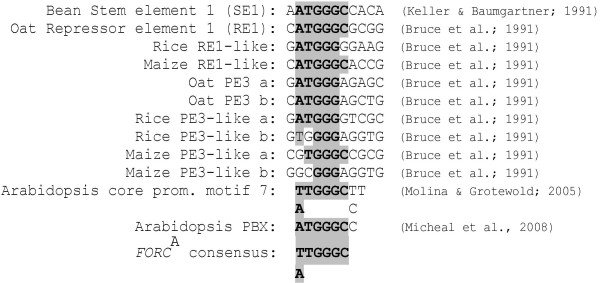
“The bean stem element 1 (SE1), that appears to act as a strong unspecific enhancer, and the oat light-repressor element 1 (RE1), which suppresses light-driven reporter gene expression, contain sequences that perfectly match the FORCA consensus [37,38].”
Logemann, E., & Hahlbrock, K. (2002) · Proceedings of the National Academy of Sciences · doi:10.1073/pnas.042692199 · Cited by 79 · cited 1×
“For example, phytochrome-mediated light signaling can positively affect SA-dependent defense responses [12,13], while negative interferences were observed between defense and UV-light signaling [14].”
Knoth, C., & Eulgem, T. (2008) · The Plant Journal · doi:10.1111/j.1365-313x.2008.03486.x · Cited by 78 · cited 1×
“We are using interactions between the pathogenic oomycete Hyaloperonospora parasitica (Hp) and Arabidopsis to examine regulatory mechanisms operating at the interface between defense signaling and the regulation of the defense transcriptome [15-17].”
Self-citationBruce, W. B., Deng, X. W., & Quail, P. H. (1991) · The EMBO Journal · doi:10.1002/j.1460-2075.1991.tb07852.x · Cited by 78
Hong, J. K., Lee, S. C., & Hwang, B. K. (2005) · Gene · doi:10.1016/j.gene.2005.04.030 · Cited by 61 · cited 1×
“(1) we also observed a SA-triggered reduction of 3xFORCA-pCAMBIA expression in stably transformed Arabidopsis lines (see below); (2) motif M6 mediated SA-inducibility of GUS expression in our agro-transient assays; (3) treatment with 1 mM SA did not reduce GUS expression mediated by the constitutive CaMV35S promoter i…”
Lee, S. C., Kim, S. H., An, S. H., Yi, S. Y., & Hwang, B. K. (2006) · Plant Molecular Biology · doi:10.1007/s11103-006-9010-5 · Cited by 43 · cited 1×
“(1) we also observed a SA-triggered reduction of 3xFORCA-pCAMBIA expression in stably transformed Arabidopsis lines (see below); (2) motif M6 mediated SA-inducibility of GUS expression in our agro-transient assays; (3) treatment with 1 mM SA did not reduce GUS expression mediated by the constitutive CaMV35S promoter i…”
Signalling crosstalk in plants: emerging issues
Taylor, J. E., & McAinsh, M. R. (2003) · Journal of Experimental Botany · doi:10.1093/jxb/erh060 · Cited by 31 · cited 1×
“Alternatively, such crosstalk may not be mediated by discrete signaling steps at all and may be merely a consequence of general disturbances of a highly complex plant signaling network [48].”
(2009) · Advances in Bioinformatics · doi:10.1155/abi · Cited by 11
Cited by
Light acts as a stressor and influences abiotic and biotic stress responses in plants
Roeber, V. M., Bajaj, I., Rohde, M., Schmülling, T., & Cortleven, A. (2021) · Plant, Cell & Environment · doi:10.1111/pce.13948 · Cited by 304
Roden, L. C., & Ingle, R. A. (2009) · The Plant Cell · doi:10.1105/tpc.109.069922 · Cited by 224
cis-Regulatory elements in plant cell signaling
Priest, H. D., Filichkin, S. A., & Mockler, T. C. (2009) · Current Opinion in Plant Biology · doi:10.1016/j.pbi.2009.07.016 · Cited by 182
Schenke, D., Böttcher, C., & Scheel, D. (2011) · Plant Cell & Environment · doi:10.1111/j.1365-3040.2011.02381.x · Cited by 160
DNA language models are powerful predictors of genome-wide variant effects
Benegas, G., Batra, S. S., & Song, Y. S. (2023) · Proceedings of the National Academy of Sciences · doi:10.1073/pnas.2311219120 · Cited by 157
Metadata
- Authors
- Evrard, A., Ndatimana, T., & Eulgem, T.
- Affiliations
- University of California, Riverside (US)
- Corresponding author
- Eulgem, Thomas
- ORCID
- Eulgem, Thomas
- Venue
- BMC Plant Biology
- Published
- 2009-01-07
- Volume
- 9
- Issue
- 1
- Pages
- 2-2
- ISSN
- 1471-2229 (ISSN-L)
- PMC
- PMC2640394
- OpenAlex
- W2041293138
- Cited by
- 28
- References
- 58
- Citations by year
- 2025: 2 · 2023: 3 · 2022: 1 · 2021: 3 · 2020: 2 · 2018: 1 · 2016: 2 · 2015: 1 · 2014: 3 · 2013: 1
- FWCI
- 3.63
- Type
- journal article
- Language
- en
- Open access
- gold
- doi.org
- Licence
- cc-by
- Locations
- BMC Plant Biology (publishedVersion, cc-by)
- PubMed Central (publishedVersion, cc-by)
- PubMed (publishedVersion)
- DOAJ (DOAJ: Directory of Open Access Journals) (submittedVersion, cc-by-sa)
- Funders
- National Science Foundation (0449439)
- Topics
- Life Sciences › Agricultural and Biological Sciences › Plant Science › Plant-Microbe Interactions and Immunity
- Life Sciences › Agricultural and Biological Sciences › Plant Science › Plant Molecular Biology Research
- Life Sciences › Agricultural and Biological Sciences › Plant Science › Light effects on plants
- Keywords
- cis-regulatory elements, defense signaling, light signaling, signaling crosstalk, Hyaloperonospora parasitica, oomycete infection, Arabidopsis thaliana, promoter elements, co-expressed genes, transcriptional regulation, plant immunity, constant light, disease susceptibility
- MeSH terms
- Darkness, Multigene Family, Light, Oomycetes, Plant Diseases, Promoter Regions, Genetic, Nicotiana, Transcription, Genetic, Signal Transduction, Arabidopsis, Gene Expression Regulation, Plant, Gene Expression Profiling, Arabidopsis Proteins, Plants, Genetically Modified
About these checks
Registry, retraction, Cites and statistics results are computed, not judged, with one exception: a printed reference that no index lists is read once by a model before it counts as a citation error. Claims are extracted by a model and kept only when their quote appears verbatim in the text; each cited source is then checked, with a model’s help, for whether it says what the claim relies on. Those verdicts can be wrong — read the claim’s quote and the cited source before relying on one.
Statistics and arithmetic are recomputed, not judged.
Confidence bands are shown only for fields calibrated on our annotated test set. None is calibrated yet, so no band is shown.
What counts as a claim ›How we measure confidence ›How we check this ›
Are you an author, or do you see a problem with this page? Request a review
Data sources
Bibliographic data: Semantic Scholar, OpenAlex, Crossref.
Contains information from the Semantic Scholar Academic Graph Datasets, made available under the ODC Attribution License (ODC-BY 1.0).
Semantic Scholar’s data is described in: Kinney, R., et al. (2023). The Semantic Scholar Open Data Platform. arXiv:2301.10140.
