

Enhancing transparency in reporting the synthesis of qualitative research: ENTREQ
Open accessThe DOI matches its Crossref record; 46 of the 46 references it cites were found in a registry or an index.
Abstract
BACKGROUND: The syntheses of multiple qualitative studies can pull together data across different contexts, generate new theoretical or conceptual models, identify research gaps, and provide evidence for the development, implementation and evaluation of health interventions. This study aims to develop a framework for reporting the synthesis of qualitative health research. METHODS: We conducted a comprehensive search for guidance and reviews relevant to the synthesis of qualitative research, methodology papers, and published syntheses of qualitative health research in MEDLINE, Embase, CINAHL and relevant organisational websites to May 2011. Initial items were generated inductively from guides to synthesizing qualitative health research. The preliminary checklist was piloted against forty published syntheses of qualitative research, purposively selected to capture a range of year of publication, methods and methodologies, and health topics. We removed items that were duplicated, impractical to assess, and rephrased items for clarity. RESULTS: The Enhancing transparency in reporting the synthesis of qualitative research (ENTREQ) statement consists of 21 items grouped into five main domains: introduction, methods and methodology, literature search and selection, appraisal, and synthesis of findings. CONCLUSIONS: The ENTREQ statement can help researchers to report the stages most commonly associated with the synthesis of qualitative health research: searching and selecting qualitative research, quality appraisal, and methods for synthesising qualitative findings. The synthesis of qualitative research is an expanding and evolving methodological area and we would value feedback from all stakeholders for the continued development and extension of the ENTREQ statement.
Overview
The claims and statistics of this paper haven’t been checked yet.
Free: it reads the open-access text and checks the first 5 claims that cite a source we can check. Create a free account to check every claim.
Integrity signals
Registry
Cites
Statistics
Figures
Verification
Claims the paper makes
The claims and statistics of this paper haven’t been checked yet.
Free: it reads the open-access text and checks the first 5 claims that cite a source we can check. Create a free account to check every claim.
Claims other papers make about this one
Each is checked against this paper’s own text: does it say what the citing paper says it does?
The source backs part of the claim, not all of it — or backs it for a different population, condition or comparison.
In the citing paper
“The PRISMA 2020 items are relevant for mixed-methods systematic reviews (which include quantitative and qualitative studies), but reporting guidelines addressing the presentation and synthesis of qualitative data should also be consulted.[39, 40]”
From The PRISMA 2020 statement: An updated guideline for reporting systematic reviews (2021) · cites this paper as [39]
Experimental — accuracy not yet measuredThe cited source says what the claim attributes to it.
In the citing paper
“The methods are also aligned with the Enhancing Transparency in Reporting the Synthesis of Qualitative research (ENTREQ) guidelines, a set of evidence- based items designed to enhance confidence in the syntheses of qualitative research (Tong et al., 2012 ).”
From A qualitative synthesis of patients' experiences of re-traumatization in acute mental health inpatient settings (2023) · cites this paper as Tong et al., 2012
The cited source says what the claim attributes to it.
In the citing paper
“The 'Enhancing transparency in reporting the synthesis of qualitative research (ENTREQ)' statement (Tong et al., 2012) and the Preferred Reporting Items for Systematic Reviews and Meta- Analyses (PRISMA) statement (Moher et al., 2009) were embedded in our methodological approach.”
From A meta‐synthesis of how parents of children with autism describe their experience of accessing and using routine healthcare services for their children (2021) · cites this paper as Tong et al., 2012
The cited source says what the claim attributes to it.
In the citing paper
“A systematic review and thematic synthesis were conducted following the ENTREQ (Enhancing Transparency in Reporting the Synthesis of Qualitative Research) guidelines.”
From Older Adults’ Experiences and Perceptions of Immersive Virtual Reality: Systematic Review and Thematic Synthesis (2022) · cites this paper as [23]
The cited source says what the claim attributes to it.
In the citing paper
“The ENTREQ guidelines were followed when writing the report [23].”
From Older Adults’ Experiences and Perceptions of Immersive Virtual Reality: Systematic Review and Thematic Synthesis (2022) · cites this paper as [23]
15 more claims about this paper
Create a free account to see every claim other papers make about this one.
Self-check
Percentages, sums and reported differences re-computed from the paper’s own numbers.
The self-check needs the paper’s full text.
Citations
Cites
Preferred Reporting Items for Systematic Reviews and Meta-Analyses: the PRISMA statement
Moher, D., Liberati, A., Tetzlaff, J., Altman, D. G., & for the PRISMA Group (2009) · BMJ · doi:10.1136/bmj.b2535 · Cited by 83,823
Preferred Reporting Items for Systematic Reviews and Meta-Analyses: The PRISMA Statement
Moher, D., Liberati, A., Tetzlaff, J., Altman, D. G., & The PRISMA Group (2009) · PLoS Medicine · doi:10.1371/journal.pmed.1000097 · Cited by 64,042
Preferred reporting items for systematic reviews and meta-analyses: the PRISMA Statement.
(2009) · PubMed Central · Cited by 44,859
Tong, A., Sainsbury, P., & Craig, J. (2007) · International Journal for Quality in Health Care · doi:10.1093/intqhc/mzm042 · Cited by 42,509 · cited 4×
“Several appraisal tools have been used including the Critical Appraisal Skills Program (CASP) [37] which addresses the principles and assumptions underpinning qualitative research but does not claim to be a definitive guide; the Qualitative Assessment Review Instrument Tool (QARI) [38], which suggests general question…”
InfluentialSelf-citationWang, G., Ma, R., Qiao, G., Wada, K., Aizawa, Y., & Satoh, T. (2015) · Integrative Medicine International · doi:10.1159/000368408 · Cited by 18,657
Methods for the thematic synthesis of qualitative research in systematic reviews
Thomas, J., & Harden, A. (2008) · BMC Medical Research Methodology · doi:10.1186/1471-2288-8-45 · Cited by 9,312
Qualitative research: standards, challenges, and guidelines
Malterud, K. (2001) · The Lancet · doi:10.1016/s0140-6736(01)05627-6 · Cited by 5,014 · cited 1×
“Some reviewers have developed their own appraisal framework selecting items from existing criteria [25,39-41], augmented with additional criteria they deemed were specifically relevant to the research topic.”
BackgroundQualitative research in health care: Assessing quality in qualitative research
Mays, N. (2000) · BMJ · doi:10.1136/bmj.320.7226.50 · Cited by 3,742
Noblit, G., & Hare, R. (1988) · doi:10.4135/9781412985000 · Cited by 2,723 · cited 1×
“…Meta-study Thematic synthesis Key seminal methodology references Dixon-woods et al. 2006 [4] Kearney 2001 [23], Eaves 2001 [22] Noblit and Hare 1988 [11], Britten et al. 2002 [2] Paterson et al. 2001 [24] Thomas and Harden 2008 [12] Philosophical positioning** Subjective…”
Checklists for improving rigour in qualitative research: a case of the tail wagging the dog?
Barbour, R. S. (2001) · BMJ · doi:10.1136/bmj.322.7294.1115 · Cited by 2,613 · cited 1×
“Just as there are no standardised criteria for assessing the quality of all quantitative research, standardising criteria for assessing the standard of conduct in all qualitative research which embraces a range of designs, is not possible or appropriate [31,34].”
Background
Research works printed but not linked: 2
- Flemming K: The use of morphine to treat cancer-related pain: a synthesis of quantitative and qualitative research. J Pain Symptom Manage. 2010, 39 (1): 139-154. · DOI
- The Joanna Briggs Institute: Joanna Briggs Institute Reviewers. 2008, The Joanna Briggs Institute, 2008
Cited by
Items 401–500 of 1,025
O’Neill, S. M., Clyne, B., Bell, M., Casey, A., Leen, B., Smith, S. M., Ryan, M., & O'Neill, M. (2021) · BMC Emergency Medicine · doi:10.1186/s12873-021-00403-9 · Cited by 91
Smeets, M., Roy, S. V., Aertgeerts, B., Vermandere, M., & Vaes, B. (2016) · BMJ Open · doi:10.1136/bmjopen-2016-013459 · Cited by 78
“The recommendations of this statement were followed to report our synthesis.(10)”
BackgroundMethodInfluentialImproving reporting of meta‐ethnography: The eMERGe reporting guidance
France, E. F., Cunningham, M., Ring, N., Uny, I., Duncan, E. A. S., Jepson, R. G., Maxwell, M., Roberts, R. J., Turley, R. L., Booth, A., et al. (2019) · Psycho-Oncology · doi:10.1002/pon.4915 · Cited by 65
“For reviews of qualitative studies, the most commonly used one is the generic 2012 ENTREQ (Enhancing transparency in reporting the synthesis of qualitative research) statement.(29) Qualitative evidence synthesis methodologies differ greatly; therefore, unique reporting guidance for metanarrative reviews was recently d…”
Self-citationExperiences and Attitudes of People with HIV/AIDS: A Systematic Review of Qualitative Studies
Arias-Colmenero, T., Pérez‐Morente, M. Á., Ramos‐Morcillo, A. J., Capilla-Díaz, C., Ruzafa‐Martínez, M., & Hueso‐Montoro, C. (2020) · International Journal of Environmental Research and Public Health · doi:10.3390/ijerph17020639 · Cited by 65
“This research is consistent with the guide “Enhancing Transparency in Reporting the Synthesis of Qualitative Research” [9] with the purpose of giving uniformity to the publications of qualitative synthesis studies.”
ResultSuglo, J. N., & Evans, C. (2020) · PLoS ONE · doi:10.1371/journal.pone.0240938 · Cited by 77
Ethical Principles, Constraints, and Opportunities in Clinical Proteomics
Mann, S. P., Treit, P. V., Geyer, P. E., Omenn, G. S., & Mann, M. (2021) · Molecular & Cellular Proteomics · doi:10.1016/j.mcpro.2021.100046 · Cited by 69
“We followed the ENTREQ Checklist (supplemental Table S2) (15) and the Preferred Reporting Items for Systematic reviews and MetaAnalyses flowchart (16) (Fig.”
MethodBooker, M. J., Purdy, S., & Shaw, A. R. G. (2017) · BMJ Open · doi:10.1136/bmjopen-2017-016832 · Cited by 78
“The Enhancing Transparency in Reporting the Synthesis of Qualitative Research statement was followed throughout the data collection, appraisal and synthesis.(13) There are a range of methodological approaches to handling and analysing data as part of a qualitative synthesis,(13) including metatheoretical and metaethno…”
MethodParretti, H. M., Hughes, C. A., & Jones, L. L. (2019) · Obesity Reviews · doi:10.1111/obr.12764 · Cited by 65
“The protocol for this review is registered on PROSPERO (registration number: CRD42017060538) and has been reported with reference, where appropriate for a rapid review, to the Enhancing Transparency in Reporting the Synthesis of Qualitative Research (ENTREQ) framework (33).”
MethodKinnear, F. J., Wainwright, E. M., Perry, R. E., Lithander, F. E., Bayly, G. R., Huntley, A. L., Cox, J. S., Hamilton-Shield, J. P., & Searle, A. (2019) · BMJ Open · doi:10.1136/bmjopen-2019-030290 · Cited by 79
Toye, F., Seers, K., Allcock, N., Briggs, M., Carr, E., & Barker, K. (2016) · Disability and Rehabilitation · doi:10.3109/09638288.2015.1049377 · Cited by 62
“Meta-ethnography focuses on conceptual insight, and some argue that including too many studies might make conceptual analysis ‘‘unwieldy’’ or make it difficult to maintain insight or ‘‘sufficient familiarity’’ [23,55].”
BackgroundBailey, P. K., Hamilton, A. J., Clissold, R. L., Inward, C. D., Caskey, F. J., Ben-Shlomo, Y., & Owen-Smith, A. (2018) · BMJ Open · doi:10.1136/bmjopen-2017-019926 · Cited by 64
“MethoDs We followed the Enhancing Transparency in Reporting the Synthesis of Qualitative Research framework.(11)”
MethodDaniel, B. K. (2018) · Qualitative Research Journal · doi:10.1108/qrj-d-17-00012 · Cited by 64
Danielis, M., Povoli, A., Mattiussi, E., & Palese, A. (2020) · Journal of Clinical Nursing · doi:10.1111/jocn.15259 · Cited by 85
Billett, H. C., Corona, M. V., & Bohren, M. A. (2021) · Women and Birth · doi:10.1016/j.wombi.2021.08.005 · Cited by 77
Cant, R., Ryan, C. L., Hughes, L., Luders, E., & Cooper, S. J. (2021) · SAGE Open Nursing · doi:10.1177/23779608211035845 · Cited by 64
Wearn, A., & Shepherd, L. (2022) · Psychology and Health · doi:10.1080/08870446.2022.2050230 · Cited by 83
“The present qualitative systematic review adheres to ENTREQ guidelines for reporting qualitative synthesis (Tong et al., 2012) (see Supplementary Materials A).”
MethodSidamo, N. B., Kerbo, A. A., Gidebo, K. D., & Wado, Y. D. (2023) · Open Access Journal of Contraception · doi:10.2147/oajc.s411924 · Cited by 92
“Enhancing Transparency in Reporting the Synthesis of Qualitative Research (ENTREQ) guidelines were used to report the synthesis of included studies.(29)”
MethodTong, A., Hanson, C. S., Chapman, J. R., Halleck, F., Budde, K., Josephson, M. A., & Craig, J. C. (2015) · Transplant International · doi:10.1111/tri.12575 · Cited by 69
“A broader spectrum of insights on this phenomenon can be gained through the synthesis multiple primary qualitative studies conducted in different populations and healthcare contexts [24,25].”
BackgroundMethodSelf-citationLoudon, K., Santesso, N. A., Callaghan, M., Thornton, J., Harbour, J., Graham, K., Harbour, R., Kunnamo, I., Liira, H., McFarlane, E., et al. (2014) · BMC Health Services Research · doi:10.1186/1472-6963-14-321 · Cited by 71
“We have reported this review using the guidance provided in the ENTREQ statement, an EQUATOR Network reporting guideline for the synthesis of qualitative research [11].”
MethodHanson, C. S., Chadban, S. J., Chapman, J. R., Craig, J. C., Wong, G., Ralph, A. F., & Tong, A. (2014) · Transplantation · doi:10.1097/tp.0000000000000433 · Cited by 64
Self-citationMa, Q., Tso, L. S., Rich, Z. C., Hall, B. J., Beanland, R., Li, H., Lackey, M., Hu, F., Cai, W., Doherty, M., et al. (2016) · Journal of the International AIDS Society · doi:10.7448/ias.19.1.21166 · Cited by 64
“We followed PRISMA guidance [21] and completed the ENTREQ checklist for qualitative systematic reviews [22] (Supplementary File 1 and 2).”
MethodDivanoglou, A., & Georgiou, M. (2016) · Spinal Cord · doi:10.1038/sc.2016.147 · Cited by 72
Hilton, G., Unsworth, C. A., & Murphy, G. (2017) · Disability and Rehabilitation · doi:10.1080/09638288.2017.1312566 · Cited by 66
“The review process and documentation were also informed by a framework identified by Tong et al (2012) to enhance the reporting of synthesis of qualitative research [16].”
MethodKanzow, P., Wiegand, A., Göstemeyer, G., & Schwendicke, F. (2017) · Journal of Dentistry · doi:10.1016/j.jdent.2017.09.010 · Cited by 78
The impact of compassionate care education on nurses: A mixed‐method systematic review
Coffey, A., Saab, M. M., Landers, M., Cornally, N., Hegarty, J., Drennan, J., Lunn, C., & Savage, E. (2019) · Journal of Advanced Nursing · doi:10.1111/jan.14088 · Cited by 63
Natale, P., Chen, S., Chow, C. K., Cheung, N. W., Martinez‐Martin, D., Caillaud, C., Scholes‐Robertson, N., Kelly, A., Craig, J. C., Strippoli, G., et al. (2023) · Journal of Diabetes · doi:10.1111/1753-0407.13454 · Cited by 63
Self-citationDelaney, A. E., Qiu, J. M., Lee, C. S., Lyons, K. S., Vessey, J. A., & Fu, M. R. (2021) · Journal of Pediatric Health Care · doi:10.1016/j.pedhc.2020.11.009 · Cited by 65
Curran, E. M., Chong, T. W. H., Godbee, K., Abraham, C., Lautenschlager, N. T., & Palmer, V. J. (2021) · PLoS ONE · doi:10.1371/journal.pone.0257540 · Cited by 73
“Reporting follows PRISMA guidance [33] and the more specific statement, Enhancing Transparency in the Reporting of Syntheses of Qualitative Research (ENTREQ) [34] (For PRISMA and ENTREQ checklists see S1 File).”
Erwin, J., Paisi, M., Neill, S., Burns, L., Vassallo, I., Nelder, A., Facenfield, J., Devalia, U., Vassallo, T., & Witton, R. (2022) · Health Expectations · doi:10.1111/hex.13544 · Cited by 62
CARDA: Guiding document analyses in health professions education research
Cleland, J., MacLeod, A., & Ellaway, R. (2022) · Medical Education · doi:10.1111/medu.14964 · Cited by 94
“TABLE 1 Checklist for the use and reporting of document analysis in HPER (CARDA) (drawing on Tong et al.(60))”
MethodEikey, E. V., Reddy, M. C., & Kuziemsky, C. E. (2015) · Journal of Biomedical Informatics · doi:10.1016/j.jbi.2015.08.006 · Cited by 71
“EE then conducted a thematic analysis similar to [18] and supported by [19].”
MethodSumpton, D., Kelly, A., Tunnicliffe, D. J., Craig, J. C., Hassett, G., Chessman, D., & Tong, A. (2020) · Arthritis Care & Research · doi:10.1002/acr.23896 · Cited by 71
“We used the Enhancing Transparency of Reporting the Synthesis of Qualitative Research framework to report this study (14).”
BackgroundMethodSelf-citationClancy, C., Lynch, J., O'Connor, P. M., & Dowling, M. (2019) · European Journal of Oncology Nursing · doi:10.1016/j.ejon.2019.101706 · Cited by 70
Lundby, C., Graabæk, T., Ryg, J., Søndergaard, J., Pottegård, A., & Nielsen, D. S. (2019) · British Journal of Clinical Pharmacology · doi:10.1111/bcp.13861 · Cited by 73
“2 | METHODS This systematic review was conducted guided by the Preferred Reporting Items for Systematic Reviews and Meta‐Analyses (PRISMA) statement(19) as well as the ENhancing Transparency in REporting the synthesis of Qualitative research (ENTREQ) statement.(20) The review was registered in PROSPERO (CRD42018083819…”
MethodVilla, D., Causer, H., & Riley, G. A. (2020) · Disability and Rehabilitation · doi:10.1080/09638288.2020.1743773 · Cited by 78
“It was selected from a range of quality assessment tools because it addresses the principles and assumptions of qualitative research [35]; is suitable for use across a range of qualitative methodologies [35]; and is one of the tools that is recommended by the Cochrane collaboration [36].”
Mitchell, K. R., Brassil, K. J., Rodriguez, S. A., Tsai, E., Fujimoto, K., Krause, K. J., Shay, L. A., & Springer, A. E. (2020) · Psycho-Oncology · doi:10.1002/pon.5500 · Cited by 82
“have also been affected by the beliefs, environment, and experiences of the authors of the current and the original studies.(29,30) This review was registered with PROSPERO (Registration”
BackgroundMethodological standards for qualitative and mixed methods patient centered outcomes research
Gaglio, B., Henton, M., Barbeau, A., Evans, E., Hickam, D. H., Newhouse, R. P., & Zickmund, S. L. (2020) · BMJ · doi:10.1136/bmj.m4435 · Cited by 83
Ryan, R., Lappen, H., & Bihuniak, J. D. (2021) · Journal of the Academy of Nutrition and Dietetics · doi:10.1016/j.jand.2021.11.015 · Cited by 77
Moulton, J. E., Corona, M. V., Vaughan, C., & Bohren, M. A. (2021) · PLoS ONE · doi:10.1371/journal.pone.0261551 · Cited by 74
“We report our qualitative evidence synthesis based on the Cochrane Effective Practice and Organisation of Care template for qualitative evidence synthesis [15] and ENTREQ statement for enhancing transparency in reporting the synthesis of qualitative research [16] (S1 Table).”
MethodMikkonen, K., Elo, S., Tuomikoski, A., & Kääriäinen, M. (2016) · Nurse Education Today · doi:10.1016/j.nedt.2016.02.013 · Cited by 82
“The philosophy of the thematic synthesis method is grounded in the belief that knowledge of reality lies in participants’ perspectives and experiences (Tong et al., 2012), which corresponded to the purpose of the review.”
MethodTrainor, K., & Leavey, G. (2017) · Nicotine & Tobacco Research · doi:10.1093/ntr/ntw183 · Cited by 62
“c Three studies used a grounded theory design [33; 34; 35], one used a mixed method design [38], The results of the quality assessment utilising CASP and ENTREQ are presented in Table 1.”
MethodThe experience of women with an eating disorder in the perinatal period: a meta-ethnographic study
Fogarty, S., Elmir, R., Hay, P., & Schmied, V. A. (2018) · BMC Pregnancy and Childbirth · doi:10.1186/s12884-018-1762-9 · Cited by 73
“The authors followed the enhancing of transparency in reporting the synthesis of qualitative research (ENTREQ) in reporting this meta-ethnographic study [34].”
BackgroundMcGrath, M., Lever, S., McCluskey, A., & Power, E. (2018) · Clinical Rehabilitation · doi:10.1177/0269215518793483 · Cited by 62
Long, H. A., Brooks, J. M., Harvie, M., Maxwell, A., & French, D. (2019) · British Journal of Cancer · doi:10.1038/s41416-019-0524-4 · Cited by 72
“METHODS This systematic review was registered on PROSPERO (CRD42017083404) and is reported according to the PRISMA (Supplementary Materials 1) and ENTREQ statements (Supplementary Materials 2).(23,25)”
MethodAdolescent social media use and well-being: a systematic review and thematic meta-synthesis
Shankleman, M., Hammond, L., & Jones, F. W. (2021) · Adolescent Research Review · doi:10.1007/s40894-021-00154-5 · Cited by 61
Integrative Review as a Method to Generate or to Test Nursing Theory
da Silva, R. N., Brandão, M. A. G., & Ferreira, M. D. A. (2020) · Nursing Science Quarterly · doi:10.1177/0894318420920602 · Cited by 81
Jerebine, A., Davies, K. F., Lander, N., Eyre, E. L. J., Duncan, M. J., & Barnett, L. M. (2022) · International Journal of Behavioral Nutrition and Physical Activity · doi:10.1186/s12966-022-01305-0 · Cited by 82
“Methods This qualitative systematic review was undertaken according to the Preferred Reporting Items for Systematic Reviews and Meta-Analyses (PRISMA) checklist [62] and the Enhancing Transparency in Reporting the Synthesis of Qualitative Research (ENTREQ) statement [63] (Additional file 1).”
MethodHannes, K., Booth, A., Harris, J., & Noyes, J. (2013) · Systematic Reviews · doi:10.1186/2046-4053-2-84 · Cited by 61
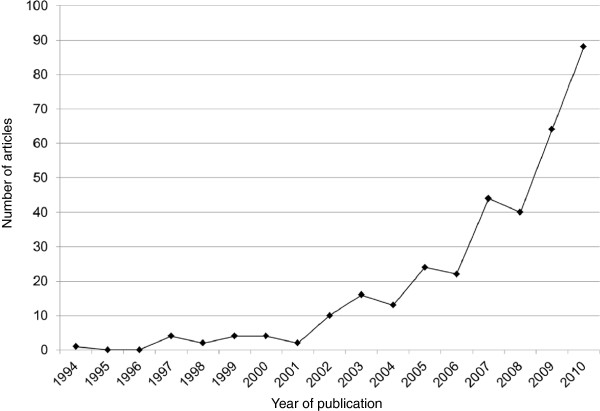
“A similar growth curve has been reported by Tong and colleagues [22] in their proposed reporting guidelines for QES.”
ResultTong, A., Rangan, G. K., Ruospo, M., Saglimbene, V. M., Strippoli, G. F., Palmer, S. C., Tunnicliffe, D. J., & Craig, J. C. (2015) · Nephrology Dialysis Transplantation · doi:10.1093/ndt/gfv010 · Cited by 66
“The synthesis of multiple qualitative studies can provide greater conceptual understanding of patient perspectives across different healthcare contexts and patient demographics [18, 19].”
BackgroundMethodSelf-citationMcSharry, J., McGowan, L. J., Farmer, A. A., & French, D. (2016) · Diabetic Medicine · doi:10.1111/dme.13152 · Cited by 68
Transparency in Practice in Qualitative Research
Kapiszewski, D., & Karcher, S. (2020) · PS Political Science & Politics · doi:10.1017/s1049096520000955 · Cited by 101
Evans, C., Tweheyo, R., McGarry, J., Eldridge, J., Albert, J., Nkoyo, V., & Higginbottom, G. A. (2019) · BMJ Open · doi:10.1136/bmjopen-2018-027452 · Cited by 79
“MEthODs This qualitative systematic review is reported following the enhancing transparency in reporting the synthesis of qualitative research (ENTREQ) guidelines.(68) The review was registered in PROSPERO(69) and the methods are documented in a published protocol.”
MethodPaternal mental health during the perinatal period: A qualitative systematic review
Shorey, S., & Chan, V. (2020) · Journal of Advanced Nursing · doi:10.1111/jan.14325 · Cited by 77
The interpersonal processes of non‐suicidal self‐injury: A systematic review and meta‐synthesis
Peel‐Wainwright, K., Hartley, S., Boland, A., Rocca, E., Langer, S., & Taylor, P. J. (2021) · Psychology and Psychotherapy Theory Research and Practice · doi:10.1111/papt.12352 · Cited by 82
Mixed methods systematic review exploring mentorship outcomes in nursing academia
Nowell, L. S., Norris, J. M., Mrklas, K., & White, D. (2016) · Journal of Advanced Nursing · doi:10.1111/jan.13152 · Cited by 68
“The review design followed the Joanna Briggs Institute (JBI 2014) approach for systematic reviews of both quantitative and qualitative research and the PRISMA (Moher et al. 2009) and ENTREQ (Tong et al. 2012) reporting guidelines.”
MethodKelly, A., Tymms, K., Tunnicliffe, D. J., Sumpton, D., Perera, C., Fallon, K., Craig, J. C., Abhayaratna, W., & Tong, A. (2018) · Arthritis Care & Research · doi:10.1002/acr.23329 · Cited by 60
“We followed the Enhancing Transparency of Reporting the Synthesis of Qualitative Research framework (17).”
MethodSelf-citationAveyard, H., & Bradbury‐Jones, C. (2019) · BMC Medical Research Methodology · doi:10.1186/s12874-019-0751-7 · Cited by 113
Hennessy, B., Hunter, A., & Grealish, A. (2023) · Journal of Psychiatric and Mental Health Nursing · doi:10.1111/jpm.12889 · Cited by 61
Criteria for assessing grant applications: a systematic review
Hug, S. E., & Aeschbach, M. (2020) · Humanities and Social Sciences Communications · doi:10.1057/s41599-020-0412-9 · Cited by 76
“The individual steps of this systematic review were guided by the ENTREQ statement (Tong et al., 2012), a framework for conducting and reporting qualitative syntheses.”
MethodMcGeough, C., Walsh, A., & Clyne, B. (2020) · Health & Social Care in the Community · doi:10.1111/hsc.12972 · Cited by 78
Larkin, J., Foley, L., Smith, S. M., Harrington, P., & Clyne, B. (2020) · Health Expectations · doi:10.1111/hex.13166 · Cited by 73
Ford, E. M., Shepherd, S., Jones, K. H., & Hassan, L. (2021) · Frontiers in Digital Health · doi:10.3389/fdgth.2020.592237 · Cited by 76
“Three systematic searches were undertaken in parallel, two are reported using PRISMA flow 111 charts [27], and the manuscript reporting adheres to the Enhancing Transparency in Reporting the 112 Synthesis of Qualitative Research (ENTREQ) statement [28].”
MethodLyall, V., Wolfson, L., Reid, N., Poole, N., Moritz, K. M., Egert, S., Browne, A. J., & Askew, D. A. (2021) · International Journal of Environmental Research and Public Health · doi:10.3390/ijerph18073445 · Cited by 72
“guidelines (see the Table S1 for the PRISMA checklist) [23] and the enhancing transparency in reporting the synthesis of qualitative research (ENTREQ) statement [24].”
BackgroundEdwards, J., Coward, M., & Carey, N. (2022) · BMJ Open · doi:10.1136/bmjopen-2021-052227 · Cited by 78
Shared decision-making in palliative cancer care: A systematic review and metasynthesis
Rabben, J., Vivat, B., Fossum, M., & Rohde, G. E. (2024) · Palliative Medicine · doi:10.1177/02692163241238384 · Cited by 80
Hassan, N., Slight, R. D., Bimpong, K. A. A., Bates, D. W., Weiand, D., Vellinga, A., Morgan, G., & Slight, S. P. (2024) · npj Digital Medicine · doi:10.1038/s41746-024-01326-y · Cited by 75
“Data extraction followed the ENhancing Transparency in REporting the synthesis of Qualitative research (ENTREQ) guidelines 52 .”
Matvienko‐Sikar, K., Kelly, C. N. M., Sinnott, C., McSharry, J., Houghton, C., Heary, C., Toomey, E. C., Byrne, M., & Kearney, P. M. (2017) · Obesity Reviews · doi:10.1111/obr.12653 · Cited by 72
“This qualitative evidence synthesis is reported in accordance with the Preferred Reporting Items for Systematic Reviews and Meta-Analyses (37) (Table S1) and the Enhancing Transparency in Reporting the Synthesis of Qualitative Research (38) (Table S2) statements.”
MethodYoung, L., Murata, L., McPherson, C. J., Jacob, J. D., & Vandyk, A. D. (2018) · Archives of Psychiatric Nursing · doi:10.1016/j.apnu.2018.08.005 · Cited by 66
“This review is reported in accordance with the framework proposed by Tong, Flemming, McInnes, Oliver, and Craig (2012): Enhancing Transparency in Reporting the Synthesis of Qualitative Research (ENTREQ) (Tong et al., 2012).”
MethodEvans, C., Tweheyo, R., McGarry, J., Eldridge, J., Albert, J., Nkoyo, V., & Higginbottom, G. A. (2019) · PLoS ONE · doi:10.1371/journal.pone.0211829 · Cited by 73
Macura, B., Suškevičs, M., Garside, R., Hannes, K., Rees, R. W., & Rodela, R. (2019) · Environmental Evidence · doi:10.1186/s13750-019-0168-0 · Cited by 82
Paisi, M., Crombag, N. M. T. H., Burns, L., Bogaerts, A., Withers, L., Bates, L., Crowley, D., Witton, R., & Shawe, J. (2021) · Health Expectations · doi:10.1111/hex.13400 · Cited by 62
Cognitive biases in surgery: systematic review
Armstrong, B. A., Dutescu, I. A., Tung, A., Carter, D. N., Trbovich, P., Wong, S., Saposnik, G., & Grantcharov, T. (2023) · British journal of surgery · doi:10.1093/bjs/znad004 · Cited by 71
Parental experiences of early postnatal discharge: A meta-synthesis
Nilsson, I., Danbjørg, D. B., Aagaard, H., Strandberg-Larsen, K., Clemensen, J., & Kronborg, H. (2015) · Midwifery · doi:10.1016/j.midw.2015.07.004 · Cited by 58
Jennings, A., Foley, T., Walsh, K. A., Coffey, A., Browne, J. P., & Bradley, C. (2018) · International Journal of Geriatric Psychiatry · doi:10.1002/gps.4918 · Cited by 69
Savage, M., Savage, C., Brommels, M., & Mazzocato, P. (2020) · BMJ Open · doi:10.1136/bmjopen-2019-035542 · Cited by 72
Munn, Z., Dias, M. M., Tufănaru, C., Porritt, K. A., Stern, C., Jordan, Z., Aromataris, E., & Pearson, A. (2021) · JBI Evidence Synthesis · doi:10.11124/jbies-20-00364 · Cited by 69
“In 2012, a framework for reporting the synthesis of qualitative research was developed: the Enhancing Transparency in Reporting the Synthesis of Qualitative Research (ENTREQ) statement.(16) The ENTREQ statement is an internationally accepted reporting standard for qualitative research synthesis.”
MethodFenta, M. D., Ogundijo, O. A., Warsame, A. A. A., & Belay, A. G. (2023) · BMC Infectious Diseases · doi:10.1186/s12879-023-08502-7 · Cited by 86
“Enhancing transparency in reporting the synthesis of qualitative research (ENTREQ) statement was used for strengthening the protocol for the systematic review [13] (Additional file 2).”
MethodPaterson, C., Leduc, C., Maxwell, M., Aust, B., Strachan, H., O’Connor, A., Tsantila, F., Cresswell‐Smith, J., Purebl, G., de Winter, L., et al. (2024) · Systematic Reviews · doi:10.1186/s13643-024-02569-2 · Cited by 84
“This review follows good practice in conducting and reporting systematic scoping reviews [45–47] and meta-synthesis [48, 49, 139].”
MethodStaff perceptions of barriers to physical restraint‐reduction in long‐term care: a meta‐synthesis
Kong, E., Choi, H., & Evans, L. K. (2016) · Journal of Clinical Nursing · doi:10.1111/jocn.13418 · Cited by 66
“in Reporting the Synthesis of Qualitative Research (ENTREQ) (Tong et al. 2012), and framed study contents according to the 21 items in its five main domains – ‘introduction, methods and methodology, literature search and selection, appraisal, and synthesis of findings’ (Tong et al.”
MethodInfluentialJibb, L., Croal, L., Wang, J., Yuan, C., Foster, J., Cheung, V., Gladstone, B., & Stinson, J. (2018) · Oncology nursing forum · doi:10.1188/18.onf.527-544 · Cited by 61
Same, same, but different? A systematic review of protocols for restoration repair
Kanzow, P., Wiegand, A., Schwendicke, F., & Göstemeyer, G. (2019) · Journal of Dentistry · doi:10.1016/j.jdent.2019.05.021 · Cited by 71
Corbett, T. K., Cummings, A. J., Calman, L. A., Farrington, N., Fenerty, V., Foster, C. L., Richardson, A. M., Wiseman, T., & Bridges, J. (2020) · Psycho-Oncology · doi:10.1002/pon.5453 · Cited by 66
“This review was written using guidelines from the Enhancing transparency in reporting the synthesis of qualitative research (ENTREQ) tool.(18)”
MethodSpreckley, M., Seidell, J., & Halberstadt, J. (2021) · International Journal of Qualitative Studies on Health and Well-being · doi:10.1080/17482631.2020.1862481 · Cited by 56
“This study follows the ENTREQ guidance for qualitative syntheses (Tong et al., 2012).”
MethodPatients’ Experiences After CKD Diagnosis: A Meta-ethnographic Study and Systematic Review
Teasdale, E. J., Leydon, G., Fraser, S. D., Roderick, P. J., Taal, M. W., & Tonkin-Crine, S. K. (2017) · American Journal of Kidney Diseases · doi:10.1053/j.ajkd.2017.05.019 · Cited by 58
“7 synthesis.(20) Ethics committee approval was waived for this study as it involved a secondary analysis of previously collected data.”
MethodKerrison, R., Sheik-Mohamud, D., McBride, E., Whitaker, K. L., Rees, C. J., Duffy, S. W., & von Wagner, C. (2021) · Preventive Medicine · doi:10.1016/j.ypmed.2020.106413 · Cited by 65
Essex, R., Kalocsányiová, E., Rumyantseva, N. L., & Jameson, J. (2021) · Journal of International Migration and Integration / Revue de l integration et de la migration internationale · doi:10.1007/s12134-021-00850-0 · Cited by 70
Factors Impacting Retention of Aged Care Workers: A Systematic Review
Thwaites, C. K., McKercher, J. P., Fetherstonhaugh, D., Blackberry, I., Gilmartin‐Thomas, J., Taylor, N. F., Bourke, S. L., Fowler‐Davis, S., Hammond, S., & Morris, M. E. (2023) · Healthcare · doi:10.3390/healthcare11233008 · Cited by 75
“The results were reported in accordance with the preferred reporting for systematic reviews and meta-analyses (PRISMA) guidelines [31] (Table S1) and the enhancing transparency in reporting the synthesis of qualitative research (ENTREQ) checklist [32] (Table S2).”
MethodGilanyi, Y. L., Shah, B., Cashin, A. G., Gibbs, M. T., Bellamy, J., Day, R. O., McAuley, J. H., & Jones, M. D. (2024) · Pain · doi:10.1097/j.pain.0000000000003234 · Cited by 66
“74”
Stigma in functional neurological disorder (FND) – A systematic review
McLoughlin, C., McWhirter, L., Pisegna, K., Tijssen, M. A. J., Tak, L. M., Carson, A. J., & Stone, J. (2024) · Clinical Psychology Review · doi:10.1016/j.cpr.2024.102460 · Cited by 69
Flemming, K., Graham, H. M., McCaughan, D., Angus, K., & Bauld, L. (2015) · BMC Public Health · doi:10.1186/s12889-015-2163-x · Cited by 72
“ti) provided ‘an audit trail’ of the interpretative process in line with the ‘Enhancing Transparency in Reporting the Synthesis of Qualitative Research’ (ENTREQ) guidance [31].”
BackgroundMethodSelf-citationSibéoni, J., Orri, M., Colin, S., Valentin, M., Pradère, J., & Révah‐Levy, A. (2016) · International Journal of Nursing Studies · doi:10.1016/j.ijnurstu.2016.10.006 · Cited by 74
Qualitative research in rehabilitation science: opportunities, challenges, and future directions
VanderKaay, S., Moll, S. E., Gewurtz, R. E., Jindal, P., Sánchez, A. L., Packham, T., & Lim, C. Y. (2016) · Disability and Rehabilitation · doi:10.1080/09638288.2016.1261414 · Cited by 68
“[53,54] Qualitative meta-synthesis can facilitate a merging of meanings, experiences, and perspectives from varying contexts and it can also be used to generate new theoretical models, identify gaps in existing research evidence, and formulate strategies to communicate qualitative findings to knowledge users.[54] For…”
BackgroundGermeni, E., Frost, J., Garside, R., Rogers, M., Valderas, J. M., & Britten, N. (2018) · British Journal of General Practice · doi:10.3399/bjgp18x697889 · Cited by 71
Chamberlain, C., Ralph, N., Hokke, S., Clark, Y., Gee, G., Stansfield, C., Sutcliffe, K., Brown, S., Brennan, S., & for the Healing The Past By Nurturing The Future group (2019) · PLoS ONE · doi:10.1371/journal.pone.0225441 · Cited by 67
“This protocol has been developed with reference to the ENTREQ statement [33] and PRISMA-Equity guidelines [34] and registered on the PROSPERO database (CRD42018102110).”
MethodPiat, M., Wainwright, M., Sofouli, E., Vachon, B., Deslauriers, T., Préfontaine, C., & Frati, F. (2021) · Systematic Reviews · doi:10.1186/s13643-021-01646-0 · Cited by 75
“We were guided by relevant elements of both the PRISMA [73] and ENTR EQ [74] reporting guidelines (see Additional file 1).”
MethodJurek, L., Leadbitter, K., Falissard, B., Colin, C., Touzet, S., & Geoffray, M. (2022) · Autism · doi:10.1177/13623613221112204 · Cited by 73
“The review protocol is available on PROSPERO CRD42020178743 and is reported according to PRISMA (Preferred Reporting Items for Systematic Reviews and MetaAnalyses; Moher et al., 2009) and ENTREQ (Enhancing Transparency in Reporting the Synthesis of Qualitative Research; Tong et al., 2012) statements (check lists can b…”
MethodAdam, R., Nair, R., Duncan, L., Yeoh, E., Chan, J., Vilenskaya, V., & Gallacher, K. (2023) · PLoS ONE · doi:10.1371/journal.pone.0286308 · Cited by 64
“An ENTREQ reporting checklist [25] for this systematic review is available in S1 Table.”
MethodOrri, M., Farges, O., Clavien, P., Barkun, J. S., & Révah‐Levy, A. (2014) · Annals of Surgery · doi:10.1097/sla.0000000000000962 · Cited by 66
Content Analysis: Using Critical Realism to Extend Its Utility
Leung, D. Y. L., & Chung, B. P. M. (2019) · Springer eBooks · doi:10.1007/978-981-10-5251-4_102 · Cited by 65
Field, D. A., & Livingstone, R. (2018) · Developmental Medicine & Child Neurology · doi:10.1111/dmcn.13709 · Cited by 65
“The earlier two measures have a strong theoretical basis, each being developed through grounded theory and extensive analysis with many participants over a long period from numerous samples that provided evidence of credibility, transferability, confirmability, and dependability of their findings.(47) Livingstone’s re…”
Background
Metadata
- Authors
- Tong, A., Flemming, K., McInnes, E., Oliver, S., & Craig, J.
- Affiliations
- The University of Sydney (AU)
- University of York (GB)
- St Vincent's Hospital Sydney (AU)
- University of London (GB)
- Corresponding author
- Tong, Allison
- Venue
- BMC Medical Research Methodology
- Published
- 2012-11-27
- Volume
- 12
- Issue
- 1
- Pages
- 181-181
- ISSN
- 1471-2288 (ISSN-L)
- PMC
- PMC3552766
- OpenAlex
- W2135572748
- Cited by
- 3,569
- References
- 46
- Citations by year
- 2026: 405 · 2025: 456 · 2024: 493 · 2023: 387 · 2022: 389 · 2021: 427 · 2020: 273 · 2019: 199 · 2018: 172 · 2017: 108 · 2016: 119 · 2015: 72 · 2014: 48 · 2013: 13
- FWCI
- 48.39
- Type
- journal article
- Language
- en
- Open access
- gold
- doi.org
- Licence
- cc-by
- creativecommons.org/licenses/by/2.0 (tdm)
- Locations
- BMC Medical Research Methodology (publishedVersion, cc-by)
- Europe PMC (PubMed Central) (publishedVersion, cc-by)
- PubMed Central (publishedVersion, cc-by)
- PubMed (publishedVersion)
- Research Bank (Australian Catholic University) (submittedVersion)
- DOAJ (DOAJ: Directory of Open Access Journals) (submittedVersion)
- Funders
- Medical Research Council
- National Health and Medical Research Council (1037162)
- Topics
- Social Sciences › Decision Sciences › Statistics, Probability and Uncertainty › Meta-analysis and systematic reviews
- Social Sciences › Education › Qualitative Research Methods and Applications
- Social Sciences › Sociology and Political Science › Delphi Technique in Research
- Keywords
- reporting guidelines, qualitative evidence synthesis, qualitative health research, research transparency, quality assessment, reporting checklist
- MeSH terms
- Humans, Research Design, Biomedical Research, Qualitative Research
About these checks
Registry, retraction, Cites and statistics results are computed, not judged, with one exception: a printed reference that no index lists is read once by a model before it counts as a citation error. Claims are extracted by a model and kept only when their quote appears verbatim in the text; each cited source is then checked, with a model’s help, for whether it says what the claim relies on. Those verdicts can be wrong — read the claim’s quote and the cited source before relying on one.
Statistics and arithmetic are recomputed, not judged.
Confidence bands are shown only for fields calibrated on our annotated test set. None is calibrated yet, so no band is shown.
What counts as a claim ›How we measure confidence ›How we check this ›
Are you an author, or do you see a problem with this page? Request a review
Data sources
Bibliographic data: Semantic Scholar, OpenAlex, Crossref.
Contains information from the Semantic Scholar Academic Graph Datasets, made available under the ODC Attribution License (ODC-BY 1.0).
Semantic Scholar’s data is described in: Kinney, R., et al. (2023). The Semantic Scholar Open Data Platform. arXiv:2301.10140.
