

Enhancing transparency in reporting the synthesis of qualitative research: ENTREQ
Open accessThe DOI matches its Crossref record; 46 of the 46 references it cites were found in a registry or an index.
Abstract
BACKGROUND: The syntheses of multiple qualitative studies can pull together data across different contexts, generate new theoretical or conceptual models, identify research gaps, and provide evidence for the development, implementation and evaluation of health interventions. This study aims to develop a framework for reporting the synthesis of qualitative health research. METHODS: We conducted a comprehensive search for guidance and reviews relevant to the synthesis of qualitative research, methodology papers, and published syntheses of qualitative health research in MEDLINE, Embase, CINAHL and relevant organisational websites to May 2011. Initial items were generated inductively from guides to synthesizing qualitative health research. The preliminary checklist was piloted against forty published syntheses of qualitative research, purposively selected to capture a range of year of publication, methods and methodologies, and health topics. We removed items that were duplicated, impractical to assess, and rephrased items for clarity. RESULTS: The Enhancing transparency in reporting the synthesis of qualitative research (ENTREQ) statement consists of 21 items grouped into five main domains: introduction, methods and methodology, literature search and selection, appraisal, and synthesis of findings. CONCLUSIONS: The ENTREQ statement can help researchers to report the stages most commonly associated with the synthesis of qualitative health research: searching and selecting qualitative research, quality appraisal, and methods for synthesising qualitative findings. The synthesis of qualitative research is an expanding and evolving methodological area and we would value feedback from all stakeholders for the continued development and extension of the ENTREQ statement.
Overview
The claims and statistics of this paper haven’t been checked yet.
Free: it reads the open-access text and checks the first 5 claims that cite a source we can check. Create a free account to check every claim.
Integrity signals
Registry
Cites
Statistics
Figures
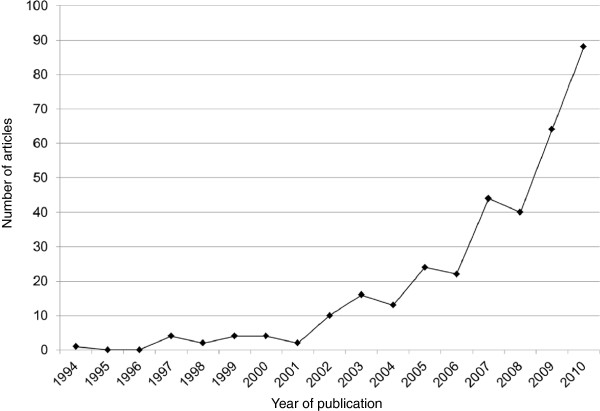
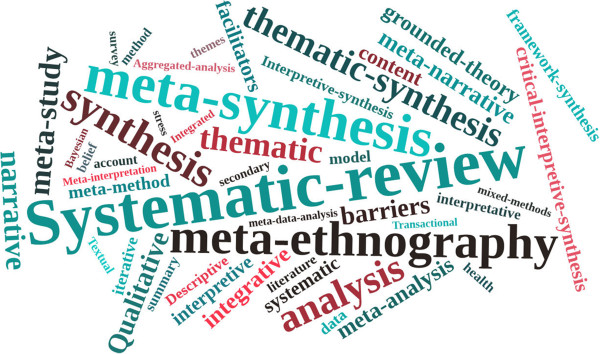
Verification
Claims the paper makes
The claims and statistics of this paper haven’t been checked yet.
Free: it reads the open-access text and checks the first 5 claims that cite a source we can check. Create a free account to check every claim.
Claims other papers make about this one
Each is checked against this paper’s own text: does it say what the citing paper says it does?
The source backs part of the claim, not all of it — or backs it for a different population, condition or comparison.
In the citing paper
“The PRISMA 2020 items are relevant for mixed-methods systematic reviews (which include quantitative and qualitative studies), but reporting guidelines addressing the presentation and synthesis of qualitative data should also be consulted.[39, 40]”
From The PRISMA 2020 statement: An updated guideline for reporting systematic reviews (2021) · cites this paper as [39]
Experimental — accuracy not yet measuredThe cited source says what the claim attributes to it.
In the citing paper
“The methods are also aligned with the Enhancing Transparency in Reporting the Synthesis of Qualitative research (ENTREQ) guidelines, a set of evidence- based items designed to enhance confidence in the syntheses of qualitative research (Tong et al., 2012 ).”
From A qualitative synthesis of patients' experiences of re-traumatization in acute mental health inpatient settings (2023) · cites this paper as Tong et al., 2012
The cited source says what the claim attributes to it.
In the citing paper
“The 'Enhancing transparency in reporting the synthesis of qualitative research (ENTREQ)' statement (Tong et al., 2012) and the Preferred Reporting Items for Systematic Reviews and Meta- Analyses (PRISMA) statement (Moher et al., 2009) were embedded in our methodological approach.”
From A meta‐synthesis of how parents of children with autism describe their experience of accessing and using routine healthcare services for their children (2021) · cites this paper as Tong et al., 2012
The cited source says what the claim attributes to it.
In the citing paper
“A systematic review and thematic synthesis were conducted following the ENTREQ (Enhancing Transparency in Reporting the Synthesis of Qualitative Research) guidelines.”
From Older Adults’ Experiences and Perceptions of Immersive Virtual Reality: Systematic Review and Thematic Synthesis (2022) · cites this paper as [23]
The cited source says what the claim attributes to it.
In the citing paper
“The ENTREQ guidelines were followed when writing the report [23].”
From Older Adults’ Experiences and Perceptions of Immersive Virtual Reality: Systematic Review and Thematic Synthesis (2022) · cites this paper as [23]
15 more claims about this paper
Create a free account to see every claim other papers make about this one.
Self-check
Percentages, sums and reported differences re-computed from the paper’s own numbers.
The self-check needs the paper’s full text.
Citations
Cites
Preferred Reporting Items for Systematic Reviews and Meta-Analyses: the PRISMA statement
Moher, D., Liberati, A., Tetzlaff, J., Altman, D. G., & for the PRISMA Group (2009) · BMJ · doi:10.1136/bmj.b2535 · Cited by 83,823
Preferred Reporting Items for Systematic Reviews and Meta-Analyses: The PRISMA Statement
Moher, D., Liberati, A., Tetzlaff, J., Altman, D. G., & The PRISMA Group (2009) · PLoS Medicine · doi:10.1371/journal.pmed.1000097 · Cited by 64,042
Preferred reporting items for systematic reviews and meta-analyses: the PRISMA Statement.
(2009) · PubMed Central · Cited by 44,859
Tong, A., Sainsbury, P., & Craig, J. (2007) · International Journal for Quality in Health Care · doi:10.1093/intqhc/mzm042 · Cited by 42,509 · cited 4×
“Several appraisal tools have been used including the Critical Appraisal Skills Program (CASP) [37] which addresses the principles and assumptions underpinning qualitative research but does not claim to be a definitive guide; the Qualitative Assessment Review Instrument Tool (QARI) [38], which suggests general question…”
InfluentialSelf-citationWang, G., Ma, R., Qiao, G., Wada, K., Aizawa, Y., & Satoh, T. (2015) · Integrative Medicine International · doi:10.1159/000368408 · Cited by 18,657
Methods for the thematic synthesis of qualitative research in systematic reviews
Thomas, J., & Harden, A. (2008) · BMC Medical Research Methodology · doi:10.1186/1471-2288-8-45 · Cited by 9,312
Qualitative research: standards, challenges, and guidelines
Malterud, K. (2001) · The Lancet · doi:10.1016/s0140-6736(01)05627-6 · Cited by 5,014 · cited 1×
“Some reviewers have developed their own appraisal framework selecting items from existing criteria [25,39-41], augmented with additional criteria they deemed were specifically relevant to the research topic.”
BackgroundQualitative research in health care: Assessing quality in qualitative research
Mays, N. (2000) · BMJ · doi:10.1136/bmj.320.7226.50 · Cited by 3,742
Noblit, G., & Hare, R. (1988) · doi:10.4135/9781412985000 · Cited by 2,723 · cited 1×
“…Meta-study Thematic synthesis Key seminal methodology references Dixon-woods et al. 2006 [4] Kearney 2001 [23], Eaves 2001 [22] Noblit and Hare 1988 [11], Britten et al. 2002 [2] Paterson et al. 2001 [24] Thomas and Harden 2008 [12] Philosophical positioning** Subjective…”
Checklists for improving rigour in qualitative research: a case of the tail wagging the dog?
Barbour, R. S. (2001) · BMJ · doi:10.1136/bmj.322.7294.1115 · Cited by 2,613 · cited 1×
“Just as there are no standardised criteria for assessing the quality of all quantitative research, standardising criteria for assessing the standard of conduct in all qualitative research which embraces a range of designs, is not possible or appropriate [31,34].”
Background
Research works printed but not linked: 2
- Flemming K: The use of morphine to treat cancer-related pain: a synthesis of quantitative and qualitative research. J Pain Symptom Manage. 2010, 39 (1): 139-154. · DOI
- The Joanna Briggs Institute: Joanna Briggs Institute Reviewers. 2008, The Joanna Briggs Institute, 2008
Cited by
Items 801–900 of 1,026
Sexuality in people living with a serious mental illness: A meta‐synthesis of qualitative evidence
Hortal‐Mas, R., Moreno‐Poyato, A. R., Granel, N., Roviralta‐Vilella, M., Watson, C., Gómez‐Ibáñez, R., Aguayo–González, M., Giménez‐Díez, D., Bernabeu‐Tamayo, M. D., & Leyva‐Moral, J. M. (2020) · Journal of Psychiatric and Mental Health Nursing · doi:10.1111/jpm.12700 · Cited by 39
Lee, N. P. M., & Chiang, C. L. V. (2020) · Nursing and Health Sciences · doi:10.1111/nhs.12794 · Cited by 32
Patients' memories from intensive care unit: A qualitative systematic review
Maartmann‐Moe, C. C., Solberg, M. T., Larsen, M. H., & Steindal, S. A. (2021) · Nursing Open · doi:10.1002/nop2.804 · Cited by 45
Women in Relationships and Their Pornography Use: A Systematic Review and Thematic Synthesis
Litsou, K., Graham, C. A., & Ingham, R. (2021) · Journal of Sex & Marital Therapy · doi:10.1080/0092623x.2021.1885532 · Cited by 44
“Synthesizing research can combine data from different contexts, generate new models, identify gaps in research, help develop primary studies and help structure health interventions (Tong, Flemming, McInnes, Oliver, & Craig, 2012).”
Leahy, D., Donnelly, A., Irwin, K. E., & D’Alton, P. (2021) · Psycho-Oncology · doi:10.1002/pon.5848 · Cited by 35
““Enhancing transparency in reporting the synthesis of qualitative research” (ENTREQ) guidelines were followed during the synthesis of results.(31) A list of the 21 ENTREQ items can be viewed in the supplementary Table S3.”
MethodTsuda‐McCaie, F., & Kotera, Y. (2022) · Drug and Alcohol Review · doi:10.1111/dar.13421 · Cited by 37
Bujold, M., Pluye, P., Légaré, F., the Participatory Review Team, Hong, Q. N., Beaulieu, M., Bush, P. L., Couturier, Y., Sherif, R. E., Gagnon, J., et al. (2022) · BMC Family Practice · doi:10.1186/s12875-022-01879-5 · Cited by 44
“Since there is no reporting guideline for systematic mixed studies reviews, this review combined the reporting recommendations from the PRISMA statement for systematic literature reviews [21] and the ENTREQ statement for enhancing transparency in reporting a qualitative review [22] (PRISMA checklist and addressed elem…”
MethodLuo, Y., Feng, X., Wang, D., Qiao, X., Xiao, X., Jia, S., Zheng, M., & Reinhardt, J. D. (2023) · Journal of Clinical Nursing · doi:10.1111/jocn.16613 · Cited by 42
Muehlschlegel, P. A., Parkinson, E. A., Chan, R. Y., Arden, M. A., & Armitage, C. J. (2021) · Journal of Global Health · doi:10.7189/jogh.11.05008 · Cited by 31
Ghanem, M., Evangeli‐Dawson, C., & Georgiades, A. (2023) · Early Intervention in Psychiatry · doi:10.1111/eip.13449 · Cited by 45
“6 | Narrative synthesis A structured narrative synthesis was conducted in accordance with the ENTREQ statement (Enhancing transparency in reporting the synthesis of qualitative research) (Tong et al., 2012).”
MethodMotivation, psychological needs and physical activity in older adults: a qualitative review
Palombi, T., Chirico, A., Cazzolli, B., Zacchilli, M., Alessandri, G., Filosa, L., Borghi, A. M., Fini, C., Antoniucci, C., Pistella, J., et al. (2025) · Age and Ageing · doi:10.1093/ageing/afaf180 · Cited by 52
Ferreira, G. E., Traeger, A. C., O’Keeffe, M., & Maher, C. G. (2018) · Journal of physiotherapy · doi:10.1016/j.jphys.2018.08.001 · Cited by 38
Patients experiences of bedside handover: findings from a meta‐synthesis
Bressan, V., Cadorin, L., Stevanin, S., & Palese, A. (2019) · Scandinavian Journal of Caring Sciences · doi:10.1111/scs.12673 · Cited by 56
Khanom, S., McDonagh, J. E. R., Briggs, M., Bakır, E., & McBeth, J. (2020) · BMC Musculoskeletal Disorders · doi:10.1186/s12891-020-03627-1 · Cited by 34
Sion, K., Verbeek, H., Zwakhalen, S. M. G., Odekerken‐Schröder, G., Schols, J. M. G. A., & Hamers, J. P. H. (2020) · Gerontology and Geriatric Medicine · doi:10.1177/2333721420931964 · Cited by 33
“This systematic review and synthesis of qualitative research was reported according to the Enhancing Transparency in Reporting the Synthesis of Qualitative Research (ENTREQ) statement (Tong et al., 2012).”
MethodExperience of Sexuality in Women with Gynecological Cancer: Meta-Synthesis of Qualitative Studies
de Souza, C., Lima-Santos, A. V. D. S., Rodrigues, E. C. G., & dos Santos, M. A. (2021) · Cancer Investigation · doi:10.1080/07357907.2021.1912079 · Cited by 39
“The guide Enhancing Transparency in Reporting the Synthesis of Qualitative Research (ENTREQ), was used to report the essential elements that should compose a synthesis of qualitative evidence (20).”
BackgroundMethodWhiffin, C. J., Smith, B. G., Esene, I. N., Karekezi, C., Bashford, T., Khan, M. M., Hutchinson, P. J., Kolias, A. G., Solla, D. J. F., Paiva, W. S., et al. (2021) · BMJ Open · doi:10.1136/bmjopen-2021-051806 · Cited by 32
Brown, M. C., Podmore, M., Araújo‐Soares, V., Skinner, R., & Sharp, L. (2022) · Health Psychology Review · doi:10.1080/17437199.2022.2032795 · Cited by 39
“…and reported in accordance with the Preferred Reporting Items for Systematic Reviews and Meta-analyses (PRISMA) and the Enhancing Transparency in Reporting the Synthesis of Qualitative Research (ENTREQ) statements (Page et al., 2021; Tong et al., 2012) (see Supplementary Materials 1 and 2).”
MethodCrépault, J., Russell, C., Watson, T. M., Strıke, C., Bonato, S., & Rehm, J. T. (2023) · International Journal of Drug Policy · doi:10.1016/j.drugpo.2023.103958 · Cited by 35
Andersen, E. B., Kristiansen, M., & Jørgensen, S. M. B. (2023) · BMJ Open · doi:10.1136/bmjopen-2022-069091 · Cited by 37
Candy, B., King, M., Jones, L., & Oliver, S. R. (2013) · Trials · doi:10.1186/1745-6215-14-179 · Cited by 37
“(ii) ‘Emphasis that experiencing no symptoms does not mean stopping medication’ (pathway 4: [21,32]).”
BackgroundSelf-citationXanthoma of the temporal bone and skull base.
Jackler, R. K., & Brackmann, D. E. (1987) · PubMed · Cited by 34
Acceptability of Web-Based Mental Health Interventions in the Workplace: Systematic Review
Scheutzow, J., Attoe, C., & Harwood, J. (2022) · JMIR Mental Health · doi:10.2196/34655 · Cited by 30
“This systematic review was conducted in line with the PRISMA (Preferred Reporting Items for Systematic Reviews and Meta-Analyses) guidelines [16] and followed the ENTREQ (Enhancing the Transparency in Reporting the Synthesis of Qualitative Research) guidelines [17,18].”
MethodBryant, E., Aouad, P., Hambleton, A., Touyz, S., & Maguire, S. (2022) · Frontiers in Psychiatry · doi:10.3389/fpsyt.2022.894178 · Cited by 32
“Methodology was guided by the ENTREQ statement (61) which standardizes the reporting and synthesis of qualitative research, and utilized a meta-ethnographic approach originally conceived by Noblit and Hare (62).”
MethodHeard, E. M., Bartleet, B., & Woolcock, G. (2023) · Australian Journal of Social Issues · doi:10.1002/ajs4.257 · Cited by 39
Orr, N., Abbott, R. A., Bethel, A. C., Paviour, S., Whear, R., Garside, R., & Coon, J. T. (2023) · BMC Geriatrics · doi:10.1186/s12877-023-03834-0 · Cited by 52
“The synthesis was guided by the ENTREQ (‘Enhancing transparency in reporting the synthesis of qualitative research)’ statement [30] (See Additional File 1: Table S2).”
MethodThe Meaning of Being a Living Kidney, Liver, or Stem Cell Donor—A Meta-Ethnography
Kisch, A. M., Forsberg, A., Fridh, I., Almgren, M., Lundmark, M., Lovén, C., Flodén, A., Nilsson, M. M., Karlsson, V., & Lennerling, A. (2018) · Transplantation · doi:10.1097/tp.0000000000002073 · Cited by 35
Hildebrandt, C., Mayer, H., & Koller, A. (2018) · Psycho-Oncology · doi:10.1002/pon.4946 · Cited by 29
“To enhance transparency in reporting the synthesis of qualitative research, we used the ENTREQ statement.(21)”
MethodA typology of systematic reviews for synthesising evidence on health care
MacEntee, M. I. (2019) · Gerodontology · doi:10.1111/ger.12439 · Cited by 32
Cruz-Martínez, R. R., Wentzel, J., Asbjørnsen, R. A., Noort, P. D., van Niekerk, J. M., Sanderman, R., & van Gemert‐Pijnen, J. E. W. C. (2020) · Journal of Medical Internet Research · doi:10.2196/16157 · Cited by 36
“Quality appraisal is not a strict requirement for metaethnography because the richness and relevance of the content is more important [36], but it is considered good practice and was used to get further familiarized with the studies [26].”
BackgroundMethodOates, J., Topping, A., Ezhova, I., Wadey, E., & Rafferty, A. M. (2020) · Journal of Advanced Nursing · doi:10.1111/jan.14521 · Cited by 42
Matarese, M., Pendoni, R., Piredda, M., & Marinis, M. G. D. (2021) · Journal of Advanced Nursing · doi:10.1111/jan.14942 · Cited by 33
“The review was reported following the Enhancing Transparency in Reporting the Synthesis of Qualitative Research (ENTREQ) guidelines (Tong et al., 2012).”
MethodSimpson, R., Simpson, S., Wasilewski, M., Mercer, S., & Lawrence, M. (2022) · Disability and Rehabilitation · doi:10.1080/09638288.2021.1964622 · Cited by 30
Qureshi, S., Latif, A., Condon, L. A., Akyea, R. K., Kai, J., & Qureshi, N. (2021) · Pharmacogenomics · doi:10.2217/pgs-2021-0131 · Cited by 39
Essex, R., Bruce, G., Dibley, M., Newton, P. D., Thompson, T., Swaine, I., & Dibley, L. B. (2022) · International Journal of Orthopaedic and Trauma Nursing · doi:10.1016/j.ijotn.2022.100921 · Cited by 30
Pinto, C., Geraghty, A. W. A., McLoughlin, C., Pagnini, F., Yardley, L., & Dennison, L. (2022) · Health Psychology Review · doi:10.1080/17437199.2022.2073901 · Cited by 39
“We followed the ENTREQ (enhanced transparency in reporting the synthesis of qualitative research) checklist to facilitate systematic reporting (Tong et al., 2012).”
Flynn, A., Healy, D., Barry, M., Brennan, A., Redfern, S., Houghton, C., & Casey, D. (2022) · JMIR Serious Games · doi:10.2196/37228 · Cited by 40
“This review adhered to the Enhancing Transparency of Reporting the Synthesis of Qualitative Research framework [44].”
MethodKhaw, S. M.-L., Zahroh, R. I., O'Rourke, K., Dearnley, R., Homer, C., & Bohren, M. A. (2022) · BMJ Global Health · doi:10.1136/bmjgh-2022-009098 · Cited by 39
“…Reviews and Meta-Analyses (PRISMA 43 ) (online supplemental appendix 1), Enhancing transparency in reporting the synthesis of qualitative research: (ENTREQ) statement 44 (online supplemental appendix 2) and based on guidance from the Cochrane Effective Practice and Organisation of Care group.”
Fu, B. Q., Zhong, C. C., Wong, C. H. L., Ho, F. F., Nilsén, P., Hung, C. T., Yeoh, E., & Chung, V. C. (2023) · International Journal of Health Policy and Management · doi:10.34172/ijhpm.2023.7089 · Cited by 45
Bath-Hextall, F. J., Nalubega, S., & Evans, C. (2017) · British Journal of Dermatology · doi:10.1111/bjd.15148 · Cited by 35
Maurer, C., Draganescu, S., Mayer, H., & Gattinger, H. (2019) · Journal of Clinical Nursing · doi:10.1111/jocn.14761 · Cited by 29
Teng, C., Loy, C. T., Sellars, M., Pond, D., Latt, M. D., Waite, L. M., Sinka, V., Logeman, C., & Tong, A. (2020) · The Gerontologist · doi:10.1093/geront/gnz046 · Cited by 34
Self-citationWong, T. S. M., & Shorey, S. (2022) · Journal of Pediatric Nursing · doi:10.1016/j.pedn.2022.09.004 · Cited by 47
The experiences of midwives in integrated maternity care: A qualitative metasynthesis
McFarland, A. K., Jones, J., Luchsinger, J., Kissler, K. J., & Smith, D. C. (2019) · Midwifery · doi:10.1016/j.midw.2019.102544 · Cited by 29
“Current guidelines for qualitative synthesis were rigorously applied to minimize potential shortcomings (Thorne et al., 2004; Tong et al., 2012; Sandelowski et al., 1997), providing a strengthened standard of quality for the new analysis (Kennedy et al.”
BackgroundMethodInfluentialInterventions for Indigenous Peoples making health decisions: a systematic review
Jull, J., Fairman, K., Oliver, S. R., Hesmer, B., Pullattayil, A. K., & Not Deciding Alone Team (2023) · Archives of Public Health · doi:10.1186/s13690-023-01177-1 · Cited by 34
Self-citationBarriers and facilitators to reducing anticholinergic burden: a qualitative systematic review
Stewart, C., Gallacher, K., Nakham, A., Cruickshank, M., Newlands, R. S. N., Bond, C. M., Myint, P. K., Bhattacharya, D., & Mair, F. S. (2021) · International Journal of Clinical Pharmacy · doi:10.1007/s11096-021-01293-4 · Cited by 31
“The systematic review protocol is PROSPERO registered (CRD42018109084), published [26], conducted in line with the general principles of the Cochrane Handbook for Systematic Reviews of Interventions [27], ENTREQ (Enhancing Transparency in Reporting the Synthesis of Qualitative Research) [28] and reported in accordance…”
MethodThe Impact of Reassurance on Musculoskeletal (MSK) Pain: A Qualitative Review
Cheung, L. K., & Soundy, A. (2021) · Behavioral Sciences · doi:10.3390/bs11110150 · Cited by 38
Johnson, F., Ulph, F., MacLeod, R., & Southern, K. W. (2022) · European Journal of Human Genetics · doi:10.1038/s41431-022-01054-5 · Cited by 33
“METHODS This review is registered on PROSPERO (CRD42020197750) & reported according to ENTREQ [16] & EMERGE [17] guidance.”
MethodJones, D. J., di Martino, E., Bradley, S. H., Essang, B., Hemphill, S., Wright, J. M., Renzi, C., Surr, C., Clegg, A. P., & Neal, R. D. (2022) · British Journal of General Practice · doi:10.3399/bjgp.2021.0655 · Cited by 29
Sung, M., He, J., Zhou, Q. X., Chen, Y., Ji, J. S., Chen, H., & Li, Z. (2022) · Journal of Medical Internet Research · doi:10.2196/37338 · Cited by 39
“Enhancing Transparency in Reporting the Synthesis of Qualitative Research guidelines were followed (Multimedia Appendix 6) [33].”
MethodThe real experience with women's hysterectomy: A meta‐synthesis of qualitative research evidence
Li, N., Shen, C., Wang, R., & Chu, Z. (2022) · Nursing Open · doi:10.1002/nop2.1348 · Cited by 29
“The synthesis of multiple qualitative studies can bring together data from different contexts to generate new theoretical or conceptual models that provide evidence for the development, implementation and evaluation of health interventions (Tong et al., 2012).”
BackgroundSelf-perceived Burden for People With Life-threatening Illness: A Qualitative Systematic Review
Saji, A., Oishi, A., & Harding, R. (2022) · Journal of Pain and Symptom Management · doi:10.1016/j.jpainsymman.2022.10.016 · Cited by 34
Bonniec, A. L., Meade, O., Fredrix, M., Morrissey, E. C., O’Carroll, R. E., Murphy, P. J., Murphy, A. W., & McSharry, J. (2023) · Social Science & Medicine · doi:10.1016/j.socscimed.2023.116022 · Cited by 39
Bolt, J., Abdoulrezzak, R., & Inglis, C. (2023) · European Geriatric Medicine · doi:10.1007/s41999-023-00879-7 · Cited by 36
“The inductive thematic synthesis approach outlined by Thomas and Harden was followed, and reporting was aligned with the Preferred Reporting Items for Systematic Reviews and Meta-Analyses (PRISMA) and Enhancing Transparency in Reporting of Synthesis of Quality Research (ENTREQ) statements [8–10].”
van der Kleij, R., Coster, N., Verbiest, M. E. A., van Assema, P., Paulussen, T. G., Reis, R., & Crone, M. R. (2015) · Obesity Reviews · doi:10.1111/obr.12273 · Cited by 40
“This study was performed in accordance with the ENTREQ statement for the synthesis of qualitative research (34).”
MethodResearchers’, Regulators’, and Sponsors’ Views on Pediatric Clinical Trials: A Multinational Study
Joseph, P. D., Craig, J. C., Tong, A., & Caldwell, P. H. Y. (2016) · PEDIATRICS · doi:10.1542/peds.2016-1171 · Cited by 30
“Sex Male 25 (71) Female 10 (29) Age group, y <40 5 (14) 40–49 9 (26) 50–59 12 (34) 60–69 9 (26) Country of practice High-income countries Australia 5 (14) Canada 5 (14) Finland 1 (3) France 1 (3) United Kingdom 3 (5) United States 5 (14) LMICs India 5 (14) Nigeria 4 (11) Papua New Guinea 1 (3) South Africa 5 (14) Role…”
Self-citationZhu, Z., Xing, W., Liang, Y., Liu, H., & Hu, Y. (2021) · Nurse Education Today · doi:10.1016/j.nedt.2021.105206 · Cited by 30
Elliott, A., & Gibson, S. (2022) · Journal of Human Nutrition and Dietetics · doi:10.1111/jhn.13063 · Cited by 31
Factors Associated With Failure of Health System Reform: A Systematic Review and Meta-synthesis
Bayat, M., Kashkalani, T., Khodadost, M., Shokri, A., Fattahi, H., Seproo, F. G., Younesi, F., & Khalilnezhad, R. (2023) · Journal of Preventive Medicine and Public Health · doi:10.3961/jpmph.22.394 · Cited by 40
“We used established guidelines for the thematic synthesis of qualitative research in systematic reviews [10] and the Enhancing Transparency in Reporting the Synthesis of Qualitative Research statement [10] for data extraction, integration, analysis, and reporting of the study results.”
Wolfe, D. M., Hutton, B., Corace, K., Chaiyakunapruk, N., Ngorsuraches, S., Nochaiwong, S., Presseau, J., Grant, A., Dowson, M., Palumbo, A., et al. (2023) · Frontiers in Public Health · doi:10.3389/fpubh.2023.1296239 · Cited by 37
Socio-ecological factors of girl child marriage: a meta-synthesis of qualitative research
Pourtaheri, A., Mahdizadeh, M., Tehrani, H., Jamali, J., & Peyman, N. (2024) · BMC Public Health · doi:10.1186/s12889-023-17626-z · Cited by 64
“We used the Enhancing Transparency in the Qualitative Research Synthesis Report: (ENTREQ) Statement to prepare the paper [33].”
MethodRapid reviews methods series: guidance on rapid qualitative evidence synthesis
Booth, A., Sommer, I., Noyes, J., Houghton, C., & Campbell, F. (2024) · BMJ Evidence-Based Medicine · doi:10.1136/bmjebm-2023-112620 · Cited by 45
“Reporting requirements include the meta-ethnography reporting guidance (eMERGe) 51 and the Enhancing transparency in reporting the synthesis of qualitative research (ENTREQ) statement.”
MethodRoberti, J. E., Ini, N., Belizán, M., & Alonso, J. P. (2024) · Cadernos de Saúde Pública · doi:10.1590/0102-311xen165023 · Cited by 43
“This systematic review was conducted according to the Enhancing Transparency of Reporting the Synthesis of Qualitative Research (ENTREQ) framework 25 .”
MethodBovey, M., Hosny, N., Dutray, F., & Heim, E. (2025) · SSM - Mental Health · doi:10.1016/j.ssmmh.2025.100402 · Cited by 48
Mentorship in nursing academia: a systematic review protocol
Nowell, L. S., White, D., Mrklas, K., & Norris, J. M. (2015) · Systematic Reviews · doi:10.1186/s13643-015-0007-5 · Cited by 37
“Tong A, Flemming K, McInnes E, Oliver S, Craig J. Enhancing transparency in reporting the synthesis of qualitative research: ENTREQ.”
MethodDrew, S. E., Lavy, C., & Gooberman‐Hill, R. (2016) · Tropical Medicine & International Health · doi:10.1111/tmi.12684 · Cited by 32
“To facilitate transparency, the review is presented in accordance with ENTREQ guidelines, a 21-item list to improve the reporting of qualitative syntheses [22].”
BackgroundMethodFee, A., McIlfatrick, S., & Ryan, A. A. (2020) · International Journal of Older People Nursing · doi:10.1111/opn.12318 · Cited by 37
Martin, B. J., Jones, J., Miller, M. W., & Johnson-Koenke, R. A. (2020) · INQUIRY The Journal of Health Care Organization Provision and Financing · doi:10.1177/0046958020917491 · Cited by 46
Masri, A. E., Kolt, G. S., & George, E. S. (2021) · International Journal of Behavioral Nutrition and Physical Activity · doi:10.1186/s12966-020-01056-w · Cited by 31
“Methods This qualitative review was guided by the Preferred Reporting Items for Systematic Reviews and MetaAnalyses [25] and the Enhancing Transparency in Reporting Synthesis of Qualitative Research statement [26].”
MethodSong, Y., Chen, S., Roseman, J., Scigliano, E., Redd, W. H., & Stadler, G. (2021) · Frontiers in Psychology · doi:10.3389/fpsyg.2021.624906 · Cited by 31
Köhler, K., Dreyer, J., Hochgraeber, I., von Kutzleben, M., Pinkert, C., Roes, M., & Holle, B. (2021) · BMJ Open · doi:10.1136/bmjopen-2020-042515 · Cited by 29
Negero, M. G., Sibbritt, D., & Dawson, A. (2021) · Human Resources for Health · doi:10.1186/s12960-021-00601-3 · Cited by 21
“The Enhancing transparency in reporting the synthesis of qualitative research (ENTREQ) guidance was followed in this review [27], which is registered in the International Prospective Register of Systematic Reviews [28].”
MethodLevelink, M., & Brütt, A. L. (2021) · European Journal of Cardiovascular Nursing · doi:10.1093/eurjcn/zvab056 · Cited by 31
Experiences and perceptions of stroke patients living with dysphagia: A qualitative meta‐synthesis
Li, C., Qiu, C., Shi, Y., Yang, T., Shao, X., & Zheng, D. (2021) · Journal of Clinical Nursing · doi:10.1111/jocn.15995 · Cited by 38
Pape, E., Vlerick, I., Nieuwenhove, Y. V., Pattyn, P., de Putte, D. V., van Ramshorst, G. H., Geboes, K., & Hecke, A. V. (2021) · European Journal of Oncology Nursing · doi:10.1016/j.ejon.2021.102018 · Cited by 34
Palliative Care in Patients with End-Stage Renal Disease: A Meta Synthesis
Imamah, N. F., & Lin, H. (2021) · International Journal of Environmental Research and Public Health · doi:10.3390/ijerph182010651 · Cited by 54
“A quality appraisal has been applied in this study to check each study rigor using CASP, which addresses all the principles and assumptions underpinning qualitative research [31].”
MethodBoutcher, F., Berta, W. B., Urquhart, R., & Gagliardi, A. R. (2022) · BMC Health Services Research · doi:10.1186/s12913-021-07387-z · Cited by 57
“Still, there was a risk of methodological bias [28, 85, 86].”
BackgroundMethodWiles, L., Hibbert, P. D., Stephens, J. H., Molloy, C. J., Maher, C. G., Buchbinder, R., Moseley, G. L., O’Sullivan, P., Lin, I. B., Briggs, A. M., et al. (2021) · Spine · doi:10.1097/brs.0000000000004274 · Cited by 31
Merrick, T. T., Louie, E., Cleary, M. L., Molloy, L., Baillie, A., Haber, P., & Morley, K. C. (2022) · International Journal of Mental Health Nursing · doi:10.1111/inm.13043 · Cited by 38
“…guidelines of the Preferred Reporting Items for Systematic Reviews and MetaAnalyses Protocols (PRISMA-P) statement (Moher et al. 2009), and is being reported in line with the enhancing transparency in reporting the synthesis of the qualitative research (ENTREQ) statement (Tong et al. 2012).”
BackgroundWomen’s reflections on timing of motherhood: a meta-synthesis of qualitative evidence
Temmesen, C. G., Frandsen, T. F., Nielsen, H. S., Petersen, K. B., Clemensen, J., & Andersen, H. L. M. (2023) · Reproductive Health · doi:10.1186/s12978-022-01548-x · Cited by 38
“To enhance transparency in reporting of the meta-synthesis, this study follows the ENTREQ statement [22] (Additional file 1: Appendix A ENTREQ Checklist).”
MethodBai, N., Yin, M., Zhang, H., & Li, Z. (2023) · Epilepsy & Behavior · doi:10.1016/j.yebeh.2023.109086 · Cited by 36
Father involvement during early childhood: A systematic review of qualitative studies
Diniz, E., Brandão, T., & Veríssimo, M. (2023) · Family Relations · doi:10.1111/fare.12858 · Cited by 28
Hanson, C. S., Chadban, S. J., Chapman, J. R., Craig, J. C., Wong, G., & Tong, A. (2015) · Transplantation · doi:10.1097/tp.0000000000000921 · Cited by 28
“South Australia 5 (12) Tasmania 1 (2) Victoria 11 (27)”
BackgroundSelf-citationVerboom, B., Montgomery, P., & Bennett, S. (2016) · Systematic Reviews · doi:10.1186/s13643-016-0240-6 · Cited by 36
“The review’s methods and results will be reported according to the ENTREQ (enhancing transparency in reporting the synthesis of qualitative research) statement for reporting syntheses of qualitative studies [45].”
MethodKanavaki, A. M., Rushton, A., Klocke, R., Abhishek, A., & Duda, J. L. (2016) · BMJ Open · doi:10.1136/bmjopen-2016-012049 · Cited by 36
“…and Dissemination 26 and Cochrane Qualitative Research Methods Group 27 28 guidelines and will follow the Enhancing Transparency in Reporting the Synthesis of Qualitative Research (ENTREQ) 29 and the PRISMA 30 statements for reporting systematic reviews (see online supplementary appendix 2).”
BackgroundInfluentialRankin, D., Harden, J., Jepson, R. G., & Lawton, J. (2017) · Diabetic Medicine · doi:10.1111/dme.13362 · Cited by 47
The Experience of Pregnancy in Women Living With HIV: A Meta-Synthesis of Qualitative Evidence
Leyva‐Moral, J. M., Piscoya-Angeles, P. N., Edwards, J. E., & Palmieri, P. A. (2017) · Journal of the Association of Nurses in AIDS Care · doi:10.1016/j.jana.2017.04.002 · Cited by 40
Men’s experiences after prostatectomy: A meta-synthesis
Kong, E., Deatrick, J. A., & Bradway, C. K. (2017) · International Journal of Nursing Studies · doi:10.1016/j.ijnurstu.2017.07.013 · Cited by 30
Shaw, L., Nunns, M., Briscoe, S., Anderson, R., & Coon, J. T. (2018) · Health Services and Delivery Research · doi:10.3310/hsdr06390 · Cited by 40
Shaw, L., Moore, D. A., Nunns, M., Coon, J. T., Ford, T. J., Berry, V., Walker, E., Heyman, I., Dickens, C. M., Bennett, S. D., et al. (2019) · Child Care Health and Development · doi:10.1111/cch.12708 · Cited by 34
Fielding, C., Bramley, L., Stalker, C., Brand, S., Toft, S., & Buchanan, H. (2022) · The Journal of Vascular Access · doi:10.1177/11297298211067630 · Cited by 35
“20,21 A bespoke data extraction form was designed and piloted.”
Sayner, A. M., Tang, C. Y., Toohey, K. L., Mendoza, C., & Nahon, I. (2022) · Physical Therapy · doi:10.1093/ptj/pzac106 · Cited by 29
Sinha, P., Paudel, B., Ahmed, H., Mosimann, T., Phuti, A., Kovane, G. P., & Moagi, M. (2024) · International Journal of Environmental Research and Public Health · doi:10.3390/ijerph21081005 · Cited by 40
“This review aimed to create a comprehensive qualitative guideline by integrating the strengths of existing ones to standardize and improve the quality, transparency, and rigor of qualitative research in global health.”
Backgroundvan Grootel, J. W. M., Collet, R. J., van Dongen, J. M., van der Leeden, M., Geleijn, E., Ostelo, R., van der Schaaf, M., Wiertsema, S. H., & Major, M. E. (2024) · Disability and Rehabilitation · doi:10.1080/09638288.2024.2384624 · Cited by 38
“We used qualitative content analysis to analyze the data and followed the Enhancing Transparency of Reporting the Synthesis of Qualitative Research (ENTREQ) statement [17,18].”
A rapid review of the benefits and challenges of dynamic consent
Lay, W., Gasparini, L., Siero, W., & Hughes, E. K. (2024) · Research Ethics · doi:10.1177/17470161241278064 · Cited by 41
“Where applicable, we conducted the review following the 2012 Enhancing transparency in reporting the synthesis of qualitative research (ENTREQ) guidelines (Tong et al., 2012).”
Romero, J. D., Feijoo-Garcia, M. A., Nanda, G., Newell, B., & Magana, A. J. (2024) · Big Data and Cognitive Computing · doi:10.3390/bdcc8100132 · Cited by 27
The Experience of Stigma in People Affected by Fibromyalgia: A Metasynthesis
Colombo, B., Zanella, E., Galazzi, A., & Arcadi, P. (2025) · Journal of Advanced Nursing · doi:10.1111/jan.16773 · Cited by 44
“The findings are re-ported according to the Enhancing Transparency in Reporting the Synthesis of Qualitative Research (ENTREQ) statement (Tong et al. 2012), which provides guidelines to improve the clarity and completeness of qualitative synthesis reporting.”
Parent–child shared book reading challenges and facilitators: a systematic review and meta synthesis
Nan, J., & Tian, Y. (2025) · Frontiers in Psychology · doi:10.3389/fpsyg.2025.1635956 · Cited by 61
“The review adhered to the ENTREQ guidelines (Tong et al., 2012) which provide a standardized framework for conducting qualitative syntheses.”
Carruthers, H., Gomersall, T., & Astin, F. (2018) · International Journal of Nursing Studies · doi:10.1016/j.ijnurstu.2018.05.013 · Cited by 31
“The Enhanced Transparency of Reporting the Synthesis of Qualitative Research statement (ENTREQ) (Tong et al, 2012) was applied (see supplementary data) to ensure that all stages of the synthesis were comprehensively reported allowing the transparent assessment of the methodological rigour of the…”
BackgroundMethodInfluentialHewison, A., Atkin, K. M., McCaughan, D., Roman, E., Smith, A. G., Smith, G., & Howell, D. A. (2020) · European Journal of Oncology Nursing · doi:10.1016/j.ejon.2020.101730 · Cited by 30
Metadata
- Authors
- Tong, A., Flemming, K., McInnes, E., Oliver, S., & Craig, J.
- Affiliations
- The University of Sydney (AU)
- University of York (GB)
- St Vincent's Hospital Sydney (AU)
- University of London (GB)
- Corresponding author
- Tong, Allison
- Venue
- BMC Medical Research Methodology
- Published
- 2012-11-27
- Volume
- 12
- Issue
- 1
- Pages
- 181-181
- ISSN
- 1471-2288 (ISSN-L)
- PMC
- PMC3552766
- OpenAlex
- W2135572748
- Cited by
- 3,569
- References
- 46
- Citations by year
- 2026: 405 · 2025: 456 · 2024: 493 · 2023: 387 · 2022: 389 · 2021: 427 · 2020: 273 · 2019: 199 · 2018: 172 · 2017: 108 · 2016: 119 · 2015: 72 · 2014: 48 · 2013: 13
- FWCI
- 48.39
- Type
- journal article
- Language
- en
- Open access
- gold
- doi.org
- Licence
- cc-by
- creativecommons.org/licenses/by/2.0 (tdm)
- Locations
- BMC Medical Research Methodology (publishedVersion, cc-by)
- Europe PMC (PubMed Central) (publishedVersion, cc-by)
- PubMed Central (publishedVersion, cc-by)
- PubMed (publishedVersion)
- Research Bank (Australian Catholic University) (submittedVersion)
- DOAJ (DOAJ: Directory of Open Access Journals) (submittedVersion)
- Funders
- Medical Research Council
- National Health and Medical Research Council (1037162)
- Topics
- Social Sciences › Decision Sciences › Statistics, Probability and Uncertainty › Meta-analysis and systematic reviews
- Social Sciences › Education › Qualitative Research Methods and Applications
- Social Sciences › Sociology and Political Science › Delphi Technique in Research
- Keywords
- reporting guidelines, qualitative evidence synthesis, qualitative health research, research transparency, quality assessment, reporting checklist
- MeSH terms
- Humans, Research Design, Biomedical Research, Qualitative Research
About these checks
Registry, retraction, Cites and statistics results are computed, not judged, with one exception: a printed reference that no index lists is read once by a model before it counts as a citation error. Claims are extracted by a model and kept only when their quote appears verbatim in the text; each cited source is then checked, with a model’s help, for whether it says what the claim relies on. Those verdicts can be wrong — read the claim’s quote and the cited source before relying on one.
Statistics and arithmetic are recomputed, not judged.
Confidence bands are shown only for fields calibrated on our annotated test set. None is calibrated yet, so no band is shown.
What counts as a claim ›How we measure confidence ›How we check this ›
Are you an author, or do you see a problem with this page? Request a review
Data sources
Bibliographic data: Semantic Scholar, OpenAlex, Crossref.
Contains information from the Semantic Scholar Academic Graph Datasets, made available under the ODC Attribution License (ODC-BY 1.0).
Semantic Scholar’s data is described in: Kinney, R., et al. (2023). The Semantic Scholar Open Data Platform. arXiv:2301.10140.
