

Risk of bias of randomized controlled trials published in orthopaedic journals
Open accessThe DOI matches its Crossref record; 46 of the 48 references it cites were found in a registry or an index.
Abstract
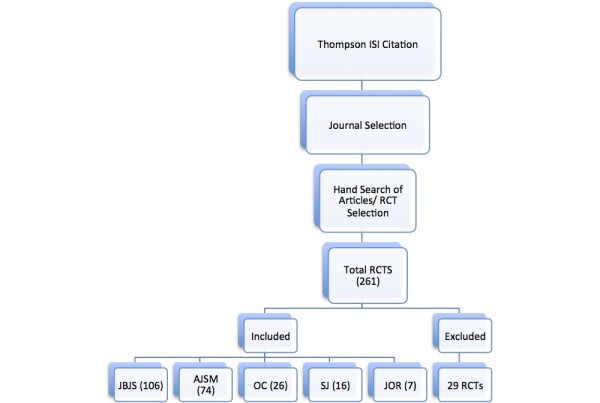
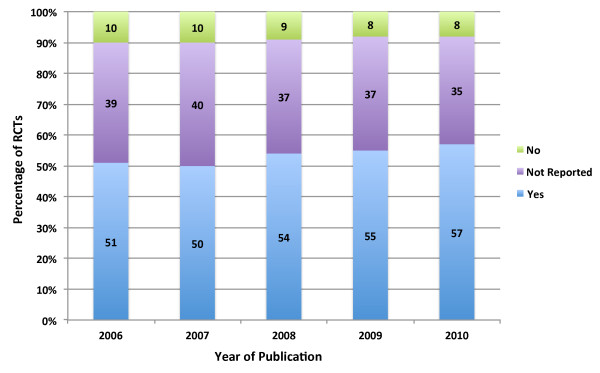
BACKGROUND: The purpose of this study was to assess the quality of methodology in orthopaedics-related randomized controlled trials (RCTs) published from January 2006 to December 2010 in the top orthopaedic journals based on impact scores from the Thompson ISI citation reports (2010). METHODS: Journals included American Journal of Sports Medicine; Journal of Orthopaedic Research; Journal of Bone and Joint Surgery, American; Spine Journal; and Osteoarthritis and Cartilage. Each RCT was assessed on ten criteria (randomization method, allocation sequence concealment, participant blinding, outcome assessor blinding, outcome measurement, interventionist training, withdrawals, intent to treat analyses, clustering, and baseline characteristics) as having empirical evidence for biasing treatment effect estimates when not performed properly. RESULTS: A total of 232 RCTs met our inclusion criteria. The proportion of RCTs in published journals fell from 6% in 2006 to 4% in 2010. Forty-nine percent of the criteria were fulfilled across these journals, with 42% of the criteria not being amendable to assessment due to inadequate reporting. The results of our regression revealed that a more recent publication year was significantly associated with more fulfilled criteria (β = 0.171; CI = -0.00 to 0.342; p = 0.051). CONCLUSION: In summary, very few studies met all ten criteria. Thus, many of these studies likely have biased estimates of treatment effects. In addition, these journals had poor reporting of important methodological aspects.
Overview
The claims and statistics of this paper haven’t been checked yet.
Free: it reads the open-access text and checks the first 5 claims that cite a source we can check. Create a free account to check every claim.
Integrity signals
Registry
Cites
Statistics
Figures
Verification
Claims the paper makes
The claims and statistics of this paper haven’t been checked yet.
Free: it reads the open-access text and checks the first 5 claims that cite a source we can check. Create a free account to check every claim.
Claims other papers make about this one
Each is checked against this paper’s own text: does it say what the citing paper says it does?
The source backs part of the claim, not all of it — or backs it for a different population, condition or comparison.
In the citing paper
“only 1% of studies in high-impact orthopedic journals reported all ten criteria needed for risk of bias assessment (13).”
From The devil is in the details: Reporting and transparent research practices in sports medicine and orthopedic clinical trials (2021) · cites this paper as [13]
Experimental — accuracy not yet measuredThe source backs part of the claim, not all of it — or backs it for a different population, condition or comparison.
In the citing paper
“In 42% of papers, risk of bias could not be assessed due to incomplete reporting (13).”
From The devil is in the details: Reporting and transparent research practices in sports medicine and orthopedic clinical trials (2021) · cites this paper as [13]
Experimental — accuracy not yet measuredIn the citing paper
“among randomized controlled trials published in the top five orthopedics journals, 60% failed to address the blinding status of the participants and 58% did not specify the number of participants included in the final analysis (13).”
From The devil is in the details: Reporting and transparent research practices in sports medicine and orthopedic clinical trials (2021) · cites this paper as [13]
Self-check
Percentages, sums and reported differences re-computed from the paper’s own numbers.
The self-check needs the paper’s full text.
Citations
Cites
von Elm, E., Altman, D. G., Egger, M., Pocock, S. J., Gøtzsche, P. C., Vandenbroucke, J. P., & Initiative, F. T. S. (2007) · PLoS Medicine · doi:10.1371/journal.pmed.0040296 · Cited by 23,020 · cited 1×
“For example, the most recent of these investigations of reporting quality [19] applied the Consolidated Standards of Reporting Trials (CONSORT) statement [20] to a sample of RCTs, the Strengthening the Reporting of Observational Studies in Epidemiology (STROBE) statement [21] to a sample of case–control, cohort and cr…”
Methodvon Elm, E., Altman, D. G., Egger, M., Pocock, S. J., Gøtzsche, P. C., & Vandenbroucke, J. P. (2007) · The Lancet · doi:10.1016/s0140-6736(07)61602-x · Cited by 21,320
Assessing the quality of reports of randomized clinical trials: Is blinding necessary?
Jadad, A. R., Moore, R. A., Carroll, D., Jenkinson, C., Reynolds, D. J. M., Gavaghan, D. J., & McQuay, H. J. (1996) · Controlled Clinical Trials · doi:10.1016/0197-2456(95)00134-4 · Cited by 17,582 · cited 2×
“Carefully planned and well-executed RCTs give us the best estimates of treatment effect and can thus guide clinical decision making [2,3], although trials that lack methodological rigor cause over- or underestimation of treatment effect sizes due to bias [4-6].”
BackgroundCONSORT 2010 Statement: updated guidelines for reporting parallel group randomised trials
the CONSORT Group, Schulz, K. F., Altman, D. G., & Moher, D. (2010) · BMC Medicine · doi:10.1186/1741-7015-8-18 · Cited by 13,371
Moher, D., Hopewell, S., Schulz, K. F., Montori, V., Gotzsche, P. C., Devereaux, P. J., Elbourne, D., Egger, M., & Altman, D. G. (2010) · BMJ · doi:10.1136/bmj.c869 · Cited by 8,883
Evidence-Based Medicine: How to Practice and Teach EBM
Sackett, D. L. (2000) · Cited by 5,950
Schulz (1995) · doi:10.1001/jama.1995.03520290060030 · Cited by 5,634 · cited 3×
“We can only extrapolate for the extensive literature that has shown this to be true for RCTs in other clinical areas [3,4,23-34].”
BackgroundMethodMoher, D., Schulz, K. F., & Altman, D. G. (2001) · The Lancet · doi:10.1016/s0140-6736(00)04337-3 · Cited by 5,373
The Revised CONSORT Statement for Reporting Randomized Trials: Explanation and Elaboration
Altman, D. G., Schulz, K. F., Moher, D., Egger, M., Davidoff, F., Elbourne, D., Gøtzsche, P. C., Lang, T., & for the CONSORT Group (2001) · Annals of Internal Medicine · doi:10.7326/0003-4819-134-8-200104170-00012 · Cited by 3,835 · cited 2×
“Background Randomized controlled trials (RCTs) provide strong evidence for efficacy of healthcare interventions [1].”
BackgroundCONSORT 2010 statement: updated guidelines for reporting parallel group randomized trials
Schulz, K. F., Altman, D. G., Moher, D., & for the CONSORT Group* (2010) · Annals of Internal Medicine · doi:10.7326/0003-4819-152-11-201006010-00232 · Cited by 3,824
Research works printed but not linked: 1
- 24. Juni P, Tallon D, Egger M. “Garbage in – garbage out?” Assessment of the quality of controlled trials in meta-analyses published in leading journals. Oxford: Centre for Statistics in Medicine; 2000. p. 19. (Proceedings of the 3rd symposium on systematic reviews: beyond the basics. St. Catherine’s College).
Cited by
Use of the Journal Impact Factor in academic review, promotion, and tenure evaluations
McKiernan, E. C., Schimanski, L. A., Muñoz Nieves, C., Matthias, L., Niles, M. T., & Alperin, J. P. (2019) · eLife · doi:10.7554/elife.47338 · Cited by 347
“Chess & Gagnier (2013) analyzed clinical trial studies for ten312 different indicators of quality, including randomization and blinding, and found that less than 1% of313 studies met all ten quality criteria, while the JIF of the journals did not significantly predict whether314 a larger number of…”
Surgical management of degenerative meniscus lesions: the 2016 ESSKA meniscus consensus
Beaufils, P., Becker, R., Kopf, S., Englund, M., Verdonk, R., Ollivier, M., & Seil, R. (2017) · Knee Surgery, Sports Traumatology, Arthroscopy · doi:10.1007/s00167-016-4407-4 · Cited by 343
Muscogiuri, G., El Ghoch, M., Colao, A., Hassapidou, M., Yumuk, V., Busetto, L., & Obesity Management Task Force (OMTF) of the European Association for the Study of Obesity (EASO) (2021) · Obesity Facts · doi:10.1159/000515381 · Cited by 289
Khan, M., Evaniew, N., Gichuru, M., Habib, A., Ayeni, O. R., Bedi, A., Walsh, M., Devereaux, P. J., & Bhandari, M. (2017) · The American Journal of Sports Medicine · doi:10.1177/0363546516674469 · Cited by 171
“Primary intervention Surgical 18 (38) Shoulder 6 (13) Knee 12 (25) Hip 0 (0) Anesthetic 19 (40) Nonoperative 11 (23) Outcome assessed Imaging 12 (25) Perioperative comfort 10 (21) Clinical assessment 13 (27) Adverse events 13 (27) Year of publication 2005 5 (10) 2006 2 (4) 2007 5 (10) 2008 3 (6) 2009 2 (4) 2010 5 (10)…”
Heterogeneity of the definition of elderly age in current orthopaedic research
Sabharwal, S., Wilson, H., Reilly, P., & Gupte, C. M. (2015) · SpringerPlus · doi:10.1186/s40064-015-1307-x · Cited by 160
Gagnier, J. J., Mullins, M. A., Huang, H., Marinac‐Dabic, D., Ghambaryan, A., Eloff, B. C., Mirza, F. M., & Bayona, M. (2017) · The Journal of Arthroplasty · doi:10.1016/j.arth.2016.12.052 · Cited by 106
Self-citationSurgical Management of Degenerative Meniscus Lesions: The 2016 ESSKA Meniscus Consensus
Beaufils, P., Becker, R., Kopf, S., Englund, M., Verdonk, R., Ollivier, M. P., & Seil, R. (2017) · Joints · doi:10.1055/s-0037-1603813 · Cited by 88
The Robustness of Trials That Guide Evidence-Based Orthopaedic Surgery
Checketts, J. X., Scott, J., Meyer, C. L., Horn, J. G., Jones, J. M., & Vassar, M. B. (2018) · Journal of Bone and Joint Surgery · doi:10.2106/jbjs.17.01039 · Cited by 75
Checketts, J. X., Sims, M. T., Detweiler, B., Middlemist, K., Jones, J. M., & Vassar, M. B. (2018) · Journal of Bone and Joint Surgery · doi:10.2106/jbjs.17.00529 · Cited by 64
Challoumas, D., Clifford, C., Kirwan, P., & Millar, N. L. (2019) · BMJ Open Sport & Exercise Medicine · doi:10.1136/bmjsem-2019-000528 · Cited by 63
“Studies assessing the effectiveness of surgery in orthopaedics have had bias due to the inability for blinding.(19) 20 In recent years, studies have compared some orthopaedic operations (including surgery for tendinopathy) with sham surgery in a double-blinded manner to mirror the placebo effect of surgery.”
BackgroundEvidence-based surgery: The obstacles and solutions
Meshikhes, A.-W. N. (2015) · International Journal of Surgery · doi:10.1016/j.ijsu.2015.04.071 · Cited by 60
“Similarly, the number of RCTs in orthopaedic journals fell from 6% in 2006 to 4% in 2010 [9].”
BackgroundCasanova-Méndez, A., Oliva‐Pascual‐Vaca, Á., Rodríguez‐Blanco, C., Heredia‐Rizo, A. M., Gogorza-Arroitaonandia, K., & Almazán-Campos, G. (2014) · Manual Therapy · doi:10.1016/j.math.2014.03.002 · Cited by 53
“Subjects and evaluators who collected or analyzed data remained unaware of the aims of the study and the treatment allocation group, to ensure participant blinding and outcome assessor blinding respectively (Chess and Gagnier, 2013).”
BackgroundMethodInfluentialEguaras, N., Rodríguez‐López, E. S., López‐Dicastillo, O., Franco-Sierra, M. Á., Ricard, F., & Oliva‐Pascual‐Vaca, Á. (2019) · Journal of Clinical Medicine · doi:10.3390/jcm8101738 · Cited by 57
“Evaluators who collected or analyzed data remained unaware of the aims of the study as well as the treatment allocation group, to ensure participant blinding and outcome assessor blinding, respectively [36].”
BackgroundMisconceptions, Misuses, and Misinterpretations of P Values and Significance Testing
Gagnier, J. J., & Morgenstern, H. (2017) · Journal of Bone and Joint Surgery · doi:10.2106/jbjs.16.01314 · Cited by 52
Self-citation“Publish or Perish” Promotes Medical Literature Quantity Over Quality
Siegel, M. G., Brand, J. C., Rossi, M. J., & Lubowitz, J. H. (2018) · Arthroscopy The Journal of Arthroscopic and Related Surgery · doi:10.1016/j.arthro.2018.08.029 · Cited by 47
Ekhtiari, S., Gazendam, A., Nucci, N. W., Kruse, C. C., & Bhandari, M. (2020) · The Journal of Arthroplasty · doi:10.1016/j.arth.2020.12.015 · Cited by 44
Focusing on results after meniscus surgery
Beaufils, P., Becker, R., Verdonk, R. E., Aagaard, H., & Karlsson, J. (2014) · Knee Surgery Sports Traumatology Arthroscopy · doi:10.1007/s00167-014-3471-x · Cited by 48
Reconsidering the ethics of sham interventions in an era of emerging technologies
Niemansburg, S. L., van Delden, J. J. M., Dhert, W. J. A., & Bredenoord, A. L. (2015) · Surgery · doi:10.1016/j.surg.2014.12.001 · Cited by 50
Understanding Orthopaedic Registry Studies: A Comparison with Clinical Studies
Inacio, M. C. S., Paxton, E. W., & Dillon, M. T. (2016) · Journal of Bone and Joint Surgery · doi:10.2106/jbjs.n.01332 · Cited by 44
Rochira, V., Greco, C., Boni, S., Costantino, F., Dalla Valentina, L., Zanni, E., Itani, L., & El Ghoch, M. (2024) · Diseases · doi:10.3390/diseases12090204 · Cited by 34
“Any disagreement was resolved by consensus discussion between both the reviewers and the principal investigator (PI) in order to take a final decision [33].”
BackgroundWeinstock-Zlotnick, G., & Mehta, S. P. (2018) · Journal of Hand Therapy · doi:10.1016/j.jht.2018.04.001 · Cited by 46
El Ghoch, M., Calugi, S., & Dalle Grave, R. (2016) · Nutrients · doi:10.3390/nu8070402 · Cited by 36
“All included studies were assessed using risk-of-bias criteria [45,46].”
MethodVella‐Baldacchino, M., Perry, D. C., Roposch, A., Nicolaou, N., Cooke, S., Ellis, P., & Theologis, T. N. (2019) · BMJ Open · doi:10.1136/bmjopen-2019-033233 · Cited by 36
Faculty appointment and promotion in Taiwan’s medical schools, a systematic analysis
Yeh, J., Shulruf, B., Lee, H., Huang, P., Kuo, W.-H., Hwang, T.-C., & Chen, C. (2022) · BMC Medical Education · doi:10.1186/s12909-022-03435-2 · Cited by 35
Mohtadi, N. G. H., Barber, R., Chan, D. S., & Paolucci, E. O. (2015) · Clinical Journal of Sport Medicine · doi:10.1097/jsm.0000000000000202 · Cited by 29
Network Meta-analysis: Users’ Guide for Surgeons: Part II - Certainty
Chaudhry, H., Foote, C. J., Guyatt, G. H., Thabane, L., Furukawa, T. A., Petrisor, B. A., & Bhandari, M. (2015) · Clinical Orthopaedics and Related Research · doi:10.1007/s11999-015-4287-9 · Cited by 29
“However, RCTs vary with respect to risk of bias depending on the rigor with which they: (1) conceal randomization; (2) blind participants, caregivers, data collectors, adjudicators of outcome and data analysts; and (3) achieve complete followup [3, 22].”
BackgroundCramer, H., Langhorst, J., Dobos, G. J., & Lauche, R. (2015) · PLoS ONE · doi:10.1371/journal.pone.0144125 · Cited by 31
“High proportions of unclear or high risk of selection bias however are not just a problem of yoga research; they have been reported in other fields as well, for example in complementary and alternative medicine in general [14] nursing research [29], orthopedics [30] and in pediatrics [31].”
BackgroundAn Evaluation of Publication Bias in High-Impact Orthopaedic Literature
Scott, J., Checketts, J. X., Cooper, C. M., Boose, M. A., Wayant, C., & Vassar, M. B. (2019) · JBJS Open Access · doi:10.2106/jbjs.oa.18.00055 · Cited by 27
Smith, C., Mollon, B., Vannabouathong, C., Fu, J. M., Sales, B., Bhandari, M., & Whelan, D. B. (2020) · Journal of Bone and Joint Surgery · doi:10.2106/jbjs.18.00653 · Cited by 26
Rodríguez‐Blanco, C., Cocera-Morata, F. M., Heredia‐Rizo, A. M., Ricard, F., Almazán-Campos, G., & Oliva‐Pascual‐Vaca, Á. (2015) · The Journal of Alternative and Complementary Medicine · doi:10.1089/acm.2014.0332 · Cited by 39
Schulz, R., Langen, G., Prill, R., Cassel, M., & Weissgerber, T. L. (2022) · BMJ Open · doi:10.1136/bmjopen-2021-059347 · Cited by 23
“59 New tools may need to be created to assess details like the specifics of allocation concealment, blinding of specific stakeholders or justifications of expected effect sizes.”
The Quality of Randomized Controlled Trials in Pediatric Orthopaedics: Are We Improving?
Dodwell, E. R., Dua, S., Dulai, S. K., Astone, K., & Mulpuri, K. (2014) · Journal of Pediatric Orthopaedics · doi:10.1097/bpo.0000000000000324 · Cited by 23
Anderson, J. M., Stafford, A. L., Jellison, S., & Vassar, M. B. (2021) · Arthroscopy Sports Medicine and Rehabilitation · doi:10.1016/j.asmr.2020.09.019 · Cited by 26
van Oldenrijk, J., Scholtes, V. A., van Beers, L. W. A. H., Geerdink, C. H., Niers, B. B. A. M., Runne, W. C., Bhandari, M., & Poolman, R. W. (2017) · BMJ Open · doi:10.1136/bmjopen-2016-014522 · Cited by 19
Procedural Surgical RCTs in Daily Practice: Do Surgeons Adopt Or Is It Just a Waste of Time?
Oberkofler, C. E., Hamming, J. F., Staiger, R. D., Brosi, P., Biondo, S., Farges, O., Legemate, D. A., Morino, M., Pinna, A. D., Marques, H. P., et al. (2019) · Annals of Surgery · doi:10.1097/sla.0000000000003546 · Cited by 23
Yasui, Y., Ramponi, L., Seow, D., Hurley, E. T., Miyamoto, W., Shimozono, Y., & Kennedy, J. G. (2017) · World Journal of Orthopedics · doi:10.5312/wjo.v8.i12.956 · Cited by 17
Quality of surgical randomized controlled trials in hand surgery: a systematic review
Long, C., desJardins-Park, H. E., Popat, R. A., & Fox, P. M. (2018) · Journal of Hand Surgery (European Volume) · doi:10.1177/1753193418780184 · Cited by 17
“…Balasubramanian et al., 2006), plastic surgery (Veiga Filho et al., 2005; Voineskos et al., 2016; Voineskos et al., 2016), orthopaedic surgery (Chess and Gagnier, 2013; Karanicolas et al., 2008) and elbow surgery (Somford et al., 2015), there are limited data in the specialized field of…”
BackgroundOverview of randomised controlled trials in orthopaedic research: search for significant findings
Matar, H. E., & Platt, S. R. (2019) · European Journal of Orthopaedic Surgery & Traumatology · doi:10.1007/s00590-019-02436-0 · Cited by 17
Martínez-Ochoa, M. J., Fernández‐Domínguez, J. C., Morales‐Asencio, J. M., González-Iglesias, J., Ricard, F., & Oliva‐Pascual‐Vaca, Á. (2018) · The Journal of Alternative and Complementary Medicine · doi:10.1089/acm.2018.0081 · Cited by 15
“24 The clinician in charge of the intervention did not participate in the assessment protocol and did not know what the objectives of the study were.”
Editorial: Randomized clinical trials and neurosurgery
Barker, F. G. (2015) · Journal of neurosurgery · doi:10.3171/2015.2.jns142960 · Cited by 15
The effect of peer review on the improvement of rejected manuscripts
Crijns, T. J., Ottenhoff, J. S. E., & Ring, D. (2021) · Accountability in Research · doi:10.1080/08989621.2020.1869547 · Cited by 14
“The most important section for improvement during the peer review process is arguably the Materials and methods, especially since prior studies have observed poor scientific reporting in this section, even in top orthopedic journals (Chess & Gagnier 2013).”
MethodPiña-Pozo, F., Heredia‐Rizo, A. M., Madeleine, P., Escobio-Prieto, I., Luque-Carrasco, A., & Oliva‐Pascual‐Vaca, Á. (2019) · Journal of Clinical Medicine · doi:10.3390/jcm8081246 · Cited by 13
“To ensure outcome assessor blinding [31], a single examiner collected all measurements and was blinded to the participants’ allocation groups.”
MethodPearsall, C. A., Constant, M., Saltzman, B. M., Parisien, R. L., Levine, W. N., & Trofa, D. P. (2023) · Journal of the American Academy of Orthopaedic Surgeons · doi:10.5435/jaaos-d-23-00245 · Cited by 11
“9,10 11-14 Consequently, fragility analysis was developed to complement P value reporting and to facilitate a better clinical understanding of statistical findings.”
BackgroundResultOliva‐Pascual‐Vaca, Á., Punzano-Rodríguez, R., Escribá-Astaburuaga, P., Fernández‐Domínguez, J. C., Ricard, F., Franco-Sierra, M. Á., & Rodríguez‐Blanco, C. (2017) · The Journal of Alternative and Complementary Medicine · doi:10.1089/acm.2017.0041 · Cited by 11
“13 The clinician in charge of the intervention did not participate in the assessment protocol and was not aware of the purposes of the study.”
Johnson, A., Evans, S., Checketts, J. X., Scott, J., Wayant, C., Johnson, M., Norris, B. L., & Vassar, M. B. (2019) · Injury · doi:10.1016/j.injury.2019.08.012 · Cited by 11
Increase in Quality and Quantity of Orthopaedic Studies from 2002 to 2012
Little, Z., Newman, S., Dodds, A. L., & Spicer, D. (2015) · Journal of orthopaedic surgery · doi:10.1177/230949901502300325 · Cited by 10
Lai, N. M., Ong, J. M.-J., Chen, K., Chaiyakunapruk, N., Ovelman, C., & Soll, R. F. (2019) · Neonatology · doi:10.1159/000497423 · Cited by 11
Koucheki, R., Gazendam, A., Perera, J. R., Griffin, A. M., Ferguson, P. C., Wunder, J. S., & Tsoi, K. M. (2021) · Current Oncology · doi:10.3390/curroncol28050322 · Cited by 8
Therapie degenerativer Meniskusläsionen
Becker, R., Bernard, M., Scheffler, S. U., & Kopf, S. (2017) · Der Orthopäde · doi:10.1007/s00132-017-3465-8 · Cited by 9
Sonntag, J., Landale, K., Brorson, S., & Harris, I. A. (2020) · Bone & Joint Open · doi:10.1302/2633-1462.19.bjo-2020-0093.r1 · Cited by 7
Ma, Y., Xiang, C., & Zhang, B. (2018) · Medical Science Monitor · doi:10.12659/msm.912544 · Cited by 8
Goudarzi, L., Ghomashchi, H., Vahedi, M., & Kahlaee, A. H. (2024) · PubMed Central · doi:10.22038/abjs.2023.74763.3462 · Cited by 11
Brophy, R. H., Kluck, D. G., & Marx, R. G. (2015) · The American Journal of Sports Medicine · doi:10.1177/0363546515591264 · Cited by 7
Fernández-Seguín, L. M., Heredia‐Rizo, A. M., Díaz-Mancha, J. A., González-García, P., Ramos-Ortega, J., & Munuera-Martínez, P. V. (2019) · Medicine · doi:10.1097/md.0000000000018018 · Cited by 6
“Participants and the evaluator who collected the outcome measures, remained unaware of the participants’ allocation group to ensure participant and outcome assessor blinding.([30]) Due to the nature of the trial, it was not possible to blind the therapist in charge of the intervention.”
BackgroundCowan, J. B., Mlynarek, R. A., Nelissen, R. G. H. H., Pijls, B. G. C. W., & Gagnier, J. J. (2015) · The Journal of Arthroplasty · doi:10.1016/j.arth.2015.03.020 · Cited by 6
“Similarly, one study found that among RCTs in the top five orthopedic journals, only 49% of methodology criteria were fulfilled and 42% of criteria could not be assessed due to poor reporting [41].”
ResultSelf-citationShah, A., Hoit, G., Lan, L., & Whelan, D. B. (2023) · Orthopaedic Journal of Sports Medicine · doi:10.1177/23259671231161293 · Cited by 5
“The trend has also been observed in other surgical subspecialties.(1,7,35) A previous appraisal of the quality of all studies published in AJSM was conducted in 2016 by Brophy et al.”
BackgroundResultCardoso, E. A., Neto, F. R., Martins, W. R., Bottaro, M., & Carregaro, R. L. (2018) · Motricidade · doi:10.6063/motricidade.14094 · Cited by 5
“Secondly, the outcome assessor was not blind to group allocation; therefore, estimates of intervention effects might have been influenced by some bias (Chess & Gagnier, 2013).”
Backgroundvan Beers, L. W. A. H., van Oldenrijk, J., Scholtes, V. A., Geerdink, C. H., Niers, B. B. A. M., Runne, W. C., Bhandari, M., & Poolman, R. W. (2016) · BMJ Open · doi:10.1136/bmjopen-2015-010472 · Cited by 5
Beteramia, D., Sklavos, A., Saha, A., & Hyam, D. (2020) · International Journal of Oral and Maxillofacial Surgery · doi:10.1016/j.ijom.2020.09.009 · Cited by 5
Schulz, R., Langen, G., Prill, R., Cassel, M., & Weissgerber, T. (2021) · doi:10.1101/2021.07.20.21260565 · Cited by 23
“followed older studies suggesting that poor clinical trial reporting limits readers ability to assess study quality and risk of bias (13,60,61).”
BackgroundResultInfluentialCollins, A. P., Simpson, J., Richey, B. P., Zaruta, D. A., Levin, S. R., Lewellyn, B., & Service, B. C. (2022) · JSES Reviews Reports and Techniques · doi:10.1016/j.xrrt.2022.02.002 · Cited by 4
Zhang, L., Qiao, L., Zhang, M., Xue, Y., Zhang, X., & Gao, X. (2022) · Medicine · doi:10.1097/md.0000000000027915 · Cited by 4
“1 to assess the risk of bias,[16,17] and Rev Man 5.”
BackgroundKaur, A., Bali, R. K., Patnana, A. K., Gigi, P. G., Pandey, A., Ganesan, A., & Chaudhry, K. (2022) · Journal of Maxillofacial and Oral Surgery · doi:10.1007/s12663-022-01795-2 · Cited by 4
Meidani, Z., Nabovati, E., Gohari, S., & Chopannejad, S. (2018) · Journal of Comprehensive Pediatrics · doi:10.5812/compreped.66571 · Cited by 4
“Quality Assessment of the Studies The quality assessment of the studies was carried out by two reviewers using Cochrane Collaboration’s assessment tool, which consists of six specific domains: (1) adequate random sequence generation, (2) allocation concealment, (3) blinding of participants and personnel, (4) blinding…”
MethodRobust Randomized Controlled Data Is Lacking in Total Joint Arthroplasty
Chen, Z., Bains, S. S., Hameed, D., Dubin, J. A., Stern, J. M., & Mont, M. A. (2022) · The Journal of Knee Surgery · doi:10.1055/s-0042-1758550 · Cited by 3
Zhao, Y., Song, Y., Zhang, H., Qu, T., Axinbai, M., Yang, Y., & Zhang, L. (2023) · Frontiers in Oncology · doi:10.3389/fonc.2022.1050714 · Cited by 3
“A) evaluated the risk of bias in the included studies by using the Cochrane collaboration risk of bias tool (18, 19).”
MethodSurgical management of degenerative meniscus lesions: The 2016 ESSKA meniscus consensus
Beaufils, P., Becker, R., Kopf, S., Englund, M., Verdonk, R., Ollivier, M. P., & Seil, R. (2017) · Arthroskopie · doi:10.1007/s00142-017-0129-y · Cited by 3
El‐Boghdadly, K., Abdallah, F. W., Short, A., Vorobeichik, L., Memtsoudis, S. G., & Chan, V. W. S. (2019) · Clinical Orthopaedics and Related Research · doi:10.1097/corr.0000000000000578 · Cited by 3
Xiong, G. X., Kang, J. R., Sharma, J., Finlay, A. K., Gardner, M. J., & Bishop, J. A. (2021) · European Journal of Orthopaedic Surgery & Traumatology · doi:10.1007/s00590-021-03051-8 · Cited by 2
Beaufils, P., Becker, R., & Seil, R. (2017) · Clinical Orthopaedics and Related Research · doi:10.1007/s11999-017-5393-7 · Cited by 2
“representative of those presenting with knee pain in the daily practice [4, 5].”
BackgroundNetwork meta-analysis: What is its purpose in Orthopaedic literature?
Reddy, A. K., Checketts, J. X., Scott, J., Norris, G. R., & Norris, B. L. (2022) · Injury · doi:10.1016/j.injury.2022.06.025 · Cited by 1
Surgical management of degenerative meniscus lesions: the 2016 ESSKA meniscus consensus
Beaufils, P., Becker, R., Kopf, S., Englund, M., Verdonk, R., Ollivier, M. P., & Seil, R. (2017) · Sports Orthopaedics and Traumatology · doi:10.1016/j.orthtr.2017.05.002 · Cited by 2
Describing randomization in trials included in systematic reviews in orthopaedic surgery
Tang, M., Lun, K. K., Lewin, A. M., & Harris, I. A. (2024) · Bone & Joint Open · doi:10.1302/2633-1462.512.bjo-2024-0042.r1 · Cited by 1
“8,11,12 While previous studies have assessed the quality of randomization in RCTs, there has been little consideration of the RCTs included in systematic reviews.”
Cole, W. T., Hillman, C., Corcoran, A., Anderson, J. M., Weaver, M., Torgerson, T., Hartwell, M. L., & Vassar, M. B. (2021) · Foot & Ankle Orthopaedics · doi:10.1177/24730114211019725 · Cited by 1
Indications in Meniscus Surgery: Synthesis
Beaufils, P., & Pujol, N. (2016) · Springer eBooks · doi:10.1007/978-3-662-49188-1_43
Distale Radiusfrakturen – Evidence is Shlevidence
Stengel, D., & Bärtl, C. (2016) · Der Unfallchirurg · doi:10.1007/s00113-016-0220-2
Beaufils, P., Becker, R., Kopf, S., Englund, M., Verdonk, R., Ollivier, M. P., & Seil, R. (2017) · Revue de Chirurgie Orthopédique et Traumatologique · doi:10.1016/j.rcot.2017.03.028 · Cited by 1
Experimental design and statistics in orthopaedic research
Hardwick, T., Vaughan, A., Gaskin, J. S. H., & Bendall, S. P. (2017) · Orthopaedics and Trauma · doi:10.1016/j.mporth.2017.07.006
Generating good evidence in orthopedics
Sood, M., & Kulshrestha, V. (2020) · Journal of Marine Medical Society · doi:10.4103/jmms.jmms_83_20
de Geofroy, B., Ghabi, A., Cucurulo, T., Sbihi, A., & Chaouche, S. (2023) · Journal de Traumatologie du Sport · doi:10.1016/j.jts.2023.10.004
Dunford, B., Bacani, R. C., Anderson, J. M., Checketts, J. X., Scott, J., Torgerson, T., Hartwell, M. L., & Vassar, M. B. (2022) · Journal of the American Osteopathic Academy of Orthopedics · doi:10.70709/3a3zmf8mdd · Cited by 1
Bergren, S., Kistler, N. M., Shelby, H., Abu-Zahra, M., Lindgren, A. R., Rusu, D., & Alluri, R. K. (2026) · European Spine Journal · doi:10.1007/s00586-026-10358-9
Vinu, W., Josyula, T., Kabeer, D. A., Karmakar, D., Valappil, I. N. K., Parpa, K., Katanic, B., Geantă, V. A., Vveinhardt, J., & Govindasamy, K. (2026) · Frontiers in Physiology · doi:10.3389/fphys.2026.1781766
The ethics of bringing Regenerative Medicine to patients: the example of orthopedics
Niemansburg, S. L. (2015) · Utrecht University Repository (Utrecht University)
Metadata
- Authors
- Chess, L. E., & Gagnier, J.
- Affiliations
- Wayne State University (US)
- University of Michigan (US)
- Corresponding author
- Chess, Laura E
- ORCID
- Gagnier, Joel
- Venue
- BMC Medical Research Methodology
- Published
- 2013-06-09
- Volume
- 13
- Issue
- 1
- Pages
- 76-76
- ISSN
- 1471-2288 (ISSN-L)
- PMC
- PMC3724580
- OpenAlex
- W2009249600
- Cited by
- 83
- References
- 48
- Citations by year
- 2026: 2 · 2024: 3 · 2023: 4 · 2022: 8 · 2021: 6 · 2020: 5 · 2019: 12 · 2018: 9 · 2017: 13 · 2016: 6 · 2015: 12 · 2014: 3
- FWCI
- 7.72
- Type
- journal article
- Language
- en
- Open access
- gold
- doi.org
- Licence
- cc-by
- creativecommons.org/licenses/by/2.0 (tdm)
- Locations
- BMC Medical Research Methodology (publishedVersion, cc-by)
- Europe PMC (PubMed Central) (publishedVersion, cc-by)
- PubMed Central (publishedVersion, cc-by)
- PubMed (publishedVersion)
- Topics
- Social Sciences › Decision Sciences › Statistics, Probability and Uncertainty › Meta-analysis and systematic reviews
- Physical Sciences › Mathematics › Statistics and Probability › Statistical Methods in Clinical Trials
- Social Sciences › Library and Information Sciences › Academic Publishing and Open Access
- Keywords
- risk of bias, randomized controlled trials, orthopaedic research, methodological quality, reporting quality, blinding, randomization methods, intention-to-treat analysis, publication year trends, orthopaedic journals
- MeSH terms
- Female, Humans, Male, Orthopedics, Publishing, Research Design, Bias, Randomized Controlled Trials as Topic, Journal Impact Factor
About these checks
Registry, retraction, Cites and statistics results are computed, not judged, with one exception: a printed reference that no index lists is read once by a model before it counts as a citation error. Claims are extracted by a model and kept only when their quote appears verbatim in the text; each cited source is then checked, with a model’s help, for whether it says what the claim relies on. Those verdicts can be wrong — read the claim’s quote and the cited source before relying on one.
Statistics and arithmetic are recomputed, not judged.
Confidence bands are shown only for fields calibrated on our annotated test set. None is calibrated yet, so no band is shown.
What counts as a claim ›How we measure confidence ›How we check this ›
Are you an author, or do you see a problem with this page? Request a review
Data sources
Bibliographic data: Semantic Scholar, OpenAlex, Crossref.
Contains information from the Semantic Scholar Academic Graph Datasets, made available under the ODC Attribution License (ODC-BY 1.0).
Semantic Scholar’s data is described in: Kinney, R., et al. (2023). The Semantic Scholar Open Data Platform. arXiv:2301.10140.
