

Which is more generalizable, powerful and interpretable in meta-analyses, mean difference or standardized mean difference?
Open accessThe DOI matches its Crossref record; 28 of the 29 references it cites were found in a registry or an index.
Abstract
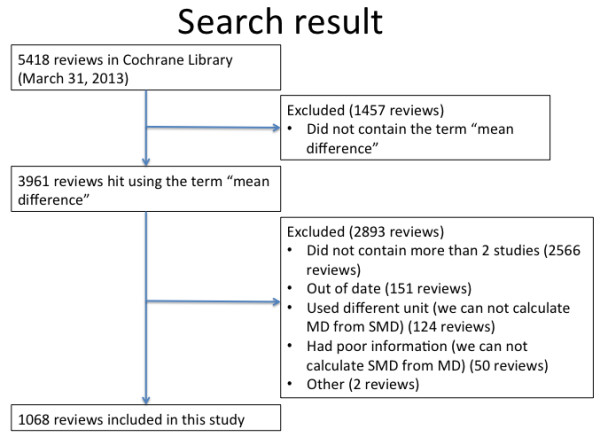
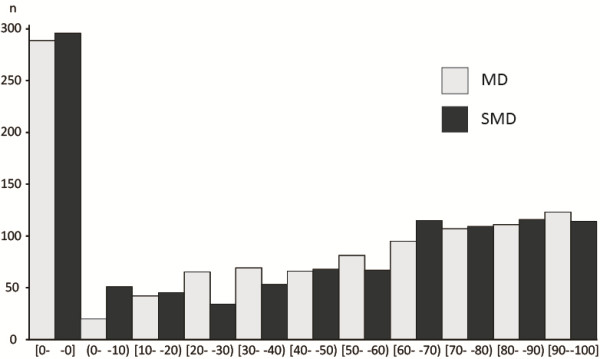
BACKGROUND: To examine empirically whether the mean difference (MD) or the standardised mean difference (SMD) is more generalizable and statistically powerful in meta-analyses of continuous outcomes when the same unit is used. METHODS: From all the Cochrane Database (March 2013), we identified systematic reviews that combined 3 or more randomised controlled trials (RCT) using the same continuous outcome. Generalizability was assessed using the I-squared (I2) and the percentage agreement. The percentage agreement was calculated by comparing the MD or SMD of each RCT with the corresponding MD or SMD from the meta-analysis of all the other RCTs. The statistical power was estimated using Z-scores. Meta-analyses were conducted using both random-effects and fixed-effect models. RESULTS: 1068 meta-analyses were included. The I2 index was significantly smaller for the SMD than for the MD (P < 0.0001, sign test). For continuous outcomes, the current Cochrane reviews pooled some extremely heterogeneous results. When all these or less heterogeneous subsets of the reviews were examined, the SMD always showed a greater percentage agreement than the MD. When the I2 index was less than 30%, the percentage agreement was 55.3% for MD and 59.8% for SMD in the random-effects model and 53.0% and 59.8%, respectively, in the fixed effect model (both P < 0.0001, sign test). Although the Z-scores were larger for MD than for SMD, there were no differences in the percentage of statistical significance between MD and SMD in either model. CONCLUSIONS: The SMD was more generalizable than the MD. The MD had a greater statistical power than the SMD but did not result in material differences.
Overview
The claims and statistics of this paper haven’t been checked yet.
Free: it reads the open-access text and checks the first 5 claims that cite a source we can check. Create a free account to check every claim.
Integrity signals
Registry
Cites
Statistics
Figures
Verification
Claims the paper makes
The claims and statistics of this paper haven’t been checked yet.
Free: it reads the open-access text and checks the first 5 claims that cite a source we can check. Create a free account to check every claim.
Claims other papers make about this one
Each is checked against this paper’s own text: does it say what the citing paper says it does?
The cited source doesn’t support the claim as written.
In the citing paper
“Nine articles were include: 4 RCTs [44–45, 50–51] and 5 cohort studies [46–49, 55]”
From Bright light therapy in the treatment of patients with bipolar disorder: A systematic review and meta-analysis (2020) · cites this paper as [49]
Checked by a reasoning model — may be wrong.
Experimental — accuracy not yet measuredThe cited source doesn’t support the claim as written.
In the citing paper
“A total of 7 articles used auxiliary measures: 6 cohort studies [46–49,52–53] and 1 RCT [51].”
From Bright light therapy in the treatment of patients with bipolar disorder: A systematic review and meta-analysis (2020) · cites this paper as [49]
Checked by a reasoning model — may be wrong.
Experimental — accuracy not yet measuredThe source backs part of the claim, not all of it — or backs it for a different population, condition or comparison.
In the citing paper
“Additionally, the SMD is more generalizable and statistically powerful in meta-analyses of continuous outcomes when the same unit is used (Takeshima et al., 2014).”
From Nature-based outdoor activities for mental and physical health: Systematic review and meta-analysis (2021) · cites this paper as Takeshima et al., 2014
Experimental — accuracy not yet measuredThe check wasn’t confident either way, so it gives no verdict — never disputed.
In the citing paper
“A total of 7 cohort studies were included [46–49,52,53,55], and a sensitivity analysis was conducted because of the high heterogeneity. This decreased after omitting Sikkens et al. (I2 = 26%, P = 0.24).”
From Bright light therapy in the treatment of patients with bipolar disorder: A systematic review and meta-analysis (2020) · cites this paper as [49]
Experimental — accuracy not yet measured
Self-check
Percentages, sums and reported differences re-computed from the paper’s own numbers.
The self-check needs the paper’s full text.
Citations
Cites
Statistical Power Analysis for the Behavioral Sciences
Muller, K. (1989) · Technometrics · doi:10.1080/00401706.1989.10488618 · Cited by 99,167
Statistical power analysis for the behavioral sciences
(1990) · Computers, Environment and Urban Systems · doi:10.1016/0198-9715(90)90050-4 · Cited by 65,269
Measuring inconsistency in meta-analyses
Higgins, J. P. T., Thompson, S. G., Deeks, J. J., & Altman, D. G. (2003) · BMJ · doi:10.1136/bmj.327.7414.557 · Cited by 63,139 · cited 1×
“(i) I(2) index The I(2) index represents the degree of heterogeneity across studies in meta-analyses [13].”
BackgroundMeta-analysis in clinical trials
DerSimonian, R., & Laird, N. (1986) · Controlled Clinical Trials · doi:10.1016/0197-2456(86)90046-2 · Cited by 39,552 · cited 1×
“We calculated two percentage agreement figures for each meta-analysis, using the random-effects model [14] or the fixed-effect model [15] for the meta-analysis.”
MethodHamilton, M. (1960) · Journal of Neurology, Neurosurgery & Psychiatry · doi:10.1136/jnnp.23.1.56 · Cited by 32,817 · cited 1×
“When the outcome is measured using the same patient-reported outcome (PRO) measure, such as the Hamilton Rating Scale for Depression [19], the Short-Form 36 Quality of Life Questionnaire [20], or the Severity Scoring of Atopic Dermatitis [21], even though all the outcomes are measured in the same unit, the superior in…”
MethodSF-36 health survey: Manual and interpretation guide
Ware, J. (2003) · Medical Entomology and Zoology · Cited by 11,424
Statistical Methods for Meta-Analysis
Wasserman, S., Hedges, L. V., & Olkin, I. (1988) · Journal of Educational Statistics · doi:10.2307/1164953 · Cited by 10,326
Borenstein, M., Hedges, L. V., Higgins, J. P. T., & Rothstein, H. R. (2021) · doi:10.1002/9781119558378 · Cited by 9,799
Cochrane Handbook for Systematic Reviews of Interventions Version 5.0.1. The Cochrane Collaboration
Higgins, J. P. T., Green, S. R., & Higgins, J. P. T. (2008) · Cited by 7,259
Primary, Secondary, and Meta-Analysis of Research
GLASS, G. V. (1976) · Educational Researcher · doi:10.3102/0013189x005010003 · Cited by 4,890 · cited 1×
“Depending on how this SD is calculated, the SMD has several versions such, as Cohen's d [2], Glass's Δ [3], and Hedges' g [4].”
Method
Cited by
Items 201–300 of 386
Sankaranarayanan, A., Pratt, R., Anoop, A., Smith, A., Espinoza, D., Ramachandran, P., & Tirupati, S. (2021) · Acta Psychiatrica Scandinavica · doi:10.1111/acps.13305 · Cited by 14
Roth, A., Sattelmayer, M., Schorderet, C., Gafner, S. C., & Allet, L. (2022) · F1000Research · doi:10.12688/f1000research.75539.3 · Cited by 19
“A 5% to 10% reduction in baseline weight is frequently recommended as a conservative treatment.(3) The literature reports that weight loss within this range not only has a beneficial impact on several obesity-related health conditions and co-morbidities, but can also be cost-effective.”
Chen, W.-C., Lin, M.-H., Chen, C., Lai, Y.-C., Chen, C., Lin, Y.-C., & Hung, C. (2021) · Journal of Clinical Medicine · doi:10.3390/jcm10184120 · Cited by 12
“In addition, we calculated a standardized mean difference rather than a mean difference from the viewpoint of generalizability [70].”
MethodEarly versus late tracheostomy for traumatic brain injury: a systematic review and meta-analysis
Bertini, P., Marabotti, A., Paternoster, G., Sangalli, F., Costanzo, D., Isirdi, A., Romani, M., Nicolini, N. C., Brizzi, G., Checchi, M., et al. (2023) · Minerva Anestesiologica · doi:10.23736/s0375-9393.23.17176-8 · Cited by 12
Trends and clinical outcomes of abdominal compartment syndrome among intensive care hospitalizations
Tran, Z. K., Assali, M. A., Shin, B., Benharash, P., & Mukherjee, K. (2024) · Surgery · doi:10.1016/j.surg.2024.04.012 · Cited by 11
Hsieh, Y., Yang, T., Peng, Z., Wang, R., Shih, H., & Yang, Y. (2025) · PM&R · doi:10.1002/pmrj.13316 · Cited by 17
Mei, M., Zhou, Q., Gu, W., Li, F., Yang, R., Lei, H., & Liu, C. (2025) · Nutrients · doi:10.3390/nu17243952 · Cited by 12
“The SMD is the appropriate effect size when the included studies measure the same continuous outcome using different scales or when their standard deviations differ substantially [69].”
Anam, M. S., Muslykhah, U., Sadid, M. M., Noviandi, C. T., ASTUTI, A., Paradhipta, D. H. V., & Agus, A. (2025) · Scientific Reports · doi:10.1038/s41598-025-28515-3 · Cited by 12
“The WMD was selected as the effect size metric due to its clear interpretability and robust statistical validity 39 .”
Deng, J., Abbas, U., Chang, O., Dhivagaran, T., Sanger, S., & Bozzo, A. (2020) · BMJ Open · doi:10.1136/bmjopen-2019-034741 · Cited by 11
Chua, M. E., Kim, J. J. K., Ming, J. M., Jesus, M. J. D., See, M., Bägli, D., Rickard, M., Koyle, M. A., & Lorenzo, A. J. (2022) · International Urology and Nephrology · doi:10.1007/s11255-021-03096-y · Cited by 11
On the Q statistic with constant weights for standardized mean difference
Bakbergenuly, I., Hoaglin, D. C., & Kulinskaya, E. (2022) · British Journal of Mathematical and Statistical Psychology · doi:10.1111/bmsp.12263 · Cited by 15
Hantoushzadeh, S., Gargari, O. K., Shafiee, A., Seighali, N., & Ghaemi, M. (2023) · Diabetology & Metabolic Syndrome · doi:10.1186/s13098-022-00973-z · Cited by 15
“difference even when using similar units [12].”
Hernández-García, P. A., Orzuna‐Orzuna, J. F., Chay‐Canul, A. J., Silva, G. V., Galván, C. D., & Razo-Ortíz, P. B. (2024) · Small Ruminant Research · doi:10.1016/j.smallrumres.2024.107254 · Cited by 14
Lee, Y. H., & Song, G. G. (2018) · Clinical and Experimental Dermatology · doi:10.1111/ced.13383 · Cited by 11
Luke, K., Milla, C., Tandi, J. K., & Julario, R. (2023) · Journal of Arrhythmia · doi:10.1002/joa3.12949 · Cited by 10
Bhattarai, A., Shah, S., Baidya, S., Thapa, R., Bhandari, S., Tuladhar, E. T., Acharya, S. P., & Sah, R. (2024) · International Journal of Surgery · doi:10.1097/js9.0000000000001069 · Cited by 10
“The objective of the results from our meta-analysis was determined to be more generalizable, and therefore, with reference to a relevant research, standardized mean difference (SMD) was used to express the pooled difference in the copeptin levels between the aforementioned comparison groups [26] .”
BackgroundMethodInfluentialXin, Y., Sun, H., Liu, S., Lan, B., Zhao, G., Yin, S., Zan, L., & Zhao, C. (2025) · Animal Feed Science and Technology · doi:10.1016/j.anifeedsci.2025.116286 · Cited by 13
Ferreira, I. M. P. L. V. O., Mantovani, H. C., Vedovatto, M., Cardoso, A. S., Rodrigues, A. A., Homem, B. G. C., de Abreu, M. J. I., Rodrigues, A. N., Batista, L., de Oliveira, J. S., et al. (2025) · animal · doi:10.1016/j.animal.2025.101481 · Cited by 11
Chua, M. E., Ming, J. M., Kim, J. K., Milford, K., Silangcruz, J. M., Ren, L. Y., Rickard, M., & Lorenzo, A. J. (2020) · British Journal of Urology · doi:10.1111/bju.15264 · Cited by 10
Karanasios, S., Mertyri, D., Karydis, F., & Gioftsos, G. (2024) · Healthcare · doi:10.3390/healthcare12080823 · Cited by 10
“To evaluate the treatment effect, we used the mean differences (MDs) with 95% CIs when the outcome was measured in the same unit or the standardised mean differences (SMDs) with 95% CIs for different units [14].”
MethodZiab, H. M., Mazbouh, R., Saleh, S., Talebian, S., Sarraj, A. R., & Hadian, M. R. (2022) · Archives of Neuroscience · doi:10.5812/ans-122865 · Cited by 11
“The pooled effect of the 14 data points from the subgroup analysis was then plotted using the standardized mean difference (SMD) as being more generalizable than the mean difference (MD) (47).”
Kenmoe, S., Kengne-Ndé, C., Modiyinji, A. F., Rosa, G. L., & Njouom, R. (2020) · PLoS ONE · doi:10.1371/journal.pone.0229357 · Cited by 10
“We used the SMD rather than the mean difference because this parameter is more generalizable [36].”
Methodde Almeida, R. S., Marot, L. P., Latorraca, C. D. O. C., Oliveira, R. D. Á., & Crispim, C. A. (2022) · Journal of the American Nutrition Association · doi:10.1080/07315724.2022.2043199 · Cited by 15
Robles, L. A., Harrison, S., Tan, V. Y., Beynon, R. A., McAleenan, A., Higgins, J. P. T., Martin, R. M., & Lewis, S. J. (2022) · Cancer Causes & Control · doi:10.1007/s10552-022-01591-w · Cited by 11
“However, there is unlikely to be important differences in the magnitude of effect based on these parameters [43].”
BackgroundPeng, Y., Ma, S., Hu, L., Wang, X., Xiong, Y., Yao, M., Tan, J., & Gong, F. (2022) · Frontiers in Endocrinology · doi:10.3389/fendo.2022.920973 · Cited by 12
“For continuous parameters, data conversion was conducted for all units prior to analysis, and the weighted mean difference (WMD) with 95% CI or CrI were pooled to determine the effect size (22).”
MethodKraals or bomas increase soil carbon and fertility across several biomes
Momberg, M., Haw, A. J., Rajah, P., van Rooyen, J., & Hawkins, H. (2023) · African Journal of Range and Forage Science · doi:10.2989/10220119.2022.2148740 · Cited by 11
“The SMD is more generalizable with similar statistical power compared to mean difference (Takeshima et al. 2014).”
BackgroundSalehi, M. A., Frounchi, N., Zakavi, S. S., Mohammadi, S., Harandi, H., Shojaei, S., Gouravani, M., & Arévalo, J. F. (2024) · Survey of Ophthalmology · doi:10.1016/j.survophthal.2024.04.001 · Cited by 10
Bhatia, A. M., & Bhatia, S. S. (2023) · Journal of Orthopaedics · doi:10.1016/j.jor.2023.03.009 · Cited by 9
Cernicchiaro, N., Corbin, M. J., Quinn, M. J., Prouty, F. L., Branine, M. E., & Renter, D. G. (2016) · Journal of Animal Science · doi:10.2527/jas.2015-0086 · Cited by 13
Cheng, Y., Huang, R., Kim, S., Zhao, Y., Li, Y., & Fu, P. (2016) · Medicine · doi:10.1097/md.0000000000004167 · Cited by 13
“2”
BackgroundChua, M. E., Silangcruz, J. M., Ming, J. M., Sarino, E. M., DeLong, J. M., Virasoro, R., Tonkin, J. B., & McCammon, K. (2018) · Urology · doi:10.1016/j.urology.2018.12.008 · Cited by 9
Quan, Y., Lo, C. Y., Wolff, L., Wang, J., Olsen, K. N., & Thompson, W. F. (2025) · Archives of Gerontology and Geriatrics · doi:10.1016/j.archger.2025.105848 · Cited by 8
Jong, F. J. X., Ng, A. L. O., Phang, C. K., Omran, S., & Teoh, S. L. (2025) · Applied Cognitive Psychology · doi:10.1002/acp.70056 · Cited by 9
Rehabilitation in long COVID: a systematic review and meta-analysis
Chakraverty, S., Chynkiamis, N., Maru, N., Megaritis, D., Hume, E., Cucato, G. G., Wilhelm, E. N., & Vogiatzis, I. (2026) · ERJ Open Research · doi:10.1183/23120541.00133-2026 · Cited by 9
“Statistical significance was set at p 0.05 [26].”
InfluentialHernández-García, P. A., Orzuna‐Orzuna, J. F., Godina-Rodríguez, J. E., Chay‐Canul, A. J., & Silva, G. V. (2024) · Research in Veterinary Science · doi:10.1016/j.rvsc.2024.105181 · Cited by 10
Lidocaine Gel for Urethral Catheterization in Children: A Meta-Analysis
Chua, M. E., Firaza, P. N., Ming, J. M., Silangcruz, J. M., Braga, L. H., & Lorenzo, A. J. (2017) · The Journal of Pediatrics · doi:10.1016/j.jpeds.2017.07.001 · Cited by 8
“The SMD expresses the effect size of the intervention for each study relative to the variability observed within each individual study; thus, it is the more generalizable and appropriate summary statistic to standardize the results of different studies that assess the same outcome, but measured on different validated…”
MethodFarimani, Z., Shamshiri, A. R., roosta, H. A., Akbari, S., & Bohlouli, M. (2021) · Journal of Tissue Engineering and Regenerative Medicine · doi:10.1002/term.3241 · Cited by 9
Quenum, C. L., Ncho, C. M., Dhahbi, S., & Olowe, O. S. (2023) · Fish Physiology and Biochemistry · doi:10.1007/s10695-023-01217-1 · Cited by 8
“In a meta-analysis to evaluate outcomes expressed using continuous variables, the SMD and mean difference (MD) were among the most commonly used effect sizes (Takeshima et al. 2014).”
Ortiz, H. A. D. L. B., Ávila, M. A., & Liebano, R. E. (2024) · Lasers in Medical Science · doi:10.1007/s10103-024-04241-6 · Cited by 8
“It is advised that meta-analyses express the combined effect of VAS in terms of MD and other SMDs. SMDs might be preferred when prioritizing generalizability, especially when different assessment instruments are employed, but they come with limitations [50].”
Harrer, M., Miguel, C., Luo, Y., Ostinelli, E. G., Karyotaki, E., Leucht, S., Furukawa, T. A., & Cuijpers, P. J. (2025) · PLOS mental health. · doi:10.1371/journal.pmen.0000347 · Cited by 9
“For instance, health professionals are more likely to interpret SMDs correctly [5,6], and SMDs may also offer somewhat greater generalizability compared to MDs (defined as lower cross-study variability not attributable to sampling error, and greater agreement in effect estimates across studies [7]).”
Self-citationFares‐Otero, N. E., Budde, M., Laatsch, J., Harrer, M., Pelgrim, T. A. D., Philipsen, A., Heilbronner, U., Vieta, E., & van Westrhenen, R. (2025) · European Neuropsychopharmacology · doi:10.1016/j.euroneuro.2025.08.003 · Cited by 12
“We also calculated standardised mean differences (SMD) alongside the MD, as recommended by previous meta-epidemiological studies (Heimke et al., 2024; Takeshima et al., 2014).”
Yeast-fermented cassava as a protein source in cattle feed: systematic review and meta-analysis
Rodrigues, A. A., Reis, S. S., Costa, D. C. D. C. C., Santos, M. A. D., Paulino, R. D. S., Rufino, M. D. O. A., & Neto, S. G. (2023) · Tropical Animal Health and Production · doi:10.1007/s11250-023-03494-7 · Cited by 9
Orzuna‐Orzuna, J. F., & Rivera, L. D. G. (2024) · Research in Veterinary Science · doi:10.1016/j.rvsc.2024.105353 · Cited by 9
Gouravani, M., Fekrazad, S., Mafhoumi, A., Ashouri, M., & DeBuc, D. C. (2024) · Journal of Neurology · doi:10.1007/s00415-024-12634-4 · Cited by 7
“The MD is calculated by taking the difference between the means of the treatment group and the control group, while the SMD is the MD divided by the standard deviation (SD), derived from either or both of the groups [20].”
MethodShieh, G. (2020) · Statistics in Biopharmaceutical Research · doi:10.1080/19466315.2020.1788982 · Cited by 7
“…reviews of effect size reporting practices indicate that the standardized measures represent a major and useful class of effect size indices for group differences, see Fritz, Morris, and Richler (2012), Ferguson (2009), Lakens (2013), Takeshima et al. (2014), and Vacha-Haase and Thompson (2004).”
BackgroundHarbi, S. S. A., Alajmi, M. M., Algabbas, S. M., & Alharbi, M. S. (2022) · Journal of Family Medicine and Primary Care · doi:10.4103/jfmpc.jfmpc_2087_21 · Cited by 11
“The SMD was used because of the difference in measurement methodology among included studies plus it is more generalizable than mean difference.[27] The corresponding 95% confidence intervals (CI) of pooled effect size were calculated using a fixed‐effects or random‐effects model depending on the presence of heterogen…”
MethodBeyond chest pain: Incremental value of other variables to identify patients for an early ECG
Bunney, G., H, V. S. M. P., Graber‐Naidich, A., Miller, K., Brown, I. M., McCoy, A. B., Freeze, B., Berger, D. A., Wright, A. T., & Yiadom, M. Y. A. B. (2023) · The American Journal of Emergency Medicine · doi:10.1016/j.ajem.2023.01.054 · Cited by 8
O’Rourke, C., & Edwards, D. (2024) · Physical Therapy Reviews · doi:10.1080/10833196.2024.2362045 · Cited by 12
“For this systematized review, ES was calculated by the standard mean difference which serves as a simple way to assess the magnitude of the effect through Cohen’s general guidelines [37].”
Li, Y., Yuan, Y., Hua, L., Ran, L., Qiu, B., Yang, Y., & Zhang, L. (2025) · Frontiers in Physiology · doi:10.3389/fphys.2025.1693735 · Cited by 8
“When studies reported standard errors (SE) or 95% CIs instead of standard deviations (SD) (Takeshima et al., 2014 heterogeneity, 25%–50% represented low heterogeneity, 50%–75% indicated moderate heterogeneity, and I 2 values exceeding 75% were considered high heterogeneity (Fletcher, 2022).”
Biomarker role of maternal soluble human leukocyte antigen G in pre‐eclampsia: A meta‐analysis
Bhattarai, A., Shah, S., Dahal, K., Neupane, R., Thapa, S., Neupane, N., Barboza, J. J., Shrestha, A., Sah, R., & Apostolopoulos, V. (2024) · Immunity Inflammation and Disease · doi:10.1002/iid3.1254 · Cited by 6
Recursive self-feedback improves spontaneous speech in chronic aphasia within real-world settings
Imaezue, G. C. (2025) · Aphasiology · doi:10.1080/02687038.2024.2432024 · Cited by 6
“Furthermore, Takeshima et al. (2014) delineates the magnitude of treatment effects: an SMD of 0.2 denotes small effects, 0.5 denotes medium effects, and > 0.8 denotes large effects.”
InfluentialKarimi, M., Pirzad, S., Pourfaraji, S. M., Roudsari, P. P., Shirsalimi, N., & Ahmadizad, S. (2024) · Frontiers in Medicine · doi:10.3389/fmed.2024.1454921 · Cited by 6
Mastromarchi, P., McLean, S. M., Ali, N., & May, S. (2023) · Physiotherapy Theory and Practice · doi:10.1080/09593985.2023.2285892 · Cited by 10
“We used the standardized mean difference (SMD) and 95% confidence interval (95% CI) of the change score from baseline because it has been shown to be more generalizable than the mean difference with continuous variable in meta-analyses (Takeshima et al., 2014).”
Beverly, A., Ong, G., Doree, C. J., Welton, N. J., & Estcourt, L. J. (2020) · Cochrane Database of Systematic Reviews · doi:10.1002/14651858.cd013649 · Cited by 6
Khan, Z. A., Sumsuzzman, D. M., Choi, J., Kamenos, G., & Hong, Y. (2022) · CNS Neuroscience & Therapeutics · doi:10.1111/cns.13851 · Cited by 6
Wei, Y., Zhang, Q., Chi, H., Wang, Z., & Chang, Q. (2023) · Journal of Cardiovascular Pharmacology · doi:10.1097/fjc.0000000000001370 · Cited by 8
Afify, M. A., Ahmed, I. G. G., Alkahtani, T. A., Altulayhi, R. I., Alrowili, A. S. M., Ghozy, S. A., Bin-Jumah, M. N., & Abdel‐Daim, M. M. (2020) · Environmental Science and Pollution Research · doi:10.1007/s11356-020-11267-0 · Cited by 6
“The SMD was used due to the difference in measurement methodology among included studies plus it is more generalizable than the mean difference (Takeshima et al. 2014).”
MethodZheng, J., Wei, Z., Zuo, H., Wang, K., Lin, X., & Chen, J. (2025) · PLoS ONE · doi:10.1371/journal.pone.0326785 · Cited by 6
“The choice between MD and SMD depended on whether the effect indicators had the same or different units or measurements [19].”
Wang, H., Wang, H., Zhan, E., & Liu, X. (2025) · Frontiers in Nutrition · doi:10.3389/fnut.2025.1653449 · Cited by 10
Baniameri, S., Hazrati, P., Sabri, H., Alrmali, A., Parma‐Benfenati, L., Elrefaei, S. A., Wang, H., & Saleh, M. H. A. (2026) · Journal Of Clinical Periodontology · doi:10.1111/jcpe.70078 · Cited by 5
“A single author (P.H.) conducted pairwise meta-analyses in RStudio (version 2024.12.1 + 563, PBC) (meta, metafor) using a generic inverse-variance random-effects model to compare OFD plus biologics with OFD alone for residual PD, CAL and REC (Balduzzi et al. 2019; Takeshima et al. 2014).”
InfluentialShieh, G. (2023) · PLoS ONE · doi:10.1371/journal.pone.0282161 · Cited by 7
“[6], Zhang [7], Zhang and Heyse [8], and the references therein.”
BackgroundRhim, H. C., Schon, J. M., Xu, R. F., Schowalter, S., Ha, J., Hsu, C., Andrew, M. N., Robinson, D. M., Tenforde, A. S., & Daneshvar, D. H. (2024) · Clinical Journal of Sport Medicine · doi:10.1097/jsm.0000000000001228 · Cited by 7
“39 Pain at rest was used for our meta-analysis.”
Movahed, F., Heidari, E., Dehbozorgi, M., Goodarzi, S., Abianeh, F. E., Abbasi, M. R., Nejad, A. R., Amini, M. J., Bakhtiyari, M., Yaghoubi, M., et al. (2024) · Discover Medicine · doi:10.1007/s44337-024-00092-w · Cited by 5
“Effect sizes were pooled using the risk ratios (RRs) for the binary outcomes and standardized mean difference (SMD) for the continuous outcomes along with their 95% confidence intervals (95% CI) [13].”
Meacham, K. S., Schmidt, J. D., Sun, Y., Rasmussen, M., Liu, Z., Adams, D. C., Backfish-White, K. M., & Meng, L. (2025) · British Journal of Anaesthesia · doi:10.1016/j.bja.2024.12.007 · Cited by 7
Meta-analyses of executive function deficits in chemotherapy-treated rodent models
Chen, W., & Johnston, I. N. (2025) · Neuroscience & Biobehavioral Reviews · doi:10.1016/j.neubiorev.2025.106131 · Cited by 7
An, H., Wang, P., & Liu, Y. (2023) · Current Oncology · doi:10.3390/curroncol30090572 · Cited by 5
Coffee consumption and C-reactive protein levels: A systematic review and meta-analysis
Choi, S., & Je, Y. (2024) · Nutrition Metabolism and Cardiovascular Diseases · doi:10.1016/j.numecd.2024.06.024 · Cited by 5
Assessing the Risk for Falls in Older Adults After Initiating Gabapentin Versus Duloxetine
Chaitoff, A., Desai, R. J., Choudhry, N. K., Jungo, K. T., Haff, N., & Lauffenburger, J. C. (2025) · Annals of Internal Medicine · doi:10.7326/annals-24-00636 · Cited by 6
Efficacy and Safety of Emricasan in Liver Cirrhosis and/or Fibrosis
Li-ya, M., Li, S., Tang, L., & Li, R. (2021) · Clinics · doi:10.6061/clinics/2021/e2409 · Cited by 5
“The SMD was used to assess the main efficacy outcome due to the difference in measurement methodology among the included studies (32,33).”
MethodKhalaji, A., Babajani, N., Amirsardari, Z., Saeedian, B., Peiman, S., Berger, N. A., & Behnoush, A. H. (2023) · Inflammatory Bowel Diseases · doi:10.1093/ibd/izad202 · Cited by 5
Tian, Y., Xia, J., Li, L., Yang, L., Xiao, H., Gao, G., Wang, Y., Zhang, C., Bu, T., & Sun, G. (2024) · Food Science and Human Wellness · doi:10.26599/fshw.2024.9250002 · Cited by 5
Hong, C., Wang, Y., Wang, Y., & Graham, S. M. (2025) · Sexually Transmitted Diseases · doi:10.1097/olq.0000000000002202 · Cited by 5
Outcomes of non‐reduction vs reduction pyeloplasty: a systematic review and meta‐analysis
Cobangbang, M. S., Rivera, K. C., Rickard, M., Santos, J. D., Lorenzo, A. J., Kim, J. K., Cunningham, J., & Chua, M. E. (2025) · British Journal of Urology · doi:10.1111/bju.16820 · Cited by 4
“The pooled effect estimates were then calculated using the inverse variance method with a random-effects model to determine the average treatment effect [8,10,11].”
Nephroprotective Effects of Silymarin: A Systematic Review and Meta-Analysis
Frounchi, N., Mahmoodpoor, F., Zakavi, S. S., EYVAZOVA, K. A., Yagubova, S., Ardalan, M., Ahmadian, E., Фанилевич, Г. И., Beylerli, O., & Roumiantsev, S. (2025) · Biochemistry (Moscow) · doi:10.1134/s0006297925600565 · Cited by 4
“The SMD was calculated by dividing the mean difference by the standard deviation (SD), which was derived from either or both compared groups [18].”
Tegaw, E. M., Tadesse, G. F., Geraily, G., Gholami, S., & Gebreamlak, W. (2022) · Polish Journal of Medical Physics And Engineering · doi:10.2478/pjmpe-2022-0001 · Cited by 4
Papathanasiou, K. A., Vrachatis, D. A., Kazantzis, D., Kossyvakis, C., Giotaki, S. G., Deftereos, G., Raisakis, K., Kaoukis, A., Avramides, D., Lambadiari, V., et al. (2023) · The Egyptian Heart Journal · doi:10.1186/s43044-023-00356-3 · Cited by 5
“From a clinical perspective, the magnitude of the absolute difference in above-mentioned indices cannot be gauged by standardized mean difference employed in our analyses [49], yet we believe that our findings support the anatomic-mechanistic involvement of LAA in the myopathic AF substrate.”
ResultImaezue, G. C. (2024) · Aphasiology · doi:10.1080/02687038.2024.2351010 · Cited by 5
“It is statistically robust for subsequent meta-analysis, and it is easy to implement (Cavanaugh et al., 2022; Takeshima et al., 2014).”
InfluentialTian, J., Dong, S., Nomura, N., Siafis, S., Lin, X., Wu, H., Qin, M., Yanagimoto, H., Schneider‐Thoma, J., & Leucht, S. (2024) · Schizophrenia Research · doi:10.1016/j.schres.2024.10.016 · Cited by 4
“Continuous outcomes were evaluated by mean difference (MD) or standardized mean difference(SMD) for rating scale results (Takeshima et al., 2014), while dichotomous outcomes were assessed using risk ratio (RR).”
Rapido, F., Franco, V. D., Tabolacci, E., Russo, C. D., & Aceto, P. (2025) · European Journal of Pharmacology · doi:10.1016/j.ejphar.2025.177696 · Cited by 7
Asymmetric dimethylarginine and gestational diabetes mellitus: a systematic review and meta-analysis
Tiong, P., Kosmider, L., Lassi, Z. S., Arstall, M. A., & Andraweera, P. H. (2022) · Endocrine · doi:10.1007/s12020-022-03260-z · Cited by 4
“MD was used when the units for the outcome measure were consistent across trials, and SMD was used when units were different [10].”
MethodAscef, B. D. O., de Almeida, M. O., Ribeiro, A. C. D. M., Andrade, D. C. O., de Oliveira, H. A., Pereira, T., & de Soárez, P. C. (2021) · Systematic Reviews · doi:10.1186/s13643-021-01754-x · Cited by 4
The toxic effects of spent crankcase oil exposures; systematic review and meta-analysis
Bekibele, G., Anacletus, F. C., & Patrick-Iwuanyanwu, K. C. (2021) · Toxicological Research · doi:10.1007/s43188-021-00093-2 · Cited by 5
“SMD (Standardized mean difference), an index of the effect size was applied while plotting the forest plot because studies included in the analysis had different units showing a particular effect across studies [18].”
MethodChoudhury, S. (2023) · European Journal of Political Economy · doi:10.1016/j.ejpoleco.2023.102377 · Cited by 8
Woods, F. A., & Ruscher, J. B. (2023) · Group Processes & Intergroup Relations · doi:10.1177/13684302231184371 · Cited by 4
“…meta-analyses for our main DVs among targets versus nontargets using fixed effects and effect sizes (Cohen’s d ) with inverse variance weighting, which affords more power than standardized mean differences, particularly with a smaller number of studies (Goh et al., 2016; Takeshima et al., 2014).”
MethodBeverly, A., Ong, G., Wilkinson, K., Doree, C. J., Welton, N. J., & Estcourt, L. J. (2019) · Cochrane Database of Systematic Reviews · doi:10.1002/14651858.cd013427 · Cited by 4
“Where possible, we will use the Review Manager 5 calculator to calculate missing SDs using other data from the trial, such as CIs (Review Manager 2014).”
BackgroundMethodInfluentialMeta-analysis on effects of trip-based perturbation training reducing fall risk
Khalili, S. M., & Yang, F. (2025) · Clinical Biomechanics · doi:10.1016/j.clinbiomech.2025.106470 · Cited by 4
Karimi, M., Pourfaraji, S. M., Roudsari, P. P., & Pirzad, S. (2026) · Current Therapeutic Research · doi:10.1016/j.curtheres.2026.100822 · Cited by 4
“29 In case that study did not directly report the difference between base-line and endpoint values, we calculate the change of mean and related SD using the following formula: SD change = square root [(SD baseline2 + SD final2)—(2 × 0.5 × SD baseline × SD final)].”
InfluentialYang, M., Tong, L., Guo, Z., Tan, Z., Holmes, T. C., Yu, Z., & Xu, X. (2026) · Translational Psychiatry · doi:10.1038/s41398-026-03923-9 · Cited by 4
“Even when the same scale is used in all studies, SMD is still recommended due to its superior generalizability [23].”
Xie, Y., Lin, R. Z., Ji, X., Fitzpatrick, J., Foxworth, N. D., Chen, Q., Thomas, A. S., Piggott, K., & Finn, A. P. (2025) · Journal of VitreoRetinal Diseases · doi:10.1177/24741264251362891 · Cited by 3
“Absolute standardized mean difference was reported for the matching variables between cases and controls 17 to show how balanced the distribution of variables was, with a value of 0.2 or less demonstrating well-matched samples.”
InfluentialVitamin Interventions in ASD and ADHD: Systematic Review and Meta-Analysis
Shen, Y., Xie, Y., Zheng, Y., Zheng, Y., & Liu, Y. (2025) · Neuropsychiatric Disease and Treatment · doi:10.2147/ndt.s553063 · Cited by 5
“26 For each study, we extracted the pre-, post-intervention means, standard deviations, and sample sizes for both the intervention and control groups to calculate the SMD.”
Alshehri, M. A., van den Hoorn, W., Klyne, D. M., & Hodges, P. W. (2022) · PLoS ONE · doi:10.1371/journal.pone.0268381 · Cited by 4
“Standardised mean difference (SMD) will be selected if the outcome is measured in different units across studies [45].”
BackgroundJing, Y., Murad, M. H., & Lin, L. (2022) · Journal of Biopharmaceutical Statistics · doi:10.1080/10543406.2022.2105345 · Cited by 5
“For analyzing the continuous outcome measures possibly on different scales in the first type of studies above, meta-analysts commonly choose the standardized mean difference (SMD) as the effect measure (Lin and Aloe 2021; Mayer 2019; Murad et al. 2019; Takeshima et al. 2014).”
MethodYu, X., Wang, L., Wang, L., Wang, Y., Wang, Y., Xin, S., Lei, G., Zhao, S., Chen, Y., Guo, X., et al. (2022) · BMC Medical Research Methodology · doi:10.1186/s12874-022-01787-3 · Cited by 3
“Owing to these valuable properties, the SMD initially proposed in 1969 (for power calculation of a t-test) [25] has found a popular application in meta-analyses and RCTs [40], and we expect wider application of this measure in observational studies.”
Yang, J., Han, Q., Liu, Q., Li, T., Shao, Y., Sui, X., & Wang, Q. (2023) · Frontiers in Psychology · doi:10.3389/fpsyg.2023.1183460 · Cited by 4
Peng, Y., Ma, S., Hu, L., Li, Y., Wang, X., Xiong, Y., Tan, J., & Gong, F. (2024) · International Journal of Gynecology & Obstetrics · doi:10.1002/ijgo.15602 · Cited by 3
Bangar, Y. C., Magotra, A., Yadav, A. S., & Patil, C. S. (2022) · Growth Hormone & IGF Research · doi:10.1016/j.ghir.2022.101459 · Cited by 3
Mustafa, H. J., Goetzinger, K. R., & Turan, O. M. (2022) · American Journal of Obstetrics and Gynecology · doi:10.1016/j.ajog.2022.04.007 · Cited by 3
Imaezue, G. C., Davis, C., Maram, K. V., Ajayi, D., & Goral, M. (2025) · Brain and Language · doi:10.1016/j.bandl.2025.105633 · Cited by 4
Hashemi, M. (2025) · Journal of Animal Science and Technology · doi:10.5187/jast.2500103 · Cited by 2
Chen, A., Guo, C., & Zhou, Y. (2025) · Frontiers in Physiology · doi:10.3389/fphys.2025.1694891 · Cited by 2
Metadata
- Authors
- Takeshima, N., Sozu, T., Tajika, A., Ogawa, Y., Hayasaka, Y., & Furukawa, T. A.
- Affiliations
- Kyoto University (JP)
- Corresponding author
- Takeshima, Nozomi
- Venue
- BMC Medical Research Methodology
- Published
- 2014-02-21
- Volume
- 14
- Issue
- 1
- Pages
- 30-30
- ISSN
- 1471-2288 (ISSN-L)
- PMC
- PMC3936842
- OpenAlex
- W2127130842
- Cited by
- 387
- References
- 29
- Citations by year
- 2026: 37 · 2025: 39 · 2024: 64 · 2023: 54 · 2022: 46 · 2021: 61 · 2020: 29 · 2019: 17 · 2018: 13 · 2017: 12 · 2016: 12 · 2015: 2 · 2014: 1
- FWCI
- 8.82
- Type
- journal article
- Language
- en
- Open access
- gold
- doi.org
- Licence
- Locations
- BMC Medical Research Methodology (publishedVersion, cc-by)
- Europe PMC (PubMed Central) (publishedVersion, cc-by)
- PubMed Central (publishedVersion, cc-by)
- PubMed (publishedVersion)
- Institutional Repositories DataBase (IRDB) (submittedVersion)
- Kyoto University Research Information Repository (Kyoto University) (submittedVersion, cc-by)
- Topics
- Social Sciences › Decision Sciences › Statistics, Probability and Uncertainty › Meta-analysis and systematic reviews
- Social Sciences › Sociology and Political Science › Delphi Technique in Research
- Physical Sciences › Mathematics › Statistics and Probability › Statistical Methods in Clinical Trials
- Keywords
- mean difference, standardized mean difference, effect size reporting, continuous outcomes, generalizability, statistical power, heterogeneity, random effects models, fixed effects model, randomized controlled trials
- MeSH terms
- Data Interpretation, Statistical, Humans, Random Allocation, Randomized Controlled Trials as Topic, Outcome Assessment, Health Care
About these checks
Registry, retraction, Cites and statistics results are computed, not judged, with one exception: a printed reference that no index lists is read once by a model before it counts as a citation error. Claims are extracted by a model and kept only when their quote appears verbatim in the text; each cited source is then checked, with a model’s help, for whether it says what the claim relies on. Those verdicts can be wrong — read the claim’s quote and the cited source before relying on one.
Statistics and arithmetic are recomputed, not judged.
Confidence bands are shown only for fields calibrated on our annotated test set. None is calibrated yet, so no band is shown.
What counts as a claim ›How we measure confidence ›How we check this ›
Are you an author, or do you see a problem with this page? Request a review
Data sources
Bibliographic data: Semantic Scholar, OpenAlex, Crossref.
Contains information from the Semantic Scholar Academic Graph Datasets, made available under the ODC Attribution License (ODC-BY 1.0).
Semantic Scholar’s data is described in: Kinney, R., et al. (2023). The Semantic Scholar Open Data Platform. arXiv:2301.10140.
