

Which is more generalizable, powerful and interpretable in meta-analyses, mean difference or standardized mean difference?
Open accessThe DOI matches its Crossref record; 28 of the 29 references it cites were found in a registry or an index.
Abstract
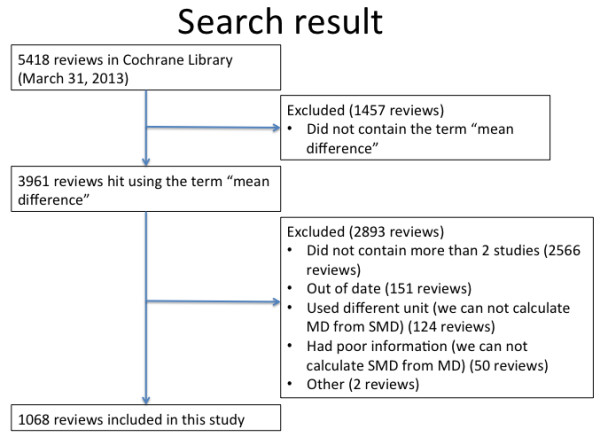
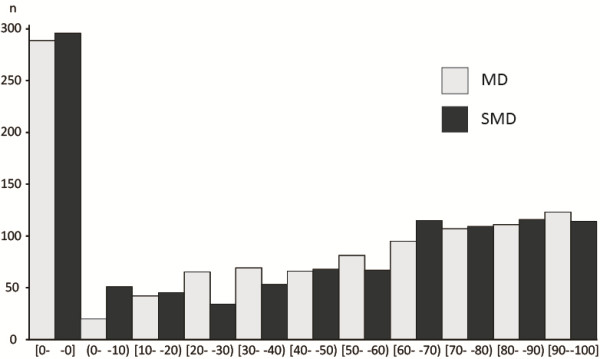
BACKGROUND: To examine empirically whether the mean difference (MD) or the standardised mean difference (SMD) is more generalizable and statistically powerful in meta-analyses of continuous outcomes when the same unit is used. METHODS: From all the Cochrane Database (March 2013), we identified systematic reviews that combined 3 or more randomised controlled trials (RCT) using the same continuous outcome. Generalizability was assessed using the I-squared (I2) and the percentage agreement. The percentage agreement was calculated by comparing the MD or SMD of each RCT with the corresponding MD or SMD from the meta-analysis of all the other RCTs. The statistical power was estimated using Z-scores. Meta-analyses were conducted using both random-effects and fixed-effect models. RESULTS: 1068 meta-analyses were included. The I2 index was significantly smaller for the SMD than for the MD (P < 0.0001, sign test). For continuous outcomes, the current Cochrane reviews pooled some extremely heterogeneous results. When all these or less heterogeneous subsets of the reviews were examined, the SMD always showed a greater percentage agreement than the MD. When the I2 index was less than 30%, the percentage agreement was 55.3% for MD and 59.8% for SMD in the random-effects model and 53.0% and 59.8%, respectively, in the fixed effect model (both P < 0.0001, sign test). Although the Z-scores were larger for MD than for SMD, there were no differences in the percentage of statistical significance between MD and SMD in either model. CONCLUSIONS: The SMD was more generalizable than the MD. The MD had a greater statistical power than the SMD but did not result in material differences.
Overview
The claims and statistics of this paper haven’t been checked yet.
Free: it reads the open-access text and checks the first 5 claims that cite a source we can check. Create a free account to check every claim.
Integrity signals
Registry
Cites
Statistics
Figures
Verification
Claims the paper makes
The claims and statistics of this paper haven’t been checked yet.
Free: it reads the open-access text and checks the first 5 claims that cite a source we can check. Create a free account to check every claim.
Claims other papers make about this one
Each is checked against this paper’s own text: does it say what the citing paper says it does?
The cited source doesn’t support the claim as written.
In the citing paper
“Nine articles were include: 4 RCTs [44–45, 50–51] and 5 cohort studies [46–49, 55]”
From Bright light therapy in the treatment of patients with bipolar disorder: A systematic review and meta-analysis (2020) · cites this paper as [49]
Checked by a reasoning model — may be wrong.
Experimental — accuracy not yet measuredThe cited source doesn’t support the claim as written.
In the citing paper
“A total of 7 articles used auxiliary measures: 6 cohort studies [46–49,52–53] and 1 RCT [51].”
From Bright light therapy in the treatment of patients with bipolar disorder: A systematic review and meta-analysis (2020) · cites this paper as [49]
Checked by a reasoning model — may be wrong.
Experimental — accuracy not yet measuredThe source backs part of the claim, not all of it — or backs it for a different population, condition or comparison.
In the citing paper
“Additionally, the SMD is more generalizable and statistically powerful in meta-analyses of continuous outcomes when the same unit is used (Takeshima et al., 2014).”
From Nature-based outdoor activities for mental and physical health: Systematic review and meta-analysis (2021) · cites this paper as Takeshima et al., 2014
Experimental — accuracy not yet measuredThe check wasn’t confident either way, so it gives no verdict — never disputed.
In the citing paper
“A total of 7 cohort studies were included [46–49,52,53,55], and a sensitivity analysis was conducted because of the high heterogeneity. This decreased after omitting Sikkens et al. (I2 = 26%, P = 0.24).”
From Bright light therapy in the treatment of patients with bipolar disorder: A systematic review and meta-analysis (2020) · cites this paper as [49]
Experimental — accuracy not yet measured
Self-check
Percentages, sums and reported differences re-computed from the paper’s own numbers.
The self-check needs the paper’s full text.
Citations
Cites
Statistical Power Analysis for the Behavioral Sciences
Muller, K. (1989) · Technometrics · doi:10.1080/00401706.1989.10488618 · Cited by 99,167
Statistical power analysis for the behavioral sciences
(1990) · Computers, Environment and Urban Systems · doi:10.1016/0198-9715(90)90050-4 · Cited by 65,269
Measuring inconsistency in meta-analyses
Higgins, J. P. T., Thompson, S. G., Deeks, J. J., & Altman, D. G. (2003) · BMJ · doi:10.1136/bmj.327.7414.557 · Cited by 63,139 · cited 1×
“(i) I(2) index The I(2) index represents the degree of heterogeneity across studies in meta-analyses [13].”
BackgroundMeta-analysis in clinical trials
DerSimonian, R., & Laird, N. (1986) · Controlled Clinical Trials · doi:10.1016/0197-2456(86)90046-2 · Cited by 39,552 · cited 1×
“We calculated two percentage agreement figures for each meta-analysis, using the random-effects model [14] or the fixed-effect model [15] for the meta-analysis.”
MethodHamilton, M. (1960) · Journal of Neurology, Neurosurgery & Psychiatry · doi:10.1136/jnnp.23.1.56 · Cited by 32,817 · cited 1×
“When the outcome is measured using the same patient-reported outcome (PRO) measure, such as the Hamilton Rating Scale for Depression [19], the Short-Form 36 Quality of Life Questionnaire [20], or the Severity Scoring of Atopic Dermatitis [21], even though all the outcomes are measured in the same unit, the superior in…”
MethodSF-36 health survey: Manual and interpretation guide
Ware, J. (2003) · Medical Entomology and Zoology · Cited by 11,424
Statistical Methods for Meta-Analysis
Wasserman, S., Hedges, L. V., & Olkin, I. (1988) · Journal of Educational Statistics · doi:10.2307/1164953 · Cited by 10,326
Borenstein, M., Hedges, L. V., Higgins, J. P. T., & Rothstein, H. R. (2021) · doi:10.1002/9781119558378 · Cited by 9,799
Cochrane Handbook for Systematic Reviews of Interventions Version 5.0.1. The Cochrane Collaboration
Higgins, J. P. T., Green, S. R., & Higgins, J. P. T. (2008) · Cited by 7,247
Primary, Secondary, and Meta-Analysis of Research
GLASS, G. V. (1976) · Educational Researcher · doi:10.3102/0013189x005010003 · Cited by 4,890 · cited 1×
“Depending on how this SD is calculated, the SMD has several versions such, as Cohen's d [2], Glass's Δ [3], and Hedges' g [4].”
Method
Cited by
Items 101–200 of 386
Burnout among doctors in China through 2020: A systematic review and meta-analysis
Zheng, Q., YANG, K. Y., Zhao, R.-J., Wang, X., Ping, P., Ou, Z.-H., Su, X.-P., Zhang, J., & Qu, M. (2022) · Heliyon · doi:10.1016/j.heliyon.2022.e09821 · Cited by 39
Salehi, M. A., Mohammadi, S., Gouravani, M., Rezagholi, F., & Arévalo, J. F. (2022) · Survey of Ophthalmology · doi:10.1016/j.survophthal.2022.07.006 · Cited by 33
Mao, X., Cheung, K. S., Tan, J. T., Mak, L., Lee, C., Chiang, C., Cheng, H. M., Hui, R. W., Yuen, M., Leung, W. K., et al. (2024) · Gut · doi:10.1136/gutjnl-2023-331701 · Cited by 33
“29 Using competing risk models, we evaluated the association between optimal vs suboptimal glycaemic control and outcomes after adjusting for the aforementioned covariates.”
MethodChen, C., Huang, N., Hu, B., Zhang, M., Yuan, J., & Guo, J. (2024) · GeroScience · doi:10.1007/s11357-024-01446-z · Cited by 33
“In cases where standard deviations were not provided, SDs were calculated from standard errors using a formula recommended in the Cochrane guidelines [38].”
Wang, S., Bressington, D. T., Leung, A. Y. M., Davidson, P. M., & Cheung, D. S. K. (2020) · International Journal of Nursing Studies · doi:10.1016/j.ijnurstu.2020.103643 · Cited by 38
Effectiveness of platelet-rich plasma in partial-thickness rotator cuff tears: a systematic review
Desouza, C., & Shetty, V. (2024) · Journal of ISAKOS Joint Disorders & Orthopaedic Sports Medicine · doi:10.1016/j.jisako.2024.04.010 · Cited by 30
Xiang, X.-N., Wang, Z., Hu, J., Zhang, J.-Y., Li, K., Chen, Q.-X., Xu, F., Zhang, Y.-W., He, H., He, C., et al. (2024) · Journal of Medical Internet Research · doi:10.2196/54876 · Cited by 33
“[36,37].”
Logan, A., Freeman, J. A., Pooler, J., Kent, B., Gunn, H., Billings, S., Cork, E., & Marsden, J. F. (2020) · JBI Evidence Synthesis · doi:10.11124/jbisrir-d-18-00005 · Cited by 34
“Effect sizes were expressed as standardized mean differences (Hedges g) and their 95% confidence intervals calculated for analysis.(41,42) Heterogeneity was assessed statistically using the standard chi-squared and I(2) tests.”
MethodMachado, P., Pimenta, S., Oliveiros, B., Ferreira, J. P., Martins, R. A., & Cruz, J. (2021) · Cancers · doi:10.3390/cancers13194975 · Cited by 31
“(CI), to allow comparison of data from different instruments [51].”
BackgroundAhmed, S., Haddad, C., Subramaniam, S., Khattab, S., & Kumbhare, D. A. (2018) · Pain Medicine · doi:10.1093/pm/pny278 · Cited by 28
Khorasani, F., Iranifard, E., & Roudsari, R. L. (2025) · BMC Public Health · doi:10.1186/s12889-025-23314-x · Cited by 31
“The standardized mean differences (SMD), also known as Cohen’s d, is used when different studies use different instruments/tools to measure the same outcomes [41, 42].”
Deep Learning in Personalization of Cardiovascular Stents
Lee, Y., Veerubhotla, K., Jeong, M. H., & Lee, C. H. (2019) · Journal of Cardiovascular Pharmacology and Therapeutics · doi:10.1177/1074248419878405 · Cited by 30
“There should be an advanced cloud-based platform equipped with properties such as advanced data-driven search, on-the-fly predictions, and organized discussion boards, yet to be developed for software engineers to quickly explore, reuse, and share DL models for biomedical applications.(35)”
BackgroundJohansen, T. E. B., Sørensen, L., Kolskår, K. K., Strøm, V., & Wouda, M. F. (2023) · Journal of Rehabilitation and Assistive Technologies Engineering · doi:10.1177/20556683231183639 · Cited by 33
“8 represents a large effect.(24) Three of the analyses were performed with SMD because the included studies utilized different Johansen et al.”
MethodSyoc, E. P. V., Damani, J. J., DiMattia, Z. S., Ganda, E., & Rogers, C. J. (2023) · Advances in Nutrition · doi:10.1016/j.advnut.2023.10.009 · Cited by 31
“Cohen ’ s d effect size is additionally reported for generalizability [34].”
BackgroundGomez, L., Chaumet‐Riffaud, P., Noël, N., Lambotte, O., Goujard, C., Durand, E., & Besson, F. L. (2017) · European Journal of Nuclear Medicine and Molecular Imaging · doi:10.1007/s00259-017-3798-x · Cited by 27
MARIA, B. D., Parati, M., Vecchia, L. A. D., & Rovere, M. T. L. (2023) · Clinical Autonomic Research · doi:10.1007/s10286-023-00969-3 · Cited by 33
“The effect measures were estimated through the standardized mean difference (SMD) based on Hedges’ g , along with the 95% confidence interval (CI) [12, 14].”
MethodLiu, Y., Ma, W., Zuo, Y., & Li, Q. (2024) · Anaesthesia Critical Care & Pain Medicine · doi:10.1016/j.accpm.2024.101453 · Cited by 38
Álvares, T. S., de Oliveira, G. V., Volino‐Souza, M., Conte‐Júnior, C. A., & Murias, J. M. (2021) · Critical Reviews in Food Science and Nutrition · doi:10.1080/10408398.2021.1884040 · Cited by 28
Effects of low-level light therapy on dentin hypersensitivity: a systematic review and meta-analysis
Shan, Z., Ji, J., McGrath, C. P. J., Gu, M., & Yang, Y. (2021) · Clinical Oral Investigations · doi:10.1007/s00784-021-04183-1 · Cited by 26
Park, S., Shin, J., Park, J., & Choi, W. S. (2021) · International Journal of Environmental Research and Public Health · doi:10.3390/ijerph182010583 · Cited by 30
“CI, confidence interval; FEM, fixed effects model; SBP, systolic blood pressure; WMD, weighted mean difference.”
BackgroundResultInfluentialKadah, S., Soh, S., Morin, M., Schneider, M. E., Heron, E. L., & Frawley, H. (2023) · The Journal of Sexual Medicine · doi:10.1093/jsxmed/qdac002 · Cited by 28
González, A., Valero‐Breton, M., Huerta-Salgado, C., Achiardi, O. A., Simón, F., & Cabello‐Verrugio, C. (2021) · European Journal of Translational Myology · doi:10.4081/ejtm.2021.9630 · Cited by 31
Yang, G., Li, W., Klupp, N. L., Cao, H., Liu, J., Bensoussan, A., Kiat, H., Karamacoska, D., & Chang, D. (2022) · BMC Complementary Medicine and Therapies · doi:10.1186/s12906-021-03482-0 · Cited by 28
“Since the instruments for anxiety and depression used in included studies might not be universally known for many clinicians and patients, SMD might be more interpretable than MD [84].”
BackgroundLiu, Z., Amer, F. M. A., Xiao, M., Xu, C., Furuya‐Kanamori, L., Hong, H., Siegel, L. K., & Lin, L. (2023) · BMC Medicine · doi:10.1186/s12916-023-02823-9 · Cited by 30
“The presence of betweenstudy normality depends on the choice of effect measures because effect measures are assumed exchangeable across studies [6, 21, 22], and the presence of outlying studies could make this exchangeability assumption questionable [23, 24].”
BackgroundRoenz, D., Broccolo, J., Brust, S., Billings, J., Perrott, A., Hagadorn, J., Cook, C. E., & Cleland, J. (2017) · Journal of Manual & Manipulative Therapy · doi:10.1080/10669817.2017.1398923 · Cited by 26
“For analysis of continuous data we selected to use the standardized mean differences (SMD) with the 95% confidence interval (95% CI) since it is more generalizable [27] and allows for the assessment of outcomes that used different scales.”
MethodMa, S., Hu, S., Liang, H., Xiao, Y., & Tan, H. (2018) · Diabetes/Metabolism Research and Reviews · doi:10.1002/dmrr.3108 · Cited by 29
“Multiple sensitivity analyses were performed to assess the robustness of the findings, which were based on (a) limiting the distinction point of BF measure to 4 to 14 weeks, (b) use of leave‐ one‐out method to evaluate whether any single study dominated the findings, (c) use of an Inverse Variance fixed‐effects model…”
MethodCraven, J., Desbrow, B., Sabapathy, S., Bellinger, P., McCartney, D., & Irwin, C. (2021) · Sports Medicine - Open · doi:10.1186/s40798-020-00297-0 · Cited by 24
“Firstly, different effect estimates were used between studies; we reported the mean difference for ease of interpretation [70], whereas Margolis et al.”
MethodVinod, P., Thatikonda, N. S., Malo, P. K., Bhaskarapillai, B., Arumugham, S. S., & Reddy, Y. C. J. (2024) · Asian Journal of Psychiatry · doi:10.1016/j.ajp.2024.103962 · Cited by 25
Wan, K. H.-N., Ip, C. K. Y., Kua, W. N., Chow, V. W. S., Chong, K. K. L., Young, A. L., Cheng, G. P. M., & Jhanji, V. (2021) · Clinical and Experimental Ophthalmology · doi:10.1111/ceo.13918 · Cited by 24
“SMD is more generalisable and less heterogeneous than the mean difference with no difference in statistical power.(15) SMD values of <0.”
BackgroundNcho, C. M., Jeong, C.-M., Gupta, V., & Goel, A. (2021) · Environmental Science and Pollution Research · doi:10.1007/s11356-021-13855-0 · Cited by 24
Umeoguaju, F. U., Ephraim-Emmanuel, B. C., Uba, J. O., Bekibele, G., Chigozie, N., & Orisakwe, O. E. (2021) · Frontiers in Immunology · doi:10.3389/fimmu.2021.550670 · Cited by 24
“The random effect model was assumed to accommodate the different experimental models that generated the investigated effects (36).”
BackgroundMethodInfluentialLeucht, S., Siafis, S., Engel, R. R., Schneider‐Thoma, J., Bighelli, I., Cipriani, A., Furukawa, T. A., & Davis, J. M. (2021) · Schizophrenia Bulletin · doi:10.1093/schbul/sbab094 · Cited by 23
Self-citationShariat, A., Najafabadi, M. G., Fard, Z. S., Nakhostin-Ansari, A., & Shaw, B. S. (2022) · Multiple Sclerosis and Related Disorders · doi:10.1016/j.msard.2022.104107 · Cited by 26
Lipoprotein (a) Levels and Abdominal Aortic Aneurysm. A Systematic Review and Meta-analysis
Oikonomou, E. K., Lampsas, S., Pantelidis, P., Theofilis, P., Grammatopoulos, K., Marathonitis, A., Vavuranakis, M., Siasos, G., Tousoulis, D., & Vavuranakis, Μ. (2022) · Current Pharmaceutical Design · doi:10.2174/1381612829666221124110920 · Cited by 23
Warming nondormant tree roots advances aboveground spring phenology in temperate trees
Malyshev, A. V., Blume‐Werry, G., Spiller, O., Smiljanić, M., Weigel, R., Kolb, A., Nze, B. Y., Märker, F., Sommer, F. C. J., Kinley, K., et al. (2023) · New Phytologist · doi:10.1111/nph.19304 · Cited by 23
Coelho, M., Ela, N., Garvin, A., Cox, C., Sloan, W., Palaima, M., & Cleland, J. A. (2019) · Physical Therapy Reviews · doi:10.1080/10833196.2019.1572963 · Cited by 28
“confidence interval (95% CI) due to generalizability [21] and the ability to assess similar outcomes that were measured using different scales.”
BackgroundWoods, F. A., & Ruscher, J. B. (2020) · British Journal of Social Psychology · doi:10.1111/bjso.12405 · Cited by 27
Lim, W. H., Ng, C. H., Ow, Z. G. W., Ho, O. T. W., Tay, P. W. L., Wong, K. L., Tan, E. X. X., Tang, S. Y., Teo, C. M., & Muthiah, M. D. (2021) · Transplant International · doi:10.1111/tri.13863 · Cited by 29
“(WMD: 0.092, CI: 0.16 to 0.026, P = 0.006 and WMD: 0.11, CI: 0.17 to 0.043, P = 0.001) The diagnosis of osteopenia and osteoporosis pre-transplant were also sig- nificant risk factors of incident fractures.”
MethodInfluentialBatista, L., Cidrini, I. A., Prados, L. F., Cruz, A. A., Torrecilhas, J. A., Siqueira, G. R., & de Resende, F. D. (2021) · Animal Feed Science and Technology · doi:10.1016/j.anifeedsci.2021.115182 · Cited by 26
Sarathy, H., Pramanik, V., Kahn, J. S., Abramowitz, M. K., Meier, K. M., Kishore, P., & Melamed, M. L. (2015) · International Urology and Nephrology · doi:10.1007/s11255-015-0909-0 · Cited by 23
“The SMD is the difference in means between the two groups divided by studyspecific standard deviation [16, 19].”
BackgroundPeng, L., Wang, K., Zeng, Y., Wu, Y., Si, H., & Shen, B. (2021) · Frontiers in Medicine · doi:10.3389/fmed.2021.779019 · Cited by 26
“The standardized mean difference (SMD) was used to calculate the total effect if different scales were utilized among the studies (35).”
MethodMetelski, N., Gu, Y., Quinn, L., Friel, K. M., & Gordon, A. M. (2023) · Developmental Medicine & Child Neurology · doi:10.1111/dmcn.15720 · Cited by 25
“51 When a decreased score indicated improvement on an outcome measure (e.g. spasticity measures), results were reverse-scored in RevMan.”
ResultAlshehri, M. A., Alzahrani, H. A., van den Hoorn, W., Klyne, D. M., Vette, A. H., Hendershot, B. D., Roberts, B. W. R., Larivière, C., Barbado, D., Vera-García, F. J., et al. (2024) · PLoS ONE · doi:10.1371/journal.pone.0296968 · Cited by 26
“Overall and individual study (observed) effect sizes were estimated using standardised mean differences (SMDs, Hedge’s g), since different studies used different units to measure the same outcome [62].”
MethodDonadio, J. P., De-Sousa, K. T., Torres, R. D. N. S., Alves, T. C., Hötzel, M. J., & Deniz, M. (2024) · Journal of Dairy Science · doi:10.3168/jds.2024-25159 · Cited by 26
“The SMD expresses the effect size in standard deviation units and is generalizable, while the WMD expresses the effect size in the same units as the original measurement and is more interpretable (Takeshima et al., 2014).”
BackgroundDexmedetomidine Combined With Intravenous Anesthetics in Electroconvulsive Therapy
Li, X., Tan, F., Cheng, N., Guo, N., Zhong, Z., Hei, Z., Zhu, Q., & Zhou, S. (2017) · Journal of Ect · doi:10.1097/yct.0000000000000398 · Cited by 21
A meta-analysis of serum lipid profiles in premature ovarian insufficiency
Wang, Z., Fang, L., Wu, Z., Li, Y., Jia, Q., Cheng, J., & Sun, Y. (2021) · Reproductive BioMedicine Online · doi:10.1016/j.rbmo.2021.09.018 · Cited by 21
Jong, F. J. X., Ooi, D. J., & Teoh, S. L. (2023) · International Journal of Dental Hygiene · doi:10.1111/idh.12725 · Cited by 31
Kwon, Y. R., Hwang, Y. N., & Kim, S. M. (2022) · Journal of Ophthalmology · doi:10.1155/2022/3570399 · Cited by 21
“Hydro-phobic acrylic IOLs had relatively lower ACO values than silicone IOLs ([SMD] � 0.34), indicating an intermediate effect size (0.2 ≤ [SMD] 0.5) [42].”
InfluentialKhatlani, K., Njike, V., & Costales, V. C. (2019) · Metabolic Syndrome and Related Disorders · doi:10.1089/met.2019.0049 · Cited by 20
“32 The significance level was set at 5% ( P 0.05).”
InfluentialAmbrosini, E., Parati, M., Ferriero, G., Pedrocchi, A., & Ferrante, S. (2020) · Clinical Rehabilitation · doi:10.1177/0269215520938423 · Cited by 25
Khene, Z., Dosin, G., Peyronnet, B., Gasmi, A., Doumerc, N., Ouzaïd, I., Pradère, B., Brassier, M., Roumiguié, M., Mathiéu, R., et al. (2021) · International Journal of Clinical Oncology · doi:10.1007/s10147-021-01871-6 · Cited by 22
Lim, W. S., Teoh, S. E., Tang, A. S. P., Tan, B. J. M., Lee, J. Y., Yau, C. E., Thumboo, J., & Ng, Q. X. (2024) · Diabetes & Metabolic Syndrome Clinical Research & Reviews · doi:10.1016/j.dsx.2024.103001 · Cited by 24
Attenuation of maternal weight gain impacts infant birthweight: systematic review and meta-analysis
Bennett, C., Walker, R., Blumfield, M., Ma, J., Wang, F., Wan, Y., Gwini, S. M., & Truby, H. (2018) · Journal of Developmental Origins of Health and Disease · doi:10.1017/s2040174418000879 · Cited by 24
“Actual mean difference meta-analyses were conducted on birthweight and birth length to enable ease of interpretation.(50) Risk ratio meta-analyses were conducted for dichotomous data which includes the prevalence of LGA, SGA, macrosomia and LBW.”
MethodHong, C., Wang, Y., Wang, Y., Pushpanadh, S., Stephenson, R. S., Keum, B. T., Goldbach, J. T., Graham, S. M., & Holloway, I. W. (2024) · Trauma Violence & Abuse · doi:10.1177/15248380241275976 · Cited by 23
“We defined < 40%, 40% to 75%, and > 75% as minor, moderate, and considerable levels of heterogeneity, respectively, as suggested in the literature (Takeshima et al., 2014).”
Mankowski, M. A., Bae, S., Strauss, A. T., Lonze, B. E., Orandi, B. J., Stewart, D. E., Massie, A. B., McAdams‐DeMarco, M., Oermann, E. K., Habal, M. V., et al. (2024) · American Journal of Transplantation · doi:10.1016/j.ajt.2024.11.008 · Cited by 22
Khan, Z. A., Sumsuzzman, D. M., Choi, J., & Hong, Y. (2022) · Ageing Research Reviews · doi:10.1016/j.arr.2022.101593 · Cited by 19
“, knockout (KO) model and pharmacological inhibition, mixed rat and mice population, and method of hypoxia, etc) (Lin and Aloe, 2021; Takeshima et al., 2014).”
MethodNajafabadi, M. G., Shariat, A., Dommerholt, J., Hakakzadeh, A., Nakhostin-Ansari, A., Selk-Ghaffari, M., Ingle, L., & Cleland, J. A. (2021) · Topics in Stroke Rehabilitation · doi:10.1080/10749357.2021.1929011 · Cited by 19
“Outcomes based on this method are more generalizable as they can assess the same domain assessed in different studies with different scales.(16) Fixed effects models were used to confirm the diversity between studies and their impact on the intervention.”
MethodOrzuna‐Orzuna, J. F., Lara-Bueno, A., Martínez, G. D. M., Miranda‐Romero, L. A., Silva, G. V., de la Torre-Hernández, M. E., Sánchez-López, N., & Hernández-García, P. A. (2024) · Dairy · doi:10.3390/dairy5030036 · Cited by 21
“According to Takeshima et al. [44], WMD have greater statistical power and are easier to interpret than other ES measures, which makes their use advisable.”
BackgroundBonacina, D., Tosatto, D., Ugolini, A., Rossi, F., Corno, I., Pellicciari, L., Perin, C., Colón-Semenza, C., & Piscitelli, D. (2024) · Clinical Biomechanics · doi:10.1016/j.clinbiomech.2024.106359 · Cited by 23
Law, L. S., Lo, E. A., Chan, C. C.-C., & Gan, T. J. (2018) · Canadian Journal of Anesthesia/Journal canadien d anesthésie · doi:10.1007/s12630-018-1163-6 · Cited by 18
Nuamah, E., Ditengou, J. I. C. P., Hirwa, F., Cheon, I., Chae, B., & Choi, N. (2024) · Antioxidants · doi:10.3390/antiox13020236 · Cited by 26
“SMD values of <0.2, 0.2 < SMD < 0.7, and >0.7 indicated small, moderate, and high effects, respectively [55,56].”
InfluentialBhoyroo, R., Hands, B. P., Steenbergen, B., & Wigley, C. A. (2019) · Child Neuropsychology · doi:10.1080/09297049.2019.1695768 · Cited by 18
“It has been shown that MD facilitates interpretability while SMD is better in terms of generalizability (Takeshima et al., 2014).”
BackgroundGu, W.-T., Zhang, L., Wu, F., & Wang, S. (2025) · Maturitas · doi:10.1016/j.maturitas.2025.108219 · Cited by 21
Matias, J., Belletier, C., Izaute, M., Lutz, M., & Silvert, L. (2021) · Quarterly Journal of Experimental Psychology · doi:10.1177/17470218211064903 · Cited by 22
“As different tests, and thus absolute measures, could be used across studies to evaluate WM capacities, we expressed the meta-analytic effect size as a standardised mean difference (SMD; Murad et al., 2019; Takeshima et al., 2014).”
MethodKamel, A. M., & Farag, M. A. (2022) · Journal of Medicinal Food · doi:10.1089/jmf.2022.0025 · Cited by 17
“35 In the absence of discrepancy between both results, only results for SMD were reported.”
Fakontis, C., Iakovidis, P., Lytras, D., Kasimis, K., Koutras, G., Ntinou, S. R., Kottaras, A., Chatziprodromidou, I. P., Chatzikonstantinou, P., & Apostolou, T. S. (2023) · Journal of Back and Musculoskeletal Rehabilitation · doi:10.3233/bmr-220408 · Cited by 24
“…the NPRS scale or the VAS, we calculated the mean difference between the PNE group and the DN group and converted it to a Standardized Mean Difference (SMD) as it has been reported that this allows the evaluation of studies that use different outcome measures to evaluate the same outcome [35].”
Deegan, O., Fullen, B. M., Segurado, R., & Doody, C. (2024) · BMC Musculoskeletal Disorders · doi:10.1186/s12891-024-07274-8 · Cited by 20
“The SMD is more generalisable than the mean difference (MD), and has similar statistical power as the MD [39].”
BackgroundMethodHeimke, F., Furukawa, Y., Siafis, S., Johnston, B. C., Engel, R. R., Furukawa, T. A., & Leucht, S. (2024) · BMJ Mental Health · doi:10.1136/bmjment-2023-300978 · Cited by 19
“10 The MD has been shown to be slightly less generalisable than the SMD. 19 It is possible that, if the MD represents natural units such as weight or a laboratory value instead of a 0–10 pain score as in our survey, it may be interpreted more correctly than SMD. More-over, we must remember that in the current survey e…”
Self-citationZhang, S., Ma, X., Xu, H., & Lu, J. (2024) · Journal of Managerial Psychology · doi:10.1108/jmp-11-2022-0588 · Cited by 23
Habibi, S., Talebi, S., Khosravinia, D., & Mohammadi, H. (2025) · Clinical Nutrition · doi:10.1016/j.clnu.2025.02.011 · Cited by 17
Karimi, M., Pirzad, S., Pourfaraji, S. M., Sedgi, F. M., Darouei, B., Amani‐Beni, R., Kazemi, K., & Rabiee, R. (2025) · Complementary Therapies in Medicine · doi:10.1016/j.ctim.2025.103174 · Cited by 19
Rosenberger, K. J., Xu, C., & Lin, L. (2021) · Journal of Evaluation in Clinical Practice · doi:10.1111/jep.13578 · Cited by 18
“Researchers may have different opinions about the choices of effect measures, such as the mean difference versus standardized mean difference for continuous outcomes and the odds ratio versus relative risk versus risk difference for binary outcomes.(47-52) The assessment of their appropriateness should be performed on…”
BackgroundBlears, E. E., Elias, J. K., Tapking, C., Porter, C. C., & Rontoyanni, V. G. (2021) · Journal of Clinical Medicine · doi:10.3390/jcm10102193 · Cited by 21
“Yet, changes in 6 MWT are more readily interpretable across studies since pooled effect sizes remain in the original units of measure, whereas the heterogeneity of graded treadmill protocols requires mean differences from different studies to be normalized to SD which are clinically less meaningful [44,45].”
BackgroundSevoflurane in electroconvulsive therapy: A systematic review and meta-analysis of randomised trials
Aoki, N., Suwa, T., Kawashima, H., Tajika, A., Sunada, N., Shimizu, T., Murai, T., Kinoshita, T., & Takekita, Y. (2021) · Journal of Psychiatric Research · doi:10.1016/j.jpsychires.2021.06.030 · Cited by 22
Self-citationFernando, M. E., Seng, L. S. D., Drovandi, A. D., Crowley, B. J., & Golledge, J. (2022) · Frontiers in Endocrinology · doi:10.3389/fendo.2022.848695 · Cited by 22
Paravertebral Block for Inguinal Herniorrhaphy
Law, L. S., Tan, M., Bai, Y., Miller, T. E., Li, Y., & Gan, T. J. (2016) · Survey of Anesthesiology · doi:10.1097/sa.0000000000000213 · Cited by 17
Trager, R. J., Baumann, A. N., Rogers, H., Tidd, J. L., Orellana, K., Preston, G., & Baldwin, K. D. (2024) · Journal of Manual & Manipulative Therapy · doi:10.1080/10669817.2024.2316420 · Cited by 18
Orzuna‐Orzuna, J. F., Godina-Rodríguez, J. E., Garay-Martínez, J. R., Rivera, L. D. G., Maldonado‐Jáquez, J. A., & Lara-Bueno, A. (2024) · Fermentation · doi:10.3390/fermentation10060273 · Cited by 20
“According to some authors [41,42], the degree of heterogeneity obtained with the I 2 statistic can be classified as follows: no heterogeneity (0 < I 2 ≤ 25%), low (25% < I 2 ≤ 50%), moderate (50% < I 2 ≤ 75%), and high heterogeneity (I 2 > 75%).”
BackgroundAlenezi, S. A., Elkmeshi, N., Alanazi, A., Alanazi, S. T. A., Khan, R. N., & Amer, S. A. K. S. (2024) · Journal of Clinical Medicine · doi:10.3390/jcm13164934 · Cited by 19
Larsen, M. B., Stokholm, R. N., Kirkegaard, P., Laursen, H. S., Gabel, P., & Andersen, B. S. (2021) · Patient Education and Counseling · doi:10.1016/j.pec.2021.07.035 · Cited by 18
Mariano, I. M., Amaral, A. L., Ribeiro, P. A. B., & Puga, G. M. (2023) · Scientific Reports · doi:10.1038/s41598-023-38041-9 · Cited by 21
Orzuna‐Orzuna, J. F., Godina-Rodríguez, J. E., Garay-Martínez, J. R., & Lara-Bueno, A. (2024) · Animals · doi:10.3390/ani14071075 · Cited by 21
“WMDs were chosen because, according to Takeshima et al. [41], they improve the interpretability of the results.”
MethodMultiple Treatment Comparisons for Large and Massive Rotator Cuff Tears: A Network Meta-analysis
Maillot, C., Martellotto, A., Demezon, H., Harly, É., & Huec, J. L. (2019) · Clinical Journal of Sport Medicine · doi:10.1097/jsm.0000000000000786 · Cited by 16
“Thus, studies for which the difference in mean is in the same proportion of the SD will have the same SMD, regardless of the actual scales used to make the measurements.(16)”
ResultMogavi, R. H., Haq, E.-U., Gujar, S., Hui, P., & Ma, X. (2022) · Proceedings of the ACM on Human-Computer Interaction · doi:10.1145/3555553 · Cited by 20
Rodrigues, R., Klein, K. D., Pompeo, K. D., & Vaz, M. A. (2022) · Journal of Electromyography and Kinesiology · doi:10.1016/j.jelekin.2022.102657 · Cited by 18
Arroyo-Fernández, R., Menchero, R., Pozuelo‐Carrascosa, D. P., Romay‐Barrero, H., Fernández-Maestra, A., & Martínez-Galán, I. (2024) · Journal of Clinical Medicine · doi:10.3390/jcm13041105 · Cited by 21
“The SMD is used to measure the magnitude of the effect, and values of 1.74 and 0.63 are considered to represent a large and moderate effect [41], respectively.”
MethodInfluentialDodamani, M. H., Kumar, S. C., Bhattacharjee, S., Barnabas, R., Kumar, S., Lila, A. R., Memon, S. S., Karlekar, M. P., Patil, V. A., & Bandgar, T. (2024) · Archives of Endocrinology and Metabolism · doi:10.20945/2359-4292-2023-0242 · Cited by 14
“2 and 3 (21).”
Orzuna‐Orzuna, J. F., Godina-Rodríguez, J. E., Garay-Martínez, J. R., Reséndiz‐González, G., Cancino, S. J., & Lara-Bueno, A. (2024) · Agriculture · doi:10.3390/agriculture14071119 · Cited by 15
Ângelo‐Dias, M., Martins, C. G., Dias, S. S., Borrego, L. M., & de Lima, J. J. A. V. (2022) · International Journal of Molecular Sciences · doi:10.3390/ijms232315200 · Cited by 15
“Meta-analyses were conducted using standardised mean differences (SMDs) and 95% confidence intervals (CIs) to allow a comparison of data from different instruments [36].”
MethodLipoprotein(a) is associated with premature coronary artery disease: a meta-analysis
Papathanasiou, K. A., Kazantzis, D., & Rallidis, L. S. (2023) · Coronary Artery Disease · doi:10.1097/mca.0000000000001233 · Cited by 14
Strong, A., Arumugam, A., Tengman, E., Röijezon, U., & Häger, C. K. (2022) · Journal of Orthopaedic Surgery and Research · doi:10.1186/s13018-022-03033-4 · Cited by 14
“The mean difference (MD) was used because all relevant outcome measures were provided in the same unit (degrees) [16].”
MethodMentessidou, A., Djendov, F., Long, A., & Jackson, C. R. (2023) · Annals of Surgery · doi:10.1097/sla.0000000000006154 · Cited by 13
“Standardized mean difference (SMD) with 95% CI was used as effect size measure for continuous variables to allow more objective and generalizable interpretation 18 (SMD < 0.5: small; 0.5 – 0.8: medium; > 0.8: large) 19 and relative risk with 95% CI as effect size measure for categorical variables.”
MethodInfluentialTanner, V., Millet, G. P., & Bourdillon, N. (2024) · Sports Medicine - Open · doi:10.1186/s40798-024-00768-8 · Cited by 19
“Nevertheless, the SMD is more generalizable than the mean difference [148].”
BackgroundJia, R., Zhou, M., Tuttle, C. S. L., & Maier, A. B. (2019) · European Journal of Trauma and Emergency Surgery · doi:10.1007/s00068-019-01271-6 · Cited by 13
George, S., Maiti, R., Mishra, A., Mishra, B. R., & Jena, M. (2022) · Journal of Psychopharmacology · doi:10.1177/02698811221078758 · Cited by 14
“We have calculated SMD as it is preferred over mean difference as a summary measure when generalizability matters (Takeshima et al., 2014).”
MethodMegaritis, D., Hume, E., Chynkiamis, N., Buckley, C., Polhemus, A. M., Watz, H., Troosters, T., & Vogiatzis, I. (2023) · ERJ Open Research · doi:10.1183/23120541.00409-2023 · Cited by 18
Saramago, P., Woods, B. S., Weatherly, H. L. A., Manca, A., Sculpher, M., Khan, K., Vickers, A. J., & MacPherson, H. (2016) · BMC Medical Research Methodology · doi:10.1186/s12874-016-0224-1 · Cited by 14
Ye, X., Zeng, F., Wang, Y., Ding, R., Zhao, M., Zhu, D., & He, P. (2023) · Psychiatric Quarterly · doi:10.1007/s11126-023-10029-8 · Cited by 15
Extracorporeal Shockwave Therapy for Greater Trochanteric Pain Syndrome
Rhim, H. C., Shin, J., Beling, A. G., Guo, R., Pan, X., Afunugo, W., Ruiz, J., Andrew, M. N., Kim, J., & Tenforde, A. S. (2024) · JBJS Reviews · doi:10.2106/jbjs.rvw.24.00091 · Cited by 12
Erector spinae plane block for laparoscopic surgeries: a systematic review and meta-analysis
Oraee, S., Firouzabadi, S. R., Mohammadi, I., Alinejadfard, M., Golsorkh, H., & Hatami, S. (2024) · BMC Anesthesiology · doi:10.1186/s12871-024-02775-4 · Cited by 12
“The mean difference could not be applied because the pain scores were reported using different scales [20].”
Metadata
- Authors
- Takeshima, N., Sozu, T., Tajika, A., Ogawa, Y., Hayasaka, Y., & Furukawa, T. A.
- Affiliations
- Kyoto University (JP)
- Corresponding author
- Takeshima, Nozomi
- Venue
- BMC Medical Research Methodology
- Published
- 2014-02-21
- Volume
- 14
- Issue
- 1
- Pages
- 30-30
- ISSN
- 1471-2288 (ISSN-L)
- PMC
- PMC3936842
- OpenAlex
- W2127130842
- Cited by
- 387
- References
- 29
- Citations by year
- 2026: 37 · 2025: 39 · 2024: 64 · 2023: 54 · 2022: 46 · 2021: 61 · 2020: 29 · 2019: 17 · 2018: 13 · 2017: 12 · 2016: 12 · 2015: 2 · 2014: 1
- FWCI
- 8.82
- Type
- journal article
- Language
- en
- Open access
- gold
- doi.org
- Licence
- Locations
- BMC Medical Research Methodology (publishedVersion, cc-by)
- Europe PMC (PubMed Central) (publishedVersion, cc-by)
- PubMed Central (publishedVersion, cc-by)
- PubMed (publishedVersion)
- Institutional Repositories DataBase (IRDB) (submittedVersion)
- Kyoto University Research Information Repository (Kyoto University) (submittedVersion, cc-by)
- Topics
- Social Sciences › Decision Sciences › Statistics, Probability and Uncertainty › Meta-analysis and systematic reviews
- Social Sciences › Sociology and Political Science › Delphi Technique in Research
- Physical Sciences › Mathematics › Statistics and Probability › Statistical Methods in Clinical Trials
- Keywords
- mean difference, standardized mean difference, effect size reporting, continuous outcomes, generalizability, statistical power, heterogeneity, random effects models, fixed effects model, randomized controlled trials
- MeSH terms
- Data Interpretation, Statistical, Humans, Random Allocation, Randomized Controlled Trials as Topic, Outcome Assessment, Health Care
About these checks
Registry, retraction, Cites and statistics results are computed, not judged, with one exception: a printed reference that no index lists is read once by a model before it counts as a citation error. Claims are extracted by a model and kept only when their quote appears verbatim in the text; each cited source is then checked, with a model’s help, for whether it says what the claim relies on. Those verdicts can be wrong — read the claim’s quote and the cited source before relying on one.
Statistics and arithmetic are recomputed, not judged.
Confidence bands are shown only for fields calibrated on our annotated test set. None is calibrated yet, so no band is shown.
What counts as a claim ›How we measure confidence ›How we check this ›
Are you an author, or do you see a problem with this page? Request a review
Data sources
Bibliographic data: Semantic Scholar, OpenAlex, Crossref.
Contains information from the Semantic Scholar Academic Graph Datasets, made available under the ODC Attribution License (ODC-BY 1.0).
Semantic Scholar’s data is described in: Kinney, R., et al. (2023). The Semantic Scholar Open Data Platform. arXiv:2301.10140.
