

Which is more generalizable, powerful and interpretable in meta-analyses, mean difference or standardized mean difference?
Open accessThe DOI matches its Crossref record; 28 of the 29 references it cites were found in a registry or an index.
Abstract
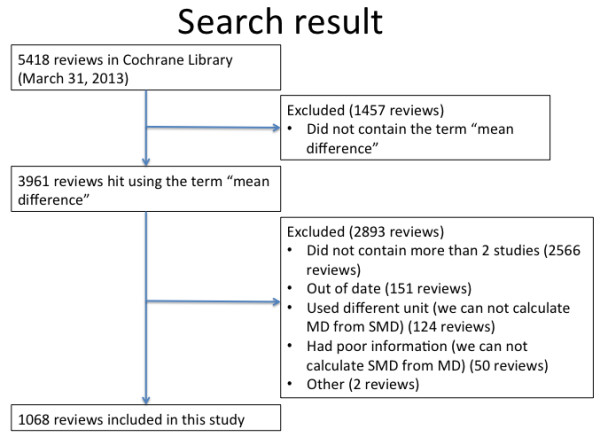
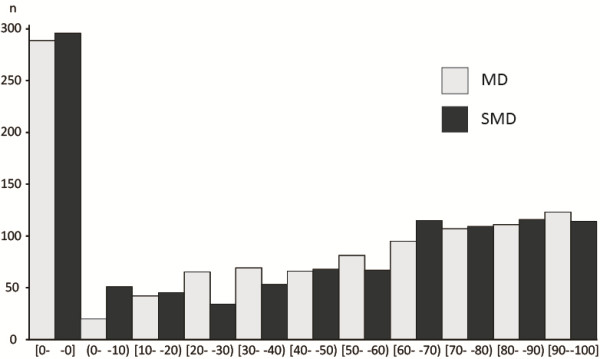
BACKGROUND: To examine empirically whether the mean difference (MD) or the standardised mean difference (SMD) is more generalizable and statistically powerful in meta-analyses of continuous outcomes when the same unit is used. METHODS: From all the Cochrane Database (March 2013), we identified systematic reviews that combined 3 or more randomised controlled trials (RCT) using the same continuous outcome. Generalizability was assessed using the I-squared (I2) and the percentage agreement. The percentage agreement was calculated by comparing the MD or SMD of each RCT with the corresponding MD or SMD from the meta-analysis of all the other RCTs. The statistical power was estimated using Z-scores. Meta-analyses were conducted using both random-effects and fixed-effect models. RESULTS: 1068 meta-analyses were included. The I2 index was significantly smaller for the SMD than for the MD (P < 0.0001, sign test). For continuous outcomes, the current Cochrane reviews pooled some extremely heterogeneous results. When all these or less heterogeneous subsets of the reviews were examined, the SMD always showed a greater percentage agreement than the MD. When the I2 index was less than 30%, the percentage agreement was 55.3% for MD and 59.8% for SMD in the random-effects model and 53.0% and 59.8%, respectively, in the fixed effect model (both P < 0.0001, sign test). Although the Z-scores were larger for MD than for SMD, there were no differences in the percentage of statistical significance between MD and SMD in either model. CONCLUSIONS: The SMD was more generalizable than the MD. The MD had a greater statistical power than the SMD but did not result in material differences.
Overview
The claims and statistics of this paper haven’t been checked yet.
Free: it reads the open-access text and checks the first 5 claims that cite a source we can check. Create a free account to check every claim.
Integrity signals
Registry
Cites
Statistics
Figures
Verification
Claims the paper makes
The claims and statistics of this paper haven’t been checked yet.
Free: it reads the open-access text and checks the first 5 claims that cite a source we can check. Create a free account to check every claim.
Claims other papers make about this one
Each is checked against this paper’s own text: does it say what the citing paper says it does?
The cited source doesn’t support the claim as written.
In the citing paper
“Nine articles were include: 4 RCTs [44–45, 50–51] and 5 cohort studies [46–49, 55]”
From Bright light therapy in the treatment of patients with bipolar disorder: A systematic review and meta-analysis (2020) · cites this paper as [49]
Checked by a reasoning model — may be wrong.
Experimental — accuracy not yet measuredThe cited source doesn’t support the claim as written.
In the citing paper
“A total of 7 articles used auxiliary measures: 6 cohort studies [46–49,52–53] and 1 RCT [51].”
From Bright light therapy in the treatment of patients with bipolar disorder: A systematic review and meta-analysis (2020) · cites this paper as [49]
Checked by a reasoning model — may be wrong.
Experimental — accuracy not yet measuredThe source backs part of the claim, not all of it — or backs it for a different population, condition or comparison.
In the citing paper
“Additionally, the SMD is more generalizable and statistically powerful in meta-analyses of continuous outcomes when the same unit is used (Takeshima et al., 2014).”
From Nature-based outdoor activities for mental and physical health: Systematic review and meta-analysis (2021) · cites this paper as Takeshima et al., 2014
Experimental — accuracy not yet measuredThe check wasn’t confident either way, so it gives no verdict — never disputed.
In the citing paper
“A total of 7 cohort studies were included [46–49,52,53,55], and a sensitivity analysis was conducted because of the high heterogeneity. This decreased after omitting Sikkens et al. (I2 = 26%, P = 0.24).”
From Bright light therapy in the treatment of patients with bipolar disorder: A systematic review and meta-analysis (2020) · cites this paper as [49]
Experimental — accuracy not yet measured
Self-check
Percentages, sums and reported differences re-computed from the paper’s own numbers.
The self-check needs the paper’s full text.
Citations
Cites
Statistical Power Analysis for the Behavioral Sciences
Muller, K. (1989) · Technometrics · doi:10.1080/00401706.1989.10488618 · Cited by 99,167
Statistical power analysis for the behavioral sciences
(1990) · Computers, Environment and Urban Systems · doi:10.1016/0198-9715(90)90050-4 · Cited by 65,269
Measuring inconsistency in meta-analyses
Higgins, J. P. T., Thompson, S. G., Deeks, J. J., & Altman, D. G. (2003) · BMJ · doi:10.1136/bmj.327.7414.557 · Cited by 63,139 · cited 1×
“(i) I(2) index The I(2) index represents the degree of heterogeneity across studies in meta-analyses [13].”
BackgroundMeta-analysis in clinical trials
DerSimonian, R., & Laird, N. (1986) · Controlled Clinical Trials · doi:10.1016/0197-2456(86)90046-2 · Cited by 39,552 · cited 1×
“We calculated two percentage agreement figures for each meta-analysis, using the random-effects model [14] or the fixed-effect model [15] for the meta-analysis.”
MethodHamilton, M. (1960) · Journal of Neurology, Neurosurgery & Psychiatry · doi:10.1136/jnnp.23.1.56 · Cited by 32,817 · cited 1×
“When the outcome is measured using the same patient-reported outcome (PRO) measure, such as the Hamilton Rating Scale for Depression [19], the Short-Form 36 Quality of Life Questionnaire [20], or the Severity Scoring of Atopic Dermatitis [21], even though all the outcomes are measured in the same unit, the superior in…”
MethodSF-36 health survey: Manual and interpretation guide
Ware, J. (2003) · Medical Entomology and Zoology · Cited by 11,424
Statistical Methods for Meta-Analysis
Wasserman, S., Hedges, L. V., & Olkin, I. (1988) · Journal of Educational Statistics · doi:10.2307/1164953 · Cited by 10,326
Borenstein, M., Hedges, L. V., Higgins, J. P. T., & Rothstein, H. R. (2021) · doi:10.1002/9781119558378 · Cited by 9,799
Cochrane Handbook for Systematic Reviews of Interventions Version 5.0.1. The Cochrane Collaboration
Higgins, J. P. T., Green, S. R., & Higgins, J. P. T. (2008) · Cited by 7,261
Primary, Secondary, and Meta-Analysis of Research
GLASS, G. V. (1976) · Educational Researcher · doi:10.3102/0013189x005010003 · Cited by 4,890 · cited 1×
“Depending on how this SD is calculated, the SMD has several versions such, as Cohen's d [2], Glass's Δ [3], and Hedges' g [4].”
Method
Cited by
Nature-based outdoor activities for mental and physical health: Systematic review and meta-analysis
Coventry, P. A., Brown, J. E., Pervin, J., Brabyn, S., Pateman, R., Breedvelt, J., Gilbody, S., Stancliffe, R., McEachan, R., & White, P. L. (2021) · SSM - Population Health · doi:10.1016/j.ssmph.2021.100934 · Cited by 453
Evaluation of various estimators for standardized mean difference in meta‐analysis
Lin, L., & Aloe, A. M. (2021) · Statistics in Medicine · doi:10.1002/sim.8781 · Cited by 297
“15 In the “metafor” package, the default variance estimator of Hedges’ g is Equation (13), which is specified by the argument vtype = “LS” (for “large-sample”) with measure = “SMD” in the function escalc().”
BackgroundMethodInfluentialGattie, E., Cleland, J. A., & Snodgrass, S. (2017) · Journal of Orthopaedic & Sports Physical Therapy · doi:10.2519/jospt.2017.7096 · Cited by 288
Virtual reality for safety training: A systematic literature review and meta-analysis
Scorgie, D., Feng, Z., Paes, D., Parisi, F., Yiu, T. W., & Lovreglio, R. (2024) · Safety Science · doi:10.1016/j.ssci.2023.106372 · Cited by 211
Aboeldalyl, S., James, C., Seyam, E., Ibrahim, E. M., Shawki, H. E.-D., & Amer, S. (2021) · International Journal of Molecular Sciences · doi:10.3390/ijms22052734 · Cited by 239
“In addition to being independent of the unit of measurement, the SMD has been found to be more generalizable [152] and an easier way to judge the magnitude of difference between the groups [152].”
BackgroundFekete, J. T., & Győrffy, B. (2025) · Journal of Medical Internet Research · doi:10.2196/64016 · Cited by 221
“…the results can be challenging due to the need to categorize the SMD. Typically, we use the categories outlined by Cohen, which indicate that an SMD of approximately 0.2 corresponds to a small effect, around 0.5 signifies a moderate effect, and approximately 0.8 indicates a large effect [15].”
InfluentialVlietstra, L., Hendrickx, W., & Waters, D. L. (2018) · Australasian Journal on Ageing · doi:10.1111/ajag.12521 · Cited by 216
Wang, L., Alammar, N., Singh, R., Nanavati, J., Song, Y., Chaudhary, R., & Mullin, G. E. (2020) · Journal of the Academy of Nutrition and Dietetics · doi:10.1016/j.jand.2019.05.015 · Cited by 209
Asher, L., Patel, V., & De Silva, M. J. (2017) · BMC Psychiatry · doi:10.1186/s12888-017-1516-7 · Cited by 163
Shah, S. G. S., Nogueras, D., van Woerden, H. C., & Kiparoglou, V. (2021) · Journal of Medical Internet Research · doi:10.2196/24712 · Cited by 154
“More importantly, the generalizability of the SMD statistic is more than the mean difference statistic in a meta-analysis [61].”
van den Akker, L. E., Beckerman, H., Collette, E. H., Eijssen, I. C. J. M., Dekker, J., & de Groot, V. (2016) · Journal of Psychosomatic Research · doi:10.1016/j.jpsychores.2016.09.002 · Cited by 143
Biodiversity impacts of the 2019–2020 Australian megafires
Driscoll, D. A., Macdonald, K. J., Gibson, R. K., Doherty, T. S., Nimmo, D. G., Nolan, R. H., Ritchie, E. G., Williamson, G. J., Heard, G. W., Tasker, E. M., et al. (2024) · Nature · doi:10.1038/s41586-024-08174-6 · Cited by 154
“We used standardized mean change and SMD because these effect sizes are more generalizable than unstandardized effect sizes; they are more likely to reflect the true values of a larger pool of samples 68 .”
Fuchs, D., Dupon, P. P., Schaap, L. S., & Draijer, R. (2017) · Cardiovascular Diabetology · doi:10.1186/s12933-016-0487-1 · Cited by 135
“As the blood flow was presented in different units, the results were calculated into standardised mean differences [33]:”
MethodYu, Y., Chen, K., & Chen, J. (2019) · World Journal of Pediatrics · doi:10.1007/s12519-018-0204-0 · Cited by 144
Perera, M., Roberts, M. J., Doi, S. A. R., & Bolton, D. M. (2014) · European Urology · doi:10.1016/j.eururo.2014.10.031 · Cited by 126
“Pooled estimates of overall sexual function scores suggested a consistently small improvement [41] throughout follow-up (Table 3) that is favourable compared with medical and surgical alternatives.”
ResultYong, S. J., Halim, A., Halim, M., Liu, S., Aljeldah, M. M., Shammari, B. R. A., Alwarthan, S. M., Alhajri, M. M., Alawfi, A., Alshengeti, A., et al. (2023) · Reviews in Medical Virology · doi:10.1002/rmv.2424 · Cited by 123
“Standardized mean difference (SMD) across studies was synthesised with the inverse variance‐weighted random‐ effects model.(16) The overall effect was evaluated using the Z statistic at a 5% significance level (p < 0.”
MethodFaris, M. A.-I., Jahrami, H., BaHammam, A., Kalaji, Z., Madkour, M., & Hassanein, M. (2020) · Diabetes Research and Clinical Practice · doi:10.1016/j.diabres.2020.108226 · Cited by 104
Chan, C., Yamabayashi, C., Syed, N., Kirkham, A., & Camp, P. G. (2016) · Physiotherapy Canada · doi:10.3138/ptc.2015-33 · Cited by 101
“8 as a large effect.(29) The study by Sparks and colleauges(23) did not report numeric data and therefore was not included in meta-analysis.”
BackgroundSalvado, M., Marques, D. L., Pires, I. M., & Silva, N. M. (2021) · Healthcare · doi:10.3390/healthcare9101342 · Cited by 88
“Finally, along with the SMD, we also reported the pooled mean difference, which will allow clinicians and researchers to generalize the magnitude of the effect of MBIs on burnout in PHCP and increase the clinical interpretability of the results [36].”
BackgroundArriola, K. G., de Oliveira, A. S., Zhengxin, X., Lean, I. J., Giurcanu, M. C., & Adesogan, A. T. (2017) · Journal of Dairy Science · doi:10.3168/jds.2016-12103 · Cited by 98
“In addition, the effect size also was examined using the RMD, which allows expression of the effect size with same unit as the measurement as recommended by Takeshima et al. (2014).”
MethodOng, N. Y., Teo, F. J. J., Ee, J. Z. Y., Yau, C. E., Thumboo, J., Tan, H. K., & Ng, Q. X. (2024) · General Psychiatry · doi:10.1136/gpsych-2023-101115 · Cited by 93
“To account for any different units of analysis, continuous data were pooled with standardised mean difference (SMD), 19 expressed as Hedges’ g. 20 For effect sizes, SMD thresholds of 0.2, 0.5 and 0.8 represented small, moderate and large effect sizes, respectively.”
MethodInfluentialde França, S. A., Tavares, W. M., Salinet, A. S. M., Paiva, W. S., & Teixeira, M. J. (2020) · Critical Care Medicine · doi:10.1097/ccm.0000000000004239 · Cited by 100
“Furthermore, our complementary SMD analysis also showed a large magnitude intervention effect (as classified by Cohen [26, 27]) for decreasing duration of MV. Current evidence (28) indicates that MV increases the risk of VAP at 10% per day in TBI patients.”
MethodChen, J. J., Thiyagarajah, M. T., Song, J., Chen, C. C., Herrmann, N., Gallagher, D., Rapoport, M. J., Black, S. E., Ramirez, J., Andreazza, A. C., et al. (2022) · Alzheimer s Research & Therapy · doi:10.1186/s13195-022-00961-5 · Cited by 100
“Random effects models are preferable when significant heterogeneity is expected because they account for variable underlying effects in estimates of uncertainty, including both within-study and between-study variances [27].”
BackgroundValentijn, P., Tymchenko, L., Jacobson, T., Kromann, J., Biermann, C. W., AlMoslemany, M. A., & Arends, R. (2022) · Journal of Medical Internet Research · doi:10.2196/37869 · Cited by 102
“In addition, the effects found in this study could have been influenced by differences in measurement scales and not by real differences in variability among study populations [90,91].”
Wong, C., Lee, M. H., Yaow, C. Y. L., Chin, Y. H., Goh, X. L., Ng, C. H., Lim, A. Y. L., Muthiah, M. D., & Khoo, C. M. (2021) · Frontiers in Endocrinology · doi:10.3389/fendo.2021.609110 · Cited by 86
“Statistical Analysis and Quality Assessment Values of standardized mean differences (SMD) were determined for continuous outcomes to account for the different units of analysis (26).”
MethodA systematic review and meta-analysis on the efficacy of Internet-delivered behavioral activation
Huguet, A., Miller, A., Kisely, S., Rao, S., Saadat, N., & McGrath, P. J. (2018) · Journal of Affective Disorders · doi:10.1016/j.jad.2018.02.073 · Cited by 85
van de Graaf, V. A., Wolterbeek, N., Mutsaerts, E. L. A. R., Scholtes, V. A., Saris, D. B. F., de Gast, A., & Poolman, R. W. (2016) · Arthroscopy The Journal of Arthroscopic and Related Surgery · doi:10.1016/j.arthro.2016.05.036 · Cited by 84
“16 We assessed statistical heterogeneity as proposed by Higgins and Thompson with the I 2 -statistic, which describes the percentage of variability that is caused by heterogeneity rather than by chance.”
Williamson, O., Swann, C., Bennett, K. J. M., Bird, M. D., Goddard, S. G., Schweickle, M. J., & Jackman, P. C. (2024) · International Review of Sport and Exercise Psychology · doi:10.1080/1750984x.2022.2116723 · Cited by 79
“The e ff ect size metric used was the ‘ standardised di ff er-ence in means ’ , which is appropriate when similar constructs (i.e. sporting performance) are measured using di ff erent scales (Takeshima et al., 2014).”
Zhang, Y., Chen, A., Song, L., Li, M., Chen, Y., & He, B. (2016) · International Heart Journal · doi:10.1536/ihj.15-355 · Cited by 76
Ophthalmic artery Doppler for prediction of pre‐eclampsia: systematic review and meta‐analysis
Kalafat, E., Laoreti, A., Khalil, A. A., Costa, F. D. S., & Thilaganathan, B. (2018) · Ultrasound in Obstetrics and Gynecology · doi:10.1002/uog.19002 · Cited by 88
Drug-Drug Interactions and Synergy: From Pharmacological Models to Clinical Application
Calzetta, L., Page, C. P., Matera, M. G., Cazzola, M., & Rogliani, P. (2024) · Pharmacological Reviews · doi:10.1124/pharmrev.124.000951 · Cited by 84
Peng, Q.-C., Yin, L., & Cao, Y. L. (2021) · Frontiers in Neurology · doi:10.3389/fneur.2021.639535 · Cited by 78
“The SMD was used because of the difference in measurement methodology among included studies, and it is more generalizable than the mean difference (37).”
MethodZhang, D., Soh, K. G., Chan, Y. M., & Zaremohzzabieh, Z. (2023) · Children and Youth Services Review · doi:10.1016/j.childyouth.2023.107320 · Cited by 77
Chang, Y., Yang, H.-Y., & Shun, S. (2021) · International Journal of Obesity · doi:10.1038/s41366-021-00767-9 · Cited by 79
“Because VAT was measured using different tools and units in the included studies, standardized mean difference (SMD) was used to detect the effect size by calculating Cohen’s d for each study [38].”
MethodSobeeh, M. G., Ghozy, S. A., Elshazli, R. M., & Landry, M. (2021) · Pain · doi:10.1097/j.pain.0000000000002566 · Cited by 76
Alwhaibi, R. M., Al-Jadid, M. S., Elserougy, H. R., & Badawy, W. M. (2021) · Physiotherapy Theory and Practice · doi:10.1080/09593985.2021.1941458 · Cited by 75
“The SMD was used due to the difference in measurement methodology among included studies plus it is more generalizable than mean difference (Takeshima et al., 2014).”
MethodLow muscle mass in older adults and mortality: A systematic review and meta-analysis
de Santana, F. M., Premaor, M. O., Tanigava, N. Y., & Pereira, R. M. R. (2021) · Experimental Gerontology · doi:10.1016/j.exger.2021.111461 · Cited by 75
“This way, SMD makes it comparable between studies that might otherwise have differed in measurement methodologies (Takeshima et al., 2014).”
ResultA systematic review of randomized trials for the treatment of burning mouth syndrome
Kisely, S. R., Forbes, M., Sawyer, E., Black, E., & Lalloo, R. (2016) · Journal of Psychosomatic Research · doi:10.1016/j.jpsychores.2016.05.001 · Cited by 72
Wong, C., Yaow, C. Y. L., Ng, C. H., Chin, Y. H., Low, Y. F., Lim, A. Y. L., Muthiah, M. D., & Khoo, C. M. (2021) · Frontiers in Endocrinology · doi:10.3389/fendo.2020.609135 · Cited by 69
“Statistical Analysis and Quality Assessment To account for the different units of analysis, the standard mean differences was preferred in the analysis (22).”
MethodKono-S anastomosis for Crohn’s disease: a systemic review, meta-analysis, and meta-regression
Ng, C. H., Chin, Y. H., Lin, S. Y., Koh, J. W. H., Lieske, B., Koh, F. H.-X., Chong, C. S., & Foo, F. J. (2020) · Surgery Today · doi:10.1007/s00595-020-02130-3 · Cited by 62
Lui, J. T., & Hoy, M. Y. (2017) · Otolaryngology · doi:10.1177/0194599817698440 · Cited by 61
Colson, N., Naug, H. L., Nikbakht, E., Zhang, P., & McCormack, J. (2015) · Zeitschrift für Ernährungswissenschaft · doi:10.1007/s00394-015-1076-x · Cited by 66
Misra, S., Montaner, J., Ramiro, L., Arora, R., Talwar, P., Nath, M., Kumar, A., Kumar, P., Pandit, A. K., Mohania, D., et al. (2020) · International Journal of Stroke · doi:10.1177/1747493020946157 · Cited by 66
Martin-Cantero, A., Reijnierse, E. M., Gill, B. M. T., & Maier, A. B. (2021) · Nutrition Reviews · doi:10.1093/nutrit/nuaa064 · Cited by 58
Dental Health Inequalities among Indigenous Populations: A Systematic Review and Meta-Analysis
Nath, S., Poirier, B., Ju, X., Kapellas, K., Haag, D. G., Santiago, P. H. R., & Jamieson, L. (2021) · Caries Research · doi:10.1159/000516137 · Cited by 65
“Effect sizes were presented as standardized mean differences (SMD), and 95% CI were calculated for analysis [Takeshima et al., 2014].”
BackgroundMethodMeta-analysis of preclinical studies of mesenchymal stromal cells to treat rheumatoid arthritis
Liu, L., Wong, C. W., Han, M., Farhoodi, H. P., Liu, G., Liu, Y.-J., Liao, W., & Zhao, W. (2019) · EBioMedicine · doi:10.1016/j.ebiom.2019.08.073 · Cited by 66
“The non-statistically significant decrease of paw thickness by SMD might be due to high inter-study heterogeneity, which is a result of the presence of high standard deviation in some of the included studies [40].”
ResultGong, P., Lu, Y., Lovreglio, R., Lv, X., & Chi, Z. (2024) · Safety Science · doi:10.1016/j.ssci.2024.106624 · Cited by 65
Hall, M. L., Mackie, A. C., & Ribeiro, D. C. (2017) · Physiotherapy · doi:10.1016/j.physio.2017.08.001 · Cited by 56
A meta-analysis on the effects of probiotics on the performance of pre-weaning dairy calves
Wang, L., Sun, H., Gao, H., Xia, Y., Zan, L., & Zhao, C. (2023) · Journal of Animal Science and Biotechnology/Journal of animal science and biotechnology · doi:10.1186/s40104-022-00806-z · Cited by 74
Edwards, J. J., Griffiths, M., Deenmamode, A. H. P., & O’Driscoll, J. M. (2023) · Sports Medicine · doi:10.1007/s40279-023-01863-8 · Cited by 72
“Although the benefits of SMD regarding generalisability and statistical heterogeneity are well known in meta-analysis research, the primary consequence of this outcome lies within its inability to provide concise contextualisation as to the magnitude of effect [15].”
BackgroundMilic, N. M., Milin-Lazovic, J. S., Weissgerber, T. L., Trajković, G., White, W., & Garovic, V. D. (2016) · Ultrasound in Obstetrics and Gynecology · doi:10.1002/uog.17367 · Cited by 65
Liew, J. W., Huang, I. J., Louden, D. N., Singh, N., & Gensler, L. S. (2020) · RMD Open · doi:10.1136/rmdopen-2020-001225 · Cited by 60
“19 Due to study heterogeneity, we used the random effects model described byDerSimonianandLaird tocalculatethe pooled SMD and 95% CIs across studies.”
The Role of NLRP3 Inflammasome in Obesity and PCOS—A Systematic Review and Meta-Analysis
Alenezi, S. A., Khan, R. N., Snell, L., Aboeldalyl, S., & Amer, S. A. K. S. (2023) · International Journal of Molecular Sciences · doi:10.3390/ijms241310976 · Cited by 60
“In addition to being independent of the unit of measurement, the SMD has been found to be more generalizable and an easier way to judge the magnitude of difference between groups [56].”
BackgroundNg, C. H., Lin, S. Y., Chin, Y. H., Lee, M. H., Syn, N. L. X., Goh, X. L., Koh, J. H., Quek, J., Tan, D. J. H., Mok, S. F., et al. (2021) · Endocrine Practice · doi:10.1016/j.eprac.2021.09.013 · Cited by 57
Obsessive compulsive disorder and response inhibition: Meta-analysis of the stop-signal task.
Mar, K., Townes, P., Pechlivanoglou, P., Arnold, P., & Schachar, R. (2022) · Journal of Psychopathology and Clinical Science · doi:10.1037/abn0000732 · Cited by 47
Rayner, T. A., Harrison, S., Rival, P. M., Mahoney, D. E., Caputo, M., Angelini, G. D., Savović, J., & Vohra, H. A. (2019) · European Journal of Cardio-Thoracic Surgery · doi:10.1093/ejcts/ezz177 · Cited by 50
“For continuous outcomes, we anticipated substantial variation between 132 studies in terms of methods, technique, and operations performed making the raw mean 133 difference less valid in a meta-analysis [12].”
MethodYin, J.-C., Hong, X., Ma, J., Bu, Y.-Q., & Liu, R. (2020) · Frontiers in Endocrinology · doi:10.3389/fendo.2020.572384 · Cited by 48
“SMD was determined as mean difference divided by standard deviation derived from both groups estimated using Cohen’smethod (15).”
MethodInfluentialGastric emptying in Parkinson's disease – A mini-review
Knudsen, K., Szwebs, M., Hansen, A. K., & Borghammer, P. (2018) · Parkinsonism & Related Disorders · doi:10.1016/j.parkreldis.2018.06.003 · Cited by 49
Ma, S., Peng, Y., Hu, L., Wang, X., Xiong, Y., Tang, Y., Tan, J., & Gong, F. (2022) · Reproductive Biology and Endocrinology · doi:10.1186/s12958-022-00899-1 · Cited by 49
“For continuous parameters, all the units had been harmonized by data conversion prior to analysis, the weighted mean differences (WMD) with 95% CIs were pooled to determine the effect size [35].”
MethodArroyo-Fernández, R., Aceituno‐Gómez, J., Serrano‐Muñoz, D., & Avendaño‐Coy, J. (2023) · Journal of Clinical Medicine · doi:10.3390/jcm12041479 · Cited by 48
“8 is considered to represent a large effect [63].”
BackgroundMorsy, N., Kateb, M. E., Azer, A. S., & Fathalla, S. (2021) · Journal of Prosthetic Dentistry · doi:10.1016/j.prosdent.2021.08.025 · Cited by 53
Marques, D. L., Neiva, H. P., Marinho, D. A., & Marques, M. C. (2022) · Sports Medicine · doi:10.1007/s40279-022-01769-x · Cited by 55
“In addition, another strength of this review is that, along with SMD, it also reported the combined MD for muscle strength outcomes, increasing the clinical interpretability of the results [70] and allowing researchers to design future experimental studies on this topic.”
BackgroundCannarella, R., Shah, R., Hamoda, T. A.-A. A.-M., Boitrelle, F., Saleh, R., Gul, M., Rambhatla, A., Kavoussi, P., Toprak, T., Harraz, A. M., et al. (2024) · The World Journal of Men's Health · doi:10.5534/wjmh.230034 · Cited by 47
Wang, Z., Wu, P., Hou, Y., Guo, J., & Lin, C. (2024) · BMC Public Health · doi:10.1186/s12889-024-18938-4 · Cited by 67
“A random-effects model (DerSimonian– Laird approach) was used to determine the effects of mindfulness-based interventions on alleviating academic burnout of medical students by computing the standardized mean differences (SMD) with 95% confidence intervals (CI) [26].”
MethodChoong, E. K. M., Shu, X., Leung, K., & Lo, E. C. M. (2022) · Journal of Dentistry · doi:10.1016/j.jdent.2022.104351 · Cited by 45
Johansen, T. E. B., Strøm, V., Simic, J., & Rike, P.-O. (2020) · Journal of Rehabilitation Medicine · doi:10.2340/16501977-2633 · Cited by 64
Swaaij, B. W. M. V., van der Weijden, G. A., Bakker, E. W. P., Graziani, F., & Slot, D. E. (2019) · International Journal of Dental Hygiene · doi:10.1111/idh.12402 · Cited by 50
Goh, K. K., Chen, C.-H., Chiu, Y.-H., & Lu, M.-L. (2019) · Journal of Psychopharmacology · doi:10.1177/0269881119844199 · Cited by 50
“…in different units across trials, we calculated SMD to combine the outcomes in the meta-analysis; for the outcome measurements in the same units in every trial, we presented SMD and MD at the same time, to propose more interpretable results on clinical practice (Takeshima et al., 2014).”
Hemostatic Changes in Patients with COVID-19: A Meta-Analysis with Meta-Regressions
Minno, M. N. D. D., Calcaterra, I. L., Lupoli, R., Storino, A., Spedicato, G. A., Maniscalco, M., Minno, A. D., & Ambrosino, P. (2020) · Journal of Clinical Medicine · doi:10.3390/jcm9072244 · Cited by 46
Cardiovascular risk factors in those born preterm – systematic review and meta-analysis
Andraweera, P. H., Condon, B., Collett, G. K., Gentilcore, S., & Lassi, Z. S. (2020) · Journal of Developmental Origins of Health and Disease · doi:10.1017/s2040174420000914 · Cited by 47
Exercise Training in Duchenne Muscular Dystrophy: A Systematic Review and Meta-Analysis
Hammer, S., Toussaint, M., Vollsæter, M., Tvedt, M. N., Røksund, O. D., Reychler, G., Lund, H., & Andersen, T. (2021) · Journal of Rehabilitation Medicine · doi:10.2340/jrm.v53.985 · Cited by 68
“Lack of information regarding participant selection, retrospectively assigned intervention classification, deviation from intended intervention and missing data led to moderate ROB in one study (33).”
BackgroundInfluentialCan gamification enhance online learning? Evidence from a meta-analysis
Yu, Q., Kun, Y., & Li, B. (2023) · Education and Information Technologies · doi:10.1007/s10639-023-11977-1 · Cited by 53
“The SMD is more generalizable (Takeshima et al., 2014).”
The relationships between mastication and cognitive function: A systematic review and meta-analysis
Maria, M. T. S., Hasegawa, Y., Khaing, A. M. M., Salazar, S. E., & Ono, T. (2023) · Japanese Dental Science Review · doi:10.1016/j.jdsr.2023.10.001 · Cited by 51
“Effect sizes were presented as SMD, and 95% CI was calculated for analysis [49].”
MethodGu, Y., Wang, J., Wang, Y., Xu, C., Liu, Y., Du, L., Wang, Q., Ji, K., He, N., Zhang, M., et al. (2022) · Journal of the National Cancer Center · doi:10.1016/j.jncc.2022.01.001 · Cited by 47
“The different dose units (i.e., Sv, Gy) were standardized by the standardization effect size in the meta-analysis 25 .”
Phinyo, P., Koompawichit, P., Nochaiwong, S., Tovanabutra, N., Chiewchanvit, S., & Chuamanochan, M. (2020) · The Journal of Allergy and Clinical Immunology In Practice · doi:10.1016/j.jaip.2020.08.055 · Cited by 44
Karanasios, S., Tsamasiotis, G. K., Michopoulos, K., Sakellari, V., & Gioftsos, G. (2021) · Clinical Rehabilitation · doi:10.1177/02692155211006860 · Cited by 51
Goh, K. K., Chen, C.-H., & Lu, M.-L. (2019) · International Journal of Psychiatry in Clinical Practice · doi:10.1080/13651501.2018.1449864 · Cited by 40
“For the outcome measurements in the same unit in every trial, we concomitantly presented results in MD in order to propose more interpretable results for clinical practice (Takeshima et al., 2014).”
MethodTeo, S. H., Fong, K. N. K., Chen, Z., & Chung, R. C. K. (2020) · Brain Injury · doi:10.1080/02699052.2020.1802668 · Cited by 39
Li, D., Yang, Z., Kang, P., & Xie, X. (2016) · American Journal of Physical Medicine & Rehabilitation · doi:10.1097/phm.0000000000000621 · Cited by 38
Yoon, H., Lee, H. S., Kim, I. H., & Hwang, S. H. (2017) · Clinical Otolaryngology · doi:10.1111/coa.13015 · Cited by 38
“The MD is the difference in the means of the treatment group and the control group, while the SMD is the MD divided by the standard deviation, derived from either or both of the groups.(14) The MD was chosen and conducted when all studies use the same outcome and unit of measure such as QOL and endoscopy score.”
MethodYao, K., Zhao, T., Zeng, L., Yang, J., Liu, Y., He, Q., & Zou, X. (2018) · Scientific Reports · doi:10.1038/s41598-018-22897-3 · Cited by 45
Salihu, D., Kwan, R. Y. C., & Wong, E. M. L. (2021) · Complementary Therapies in Clinical Practice · doi:10.1016/j.ctcp.2021.101467 · Cited by 50
Shariat, A., Najafabadi, M. G., Ansari, N. N., Cleland, J. A., Singh, M. A. F., Memari, A. H., Honarpishe, R., Hakakzadeh, A., Ghaffari, M. S., & Naghdi, S. (2019) · Neurorehabilitation · doi:10.3233/nre-182671 · Cited by 43
“Outcome measures used different scales of measurement with 95% CIs were used to investigate differences (Takeshima et al., 2014).”
Strong, A., Arumugam, A., Tengman, E., Röijezon, U., & Häger, C. K. (2021) · Orthopaedic Journal of Sports Medicine · doi:10.1177/23259671211007878 · Cited by 49
Vitamin D supplementation for irritable bowel syndrome: A systematic review and meta‐analysis
Chong, R. I. H., Yaow, C. Y. L., Loh, C. Y. L., Teoh, S. E., Masuda, Y., Ng, W. K., Lim, Y. L., & Ng, Q. X. (2022) · Journal of Gastroenterology and Hepatology · doi:10.1111/jgh.15852 · Cited by 41
Lin, I., Glinsky, J. V., Dean, C. M., Graham, P. L., & Scrivener, K. (2022) · Clinical Rehabilitation · doi:10.1177/02692155221095936 · Cited by 41
“8 a large effect.(32) Where there were insufficient studies to pool results for a particular comparison or data were not from continuous distributions or excessive heterogeneity was indicated by the I(2) statistic (I(2) > 75%), data are reported in narrative form.”
BackgroundWang, S., Zhang, Z., Yao, L., Ding, N., Jiang, L., & Wu, Y. (2020) · PLOS ONE · doi:10.1371/journal.pone.0232798 · Cited by 35
“The MD is the difference in the means of the treatment group and the control group, while the SMD is the MD divided by the standard deviation (SD) [49].”
MethodXiang, X.-N., Deng, J. F., Liu, Y., Yu, X., Cheng, B., & He, H. (2021) · Clinical Rehabilitation · doi:10.1177/02692155211011944 · Cited by 38
Zhang, Q., Wu, R., Zhu, S., Le, J., Chen, Y., Lan, C., Yao, S., Zhao, W., & Kendrick, K. M. (2021) · Autism Research · doi:10.1002/aur.2565 · Cited by 46
The effect of exposure to natural sounds on stress reduction: a systematic review and meta-analysis
Fan, L., & Baharum, M. R. (2024) · Stress · doi:10.1080/10253890.2024.2402519 · Cited by 48
“…is required, and the conversion formula is as follows: this meta-analysis used Standardized Mean Difference (SMD) to calculate the effect size (i.e. the difference between the means of the two groups divided by the SD of the two groups combined) (lin & Aloe, 2021; takeshima et al., 2014).”
Immediate-release methylphenidate for attention deficit hyperactivity disorder (ADHD) in adults
Cândido, R. C. F., de Padua, C. A. M., Golder, S., & Junqueira, D. R. (2021) · Cochrane Database of Systematic Reviews · doi:10.1002/14651858.cd013011.pub2 · Cited by 44
“We interpreted results calculated using SMDs according to the rule of thumb described by Cohen, which suggests that a SMD of 0.2 represents a “small” diDerence, an SMD of 0.5 represents a “medium” diDerence, and an SMD of 0.8 represents a “large” diDerence (Schünemann 2020b; Takeshima 2014).”
MethodInfluentialNoori, S., Aiyer, R., Yu, J. B., White, R. S., Mehta, N. D., & Gulati, A. (2019) · Pain Management · doi:10.2217/pmt-2018-0052 · Cited by 36
Takekita, Y., Suwa, T., Sunada, N., Kawashima, H., Fabbri, C., Kato, M., Tajika, A., Kinoshita, T., Furukawa, T. A., & Serretti, A. (2016) · European Archives of Psychiatry and Clinical Neuroscience · doi:10.1007/s00406-016-0670-0 · Cited by 68
“SMD was used because it is more generalizable and statistically powerful than mean difference in meta-analyses [59].”
Self-citationJing, Y., & Lin, L. (2024) · JBI Evidence Synthesis · doi:10.11124/jbies-23-00368 · Cited by 38
“7 – - 10 In general, when all studies report on the same scale, both the MD and SMD can be used.”
BackgroundYuan, Y., Yang, Y., Hu, X., Zhang, L., Xiong, Z., Bai, Y., Zeng, J., & Feng, X. (2024) · BMC Geriatrics · doi:10.1186/s12877-024-05060-8 · Cited by 37
“…therefore can be used to combine results from studies that use different measurement units and ranges, eliminating interpretation barriers that may arise when using raw score differences directly, meanwhile with 95% credible intervals (95% CrI) to assess the credibility of our estimates [41, 42].”
BackgroundShen, O. Y.-J., Chen, C.-T., Jupiter, J. B., Chen, N. C., & Liu, W. (2023) · Injury · doi:10.1016/j.injury.2023.04.054 · Cited by 42
Tsakos, E., Xydias, E. M., Ziogas, A. C., Sorrentino, F., Nappi, L., Vlachos, N., & Daniilidis, A. (2023) · Journal of Clinical Medicine · doi:10.3390/jcm12124134 · Cited by 35
Effects of hyperglycaemia on complications of COVID ‐19: A meta‐analysis of observational studies
Lee, M. H., Wong, C., Ng, C. H., Yuen, D. C. W., Lim, A. Y. L., & Khoo, C. M. (2020) · Diabetes Obesity and Metabolism · doi:10.1111/dom.14184 · Cited by 34
“Continuous data measuring hospital stay duration were extracted as mean and standard deviation and pooled as the mean difference.(8)”
MethodNcho, C. M., Gupta, V., & Choi, Y. (2023) · Antioxidants · doi:10.3390/antiox12030570 · Cited by 36
“It is already known that SMD and MD are the most common effect sizes considered when conducting a meta-analysis using continuous variables [59].”
BackgroundShangyan, H., Li, K., Xu, Y., Chen, J., & Wei-xiong, L. (2017) · Multiple Sclerosis and Related Disorders · doi:10.1016/j.msard.2017.10.011 · Cited by 31
Metadata
- Authors
- Takeshima, N., Sozu, T., Tajika, A., Ogawa, Y., Hayasaka, Y., & Furukawa, T. A.
- Affiliations
- Kyoto University (JP)
- Corresponding author
- Takeshima, Nozomi
- Venue
- BMC Medical Research Methodology
- Published
- 2014-02-21
- Volume
- 14
- Issue
- 1
- Pages
- 30-30
- ISSN
- 1471-2288 (ISSN-L)
- PMC
- PMC3936842
- OpenAlex
- W2127130842
- Cited by
- 387
- References
- 29
- Citations by year
- 2026: 37 · 2025: 39 · 2024: 64 · 2023: 54 · 2022: 46 · 2021: 61 · 2020: 29 · 2019: 17 · 2018: 13 · 2017: 12 · 2016: 12 · 2015: 2 · 2014: 1
- FWCI
- 8.82
- Type
- journal article
- Language
- en
- Open access
- gold
- doi.org
- Licence
- Locations
- BMC Medical Research Methodology (publishedVersion, cc-by)
- Europe PMC (PubMed Central) (publishedVersion, cc-by)
- PubMed Central (publishedVersion, cc-by)
- PubMed (publishedVersion)
- Institutional Repositories DataBase (IRDB) (submittedVersion)
- Kyoto University Research Information Repository (Kyoto University) (submittedVersion, cc-by)
- Topics
- Social Sciences › Decision Sciences › Statistics, Probability and Uncertainty › Meta-analysis and systematic reviews
- Social Sciences › Sociology and Political Science › Delphi Technique in Research
- Physical Sciences › Mathematics › Statistics and Probability › Statistical Methods in Clinical Trials
- Keywords
- mean difference, standardized mean difference, effect size reporting, continuous outcomes, generalizability, statistical power, heterogeneity, random effects models, fixed effects model, randomized controlled trials
- MeSH terms
- Data Interpretation, Statistical, Humans, Random Allocation, Randomized Controlled Trials as Topic, Outcome Assessment, Health Care
About these checks
Registry, retraction, Cites and statistics results are computed, not judged, with one exception: a printed reference that no index lists is read once by a model before it counts as a citation error. Claims are extracted by a model and kept only when their quote appears verbatim in the text; each cited source is then checked, with a model’s help, for whether it says what the claim relies on. Those verdicts can be wrong — read the claim’s quote and the cited source before relying on one.
Statistics and arithmetic are recomputed, not judged.
Confidence bands are shown only for fields calibrated on our annotated test set. None is calibrated yet, so no band is shown.
What counts as a claim ›How we measure confidence ›How we check this ›
Are you an author, or do you see a problem with this page? Request a review
Data sources
Bibliographic data: Semantic Scholar, OpenAlex, Crossref.
Contains information from the Semantic Scholar Academic Graph Datasets, made available under the ODC Attribution License (ODC-BY 1.0).
Semantic Scholar’s data is described in: Kinney, R., et al. (2023). The Semantic Scholar Open Data Platform. arXiv:2301.10140.
