

Development of an educational intervention for patients with Irritable Bowel Syndrome (IBS) – a pilot study
Open accessThe DOI matches its Crossref record; 55 of the 56 references it cites were found in a registry or an index.
Abstract
BACKGROUND: Many IBS patients experience that they receive limited information and that the health care system does not take their complaints seriously. We aimed to develop a structured patient education, an 'IBS school', and investigate if the efficacy could be evaluated in terms of improved knowledge, symptom severity and health related quality of life (HRQOL). METHODS: The IBS school consisted of six weekly two hour sessions in a group setting. Five different health care professionals were responsible for one session each. Questionnaires covering patients' experience of the education, perceived knowledge about IBS, gastrointestinal symptoms, and HRQOL, were used for evaluation at baseline and at three, six, and twelve months after education. RESULTS: Twelve IBS patients were included. The patients were overall satisfied with the IBS school. In line with this, the gastrointestinal symptoms, HRQOL, and perceived knowledge about IBS improved significantly after the education. CONCLUSION: An IBS school seems to be a proper method to meet the patients' need of information about IBS and also to improve the patients' gastrointestinal symptoms, HRQOL, and knowledge about IBS. Further controlled studies are now needed in larger numbers of patients to confirm these preliminary results in order to implement this intervention in clinical practice.
Overview
The claims and statistics of this paper haven’t been checked yet.
Free: it reads the open-access text and checks the first 5 claims that cite a source we can check. Create a free account to check every claim.
Integrity signals
Registry
Cites
Statistics
Figures
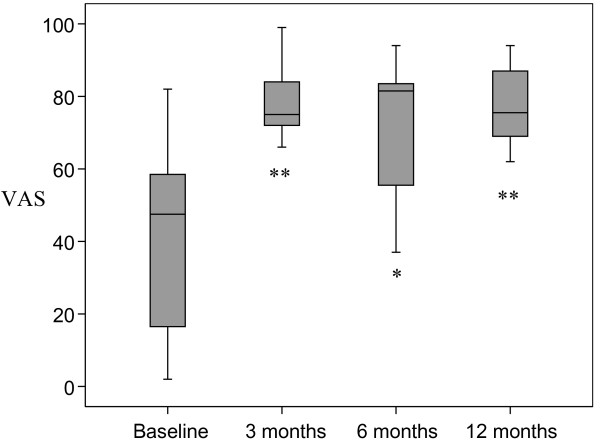
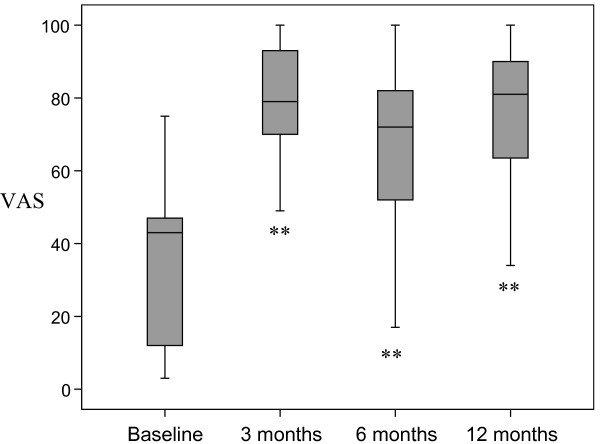
Verification
Claims the paper makes
The claims and statistics of this paper haven’t been checked yet.
Free: it reads the open-access text and checks the first 5 claims that cite a source we can check. Create a free account to check every claim.
Claims other papers make about this one
Each is checked against this paper’s own text: does it say what the citing paper says it does?
The cited source doesn’t support the claim as written.
In the citing paper
“Research on short-term education programs that include some elements of cognitive therapy and stress management (psycho-education) have yielded mixed outcomes.”
From Randomised clinical trial: Symptoms of the irritable bowel syndrome are improved by a psycho-education group intervention (2013) · cites this paper as [26]
Checked by a reasoning model — may be wrong.
Experimental — accuracy not yet measuredThe source backs part of the claim, not all of it — or backs it for a different population, condition or comparison.
In the citing paper
“Education- based interventions have also been used as part of IBS disease management in order to increase knowledge about IBS pathophysiology, clarify misconceptions regarding what IBS is and is not, teach simple self-management strategies in areas of diet and stress management, and decrease symptom related fears and anxiety(26, 30).”
From Randomised clinical trial: Symptoms of the irritable bowel syndrome are improved by a psycho-education group intervention (2013) · cites this paper as [26]
Experimental — accuracy not yet measuredThe source backs part of the claim, not all of it — or backs it for a different population, condition or comparison.
In the citing paper
“For instance, a critical comparison of various psychological and educational treatments for IBS revealed evidence from clinical trials suggesting that cognitive, behavioral, psychodynamic, educational, and hypnotherapy based treatments worked in alleviating IBS symptoms, and there was no evidence of the superiority of one treatment over the other(26, 27, 30).”
From Randomised clinical trial: Symptoms of the irritable bowel syndrome are improved by a psycho-education group intervention (2013) · cites this paper as [26]
Experimental — accuracy not yet measuredThe cited source says what the claim attributes to it.
In the citing paper
“These results are similar to those seen in other studies that focused on patient education(26, 30).”
From Randomised clinical trial: Symptoms of the irritable bowel syndrome are improved by a psycho-education group intervention (2013) · cites this paper as [26]
Self-check
Percentages, sums and reported differences re-computed from the paper’s own numbers.
The self-check needs the paper’s full text.
Citations
Cites
Self-efficacy: Toward a unifying theory of behavioral change
Bandura, A. (1977) · Psychological Review · doi:10.1037/0033-295x.84.2.191 · Cited by 43,925
(1992) · PubMed · Cited by 33,716
The MOS 36-ltem Short-Form Health Survey (SF-36): I. Conceptual Framework and Item Selection
Ware, J. E., & Sherbourne, C. D. (1992) · Medical Care · doi:10.1097/00005650-199206000-00002 · Cited by 30,033
Self-efficacy: Toward a unifying theory of behavioral change
Bandura, A. (1978) · Advances in Behaviour Research and Therapy · doi:10.1016/0146-6402(78)90002-4 · Cited by 10,586
Longstreth, G. F., Thompson, W. G., Chey, W. D., Houghton, L. A., Mearin, F., & Spiller, R. C. (2006) · Gastroenterology · doi:10.1053/j.gastro.2005.11.061 · Cited by 4,856
Functional bowel disorders and functional abdominal pain
Thompson, W. G., Longstreth, G. F., Drossman, D. A., Heaton, K. W., Irvine, E. J., & Müller-Lissner, S. A. (1999) · Gut · doi:10.1136/gut.45.2008.ii43 · Cited by 2,440 · cited 2×
“Sixteen consecutive patients with IBS according to the Rome II criteria [ 3 ] attending the GI out patient clinic at Sahlgrenska University hospital in Gothenburg, Sweden, were asked to participate in this pilot study.”
MethodFRANCIS, C. Y., MORRIS, J., & WHORWELL, P. J. (1997) · Alimentary Pharmacology & Therapeutics · doi:10.1046/j.1365-2036.1997.142318000.x · Cited by 1,708
Sullivan, M., Karlsson, J., & Ware, J. E. (1995) · Social Science & Medicine · doi:10.1016/0277-9536(95)00125-q · Cited by 1,315 · cited 1×
“Raw scores are transformed into a scale from 0 (worst possible health state) to 100 (best possible health state) on each of the eight subscales [44-46].”
BackgroundPsychosocial Factors in the Irritable Bowel Syndrome
Drossman, D. A., McKee, D. C., Sandler, R. S., Mitchell, C. M., Cramer, E. M., Lowman, B. C., & Burger, A. L. (1988) · Gastroenterology · doi:10.1016/s0016-5085(88)80017-9 · Cited by 757
(2011) · SpringerReference · doi:10.1007/springerreference_44317 · Cited by 545
Level of chronic life stress predicts clinical outcome in irritable bowel syndrome
Bennett, E. J., Tennant, C. C., Piesse, C., Badcock, C.-A., & Kellow, J. E. (1998) · Gut · doi:10.1136/gut.43.2.256 · Cited by 405
Monsbakken, K. W., Vandvik, P. O., & Farup, P. G. (2006) · European Journal of Clinical Nutrition · doi:10.1038/sj.ejcn.1602367 · Cited by 364 · cited 1×
“It has been reported that a large proportion of IBS subjects limit or exclude food items from their diet [34].”
Posserud, I., Agerforz, P., Ekman, R., Björnsson, E. S., Abrahamsson, H., & Simrén, M. (2004) · Gut · doi:10.1136/gut.2003.017962 · Cited by 297
Self-citationOverlap of gastrointestional symptom complexes in a US community
Locke, G. R., Zinsmeister, A. R., Fett, S. L., Melton, L. J., & Talley, N. J. (2005) · Neurogastroenterology & Motility · doi:10.1111/j.1365-2982.2004.00581.x · Cited by 240
Hahn, B. A., Yan, S., & Strassels, S. (1999) · Digestion · doi:10.1159/000007593 · Cited by 232
British Society of Gastroenterology guidelines for the management of the irritable bowel syndrome
Jones, J., Boorman, J., Cann, P., Forbes, A., Gomborone, J., Heaton, K., Hungin, P., Kumar, D., Libby, G., Spiller, R., et al. (2000) · Gut · doi:10.1136/gut.47.suppl_2.ii1 · Cited by 224
Gonsalkorale, W. (2002) · The American Journal of Gastroenterology · doi:10.1016/s0002-9270(02)03971-0 · Cited by 214
Simrén, M., Abrahamsson, H., Svedlund, J., & Björnsson, E. S. (2001) · Scandinavian Journal of Gastroenterology · doi:10.1080/003655201750153476 · Cited by 188
Self-citationProbiotics in The Treatment of Irritable Bowel Syndrome
Saggioro, A. (2004) · Journal of Clinical Gastroenterology · doi:10.1097/01.mcg.0000129271.98814.e2 · Cited by 176
Patient Education: A Practical Approach
Lorig, K. R. (1992) · Cited by 155
Prevalence, comorbidity and impact of irritable bowel syndrome in Norway
Vandvik, P. O., Lydersen, S., & Farup, P. G. (2006) · Scandinavian Journal of Gastroenterology · doi:10.1080/00365520500442542 · Cited by 135
(2001) · PubMed · Cited by 132
The Impact of Intensive Patient Education on Clinical Outcome in a Clinic‐Based Migraine Population
Rothrock, J. F., Parada, V. A., Sims, C., Key, K., Walters, N. S., & Zweifler, R. M. (2006) · Headache: The Journal of Head and Face Pain · doi:10.1111/j.1526-4610.2006.00428.x · Cited by 124
Self-management for women with irritable bowel syndrome
Heitkemper, M. M., Jarrett, M. E., Levy, R. L., Cain, K. C., Burr, R. L., Feld, A., Barney, P., & Weisman, P. (2004) · Clinical Gastroenterology and Hepatology · doi:10.1016/s1542-3565(04)00242-3 · Cited by 119 · cited 2×
“GI symptoms were reduced, but this improvement reached statistical significance in the eightsession program only [21], suggesting that patient education should be performed with multiple meetings.”
BackgroundSimrén, M., Svedlund, J., Posserud, I., Björnsson, E. S., & Abrahamsson, H. (2006) · Clinical Gastroenterology and Hepatology · doi:10.1016/s1542-3565(05)00981-x · Cited by 114
Self-citationK., L., M., S. H., U., K., K., N., M., A. U., & L., L. (2003) · Scandinavian Journal of Gastroenterology · doi:10.1080/00365520310003309 · Cited by 106
Keefer, L., & Blanchard, E. B. (2001) · Behaviour Research and Therapy · doi:10.1016/s0005-7967(00)00078-4 · Cited by 105
Empowering diabetes out-patients with structured education:
Howorka, K., Pumprla, J., Wagner-Nosiska, D., Grillmayr, H., Schlusche, C., & Schabmann, A. (2000) · Journal of Psychosomatic Research · doi:10.1016/s0022-3999(99)00074-4 · Cited by 104
Robinson, A., Lee, V, Kennedy, A., Middleton, L., Rogers, A., Thompson, D. G., & Reeves, D. (2006) · Gut · doi:10.1136/gut.2004.062901 · Cited by 95
Towards a better understanding of patients with irritable bowel syndrome
Dancey, C. P., & Backhouse, S. (1993) · Journal of Advanced Nursing · doi:10.1046/j.1365-2648.1993.18091443.x · Cited by 89
Patient Education: A Practical Approach
Garrett, C. K. (1996) · AORN Journal · doi:10.1016/s0001-2092(06)63063-9 · Cited by 86
Kennedy, A. P., Robinson, A., & Rogers, A. E. (2003) · Patient Education and Counseling · doi:10.1016/s0738-3991(03)00054-5 · Cited by 85
van der Horst, H. E., van Dulmen, A. M., Schellevis, F. G., van Eijk, J. T. M., Fennis, J. F. M., & Bleijenberg, G. (1997) · Gut · doi:10.1136/gut.41.5.669 · Cited by 79
Dietary treatment of irritable bowel syndrome: current evidence and guidelines for future practice
Burden, S. (2001) · Journal of Human Nutrition and Dietetics · doi:10.1046/j.1365-277x.2001.00284.x · Cited by 78
Effects of multidisciplinary education on outcomes in patients with irritable bowel syndrome
Saito, Y. A., Prather, C. M., Van Dyke, C. T., Fett, S., Zinsmeister, A. R., & Locke, G. R. (2004) · Clinical Gastroenterology and Hepatology · doi:10.1016/s1542-3565(04)00241-1 · Cited by 77 · cited 2×
“Some educational interventions have also been evaluated in IBS patients with satisfying results [21-23].”
BackgroundPatient knowledge and educational needs in irritable bowel syndrome
OʼSullivan, M. A., Mahmud, N., Kelleher, D. P., Lovett, E., & OʼMorain, C. A. (2000) · European Journal of Gastroenterology & Hepatology · doi:10.1097/00042737-200012010-00008 · Cited by 73
Role of Alimentation in Irritable Bowel Syndrome
Dapoigny, M., Stockbrügger, R. W., Azpiroz, F., Collins, S., Coremans, G., Müller-Lissner, S., Oberndorff, A., Pace, F., Smout, A., Vatn, M., et al. (2003) · Digestion · doi:10.1159/000072061 · Cited by 71
Patient teaching or patient counselling?
Wilson‐Barnett, J. (1988) · Journal of Advanced Nursing · doi:10.1111/j.1365-2648.1988.tb01410.x · Cited by 67
Effect of educational programs on asthma control and qualitiy of life in adult asthma patients
Urek, M. C., Tudorić, N., Plavec, D., Urek, R., Koprivc-Milenović, T., & Stojić, M. (2004) · Patient Education and Counseling · doi:10.1016/j.pec.2004.06.010 · Cited by 62
Does a Physically Active Lifestyle Improve Symptoms in Women With Irritable Bowel Syndrome?
Lustyk, K. M. B., Jarrett, M. E., Bennett, J. C., & Heitkemper, M. M. (2001) · Gastroenterology Nursing · doi:10.1097/00001610-200105000-00007 · Cited by 61
Steen, E., & Haugli, L. (2001) · Patient Education and Counseling · doi:10.1016/s0738-3991(00)00088-4 · Cited by 58
Longstreth, G. F. (2003) · Family Practice · doi:10.1093/fampra/cmg608 · Cited by 58
The role of psychosocial factors in irritable bowel syndrome
Gaynes, B. N., & Drossman, D. A. (1999) · Best Practice & Research Clinical Gastroenterology · doi:10.1053/bega.1999.0038 · Cited by 58
Irritable Bowel Syndrome: An Exploration of the Patient Perspective
Meadows, L. M., Lackner, S., & Belic, M. (1997) · Clinical Nursing Research · doi:10.1177/105477389700600205 · Cited by 41
Schmulson, M. J., Ortiz-Garrido, O. M., Hinojosa, C., & Arcila, D. (2006) · Journal of Psychosomatic Research · doi:10.1016/j.jpsychores.2006.02.011 · Cited by 38 · cited 1×
“Also in connection to a first visit to a gastroenterologist, an extra 15 minutes of reassurance can reduce selfperception of impairment in daily functions in IBS patients [24].”
BackgroundA course of instruction for women with irritable bowel syndrome
Bengtsson, M., Ulander, K., Börgdal, E. B., Christensson, A.-C., & Ohlsson, B. (2005) · Patient Education and Counseling · doi:10.1016/j.pec.2005.06.015 · Cited by 38
Lichtman, J. H., Amatruda, J., Yaari, S., Cheng, S. C., Smith, G. L., Mattera, J. A., Roumanis, S. A., Wang, Y., Radford, M. J., & Krumholz, H. M. (2004) · American Heart Journal · doi:10.1016/j.ahj.2003.06.003 · Cited by 38
Sylvain, H., & Talbot, L. R. (2002) · Journal of Advanced Nursing · doi:10.1046/j.1365-2648.2002.02176.x · Cited by 37
Orem's general theory of nursing.
Orem, D. E., & Taylor, S. G. (1986) · PubMed · Cited by 34
Perspectives on Research in Patient Teaching
Oberst, M. T. (1989) · Nursing Clinics of North America · doi:10.1016/s0029-6465(22)01520-1 · Cited by 32
Halpert, A. D., Thomas, A. C., Hu, Y., Morris, C. B., Bangdiwala, S. I., & Drossman, D. A. (2005) · Journal of Clinical Gastroenterology · doi:10.1097/01.mcg.0000190759.95862.08 · Cited by 26
Simrén, M., Svedlund, J., Posserud, I., Fennander, J., Bjornsson, E. S., & Abrahamsson, H. (2003) · Gastroenterology · doi:10.1016/s0016-5085(03)82562-3 · Cited by 22
Self-citationThe challenge of irritable bowel syndrome: Creating an alliance between patient and physician
SHEN, B., & SOFFER, E. (2001) · Cleveland Clinic Journal of Medicine · doi:10.3949/ccjm.68.3.224 · Cited by 14
Savelkoul, M., & de Witte, L. (2001) · Patient Education and Counseling · doi:10.1016/s0738-3991(01)00115-x · Cited by 9
'It's Not All in Your Head': Irritable Bowel Syndrome
Heitkemper, M. M., & Jarrett, M. E. (2001) · AJN American Journal of Nursing · doi:10.1097/00000446-200101000-00045 · Cited by 7
CE TEST: Does the “C” in Hepatitis C Stand for Complex?
Huber, D. A. (2001) · Gastroenterology Nursing · doi:10.1097/00001610-200105000-00006 · Cited by 4
Research works printed but not linked: 1
- Sullivan MKJ Taft C Ware JE SF-36 Hälsoenkät Manual och tolkningsguide (SF-36 Health Survey, Swedish Manual and Interpretension Guide) 2002 Sahlgrenska University Hospital Göteborg
Cited by
El-Salhy, M., Hatlebakk, J. G., Gilja, O. H., Bråthen Kristoffersen, A., & Hausken, T. (2020) · Gut · doi:10.1136/gutjnl-2019-319630 · Cited by 498
Lowén, M. B. O., Mayer, E. A., Sjöberg, M., Tillisch, K., Naliboff, B., Labus, J., Lundberg, P., Ström, M., Engström, M., & Walter, S. A. (2013) · Alimentary Pharmacology & Therapeutics · doi:10.1111/apt.12319 · Cited by 121
Ringström, G., Störsrud, S., Posserud, I., Lundqvist, S., Westman, B., & Simrén, M. (2010) · European Journal of Gastroenterology & Hepatology · doi:10.1097/meg.0b013e3283333b61 · Cited by 85
Self-citationMAZZAWI, T., HAUSKEN, T., GUNDERSEN, D., & EL-SALHY, M. (2013) · Molecular Medicine Reports · doi:10.3892/mmr.2013.1565 · Cited by 75
Pourmand, H., & Esmaillzadeh, A. (2017) · International Journal of Preventive Medicine · doi:10.4103/ijpvm.ijpvm_175_17 · Cited by 73
Metadata
- Authors
- Ringström, G., Störsrud, S., Lundqvist, S., Westman, B., & Simrén, M.
- Affiliations
- University of Gothenburg (SE)
- Corresponding author
- Ringström, Gisela
- Venue
- BMC Gastroenterology
- Published
- 2009-02-04
- Volume
- 9
- Issue
- 1
- Pages
- 10-10
- ISSN
- 1471-230X (ISSN-L)
- PMC
- PMC2644703
- OpenAlex
- W1981878871
- Semantic Scholar
- 4eb14d5af178edecb9c4bbbf4fbb89ec93e46256
- Cited by
- 37
- References
- 56
- Citations by year
- 2025: 1 · 2024: 2 · 2023: 1 · 2022: 1 · 2021: 1 · 2020: 6 · 2019: 3 · 2018: 2 · 2017: 1 · 2016: 2 · 2015: 2 · 2014: 2 · 2013: 4 · 2012: 4
- FWCI
- 3.19
- Type
- journal article
- Language
- en
- Open access
- gold
- doi.org
- Licence
- cc-by
- creativecommons.org/licenses/by/2.0 (tdm)
- Locations
- BMC Gastroenterology (publishedVersion, cc-by)
- Europe PMC (PubMed Central) (publishedVersion, cc-by)
- PubMed Central (publishedVersion, cc-by)
- PubMed (publishedVersion)
- DOAJ (DOAJ: Directory of Open Access Journals) (submittedVersion, cc-by-sa)
- Funders
- Västra Götalandsregionen
- Medical Research Council
- Topics
- Health Sciences › Medicine › Gastroenterology › Gastrointestinal motility and disorders
- Health Sciences › Medicine › Pediatrics, Perinatology and Child Health › Infant Health and Development
- Health Sciences › Medicine › Urology › Pelvic floor disorders treatments
- Keywords
- irritable bowel syndrome, patient education, educational intervention, group education, health-related quality of life, gastrointestinal symptoms, patient knowledge, symptom severity, patient satisfaction
- MeSH terms
- Adult, Female, Humans, Health Knowledge, Attitudes, Practice, Male, Middle Aged, Patient Education as Topic, Pilot Projects, Quality of Life, Severity of Illness Index, Cohort Studies, Program Development, Patient Satisfaction, Irritable Bowel Syndrome
About these checks
Registry, retraction, Cites and statistics results are computed, not judged, with one exception: a printed reference that no index lists is read once by a model before it counts as a citation error. Claims are extracted by a model and kept only when their quote appears verbatim in the text; each cited source is then checked, with a model’s help, for whether it says what the claim relies on. Those verdicts can be wrong — read the claim’s quote and the cited source before relying on one.
Statistics and arithmetic are recomputed, not judged.
Confidence bands are shown only for fields calibrated on our annotated test set. None is calibrated yet, so no band is shown.
What counts as a claim ›How we measure confidence ›How we check this ›
Are you an author, or do you see a problem with this page? Request a review
Data sources
Bibliographic data: Semantic Scholar, OpenAlex, Crossref.
Contains information from the Semantic Scholar Academic Graph Datasets, made available under the ODC Attribution License (ODC-BY 1.0).
Semantic Scholar’s data is described in: Kinney, R., et al. (2023). The Semantic Scholar Open Data Platform. arXiv:2301.10140.
