

In vaginal fluid, bacteria associated with bacterial vaginosis can be suppressed with lactic acid but not hydrogen peroxide
Open accessThe DOI matches its Crossref record; 34 of the 34 references it cites were found in a registry or an index.
Abstract
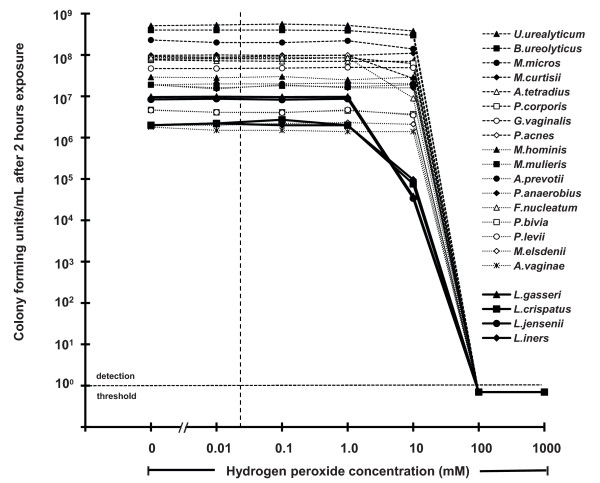
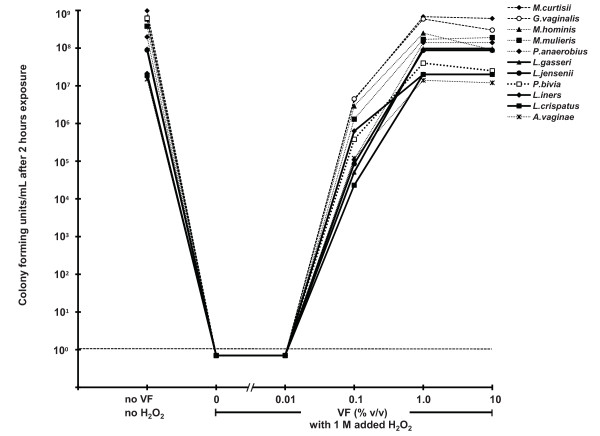
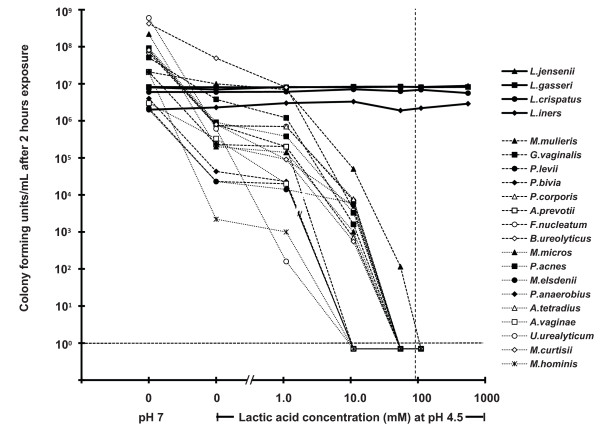
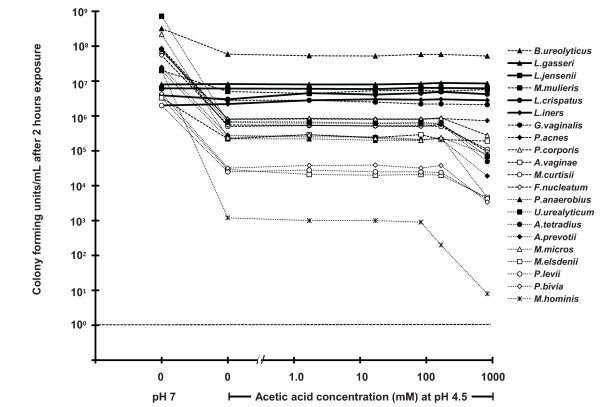
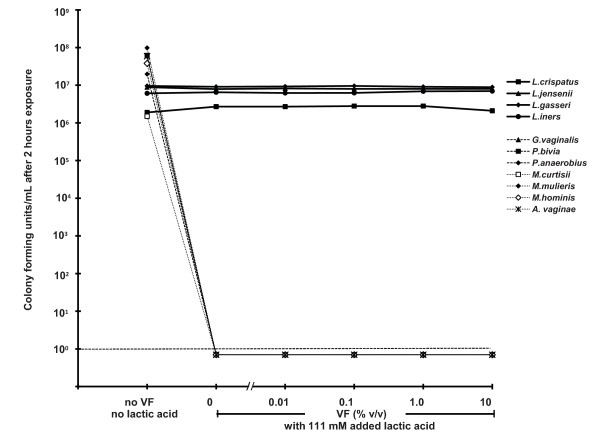
BACKGROUND: Hydrogen peroxide (H2O2) produced by vaginal lactobacilli is generally believed to protect against bacteria associated with bacterial vaginosis (BV), and strains of lactobacilli that can produce H2O2 are being developed as vaginal probiotics. However, evidence that led to this belief was based in part on non-physiological conditions, antioxidant-free aerobic conditions selected to maximize both production and microbicidal activity of H2O2. Here we used conditions more like those in vivo to compare the effects of physiologically plausible concentrations of H2O2 and lactic acid on a broad range of BV-associated bacteria and vaginal lactobacilli. METHODS: Anaerobic cultures of seventeen species of BV-associated bacteria and four species of vaginal lactobacilli were exposed to H2O2, lactic acid, or acetic acid at pH 7.0 and pH 4.5. After two hours, the remaining viable bacteria were enumerated by growth on agar media plates. The effect of vaginal fluid (VF) on the microbicidal activities of H2O2 and lactic acid was also measured. RESULTS: Physiological concentrations of H2O2 (< 100 μM) failed to inactivate any of the BV-associated bacteria tested, even in the presence of human myeloperoxidase (MPO) that increases the microbicidal activity of H2O2. At 10 mM, H2O2 inactivated all four species of vaginal lactobacilli but only one of seventeen species of BV-associated bacteria. Moreover, the addition of just 1% vaginal fluid (VF) blocked the microbicidal activity of 1 M H2O2. In contrast, lactic acid at physiological concentrations (55-111 mM) and pH (4.5) inactivated all the BV-associated bacteria tested, and had no detectable effect on the vaginal lactobacilli. Also, the addition of 10% VF did not block the microbicidal activity of lactic acid. CONCLUSIONS: Under optimal, anaerobic growth conditions, physiological concentrations of lactic acid inactivated BV-associated bacteria without affecting vaginal lactobacilli, whereas physiological concentrations of H2O2 produced no detectable inactivation of either BV-associated bacteria or vaginal lactobacilli. Moreover, at very high concentrations, H2O2 was more toxic to vaginal lactobacilli than to BV-associated bacteria. On the basis of these in vitro observations, we conclude that lactic acid, not H2O2, is likely to suppress BV-associated bacteria in vivo.
Overview
The claims and statistics of this paper haven’t been checked yet.
Free: it reads the open-access text and checks the first 5 claims that cite a source we can check. Create a free account to check every claim.
Integrity signals
Registry
Cites
Statistics
Figures
Verification
Claims the paper makes
The claims and statistics of this paper haven’t been checked yet.
Free: it reads the open-access text and checks the first 5 claims that cite a source we can check. Create a free account to check every claim.
Self-check
Percentages, sums and reported differences re-computed from the paper’s own numbers.
The self-check needs the paper’s full text.
Citations
Cites
Imlay, J. A. (2003) · Annual Review of Microbiology · doi:10.1146/annurev.micro.57.030502.090938 · Cited by 2,203 · cited 1×
“Hydrogen peroxide causes oxidative stress in bacterial cells [14], at least partially by oxidizing sulphydrals, and by oxidizing free iron to produce hydroxyl radicals that react with nucleic acids [15].”
BackgroundLactic Acid Permeabilizes Gram-Negative Bacteria by Disrupting the Outer Membrane
Alakomi, H.-L., Skyttä, E., Saarela, M., Mattila-Sandholm, T., Latva-Kala, K., & Helander, I. M. (2000) · Applied and Environmental Microbiology · doi:10.1128/aem.66.5.2001-2005.2000 · Cited by 1,093 · cited 1×
“Lactic acid has also been shown to have broad spectrum activity against Gram-negative bacteria, probably by weakening the cell wall [19].”
BackgroundMyeloperoxidase-Halide-Hydrogen Peroxide Antibacterial System
Klebanoff, S. J. (1968) · Journal of Bacteriology · doi:10.1128/jb.95.6.2131-2138.1968 · Cited by 815 · cited 1×
“All growth medium formulations contained at least ten-times more than the 1 mM concentration of chloride ions required for full activity of a myeloperoxidase-halide-H2O2 microbicidal system [26].”
BackgroundEschenbach, D. A., Davick, P. R., Williams, B. L., Klebanoff, S. J., Young-Smith, K., Critchlow, C. M., & Holmes, K. K. (1989) · Journal of Clinical Microbiology · doi:10.1128/jcm.27.2.251-256.1989 · Cited by 707 · cited 1×
“Women with H2O2-producing lactobacilli are less likely to have BV than are women without H2O2-producing lactobacilli [1-3].”
BackgroundSimplified Agar Plate Method for Quantifying Viable Bacteria
Jett, B. D., Hatter, K. L., Huycke, M. M., & Gilmore, M. S. (1997) · BioTechniques · doi:10.2144/97234bm22 · Cited by 567 · cited 1×
“2 depending on growth medium) and track-plated [27] onto the appropriate growth medium containing 1.”
BackgroundThe effects of fermentation acids on bacterial growth
Russell, J. B., & Diez-Gonzalez, F. (1997) · Advances in Microbial Physiology · doi:10.1016/s0065-2911(08)60017-x · Cited by 498 · cited 1×
“Lactic acid, under acidic conditions, can permeate cell membranes, acidify the cytosol [16,17], and induce osmotic stress [18].”
BackgroundRole played by lactobacilli in controlling the population of vaginal pathogens
Boris, S., & Barbés, C. (2000) · Microbes and Infection · doi:10.1016/s1286-4579(00)00313-0 · Cited by 427 · cited 1×
“Vaginal lactobacilli produce several target-specific antimicrobial factors, including bacteriocins [10,11], bacteriocins-like substances [12], and selective ligands [13].”
BackgroundDefense factors of vaginal lactobacilli
Aroutcheva, A., Gariti, D., Simon, M., Shott, S., Faro, J., Simoes, J. A., Gurguis, A., & Faro, S. (2001) · American Journal of Obstetrics and Gynecology · doi:10.1067/mob.2001.115867 · Cited by 424 · cited 1×
“Vaginal lactobacilli produce several target-specific antimicrobial factors, including bacteriocins [10,11], bacteriocins-like substances [12], and selective ligands [13].”
BackgroundControl of the Microbial Flora of the Vagina by H202-Generating Lactobacilli
Klebanoff, S. J., Hillier, S. L., Eschenbach, D. A., & Waltersdorph, A. M. (1991) · Journal of Infectious Diseases · doi:10.1093/infdis/164.1.94 · Cited by 420
Bioenergetics of lactic acid bacteria: cytoplasmic pH and osmotolerance
Kashket, E. R. (1987) · FEMS Microbiology Letters · doi:10.1111/j.1574-6968.1987.tb02463.x · Cited by 410
Research works printed but not linked: 1
- O'Hanlon DE Moench TR Harrold S Cone RA Microbicide production by vaginal lactobacilli: vaginal acidity (pH) and lactic acid or more potent than previously reported. Poster presentation Microbicides New Delhi 2008 Feb 24-28 2008
Cited by
Items 101–200 of 376
Mitchell, C. M., Fredricks, D. N., Agnew, K. J., & Hitti, J. E. (2015) · Sexually Transmitted Diseases · doi:10.1097/olq.0000000000000298 · Cited by 78
“Some have argued that lactic acid is the true effector molecule, and O'Hanlon et al.(31) showed that an acid pH induced by lactic acid, but not acetic acid, is inhibitory to BV-associated bacterial species.”
BackgroundSelection of New Probiotics for Endometrial Health
Chenoll, E., Moreno, I., Sánchez, M., Garcia-Grau, I., Silva, Á., Gonzáléz-Monfort, M., Genovés, S., Vilella, F., Seco, C., Simón, C., et al. (2019) · Frontiers in Cellular and Infection Microbiology · doi:10.3389/fcimb.2019.00114 · Cited by 72
“In fact, recent studies indicate effects are specifically related with lactic acid presence, thus reducing the plausibility of the H2O2 effect on pathogens physiological conditions (Ocaña et al., 1999a; O’Hanlon et al., 2011).”
BackgroundBeghini, J., Linhares, I., Giraldo, P., Ledger, W., & Witkin, S. (2015) · BJOG: An International Journal of Obstetrics & Gynaecology · doi:10.1111/1471-0528.13072 · Cited by 63
The Role of Hydrogen-Peroxide (H2O2) Produced by Vaginal Microbiota in Female Reproductive Health
Mikó, É., & Barakonyi, A. (2023) · Antioxidants · doi:10.3390/antiox12051055 · Cited by 79
Ovarian cycling and reproductive state shape the vaginal microbiota in wild baboons
Miller, E. A., Livermore, J. A., Alberts, S. C., Tung, J., & Archie, E. A. (2017) · Microbiome · doi:10.1186/s40168-017-0228-z · Cited by 70
“5) that is thought to protect women against sexually transmitted diseases (STDs) and inhibit the proliferation of opportunistic endogenous bacteria ([10, 14, 15],”
BackgroundBrown, S. E., Schwartz, J. A. J., Robinson, C. K., O’Hanlon, D. E., Bradford, L. L., He, X., Mark, K., Bruno, V. M., Ravel, J., & Brotman, R. M. (2019) · Sexually Transmitted Diseases · doi:10.1097/olq.0000000000001066 · Cited by 70
Self-citationBorgogna, J.-L. C., Shardell, M. D., Grace, S. G., Santori, E. K., Americus, B., Li, Z., ULANOV, A. V., Forney, L. J., Nelson, T. M., Brotman, R. M., et al. (2021) · Applied and Environmental Microbiology · doi:10.1128/aem.03068-20 · Cited by 66
“5 and limits the growth of potential pathogens (55), although lactobacilli contribute other known anticompetitive activities, including the lactic acid-driven rendering of epithelial cells resistant to infection, as was recently shown with Chlamydia trachomatis (56).”
ResultChetwin, E., Manhanzva, M. T., Abrahams, A. G., Froissart, R., Gamieldien, H., Jaspan, H., Jaumdally, S. Z., Barnabas, S. L., Dabee, S., Happel, A.-U., et al. (2019) · Scientific Reports · doi:10.1038/s41598-018-38253-4 · Cited by 59
Krakowsky, Y., Potter, E., Hallarn, J., Monari, B., Wilcox, H., Bauer, G. R., Ravel, J., & Prodger, J. L. (2022) · Frontiers in Cellular and Infection Microbiology · doi:10.3389/fcimb.2021.769950 · Cited by 68
“…pathogenic organisms such as Neisseria gonorrhoeae, Chlamydia trachomatis and those associated with bacterial vaginosis (BV) (Graver and Wade, 2011; O'Hanlon et al., 2011; O'Hanlon et al., 2013; Gong et al., 2014; Mirmonsef et al., 2014; Breshears et al., 2015; Mirmonsef et al., 2016; Nardini et…”
BackgroundFrąszczak, K., Barczyński, B., & Kondracka, A. (2022) · Cancers · doi:10.3390/cancers14194909 · Cited by 67
“Some studies have suggested that hypoxia could also promote the development of bacterial vaginosis since, in such conditions, bacteria are not able to produce H2O2 in a sufficient amount to inhibit pathogenic bacteria growth [99,100].”
BackgroundConceptual Design of a Universal Donor Screening Approach for Vaginal Microbiota Transplant
DeLong, K., Bensouda, S., Zulfiqar, F., Zierden, H. C., Hoang, T., Abraham, A. G., Coleman, J. S., Cone, R. A., Gravitt, P. E., Hendrix, C. W., et al. (2019) · Frontiers in Cellular and Infection Microbiology · doi:10.3389/fcimb.2019.00306 · Cited by 68
“Other studies have reported the physicochemical properties of undiluted CVS or cervicovaginal lavage fluids, which gives us added indirect measures of bacteria composition and some aspects of metabolic function (Lai et al., 2009a,b, 2010; O’Hanlon et al., 2011; Chappell et al., 2014; Nunn et al., 2015).”
BackgroundMethodSelf-citationGlycan cross-feeding supports mutualism between Fusobacterium and the vaginal microbiota
Agarwal, K., Robinson, L. S., Aggarwal, S., Foster, L. R., Hernandez-Leyva, A. J., Lin, H., Tortelli, B. A., O'Brien, V. P., Miller, L., Kau, A. L., et al. (2020) · PLoS Biology · doi:10.1371/journal.pbio.3000788 · Cited by 63
“One of the prevailing concepts is that an absence of secreted antimicrobial activities produced by “healthy” lactobacilli creates a permissive vaginal environment in which opportunists can overgrow [7,14,62].”
BackgroundChanges in the Vaginal Microbiome during the Pregnancy to Postpartum Transition
Nunn, K. L., Witkin, S. S., Schneider, G., Boester, A., Nasioudis, D., Minis, E. E., Gliniewicz, K., & Forney, L. J. (2021) · Reproductive Sciences · doi:10.1007/s43032-020-00438-6 · Cited by 66
Recurrent Urinary Tract Infections: Unraveling the Complicated Environment of Uncomplicated rUTIs
Josephs‐Spaulding, J., Krogh, T. J., Rettig, H. C., Lyng, M., Chkonia, M., Waschina, S., Graspeuntner, S., Rupp, J., Møller‐Jensen, J., & Kaleta, C. (2021) · Frontiers in Cellular and Infection Microbiology · doi:10.3389/fcimb.2021.562525 · Cited by 72
Hinderfeld, A. S., Phukan, N., Bär, A.-K., Roberton, A. M., & Simões-Barbosa, A. (2019) · Infection and Immunity · doi:10.1128/iai.00141-19 · Cited by 69
“Concentrations of 104 to 106 bacteria/ml were chosen on the basis of the relative levels of representation of these bacteria in this consortium (2, 38).”
BackgroundAyehunie, S., Wang, Y., Landry, T., Bogojevic, S., & Cone, R. A. (2017) · Toxicology Reports · doi:10.1016/j.toxrep.2017.12.011 · Cited by 59
Self-citationThe Transcriptional Stress Response of Candida albicans to Weak Organic Acids
Cottier, F., Tan, A. S. M., Chen, J., Lum, J., Zolezzi, F., Poidinger, M., & Pavelka, N. (2015) · G3 Genes Genomes Genetics · doi:10.1534/g3.114.015941 · Cited by 64
Basavaprabhu, H. N., Sonu, K. S., & Prabha, R. (2020) · Microbial Pathogenesis · doi:10.1016/j.micpath.2020.104029 · Cited by 55
Cervicovaginal Microbiome Composition Is Associated with Metabolic Profiles in Healthy Pregnancy
Oliver, A. S., LaMere, B. J., Weihe, C., Wandro, S., Lindsay, K. L., Wadhwa, P. D., Mills, D. A., Pride, D. T., Fiehn, O., Northen, T. R., et al. (2020) · mBio · doi:10.1128/mbio.01851-20 · Cited by 60
“…, which have been associated with maintenance of a simple vaginal microbiome by their production of bacteriostatic and bactericidal compounds (e.g., lactic acid and hydrogen peroxide) and maintenance of a low pH (14–16) numerically and functionally dominating their respective vaginal communities.”
Salliss, M. E., Maarsingh, J. D., Garza, C., Łaniewski, P., & Herbst‐Kralovetz, M. M. (2021) · npj Biofilms and Microbiomes · doi:10.1038/s41522-021-00229-0 · Cited by 65
Antibacterial activity of probiotic candidates for oral health
Samot, J., & Badet, C. (2012) · Anaerobe · doi:10.1016/j.anaerobe.2012.11.007 · Cited by 68
“brevis), which confirms some studies claiming that the production of hydrogen peroxide is not the main mechanism of inhibition of lactobacilli [48].”
BackgroundIn vitro and ex vivo models for evaluating vaginal drug delivery systems
Shapiro, R. L., DeLong, K., Zulfiqar, F., Carter, D. M., Better, M., & Ensign, L. M. (2022) · Advanced Drug Delivery Reviews · doi:10.1016/j.addr.2022.114543 · Cited by 60
Uchihashi, M., Bergin, I. L., Bassis, C. M., Hashway, S. A., Chai, D. C., & Bell, J. D. (2015) · American Journal of Primatology · doi:10.1002/ajp.22378 · Cited by 65
“…classically defined by a predominance of Lactobacillus spp. Lactobacillus ferment glycogen into lactic acid, generating a low vaginal pH that is thought to prevent colonization and proliferation of potentially pathogenic organisms [Hickey et al., 2012; Linhares et al., 2011; O’Hanlon et al., 2011].”
BackgroundAbbasi, A., Maleki, L. A., & Rad, A. H. (2021) · Critical Reviews in Food Science and Nutrition · doi:10.1080/10408398.2021.1935701 · Cited by 67
“Furthermore, the vaginal fluid with a low pH value inactivates both T lymphocytes and free HIV-1 virus as well as provides an inappropriate circumstance for the growth and function of infected lymphocytes and HIV (~Nahui Palomino et al. 2019; Olmsted et al. 2005; Tyssen et al. 2018).”
BackgroundInterplay between viruses and bacterial microbiota in cancer development
Vyshenska, D., Lam, K. C., Shulzhenko, N., & Morgun, A. (2017) · Seminars in Immunology · doi:10.1016/j.smim.2017.05.003 · Cited by 53
Das, S., Bhattacharjee, M. J., Mukherjee, A. K., & Khan, M. R. (2023) · Critical Reviews in Microbiology · doi:10.1080/1040841x.2022.2049696 · Cited by 51
Marconi, C., Duarte, M. T. C., Silva, D. C., & da Silva, M. G. (2015) · International Journal of Gynecology & Obstetrics · doi:10.1016/j.ijgo.2015.05.016 · Cited by 72
“One of themost accepted hypotheses for this association is the increased accumulation of glycogen in vaginal epithelial cells, which serve as local lactobacilli substrates for conversion to lactic acid, previously shown to suppress the bacterial species associated with bacterial vaginosis [23].”
BackgroundProfiles and technological requirements of urogenital probiotics
Nader-Macías, M. E., & Tomás, M. S. J. (2015) · Advanced Drug Delivery Reviews · doi:10.1016/j.addr.2015.03.016 · Cited by 57
Antiviral Effects and Underlying Mechanisms of Probiotics as Promising Antivirals
Wang, Y., Moon, A., Huang, J., Sun, Y., & Qiu, H. (2022) · Frontiers in Cellular and Infection Microbiology · doi:10.3389/fcimb.2022.928050 · Cited by 69
Verdenelli, M. C., Cecchini, C., Coman, M. M., Silvi, S., Orpianesi, C., Coata, G., Cresci, A., & Renzo, G. C. D. (2016) · Current Microbiology · doi:10.1007/s00284-016-1085-x · Cited by 51
“To explain this inhibition, various mechanisms have been hypothesized, such as the production of lactic acid and the resulting low pH that are important for preventing the proliferation of nonindigenous organisms in the vagina [16].”
BackgroundProtective Mechanisms of Vaginal Lactobacilli against Sexually Transmitted Viral Infections
Avitabile, E., Menotti, L., Croatti, V., Giordani, B., Parolin, C., & Vitali, B. (2024) · International Journal of Molecular Sciences · doi:10.3390/ijms25179168 · Cited by 57
“For this reason, it is still debatable the protective role of H 2 O 2 produced by Lactobacillus species in in vivo conditions [59,60], although the capability of producing H 2 O 2 is a recommended feature for the selection of probiotic strains [61].”
BackgroundVaginal Microbiome in Reproductive Medicine
Günther, V., Allahqoli, L., Watrowski, R., Maass, N., Ackermann, J., von Otte, S., & Alkatout, İ. (2022) · Diagnostics · doi:10.3390/diagnostics12081948 · Cited by 64
“Bacteria involved in bacterial vaginosis can be inhibited by lactic acid but not by H2O2 [28].”
BackgroundInfluentialNunn, K. L., Clair, G., Adkins, J., Engbrecht, K. M., Fillmore, T., & Forney, L. J. (2020) · mSphere · doi:10.1128/msphere.00943-20 · Cited by 60
“ogenic organisms from colonizing the vagina (3).”
Schwecht, I., Nazli, A., Gill, B., & Kaushic, C. (2023) · Scientific Reports · doi:10.1038/s41598-023-47172-y · Cited by 54
“Both low pH and Lactobacillus that produce lactic acid are correlated with beneficial reproductive outcomes and lowered STI infectionsLA has been shown to inactivate BV-associated bacteria and pathogens such as C. trachomatis , HIV-1, and N. gonorrhea 41, 46–48 .”
BackgroundRoselletti, E., Perito, S., Sabbatini, S., Monari, C., & Vecchiarelli, A. (2019) · The Journal of Infectious Diseases · doi:10.1093/infdis/jiz365 · Cited by 51
The Role of Fatty Acid Metabolites in Vaginal Health and Disease: Application to Candidiasis
Baldewijns, S., Sillen, M., Palmans, I., Vandecruys, P., Van Dijck, P., & Demuyser, L. (2021) · Frontiers in Microbiology · doi:10.3389/fmicb.2021.705779 · Cited by 44
“It was indeed shown that at slightly higher pH, lactate does not seem to exhibit similar antiviral nor antibacterial activity (Lai et al., 2009; O’Hanlon et al., 2011).”
BackgroundThe Possible Role of Probiotic Supplementation in Inflammation: A Narrative Review
Colletti, A., Pellizzato, M., & Cicero, A. F. G. (2023) · Microorganisms · doi:10.3390/microorganisms11092160 · Cited by 52
Vaginal dysbiosis and the potential of vaginal microbiome-directed therapeutics
Valeriano, V. D., Lahtinen, E., Hwang, I., Zhang, Y., Du, J., & Schuppe‐Koistinen, I. (2024) · Frontiers in Microbiomes · doi:10.3389/frmbi.2024.1363089 · Cited by 59
“…as acetate, propionate, butyrate, and succinate combined with biogenic amine production in the absence of lactobacilli increases vaginal pH >4.5 (O ’ Hanlon et al., 2011), making it favorable for growing anaerobic bacteria that produce virulence factors that can degrade mucin, compromise the…”
InfluentialVaginal Protection by H2O2-Producing Lactobacilli
Av, S., & Александровна, К. Е. (2015) · Jundishapur Journal of Microbiology · doi:10.5812/jjm.22913 · Cited by 43
Consistent Condom Use Increases the Colonization of Lactobacillus crispatus in the Vagina
Ma, L., Lv, Z., Su, J., Wang, J., Yan, D., Wei, J., & Pei, S. (2013) · PLoS ONE · doi:10.1371/journal.pone.0070716 · Cited by 50
“However, recent evidence indicated that in vivo concentrations of H2O2 produced from lactobacilli might not be sufficient to protect against genital tract infections [36,37].”
BackgroundGao, Q., Fan, T., Luo, S., Zheng, J., Zhang, L., Cao, L., Zhang, Z., Li, L., Huang, Z., Zhang, H., et al. (2023) · Translational Oncology · doi:10.1016/j.tranon.2023.101714 · Cited by 45
The Antimicrobial Effect of Boric Acid on Trichomonas vaginalis
Brittingham, A., & Wilson, W. A. (2014) · Sexually Transmitted Diseases · doi:10.1097/olq.0000000000000203 · Cited by 46
“Although there are some reports regarding a direct antimicrobial effect of these compounds on the agents of bacterial vaginosis, often these treatments are reported to be aimed at restoring the normal acidic pH of the vagina.(6,7,9) Recently, 2 reports have highlighted the effectiveness of treating trichomoniasis usin…”
BackgroundXiao, L., Wu, X., Yuan, T., Zhu, J., & Yang, Y. (2021) · Biochemical Engineering Journal · doi:10.1016/j.bej.2021.108139 · Cited by 39
Ahire, J. J., Sahoo, S., Kashikar, M. S., Heerekar, A., Lakshmi, S. G., & Madempudi, R. S. (2021) · Probiotics and Antimicrobial Proteins · doi:10.1007/s12602-021-09838-9 · Cited by 46
Effects of intrauterine contraception on the vaginal microbiota
Bassis, C. M., Allsworth, J. E., Wahl, H. N., Sack, D. E., Young, V. B., & Bell, J. D. (2017) · Contraception · doi:10.1016/j.contraception.2017.05.017 · Cited by 49
“microbiota inhibit other microbes [6-8] and are associated with lower levels of”
BackgroundState-of-the-Art Review: Recurrent Uncomplicated Urinary Tract Infections in Women
Advani, S. D., Thaden, J. T., Perez, R., Stair, S. L., Lee, U. J., & Siddiqui, N. Y. (2024) · Clinical Infectious Diseases · doi:10.1093/cid/ciae653 · Cited by 53
Dareng, E., Ma, B., Adebamowo, S. N., Famooto, A., Ravel, J., Pharoah, P. D. P., & Adebamowo, C. (2020) · Scientific Reports · doi:10.1038/s41598-020-76003-7 · Cited by 38
The Effect of Exogenous Sex Steroids on the Vaginal Microbiota: A Systematic Review
Ratten, L. K., Plummer, E. L., Bradshaw, C. S., Fairley, C. K., Murray, G. L., Garland, S. M., Bateson, D. J., Tachedjian, G., Masson, L., & Vodstrcil, L. A. (2021) · Frontiers in Cellular and Infection Microbiology · doi:10.3389/fcimb.2021.732423 · Cited by 42
van der Veer, C., Bruisten, S. M., van Houdt, R., Matser, A. A., Tachedjian, G., van de Wijgert, J. H. H. M., de Vries, H. J. C., & van der Helm, J. J. (2019) · BMC Microbiology · doi:10.1186/s12866-019-1545-0 · Cited by 46
Contribution of Epithelial Cells to Defense Mechanisms in the Human Vagina
Linhares, I. M., Sisti, G., Minis, E. E., de Freitas, G. B., Moron, A. F., & Witkin, S. S. (2019) · Current Infectious Disease Reports · doi:10.1007/s11908-019-0686-5 · Cited by 39
Fernández, L., Castro, I., Arroyo, R., Alba, C., Beltrán, D., & Rodríguez, J. M. (2021) · Nutrients · doi:10.3390/nu13010162 · Cited by 36
MIG1Regulates Resistance of Candida albicans against the Fungistatic Effect of Weak Organic Acids
Cottier, F., Tan, A. S. M., Xu, X., Wang, Y., & Pavelka, N. (2015) · Eukaryotic Cell · doi:10.1128/ec.00129-15 · Cited by 37
Verstraelen, H., Vervaet, C., & Remon, J. (2016) · PLoS ONE · doi:10.1371/journal.pone.0153441 · Cited by 32
“O’Hanlon et al documented in a pioneering in vitro assay that while acidity alone modestly reduced the viability of seventeen BV-associated key bacteria, lactic acid at physiological concentrations and at physiological pH, also exerted strong direct microbicidal activity against all BV-associated bacteria included [28…”
BackgroundMollin, A., Katta, M., Sobel, J. D., & Akins, R. A. (2022) · PLoS ONE · doi:10.1371/journal.pone.0272012 · Cited by 38
Yang, L., Hao, Y., Hu, J., Kelly, D., Li, H., Brown, S. M., Tasker, C., Roche, N., Chang, T. L.-Y., & Pei, Z. (2019) · Emerging Microbes & Infections · doi:10.1080/22221751.2018.1563458 · Cited by 35
Vodstrcil, L. A., Plummer, E. L., Fairley, C. K., Tachedjian, G., Law, M. G., Hocking, J. S., Worthington, K., Grant, M., Okoko, N., & Bradshaw, C. S. (2019) · Scientific Reports · doi:10.1038/s41598-019-39879-8 · Cited by 34
Fabrication and characterization of bioprints with Lactobacillus crispatus for vaginal application
Kyser, A. J., Masigol, M., Mahmoud, M. Y., Ryan, M., Lewis, W. G., Lewis, A. L., Frieboes, H. B., & Steinbach-Rankins, J. M. (2023) · Journal of Controlled Release · doi:10.1016/j.jconrel.2023.04.023 · Cited by 35
Deciphering the role of female reproductive tract microbiome in reproductive health: a review
Gao, H., Liu, Q., Wang, X., Li, T., Li, H., Li, G., Tan, L., & Chen, Y. (2024) · Frontiers in Cellular and Infection Microbiology · doi:10.3389/fcimb.2024.1351540 · Cited by 47
Bertram, K. M., Truong, N. R., Smith, J. B., Kim, M., Sandgren, K. J., Feng, K. L., Herbert, J. J., Rana, H., Danastas, K., Saksena, M. M., et al. (2021) · PLoS Pathogens · doi:10.1371/journal.ppat.1009536 · Cited by 35
Assessment of microbiota:host interactions at the vaginal mucosa interface
Pruski, P., Lewis, H., Lee, Y., Marchesi, J. R., Bennett, P. R., Takáts, Z., & MacIntyre, D. A. (2018) · Methods · doi:10.1016/j.ymeth.2018.04.022 · Cited by 34
Li, L., Ding, L., Gao, T., Lyu, Y., Wang, M., Song, L., Li, X., Gao, W. X., Han, Y., Jia, H., et al. (2019) · Journal of Cancer · doi:10.7150/jca.35022 · Cited by 28
“Lactic acid preferentially lyses bacteria other than Lactobacillus species [35, 36] and causes bacterial cell death by acidifying the cytosol, disrupting intracellular function [37], increasing the permeability of the cell membrane to H2O2, diacetyl et al.”
BackgroundBalkus, J. E., Mitchell, C. M., Agnew, K. J., Liu, C., Fiedler, T. L., Cohn, S. E., Luque, A. E., Coombs, R. W., Fredricks, D. N., & Hitti, J. E. (2012) · BMC Infectious Diseases · doi:10.1186/1471-2334-12-188 · Cited by 30
STAT3:FOXM1 and MCT1 drive uterine cervix carcinoma fitness to a lactate-rich microenvironment
Silva, L. S., Gonçalves, L. G., SILVA, F. A. B. N. D., Domingues, G., Máximo, V., Ferreira, J. C. M., Lam, E. W. ‐., Dias, S., Félix, A., & Serpa, J. (2015) · Tumor Biology · doi:10.1007/s13277-015-4385-z · Cited by 26
ACIDFORM: a review of the evidence
Bayer, L. L., & Jensen, J. T. (2014) · Contraception · doi:10.1016/j.contraception.2014.01.015 · Cited by 26
“This is likely due to the high concentration of L-lactic acid found in ACIDFORM, which is known to suppress bacteria associated with BV [53].”
BackgroundAquino, C. I., Nicosia, A., Ligori, A., Volpicelli, A. I., & Surico, D. (2024) · Sci · doi:10.3390/sci6040075 · Cited by 26
“This production of lactic acid leads to a vaginal pH of 2.8–4.2: a low vaginal pH prevents the growth of pathogenic bacteria [59–63].”
InfluentialQin, L., Sun, T., Li, X., Zhao, S., Liu, Z., Zhang, C., Jin, C., Xu, Y., Gao, X., Cao, Y., et al. (2025) · Signal Transduction and Targeted Therapy · doi:10.1038/s41392-025-02152-8 · Cited by 36
Antimicrobial Substances and Mechanisms of Lactobacillus rhamnosus against Gardnerella vaginalis
Huang, Y.-P., Shi, J.-Y., Luo, S.-C., Xu, S., Jia-dong, Z., Molnár, I., Yang, Q., & Zhang, B. (2022) · Probiotics and Antimicrobial Proteins · doi:10.1007/s12602-022-10019-5 · Cited by 30
“However, some studies had found that the concentration of hydrogen peroxide produced by Lactobacillus in human vaginal microecological environments was low, thus it could not inhibit the growth of important pathogens [30].”
BackgroundMashatan, N., Heidari, R., Altafi, M., Amiri, A., Ommati, M. M., & Hashemzaei, M. (2023) · Pathogens and Disease · doi:10.1093/femspd/ftad012 · Cited by 23
Lacticaseibacillus rhamnosus CA15 (DSM 33960) as a Candidate Probiotic Strain for Human Health
Pino, A., Vaccalluzzo, A., Caggia, C., Balzaretti, S., Vanella, L., Sorrenti, V., Ronkainen, A., Satokari, R. M., & Randazzo, C. L. (2022) · Nutrients · doi:10.3390/nu14224902 · Cited by 24
“In particular, the amount of lactic acid produced could be related to the broad antagonistic effect displayed by the CA15 (DSM 33960) strain against the tested pathogens [48].”
BackgroundAbdelmaksoud, A. A., Girerd, P. H., Garcia, E. M., Brooks, J. P., Leftwich, L. M., Sheth, N. U., Bradley, S. P., Serrano, M. G., Fettweis, J. M., Huang, B., et al. (2017) · PLoS ONE · doi:10.1371/journal.pone.0183765 · Cited by 26
Nasioudis, D., Forney, L. J., Schneider, G. M., Gliniewicz, K., France, M., Boester, A., Sawai, M., Scholl, J. E., & Witkin, S. S. (2017) · Journal of Reproductive Immunology · doi:10.1016/j.jri.2017.08.009 · Cited by 25
Kim, H., Kim, Y., & Kang, C.-H. (2021) · Microorganisms · doi:10.3390/microorganisms9081690 · Cited by 23
McKenzie, R., Maarsingh, J. D., Łaniewski, P., & Herbst‐Kralovetz, M. M. (2021) · Frontiers in Cellular and Infection Microbiology · doi:10.3389/fcimb.2021.759697 · Cited by 26
Mahmoud, M. Y., Wesley, M., Kyser, A. J., Lewis, W. G., Lewis, A. L., Steinbach-Rankins, J. M., & Frieboes, H. B. (2023) · European Journal of Pharmaceutics and Biopharmaceutics · doi:10.1016/j.ejpb.2023.04.011 · Cited by 22
Li, X., Xu, Y., Ouyang, D., Ye, K., Chen, Y., Li, Q., Xia, Q., Wu, X., & Yang, Y. (2022) · Biochemical Engineering Journal · doi:10.1016/j.bej.2022.108791 · Cited by 21
Secondary metabolites of Bacillus subtilis L2 show antiviral activity against pseudorabies virus
Wang, X., Hao, G., Zhou, M. R., Chen, M., HongLi, L., & Shang, Y. (2023) · Frontiers in Microbiology · doi:10.3389/fmicb.2023.1277782 · Cited by 31
Ye, J., & Qi, X. (2023) · Apmis · doi:10.1111/apm.13356 · Cited by 31
Gonçalves, B., Fernandes, L., Henriques, M., & Silva, S. M. (2020) · Biofouling · doi:10.1080/08927014.2020.1793963 · Cited by 25
Witkin, S. S. (2017) · Cell Stress and Chaperones · doi:10.1007/s12192-017-0852-3 · Cited by 21
“…immunodeficiency virus (Aldunate et al. 2013), herpes simplex virus (Conti et al. 2009), Chlamydia trachomatis (Gong et al. 2014), Neisseria gonorrhoeae (Graver and Wade 2011), and a multitude of bacteria that are associated with bacterial vaginosis (Alakomi et al. 2000; O’Hanlon et al. 2011).”
BackgroundLiu, S., Li, Y., Song, Y., Wu, X., Baloch, Z., & Xia, X. (2022) · Frontiers in Cellular and Infection Microbiology · doi:10.3389/fcimb.2022.642074 · Cited by 19
“, 2001), which protect against sexually transmitted and other infections (Alakomi et al., 2000; O'Hanlon et al., 2011; Motevaseli et al., 2013).”
BackgroundInterconnected microbiomes—insights and innovations in female urogenital health
Al, K. F., Parris, J., Engelbrecht, K. C., Reid, G., & Burton, J. P. (2024) · FEBS Journal · doi:10.1111/febs.17235 · Cited by 24
Hajikhani, R., Darilmaz, D. Ö., Yüksekdağ, Z. N., & Beyatlı, Y. (2021) · Antonie van Leeuwenhoek · doi:10.1007/s10482-021-01599-3 · Cited by 19
Herold, S. E., Kyser, A. J., Orr, M. G., Mahmoud, M. Y., Lewis, W. G., Lewis, A. L., Steinbach-Rankins, J. M., & Frieboes, H. B. (2023) · Biomedical Engineering Advances · doi:10.1016/j.bea.2023.100078 · Cited by 18
Navarro, S., Abla, H., Colmer‐Hamood, J. A., Ventolini, G., & Hamood, A. N. (2023) · Microbiology · doi:10.1099/mic.0.001409 · Cited by 23
“As a result, the physiological pH of the vagina is moderately acidic, ranging from 3.1 to 4.1 (mean 3.5), which inhibits the growth of certain vaginal pathogens [9, 10].”
BackgroundInfluentialRajan, S. S., Turovskiy, Y., Singh, Y., Chikindas, M. L., & Sinko, P. J. (2014) · Journal of Controlled Release · doi:10.1016/j.jconrel.2014.08.031 · Cited by 18
Hickey, M., Marino, J. L., & Tachedjian, G. (2015) · JAIDS Journal of Acquired Immune Deficiency Syndromes · doi:10.1097/qai.0000000000000805 · Cited by 23
Rhoades, N. S., Hendrickson, S. M., Gerken, D. R., Martinez, K., Slayden, O. D., Slifka, M. K., & Messaoudi, I. (2021) · mSystems · doi:10.1128/msystems.01322-20 · Cited by 21
“5) and competitively excludes genitourinary pathogens, thereby preventing infection (3).”
BackgroundPeng, K., Chen, X., Zhang, Y., Liu, L., Huang, Q., Du, S., Zhu, C., Wang, Y., Wei, F., Gao, S., et al. (2025) · mSystems · doi:10.1128/msystems.00683-25 · Cited by 19
“At a pH below its acid dissociation constant (pKa 3.86), the protonated forms of the L-and D-isomers of LA possess direct virucidal and bactericidal properties against several sexually transmitted pathogens, including those linked to BV-associated bacteria (74), HIV (75–77).”
InfluentialLin, W., Chen, Y.-R., Chuang, C.-M., & Chen, J. (2022) · Frontiers in Microbiology · doi:10.3389/fmicb.2022.806654 · Cited by 22
Liu, C., Xiao, W.-Y., Fang, J.-F., Dong, Y., Ye, K., He, M.-P., Wang, Y., Li, X., Zhao, Z., Yuan, T., et al. (2022) · Frontiers in Cellular and Infection Microbiology · doi:10.3389/fcimb.2022.935068 · Cited by 17
Akter, T., Festin, M., & Dawson, A. J. (2022) · Scientific Reports · doi:10.1038/s41598-022-24601-y · Cited by 23
Cervicovaginal Gardnerella sialidase-encoding gene in persistent human papillomavirus infection
Novak, J., Belleti, R., Pinto, G. V. D. S., Bolpetti, A. N., da Silva, M. G., & Marconi, C. (2023) · Scientific Reports · doi:10.1038/s41598-023-41469-8 · Cited by 20
Onyango, S. O., Mi, J. D., Koech, A. C., Okiro, P., Temmerman, M., von Dadelszen, P., Tribe, R. M., Omuse, G., & the PRECISE Network (2023) · Frontiers in Immunology · doi:10.3389/fimmu.2023.1306473 · Cited by 19
Probiotics and urogenital health
Nader-Macías, M. E., & Gregorio, P. R. D. (2022) · Elsevier eBooks · doi:10.1016/b978-0-323-85170-1.00016-6 · Cited by 17
Decherf, A. C., Dehay, E., Boyer, M., Clément‐Ziza, M., Rodriguez, B., & Legrain–Raspaud, S. (2020) · Nutrients · doi:10.3390/nu12082211 · Cited by 21
Reproductive tract microbiome dysbiosis associated with gynecological diseases
Zheng, Q., Sun, T., Li, X., & Zhu, L. (2025) · Frontiers in Cellular and Infection Microbiology · doi:10.3389/fcimb.2025.1519690 · Cited by 24
Liu, Z., Yang, H., Huang, R., Li, X., Sun, T., & Zhu, L. (2025) · Clinical Microbiology Reviews · doi:10.1128/cmr.00284-24 · Cited by 23
“These metabolites prevent Candida filamentation, thereby hindering the yeast-to-hyphal transition and inducing apoptosis (305, 306, 308–310).”
Can one size fit all? Approach to bacterial vaginosis in sub-Saharan Africa
Woodman, Z. (2016) · Annals of Clinical Microbiology and Antimicrobials · doi:10.1186/s12941-016-0132-6 · Cited by 22
Bouridane, H., Sifour, M., Idoui, T., Lejeune, A., & Thonard, P. (2016) · Iranian Journal of Biotechnology · doi:10.15171/ijb.1432 · Cited by 17
“They play a significant role in the maintenance of ecological balance (10, 11).”
BackgroundHayashida, S., Takada, K., Melnikov, V. G., Komine‐Aizawa, S., Tsuji, N. M., & Hayakawa, S. (2022) · Medical Hypotheses · doi:10.1016/j.mehy.2022.110858 · Cited by 14
Metadata
- Authors
- O'Hanlon, D. E., Moench, T. R., & Cone, R. A.
- Affiliations
- ReProtect (United States) (US)
- Johns Hopkins University (US)
- ORCID
- Moench, Thomas R
- Venue
- BMC Infectious Diseases
- Published
- 2011-07-19
- Volume
- 11
- Issue
- 1
- Pages
- 200-200
- ISSN
- 1471-2334 (ISSN-L)
- PMC
- PMC3161885
- OpenAlex
- W2013553461
- Cited by
- 375
- References
- 34
- Citations by year
- 2026: 21 · 2025: 31 · 2024: 23 · 2023: 38 · 2022: 44 · 2021: 31 · 2020: 31 · 2019: 24 · 2018: 19 · 2017: 20 · 2016: 20 · 2015: 23 · 2014: 19 · 2013: 14 · 2012: 16
- FWCI
- 14.83
- Type
- journal article
- Language
- en
- Open access
- gold
- doi.org
- Licence
- cc-by
- creativecommons.org/licenses/by/2.0 (tdm)
- Locations
- BMC Infectious Diseases (publishedVersion, cc-by)
- Europe PMC (PubMed Central) (publishedVersion, cc-by)
- PubMed Central (publishedVersion, cc-by)
- PubMed (publishedVersion)
- DOAJ (DOAJ: Directory of Open Access Journals) (submittedVersion, cc-by-sa)
- Funders
- National Institutes of Health (5u01ai066726-04)
- National Institute of Allergy and Infectious Diseases (AI60598, AI 45967, AI66726, P01AI045967, U19AI060598)
- Topics
- Life Sciences › Immunology and Microbiology › Microbiology › Reproductive tract infections research
- Life Sciences › Agricultural and Biological Sciences › Food Science › Probiotics and Fermented Foods
- Life Sciences › Biochemistry, Genetics and Molecular Biology › Molecular Biology › Gut microbiota and health
- Keywords
- bacterial vaginosis, hydrogen peroxide, lactic acid, vaginal lactobacilli, vaginal secretions, probiotics, myeloperoxidase, anaerobic conditions, bacterial inactivation, acetic acid, vaginal microbiota, pH 4.5, vaginal dysbiosis
- MeSH terms
- Adolescent, Adult, Anaerobiosis, Anti-Bacterial Agents, Bacteria, Female, Humans, Hydrogen Peroxide, Hydrogen-Ion Concentration, Middle Aged, Colony Count, Microbial, Vaginosis, Bacterial, Lactic Acid, Vaginal Discharge, Young Adult
About these checks
Registry, retraction, Cites and statistics results are computed, not judged, with one exception: a printed reference that no index lists is read once by a model before it counts as a citation error. Claims are extracted by a model and kept only when their quote appears verbatim in the text; each cited source is then checked, with a model’s help, for whether it says what the claim relies on. Those verdicts can be wrong — read the claim’s quote and the cited source before relying on one.
Statistics and arithmetic are recomputed, not judged.
Confidence bands are shown only for fields calibrated on our annotated test set. None is calibrated yet, so no band is shown.
What counts as a claim ›How we measure confidence ›How we check this ›
Are you an author, or do you see a problem with this page? Request a review
Data sources
Bibliographic data: Semantic Scholar, OpenAlex, Crossref.
Contains information from the Semantic Scholar Academic Graph Datasets, made available under the ODC Attribution License (ODC-BY 1.0).
Semantic Scholar’s data is described in: Kinney, R., et al. (2023). The Semantic Scholar Open Data Platform. arXiv:2301.10140.
