

In vaginal fluid, bacteria associated with bacterial vaginosis can be suppressed with lactic acid but not hydrogen peroxide
Open accessThe DOI matches its Crossref record; 34 of the 34 references it cites were found in a registry or an index.
Abstract
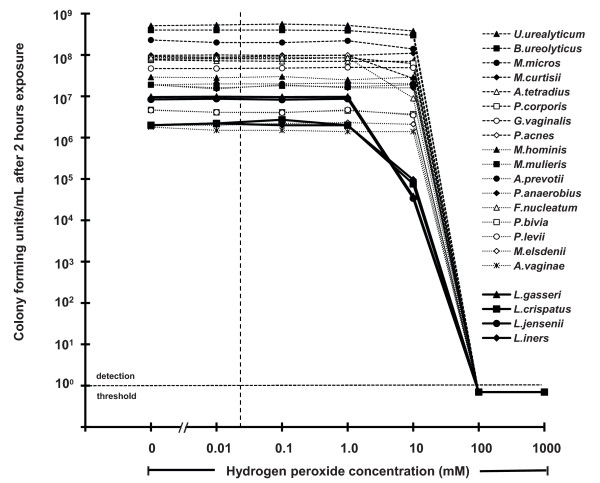
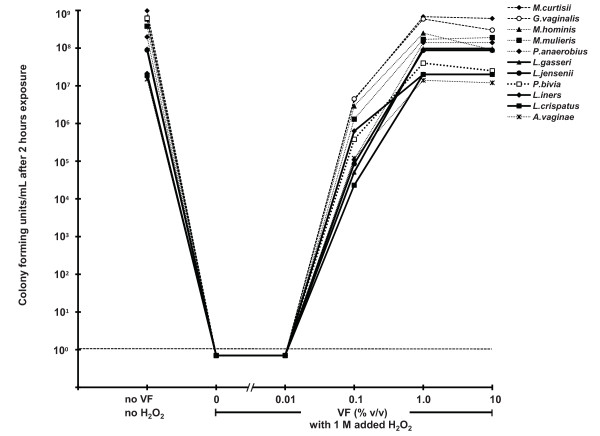
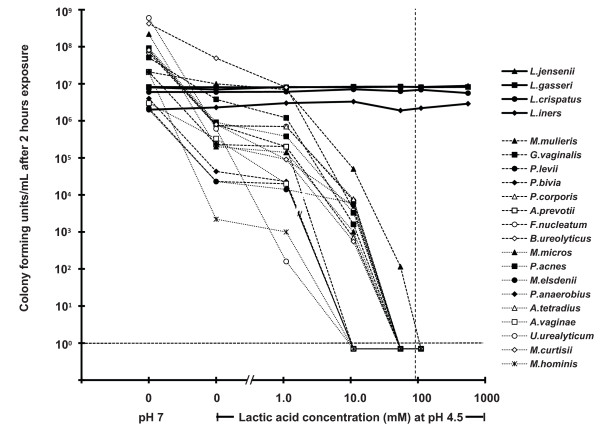
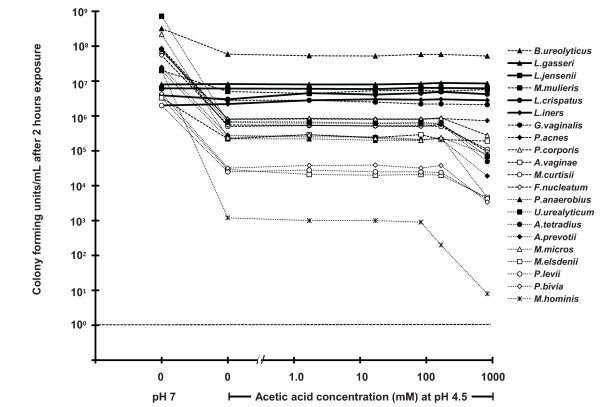
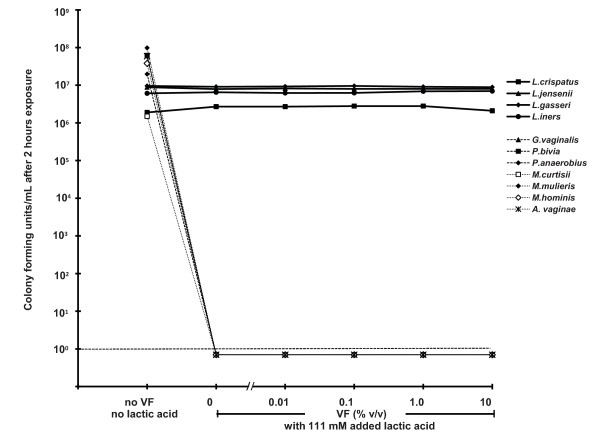
BACKGROUND: Hydrogen peroxide (H2O2) produced by vaginal lactobacilli is generally believed to protect against bacteria associated with bacterial vaginosis (BV), and strains of lactobacilli that can produce H2O2 are being developed as vaginal probiotics. However, evidence that led to this belief was based in part on non-physiological conditions, antioxidant-free aerobic conditions selected to maximize both production and microbicidal activity of H2O2. Here we used conditions more like those in vivo to compare the effects of physiologically plausible concentrations of H2O2 and lactic acid on a broad range of BV-associated bacteria and vaginal lactobacilli. METHODS: Anaerobic cultures of seventeen species of BV-associated bacteria and four species of vaginal lactobacilli were exposed to H2O2, lactic acid, or acetic acid at pH 7.0 and pH 4.5. After two hours, the remaining viable bacteria were enumerated by growth on agar media plates. The effect of vaginal fluid (VF) on the microbicidal activities of H2O2 and lactic acid was also measured. RESULTS: Physiological concentrations of H2O2 (< 100 μM) failed to inactivate any of the BV-associated bacteria tested, even in the presence of human myeloperoxidase (MPO) that increases the microbicidal activity of H2O2. At 10 mM, H2O2 inactivated all four species of vaginal lactobacilli but only one of seventeen species of BV-associated bacteria. Moreover, the addition of just 1% vaginal fluid (VF) blocked the microbicidal activity of 1 M H2O2. In contrast, lactic acid at physiological concentrations (55-111 mM) and pH (4.5) inactivated all the BV-associated bacteria tested, and had no detectable effect on the vaginal lactobacilli. Also, the addition of 10% VF did not block the microbicidal activity of lactic acid. CONCLUSIONS: Under optimal, anaerobic growth conditions, physiological concentrations of lactic acid inactivated BV-associated bacteria without affecting vaginal lactobacilli, whereas physiological concentrations of H2O2 produced no detectable inactivation of either BV-associated bacteria or vaginal lactobacilli. Moreover, at very high concentrations, H2O2 was more toxic to vaginal lactobacilli than to BV-associated bacteria. On the basis of these in vitro observations, we conclude that lactic acid, not H2O2, is likely to suppress BV-associated bacteria in vivo.
Overview
The claims and statistics of this paper haven’t been checked yet.
Free: it reads the open-access text and checks the first 5 claims that cite a source we can check. Create a free account to check every claim.
Integrity signals
Registry
Cites
Statistics
Figures
Verification
Claims the paper makes
The claims and statistics of this paper haven’t been checked yet.
Free: it reads the open-access text and checks the first 5 claims that cite a source we can check. Create a free account to check every claim.
Self-check
Percentages, sums and reported differences re-computed from the paper’s own numbers.
The self-check needs the paper’s full text.
Citations
Cites
Imlay, J. A. (2003) · Annual Review of Microbiology · doi:10.1146/annurev.micro.57.030502.090938 · Cited by 2,203 · cited 1×
“Hydrogen peroxide causes oxidative stress in bacterial cells [14], at least partially by oxidizing sulphydrals, and by oxidizing free iron to produce hydroxyl radicals that react with nucleic acids [15].”
BackgroundLactic Acid Permeabilizes Gram-Negative Bacteria by Disrupting the Outer Membrane
Alakomi, H.-L., Skyttä, E., Saarela, M., Mattila-Sandholm, T., Latva-Kala, K., & Helander, I. M. (2000) · Applied and Environmental Microbiology · doi:10.1128/aem.66.5.2001-2005.2000 · Cited by 1,093 · cited 1×
“Lactic acid has also been shown to have broad spectrum activity against Gram-negative bacteria, probably by weakening the cell wall [19].”
BackgroundMyeloperoxidase-Halide-Hydrogen Peroxide Antibacterial System
Klebanoff, S. J. (1968) · Journal of Bacteriology · doi:10.1128/jb.95.6.2131-2138.1968 · Cited by 815 · cited 1×
“All growth medium formulations contained at least ten-times more than the 1 mM concentration of chloride ions required for full activity of a myeloperoxidase-halide-H2O2 microbicidal system [26].”
BackgroundEschenbach, D. A., Davick, P. R., Williams, B. L., Klebanoff, S. J., Young-Smith, K., Critchlow, C. M., & Holmes, K. K. (1989) · Journal of Clinical Microbiology · doi:10.1128/jcm.27.2.251-256.1989 · Cited by 707 · cited 1×
“Women with H2O2-producing lactobacilli are less likely to have BV than are women without H2O2-producing lactobacilli [1-3].”
BackgroundSimplified Agar Plate Method for Quantifying Viable Bacteria
Jett, B. D., Hatter, K. L., Huycke, M. M., & Gilmore, M. S. (1997) · BioTechniques · doi:10.2144/97234bm22 · Cited by 567 · cited 1×
“2 depending on growth medium) and track-plated [27] onto the appropriate growth medium containing 1.”
BackgroundThe effects of fermentation acids on bacterial growth
Russell, J. B., & Diez-Gonzalez, F. (1997) · Advances in Microbial Physiology · doi:10.1016/s0065-2911(08)60017-x · Cited by 498 · cited 1×
“Lactic acid, under acidic conditions, can permeate cell membranes, acidify the cytosol [16,17], and induce osmotic stress [18].”
BackgroundRole played by lactobacilli in controlling the population of vaginal pathogens
Boris, S., & Barbés, C. (2000) · Microbes and Infection · doi:10.1016/s1286-4579(00)00313-0 · Cited by 427 · cited 1×
“Vaginal lactobacilli produce several target-specific antimicrobial factors, including bacteriocins [10,11], bacteriocins-like substances [12], and selective ligands [13].”
BackgroundDefense factors of vaginal lactobacilli
Aroutcheva, A., Gariti, D., Simon, M., Shott, S., Faro, J., Simoes, J. A., Gurguis, A., & Faro, S. (2001) · American Journal of Obstetrics and Gynecology · doi:10.1067/mob.2001.115867 · Cited by 424 · cited 1×
“Vaginal lactobacilli produce several target-specific antimicrobial factors, including bacteriocins [10,11], bacteriocins-like substances [12], and selective ligands [13].”
BackgroundControl of the Microbial Flora of the Vagina by H202-Generating Lactobacilli
Klebanoff, S. J., Hillier, S. L., Eschenbach, D. A., & Waltersdorph, A. M. (1991) · Journal of Infectious Diseases · doi:10.1093/infdis/164.1.94 · Cited by 420
Bioenergetics of lactic acid bacteria: cytoplasmic pH and osmotolerance
Kashket, E. R. (1987) · FEMS Microbiology Letters · doi:10.1111/j.1574-6968.1987.tb02463.x · Cited by 410
Research works printed but not linked: 1
- O'Hanlon DE Moench TR Harrold S Cone RA Microbicide production by vaginal lactobacilli: vaginal acidity (pH) and lactic acid or more potent than previously reported. Poster presentation Microbicides New Delhi 2008 Feb 24-28 2008
Cited by
Items 201–300 of 376
Maduta, C. S., McCormick, J. K., & Dufresne, K. (2024) · Journal of Bacteriology · doi:10.1128/jb.00447-23 · Cited by 14
Microdroplet co-cultivation and interaction characterization of human vaginal bacteria
Jackman, C. M., Deans, K. W., Forney, L. J., & Lin, X. N. (2019) · Integrative Biology · doi:10.1093/intbio/zyz006 · Cited by 14
Complete Genome Sequences of Six Lactobacillus iners Strains Isolated from the Human Vagina
France, M., Rutt, L., Narina, S., Arbaugh, S., McComb, E. J., Humphrys, M. S., Ma, B., Hayward, M. R., Costello, E. K., Relman, D. A., et al. (2020) · Microbiology Resource Announcements · doi:10.1128/mra.00234-20 · Cited by 12
“While it is capable of lowering vaginal pH via the production of lactic acid, a hallmark of vaginal health (6), it is also frequently found coresident with species that have been associated with bacterial vaginosis, a common vaginal condition associated with adverse health outcomes (7–9).”
BackgroundAbramov, V. M., Kosarev, I. V., Валериевич, М. А., Deryusheva, E. I., Priputnevich, T. V., Панин, А. Н., Chikileva, I. O., Abashina, T. N., Manoyan, A. M., Ahmetzyanova, A. A., et al. (2023) · Antibiotics · doi:10.3390/antibiotics12101535 · Cited by 15
“…of lactic acid increased to 69.7 ± 0.8 mM, and after 48 h, it further rose to 124.0 ± 2.5 mM. Previously, it was found that lactic acid at physiological concentrations (55–110 mM) mediates a potent 10 6 -fold decrease in the viability of 17 different bacterial vaginosis-associated bacteria [69].”
BackgroundInfluentialModified Biochanin A Release from Dual pH- and Thermo-Responsive Copolymer Hydrogels
Nikolić, I., Ilić-Stojanović, S. S., Dinić, A., Zdravković, A. S., Stanojevic, L. P., Nikolić, V. D., & Nikolic, L. B. (2021) · Polymers · doi:10.3390/polym13030426 · Cited by 17
“The position of the amide band I, ν(C=O), remained the same (1653 cm−1) after biochanin A incorporation into the p(NIPAM-co-AA) hydrogel, indicating that this group did not participate in the intermolecular interactions between biochanin A and p(NIPAMco-AA) hydrogel [51].”
BackgroundMethodYadav, P., Debnath, N., Pradhan, D., Mehta, P. K., Kumar, A., Yadav, M. L., & Yadav, A. K. (2025) · Molecular Nutrition & Food Research · doi:10.1002/mnfr.70013 · Cited by 19
Lactic Acid Bacteria as Mucosal Immunity Enhancers and Antivirals through Oral Delivery
Moon, A., Sun, Y., Wang, Y., Huang, J., Khan, M. U. Z., & Qiu, H. (2022) · Applied Microbiology · doi:10.3390/applmicrobiol2040064 · Cited by 16
Pedro, N. A., & Mira, N. P. (2024) · Microbiological Research · doi:10.1016/j.micres.2024.127628 · Cited by 19
Brulin, L., Ducrocq, S., Even, G., Sanchez, M.-P., Martel, S., Merlin, S., Audebert, C., Croiseau, P., & Estellé, J. (2024) · Scientific Reports · doi:10.1038/s41598-024-69715-7 · Cited by 20
Usyk, M., Carlson, L., Schlecht, N. F., Sollecito, C. C., Grassi, E., Wiek, F., Shankar, V., Strickler, H. D., Nucci-Sack, A. T., Díaz, Á., et al. (2025) · Cell · doi:10.1016/j.cell.2024.12.011 · Cited by 15
“…of incident Chlamydia trachomatis (CT) infection among Black and Hispanic adolescent and young adult women in NYC, researchers can better understand associations between the cervicovaginal microbiome and CT infection risk, likelihood of reinfection, pelvic inflammatory disease, and miscarriage.”
Kato, I., Zhang, J., & Sun, J. (2022) · Cancers · doi:10.3390/cancers14020425 · Cited by 13
Happel, A., Gasper, M. A., Balle, C., Konstantinus, I. N., Gamieldien, H., Dabee, S., Gill, K., Bekker, L., Passmore, J.-A. S., & Jaspan, H. B. (2022) · Microbiology Spectrum · doi:10.1128/spectrum.01626-21 · Cited by 17
“BV-associated bacteria are more sensitive to lactic acid (50), while C.”
BackgroundTyssen, D. P., Hearps, A. C., Guntur, K., Masson, L., Cook, S., Moulton, S. E., Ravel, J., Bradshaw, C. S., Ayehunie, S., & Tachedjian, G. (2022) · Frontiers in Reproductive Health · doi:10.3389/frph.2022.915948 · Cited by 13
“LA also inhibits the growth of bacterial STIs including Chlamydia trachomatis (13) and Neisseria gonorrhoeae (14), and kills 17 different bacteria associated with BV, but not vaginal lactobacilli (15).”
BackgroundZalambani, C., Rizzardi, N., Marziali, G., Foschi, C., Morselli, S., Djusse, M. E., Naldi, M., Fato, R., Calonghi, N., & Marangoni, A. (2023) · Pathogens · doi:10.3390/pathogens12070883 · Cited by 21
Social, microbial, and immune factors linking bacterial vaginosis and infectious diseases
Gilbert, N. M., Hernandez, L. A. R., Berman, D., Morrill, S. R., Gagneux, P., & Lewis, A. L. (2025) · Journal of Clinical Investigation · doi:10.1172/jci184322 · Cited by 18
“Vaginal Lactobacillus species are believed to thwart colonization of potential pathogens, largely by producing lactic acid and establishing the vagina’s acidic pH (4).”
The Penis, the Vagina and HIV Risk: Key Differences (Aside from the Obvious)
Kaul, R., Liu, C. M., Park, D. E., Galiwango, R. M., Tobian, A. A. R., & Prodger, J. L. (2022) · Viruses · doi:10.3390/v14061164 · Cited by 16
Managing Recurrent Bacterial Vaginosis: Insights for Busy Providers
Marshall, A. O. (2015) · Sexual Medicine Reviews · doi:10.1002/smrj.45 · Cited by 16
Cheng, D., Li, N., Sun, Q., Wang, K., & Gao, F. (2025) · International Journal of Molecular Medicine · doi:10.3892/ijmm.2025.5644 · Cited by 19
“…(H 2 O 2 ) produced by H 2 O 2 ‑ generating Lactobacillus spp., notably L. crispatus , L. jensenii , L. gasseri and L. vaginalis (150), inhibits pathogens such as G. vaginalis and Candida albicans via oxidation of proteins, essential thiol groups in enzymes, DNA and other cellular components (151).”
Pedro, N. A., Fontebasso, G., Pinto, S. N., Alves, M. M., & Mira, N. P. (2023) · Microbial Cell · doi:10.15698/mic2023.04.795 · Cited by 13
Redelinghuys, M. J., Ehlers, M. M., Bezuidenhoudt, J., Becker, P., & Kock, M. M. (2017) · Sexually Transmitted Infections · doi:10.1136/sextrans-2016-052883 · Cited by 11
Juliana, N. C. A., Deb, S., Juma, M. H., Poort, L., Budding, A. E., Mbarouk, A., Ali, S. M., Ouburg, S., Morré, S. A., Sazawal, S., et al. (2022) · Microorganisms · doi:10.3390/microorganisms10030509 · Cited by 13
The association between homocysteine and bacterial vaginosis: results from NHANES 2001–2004
Luo, J., Chen, T., Yue, C., Huang, Z., Li, X., Chen, H., Huang, Y., & Guo, X. (2023) · Scientific Reports · doi:10.1038/s41598-023-45494-5 · Cited by 11
“…estrogen. α-Amylase, the enzyme that degrades glycogen into maltose, maltotriose and α-dextrin, is also present 7 , and Lactobacillus uses these glycogen breakdown products to produce lactic acid, which acidifies the vagina to a pH of 3.0–4.5, thereby inhibiting the growth of other bacteria 19,20 .”
BackgroundInfluentialCheng, L., Yan, C., Yang, Y., Hong, F., & Du, J. (2024) · Cancer Medicine · doi:10.1002/cam4.70440 · Cited by 11
“Lactic acid at pH 4.5 has been shown to protect against various bacterial vaginosis-associated species, including Gardnerella vaginalis and Atopobium vaginae , without affecting the viability of Lactobacillus [40].”
InfluentialNaidoo, K., Abbai, N. S., Tinarwo, P., & Sebitloane, M. (2022) · Infectious Diseases in Obstetrics and Gynecology · doi:10.1155/2022/9562937 · Cited by 11
“This increases the susceptibility to infection by invading microbes and viruses including sexually transmitted disease pathogens [6].”
BackgroundTidbury, F. D., Brülhart, G., Müller, G., Pavicic, E., Weidlinger, S., Eichner, G., von Wolff, M., & Stute, P. (2025) · BMC Women s Health · doi:10.1186/s12905-024-03513-1 · Cited by 16
Kart, U., Smagulova, D., Khairetdinova, D., Raimbekova, A., & Hortelano, G. (2026) · Frontiers in Cellular and Infection Microbiology · doi:10.3389/fcimb.2026.1738291 · Cited by 11
“H 2 O 2 -producing L. crispatus and L. jensenii inhibit Gardnerella vaginalis and Candida albican s, reducing risks of bacterial vaginosis and yeast infections (O ’ Hanlon et al., 2011).”
Multipurpose prevention technologies for reproductive and sexual health
Stone, A. B. (2014) · Reproductive Health Matters · doi:10.1016/s0968-8080(14)44801-8 · Cited by 9
Borgogna, J.-L. C., & Yeoman, C. J. (2017) · Methods in microbiology · doi:10.1016/bs.mim.2017.08.003 · Cited by 11
Semen: A modulator of female genital tract inflammation and a vector for HIV‐1 transmission
Jewanraj, J., Ngcapu, S., & Liebenberg, L. J. P. (2021) · American Journal of Reproductive Immunology · doi:10.1111/aji.13478 · Cited by 11
Tareq, I., & Luti, K. J. K. (2022) · Iraqi Journal of Science · doi:10.24996/ijs.2022.63.2.7 · Cited by 13
González, A., Lagos, J. J. R., Peña‐Castillo, M. Á., Nirmalkar, K., García-Mena, J., & Pacheco‐López, G. (2022) · Current Microbiology · doi:10.1007/s00284-022-02918-1 · Cited by 10
“BV is a dysbiosis of the vaginal microbiota, mainly due by the colonization of exogenous-opportunistic bacteria [2].”
BackgroundCampaner, A. B., de Sica, A. C. A. R., Curi, F. S. D. A., Marchetti, G., Dias, G. S., & Teixeira, B. L. (2025) · PLoS ONE · doi:10.1371/journal.pone.0321737 · Cited by 9
“[24-29] For instance, O’Hanlon et al [24] demonstrated the antimicrobial action of lactic acid on BV-associated bacteria and vaginal lactobacilli in vitro , under anaerobic growth conditions, similarly to the hypoxic environment of the vagina.”
Impact of bacterial vaginosis on sexually transmitted viral infections: a bacterial point of view
Segui‐Perez, C., van Smoorenburg, M. Y., Maranus, A. E., Geijtenbeek, T. B. H., & Strijbis, K. (2025) · FEMS Microbiology Reviews · doi:10.1093/femsre/fuaf039 · Cited by 13
“In addition to lactic acid (Boris and Barbés 2000 , O’Hanlon et al. 2011 ), lactobacilli also produce antimicrobial compounds, such as hydrogen peroxide (Sgibnev and Kremleva 2015 ), bacteriocins (Stoyancheva et al. 2014 ), and arginine deaminase enzymes (Rousseau et al. 2005 ), that all suppress…”
Aldunate, M., Tyssen, D. P., Johnson, A., Latham, C. F., Ellenberg, P. C., Cowieson, N. P., Hayward, J. A., Ramsland, P. A., Hearps, A. C., & Tachedjian, G. (2025) · PLoS Pathogens · doi:10.1371/journal.ppat.1013594 · Cited by 15
“The more potent HIV-1 virucidal activity of LA relative to low pH and acetic acid [40] is similar to other studies reporting LA’s microbicidal activity against BV-associated bacteria and Neisseria gonorrhoeae [44,45,82].”
InfluentialSu, S., & Vincent, K. L. (2022) · Expert Review of Clinical Pharmacology · doi:10.1080/17512433.2022.2100347 · Cited by 10
“These findings suggest that VPM provides some protection against the colonization of Gardnerella most likely due to the high concentrations of lactic acid found in VPM which is known to suppress bacteria causing BV [57].”
BackgroundA női alsó genitalis traktus mikrobiom tulajdonságai és szerepe
Marschalkó, M., & Ambrus, L. (2023) · Orvosi Hetilap · doi:10.1556/650.2023.32791 · Cited by 14
Foessleitner, P., Pjevac, P., Granser, S., Wisgrill, L., Pummer, L., Eckel, F., Seki, D., Berry, D., Hausmann, B., & Farr, A. (2024) · Acta Obstetricia Et Gynecologica Scandinavica · doi:10.1111/aogs.14773 · Cited by 9
“26 FASTQ reads 1 and 2 were trimmed to 230 nucleotides, with allowed expected errors of 4 and 6, respectively.”
BackgroundKnauf, A. S. M. (2015) · Gynecology & Obstetrics · doi:10.4172/2161-0932.1000275 · Cited by 8
“5 by fermentation of glucose to lactic acid, an overgrowth by anaerobic bacteria is prevented [3].”
BackgroundPramanick, R., Parab, S., Mayadeo, N., Warke, H. S., & Aranha, C. C. (2018) · The Journal of Infection in Developing Countries · doi:10.3855/jidc.10154 · Cited by 8
Marrazzo, J. M. (2018) · Europe PMC (PubMed Central) · Cited by 10
A Prerequisite for Health: Probiotics
Rossoni, R. D., Ribeiro, F. D. C., de Barros, P. P., Mylonakis, E. E., & Junqueira, J. C. (2020) · Elsevier eBooks · doi:10.1016/b978-0-12-816664-2.00011-6 · Cited by 10
Development of a New Biomarker Model for Predicting Preterm Birth in Cervicovaginal Fluid
Lee, J.-Y., Seo, S., Shin, B., Hong, S. H., Kwon, E., Park, S., Hur, Y. M., Lee, D., Kim, Y. J., & Han, S. B. (2022) · Metabolites · doi:10.3390/metabo12080734 · Cited by 9
The Vaginal Microbiome and Host Health: Implications for Cervical Cancer Progression
Lagunas-Cruz, M. D. C., Valle‐Mendiola, A., & Soto‐Cruz, I. (2026) · International Journal of Molecular Sciences · doi:10.3390/ijms27020640 · Cited by 10
Human Pathogenic Candida Species Respond Distinctively to Lactic Acid Stress
Zangl, I., Beyer, R., Pap, I.-J., Strauss, J., Aspöck, C., Willinger, B., & Schüller, C. (2020) · Journal of Fungi · doi:10.3390/jof6040348 · Cited by 13
“5 [24], showing that high concentrations are not harmful to lactobacilli.”
BackgroundBest among the key molecular diagnostic markers of bacterial vaginosis
Deng, T., Song, X., Liao, Q., Zheng, Y., Sun, H. Y., Zhang, L., & Chen, X. Y. (2025) · AMB Express · doi:10.1186/s13568-025-01847-z · Cited by 7
“Of Lactobacillus, besides L. crispatus , L. gasseri , L. jensenii and other species also can produce lactic acid and H 2 O 2 (O’Hanlon et al. 2011; Ravel et al. 2011; Tachedjian et al. 2017; Zozaya-Hinchliffe et al. 2010), another our previous study revealed that L. crispatus is of the higher…”
Discovering a new paradigm: Gut microbiota as a central modulator of sexual health
Marano, G., Anesini, M. B., Milintenda, M., Acanfora, M., d’Abate, C., Lisci, F. M., Pirona, I., Traversi, G., Pola, R., Gaetani, E., et al. (2025) · World Journal of Gastrointestinal Pathophysiology · doi:10.4291/wjgp.v16.i3.107823 · Cited by 7
“This notion was further supported by O’Hanlon et al [36], who demonstrated that under low O 2 conditions characteristic of the vagina, H 2 O 2 does not significantly affect BV-associated bacteria.”
Purkayastha, S. D., Bhattacharya, M. K., Prasad, H. K., & Mandal, S. D. (2020) · Elsevier eBooks · doi:10.1016/b978-0-12-821265-3.00017-7 · Cited by 10
O’Hanlon, D. E., Brown, S. E., He, X., Stennett, C. A., Robbins, S., Johnston, E. D., Wnorowski, A. M., Mark, K., Ravel, J., Cone, R. A., et al. (2021) · PLoS ONE · doi:10.1371/journal.pone.0250153 · Cited by 7
Self-citationSeta, F. D., & Larsen, B. (2021) · Pathogens · doi:10.3390/pathogens10121576 · Cited by 7
“Microbiologic observations on lactic acid appear commonly in the food science literature but fewer in vitro studies are related to BV associated bacteria [27], Neisseria gonorrhea [30], Chlamydia trachomatis [31], or Herpes virus [32] and one report indicated that Candida albicans and Candida glabrata inhibition was m…”
BackgroundGravett, M. G., Jin, L., Pavlova, S. I., & Tao, L. (2012) · Journal of Medical Primatology · doi:10.1111/j.1600-0684.2012.00537.x · Cited by 7
Saïdi, H., Jenabian, M.-A., & Bélec, L. (2012) · AIDS Research and Human Retroviruses · doi:10.1089/aid.2012.0049 · Cited by 9
“121 However, cervicovaginal fluids and semen showed significant H 2 O 2 -blocking activity.”
Gonçalves, B., Pires, D. P., Fernandes, L. C., Pacheco, M., Ferreira, T., Osório, H., Soares, A. R., Henriques, M., & Silva, S. (2024) · Microbiology Spectrum · doi:10.1128/spectrum.01201-24 · Cited by 6
Feng, X., Song, W., Ren, X., Xu, Z., Li, C., Feng, M., & Wang, N. (2025) · Frontiers in Microbiology · doi:10.3389/fmicb.2025.1733315 · Cited by 11
Sutton, C., Bradshaw, C. S., Plummer, E. L., Chow, E. P. F., Fairley, C. K., & Vodstrcil, L. A. (2026) · Sexually Transmitted Infections · doi:10.1136/sextrans-2025-056729 · Cited by 7
“21 Thus, greater lactic acid production in women with an oestrog-enised vaginal environment could explain their reduced risk of BV. Lactic acid, oestrogen and progesterone may also have a direct effect on immune responses that further promote antimicrobial mechanisms 22–24 and affect the growth of…”
Sun, Q., Dong, B., Yang, D., Yu, J., Ren, T., Wang, T., Yang, L., Lü, Y., & Su, C. (2022) · Molecular Microbiology · doi:10.1111/mmi.15015 · Cited by 7
“(O'Hanlon et al., 2011).”
Latras, A., Bettelli, M. A., Pereira, P. F. M., Jiménez‐Quero, A., Hedenqvist, M. S., & Capezza, A. J. (2025) · RSC Applied Polymers · doi:10.1039/d4lp00323c · Cited by 8
Darwin, D. (2019) · Biotechnologia · doi:10.5114/bta.2019.85320 · Cited by 9
“This occurs because lactic acid has a lower pKa (3.85) compared to VFA (pKa 4.76–4.87) (O’Hanlon et al., 2011).”
BackgroundInfluentialLi, H., Nie, C., Xiao, B., Chen, S., 余, 节., & Zhu, Y. (2022) · Frontiers in Pediatrics · doi:10.3389/fped.2022.750860 · Cited by 6
“It is also understood that the bacterial community of the vagina of pregnant women is typically dominated by Lactobacillus species (9), many of which can produce biosurfactants and bacteriocins antagonistic to pathogens (10).”
BackgroundLi, Y., Jiang, Y., Lessing, D. J., & Chu, W. (2022) · Journal of Applied Microbiology · doi:10.1111/jam.15643 · Cited by 7
“Growth capacity of isolates with different pH conditions Healthy vaginal environments have a pH between 4.5 and 3.5, and isolates are required to be activated for normal growth at low pH (Aldunate et al., 2013; O'Hanlon et al., 2011).”
BackgroundInfluentialDoroftei, B., Ilie, O., Armeanu, T., Stoian, I. L., Anton, N., Babici, R.-G., & Ilea, C. G. (2023) · Journal of Clinical Medicine · doi:10.3390/jcm12155069 · Cited by 11
Nori, S. R. C., McGuire, T. K., Lawton, E. M., McAuliffe, F. M., van Sinderen, D., Walsh, C. J., Cotter, P. D., & Feehily, C. (2023) · Microbial Genomics · doi:10.1099/mgen.0.001137 · Cited by 13
Bovine vaginal lactobacilli and their adherence to mucus in different phases of the estrous cycle
Styková, E., Radomra, N., Soňa, G., Igor, V. P., & Andrea, L. (2014) · African Journal of Microbiology Research · doi:10.5897/ajmr2014.6886 · Cited by 6
CE: Health and the Human Microbiome A Primer for Nurses
McElroy, K. G., Chung, S.-Y., & Regan, M. B. (2017) · AJN American Journal of Nursing · doi:10.1097/01.naj.0000520917.73358.99 · Cited by 11
Bacterial Cell, Classification and Required Essential Contents for Growth
Kumar, R., & Pundir, S. (2021) · Asian Journal of Pharmacy and Technology · doi:10.52711/2231-5713.2021.00030 · Cited by 8
Das, P., Swain, T., Mohanty, J. R., Sinha, S., Padhi, B. K., Torondel, B., Cumming, O., Panda, B., Nayak, A., & Panigrahi, P. (2018) · Parasitology Research · doi:10.1007/s00436-018-5962-z · Cited by 9
Dubé‐Zinatelli, E., Cappelletti, L., & Ismail, N. (2025) · Journal of Reproductive Immunology · doi:10.1016/j.jri.2025.104804 · Cited by 12
Rojas-Vargas, J., Wilcox, H., Monari, B., Gajer, P., Zuanazzi, D., Shouldice, A. C., Parmar, R., Haywood, P., Tai, V., Krakowsky, Y., et al. (2025) · Cell Reports · doi:10.1016/j.celrep.2025.116546 · Cited by 6
“However, other centers recommend against it 83 based on data from rCFs. 84–87 However, neovaginal tissue has been shown to retain the expression of barrier proteins associated with limiting water loss from skin.”
Adhesion Properties and Pathogen Inhibition of Vaginal-Derived Lactobacilli
Pino, A., Hiippala, K., Ronkainen, A., Vaccalluzzo, A., Caggia, C., Satokari, R. M., & Randazzo, C. L. (2024) · Probiotics and Antimicrobial Proteins · doi:10.1007/s12602-024-10390-5 · Cited by 10
“Different bacterial metabolites contribute to the antimicrobial activity with H 2 O 2 and lactic acid playing key roles in maintaining a healthy, balanced vaginal ecosystem through their virucidal and microbicidal properties [51].”
Wu, Y., Shi, L., Jin, Z., Chen, W., Wang, F., Wu, H., Li, H., Zhang, C., & Zhu, R. (2025) · Microbiology Spectrum · doi:10.1128/spectrum.01462-24 · Cited by 5
“Lactic acid has been shown to have antibacterial properties, and Lactobacillus is capable of producing large amounts of it (42).”
Regulation of Vaginal Microbiome by Nitric Oxide
Yeruva, T., & Lee, C. H. (2019) · Current Pharmaceutical Biotechnology · doi:10.2174/1389201020666190207092850 · Cited by 6
Gaur, S. S., & Annapure, U. S. (2022) · World Journal of Microbiology and Biotechnology · doi:10.1007/s11274-022-03404-3 · Cited by 5
“The lactic acid produced by these bacteria also helps fight various vaginal infections and maintains health (Ravel et al. 2011; O’Hanlon et al. 2011; Petrova et al. 2017; Bhagwat and Annapure 2019b).”
BackgroundVIBES: A consensus subtyping of the vaginal microbiota reveals novel classification criteria
Fernández-Edreira, D., Liñares-Blanco, J., V.-del-Río, P., & Fernandez-Lozano, C. (2023) · Computational and Structural Biotechnology Journal · doi:10.1016/j.csbj.2023.11.050 · Cited by 5
Diagnosis and therapy of mixed and recurrent vulvovaginal infections
Kuznetsova, I. V. (2019) · Medical alphabet · doi:10.33667/2078-5631-2019-3-25(400)-29-36 · Cited by 5
Asano, K., Narita, K., Hirose, S., & Nakane, A. (2018) · Medical Microbiology and Immunology · doi:10.1007/s00430-018-0551-4 · Cited by 5
Romero, R. J., Tarca, A. L., Gomez‐Lopez, N., Winters, A. D., Panzer, J. J., Huang, L., Gudicha, D. W., Galaz, J., Farías, M., Kracht, D. J., et al. (2022) · Research Square · doi:10.21203/rs.3.rs-2359402/v1 · Cited by 6
Ma, X. (2025) · Journal of Chemical Technology & Biotechnology · doi:10.1002/jctb.70127 · Cited by 5
Lactobacilli-Derived Postmetabolites Are Broad-Spectrum Inhibitors of Herpes Viruses In Vitro
Danova, S. T., Dobreva, L. I., Mancheva, K., Atanasov, G., Simeonova, L., & Vilhelmova-Ilieva, N. (2024) · International Journal of Molecular Sciences · doi:10.3390/ijms26010074 · Cited by 4
“Lactic acid has been shown to be a major antiviral factor produced by Lactobacilli in the vaginal mucosa [44,45].”
Anton, L., Cristancho, A. G., Ferguson, B., Ravel, J., & Elovitz, M. A. (2025) · Microbiome · doi:10.1186/s40168-025-02223-6 · Cited by 7
“…species, helps maintain an acidic vaginal pH [26], exhibits significant anti-microbial and anti-viral activity against bacterial vaginosis (BV)- associated bacteria [27, 28] and HIV [29, 30], modulates inflammatory responses [31–33], and increases cervical epithelial barrier integrity [34, 35].”
Friberg, M., Woeller, K. E., Iberi, V., Mancheno, P. P., Riedeman, J. S., Bohman, L. C., & Davis, C. (2023) · Frontiers in Reproductive Health · doi:10.3389/frph.2023.1162746 · Cited by 5
“In reproductive age women, it is thought they do so through the production of lactic acid resulting in a low pH environment that restricts the growth of pathogens and other opportunistic organisms (90, 91).”
BackgroundPurcell, D. F. J., Cunningham, A. L., Turville, S. G., Tachedjian, G., & LANDAY, A. L. (2012) · AIDS Research and Human Retroviruses · doi:10.1089/aid.2012.0276 · Cited by 4
“13 In vaginal fluid, bacteria associated with BV can be suppressed with lactic acid but not hydrogen peroxide.”
La vaginose bactérienne en 10 questions
Bohbot, J.-M., Brami, G., Goubard, A., & Harvey, T. (2020) · Gynécologie Obstétrique Fertilité & Sénologie · doi:10.1016/j.gofs.2020.05.003 · Cited by 7
The Microbiota of Humans and Microbial Virulence Factors
Granato, P. A. (2016) · ASM Press eBooks · doi:10.1128/9781555819637.ch1 · Cited by 4
Lactobacilli and lactic acid in maintaining and restoring women’s health
Носенко, О. М., & Demidchik, R. Y. (2023) · Reproductive health of woman · doi:10.30841/2708-8731.8.2023.297795 · Cited by 3
Vaginal microbiota in term pregnant women with differences in cervical ripeness revealed by 2bRAD-M
Lu, S., Wu, Q., He, W., Du, X., Cui, Q., Yang, Y., & Yin, Z. (2024) · BMC Microbiology · doi:10.1186/s12866-024-03612-x · Cited by 3
“Lactic acid, a metabolite of Lactobacillus , acidifies the vaginal environment, permeates the cytosol to lower cytoplasmic pH, and induces osmotic stress, inhibiting the growth of pathogenic bacteria [26].”
BackgroundBacterial vaginosis: modern aspects of pathogenesis, diagnosis, and treatment
Dobrokhotova, Y. E., Дмитриевна, К. В., & Ozolinya, L. A. (2023) · V F Snegirev Archives of Obstetrics and Gynecology · doi:10.17816/2313-8726-2023-10-3-209-218 · Cited by 4
Eichler, S., Panz, M., Harder, A., Masur, C., Häuser, M., & Wiesche, E. S. Z. (2024) · Maturitas · doi:10.1016/j.maturitas.2024.107978 · Cited by 3
El-Saied, N., Amer, M., Elbohoty, A. E. H., Saad, M., & Mansour, M. (2016) · Journal of Gynecology Research · doi:10.15744/2454-3284.2.103 · Cited by 3
An Update on the Probiotic Usage in Bacterial Vaginosis
Hattiholi, A., Tendulkar, S., & Dodamani, S. (2021) · Springer eBooks · doi:10.1007/978-981-33-6236-9_8 · Cited by 3
The Microbiota Continuum along the Reproductive Tract in Women with Infertility
Godovalov, A. P., & Karpunina, T. I. (2020) · Journal of microbiology epidemiology immunobiology · doi:10.36233/0372-9311-2020-1-26-31 · Cited by 3
Interactions between the epithelial barrier and the microbiota in the reproductive tract
Takada, K., Komine‐Aizawa, S., Tsuji, N. M., & Hayakawa, S. (2021) · Elsevier eBooks · doi:10.1016/b978-0-12-818508-7.00002-6 · Cited by 5
Lithgow, K., Cochinamogulos, A., Muirhead, K., Konschuh, S., Oluoch, L. M., Mugo, N., Roxby, A. C., & Sycuro, L. K. (2022) · bioRxiv (Cold Spring Harbor Laboratory) · doi:10.1101/2022.03.29.486257 · Cited by 5
“colonization by pathogens or BV-associated bacteria [2, 30-37].”
BackgroundAssessment of pathogenic potential in non-pathogenic industrially relevant bacteria
Nøhr-Meldgaard, K., Struve, C., Ingmer, H., & Agersø, Y. (2026) · Access Microbiology · doi:10.1099/acmi.0.001079.v3 · Cited by 6
“However, this was later shown to be due to the production of lactic acid, which inactivates the bacterial vaginosis-associated bacteria without affecting the vaginal lactobacilli, while the vaginal conditions are not optimal for H 2 O 2 production [69, 71, 72].”
The cervicovaginal microbiome: an emerging determinant of HPV infection and disease
Spurgeon, M. E. (2026) · Journal of Virology · doi:10.1128/jvi.01706-25 · Cited by 2
CHARACTERISTICS OF LACTOBACTERIA STRAINS, HAVING DIAGNOSTIC SIGNIFICANCE IN GYNECOLOGICAL PRACTICE
Godovalov, A. P., Danielyan, T. Y., & Karpunina, T. I. (2019) · Russian Clinical Laboratory Diagnostics · doi:10.18821/0869-2084-2019-64-2-111-116 · Cited by 3
Lokken, E. M., Jisuvei, C. S., Hughes, J. P., Mandaliya, K. N., Manhart, L. E., Mwinyikai, K., MULLER, C. H., Jaoko, W. G., Kinuthia, J., & McClelland, R. S. (2022) · Fertility and Sterility · doi:10.1016/j.fertnstert.2021.11.032 · Cited by 2
Revealing the hidden heights of microbial metabolites on reproductive physiology
Jayamurali, D., Saminathan, G., Varier, K. M., Acharya, P. S., Manoharan, N., Parasuraman, R., Gajendran, B., & Govindarajulu, S. N. (2023) · Elsevier eBooks · doi:10.1016/b978-0-323-90113-0.00004-3 · Cited by 2
Non-antibiotic Treatment Modalities for Bacterial Vaginosis
Adelia, S., Ardelia, A., & Susetiati, D. A. (2023) · Infectious Disorders - Drug Targets · doi:10.2174/0118715265250557231011065142 · Cited by 4
Bacterial vaginosis and associated bacteria
McLaughlin, S. E., Strenk, S. M., & Fredricks, D. N. (2024) · Elsevier eBooks · doi:10.1016/b978-0-12-818619-0.00109-x · Cited by 3
An in silico framework for the rational design of vaginal probiotic therapy
Lee, C. Y., Bonakdar, S., & Arnold, K. B. (2025) · PLoS Computational Biology · doi:10.1371/journal.pcbi.1012064 · Cited by 2
Reproductive Tract Infections in Women
Brotman, R. M., & Ghanem, K. G. (2015) · Springer eBooks · doi:10.1007/978-3-319-16438-0_11 · Cited by 3
Metadata
- Authors
- O'Hanlon, D. E., Moench, T. R., & Cone, R. A.
- Affiliations
- ReProtect (United States) (US)
- Johns Hopkins University (US)
- ORCID
- Moench, Thomas R
- Venue
- BMC Infectious Diseases
- Published
- 2011-07-19
- Volume
- 11
- Issue
- 1
- Pages
- 200-200
- ISSN
- 1471-2334 (ISSN-L)
- PMC
- PMC3161885
- OpenAlex
- W2013553461
- Cited by
- 375
- References
- 34
- Citations by year
- 2026: 21 · 2025: 31 · 2024: 23 · 2023: 38 · 2022: 44 · 2021: 31 · 2020: 31 · 2019: 24 · 2018: 19 · 2017: 20 · 2016: 20 · 2015: 23 · 2014: 19 · 2013: 14 · 2012: 16
- FWCI
- 14.83
- Type
- journal article
- Language
- en
- Open access
- gold
- doi.org
- Licence
- cc-by
- creativecommons.org/licenses/by/2.0 (tdm)
- Locations
- BMC Infectious Diseases (publishedVersion, cc-by)
- Europe PMC (PubMed Central) (publishedVersion, cc-by)
- PubMed Central (publishedVersion, cc-by)
- PubMed (publishedVersion)
- DOAJ (DOAJ: Directory of Open Access Journals) (submittedVersion, cc-by-sa)
- Funders
- National Institutes of Health (5u01ai066726-04)
- National Institute of Allergy and Infectious Diseases (AI60598, AI 45967, AI66726, P01AI045967, U19AI060598)
- Topics
- Life Sciences › Immunology and Microbiology › Microbiology › Reproductive tract infections research
- Life Sciences › Agricultural and Biological Sciences › Food Science › Probiotics and Fermented Foods
- Life Sciences › Biochemistry, Genetics and Molecular Biology › Molecular Biology › Gut microbiota and health
- Keywords
- bacterial vaginosis, hydrogen peroxide, lactic acid, vaginal lactobacilli, vaginal secretions, probiotics, myeloperoxidase, anaerobic conditions, bacterial inactivation, acetic acid, vaginal microbiota, pH 4.5, vaginal dysbiosis
- MeSH terms
- Adolescent, Adult, Anaerobiosis, Anti-Bacterial Agents, Bacteria, Female, Humans, Hydrogen Peroxide, Hydrogen-Ion Concentration, Middle Aged, Colony Count, Microbial, Vaginosis, Bacterial, Lactic Acid, Vaginal Discharge, Young Adult
About these checks
Registry, retraction, Cites and statistics results are computed, not judged, with one exception: a printed reference that no index lists is read once by a model before it counts as a citation error. Claims are extracted by a model and kept only when their quote appears verbatim in the text; each cited source is then checked, with a model’s help, for whether it says what the claim relies on. Those verdicts can be wrong — read the claim’s quote and the cited source before relying on one.
Statistics and arithmetic are recomputed, not judged.
Confidence bands are shown only for fields calibrated on our annotated test set. None is calibrated yet, so no band is shown.
What counts as a claim ›How we measure confidence ›How we check this ›
Are you an author, or do you see a problem with this page? Request a review
Data sources
Bibliographic data: Semantic Scholar, OpenAlex, Crossref.
Contains information from the Semantic Scholar Academic Graph Datasets, made available under the ODC Attribution License (ODC-BY 1.0).
Semantic Scholar’s data is described in: Kinney, R., et al. (2023). The Semantic Scholar Open Data Platform. arXiv:2301.10140.
