

In vaginal fluid, bacteria associated with bacterial vaginosis can be suppressed with lactic acid but not hydrogen peroxide
Open accessThe DOI matches its Crossref record; 34 of the 34 references it cites were found in a registry or an index.
Abstract
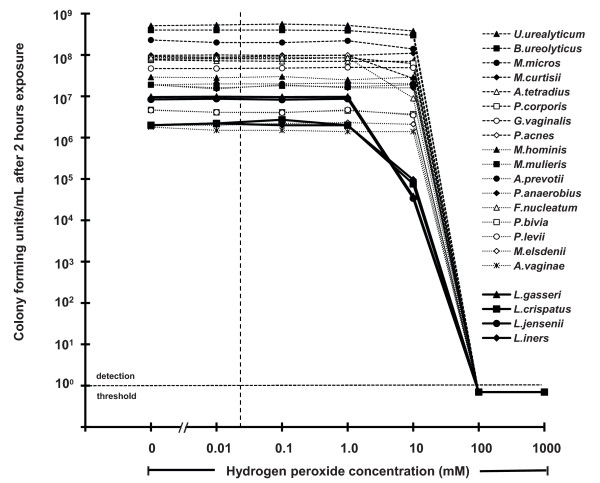
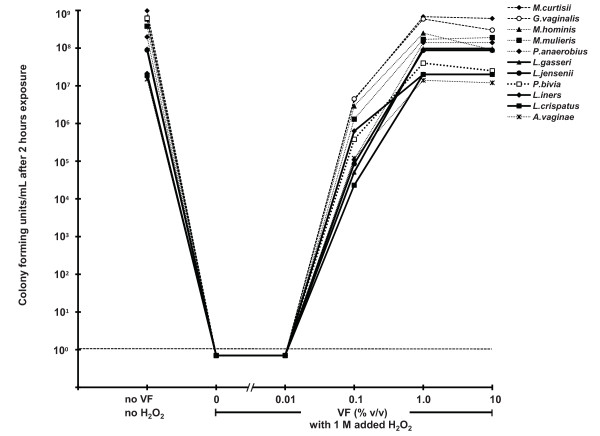
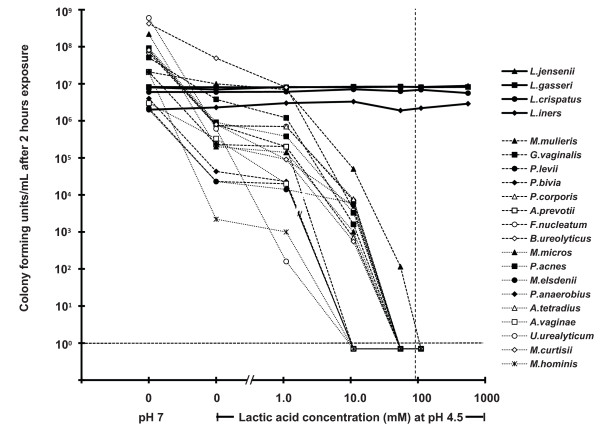
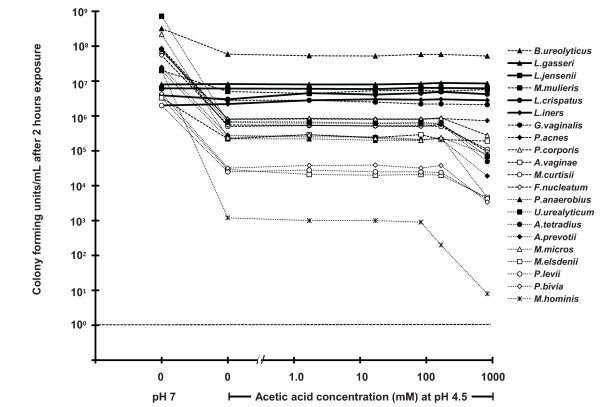
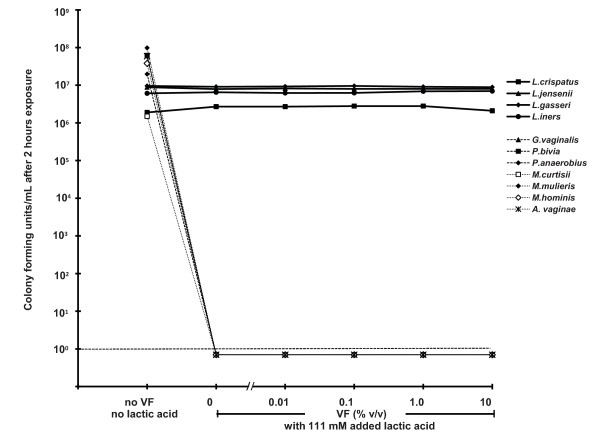
BACKGROUND: Hydrogen peroxide (H2O2) produced by vaginal lactobacilli is generally believed to protect against bacteria associated with bacterial vaginosis (BV), and strains of lactobacilli that can produce H2O2 are being developed as vaginal probiotics. However, evidence that led to this belief was based in part on non-physiological conditions, antioxidant-free aerobic conditions selected to maximize both production and microbicidal activity of H2O2. Here we used conditions more like those in vivo to compare the effects of physiologically plausible concentrations of H2O2 and lactic acid on a broad range of BV-associated bacteria and vaginal lactobacilli. METHODS: Anaerobic cultures of seventeen species of BV-associated bacteria and four species of vaginal lactobacilli were exposed to H2O2, lactic acid, or acetic acid at pH 7.0 and pH 4.5. After two hours, the remaining viable bacteria were enumerated by growth on agar media plates. The effect of vaginal fluid (VF) on the microbicidal activities of H2O2 and lactic acid was also measured. RESULTS: Physiological concentrations of H2O2 (< 100 μM) failed to inactivate any of the BV-associated bacteria tested, even in the presence of human myeloperoxidase (MPO) that increases the microbicidal activity of H2O2. At 10 mM, H2O2 inactivated all four species of vaginal lactobacilli but only one of seventeen species of BV-associated bacteria. Moreover, the addition of just 1% vaginal fluid (VF) blocked the microbicidal activity of 1 M H2O2. In contrast, lactic acid at physiological concentrations (55-111 mM) and pH (4.5) inactivated all the BV-associated bacteria tested, and had no detectable effect on the vaginal lactobacilli. Also, the addition of 10% VF did not block the microbicidal activity of lactic acid. CONCLUSIONS: Under optimal, anaerobic growth conditions, physiological concentrations of lactic acid inactivated BV-associated bacteria without affecting vaginal lactobacilli, whereas physiological concentrations of H2O2 produced no detectable inactivation of either BV-associated bacteria or vaginal lactobacilli. Moreover, at very high concentrations, H2O2 was more toxic to vaginal lactobacilli than to BV-associated bacteria. On the basis of these in vitro observations, we conclude that lactic acid, not H2O2, is likely to suppress BV-associated bacteria in vivo.
Overview
The claims and statistics of this paper haven’t been checked yet.
Free: it reads the open-access text and checks the first 5 claims that cite a source we can check. Create a free account to check every claim.
Integrity signals
Registry
Cites
Statistics
Figures
Verification
Claims the paper makes
The claims and statistics of this paper haven’t been checked yet.
Free: it reads the open-access text and checks the first 5 claims that cite a source we can check. Create a free account to check every claim.
Self-check
Percentages, sums and reported differences re-computed from the paper’s own numbers.
The self-check needs the paper’s full text.
Citations
Cites
Imlay, J. A. (2003) · Annual Review of Microbiology · doi:10.1146/annurev.micro.57.030502.090938 · Cited by 2,203 · cited 1×
“Hydrogen peroxide causes oxidative stress in bacterial cells [14], at least partially by oxidizing sulphydrals, and by oxidizing free iron to produce hydroxyl radicals that react with nucleic acids [15].”
BackgroundLactic Acid Permeabilizes Gram-Negative Bacteria by Disrupting the Outer Membrane
Alakomi, H.-L., Skyttä, E., Saarela, M., Mattila-Sandholm, T., Latva-Kala, K., & Helander, I. M. (2000) · Applied and Environmental Microbiology · doi:10.1128/aem.66.5.2001-2005.2000 · Cited by 1,093 · cited 1×
“Lactic acid has also been shown to have broad spectrum activity against Gram-negative bacteria, probably by weakening the cell wall [19].”
BackgroundMyeloperoxidase-Halide-Hydrogen Peroxide Antibacterial System
Klebanoff, S. J. (1968) · Journal of Bacteriology · doi:10.1128/jb.95.6.2131-2138.1968 · Cited by 815 · cited 1×
“All growth medium formulations contained at least ten-times more than the 1 mM concentration of chloride ions required for full activity of a myeloperoxidase-halide-H2O2 microbicidal system [26].”
BackgroundEschenbach, D. A., Davick, P. R., Williams, B. L., Klebanoff, S. J., Young-Smith, K., Critchlow, C. M., & Holmes, K. K. (1989) · Journal of Clinical Microbiology · doi:10.1128/jcm.27.2.251-256.1989 · Cited by 707 · cited 1×
“Women with H2O2-producing lactobacilli are less likely to have BV than are women without H2O2-producing lactobacilli [1-3].”
BackgroundSimplified Agar Plate Method for Quantifying Viable Bacteria
Jett, B. D., Hatter, K. L., Huycke, M. M., & Gilmore, M. S. (1997) · BioTechniques · doi:10.2144/97234bm22 · Cited by 567 · cited 1×
“2 depending on growth medium) and track-plated [27] onto the appropriate growth medium containing 1.”
BackgroundThe effects of fermentation acids on bacterial growth
Russell, J. B., & Diez-Gonzalez, F. (1997) · Advances in Microbial Physiology · doi:10.1016/s0065-2911(08)60017-x · Cited by 498 · cited 1×
“Lactic acid, under acidic conditions, can permeate cell membranes, acidify the cytosol [16,17], and induce osmotic stress [18].”
BackgroundRole played by lactobacilli in controlling the population of vaginal pathogens
Boris, S., & Barbés, C. (2000) · Microbes and Infection · doi:10.1016/s1286-4579(00)00313-0 · Cited by 427 · cited 1×
“Vaginal lactobacilli produce several target-specific antimicrobial factors, including bacteriocins [10,11], bacteriocins-like substances [12], and selective ligands [13].”
BackgroundDefense factors of vaginal lactobacilli
Aroutcheva, A., Gariti, D., Simon, M., Shott, S., Faro, J., Simoes, J. A., Gurguis, A., & Faro, S. (2001) · American Journal of Obstetrics and Gynecology · doi:10.1067/mob.2001.115867 · Cited by 424 · cited 1×
“Vaginal lactobacilli produce several target-specific antimicrobial factors, including bacteriocins [10,11], bacteriocins-like substances [12], and selective ligands [13].”
BackgroundControl of the Microbial Flora of the Vagina by H202-Generating Lactobacilli
Klebanoff, S. J., Hillier, S. L., Eschenbach, D. A., & Waltersdorph, A. M. (1991) · Journal of Infectious Diseases · doi:10.1093/infdis/164.1.94 · Cited by 420
Bioenergetics of lactic acid bacteria: cytoplasmic pH and osmotolerance
Kashket, E. R. (1987) · FEMS Microbiology Letters · doi:10.1111/j.1574-6968.1987.tb02463.x · Cited by 410
Research works printed but not linked: 1
- O'Hanlon DE Moench TR Harrold S Cone RA Microbicide production by vaginal lactobacilli: vaginal acidity (pH) and lactic acid or more potent than previously reported. Poster presentation Microbicides New Delhi 2008 Feb 24-28 2008
Cited by
Romero, R., Hassan, S. S., Gajer, P., Tarca, A. L., Fadrosh, D. W., Nikita, L., Galuppi, M., Lamont, R. F., Chaemsaithong, P., Miranda, J., et al. (2014) · Microbiome · doi:10.1186/2049-2618-2-4 · Cited by 852
The Vaginal Microenvironment: The Physiologic Role of Lactobacilli
Amabebe, E., & Anumba, D. O. C. (2018) · Frontiers in Medicine · doi:10.3389/fmed.2018.00181 · Cited by 785
“Lactic acid preferentially lyses bacteria other than Lactobacillus species (23, 36); and causes bacterial cell death by acidifying the cytosol, disrupting intracellular function (39), increasing the permeability of the cell membrane to H2O2, diacetyl etc.”
BackgroundVaginal Microbiome: Rethinking Health and Disease
Ma, B., Forney, L. J., & Ravel, J. (2012) · Annual Review of Microbiology · doi:10.1146/annurev-micro-092611-150157 · Cited by 729
“In addition, it appears that high concentrations of hydrogen peroxide are even more toxic to vaginal Lactobacillus than to bacterial vaginosis-associated bacteria (78).”
The role of lactic acid production by probiotic Lactobacillus species in vaginal health
Tachedjian, G., Aldunate, M., Bradshaw, C. S., & Cone, R. A. (2017) · Research in Microbiology · doi:10.1016/j.resmic.2017.04.001 · Cited by 557
Self-citationVaginal pH and Microbicidal Lactic Acid When Lactobacilli Dominate the Microbiota
O’Hanlon, D. E., Moench, T. R., & Cone, R. A. (2013) · PLoS ONE · doi:10.1371/journal.pone.0080074 · Cited by 547
“An LAH concentration this low can only partially inactivate BVassociated bacteria [23], and considerably more LAH is required to inactivate uropathogenic E.”
BackgroundMethodInfluentialSelf-citationLactobacillus species as biomarkers and agents that can promote various aspects of vaginal health
Petrova, M. I., Lievens, E., Malik, S., Imholz, N., & Lebeer, S. (2015) · Frontiers in Physiology · doi:10.3389/fphys.2015.00081 · Cited by 523
“In comparison, by using a H2O2 producing L. acidophilus, Parent et al. (1996) observed a high BV cure rate of 88% after 4 weeks of treatment.”
BackgroundResultInfluentialMitra, A., MacIntyre, D. A., Marchesi, J. R., Lee, Y. S., Bennett, P. R., & Kyrgiou, M. (2016) · Microbiome · doi:10.1186/s40168-016-0203-0 · Cited by 484
The Female Vaginal Microbiome in Health and Bacterial Vaginosis
Chen, X., Lu, Y., Chen, T., & Li, R. (2021) · Frontiers in Cellular and Infection Microbiology · doi:10.3389/fcimb.2021.631972 · Cited by 451
The vaginal microbiota, host defence and reproductive physiology
Smith, S. B., & Ravel, J. (2017) · The Journal of Physiology · doi:10.1113/jp271694 · Cited by 441
“Lactic acid also inactivates a broad range of BV-associated microbes at pH < 4.5 (O’Hanlon et al. 2011).”
BackgroundInfluentialInterplay between the temporal dynamics of the vaginal microbiota and human papillomavirus detection
Brotman, R. M., Shardell, M. D., Gajer, P., Tracy, J. K., Zenilman, J. M., Ravel, J., & Gravitt, P. E. (2014) · Journal of Infectious Diseases · doi:10.1093/infdis/jiu330 · Cited by 411
“We hypothesize that rational selection of probiotics—a personalized approach that selects the most appropriate probiotic strains for a woman given her microbiome’s patterns—would be most effective for women’s health and protection from STIs.”
BackgroundLactobacilli Dominance and Vaginal pH: Why Is the Human Vaginal Microbiome Unique?
Miller, E. A., Beasley, D. E., Dunn, R. R., & Archie, E. A. (2016) · Frontiers in Microbiology · doi:10.3389/fmicb.2016.01936 · Cited by 401
“Lactobacillidominance and low pH of the human vaginal microbiome are hypothesized to benefit women by reducing disease risk (reviewed in Brotman, 2011; Graver and Wade, 2011; O’Hanlon et al., 2011; Gong et al., 2014; Nunn et al., 2015).”
BackgroundAldunate, M., Srbinovski, D., Hearps, A. C., Latham, C. F., Ramsland, P. A., Gugasyan, R., Cone, R. A., & Tachedjian, G. (2015) · Frontiers in Physiology · doi:10.3389/fphys.2015.00164 · Cited by 387
Self-citationWitkin, S. S., Mendes-Soares, H., Linhares, I. M., Jayaram, A., Ledger, W. J., & Forney, L. J. (2013) · mBio · doi:10.1128/mbio.00460-13 · Cited by 384
“The resulting low vaginal pH is purported to preclude or restrict the growth of other microorganisms and thereby reduce the occurrence of population alterations that predispose to disease (20).”
BackgroundLactic Acid Bacteria: Food Safety and Human Health Applications
Ayivi, R. D., Gyawali, R., Krastanov, A., Aljaloud, S. O., Worku, M., Tahergorabi, R., Silva, R. C. D., & Ibrahim, S. A. (2020) · Dairy · doi:10.3390/dairy1030015 · Cited by 367
“• They produce hydrogen peroxide which suppresses pathogens associated with bacterial vaginosis [88].”
BackgroundEne, I. V., Adya, A. K., Wehmeier, S., Brand, A. C., MacCallum, D. M., Gow, N. A. R., & Brown, A. J. P. (2012) · Cellular Microbiology · doi:10.1111/j.1462-5822.2012.01813.x · Cited by 313
“We reveal that growth on alternative, physiologically relevant carbon sources has a major impact upon the stress, drug resistance and virulence of C. albicans.”
BackgroundVaginal microbiome and sexually transmitted infections: an epidemiologic perspective
Brotman, R. M. (2011) · Journal of Clinical Investigation · doi:10.1172/jci57172 · Cited by 283
Kalia, N., Singh, J., & Kaur, M. (2020) · Annals of Clinical Microbiology and Antimicrobials · doi:10.1186/s12941-020-0347-4 · Cited by 275
Understanding vaginal microbiome complexity from an ecological perspective
Hickey, R. J., Zhou, X., Pierson, J. D., Ravel, J., & Forney, L. J. (2012) · Translational Research · doi:10.1016/j.trsl.2012.02.008 · Cited by 269
Influence of Biofilm Formation by Gardnerella vaginalis and Other Anaerobes on Bacterial Vaginosis
Machado, A., & Cerca, N. (2015) · Journal of Infectious Diseases · doi:10.1093/infdis/jiv338 · Cited by 269
“bactericidal potential of lactic acid in BV-associated bacteria [19], although their evidence suggested that the role of hydrogen peroxide is minor, owing to its interactions with vaginal fluid and”
BackgroundCharacterization of the vaginal microbiota of healthy Canadian women through the menstrual cycle
Chaban, B., Links, M. G., Jayaprakash, T. P., Wagner, E. C., Bourque, D. K., Lohn, Z., Albert, A. Y., van Schalkwyk, J., Reid, G., Hemmingsen, S. M., et al. (2014) · Microbiome · doi:10.1186/2049-2618-2-23 · Cited by 266
“The vaginal microbiota of reproductive-aged women has traditionally been characterized by culture-based techniques as dominated by Lactobacillus species, which, among other roles, produce lactic acid, biosurfactants, hydrogen peroxide, and other factors that create an inhospitable environment for pathogenic bacteria […”
BackgroundWhy do lactobacilli dominate the human vaginal microbiota?
Witkin, S., & Linhares, I. (2017) · BJOG: An International Journal of Obstetrics & Gynaecology · doi:10.1111/1471-0528.14390 · Cited by 264
Contribution of Lactobacillus iners to Vaginal Health and Diseases: A Systematic Review
Zheng, N., Guo, R., Wang, J., Zhou, W., & Ling, Z. (2021) · Frontiers in Cellular and Infection Microbiology · doi:10.3389/fcimb.2021.792787 · Cited by 255
“It has many ecological functions, such as lactic acid production, that are similar to those of other Lactobacillus species (Linhares et al., 2011; O’Hanlon et al., 2011).”
BackgroundFree Glycogen in Vaginal Fluids Is Associated with Lactobacillus Colonization and Low Vaginal pH
Mirmonsef, P., Hotton, A. L., Gilbert, D., Burgad, D., Landay, A., Weber, K. M., Cohen, M., Ravel, J., & Spear, G. T. (2014) · PLoS ONE · doi:10.1371/journal.pone.0102467 · Cited by 249
Aerobic vaginitis: no longer a stranger
Donders, G. G. G., Bellen, G., Grinceviciene, S., Ruban, K., & Vieira-Baptista, P. (2017) · Research in Microbiology · doi:10.1016/j.resmic.2017.04.004 · Cited by 242
“M AN US CR IP T AC CE PT ED ACCEPTED MANUSCRIPT indicate that the mechanism may be ineffective in v ivo [40].”
BackgroundHearps, A. C., Tyssen, D., Srbinovski, D., Bayigga, L., Diaz, D. J. D., Aldunate, M., Cone, R. A., Gugasyan, R., Anderson, D. J., & Tachedjian, G. (2017) · Mucosal Immunology · doi:10.1038/mi.2017.27 · Cited by 224
“, that inactivates BV-associated bacteria and has potent HIV virucidal activity.(24,25) In contrast, BV is associated with an increase in pH44.”
BackgroundSelf-citationThe Changing Landscape of the Vaginal Microbiome
Huang, B., Fettweis, J. M., Brooks, J. P., Jefferson, K. K., & Buck, G. A. (2014) · Clinics in Laboratory Medicine · doi:10.1016/j.cll.2014.08.006 · Cited by 219
Role of Lactobacilli and Lactoferrin in the Mucosal Cervicovaginal Defense
Valenti, P., Rosa, L., Capobianco, D., Lepanto, M. S., Schiavi, E., Cutone, A., Paesano, R., & Mastromarino, P. (2018) · Frontiers in Immunology · doi:10.3389/fimmu.2018.00376 · Cited by 218
“vaginalis and Atopobium vaginae were inactivated without effects on typical vaginal species of lactobacilli (67).”
BackgroundIdentification and evaluation of the microbiome in the female and male reproductive tracts
Koedooder, R., Mackens, S., Budding, A., Fares, D., Blockeel, C., Laven, J., & Schoenmakers, S. (2019) · Human Reproduction Update · doi:10.1093/humupd/dmy048 · Cited by 204
Song, S. D., Acharya, K. D., Zhu, J. E., Deveney, C. M., Walther-Antonio, M. R. S., Tetel, M. J., & Chia, N. (2020) · mSphere · doi:10.1128/msphere.00593-20 · Cited by 196
“Lactobacillus is proposed to protect against infections (4) and maintain a healthy vaginal epithelium (16) through production of lactic acid (17), which creates a low-pH vaginal environment unsuitable for pathogenic bacterial growth (8, 9).”
BackgroundMolecular Diagnosis of Bacterial Vaginosis: an Update
Coleman, J. S., & Gaydos, C. A. (2018) · Journal of Clinical Microbiology · doi:10.1128/jcm.00342-18 · Cited by 198
“Recent data suggest that lactic acid has greater bactericidal activity against BV-associated bacteria than hydrogen peroxide (14, 16).”
BackgroundNunn, K. L., Wang, Y.-Y., Harit, D., Humphrys, M. S., Ma, B., Cone, R., Ravel, J., & Lai, S. K. (2015) · mBio · doi:10.1128/mbio.01084-15 · Cited by 194
Self-citationVaginal concentrations of lactic acid potently inactivate HIV
Aldunate, M., Tyssen, D., Johnson, A., Zakir, T., Sonza, S., Moench, T., Cone, R., & Tachedjian, G. (2013) · Journal of Antimicrobial Chemotherapy · doi:10.1093/jac/dkt156 · Cited by 184
Self-citationBrotman, R. M., Bradford, L. L., Conrad, M., Gajer, P., Ault, K., Peralta, L., Forney, L. J., Carlton, J. M., Abdo, Z., & Ravel, J. (2012) · Sexually Transmitted Diseases · doi:10.1097/olq.0b013e3182631c79 · Cited by 182
“vaginalis as well.(11) Prior longitudinal studies have shown a significant association between vaginal microbiota (as determined by Amsel’s clinical criteria for bacterial vaginosis or Gram stain analysis) and T.”
BackgroundLactobacilli Inactivate Chlamydia trachomatis through Lactic Acid but Not H2O2
Gong, Z., Luna, Y., Yu, P., & Fan, H. (2014) · PLoS ONE · doi:10.1371/journal.pone.0107758 · Cited by 180
“Similar to our study, previous reports have concluded that lactobacilli-derived H2O2 plays no practical roles in protection against herpes simplex virus type-2, Neisseria gonorrhoeae, Hemophilus ducreyii and bacteria associated with bacterial vaginosis [18,31].”
BackgroundResultVodstrcil, L. A., Hocking, J. S., Law, M., Walker, S., Tabrizi, S. N., Fairley, C. K., & Bradshaw, C. S. (2013) · PLoS ONE · doi:10.1371/journal.pone.0073055 · Cited by 170
Vaginal biogenic amines: biomarkers of bacterial vaginosis or precursors to vaginal dysbiosis?
Nelson, T. M., Borgogna, J.-L. C., Brotman, R. M., Ravel, J., Walk, S. T., & Yeoman, C. J. (2015) · Frontiers in Physiology · doi:10.3389/fphys.2015.00253 · Cited by 171
“…Verstraelen, Ghent University, Belgium *Correspondence: Carl J. Yeoman, Montana State University, 321 Animal Biosciences Building, Bozeman, MT 59717, USA carl.yeoman@montana.edu Specialty section: This article was submitted to Clinical and Translational Physiology, a section of the journal…”
The Etiology and Management of Recurrent Urinary Tract Infections in Postmenopausal Women
Jung, C., & Brubaker, L. (2019) · Climacteric · doi:10.1080/13697137.2018.1551871 · Cited by 169
Ene, I. V., Heilmann, C. J., Sorgo, A. G., Walker, L. A., de Koster, C. G., Munro, C. A., Klis, F. M., & Brown, A. J. P. (2012) · Proteomics · doi:10.1002/pmic.201200228 · Cited by 159
Bacterial Vaginosis: Current Diagnostic Avenues and Future Opportunities
Redelinghuys, M. J., Geldenhuys, J., Jung, H., & Kock, M. M. (2020) · Frontiers in Cellular and Infection Microbiology · doi:10.3389/fcimb.2020.00354 · Cited by 167
Bradshaw, C. S., Vodstrcil, L. A., Hocking, J. S., Law, M., Pirotta, M., Garland, S. M., De Guingand, D., Morton, A. N., & Fairley, C. K. (2013) · Clinical Infectious Diseases · doi:10.1093/cid/cis1030 · Cited by 162
France, M. T., Mendes-Soares, H., & Forney, L. J. (2016) · Applied and Environmental Microbiology · doi:10.1128/aem.02385-16 · Cited by 162
“These four species are closely related and are thought to perform similar ecological functions in the vaginal environment (namely, the production of lactic acid) (3, 4).”
BackgroundDelgado-Diaz, D. J., Tyssen, D., Hayward, J. A., Gugasyan, R., Hearps, A. C., & Tachedjian, G. (2020) · Frontiers in Cellular and Infection Microbiology · doi:10.3389/fcimb.2019.00446 · Cited by 159
A holobiont birth narrative: the epigenetic transmission of the human microbiome
Gilbert, S. F. (2014) · Frontiers in Genetics · doi:10.3389/fgene.2014.00282 · Cited by 150
“the human microbiome”
Scillato, M., Spitale, A., Mongelli, G., Privitera, G. F., Mangano, K., Cianci, A., Stefani, S., & Santagati, M. (2021) · MicrobiologyOpen · doi:10.1002/mbo3.1173 · Cited by 194
“The low vaginal O2 levels measured in in vivo studies have been associated with little or no H2O2 in the hypoxic cervicovaginal environment (O'Hanlon et al., 2011).”
BackgroundThe Cervicovaginal Mucus Barrier
Lacroix, G., Gouyer, V., Gottrand, F., & Desseyn, J. (2020) · International Journal of Molecular Sciences · doi:10.3390/ijms21218266 · Cited by 168
Muzny, C. A., Blanchard, E., Taylor, C. M., Aaron, K. J., Talluri, R., Griswold, M. E., Redden, D. T., Luo, M., Welsh, D. A., Van Der Pol, W. J., et al. (2018) · The Journal of Infectious Diseases · doi:10.1093/infdis/jiy243 · Cited by 145
Extracellular vesicles from symbiotic vaginal lactobacilli inhibit HIV-1 infection of human tissues
Palomino, R. A. Ñ., Vanpouille, C., Laghi, L., Parolin, C., Melikov, K., Backlund, P. S., Vitali, B., & Margolis, L. B. (2019) · Nature Communications · doi:10.1038/s41467-019-13468-9 · Cited by 155
Breshears, L. M., Edwards, V. L., Ravel, J., & Peterson, M. L. (2015) · BMC Microbiology · doi:10.1186/s12866-015-0608-0 · Cited by 140
Ojala, T., Kankainen, M., Castro, J., Cerca, N., Edelman, S., Westerlund-Wikström, B., Paulin, L., Holm, L., & Auvinen, P. (2014) · BMC Genomics · doi:10.1186/1471-2164-15-1070 · Cited by 130
Brooks, J. P., Edwards, D. J., Blithe, D. L., Fettweis, J. M., Serrano, M. G., Sheth, N. U., Strauss, J. F., Buck, G. A., & Jefferson, K. K. (2017) · Contraception · doi:10.1016/j.contraception.2016.11.006 · Cited by 128
“There is some evidence that lactic acid is the major microbicidal component produced by vaginal lactobacilli and that H2O2 does not play an important role in killing bacteria in the anoxic conditions of the vagina[4,5].”
BackgroundVodstrcil, L. A., Twin, J., Garland, S. M., Fairley, C. K., Hocking, J. S., Law, M. G., Plummer, E. L., Fethers, K. A., Chow, E. P. F., Tabrizi, S. N., et al. (2017) · PLOS ONE · doi:10.1371/journal.pone.0171856 · Cited by 129
“crispatus is thought to play a key role in host defence due to a high production of lactic acid [18], a known inhibitor of BV [19].”
BackgroundMaternal microbiome – A pathway to preterm birth
Vinturache, A., Gyamfi‐Bannerman, C., Hwang, J. K., Mysorekar, I. U., & Jacobsson, B. (2016) · Seminars in Fetal and Neonatal Medicine · doi:10.1016/j.siny.2016.02.004 · Cited by 142
Tachedjian, G., O’Hanlon, D. E., & Ravel, J. (2018) · Microbiome · doi:10.1186/s40168-018-0418-3 · Cited by 126
“Inactivation of BV-associated bacteria in culture medium 10 [23] 55–110 [23]”
Self-citationVaginal pH measured in vivo: lactobacilli determine pH and lactic acid concentration
O’Hanlon, D. E., Come, R. A., & Moench, T. R. (2019) · BMC Microbiology · doi:10.1186/s12866-019-1388-8 · Cited by 125
Self-citationCigarette smoking is associated with an altered vaginal tract metabolomic profile
Nelson, T. M., Borgogna, J. C., Michalek, R. D., Roberts, D. W., Rath, J. M., Glover, E. D., Ravel, J., Shardell, M. D., Yeoman, C. J., & Brotman, R. M. (2018) · Scientific Reports · doi:10.1038/s41598-017-14943-3 · Cited by 122
Trichomonas vaginalis : Clinical relevance, pathogenicity and diagnosis
Edwards, T., Burke, P., Smalley, H., & Hobbs, G. (2014) · Critical Reviews in Microbiology · doi:10.3109/1040841x.2014.958050 · Cited by 205
“…contribute to vaginal health by releasing lactic acid, which maintains optimal vaginal pH. T. vaginalis grows optimally at a pH of 6–6.3 (Petrin et al., 1998), while the vaginal pH in women with a lactobacilli dominated vaginal environment ranges between 2.8 and 4.2 (O’Hanlon et al., 2011).”
InfluentialBacterial vaginosis: a critical analysis of current knowledge
Nasioudis, D., Linhares, I. M., Ledger, W., & Witkin, S. S. (2016) · BJOG An International Journal of Obstetrics & Gynaecology · doi:10.1111/1471-0528.14209 · Cited by 140
The female reproductive tract microbiotas, inflammation, and gynecological conditions
Gholiof, M., Luca, E. A.-D., & Wessels, J. M. (2022) · Frontiers in Reproductive Health · doi:10.3389/frph.2022.963752 · Cited by 154
“The resultant low vaginal pH (34) hinders growth of potentially harmful bacteria (34, 37, 38).”
Backgroundfor the Vaginal Biomarkers Study Group, Jespers, V., van de Wijgert, J., Cools, P., Verhelst, R., Verstraelen, H., Delany-Moretlwe, S., Mwaura, M., Ndayisaba, G. F., Mandaliya, K., et al. (2015) · BMC Infectious Diseases · doi:10.1186/s12879-015-0825-z · Cited by 119
Lopes dos Santos Santiago, G., Tency, I., Verstraelen, H., Verhelst, R., Trog, M., Temmerman, M., Vancoillie, L., Decat, E., Cools, P., & Vaneechoutte, M. (2012) · PLoS ONE · doi:10.1371/journal.pone.0045281 · Cited by 116
Delgado-Diaz, D. J., Jesaveluk, B., Hayward, J. A., Tyssen, D. P., Alisoltani, A., Potgieter, M. G., Bell, L., Ross, E. J., Iranzadeh, A., Allali, I., et al. (2022) · Microbiome · doi:10.1186/s40168-022-01337-5 · Cited by 148
“LA has direct antiviral and antimicrobial activity against BV-associated bacteria [37], HIV [38, 39] and other STIs including herpes simplex virus 2 [40] and Neisseria gonorrhoeae [27].”
BackgroundAnti-HIV-1 Activity of Lactic Acid in Human Cervicovaginal Fluid
Tyssen, D. P., Wang, Y., Hayward, J. A., Agius, P. A., DeLong, K., Aldunate, M., Ravel, J., Moench, T. R., Cone, R. A., & Tachedjian, G. (2018) · mSphere · doi:10.1128/msphere.00055-18 · Cited by 131
“We have previously demonstrated and discussed in detail the implausibility of either H2O2 or acetic acid playing a significant antimicrobial role in the vagina (19, 30, 43, 44).”
Self-citationAlbert, A. Y. K., Chaban, B., Wagner, E. C., Schellenberg, J. J., Links, M. G., van Schalkwyk, J., Reid, G., Hemmingsen, S. M., Hill, J. E., Money, D., et al. (2015) · PLOS ONE · doi:10.1371/journal.pone.0135620 · Cited by 110
Making inroads into improving treatment of bacterial vaginosis – striving for long-term cure
Bradshaw, C. S., & Brotman, R. M. (2015) · BMC Infectious Diseases · doi:10.1186/s12879-015-1027-4 · Cited by 109
Host and Microbiome Interplay Shapes the Vaginal Microenvironment
Kwon, M. S., & Lee, H. K. (2022) · Frontiers in Immunology · doi:10.3389/fimmu.2022.919728 · Cited by 134
Brotman, R. M., Ravel, J., Bavoil, P. M., Gravitt, P. E., & Ghanem, K. G. (2014) · Vaccine · doi:10.1016/j.vaccine.2013.10.010 · Cited by 108
“[53] Enzymes and decarboxylases produced by anaerobic bacteria are thought to degrade proteins to odorific amines, which is characteristic of BV.[68] The Nugent Gram stain scoring system has a relatively high sensitivity to the diagnosis of BV among symptomatic women.”
BackgroundInfluentialFreitas, A. C., & Hill, J. E. (2017) · Anaerobe · doi:10.1016/j.anaerobe.2017.05.012 · Cited by 116
The role of Lactobacillus species in the control of Candida via biotrophic interactions
Zangl, I., Pap, I.-J., Aspöck, C., & Schüller, C. (2020) · Microbial Cell · doi:10.15698/mic2020.01.702 · Cited by 124
“were shown to be harmful to vaginal Lactobacillus species [128].”
BackgroundFrance, M., Fu, L., Rutt, L., Yang, H., Humphrys, M. S., Narina, S., Gajer, P., Ma, B., Forney, L. J., & Ravel, J. (2022) · Genome biology · doi:10.1186/s13059-022-02635-9 · Cited by 114
“Hydrogen peroxide is toxic to many of the anaerobes common to the vaginal tract, leading many to believe H2O2 to play a major role in the protection provided by the Lactobacillus, although this notion has been challenged [75, 76].”
BackgroundMicrobiome and Cervical Cancer
Castanheira, C. P., Sallas, M. L., Nunes, R. A. L., Lorenzi, N. P. C., & Termini, L. (2020) · Pathobiology · doi:10.1159/000511477 · Cited by 120
The microbiome, parturition, and timing of birth: more questions than answers
Prince, A. L., Antony, K. M., Chu, D. M., & Aagaard, K. M. (2014) · Journal of Reproductive Immunology · doi:10.1016/j.jri.2014.03.006 · Cited by 104
“This acidic environment likely suppresses the growth of bacteria associated with bacterial vaginosis, which may be a natural mechanism for preventing infections associated with preterm birth (O’Hanlon et al., 2011).”
BackgroundThe Role of Bacterial Vaginosis and Trichomonas in HIV Transmission Across The Female Genital Tract
Mirmonsef, P., Krass, L., Landay, A., & T. Spear, G. (2012) · Current HIV Research · doi:10.2174/157016212800618165 · Cited by 103
“However, this view is challenged by recent studies unable to detect H2O2 production by lactobacilli under the hypoxic conditions of the vagina, calling into question the relevance of H2O2 in vivo [41, 42].”
BackgroundThe vaginal microbiota and susceptibility to HIV
Buvé, A., Jespers, V., Crucitti, T., & Fichorova, R. N. (2014) · AIDS · doi:10.1097/qad.0000000000000432 · Cited by 123
“However, the powerful microbicidal properties of H2O2 and its efficiency in suppressing the growth of bacterial vaginosis bacteria are reduced in the context of human vaginal fluid and semen, possibly due to naturally occurring antioxidants [30,31].”
BackgroundCollins, S. L., McMillan, A., Seney, S., van der Veer, C., Kort, R., Sumarah, M. W., & Reid, G. (2018) · Applied and Environmental Microbiology · doi:10.1128/aem.02200-17 · Cited by 99
“Importantly, lactic acid and low pH are indicative of vaginal health, and they inhibit the development of BV and other dysbioses (32, 35, 36).”
Bradshaw, C. S., Walker, J., Fairley, C. K., Chen, M. Y., Tabrizi, S. N., Donovan, B., Kaldor, J. M., McNamee, K., Urban, E., Walker, S., et al. (2013) · PLoS ONE · doi:10.1371/journal.pone.0057688 · Cited by 95
Hemoglobin Expression in Nonerythroid Cells: Novel or Ubiquitous?
Saha, D., Patgaonkar, M. S., Shroff, A., Ayyar, K. K., Bashir, T., & Reddy, K. V. R. (2014) · International Journal of Inflammation · doi:10.1155/2014/803237 · Cited by 95
“(20μM) of hydrogen peroxide which is found in human vaginal fluid [36].”
BackgroundOrganoids of the female reproductive tract
Chumduri, C., & Turco, M. Y. (2021) · Journal of Molecular Medicine · doi:10.1007/s00109-020-02028-0 · Cited by 126
Lourenço, A., Pedro, N. A., Salazar, S. B., & Mira, N. P. (2019) · Frontiers in Microbiology · doi:10.3389/fmicb.2018.03265 · Cited by 94
The Complex Link between the Female Genital Microbiota, Genital Infections, and Inflammation
Dabee, S., Passmore, J.-A. S., Heffron, R., & Jaspan, H. B. (2021) · Infection and Immunity · doi:10.1128/iai.00487-20 · Cited by 89
Identification and characterisation of vaginal lactobacilli from South African women
Pendharkar, S., Magopane, T., Larsson, P.-G., Bruyn, G. D., Gray, G. E., Hammarström, L., & Marcotte, H. (2013) · BMC Infectious Diseases · doi:10.1186/1471-2334-13-43 · Cited by 84
A New Era of the Vaginal Microbiome: Advances Using Next‐Generation Sequencing
Fettweis, J. M., Serrano, M. G., Girerd, P. H., Jefferson, K. K., & Buck, G. A. (2012) · Chemistry & Biodiversity · doi:10.1002/cbdv.201100359 · Cited by 85
The microbiome in preterm birth
Chu, D. M., Seferovic, M. D., Pace, R. M., & Aagaard, K. M. (2018) · Best Practice & Research Clinical Obstetrics & Gynaecology · doi:10.1016/j.bpobgyn.2018.03.006 · Cited by 92
Chlamydia trachomatis Genital Tract Infections: When Host Immune Response and the Microbiome Collide
Ziklo, N., Huston, W. M., Hocking, J. S., & Timms, P. (2016) · Trends in Microbiology · doi:10.1016/j.tim.2016.05.007 · Cited by 98
“have been observed to inhibit in vitro growth of numerous bacterial species through the production of lactic acid [75,76], including time and concentration-dependent killing of C.”
BackgroundDeng, Z.-L., Gottschick, C., Bhuju, S., Masur, C., Abels, C., & Wagner‐Döbler, I. (2018) · mSphere · doi:10.1128/mspheredirect.00262-18 · Cited by 91
“H2O2 inhibits BV associated bacteria, but it has been questioned if its level in the 410 vaginal milieu is high enough, and it was suggested that lactic acid is more protective (53).”
BackgroundGaziano, R., Sabbatini, S., & Monari, C. (2023) · Microorganisms · doi:10.3390/microorganisms11051211 · Cited by 94
Pruski, P., Correia, G. D. S., Lewis, H., Capuccini, K., Inglese, P., Chan, D., Brown, R. G., Kindinger, L. M., Lee, Y., Smith, A., et al. (2021) · Nature Communications · doi:10.1038/s41467-021-26215-w · Cited by 115
The right bug in the right place: opportunities for bacterial vaginosis treatment
Wu, S., Hugerth, L. W., Schuppe‐Koistinen, I., & Du, J. (2022) · npj Biofilms and Microbiomes · doi:10.1038/s41522-022-00295-y · Cited by 93
Vaginal Lactobacillus Inhibits HIV-1 Replication in Human Tissues Ex Vivo
Palomino, R. A. Ñ., Zicari, S., Vanpouille, C., Vitali, B., & Margolis, L. B. (2017) · Frontiers in Microbiology · doi:10.3389/fmicb.2017.00906 · Cited by 92
“One such factor considered in the literature is the major Lactobacillus metabolite lactic acid (O’Hanlon et al., 2011, 2013).”
BackgroundGardnerella and vaginal health: the truth is out there
Rosca, A. S., Castro, J., Sousa, L. G. V., & Cerca, N. (2019) · FEMS Microbiology Reviews · doi:10.1093/femsre/fuz027 · Cited by 97
Plummer, E. L., Bradshaw, C. S., Doyle, M. L., Fairley, C. K., Murray, G. L., Bateson, D. J., Masson, L., Slifirski, J. B., Tachedjian, G., & Vodstrcil, L. A. (2021) · PLoS ONE · doi:10.1371/journal.pone.0246953 · Cited by 91
“In vitro studies have shown that lactic acid inactivates BV-associated bacteria [17] and pathogens including Chlamydia trachomatis, Neisseria gonorrhoeae and HIV via mechanisms independent of acidity alone [18–21].”
BackgroundVaginal microbiota transplantation for the treatment of bacterial vaginosis: a conceptual analysis
Ma, D., Chen, Y., & Chen, T. (2019) · FEMS Microbiology Letters · doi:10.1093/femsle/fnz025 · Cited by 72
Atassi, F., Pho Viet Ahn, D. L., & Lievin-Le Moal, V. (2019) · Frontiers in Microbiology · doi:10.3389/fmicb.2019.02900 · Cited by 71
Manhanzva, M. T., Abrahams, A. G., Gamieldien, H., Froissart, R., Jaspan, H. B., Jaumdally, S. Z., Barnabas, S. L., Dabee, S., Bekker, L., Gray, G., et al. (2020) · Scientific Reports · doi:10.1038/s41598-020-62184-8 · Cited by 87
Lactobacilli and Their Probiotic Effects in the Vagina of Reproductive Age Women
Pendharkar, S., Skafte-Holm, A., Simsek, G., & Haahr, T. (2023) · Microorganisms · doi:10.3390/microorganisms11030636 · Cited by 67
Comparison of Storage Conditions for Human Vaginal Microbiome Studies
Bai, G., Gajer, P., Nandy, M., Ma, B., Yang, H., Sakamoto, J., Blanchard, M. H., Ravel, J., & Brotman, R. M. (2012) · PLoS ONE · doi:10.1371/journal.pone.0036934 · Cited by 69
The human vaginal microbial community
Vaneechoutte, M. (2017) · Research in Microbiology · doi:10.1016/j.resmic.2017.08.001 · Cited by 82
“However, convincing arguments exist against the ability of H2O2 to act as a bactericidal agent under conditions that prevail in the healthy vaginal econiche [4,109,110].”
BackgroundInfluentialBradshaw, C. S., Plummer, E. L., Muzny, C. A., Mitchell, C. M., Fredricks, D. N., Herbst‐Kralovetz, M. M., & Vodstrcil, L. A. (2025) · Nature Reviews Disease Primers · doi:10.1038/s41572-025-00626-1 · Cited by 78
“Both isomers have biocidal activity against HIV-1 and BV-associated bacteria in vitro 131,139,140 ; however, d-lactic acid has been shown to more potently inhibit C. trachomatis 138 .”
Happel, A., Kullin, B., Gamieldien, H., Wentzel, N., Zauchenberger, C.-Z., Jaspan, H. B., Dabee, S., Barnabas, S. L., Jaumdally, S. Z., Dietrich, J. J., et al. (2020) · PLoS Pathogens · doi:10.1371/journal.ppat.1008559 · Cited by 79
“Model B: Because the concentrations of H2O2 produced by Lactobacillus were all below the level found to be microbicidal [30], a ranking model was considered in which Fig 8.”
BackgroundEnemies and brothers in arms:Candida albicans and gram-positive bacteria
Förster, T. M., Mogavero, S., Dräger, A., Graf, K., Polke, M., Jacobsen, I. D., & Hube, B. (2016) · Cellular Microbiology · doi:10.1111/cmi.12657 · Cited by 66
Fighting polymicrobial biofilms in bacterial vaginosis
Sousa, L. G. V., Pereira, S. A., & Cerca, N. (2023) · Microbial Biotechnology · doi:10.1111/1751-7915.14261 · Cited by 87
Metadata
- Authors
- O'Hanlon, D. E., Moench, T. R., & Cone, R. A.
- Affiliations
- ReProtect (United States) (US)
- Johns Hopkins University (US)
- ORCID
- Moench, Thomas R
- Venue
- BMC Infectious Diseases
- Published
- 2011-07-19
- Volume
- 11
- Issue
- 1
- Pages
- 200-200
- ISSN
- 1471-2334 (ISSN-L)
- PMC
- PMC3161885
- OpenAlex
- W2013553461
- Cited by
- 375
- References
- 34
- Citations by year
- 2026: 21 · 2025: 31 · 2024: 23 · 2023: 38 · 2022: 44 · 2021: 31 · 2020: 31 · 2019: 24 · 2018: 19 · 2017: 20 · 2016: 20 · 2015: 23 · 2014: 19 · 2013: 14 · 2012: 16
- FWCI
- 14.83
- Type
- journal article
- Language
- en
- Open access
- gold
- doi.org
- Licence
- cc-by
- creativecommons.org/licenses/by/2.0 (tdm)
- Locations
- BMC Infectious Diseases (publishedVersion, cc-by)
- Europe PMC (PubMed Central) (publishedVersion, cc-by)
- PubMed Central (publishedVersion, cc-by)
- PubMed (publishedVersion)
- DOAJ (DOAJ: Directory of Open Access Journals) (submittedVersion, cc-by-sa)
- Funders
- National Institutes of Health (5u01ai066726-04)
- National Institute of Allergy and Infectious Diseases (AI60598, AI 45967, AI66726, P01AI045967, U19AI060598)
- Topics
- Life Sciences › Immunology and Microbiology › Microbiology › Reproductive tract infections research
- Life Sciences › Agricultural and Biological Sciences › Food Science › Probiotics and Fermented Foods
- Life Sciences › Biochemistry, Genetics and Molecular Biology › Molecular Biology › Gut microbiota and health
- Keywords
- bacterial vaginosis, hydrogen peroxide, lactic acid, vaginal lactobacilli, vaginal secretions, probiotics, myeloperoxidase, anaerobic conditions, bacterial inactivation, acetic acid, vaginal microbiota, pH 4.5, vaginal dysbiosis
- MeSH terms
- Adolescent, Adult, Anaerobiosis, Anti-Bacterial Agents, Bacteria, Female, Humans, Hydrogen Peroxide, Hydrogen-Ion Concentration, Middle Aged, Colony Count, Microbial, Vaginosis, Bacterial, Lactic Acid, Vaginal Discharge, Young Adult
About these checks
Registry, retraction, Cites and statistics results are computed, not judged, with one exception: a printed reference that no index lists is read once by a model before it counts as a citation error. Claims are extracted by a model and kept only when their quote appears verbatim in the text; each cited source is then checked, with a model’s help, for whether it says what the claim relies on. Those verdicts can be wrong — read the claim’s quote and the cited source before relying on one.
Statistics and arithmetic are recomputed, not judged.
Confidence bands are shown only for fields calibrated on our annotated test set. None is calibrated yet, so no band is shown.
What counts as a claim ›How we measure confidence ›How we check this ›
Are you an author, or do you see a problem with this page? Request a review
Data sources
Bibliographic data: Semantic Scholar, OpenAlex, Crossref.
Contains information from the Semantic Scholar Academic Graph Datasets, made available under the ODC Attribution License (ODC-BY 1.0).
Semantic Scholar’s data is described in: Kinney, R., et al. (2023). The Semantic Scholar Open Data Platform. arXiv:2301.10140.
