

In vaginal fluid, bacteria associated with bacterial vaginosis can be suppressed with lactic acid but not hydrogen peroxide
Open accessThe DOI matches its Crossref record; 34 of the 34 references it cites were found in a registry or an index.
Abstract
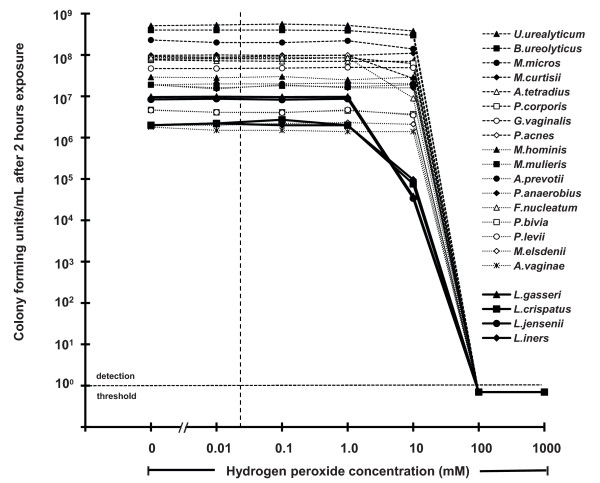
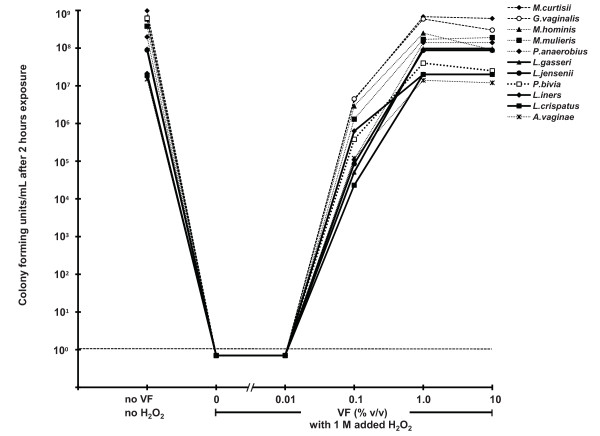
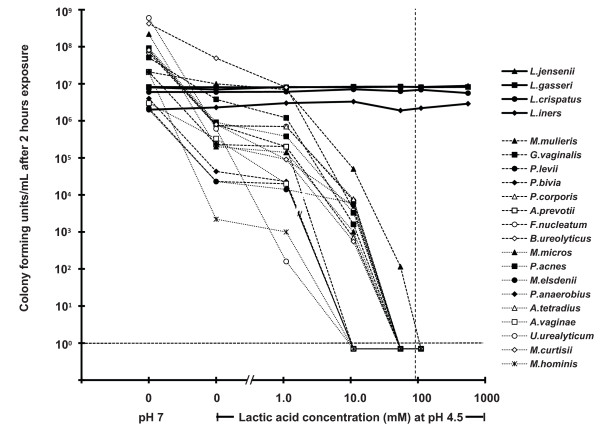
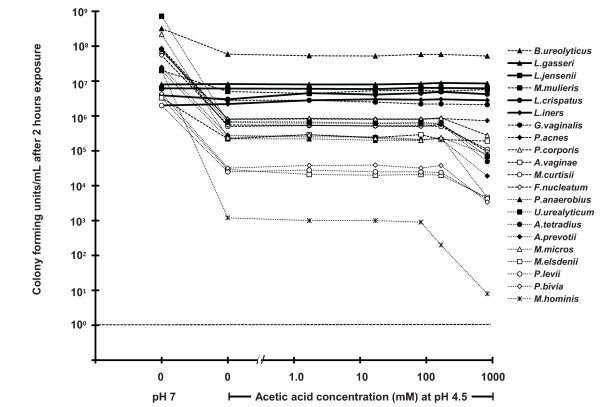
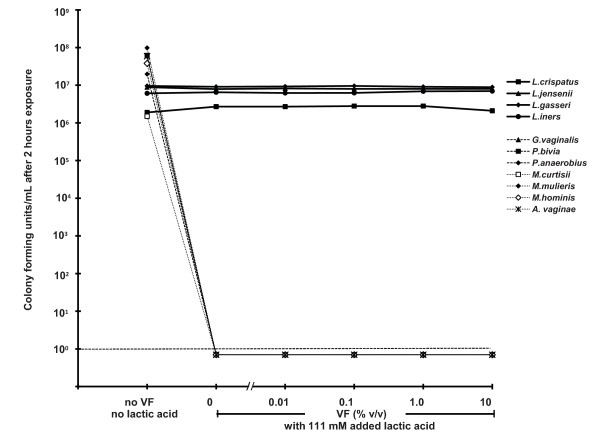
BACKGROUND: Hydrogen peroxide (H2O2) produced by vaginal lactobacilli is generally believed to protect against bacteria associated with bacterial vaginosis (BV), and strains of lactobacilli that can produce H2O2 are being developed as vaginal probiotics. However, evidence that led to this belief was based in part on non-physiological conditions, antioxidant-free aerobic conditions selected to maximize both production and microbicidal activity of H2O2. Here we used conditions more like those in vivo to compare the effects of physiologically plausible concentrations of H2O2 and lactic acid on a broad range of BV-associated bacteria and vaginal lactobacilli. METHODS: Anaerobic cultures of seventeen species of BV-associated bacteria and four species of vaginal lactobacilli were exposed to H2O2, lactic acid, or acetic acid at pH 7.0 and pH 4.5. After two hours, the remaining viable bacteria were enumerated by growth on agar media plates. The effect of vaginal fluid (VF) on the microbicidal activities of H2O2 and lactic acid was also measured. RESULTS: Physiological concentrations of H2O2 (< 100 μM) failed to inactivate any of the BV-associated bacteria tested, even in the presence of human myeloperoxidase (MPO) that increases the microbicidal activity of H2O2. At 10 mM, H2O2 inactivated all four species of vaginal lactobacilli but only one of seventeen species of BV-associated bacteria. Moreover, the addition of just 1% vaginal fluid (VF) blocked the microbicidal activity of 1 M H2O2. In contrast, lactic acid at physiological concentrations (55-111 mM) and pH (4.5) inactivated all the BV-associated bacteria tested, and had no detectable effect on the vaginal lactobacilli. Also, the addition of 10% VF did not block the microbicidal activity of lactic acid. CONCLUSIONS: Under optimal, anaerobic growth conditions, physiological concentrations of lactic acid inactivated BV-associated bacteria without affecting vaginal lactobacilli, whereas physiological concentrations of H2O2 produced no detectable inactivation of either BV-associated bacteria or vaginal lactobacilli. Moreover, at very high concentrations, H2O2 was more toxic to vaginal lactobacilli than to BV-associated bacteria. On the basis of these in vitro observations, we conclude that lactic acid, not H2O2, is likely to suppress BV-associated bacteria in vivo.
Overview
The claims and statistics of this paper haven’t been checked yet.
Free: it reads the open-access text and checks the first 5 claims that cite a source we can check. Create a free account to check every claim.
Integrity signals
Registry
Cites
Statistics
Figures
Verification
Claims the paper makes
The claims and statistics of this paper haven’t been checked yet.
Free: it reads the open-access text and checks the first 5 claims that cite a source we can check. Create a free account to check every claim.
Self-check
Percentages, sums and reported differences re-computed from the paper’s own numbers.
The self-check needs the paper’s full text.
Citations
Cites
Imlay, J. A. (2003) · Annual Review of Microbiology · doi:10.1146/annurev.micro.57.030502.090938 · Cited by 2,203 · cited 1×
“Hydrogen peroxide causes oxidative stress in bacterial cells [14], at least partially by oxidizing sulphydrals, and by oxidizing free iron to produce hydroxyl radicals that react with nucleic acids [15].”
BackgroundLactic Acid Permeabilizes Gram-Negative Bacteria by Disrupting the Outer Membrane
Alakomi, H.-L., Skyttä, E., Saarela, M., Mattila-Sandholm, T., Latva-Kala, K., & Helander, I. M. (2000) · Applied and Environmental Microbiology · doi:10.1128/aem.66.5.2001-2005.2000 · Cited by 1,093 · cited 1×
“Lactic acid has also been shown to have broad spectrum activity against Gram-negative bacteria, probably by weakening the cell wall [19].”
BackgroundMyeloperoxidase-Halide-Hydrogen Peroxide Antibacterial System
Klebanoff, S. J. (1968) · Journal of Bacteriology · doi:10.1128/jb.95.6.2131-2138.1968 · Cited by 815 · cited 1×
“All growth medium formulations contained at least ten-times more than the 1 mM concentration of chloride ions required for full activity of a myeloperoxidase-halide-H2O2 microbicidal system [26].”
BackgroundEschenbach, D. A., Davick, P. R., Williams, B. L., Klebanoff, S. J., Young-Smith, K., Critchlow, C. M., & Holmes, K. K. (1989) · Journal of Clinical Microbiology · doi:10.1128/jcm.27.2.251-256.1989 · Cited by 707 · cited 1×
“Women with H2O2-producing lactobacilli are less likely to have BV than are women without H2O2-producing lactobacilli [1-3].”
BackgroundSimplified Agar Plate Method for Quantifying Viable Bacteria
Jett, B. D., Hatter, K. L., Huycke, M. M., & Gilmore, M. S. (1997) · BioTechniques · doi:10.2144/97234bm22 · Cited by 567 · cited 1×
“2 depending on growth medium) and track-plated [27] onto the appropriate growth medium containing 1.”
BackgroundThe effects of fermentation acids on bacterial growth
Russell, J. B., & Diez-Gonzalez, F. (1997) · Advances in Microbial Physiology · doi:10.1016/s0065-2911(08)60017-x · Cited by 498 · cited 1×
“Lactic acid, under acidic conditions, can permeate cell membranes, acidify the cytosol [16,17], and induce osmotic stress [18].”
BackgroundRole played by lactobacilli in controlling the population of vaginal pathogens
Boris, S., & Barbés, C. (2000) · Microbes and Infection · doi:10.1016/s1286-4579(00)00313-0 · Cited by 427 · cited 1×
“Vaginal lactobacilli produce several target-specific antimicrobial factors, including bacteriocins [10,11], bacteriocins-like substances [12], and selective ligands [13].”
BackgroundDefense factors of vaginal lactobacilli
Aroutcheva, A., Gariti, D., Simon, M., Shott, S., Faro, J., Simoes, J. A., Gurguis, A., & Faro, S. (2001) · American Journal of Obstetrics and Gynecology · doi:10.1067/mob.2001.115867 · Cited by 424 · cited 1×
“Vaginal lactobacilli produce several target-specific antimicrobial factors, including bacteriocins [10,11], bacteriocins-like substances [12], and selective ligands [13].”
BackgroundControl of the Microbial Flora of the Vagina by H202-Generating Lactobacilli
Klebanoff, S. J., Hillier, S. L., Eschenbach, D. A., & Waltersdorph, A. M. (1991) · Journal of Infectious Diseases · doi:10.1093/infdis/164.1.94 · Cited by 420
Bioenergetics of lactic acid bacteria: cytoplasmic pH and osmotolerance
Kashket, E. R. (1987) · FEMS Microbiology Letters · doi:10.1111/j.1574-6968.1987.tb02463.x · Cited by 410
Research works printed but not linked: 1
- O'Hanlon DE Moench TR Harrold S Cone RA Microbicide production by vaginal lactobacilli: vaginal acidity (pH) and lactic acid or more potent than previously reported. Poster presentation Microbicides New Delhi 2008 Feb 24-28 2008
Cited by
Items 301–376 of 376
McElroy, K. G., & Regan, M. B. (2016) · SAGE Open Nursing · doi:10.1177/2377960816662286 · Cited by 2
Masters Program in Midwifery, U. B., Retnoningrum, A. D., Nurseta, T., Prawiro, S. R., Endharti, A. T., & Wahyuni, E. S. (2018) · Indonesian Journal of Medicine · doi:10.26911/theijmed.2018.03.01.05 · Cited by 2
“On the basis of this in vitro observation, it could be seen that lactic acid, not H2O2, was more likely to suppress BV-related bacteria in vivo (O'Hanlon et al., 2011).”
Ghaniabadi, R., Hashemi, S., Bajgiran, M. S., Javadi, S., Mohammadzadeh, N., & Masjedian, F. (2020) · Meta Gene · doi:10.1016/j.mgene.2020.100791 · Cited by 3
Marquis, K. A., Merenstein, C., & Bushman, F. D. (2023) · AIDS Research and Human Retroviruses · doi:10.1089/aid.2022.0171 · Cited by 3
Influence of connatural factors in shaping vaginal microflora and ensuring its health
Das, S. K., & Konwar, B. K. (2023) · Archives of Gynecology and Obstetrics · doi:10.1007/s00404-023-07200-8 · Cited by 5
“H 2 O 2 has antimicrobial property, the absence of H 2 O 2 -producing Lactobacilli increases the risk of vaginosis caused by Bacteroides sp , G. vaginalis, Mobiluncus sp and catalase negative organisms, although, in few studies, H 2 O 2 presence showed less inhibition of BV-causing organism [75–77].”
Microbiota and the Urogenital Tract, Pathogenesis, and Therapies
Tungland, B. C. (2018) · Elsevier eBooks · doi:10.1016/b978-0-12-814649-1.00014-4 · Cited by 6
The vaginal microbiota in health and disease
Sadiq, S. T., & Hay, P. (2016) · doi:10.1002/9781118982907.ch16 · Cited by 2
Das, S. K., & Konwar, B. K. (2025) · Probiotics and Antimicrobial Proteins · doi:10.1007/s12602-025-10574-7 · Cited by 4
Dong, Y. (2025) · International Journal of Clinical and Experimental Pathology · doi:10.62347/zljw5581 · Cited by 1
Gajjar, D., & Seshadri, S. (2025) · Exploration of Immunology · doi:10.37349/ei.2025.1003223 · Cited by 4
Myachina, Y. L., & Sgibnev, A. (2025) · International Journal of Molecular Sciences · doi:10.3390/ijms262411929 · Cited by 1
Edwards, J. S., & Paris, K. D. (2026) · Frontiers in Immunology · doi:10.3389/fimmu.2026.1741921 · Cited by 1
Che, Y., Mao, Y., Li, M., Liu, X., Li, H., Yan, G., Gao, H., Bai, X., Sun, Z., Liu, X., et al. (2026) · Probiotics and Antimicrobial Proteins · doi:10.1007/s12602-026-11000-2 · Cited by 1
The vaginal microbiome and HIV acquisition risk
Masson, L., Radzey, N., Abrahams, A. G., Ngcapu, S., McKinnon, L. R., & Jaspan, H. B. (2026) · The Lancet HIV · doi:10.1016/s2352-3018(26)00032-9 · Cited by 2
Genome-scale metabolic modelling identifies vaginal microbiome members as potential probiotics
Glass, E. M., Kolling, G. L., & Papin, J. A. (2026) · Nature Microbiology · doi:10.1038/s41564-026-02380-w · Cited by 2
“While the protective role of lactic acid is well documented 72–75 , our work distinguishes between the isomers, clarifying that d-lactic acid is a key driver of G. vaginalis -growth inhibition.”
Liu, X., Xu, J., Fan, Z., Cai, J., Zuo, D., & Wang, F. (2026) · Frontiers in Microbiology · doi:10.3389/fmicb.2026.1863564 · Cited by 1
“…which keeps the vagina acidic (pH 2.8– 4.2) and inhibits the proliferation of potential pathogens (Alakomi et al., 2000; Greenbaum et al., 2019; O’Hanlon et al., 2011, 2013; Witkin and Linhares, 2017); they compete for adhesion sites and produce antimicrobial substances, such as bacteriocins,…”
InfluentialGreiner, A., Kyser, A. J., & Frieboes, H. B. (2026) · Biomaterials Advances · doi:10.1016/j.bioadv.2026.215095 · Cited by 1
Ishaq, W., Kasu, P. R., Bhattarai, B., & Selvaraj, R. K. (2026) · Poultry Science · doi:10.1016/j.psj.2026.107616 · Cited by 1
Mammar, A., Trabsa, H., Maidana, S. D., Ayachi, A., Abdessemed, A., Albarracín, L., Elean, M., Boubakri, K., Baillo, A. A., Kitazawa, H., et al. (2026) · Antibiotics · doi:10.3390/antibiotics15090875 · Cited by 1
“In vitro studies have shown that the incorporation of lactic acid at physiological concentrations exhibited a microbicidal effect against vaginosis-associated bacteria and Candida spp. without adversely affecting beneficial vaginal commensal bacteria [39,40].”
Stemmet, M. (2012) · University of the Western Cape Electronic Theses and Dissertations Repository (University of the Western Cape) · Cited by 1
The influence of genitalis odors to women’s life
Giraldo, P. C., do Amaral, R. L. G., & Gonçalves, A. K. (2020) · Jornal Brasileiro de Doenças Sexualmente Transmissíveis · doi:10.5327/dst-2177-8264-20203217 · Cited by 1
Shifts in Vaginal Bacterial Community Composition Are Associated With Vaginal Mesh Exposure
Deveneau, N. E., Newton, R. J., Agrawal, A., Kinman, C. L., Wu, G., Lei, Z. M., & Francis, S. L. (2021) · Urogynecology · doi:10.1097/spv.0000000000001097 · Cited by 1
“Lactobacillus species are thought to play a protective role in the vagina, through the production of lactic acid, biosurfactants, and hydrogen peroxide, which create an unfavorable environment for the growth of many pathogens.(12,13) Women with the low Lactobacillus, diverse community type, have an increased risk for…”
BackgroundPotential use of lactic acid in obstetrics and gynecology
Savicheva, A. M., & Андреевна, Ш. П. (2022) · Russian Journal of Woman and Child Health · doi:10.32364/2618-8430-2022-5-2-138-145 · Cited by 3
Жабченко, И. А., Lihachov, V. K., Lishchenko, I. S., Bondarenko, O. M., & Коваленко, Т. М. (2023) · Reproductive Endocrinology · doi:10.18370/2309-4117.2023.69.30-35 · Cited by 3
Stage of pregnancy impacts the bacterial communities of reproductive and placental tissues in gilts
Hickman-Brown, K. J., Soffa, D. R., Smith, M. S., McAnally, B. E., Bazer, F. W., Johnson, G. A., Wiegert, J., & Poole, R. K. (2025) · Journal of Animal Science · doi:10.1093/jas/skaf159 · Cited by 2
Pelvic inflammatory disease and contraception: a cross-sectional study in teritary center
Kaplan, S., & Kirici, P. (2020) · Journal of Health Sciences and Medicine · doi:10.32322/jhsm.793486 · Cited by 1
Benefits and limitations of clinical assessment of abnormal vaginal discharge etiology
Tutchenko, T. М., Татарчук, Т. Ф., Borysova, L. О., & Chaykivska, E. F. (2023) · Reproductive Endocrinology · doi:10.18370/2309-4117.2023.68.48-56 · Cited by 1
Lactobacillus based treatment of vaginal infections
Pendharkar, S. (2013) · Figshare · Cited by 1
Shen, J., Hickey, R. J., & Forney, L. J. (2013) · Springer eBooks · doi:10.1007/978-1-4614-6418-1_70-1 · Cited by 1
Jena, S., Lawore, D. C., Briones, J. M., Birse, K., Lamont, A., Mackelprang, R. D., Noël‐Romas, L., Perner, M., Hou, X., Irungu, E., et al. (2025) · bioRxiv (Cold Spring Harbor Laboratory) · doi:10.1101/2025.08.28.672927 · Cited by 1
Microbiota of the Genitourinary Tract
Sycuro, L. K., & Fredricks, D. N. (2013) · Wiley eBooks · doi:10.1002/9781118409855.ch8 · Cited by 2
Rajan, S. S. (2013) · Rutgers University Community Repository (Rutgers University) · doi:10.7282/t3rn36fx
Metagenomic analyses of two female genital tract diseases : bacterial vaginosis and ovarian cancer
Montoya, V. (2013) · cIRcle (University of British Columbia) · doi:10.14288/1.0073777 · Cited by 2
“Tumour cells frequently have a different profile of cell surface glycoconjugates and therefore may select for different bacteria (Ogata et al., 1976; Yip et al., 2006).”
BackgroundБондаренко, В. М., & Bondarenko, K. R. (2014) · CyberLeninK (CyberLeninka)
Pathophysiology of Chorioamnionitis
Randis, T. M., & Ratner, A. J. (2016) · Elsevier eBooks · doi:10.1016/b978-0-323-35214-7.00174-8
Collins, S. L. (2017) · Scholarship@Western (Western University)
BİLGİ, S. T. (2020) · International Journal of Scientific and Technological Research · doi:10.7176/jstr/6-01-04
BAKTERİYEL VAJİNOZİS RİSKİ VE KONTRASEPSİYON
Kaplan, S. (2020) · Jinekoloji-Obstetrik ve Neonatoloji Tıp Dergisi · doi:10.38136/jgon.690765
Le microbiote vaginal, déséquilibre et impact
Dumont, Y., Jean‐Pierre, H., & Godreuil, S. (2020) · Revue Francophone des Laboratoires · doi:10.1016/s1773-035x(20)30358-0 · Cited by 3
Rhoades, N. S., Hendrickson, S. M., Gerken, D. R., Martinez, K., Slayden, O. D., Slifka, M. K., & Messaoudi, I. (2020) · bioRxiv (Cold Spring Harbor Laboratory) · doi:10.1101/2020.12.14.422805
“5) 93 inhibiting the growth of other microbes (3).”
BackgroundLiu, C., Xiao, W.-Y., Fang, J.-F., Dong, Y., Ye, K., He, M.-P., Wang, Y., Li, X., Zhao, Z., Yuan, T., et al. (2022) · SSRN Electronic Journal · doi:10.2139/ssrn.4007171
Hube, B., & Wilson, D. (2013) · Faculty Opinions – Post-Publication Peer Review of the Biomedical Literature · doi:10.3410/f.718174276.793486789
Faculty Opinions recommendation of Molecular diagnosis of bacterial vaginosis: an update.
Lamont, R. (2020) · Faculty Opinions – Post-Publication Peer Review of the Biomedical Literature · doi:10.3410/f.733253598.793579732
Larsen, B., & Lowe, A. (2019) · Faculty Opinions – Post-Publication Peer Review of the Biomedical Literature · doi:10.3410/f.735312643.793559506
Shen, J., Hickey, R. J., & Forney, L. J. (2015) · Springer eBooks · doi:10.1007/978-1-4899-7475-4_70
Manolache, M. (2022) · Journal of Gynecology and Womens Health · doi:10.19080/jgwh.2022.24.556131
Aragão, F. B. A., Texeira, W. D., Batista, C. E. M., Costa, G. C., Aragão, F. B. D. S., Santos, D. A., Neto, N. C. D., & Batista, J. E. (2023) · Diversitas Journal · doi:10.48017/dj.v8i3.2626
Vital issue of intimate care for women
Дворянкова, Е. В., Руслановна, С. Л., Kantin, O. M., & Korsunskaya, I. M. (2023) · Meditsinskiy sovet = Medical Council · doi:10.21518/ms2023-327
Experience with clindamycin and lactic acid in the treatment of bacterial vaginosis
Minakova, A. D., Dzhibladze, T. A., Zuev, V. M., Дмитриевна, Х. И., & Борисович, А. М. (2023) · V F Snegirev Archives of Obstetrics and Gynecology · doi:10.17816/2313-8726-2023-10-4-311-316
Vaginal Seeding in Term Cesarean Section Is a Mandatory Condition for Improvement of Neonatal Health
Tsikouras, P. N., Anthoulaki, X., Oikonomou, E., Bothou, Α., Nikolettos, K., Alexiou, A., Kyriakou, D., Nalbanti, T., Kotanidou, S., Kritsotaki, N., et al. (2023) · Obstetrics and gynecology. · doi:10.5772/intechopen.114043
INTRICACIES OF VAGINAL MICROBIOME IN HUMAN FEMALE HEALTH: A LITERATURE REVIEW
Wasim, S. (2023) · Era s journal of medical research · doi:10.24041/ejmr2023.45
Minakova, A. D., Dzhibladze, T. A., & Zuev, V. M. (2024) · Journal of obstetrics and women s diseases · doi:10.17816/jowd626455
Mota, S. C. B., de Souza, A. A. B. M., Sampaio, G. F., & Costa, C. L. (2024) · Brazilian Journal of Health Review · doi:10.34119/bjhrv7n3-407 · Cited by 1
Infecciones Vaginales: Un Problema de Salud Pública en México
la Cruz, O. M.-D., Romo-Báez, A. S., Torres-Marceleño, R., Barrientos, L. G. T., Barajas-Mendiola, M. A., Gallegos-García, V., & Martínez-Gurrión, L. A. (2024) · REVMEDUAS · doi:10.28960/revmeduas.2007-8013.v14.n1.009 · Cited by 5
REVIEW ON VULVO-VAGINAL CANDIDIASIS AND MEDICINAL PLANTS TARGETING VULVO-VAGINAL CANDIDIASIS
Sultana, S. (2024) · doi:10.53555/jptcp.v31i8.7538
“In summary, hydrogen peroxide is the main antimicrobial component produce by lactobacillus [15] and there seems to be an association between H 2 O 2 -producing lactobacilli and normal vaginal microflora [14].”
Bridging the GAP: Probiotic Douches Redefining the Feminine Hygiene
Kumar, A., Hussain, M. S., Srivastava, N., Singh, G., Gulati, M., & Kumar, R. (2024) · Current Pharmaceutical Biotechnology · doi:10.2174/0113892010322564240929204907 · Cited by 3
Microbial Therapies in Reproductive Health
Singh, B., Mal, G., Kalra, R. S., & Marotta, F. (2024) · Springer eBooks · doi:10.1007/978-3-031-65459-6_7 · Cited by 1
Minakova, A. D., Dzhibladze, T. A., Zuev, V. M., & Дмитриевна, Х. И. (2025) · V F Snegirev Archives of Obstetrics and Gynecology · doi:10.17816/aog633449
Delgado-Diaz, D. J., Jesaveluk, B., Hayward, J. A., Tyssen, D. P., Alisoltani, A., Potgieter, M. G., Bell, L., Ross, E. J., Iranzadeh, A., Allali, I., et al. (2022) · Figshare · doi:10.6084/m9.figshare.20762886
Functional Effects of Lactobacillus rhamnosus BS-Pro-8 for Vaginal Health
Sim, J., Kim, Y. L., Roh, K., Yoon, H. C., Cho, E., Park, D., & Jung, E. (2025) · KSBB Journal · doi:10.7841/ksbbj.2025.40.4.373
Laskou, A., Harder, S., Znalesniak, E. B., Schlüter, H., Künnemann, I., Tchaikovski, S. N., & Hoffmann, W. (2026) · International Journal of Molecular Sciences · doi:10.3390/ijms27062754 · Cited by 1
“It is worth noting that bacteria associated with vaginosis can be suppressed with lactic acid but not hydrogen peroxide [18], probiotics are even beneficial in the prevention of urinary tract infections [19]; a general problem in the treatment of bacterial vaginosis is the formation of biofilms…”
Knap-Wielgus, W., Knap, A., Pietrzak, B., Suchońska, B., & Wielgoś, M. (2026) · Viruses · doi:10.3390/v18040403
“Lactic acid has also been shown to inactivate bacteria associated with bacterial vaginosis as well as Chlamydia trachomatis , an effect not observed for hydrogen peroxide [19,22].”
Clabaut, M. (2021) · theses.fr (ABES) · doi:10.70675/c0d2a3b3zf9f0z4505zb0b1z43598474377f · Cited by 1
Étude de Muc5b dans la prévention des infections utérines et naissances prématurées chez la souris
Lacroix, G. (2022) · theses.fr (ABES) · doi:10.70675/5baab870zaacbz4e12zac8czea60f2d1a0f6
Gerwen, O. T. V., KISSINGER, P. J., & Muzny, C. A. (2026) · Elsevier eBooks · doi:10.1016/b978-0-443-45863-7.00042-1
Webster, S. J., Cock, I. E., Matheson, C., & Sweeney, E. L. (2026) · Biology of Sex Differences · doi:10.1186/s13293-026-00953-2
Jesaveluk, B., Ellenberg, P. C., Hearps, A. C., & Tachedjian, G. (2026) · American Journal of Reproductive Immunology · doi:10.1111/aji.70312 · Cited by 1
Vaginal Probiotic Potential of Lactobacillus acidophilus: Population Genomic and Phenotypic Analysis
Mao, Y., Che, Y., Li, M., Yan, G., Liu, X., Yang, R., Li, H., Fan, Y., Zhan, H., Sun, Z., et al. (2026) · Genes · doi:10.3390/genes17091009
“This is consistent with reports that the antimicrobial activity of H 2 O 2 is strongly dependent on the experimental and vaginal conditions [67].”
Мирзоевна, Н. Н., Devyatkina, A. R., Prilepskaya, V. N., Abakarova, P. R., Dovletkhanova, E. R., & Rimskaya, E. N. (2026) · Medical Opponent · doi:10.64831/2619-0001.2026.1.331319
Direct on-swab metabolic profiling of vaginal microbiome host interactions
MacIntyre, D. A. (2022) · ImmPort · doi:10.21430/m3zxhxs7fv
Metadata
- Authors
- O'Hanlon, D. E., Moench, T. R., & Cone, R. A.
- Affiliations
- ReProtect (United States) (US)
- Johns Hopkins University (US)
- ORCID
- Moench, Thomas R
- Venue
- BMC Infectious Diseases
- Published
- 2011-07-19
- Volume
- 11
- Issue
- 1
- Pages
- 200-200
- ISSN
- 1471-2334 (ISSN-L)
- PMC
- PMC3161885
- OpenAlex
- W2013553461
- Cited by
- 375
- References
- 34
- Citations by year
- 2026: 21 · 2025: 31 · 2024: 23 · 2023: 38 · 2022: 44 · 2021: 31 · 2020: 31 · 2019: 24 · 2018: 19 · 2017: 20 · 2016: 20 · 2015: 23 · 2014: 19 · 2013: 14 · 2012: 16
- FWCI
- 14.83
- Type
- journal article
- Language
- en
- Open access
- gold
- doi.org
- Licence
- cc-by
- creativecommons.org/licenses/by/2.0 (tdm)
- Locations
- BMC Infectious Diseases (publishedVersion, cc-by)
- Europe PMC (PubMed Central) (publishedVersion, cc-by)
- PubMed Central (publishedVersion, cc-by)
- PubMed (publishedVersion)
- DOAJ (DOAJ: Directory of Open Access Journals) (submittedVersion, cc-by-sa)
- Funders
- National Institutes of Health (5u01ai066726-04)
- National Institute of Allergy and Infectious Diseases (AI60598, AI 45967, AI66726, P01AI045967, U19AI060598)
- Topics
- Life Sciences › Immunology and Microbiology › Microbiology › Reproductive tract infections research
- Life Sciences › Agricultural and Biological Sciences › Food Science › Probiotics and Fermented Foods
- Life Sciences › Biochemistry, Genetics and Molecular Biology › Molecular Biology › Gut microbiota and health
- Keywords
- bacterial vaginosis, hydrogen peroxide, lactic acid, vaginal lactobacilli, vaginal secretions, probiotics, myeloperoxidase, anaerobic conditions, bacterial inactivation, acetic acid, vaginal microbiota, pH 4.5, vaginal dysbiosis
- MeSH terms
- Adolescent, Adult, Anaerobiosis, Anti-Bacterial Agents, Bacteria, Female, Humans, Hydrogen Peroxide, Hydrogen-Ion Concentration, Middle Aged, Colony Count, Microbial, Vaginosis, Bacterial, Lactic Acid, Vaginal Discharge, Young Adult
About these checks
Registry, retraction, Cites and statistics results are computed, not judged, with one exception: a printed reference that no index lists is read once by a model before it counts as a citation error. Claims are extracted by a model and kept only when their quote appears verbatim in the text; each cited source is then checked, with a model’s help, for whether it says what the claim relies on. Those verdicts can be wrong — read the claim’s quote and the cited source before relying on one.
Statistics and arithmetic are recomputed, not judged.
Confidence bands are shown only for fields calibrated on our annotated test set. None is calibrated yet, so no band is shown.
What counts as a claim ›How we measure confidence ›How we check this ›
Are you an author, or do you see a problem with this page? Request a review
Data sources
Bibliographic data: Semantic Scholar, OpenAlex, Crossref.
Contains information from the Semantic Scholar Academic Graph Datasets, made available under the ODC Attribution License (ODC-BY 1.0).
Semantic Scholar’s data is described in: Kinney, R., et al. (2023). The Semantic Scholar Open Data Platform. arXiv:2301.10140.
