

Deferiprone targets aconitase: Implication for Friedreich's ataxia treatment
Open accessThe DOI matches its Crossref record; 17 of the 17 references it cites were found in a registry or an index.
Abstract
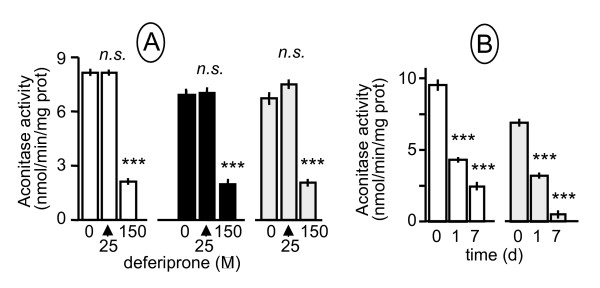
Background: Friedreich ataxia is a neurological disease originating from an iron-sulfur cluster enzyme deficiency due to impaired iron handling in the mitochondrion, aconitase being particularly affected. As a mean to counteract disease progression, it has been suggested to chelate free mitochondrial iron. Recent years have witnessed a renewed interest in this strategy because of availability of deferiprone, a chelator preferentially targeting mitochondrial iron. Method: Control and Friedreich's ataxia patient cultured skin fibroblasts, frataxin-depleted neuroblastoma-derived cells (SK-N-AS) were studied for their response to iron chelation, with a particular attention paid to iron-sensitive aconitase activity. Results: We found that a direct consequence of chelating mitochondrial free iron in various cell systems is a concentration and time dependent loss of aconitase activity. Impairing aconitase activity was shown to precede decreased cell proliferation. Conclusion: We conclude that, if chelating excessive mitochondrial iron may be beneficial at some stage of the disease, great attention should be paid to not fully deplete mitochondrial iron store in order to avoid undesirable consequences.
Overview
The claims and statistics of this paper haven’t been checked yet.
Free: it reads the open-access text and checks the first 5 claims that cite a source we can check. Create a free account to check every claim.
Integrity signals
Registry
Cites
Statistics
Figures
Verification
Claims the paper makes
The claims and statistics of this paper haven’t been checked yet.
Free: it reads the open-access text and checks the first 5 claims that cite a source we can check. Create a free account to check every claim.
Claims other papers make about this one
Each is checked against this paper’s own text: does it say what the citing paper says it does?
In the citing paper
“appropriate iron chelation may have therapeutic benefits”
Self-check
Percentages, sums and reported differences re-computed from the paper’s own numbers.
The self-check needs the paper’s full text.
Citations
Cites
Friedreich's Ataxia: Autosomal Recessive Disease Caused by an Intronic GAA Triplet Repeat Expansion
Campuzano, V., Montermini, L., Moltò, M. D., Pianese, L., Cossée, M., Cavalcanti, F., Monros, E., Rodius, F., Duclos, F., Monticelli, A., et al. (1996) · Science · doi:10.1126/science.271.5254.1423 · Cited by 2,786 · cited 1×
“It originates from a triplet expansion in the first intron of the gene coding for frataxin and the resulting impaired transcription causes depletion of this mitochondrial protein [1].”
BackgroundHentze, M. W., & Kühn, L. C. (1996) · Proceedings of the National Academy of Sciences · doi:10.1073/pnas.93.16.8175 · Cited by 1,292 · cited 1×
“Indeed, while the activity of the mitochondrial enzyme is determinant for the metabolic flux through the tricarboxylic acid in the mitochondria [4], the cytosolic counterpart of the aconitase is known to tightly regulate the overall iron metabolism of mammal cells [5].”
BackgroundAconitase and mitochondrial iron–sulphur protein deficiency in Friedreich ataxia
Rötig, A., de Lonlay, P., Chretien, D., Foury, F., Koenig, M., Sidi, D., Munnich, A., & Rustin, P. (1997) · Nature Genetics · doi:10.1038/ng1097-215 · Cited by 991 · cited 2×
“In keeping with this, aco-nitase was found severely affected in Friedreich ataxia and its residual activity might be a crucial issue to determine the course of the disease [3].”
BackgroundMethodInfluentialSelf-citationSelective iron chelation in Friedreich ataxia: biologic and clinical implications
Boddaert, N., Le Quan Sang, K. H., Rötig, A., Leroy-Willig, A., Gallet, S., Brunelle, F., Sidi, D., Thalabard, J.-C., Munnich, A., & Cabantchik, Z. I. (2007) · Blood · doi:10.1182/blood-2006-12-065433 · Cited by 409 · cited 1×
“Recently the interest in using an iron chelation approach was renewed due to the availability of deferiprone, a chelator specifically targeting mitochondrial iron [12,13].”
BackgroundWong, A. (1999) · Human Molecular Genetics · doi:10.1093/hmg/8.3.425 · Cited by 374 · cited 1×
“Conflicting results have been reported concerning mitochondrial iron content of FRDA patient's fibroblasts which may or not accumulate iron [16].”
BackgroundDi Prospero, N. A., Baker, A., Jeffries, N., & Fischbeck, K. H. (2007) · The Lancet Neurology · doi:10.1016/s1474-4422(07)70220-x · Cited by 300 · cited 1×
“However, while antioxidants were readily trialled with some promising results [10], iron-chelator therapy could not be initially assessed because desferrioxamine, the only chelator in widespread clinical use at that time, did not target mitochondrial iron [11].”
BackgroundGlickstein, H., Ben El, R., Shvartsman, M., & Cabantchik, Z. I. (2005) · Blood · doi:10.1182/blood-2005-02-0460 · Cited by 249 · cited 2×
“Recently the interest in using an iron chelation approach was renewed due to the availability of deferiprone, a chelator specifically targeting mitochondrial iron [12,13].”
BackgroundResultDisabled early recruitment of antioxidant defenses in Friedreich's ataxia
Chantrel-Groussard, K. (2001) · Human Molecular Genetics · doi:10.1093/hmg/10.19.2061 · Cited by 189 · cited 1×
“Beside the impaired ISC assembly, an increased susceptibility to oxidative insult [7] and a late mitochondrial iron accumulation [8] have been reported as a result of frataxin depletion.”
BackgroundSelf-citationMetabolic regulation of citrate and iron by aconitases: role of iron–sulfur cluster biogenesis
Tong, W.-H., & Rouault, T. A. (2007) · BioMetals · doi:10.1007/s10534-006-9047-6 · Cited by 160 · cited 2×
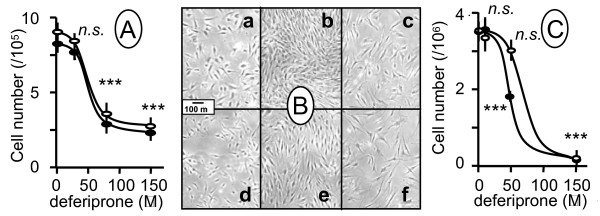
“Not surprisingly in view of the critical role of theses enzymes in cell metabolism [14], we observed that the severe loss of aconitase activity was concomitant with a major impairment of cell growth of con-trol and patient's fibroblasts (Fig.”
BackgroundCharacterization of Iron-Sulfur Protein Assembly in Isolated Mitochondria
Mühlenhoff, U., Richhardt, N., Gerber, J., & Lill, R. (2002) · Journal of Biological Chemistry · doi:10.1074/jbc.m204675200 · Cited by 122 · cited 1×
“As such, it also potently impairs aconitase activity, presumably through reduced synthesis of the iron-sulfur cluster machinery which makes use of available iron in the mitochondrial matrix with the help of frataxin [15].”
Background
Research works printed but not linked: 1
- Tzagoloff A Siekevitz P Mitochondria Cellular Organelles 1982 New York, Plenum Press 1 342
Cited by
Kell, D. B. (2010) · Archives of Toxicology · doi:10.1007/s00204-010-0577-x · Cited by 361
“As would be expected, appropriate iron chelation may have therapeutic benefits (Boddaert et al. 2007; Campanella et al. 2009; Goncalves et al. 2008; Kakhlon et al. 2010; Lim et al. 2008; Marmolino and Acquaviva 2009; Santos et al. 2010; Schulz et al. 2009; Sohn et al. 2008).”
BackgroundScott, L. E., & Orvig, C. (2009) · Chemical Reviews · doi:10.1021/cr9000176 · Cited by 332
Importance of Iron Chelation in Free Radical-Induced Oxidative Stress and Human Disease
Jomova, K., & Valko, M. (2011) · Current Pharmaceutical Design · doi:10.2174/138161211798072463 · Cited by 271
Impaired Nuclear Nrf2 Translocation Undermines the Oxidative Stress Response in Friedreich Ataxia
Paupe, V., Dassa, E. P., Goncalves, S., Auchère, F., Lönn, M., Holmgren, A., & Rustin, P. (2009) · PLoS ONE · doi:10.1371/journal.pone.0004253 · Cited by 218
“Unfortunately, use of iron chelators does not provide a clue to test for oxygen-associated iron toxicity [42].”
Self-citationFriedreich Ataxia: Molecular Mechanisms, Redox Considerations, and Therapeutic Opportunities
Santos, R., Lefevre, S., Sliwa, D., Seguin, A., Camadro, J.-M., & Lesuisse, E. (2010) · Antioxidants & Redox Signaling · doi:10.1089/ars.2009.3015 · Cited by 192
“(129) found that treatment of patient fibroblasts with 150 mM deferiprone abolished aconitase activity and inhibited cellular growth.”
Chemical screening identifies ATM as a target for alleviating senescence
Kang, H. T., Park, J. T., Choi, K., Kim, Y., Choi, H. J. C., Jung, C. W., Lee, Y.-S., & Park, S. C. (2017) · Nature Chemical Biology · doi:10.1038/nchembio.2342 · Cited by 184
Frataxin and Mitochondrial FeS Cluster Biogenesis
Stemmler, T. L., Lesuisse, E., Pain, D., & Dancis, A. (2010) · Journal of Biological Chemistry · doi:10.1074/jbc.r110.118679 · Cited by 144
Deferiprone in Friedreich ataxia: A 6‐Month randomized controlled trial
Pandolfo, M., Arpa, J., Delatycki, M. B., Le Quan Sang, K. H., Mariotti, C., Munnich, A., Sanz‐Gallego, I., Tai, G., Tarnopolsky, M. A., Taroni, F., et al. (2014) · Annals of Neurology · doi:10.1002/ana.24248 · Cited by 137
Oshiro, S., Morioka, M. S., & Kikuchi, M. (2011) · Advances in Pharmacological Sciences · doi:10.1155/2011/378278 · Cited by 134
“Clinical trials of treatment with L1 for Friedreich’s ataxia (FA), a severe inherited neurological disease, demonstrated the elimination of labile iron deposits in a specific brain region without significant adverse changes in hemoglobin or plasma iron levels [56].”
BackgroundCombined Therapy with Idebenone and Deferiprone in Patients with Friedreich’s Ataxia
Velasco‐Sanchez, D., Aracil, A., Montero, R., Mas, A., Jiménez, L., O’Callaghan, M., Tondo, M., Capdevila, A., Blanch, J., Artuch, R., et al. (2010) · The Cerebellum · doi:10.1007/s12311-010-0212-7 · Cited by 151
“Neurological evolution of our FRDA patients was evaluated using the ICARS [ 30 ]: posture and gait (0–34 points), kinetic functions (0–52 points), dysarthria-speech (0– 8 points) and oculomotor movement disorders (0–6 points).”
MethodResultCell functions impaired by frataxin deficiency are restored by drug-mediated iron relocation
Kakhlon, O., Manning, H., Breuer, W., Melamed-Book, N., Lu, C., Cortopassi, G., Munnich, A., & Cabantchik, Z. I. (2008) · Blood · doi:10.1182/blood-2008-06-161919 · Cited by 129
Friedreich's ataxia: Past, present and future
Marmolino, D. (2011) · Brain Research Reviews · doi:10.1016/j.brainresrev.2011.04.001 · Cited by 123
“However, deferiprone (150 μM) in fibroblasts reversibly inhibits aconitase activity and cellular growth (Goncalves et al., 2008) as well as frataxin levels, suggesting that concentrations should be carefully considered.”
BackgroundChelation therapy for neurodegenerative diseases
Bolognin, S., Drago, D., Messori, L., & Zatta, P. (2009) · Medicinal Research Reviews · doi:10.1002/med.20148 · Cited by 97
Impaired iron status in aging research
Xu, J., Jia, Z., Knutson, M. D., & Leeuwenburgh, C. (2012) · International Journal of Molecular Sciences · doi:10.3390/ijms13022368 · Cited by 103
“Some impressive successes have been achieved in non-mammalian models using iron chelators to mitigate iron overload and iron-related disorders, such as Alzheimer’s disease [112,113], Parkinson’s disease [114,115], Friedreich’s ataxia [116,117] and retinal disease [118,119].”
BackgroundDeferiprone for the treatment of Friedreich's ataxia
Pandolfo, M., & Hausmann, L. (2013) · Journal of Neurochemistry · doi:10.1111/jnc.12300 · Cited by 103
“A small study indicated that deferiprone at the concentration of 150 lM, but not at 25 lM, decreased aconitase activity in cultured fibroblasts by 70–80%, and at concentrations higher than 50 lM it could also inhibit cell proliferation (Goncalves et al. 2008).”
BackgroundThe emerging role of iron dyshomeostasis in the mitochondrial decay of aging
Xu, J., Marzetti, E., Seo, A. Y., Kim, J.-S., Prolla, T. A., & Leeuwenburgh, C. (2010) · Mechanisms of Ageing and Development · doi:10.1016/j.mad.2010.04.007 · Cited by 77
“, 2010), Friedreich’s ataxia (Whitnall et al., 2008; Goncalves et al., 2008) and retinal disease (Dunaief, 2006; Lukinova et al.”
Targeting lipid peroxidation and mitochondrial imbalance in Friedreich's ataxia
Abeti, R., Uzun, E., Renganathan, I., Honda, T., Pook, M. A., & Giunti, P. (2015) · Pharmacological Research · doi:10.1016/j.phrs.2015.05.015 · Cited by 74
Kang, H. T., Park, J. T., Choi, K., Choi, H. J. C., Jung, C. W., Kim, G. R., Lee, Y.-S., & Park, S. C. (2017) · Aging Cell · doi:10.1111/acel.12584 · Cited by 74
“To determine whether metabolic reprogramming plays an important role in the recovery of mitochondrial function, we co-treated senescent HGPS fibroblasts with an aconitase inhibitor, deferiprone (DFP), that acts to shift the metabolism from oxphos to glycolysis (Goncalves et al., 2008).”
MethodProgress in the treatment of Friedreich ataxia
Tai, G., Corben, L. A., Yiu, E. M., Milne, S., & Delatycki, M. B. (2018) · Neurologia i Neurochirurgia Polska · doi:10.1016/j.pjnns.2018.02.003 · Cited by 78
“[67] Goncalves S, Paupe V, Dassa E, Rustin P.”
BackgroundClark, E. M., Johnson, J., Dong, Y., Mercado‐Ayón, E., Warren, N., Zhai, M., McMillan, E., Salovin, A., Lin, H., & Lynch, D. R. (2018) · Neuronal Signaling · doi:10.1042/ns20180060 · Cited by 75
Mitoferrin modulates iron toxicity in a Drosophila model of Friedreich׳s ataxia
Navarro, J. A., Botella, J., Metzendorf, C., Lind, M., & Schneuwly, S. (2015) · Free Radical Biology and Medicine · doi:10.1016/j.freeradbiomed.2015.03.014 · Cited by 70
Past, Present and Future Therapeutics for Cerebellar Ataxias
Marmolino, D., & Manto, M. (2010) · Current Neuropharmacology · doi:10.2174/157015910790909476 · Cited by 65
“Iron chelators, such as desferoxiamine and deferiprone could have beneficial effects [72, 127, 195].”
BackgroundFrataxin and the molecular mechanism of mitochondrial iron-loading in Friedreich's ataxia
Chiang, S., Kovačević, Ž., Sahni, S., Lane, D. J. R., Merlot, A. M., Kalinowski, D. S., Huang, M., & Richardson, D. R. (2016) · Clinical Science · doi:10.1042/cs20160072 · Cited by 63
Fixing frataxin: ‘ironing out’ the metabolic defect in Friedreich's ataxia
Anzovino, A., Lane, D. J. R., Huang, M. L., & Richardson, D. R. (2014) · British Journal of Pharmacology · doi:10.1111/bph.12470 · Cited by 56
“However, concerns have been raised from studies in cell culture with DFP where chelationimpaired aconitase activity preceded a reduction in cellular proliferation (Goncalves et al., 2008).”
BackgroundSoriano, S., Llorens, J. V., Blanco-Sobero, L., Gutiérrez, L., Calap-Quintana, P., Morales, M. P., Moltó, M. D., & Martínez-Sebastián, M. J. (2013) · Gene · doi:10.1016/j.gene.2013.02.049 · Cited by 56
Autosomal recessive ataxias: 20 types, and counting
Embiruçu, E. K., Martyn, M. L., Schlesinger, D., & Kok, F. (2009) · Arquivos de Neuro-Psiquiatria · doi:10.1590/s0004-282x2009000600036 · Cited by 53
Kontoghiorghes, G. J. (2022) · International Journal of Molecular Sciences · doi:10.3390/ijms232213990 · Cited by 45
“This was accomplished by several pathways related to chelation activity including depletion or inhibition of the transfer of mitochondrial iron, an increase in superoxide production, the inhibition of hypoxia and possibly other associated factors or enzymes [248,249].”
Inhibition of prostate cancer proliferation by Deferiprone
Simões, R. V., Veeraperumal, S., Serganova, I. S., Kruchevsky, N., Varshavsky, J., Blasberg, R. G., Ackerstaff, E., & Koutcher, J. A. (2017) · NMR in Biomedicine · doi:10.1002/nbm.3712 · Cited by 38
“Although mostly used clinically for the treatment of thalassemia,(4) Friedreich ataxia(5) and kidney disease,(6) DFP has also been shown to inhibit the proliferation of skin fibroblasts and frataxin‐ depleted neuroblastoma‐derived cells in vitro.(7,8) Unlike other”
BackgroundCell and Gene Therapy for Friedreich Ataxia: Progress to Date
Evans‐Galea, M. V., Pébay, A., Dottori, M., Corben, L. A., Ong, S. H., Lockhart, P. J., & Delatycki, M. B. (2014) · Human Gene Therapy · doi:10.1089/hum.2013.180 · Cited by 42
“These include the antioxidant coenzyme Q and its synthetic analog idebenone (Parkinson et al ., 2013); the iron chelator deferiprone (Goncalves et al ., 2008); the drug pioglitazone that can stimulate mitochondria by activating PGC-1 a (Marmolino et al ., 2010); and agents aimed at increasing…”
Marmolino, D., & Acquaviva, F. (2009) · The Cerebellum · doi:10.1007/s12311-008-0084-2 · Cited by 41
“Moreover, DFP has been recently shown experimentally to be cytotoxic and inhibitory to cell aconitase activity when used for extended periods of time at excessive concentrations [106].”
BackgroundLiu, R., Zhang, S., Zhang, W., Zhao, X., & Du, G. (2022) · Antioxidants · doi:10.3390/antiox12010012 · Cited by 37
“A previous study shows that mitochondrial iron is chelated by deferiprone, inhibiting aconitase activity [51].”
Mitochondrial metals as a potential therapeutic target in neurodegeneration
Grubman, A., White, A. R., & Liddell, J. R. (2014) · British Journal of Pharmacology · doi:10.1111/bph.12513 · Cited by 36
“It has been hypothesized that the reason DFP is more effective than other iron chelators (Kakhlon et al., 2008) is its ability to act as a frataxin mimetic ionophore, with functions both in chelation of excess iron and redistribution to iron-deficient subcellular sites (Goncalves et al., 2008).”
BackgroundInfluentialDetermination of deferiprone in urine and serum using a terbium‐sensitized luminescence method
Manzoori, J. L., Amjadi, M., Soleymani, J., Tamizi, E., Rezamand, A., & Jouyban, A. (2011) · Luminescence · doi:10.1002/bio.1344 · Cited by 35
“Absorption spectra of DFP in different systems (background correction was performed using a reference solution): DFP (1, 2); Tb–DFP (3, 4); and Tb(5).”
MethodCurrent and emerging treatment options in the management of Friedreich ataxia
Mancuso, M., Orsucci, D., Choub, A., & Siciliano, G. (2010) · Neuropsychiatric Disease and Treatment · doi:10.2147/ndt.s6916 · Cited by 34
“31 Therefore, if chelating excessive mitochondrial iron may be beneficial at some stage of the disease, attention should be paid to not fully deplete mitochondrial iron store.”
Kemp, K. C., Mallam, E., Hares, K. M., Witherick, J., Scolding, N. J., & Wilkins, A. (2011) · PLoS ONE · doi:10.1371/journal.pone.0026098 · Cited by 33
“At present there are several strategies for the treatment of specific symptoms of frataxin deficiency including agents that protect against oxidative damage and mitochondrial respiratory chain defects (Idebenone, Pioglitazone and Deferiprone) [27]–[29].”
BackgroundDeferiprone has anti-inflammatory properties and reduces fibroblast migration in vitro
Ramezanpour, M., Smith, J., Ooi, M. L., Gouzos, M., Psaltis, A. J., Wormald, P., & Vreugde, S. (2019) · Scientific Reports · doi:10.1038/s41598-019-38902-2 · Cited by 32
Neurodegenerative Diseases: New Hopes and Perspectives
Bhat, M. A., & Dhaneshwar, S. S. (2023) · Current Molecular Medicine · doi:10.2174/1566524023666230907093451 · Cited by 33
Therapeutic strategies in Friedreich's Ataxia
Richardson, T. E., Kelly, H. N., Yu, A. E., & Simpkins, J. W. (2013) · Brain Research · doi:10.1016/j.brainres.2013.04.005 · Cited by 31
“Several iron chelators that target the mitochondria (Richardson, 2003) have been evaluated in both in vitro models (Goncalves et al., 2008; Kakhlon et al., 2008) and in clinical trials (Boddaert et al., 2007), including deferoxamine and deferiprone.”
BackgroundInfluentialSmith, F. M., & Kosman, D. J. (2020) · Frontiers in Molecular Biosciences · doi:10.3389/fmolb.2020.569293 · Cited by 30
“FXN deficiency leads to loss of function of all of these protein complexes, and endomyocardial biopsies of FRDA patients show decreases in complexes I–III (Rötig et al., 1997; Gonzalez-Cabo et al., 2005).”
BackgroundInfluentialImpact of Drosophila Models in the Study and Treatment of Friedreich’s Ataxia
Monnier, V., Llorens, J. V., & Navarro, J. A. (2018) · International Journal of Molecular Sciences · doi:10.3390/ijms19071989 · Cited by 24
“It has been shown that iron chelators are able to negatively affect frataxin expression as well as activity of mitochondrial enzymes [229,230].”
BackgroundIroning the mitochondria: Relevance to its dynamics
Upadhyay, M., & Agarwal, S. (2019) · Mitochondrion · doi:10.1016/j.mito.2019.09.007 · Cited by 24
Rodríguez, L. R., Lapeña-Luzón, T., Calap-Quintana, P., Moltó, M. D., González‐Cabo, P., & Navarro, J. A. (2020) · Antioxidants · doi:10.3390/antiox9080664 · Cited by 24
“It is possible that the ability of deferiprone to target aconitase activity in controls and FRDA cells [175] may contribute to the outcome of the clinical trials using this compound.”
BackgroundFriedreich Ataxia: An Update on Animal Models, Frataxin Function and Therapies
González‐Cabo, P., Llorens, J. V., Palau, F., & Moltó, M. D. (2009) · Advances in experimental medicine and biology · doi:10.1007/978-90-481-2813-6_17 · Cited by 22
“However, in skin fibroblasts of FRDA patients and in frataxin depleted neuroblastoma derived cells, a direct consequence of chelation mitochondrial free iron is a concentration and time dependent loss of aconitase activity [ 99 ].”
BackgroundRosenblum, S. L., & Kosman, D. J. (2022) · Frontiers in Neurology · doi:10.3389/fneur.2022.855751 · Cited by 21
ATM mediated-p53 signaling pathway forms a novel axis for senescence control
Hwang, S. Y., Kuk, M. U., Kim, J. W., Lee, Y. H., Lee, Y., Choy, H. E., Park, S. C., & Park, J. T. (2020) · Mitochondrion · doi:10.1016/j.mito.2020.09.002 · Cited by 19
Emerging therapeutics for the treatment of Friedreich’s ataxia
Indelicato, E., & Bösch, S. (2017) · Expert Opinion on Orphan Drugs · doi:10.1080/21678707.2018.1409109 · Cited by 18
Iron chelation in early Parkinson's disease
Levi, S., & Volonté, M. A. (2023) · The Lancet Neurology · doi:10.1016/s1474-4422(23)00039-x · Cited by 16
Iron Dyshomeostasis and Mitochondrial Function in the Failing Heart: A Review of the Literature
Mousavi‐Aghdas, S. A., Farashi, E., & Naderi, N. (2023) · American Journal of Cardiovascular Drugs · doi:10.1007/s40256-023-00619-z · Cited by 15
“It should be noted that excessive iron chelation by deferiprone can diminish aconitase activity and cause agran-ulocytosis [96].”
Development and Validation of a Terbium-Sensitized LuminescenceAnalytical Method for Deferiprone.
lashkar, J. M., Amjadi, M., Soleymani, J., Tamizi, E., Panahi‐Azar, V., & Jouyban, A. (2012) · PubMed Central · Cited by 15
Iron-mediated post-transcriptional regulation in Toxoplasma gondii
Sloan, M. A., Scott, A., Aghabi, D., Mrvova, L., & Harding, C. R. (2025) · PLoS Pathogens · doi:10.1371/journal.ppat.1012857 · Cited by 13
Pérez-Luz, S., Loría, F., Katsu-Jiménez, Y., Oberdoerfer, D., Yang, O.-L., Lim, F., Muñoz-Blanco, J. L., & Díaz‐Nido, J. (2020) · International Journal of Molecular Sciences · doi:10.3390/ijms21186662 · Cited by 11
Mesenchymal Stem Cell-Derived Factors Restore Function to Human Frataxin-Deficient Cells
Kemp, K. C., Dey, R., Cook, A. J., Scolding, N. J., & Wilkins, A. (2017) · The Cerebellum · doi:10.1007/s12311-017-0860-y · Cited by 11
“idebenone, pioglitazone and deferiprone) [24, 25].”
Generation of reactive oxygen species by hydroxypyridone compound/iron complexes
Murakami, K., & Yoshino, M. (2020) · Redox Report · doi:10.1080/13510002.2020.1787662 · Cited by 9
Kırboğa, K. K., Küçüksille, E. U., & Köse, U. (2023) · BRAIN BROAD RESEARCH IN ARTIFICIAL INTELLIGENCE AND NEUROSCIENCE · doi:10.18662/brain/14.3/475 · Cited by 7
Scaffold Based Search on the Desferithiocin Archetype
Shyam, M., Dev, A., Sinha, B. N., & Jayaprakash, V. (2019) · Mini-Reviews in Medicinal Chemistry · doi:10.2174/1389557519666190301151151 · Cited by 4
Ancestralidade da população de São Paulo e correlação com alterações neuropatológicas no idoso
Schlesinger, D. (2010) · Digital Library of Theses and Dissertations (Universidade de São Paulo) · doi:10.11606/t.41.2010.tde-17122010-142628 · Cited by 4
Investigating novel therapies for Friedreich’s ataxia
Sherzai, M. (2018) · Brunel University Research Archive (BURA) (Brunel University London) · Cited by 2
Deficiência das enzimas do ciclo de Krebs
Silva, J. H. (2016) · Portuguese National Funding Agency for Science, Research and Technology (RCAAP Project by FCT) · Cited by 2
Bailey, D. K., Nihlawi, R., BRADBURY, M. J., Bond, S., & Kosman, D. J. (2025) · Journal of Biological Chemistry · doi:10.1016/j.jbc.2025.110595 · Cited by 1
“These off-target effects appeared to be down-stream of chelation of iron from tyrosine hydroxylase (TH), another mononuclear iron enzyme (25), thus reducing dopamine production further from the already low levels in patients with PD. DFP also targets the FeS cluster in aconitase (26).”
New advances in the treatment of Friedreich ataxia: promises and pitfalls
Nachbauer, W., & Boesch, S. (2011) · Clinical Investigation · doi:10.4155/cli.11.93 · Cited by 1
Saeidnia, M., Shadfar, F., Sharifi, S., Babashahi, M., Ghaderi, A., & Shokri, M. (2024) · International Journal of Hematology · doi:10.1007/s12185-024-03825-w · Cited by 1
Contribuição para a caracterização clínica das ataxias hereditárias autossômicas recessivas
Leão, E. K. E. D. A. (2009) · Digital Library of Theses and Dissertations (Universidade de São Paulo) · doi:10.11606/t.5.2009.tde-09122009-155053 · Cited by 1
Genotype and phenotype characterisation of Friedreich ataxia mouse models and cells
Anjomani‐Virmouni, S. (2013) · Brunel University Research Archive (BURA) (Brunel University London) · Cited by 1
Carrasco, G. M. P. (2009) · LA Referencia (Red Federada de Repositorios Institucionales de Publicaciones Científicas)
El IGF-1 como potencial agente terapéutico en ataxia de Friedreich
del Solar, C. F. M. (2012) · LA Referencia (Red Federada de Repositorios Institucionales de Publicaciones Científicas)
Ezzatizadeh, V. (2012) · Brunel University Research Archive (BURA) (Brunel University London)
Marmolino, D., & Pandolfo, M. (2011) · Dépôt institutionnel de l'Université libre de Bruxelles (Université Libre de Bruxelles)
Generation of Reactive Oxygen Species by Anthraquinone Compounds
Murakami, K. (2009)
Autosomal recessive cerebellar ataxias
Manto, M. U. (2010) · Cambridge University Press eBooks · doi:10.1017/cbo9780511750557.023
PALABRAS CLAVES: ATAXIA DE FRIEDREICH, ATAXIAS HEREDITARIAS, GEN FRDA
Martínez, J. L. G. (2009)
Pastore, A. (2013) · Royal Society of Chemistry eBooks · doi:10.1039/9781849735896-00098
Investigating Friedreich ataxia disease mechanisms and therapy
Saqlain, S. (2018) · Brunel University Research Archive (BURA) (Brunel University London)
Functional characterization of Frataxin isoforms and mechanisms of regulation of frataxin expression
Agrò, M. (2019) · LA Referencia (Red Federada de Repositorios Institucionales de Publicaciones Científicas)
Chiang, S. (2019) · The Sydney eScholarship Repository (The University of Sydney)
The Role of Estrogen and Estrogen Analogues in Friedreich’s Ataxia Cytoprotection
Richardson, T. E. (2014) · Digital Commons @ UNT Health Science Center
Estudio del déficit de frataxina en Drosophila
Rodríguez, S. S. (2015) · Repository of Digital Objects for Teaching Research and Culture (University of Valencia)
Investigating the pathogenesis and therapy of Friedreich ataxia
Sandi, C. (2010) · Brunel University Research Archive (BURA) (Brunel University London)
Metadata
- Authors
- Goncalves, S., Paupe, V., Dassa, E. P., & Rustin, P.
- Affiliations
- Inserm (FR)
- Corresponding author
- Rustin, Pierre
- ORCID
- Rustin, Pierre
- Venue
- BMC Neurology
- Published
- 2008-06-16
- Volume
- 8
- Issue
- 1
- Pages
- 20-20
- ISSN
- 1471-2377 (ISSN-L)
- PMC
- PMC2440763
- OpenAlex
- W2080445232
- Cited by
- 66
- References
- 17
- Citations by year
- 2025: 2 · 2024: 1 · 2023: 5 · 2022: 3 · 2020: 5 · 2019: 5 · 2018: 3 · 2017: 5 · 2016: 1 · 2015: 2 · 2014: 3 · 2013: 6 · 2012: 2
- FWCI
- 5.03
- Type
- journal article
- Language
- en
- Open access
- gold
- doi.org
- Licence
- Locations
- BMC Neurology (publishedVersion, cc-by)
- PubMed Central (publishedVersion, cc-by)
- PubMed (publishedVersion)
- HAL (submittedVersion, other-oa)
- DOAJ (DOAJ: Directory of Open Access Journals) (submittedVersion)
- Funders
- Friedreich's Ataxia Research Alliance
- Fund for Astrophysical Research
- Topics
- Life Sciences › Neuroscience › Neurology › Neurological diseases and metabolism
- Life Sciences › Neuroscience › Cellular and Molecular Neuroscience › Genetic Neurodegenerative Diseases
- Life Sciences › Biochemistry, Genetics and Molecular Biology › Molecular Biology › Mitochondrial Function and Pathology
- Keywords
- Friedreich's ataxia, deferiprone, aconitase, iron chelation, mitochondrial iron, frataxin, cell proliferation, neurodegeneration
- MeSH terms
- Deferiprone, Aconitate Hydratase, Cells, Cultured, Cytosol, Fibroblasts, Friedreich Ataxia, Humans, Iron, Iron Chelating Agents, Mitochondria, Pyridones, Cell Proliferation
About these checks
Registry, retraction, Cites and statistics results are computed, not judged, with one exception: a printed reference that no index lists is read once by a model before it counts as a citation error. Claims are extracted by a model and kept only when their quote appears verbatim in the text; each cited source is then checked, with a model’s help, for whether it says what the claim relies on. Those verdicts can be wrong — read the claim’s quote and the cited source before relying on one.
Statistics and arithmetic are recomputed, not judged.
Confidence bands are shown only for fields calibrated on our annotated test set. None is calibrated yet, so no band is shown.
What counts as a claim ›How we measure confidence ›How we check this ›
Are you an author, or do you see a problem with this page? Request a review
Data sources
Bibliographic data: Semantic Scholar, OpenAlex, Crossref.
Contains information from the Semantic Scholar Academic Graph Datasets, made available under the ODC Attribution License (ODC-BY 1.0).
Semantic Scholar’s data is described in: Kinney, R., et al. (2023). The Semantic Scholar Open Data Platform. arXiv:2301.10140.
