

Gestational diabetes and pregnancy outcomes - a systematic review of the World Health Organization (WHO) and the International Association of Diabetes in Pregnancy Study Groups (IADPSG) diagnostic criteria
Open accessThe DOI matches its Crossref record; 30 of the 30 references it cites were found in a registry or an index.
Abstract
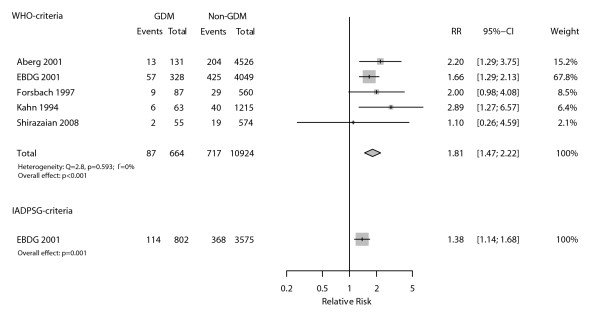
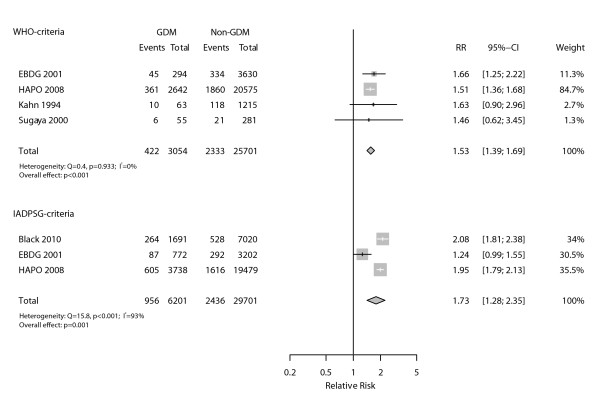
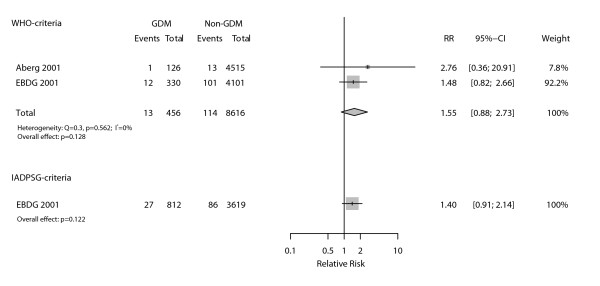
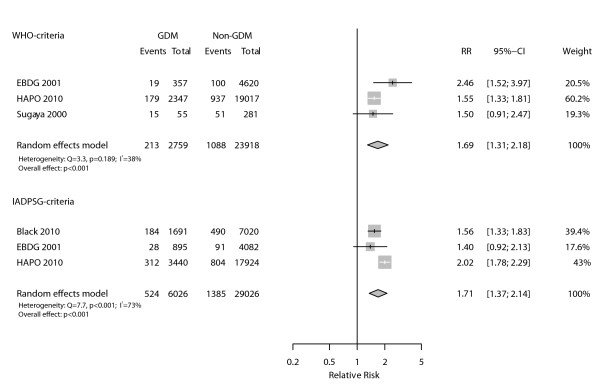
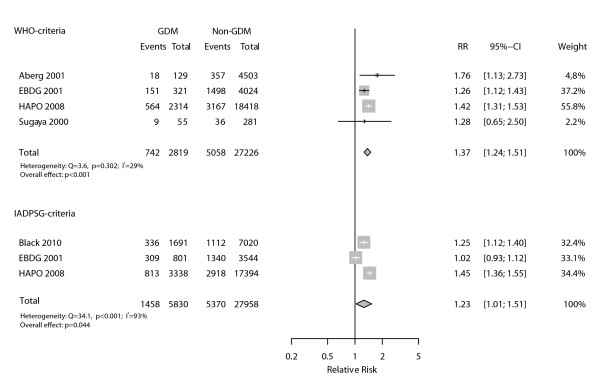
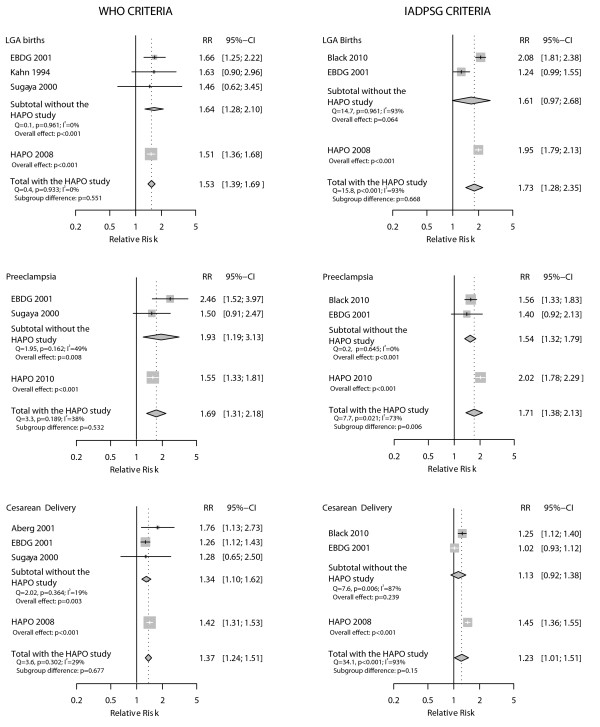
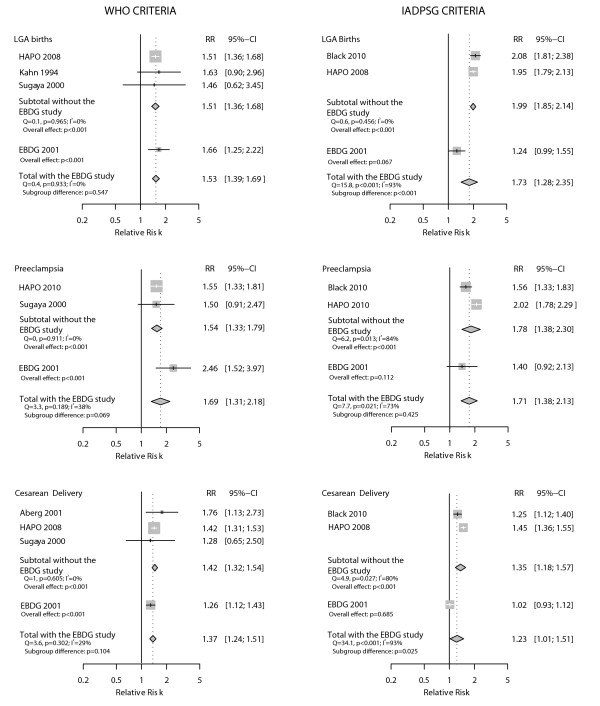
BACKGROUND: Two criteria based on a 2 h 75 g OGTT are being used for the diagnosis of gestational diabetes (GDM), those recommended over the years by the World Health Organization (WHO), and those recently recommended by the International Association for Diabetes in Pregnancy Study Group (IADPSG), the latter generated in the HAPO study and based on pregnancy outcomes. Our aim is to systematically review the evidence for the associations between GDM (according to these criteria) and adverse outcomes. METHODS: We searched relevant studies in MEDLINE, EMBASE, LILACS, the Cochrane Library, CINHAL, WHO-Afro library, IMSEAR, EMCAT, IMEMR and WPRIM. We included cohort studies permitting the evaluation of GDM diagnosed by WHO and or IADPSG criteria against adverse maternal and perinatal outcomes in untreated women. Only studies with universal application of a 75 g OGTT were included. Relative risks (RRs) and their 95% confidence intervals (CI) were obtained for each study. We combined study results using a random-effects model. Inconsistency across studies was defined by an inconsistency index (I2) > 50%. RESULTS: Data were extracted from eight studies, totaling 44,829 women. Greater risk of adverse outcomes was observed for both diagnostic criteria. When using the WHO criteria, consistent associations were seen for macrosomia (RR = 1.81; 95%CI 1.47-2.22; p < 0.001); large for gestational age (RR = 1.53; 95%CI 1.39-1.69; p < 0.001); perinatal mortality (RR = 1.55; 95% CI 0.88-2.73; p = 0.13); preeclampsia (RR = 1.69; 95%CI 1.31-2.18; p < 0.001); and cesarean delivery (RR = 1.37;95%CI 1.24-1.51; p < 0.001). Less data were available for the IADPSG criteria, and associations were inconsistent across studies (I2 ≥ 73%). Magnitudes of RRs and their 95%CIs were 1.73 (1.28-2.35; p = 0.001) for large for gestational age; 1.71 (1.38-2.13; p < 0.001) for preeclampsia; and 1.23 (1.01-1.51; p = 0.04) for cesarean delivery. Excluding either the HAPO or the EBDG studies minimally altered these associations, but the RRs seen for the IADPSG criteria were reduced after excluding HAPO. CONCLUSIONS: The WHO and the IADPSG criteria for GDM identified women at a small increased risk for adverse pregnancy outcomes. Associations were of similar magnitude for both criteria. However, high inconsistency was seen for those with the IADPSG criteria. Full evaluation of the latter in settings other than HAPO requires additional studies.
Overview
The claims and statistics of this paper haven’t been checked yet.
Free: it reads the open-access text and checks the first 5 claims that cite a source we can check. Create a free account to check every claim.
Integrity signals
Registry
Cites
Statistics
Figures
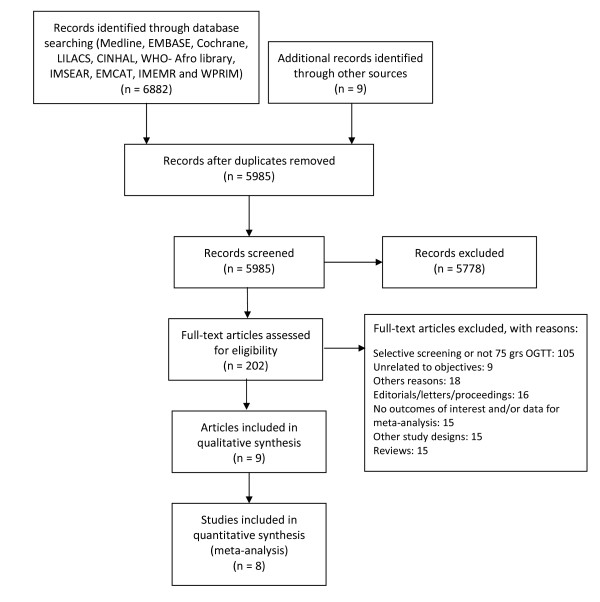
Verification
Claims the paper makes
The claims and statistics of this paper haven’t been checked yet.
Free: it reads the open-access text and checks the first 5 claims that cite a source we can check. Create a free account to check every claim.
Claims other papers make about this one
Each is checked against this paper’s own text: does it say what the citing paper says it does?
In the citing paper
“Potential adverse offspring outcomes vary by age group (Table 4) and avoidance of one outcome does not indicate reduction in risk of other adverse outcomes.21,24,25”
From Gestational Diabetes Mellitus (2019) · cites this paper as [25]
Self-check
Percentages, sums and reported differences re-computed from the paper’s own numbers.
The self-check needs the paper’s full text.
Citations
Cites
Bias in meta-analysis detected by a simple, graphical test
Egger, M., Smith, G. D., Schneider, M., & Minder, C. (1997) · BMJ · doi:10.1136/bmj.315.7109.629 · Cited by 56,722 · cited 1×
“Publication bias was tested using a funnel plot and Egger’s test based on weighted regression [11].”
Quantifying heterogeneity in a meta‐analysis
Higgins, J. P. T., & Thompson, S. G. (2002) · Statistics in Medicine · doi:10.1002/sim.1186 · Cited by 36,763 · cited 1×
“Inconsistency indexes (I) were also calculated, and a value greater than 50% was considered an indicator of high inconsistency between studies [10].”
Conducting Meta-Analyses in R with the metafor Package
Viechtbauer, W. (2010) · Journal of Statistical Software · doi:10.18637/jss.v036.i03 · Cited by 20,464 · cited 1×
“6-0 [9].”
Hyperglycemia and adverse pregnancy outcomes
(2008) · New England Journal of Medicine · doi:10.1056/nejmoa0707943 · Cited by 5,563 · cited 6×
“HAPO, 2008, 2010 [7,19] Yes Yes Yes Yes”
InfluentialInternational Association of Diabetes and Pregnancy Study Groups Consensus Panel (2010) · Diabetes Care · doi:10.2337/dc09-1848 · Cited by 5,390 · cited 1×
“More recently, the International Association of the Diabetes in Pregnancy Study Group (IADPSG), after extensive analyses of the Hyperglycemia and Adverse Pregnancy Outcomes (HAPO) study [7], recommended new diagnostic criteria for GDM [8] based on the 2 h 75 g OGTT: a fasting glucose ≥ 5.”
Classification and diagnosis of diabetes mellitus and other categories of glucose intolerance.
National Diabetes Data Group (1979) · Diabetes · doi:10.2337/diab.28.12.1039 · Cited by 4,909
Standards of Medical Care in Diabetes—2009
American Diabetes Association (2009) · Diabetes Care · doi:10.2337/dc09-s013 · Cited by 2,167
Metzger, B. E., Gabbe, S. G., Persson, B., Lowe, L. P., Dyer, A. R., Oats, J. J. N., & Buchanan, T. A. (2010) · Diabetes Care · doi:10.2337/dc10-0719 · Cited by 1,888
Pepe, M. S. (2004) · American Journal of Epidemiology · doi:10.1093/aje/kwh101 · Cited by 1,276 · cited 1×
“Nevertheless, even if GDM diagnostic criteria were to reach relative risks close to 3 for these adverse outcomes in such settings, the relative risks would still be unlikely to reflect major diagnostic discrimination in terms of post test probabilities [21].”
(1964) · PubMed · Cited by 1,230
Cited by
Items 201–300 of 633
The association between low 50 g glucose challenge test result and fetal growth restriction
Melamed, N., Hiersch, L., Peled, Y., Hod, M., Wiznitzer, A., & Yogev, Y. (2013) · The Journal of Maternal-Fetal & Neonatal Medicine · doi:10.3109/14767058.2013.770460 · Cited by 25
Nadif, R., Dilworth, M. R., Sibley, C. P., Baker, P. N., Davidge, S. T., Gibson, M., Aplin, J., & Westwood, M. (2014) · Endocrinology · doi:10.1210/en.2014-1562 · Cited by 23
“Pregnancy complicated by GDM is associated with increased fetal mortality and morbidity (3).”
Hosseini, E., & Janghorbani, M. (2018) · International Journal of Gynecology & Obstetrics · doi:10.1002/ijgo.12644 · Cited by 25
Brankica, K., Valentina, V. N., Slagjana, S. K., & Sasha, J. M. (2016) · Archives of Endocrinology and Metabolism · doi:10.1590/2359-3997000000126 · Cited by 23
Sun, Y., Zhou, F., & Wang, H. (2019) · PubMed · Cited by 27
Effect of interpregnancy interval on gestational diabetes: a retrospective matched cohort study
Gebremedhin, A. T., Regan, A. K., Ball, S. J., Betrán, A. P., Foo, D., Gissler, M., Håberg, S. E., Malacova, E., Marinovich, M. L., & Pereira, G. F. (2019) · Annals of Epidemiology · doi:10.1016/j.annepidem.2019.09.004 · Cited by 23
Eidgahi, E. S., Nasiri, M., Kariman, N., Ardabili, N. S., Salehi, M., Kazemi, M., & Zayeri, F. (2022) · BMC Pregnancy and Childbirth · doi:10.1186/s12884-021-04348-6 · Cited by 29
Gestational Diabetes. Obstetrical Perspective
Panaitescu, A. M., & Peltecu, G. (2016) · Acta Endocrinologica (Bucharest) · doi:10.4183/aeb.2016.331 · Cited by 25
Laurino, L. F., Viroel, F. J. M., Caetano, É. L. A., Spim, S. R. V., Pickler, T. B., Rosa-Castro, R. M., Vasconcelos, E. M. D. A., Jozala, Â. F., Hataka, A., Grotto, D., et al. (2019) · Nutrients · doi:10.3390/nu11112720 · Cited by 27
A Critical Review of Proteomic Studies in Gestational Diabetes Mellitus
Zhou, T., Huang, L., Wang, M., Chen, D., Chen, Z., & Jiang, S. (2020) · Journal of Diabetes Research · doi:10.1155/2020/6450352 · Cited by 25
van Lee, L., Crozier, S., Aris, I. M., Tint, M. T., Sadananthan, S. A., Michael, N., Quah, P. L., Robinson, S. M., Inskip, H. M., Harvey, N. C., et al. (2018) · International Journal of Epidemiology · doi:10.1093/ije/dyy291 · Cited by 24
Smoking during pregnancy and gestational diabetes mellitus: a systematic review and meta-analysis
Athanasiadou, K. I., Paschou, S. Α., Papakonstantinou, Ε., Vasileiou, V., Kanouta, F., Kazakou, P., Stefanaki, K., Kassi, G., Ψαλτοπούλου, Θ., Goulis, D. G., et al. (2023) · Endocrine · doi:10.1007/s12020-023-03423-6 · Cited by 26
“to protect mothers and fetuses from the devastating implications of overt hyperglycemia [12, 27].”
BackgroundKolu, P., Raitanen, J. A., Rissanen, P., & Luoto, R. M. (2013) · PLoS ONE · doi:10.1371/journal.pone.0056392 · Cited by 30
Weissgerber, T. L., Gandley, R. E., McGee, P. L., Spong, C. Y., Myatt, L., Leveno, K. J., Thorp, J. M., Mercer, B. M., Peaceman, A. M., Ramin, S. M., et al. (2013) · PLoS ONE · doi:10.1371/journal.pone.0060479 · Cited by 22
“Uncomplicated pregnancy is an insulin resistant state [42], and gestational diabetes [43] and Type 1 diabetes [44] increase preeclampsia risk.”
BackgroundLi, Q., Piaseu, N., Phumonsakul, S., & Thadakant, S. (2024) · Nutrients · doi:10.3390/nu16020217 · Cited by 30
“…mellitus (GDM) diagnosis: GDM diagnosis is based on blood glucose levels obtained from the 75 g Oral Glucose Tolerance Test (OGTT) conducted at 24 weeks of pregnancy, following the diagnostic criteria established by the International Association of Diabetes and Pregnancy Study Group (IADPSG) [60].”
MethodUtz, B., Assarag, B., Lekhal, T., Damme, W. V., & Brouwere, V. D. (2020) · BMC Pregnancy and Childbirth · doi:10.1186/s12884-020-02979-9 · Cited by 20
Yue, S., Thi, V. T. K., Dung, L. P., Nhu, B. T. H., Kestelyn, E., Trọng, T. Đ., Thanh, L. Q., & Hirst, J. E. (2022) · BMC Pregnancy and Childbirth · doi:10.1186/s12884-022-04533-1 · Cited by 25
Extracellular vesicles in gestational diabetes mellitus: A scoping review
Bathla, T., Abolbaghaei, A., Reyes, A. B., & Burger, D. E. (2022) · Diabetes and Vascular Disease Research · doi:10.1177/14791641221093901 · Cited by 25
Liu, Y., Wei, Y., Wu, L., Lin, X., Sun, R., Chen, H., Shen, S., & Deng, G. (2022) · Frontiers in Nutrition · doi:10.3389/fnut.2022.839174 · Cited by 23
Jiang, Y., Wei, L., Zhang, H., Chen, Y., Gao, P., Zhang, J., Zhou, X., Zhu, S., Du, Y., Fang, C., et al. (2022) · Diabetes Metabolic Syndrome and Obesity · doi:10.2147/dmso.s385774 · Cited by 22
Dietary Impacts on Gestational Diabetes: Connection between Gut Microbiome and Epigenetic Mechanisms
Bankole, T., Winn, H. N., & Li, Y. (2022) · Nutrients · doi:10.3390/nu14245269 · Cited by 25
Akselrod, S., Banerjee, A., Collins, T. E., Acharya, S. P., Artykova, N., Askew, I., Berdzuli, N., Diorditsa, S., Eggers, R., Farrington, J., et al. (2023) · Frontiers in Public Health · doi:10.3389/fpubh.2023.1183712 · Cited by 24
“Diabetes during pregnancy—both pregestational and gestational—increases the risk of pre-eclampsia, pre-term labor, and operative delivery, as well as increasing the risk of macrosomia, birth injury, and perinatal mortality (20, 21).”
BackgroundThe impact of diabetes mellitus on the course and outcome of pregnancy during a 5-year follow-up
Mitrović, M., Stojic, S., Tešić, D., Popovic, D. S., Rankov, O., Tomić-Naglić, D., Novaković-Paro, J., Pejin, R., Bulatovic, S., Todorovic-Veljic, M., et al. (2014) · Vojnosanitetski pregled · doi:10.2298/vsp1410907m · Cited by 19
Birth Outcomes in Women with a History of Juvenile Idiopathic Arthritis
Feldman, D. E., Vinet, É., Bernatsky, S., Duffy, C. M., Hazel, B., Meshefedjian, G. A., Sylvestre, M., & Bérard, A. (2016) · The Journal of Rheumatology · doi:10.3899/jrheum.150592 · Cited by 23
Capobianco, E., Fornes, D. D., Roberti, S. L., Powell, T. L., Jansson, T., & Jawerbaum, A. (2017) · The Journal of Nutritional Biochemistry · doi:10.1016/j.jnutbio.2017.10.006 · Cited by 21
Diabetes in Pregnancy: Timing and Mode of Delivery
Maso, G., Piccoli, M., Parolin, S., Restaino, S., & Alberico, S. (2014) · Current Diabetes Reports · doi:10.1007/s11892-014-0506-0 · Cited by 23
Magnetic Bead-Based Serum Peptidome Profiling in Patients with Gestational Diabetes Mellitus
Ai, T., Chen, F., Zhou, S., Zhang, J., Zheng, H., Zhou, Y., Hu, W. M., Liu, X., Li, L., & Lin, J. (2015) · BioMed Research International · doi:10.1155/2015/586309 · Cited by 20
“Different organizations have adopted different cutoff points, suggesting difficulties in distinguishing GDM [2].”
BackgroundDaemers, D. O. A., Wijnen, H. A. A., van Limbeek, E., Budé, L. M., Nieuwenhuijze, M. J., Spaanderman, M. E. A., & Vries, R. G. D. (2014) · BJOG An International Journal of Obstetrics & Gynaecology · doi:10.1111/1471-0528.12684 · Cited by 21
Clinical Implications of the NICE 2015 Criteria for Gestational Diabetes Mellitus
Bhatia, M., Mackillop, L. H., Bartlett, K., Loerup, L., Kenworthy, Y., Levy, J. C., Farmer, A. A., Velardo, C., Tarassenko, L., & Hirst, J. E. (2018) · Journal of Clinical Medicine · doi:10.3390/jcm7100376 · Cited by 23
Does Gestational Diabetes History Increase Epicardial Fat and Carotid Intima Media Thickness?
Çalışkan, M., Çaklılı, Ö. T., Çalışkan, Z., Duran, C., Ciftci, F. C., Avcı, E., Güllü, H., Kulaksızoğlu, M., Koca, H., & Müderrisoğlu, H. (2014) · Echocardiography · doi:10.1111/echo.12597 · Cited by 22
Roozbahani, R. K., Geranmayeh, M., Hantoushzadeh, S., & Mehran, A. (2015) · PubMed Central · Cited by 21
Repeated oral glucose tolerance tests in women at risk for gestational diabetes mellitus
de Wit, L., Bos, D., van Rossum, A. P., van Rijn, B. B., & Boers, K. E. (2019) · European Journal of Obstetrics & Gynecology and Reproductive Biology · doi:10.1016/j.ejogrb.2019.09.022 · Cited by 21
Mattocks, K. M., Kroll‐Desrosiers, A., Kinney, R. L., Bastian, L. A., Bean‐Mayberry, B., Goldstein, K. M., Shivakumar, G., & Copeland, L. A. (2020) · Medical Care · doi:10.1097/mlr.0000000000001461 · Cited by 18
Xu, R., Liu, S., Zhong, Z., Guo, Y., Xia, T., Chen, Y., & Ding, L. (2023) · Nutrients · doi:10.3390/nu15122766 · Cited by 22
Zaugg, J., López‐Tello, J., Musiał, B., Vaughan, O. R., Fowden, A. L., Albrecht, C., & Sferruzzi-Perri, A. N. (2024) · Cellular and Molecular Life Sciences · doi:10.1007/s00018-024-05192-5 · Cited by 26
Relation between low 50‐g glucose challenge test results and small‐for‐gestational‐age infants
Shinohara, S., Hirai, M., Hirata, S., & Suzuki, K. (2015) · Journal of obstetrics and gynaecology research · doi:10.1111/jog.12794 · Cited by 18
Bogdanet, D., Egan, A. M., Reddin, C., Kgosidialwa, O., Kirwan, B., Carmody, L. A., & Dunne, F. (2016) · The Journal of Clinical Endocrinology & Metabolism · doi:10.1210/jc.2016-2911 · Cited by 21
Sugiyama, M. S., Cash, H. L., Roseveare, C., Reklai, R., Basilius, K., & Madraisau, S. (2017) · Maternal and Child Health Journal · doi:10.1007/s10995-017-2313-0 · Cited by 21
Galliano, L. M., Vecchio, A. H. M. D., Silvani, J., Façanha, C. F. S., & Vecchio, F. B. D. (2018) · Journal of Diabetes · doi:10.1111/1753-0407.12872 · Cited by 25
Viroel, F. J. M., Laurino, L. F., Caetano, É. L. A., Jozala, Â. F., Spim, S. R. V., Pickler, T. B., Sercundes, M. K., Gomes, M. C., Hataka, A., Grotto, D., et al. (2022) · Antioxidants · doi:10.3390/antiox11061035 · Cited by 22
Influence of maternal weight gain on birth weight: a gestational diabetes cohort
Mastella, L. S., Weinert, L. S., Gnielka, V., Hirakata, V. N., Oppermann, M. L. D. R., Silveiro, S. P., & Reichelt, A. J. (2018) · Archives of Endocrinology and Metabolism · doi:10.20945/2359-3997000000009 · Cited by 21
Gestational diabetes mellitus: relationship of adverse outcomes with severity of disease
Karkia, R., Giacchino, T., Hii, F., Bradshaw, C., Ramadan, G., & Akolekar, R. (2024) · The Journal of Maternal-Fetal & Neonatal Medicine · doi:10.1080/14767058.2024.2356031 · Cited by 19
“GDM is associated with increased risk of adverse outcomes such as preeclampsia, preterm birth, CS, macrosomia, admission to neo-natal intensive care unit (NICU), hyperbilirubinemia and neonatal hypoglycemia [3–5].”
Gestational diabetes mellitus: definition, aetiological and clinical aspects
Baz, B., & Riveline, J. (2016) · Cited by 17
Rizzo, G., Pietrolucci, M. E., Mappa, I., Bitsadze, V. O., Khizroeva, J. K., & Makatsariya, A. D. (2020) · Prenatal Cardiology · doi:10.5114/pcard.2020.94558 · Cited by 18
The need for an integrated approach for chronic disease research and care in Africa
Barr, A. L., Young, E. H., Smeeth, L. L., Newton, R., Seeley, J., Ripullone, K., Hird, T. R., Thornton, J. R. M., Nyirenda, M., Kapiga, S., et al. (2016) · Global Health · doi:10.1017/gheg.2016.16 · Cited by 24
“Maternal obesity increases the risk of developing gestational diabetes [17], and is associated with poor maternal and neonatal outcomes [18 – 20].”
Makaruk, B., Galczak-Kondraciuk, A., Forczek, W., Grantham, W., & Charmas, M. (2019) · Obstetrical & Gynecological Survey · doi:10.1097/ogx.0000000000000673 · Cited by 18
Thandar, M. M., Kiriya, J., Shibanuma, A., Ong, K. I. C., Tin, K. N., Win, H. H., & Jimba, M. (2019) · Tropical Medicine and Health · doi:10.1186/s41182-019-0137-x · Cited by 19
Hrólfsdóttir, L., Gunnarsdóttir, I., Birgisdóttir, B. E., Hreidarsdottir, I. T., Smárason, A. K., Harðardóttir, H., & Halldorsson, T. I. (2019) · Nutrients · doi:10.3390/nu11081868 · Cited by 18
Fornes, D. D., Ribot, D. G., Heinecke, F., Roberti, S. L., Capobianco, E., & Jawerbaum, A. (2020) · The Journal of Nutritional Biochemistry · doi:10.1016/j.jnutbio.2019.108334 · Cited by 20
Li, Y., Yu, T., Liu, Z., Chen, H., Liu, Y., Wei, Y., Sun, R., Zhang, H., Wang, W., Lu, Y., et al. (2020) · Diabetes Metabolic Syndrome and Obesity · doi:10.2147/dmso.s282403 · Cited by 21
Sun, J., Chai, S., Zhao, X., Yuan, N., Du, J., Liu, Y., Li, Z., & Zhang, X. (2021) · Journal of Diabetes Research · doi:10.1155/2021/5537110 · Cited by 19
“GDMmay increase adverse outcomes such as hypoglycemia, fetal death, neonatal respiratory distress syndrome, and giant shoulder dystocia [14, 15].”
BackgroundQu, Q., Rong, R., & Yu, J. (2022) · Food Science & Nutrition · doi:10.1002/fsn3.2561 · Cited by 21
Frøslie, K. F., Røislien, J., Qvigstad, E., Godang, K., Bollerslev, J., Henriksen, T., & Veierød, M. B. (2014) · PLoS ONE · doi:10.1371/journal.pone.0090798 · Cited by 15
“the fasting value, the 2-h value, area under the curve (AUC), impaired fasting glucose, gestational diabetes (GDM) diagnosis or HbA1c [6–12].”
BackgroundMethodZou, C., Shen, Q., Yang, Y., Liao, Y., & Du, Q. (2025) · Frontiers in Endocrinology · doi:10.3389/fendo.2025.1555409 · Cited by 18
Wang, Z., Man, K. K. C., Ma, T., Howard, L. M., Wei, L., Wong, I. C. K., & Brauer, R. (2020) · Schizophrenia Research · doi:10.1016/j.schres.2020.11.021 · Cited by 17
Strøm‐Roum, E. M., Jukic, A. M. Z., & Eskild, A. (2021) · Acta Obstetricia Et Gynecologica Scandinavica · doi:10.1111/aogs.14217 · Cited by 14
Zhang, H., Jiang, Y., Zhu, S., Wei, L., Zhou, X., Gao, P., Zhang, J., Chen, Y., Du, Y., Fang, C., et al. (2024) · Placenta · doi:10.1016/j.placenta.2024.01.011 · Cited by 18
Comparison of different criteria for diagnosis of gestational diabetes mellitus
Kamalanathan, S., Sagili, H., Sahoo, J., Lakshminarayanan, S., Rani, R., Jayalakshmi, D., & Kumar, K. T. H. C. (2015) · Indian Journal of Endocrinology and Metabolism · doi:10.4103/2230-8210.167550 · Cited by 15
Belay, D. M., Bayih, W. A., Alemu, A. Y., Endalamaw, A., Mekonen, D. K., Ayele, A. S., Belayneh, W. H., Tegared, H. A., & Birhane, B. M. (2020) · PLoS ONE · doi:10.1371/journal.pone.0241811 · Cited by 18
“Systematic review by WHO and International Association of Diabetes and Pregnancy Study Groups (IADPSG) identified that DM in pregnancy have 81% higher risk of macrosomia [15].”
MethodChen, G., Sun, X., Wang, J., Dong, M., Ye, Y., Liu, X., Sun, J., Xiao, J., He, G., Hu, J., et al. (2021) · Environmental Research Letters · doi:10.1088/1748-9326/abe4f8 · Cited by 18
Ogunwole, S. M., Turkson‐Ocran, R., Boakye, E., Creanga, A. A., Wang, X., Bennett, W. L., Sharma, G. V., Cooper, L. A., & Commodore-Mensah, Y. Y. (2022) · BMJ Open Diabetes Research & Care · doi:10.1136/bmjdrc-2021-002329 · Cited by 18
Longer-term outcomes in offspring of GDM mothers treated with metformin versus insulin
Zhen, X. M., Li, X., & Chen, C. (2018) · Diabetes Research and Clinical Practice · doi:10.1016/j.diabres.2018.07.002 · Cited by 17
Crawford, T. J., Crowther, C. A., Alsweiler, J. M., & Brown, J. (2016) · Cochrane Database of Systematic Reviews · doi:10.1002/14651858.cd012048 · Cited by 15
Musa, E., Matjila, M. J., & Levitt, N. S. (2021) · Reproductive Sciences · doi:10.1007/s43032-020-00437-7 · Cited by 16
Abubakari, A., Asumah, M. N., & Abdulai, N. Z. (2023) · Pan African Medical Journal · doi:10.11604/pamj.2023.44.19.38036 · Cited by 20
Maternal gestational weight gain and adverse pregnancy outcomes in non-diabetic women
Yin, B., Hu, L., Wu, K., Sun, Y., Meng, X., Zheng, W., & Zhu, B. (2023) · Journal of Obstetrics and Gynaecology · doi:10.1080/01443615.2023.2255010 · Cited by 13
“Moreover, women who are overweight, obese, or have GDM are more likely to experience adverse maternal and neonatal outcomes (Cnattingius et al. 1998, Wendland et al. 2012).”
BackgroundPharmacological Management of Gestational Diabetes Mellitus
Bergel, R., Hadar, E., Toledano, Y., & Hod, M. (2016) · Current Diabetes Reports · doi:10.1007/s11892-016-0802-y · Cited by 19
Renner, S., Martins, A. S., Streckel, E., Braun-Reichhart, C., Backman, M., Prehn, C. P., Klymiuk, N., Bähr, A., Blutke, A., Landbrecht-Schessl, C., et al. (2019) · Disease Models & Mechanisms · doi:10.1242/dmm.039156 · Cited by 17
“Maternal diabetes is associated with an increased risk of adverse outcomes for mother and offspring (Wendland et al., 2012).”
Şeyhanlı, Z., Şeyhanlı, A., Aksun, S., & Pamuk, B. Ö. (2021) · The Journal of Maternal-Fetal & Neonatal Medicine · doi:10.1080/14767058.2021.1888919 · Cited by 16
Telehealth for the Management of Diabetes in Pregnancy
Zork, N. M. (2022) · Current Diabetes Reports · doi:10.1007/s11892-022-01476-x · Cited by 19
Deng, L., Ning, B., & Yang, H. (2022) · Medicine · doi:10.1097/md.0000000000030588 · Cited by 25
Physical Activity and Gestational Diabetes Mellitus
van Poppel, M. N. M., Ruchat, S.-M., & Mottola, M. F. (2014) · Medicine and sport science/Medicine and sport · doi:10.1159/000357340 · Cited by 22
Osman, M. W., Nath, M., Khalil, A. A., Webb, D. R., Robinson, T. G., & Mousa, H. (2018) · Pregnancy Hypertension · doi:10.1016/j.preghy.2018.07.007 · Cited by 15
Lin, L., Lin, J., & Yan, J. (2022) · Frontiers in Endocrinology · doi:10.3389/fendo.2022.942271 · Cited by 20
Molęda, P., Homa, K., Safranow, K., Celewicz, Z., Fronczyk, A., & Majkowska, L. (2013) · Diabetes & Metabolism · doi:10.1016/j.diabet.2012.11.003 · Cited by 18
Cochran, D., Jensen, E. T., Frazier, J. A., Jalnapurkar, I. R., Kim, S., Roell, K. R., Joseph, R. M., Hooper, S. R., Junior, H. P. D. O. S., Kuban, K., et al. (2022) · Frontiers in Human Neuroscience · doi:10.3389/fnhum.2022.911098 · Cited by 14
Cesarean Section Rate in Singleton Primiparae and Related Factors in Beijing, China
Song, G., Wei, Y.-M., Zhu, W., & Yang, H.-X. (2017) · Chinese Medical Journal · doi:10.4103/0366-6999.216415 · Cited by 14
Fagninou, A., Nekoua, M. P., Sossou, D., Moutairou, K. A., Fiévet, N., & Yessoufou, A. (2020) · Journal of Immunology Research · doi:10.1155/2020/2038746 · Cited by 15
“Subjects were declared as positive for GDM when overnight fasting plasma glucose was ≥ 92mg/dL (5.1 mmol/L), or 1 h OGTT plasma glucose level was ≥ 180 mg/dL (10.0 mmol/L), or 2 h OGTT plasma glucose level was ≥ 153 mg/dL (8.5 mmol/L) [34 – 36].”
InfluentialAgbozo, F., Abubakari, A., Zotor, F. B., & Jahn, A. (2021) · Clinics and Practice · doi:10.3390/clinpract11020039 · Cited by 15
Sun, H., Dong, H., Zhang, Y., Lan, X., Pang, X., Cai, C., Bai, D., Zhang, J., Li, F., & Zeng, G. (2021) · Public Health Nutrition · doi:10.1017/s1368980021001920 · Cited by 14
van Wilpe, R., Hulst, A. H., Siegelaar, S. E., DeVries, J. H., Preckel, B., & Hermanides, J. (2022) · Journal of Clinical Anesthesia · doi:10.1016/j.jclinane.2022.111012 · Cited by 16
de Oliveira, L. C., Franco‐Sena, A. B., Farias, D. R., Rebelo, F. M., & Kac, G. (2016) · The Journal of Maternal-Fetal & Neonatal Medicine · doi:10.1080/14767058.2016.1248395 · Cited by 15
Retinoic acid attenuates cardiac injury induced by hyperglycemia in pre- and post-delivery mice
Liu, Y., Zhao, J., Lü, M., Wang, H., & Tang, F. (2019) · Canadian Journal of Physiology and Pharmacology · doi:10.1139/cjpp-2019-0009 · Cited by 16
Khaltaev, N., & Axelrod, S. (2021) · Chronic Diseases and Translational Medicine · doi:10.1016/j.cdtm.2021.03.003 · Cited by 13
The Role of Placenta in the Fetal Programming Associated to Gestational Diabetes
Escudero, C., Gonzlez, M., Acurio, J., Valenzuela, F. J., & Sobrevi, L. (2013) · InTech eBooks · doi:10.5772/55384 · Cited by 14
Dubey, D., Kunwar, S., & Gupta, U. (2019) · Journal of obstetrics and gynaecology research · doi:10.1111/jog.13916 · Cited by 15
The prevalence of gestational diabetes mellitus in Bangladesh: a systematic review and meta-analysis
Begum, R., Roy, S., & Banik, S. (2022) · International Journal of Diabetes in Developing Countries · doi:10.1007/s13410-022-01091-2 · Cited by 20
“Gestational diabetes mellitus (GDM) is defined as any degree of glucose intolerance with onset or first recognition during pregnancy and occurs when the pancreatic functions of a woman are insufficient to overcome the diabetogenic environment of pregnancy [1, 2].”
BackgroundWu, Z., Mao, W., Yang, Z., Di, L., Huang, J., Fan, C., & Suqing, W. (2019) · The Journal of Maternal-Fetal & Neonatal Medicine · doi:10.1080/14767058.2019.1610379 · Cited by 13
de Wit, L., Rademaker, D., Voormolen, D. N., Akerboom, B. M. C., Kiewiet, R. M., Soeters, M. R., Verwij-Didden, M. A. L., Assouiki, F., Schippers, D. H., Vermeulen, M. A. R., et al. (2019) · BMJ Open · doi:10.1136/bmjopen-2019-029808 · Cited by 12
Muñoz‐Islas, E., Elizondo-Martínez, C. E., Gutierrez-Lopez, M., Acosta‐González, R. I., Zaga‐Clavellina, V., Helguera‐Repetto, A. C., Ramirez-Rosas, M. B., Romero-Sandoval, E. A., & Jiménez‐Andrade, J. M. (2021) · Journal of Pain Research · doi:10.2147/jpr.s313467 · Cited by 14
“In humans GDM develops due to changes in glucose metabolism during pregnancy.(1,34) It has been widely reported that intrauterine exposure of maternal hyperglycemia negatively influences development during fetal and postnatal life, producing long-term cardiovascular or metabolic conditions.”
Background(2014) · Journal of Diabetes & Metabolism · doi:10.4172/2155-6156.1000430 · Cited by 17
“Gestational Diabetes Mellitus (GDM) is defined as any degree of glucose intolerance with onset or first recognition during pregnancy, irrespective of the glycemic status after delivery [4].”
Gerome, J. M., Bucher, L. K. M., & Dogbey, G. Y. (2017) · Clinical Diabetes · doi:10.2337/cd16-0031 · Cited by 12
Does treatment modality affect measures of arterial stiffness in women with gestational diabetes?
Anness, A. R., Nath, M., Osman, M. W., Webb, D. R., Robinson, T. G., Khalil, A. A., & Mousa, H. (2023) · Ultrasound in Obstetrics and Gynecology · doi:10.1002/uog.26234 · Cited by 11
Sushko, K., Menezes, H. T., Wang, Q. R., Nerenberg, K. A., Fitzpatrick‐Lewis, D., & Sherifali, D. (2022) · Canadian Journal of Diabetes · doi:10.1016/j.jcjd.2022.08.001 · Cited by 12
Gilbert, L., Quansah, D. Y., Arhab, A., Schenk, S., Gross, J., Lanzi, S., Stuijfzand, B. G., Lacroix, A., Horsch, A., & Puder, J. J. (2023) · Frontiers in Endocrinology · doi:10.3389/fendo.2023.1148426 · Cited by 11
Maternal serum osteocalcin at 11–14 weeks of gestation in gestational diabetes mellitus
Papastefanou, I., Eleftheriades, M. I., Kappou, D., Lambrinoudaki, I. V., Lavranos, D., Pervanidou, P., Sotiriadis, A., Hassiakos, D., & Chrousos, G. P. (2015) · European Journal of Clinical Investigation · doi:10.1111/eci.12500 · Cited by 15
Sommer, C., Gulseth, H. L., Jenum, A. K., Sletner, L., Thorsby, P. M., & Birkeland, K. I. (2016) · The Journal of Clinical Endocrinology & Metabolism · doi:10.1210/jc.2016-2583 · Cited by 11
“In gestational diabetes (GDM), the hyperglycemia usually normalizes after birth, but gives a 7-fold higher maternal risk of developing type 2 diabetes in the future (7), is associated with several pregnancy complications (8, 9) and probably increases the risk of later obesity and type 2 diabetes in the offspring (10).”
BackgroundDi, J., Fan, J., & Ma, F. (2025) · Frontiers in Endocrinology · doi:10.3389/fendo.2025.1512493 · Cited by 17
Ahi, S., Reiskarimian, A., Bagherzadeh, M. A., Rahmanian, Z., Pilban, P., & Sobhanian, S. (2025) · PLoS ONE · doi:10.1371/journal.pone.0324729 · Cited by 10
Ramanujam, K., Spence, D. W., & Pandi-Perumal, S. R. (2019) · Sleep Science · doi:10.5935/1984-0063.20190061 · Cited by 13
Metadata
- Authors
- Wendland, E. M., Torloni, M. R., Falavigna, M., Trujillo, J., Dode, M. A., Campos, M. A., Duncan, B. B., & Schmidt, M. I.
- Affiliations
- Universidade Federal de Ciências da Saúde de Porto Alegre (BR)
- Universidade Federal de São Paulo (BR)
- Universidade Federal do Rio Grande do Sul (BR)
- Universidade Federal de Pelotas (BR)
- Grupo Hospitalar Conceição (BR)
- Corresponding author
- Wendland, Eliana M
- ORCID
- Venue
- BMC Pregnancy and Childbirth
- Published
- 2012-03-31
- Volume
- 12
- Issue
- 1
- Pages
- 23-23
- ISSN
- 1471-2393 (ISSN-L)
- PMC
- PMC3352245
- OpenAlex
- W2072554726
- Semantic Scholar
- 4f4bdfa6654e25b19f29307a37b32e0a2a5e0be3
- Cited by
- 626
- References
- 30
- Citations by year
- 2026: 29 · 2025: 32 · 2024: 48 · 2023: 54 · 2022: 60 · 2021: 59 · 2020: 47 · 2019: 48 · 2018: 52 · 2017: 34 · 2016: 40 · 2015: 46 · 2014: 38 · 2013: 36 · 2012: 3
- FWCI
- 6.42
- Type
- journal article
- Language
- en
- Open access
- gold
- doi.org
- Licence
- cc-by
- creativecommons.org/licenses/by/2.0 (tdm)
- Locations
- BMC Pregnancy and Childbirth (publishedVersion, cc-by)
- PubMed Central (publishedVersion, cc-by)
- PubMed (publishedVersion)
- LA Referencia (Red Federada de Repositorios Institucionales de Publicaciones Científicas) (publishedVersion, other-oa)
- Americanae (AECID Library) (submittedVersion, cc-by-nc-sa)
- Americanae (AECID Library) (submittedVersion, other-oa)
- DOAJ (DOAJ: Directory of Open Access Journals) (submittedVersion, cc-by-sa)
- LA Referencia (Red Federada de Repositorios Institucionales de Publicaciones Científicas) (submittedVersion, other-oa)
- Funders
- World Health Organization
- Topics
- Health Sciences › Medicine › Obstetrics and Gynecology › Gestational Diabetes Research and Management
- Health Sciences › Medicine › Public Health, Environmental and Occupational Health › Pregnancy and Medication Impact
- Health Sciences › Medicine › Obstetrics and Gynecology › Pregnancy and preeclampsia studies
- Keywords
- gestational diabetes mellitus, diagnostic criteria, WHO criteria, IADPSG criteria, 75 g oral glucose tolerance test, adverse pregnancy outcomes, macrosomia, large for gestational age, perinatal mortality, preeclampsia, cesarean section, maternal outcomes, HAPO study, inconsistency index, risk of bias, quality of evidence
- MeSH terms
- Adolescent, Analysis of Variance, Female, Glucose Tolerance Test, Humans, Pregnancy, Pregnancy Outcome, Sensitivity and Specificity, World Health Organization, Cohort Studies, Diabetes, Gestational
About these checks
Registry, retraction, Cites and statistics results are computed, not judged, with one exception: a printed reference that no index lists is read once by a model before it counts as a citation error. Claims are extracted by a model and kept only when their quote appears verbatim in the text; each cited source is then checked, with a model’s help, for whether it says what the claim relies on. Those verdicts can be wrong — read the claim’s quote and the cited source before relying on one.
Statistics and arithmetic are recomputed, not judged.
Confidence bands are shown only for fields calibrated on our annotated test set. None is calibrated yet, so no band is shown.
What counts as a claim ›How we measure confidence ›How we check this ›
Are you an author, or do you see a problem with this page? Request a review
Data sources
Bibliographic data: Semantic Scholar, OpenAlex, Crossref.
Contains information from the Semantic Scholar Academic Graph Datasets, made available under the ODC Attribution License (ODC-BY 1.0).
Semantic Scholar’s data is described in: Kinney, R., et al. (2023). The Semantic Scholar Open Data Platform. arXiv:2301.10140.
