

Gestational diabetes and pregnancy outcomes - a systematic review of the World Health Organization (WHO) and the International Association of Diabetes in Pregnancy Study Groups (IADPSG) diagnostic criteria
Open accessThe DOI matches its Crossref record; 30 of the 30 references it cites were found in a registry or an index.
Abstract
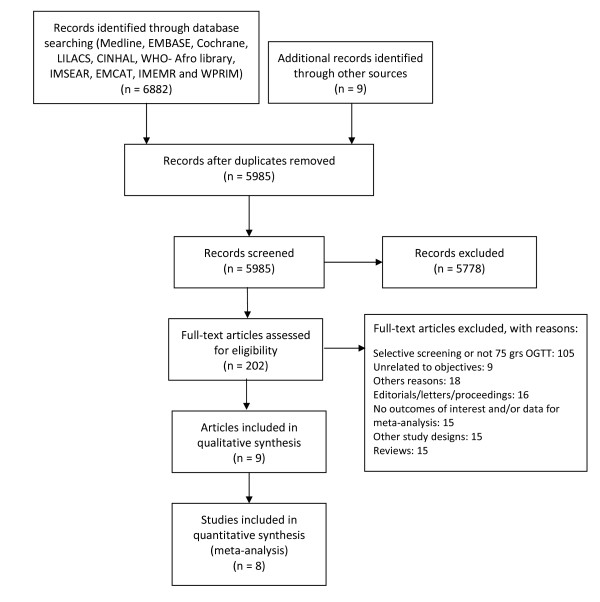
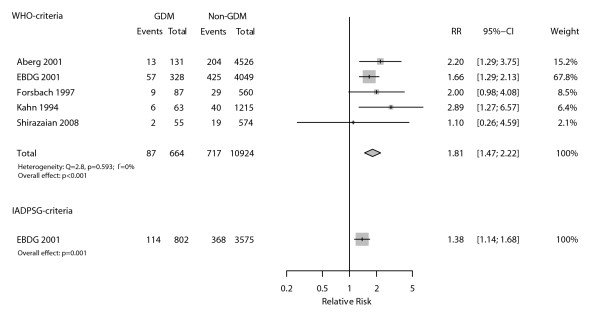
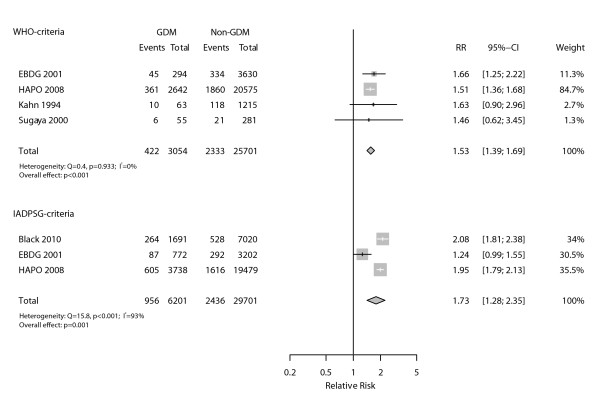
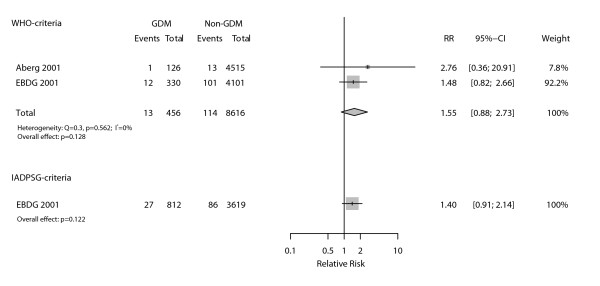
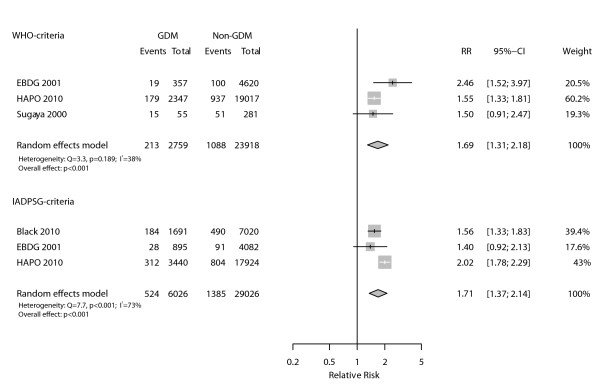
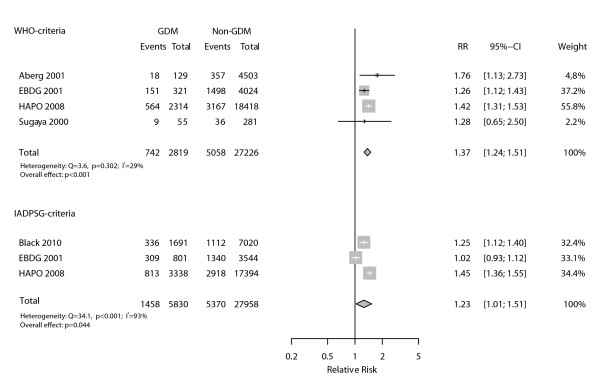
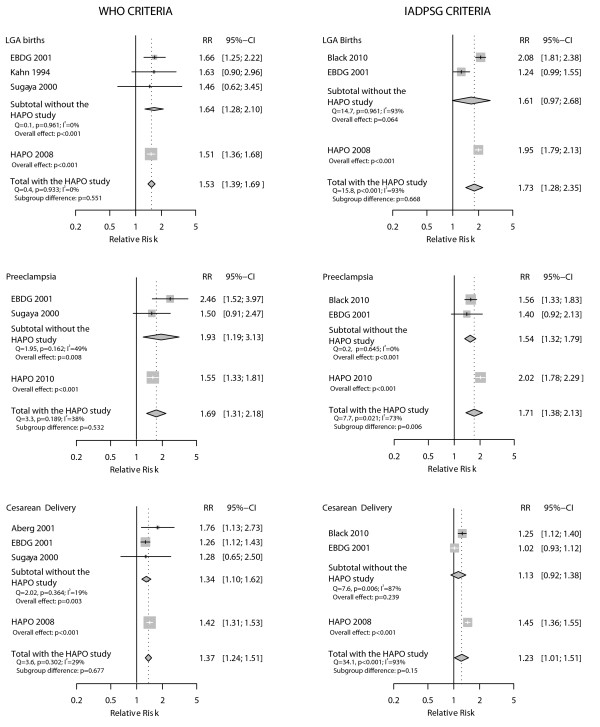
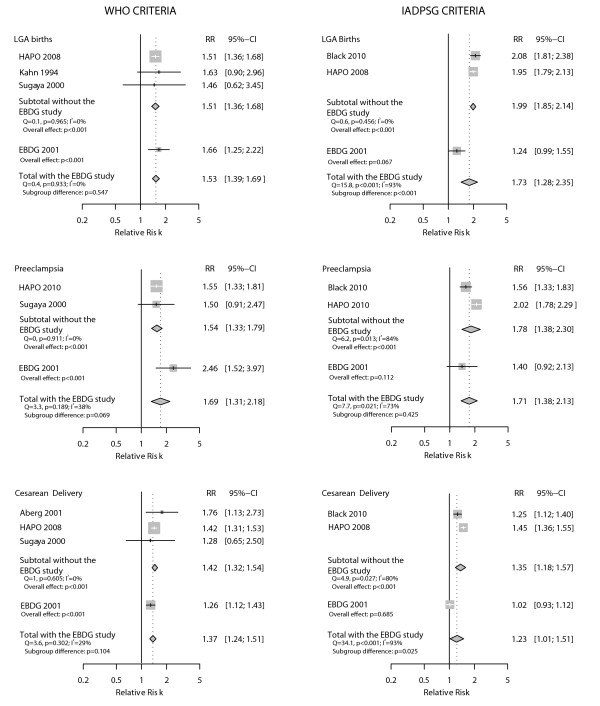
BACKGROUND: Two criteria based on a 2 h 75 g OGTT are being used for the diagnosis of gestational diabetes (GDM), those recommended over the years by the World Health Organization (WHO), and those recently recommended by the International Association for Diabetes in Pregnancy Study Group (IADPSG), the latter generated in the HAPO study and based on pregnancy outcomes. Our aim is to systematically review the evidence for the associations between GDM (according to these criteria) and adverse outcomes. METHODS: We searched relevant studies in MEDLINE, EMBASE, LILACS, the Cochrane Library, CINHAL, WHO-Afro library, IMSEAR, EMCAT, IMEMR and WPRIM. We included cohort studies permitting the evaluation of GDM diagnosed by WHO and or IADPSG criteria against adverse maternal and perinatal outcomes in untreated women. Only studies with universal application of a 75 g OGTT were included. Relative risks (RRs) and their 95% confidence intervals (CI) were obtained for each study. We combined study results using a random-effects model. Inconsistency across studies was defined by an inconsistency index (I2) > 50%. RESULTS: Data were extracted from eight studies, totaling 44,829 women. Greater risk of adverse outcomes was observed for both diagnostic criteria. When using the WHO criteria, consistent associations were seen for macrosomia (RR = 1.81; 95%CI 1.47-2.22; p < 0.001); large for gestational age (RR = 1.53; 95%CI 1.39-1.69; p < 0.001); perinatal mortality (RR = 1.55; 95% CI 0.88-2.73; p = 0.13); preeclampsia (RR = 1.69; 95%CI 1.31-2.18; p < 0.001); and cesarean delivery (RR = 1.37;95%CI 1.24-1.51; p < 0.001). Less data were available for the IADPSG criteria, and associations were inconsistent across studies (I2 ≥ 73%). Magnitudes of RRs and their 95%CIs were 1.73 (1.28-2.35; p = 0.001) for large for gestational age; 1.71 (1.38-2.13; p < 0.001) for preeclampsia; and 1.23 (1.01-1.51; p = 0.04) for cesarean delivery. Excluding either the HAPO or the EBDG studies minimally altered these associations, but the RRs seen for the IADPSG criteria were reduced after excluding HAPO. CONCLUSIONS: The WHO and the IADPSG criteria for GDM identified women at a small increased risk for adverse pregnancy outcomes. Associations were of similar magnitude for both criteria. However, high inconsistency was seen for those with the IADPSG criteria. Full evaluation of the latter in settings other than HAPO requires additional studies.
Overview
The claims and statistics of this paper haven’t been checked yet.
Free: it reads the open-access text and checks the first 5 claims that cite a source we can check. Create a free account to check every claim.
Integrity signals
Registry
Cites
Statistics
Figures
Verification
Claims the paper makes
The claims and statistics of this paper haven’t been checked yet.
Free: it reads the open-access text and checks the first 5 claims that cite a source we can check. Create a free account to check every claim.
Claims other papers make about this one
Each is checked against this paper’s own text: does it say what the citing paper says it does?
In the citing paper
“Potential adverse offspring outcomes vary by age group (Table 4) and avoidance of one outcome does not indicate reduction in risk of other adverse outcomes.21,24,25”
From Gestational Diabetes Mellitus (2019) · cites this paper as [25]
Self-check
Percentages, sums and reported differences re-computed from the paper’s own numbers.
The self-check needs the paper’s full text.
Citations
Cites
Bias in meta-analysis detected by a simple, graphical test
Egger, M., Smith, G. D., Schneider, M., & Minder, C. (1997) · BMJ · doi:10.1136/bmj.315.7109.629 · Cited by 56,722 · cited 1×
“Publication bias was tested using a funnel plot and Egger’s test based on weighted regression [11].”
Quantifying heterogeneity in a meta‐analysis
Higgins, J. P. T., & Thompson, S. G. (2002) · Statistics in Medicine · doi:10.1002/sim.1186 · Cited by 36,763 · cited 1×
“Inconsistency indexes (I) were also calculated, and a value greater than 50% was considered an indicator of high inconsistency between studies [10].”
Conducting Meta-Analyses in R with the metafor Package
Viechtbauer, W. (2010) · Journal of Statistical Software · doi:10.18637/jss.v036.i03 · Cited by 20,464 · cited 1×
“6-0 [9].”
Hyperglycemia and adverse pregnancy outcomes
(2008) · New England Journal of Medicine · doi:10.1056/nejmoa0707943 · Cited by 5,563 · cited 6×
“HAPO, 2008, 2010 [7,19] Yes Yes Yes Yes”
InfluentialInternational Association of Diabetes and Pregnancy Study Groups Consensus Panel (2010) · Diabetes Care · doi:10.2337/dc09-1848 · Cited by 5,390 · cited 1×
“More recently, the International Association of the Diabetes in Pregnancy Study Group (IADPSG), after extensive analyses of the Hyperglycemia and Adverse Pregnancy Outcomes (HAPO) study [7], recommended new diagnostic criteria for GDM [8] based on the 2 h 75 g OGTT: a fasting glucose ≥ 5.”
Classification and diagnosis of diabetes mellitus and other categories of glucose intolerance.
National Diabetes Data Group (1979) · Diabetes · doi:10.2337/diab.28.12.1039 · Cited by 4,909
Standards of Medical Care in Diabetes—2009
American Diabetes Association (2009) · Diabetes Care · doi:10.2337/dc09-s013 · Cited by 2,167
Metzger, B. E., Gabbe, S. G., Persson, B., Lowe, L. P., Dyer, A. R., Oats, J. J. N., & Buchanan, T. A. (2010) · Diabetes Care · doi:10.2337/dc10-0719 · Cited by 1,888
Pepe, M. S. (2004) · American Journal of Epidemiology · doi:10.1093/aje/kwh101 · Cited by 1,276 · cited 1×
“Nevertheless, even if GDM diagnostic criteria were to reach relative risks close to 3 for these adverse outcomes in such settings, the relative risks would still be unlikely to reflect major diagnostic discrimination in terms of post test probabilities [21].”
(1964) · PubMed · Cited by 1,230
Cited by
Gestational diabetes mellitus: mechanisms, treatment, and complications
Johns, E. C., Denison, F. C., Norman, J. E., & Reynolds, R. M. (2018) · Trends in Endocrinology & Metabolism · doi:10.1016/j.tem.2018.09.004 · Cited by 828
Hod, M., Kapur, A., Sacks, D. A., Hadar, E., Agarwal, M., Di Renzo, G. C., Roura, L. C., McIntyre, H. D., Morris, J. L., & Divakar, H. (2015) · International Journal of Gynecology & Obstetrics · doi:10.1016/s0020-7292(15)30033-3 · Cited by 767
DeSisto, C. L., Kim, S. Y., & Sharma, A. J. (2014) · Preventing Chronic Disease · doi:10.5888/pcd11.130415 · Cited by 577
Lee, K. W., Ching, S. M., Ramachandran, V., Yee, A., Hoo, F. K., Chia, Y. C., Wan Sulaiman, W. A., Suppiah, S., Mohamed, M. H., & Veettil, S. K. (2018) · BMC Pregnancy and Childbirth · doi:10.1186/s12884-018-2131-4 · Cited by 546
Diagnostic Criteria and Classification of Hyperglycaemia First Detected in Pregnancy
Agarwal, M., Boulvain, M., Coetzee, E. J., Colagiuri, S., Falavigna, M., Hod, M., Meltzer, S. J., Metzger, B. E., Omori, Y., Rasa, I., et al. (2013) · Cited by 759
Self-citationGestational diabetes mellitus - A metabolic and reproductive disorder
Choudhury, A. A., & Devi Rajeswari, V. (2021) · Biomedicine & Pharmacotherapy · doi:10.1016/j.biopha.2021.112183 · Cited by 442
Szmuilowicz, E. D., Josefson, J. L., & Metzger, B. E. (2019) · Endocrinology and Metabolism Clinics of North America · doi:10.1016/j.ecl.2019.05.001 · Cited by 364
Weissgerber, T. L., & Mudd, L. M. (2015) · Current Diabetes Reports · doi:10.1007/s11892-015-0579-4 · Cited by 357
Behboudi-Gandevani, S., Amiri, M., Bidhendi Yarandi, R., & Ramezani Tehrani, F. (2019) · Diabetology & Metabolic Syndrome · doi:10.1186/s13098-019-0406-1 · Cited by 321
Song, C., Lyu, Y., Li, C., Liu, P., Li, J., Ma, R. C., & Yang, X. (2018) · Obesity Reviews · doi:10.1111/obr.12645 · Cited by 293
Ruchat, S.-M., Houde, A.-A., Voisin, G., St-Pierre, J., Perron, P., Baillargeon, J.-P., Gaudet, D., Hivert, M.-F., Brisson, D., & Bouchard, L. (2013) · Epigenetics · doi:10.4161/epi.25578 · Cited by 255
Hyperglycemia During Pregnancy and Long-Term Offspring Outcomes
Bianco, M. E., & Josefson, J. L. (2019) · Current Diabetes Reports · doi:10.1007/s11892-019-1267-6 · Cited by 248
Isoherranen, N., & Thummel, K. E. (2013) · Drug Metabolism and Disposition · doi:10.1124/dmd.112.050245 · Cited by 239
Nutrigenetics, epigenetics and gestational diabetes: consequences in mother and child
Franzago, M., Fraticelli, F., Stuppia, L., & Vitacolonna, E. (2019) · Epigenetics · doi:10.1080/15592294.2019.1582277 · Cited by 234
“Current research is increasingly focused on GDM and its foetal complications such as an increased risk of macrosomia (birth weight over 4 kg) or large-forgestational-age (LGA; birth weight above the 90th centile for gestational age and gender) at birth [88].”
BackgroundJohansson, S., Villamor, E., Altman, M., Bonamy, A.-K. E., Granath, F., & Cnattingius, S. (2014) · BMJ · doi:10.1136/bmj.g6572 · Cited by 187
Sanabria‐Martínez, G., García‐Hermoso, A., Poyatos‐León, R., Álvarez‐Bueno, C., Sánchez‐López, M., & Martínez‐Vizcaíno, V (2015) · BJOG: An International Journal of Obstetrics & Gynaecology · doi:10.1111/1471-0528.13429 · Cited by 187
Callaway, L. K., McIntyre, H. D., Barrett, H. L., Foxcroft, K., Tremellen, A., Lingwood, B. E., Tobin, J. M., Wilkinson, S., Kothari, A., Morrison, M., et al. (2019) · Diabetes Care · doi:10.2337/dc18-2248 · Cited by 187
Ruiz, J. R., Perales, M., Pelaez, M., Lopez, C., Lucia, A., & Barakat, R. (2013) · Mayo Clinic Proceedings · doi:10.1016/j.mayocp.2013.07.020 · Cited by 181
Barakat, R., Pelaez, M., Lopez, C., Lucia, A., & Ruiz, J. R. (2013) · British Journal of Sports Medicine · doi:10.1136/bjsports-2012-091788 · Cited by 178
Falavigna, M., Schmidt, M. I., Trujillo, J., Alves, L. F., Wendland, E. R., Torloni, M. R., Colagiuri, S., & Duncan, B. B. (2012) · Diabetes Research and Clinical Practice · doi:10.1016/j.diabres.2012.09.002 · Cited by 152
Self-citationColagiuri, S., Falavigna, M., Agarwal, M. M., Boulvain, M., Coetzee, E., Hod, M., Meltzer, S. J., Metzger, B., Omori, Y., Rasa, I., et al. (2014) · Diabetes Research and Clinical Practice · doi:10.1016/j.diabres.2014.02.012 · Cited by 132
Self-citationOlmos‐Ortiz, A., Avila, E., Durand-Carbajal, M., & Díaz, L. (2015) · Nutrients · doi:10.3390/nu7010443 · Cited by 160
“GDM, one of the most common complications of pregnancy, is related to adverse outcomes that increase morbidity and mortality in mothers and neonates, including hypertension, PE, urinary tract infection, caesarean delivery, fetal macrosomia, neonatal hypoglycemia and high long-term risk for metabolic syndrome or diabet…”
BackgroundJafarnejad, S., Saremi, S., Jafarnejad, F., & Arab, A. (2016) · Journal of Nutrition and Metabolism · doi:10.1155/2016/5190846 · Cited by 132
“Preeclampsia and delivery by cesarean section are the short term outcomes of GDM in mothers while hypoglycemia, excessive adiposity, shoulder dystocia, and macrosomia (baby’s birth weight > 8 pounds 13 ounces (4000 g)) are life threatening short term effects of GDM on newborns [2–5].”
BackgroundFalcone, V., Linder, T., Feichtinger, M., Kiss, H., Eppel, W., Husslein, P. W., Prager, G., & Göbl, C. S. (2018) · BMC Pregnancy and Childbirth · doi:10.1186/s12884-018-2124-3 · Cited by 141
Ming, W.-K., Ding, W., Zhang, C. J. P., Zhong, L., Long, Y., Li, Z., Sun, C., Wu, Y., Chen, H., Chen, H., et al. (2018) · BMC Pregnancy and Childbirth · doi:10.1186/s12884-018-2068-7 · Cited by 114
The association between gestational diabetes and ASD and ADHD: a systematic review and meta-analysis
Rowland, J., & Wilson, C. A. (2021) · Scientific Reports · doi:10.1038/s41598-021-84573-3 · Cited by 120
Prevalence and Risk Factors of Gestational Diabetes in Iran: A Systematic Review and Meta-Analysis.
Jafari-Shobeiri, M., Ghojazadeh, M., Aghdash, S. A., Naghavi‐Behzad, M., Piri, R., Pouraliakbar, Y., Nasrollah-Zadeh, R., Bayat-Khajeh, P., & Mohammadi, M. (2015) · PubMed Central · Cited by 135
Gestational diabetes mellitus is associated with adverse outcomes in twin pregnancies
Hiersch, L., Berger, H., Okby, R., Ray, J. G., Geary, M., McDonald, S. D., Murray-Davis, B., Riddell, C., Halperin, I., Hasan, H., et al. (2019) · American Journal of Obstetrics and Gynecology · doi:10.1016/j.ajog.2018.10.027 · Cited by 115
Maternal Lipids Are as Important as Glucose for Fetal Growth
Kulkarni, S. R., Kumaran, K., Rao, S. R., Chougule, S. D., Deokar, T. M., Bhalerao, A. J., Solat, V. A., Bhat, D. S., Fall, C. H. D., & Yajnik, C. S. (2013) · Diabetes Care · doi:10.2337/dc12-2445 · Cited by 116
Poor sleep quality, antepartum depression and suicidal ideation among pregnant women
Gelaye, B., Addae, G., Neway, B., Larrabure-Torrealva, G. T., Qiu, C., Stoner, L. R., Luque-Fernández, M. Á., Sánchez, S. E., & Williams, M. A. (2016) · Journal of Affective Disorders · doi:10.1016/j.jad.2016.11.020 · Cited by 133
“STEM-GDM is a prospective cohort study aimed at evaluating the prevalence of gestational diabetes mellitus (GDM) using the International Association of Diabetes and Pregnancy Study Groups (IAPSG) diagnostic criteria (Wendland et al., 2012).”
Poon, L. C., McIntyre, H. D., Hyett, J. A., da Fonseca, E. B., & Hod, M. (2018) · Diabetes Research and Clinical Practice · doi:10.1016/j.diabres.2018.05.002 · Cited by 116
Greenhalgh, T., Clinch, M., Afsar, N., Choudhury, Y., Sudra, R., Campbell-Richards, D., Claydon, A., Hitman, G. A., Hanson, P., & Finer, S. (2015) · BMC Medicine · doi:10.1186/s12916-015-0360-1 · Cited by 115
“The immediate risks of diabetes in pregnancy to mother and child are potentially severe, including fetal loss, instrumental or caesarean delivery, prematurity, macrosomia, shoulder dystocia, and neonatal hypoglycaemia [13, 23–26].”
BackgroundOta, E., Lopes, K. D. S., Middleton, P., Flenady, V., Wariki, W. M. V., Rahman, O., Tobe-Gai, R., & Mori, R. (2020) · Cochrane Database of Systematic Reviews · doi:10.1002/14651858.cd009599.pub2 · Cited by 149
“Wendland 2012 Wendland EM, Torloni MR, Falavigna M, Trujillo J, Dode MA, Campos MA, et al. Gestational diabetes and pregnancy outcomes--a systematic review of the World Health Organization (WHO) and the International Association of Diabetes in Pregnancy Study Groups (IADPSG) diagnostic criteria.”
BackgroundShort‐ and long‐term outcomes of gestational diabetes and its treatment on fetal development
Murray, S. R., & Reynolds, R. M. (2020) · Prenatal Diagnosis · doi:10.1002/pd.5768 · Cited by 104
Bustamante-Helfrich, B., Chilukuri, N., He, H., Cerda, S. R., Hong, X., Wang, G., Pearson, C., Burd, I. D., & Wang, X. (2017) · Placenta · doi:10.1016/j.placenta.2017.02.016 · Cited by 103
Parabens exposure in early pregnancy and gestational diabetes mellitus
Liu, W., Zhou, Y., Li, J., Sun, X., Liu, H., Jiang, Y., Peng, Y., Zhao, H., Xia, W., Li, Y., et al. (2019) · Environment International · doi:10.1016/j.envint.2019.02.040 · Cited by 92
“GDM may lead to serious adverse maternal and detrimental infant outcomes, for example, high caesarean section rate, pre-eclampsia, macrosomia, infant respiratory distress syndrome, and neonatal hypoglycemia (Poel et al., 2012; Wendland et al., 2012).”
BackgroundYe, G., Zhang, L., Wang, M., Chen, Y., Gu, S., Wang, K., Leng, J., Gu, Y., & Xie, X. (2019) · Journal of Diabetes Research · doi:10.1155/2019/6081248 · Cited by 103
“The incidence of GDM increases continuously, leading to a severe morbidity for both mother and offspring with short-term complications such as preeclampsia [7], macrosomia [7, 8], cesarean delivery [8], neonatal hypoglycemia [9], Hindawi Journal of Diabetes Research Volume 2019, Article ID 6081248, 12 pages https://do…”
Tieu, J., McPhee, A. J., Crowther, C. A., Middleton, P., & Shepherd, E. S. (2017) · Cochrane Database of Systematic Reviews · doi:10.1002/14651858.cd007222.pub4 · Cited by 123
Weight gain adequacy and pregnancy outcomes in gestational diabetes: a meta‐analysis
Viecceli, C., Remonti, L. R., Hirakata, V. N., Mastella, L. S., Gnielka, V., Oppermann, M. L. R., Silveiro, S. P., & Reichelt, A. J. (2017) · Obesity Reviews · doi:10.1111/obr.12521 · Cited by 90
Ruchat, S., & Mottola, M. F. (2013) · Diabetes/Metabolism Research and Reviews · doi:10.1002/dmrr.2402 · Cited by 86
Nitert, M. D., Barrett, H. L., Foxcroft, K., Tremellen, A., Wilkinson, S., Lingwood, B., Tobin, J. M., McSweeney, C., O’Rourke, P., McIntyre, H. D., et al. (2013) · BMC Pregnancy and Childbirth · doi:10.1186/1471-2393-13-50 · Cited by 85
“For the infant, maternal GDM increases the risk of excessive adiposity, macrosomia (a birth weight of >4000 g), shoulder dystocia, admittance to the neonatal intensive care unit and neonatal hypoglycemia [4,5].”
BackgroundShaw, J. G., Asch, S. M., Katon, J. G., Shaw, K. A., Kimerling, R. E., Frayne, S. M., & Phibbs, C. S. (2017) · Paediatric and Perinatal Epidemiology · doi:10.1111/ppe.12349 · Cited by 92
Sheiner, E., Kapur, A., Retnakaran, R. R., Hadar, E., Poon, L. C., McIntyre, D. H., Divakar, H., Staff, A. C., Narula, J., Kihara, A., et al. (2019) · International Journal of Gynecology & Obstetrics · doi:10.1002/ijgo.12926 · Cited by 102
Agbozo, F., Abubakari, A., Der, J. B., & Jahn, A. (2016) · Midwifery · doi:10.1016/j.midw.2016.06.016 · Cited by 97
Screening and diagnosis of gestational diabetes in India: A systematic review and meta-analysis
Li, K. T., Naik, S., Alexander, M., & Mathad, J. S. (2018) · Acta Diabetologica · doi:10.1007/s00592-018-1131-1 · Cited by 83
Rasmussen, L., Christensen, M. L., Poulsen, C. W., Rud, C., Christensen, A. S., Andersen, J. R., Kampmann, U., & Ovesen, P. G. (2020) · Nutrients · doi:10.3390/nu12020475 · Cited by 80
Hod, M., Kapur, A., & McIntyre, H. D. (2019) · American Journal of Obstetrics and Gynecology · doi:10.1016/j.ajog.2019.01.206 · Cited by 81
Watson, H. J., Zerwas, S. C., Torgersen, L., Gustavson, K., Diemer, E. W., Knudsen, G. P., Reichborn‐Kjennerud, T., & Bulik, C. M. (2017) · Journal of Abnormal Psychology · doi:10.1037/abn0000241 · Cited by 95
“The diabetic intrauterine environment leads to increased blood sugar during pregnancy which causes fetal overgrowth, higher birth weight, preeclampsia, and preterm birth (Wendland et al., 2012).”
BackgroundShang, M., & Li, L. (2013) · Journal of Perinatology · doi:10.1038/jp.2013.143 · Cited by 94
The association of gestational diabetes mellitus with fetal birth weight
Yang, Y., Wang, Z., Mo, M., Muyiduli, X., Wang, S., Li, M., Jiang, S. S., Wu, Y., Shao, B., Shen, Y., et al. (2018) · Journal of Diabetes and its Complications · doi:10.1016/j.jdiacomp.2018.04.008 · Cited by 86
Chamberlain, C., McNamara, B., Williams, E. D., Yore, D., Oldenburg, B., Oats, J., & Eades, S. (2013) · Diabetes/Metabolism Research and Reviews · doi:10.1002/dmrr.2389 · Cited by 72
HbA1c Test as a Tool in the Diagnosis of Gestational Diabetes Mellitus
Renz, P. B., Cavagnolli, G., Weinert, L. S., Silveiro, S. P., & Camargo, J. L. (2015) · PLOS ONE · doi:10.1371/journal.pone.0135989 · Cited by 76
“To increase the clinical applicability of the present results, we also estimated the post-test probability of GDM using the Fagan nomogram [20] considering a pre-test probability of 10%, which corresponds to the mean worldwide prevalence of GDM [21].”
MethodHosni, A., Abdel‐Moneim, A., Abdel-Reheim, E. S., Mohamed, S. M., & Helmy, H. (2017) · Biomedicine & Pharmacotherapy · doi:10.1016/j.biopha.2017.01.054 · Cited by 84
Ambient air pollution during pregnancy and risk of gestational diabetes in New York City
Choe, S., Eliot, M., Savitz, D. A., & Wellenius, G. A. (2019) · Environmental Research · doi:10.1016/j.envres.2019.04.030 · Cited by 76
Watanabe, N., Morimoto, S., Fujiwara, T., Suzuki, T., Taniguchi, K., Mori, F., Ando, T., Watanabe, D., Kimura, T., Sago, H., et al. (2013) · The Journal of Clinical Endocrinology & Metabolism · doi:10.1210/jc.2012-4139 · Cited by 75
“GDM is associated with an increased risk of adverse pregnancy outcomes, such as large-for-gestational-age birth and cesarean section (2, 3).”
BackgroundMethodThe role of regulatory T cell (Treg) subsets in gestational diabetes mellitus
Schober, L., Radnai, D., Spratte, J., Kisielewicz, A., Schmitt, E., Mahnke, K., Fluhr, H., Uhlmann, L., Sohn, C., & Steinborn, A. (2014) · Clinical & Experimental Immunology · doi:10.1111/cei.12300 · Cited by 77
Larrabure-Torrealva, G. T., Martinez, S., Luque-Fernandez, M. A., Sanchez, S. E., Mascaro, P. A., Ingar, H., Castillo, W., Zumaeta, R., Grande, M., Motta, V., et al. (2018) · BMC Pregnancy and Childbirth · doi:10.1186/s12884-018-1904-0 · Cited by 72
Voaklander, B., Rowe, S., Sanni, O., Campbell, S., Eurich, D., & Ospina, M. B. (2020) · The Lancet Global Health · doi:10.1016/s2214-109x(20)30046-2 · Cited by 72
Cameron, F. J., Amin, R., de Beaufort, C., Codner, E., & Acerini, C. L. (2014) · Pediatric Diabetes · doi:10.1111/pedi.12169 · Cited by 69
Prevalence of gestational diabetes mellitus in urban and rural Tanzania
Mwanri, A. W., Kinabo, J., Ramaiya, K. L., & Feskens, E. J. M. (2013) · Diabetes Research and Clinical Practice · doi:10.1016/j.diabres.2013.11.021 · Cited by 86
Asgharian, H., Rad, A. H., Mirghafourvand, M., & Mohammad‐Alizadeh‐Charandabi, S. (2019) · European Journal of Nutrition · doi:10.1007/s00394-019-01900-1 · Cited by 81
Liu, Y., Hou, W., Meng, X., Zhao, W., Pan, J., Tang, J., Huang, Y., Tao, M., & Liu, F. (2018) · Journal of Translational Medicine · doi:10.1186/s12967-018-1666-5 · Cited by 68
Abokaf, H., Shoham‐Vardi, I., Sergienko, R., Landau, D., & Sheiner, E. (2018) · Diabetes Research and Clinical Practice · doi:10.1016/j.diabres.2018.09.003 · Cited by 71
Genome-wide DNA methylation variation in maternal and cord blood of gestational diabetes population
Kang, J., Lee, C., Li, H., Hsu, K.-H., & Lin, S. (2017) · Diabetes Research and Clinical Practice · doi:10.1016/j.diabres.2017.07.034 · Cited by 73
Pedersen, M., Olsen, S. F., Halldorsson, T. I., Zhang, C., Hjortebjerg, D., Ketzel, M., Grandström, C., Sørensen, M., Damm, P., Langhoff‐Roos, J., et al. (2017) · Environment International · doi:10.1016/j.envint.2017.09.003 · Cited by 71
Trujillo, J., Vigo, A., Duncan, B. B., Falavigna, M., Wendland, E. M., Campos, M. A., & Schmidt, M. I. (2015) · Diabetes Research and Clinical Practice · doi:10.1016/j.diabres.2015.02.007 · Cited by 64
Self-citationBasri, N. I., Mahdy, Z. A., Ahmad, S., Abdul Karim, A. K., Shan, L. P., Abdul Manaf, M. R., & Ismail, N. A. M. (2018) · Hormone Molecular Biology and Clinical Investigation · doi:10.1515/hmbci-2017-0077 · Cited by 64
Lu, H. Y., Ding, X., Hirst, J. E., Yang, Y., Yang, J., Mackillop, L. H., & Clifton, D. A. (2023) · IEEE Reviews in Biomedical Engineering · doi:10.1109/rbme.2023.3242261 · Cited by 78
“Systematic clinical reviews in gestational diabetes monitoring systemic clinical reviews [4], [43], [44], [45] and studies on clinical outcomes [46], [47] are also helpful reading materials.”
BackgroundGestational Diabetes Mellitus: Association with Maternal and Neonatal Complications
Karkia, R., Giacchino, T., Shah, S., Gough, A., Ramadan, G., & Akolekar, R. (2023) · Medicina · doi:10.3390/medicina59122096 · Cited by 98
“GDM is also associated with an increased risk of adverse outcomes such as pre-eclampsia, preterm birth, CS, macrosomia and neonatal hypoglycaemia but in contrast to pregnancies with pre-existing DM, there is no evidence of a significant increase in the risk of stillbirth [8–10].”
Eades, C. E., Burrows, K. A., Andreeva, R., Stansfield, D., & Evans, J. M. M. (2024) · BMC Pregnancy and Childbirth · doi:10.1186/s12884-024-06378-2 · Cited by 96
Eleftheriades, M. I., Papastefanou, I., Lambrinoudaki, I. V., Kappou, D., Lavranos, D., Akalestos, A., Souka, A. P., Pervanidou, P., Hassiakos, D., & Chrousos, G. P. (2014) · Metabolism · doi:10.1016/j.metabol.2014.07.016 · Cited by 68
Prevalence and Determinants of Gestational Diabetes Mellitus: A Cross-Sectional Study in China
Xu, X., Liu, Y., Liu, D., Li, X., Rao, Y., Sharma, M., & Zhao, Y. (2017) · International Journal of Environmental Research and Public Health · doi:10.3390/ijerph14121532 · Cited by 62
Fetal and maternal metabolic responses to exercise during pregnancy
Mottola, M. F., & Artal, R. (2016) · Early Human Development · doi:10.1016/j.earlhumdev.2016.01.008 · Cited by 81
Kouhkan, A., Khamseh, M. E., Pirjani, R., Moini, A., Arabipoor, A., Maroufizadeh, S., Hosseini, R., & Baradaran, H. R. (2018) · BMC Pregnancy and Childbirth · doi:10.1186/s12884-018-2115-4 · Cited by 67
Sommer, C., Mørkrid, K., Jenum, A. K., Sletner, L., Mosdøl, A., & Birkeland, K. I. (2013) · International Journal of Obesity · doi:10.1038/ijo.2013.185 · Cited by 71
Screening and management of gestational diabetes
Benhalima, K., Devlieger, R., & Assche, A. V. (2014) · Best Practice & Research Clinical Obstetrics & Gynaecology · doi:10.1016/j.bpobgyn.2014.07.026 · Cited by 78
The IDF Diabetes Atlas methodology for estimating global prevalence of hyperglycaemia in pregnancy
Linnenkamp, U., Guariguata, L., Beagley, J., Whiting, D. R., & Cho, N. H. (2013) · Diabetes Research and Clinical Practice · doi:10.1016/j.diabres.2013.11.004 · Cited by 71
Quan, W., Zeng, M., Ye, J., Li, Y., Xue, C., Liu, G., Wang, Z., Qin, F., He, Z., & Chen, J. (2020) · Advances in Nutrition · doi:10.1093/advances/nmaa184 · Cited by 69
Oni, O. A., Harville, E. W., Xiong, X., & Buekens, P. M. (2015) · Journal of Obstetric, Gynecologic & Neonatal Nursing · doi:10.1111/1552-6909.12560 · Cited by 66
“Gestational diabetes mellitus (GDM) affects an estimated 4% to 10% of all pregnancies in the United States (American Diabetes Association, 2009) and has been associated with adverse maternal and infant outcomes such as pregnancy-induced hypertension, macrosomia, shoulder dystocia, and birth injuries (Wendland et al.,…”
BackgroundMetabolomic profile of term infants of gestational diabetic mothers
Dani, C., Bresci, C., Berti, E., Ottanelli, S., Mello, G., Mecacci, F., Breschi, R., Hu, X., Tenori, L., & Luchinat, C. (2013) · The Journal of Maternal-Fetal & Neonatal Medicine · doi:10.3109/14767058.2013.823941 · Cited by 62
Wang, C., Zhu, W., Wei, Y., Feng, H., Su, R., & Yang, H. (2015) · BMC Pregnancy and Childbirth · doi:10.1186/s12884-015-0682-1 · Cited by 72
“In addition, maternal overweight status and obesity [7], excessive GWG [8] and GDM [9] are all independently associated with an increased risk of adverse pregnancy outcomes, such as preterm birth, macrosomia and caesarean delivery, particularly when these three factors occur simultaneously [10].”
BackgroundHoran, M. K., McGowan, C. A., Gibney, E. R., Donnelly, J. M., & McAuliffe, F. M. (2014) · Nutrition Journal · doi:10.1186/1475-2891-13-78 · Cited by 57
“There has been much research into glycaemic control and into the effect of dietary glycaemic index and load during pregnancy on birthweight due to the well-established risk of macrosomia in gestational diabetes [70].”
BackgroundPolyphenol-rich foods and risk of gestational diabetes: a systematic review and meta-analysis
Pham, N. M., Vuong, V., & Lee, A. H. (2018) · European Journal of Clinical Nutrition · doi:10.1038/s41430-018-0218-7 · Cited by 64
Variability in newborn telomere length is explained by inheritance and intrauterine environment
Chen, L., Tan, K. M. L., Gong, M., Chong, M. F. F., Tan, K. H., Chong, Y. S., Meaney, M. J., Gluckman, P. D., Eriksson, J. G., & Karnani, N. (2022) · BMC Medicine · doi:10.1186/s12916-021-02217-9 · Cited by 53
Liu, Y., Sun, R., Lin, X., Wu, L., Chen, H., Shen, S., Li, Y., Wei, Y., & Deng, G. (2022) · Biomedicine & Pharmacotherapy · doi:10.1016/j.biopha.2022.113078 · Cited by 67
Outcomes of pregnancy with gestational diabetes mellitus
Srichumchit, S., Luewan, S., & Tongsong, T. (2015) · International Journal of Gynecology & Obstetrics · doi:10.1016/j.ijgo.2015.05.033 · Cited by 56
Changes in diabetes status between pregnancies and impact on subsequent newborn outcomes
Boghossian, N. S., Yeung, E., Albert, P. S., Mendola, P., Laughon, S. K., Hinkle, S. N., & Zhang, C. (2014) · American Journal of Obstetrics and Gynecology · doi:10.1016/j.ajog.2013.12.026 · Cited by 56
Troncoso, F., Acurio, J., Herlitz, K., Aguayo, C. R., Bertoglia, P., Guzmán‐Gutiérrez, E., Loyola, M., González, M., Rezgaoui, M., Desoyé, G., et al. (2017) · PLoS ONE · doi:10.1371/journal.pone.0182509 · Cited by 61
Bianchi, C., Gennaro, G., Romano, M., Aragona, M., Battini, L., Prato, S. D., & Bertolotto, A. (2018) · Diabetes Research and Clinical Practice · doi:10.1016/j.diabres.2018.08.019 · Cited by 68
Abbasi, A., Aghebati‐Maleki, A., Yousefi, M., & Maleki, L. A. (2020) · Journal of Reproductive Immunology · doi:10.1016/j.jri.2020.103244 · Cited by 63
Pharmacokinetics, efficacy and safety of glyburide for treatment of gestational diabetes mellitus
Malek, R., & Davis, S. N. (2016) · Expert Opinion on Drug Metabolism & Toxicology · doi:10.1080/17425255.2016.1187131 · Cited by 54
“[1] Untreated hyperglycemia during the first trimester of pregnancy is associated with structural malformations and miscarriage.[2,3] During the second and third trimester, uncontrolled hyperglycemia leads to increased fetal size with the risk of macrosomia and associated obstetrical complications such as shoulder dys…”
BackgroundRenz, P. B., Chume, F. C., Timm, J. R. T., Pimentel, A. L., & Camargo, J. L. (2019) · Clinical Chemistry and Laboratory Medicine (CCLM) · doi:10.1515/cclm-2018-1191 · Cited by 54
Cubillos, G., Mönckeberg, M., Plaza, A., Morgan, M., Estévez, P. A., Choolani, M. A., Kemp, M. W., Illanes, S. E., & Perez, C. A. (2023) · BMC Pregnancy and Childbirth · doi:10.1186/s12884-023-05766-4 · Cited by 63
“Gestational Diabetes Mellitus (GDM) is defined as any degree of glucose intolerance with onset or first recognition during pregnancy [1, 2].”
BackgroundBrown, J., Crawford, T. J., Alsweiler, J., & Crowther, C. A. (2016) · Cochrane Database of Systematic Reviews · doi:10.1002/14651858.cd012048.pub2 · Cited by 48
Egbe, T. O., Tsaku, E. S., Tchounzou, R., & Ngowe, M. N. (2018) · Pan African Medical Journal · doi:10.11604/pamj.2018.31.195.17177 · Cited by 51
Shi, P., Liu, A., & Yin, X. (2021) · BMC Pregnancy and Childbirth · doi:10.1186/s12884-021-03982-4 · Cited by 49
Chen, L., Lim, A. L., Colega, M., Tint, M. T., Aris, I. M., Tan, C. S., Chong, Y. S., Gluckman, P. D., Godfrey, K. M., Kwek, K. Y. C., et al. (2014) · Journal of Nutrition · doi:10.3945/jn.114.196352 · Cited by 56
on behalf of the Women and Infants Integrated Growth Study (WINGS) Group, Taneja, S., Chowdhury, R., Dhabhai, N., Mazumder, S., Upadhyay, R. P., Sharma, S., Dewan, R., Mittal, P., Chellani, H. K., et al. (2020) · Trials · doi:10.1186/s13063-020-4059-z · Cited by 55
Macharey, G., Gissler, M., Rahkonen, L., Ulander, V., Väisänen‐Tommiska, M., Nuutila, M. E., & Heinonen, S. T. (2017) · Archives of Gynecology and Obstetrics · doi:10.1007/s00404-016-4283-7 · Cited by 50
Ao, D., Wang, H., Wang, L., Song, J., Yang, H.-X., & Wang, Y. (2015) · PLoS ONE · doi:10.1371/journal.pone.0128901 · Cited by 47
Metadata
- Authors
- Wendland, E. M., Torloni, M. R., Falavigna, M., Trujillo, J., Dode, M. A., Campos, M. A., Duncan, B. B., & Schmidt, M. I.
- Affiliations
- Universidade Federal de Ciências da Saúde de Porto Alegre (BR)
- Universidade Federal de São Paulo (BR)
- Universidade Federal do Rio Grande do Sul (BR)
- Universidade Federal de Pelotas (BR)
- Grupo Hospitalar Conceição (BR)
- Corresponding author
- Wendland, Eliana M
- ORCID
- Venue
- BMC Pregnancy and Childbirth
- Published
- 2012-03-31
- Volume
- 12
- Issue
- 1
- Pages
- 23-23
- ISSN
- 1471-2393 (ISSN-L)
- PMC
- PMC3352245
- OpenAlex
- W2072554726
- Semantic Scholar
- 4f4bdfa6654e25b19f29307a37b32e0a2a5e0be3
- Cited by
- 626
- References
- 30
- Citations by year
- 2026: 29 · 2025: 32 · 2024: 48 · 2023: 54 · 2022: 60 · 2021: 59 · 2020: 47 · 2019: 48 · 2018: 52 · 2017: 34 · 2016: 40 · 2015: 46 · 2014: 38 · 2013: 36 · 2012: 3
- FWCI
- 6.42
- Type
- journal article
- Language
- en
- Open access
- gold
- doi.org
- Licence
- cc-by
- creativecommons.org/licenses/by/2.0 (tdm)
- Locations
- BMC Pregnancy and Childbirth (publishedVersion, cc-by)
- PubMed Central (publishedVersion, cc-by)
- PubMed (publishedVersion)
- LA Referencia (Red Federada de Repositorios Institucionales de Publicaciones Científicas) (publishedVersion, other-oa)
- Americanae (AECID Library) (submittedVersion, cc-by-nc-sa)
- Americanae (AECID Library) (submittedVersion, other-oa)
- DOAJ (DOAJ: Directory of Open Access Journals) (submittedVersion, cc-by-sa)
- LA Referencia (Red Federada de Repositorios Institucionales de Publicaciones Científicas) (submittedVersion, other-oa)
- Funders
- World Health Organization
- Topics
- Health Sciences › Medicine › Obstetrics and Gynecology › Gestational Diabetes Research and Management
- Health Sciences › Medicine › Public Health, Environmental and Occupational Health › Pregnancy and Medication Impact
- Health Sciences › Medicine › Obstetrics and Gynecology › Pregnancy and preeclampsia studies
- Keywords
- gestational diabetes mellitus, diagnostic criteria, WHO criteria, IADPSG criteria, 75 g oral glucose tolerance test, adverse pregnancy outcomes, macrosomia, large for gestational age, perinatal mortality, preeclampsia, cesarean section, maternal outcomes, HAPO study, inconsistency index, risk of bias, quality of evidence
- MeSH terms
- Adolescent, Analysis of Variance, Female, Glucose Tolerance Test, Humans, Pregnancy, Pregnancy Outcome, Sensitivity and Specificity, World Health Organization, Cohort Studies, Diabetes, Gestational
About these checks
Registry, retraction, Cites and statistics results are computed, not judged, with one exception: a printed reference that no index lists is read once by a model before it counts as a citation error. Claims are extracted by a model and kept only when their quote appears verbatim in the text; each cited source is then checked, with a model’s help, for whether it says what the claim relies on. Those verdicts can be wrong — read the claim’s quote and the cited source before relying on one.
Statistics and arithmetic are recomputed, not judged.
Confidence bands are shown only for fields calibrated on our annotated test set. None is calibrated yet, so no band is shown.
What counts as a claim ›How we measure confidence ›How we check this ›
Are you an author, or do you see a problem with this page? Request a review
Data sources
Bibliographic data: Semantic Scholar, OpenAlex, Crossref.
Contains information from the Semantic Scholar Academic Graph Datasets, made available under the ODC Attribution License (ODC-BY 1.0).
Semantic Scholar’s data is described in: Kinney, R., et al. (2023). The Semantic Scholar Open Data Platform. arXiv:2301.10140.
