

Chloroquine potentiates the anti-cancer effect of 5-fluorouracil on colon cancer cells
Open accessThe DOI matches its Crossref record; 34 of the 34 references it cites were found in a registry or an index.
Abstract
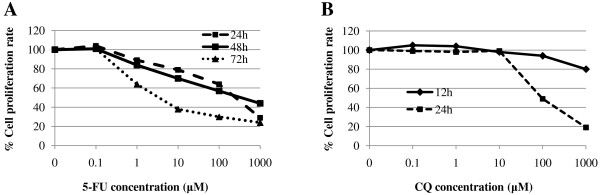
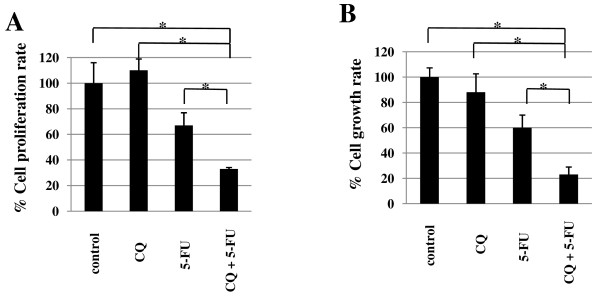
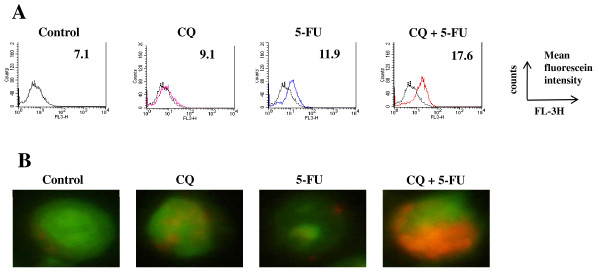
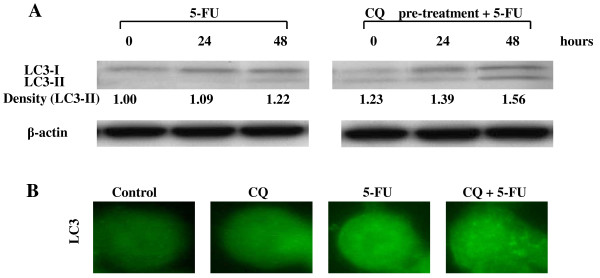
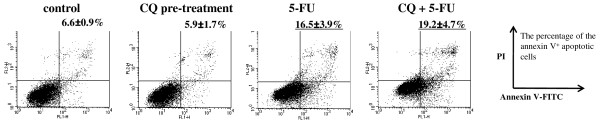
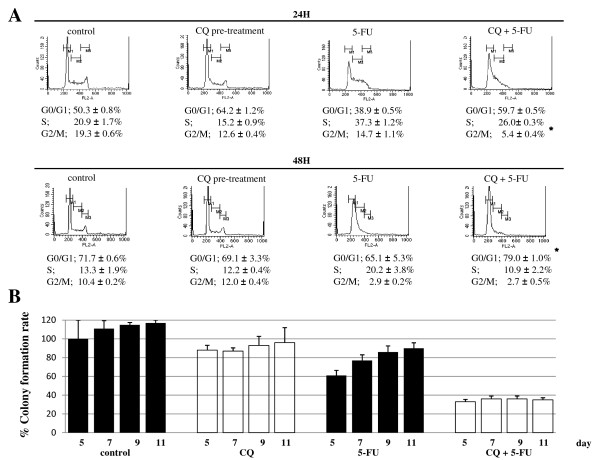
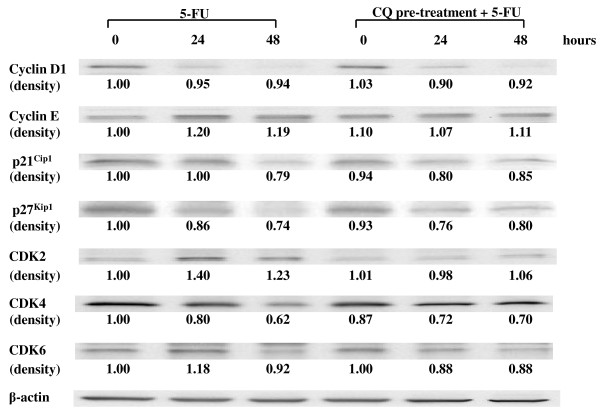
BACKGROUND: Chloroquine (CQ), the worldwide used anti-malarial drug, has recently being focused as a potential anti-cancer agent as well as a chemosensitizer when used in combination with anti-cancer drugs. It has been shown to inhibit cell growth and/or to induce cell death in various types of cancer. 5-Fluorouracil (5-FU) is the chemotherapeutic agent of first choice in colorectal cancer, but in most cases, resistance to 5-FU develops through various mechanisms. Here, we focused on the combination of CQ as a mechanism to potentiate the inhibitory effect of 5-FU on human colon cancer cells. METHODS: HT-29 cells were treated with CQ and/or 5-FU, and their proliferative ability, apoptosis and autophagy induction effects, and the affection of the cell cycle were evaluated. The proliferative ability of HT-29 was analyzed by the MTS assay. Apoptosis was quantified by flow-cytometry after double-staining of the cells with AnnexinV/PI. The cell cycle was evaluated by flow-cytometry after staining of cells with PI. Autophagy was quantified by flow-cytometry and Western blot analysis. Finally, to evaluate the fate of the cells treated with CQ and/or 5-FU, the colony formation assay was performed. RESULTS: 5-FU inhibited the proliferative activity of HT-29 cells, which was mostly dependent on the arrest of the cells to the G0/G1-phase but also partially on apoptosis induction, and the effect was potentiated by CQ pre-treatment. The potentiation of the inhibitory effect of 5-FU by CQ was dependent on the increase of p21Cip1 and p27Kip1 and the decrease of CDK2. Since CQ is reported to inhibit autophagy, the catabolic process necessary for cell survival under conditions of cell starvation or stress, which is induced by cancer cells as a protective mechanism against chemotherapeutic agents, we also analyzed the induction of autophagy in HT-29. HT-29 induced autophagy in response to 5-FU, and CQ inhibited this induction, a possible mechanism of the potentiation of the anti-cancer effect of 5-FU. CONCLUSION: Our findings suggest that the combination therapy with CQ should be a novel therapeutic modality to improve efficacy of 5-FU-based chemotherapy, possibly by inhibiting autophagy-dependent resistance to chemotherapy.
Overview
The claims and statistics of this paper haven’t been checked yet.
Free: it reads the open-access text and checks the first 5 claims that cite a source we can check. Create a free account to check every claim.
Integrity signals
Registry
Cites
Statistics
Figures
Verification
Claims the paper makes
The claims and statistics of this paper haven’t been checked yet.
Free: it reads the open-access text and checks the first 5 claims that cite a source we can check. Create a free account to check every claim.
Claims other papers make about this one
Each is checked against this paper’s own text: does it say what the citing paper says it does?
In the citing paper
“A series of preclinical studies have demonstrated that autophagy inhibitors, such as chloroquine/3-methyladenine, can reverse CRC resistance by inhibiting 5-FU-induced activation of autophagy [43,44].”
From Drug Resistance in Colorectal Cancer: From Mechanism to Clinic (2022) · cites this paper as [43]
Self-check
Percentages, sums and reported differences re-computed from the paper’s own numbers.
The self-check needs the paper’s full text.
Citations
Cites
5-Fluorouracil: mechanisms of action and clinical strategies
Longley, D. B., Harkin, D. P., & Johnston, P. G. (2003) · Nature Reviews Cancer · doi:10.1038/nrc1074 · Cited by 5,332 · cited 1×
“Intracellular metabolites of 5-FU can exert cytotoxic effects via inhibition of thymidylate synthetase, or through incorporation into RNA and DNA, events that ultimately activate apoptosis [2].”
Backgroundp21 is a universal inhibitor of cyclin kinases
Xiong, Y., Hannon, G. J., Zhang, H., Casso, D., Kobayashi, R., & Beach, D. (1993) · Nature · doi:10.1038/366701a0 · Cited by 3,368
Polyak, K., Lee, M.-H., Erdjument-Bromage, H., Koff, A., Roberts, J. M., Tempst, P., & Massagué, J. (1994) · Cell · doi:10.1016/0092-8674(94)90572-x · Cited by 2,118
Autophagy inhibition enhances therapy-induced apoptosis in a Myc-induced model of lymphoma
Amaravadi, R. K., Yu, D., Lum, J. J., Bui, T., Christophorou, M. A., Evan, G. I., Thomas-Tikhonenko, A., & Thompson, C. B. (2007) · Journal of Clinical Investigation · doi:10.1172/jci28833 · Cited by 1,137
Chloroquine and its analogs: A new promise of an old drug for effective and safe cancer therapies
Solomon, V. R., & Lee, H. (2009) · European Journal of Pharmacology · doi:10.1016/j.ejphar.2009.06.063 · Cited by 516
The Roles of Therapy-Induced Autophagy and Necrosis in Cancer Treatment
Amaravadi, R. K., & Thompson, C. B. (2007) · Clinical Cancer Research · doi:10.1158/1078-0432.ccr-07-1595 · Cited by 465
Li, J., Hou, N., Faried, A., Tsutsumi, S., & Kuwano, H. (2010) · European Journal of Cancer · doi:10.1016/j.ejca.2010.02.021 · Cited by 318
Inhibition of Autophagy by 3-MA Enhances the Effect of 5-FU-Induced Apoptosis in Colon Cancer Cells
Li, J., Hou, N., Faried, A., Tsutsumi, S., Takeuchi, T., & Kuwano, H. (2009) · Annals of Surgical Oncology · doi:10.1245/s10434-008-0260-0 · Cited by 291 · cited 3×
“Other combination therapies for 5-FU, such as Irinotecan, aspirin, proteasome inhibitor, 3-MA are being attempted [15,32-34], and CQ is a new candidate.”
BackgroundDissection of Autophagosome Biogenesis into Distinct Nucleation and Expansion Steps
Abeliovich, H., Dunn, W. A., Kim, J., & Klionsky, D. J. (2000) · The Journal of Cell Biology · doi:10.1083/jcb.151.5.1025 · Cited by 279
Maclean, K. H., Dorsey, F. C., Cleveland, J. L., & Kastan, M. B. (2008) · Journal of Clinical Investigation · doi:10.1172/jci33700 · Cited by 272
Cited by
Items 101–200 of 352
Gao, Y., Huo, X., Liu, D., Sun, X., He, S., Wei, G., Xu, Y., Zhang, Y.-F., & Wu, J. (2014) · Molecular Medicine Reports · doi:10.3892/mmr.2014.3088 · Cited by 54
Chloroquine Enhances Gefitinib Cytotoxicity in Gefitinib-Resistant Nonsmall Cell Lung Cancer Cells
Tang, M., Wu, M., Hwang, M.-H., Chang, Y.-T., Huang, H.-J., Lin, A. M.-Y., & Yang, J. C. (2015) · PLoS ONE · doi:10.1371/journal.pone.0119135 · Cited by 53
Park, E., Min, K., Choi, K. S., Kubatka, P., Kružliak, P., Kim, D., & Kwon, T. K. (2016) · Scientific Reports · doi:10.1038/srep22921 · Cited by 53
Targeting ATG4 in Cancer Therapy
Fu, Y., Huang, Z., Hong, L., Lu, J., Feng, D., Yin, X., & Li, M. (2019) · Cancers · doi:10.3390/cancers11050649 · Cited by 55
CDK10 functions as a tumor suppressor gene and regulates survivability of biliary tract cancer cells
Yu, J., Zhong, X., Zhang, W., Wang, Z., Dong, Q., Tai, S., Li, H., & Cui, Y. (2011) · Oncology Reports · doi:10.3892/or.2011.1617 · Cited by 52
Duarte, D., & Vale, N. (2020) · Biomolecules · doi:10.3390/biom10121623 · Cited by 51
Ghosh, C., Nandi, A., & Basu, S. (2019) · Nanoscale · doi:10.1039/c8nr08682f · Cited by 51
Yan, J., Dou, X., Zhou, J., Xiong, Y., Mo, L., Li, L., & Lei, Y. (2019) · Journal of Experimental & Clinical Cancer Research · doi:10.1186/s13046-019-1355-0 · Cited by 50
Molecular Mechanism of Autophagy and Its Regulation by Cannabinoids in Cancer
Lee, X. C., Werner, E., & Falasca, M. (2021) · Cancers · doi:10.3390/cancers13061211 · Cited by 52
Bincoletto, C., Bechara, A., Pereira, G. J. S., Santos, C. P., Antunes, F., Peixoto-da-Silva, J., Muler, M. L., Gigli, R. D., Monteforte, P. T., Hirata, H., et al. (2013) · Chemico-Biological Interactions · doi:10.1016/j.cbi.2013.09.018 · Cited by 51
Down-regulating IL-6/GP130 targets improved the anti-tumor effects of 5-fluorouracil in colon cancer
Li, S., Tian, J., Zhang, H., Zhou, S., Wang, X., Zhang, L., Yang, J., Zhang, Z., & Ji, Z. (2018) · APOPTOSIS · doi:10.1007/s10495-018-1460-0 · Cited by 49
Liu, F., Shang, Y., & Chen, S. (2014) · Acta Pharmacologica Sinica · doi:10.1038/aps.2014.3 · Cited by 49
Rahmati, S., Moeinafshar, A., & Rezaei, N. (2024) · Journal of Translational Medicine · doi:10.1186/s12967-024-05267-8 · Cited by 48
Ma, Y., Chen, H., Hao, B.-M., Zhou, J., He, G., Miao, Z., Xu, Y., Gao, L., Zhou, W., & Zha, Z. (2018) · Journal of Materials Chemistry B · doi:10.1039/c8tb01987h · Cited by 48
Ramirez, J. A. Z., Romagnoli, G. G., Falasco, B. F., Gorgulho, C. M., Fogolin, C., dos Santos, D. C., Araújo, J. P., Lotze, M. T., Ureshino, R. P., & Kaneno, R. (2020) · International Immunopharmacology · doi:10.1016/j.intimp.2020.106495 · Cited by 48
The role of long non-coding RNAs in mediating chemoresistance by modulating autophagy in cancer
Jin, K., Lu, Z.-B., Lv, J., & Zhang, J. (2020) · RNA Biology · doi:10.1080/15476286.2020.1737787 · Cited by 47
Guerra‐Librero, A., Fernández-Gil, B. I., Florido, J., Martínez-Ruiz, L., Rodríguez-Santana, C., Shen, Y., García‐Verdugo, J. M., López‐Rodríguez, A., Rusanova, I., Quiñones‐Hinojosa, A., et al. (2021) · Antioxidants · doi:10.3390/antiox10040603 · Cited by 47
Ambra1 in autophagy and apoptosis: Implications for cell survival and chemotherapy resistance
Sun, W. (2016) · Oncology Letters · doi:10.3892/ol.2016.4644 · Cited by 49
Reduced Autophagy in 5-Fluorouracil Resistant Colon Cancer Cells
Yao, C. W., Kang, K. A., Piao, M. J., Ryu, Y. S., Fernando, P. M. D. J., Oh, M. C., Park, J. E., Shilnikova, K., Na, S., Jeong, S. U., et al. (2016) · Biomolecules & Therapeutics · doi:10.4062/biomolther.2016.069 · Cited by 46
Zhao, C., Qiu, S., He, J., Peng, Y., Xu, H., Feng, Z., Huang, H., Du, Y., Zhou, Y., & Nie, Y. (2020) · Cancer Letters · doi:10.1016/j.canlet.2020.03.010 · Cited by 46
Yan, L., Shi, J. H., & Zhu, J. (2024) · Discover Oncology · doi:10.1007/s12672-024-01163-1 · Cited by 45
Mechanism and role of regulated cell death in tumor immunity and immunotherapy
Hu, J., Li, Y., Lian, B., Mao, Y., & Zhao, L. (2025) · 癌症:英文版 · doi:10.1002/cac2.70064 · Cited by 45
Wu, M.-Y., Wang, S.-F., Cai, C.-Z., Tan, J., Li, M., Lu, J., Chen, X., Wang, Y., Zheng, W., & Lu, J. (2017) · Oncotarget · doi:10.18632/oncotarget.20767 · Cited by 45
The Rho-kinase inhibitor inhibits proliferation and metastasis of small cell lung cancer
Yang, X., Di, J., Zhang, Y., Zhang, S., Lu, J., Liu, J., & Shi, W. (2011) · Biomedicine & Pharmacotherapy · doi:10.1016/j.biopha.2011.11.011 · Cited by 45
Chakrabarti, M., & Mukherjee, A. (2020) · Ecotoxicology and Environmental Safety · doi:10.1016/j.ecoenv.2020.111817 · Cited by 44
Kasprzak, A. (2023) · International Journal of Molecular Sciences · doi:10.3390/ijms24043665 · Cited by 44
Tan, S., Peng, X., Peng, W., Zhao, Y., & Wei, Y. (2015) · Oncology Letters · doi:10.3892/ol.2015.2996 · Cited by 44
Gao, M., Xu, Y., & Qiu, L. (2016) · Journal of Liposome Research · doi:10.1080/08982104.2016.1185731 · Cited by 44
Lentivirus-mediated silencing of HSDL2 suppresses cell proliferation in human gliomas
Ruokun, C., Yake, X., Fengdong, Y., Xinting, W., Laijun, S., & Xianzhi, L. (2016) · Tumor Biology · doi:10.1007/s13277-016-5402-6 · Cited by 44
How autophagy, a potential therapeutic target, regulates intestinal inflammation
Chen, S.-L., Li, C., Li, W., Liu, Q., Hu, S., Zhao, M., Hu, D.-S., Hao, Y., Zeng, J., & Zhang, Y. (2023) · Frontiers in Immunology · doi:10.3389/fimmu.2023.1087677 · Cited by 43
Epigenetic regulation of autophagy in gastrointestinal cancers
Ghavami, S., Zamani, M., Ahmadi, M., Erfani, M., Dastghaib, S., Darbandi, M., Darbandi, S., Vakili, O., Siri, M., Grabarek, B. O., et al. (2022) · Biochimica et Biophysica Acta (BBA) - Molecular Basis of Disease · doi:10.1016/j.bbadis.2022.166512 · Cited by 43
Protective autophagy antagonizes oxaliplatin-induced apoptosis in gastric cancer cells
Xu, L., Qu, X., Liu, Y., Xu, Y., Liu, J., Hou, K., & Zhang, Y. (2011) · 癌症:英文版 · doi:10.5732/cjc.010.10518 · Cited by 43
Chen, Q., Song, S., Wei, S., Liu, B., Honjo, S., Scott, A., Jin, J., Ma, L., Zhu, H., Skinner, H. D., et al. (2015) · Oncotarget · doi:10.18632/oncotarget.4540 · Cited by 42
Exploiting Nanomaterial‐Mediated Autophagy for Cancer Therapy
Wei, W., Rosenkrans, Z. T., Luo, Q., Lan, X., & Cai, W. (2018) · Small Methods · doi:10.1002/smtd.201800365 · Cited by 42
Autophagy-mediating microRNAs in cancer chemoresistance
Jing, Y., Liang, W., Liu, J., Zhang, L., Wei, J., Yang, J., Zhang, Y., & Huang, Z. (2020) · Cell Biology and Toxicology · doi:10.1007/s10565-020-09553-1 · Cited by 43
Formulation and Pharmacokinetics of Thermosensitive Stealth® Liposomes Encapsulating 5-Fluorouracil
Sabbagh, C. A., Tsapis, N., Novell, A., Calleja-Gonzalez, P., Escoffre, J., Bouakaz, A., Chacun, H., Denis, S., Vergnaud, J., Gueutin, C., et al. (2014) · Pharmaceutical Research · doi:10.1007/s11095-014-1559-0 · Cited by 42
Autophagy and Cell Death to Target Cancer Cells: Exploiting Synthetic Lethality as Cancer Therapies
Reyjal, J., Cormier, K., & Turcotte, S. (2013) · Advances in experimental medicine and biology · doi:10.1007/978-1-4614-5915-6_8 · Cited by 42
The significance of autophagy in colorectal cancer pathogenesis and implications for therapy
Lai, K., Killingsworth, M. C., & Lee, C. S. (2014) · Journal of Clinical Pathology · doi:10.1136/jclinpath-2014-202529 · Cited by 42
He, L., Han, J., Li, B., Huang, L., Ma, K., Chen, Q., Liu, X., Li, B., & Liu, H. (2016) · European Journal of Medicinal Chemistry · doi:10.1016/j.ejmech.2016.01.056 · Cited by 41
The role of autophagy in colorectal cancer: Impact on pathogenesis and implications in therapy
Mahgoub, E., Taneera, J., Sulaiman, N. D., & Saber-Ayad, M. M. (2022) · Frontiers in Medicine · doi:10.3389/fmed.2022.959348 · Cited by 41
Pituitary Tumor Suppression by Combination of Cabergoline and Chloroquine
Lin, S., Wu, Z. R., Cao, L., Zhang, Y., Leng, Z. G., Guo, Y., Shang, H. B., Zhao, W. G., Zhang, X., & Wu, Z. B. (2017) · The Journal of Clinical Endocrinology & Metabolism · doi:10.1210/jc.2017-00627 · Cited by 41
Role of autophagy in the maintenance and function of cancer stem cells
Vitale, I., Manic, G., Dandrea, V., & Maria, R. D. (2015) · The International Journal of Developmental Biology · doi:10.1387/ijdb.150082iv · Cited by 40
GMDS knockdown impairs cell proliferation and survival in human lung adenocarcinoma
Wei, X., Zhang, K., Qin, H., Zhu, J., Qin, Q., Yang, Y. P., & Wang, H. (2018) · BMC Cancer · doi:10.1186/s12885-018-4524-1 · Cited by 40
Combating Drug Resistance in Colorectal Cancer Using Herbal Medicines
Lee, G., Lee, J., Son, C., & Lee, N. (2020) · Chinese Journal of Integrative Medicine · doi:10.1007/s11655-020-3425-8 · Cited by 40
Niesen, J., Hehmann-Titt, G., Woitok, M., Fendel, R., Barth, S., Fischer, R., & Stein, C. (2016) · Cancer Letters · doi:10.1016/j.canlet.2016.02.020 · Cited by 40
Novel pharmacological modulators of autophagy: an updated patent review (2012-2015)
Ha, J., & Kim, J. (2016) · Expert Opinion on Therapeutic Patents · doi:10.1080/13543776.2016.1217996 · Cited by 40
Li, M., Xu, Y., Lu, W., Li, Y., Tan, S., Lin, H., Wu, T., Li, Y., Wang, S., & Zhao, Y. (2017) · Oncology Letters · doi:10.3892/ol.2017.7635 · Cited by 39
Genetic and Epigenetic Modulation of Drug Resistance in Cancer: Challenges and Opportunities
Shah, K., & Rawal, R. (2020) · Current Drug Metabolism · doi:10.2174/1389200221666200103111539 · Cited by 40
Autophagy-inhibiting biomimetic nanodrugs enhance photothermal therapy and boost antitumor immunity
Huang, P., Zhu, Y.-Y., Zhong, H., Chen, P., Shi, Q., Chen, J., Lai, J.-M., Tu, Y., Liu, S., & Liu, L. (2022) · Biomaterials Science · doi:10.1039/d1bm01888d · Cited by 39
Abdel‐Aziz, A. K., Saadeldin, M. K., Salem, A. H., Ibrahim, S. A.-S., Shouman, S. A., Abdel‐Naim, A. B., & Orecchia, R. (2022) · Future Pharmacology · doi:10.3390/futurepharmacol2040028 · Cited by 39
Pujals, A., Favre, L., Pioche‐Durieu, C., Robert, A., Meurice, G., Gentil, M. L., Chelouah, S., Martin‐Garcia, N., Cam, É. L., Guettier, C., et al. (2015) · Autophagy · doi:10.1080/15548627.2015.1115939 · Cited by 37
Hu, J., Ding, X., Tian, S., Chu, Y., Liu, Z., Li, Y., Li, X., Wang, G., Wang, L., & Wang, Z. (2021) · Cell Death and Disease · doi:10.1038/s41419-021-03670-3 · Cited by 37
Zhang, S., Liu, X., Mohammed, S. A. A., Li, H., Cai, W., Guan, W. X., Liu, D., Wei, Y., Rong, D., Fang, Y., et al. (2021) · Autophagy · doi:10.1080/15548627.2021.2002108 · Cited by 37
CYTOTOXICITY AND MODE OF CELL DEATH INDUCED BY TRIPHENYLTIN (IV) COMPOUNDS IN VITRO
Awang (2014) · OnLine Journal of Biological Sciences · doi:10.3844/ojbsci.2014.84.93 · Cited by 37
Tsai, C., Lin, T., Huang, S., Hsu, J., Yeh, C., Chen, T., Chiu, C., Chen, J., & Yeh, T. (2020) · The Oncologist · doi:10.1634/theoncologist.2019-0419 · Cited by 36
Role of uL3 in the Crosstalk between Nucleolar Stress and Autophagy in Colon Cancer Cells
Pecoraro, A., Carotenuto, P., Franco, B., De Cegli, R., Russo, G., & Russo, A. (2020) · International Journal of Molecular Sciences · doi:10.3390/ijms21062143 · Cited by 35
“These data give more insight into the mechanism of action of CQ, a well known autophagic inhibitor, which has been demonstrated to enhance 5-FU anticancer activity in colon cancer cells both in vitro and in vivo [37,38].”
BackgroundGuo, X.-F., Liu, J., Ma, S., Zhang, P., & Sun, W.-D. (2018) · Biomedicine & Pharmacotherapy · doi:10.1016/j.biopha.2018.03.110 · Cited by 35
Zhang, H., Xu, F., Xie, T., Jin, H., & Shi, L. (2012) · Oncology Reports · doi:10.3892/or.2012.2022 · Cited by 35
Helmy, S. A., El‐Mesery, M., El-Karef, A. A., Eissa, L. A., & Gayar, A. M. E. (2017) · Chemico-Biological Interactions · doi:10.1016/j.cbi.2017.11.009 · Cited by 35
Liu, L., Han, C., Yu, H., Zhu, W., Cui, H., Zheng, L., Zhang, C., & Yue, L. (2018) · Oncology Reports · doi:10.3892/or.2018.6363 · Cited by 35
Kim, Y., Eom, J.-I., Jeung, H.-K., Jang, J. E., Kim, J. S., Cheong, J., Kim, Y. S., & Min, Y. H. (2015) · Biomedicine & Pharmacotherapy · doi:10.1016/j.biopha.2015.05.012 · Cited by 36
Quinacrine in endometrial cancer: Repurposing an old antimalarial drug
Kalogera, E., Roy, D., Khurana, A., Mondal, S., Weaver, A. L., He, X., Dowdy, S. C., & Shridhar, V. (2017) · Gynecologic Oncology · doi:10.1016/j.ygyno.2017.04.022 · Cited by 34
Xu, J., Patel, N. H., Saleh, T., Cudjoe, E. K., Alotaibi, M. R., Wu, Y., Lima, S., Hawkridge, A. M., & Gewirtz, D. A. (2018) · Radiation Research · doi:10.1667/rr15099.1 · Cited by 34
Sui, X., Kong, N., Zhu, M., Wang, X., Lou, F., Han, W., & Pan, H. (2013) · Molecular and Clinical Oncology · doi:10.3892/mco.2013.187 · Cited by 34
Design, Synthesis and Antiproliferative Activity of Novel 2-Substituted-4-amino-6-halogenquinolines
Jiang, N., Zhai, X., Li, T., Liu, D., Zhang, T., Wang, B., & Gong, P. (2012) · Molecules · doi:10.3390/molecules17055870 · Cited by 33
Involvement of melatonin in autophagy-mediated mouse hepatoma H22 cell survival
Liu, C., Jia, Z., Zhang, X., Hou, J., Wang, L., Hao, S., Ruan, X., Zhong-he, Y., & Zheng, Y. (2012) · International Immunopharmacology · doi:10.1016/j.intimp.2011.12.012 · Cited by 33
Autophagy in glioblastoma: A mechanistic perspective
Meena, D., & Jha, S. (2024) · International Journal of Cancer · doi:10.1002/ijc.34991 · Cited by 33
Hounjet, J., Habets, R., Schaaf, M. B. E., Hendrickx, T. C., Barbeau, L. M. O., Yahyanejad, S., Rouschop, K. M. A., Groot, A. J., & Vooijs, M. (2019) · Oncogene · doi:10.1038/s41388-019-0802-x · Cited by 32
Combining repurposed drugs to treat colorectal cancer
Duarte, D., & Vale, N. (2021) · Drug Discovery Today · doi:10.1016/j.drudis.2021.09.012 · Cited by 32
Tu, Z., Ma, Y., Tian, J., Li, H., Akers, W. J., Achilefu, S., & Gu, Y. (2012) · Journal of Cancer Research and Clinical Oncology · doi:10.1007/s00432-011-1145-3 · Cited by 32
Aliwaini, S. H., Peres, J., Kröger, W. L., Blanckenberg, A., de la Mare, J., Edkins, A. L., Mapolie, S. F., & Prince, S. (2014) · Cancer Letters · doi:10.1016/j.canlet.2014.11.027 · Cited by 32
Chloroquine-containing compounds: a patent review (2010 – 2014)
Njaria, P. M., Okombo, J., Njuguna, N. M., & Chibale, K. (2015) · Expert Opinion on Therapeutic Patents · doi:10.1517/13543776.2015.1050791 · Cited by 32
Dual inhibition of BDNF/TrkB and autophagy: a promising therapeutic approach for colorectal cancer
Mazouffre, C., Geyl, S., Perraud, A., Blondy, S., Jauberteau, M., Mathonnet, M., & Verdier, M. (2017) · Journal of Cellular and Molecular Medicine · doi:10.1111/jcmm.13181 · Cited by 32
Zhao, M., Xu, P., Shi, W., Wang, J., Wang, T., & Li, P. (2024) · Cancer Cell International · doi:10.1186/s12935-024-03266-9 · Cited by 31
Shen, C., Wang, W., Tao, L.-J., Liu, B., Yang, Z., & Tao, H. (2013) · International Journal of Molecular Medicine · doi:10.3892/ijmm.2013.1399 · Cited by 31
Hepatoprotective Effect of Carboxymethyl Pachyman in Fluorouracil-Treated CT26-Bearing Mice
Wang, C., Huo, X., Gao, L., Sun, G., & Li, C. (2017) · Molecules · doi:10.3390/molecules22050756 · Cited by 31
Yi, Q., Bai, Z.-S., Cai, B., Chen, N., Chen, L., Yuan, T., & Mao, J. (2018) · Oncology Reports · doi:10.3892/or.2018.6454 · Cited by 31
Tang, Y., Ju, W., Liu, Y., & Deng, Q. (2024) · Frontiers in Pharmacology · doi:10.3389/fphar.2024.1469830 · Cited by 30
Research Progress and Prospects of Autophagy in the Mechanism of Multidrug Resistance in Tumors
Long, W., Zhang, L., Wang, Y., Xie, H., Wang, L., & Yu, H. (2022) · Journal of Oncology · doi:10.1155/2022/7032614 · Cited by 30
Mukherjee, B., Chakraborty, S., Mondal, L., Satapathy, B. S., Sengupta, S., Dutta, L., Choudhury, A., & Mandal, D. (2016) · Elsevier eBooks · doi:10.1016/b978-0-323-42863-7.00007-4 · Cited by 30
Yao, C., Chow, J., Chuang, S., Chang, C., Yan, M., Lee, H., Lai, I., Lin, P., & Lai, G. (2016) · Journal of Ginseng Research · doi:10.1016/j.jgr.2016.04.003 · Cited by 30
Abdel-Mohsen, M. A., Malak, C. A. A., & El‐Shafey, E. S. (2019) · Advances in Medical Sciences · doi:10.1016/j.advms.2018.08.014 · Cited by 30
Jiang, N., Zhai, X., Zhao, Y., Liu, Y., Qi, B., Tao, H., & Gong, P. (2012) · European Journal of Medicinal Chemistry · doi:10.1016/j.ejmech.2012.05.039 · Cited by 30
The importance of epithelial-mesenchymal transition and autophagy in cancer drug resistance
Hill, C. N., & Wang, Y. (2019) · Cancer Drug Resistance · doi:10.20517/cdr.2019.75 · Cited by 30
Shiratori, H., Kawai, K., Hata, K., Tanaka, T., Nishikawa, T., Otani, K., Sasaki, K., Kaneko, M., Murono, K., Emoto, S., et al. (2019) · Oncology Reports · doi:10.3892/or.2019.7134 · Cited by 29
Self-citationRoles of circRNAs in cancer chemoresistance (Review)
Xin, C., Huang, F., Wang, J., Li, J., & Chen, Q. (2021) · Oncology Reports · doi:10.3892/or.2021.8176 · Cited by 28
Ma, Y., Hsiao, Y., Lin, J., Hsu, S., Chueh, F., Weng, S., Lai, K., Lin, J., & Chung, J. (2014) · Environmental Toxicology · doi:10.1002/tox.21962 · Cited by 28
Targeting autophagy in gastrointestinal malignancy by using nanomaterials as drug delivery systems
Raju, G. S. R., Pavitra, E., Merchant, N., Lee, H., Prasad, G. L. V., Nagaraju, G. P., Huh, Y. S., & Han, Y. (2018) · Cancer Letters · doi:10.1016/j.canlet.2018.01.044 · Cited by 28
Sabzichi, M., Ramezani, M., Mohammadian, J., Ghorbani, M., Mardomi, A., Najafipour, F., & Mehdizadeh, A. (2019) · Process Biochemistry · doi:10.1016/j.procbio.2019.03.007 · Cited by 28
Shashni, B., Alshwimi, A. O., Minami, K., Furukawa, T., & Nagasaki, Y. (2017) · Polymer · doi:10.1016/j.polymer.2017.02.052 · Cited by 28
ERα-Targeted Therapy in Ovarian Cancer Cells by a Novel Estradiol-Platinum(II) Hybrid
Brasseur, K., Leblanc, V., Fabi, F., Parent, S., Descôteaux, C., Bérubé, G., & Asselin, É. (2013) · Endocrinology · doi:10.1210/en.2013-1083 · Cited by 27
Grimaldi, A., Balestrieri, M. L., D’Onofrio, N., Domenico, G. D., Nocera, C., Lamberti, M., Tonini, G., Zoccoli, A., Santini, D., Caraglia, M., et al. (2013) · PLoS ONE · doi:10.1371/journal.pone.0079658 · Cited by 27
Enhanced autophagy in colorectal cancer stem cells does not contribute to radio-resistance
Chen, Y., Luo, L., Goto, S., Urata, Y., Guo, C., Doi, H., Kitazato, K., & Li, T. (2016) · Oncotarget · doi:10.18632/oncotarget.8972 · Cited by 27
Natural Compounds Targeting the Autophagy Pathway in the Treatment of Colorectal Cancer
Du, Y.-X., Mamun, A. A., Lü, A., & Zhang, H. (2023) · International Journal of Molecular Sciences · doi:10.3390/ijms24087310 · Cited by 26
Indentification of breast cancer subtypes sensitive to HCQ-induced autophagy inhibition
Wang, P., Du, Y., & Wang, J. (2019) · Pathology - Research and Practice · doi:10.1016/j.prp.2019.152609 · Cited by 26
Zhao, L. N., Sha, Y., Zhao, Q. J., Yao, J., Zhu, B., Lu, Z., You, Q., & Guo, Q. (2013) · Biochemistry and Cell Biology · doi:10.1139/bcb-2012-0077 · Cited by 26
Fu, Y., Gu, Q., Luo, L., Xu, J., Luo, Y., Xia, F., Han, F., Hong, L., Yin, X., Huang, Z., et al. (2020) · Cancers · doi:10.3390/cancers12061523 · Cited by 25
Lai, K., Matthews, S. T., Wilmott, J. S., Killingsworth, M. C., Yong, J. L. C., Caixeiro, N., Wykes, J., Samakeh, A., Forstner, D. F., Lee, M., et al. (2018) · BMC Cancer · doi:10.1186/s12885-018-4536-x · Cited by 25
Modulating autophagy: a strategy for cancer therapy
Li, J.-L., Han, S., & Fan, X. (2011) · 癌症:英文版 · doi:10.5732/cjc.011.10185 · Cited by 24
Silencing of karyopherin α2 inhibits cell growth and survival in human hepatocellular carcinoma
Yang, Y., Guo, J., Hao, Y., Wang, F., Li, F., Shuang, S., & Wang, J. (2017) · Oncotarget · doi:10.18632/oncotarget.16749 · Cited by 24
Metadata
- Authors
- Sasaki, K., Tsuno, N. H., Sunami, E., Tsurita, G., Kawai, K., Okaji, Y., Nishikawa, T., Shuno, Y., Hongo, K., Hiyoshi, M., Kaneko, M., Kitayama, J., Takahashi, K., & Nagawa, H.
- Affiliations
- The University of Tokyo (JP)
- Corresponding author
- Sasaki, Kazuhito
- ORCID
- Venue
- BMC Cancer
- Published
- 2010-07-15
- Volume
- 10
- Issue
- 1
- Pages
- 370-370
- ISSN
- 1471-2407 (ISSN-L)
- PMC
- PMC2914703
- OpenAlex
- W2048571348
- Cited by
- 322
- References
- 34
- Citations by year
- 2026: 5 · 2025: 11 · 2024: 18 · 2023: 13 · 2022: 15 · 2021: 26 · 2020: 22 · 2019: 28 · 2018: 20 · 2017: 19 · 2016: 21 · 2015: 23 · 2014: 27 · 2013: 23 · 2012: 27
- FWCI
- 11.84
- Type
- journal article
- Language
- en
- Open access
- gold
- doi.org
- Licence
- Locations
- BMC Cancer (publishedVersion, cc-by)
- PubMed Central (publishedVersion, cc-by)
- PubMed (publishedVersion)
- DOAJ (DOAJ: Directory of Open Access Journals) (submittedVersion, cc-by-sa)
- Funders
- University of Tokyo
- Topics
- Health Sciences › Medicine › Oncology › Colorectal Cancer Treatments and Studies
- Life Sciences › Biochemistry, Genetics and Molecular Biology › Cell Biology › Autophagy in Disease and Therapy
- Life Sciences › Biochemistry, Genetics and Molecular Biology › Molecular Biology › Cancer therapeutics and mechanisms
- Keywords
- chloroquine, 5-fluorouracil, colon cancer, chemosensitization, combination chemotherapy, autophagy, apoptosis, cell cycle arrest, G0/G1 arrest, p21, p27, CDK2, chemoresistance, HT-29 cells, colorectal cancer, colony formation, drug repurposing
- MeSH terms
- Antimalarials, Antimetabolites, Antineoplastic, Antineoplastic Combined Chemotherapy Protocols, Autophagy, Cell Cycle, Chloroquine, Colonic Neoplasms, Colony-Forming Units Assay, Drug Synergism, Flow Cytometry, Fluorouracil, Humans, Immunoenzyme Techniques, Blotting, Western, Apoptosis, Cell Line, Tumor, Cell Proliferation
About these checks
Registry, retraction, Cites and statistics results are computed, not judged, with one exception: a printed reference that no index lists is read once by a model before it counts as a citation error. Claims are extracted by a model and kept only when their quote appears verbatim in the text; each cited source is then checked, with a model’s help, for whether it says what the claim relies on. Those verdicts can be wrong — read the claim’s quote and the cited source before relying on one.
Statistics and arithmetic are recomputed, not judged.
Confidence bands are shown only for fields calibrated on our annotated test set. None is calibrated yet, so no band is shown.
What counts as a claim ›How we measure confidence ›How we check this ›
Are you an author, or do you see a problem with this page? Request a review
Data sources
Bibliographic data: Semantic Scholar, OpenAlex, Crossref.
Contains information from the Semantic Scholar Academic Graph Datasets, made available under the ODC Attribution License (ODC-BY 1.0).
Semantic Scholar’s data is described in: Kinney, R., et al. (2023). The Semantic Scholar Open Data Platform. arXiv:2301.10140.
