

Chloroquine potentiates the anti-cancer effect of 5-fluorouracil on colon cancer cells
Open accessThe DOI matches its Crossref record; 34 of the 34 references it cites were found in a registry or an index.
Abstract
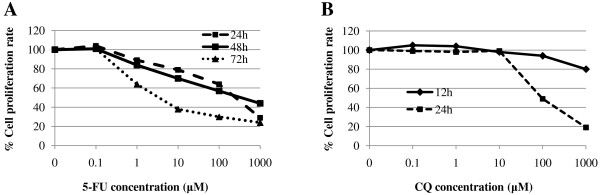
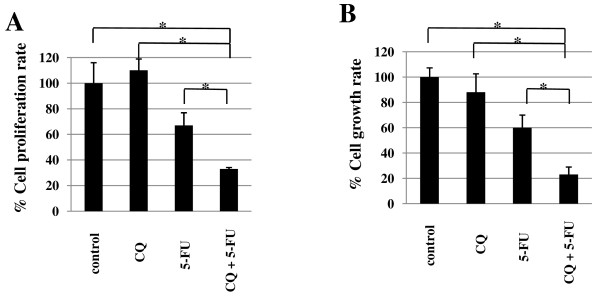
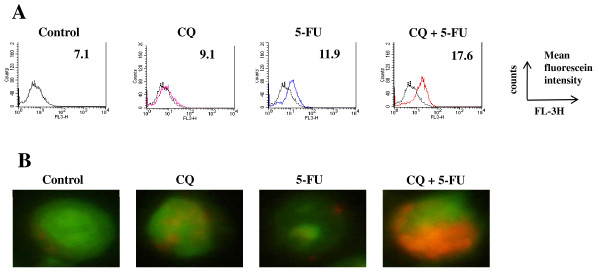
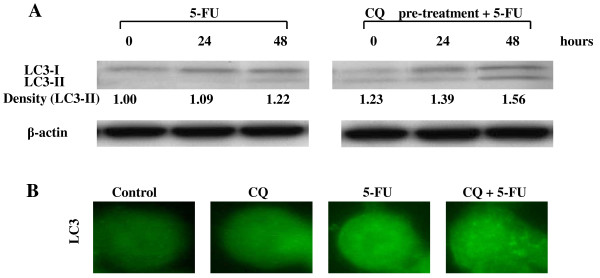
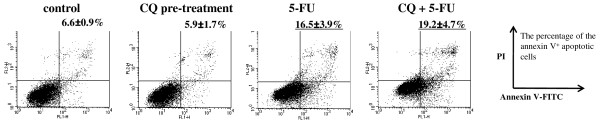
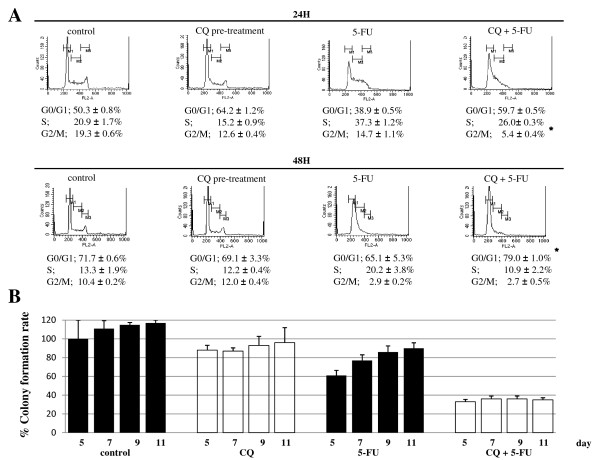
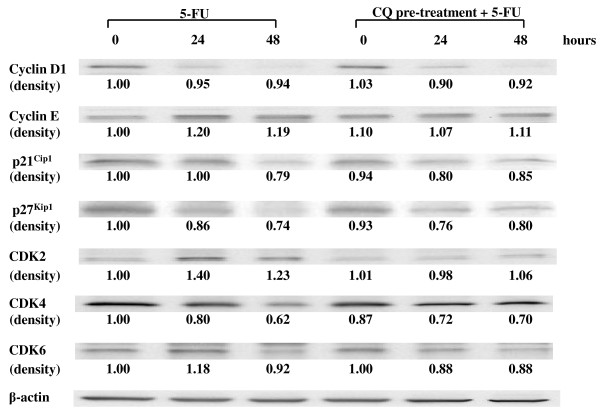
BACKGROUND: Chloroquine (CQ), the worldwide used anti-malarial drug, has recently being focused as a potential anti-cancer agent as well as a chemosensitizer when used in combination with anti-cancer drugs. It has been shown to inhibit cell growth and/or to induce cell death in various types of cancer. 5-Fluorouracil (5-FU) is the chemotherapeutic agent of first choice in colorectal cancer, but in most cases, resistance to 5-FU develops through various mechanisms. Here, we focused on the combination of CQ as a mechanism to potentiate the inhibitory effect of 5-FU on human colon cancer cells. METHODS: HT-29 cells were treated with CQ and/or 5-FU, and their proliferative ability, apoptosis and autophagy induction effects, and the affection of the cell cycle were evaluated. The proliferative ability of HT-29 was analyzed by the MTS assay. Apoptosis was quantified by flow-cytometry after double-staining of the cells with AnnexinV/PI. The cell cycle was evaluated by flow-cytometry after staining of cells with PI. Autophagy was quantified by flow-cytometry and Western blot analysis. Finally, to evaluate the fate of the cells treated with CQ and/or 5-FU, the colony formation assay was performed. RESULTS: 5-FU inhibited the proliferative activity of HT-29 cells, which was mostly dependent on the arrest of the cells to the G0/G1-phase but also partially on apoptosis induction, and the effect was potentiated by CQ pre-treatment. The potentiation of the inhibitory effect of 5-FU by CQ was dependent on the increase of p21Cip1 and p27Kip1 and the decrease of CDK2. Since CQ is reported to inhibit autophagy, the catabolic process necessary for cell survival under conditions of cell starvation or stress, which is induced by cancer cells as a protective mechanism against chemotherapeutic agents, we also analyzed the induction of autophagy in HT-29. HT-29 induced autophagy in response to 5-FU, and CQ inhibited this induction, a possible mechanism of the potentiation of the anti-cancer effect of 5-FU. CONCLUSION: Our findings suggest that the combination therapy with CQ should be a novel therapeutic modality to improve efficacy of 5-FU-based chemotherapy, possibly by inhibiting autophagy-dependent resistance to chemotherapy.
Overview
The claims and statistics of this paper haven’t been checked yet.
Free: it reads the open-access text and checks the first 5 claims that cite a source we can check. Create a free account to check every claim.
Integrity signals
Registry
Cites
Statistics
Figures
Verification
Claims the paper makes
The claims and statistics of this paper haven’t been checked yet.
Free: it reads the open-access text and checks the first 5 claims that cite a source we can check. Create a free account to check every claim.
Claims other papers make about this one
Each is checked against this paper’s own text: does it say what the citing paper says it does?
In the citing paper
“A series of preclinical studies have demonstrated that autophagy inhibitors, such as chloroquine/3-methyladenine, can reverse CRC resistance by inhibiting 5-FU-induced activation of autophagy [43,44].”
From Drug Resistance in Colorectal Cancer: From Mechanism to Clinic (2022) · cites this paper as [43]
Self-check
Percentages, sums and reported differences re-computed from the paper’s own numbers.
The self-check needs the paper’s full text.
Citations
Cites
5-Fluorouracil: mechanisms of action and clinical strategies
Longley, D. B., Harkin, D. P., & Johnston, P. G. (2003) · Nature Reviews Cancer · doi:10.1038/nrc1074 · Cited by 5,332 · cited 1×
“Intracellular metabolites of 5-FU can exert cytotoxic effects via inhibition of thymidylate synthetase, or through incorporation into RNA and DNA, events that ultimately activate apoptosis [2].”
Backgroundp21 is a universal inhibitor of cyclin kinases
Xiong, Y., Hannon, G. J., Zhang, H., Casso, D., Kobayashi, R., & Beach, D. (1993) · Nature · doi:10.1038/366701a0 · Cited by 3,368
Polyak, K., Lee, M.-H., Erdjument-Bromage, H., Koff, A., Roberts, J. M., Tempst, P., & Massagué, J. (1994) · Cell · doi:10.1016/0092-8674(94)90572-x · Cited by 2,118
Autophagy inhibition enhances therapy-induced apoptosis in a Myc-induced model of lymphoma
Amaravadi, R. K., Yu, D., Lum, J. J., Bui, T., Christophorou, M. A., Evan, G. I., Thomas-Tikhonenko, A., & Thompson, C. B. (2007) · Journal of Clinical Investigation · doi:10.1172/jci28833 · Cited by 1,137
Chloroquine and its analogs: A new promise of an old drug for effective and safe cancer therapies
Solomon, V. R., & Lee, H. (2009) · European Journal of Pharmacology · doi:10.1016/j.ejphar.2009.06.063 · Cited by 516
The Roles of Therapy-Induced Autophagy and Necrosis in Cancer Treatment
Amaravadi, R. K., & Thompson, C. B. (2007) · Clinical Cancer Research · doi:10.1158/1078-0432.ccr-07-1595 · Cited by 465
Li, J., Hou, N., Faried, A., Tsutsumi, S., & Kuwano, H. (2010) · European Journal of Cancer · doi:10.1016/j.ejca.2010.02.021 · Cited by 318
Inhibition of Autophagy by 3-MA Enhances the Effect of 5-FU-Induced Apoptosis in Colon Cancer Cells
Li, J., Hou, N., Faried, A., Tsutsumi, S., Takeuchi, T., & Kuwano, H. (2009) · Annals of Surgical Oncology · doi:10.1245/s10434-008-0260-0 · Cited by 291 · cited 3×
“Other combination therapies for 5-FU, such as Irinotecan, aspirin, proteasome inhibitor, 3-MA are being attempted [15,32-34], and CQ is a new candidate.”
BackgroundDissection of Autophagosome Biogenesis into Distinct Nucleation and Expansion Steps
Abeliovich, H., Dunn, W. A., Kim, J., & Klionsky, D. J. (2000) · The Journal of Cell Biology · doi:10.1083/jcb.151.5.1025 · Cited by 279
Maclean, K. H., Dorsey, F. C., Cleveland, J. L., & Kastan, M. B. (2008) · Journal of Clinical Investigation · doi:10.1172/jci33700 · Cited by 272
Cited by
Cancer drug resistance: an evolving paradigm
Holohan, C., Van Schaeybroeck, S., Longley, D. B., & Johnston, P. G. (2013) · Nature Reviews Cancer · doi:10.1038/nrc3599 · Cited by 4,681
Drug resistance in cancer: An overview
Housman, G., Byler, S., Heerboth, S., Lapinska, K., Longacre, M., Snyder, N., & Sarkar, S. (2014) · Cancers · doi:10.3390/cancers6031769 · Cited by 2,463
Autophagy and chemotherapy resistance: a promising therapeutic target for cancer treatment
Sui, X., Chen, R., Wang, Z., Huang, Z., Kong, N., Zhang, M., Han, W., Lou, F., Yang, J., Zhang, Q., et al. (2013) · Cell Death & Disease · doi:10.1038/cddis.2013.350 · Cited by 1,204
5-fluorouracil and other fluoropyrimidines in colorectal cancer: Past, present and future
Vodenkova, S., Buchler, T., Cervena, K., Veskrnova, V., Vodicka, P., & Vymetalkova, V. (2020) · Pharmacology & Therapeutics · doi:10.1016/j.pharmthera.2019.107447 · Cited by 956
Hydroxychloroquine: From Malaria to Autoimmunity
Ben-Zvi, I., Kivity, S., Langevitz, P., & Shoenfeld, Y. (2012) · Clinical Reviews in Allergy & Immunology · doi:10.1007/s12016-010-8243-x · Cited by 613
Chloroquine in Cancer Therapy: A Double-Edged Sword of Autophagy
Kimura, T., Takabatake, Y., Takahashi, A., & Isaka, Y. (2013) · Cancer Research · doi:10.1158/0008-5472.can-12-2464 · Cited by 494
Cancer stem cells and chemoresistance: The smartest survives the raid
Zhao, J. (2016) · Pharmacology & Therapeutics · doi:10.1016/j.pharmthera.2016.02.008 · Cited by 437
Maycotte, P., & Thorburn, A. (2011) · Cancer Biology & Therapy · doi:10.4161/cbt.11.2.14627 · Cited by 393
Autophagy as a molecular target for cancer treatment
Kocaturk, N. M., Akkoc, Y., Kig, C., Bayraktar, O., Gozuacik, D., & Kutlu, O. (2019) · European Journal of Pharmaceutical Sciences · doi:10.1016/j.ejps.2019.04.011 · Cited by 387
Duarte, D., & Vale, N. (2022) · Current Research in Pharmacology and Drug Discovery · doi:10.1016/j.crphar.2022.100110 · Cited by 340
Targeting autophagy using natural compounds for cancer prevention and therapy
Deng, S., Shanmugam, M. K., Kumar, A. P., Yap, C. T., Sethi, G., & Bishayee, A. (2019) · Cancer · doi:10.1002/cncr.31978 · Cited by 320
Low temperature photothermal therapy: Advances and perspectives
Yang, K., Zhao, S., Li, B., Wang, B., Lan, M., & Song, X. (2022) · Coordination Chemistry Reviews · doi:10.1016/j.ccr.2021.214330 · Cited by 309
Baviskar, A. T., Madaan, C., Preet, R., Mohapatra, P., Jain, V., Agarwal, A., Guchhait, S. K., Kundu, C. N., Banerjee, U. C., & Bharatam, P. V. (2011) · Journal of Medicinal Chemistry · doi:10.1021/jm200235u · Cited by 294
Thorburn, A., Thamm, D. H., & Gustafson, D. L. (2014) · Molecular Pharmacology · doi:10.1124/mol.114.091850 · Cited by 280
O’Donovan, T. R., O’Sullivan, G. C., & McKenna, S. L. (2011) · Autophagy · doi:10.4161/auto.7.5.15066 · Cited by 279
Small Molecule Inhibitors of CXCR4
Debnath, B., Xu, S., Grande, F., Garofalo, A., & Neamati, N. (2013) · Theranostics · doi:10.7150/thno.5376 · Cited by 273
Noman, M. Z., Janji, B., Kaminska, B., Van Moer, K., Pierson, S., Przanowski, P., Buart, S., Berchem, G., Romero, P., Mami-Chouaib, F., et al. (2011) · Cancer Research · doi:10.1158/0008-5472.can-11-1094 · Cited by 256
“Our results are also supported by several studies showing that inhibition of autophagy promotes cancer cell death (39) and potentiates anticancer treatments (19, 40, 41).”
Liu, M., Zhao, G., Zhang, D., An, W., Lai, H., Li, X., Cao, S., & Lin, X. (2018) · International Journal of Oncology · doi:10.3892/ijo.2018.4465 · Cited by 231
Chloroquine and hydroxychloroquine in antitumor therapies based on autophagy-related mechanisms
Ferreira, P. M. P., Sousa, R. W. R. D., Ferreira, J. R. D. O., Militão, G. C. G., & Bezerra, D. P. (2021) · Pharmacological Research · doi:10.1016/j.phrs.2021.105582 · Cited by 227
Chloroquine and hydroxychloroquine for cancer therapy
Manic, G., Obrist, F., Kroemer, G., Vitale, I., & Galluzzi, L. (2014) · Molecular & Cellular Oncology · doi:10.4161/mco.29911 · Cited by 222
Autophagy and cancer – issues we need to digest
Liu, E. Y., & Ryan, K. M. (2012) · Journal of Cell Science · doi:10.1242/jcs.093708 · Cited by 219
“For example, 5-FU is commonly used to treat colorectal cancer and it has been found that hydroxychloroquine can sensitise human cancer cells to 5-FU (Sasaki et al., 2010).”
BackgroundBcl-2 Antiapoptotic Family Proteins and Chemoresistance in Cancer
(2018) · Advances in Cancer Research · doi:10.1016/bs.acr.2017.11.001 · Cited by 215
Autophagy-Regulating microRNAs and Cancer
Gozuacik, D., Akkoc, Y., Ozturk, D. G., & Kocak, M. (2017) · Frontiers in Oncology · doi:10.3389/fonc.2017.00065 · Cited by 170
Shen, Y., Guerra‐Librero, A., Fernandez‐Gil, B. I., Florido, J., García‐López, S., Martinez‐Ruiz, L., Mendivil‐Perez, M., Soto‐Mercado, V., Acuña‐Castroviejo, D., Ortega‐Arellano, H., et al. (2018) · Journal of Pineal Research · doi:10.1111/jpi.12461 · Cited by 170
Autophagy as a mediator of chemotherapy-induced cell death in cancer
Notte, A., Leclere, L., & Michiels, C. (2011) · Biochemical Pharmacology · doi:10.1016/j.bcp.2011.06.015 · Cited by 166
“It is the case for 5-fluorouracil in colon cancer cells [87], in a Myc-induced”
BackgroundTAS-102, a novel antitumor agent: A review of the mechanism of action
Lenz, H.-J., Stintzing, S., & Loupakis, F. (2015) · Cancer Treatment Reviews · doi:10.1016/j.ctrv.2015.06.001 · Cited by 163
“Another mechanism for resistance to 5-FU and other chemotherapeutic drugs is autophagy [65,66].”
BackgroundDrug Resistance in Colorectal Cancer: From Mechanism to Clinic
Wang, Q., Shen, X., Chen, G., & Du, J. (2022) · Cancers · doi:10.3390/cancers14122928 · Cited by 160
β-Elemene-induced autophagy protects human gastric cancer cells from undergoing apoptosis
Liu, J., Zhang, Y., Qu, J., Xu, L., Hou, K., Zhang, J., Qu, X., & Liu, Y. (2011) · BMC Cancer · doi:10.1186/1471-2407-11-183 · Cited by 159
Mokarram, P., Albokashy, M., Zarghooni, M., Moosavi, M. A., Sepehri, Z., Chen, Q. M., Hudecki, A., Sargazi, A., Alizadeh, J., Moghadam, A. R., et al. (2017) · Autophagy · doi:10.1080/15548627.2017.1290751 · Cited by 160
Preet, R., Mohapatra, P., Mohanty, S., Sahu, S. K., Choudhuri, T., Wyatt, M. D., & Kundu, C. N. (2011) · International Journal of Cancer · doi:10.1002/ijc.26158 · Cited by 156
Liu, T., Zhang, J., Li, K., Deng, L., & Wang, H. (2020) · Frontiers in Pharmacology · doi:10.3389/fphar.2020.00408 · Cited by 155
Is targeting autophagy mechanism in cancer a good approach? The possible double-edge sword effect
Lim, S. M., Hanif, E. A. M., & Chin, S. (2021) · Cell & Bioscience · doi:10.1186/s13578-021-00570-z · Cited by 143
Pan, X., Zhang, X., Sun, H., Zhang, J., Yan, M., & Zhang, H. (2013) · PLoS ONE · doi:10.1371/journal.pone.0056679 · Cited by 140
Zou, Y., Ling, Y.-H., Sironi, J., Schwartz, E. L., Perez-Soler, R., & Piperdi, B. (2013) · Journal of Thoracic Oncology · doi:10.1097/jto.0b013e31828c7210 · Cited by 132
Hashimoto, D., Bläuer, M., Hirota, M., Ikonen, N. H., Sand, J. A., & Laukkarinen, J. (2014) · European Journal of Cancer · doi:10.1016/j.ejca.2014.01.011 · Cited by 133
Sharma, N., Thomas, S., Golden, E. B., Hofman, F. M., Chen, T. C., Petasis, N. A., Schönthal, A. H., & Louie, S. G. (2012) · Cancer Letters · doi:10.1016/j.canlet.2012.07.029 · Cited by 129
Ruocco, E., Ruocco, V., Tornesello, M. L., Gambardella, A., Wolf, R., & Buonaguro, L. (2013) · Clinics in Dermatology · doi:10.1016/j.clindermatol.2013.01.008 · Cited by 130
Zheng, K., Li, Y., Wang, S., Wang, X., Liao, C., Hu, X., Fan, L., Kang, Q., Zeng, Y., Wu, X., et al. (2016) · Autophagy · doi:10.1080/15548627.2016.1192751 · Cited by 118
Mohapatra, P., Preet, R., Das, D., Satapathy, S. R., Choudhuri, T., Wyatt, M. D., & Kundu, C. N. (2012) · Oncology Research Featuring Preclinical and Clinical Cancer Therapeutics · doi:10.3727/096504012x13473664562628 · Cited by 116
Bai, Z., Yao, C., Zhu, J., Xie, Y., Ye, X., Bai, R., & Xie, T. (2021) · Molecules · doi:10.3390/molecules26061499 · Cited by 116
Ge, J., Chen, Z., Huang, J., Chen, J., Yuan, W., Deng, Z., & Chen, Z. (2014) · PLoS ONE · doi:10.1371/journal.pone.0110293 · Cited by 113
Goodall, M. L., Wang, T., Martin, K. R., Kortus, M. G., Kauffman, A. L., Trent, J. M., Gately, S., & MacKeigan, J. P. (2014) · Autophagy · doi:10.4161/auto.28594 · Cited by 108
Rhabdomyosarcoma: Current Therapy, Challenges, and Future Approaches to Treatment Strategies
Zarrabi, A., Perrin, D., Kavoosi, M., Sommer, M., Sezen, S., Mehrbod, P., Bhushan, B., Machaj, F., Rosik, J., Kawalec, P., et al. (2023) · Cancers · doi:10.3390/cancers15215269 · Cited by 109
Datta, S., Choudhury, D., Das, A. K., Mukherjee, D. D., Dasgupta, M., Bandopadhyay, S., & Chakrabarti, G. (2019) · APOPTOSIS · doi:10.1007/s10495-019-01526-y · Cited by 106
Inhibition of 6-phosphofructo-2-kinase (PFKFB3) induces autophagy as a survival mechanism
Klarer, A. C., O’Neal, J., Imbert-Fernandez, Y., Clem, A., Ellis, S. R., Clark, J., Clem, B., Chesney, J., & Telang, S. (2014) · Cancer & Metabolism · doi:10.1186/2049-3002-2-2 · Cited by 102
Autophagy inhibition in cancer therapy: metabolic considerations for antitumor immunity
Townsend, K. N., Hughson, L. R. K., Schlie, K., Poon, V. I., Westerback, A., & Lum, J. J. (2012) · Immunological Reviews · doi:10.1111/j.1600-065x.2012.01141.x · Cited by 102
Autophagy: A challengeable paradox in cancer treatment
Ahmadi‐Dehlaghi, F., Mohammadi, P., Valipour, E., Pournaghi, P., Kiani, S., & Mansouri, K. (2023) · Cancer Medicine · doi:10.1002/cam4.5577 · Cited by 98
Ganguli, A., Choudhury, D., Datta, S., Bhattacharya, S., & Chakrabarti, G. (2014) · Biochimie · doi:10.1016/j.biochi.2014.10.001 · Cited by 98
Adiseshaiah, P. P., Clogston, J. D., McLeland, C. B., Rodriguez, J. C., Potter, T. M., Neun, B. W., Skoczen, S. L., Shanmugavelandy, S. S., KESTER, M. A., Stern, S. T., et al. (2013) · Cancer Letters · doi:10.1016/j.canlet.2013.04.034 · Cited by 98
Apoptosis-Modulating Drugs for Improved Cancer Therapy
Ocker, M., & Höpfner, M. (2012) · European Surgical Research · doi:10.1159/000336875 · Cited by 97
Molecular Mechanisms Underlying Autophagy-Mediated Treatment Resistance in Cancer
Ho, C. J., & Gorski, S. M. (2019) · Cancers · doi:10.3390/cancers11111775 · Cited by 98
Abdel‐Aziz, A. K., Shouman, S. A., El‐Demerdash, E., Elgendy, M., & Abdel‐Naim, A. B. (2014) · Chemico-Biological Interactions · doi:10.1016/j.cbi.2014.04.007 · Cited by 96
On the role of autophagy in human diseases: a gender perspective
Lista, P., Straface, E., Brunelleschi, S., Franconi, F., & Malorni, W. (2011) · Journal of Cellular and Molecular Medicine · doi:10.1111/j.1582-4934.2011.01293.x · Cited by 94
Zhao, W. H., Zheng, X., Tang, P. Y., Li, H., Liu, X., Zhong, J., & Tang, Y.-J. (2023) · Medicinal Research Reviews · doi:10.1002/med.21963 · Cited by 94
Qu, X., Sheng, J., Shen, L., Su, J., Xu, Y., Xie, Q., Yao, W., Zhang, X., & Sun, L. (2017) · PLoS ONE · doi:10.1371/journal.pone.0173712 · Cited by 93
Lv, L. L., Liu, H.-G., Dong, S., Yang, F., Wang, Q., Guo, G., Pan, Y., & Zhang, X. (2016) · Tumor Biology · doi:10.1007/s13277-015-4755-6 · Cited by 90
Liu, L., Pang, Y., Zhao, X., Li, R., Jin, C., Xue, J., Dong, R., & Liu, P. (2019) · Archives of Gynecology and Obstetrics · doi:10.1007/s00404-019-05058-3 · Cited by 88
Pharmacogenomics of 5-fluorouracil in colorectal cancer: review and update
Xie, P., Mo, J., Liu, J., Li, X., Tan, L., Zhang, W., Zhou, H., & Liu, Z. (2020) · Cellular Oncology · doi:10.1007/s13402-020-00529-1 · Cited by 86
Drug repurposing to overcome resistance to various therapies for colorectal cancer
Fong, W., & To, K. K. W. (2019) · Cellular and Molecular Life Sciences · doi:10.1007/s00018-019-03134-0 · Cited by 81
Wang, C., Chen, C.-L., Tseng, Y.-L., Fang, Y.-T., Lin, Y.-S., Su, W., Chen, C., Chang, K.-C., Wang, Y., & Lin, C. (2012) · Journal of Biological Chemistry · doi:10.1074/jbc.m112.351957 · Cited by 81
Niklaus, M., Adams, O. J., Berezowska, S., Zlobec, I., Graber, F., Slotta‐Huspenina, J., Nitsche, U., Rosenberg, R., Tschan, M. P., & Langer, R. (2017) · Oncotarget · doi:10.18632/oncotarget.17554 · Cited by 81
Zeng, C., Fan, Y., Wu, J., Shi, S., Chen, Z., Zhong, Y., Zhang, C., Zen, K., & Liu, Z. (2014) · The Journal of Pathology · doi:10.1002/path.4382 · Cited by 80
“inhibitor 3-methyladenine (3-MA) [40,41] or chloroquine [42,43].”
Zhan, Y., Liu, J., Qu, X., Hou, K., Wang, K., Liu, Y., & Wu, B. (2012) · Asian Pacific Journal of Cancer Prevention · doi:10.7314/apjcp.2012.13.6.2739 · Cited by 79
Kim, J., Yip, M. L. R., Shen, X., Li, H., Hsin, L.-Y. C., LaBarge, S. A., Heinrich, E. L., Lee, W., Lu, J., & Vaidehi, N. (2012) · PLoS ONE · doi:10.1371/journal.pone.0031004 · Cited by 77
Sasaki, K., Tsuno, N. H., Sunami, E., Kawai, K., Hongo, K., Hiyoshi, M., Kaneko, M., Murono, K., Tada, N., Nirei, T., et al. (2012) · Anti-Cancer Drugs · doi:10.1097/cad.0b013e328353f8c7 · Cited by 76
Self-citationAutophagy modulation as a target for anticancer drug discovery
Li, X., Xu, H., Liu, Y.-X., An, N., Zhao, S., & Bao, J. (2013) · Acta Pharmacologica Sinica · doi:10.1038/aps.2013.23 · Cited by 76
Autophagy and Transporter-Based Multi-Drug Resistance
Kumar, P., Zhang, D., Degenhardt, K., & Chen, Z. (2012) · Cells · doi:10.3390/cells1030558 · Cited by 78
Cheah, K. Y., Howarth, G. S., & Bastian, S. E. P. (2014) · PLoS ONE · doi:10.1371/journal.pone.0085184 · Cited by 74
Cheng, M., He, B., Wan, T. Y., Zhu, W., Han, J., Zha, B., Chen, H., Fengxiao, Y., Li, Q., Wang, W., et al. (2012) · PLoS ONE · doi:10.1371/journal.pone.0047115 · Cited by 73
Zhai, C., Shi, W., Feng, W., Zhu, Y., Wang, J., Li, S., Yan, X., Wang, Q., Zhang, Q., Chai, L., et al. (2018) · Life Sciences · doi:10.1016/j.lfs.2018.07.018 · Cited by 72
Schonewolf, C. A., Mehta, M., Schiff, D., Wu, H., Haffty, B. G., Karantza, V., & Jabbour, S. K. (2014) · World Journal of Gastrointestinal Oncology · doi:10.4251/wjgo.v6.i3.74 · Cited by 71
“Chloroquine, as an indirect autophagy inhibitor, renders CRC cells more sensitive to 5-FU [9] , but its effects on chemoRT had not been previously explored.”
InfluentialZhao, X., Sun, R., Yang, X., Liu, D., Lei, D., Jin, T., & Pan, X. (2015) · PLoS ONE · doi:10.1371/journal.pone.0126147 · Cited by 71
Cheng, M. (2012) · World Journal of Gastroenterology · doi:10.3748/wjg.v18.i42.6076 · Cited by 71
Liu, J., Hu, X., Jin, B., Qu, X., Hou, K., & Liu, Y. (2012) · Journal of Pharmacy and Pharmacology · doi:10.1111/j.2042-7158.2011.01371.x · Cited by 70
Autophagy inhibition cooperates with erlotinib to induce glioblastoma cell death
Eimer, S., Belaud‐Rotureau, M., Airiau, K., Jeanneteau, M., Laharanne, E., Véron, N., Vital, A., Loiseau, H., Merlio, J., & Belloc, F. (2011) · Cancer Biology & Therapy · doi:10.4161/cbt.11.12.15693 · Cited by 70
Pharmacologic inhibition of vacuolar H+ ATPase reduces physiologic and oncogenic Notch signaling
Kobia, F., Duchi, S., Deflorian, G., & Vaccari, T. (2013) · Molecular Oncology · doi:10.1016/j.molonc.2013.11.002 · Cited by 70
Nanomaterial-Induced Autophagy: A New Reversal MDR Tool in Cancer Therapy?
Panzarini, E., & Dini, L. (2014) · Molecular Pharmaceutics · doi:10.1021/mp500066v · Cited by 69
Chloroquine enhances the cytotoxicity of topotecan by inhibiting autophagy in lung cancer cells
Wang, Y., Peng, R.-Q., Li, D., Ding, Y., Wu, X.-Q., Zeng, Y.-X., Zhu, X., & Zhang, X.-S. (2011) · 癌症:英文版 · doi:10.5732/cjc.011.10056 · Cited by 68
Cross talk between autophagy and oncogenic signaling pathways and implications for cancer therapy
Zada, S., Hwang, J. S., Ahmed, M., Lai, T. H., Pham, T. M., Elashkar, O., & Kim, D. R. (2021) · Biochimica et Biophysica Acta (BBA) - Reviews on Cancer · doi:10.1016/j.bbcan.2021.188565 · Cited by 67
Autophagy in cancer: a complex relationship
Wilde, L. R., Tanson, K., Curry, J., & Martinez‐Outschoorn, U. (2018) · Biochemical Journal · doi:10.1042/bcj20170847 · Cited by 66
Grimaldi, A., Santini, D., Zappavigna, S., Lombardi, A., Misso, G., Boccellino, M., Desiderio, V., Vitiello, P. P., Lorenzo, G. D., Zoccoli, A., et al. (2015) · Cancer Biology & Therapy · doi:10.1080/15384047.2015.1018494 · Cited by 67
Gharib, E., & Robichaud, G. A. (2024) · International Journal of Molecular Sciences · doi:10.3390/ijms25179463 · Cited by 65
Chen, X., Cao, Z., CHEN, T.-S., ZHANG, Y.-Q., Liu, Z., Su, Y., Liao, L., & Du, J. (2012) · Oncology Reports · doi:10.3892/or.2012.1834 · Cited by 64
Cancer-associated fibroblasts confer cisplatin resistance of tongue cancer via autophagy activation
Liao, J., Zhou, B., Zhuang, X., Zhuang, P., Zhang, D., & Chen, W. (2017) · Biomedicine & Pharmacotherapy · doi:10.1016/j.biopha.2017.11.024 · Cited by 64
Skarková, V., Králová, V., Vítovcová, B., & Rudolf, E. (2019) · Cells · doi:10.3390/cells8030234 · Cited by 65
Crosstalk between autophagy and microbiota in cancer progression
Wang, Y., Du, J., Wu, X., Abdelrehem, A., Ren, Y., Liu, C., Zhou, X., & Wang, S. (2021) · Molecular Cancer · doi:10.1186/s12943-021-01461-0 · Cited by 64
Fortunato, F. (2011) · International Journal of Oncology · doi:10.3892/ijo.2011.1025 · Cited by 63
The utility of chloroquine in cancer therapy
Zhang, Y., Liao, Z., Zhang, L., & Xiao, H. (2015) · Current Medical Research and Opinion · doi:10.1185/03007995.2015.1025731 · Cited by 63
Choi, J., Yoon, J. S., Won, Y., Park, B., & Lee, Y. Y. (2012) · Apmis · doi:10.1111/j.1600-0463.2012.02876.x · Cited by 62
Was, H., Barszcz, K., Czarnecka, J., Kowalczyk, A., Bernas, T., Uzarowska, E., Koza, P., Klejman, A., Piwocka, K., Kaminska, B., et al. (2017) · Oncotarget · doi:10.18632/oncotarget.14066 · Cited by 61
Targeting cell death signaling in colorectal cancer: Current strategies and future perspectives
Koehler, B. C., Jäger, D., & Schulze-Bergkamen, H. (2014) · World Journal of Gastroenterology · doi:10.3748/wjg.v20.i8.1923 · Cited by 62
Sun, W., Lan, D., GAN, T. Q., & Cai, Z. (2015) · Neoplasma · doi:10.4149/neo_2015_025 · Cited by 58
Palmeira-dos-Santos, C., Pereira, G. J. S., Barbosa, C. M. V., Jurkiewicz, A., Smaili, S. S., & Bincoletto, C. (2014) · Journal of Cancer Research and Clinical Oncology · doi:10.1007/s00432-014-1640-4 · Cited by 58
Lysosomotropism depends on glucose: a chloroquine resistance mechanism
Gallagher, L. E., Radhi, O. A., Abdullah, M. O., McCluskey, A. G., Boyd, M., & Chan, E. Y. W. (2017) · Cell Death and Disease · doi:10.1038/cddis.2017.416 · Cited by 58
Downregulation of Beclin1 and Impairment of Autophagy in a Small Population of Colorectal Cancer
Chen, Z., Li, Y., Zhang, C., Yi, H., Wu, C., Wang, J., Liu, Y., Tan, J., & Wen, J. (2013) · Digestive Diseases and Sciences · doi:10.1007/s10620-013-2732-8 · Cited by 57
Lou, Y., Li, R., Liu, J., Zhang, Y., Zhang, X., Jin, B., Liu, Y., Wang, Z., Zhong, H., Wen, S., et al. (2015) · Medical Oncology · doi:10.1007/s12032-015-0515-0 · Cited by 57
Application of chloroquine as an endosomal escape enhancing agent: new frontiers for an old drug
Hajimolaali, M., Mohammadian, H., Torabi, A., Shirini, A., Shal, M. K., Nezhad, H. B., Iranpour, S., Eftekhari, R. B., & Dorkoosh, F. A. (2021) · Expert Opinion on Drug Delivery · doi:10.1080/17425247.2021.1873272 · Cited by 57
Jin, X., You, L., Qiao, J., Han, W., & Pan, H. (2023) · Autophagy · doi:10.1080/15548627.2023.2259214 · Cited by 56
Autophagy in 5-Fluorouracil Therapy in Gastrointestinal Cancer: Trends and Challenges
Tang, J.-C., Feng, Y.-L., Liang, X., & Cai, X.-J. (2016) · Chinese Medical Journal · doi:10.4103/0366-6999.176069 · Cited by 54
Sakitani, K., Hirata, Y., Hikiba, Y., Hayakawa, Y., Ihara, S., Suzuki, H., Suzuki, N., Serizawa, T., Kinoshita, H., Sakamoto, K., et al. (2015) · BMC Cancer · doi:10.1186/s12885-015-1789-5 · Cited by 54
Metadata
- Authors
- Sasaki, K., Tsuno, N. H., Sunami, E., Tsurita, G., Kawai, K., Okaji, Y., Nishikawa, T., Shuno, Y., Hongo, K., Hiyoshi, M., Kaneko, M., Kitayama, J., Takahashi, K., & Nagawa, H.
- Affiliations
- The University of Tokyo (JP)
- Corresponding author
- Sasaki, Kazuhito
- ORCID
- Venue
- BMC Cancer
- Published
- 2010-07-15
- Volume
- 10
- Issue
- 1
- Pages
- 370-370
- ISSN
- 1471-2407 (ISSN-L)
- PMC
- PMC2914703
- OpenAlex
- W2048571348
- Cited by
- 322
- References
- 34
- Citations by year
- 2026: 5 · 2025: 11 · 2024: 18 · 2023: 13 · 2022: 15 · 2021: 26 · 2020: 22 · 2019: 28 · 2018: 20 · 2017: 19 · 2016: 21 · 2015: 23 · 2014: 27 · 2013: 23 · 2012: 27
- FWCI
- 11.84
- Type
- journal article
- Language
- en
- Open access
- gold
- doi.org
- Licence
- Locations
- BMC Cancer (publishedVersion, cc-by)
- PubMed Central (publishedVersion, cc-by)
- PubMed (publishedVersion)
- DOAJ (DOAJ: Directory of Open Access Journals) (submittedVersion, cc-by-sa)
- Funders
- University of Tokyo
- Topics
- Health Sciences › Medicine › Oncology › Colorectal Cancer Treatments and Studies
- Life Sciences › Biochemistry, Genetics and Molecular Biology › Cell Biology › Autophagy in Disease and Therapy
- Life Sciences › Biochemistry, Genetics and Molecular Biology › Molecular Biology › Cancer therapeutics and mechanisms
- Keywords
- chloroquine, 5-fluorouracil, colon cancer, chemosensitization, combination chemotherapy, autophagy, apoptosis, cell cycle arrest, G0/G1 arrest, p21, p27, CDK2, chemoresistance, HT-29 cells, colorectal cancer, colony formation, drug repurposing
- MeSH terms
- Antimalarials, Antimetabolites, Antineoplastic, Antineoplastic Combined Chemotherapy Protocols, Autophagy, Cell Cycle, Chloroquine, Colonic Neoplasms, Colony-Forming Units Assay, Drug Synergism, Flow Cytometry, Fluorouracil, Humans, Immunoenzyme Techniques, Blotting, Western, Apoptosis, Cell Line, Tumor, Cell Proliferation
About these checks
Registry, retraction, Cites and statistics results are computed, not judged, with one exception: a printed reference that no index lists is read once by a model before it counts as a citation error. Claims are extracted by a model and kept only when their quote appears verbatim in the text; each cited source is then checked, with a model’s help, for whether it says what the claim relies on. Those verdicts can be wrong — read the claim’s quote and the cited source before relying on one.
Statistics and arithmetic are recomputed, not judged.
Confidence bands are shown only for fields calibrated on our annotated test set. None is calibrated yet, so no band is shown.
What counts as a claim ›How we measure confidence ›How we check this ›
Are you an author, or do you see a problem with this page? Request a review
Data sources
Bibliographic data: Semantic Scholar, OpenAlex, Crossref.
Contains information from the Semantic Scholar Academic Graph Datasets, made available under the ODC Attribution License (ODC-BY 1.0).
Semantic Scholar’s data is described in: Kinney, R., et al. (2023). The Semantic Scholar Open Data Platform. arXiv:2301.10140.
