

Chloroquine potentiates the anti-cancer effect of 5-fluorouracil on colon cancer cells
Open accessThe DOI matches its Crossref record; 34 of the 34 references it cites were found in a registry or an index.
Abstract
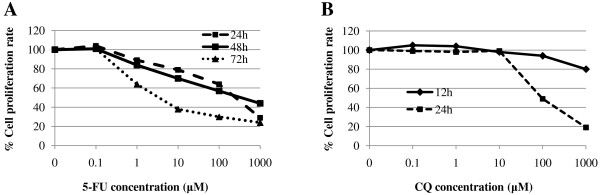
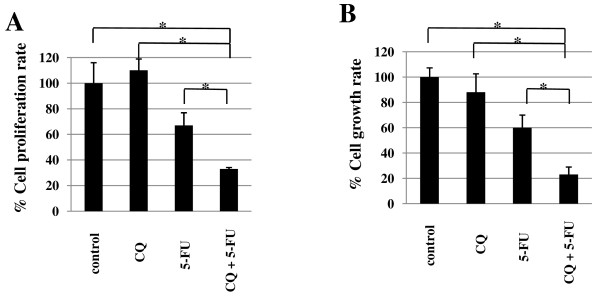
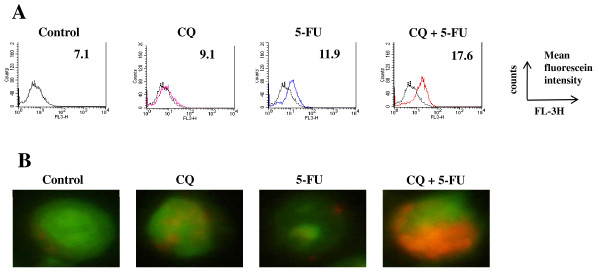
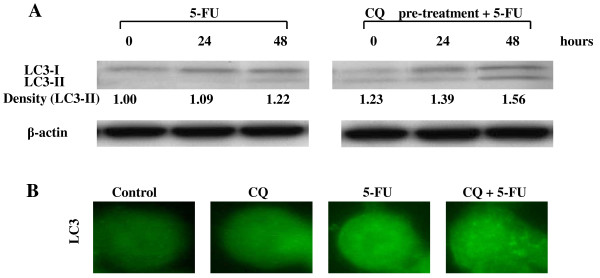
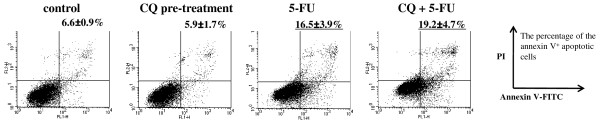
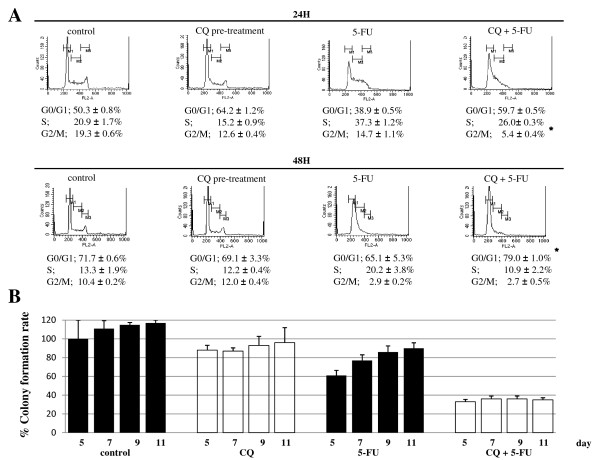
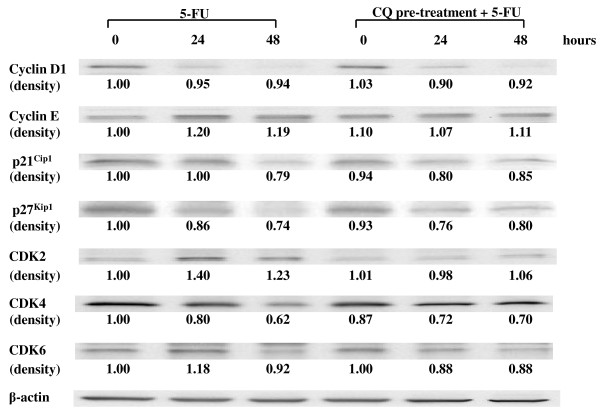
BACKGROUND: Chloroquine (CQ), the worldwide used anti-malarial drug, has recently being focused as a potential anti-cancer agent as well as a chemosensitizer when used in combination with anti-cancer drugs. It has been shown to inhibit cell growth and/or to induce cell death in various types of cancer. 5-Fluorouracil (5-FU) is the chemotherapeutic agent of first choice in colorectal cancer, but in most cases, resistance to 5-FU develops through various mechanisms. Here, we focused on the combination of CQ as a mechanism to potentiate the inhibitory effect of 5-FU on human colon cancer cells. METHODS: HT-29 cells were treated with CQ and/or 5-FU, and their proliferative ability, apoptosis and autophagy induction effects, and the affection of the cell cycle were evaluated. The proliferative ability of HT-29 was analyzed by the MTS assay. Apoptosis was quantified by flow-cytometry after double-staining of the cells with AnnexinV/PI. The cell cycle was evaluated by flow-cytometry after staining of cells with PI. Autophagy was quantified by flow-cytometry and Western blot analysis. Finally, to evaluate the fate of the cells treated with CQ and/or 5-FU, the colony formation assay was performed. RESULTS: 5-FU inhibited the proliferative activity of HT-29 cells, which was mostly dependent on the arrest of the cells to the G0/G1-phase but also partially on apoptosis induction, and the effect was potentiated by CQ pre-treatment. The potentiation of the inhibitory effect of 5-FU by CQ was dependent on the increase of p21Cip1 and p27Kip1 and the decrease of CDK2. Since CQ is reported to inhibit autophagy, the catabolic process necessary for cell survival under conditions of cell starvation or stress, which is induced by cancer cells as a protective mechanism against chemotherapeutic agents, we also analyzed the induction of autophagy in HT-29. HT-29 induced autophagy in response to 5-FU, and CQ inhibited this induction, a possible mechanism of the potentiation of the anti-cancer effect of 5-FU. CONCLUSION: Our findings suggest that the combination therapy with CQ should be a novel therapeutic modality to improve efficacy of 5-FU-based chemotherapy, possibly by inhibiting autophagy-dependent resistance to chemotherapy.
Overview
The claims and statistics of this paper haven’t been checked yet.
Free: it reads the open-access text and checks the first 5 claims that cite a source we can check. Create a free account to check every claim.
Integrity signals
Registry
Cites
Statistics
Figures
Verification
Claims the paper makes
The claims and statistics of this paper haven’t been checked yet.
Free: it reads the open-access text and checks the first 5 claims that cite a source we can check. Create a free account to check every claim.
Claims other papers make about this one
Each is checked against this paper’s own text: does it say what the citing paper says it does?
In the citing paper
“A series of preclinical studies have demonstrated that autophagy inhibitors, such as chloroquine/3-methyladenine, can reverse CRC resistance by inhibiting 5-FU-induced activation of autophagy [43,44].”
From Drug Resistance in Colorectal Cancer: From Mechanism to Clinic (2022) · cites this paper as [43]
Self-check
Percentages, sums and reported differences re-computed from the paper’s own numbers.
The self-check needs the paper’s full text.
Citations
Cites
5-Fluorouracil: mechanisms of action and clinical strategies
Longley, D. B., Harkin, D. P., & Johnston, P. G. (2003) · Nature Reviews Cancer · doi:10.1038/nrc1074 · Cited by 5,332 · cited 1×
“Intracellular metabolites of 5-FU can exert cytotoxic effects via inhibition of thymidylate synthetase, or through incorporation into RNA and DNA, events that ultimately activate apoptosis [2].”
Backgroundp21 is a universal inhibitor of cyclin kinases
Xiong, Y., Hannon, G. J., Zhang, H., Casso, D., Kobayashi, R., & Beach, D. (1993) · Nature · doi:10.1038/366701a0 · Cited by 3,368
Polyak, K., Lee, M.-H., Erdjument-Bromage, H., Koff, A., Roberts, J. M., Tempst, P., & Massagué, J. (1994) · Cell · doi:10.1016/0092-8674(94)90572-x · Cited by 2,118
Autophagy inhibition enhances therapy-induced apoptosis in a Myc-induced model of lymphoma
Amaravadi, R. K., Yu, D., Lum, J. J., Bui, T., Christophorou, M. A., Evan, G. I., Thomas-Tikhonenko, A., & Thompson, C. B. (2007) · Journal of Clinical Investigation · doi:10.1172/jci28833 · Cited by 1,137
Chloroquine and its analogs: A new promise of an old drug for effective and safe cancer therapies
Solomon, V. R., & Lee, H. (2009) · European Journal of Pharmacology · doi:10.1016/j.ejphar.2009.06.063 · Cited by 516
The Roles of Therapy-Induced Autophagy and Necrosis in Cancer Treatment
Amaravadi, R. K., & Thompson, C. B. (2007) · Clinical Cancer Research · doi:10.1158/1078-0432.ccr-07-1595 · Cited by 465
Li, J., Hou, N., Faried, A., Tsutsumi, S., & Kuwano, H. (2010) · European Journal of Cancer · doi:10.1016/j.ejca.2010.02.021 · Cited by 318
Inhibition of Autophagy by 3-MA Enhances the Effect of 5-FU-Induced Apoptosis in Colon Cancer Cells
Li, J., Hou, N., Faried, A., Tsutsumi, S., Takeuchi, T., & Kuwano, H. (2009) · Annals of Surgical Oncology · doi:10.1245/s10434-008-0260-0 · Cited by 291 · cited 3×
“Other combination therapies for 5-FU, such as Irinotecan, aspirin, proteasome inhibitor, 3-MA are being attempted [15,32-34], and CQ is a new candidate.”
BackgroundDissection of Autophagosome Biogenesis into Distinct Nucleation and Expansion Steps
Abeliovich, H., Dunn, W. A., Kim, J., & Klionsky, D. J. (2000) · The Journal of Cell Biology · doi:10.1083/jcb.151.5.1025 · Cited by 279
Maclean, K. H., Dorsey, F. C., Cleveland, J. L., & Kastan, M. B. (2008) · Journal of Clinical Investigation · doi:10.1172/jci33700 · Cited by 272
Cited by
Items 201–300 of 352
MiR-4465 directly targets PTEN to inhibit AKT/mTOR pathway–mediated autophagy
Tao, Z., Feng, C., Mao, C., Ren, J., Tai, Y., Guo, H., Pu, M., Zhou, Y., Wang, G., & Wang, M. (2018) · Cell Stress and Chaperones · doi:10.1007/s12192-018-0946-6 · Cited by 24
Pharmacology Progresses and Applications of Chloroquine in Cancer Therapy
Liu, Y., Meng, Y., Zhang, J., Gu, L., Shen, S., Zhu, Y., & Wang, J. (2024) · International Journal of Nanomedicine · doi:10.2147/ijn.s458910 · Cited by 23
Sun, H., Wang, R., Liu, Y., Mei, H., Liu, X., & Peng, Z. (2021) · Journal of Cancer · doi:10.7150/jca.52158 · Cited by 23
Budu, O., Banciu, C. D., Pînzaru, I., Sarău, C. A., Lighezan, D., Şoica, C., Dehelean, C. A., Drăghici, G. A., Dolghi, A., Prodea, A., et al. (2022) · Microorganisms · doi:10.3390/microorganisms10091692 · Cited by 22
Loss of Diacylglycerol Kinase-Ζ Inhibits Cell Proliferation and Survival in Human Gliomas
Diao, J., Wu, C., Zhang, J., Liu, J., Zhang, X., Hao, P., Zhao, S., & Zhang, Z. (2015) · Molecular Neurobiology · doi:10.1007/s12035-015-9419-4 · Cited by 22
HAO, J., Liang, C., & Jiao, B. (2015) · Oncology Letters · doi:10.3892/ol.2015.3078 · Cited by 22
Saint-Martin, A., Martínez-Ríos, J., Castañeda‐Patlán, M. C., Sarabia-Sánchez, M. Á., Tejeda‐Muñoz, N., Chinney-Herrera, A., Soldevila, G., Benelli, R., Santoyo‐Ramos, P., Poggi, A. D., et al. (2019) · Cancers · doi:10.3390/cancers11060755 · Cited by 22
Genome-wide CRISPR screening reveals nucleotide synthesis negatively regulates autophagy
Mimura, K., Sakamaki, J.-I., Morishita, H., Kawazu, M., Mano, H., & Mizushima, N. (2021) · Journal of Biological Chemistry · doi:10.1016/j.jbc.2021.100780 · Cited by 22
Synergistic killing effect of chloroquine and androgen deprivation in LNCaP cells
Kaini, R. R., & Hu, C. A. (2012) · Biochemical and Biophysical Research Communications · doi:10.1016/j.bbrc.2012.07.054 · Cited by 22
May Autophagy be a Novel Biomarker and Antitumor Target in Colorectal Cancer?
Gil, J., Pesz, K. A., & Sasiadek, M. M. (2016) · Biomarkers in Medicine · doi:10.2217/bmm-2016-0083 · Cited by 21
Shim, B. Y., Sun, D. S., Won, H. S., Lee, M. A., Hong, S. U., Jung, J., Cho, H., & Ko, Y. H. (2016) · BMC Cancer · doi:10.1186/s12885-016-2250-0 · Cited by 21
Chloroquine Enhances Rapamycin-induced Apoptosis in MG63 Cells
Yoichi, I., Nakamura, O., Yamagami, Y., Nishimura, H., Fukuoka, N., & Yamamoto, T. (2019) · Anticancer Research · doi:10.21873/anticanres.13159 · Cited by 21
Zhang, P., Yao, J., Wang, B., & Qin, L. (2020) · Analytical Chemistry · doi:10.1021/acs.analchem.9b04702 · Cited by 21
Ferreira, P. M. P., Ferreira, J. R. D. O., de Sousa, R. W. R., Bezerra, D. P., & Militão, G. C. G. (2021) · Journal of Oncology · doi:10.1155/2021/3569349 · Cited by 20
Calgarotto, A. K., Pereira, G. J. S., Bechara, A., Paredes‐Gamero, E. J., Barbosa, C. M. V., Hirata, H., Queiroz, M. L. S., Smaili, S. S., & Bincoletto, C. (2011) · European Journal of Pharmacology · doi:10.1016/j.ejphar.2011.12.031 · Cited by 20
Sharma, P., & Singh, S. (2020) · Integrative Cancer Therapies · doi:10.1177/1534735420911437 · Cited by 20
González‐Pastor, R., Lancelot, A., Morcuende-Ventura, V., Anselmo, M. S., Sierra, T., Serrano, J. L., & Martín‐Duque, P. (2021) · International Journal of Molecular Sciences · doi:10.3390/ijms22105223 · Cited by 21
Autophagy: Dual roles and perspective for clinical treatment of colorectal cancer
Zhang, Y., Li, H., Lv, L., Lu, K., Li, H., Zhang, W., & Cui, T. (2022) · Biochimie · doi:10.1016/j.biochi.2022.10.004 · Cited by 19
Anti-Inflammatory and Anti-Colon Cancer Activities of Mung Bean Grown in Burkina Faso
Kabré, J. D. W., Dah-Nouvlessounon, D., Hama, F. B., Kohonou, N. A., Sina, H., Sènou, M., Baba‐Moussa, L., & Savadogo, A. (2022) · Evidence-based Complementary and Alternative Medicine · doi:10.1155/2022/7873572 · Cited by 19
Cheng, M., Han, J., Li, Q., He, B., Zha, B., Wu, J., Zhou, R., Ye, T., Wang, W., Xu, H., et al. (2012) · Journal of Biomedical Materials Research Part B Applied Biomaterials · doi:10.1002/jbm.b.32767 · Cited by 19
Huang, C., Yang, S.-H., Huang, S.-M., Lin, C.-M., Chien, C., Chen, Y., Lee, C., Wu, H.-H., & Chang, C. (2011) · Journal of Translational Medicine · doi:10.1186/1479-5876-9-82 · Cited by 19
The anti-tumour effect of Mel and its role in autophagy in human hepatocellular carcinoma cells.
Lv, C., Zhang, Z., Zhao, T., Han, M., Jia, D.-P., Su, L., Huang, F., Wang, F., Fang, F., & Li, B. (2019) · Europe PMC (PubMed Central) · Cited by 18
Han, Z., Liu, M., Huang, X., Tan, J., Liu, W., Chen, W., Zou, Y., Cai, Y., Huang, S., Chen, A., et al. (2021) · Oncology Letters · doi:10.3892/ol.2021.13170 · Cited by 18
Liu, S., Wu, D., Li, L., Sun, X. Y., Xie, W., & Li, X. (2013) · Archives of Pharmacal Research · doi:10.1007/s12272-013-0270-8 · Cited by 18
Cheng, M., Liu, Z., Wan, T. Y., He, B., Zha, B., Jiang, H., Chen, H., Fengxiao, Y., Li, Q., Wang, W., et al. (2012) · Cancer Biology & Therapy · doi:10.4161/cbt.22001 · Cited by 18
Walweel, N., & Aydin, Ö. F. (2024) · ACS Omega · doi:10.1021/acsomega.4c02234 · Cited by 17
Bano, N., Ansari, M. I., Kainat, K., Singh, V. K., & Sharma, P. K. (2023) · Biochemical and Biophysical Research Communications · doi:10.1016/j.bbrc.2023.03.048 · Cited by 17
Guan, Y., Li, X., Umetani, M., Boini, K. M., Li, P., & Zhang, Y. (2018) · Basic & Clinical Pharmacology & Toxicology · doi:10.1111/bcpt.13146 · Cited by 16
Lee, J. S., Jang, E.-H., Woo, H. A., & Lee, K. (2020) · Cells · doi:10.3390/cells9010257 · Cited by 16
Primary cilia: a novel research approach to overcome anticancer drug resistance
Lee, K. H. (2023) · Frontiers in Molecular Biosciences · doi:10.3389/fmolb.2023.1270639 · Cited by 16
Synthesis and Anticancer Activity of Gold(I)-Chloroquine Complexes
Navarro, M., Castro, W., González, S., Abad, M. J., & Taylor, P. (2017) · Journal of the Mexican Chemical Society · doi:10.29356/jmcs.v57i3.210 · Cited by 16
Jeong, J., Kim, Y., Lee, D. Y., Sohn, K., Yoon, S. Y., & Kim, J. W. (2019) · Cancers · doi:10.3390/cancers11111811 · Cited by 15
Istiqomah, M. A., Hasibuan, P. A. Z., Sumaiyah, S., Yusraini, E., Oku, H., & Basyuni, M. (2020) · Natural Product Communications · doi:10.1177/1934578x20918412 · Cited by 14
Çal, T., DİLSİZ, S. A., Canpınar, H., & Bucurgat, Ü. Ü. (2024) · Turkish Journal of Pharmaceutical Sciences · doi:10.4274/tjps.galenos.2023.60543 · Cited by 14
Autophagy and Extracellular Vesicles in Colorectal Cancer: Interactions and Common Actors?
Auger, C., Christou, N., Brunel, A., Perraud, A., & Verdier, M. (2021) · Cancers · doi:10.3390/cancers13051039 · Cited by 14
Oh, I.-J., Hyun-Chul, C., Lee, Y., Cheon, M., Park, D., & Lee, Y. (2016) · Development & Reproduction · doi:10.12717/dr.2016.20.1.001 · Cited by 14
Zhuo, J., & Wang, X. (2019) · Molecular Medicine Reports · doi:10.3892/mmr.2019.10288 · Cited by 14
Chloroquine as a promising adjuvant chemotherapy together with sunitinib
(2014) · Science Proceedings · doi:10.14800/sp.384 · Cited by 13
Abdrabou, A., Bharali, D. J., & Mousa, S. A. (2019) · Applied Biochemistry and Biotechnology · doi:10.1007/s12010-019-03090-2 · Cited by 13
Overexpression of ZFX and its involvement in squamous cell carcinoma of the tongue
YIN, J., Jiang, Y., Wu, H., Wang, J., ZHANG, S., & Liu, H. (2014) · Oncology Reports · doi:10.3892/or.2014.3572 · Cited by 13
Systems-level biomarkers identification and drug repositioning in colorectal cancer
Beklen, H., Yildirim, E., Kori, M., Turanlı, B., & Arğa, K. Y. (2021) · World Journal of Gastrointestinal Oncology · doi:10.4251/wjgo.v13.i7.638 · Cited by 12
Guchhait, S. K., & Saini, M. (2019) · New Journal of Chemistry · doi:10.1039/c9nj04966e · Cited by 12
Satou, M., Wang, J., Nakano-Tateno, T., Teramachi, M., Aoki, S., Sugimoto, H., Chik, C. L., & Tateno, T. (2024) · Molecular and Cellular Endocrinology · doi:10.1016/j.mce.2024.112196 · Cited by 11
Navigating therapeutic prospects by modulating autophagy in colorectal cancer
Rajendran, D., & Oon, C. E. (2024) · Life Sciences · doi:10.1016/j.lfs.2024.123121 · Cited by 11
Knockdown of eIF3a attenuated cell growth in K1 human thyroid cancer cells
Zheng, X., Wang, S., Hong, S., Liu, J., & Jiang, C. (2021) · Genes & Genomics · doi:10.1007/s13258-021-01048-5 · Cited by 11
Sulaiman, S. H., Barzani, H. A. H., Omer, R. A., Jawhar, Z. H., & Mohammedsaeed, A. A. (2026) · Cell Biochemistry and Function · doi:10.1002/cbf.70196 · Cited by 11
N-[7-Chloro-4-[4-(phenoxymethyl)-1H-1,2,3-triazol-1-yl]quinoline]-acetamide
Coghi, P. S., Ng, J. P. L., Nasim, A. A., & Wong, V. K. W. (2021) · Molbank · doi:10.3390/m1213 · Cited by 10
Alhamad, D. W., Elgendy, S. M., Hersi, F., El-Seedi, H. R., & Omar, H. A. (2022) · Life Sciences · doi:10.1016/j.lfs.2022.120699 · Cited by 10
Saffar, A., Bastami, T. R., Ebrahimi, A., Iranpour, S., Mollaei, M. H., Bahrami, A. R., & Matin, M. M. (2025) · Journal of Materials Science Materials in Medicine · doi:10.1007/s10856-025-06913-3 · Cited by 9
The Role of Autophagy in Inflammatory Diseases: Challenges and Therapeutic Potential
Múnera‐Rodríguez, A. M., Leiva‐Castro, C., Reina-Pérez, I., Benítez-Márquez, J. M., Palomares, F., & López-Enríquez, S. (2026) · Inflammatory Bowel Diseases · doi:10.1093/ibd/izaf279 · Cited by 9
Ma, H., Yang, F., Lian, M., Wang, R., Wang, H., Ling, F., Shi, Q., & Fang, J. (2015) · Tumor Biology · doi:10.1007/s13277-015-3292-7 · Cited by 9
Zhang, L., Yu, S. J., Duan, Z., Wang, Q.-M., Tian, G., Tian, Y., ZHAO, W., Wang, H., Zhang, C., Guo, S.-B., et al. (2013) · International Journal of Molecular Medicine · doi:10.3892/ijmm.2013.1542 · Cited by 9
Dileepkumar, K. M., Maiti, S. K., Kumar, N., & Shams-uz-Zama, M. M. (2015) · Pakistan Veterinary Journal · Cited by 9
Nishikawa, R., Osaki, M., Sasaki, R., Ishikawa, M., Yumioka, T., Yamaguchi, N., Iwamoto, H., Honda, M., Kabuta, T., Takenaka, A., et al. (2020) · Oncology Reports · doi:10.3892/or.2020.7752 · Cited by 9
Autophagy targeted nanomedicines and nanotheranostics in cancer imaging and therapy
Randhave, N. V., Setia, A., Challa, R. R., Vallamkonda, B., Badgujar, P., Verma, N., Malik, A. K., Mehata, A. K., & Muthu, M. S. (2024) · Journal of Drug Delivery Science and Technology · doi:10.1016/j.jddst.2024.105945 · Cited by 8
Fuchs, R., Stracke, A., Ebner, N., Zeller, C. W., Raninger, A. M., Schittmayer, M., Kueznik, T., Absenger‐Novak, M., & Birner‐Gruenberger, R. (2015) · Toxicology · doi:10.1016/j.tox.2015.09.008 · Cited by 8
Targeting Oncogene-Induced Autophagy: A New Approach in Cancer Therapy?
Zhang, F., & Cheong, J. K. (2013) · Journal of Cancer Research · doi:10.1155/2013/350863 · Cited by 8
Janthong, A., Utama, K., Khamto, N., Chawapun, P., Siriphong, S., Doan, H. V., Meerak, J., Meepowpan, P., & Sangthong, P. (2025) · Bioorganic Chemistry · doi:10.1016/j.bioorg.2025.108343 · Cited by 7
Dayalan, H., Bupesh, G., Kirubakaran, D., Máthé, D., & Panigrahi, J. (2025) · Medical Oncology · doi:10.1007/s12032-025-02780-8 · Cited by 7
Asano, Y., Han, Q., Li, S., MIZUTA, K., Kang, B. M., Kim, J.-S., MIYASHI, Y., YAMAMOTO, N., Hayashi, K., Kimura, H., et al. (2025) · Anticancer Research · doi:10.21873/anticanres.17651 · Cited by 7
Procathepsin D involvement in chemoresistance of cancer cells
Větvička, V., Vashishta, A., & Fusek, M. (2012) · North American Journal of Medical Sciences · doi:10.4103/1947-2714.94943 · Cited by 7
Mir, I. A., Mir, H. A., Mehraj, U., Bhat, M. Y., Mir, M. A., Dar, T. A., & Hussain, M. U. (2024) · Free Radical Biology and Medicine · doi:10.1016/j.freeradbiomed.2024.12.026 · Cited by 6
Modern Strategies in Cancer Study: Drug Repositioning in Colorectal Cancer Treatment
Menacho-Márquez, M. (2019) · Novel Approaches in Cancer Study · doi:10.31031/nacs.2019.02.000544 · Cited by 6
Vaena, S. G., Romeo, M. J., Mina-Abouda, M., Funk, E., Fullbright, G., Long, D. T., & Delaney, J. R. (2024) · Cell Cycle · doi:10.1080/15384101.2024.2402191 · Cited by 6
Design, Synthesis and Cytotoxicity of Novel 2-Arylvinyl-4-aminoquinoline Derivatives
Jiang, N., Zhai, X., Chen, Z., Liang, C., Sun, C., Han, J., & Gong, P. (2012) · Chemical and Pharmaceutical Bulletin · doi:10.1248/cpb.60.659 · Cited by 6
Gutiérrez, J. E., Fernández-Moreira, E., Rodríguez, M., Mijares, M. R., Sanctis, J. B. D., Gurská, S., Džubák, P., Hajdúch, M., Bruno-Colmenárez, J., Rojas, L. B., et al. (2022) · Pharmaceuticals · doi:10.3390/ph15101234 · Cited by 6
Cheah, K. Y. (2012) · Adelaide Research & Scholarship (AR&S) (University of Adelaide) · Cited by 6
Qu, Z., Pen, X., Liu, Y., Pen, X., Lu, X., & Luo, S. (2025) · Biomedicine & Pharmacotherapy · doi:10.1016/j.biopha.2025.118524 · Cited by 5
Nishizawa, N., Kurasaka, C., Ogino, Y., & Sato, A. (2022) · FASEB BioAdvances · doi:10.1096/fba.2022-00099 · Cited by 5
Prunus spinosa Extract Sensitized HCT116 Spheroids to 5-Fluorouracil Toxicity, Inhibiting Autophagy
Condello, M., Vona, R., & Meschini, S. (2022) · International Journal of Molecular Sciences · doi:10.3390/ijms232416098 · Cited by 5
2-Bromo-3-((1-(7-chloroquinolin-4-yl)-1H-1,2,3-triazol-4-yl)-methoxy)-benzaldehyde
Yun, X., Xie, Y., Ng, J. P. L., Law, B. Y. K., Wong, V. K. W., & Coghi, P. S. (2022) · Molbank · doi:10.3390/m1351 · Cited by 5
Quinacrine for extremity melanoma in a mouse model of isolated limb perfusion (ILP)
Kim, M., Blum, A., Haslinger, M. L., Donahue, M. J., Fisher, D. T., Skitzki, J. J., & Park, I. Y. (2014) · Surgery Today · doi:10.1007/s00595-014-0952-y · Cited by 5
Datta, S., Choudhury, D., Das, A. K., Mukherjee, D. D., Dasgupta, M., Bandopadhyay, S., & Chakrabarti, G. (2019) · APOPTOSIS · doi:10.1007/s10495-019-01534-y · Cited by 5
Wu, M., Chen, G., Li, X., Ma, W., Chen, Y., Gong, Y., Zheng, H., Gu, G., Ding, Y., Dong, P., et al. (2025) · Cellular Signalling · doi:10.1016/j.cellsig.2025.111622 · Cited by 4
Autophagy modulates the effects of bis‐anthracycline WP 631 on p53‐deficient prostate cancer cells
Mansilla, S., Vizcaíno, C., Rodríguez‐Sánchez, M. A., Priebe, W., & Portugal, J. (2015) · Journal of Cellular and Molecular Medicine · doi:10.1111/jcmm.12402 · Cited by 4
The Therapeutic Potential of Targeting Autophagy in the Treatment of Cancer
Tehrani, N. C., Ferns, G. A., Hassanian, S. M., Khazaei, M., & Avan, A. (2021) · Current Cancer Drug Targets · doi:10.2174/1568009621666210601113144 · Cited by 4
Methoxyamine Enhances 5-Fluorouracil-Induced Radiosensitization in Colon Cancer Cell Line HT29.
Khoei, S., Poorabdollahi, R., Mostaar, A., & Faeghi, F. (2017) · PubMed Central · doi:10.22074/cellj.2016.4295 · Cited by 4
Bisoi, A., & Singh, P. C. (2025) · Biointerphases · doi:10.1116/6.0004389 · Cited by 3
Cancer and Wounds are Similar ©
Hague (2019) · Novel Approaches in Cancer Study · doi:10.31031/nacs.2019.02.000543 · Cited by 3
Applications of Computational Biology in Gastrointestinal Malignancies
Gupta, M. K., & Vadde, R. (2020) · Diagnostics and therapeutic advances in GI malignancies · doi:10.1007/978-981-15-6487-1_13 · Cited by 3
Radiosensitization of human breast cancer cells to ultraviolet light by 5-fluorouracil
Sasaki, K., Tsuno, N. H., Sunami, E., Kawai, K., Shuno, Y., Hongo, K., Hiyoshi, M., Kaneko, M., Murono, K., Tada, N., et al. (2011) · Oncology Letters · doi:10.3892/ol.2011.261 · Cited by 3
Self-citationAllam, R. M., Halawany, A. M. E., & Al-Abd, A. M. (2020) · Elsevier eBooks · doi:10.1016/b978-0-12-819937-4.00006-6 · Cited by 3
Meršaková, S., Marcinek, J., Braný, D., Chodelkova, O., Vorčák, M., Cermak, M., Poturnajova, M., Kozovská, Z., Škovierová, H., Nováková, S., et al. (2025) · Human Cell · doi:10.1007/s13577-025-01256-1 · Cited by 2
Targeting Autophagy in Cancer: Therapeutic Implications
Mukherjee, D. D., Datta, S., & Chakrabarti, G. (2020) · Springer eBooks · doi:10.1007/978-981-15-6930-2_12 · Cited by 2
Tseng, A. H., Chung, F.-H., Lee, H.-C., Wu, L.-C., Chen, C.-H., & Su, L. (2012) · Genomic Medicine Biomarkers and Health Sciences · doi:10.1016/j.gmbhs.2012.04.001 · Cited by 2
Hydroxychloroquine Inhibits Cardiac Conduction in Aged Patients with Nonmalaria Diseases
Yu, Y., Xu, J., Xie, A., Liu, S., Wang, X., Zhu, R.-Z., & Wang, X. (2021) · Kidney Diseases · doi:10.1159/000515278 · Cited by 2
Using a 3-d model system to screen for drugs effective on solid tumors
Fayad, W. (2011) · Figshare · Cited by 2
Bessadóttir, M. (2014) · Skemman · Cited by 2
Chakrama, F. Z. (2011) · theses.fr (ABES) · doi:10.70675/0af95636z489fz4fa9za54fz4cc1a23ada02 · Cited by 2
Autophagy modulation: role in anti-cancer therapy
Barnard, R., Gustafson, D. L., Thamm, D. H., Thorburn, A., & Yao, T. (2015) · Digital Collections of Colorado (Colorado State University) · doi:10.25675/3.024637 · Cited by 1
Preimplantation development of in vitro-produced bovine embryos treated with hydroxychloroquine
Coelho, P. S., Sousa, A. J. O., Rodrigues, I. S., Nascimento, H. S., Pantoja, L. C., & Miranda, M. D. S. (2024) · Toxicology in Vitro · doi:10.1016/j.tiv.2024.105847 · Cited by 1
Popović, K. J., Popović, D. J., Miljković, D., Popović, J. K., Poša, M., Drljača, J., & Dolićanin, Z. (2026) · Pharmaceuticals · doi:10.3390/ph19030407 · Cited by 1
Aslam, A., Jubeen, F., Sultan, M., Saleemi, M. K., Iqbal, M., Ahmad, N., Mnif, W., Algarni, K. M. A., & Anwar, F. (2026) · Arabian Journal of Chemistry · doi:10.25259/ajc_247_2024 · Cited by 1
Shen, J., Ma, Y., Wang, Y., Yang, M., Liang, T., & Guo, L. (2026) · Biochemical Pharmacology · doi:10.1016/j.bcp.2026.118184 · Cited by 1
Effect of Autophagy on Chemotherapy-Induced Apoptosis and Growth Inhibition
Zhang, S., Guo, X., Song, J., Sun, K., Song, Y., & Wei, L. (2015) · Elsevier eBooks · doi:10.1016/b978-0-12-801033-4.00009-6 · Cited by 1
Isaka, Y., Kimura, T., Takabatake, Y., & Takahashi, A. (2017) · Elsevier eBooks · doi:10.1016/b978-0-12-805420-8.00011-1 · Cited by 1
Endoplasmic Reticulum Stress and Autophagy in Cancer
Tan, M., Tan, H. K., & Muhammad, T. S. T. (2020) · Springer eBooks · doi:10.1007/978-3-030-30845-2_18 · Cited by 1
Systems-level biomarkers identification and drug repositioning in colorectal cancer
Beklen, H., Yıldırım, E., Kori, M., Turanlı, B., & Arğa, K. Y. (2021) · World Journal of Gastrointestinal Oncology · doi:10.4251/wjgo.v13.i7.463 · Cited by 1
Patel, K., Bora, V. R., & Patel, B. M. (2023) · Cancer Chemotherapy and Pharmacology · doi:10.1007/s00280-023-04596-7 · Cited by 1
Metadata
- Authors
- Sasaki, K., Tsuno, N. H., Sunami, E., Tsurita, G., Kawai, K., Okaji, Y., Nishikawa, T., Shuno, Y., Hongo, K., Hiyoshi, M., Kaneko, M., Kitayama, J., Takahashi, K., & Nagawa, H.
- Affiliations
- The University of Tokyo (JP)
- Corresponding author
- Sasaki, Kazuhito
- ORCID
- Venue
- BMC Cancer
- Published
- 2010-07-15
- Volume
- 10
- Issue
- 1
- Pages
- 370-370
- ISSN
- 1471-2407 (ISSN-L)
- PMC
- PMC2914703
- OpenAlex
- W2048571348
- Cited by
- 322
- References
- 34
- Citations by year
- 2026: 5 · 2025: 11 · 2024: 18 · 2023: 13 · 2022: 15 · 2021: 26 · 2020: 22 · 2019: 28 · 2018: 20 · 2017: 19 · 2016: 21 · 2015: 23 · 2014: 27 · 2013: 23 · 2012: 27
- FWCI
- 11.84
- Type
- journal article
- Language
- en
- Open access
- gold
- doi.org
- Licence
- Locations
- BMC Cancer (publishedVersion, cc-by)
- PubMed Central (publishedVersion, cc-by)
- PubMed (publishedVersion)
- DOAJ (DOAJ: Directory of Open Access Journals) (submittedVersion, cc-by-sa)
- Funders
- University of Tokyo
- Topics
- Health Sciences › Medicine › Oncology › Colorectal Cancer Treatments and Studies
- Life Sciences › Biochemistry, Genetics and Molecular Biology › Cell Biology › Autophagy in Disease and Therapy
- Life Sciences › Biochemistry, Genetics and Molecular Biology › Molecular Biology › Cancer therapeutics and mechanisms
- Keywords
- chloroquine, 5-fluorouracil, colon cancer, chemosensitization, combination chemotherapy, autophagy, apoptosis, cell cycle arrest, G0/G1 arrest, p21, p27, CDK2, chemoresistance, HT-29 cells, colorectal cancer, colony formation, drug repurposing
- MeSH terms
- Antimalarials, Antimetabolites, Antineoplastic, Antineoplastic Combined Chemotherapy Protocols, Autophagy, Cell Cycle, Chloroquine, Colonic Neoplasms, Colony-Forming Units Assay, Drug Synergism, Flow Cytometry, Fluorouracil, Humans, Immunoenzyme Techniques, Blotting, Western, Apoptosis, Cell Line, Tumor, Cell Proliferation
About these checks
Registry, retraction, Cites and statistics results are computed, not judged, with one exception: a printed reference that no index lists is read once by a model before it counts as a citation error. Claims are extracted by a model and kept only when their quote appears verbatim in the text; each cited source is then checked, with a model’s help, for whether it says what the claim relies on. Those verdicts can be wrong — read the claim’s quote and the cited source before relying on one.
Statistics and arithmetic are recomputed, not judged.
Confidence bands are shown only for fields calibrated on our annotated test set. None is calibrated yet, so no band is shown.
What counts as a claim ›How we measure confidence ›How we check this ›
Are you an author, or do you see a problem with this page? Request a review
Data sources
Bibliographic data: Semantic Scholar, OpenAlex, Crossref.
Contains information from the Semantic Scholar Academic Graph Datasets, made available under the ODC Attribution License (ODC-BY 1.0).
Semantic Scholar’s data is described in: Kinney, R., et al. (2023). The Semantic Scholar Open Data Platform. arXiv:2301.10140.
