

The course of untreated anxiety and depression, and determinants of poor one-year outcome: a one-year cohort study
Open accessThe DOI matches its Crossref record; 32 of the 34 references it cites were found in a registry or an index.
Abstract
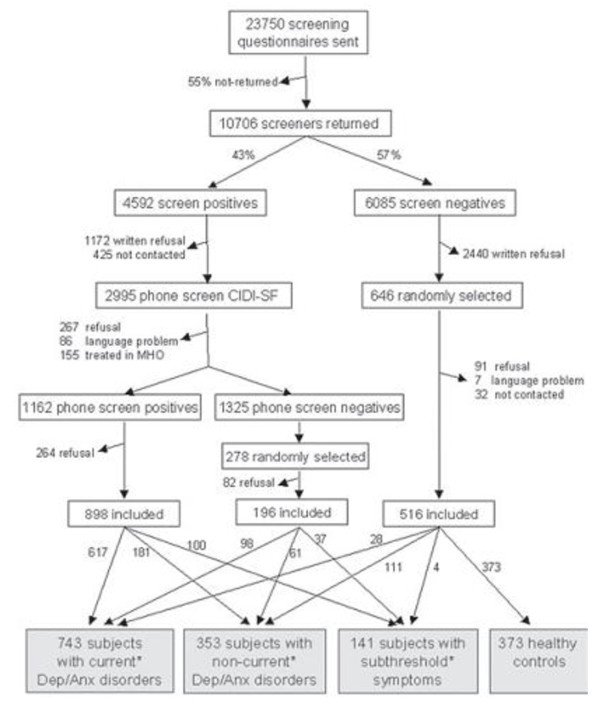
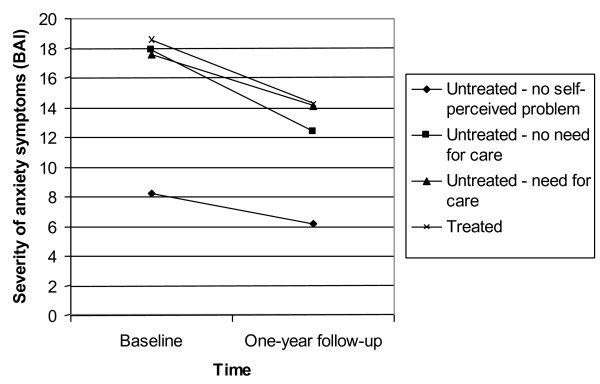
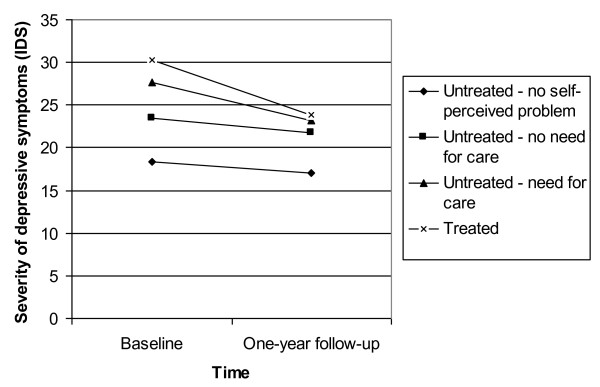
Background: Little is known about the course and outcome of untreated anxiety and depression in patients with and without a self-perceived need for care. The aim of the present study was to examine the one-year course of untreated anxiety and depression, and to determine predictors of a poor outcome. Method: Baseline and one-year follow-up data were used of 594 primary care patients with current anxiety or depressive disorders at baseline (established by the Composite Interview Diagnostic Instrument (CIDI)), from the Netherlands Study of Depression and Anxiety (NESDA). Receipt of and need for care were assessed by the Perceived Need for Care Questionnaire (PNCQ). Results: In depression, treated and untreated patients with a perceived treatment need showed more rapid symptom decline but greater symptom severity at follow-up than untreated patients without a self-perceived mental problem or treatment need. A lower education level, lower income, unemployment, loneliness, less social support, perceived need for care, number of somatic disorders, a comorbid anxiety and depressive disorder and symptom severity at baseline predicted a poorer outcome in both anxiety and depression. When all variables were considered at the same time, only baseline symptom severity appeared to predict a poorer outcome in anxiety. In depression, a poorer outcome was also predicted by more loneliness and a comorbid anxiety and depressive disorder. Conclusion: In clinical practice, special attention should be paid to exploring the need for care among possible risk groups (e.g. low social economic status, low social support), and support them in making an informed decision on whether or not to seek treatment.
Overview
The claims and statistics of this paper haven’t been checked yet.
Free: it reads the open-access text and checks the first 5 claims that cite a source we can check. Create a free account to check every claim.
Integrity signals
Registry
Cites
Statistics
Figures
Verification
Claims the paper makes
The claims and statistics of this paper haven’t been checked yet.
Free: it reads the open-access text and checks the first 5 claims that cite a source we can check. Create a free account to check every claim.
Claims other papers make about this one
Each is checked against this paper’s own text: does it say what the citing paper says it does?
The source backs part of the claim, not all of it — or backs it for a different population, condition or comparison.
In the citing paper
“Studies on structural social support, social network size, and mental health disorders have shown that less social contact and loneliness can cause more severe depressive symptoms. 338”
From Major depressive disorder: hypothesis, mechanism, prevention and treatment (2024) · cites this paper as [338]
Experimental — accuracy not yet measuredThe source backs part of the claim, not all of it — or backs it for a different population, condition or comparison.
In the citing paper
“They found that loneliness at baseline predicted depression and anxiety severity and remission from depression [25, 66].”
From Associations between loneliness and perceived social support and outcomes of mental health problems: a systematic review (2018) · cites this paper as [66]
Experimental — accuracy not yet measuredIn the citing paper
“Beljouw et al. [66] analysed data from primary care patients with current anxiety or depressive disorders, and found that greater loneliness at baseline was predictive of more severe depressive (beta = 0.89) or anxiety symptoms (beta = 0.40) at 1-year follow-up.”
From Associations between loneliness and perceived social support and outcomes of mental health problems: a systematic review (2018) · cites this paper as [66]
Self-check
Percentages, sums and reported differences re-computed from the paper’s own numbers.
The self-check needs the paper’s full text.
Citations
Cites
An inventory for measuring clinical anxiety: Psychometric properties.
Beck, A. T., Epstein, N., Brown, G., & Steer, R. A. (1988) · Journal of Consulting and Clinical Psychology · doi:10.1037/0022-006x.56.6.893 · Cited by 14,407
Revisiting the Behavioral Model and Access to Medical Care: Does it Matter?
Andersen, R. M. (1995) · Journal of Health and Social Behavior · doi:10.2307/2137284 · Cited by 9,831 · cited 1×
“Independent variables All determinants used in this paper were addressed at T0. Determinants of a poor clinical outcome Determinants of outcome are classified according to Andersen’s behavioral model [22, 23 ], and include: 1) predisposing factors such as socio-demographic characteristics; 2) factors that enable the u…”
MethodScreening for serious mental illness in the general population
Kessler, R. C., Barker, P. R., Colpe, L. J., Epstein, J. F., Gfroerer, J. C., Hiripi, E., Howes, M. J., Normand, S.-L. T., Manderscheid, R. W., Walters, E. E., et al. (2003) · Archives of General Psychiatry · doi:10.1001/archpsyc.60.2.184 · Cited by 5,692
Societal and Individual Determinants of Medical Care Utilization in the United States
ANDERSEN, R., & NEWMAN, J. F. (2005) · The Milbank Quarterly · doi:10.1111/j.1468-0009.2005.00428.x · Cited by 3,611 · cited 1×
“Determinants of a poor clinical outcome Determinants of outcome are classified according to Andersen’s behavioral model [22,23], and include: 1) predisposing factors such as socio-demographic characteristics; 2) factors that enable the use of services such as income; and 3) factors that determine the need for care.”
MethodSocietal and Individual Determinants of Medical Care Utilization in the United States
Andersen, R., & Newman, J. F. (1973) · The Milbank Memorial Fund Quarterly. Health and Society · doi:10.2307/3349613 · Cited by 2,838
The Inventory of Depressive Symptomatology (IDS): Psychometric properties
Rush, A. J., Gullion, C. M., Basco, M. R., Jarrett, R. B., & Trivedi, M. H. (1996) · Psychological Medicine · doi:10.1017/s0033291700035558 · Cited by 2,177 · cited 1×
“The dependent variables used in this study are severity of depression and anxiety at baseline and one-year follow-up, measured by the 30-item Inventory of Depressive Symptomatology (Self-Report; IDS-SR) [20] and the 21-item Beck Anxiety Inventory (BAI) [21], respectively.”
MethodWang, P. S., Aguilar-Gaxiola, S., Alonso, J., Angermeyer, M. C., Borges, G., Bromet, E. J., Bruffaerts, R., de Girolamo, G., de Graaf, R., Gureje, O., et al. (2007) · The Lancet · doi:10.1016/s0140-6736(07)61414-7 · Cited by 1,655 · cited 1×
“However, many mental disorders remain untreated [1-8].”
The Development of a Rasch-Type Loneliness Scale
de Jong-Gierveld, J., & Kamphuls, F. (1985) · Applied Psychological Measurement · doi:10.1177/014662168500900307 · Cited by 1,291 · cited 1×
“The De Jong-Gierveld Loneliness Scale [24] measures the amount of loneliness a respondent experiences by citing 11 statements such as ‘I often feel rejected’, which can be rated on a 3-point Likert scale.”
BackgroundThe Netherlands Study of Depression and Anxiety (NESDA): rationale, objectives and methods
Penninx, B. W. J. H., Beekman, A. T. F., Smit, J. H., Zitman, F. G., Nolen, W. A., Spinhoven, P., Cuijpers, P., De Jong, P. J., Van Marwijk, H. W. J., Assendelft, W. J. J., et al. (2008) · International Journal of Methods in Psychiatric Research · doi:10.1002/mpr.256 · Cited by 927 · cited 1×
“Procedures of NESDA are described in detail elsewhere [17].”
MethodSelf-citation
Research works printed but not linked: 3
- 3. van Beljouw et al. BMC Psychiatry 2010, 10:86 http://www.biomedcentral.com/1471-244X/10/86
- 15. Kessler RC, Berglund PA, Bruce ML, Koch R, Laska EM, Leaf PJ, et al: The prevalence and correlates of untreated serious mental illness. Health Serv Res 2001, 36:987-1007.
- 20. World Health Organization: Composite Interview Diagnostic Instrument (CIDI). World Health Organization 1990.
Cited by
Wang, J., Mann, F., Lloyd-Evans, B., Ma, R., & Johnson, S. (2018) · BMC Psychiatry · doi:10.1186/s12888-018-1736-5 · Cited by 1,494
“[66] analysed data from primary care patients with current anxiety”
BackgroundMajor depressive disorder: hypothesis, mechanism, prevention and treatment
Cui, L., Li, S., Wang, S., Wu, X., Liu, Y., Yu, W., Wang, Y., Tang, Y., Xia, M., & Li, B. (2024) · Signal Transduction and Targeted Therapy · doi:10.1038/s41392-024-01738-y · Cited by 1,244
Estimating remission from untreated major depression: a systematic review and meta-analysis
Whiteford, H. A., Harris, M. G., McKeon, G., Baxter, A., Pennell, C., Barendregt, J. J., & Wang, J. (2013) · Psychological Medicine · doi:10.1017/s0033291712001717 · Cited by 375
“A perceived need for care has been associated with greater symptom severity (Sareen et al. 2005 ; van Beljouw et al. 2010a,b), which may have biased these samples towards lower spontaneous remission rates.”
BackgroundHickin, N., Käll, A., Shafran, R., Sutcliffe, S., Manzotti, G., & Langan, D. (2021) · Clinical Psychology Review · doi:10.1016/j.cpr.2021.102066 · Cited by 271
Self-Rated Health and Long-Term Prognosis of Depression
Ambresin, G., Chondros, P., Dowrick, C., Herrman, H., & Gunn, J. M. (2014) · The Annals of Family Medicine · doi:10.1370/afm.1562 · Cited by 181
The natural course of social anxiety disorder among adolescents and young adults
Beesdo‐Baum, K., Knappe, S., Fehm, L., Höfler, M., Lieb, R., Hofmann, S. G., & Wittchen, H. ‐. (2012) · Acta Psychiatrica Scandinavica · doi:10.1111/j.1600-0447.2012.01886.x · Cited by 167
“5 year follow-up study in young women did not find any disorder characteristics such as severity or duration of symptoms as predictors (29), other studies with partially longer follow-up periods and including both genders reported that baseline severity (44), symptom duration and comorbid panic disorder (22) were rela…”
Holvast, F., Burger, H., de Waal, M. M. W., van Marwijk, H. W. J., Comijs, H. C., & Verhaak, P. F. M. (2015) · Journal of Affective Disorders · doi:10.1016/j.jad.2015.06.036 · Cited by 164
Self-citationDelgadillo, J., Moreea, O., & Lutz, W. (2016) · Behaviour Research and Therapy · doi:10.1016/j.brat.2016.02.003 · Cited by 162
van den Brink, R. H. S., Schutter, N., Hanssen, D. J. C., Elzinga, B. M., Rabeling-Keus, I. M., Stek, M. L., Comijs, H. C., Penninx, B. W. J. H., & Oude Voshaar, R. C. (2018) · Epidemiology and Psychiatric Sciences · doi:10.1017/s2045796017000014 · Cited by 127
“Loneliness has also been shown to adversely affect the prognosis of a depressive disorder, both in younger (Van Beljouw et al. 2010) and older adults (Holvast et al. 2015).”
BackgroundSelf-citationGagliardi, A. R., Yip, C. Y. Y., Irish, J. C., Wright, F. C., Rubin, B. B., Ross, H. J., Green, R., Abbey, S. E., McAndrews, M. P., & Stewart, D. E. (2021) · Health Expectations · doi:10.1111/hex.13241 · Cited by 144
Social isolation associated with depression: A case report of hikikomori
Teo, A. R. (2013) · International Journal of Social Psychiatry · doi:10.1177/0020764012437128 · Cited by 98
Nuyen, J., Tuithof, M., de Graaf, R., van Dorsselaer, S., Kleinjan, M., & ten Have, M. (2019) · Social Psychiatry and Psychiatric Epidemiology · doi:10.1007/s00127-019-01778-8 · Cited by 127
Hare-Duke, L., Dening, T., de Oliveira, D., Milner, K., & Slade, M. (2019) · Journal of Affective Disorders · doi:10.1016/j.jad.2018.10.359 · Cited by 89
Hedman, E., Andersson, E., Ljótsson, B., Andersson, G., Andersson, E., Schalling, M., Lindefors, N., & Rück, C. (2012) · Acta Psychiatrica Scandinavica · doi:10.1111/j.1600-0447.2012.01834.x · Cited by 114
Determinants of help-seeking behavior in depression: a cross-sectional study
Boerema, A. M., Kleiboer, A., Beekman, A. T. F., van Zoonen, K., Dijkshoorn, H., & Cuijpers, P. (2016) · BMC Psychiatry · doi:10.1186/s12888-016-0790-0 · Cited by 110
“These results contradict previous research that showed that younger people, those who experience more loneliness, those scoring higher on neuroticism and people who live without a partner are more inclined to use health services [12, 14, 16, 17].”
BackgroundResultSelf-citationPredictors of the Course of Anxiety Disorders in Adolescents and Young Adults
Asselmann, E., & Beesdo‐Baum, K. (2015) · Current Psychiatry Reports · doi:10.1007/s11920-014-0543-z · Cited by 79
The identification of symptom-based subtypes of depression: A nationally representative cohort study
ten Have, M., Lamers, F., Wardenaar, K. J., Beekman, A. T. F., de Jonge, P., van Dorsselaer, S., Tuithof, M., Kleinjan, M., & de Graaf, R. (2015) · Journal of Affective Disorders · doi:10.1016/j.jad.2015.10.040 · Cited by 76
“Purely clinical studies describing depressive subtypes among patients in treatment were excluded (such as described by Van Loo et al. (2012)), because of the risk of selection bias (i.e. many people with depression do not seek specialised treatment as a result of which clinical studies might only capture a limited ran…”
ResultInfluentialDevelopmental Epidemiology of Social Anxiety and Social Phobia in Adolescents
Knappe, S., Sasagawa, S., & Creswell, C. (2015) · Social Anxiety and Phobia in Adolescents · doi:10.1007/978-3-319-16703-9_3 · Cited by 74
Reasons and Determinants for Perceiving Unmet Needs for Mental Health in Primary Care in Quebec
Dezetter, A., Duhoux, A., Menear, M., Roberge, P., Chartrand, E., & Fournier, L. (2015) · The Canadian Journal of Psychiatry · doi:10.1177/070674371506000607 · Cited by 57
Wang, J., Lloyd-Evans, B., Marston, L., Mann, F., Ma, R., & Johnson, S. (2020) · BMC Psychiatry · doi:10.1186/s12888-020-02665-2 · Cited by 57
“3% of baseline participants, although the attrition rate is comparable to that for similar study populations [49, 64].”
ResultLenz, A. S., Hall, J., & Bailey Smith, L. (2016) · The Journal for Specialists in Group Work · doi:10.1080/01933922.2015.1111488 · Cited by 46
Caple, V., Maude, P., Walter, R., & Ross, A. (2023) · Journal of Psychiatric and Mental Health Nursing · doi:10.1111/jpm.12945 · Cited by 64
Silén, Y., Sipilä, P. N., Raevuori, A., Mustelin, L., MARTTUNEN, M. J., Kaprio, J. A., & Keski‐Rahkonen, A. (2021) · European Eating Disorders Review · doi:10.1002/erv.2838 · Cited by 62
Anxiety in Late Life: An Update on Pathomechanisms
Hellwig, S., & Domschke, K. (2019) · Gerontology · doi:10.1159/000500306 · Cited by 60
Valor diagnóstico de la Escala de Ansiedad y Depresión de Goldberg (EAD-G) en adultos cubanos
Carbonell, M. M., Díaz, R. P., & Marín, A. I. R. (2016) · Universitas Psychologica · doi:10.11144/javeriana.upsy15-1.vdea · Cited by 59
Inequality in Healthcare Utilization in Italy: How Important Are Barriers to Access?
Matranga, D., & Maniscalco, L. (2022) · International Journal of Environmental Research and Public Health · doi:10.3390/ijerph19031697 · Cited by 57
“They can also impact mental health and worsen some statuses, such as depression or substance addiction [30].”
BackgroundBeyond Symptoms: Race and Gender Predict Anxiety Disorder Diagnosis
Vanderminden, J., & Esala, J. J. (2019) · Society and Mental Health · doi:10.1177/2156869318811435 · Cited by 45
Symptom dimensions as predictors of the two-year course of depressive and anxiety disorders
Wardenaar, K. J., Giltay, E. J., van Veen, T., Zitman, F. G., & Penninx, B. W. J. H. (2011) · Journal of Affective Disorders · doi:10.1016/j.jad.2011.11.037 · Cited by 54
“Other predictors of poor prognosis include old age (Penninx et al., 2011), young age-of-onset (Karlsson et al. 2008, Penninx et al. 2011), high severity (van Beljouw et al., 2010, Penninx et al. 2011) and long disorder duration (Conradi et al., 2008).”
BackgroundSelf-citationEpidemiology of loneliness in a cohort of UK mental health community crisis service users
Wang, J., Lloyd-Evans, B., Marston, L., Ma, R., Mann, F., Solmi, F., & Johnson, S. (2020) · Social Psychiatry and Psychiatric Epidemiology · doi:10.1007/s00127-019-01734-6 · Cited by 53
“It may be helpful for mental health professionals to screen for the severity of loneliness to identify people at risk, given that loneliness may influence mental health in both immediate and long term [8, 36, 55, 56].”
BackgroundBoerema, A. M., ten Have, M., Kleiboer, A., de Graaf, R., Nuyen, J., Cuijpers, P., & Beekman, A. T. F. (2017) · BMC Psychiatry · doi:10.1186/s12888-017-1531-8 · Cited by 48
Self-citationSi, L., Xiao, L., Xie, Y., Xu, H., Yuan, G., Xu, W., & Wang, G. (2022) · Journal of Affective Disorders · doi:10.1016/j.jad.2022.12.092 · Cited by 50
Cordaro, M., Grigsby, T. J., Howard, J. T., Deason, R. G., Haskard‐Zolnierek, K. B., & Howard, K. J. (2021) · Issues in Mental Health Nursing · doi:10.1080/01612840.2020.1867675 · Cited by 46
“Moreover, implications for untreated anxiety are long-standing from previous research studies (Somers et al., 2006; van Beljouw et al., 2010).”
BackgroundBokma, W. A., Zhutovsky, P., Giltay, E. J., Schoevers, R. A., Penninx, B. W. J. H., van Balkom, A. J. L. M., Batelaan, N. M., & van Wingen, G. A. (2020) · Psychological Medicine · doi:10.1017/s0033291720001658 · Cited by 45
“…age (Asselmann & Beesdo-Baum, 2015; Catarino et al., 2018), partner status (Asselmann & Beesdo-Baum, 2015; Batelaan et al., 2014), social support (van Beljouw et al., 2010), smoking status (Bruce et al., 2005), nicotine dependency (Nay et al., 2013), current financial problems (Nay et al.,…”
InfluentialSelf-citationThe patient perspective in research on major depression
Cuijpers, P. (2011) · BMC Psychiatry · doi:10.1186/1471-244x-11-89 · Cited by 35
“Although the outcome of untreated depression is not necessarily worse than the outcome in patients receiving treatment [ 3 ], many of the untreated patients do have a clear need for treatment [4].”
Self-citationSpence, R., Owens, M., & Goodyer, I. M. (2016) · BMC Research Notes · doi:10.1186/s13104-016-2227-8 · Cited by 42
“Furthermore, in contrast to studies that have found a greater intention to seek help amongst those who have used services [15], our results suggest this group exhibit a greater use of avoidant coping, which may play a role in preventing future help seeking, potentially leading to poorer long term outcomes [45, 46].”
ResultRecognition of anxiety disorders by the general practitioner: results from the DASMAP Study
Fernández, A., Rubio-Valera, M., Bellón, J. Á., Pinto‐Meza, A., Luciano, J. V., Mendive, J. M., Haro, J. M., Palao, D. J., & Serrano‐Blanco, A. (2012) · General Hospital Psychiatry · doi:10.1016/j.genhosppsych.2012.01.012 · Cited by 40
Developmental Epidemiology of Pediatric Anxiety Disorders
Warner, E. N., Ammerman, R. T., Glauser, T. A., Pestian, J. P., Agasthya, G. A., & Strawn, J. R. (2023) · Child and Adolescent Psychiatric Clinics of North America · doi:10.1016/j.chc.2023.02.001 · Cited by 40
Høifødt, R. S., Mittner, M., Lillevoll, K., Katla, S. K., Kolstrup, N., Eisemann, M., Friborg, O., & Waterloo, K. (2015) · Journal of Medical Internet Research · doi:10.2196/jmir.4351 · Cited by 33
“…individual characteristics (eg, high levels of neuroticism [14,15]), socioeconomic factors (eg, low educational level [16,17], unemployment [16,17]), relational factors (eg, lack of social support [17-19], loneliness [17]), health-related variables (eg, somatic illness [17,18], severity of…”
InfluentialBasta, M., Micheli, K., Koutra, K., Fountoulaki, M., Dafermos, V., Drakaki, M., Faloutsos, K., Soumaki, E., Anagnostopoulos, D., Papadakis, N., et al. (2022) · Journal of Affective Disorders Reports · doi:10.1016/j.jadr.2022.100334 · Cited by 38
Hadjistavropoulos, H. D., Faller, Y. N., Klatt, A., Nugent, M. N., Dear, B. F., & Titov, N. (2018) · Community Mental Health Journal · doi:10.1007/s10597-018-0286-0 · Cited by 37
Chae, W. R., Schienkiewitz, A., Du, Y., Hapke, U., Otte, C., & Michalski, N. (2021) · Journal of Affective Disorders · doi:10.1016/j.jad.2021.12.025 · Cited by 38
Wardenaar, K. J., Monden, R., Conradi, H. J., & de Jonge, P. (2015) · Journal of Affective Disorders · doi:10.1016/j.jad.2015.03.029 · Cited by 37
“high baseline severity [2], comorbidity [3, 4], young age-of-onset [5] and long episode duration [6]), most of these are general severity indicators that can differentiate between those with a chronic and non-chronic course, but not between patients with qualitatively different course-trajectories (e.”
Bousman, C., Potiriadis, M., Everall, I., & Gunn, J. M. (2013) · American Journal of Medical Genetics Part B Neuropsychiatric Genetics · doi:10.1002/ajmg.b.32209 · Cited by 33
Owen, D. C., Antypas, D., Hassoulas, A., Pardiñas, A. F., Espinosa-Anke, L., & Camacho-Collados, J. (2023) · JMIR AI · doi:10.2196/41205 · Cited by 34
Eilertsen, S. E. H., & Eilertsen, T. (2023) · BMC Psychology · doi:10.1186/s40359-023-01238-8 · Cited by 34
Verhoeven, F. E. A., Wardenaar, K. J., Ruhé, H. G. E., Conradi, H. J., & de Jonge, P. (2018) · Depression and Anxiety · doi:10.1002/da.22695 · Cited by 31
Cognitive Behavioral Therapy for Anxiety and Depression in Children and Adolescents
Smárason, O., Skarphéðinsson, G., & Storch, E. A. (2024) · Psychiatric Clinics of North America · doi:10.1016/j.psc.2024.02.002 · Cited by 32
Behavioural interventions targeting physical activity improve psychocognitive outcomes in COPD
Lavoie, K., Sedeno, M. F., Hamilton, A. L., Li, P., Sousa, D. D., Troosters, T., Maltais, F., & Bourbeau, J. (2019) · ERJ Open Research · doi:10.1183/23120541.00013-2019 · Cited by 32
A clinical staging approach to improving diagnostics in anxiety disorders: Is it the way to go?
Bokma, W. A., Batelaan, N. M., Hoogendoorn, A. W., Penninx, B. W. J. H., & van Balkom, A. J. L. M. (2019) · Australian & New Zealand Journal of Psychiatry · doi:10.1177/0004867419887804 · Cited by 31
Self-citationKuczynski, A. M., Piccirillo, M. L., Dora, J., Kuehn, K. S., Halvorson, M. A., King, K. M., & Kanter, J. W. (2024) · Journal of Affective Disorders · doi:10.1016/j.jad.2024.05.148 · Cited by 30
Harra, R., & Vargas, I. (2023) · Journal of American College Health · doi:10.1080/07448481.2023.2172580 · Cited by 30
Wu, Z., Cao, L., Peng, D., Mellor, D. J., Zhang, C., Li, H., Wang, Z., Song, Y., Li, C., & Fang, Y. (2018) · Psychiatry Research · doi:10.1016/j.psychres.2018.07.019 · Cited by 29
van den Berg, K. S., Marijnissen, R. M., van den Brink, R. H. S., Naarding, P., Comijs, H. C., & Voshaar, R. C. O. (2016) · Journal of Psychosomatic Research · doi:10.1016/j.jpsychores.2016.03.004 · Cited by 29
Stefanidou, T., Wang, J., Morant, N. J., Lloyd‐Evans, B., & Johnson, S. (2021) · BMC Psychiatry · doi:10.1186/s12888-021-03138-w · Cited by 29
The Hikikomori Phenomenon: Could Loneliness Be a Choice of Self-Restriction from Society?
Castelpietra, G., Nicotra, A., & Leo, D. D. (2021) · Open Journal of Psychiatry · doi:10.4236/ojpsych.2021.111005 · Cited by 28
“mortality, as alcohol and smoking abuse [37].”
Binet, É., Ouellet, M., Lebel, J., Békés, V., Morin, C. M., Bergeron, N., Campbell, T. S., Ghosh, S., Bouchard, S., Guay, S., et al. (2021) · Administration and Policy in Mental Health and Mental Health Services Research · doi:10.1007/s10488-021-01114-w · Cited by 28
Makovac, E., Mancini, M., Fagioli, S., Watson, D. R., Meeten, F., Rae, C. L., Critchley, H., & Ottaviani, C. (2018) · Psychiatry Research Neuroimaging · doi:10.1016/j.pscychresns.2018.09.006 · Cited by 28
Kasteenpohja, T., Marttunen, M., Aalto-Setälä, T., Perälä, J., Saarni, S. I., & Suvisaari, J. (2018) · Nordic Journal of Psychiatry · doi:10.1080/08039488.2017.1418429 · Cited by 26
“Lower education, lower income, unemployment, being unmarried, or having no children have been related to poorer outcomes in these disorders [31,32].”
BackgroundFactors Related to Mental Health During the COVID-19 Lockdown in Spain
González, R. P., Vicario‐Molina, I., Ortega, E. G., & Picos, A. P. (2021) · Frontiers in Psychology · doi:10.3389/fpsyg.2021.715792 · Cited by 27
Evaluating Commercially Available Mobile Apps for Depression Self-Management.
Myers, A., Chesebrough, L., Hu, R., Turchioe, M. R., Pathak, J., & Creber, R. M. (2020) · PubMed Central · Cited by 24
Stewart, R. A., Patel, T. A., McDermott, K. A., & Cougle, J. R. (2022) · Journal of Affective Disorders · doi:10.1016/j.jad.2022.04.026 · Cited by 22
Silva, M., Antunes, A., Lopes, S. A., Cardoso, G., Xavier, M., Saraceno, B., & Caldas‐de‐Almeida, J. M. (2020) · Journal of Mental Health · doi:10.1080/09638237.2020.1739249 · Cited by 23
“Higher education was also found to be a determinant of the use of health care services, in line with other authors (Chiavegatto Filho et al., 2015; Vasiliadis et al., 2005).”
ResultCorrelates of Depressive Symptoms among Homeless Men on Parole
Nyamathi, A., LEAKE, B. D., Albarrán, C. R., Zhang, S. X., Hall, E. A., Farabee, D. J., Marlow, E., Marfisee, M., Khalilifard, F., & Faucette, M. (2011) · Issues in Mental Health Nursing · doi:10.3109/01612840.2011.569111 · Cited by 23
Lloyd‐Evans, B., Bone, J. K., Pinfold, V., Lewis, G., Billings, J., Frerichs, J., Fullarton, K., Jones, R., & Johnson, S. (2017) · Trials · doi:10.1186/s13063-017-2226-7 · Cited by 20
“For people with anxiety and depression, loneliness independently predicts poorer symptom outcomes 1 year later [18].”
BackgroundResultFrerichs, J., Billings, J., Barber, N., Chhapia, A., Chipp, B., Shah, P., Shorten, A., Stefanidou, T., Johnson, S., Lloyd‐Evans, B., et al. (2020) · BMC Psychiatry · doi:10.1186/s12888-020-02961-x · Cited by 19
Maarsingh, O. R., Heymans, M. W., Verhaak, P. F. M., Penninx, B. W. J. H., & Comijs, H. C. (2018) · Journal of Affective Disorders · doi:10.1016/j.jad.2018.04.026 · Cited by 19
Self-citationThe prevalence of anxiety in adult endocrinology outpatients: A systematic review and meta–analysis
Kershaw, K. A., Storer, B., Braund, T. A., Chakouch, C., Coleshill, M. J., Haffar, S., Harvey, S. B., Newby, J. M., Sicouri, G., & Murphy, M. (2023) · Psychoneuroendocrinology · doi:10.1016/j.psyneuen.2023.106357 · Cited by 18
Wilfong, K. M., Goodie, J. L., Curry, J. C., Hunter, C. L., & Kroke, P. C. (2021) · Journal of Clinical Psychology in Medical Settings · doi:10.1007/s10880-021-09826-9 · Cited by 18
Gerrits, M. M. J. G., van Marwijk, H., van Oppen, P., van der Horst, H. E., & Penninx, B. W. J. H. (2013) · Journal of Affective Disorders · doi:10.1016/j.jad.2013.08.030 · Cited by 18
Self-citationCrisis Management and Conflict Resolution: Using Technology to Support Couples Throughout Deployment
Farero, A. M., Springer, P. R., Hollist, C. S., & Bischoff, R. J. (2015) · Contemporary Family Therapy · doi:10.1007/s10591-015-9343-9 · Cited by 17
Recruitment Challenges for Studies of Deep Brain Stimulation for Treatment-Resistant Depression
Ramasubbu, R., Golding, S., Williams, K., Mackie, A., MacQUEEN, G. M., & Kiss, Z. H. T. (2021) · Neuropsychiatric Disease and Treatment · doi:10.2147/ndt.s299913 · Cited by 15
“Negative expectations of treatment outcome are considered one of the personal barriers to seeking treatment.(17) Higher rates of selfreferral for an invasive treatment are intriguing but could be partly explained by the findings that depressed patients experiencing severe symptoms and distress, with longer duration of…”
ResultDESCRIPTION OF ELDERLY DEPRESSION LEVELS
Livana, P. H., Susanti, Y., Darwati, L. E., & Anggraeni, R. (2019) · Nurscope Jurnal Penelitian dan Pemikiran Ilmiah Keperawatan · doi:10.30659/nurscope.4.2.80-93 · Cited by 15
Isaac, F., Toukhsati, S. R., Klein, B., Benedetto, M. D., & Kennedy, G. A. (2023) · International Journal of Environmental Research and Public Health · doi:10.3390/ijerph21010038 · Cited by 13
Boer, S., Dekkers, O. M., le Cessie, S., Carlier, I. V. E., & van Hemert, A. M. (2018) · Journal of Affective Disorders · doi:10.1016/j.jad.2018.12.035 · Cited by 14
From lonely cities to prosocial places
Corcoran, R., & Marshall, G. (2017) · Routledge eBooks · doi:10.4324/9781315645582-12 · Cited by 12
Delays in depression treatment among Korean population
Ki, M., Paik, J., Choi, K., Ryu, S., Han, C., Lee, K., Ham, B., Chang, H. S., Won, E., Jun, T., et al. (2014) · Asia-Pacific Psychiatry · doi:10.1111/appy.12140 · Cited by 11
“This is of great significance, since there has been emerging evidence that early onset is a potential predictor of severity (Kessler and Wang, 2009), poor response to treatment (Okuda et al., 2010), and poor long-term outcome (van Beljouw et al., 2010; de Diego-Adelino et al., 2010).”
BackgroundSingh, S., Zaki, R. A., Farid, N. D. N., & Kaur, K. (2021) · Preventive Medicine Reports · doi:10.1016/j.pmedr.2021.101585 · Cited by 10
“Difficultly in understanding the somatic symptoms of depression among young adolescents and subject variability factors could possibly result in this findings (van Beljouw et al., 2010).”
Wardenaar, K. J., Giltay, E. J., van Veen, T., Zitman, F. G., & Penninx, B. W. J. H. (2012) · Journal of Psychiatric Research · doi:10.1016/j.jpsychires.2012.08.024 · Cited by 10
“The course of comorbid depression and anxiety is characterised by even higher chronicity (Penninx et al., 2011; Shankman & Klein, 2002; Merikangas et al., 2003; Fichter et al., 2010; van Beljouw et al., 2010).”
BackgroundSelf-citationKim, Y., Kim, H.-Y., & Jang, S. J. (2019) · Psychiatry Research · doi:10.1016/j.psychres.2019.03.013 · Cited by 9
Kooistra, L. C., Wiersma, J., Ruwaard, J., Riper, H. M., Penninx, B. W. J. H., & van Oppen, P. (2018) · Journal of Affective Disorders · doi:10.1016/j.jad.2018.07.072 · Cited by 8
Self-citationValerius, K., von Eitzen, L., Göbel, M., Ohlbrecht, H., van den Berg, N., Völzke, H., Grabe, H. J., Schomerus, G., & Speerforck, S. (2024) · BMC Psychiatry · doi:10.1186/s12888-024-05521-9 · Cited by 7
“Choosing not to seek professional help and to trust in self-healing or other forms of coping can also be a good choice for some with regard to quality of life [50] and should be acknowledged.”
BackgroundKASSIM, S. N. F., & Badayai, A. R. A. (2023) · International Journal of Academic Research in Business and Social Sciences · doi:10.6007/ijarbss/v13-i6/17549 · Cited by 7
“…are more likely to have depression symptoms, bipolar disorder, and extreme anxiety while loneliness is associated with depression and anxiety (Brummett et al., 2000; Daniels, 2000; Backs-Dermott et al., 2010; Van Beljouw et al., 2010; Holvast et al., 2015; Koenders et al., 2015; Wang et al., 2018).”
BackgroundZhou, R., Xiao, Y., Shen, X., Zhao, W., Liu, G., Chen, H., Zhang, G., & Zheng, P. (2025) · Journal of Affective Disorders · doi:10.1016/j.jad.2025.119408 · Cited by 6
Schetsche, C. (2021) · Psicoperspectivas Individuo y Sociedad · doi:10.5027/psicoperspectivas-vol20-issue3-fulltext-2228 · Cited by 7
The Role of Psychotherapy in the Management of Treatment‐resistant Depression
Thase, M. E. (2013) · Wiley eBooks · doi:10.1002/9781118556719.ch8 · Cited by 6
Hunt, A. D., & Adams, L. M. (2021) · Psychiatric Quarterly · doi:10.1007/s11126-021-09913-y · Cited by 6
Parental internalizing problems in a community sample: association with child psychosocial problems
Spijkers, W., Jansen, D. E. M. C., & Reijneveld, S. A. (2013) · European Journal of Public Health · doi:10.1093/eurpub/ckt037 · Cited by 6
Barancevich, E. R., Golovkova-Kucheryavaya, M. S., Dzhulaj, I. A., Posokhina, O. V., & Starikov, P. V. (2015) · S S Korsakov Journal of Neurology and Psychiatry · doi:10.17116/jnevro201511511286-91 · Cited by 5
Li, B., Zhang, H., Cao, Y. L., Zhao, L., Xu, X., Song, Z., & Wang, J. (2022) · Brain Research Bulletin · doi:10.1016/j.brainresbull.2022.08.010 · Cited by 4
Wang, J. (2018) · UCL Discovery (University College London) · doi:10.13140/rg.2.2.22466.61126 · Cited by 4
Boykin, D. M., Thomas, K. L., Hundt, N. E., Asghar‐Ali, A. A., & Bryan, J. L. (2023) · Journal of Cognitive Psychotherapy · doi:10.1891/jcp-2022-0011 · Cited by 4
Understanding poor help-seeking rates for major depressive disorder
Farmer, C. (2013) · Figshare · doi:10.1186/1471-244x-12-164 · Cited by 4
Vinogradova, V. V., Ķīvīte‐Urtāne, A., Vrubļevska, J., & Rancāns, E. (2021) · European Neuropsychopharmacology · doi:10.1016/j.euroneuro.2021.10.038 · Cited by 3
Kuckertz, M., Lind, T., Lau, A. S., Motamedi, M., Wright, B., Le, K., & Brookman-Frazee, L. I. (2024) · Evidence-Based Practice in Child and Adolescent Mental Health · doi:10.1080/23794925.2024.2310512 · Cited by 3
“Low parental education is associated with anxiety, depression (van Beljouw et al., 2010), and externalizing behavioral problems in youth (Schindler et al., 2015).”
BackgroundButchon, R., Liabsuetrakul, T., Bumpenboon, T., & Teerawattananon, Y. (2019) · Journal of Health Science and Medical Research · doi:10.31584/jhsmr.201959 · Cited by 3
“anxiety had a risk of comorbid depressive disorders with both immediate and long-term effects.(21) The effect of”
BackgroundDepresiškumo paplitimas tarp Lietuvos kaimų gyventojų
Davidonienė, O., Stanislavovienė, J., & Utkuvienė, J. (2012) · Sveikatos mokslai · doi:10.5200/sm-hs.2012.002 · Cited by 3
Botello, C. R. Y., Sánchez, M. M. R., Prieto, B. L. A., Barraza, L. M., Gutiérrez, D. A., & Silva, N. S. (2017) · Cultura Educación y Sociedad · doi:10.17981/cultedusoc.8.1.2017.02 · Cited by 3
Park, S., Lee, Y., & Lee, J. (2025) · Journal of Affective Disorders · doi:10.1016/j.jad.2025.120327 · Cited by 2
Social well-being moderates behavioral therapy response for generalized anxiety disorder
Armstrong, J., Baughman, N. R., Wilhelm, R. A., El-Shafie, D., Berg, H. E., Yeh, H., Akeman, E., Martell, C. R., Wolitzky-Taylor, K. B., Craske, M. G., et al. (2025) · Journal of Mood and Anxiety Disorders · doi:10.1016/j.xjmad.2025.100160 · Cited by 2
“Prior studies have also found the predictive relationship between isolation/loneliness and post-treatment anxiety symptoms becomes nonsignificant when controlling for relevant covariates (including baseline symptom severity [69]).”
Tran, M. M., Curland, R. A., & Leykin, Y. (2019) · Psychiatric Services · doi:10.1176/appi.ps.201900190 · Cited by 3
Metadata
- Authors
- van Beljouw, I. M., Verhaak, P. F., Cuijpers, P., van Marwijk, H. W., & Penninx, B. W.
- Affiliations
- Netherlands Institute for Health Services Research (NL)
- Vrije Universiteit Amsterdam (NL)
- University Medical Center Groningen (NL)
- Corresponding author
- Verhaak, Peter FM
- Venue
- BMC Psychiatry
- Published
- 2010-10-20
- Volume
- 10
- Issue
- 1
- Pages
- 86-86
- ISSN
- 1471-244X (ISSN-L)
- PMC
- PMC2974663
- OpenAlex
- W2156611669
- Cited by
- 128
- References
- 32
- Citations by year
- 2026: 6 · 2025: 8 · 2024: 5 · 2023: 9 · 2022: 9 · 2021: 20 · 2020: 7 · 2019: 11 · 2018: 10 · 2017: 7 · 2016: 5 · 2015: 11 · 2014: 3 · 2013: 7 · 2012: 7
- FWCI
- 7.40
- Type
- journal article
- Language
- en
- Open access
- gold
- doi.org
- Licence
- Locations
- BMC Psychiatry (publishedVersion, cc-by)
- PubMed Central (publishedVersion, cc-by)
- PubMed (publishedVersion)
- VU Research Portal (publishedVersion, other-oa)
- Pure Amsterdam UMC (acceptedVersion, other-oa)
- Amsterdam UMC (VU Amsterdam) - Institutional Repository (acceptedVersion, other-oa)
- Data Archiving and Networked Services (DANS) (submittedVersion)
- Data Archiving and Networked Services (DANS) (submittedVersion, other-oa)
- Leiden Repository (Leiden University) (submittedVersion)
- Digital Academic REpository of VU University Amsterdam (Vrije Universiteit Amsterdam) (submittedVersion)
- DOAJ (DOAJ: Directory of Open Access Journals) (submittedVersion)
- Research Explorer (The University of Manchester) (submittedVersion)
- University of Groningen research database (University of Groningen / Centre for Information Technology) (submittedVersion, cc-by)
- Funders
- Universiteit Leiden (10‐000‐1002)
- ZonMw (10‐000‐1002)
- Vrije Universiteit Amsterdam
- Fonds Psychische Gezondheid
- GGZ inGeest
- Rivierduinen
- GGZ Friesland
- GGZ Drenthe
- Nederlands Instituut voor Onderzoek van de Gezondheidszorg (10-000-1002)
- Leids Universitair Medisch Centrum
- Universitair Medisch Centrum Groningen
- Topics
- Health Sciences › Medicine › Psychiatry and Mental health › Mental Health Treatment and Access
- Social Sciences › Psychology › Experimental and Cognitive Psychology › Anxiety, Depression, Psychometrics, Treatment, Cognitive Processes
- Health Sciences › Medicine › Pharmacology (medical) › Treatment of Major Depression
- Keywords
- untreated depression, treatment outcome prediction, perceived need for care, primary care patients, loneliness, social support, comorbidities, symptom severity, socioeconomic status, treatment seeking, NESDA
- MeSH terms
- Adolescent, Adult, Aged, Anxiety Disorders, Attitude to Health, Depressive Disorder, Female, Follow-Up Studies, Humans, Male, Middle Aged, Netherlands, Patient Acceptance of Health Care, Primary Health Care, Prognosis, Psychiatric Status Rating Scales, Surveys and Questionnaires, Severity of Illness Index, Cohort Studies, Multicenter Studies as Topic, Comorbidity, Outcome Assessment, Health Care, Withholding Treatment
About these checks
Registry, retraction, Cites and statistics results are computed, not judged, with one exception: a printed reference that no index lists is read once by a model before it counts as a citation error. Claims are extracted by a model and kept only when their quote appears verbatim in the text; each cited source is then checked, with a model’s help, for whether it says what the claim relies on. Those verdicts can be wrong — read the claim’s quote and the cited source before relying on one.
Statistics and arithmetic are recomputed, not judged.
Confidence bands are shown only for fields calibrated on our annotated test set. None is calibrated yet, so no band is shown.
What counts as a claim ›How we measure confidence ›How we check this ›
Are you an author, or do you see a problem with this page? Request a review
Data sources
Bibliographic data: Semantic Scholar, OpenAlex, Crossref.
Contains information from the Semantic Scholar Academic Graph Datasets, made available under the ODC Attribution License (ODC-BY 1.0).
Semantic Scholar’s data is described in: Kinney, R., et al. (2023). The Semantic Scholar Open Data Platform. arXiv:2301.10140.
