

The DOI matches its Crossref record; 38 of the 38 references it cites were found in a registry or an index.
Quetiapine augmentation of SRIs in treatment refractory obsessive-compulsive disorder: a double-blind, randomised, placebo-controlled study [ISRCTN83050762]
Open accessAbstract
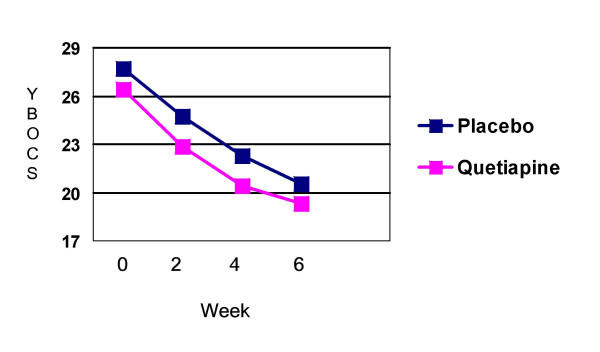
Background: Although serotonin reuptake inhibitors are effective in the treatment of OCD, many patients fail to respond to these agents. Growing evidence from open-label and placebo-controlled trials suggests a role for augmentation of SRIs with atypical antipsychotics in OCD. Quetiapine is generally well tolerated and previous open-label data has produced mixed results in OCD and additional controlled data is needed. Methods: We undertook a double-blind, randomised, parallel-group, flexible-dose, placebo-controlled study of quetiapine augmentation in subjects who had responded inadequately to open-label treatment with an SRI for 12 weeks. Following informed consent and screening, forty-two subjects were randomised to either placebo or quetiapine for six weeks. Results: There was significant improvement from baseline to endpoint on the Yale-Brown Obsessive-Compulsive Scale in both the quetiapine and placebo groups (quetiapine, n = 20, p < 0.0001; placebo, n = 21, p = 0.001) with 40% (n = 8) of quetiapine and 47.6% (n = 10) of placebo treated subjects being classified as responders. Quetiapine did not demonstrate a significant benefit over placebo at the end of the six-week treatment period (p = .636). Similarly quetiapine failed to separate from placebo in the subgroup of subjects (n = 10) with co-morbid tics. Quetiapine was generally well tolerated. Conclusions: In this study, quetiapine augmentation was no more effective than placebo augmentation of SRIs. A number of limitations in study design make comparisons with previous studies in this area difficult and probably contributed to our negative findings. Future work in this important clinical area should address these limitations.
Overview
The claims and statistics of this paper haven’t been checked yet.
Run the check — free, no account needed. It reads the open-access text and checks the sources it cites.
Integrity signals
Registry
Cites
Statistics
Figures
Verification
Claims the paper makes
The claims and statistics of this paper haven’t been checked yet.
Run the check — free, no account needed. It reads the open-access text and checks the sources it cites.
Claims other papers make about this one
Each is checked against this paper’s own text: does it say what the citing paper says it does?
In the citing paper
“Recently, second-generation antipsychotic agents have shown benefit, either alone or as adjunctive therapy. Specifically, high-dose olanzapine [522], quetiapine [523], and risperidone [524] have all shown at least minimal clinical benefit relative to placebo treatment [525].”
From Reward circuitry dysfunction in psychiatric and neurodevelopmental disorders and genetic syndromes: animal models and clinical findings (2012) · cites this paper as [523]
Self-check
Percentages, sums and reported differences re-computed from the paper’s own numbers.
The self-check needs the paper’s full text.
Citations
Cites
(1998) · The Journal of Clinical Psychiatry · Cited by 19,139
A new depression scale designed to be sensitive to change
Montgomery, S. A., & Åsberg, M. (1979) · British Journal of Psychiatry · doi:10.1192/bjp.134.4.382 · Cited by 13,962
(1998) · PubMed · Cited by 10,216
The Yale-Brown Obsessive Compulsive Scale: I. Development, Use, and Reliability
Goodman, W. K. (1989) · Archives of General Psychiatry · doi:10.1001/archpsyc.1989.01810110048007 · Cited by 7,712
(1996) · Cited by 6,884
The mini international neuropsychiatric interview
Lecrubier, Y., Sheehan, D. V., Hergueta, T., & Weiller, E. (1998) · European Psychiatry · doi:10.1016/s0924-9338(99)80239-9 · Cited by 5,899
The Yale-Brown Obsessive Compulsive Scale: II. Validity
Goodman, W. K. (1989) · Archives of General Psychiatry · doi:10.1001/archpsyc.1989.01810110054008 · Cited by 2,799
The Yale-Brown Obsessive-Compulsive Scale: measures of internal consistency.
Kim, S.-W., Dysken, M., Pheley, A., & Hoover, K. M. (1994) · Psychiatry Research · doi:10.1016/0165-1781(94)90039-6 · Cited by 2,333
The yale global tic severity scale: initial testing of a clinician-rated scale of tic severity
LECKMAN, J. F., RIDDLE, M. A., HARDIN, M. T., ORT, S. I., SWARTZ, K. L., STEVENSON, J., & COHEN, D. J. (1989) · Journal of the American Academy of Child & Adolescent Psychiatry · doi:10.1097/00004583-198907000-00015 · Cited by 2,146
Sheehan, D. V. (1984) · Medical Entomology and Zoology · Cited by 883
Research works printed but not linked: 2
- Diagnostic and Statistical Manual for Mental Disorders Fourth Edition TR: . 2002, Washington, D.C., American Psychiatric Association
- Guy W: ECDU Assessment Manual for Psychopharmacology. 1976, National Institute of Mental Health, Research Branch, 313-331.
Cited by
Sorted by citations
Katzman, M. A., Bleau, P., Blier, P., Chokka, P., Kjernisted, K., Van Ameringen, M., & the Canadian Anxiety Guidelines Initiative Group on behalf of the Anxiety Disorders Association of Canada/Association Canadienne des troubles anxieux and McGill University (2014) · BMC Psychiatry · doi:10.1186/1471-244x-14-s1-s1 · Cited by 1,090
Bandelow, B., Zohar, J., Hollander, E., Kasper, S., Möller, H., & WFSBP Task Force on Treatment Guide (2008) · The World Journal of Biological Psychiatry · doi:10.1080/15622970802465807 · Cited by 887
Bloch, M. H., Landeros-Weisenberger, A., Kelmendi, B., Coric, V, Bracken, M. B., & Leckman, J. F. (2006) · Molecular Psychiatry · doi:10.1038/sj.mp.4001823 · Cited by 635
Maher, A. R., Maglione, M., Bagley, S., Suttorp, M., Hu, J.-H., Ewing, B., Wang, Z., Timmer, M., Sultzer, D., & Shekelle, P. G. (2011) · JAMA · doi:10.1001/jama.2011.1360 · Cited by 558
Evidence-based pharmacotherapy of obsessive-compulsive disorder
Fineberg, N. A., Brown, A., Reghunandanan, S., & Pampaloni, I. (2012) · The International Journal of Neuropsychopharmacology · doi:10.1017/s1461145711001829 · Cited by 336
Dichter, G. S., Damiano, C. A., & Allen, J. A. (2012) · Journal of Neurodevelopmental Disorders · doi:10.1186/1866-1955-4-19 · Cited by 299
Psychopharmacological Treatment of Obsessive-Compulsive Disorder (OCD)
CASALE, A. D., Sorice, S., Padovano, A., Simmaco, M., Ferracuti, S., Lamis, D. A., Rapinesi, C., Sani, G., Girardi, P., Kotzalidis, G. D., et al. (2018) · Current Neuropharmacology · doi:10.2174/1570159x16666180813155017 · Cited by 243
Pharmacotherapy of Obsessive-compulsive Disorder and Obsessive-Compulsive Spectrum Disorders
Denys, D. (2006) · Psychiatric Clinics of North America · doi:10.1016/j.psc.2006.02.013 · Cited by 213
Dold, M., Aigner, M., Lanzenberger, R., & Kasper, S. (2013) · International Journal of Neuropsychopharmacology · doi:10.1017/s1461145712000740 · Cited by 211
Veale, D., Miles, S., Smallcombe, N., Ghezai, H., Goldacre, B., & Hodsoll, J. (2014) · BMC Psychiatry · doi:10.1186/s12888-014-0317-5 · Cited by 162
Fineberg, N. A., Hollander, E., Pallanti, S., Walitza, S., Grünblatt, E., Dell’Osso, B. M., Albert, U., Geller, D. A., Brakoulias, V., Janardhan Reddy, Y. C., et al. (2020) · International Clinical Psychopharmacology · doi:10.1097/yic.0000000000000314 · Cited by 161
Self-citationNeurobiology of Obsessive-Compulsive Disorder:Serotonin and Beyond
Westenberg, H. G. M., Fineberg, N. A., & Denys, D. (2007) · CNS Spectrums · doi:10.1017/s1092852900002479 · Cited by 148
Nicodemus, K. K., Kolachana, B. S., Vakkalanka, R., Straub, R. E., Giegling, I., Egan, M. F., Rujescu, D., & Weinberger, D. R. (2006) · Human Genetics · doi:10.1007/s00439-006-0257-3 · Cited by 145
Meyer, N., Faulkner, S., McCutcheon, R. A., Pillinger, T., Dijk, D., & MacCabe, J. H. (2020) · Schizophrenia Bulletin · doi:10.1093/schbul/sbaa024 · Cited by 146
Dold, M., Aigner, M., Lanzenberger, R., & Kasper, S. (2015) · International Journal of Neuropsychopharmacology · doi:10.1093/ijnp/pyv047 · Cited by 134
Skapinakis, P., Papatheodorou, T., & Mavreas, V. G. (2006) · European Neuropsychopharmacology · doi:10.1016/j.euroneuro.2006.07.002 · Cited by 127
Unmet need for services and interventions among adolescents with mental disorders
Wang, P. S., Sherrill, J., & Vitiello, B. (2007) · American Journal of Psychiatry · doi:10.1176/ajp.2007.164.1.1 · Cited by 123
Pharmacotherapy of obsessive–compulsive disorder: evidence-based treatment and beyond
Fineberg, N. A., Reghunandanan, S., Brown, A., & Pampaloni, I. (2013) · Australian & New Zealand Journal of Psychiatry · doi:10.1177/0004867412461958 · Cited by 122
Assessment and Management of Treatment-Refractory Obsessive-Compulsive Disorder in Children
Bloch, M. H., & Storch, E. A. (2015) · Journal of the American Academy of Child & Adolescent Psychiatry · doi:10.1016/j.jaac.2015.01.011 · Cited by 110
Fineberg, N. A., Stein, D. J., Premkumar, P., Carey, P., Sivakumaran, T., Vythilingum, B., Seedat, S., Westenberg, H., & Denys, D. (2006) · International Clinical Psychopharmacology · doi:10.1097/01.yic.0000215083.57801.11 · Cited by 103
Self-citationPharmacotherapy augmentation strategies in treatment-resistant anxiety disorders
Ipser, J., Carey, P. D., Dhansay, Y., Fakier, N., Seedat, S., & Stein, D. J. (2006) · Cochrane Database of Systematic Reviews · doi:10.1002/14651858.cd005473.pub2 · Cited by 103
Self-citationSecond-generation antipsychotics for obsessive compulsive disorder
Komossa, K., Depping, A. M., Meyer, M., Kissling, W., & Leucht, S. (2010) · Cochrane Database of Systematic Reviews · doi:10.1002/14651858.cd008141.pub2 · Cited by 103
Fonseka, T. M., Richter, M. A., & Müller, D. J. (2014) · Current Psychiatry Reports · doi:10.1007/s11920-014-0510-8 · Cited by 93
Maina, G., Pessina, E., Albert, U., & Bogetto, F. (2008) · European Neuropsychopharmacology · doi:10.1016/j.euroneuro.2008.01.001 · Cited by 93
Albert, U., Marazziti, D., Di Salvo, G., Solia, F., Rosso, G., & Maina, G. (2019) · Current Medicinal Chemistry · doi:10.2174/0929867325666171222163645 · Cited by 90
Kordon, A., Wahl, K., Koch, N., Zurowski, B., Anlauf, M., Vielhaber, K., Kahl, K. G., Broocks, A., Voderholzer, U., & Hohagen, F. (2008) · Journal of Clinical Psychopharmacology · doi:10.1097/jcp.0b013e318185e735 · Cited by 78
Obsessive-Compulsive Disorder in Tourette Syndrome
Goodman, W. K., Storch, E. A., Geffken, G. R., & Murphy, T. K. (2006) · Journal of Child Neurology · doi:10.1177/08830738060210081201 · Cited by 77
Bokor, G., & Anderson, P. D. (2014) · Journal of Pharmacy Practice · doi:10.1177/0897190014521996 · Cited by 79
Augmentation strategies in obsessive–compulsive disorder
Arumugham, S. S., & Reddy, J. Y. C. (2013) · Expert Review of Neurotherapeutics · doi:10.1586/ern.12.160 · Cited by 78
Diniz, J. B., Shavitt, R. G., Fossaluza, V., Koran, L. M., Pereira, C. A. D. B., & Miguel, E. C. (2011) · Journal of Clinical Psychopharmacology · doi:10.1097/jcp.0b013e3182367aee · Cited by 73
Pessina, E., Albert, U., Bogetto, F., & Maina, G. (2009) · International Clinical Psychopharmacology · doi:10.1097/yic.0b013e32832e9b91 · Cited by 72
Current trends in drug treatment of obsessive–compulsive disorder
Decloedt, E. H., & Stein, D. J. (2010) · Neuropsychiatric Disease and Treatment · doi:10.2147/ndt.s3149 · Cited by 65
Self-citationReview: A psychopharmacological treatment algorithm for generalised anxiety disorder (GAD)
Davidson, J., Zhang, W., Connor, K., Ji, J., Jobson, K. O., Lecrubier, Y., McFARLANE, A. C., Newport, D. J., Nutt, D., Osser, D. N., et al. (2008) · Journal of Psychopharmacology · doi:10.1177/0269881108096505 · Cited by 67
Self-citationA review of antipsychotics in the treatment of obsessive compulsive disorder
Fineberg, N. A., Gale, T. M., & Sivakumaran, T. (2005) · Journal of Psychopharmacology · doi:10.1177/0269881105056640 · Cited by 61
Pharmacological Treatment of Obsessive-Compulsive Disorder
Simpson, H. B. (2009) · Current topics in behavioral neurosciences · doi:10.1007/7854_2009_12 · Cited by 59
Albert, U., Carmassi, C., Cosci, F., De Cori, D., Di Nicola, M., Ferrari, S., Poloni, N., Tarricone, I., & Fiorillo, A. (2016) · International Clinical Psychopharmacology · doi:10.1097/yic.0000000000000127 · Cited by 58
Diniz, J., Shavitt, R. G., Pereira, C. A. D. B., Hounie, A. G., Pimentel, I., Koran, L. M., Dainesi, S., & Miguel, E. C. (2009) · Journal of Psychopharmacology · doi:10.1177/0269881108099423 · Cited by 56
Ducasse, D., Boyer, L., Michel, P., Loundou, A., Macgregor, A., Micoulaud‐Franchi, J., Courtet, P., Abbar, M., Leboyer, M., & Fond, G. B. (2014) · Psychopharmacology · doi:10.1007/s00213-014-3516-3 · Cited by 56
Assessing the validity of current mouse genetic models of obsessive-compulsive disorder
Wang, L., Simpson, H. B., & Dulawa, S. C. (2009) · Behavioural Pharmacology · doi:10.1097/fbp.0b013e32832a80ad · Cited by 50
Systematic review of co-occurring OCD and TD: Evidence for a tic-related OCD subtype?
Kloft, L., Steinel, T., & Kathmann, N. (2018) · Neuroscience & Biobehavioral Reviews · doi:10.1016/j.neubiorev.2018.09.021 · Cited by 48
Review of atypical antipsychotics in anxiety
Vulink, N. C. C., Figee, M., & Denys, D. A. J. P. (2011) · European Neuropsychopharmacology · doi:10.1016/j.euroneuro.2010.12.007 · Cited by 43
Pharmacological Augmentations of SRIs for Obsessive Compulsive Disorder
Leppink, E. W., & Grant, J. E. (2017) · Wiley eBooks · doi:10.1002/9781118890233.ch16 · Cited by 43
Zhou, D., Zhou, X., Li, Y., Zhang, K.-F., Lv, Z., Chen, X., Wan, L.-Y., Wang, W., Wang, G.-M., Li, D., et al. (2018) · Progress in Neuro-Psychopharmacology and Biological Psychiatry · doi:10.1016/j.pnpbp.2018.12.009 · Cited by 43
An update on the pharmacological treatment of obsessive-compulsive disorder
Fontenelle, L. F., Nascimento, A. L., Mendlowicz, M. V., Shavitt, R. G., & Versiani, M. (2007) · Expert Opinion on Pharmacotherapy · doi:10.1517/14656566.8.5.563 · Cited by 41
Denys, D. A. J. P., Fineberg, N. A., Carey, P. D., & Stein, D. J. (2007) · Biological Psychiatry · doi:10.1016/j.biopsych.2006.12.014 · Cited by 42
Self-citationOff-label prescription of quetiapine in psychiatric disorders
ROWE, D. L. (2007) · Expert Review of Neurotherapeutics · doi:10.1586/14737175.7.7.841 · Cited by 39
Zhou, D., Zhou, X., Lv, Z., Chen, X., Wang, W., Wang, G.-M., Liu, C., Li, D.-Q., & Kuang, L. (2019) · Journal of Psychiatric Research · doi:10.1016/j.jpsychires.2019.01.014 · Cited by 37
Barton, S., Karner, C., Salih, F., Baldwin, D. S., & Edwards, S. J. (2014) · Health Technology Assessment · doi:10.3310/hta18500 · Cited by 36
Kim, D., Ryba, N., Kalabalik, J., & Westrich, L. (2018) · Drugs in R&D · doi:10.1007/s40268-018-0246-8 · Cited by 37
Kumar, P., & Rai, V. (2019) · Metabolic Brain Disease · doi:10.1007/s11011-019-00495-0 · Cited by 36
The under-recognized role of dopamine in the treatment of major depressive disorder
Montgomery, S. (2008) · International Clinical Psychopharmacology · doi:10.1097/yic.0b013e3282f2b3cb · Cited by 33
Antipsychotic augmentation in the treatment of obsessive-compulsive disorder
Jaisoorya, T. S., & Thamby, A. (2019) · Indian Journal of Psychiatry · doi:10.4103/psychiatry.indianjpsychiatry_519_18 · Cited by 32
Efficacy of treatments for patients with obsessive‐compulsive disorder: A systematic review
Choi, Y. (2009) · Journal of the American Academy of Nurse Practitioners · doi:10.1111/j.1745-7599.2009.00408.x · Cited by 28
Chertkow, Y., Weinreb, O., Youdim, M. B. H., & Silver, H. (2009) · Journal of Neural Transmission · doi:10.1007/s00702-009-0255-4 · Cited by 26
How to grade categories of evidence
Bandelow, B., Zohar, J., Kasper, S. F., & Möller, H. (2008) · The World Journal of Biological Psychiatry · doi:10.1080/15622970802456590 · Cited by 26
Clinical Pharmacology of Comorbid Obsessive–Compulsive Disorder in Tourette Syndrome
Neri, V., & Cardona, F. (2013) · International review of neurobiology · doi:10.1016/b978-0-12-411546-0.00013-5 · Cited by 25
Creating more effective antidepressants: clues from the clinic
Rasmussen, K. (2006) · Drug Discovery Today · doi:10.1016/j.drudis.2006.05.004 · Cited by 25
Melo-Felippe, F. B., Andrade, J. B. D. S., Giori, I. G., Vieira-Fonseca, T., Fontenelle, L. F., & Kohlrausch, F. B. (2015) · Journal of Molecular Neuroscience · doi:10.1007/s12031-015-0697-0 · Cited by 28
Shafti, S. S., & Kaviani, H. (2014) · Therapeutic Advances in Psychopharmacology · doi:10.1177/2045125314560739 · Cited by 24
Thronson, L. R., & Pagalilauan, G. L. (2014) · Medical Clinics of North America · doi:10.1016/j.mcna.2014.06.001 · Cited by 24
Should psychiatrists use atypical antipsychotics to treat nonpsychotic anxiety?
Pies, R. W. (2009) · PubMed · Cited by 22
Resistência e refratariedade no transtorno obsessivo-compulsivo
Ferrão, Y. A., Diniz, J. B., Lopes, A. C., Shavitt, R. G., Greenberg, B. D., & Miguel, E. C. (2007) · Brazilian Journal of Psychiatry · doi:10.1590/s1516-44462006005000059 · Cited by 24
Weber, S. R., Wehr, A. M., & Duchemin, A. (2015) · Journal of Affective Disorders · doi:10.1016/j.jad.2015.11.031 · Cited by 21
Maiti, R., Mishra, A., Srinivasan, A., & Mishra, B. R. (2023) · Acta Psychiatrica Scandinavica · doi:10.1111/acps.13568 · Cited by 24
Kotzalidis, G. D., CASALE, A. D., Simmaco, M., Pancheri, L., Brugnoli, R., Paolini, M., Gualtieri, I., Ferracuti, S., Savoja, V., Cuomo, I., et al. (2018) · Current Neuropharmacology · doi:10.2174/1570159x16666181026163922 · Cited by 21
LI, X., & Xu, H. (2006) · International review of neurobiology · doi:10.1016/s0074-7742(06)77004-0 · Cited by 18
Poppe, C., Müller, S. T., Greil, W., Walder, A., Grohmann, R., & Stübner, S. (2016) · Journal of Affective Disorders · doi:10.1016/j.jad.2016.04.035 · Cited by 17
Advances in the management of treatment-resistant anxiety disorders
Lanouette, N. M., & Stein, M. B. (2010) · Focus · doi:10.1176/foc.8.4.foc501 · Cited by 15
Maher, A. R., Maglione, M., Suttorp, M. J., Wang, Z., Sultzer, D. L., & Shekelle, P. (2011) · Cited by 14
Pharmacotherapy for obsessive—compulsive disorder
Fineberg, N. A., & Brown, A. (2011) · Advances in Psychiatric Treatment · doi:10.1192/apt.bp.109.007237 · Cited by 15
Addressing the Complexity of Tourette's Syndrome through the Use of Animal Models
Nespoli, E., Rizzo, F. R., Boeckers, T. M., Hengerer, B., & Ludolph, A. G. (2016) · Frontiers in Neuroscience · doi:10.3389/fnins.2016.00133 · Cited by 16
Talaeı, A., Hosseini, F. F., Aghili, Z., Akhondzadeh, S., Asadpour, E., Mehramiz, N. J., & Forouzanfar, F. (2020) · Canadian Journal of Physiology and Pharmacology · doi:10.1139/cjpp-2019-0381 · Cited by 15
Effects of quetiapine on cognitive functioning in obsessive???compulsive disorder
de Geus, F., Denys, D. A. J. P., & Westenberg, H. G. M. (2007) · International Clinical Psychopharmacology · doi:10.1097/yic.0b013e32801182f7 · Cited by 15
Dell’Osso, B. M., Mundo, E., & Altamura, A. C. (2006) · CNS Spectrums · doi:10.1017/s1092852900015029 · Cited by 15
The use of antipsychotics in obsessive compulsive disorder
Conti, D., Girone, N., Boscacci, M., Casati, L., Cassina, N., Cerolini, L., Giacovelli, L., Viganò, C. A., Conde, M. M., Cremaschi, L., et al. (2024) · Human Psychopharmacology Clinical and Experimental · doi:10.1002/hup.2893 · Cited by 15
Higuma, H., Kanehisa, M., Maruyama, Y., Ishitobi, Y., Tanaka, Y., Tsuru, J., Hanada, H., Kodama, K., Isogawa, K., & Akiyoshi, J. (2012) · The World Journal of Biological Psychiatry · doi:10.3109/15622975.2010.551667 · Cited by 12
Pittenger, C., Bloch, M. H., Wegner, R., Teitelbaum, C., Krystal, J. H., & Coric, V. (2006) · Primary psychiatry · Cited by 12
Schelly, D., González, P. J., & Solís, P. J. (2015) · Health & Place · doi:10.1016/j.healthplace.2015.07.007 · Cited by 11
Murphy, T. K., Frazier, S., & Kim, S. (2008) · Humana Press eBooks · doi:10.1007/978-1-59745-252-6_10 · Cited by 11
Berlin, H. A., Hamilton, H., & Hollander, E. (2008) · Mount Sinai Journal of Medicine A Journal of Translational and Personalized Medicine · doi:10.1002/msj.20045 · Cited by 10
Abdel-Ahad, P., & Kazour, F. (2015) · Current Clinical Pharmacology · doi:10.2174/15748847113089990060 · Cited by 9
Are placebo-controlled trials still important for obsessive compulsive disorder?
Fineberg, N. A., Hawley, C. J., & Gale, T. M. (2006) · Progress in Neuro-Psychopharmacology and Biological Psychiatry · doi:10.1016/j.pnpbp.2005.11.012 · Cited by 9
Pediatric Treatment-Resistant Obsessive Compulsive Disorder: Treatment Options and Challenges
Younus, S., Havel, L. K., Stiede, J. T., Rast, C. E., Saxena, K., Goodman, W. K., & Storch, E. A. (2024) · Pediatric Drugs · doi:10.1007/s40272-024-00639-5 · Cited by 9
Stewart, S. E. (2016) · Springer eBooks · doi:10.1007/978-1-59745-495-7_2 · Cited by 8
A Review of Antipsychotics in the Treatment of Obsessive Compulsive Disorder
Fineberg, N. A., Gale, T. M., & Sivakumaran, T. (2007) · FOCUS The Journal of Lifelong Learning in Psychiatry · doi:10.1176/foc.5.3.foc354 · Cited by 8
Effectiveness of Risperidone Augmentation in Obsessive-Compulsive Disorder
Hegde, A., Kalyani, B. G., Arumugham, S. S., Narayanaswamy, J. C., Math, S. B., & Reddy, Y. C. J. (2016) · Journal of Clinical Psychopharmacology · doi:10.1097/jcp.0000000000000515 · Cited by 6
Carey, P. D., Vythilingum, B., Seedat, S., Muller, J. E., Ameringen, M. V., & Stein, D. J. (2005) · BMC Psychiatry · doi:10.1186/1471-244x-5-44 · Cited by 6
Self-citationGautam, M. (2023) · Journal of Clinical Psychopharmacology · doi:10.1097/jcp.0000000000001716 · Cited by 4
O’Reilly, D. J., Goeree, R. A., Tarride, J., James, C., & Parfrey, P. S. (2009) · PubMed · Cited by 3
OBSESSIVE-COMPULSIVE DISORDERS
Dougherty, D. D., & Jenike, M. A. (2009) · Elsevier eBooks · doi:10.1016/b978-1-4160-3291-5.50054-8 · Cited by 3
Approaches to the Diagnosis and Treatment of OCD with Comorbid Tic Disorders
Kostek, N. T., García-Delgar, B., Rojas, A., Luber, M. J., & Coffey, B. J. (2016) · Current Treatment Options in Psychiatry · doi:10.1007/s40501-016-0091-8 · Cited by 4
Intelligence quotient level and treatment of obsessive-compulsive disorders: Meta-analyses
Hu, L., Hao, Y., Liu, S., Kang, H., Li, Q., Zeng, Z., Abdelrahim, M. E. A., & Tan, Y. (2020) · Medical Hypotheses · doi:10.1016/j.mehy.2020.109995 · Cited by 5
Korkmaz, N. D., Elibol, B., Durmus, Z. B., Ozdemir, A., Akbaş, F., Gülöksüz, S., & Şahbaz, Ç. (2025) · Neuroscience · doi:10.1016/j.neuroscience.2025.07.001 · Cited by 3
Ducasse, D., & Fond, G. B. (2013) · Annales Médico-psychologiques revue psychiatrique · doi:10.1016/j.amp.2013.09.001 · Cited by 2
Current management of obsessive and phobic states
Goljevscek, S. (2011) · Neuropsychiatric Disease and Treatment · doi:10.2147/ndt.s17032 · Cited by 2
Látalová, K., Kamarádová, D., & Praško, J. P. (2010) · Cited by 2
Treatment-Resistant Obsessive-Compulsive Disorder (OCD): Focus on Antipsychotic Augmentation to SRIs
Albert, U., Cori, D. D., Bogetto, F., & Maina, G. (2014) · ArTS Archivio della ricerca di Trieste (University of Trieste https://www.units.it/) · Cited by 2
Özen, M. E., Kalenderoğlu, A., Çelik, M., Örüm, M. H., & Hocaoğlu, Ç. (2019) · Adıyaman Üniversitesi Sağlık Bilimleri Dergisi · doi:10.30569/adiyamansaglik.477617 · Cited by 2
Shafti, S. S., & Kaviani, H. (2019) · Psychiatry and Clinical Psychopharmacology · doi:10.1080/24750573.2019.1597584 · Cited by 2
Pharmacotherapy of Obsessive‐Compulsive Disorder
Decloedt, E. H., & Stein, D. J. (2012) · Wiley eBooks · doi:10.1002/9781119941125.ch2 · Cited by 2
Self-citation
Metadata
- Authors
- Carey, P. D., Vythilingum, B., Seedat, S., Muller, J. E., van Ameringen, M., & Stein, D. J.
- Affiliations
- Stellenbosch University (ZA)
- Corresponding author
- Carey, Paul D
- Venue
- BMC Psychiatry
- Published
- 2005-01-24
- Volume
- 5
- Issue
- 1
- Pages
- 5-5
- ISSN
- 1471-244X (ISSN-L)
- PMC
- PMC547907
- OpenAlex
- W2128853507
- Cited by
- 133
- References
- 37
- Citations by year
- 2026: 4 · 2025: 2 · 2024: 5 · 2023: 2 · 2022: 1 · 2020: 4 · 2019: 7 · 2018: 6 · 2017: 3 · 2016: 7 · 2015: 7 · 2014: 9 · 2013: 4 · 2012: 8
- FWCI
- 15.04
- Type
- journal article
- Language
- en
- Update notices
- erratum (2005-11-30)
- Open access
- gold
- doi.org
- Locations
- BMC Psychiatry (publishedVersion, cc-by)
- PubMed Central (publishedVersion, cc-by)
- PubMed (publishedVersion)
- DOAJ (DOAJ: Directory of Open Access Journals) (submittedVersion, cc-by-sa)
- SUNScholar (Stellenbosch University) (submittedVersion)
- Topics
- Social Sciences › Psychology › Clinical Psychology › Obsessive-Compulsive Spectrum Disorders
- Social Sciences › Psychology › Experimental and Cognitive Psychology › Anxiety, Depression, Psychometrics, Treatment, Cognitive Processes
- Health Sciences › Medicine › Psychiatry and Mental health › Schizophrenia research and treatment
- Keywords
- quetiapine, obsessive-compulsive disorder, treatment-refractory OCD, serotonin reuptake inhibitors, drug augmentation, atypical antipsychotics, Yale-Brown Obsessive Compulsive Scale, drug tolerability
- MeSH terms
- Quetiapine Fumarate, Adolescent, Adult, Dibenzothiazepines, Double-Blind Method, Drug Administration Schedule, Drug Resistance, Drug Therapy, Combination, Female, Humans, Male, Middle Aged, Obsessive-Compulsive Disorder, Placebos, Psychiatric Status Rating Scales, Antipsychotic Agents, Treatment Outcome, Treatment Failure, Selective Serotonin Reuptake Inhibitors
About these checks
Registry, retraction, Cites and statistics results are computed, not judged, with one exception: a printed reference that no index lists is read once by a model before it counts as a citation error. Claims are extracted by a model and kept only when their quote appears verbatim in the text; each cited source is then checked, with a model’s help, for whether it says what the claim relies on. Those verdicts can be wrong — read the claim’s quote and the cited source before relying on one.
Statistics and arithmetic are recomputed, not judged.
Confidence bands are shown only for fields calibrated on our annotated test set. None is calibrated yet, so no band is shown.
What counts as a claim ›How we measure confidence ›How we check this ›
Are you an author, or do you see a problem with this page? Request a review
