

Developing guided self-help for depression using the Medical Research Council complex interventions framework: a description of the modelling phase and results of an exploratory randomised controlled trial
Open accessThe DOI matches its Crossref record; 34 of the 35 references it cites were found in a registry or an index.
Abstract
BACKGROUND: Current guidelines for the management of depression suggest the use of guided self-help for patients with mild to moderate disorders. However, there is little consensus concerning the optimal form and delivery of this intervention. To develop acceptable and effective interventions, a phased process has been proposed, using a modelling phase to examine and develop an intervention prior to preliminary testing in an exploratory trial. This paper (a) describes the modelling phase used to develop a guided self-help intervention for depression in primary care and (b) reports data from an exploratory randomised trial of the intervention. METHODS: A guided self-help intervention was developed following a modelling phase which involved a systematic review, meta synthesis and a consensus process. The intervention was then tested in an exploratory randomised controlled trial by examining (a) fidelity using analysis of taped guided self-help sessions (b) acceptability to patients and professionals through qualitative interviews (c) effectiveness through estimation of the intervention effect size. RESULTS: Fifty eight patients were recruited to the exploratory trial. Seven professionals and nine patients were interviewed, and 22 tapes of sessions analysed for fidelity. Generally, fidelity to the intervention protocol was high, and the professionals delivered the majority of the specific components (with the exception of the use of feedback). Acceptability to both professionals and patients was also high. The effect size of the intervention on outcomes was small, and in line with previous analyses showing the modest effect of guided self-help in primary care. However, the sample size was small and confidence intervals around the effectiveness estimate were wide. CONCLUSION: The general principles of the modelling phase adopted in this study are designed to draw on a range of evidence, potentially providing an intervention that is evidence-based, patient-centred and acceptable to professionals. However, the pilot outcome data did not suggest that the intervention developed was particularly effective. The advantages and disadvantages of the general methods used in the modelling phase are discussed, and possible reasons for the failure to demonstrate a larger effect in this particular case are outlined.
Overview
The claims and statistics of this paper haven’t been checked yet.
Free: it reads the open-access text and checks the first 5 claims that cite a source we can check. Create a free account to check every claim.
Integrity signals
Registry
Cites
Statistics
Figures
Verification
Claims the paper makes
The claims and statistics of this paper haven’t been checked yet.
Free: it reads the open-access text and checks the first 5 claims that cite a source we can check. Create a free account to check every claim.
Claims other papers make about this one
Each is checked against this paper’s own text: does it say what the citing paper says it does?
The cited source doesn’t support the claim as written.
In the citing paper
“but the magnitude is fairly substantial compared to other psychosocial interventions in primary care [28].”
From Development and evaluation of culturally sensitive psychosocial interventions for under-served people in primary care (2014) · cites this paper as [28]
Checked by a reasoning model — may be wrong.
Experimental — accuracy not yet measuredThe source backs part of the claim, not all of it — or backs it for a different population, condition or comparison.
In the citing paper
“In two studies, findings from optimisation processes discouraged researchers from moving to the full-scale RCT stage, as the interventions did not show the potential for effectiveness that was expected [35, 50].”
From Optimisation of complex health interventions prior to a randomised controlled trial: a scoping review of strategies used (2016) · cites this paper as [35]
Experimental — accuracy not yet measuredThe source backs part of the claim, not all of it — or backs it for a different population, condition or comparison.
In the citing paper
“A few studies reported that the optimisation processes allowed the research team to identify the ‘best ingredients’ out of several candidate components [33, 35–37, 42].”
From Optimisation of complex health interventions prior to a randomised controlled trial: a scoping review of strategies used (2016) · cites this paper as [35]
Experimental — accuracy not yet measuredThe source backs part of the claim, not all of it — or backs it for a different population, condition or comparison.
In the citing paper
“The largest effects are on depression (PHQ9) health related quality of life (EQ5D) and functioning (WSAS), where the impacts were similar to comparative data from primary care [28].”
From Development and evaluation of culturally sensitive psychosocial interventions for under-served people in primary care (2014) · cites this paper as [28]
Experimental — accuracy not yet measuredThe source backs part of the claim, not all of it — or backs it for a different population, condition or comparison.
In the citing paper
“The magnitude of difference was comparable to other psychosocial interventions in primary care [28] and will be helpful in estimating sample size for a future definitive trial.”
From Development and evaluation of culturally sensitive psychosocial interventions for under-served people in primary care (2014) · cites this paper as [28]
Experimental — accuracy not yet measured
3 more claims about this paper
Create a free account to see every claim other papers make about this one.
Self-check
Percentages, sums and reported differences re-computed from the paper’s own numbers.
The self-check needs the paper’s full text.
Citations
Cites
Diagnostic and Statistical Manual of Mental Disorders
Williams, J. B. W., & First, M. (2013) · Encyclopedia of Social Work · doi:10.1093/acrefore/9780199975839.013.104 · Cited by 109,519
Baron, R. M., & Kenny, D. A. (1986) · Journal of Personality and Social Psychology · doi:10.1037/0022-3514.51.6.1173 · Cited by 91,532 · cited 1×
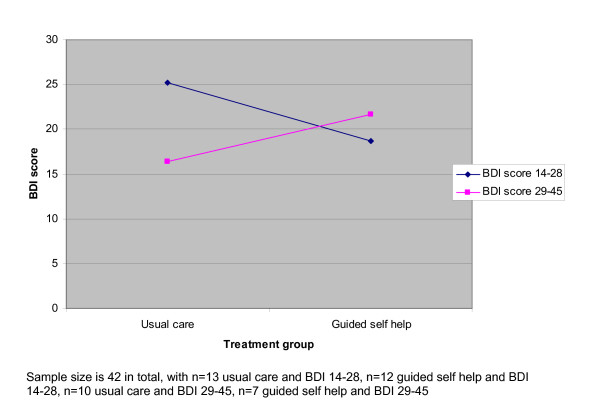
“Following the decision to change the BDI-II severity inclusion criteria for the trial from 14–28 to 14–45, a subgroup analysis was conducted to examine whether the treatment effect was moderated by initial severity [22].”
MethodThe PHQ-9: Validity of a brief depression severity measure
Kroenke, K., Spitzer, R. L., & Williams, J. B. W. (2001) · Journal of General Internal Medicine · doi:10.1046/j.1525-1497.2001.016009606.x · Cited by 44,910
Basics of Qualitative Research: Grounded Theory Procedures and Techniques.
Ellis, C., Strauss, A., & Corbin, J. (1992) · Contemporary Sociology · doi:10.2307/2074814 · Cited by 29,249
Diagnostic and Statistical Manual of Mental Disorders
(2012) · SpringerReference · doi:10.1007/springerreference_121117 · Cited by 20,570
Basics of Qualitative Research: Grounded Theory Procedures and Techniques
Long, D. R., Strauss, A., & Corbin, J. (1993) · The Modern Language Journal · doi:10.2307/328955 · Cited by 17,576
Qualitative research in health care: Analysing qualitative data
Pope, C. (2000) · BMJ · doi:10.1136/bmj.320.7227.114 · Cited by 8,131 · cited 1×
“Data were analysed using a framework analysis by KL and SH [ 14 ].”
MethodThe world health report 2001 - Mental health: new understanding, new hope
Sayers, J. G. (2001) · Europe PMC (PubMed Central) · doi:10.1590/s0042-96862001001100014 · Cited by 3,123
Mediators and Moderators of Treatment Effects in Randomized Clinical Trials
Kraemer, H. C., Wilson, G. T., Fairburn, C. G., & Agras, W. S. (2002) · Archives of General Psychiatry · doi:10.1001/archpsyc.59.10.877 · Cited by 2,562 · cited 1×
“The modest effectiveness of the intervention reported in this study does suggest that more effective targeting of the intervention may be required, and research looking at predictors or moderators of treatment effect should be a priority for the future [29].”
BackgroundConsensus development methods, and their use in clinical guideline development.
Murphy, Black, Lamping, McKee, Sanderson, Askham, & Marteau (1998) · Health Technology Assessment · doi:10.3310/hta2030 · Cited by 2,051 · cited 1×
“Therefore, the results of the reviews were combined with a consensus process [9,10] which sought to interpret the evidence and deal with the ambiguities that remained (the consensus process is detailed in Tables 2 and 3).”
BackgroundA component analysis of cognitive-behavioral treatment for depression.
Jacobson, N. S., Dobson, K. S., Truax, P. A., Addis, M. E., Koerner, K., Gollan, J. K., Gortner, E., & Prince, S. E. (1996) · Journal of Consulting and Clinical Psychology · doi:10.1037/0022-006x.64.2.295 · Cited by 1,413 · cited 1×
“Other designs, such as dismantling studies [24], may be more effective in the modelling phase, albeit at significantly increased cost.”
BackgroundBower, P., & Gilbody, S. (2005) · British Journal of Psychiatry · doi:10.1192/bjp.186.1.11 · Cited by 1,084 · cited 1×
“The adoption of a 'stepped care' system has been proposed to overcome problems of access [4].”
BackgroundSelf-citationConsensus development methods, and their use in clinical guideline development.
Murphy, M. P., Black, N. A., Lamping, D. L., et al. (1998) · PubMed · Cited by 965
Research methods used in developing and applying quality indicators in primary care
Campbell, S. M., Braspenning, J., Hutchinson, A., & Marshall, M. N. (2003) · BMJ · doi:10.1136/bmj.326.7393.816 · Cited by 720
Research methods used in developing and applying quality indicators in primary care
Campbell, S. M. (2002) · Quality and Safety in Health Care · doi:10.1136/qhc.11.4.358 · Cited by 687 · cited 1×
“Therefore, the results of the reviews were combined with a consensus process [9,10] which sought to interpret the evidence and deal with the ambiguities that remained (the consensus process is detailed in Tables 2 and 3).”
BackgroundPatient-Centered Medicine: A Professional Evolution
Laine, C. (1996) · JAMA · doi:10.1001/jama.1996.03530260066035 · Cited by 632 · cited 1×
“in line with the preferences and needs of patients)[6].”
BackgroundRosen, D. H., & Hoang, U. (2017) · Oxford Medicine Online · doi:10.1093/med/9780190628871.001.0001 · Cited by 617
Barkham, M., Margison, F., Leach, C., Lucock, M., Mellor-Clark, J., Evans, C., Benson, L., Connell, J., Audin, K., & McGrath, G. (2001) · Journal of Consulting and Clinical Psychology · doi:10.1037/0022-006x.69.2.184 · Cited by 532 · cited 1×
“The CORE-OM [ 18 ] is a 34-item measure of psychological distress and comprises four dimensions: subjective well-being, symptoms, functioning, and risk.”
MethodSelf-citationA rational model for assessing and evaluating complex interventions in health care
May, C. (2006) · BMC Health Services Research · doi:10.1186/1472-6963-6-86 · Cited by 447 · cited 1×
“ventions in routine clinical settings, which suggests that the extent to which new innovations in health settings become 'normalised' depends on whether they are able to be routinely embedded in everyday clinical practice [12].”
BackgroundBower, P., Gilbody, S., Richards, D., Fletcher, J., & Sutton, A. (2006) · British Journal of Psychiatry · doi:10.1192/bjp.bp.106.023655 · Cited by 429 · cited 2×
“sample sizes and power are generally limited, and the relationships between intervention factors and outcomes may not be causal) [23].”
BackgroundMethodSelf-citationGELLATLY, J., BOWER, P., HENNESSY, S., RICHARDS, D., GILBODY, S., & LOVELL, K. (2007) · Psychological Medicine · doi:10.1017/s0033291707000062 · Cited by 419 · cited 2×
“Systematic review and meta regression [7]”
BackgroundSelf-citationMeasurement and psychotherapy: Evidence-based practice and practice-based evidence
Margison, F. R., Barkham, M., Evans, C., McGrath, G., Clark, J. M., Audin, K., & Connell, J. (2000) · British Journal of Psychiatry · doi:10.1192/bjp.177.2.123 · Cited by 326 · cited 1×
“Fidelity refers to the extent to which delivery of the intervention is consistent with the treatment protocol and was delivered 'as planned' [11].”
MethodSelf-citationLovell, K., & Richards, D. (2000) · Behavioural and Cognitive Psychotherapy · doi:10.1017/s1352465800004070 · Cited by 216 · cited 1×
“Cognitive behaviour therapy (CBT) is a crucial treatment for depression [2], but access to CBT is characterised by long waiting lists [3].”
BackgroundSelf-citationEvaluation of a Modified Self-Report Measure of Social Adjustment
Cooper, P., Osborn, M., Gath, D., & Feggetter, G. (1982) · British Journal of Psychiatry · doi:10.1192/bjp.141.1.68 · Cited by 211 · cited 1×
“The Social Adjustment Scale SAS-SR [21] is a measure of social function.”
Gilbody, S. M., Richards, D. A., & Barkham, M. (2007) · Europe PMC (PubMed Central) · Cited by 206
Self-citationFairhurst, K., & Dowrick, C. (1996) · Journal of Health Services Research & Policy · doi:10.1177/135581969600100205 · Cited by 165
Short report: How often do UK primary care trials face recruitment delays?
Bower, P., Wilson, S., & Mathers, N. (2007) · Family Practice · doi:10.1093/fampra/cmm051 · Cited by 135 · cited 1×
“Recruitment to primary care trials in the United Kingdom is routinely problematic [30,31].”
BackgroundSelf-citationKhan, N., Bower, P., & Rogers, A. (2007) · British Journal of Psychiatry · doi:10.1192/bjp.bp.106.032011 · Cited by 116 · cited 1×
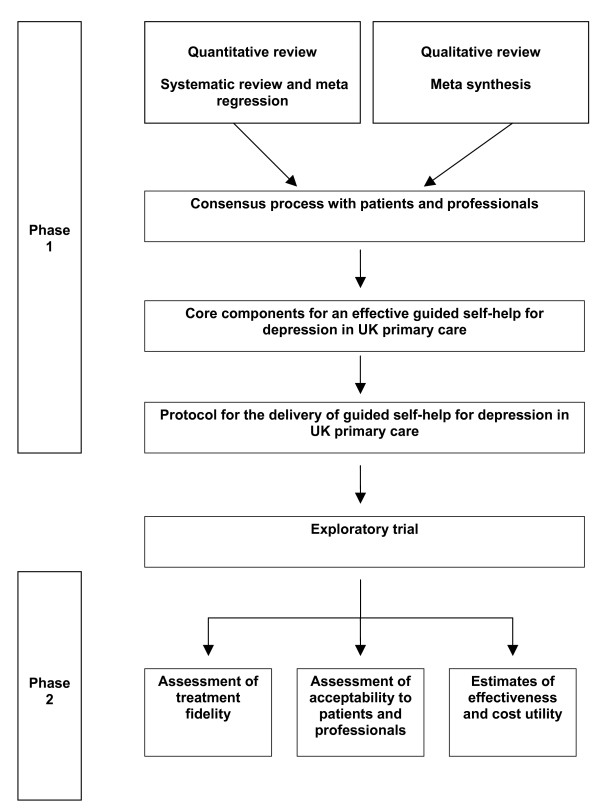
“Phase 1 involved quantitative (meta regression) and qualitative (meta synthesis) reviews to synthesise available evidence on the effectiveness of the intervention and identify key factors that may moderate effectiveness [7,8].”
BackgroundSelf-citationMason, V., Shaw, A., Wiles, N., Mulligan, J., Peters, T., Sharp, D., & Lewis, G. (2007) · Family Practice · doi:10.1093/fampra/cmm047 · Cited by 112 · cited 1×
“Although these may aid recruitment, some of the key barriers to the recruitment of depressed patients in primary relate to issues such as the low motivation of depressed patients to engage in extra activities, concerns among professionals about the inclusion of vulnerable patients into research studies and anxieties a…”
BackgroundMEAD, N., MacDONALD, W., BOWER, P., LOVELL, K., RICHARDS, D., ROBERTS, C., & BUCKNALL, A. (2005) · Psychological Medicine · doi:10.1017/s003329170500560x · Cited by 86 · cited 5×
“In the United Kingdom, guidelines for depression recommend the use of 'guided selfhelp' at step 2, between 'watchful waiting' and brief psychological therapy [2].”
ResultInfluentialSelf-citation(2003) · PubMed Central · Cited by 84
Self-citationDeveloping a U.K. protocol for collaborative care: a qualitative study
Richards, D. A., Lankshear, A. J., Fletcher, J., Rogers, A. E., Barkham, M., Bower, P., Gask, L., Gilbody, S. M., & Lovell, K. (2006) · General Hospital Psychiatry · doi:10.1016/j.genhosppsych.2006.03.005 · Cited by 84 · cited 1×
“Where innovative interventions are being modelled, primary qualitative work may be required [25].”
BackgroundSelf-citationSALKOVSKIS, P., RIMES, K., STEPHENSON, D., SACKS, G., & SCOTT, J. (2006) · Psychological Medicine · doi:10.1017/s0033291705006422 · Cited by 34 · cited 5×
“In the United Kingdom, guidelines for depression recommend the use of 'guided selfhelp' at step 2, between 'watchful waiting' and brief psychological therapy [2].”
ResultInfluentialThe UK Clinical Research Network--building a world-class infrastructure for clinical research
Darbyshire, J. H. (2008) · Lara D. Veeken · doi:10.1093/rheumatology/ken112 · Cited by 14 · cited 1×
“The United Kingdom has seen the introduction of new organisations and resources to assist with recruitment to trials [32].”
Background
Research works printed but not linked: 3
- Medical Research Council: A Framework for development and evaluation of RCTs for complex interventions to improve health London; 2000.
- Lovell K, Richards D: A Recovery Programme for Depression 2007 [http:/ /www.mentalhealthshop.org/products/rethink_publications/ recovery_booklet.html]. Rethink
- Beck A, Steer R, Brown G: Manual for Beck Depression Inventory-II (BDI- II) San Antonia, TX; 1996.
Cited by
Murray, E., Treweek, S., Pope, C., MacFarlane, A., Ballini, L., Dowrick, C., Finch, T., Kennedy, A., Mair, F., O'Donnell, C., et al. (2010) · BMC Medicine · doi:10.1186/1741-7015-8-63 · Cited by 1,478
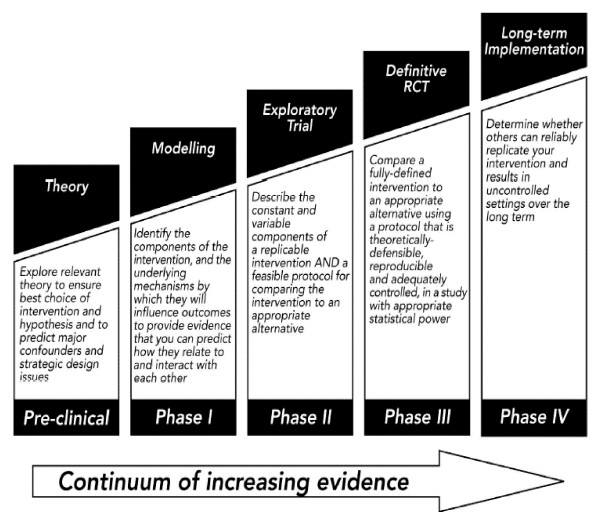
“The MRC framework has been extended and refined [2,3], emphasising, for example, that the early phases of a trial should be seen as iterative rather than linear [2,3]; that both intervention development and evaluation require a strong theoretical foundation [4]; that detailed descriptions of the intervention and the c…”
Self-citationBower, P., Kontopantelis, E., Sutton, A., Kendrick, T., Richards, D. A., Gilbody, S., Knowles, S., Cuijpers, P., Andersson, G., Christensen, H., et al. (2013) · BMJ · doi:10.1136/bmj.f540 · Cited by 341
Self-citationCoventry, P., Lovell, K., Dickens, C., Bower, P., Chew-Graham, C., McElvenny, D., Hann, M., Cherrington, A., Garrett, C., Gibbons, C. J., et al. (2015) · BMJ · doi:10.1136/bmj.h638 · Cited by 325
Self-citationO’Cathain, A., Thomas, K. J., Drabble, S. J., Rudolph, A., Goode, J., & Hewison, J. (2014) · Health Technology Assessment · doi:10.3310/hta18380 · Cited by 159
Coull, G., & Morris, P. G. (2011) · Psychological Medicine · doi:10.1017/s0033291711000900 · Cited by 126
Metadata
- Authors
- Lovell, K., Bower, P., Richards, D., Barkham, M., Sibbald, B., Roberts, C., Davies, L., Rogers, A., Gellatly, J., & Hennessy, S.
- Affiliations
- University of Manchester (GB)
- University of Exeter (GB)
- University of Sheffield (GB)
- University of York (GB)
- Corresponding author
- Lovell, Karina
- ORCID
- Venue
- BMC Psychiatry
- Published
- 2008-11-24
- Volume
- 8
- Issue
- 1
- Pages
- 91-91
- ISSN
- 1471-244X (ISSN-L)
- PMC
- PMC2596776
- OpenAlex
- W2066290039
- Cited by
- 73
- References
- 35
- Citations by year
- 2026: 2 · 2025: 3 · 2024: 1 · 2023: 4 · 2022: 3 · 2021: 6 · 2020: 2 · 2019: 5 · 2018: 7 · 2017: 7 · 2016: 1 · 2015: 2 · 2014: 3 · 2013: 7 · 2012: 7
- FWCI
- 5.62
- Type
- journal article
- Language
- en
- Open access
- gold
- doi.org
- Licence
- cc-by
- creativecommons.org/licenses/by/2.0 (tdm)
- Locations
- BMC Psychiatry (publishedVersion, cc-by)
- PubMed Central (publishedVersion, cc-by)
- PubMed (publishedVersion)
- Open Research Exeter (University of Exeter) (publishedVersion, cc-by)
- Research Explorer (The University of Manchester) (publishedVersion)
- DOAJ (DOAJ: Directory of Open Access Journals) (submittedVersion, cc-by-sa)
- ePrints Soton (University of Southampton) (submittedVersion)
- White Rose Research Online (University of Leeds, The University of Sheffield, University of York) (submittedVersion, cc-by)
- Figshare (submittedVersion)
- Funders
- Medical Research Council
- Topics
- Social Sciences › Psychology › Applied Psychology › Digital Mental Health Interventions
- Social Sciences › Psychology › Experimental and Cognitive Psychology › Anxiety, Depression, Psychometrics, Treatment, Cognitive Processes
- Health Sciences › Health Professions › General Health Professions › Health Policy Implementation Science
- Keywords
- guided self-help, depression, primary care, intervention development, intervention fidelity, acceptability, patient-centered interventions, meta-synthesis, consensus building, intervention effect size
- MeSH terms
- Adult, Depression, Educational Status, Employment, Ethnicity, Female, United Kingdom, Humans, Interviews as Topic, Male, Middle Aged, Models, Psychological, Perception, Primary Health Care, Professional-Patient Relations, Psychological Theory, Self Care, Marital Status, Patient Selection, Young Adult
About these checks
Registry, retraction, Cites and statistics results are computed, not judged, with one exception: a printed reference that no index lists is read once by a model before it counts as a citation error. Claims are extracted by a model and kept only when their quote appears verbatim in the text; each cited source is then checked, with a model’s help, for whether it says what the claim relies on. Those verdicts can be wrong — read the claim’s quote and the cited source before relying on one.
Statistics and arithmetic are recomputed, not judged.
Confidence bands are shown only for fields calibrated on our annotated test set. None is calibrated yet, so no band is shown.
What counts as a claim ›How we measure confidence ›How we check this ›
Are you an author, or do you see a problem with this page? Request a review
Data sources
Bibliographic data: Semantic Scholar, OpenAlex, Crossref.
Contains information from the Semantic Scholar Academic Graph Datasets, made available under the ODC Attribution License (ODC-BY 1.0).
Semantic Scholar’s data is described in: Kinney, R., et al. (2023). The Semantic Scholar Open Data Platform. arXiv:2301.10140.
