

Accumulation of major depressive episodes over time in a prospective study indicates that retrospectively assessed lifetime prevalence estimates are too low
Open accessThe DOI matches its Crossref record; 20 of the 21 references it cites were found in a registry or an index.
Abstract
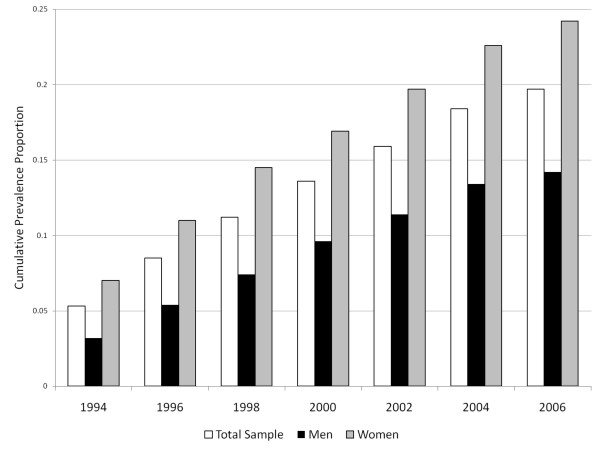
BACKGROUND: Most epidemiologic studies concerned with Major Depressive Disorder have employed cross-sectional study designs. Assessment of lifetime prevalence in such studies depends on recall of past depressive episodes. Such studies may underestimate lifetime prevalence because of incomplete recall of past episodes (recall bias). An opportunity to evaluate this issue arises with a prospective Canadian study called the National Population Health Survey (NPHS). METHODS: The NPHS is a longitudinal study that has followed a community sample representative of household residents since 1994. Follow-up interviews have been completed every two years and have incorporated the Composite International Diagnostic Interview short form for major depression. Data are currently available for seven such interview cycles spanning the time frame 1994 to 2006. In this study, cumulative prevalence was calculated by determining the proportion of respondents who had one or more major depressive episodes during this follow-up interval. RESULTS: The annual prevalence of MDD ranged between 4% and 5% of the population during each assessment, consistent with existing literature. However, 19.7% of the population had at least one major depressive episode during follow-up. This included 24.2% of women and 14.2% of men. These estimates are nearly twice as high as the lifetime prevalence of major depressive episodes reported by cross-sectional studies during same time interval. CONCLUSION: In this study, prospectively observed cumulative prevalence over a relatively brief interval of time exceeded lifetime prevalence estimates by a considerable extent. This supports the idea that lifetime prevalence estimates are vulnerable to recall bias and that existing estimates are too low for this reason.
Overview
The claims and statistics of this paper haven’t been checked yet.
Free: it reads the open-access text and checks the first 5 claims that cite a source we can check. Create a free account to check every claim.
Integrity signals
Registry
Cites
Statistics
Figures
Verification
Claims the paper makes
The claims and statistics of this paper haven’t been checked yet.
Free: it reads the open-access text and checks the first 5 claims that cite a source we can check. Create a free account to check every claim.
Claims other papers make about this one
Each is checked against this paper’s own text: does it say what the citing paper says it does?
The check wasn’t confident either way, so it gives no verdict — never disputed.
In the citing paper
“MDD is associated with smaller volumes of brain structures such as the hippocampus as well as changes in either activation or connectivity of brain networks such as the cognitive control network and the affective-salience network 14”
From Major depressive disorder (2016) · cites this paper as [14]
Experimental — accuracy not yet measuredThe check wasn’t confident either way, so it gives no verdict — never disputed.
In the citing paper
“changes in either activation or connectivity of brain networks such as the cognitive control network and the affective-salience network 14”
From Major depressive disorder (2016) · cites this paper as [14]
Experimental — accuracy not yet measured
Self-check
Percentages, sums and reported differences re-computed from the paper’s own numbers.
The self-check needs the paper’s full text.
Citations
Cites
Kessler, R. C., Berglund, P., Demler, O., Jin, R., Koretz, D., Merikangas, K. R., Rush, A. J., Walters, E. E., & Wang, P. S. (2003) · JAMA · doi:10.1001/jama.289.23.3095 · Cited by 7,988 · cited 1×
“Higher values have been reported in the US: 16–18% [3,4].”
Diagnostic and Statistical Manual of Mental Disorders ( DSM ‐ IV ‐ TR )
Segal, D. L. (2010) · The Corsini Encyclopedia of Psychology · doi:10.1002/9780470479216.corpsy0271 · Cited by 4,666
The world health organization composite international diagnostic interview short-form (CIDI-SF)
Kessler, R. C., Andrews, G., Mroczek, D., Ustun, B., & Wittchen, H. (1998) · International Journal of Methods in Psychiatric Research · doi:10.1002/mpr.47 · Cited by 2,242 · cited 10×
“The CIDI-SFMD uses a point-based scoring algorithm that incorporates the number of symptom-based criteria fulfilled and the necessity for at least one of two key symptoms (depressed mood and loss of interest or pleasure) in keeping with the Diagnostic and Statistical Manual of Mental Disorders (DSM-IV) [11].”
InfluentialThe ESEMeD/MHEDEA 2000 Investigators, Alonso, J., Angermeyer, M. C., Bernert, S., Bruffaerts, R., Brugha, T. S., Bryson, H., de Girolamo, G., de Graaf, R., Demyttenaere, K., et al. (2004) · Acta Psychiatrica Scandinavica · doi:10.1111/j.1600-0047.2004.00327.x · Cited by 1,819 · cited 1×
“methodologically comparable European study [2].”
(1994) · American Journal of Psychiatry · doi:10.1176/ajp.151.7.979 · Cited by 1,485 · cited 1×
“Higher values have been reported in the US: 16–18% [3,4].”
Prevalence and incidence studies of anxiety disorders: A systematic review of the literature
Somers, J. M., Goldner, E. M., Waraich, P., & Hsu, L. (2006) · The Canadian Journal of Psychiatry · doi:10.1177/070674370605100206 · Cited by 1,114 · cited 1×
“Furthermore, incidence estimates from the CIDI-SFMD [19,20] are consistent with those of a systematic review of high quality studies by Waraich et al. [ 21 ].”
Adequacy of Treatment for Serious Mental Illness in the United States
Wang, P. S., Demler, O., & Kessler, R. C. (2002) · American Journal of Public Health · doi:10.2105/ajph.92.1.92 · Cited by 581 · cited 1×
“However, any such effects must be modest in magnitude, as the CIDI-SFMD has produced credible estimates during applications in Canada [13,14], the US [15,16] and elsewhere [17].”
Prevalence and Incidence Studies of Mood Disorders: A Systematic Review of the Literature
Waraich, P., Goldner, E. M., Somers, J. M., & Hsu, L. (2004) · The Canadian Journal of Psychiatry · doi:10.1177/070674370404900208 · Cited by 522
Descriptive Epidemiology of Major Depression in Canada
Patten, S. B., Wang, J. L., Williams, J. V., Currie, S., Beck, C. A., Maxwell, C. J., & el-Guebaly, N. (2006) · The Canadian Journal of Psychiatry · doi:10.1177/070674370605100204 · Cited by 443
Self-citationThe Canadian Community Health Survey: Mental Health and Well-Being
Gravel, R., & Béland, Y. (2005) · The Canadian Journal of Psychiatry · doi:10.1177/070674370505001002 · Cited by 302 · cited 1×
“2 used an adaptation of the World Mental Health version of the CIDI [10].”
Research works printed but not linked: 2
- 13. D'Arcy C, Kosteniuk J, Smith P, Nilson R, Cholowsky M, Bowen R, Butler-Jones D: Depression in Saskatchewan: An analysis of the Saskatchewan Population Health and Dynamics Survey 1999-2000. Saskatchewan 2004.
- 17. Beaudet MP: Depression. Health Reports 1996, 7(4):11-24.
Cited by
The Epidemiology of Depression Across Cultures
Kessler, R. C., & Bromet, E. J. (2013) · Annual Review of Public Health · doi:10.1146/annurev-publhealth-031912-114409 · Cited by 2,657
“Longitudinal data collection would be required to document such a difference rigorously (97, 135).”
Otte, C., Gold, S. M., Penninx, B. W., Pariante, C. M., Etkin, A., Fava, M., Mohr, D. C., & Schatzberg, A. F. (2016) · Nature Reviews Disease Primers · doi:10.1038/nrdp.2016.65 · Cited by 2,269
Cross-national epidemiology of DSM-IV major depressive episode
Bromet, E., Andrade, L. H., Hwang, I., Sampson, N. A., Alonso, J., de Girolamo, G., de Graaf, R., Demyttenaere, K., Hu, C., Iwata, N., et al. (2011) · BMC Medicine · doi:10.1186/1741-7015-9-90 · Cited by 2,221
“Longitudinal data collection would be required to document such a difference rigorously [28,29].”
Conradi, H. J., Ormel, J., & de Jonge, P. (2011) · Psychological Medicine · doi:10.1017/s0033291710001911 · Cited by 515
“This means that, depending on the specific moment during the episode that patients are assessed, the presence of symptoms may be over-or underestimated (Patten, 2009).”
de Graaf, R., ten Have, M., van Gool, C., & van Dorsselaer, S. (2012) · Social Psychiatry and Psychiatric Epidemiology · doi:10.1007/s00127-010-0334-8 · Cited by 390
“be a source of considerable bias in recording lifetime disorders resulting in conservative prevalence estimates [32–34], but this is less probable for 12-month disorders.”
Omega-3 fatty acids and depression: scientific evidence and biological mechanisms
Grosso, G., Galvano, F., Marventano, S., Malaguarnera, M., Bucolo, C., Drago, F., & Caraci, F. (2014) · Oxidative Medicine and Cellular Longevity · doi:10.1155/2014/313570 · Cited by 351
“Furthermore, more recent studies reported that prospectively observed cumulative prevalence of depression resulted nearly twice as high as the lifetime prevalence of major depressive episodes reported by cross-sectional studies during the same time period [14].”
Health anxiety in Australia: prevalence, comorbidity, disability and service use
Sunderland, M., Newby, J. M., & Andrews, G. (2013) · British Journal of Psychiatry · doi:10.1192/bjp.bp.111.103960 · Cited by 280
Kessler, R. C., Avenevoli, S., McLaughlin, K. A., Green, J. G., Lakoma, M. D., Petukhova, M., Pine, D. S., Sampson, N. A., Zaslavsky, A. M., & Merikangas, K. R. (2012) · Psychological Medicine · doi:10.1017/s0033291712000025 · Cited by 279
“limitation presumably reduced lifetime prevalence estimates (Patten, 2009 ; Moffitt et al. 2010), distorted AOO reports (Simon & von Korff, 1995), and could have biased estimates of predictive associations differentially across disorders depending on betweendisorder differences in failure to recall lifetime occurrence…”
Depressive disorders and the menopause transition
Llaneza, P., García-Portilla, M. P., Llaneza-Suárez, D., Armott, B., & Pérez-López, F. R. (2012) · Maturitas · doi:10.1016/j.maturitas.2011.11.017 · Cited by 230
“Depression is the most common of all the psychiatric disorers, and its incidence is increasing (or at least had previously een under-reported) [1].”
Recurrence in major depression: A conceptual analysis
Monroe, S. M., & Harkness, K. L. (2011) · Psychological Review · doi:10.1037/a0025190 · Cited by 225
More treatment but no less depression: The treatment-prevalence paradox
Ormel, J., Hollon, S. D., Kessler, R. C., Cuijpers, P., & Monroe, S. M. (2022) · Clinical Psychology Review · doi:10.1016/j.cpr.2021.102111 · Cited by 213
The mental health of female sex workers
Rössler, W., Koch, U., Lauber, C., Hass, A. ‐., Altwegg, M., Ajdacic‐Gross, V., & Landolt, K. (2010) · Acta Psychiatrica Scandinavica · doi:10.1111/j.1600-0447.2009.01533.x · Cited by 206
“Another explanation for equally high rates in the Zurich study and the sample of sex workers may be the prospective instead of retrospective assessment used by the Zurich study, which usually results in higher prevalence rates (36).”
Tegethoff, M., Belardi, A., Stalujanis, E., & Meinlschmidt, G. (2015) · The Journal of Pain · doi:10.1016/j.jpain.2015.06.009 · Cited by 182
Sex differences in psychiatric disorders: what we can learn from sex chromosome aneuploidies
Green, T., Flash, S., & Reiss, A. L. (2019) · Neuropsychopharmacology · doi:10.1038/s41386-018-0153-2 · Cited by 169
Alcohol intake, wine consumption and the development of depression: the PREDIMED study
Gea, A., Beunza, J. J., Estruch, R., Sánchez-Villegas, A., Salas-Salvadó, J., Buil-Cosiales, P., Gómez-Gracia, E., Covas, M.-I., Corella, D., Fiol, M., et al. (2013) · BMC Medicine · doi:10.1186/1741-7015-11-192 · Cited by 144
“Unipolar depression is the most prevalent mental disorder in the world and it is increasing steadily [2].”
An adaptationist perspective on the etiology of depression
Durisko, Z., Mulsant, B. H., & Andrews, P. W. (2015) · Journal of Affective Disorders · doi:10.1016/j.jad.2014.09.032 · Cited by 140
“, 2005), with prospective longitudinal studies showing rates reaching up to 41% (Moffitt et al., 2010; Patten, 2009).”
The Effect of Major Depression on Sexual Function in Women
Fabre, L. F., & Smith, L. C. (2012) · The Journal of Sexual Medicine · doi:10.1111/j.1743-6109.2011.02445.x · Cited by 111
Management of depressive symptoms in peri- and postmenopausal women: EMAS position statement
Stute, P., Spyropoulou, A. C., Karageorgiou, V., Cano, A., Bitzer, J., Ceauşu, I., Chedraui, P. A., Durmuşoğlu, F., Erkkola, R. U., Goulis, D. G., et al. (2019) · Maturitas · doi:10.1016/j.maturitas.2019.11.002 · Cited by 110
“It has been suggested that longitudinal follow-up may reveal an even higher prevalence [9].”
de Graaf, R., van Dorsselaer, S., Tuithof, M., & ten Have, M. (2013) · Comprehensive Psychiatry · doi:10.1016/j.comppsych.2013.05.012 · Cited by 113
“This can be a source of considerable bias in recording lifetime disorders resulting in conservative prevalence estimates [26–28], but this is less probable for 12-month disorders.”
de Graaf, R., ten Have, M., Tuithof, M., & van Dorsselaer, S. (2013) · Journal of Affective Disorders · doi:10.1016/j.jad.2013.01.009 · Cited by 101
Graham, N., Ward, J., Mackay, D., Pell, J. P., Cavanagh, J., Padmanabhan, S., & Smıth, D. J. (2019) · BMJ Open · doi:10.1136/bmjopen-2018-024433 · Cited by 87
“Our findings expand on previous research from UK Biobank looking at CVD in those with BD and MDD. 27 Graham N, et al .”
InfluentialTrambaiolli, L. R., Kohl, S. H., Linden, D. E. J., & Mehler, D. M. A. (2021) · Neuroscience & Biobehavioral Reviews · doi:10.1016/j.neubiorev.2021.02.015 · Cited by 88
Polymorphisms of Estrogen Receptors and Risk of Depression: Therapeutic Implications
Ryan, J. L., & Ancelin, M. (2012) · Drugs · doi:10.2165/11635960-000000000-00000 · Cited by 80
“[3, 4] It is considered a major public health problem, not only due to its high prevalence, but also because the frequency of comorbidity is high, [5-7] and this further worsens”
O'Donnell, S., Vanderloo, S., McRae, L., Onysko, J., Patten, S. B., & Pelletier, L. (2016) · Epidemiology and Psychiatric Sciences · doi:10.1017/s2045796015000463 · Cited by 66
“Furthermore, the pattern of declining age-specific self-reported prevalence is consistent with studies that use diagnostic instruments such as the Composite International Diagnostic Interview which do not require disclosure of a diagnosis, only reporting of symptoms (Patten, 2009; Simpson et al. 2012).”
Self-citationDoes Attention Deficit Hyperactivity Disorder increase the risk of suicide attempts?
Agosti, V., Chen, Y., & Levin, F. R. (2011) · Journal of Affective Disorders · doi:10.1016/j.jad.2011.05.008 · Cited by 65
“We suspect that this was due to the unreliability of retrospective self-reports regarding past psychopathology, which has been observed in cross-sectional epidemiological surveys (Andrews et al., 1999;Merikangas et al., 2007; Patten, 2003, 2009).”
Recall of recent and more remote depressive episodes in a prospective cohort study
Patten, S. B., Williams, J. V. A., Lavorato, D. H., Bulloch, A. G. M., D’Arcy, C., & Streiner, D. L. (2012) · Social Psychiatry and Psychiatric Epidemiology · doi:10.1007/s00127-011-0385-5 · Cited by 64
“To correct for bias resulting from unequal selection probabilities and to ensure accurate assessment of variance, Statistics Canada recommends a bootstrap procedure that uses a set of 500 replicate sampling weights.”
InfluentialSelf-citationMeyer, J. H. (2012) · Clinical Pharmacology & Therapeutics · doi:10.1038/clpt.2011.285 · Cited by 64
Laucht, M., Treutlein, J., Blomeyer, D., Buchmann, A. F., Schmidt, M. H., Esser, G., Jennen-Steinmetz, C., Rietschel, M., & Banaschewski, T. (2012) · European Neuropsychopharmacology · doi:10.1016/j.euroneuro.2012.06.002 · Cited by 63
A longitudinal assessment of alcohol intake and incident depression: the SUN project
Gea, A., Martinez-Gonzalez, M. A., Toledo, E., Sanchez-Villegas, A., Bes-Rastrollo, M., Nuñez-Cordoba, J. M., Sayon-Orea, C., & Beunza, J. J. (2012) · BMC Public Health · doi:10.1186/1471-2458-12-954 · Cited by 52
Zuidersma, M., Thombs, B. D., & de Jonge, P. (2011) · Psychotherapy and Psychosomatics · doi:10.1159/000322633 · Cited by 54
“found that depression assessed within 2 weeks after the cardiac event was less strongly associated with cardiac prognosis than depression assessed later than 2 weeks after the cardiac event. In the reviewed studies, however, timing of depression assessment did not seem to have affected the results. Most studies assess…”
Examining variation in depressive symptoms over the life course: a latent class analysis
Mezuk, B. R., & Kendler, K. S. (2012) · Psychological Medicine · doi:10.1017/s003329171200027x · Cited by 53
“The first is recall bias, such that older adults fail to report earlier depressive episodes, which biases lifetime prevalence downwards (Giuffra & Risch, 1994 ; Wells & Horwood, 2004 ; Patten, 2009).”
Major depression epidemiology from a diathesis-stress conceptualization
Patten, S. B. (2013) · BMC Psychiatry · doi:10.1186/1471-244x-13-19 · Cited by 57
“A set of parameters was calibrated by trial and error to produce roughly the expected pattern of 10 year incidence (about 13%) [14], mean episode counts over 10 years (between 2 and 3 episodes for each agent having an episode) [12] and a mean first episode duration of about 11 months.”
Self-citationIs There a High-Risk Subtype of Depression in Patients with Coronary Heart Disease?
Carney, R. M., & Freedland, K. E. (2012) · Current Psychiatry Reports · doi:10.1007/s11920-011-0247-6 · Cited by 41
Why is major depression prevalence not changing?
Patten, S. B., Williams, J. V. A., Lavorato, D. H., Bulloch, A. G. M., Wiens, K., & Wang, J. (2015) · Journal of Affective Disorders · doi:10.1016/j.jad.2015.09.002 · Cited by 49
Self-citationAdverse reactions to duloxetine in depression
Bitter, I., Filipovits, D., & Czobor, P. (2011) · Expert Opinion on Drug Safety · doi:10.1517/14740338.2011.582037 · Cited by 38
“Depression is one of the most prevalent mental disorders, with a reported lifetime prevalence range of 10 -- 18%, which still might be an underestimation [1].”
Major Depression Diagnoses Among Patients With Systemic Sclerosis: Baseline and One‐Month Followup
Thombs, B. D., Jewett, L. R., Kwakkenbos, L., Hudson, M., & Baron, M. G. (2014) · Arthritis Care & Research · doi:10.1002/acr.22447 · Cited by 37
The Role of the PACAP Signaling System in Depression
Pinhasov, A., Nesher, E., Gross, M., Turgeman, G., Kreinin, A., & Yadid, G. (2011) · Current Pharmaceutical Design · doi:10.2174/138161211795589328 · Cited by 40
“[91] Patten SB.”
Holm, A. L., & Severinsson, E. (2012) · International Journal of Mental Health Nursing · doi:10.1111/j.1447-0349.2012.00827.x · Cited by 36
“Patten (2009) found that the estimates in a community sample were nearly twice as high (l9.”
Grenon, R., Tasca, G. A., Cwinn, E., Coyle, D., Sumner, A., Gick, M. L., & Bissada, H. (2010) · Women s Health Issues · doi:10.1016/j.whi.2010.07.004 · Cited by 44
“Over two thirds of these women with BED had a lifetime history of an affective disorder, which is more than three times the rate for women in general (Patton, 2009).”
Zuidersma, M., Ormel, J., Conradi, H. J., & de Jonge, P. (2011) · Psychological Medicine · doi:10.1017/s0033291711001784 · Cited by 36
“The presence of previous depressive episodes in the lifetime is often underestimated, especially by subjects with better current mood (Kendler et al. 2001 ; Wells & Horwood, 2004 ; Patten, 2009).”
The complexity of postpartum mental health and illness: a critical realist study
Sword, W. A., Clark, A. M., Hegadoren, K., Brooks, S., & Kingston, D. E. (2011) · Nursing Inquiry · doi:10.1111/j.1440-1800.2011.00560.x · Cited by 54
Fathers with PTSD and depression in pregnancies complicated by preterm preeclampsia or PPROM
Stramrood, C. A. I., Doornbos, B., Wessel, I., van Geenen, M., Aarnoudse, J. G., van den Berg, P. P., Schultz, W. C. M. W., & van Pampus, M. G. (2012) · Archives of Gynecology and Obstetrics · doi:10.1007/s00404-012-2611-0 · Cited by 38
“Intuitively, one may assume that women will experience more symptoms, as (a) the lifetime prevalence rates of PTSD and depression are higher in women than in men [53, 54]; (b) women are 2.”
Köhne, A. C. J., & Isvoranu, A. (2021) · Frontiers in Psychology · doi:10.3389/fpsyg.2021.680805 · Cited by 33
“Lifetime prevalence of MD in adults varies between 16% and 25% (e.g., Patten, 2009).”
Sunderland, M., Anderson, T. M., Sachdev, P. S., Titov, N., & Andrews, G. (2014) · Australian & New Zealand Journal of Psychiatry · doi:10.1177/0004867414538674 · Cited by 31
“Researchers have attempted to investigate the extent of recall bias by comparing prevalence estimates generated from prospective studies with estimates generated from retrospective studies and have demonstrated substantially higher estimates using prospective designs (Moffitt et al., 2010; Patten, 2009).”
The efficacy of agomelatine in previously-treated depressed patients
Kasper, S. F., & Hajak, G. (2013) · European Neuropsychopharmacology · doi:10.1016/j.euroneuro.2013.05.010 · Cited by 28
“Approximately 20% of the general population in Europe as well as the United States and Canada are affected by a depressive episode at some time in their life (Kessler et al., 2010; Patten, 2009; Wittchen et al., 2011).”
Sareen, J., Bolton, J. M., Mota, N. P., Afifi, T. O., Enns, M. W., Taillieu, T., Stewart-Tufescu, A., El-Gabalawy, R. M., Marrie, R. A., Richardson, J. D., et al. (2021) · The Canadian Journal of Psychiatry · doi:10.1177/07067437211000636 · Cited by 44
North, C. S., Pfefferbaum, B. J., Hong, B. A., Gordon, M., Kim, Y., Lind, L. M., & Pollio, D. E. (2010) · Journal of Occupational and Environmental Medicine · doi:10.1097/jom.0b013e3181e48b01 · Cited by 27
Monshouwer, K., ten Have, M., Tuithof, M., van Dorsselaer, S., Bak, M., Gunter, N., Delespaul, P., van Os, J., & de Graaf, R. (2022) · Psychological Medicine · doi:10.1017/s0033291722002690 · Cited by 27
“Especially the validity of lifetime diagnoses has been questioned on grounds of difficulty of accurate recall, resulting in underreporting of lifetime symptoms at baseline (Moffitt et al., 2010; Patten, 2009; Wittchen, 1989).”
Janacsek, K., Borbély-Ipkovich, E., Németh, D., & Gonda, X. (2017) · Progress in Neuro-Psychopharmacology and Biological Psychiatry · doi:10.1016/j.pnpbp.2017.09.021 · Cited by 28
“MDE is one of the most common psychiatric diagnoses (Patten, 2009) characterized by persistently low level of mood that affects interest in daily activities, energy level, sleep, psychomotor functioning (APA, 2000), and more broadly, social and occupational functioning (Godard, Grondin, Baruch, &…”
Psychiatric diagnosis by telephone: is it an opportunity?
Muskens, E. M. H., Lucassen, P., Groenleer, W., van Weel, C., Oude Voshaar, R., & Speckens, A. (2014) · Social Psychiatry and Psychiatric Epidemiology · doi:10.1007/s00127-014-0861-9 · Cited by 24
“For example, Segal [41] reports test–retest reliabilities (kappa) of the SCID interview of 0.”
Rosta, J., & Aasland, O. G. (2013) · BMC Psychiatry · doi:10.1186/1471-244x-13-322 · Cited by 25
“[35-37] We have shown that some doctors reported suicidal f eelings ever in 2000, 25 but never in 2010.”
InfluentialBromet, E. J., Andrade, L. H., Bruffaerts, R., & Williams, D. R. (2017) · Cambridge University Press eBooks · doi:10.1017/9781316336168.004 · Cited by 27
Vittengl, J. R., Clark, L. A., Thase, M. E., & Jarrett, R. B. (2015) · Psychotherapy · doi:10.1037/pst0000021 · Cited by 22
Coninck, D. D., Matthijs, K., & Luyten, P. (2021) · Journal of Clinical Psychology · doi:10.1002/jclp.23149 · Cited by 26
Affective enhancement of working memory is maintained in depression.
Schweizer, S., Navrady, L. B., Breakwell, L., Howard, R. M., Golden, A.-M. J., Werner‐Seidler, A., & Dalgleish, T. (2018) · Emotion · doi:10.1037/emo0000306 · Cited by 18
Sexual Dysfunction Induced by Antidepressants—A Pharmacovigilance Study Using Data from VigiBaseTM
Zeiss, R., Malejko, K., Connemann, B. J., Gahr, M., Durner, V., & Graf, H. (2024) · Pharmaceuticals · doi:10.3390/ph17070826 · Cited by 20
“With an annual prevalence of about 4 to 5% and an estimated lifetime prevalence of almost 20%, MDD is not only disabling but also very common [2].”
Иванов, С. В., & Samushiya, M. A. (2014) · Neuropsychiatric Disease and Treatment · doi:10.2147/ndt.s58994 · Cited by 14
Vittengl, J. R., Clark, L. A., Thase, M. E., & Jarrett, R. B. (2017) · Psychiatry Research · doi:10.1016/j.psychres.2017.03.032 · Cited by 13
“For example, the current longitudinal assessment of relapse and recurrence likely captures more depressive episodes than do cross-sectional methods (Patten, 2009), and so may relate differently to patient characteristics.”
Online implementation of an event history calendar with formr: A tutorial
Wieczorek, L. L., Tata, C., Penke, L., & Gerlach, T. M. (2020) · Personal Relationships · doi:10.1111/pere.12305 · Cited by 13
Smoking and psychiatric disorders: Have subthreshold disorders been overlooked?
Landolt, K., Ajdacic‐Gross, V., Angst, J., Merikangas, K. R., Gamma, A., Gutzwiller, F., & Rössler, W. (2010) · Nicotine & Tobacco Research · doi:10.1093/ntr/ntq023 · Cited by 12
Vittengl, J. R., & Jarrett, R. B. (2013) · Wiley eBooks · doi:10.1002/9781118528563.wbcbt48 · Cited by 15
DIP: Natural history model for major depression with incidence and prevalence
Yildirim, M., Gaynes, B. N., Keskinocak, P., Pence, B. W., & Swann, J. (2021) · Journal of Affective Disorders · doi:10.1016/j.jad.2021.09.079 · Cited by 12
Mood matters: a national survey on attitudes to depression
Kelly, J. R., Cosgrove, M., Judd, C., Scott, K., Loughlin, A. M., & O’Keane, V. (2019) · Irish Journal of Medical Science (1971 -) · doi:10.1007/s11845-019-02014-7 · Cited by 10
Hettema, J. M. (2010) · FOCUS The Journal of Lifelong Learning in Psychiatry · doi:10.1176/foc.8.3.foc316 · Cited by 11
Hirtz, R., Hölling, H., & Grasemann, C. (2022) · Thyroid · doi:10.1089/thy.2022.0205 · Cited by 13
Szabo, S. T., & Nemeroff, C. B. (2014) · Elsevier eBooks · doi:10.1016/b978-0-12-410529-4.00103-0 · Cited by 6
Kadınlarda cinsel sıkıntının depresyon, anksiyete ve stres üzerine etkisi
Bal, Z., Gökbulut, N., & Uçar, T. (2022) · Androloji Bülteni · doi:10.24898/tandro.2022.41713 · Cited by 6
Chan, T., Cohen, A., & de Lusignan, S. (2010) · Journal of Innovation in Health Informatics · doi:10.14236/jhi.v18i4.782 · Cited by 6
Synthesis through Simulation: Insights on the Epidemiology of Mood and Anxiety Disorders in Canada
Patten, S. B., Lin, E. H. B., Martens, P. J., Stiff, D., Smetanin, P., & Adair, C. E. (2012) · The Canadian Journal of Psychiatry · doi:10.1177/070674371205701209 · Cited by 7
Self-citationHan, Z., Gan, Z., Han, H., Chen, J., Li, K., & Guan, N. (2014) · The Journal of Sexual Medicine · doi:10.1111/jsm.12385 · Cited by 7
Gillespie, C. F., Szabo, S. T., & Nemeroff, C. B. (2020) · Elsevier eBooks · doi:10.1016/b978-0-12-813866-3.00036-9 · Cited by 7
Thunström, S., Wide, U., Landin‐Wilhelmsen, K., Berntorp, K. E., Bryman, I., Krantz, E., Wahlberg, J., Ekman, B., Isakson, M., Karlsson, A., et al. (2024) · Translational Psychiatry · doi:10.1038/s41398-024-02937-5 · Cited by 3
Gordon, A. M., Nian, P. P., Baidya, J., & Mont, M. A. (2025) · Hip International · doi:10.1177/11207000251317655 · Cited by 3
Congiu, P., Carta, M. G., Perra, A., Cantone, E., Lorrai, S., Pintus, E., Tusconi, M., Cossu, G., Redolfi, S., & Sancassiani, F. (2024) · Journal of Clinical Medicine · doi:10.3390/jcm13164870 · Cited by 4
“Furthermore, it is recognized that lifetime diagnoses (such as those of bipolar disorder or major depressive disorder) lead to the problem of recall bias in epidemiological studies [19,20].”
Klungsøyr, O., Sexton, J., Sandanger, I., & Nygård, J. F. (2013) · Journal of Applied Statistics · doi:10.1080/02664763.2012.756859 · Cited by 3
“Forgetting of episodes is well documented [1,23,27,28,45] and might be the main reason for the surprisingly strong cohort effect in lifetime prevalence estimates, where studies repeatedly find that younger generations have higher rates than older generations, despite a shorter time of risk [7,14,15].”
Li, X., Sun, N., Xu, Y. J., Wang, Y., Li, S., Du, Q., Peng, J., Luo, J., & Zhang, K. (2012) · PubMed Central · doi:10.3969/j.issn.1673-5374.2012.25.010 · Cited by 4
“Major depressive disorder is characterized clinically by retardation, anxiety, insomnia, and cognitive disturbance [1-4] .”
Novel Phenotypes Detectable with PET in Mood Disorders
Meyer, J. H. (2017) · PET Clinics · doi:10.1016/j.cpet.2017.02.008 · Cited by 5
Developing and Selecting Mental Health Measures
Kessler, R. C., & Pennell, B. (2014) · Wiley eBooks · doi:10.1002/9781118594629.ch6 · Cited by 4
Defining and Differentiating Treatment-Resistant Depression
Treviño, K. (2012) · Cited by 3
Use of Psychotherapy in a Representative Adult Community Sample in São Paulo, Brazil
Blay, S. L., Fillenbaum, G. G., da Silva, P. F. R., & Peluso, É. D. T. P. (2014) · The Journal of Nervous and Mental Disease · doi:10.1097/nmd.0000000000000181 · Cited by 6
“Assuming, however, that use of psychotherapy parallels lifetime report of mental disorders, this finding may be conservative because there is empirical evidence that report of mental disorder and also of health service use underestimates prior occurrence (Patten, 2009; Streiner et al., 2009).”
Clinical applications of real-time FMRI neurofeedback training : premises, promises, and pitfalls
Mehler, D. M. A. (2018) · ORCA Online Research @Cardiff (Cardiff University) · Cited by 4
Goldwaser, E. L., & Aaronson, S. T. (2023) · Springer eBooks · doi:10.1007/978-3-031-15401-0_17 · Cited by 3
Nian, P. P., Gordon, A. M., Baidya, J., Miller, C., & Choueka, J. (2023) · Journal of Wrist Surgery · doi:10.1055/s-0043-1771340 · Cited by 1
Dubois, M.-È. (2012) · Spectrum Research Repository (Concordia University) · Cited by 1
Köhne, A. C. J. (2022) · Utrecht University Repository (Utrecht University) · doi:10.33540/1591 · Cited by 2
Bannour, S. (2015) · African Journal of Psychiatry · doi:10.4172/psychiatry.1000225
The Impact of Residual Symptoms on the Recurrence of Depression: A Population-based Study
Reyes, R. R. (2013) · Libraries and Cultural Resources (University of Calgary) · doi:10.11575/prism/28188
Pasterkiewicz, U. B. (2017) · UWSpace (University of Waterloo) · Cited by 1
Influences On Monoamine Oxidase Activity In The Brain And Translation Into Major Depressive Disorder
Raitsin, S. (2018) · TSpace (University of Toronto)
Alonso, J., Demyttenaere, K., Iwata, N., Karam, A., Kostyuchenko, S., Levinson, D., Matschinger, H., & Mora, M. E. M. (2011)
Gariépy, G. (2014) · eScholarship@McGill (McGill) · doi:10.13140/rg.2.2.14490.44488 · Cited by 2
Gillespie, C. F., & Nemeroff, C. B. (2024) · Elsevier eBooks · doi:10.1016/b978-0-443-19176-3.00046-7
Schmaling, K. B., & Kaplan, R. M. (2025) · Cambridge University Press eBooks · doi:10.1017/9781009391733.016
Case Study: Antidepressant Medications
Schmaling, K. B., & Kaplan, R. M. (2025) · Cambridge University Press eBooks · doi:10.1017/9781009391733.020
Network Architectures of Personality and Its Pathology
Köhne, A. C. J., & Isvoranu, A. (2025) · Cambridge University Press eBooks · doi:10.1017/9781009445955.015
Estrogènes et pathologies neuropsychiatriques chez les femmes âgées
Ryan, J. L. (2010) · theses.fr (ABES) · doi:10.70675/b3559bf2z9a55z4f80zb317zb0d042d05a5c
Metadata
- Authors
- Patten, S. B.
- Affiliations
- University of Calgary (CA)
- Corresponding author
- Patten, Scott B
- ORCID
- Patten, Scott B
- Venue
- BMC Psychiatry
- Published
- 2009-05-08
- Volume
- 9
- Issue
- 1
- Pages
- 19-19
- ISSN
- 1471-244X (ISSN-L)
- PMC
- PMC2685381
- OpenAlex
- W2079710161
- Semantic Scholar
- 1e5225d410e8c9dd6a763e4d8002e1215e96c156
- Cited by
- 96
- References
- 21
- Citations by year
- 2025: 4 · 2024: 4 · 2023: 2 · 2022: 4 · 2021: 6 · 2020: 2 · 2019: 3 · 2018: 3 · 2017: 6 · 2016: 1 · 2015: 5 · 2014: 10 · 2013: 11 · 2012: 13
- FWCI
- 15.17
- Type
- journal article
- Language
- en
- Open access
- gold
- doi.org
- Licence
- Locations
- BMC Psychiatry (publishedVersion, cc-by)
- Europe PMC (PubMed Central) (publishedVersion, cc-by)
- PubMed Central (publishedVersion, cc-by)
- PubMed (publishedVersion)
- DOAJ (DOAJ: Directory of Open Access Journals) (submittedVersion)
- Libraries and Cultural Resources (University of Calgary) (submittedVersion)
- Libraries and Cultural Resources (University of Calgary)
- Funders
- Fondation pour la Recherche Médicale
- Topics
- Health Sciences › Medicine › Psychiatry and Mental health › Mental Health Treatment and Access
- Social Sciences › Psychology › Experimental and Cognitive Psychology › Mental Health Research Topics
- Health Sciences › Medicine › Pharmacology (medical) › Treatment of Major Depression
- Keywords
- major depressive disorder, lifetime prevalence, cumulative prevalence, recall bias, retrospective evaluation, National Population Health Survey, sex differences in depression, prospective cohort, Composite International Diagnostic Interview
- MeSH terms
- Adolescent, Age Factors, Canada, Cross-Sectional Studies, Major Depressive Disorder, Female, Health Surveys, Humans, Longitudinal Studies, Male, Prospective Studies, Psychiatric Status Rating Scales, Surveys and Questionnaires, Mental Recall, Retrospective Studies, Severity of Illness Index, Sex Factors, Time Factors, Bias, Prevalence, Age of Onset
About these checks
Registry, retraction, Cites and statistics results are computed, not judged, with one exception: a printed reference that no index lists is read once by a model before it counts as a citation error. Claims are extracted by a model and kept only when their quote appears verbatim in the text; each cited source is then checked, with a model’s help, for whether it says what the claim relies on. Those verdicts can be wrong — read the claim’s quote and the cited source before relying on one.
Statistics and arithmetic are recomputed, not judged.
Confidence bands are shown only for fields calibrated on our annotated test set. None is calibrated yet, so no band is shown.
What counts as a claim ›How we measure confidence ›How we check this ›
Are you an author, or do you see a problem with this page? Request a review
Data sources
Bibliographic data: Semantic Scholar, OpenAlex, Crossref.
Contains information from the Semantic Scholar Academic Graph Datasets, made available under the ODC Attribution License (ODC-BY 1.0).
Semantic Scholar’s data is described in: Kinney, R., et al. (2023). The Semantic Scholar Open Data Platform. arXiv:2301.10140.
