

The DOI matches its Crossref record; 33 of the 35 references it cites were found in a registry or an index.
The self-reported Montgomery-Asberg depression rating scale is a useful evaluative tool in major depressive disorder
Open accessAbstract
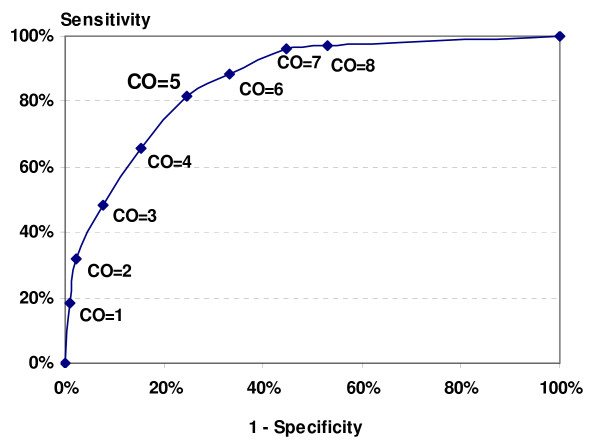
BACKGROUND: The use of Patient-reported Outcomes (PROs) as secondary endpoints in the development of new antidepressants has grown in recent years. The objective of this study was to assess the psychometric properties of the 9-item, patient-administered version of the Montgomery-Asberg Depression Rating Scale (MADRS-S). METHODS: Data from a multicentre, double-blind, 8-week, randomised controlled trial of 278 outpatients diagnosed with Major Depressive Disorder were used to evaluate the validity, reliability and sensitivity to change of the MADRS-S using psychometric methods. A Receiver Operating Characteristic (ROC) curve was plotted to identify the most appropriate threshold to define perceived remission. RESULTS: No missing values were found at the item level, indicating good acceptability of the scale. The construct validity was satisfactory: all items contributed to a common underlying concept, as expected. The correlation between MADRS-S and physicians' MADRS was moderate (r = 0.54, p < 0.001) indicating that MADRS-S is complementary rather than redundant to the MADRS. Cronbach's alpha was 0.84, and the stability over time of the scale, estimated on a sub-sample of patients whose health status did not change during the first week of the study, was good (intraclass correlation coefficient of 0.78). MADRS-S sensitivity to change was shown. Using a threshold value of 5, the definition of "perceived remission" reached a sensitivity of 82% and a specificity of 75%. CONCLUSION: Taking account of patient's perceptions of the severity of their own symptoms along with the psychometric properties of the MADRS-S enable its use for evaluative purposes in the development of new antidepressant drugs.
Overview
The claims and statistics of this paper haven’t been checked yet.
Run the check — free, no account needed. It reads the open-access text and checks the sources it cites.
Integrity signals
Registry
Cites
Statistics
Figures
Verification
Claims the paper makes
The claims and statistics of this paper haven’t been checked yet.
Run the check — free, no account needed. It reads the open-access text and checks the sources it cites.
Claims other papers make about this one
Each is checked against this paper’s own text: does it say what the citing paper says it does?
The source backs part of the claim, not all of it — or backs it for a different population, condition or comparison.
In the citing paper
“The MADRSS has demonstrated satisfactory internal consistency in both paper-and-pencil and Internet formats. 29,30”
From Internet-based treatment for provoked vulvodynia: Factors associated with treatment outcomes (2025) · cites this paper as [29]
Experimental — accuracy not yet measuredThe cited source says what the claim attributes to it.
In the citing paper
“The Montgomery-Åsberg Depression Rating Scale (MADRS-S) is a 9-item scale for measuring depressive symptoms and has satisfactory internal consistency (Fantino and Moore, 2009).”
From Internet-based treatment for vulvodynia (EMBLA) – Study protocol for a randomised controlled study (2021) · cites this paper as Fantino and Moore, 2009
Self-check
Percentages, sums and reported differences re-computed from the paper’s own numbers.
The self-check needs the paper’s full text.
Citations
Cites
Diagnostic and Statistical Manual of Mental Disorders
American Psychiatric Association (2013) · doi:10.1176/appi.books.9780890425596 · Cited by 116,369
Diagnostic and Statistical Manual of Mental Disorders
Williams, J. B. W., & First, M. B. (2013) · Oxford University Press eBooks · doi:10.1093/acrefore/9780199975839.013.104 · Cited by 109,845
Statistical Power Analysis for the Behavioral Sciences
Muller, K. E., & Cohen, J. (1989) · Technometrics · doi:10.2307/1270020 · Cited by 99,603
Statistical power analysis for the behavioral sciences
Cohen, J. (1990) · Computers Environment and Urban Systems · doi:10.1016/0198-9715(90)90050-4 · Cited by 65,417
An inventory for measuring depression
BECK, A. T. (1961) · Archives of General Psychiatry · doi:10.1001/archpsyc.1961.01710120031004 · Cited by 38,032
(1992) · PubMed · Cited by 33,716
Hamilton, M. (1960) · Journal of Neurology, Neurosurgery & Psychiatry · doi:10.1136/jnnp.23.1.56 · Cited by 32,817
A new depression scale designed to be sensitive to change
Montgomery, S. A., & Åsberg, M. (1979) · British Journal of Psychiatry · doi:10.1192/bjp.134.4.382 · Cited by 13,962
(1976) · Medical Entomology and Zoology · Cited by 8,899
McHorney, C. A., Ware, J. E., Rachel Lu, J. F., & Sherbourne, C. D. (1994) · Medical Care · doi:10.1097/00005650-199401000-00004 · Cited by 4,458
Research works printed but not linked: 5
- Committee for Proprietary Medicinal Products: Note for guidance on clinical investigation of medicinal products in the treatment of depression (CPMP/EWP/518/97, Rev 1). 2002, London: EMEA
- Beck AT, Steer RA: Beck Depression Inventory Manual. 1993, San Antonio: Psychological Corporation
- SAS Institute: SAS/Stat User's Guide version 8.2. 1999, Cary: SAS Institute Inc
- Kerlinger FN: Foundation of Behavioral Research. 1964, New York: Holt, Rinehart & Winston
- Nunnally JC: Psychometric Theory. 1994, New-York: Mc Graw-Hill, 3
Cited by
Sorted by citations
Psychomotor retardation in depression: Biological underpinnings, measurement, and treatment
Close, J. S., McClintock, S. M., & Croarkin, P. E. (2010) · Progress in Neuro-Psychopharmacology and Biological Psychiatry · doi:10.1016/j.pnpbp.2010.10.019 · Cited by 420
Karyotaki, E., Ebert, D. D., Donkin, L., Riper, H., Twisk, J., Burger, S., Rozental, A., Lange, A., Williams, A. D., Zarski, A. C., et al. (2018) · Clinical Psychology Review · doi:10.1016/j.cpr.2018.06.007 · Cited by 303
Citalopram versus other anti-depressive agents for depression
Cipriani, A., Purgato, M., Furukawa, T. A., Trespidi, C., Imperadore, G., Signoretti, A., Churchill, R. C., Watanabe, N., & Barbui, C. (2012) · Cochrane Database of Systematic Reviews · doi:10.1002/14651858.cd006534.pub2 · Cited by 314
Holländare, F., Andersson, G., & Engström, I. (2010) · Journal of Medical Internet Research · doi:10.2196/jmir.1392 · Cited by 179
Forsell, E., Bendix, M., Holländare, F., Szymanska von Schultz, B., Nasiell, J., Blomdahl-Wetterholm, M., Eriksson, C., Kvarned, S., Lindau van der Linden, J., Söderberg, E., et al. (2017) · Journal of Affective Disorders · doi:10.1016/j.jad.2017.06.013 · Cited by 175
“Reliable Change Index (RCI) was calculated using the formula 1.96*(SD1*√2*√(1-rel)) (Wise, 2004) where SD1 is the initial standard deviation for the sample and rel is the test-retest reliability of the measure (MADRS-S test-retest reliability is 0.78 (Fantino and Moore, 2009)).”
MethodInfluentialRozental, A., Magnusson, K., Boettcher, J., Andersson, G., & Carlbring, P. (2017) · Journal of Consulting and Clinical Psychology · doi:10.1037/ccp0000158 · Cited by 137
Predictive models for clinical decision making: Deep dives in practical machine learning
Eloranta, S., & Boman, M. (2022) · Journal of Internal Medicine · doi:10.1111/joim.13483 · Cited by 144
Boersma, K., Södermark, M., Hesser, H., Flink, I. K., Gerdle, B., & Linton, S. J. (2019) · Pain · doi:10.1097/j.pain.0000000000001575 · Cited by 123
Danielsson, L., Papoulias, I., Petersson, E., Carlsson, J. Y., & Wærn, M. (2014) · Journal of Affective Disorders · doi:10.1016/j.jad.2014.06.049 · Cited by 130
Deep brain stimulation for psychiatric disorders: From focal brain targets to cognitive networks
Sullivan, C. R. P., Olsen, S., & Widge, A. S. (2021) · NeuroImage · doi:10.1016/j.neuroimage.2020.117515 · Cited by 112
Buhrman, M., Syk, M., Burvall, O., Hartig, T., Gordh, T., & Andersson, G. (2015) · The Clinical Journal of Pain · doi:10.1097/ajp.0000000000000176 · Cited by 83
Erquicia, J. I., Valls, L., Barja, A., Gil-González, S., Miquel, J., Leal‐Blanquet, J., Schmidt, C., Checa, J., & Vega, D. (2020) · Medicina Clínica (English Edition) · doi:10.1016/j.medcle.2020.07.010 · Cited by 88
Sajatovic, M., Colón-Zimmermann, K., Kahriman, M., Fuentes‐Casiano, E., Liu, H., Tatsuoka, C. M., Cassidy, K. A., Lhatoo, S. D., Einstadter, D., & Chen, P. (2018) · Epilepsia · doi:10.1111/epi.14527 · Cited by 76
Brown, S. S. G., Rutland, J. W., Verma, G., Feldman, R. E., Alper, J., Schneider, M., Delman, B. N., Murrough, J., & Balchandani, P. (2019) · Scientific Reports · doi:10.1038/s41598-019-46687-7 · Cited by 76
Rozental, A., Andersson, G., & Carlbring, P. (2019) · Frontiers in Psychology · doi:10.3389/fpsyg.2019.00589 · Cited by 74
Müller, B., Rasmusson, A. J., Just, D., Jayarathna, S., Moazzami, A. A., Novičić, Z. K., & Cunningham, J. L. (2021) · Psychosomatic Medicine · doi:10.1097/psy.0000000000000965 · Cited by 76
Baker, F. A., Bloska, J., Braat, S., Bukowska, A. A., Clark, I. N., Hsu, M., Kvamme, T. S., Lautenschlager, N. T., Lee, C., Smrokowska-Reichmann, A., et al. (2019) · BMJ Open · doi:10.1136/bmjopen-2019-031332 · Cited by 72
Erquicia, J. I., Valls, L., Barja, A., Gil-González, S., Miquel, J., Leal‐Blanquet, J., Schmidt, C., Checa, J., & Vega, D. (2020) · Medicina Clínica · doi:10.1016/j.medcli.2020.07.006 · Cited by 99
Andersson, G., Carlbring, P., & Rozental, A. (2019) · Frontiers in Psychiatry · doi:10.3389/fpsyt.2019.00749 · Cited by 71
“Oroshjälpen (18) General population SCID-I Generalized anxiety disorder Guided ACT (52) Wait-list (51) 7 modules/9 weeks GAD-7 PSWQ, GADQ-IV, BAI, MADRS-S, PHQ9, QOLI 27 (64.”
InfluentialTonga, J. B., Eilertsen, D., Solem, I. K. L., Arnevik, E. A., Korsnes, M. S., & Ulstein, I. D. (2020) · American Journal of Alzheimer s Disease & Other Dementias® · doi:10.1177/1533317519885264 · Cited by 69
Steele, V. R., Maxwell, A. M., Ross, T. J., Stein, E. A., & Salmeron, B. J. (2019) · Frontiers in Neuroscience · doi:10.3389/fnins.2019.01147 · Cited by 67
Ström, M., Uckelstam, C.-J., Andersson, G., Hassmén, P., Umefjord, G., & Carlbring, P. (2013) · PeerJ · doi:10.7717/peerj.178 · Cited by 64
Söderquist, F., Syk, M., Just, D., Novičić, Z. K., Rasmusson, A. J., Hellström, P. M., Ramklint, M., & Cunningham, J. L. (2020) · BMC Psychiatry · doi:10.1186/s12888-020-02940-2 · Cited by 66
Multimodal behavioral treatment of migraine: An Internet-administered, randomized, controlled trial
Hedborg, K., & Muhr, C. (2011) · Upsala Journal of Medical Sciences · doi:10.3109/03009734.2011.575963 · Cited by 61
Bakker, J. M., Goossens, L., Kumar, P., Lange, I., Michielse, S., Schruers, K. R. J., Bastiaansen, J. A., Lieverse, R., Marcelis, M. C., van Amelsvoort, T., et al. (2018) · Psychological Medicine · doi:10.1017/s0033291718003446 · Cited by 57
Agreement between physicians' and patients' ratings on the Montgomery–Åsberg Depression Rating Scale
Cunningham, J. L., Wernroth, L., von Knorring, L., Berglund, L., & Ekselius, L. (2011) · Journal of Affective Disorders · doi:10.1016/j.jad.2011.07.005 · Cited by 60
Cognitive behavioral therapy for perinatal anxiety: A randomized controlled trial
Green, S. M., Donegan, E., McCabe, R. E., Streiner, D. L., Agako, A., & Frey, B. N. (2020) · Australian & New Zealand Journal of Psychiatry · doi:10.1177/0004867419898528 · Cited by 67
Samalin, L., Rothärmel, M., Mekaoui, L., Gaudré-Wattinne, E., Codet, M.-A., Bouju, S., & Sauvaget, A. (2022) · International Journal of Psychiatry in Clinical Practice · doi:10.1080/13651501.2022.2030757 · Cited by 54
Cannerfelt, B., Nystedt, J., Jönsen, A., Lätt, J., van Westen, D., Lilja, Å., Bengtsson, A. A., Nilsson, P., Mårtensson, J., & Sundgren, P. C. (2018) · Lupus · doi:10.1177/0961203318763533 · Cited by 53
Ng, C. G., Boks, M. P. M., Roes, K. C. B., Zainal, N. Z., Sulaiman, A. H., Tan, S. B., & de Wit, N. J. (2014) · European Neuropsychopharmacology · doi:10.1016/j.euroneuro.2014.01.016 · Cited by 52
Sundberg, I., Lannergård, A., Ramklint, M., & Cunningham, J. L. (2018) · BMC Psychiatry · doi:10.1186/s12888-018-1735-6 · Cited by 51
Martinotti, G., Pettorruso, M., Montemitro, C., Spagnolo, P. A., Martellucci, C. A., Carlo, F. D., Fanella, F., & Giannantonio, M. D. (2022) · Progress in Neuro-Psychopharmacology and Biological Psychiatry · doi:10.1016/j.pnpbp.2022.110513 · Cited by 50
Schibbye, P., Ghaderi, A., Ljótsson, B., Hedman‐Lagerlöf, E., Lindefors, N., Rück, C., & Kaldo, V. (2014) · PLoS ONE · doi:10.1371/journal.pone.0100614 · Cited by 52
Altered white matter microstructure in lupus patients: a diffusion tensor imaging study
Nystedt, J., Nilsson, M., Jönsen, A., Nilsson, P., Bengtsson, A. A., Lilja, Å., Lätt, J., Mannfolk, P., & Sundgren, P. C. (2018) · Arthritis Research & Therapy · doi:10.1186/s13075-018-1516-0 · Cited by 48
Rozental, A., Forsström, D., Lindner, P., Nilsson, S., Mårtensson, L., Rizzo, A., Andersson, G., & Carlbring, P. (2018) · Behavior Therapy · doi:10.1016/j.beth.2017.08.002 · Cited by 47
Lopresti, A. L., Smith, S. J., Hood, S. D., & Drummond, P. D. (2019) · Journal of Psychopharmacology · doi:10.1177/0269881119867703 · Cited by 47
Back, A. L., Freeman-Young, T. K., Morgan, L., Sethi, T., Baker, K. K., Myers, S., McGregor, B. A., Harvey, K., Tai, M., Kollefrath, A. W., et al. (2024) · JAMA Network Open · doi:10.1001/jamanetworkopen.2024.49026 · Cited by 52
Nystedt, J., Mannfolk, P., Jönsen, A., Nilsson, P., Strandberg, T. O., & Sundgren, P. C. (2019) · The Journal of Comparative Neurology · doi:10.1002/cne.24656 · Cited by 45
Blom, K., Forsell, E., Hellberg, M., Svanborg, C., Jernelöv, S., & Kaldo, V. (2024) · Psychotherapy and Psychosomatics · doi:10.1159/000536063 · Cited by 43
Plow, E. B., Malone, D. A., & Machado, A. G. (2013) · Trials · doi:10.1186/1745-6215-14-241 · Cited by 43
Tonga, J. B., Šaltytė Benth, J., Arnevik, E. A., Werheid, K., Korsnes, M. S., & Ulstein, I. D. (2021) · International Psychogeriatrics · doi:10.1017/s1041610220000216 · Cited by 42
Nguyen, V., Carey, L. M., Giummarra, L., Faou, P., Cooke, I., Howells, D. W., Tse, T., Macaulay, S. L., Ma, H., Davis, S. M., et al. (2016) · Frontiers in Neurology · doi:10.3389/fneur.2016.00085 · Cited by 41
Hauffman, A., Alfonsson, S., Bill‐Axelson, A., Bergkvist, L., Forslund, M., Mattsson, S., von Essén, L., Nygren, P., Igelström, H., & Johansson, B. (2020) · Psycho-Oncology · doi:10.1002/pon.5489 · Cited by 42
Baker, F. A., Soo, V. P., Bloska, J., Blauth, L., Bukowska, A. A., Flynn, L. M., Hsu, M., Janus, E., Johansson, K., Kvamme, T. S., et al. (2023) · EClinicalMedicine · doi:10.1016/j.eclinm.2023.102224 · Cited by 41
Teoh, J. B. F., Yee, A. H. A., Danaee, M., Ng, C. G., & Sulaiman, A. H. B. (2016) · Journal of Addiction Medicine · doi:10.1097/adm.0000000000000267 · Cited by 39
Correlates of Stigma in People with Epilepsy
Blixen, C. E., Ogede, D., Briggs, F. B. S., Aebi, M. E., Burant, C. J., Wilson, B., Terashima, J. P., & Sajatovic, M. (2020) · Journal of Clinical Neurology · doi:10.3988/jcn.2020.16.3.423 · Cited by 38
Prevalence and correlates of current suicidal ideation in women with premenstrual dysphoric disorder
Wikman, A., Sacher, J., Bixo, M., Hirschberg, A. L., Kallner, H. K., Epperson, C. N., Comasco, E., & Poromaa, I. S. (2022) · BMC Women s Health · doi:10.1186/s12905-022-01612-5 · Cited by 37
Serafini, G., Pompili, M., Innamorati, M., Iacorossi, G., Cuomo, I., Vista, M. D., Lester, D., Biase, L. D., Girardi, P., & Tatarelli, R. (2010) · The Primary Care Companion to The Journal of Clinical Psychiatry · doi:10.4088/pcc.09m00916gry · Cited by 36
Niles, A. N., Axelsson, E., Andersson, E., Hedman‐Lagerlöf, E., Carlbring, P., Andersson, G., Johansson, R., Widén, S., Driessen, J., Santoft, F., et al. (2020) · Behaviour Research and Therapy · doi:10.1016/j.brat.2020.103767 · Cited by 35
Käll, L. B., Lundgren‐Nilsson, Å., Blomstrand, C., Pekna, M., Pekny, M., & Nilsson, M. (2012) · BMC Neurology · doi:10.1186/1471-2377-12-141 · Cited by 34
Forsell, E., Isacsson, N. H., Blom, K., Jernelöv, S., Abdesslem, F. B., Lindefors, N., Boman, M., & Kaldo, V. (2019) · Journal of Consulting and Clinical Psychology · doi:10.1037/ccp0000462 · Cited by 34
Cognitive behaviour therapy in women with fibromyalgia: A randomized clinical trial
Karlsson, B., Burell, G. K., Anderberg, U. M., & Svärdsudd, K. (2015) · Scandinavian Journal of Pain · doi:10.1016/j.sjpain.2015.04.027 · Cited by 33
Could SF‐36 be used as a screening instrument for depression in a Swedish youth population?
Kristjánsdóttir, J., Olsson, G., Sundelin, C., & Naessén, T. (2010) · Scandinavian Journal of Caring Sciences · doi:10.1111/j.1471-6712.2010.00821.x · Cited by 33
Ljungman, L., Cernvall, M., Ghaderi, A., Ljungman, G., von Essen, L., & Ljótsson, B. (2018) · PeerJ · doi:10.7717/peerj.4570 · Cited by 32
Rozental, A., Forsström, D., Nilsson, S., Rizzo, A., & Carlbring, P. (2014) · Internet Interventions · doi:10.1016/j.invent.2014.05.005 · Cited by 33
Individualization of levodopa treatment using a microtablet dispenser and ambulatory accelerometry
Buvarp, D., Ericsson, A. B., Johansson, A., Medvedev, A. V., Nyholm, D., Ohlsson, F., Senek, M., Spira, J., Thomas, I., Westin, J., et al. (2018) · CNS Neuroscience & Therapeutics · doi:10.1111/cns.12807 · Cited by 31
Gentile, A. J., Lima, C. N. L., Flygare, O., Enander, J., Wilhelm, S., Mataix‐Cols, D., & Rück, C. (2019) · BMJ Open · doi:10.1136/bmjopen-2018-024693 · Cited by 32
Fischer, S., & Morales‐Suárez‐Varela, M. (2023) · Healthcare · doi:10.3390/healthcare11030404 · Cited by 31
Suicidal ideation and ECT, ECT and suicidal ideation: A register study
Sienaert, P. A., Brus, O., Lambrichts, S., Lundberg, J., Nordanskog, P., Obbels, J., Verspecht, S., Vansteelandt, K., & Nordenskjöld, A. (2022) · Acta Psychiatrica Scandinavica · doi:10.1111/acps.13425 · Cited by 33
Gasslander, N., Andersson, G., Boström, F., Brandelius, L., Pelling, L., Hamrin, L., Gordh, T., & Buhrman, M. (2022) · Cognitive Behaviour Therapy · doi:10.1080/16506073.2022.2065528 · Cited by 29
Flygare, A.-L., Engström, I., Hasselgren, M., Jansson-Fröjmark, M., Frejgrim, R., Andersson, G., & Holländare, F. (2019) · Internet Interventions · doi:10.1016/j.invent.2019.100303 · Cited by 26
Ahnemark, E., Schiena, M. D., Fredman, A.-C., Medin, E., Söderling, J. K., & Ginsberg, Y. (2018) · BMC Psychiatry · doi:10.1186/s12888-018-1803-y · Cited by 38
Ntini, I., Vadlin, S., Olofsdotter, S., Ramklint, M., Nilsson, K. W., Engström, I., & Sonnby, K. (2020) · Nordic Journal of Psychiatry · doi:10.1080/08039488.2020.1733077 · Cited by 26
Wikberg, C., Nejati, S., Larsson, M. E. H., Petersson, E., Westman, J., Ariai, N., Kivi, M., Eriksson, M., Eggertsen, R., Hange, D., et al. (2015) · The Primary Care Companion For CNS Disorders · doi:10.4088/pcc.14m01758 · Cited by 25
Hange, D., Ariai, N., Kivi, M., Eriksson, M., Nejati, S., & Petersson, E. (2017) · International Journal of General Medicine · doi:10.2147/ijgm.s129710 · Cited by 25
Porter, S. V., & Bejerholm, U. (2018) · Nordic Journal of Psychiatry · doi:10.1080/08039488.2018.1432685 · Cited by 21
Kamijima, K., Kimura, M., Kuwahara, K., Kitayama, Y., & Tadori, Y. (2018) · Psychiatry and Clinical Neurosciences · doi:10.1111/pcn.12663 · Cited by 24
Blomdahl, C., Guregård, S., Rusner, M., & Wijk, H. (2021) · Art Therapy · doi:10.1080/07421656.2021.1922328 · Cited by 25
Validation of the Arabic version of the MADRS scale among Lebanese patients with depression
Hallit, S. R., Obeïd, S., El‐Hage, W., & Kazour, F. (2018) · L Encéphale · doi:10.1016/j.encep.2018.05.004 · Cited by 22
Yee, A. H. A., Yassim, A. R. M., Loh, H. S., Ng, C. G., & Tan, K. (2015) · BMC Psychiatry · doi:10.1186/s12888-015-0587-6 · Cited by 22
Trends in (not) using scales in major depression: A categorization and clinical orientation
Demyttenaere, K., & Jaspers, L. (2020) · European Psychiatry · doi:10.1192/j.eurpsy.2020.87 · Cited by 21
Baandrup, L., Rasmussen, J. Ø., Mainz, J., Videbech, P., & Kristensen, S. (2021) · International Journal for Quality in Health Care · doi:10.1093/intqhc/mzab001 · Cited by 23
Wikberg, C., Westman, J., Petersson, E., Larsson, M. E. H., André, M., Eggertsen, R., Thorn, J., Ågren, H., & Björkelund, C. (2017) · BMC Family Practice · doi:10.1186/s12875-016-0578-9 · Cited by 21
Isacsson, N. H., Abdesslem, F. B., Forsell, E., Boman, M., & Kaldo, V. (2024) · Communications Medicine · doi:10.1038/s43856-024-00626-4 · Cited by 18
Mattsson, S., Olsson, E. M. G., Carlsson, M. E., & Johansson, B. (2019) · Journal of Medical Internet Research · doi:10.2196/11387 · Cited by 24
Outcome in depression (I): why symptomatic remission is not good enough
Demyttenaere, K., Kiekens, G., Bruffaerts, R., Mortier, P., Gorwood, P., Martin, L., & Di Giannantonio, M. (2021) · CNS Spectrums · doi:10.1017/s1092852920001418 · Cited by 17
Zantvoort, K., Isacsson, N. H., Funk, B., & Kaldo, V. (2024) · Digital Health · doi:10.1177/20552076241248920 · Cited by 18
Serafini, G., Vázquez, G. H., Gonda, X., Pompili, M., Rihmer, Z., & Amore, M. (2018) · European Archives of Psychiatry and Clinical Neuroscience · doi:10.1007/s00406-018-0875-5 · Cited by 19
Nguyen, V., Crewther, S. G., Howells, D. W., Wijeratne, T., Ma, H., Hankey, G. J., Davis, S. M., Donnan, G. A., & Carey, L. M. (2020) · Neurorehabilitation and neural repair · doi:10.1177/1545968320948607 · Cited by 17
Wikberg, C., Pettersson, A., Westman, J., Björkelund, C., & Petersson, E. (2016) · Scandinavian Journal of Primary Health Care · doi:10.1080/02813432.2016.1248635 · Cited by 17
Clinical correlates of negative health events in a research sample with epilepsy
Kumar, N., Colón-Zimmermann, K., Fuentes‐Casiano, E., Liu, H., Tatsuoka, C. M., Cassidy, K. A., Kahriman, M., Chen, P., & Sajatovic, M. (2017) · Epilepsy & Behavior · doi:10.1016/j.yebeh.2017.11.037 · Cited by 17
Skin conductance response and emotional response in women with psychogenic non-epileptic seizures
Herrero, H., Tarrada, A., Haffen, É., Mignot, T., Sense, C., Schwan, R., El‐Hage, W., Maillard, L. G., & Hingray, C. (2020) · Seizure · doi:10.1016/j.seizure.2020.07.028 · Cited by 16
Blomdahl, C., Wijk, H., Guregård, S., & Rusner, M. (2017) · The Arts in Psychotherapy · doi:10.1016/j.aip.2017.08.006 · Cited by 22
Phase 1 pilot study of e-mail support for people with long term conditions using the Internet
Sheaves, B., Jones, R. B., Williamson, G. R., & Chauhan, R. (2011) · BMC Medical Informatics and Decision Making · doi:10.1186/1472-6947-11-20 · Cited by 15
Liljeholm, U., Argentzell, E., & Bejerholm, U. (2020) · Nursing Open · doi:10.1002/nop2.560 · Cited by 19
Gogoulou, E., Boman, M., Abdesslem, F. B., Isacsson, N. H., Kaldo, V., & Sahlgren, M. (2021) · Conference of the European Chapter of the Association for Computational Linguistics · doi:10.18653/v1/2021.eacl-main.46 · Cited by 15
Karlsson, B., Burell, G. K., Kristiansson, P., Björkegren, K., Nyberg, F., & Svärdsudd, K. (2019) · Scandinavian Journal of Pain · doi:10.1515/sjpain-2018-0324 · Cited by 15
Forsell, E., Jernelöv, S., Blom, K., & Kaldo, V. (2022) · Internet Interventions · doi:10.1016/j.invent.2022.100554 · Cited by 14
Björkman, Y. A., Micu, E., Seifert, O., Lonne‐Rahm, S., Gillstedt, M., & Osmančević, A. (2023) · The Journal of Dermatology · doi:10.1111/1346-8138.16917 · Cited by 14
Gervind, E., Salem, M. B., Svanborg, C., Nyström, M. E., Lilja, J. L., Kaldo, V., & Weineland, S. (2023) · Internet Interventions · doi:10.1016/j.invent.2023.100698 · Cited by 14
Briggs, F. B. S., Wilson, B. K., Pyatka, N., Colón-Zimmermann, K., & Sajatovic, M. (2020) · Epilepsy Research · doi:10.1016/j.eplepsyres.2020.106303 · Cited by 14
Kenter, R. M. F., Lundervold, A. J., & Nordgreen, T. (2021) · Internet Interventions · doi:10.1016/j.invent.2021.100485 · Cited by 15
Södermark, M., Linton, S. J., Hesser, H., Flink, I. K., Gerdle, B. U. C., & Boersma, K. (2020) · Clinical Journal of Pain · doi:10.1097/ajp.0000000000000851 · Cited by 13
Kiwanuka, O., Lassarén, P., Thelin, E. P., Hånell, A., Sandblom, G., Fagerdahl, A., & Boström, L. (2023) · Scientific Reports · doi:10.1038/s41598-023-30082-4 · Cited by 13
Magnil, M., Janmarker, L., Gunnarsson, R. K., & Björkelund, C. (2013) · Scandinavian Journal of Primary Health Care · doi:10.3109/02813432.2012.757074 · Cited by 13
Magnil, M., Gunnarsson, R. K., & Björkelund, C. (2011) · Scandinavian Journal of Primary Health Care · doi:10.3109/02813432.2011.554011 · Cited by 12
Are physical activity and sedentary behavior related to depression?
Nyström, M. B. T., Hassmén, P., Sörman, D. E., Wigforss, T., Andersson, G., & Carlbring, P. (2019) · Cogent Psychology · doi:10.1080/23311908.2019.1633810 · Cited by 14
Holländare, F., Eriksson, A., Lövgren, L., Humble, M. B., & Boersma, K. (2015) · JMIR Research Protocols · doi:10.2196/resprot.3910 · Cited by 12
Screening Tools and Methods of Identifying Perinatal Depression
Mann, R., & Evans, J. (2015) · doi:10.1002/9781118509722.ch5 · Cited by 12
Karlsson-Good, M., Kaldo, V., Lundberg, L., Kraepelien, M., Anthony, S. A., & Holländare, F. (2023) · Internet Interventions · doi:10.1016/j.invent.2023.100678 · Cited by 11
Metadata
- Authors
- Fantino, B., & Moore, N.
- Affiliations
- Centre Hospitalier Universitaire de Bordeaux (FR)
- Corresponding author
- Fantino, Bruno
- Moore, Nicholas
- ORCID
- Moore, Nicholas
- Venue
- BMC Psychiatry
- Published
- 2009-05-27
- Volume
- 9
- Issue
- 1
- Pages
- 26-26
- ISSN
- 1471-244X (ISSN-L)
- PMC
- PMC2701427
- OpenAlex
- W2044133982
- Cited by
- 200
- References
- 35
- Citations by year
- 2026: 14 · 2025: 14 · 2024: 23 · 2023: 16 · 2022: 15 · 2021: 13 · 2020: 23 · 2019: 17 · 2018: 17 · 2017: 10 · 2016: 4 · 2015: 5 · 2014: 7 · 2013: 5 · 2012: 7
- FWCI
- 3.85
- Type
- journal article
- Language
- en
- Open access
- gold
- doi.org
- Licence
- Locations
- BMC Psychiatry (publishedVersion, cc-by)
- PubMed Central (publishedVersion, cc-by)
- PubMed (publishedVersion)
- DOAJ (DOAJ: Directory of Open Access Journals) (submittedVersion)
- Funders
- H. Lundbeck A/S
- Topics
- Health Sciences › Medicine › Pharmacology (medical) › Treatment of Major Depression
- Social Sciences › Psychology › Experimental and Cognitive Psychology › Anxiety, Depression, Psychometrics, Treatment, Cognitive Processes
- Social Sciences › Decision Sciences › Management Science and Operations Research › Psychometric Methodologies and Testing
- Keywords
- Montgomery-Asberg Depression Rating Scale, major depressive disorder, patient-reported outcomes, psychometric properties, construct validity, reliability statistics, sensitivity to change, antidepressant drug development
- MeSH terms
- Adolescent, Adult, Aged, Ambulatory Care, Antidepressive Agents, Depressive Disorder, Major, Major Depressive Disorder, Female, Health Status, Humans, Male, Middle Aged, Psychiatric Status Rating Scales, Psychometrics, Surveys and Questionnaires, ROC Curve, Sensitivity and Specificity, Severity of Illness Index, Reproducibility of Results, Multicenter Studies as Topic, Randomized Controlled Trials as Topic, Treatment Outcome, Drug Discovery
About these checks
Registry, retraction, Cites and statistics results are computed, not judged, with one exception: a printed reference that no index lists is read once by a model before it counts as a citation error. Claims are extracted by a model and kept only when their quote appears verbatim in the text; each cited source is then checked, with a model’s help, for whether it says what the claim relies on. Those verdicts can be wrong — read the claim’s quote and the cited source before relying on one.
Statistics and arithmetic are recomputed, not judged.
Confidence bands are shown only for fields calibrated on our annotated test set. None is calibrated yet, so no band is shown.
What counts as a claim ›How we measure confidence ›How we check this ›
Are you an author, or do you see a problem with this page? Request a review
