

Glutamatergic deficits and parvalbumin-containing inhibitory neurons in the prefrontal cortex in schizophrenia
Open accessThe DOI matches its Crossref record; 91 of the 92 references it cites were found in a registry or an index.
Abstract
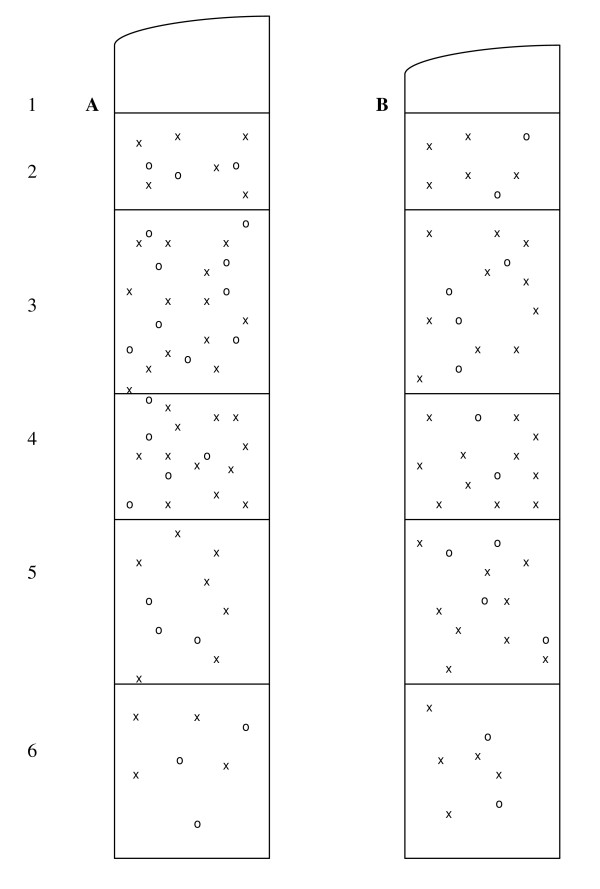
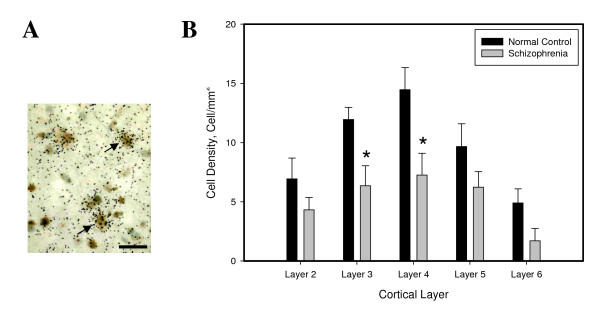
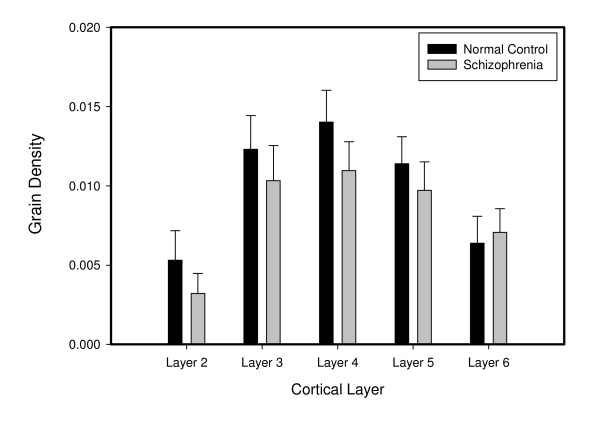
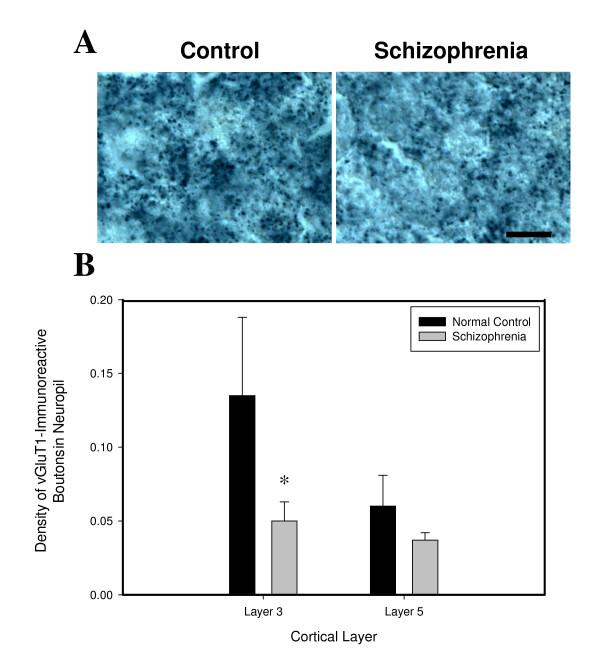
Background: We have previously reported that the expression of the messenger ribonucleic acid (mRNA) for the NR2A subunit of the N-methyl-D-aspartate (NMDA) class of glutamate receptor was decreased in a subset of inhibitory interneurons in the cerebral cortex in schizophrenia. In this study, we sought to determine whether a deficit in the expression of NR2A mRNA was present in the subset of interneurons that contain the calcium buffer parvalbumin (PV) and whether this deficit was associated with a reduction in glutamatergic inputs in the prefrontal cortex (PFC) in schizophrenia. Methods: We examined the expression of NR2A mRNA, labeled with a 35 S-tagged riboprobe, in neurons that expressed PV mRNA, visualized with a digoxigenin-labeled riboprobe via an immunoperoxidase reaction, in twenty schizophrenia and twenty matched normal control subjects. We also immunohistochemically labeled the glutamatergic axon terminals with an antibody against vGluT1. Results: The density of the PV neurons that expressed NR2A mRNA was significantly decreased by 48-50% in layers 3 and 4 in the subjects with schizophrenia, but the cellular expression of NR2A mRNA in the PV neurons that exhibited a detectable level of this transcript was unchanged. In addition, the density of vGluT1-immunoreactive boutons was significantly decreased by 79% in layer 3, but was unchanged in layer 5 of the PFC in schizophrenia. Conclusion: These findings suggest that glutamatergic neurotransmission via NR2A-containing NMDA receptors on PV neurons in the PFC may be deficient in schizophrenia. This may disinhibit the postsynaptic excitatory circuits, contributing to neuronal injury, aberrant information flow and PFC functional deficits in schizophrenia.
Overview
The claims and statistics of this paper haven’t been checked yet.
Free: it reads the open-access text and checks the first 5 claims that cite a source we can check. Create a free account to check every claim.
Integrity signals
Registry
Cites
Statistics
Figures
Verification
Claims the paper makes
The claims and statistics of this paper haven’t been checked yet.
Free: it reads the open-access text and checks the first 5 claims that cite a source we can check. Create a free account to check every claim.
Claims other papers make about this one
Each is checked against this paper’s own text: does it say what the citing paper says it does?
The cited source says what the claim attributes to it.
In the citing paper
“including the reduced density of NR2A-expressing PV interneurons in cortical layers 3 and 4 172”
From Mechanisms of synaptic transmission dysregulation in the prefrontal cortex: pathophysiological implications (2022) · cites this paper as [172]
In the citing paper
“Furthermore, given the role of PNNs in regulating the trafficking of glutamate receptors (Frischknecht et al., 2009; Sinagra et al., 2005), it is possible that PNN loss may contribute to a decrease of NMDA receptors on PVB-expressing neurons neurons reported in the prefrontal cortex of subjects with SZ (Bitanihirwe et al., 2009).”
From Losing the sugar coating: Potential impact of perineuronal net abnormalities on interneurons in schizophrenia (2015) · cites this paper as Bitanihirwe et al., 2009
In the citing paper
“The prefrontal cortex is a key node in the distributed cortical network recruited during WM (Owen et al. 2005;Fuster 2008) and exhibits altered inhibitory microcircuitry in schizophrenia (Lewis et al. 2005;Bitanihirwe et al. 2009).”
From Linking microcircuit dysfunction to cognitive impairment: Effects of disinhibition associated with schizophrenia in a cortical working memory model (2014) · cites this paper as Bitanihirwe et al. 2009
In the citing paper
“Both interneuron cell classes are altered in schizophrenia (Lewis et al. 2005;Morris et al. 2008;Bitanihirwe et al. 2009).”
From Linking microcircuit dysfunction to cognitive impairment: Effects of disinhibition associated with schizophrenia in a cortical working memory model (2014) · cites this paper as Bitanihirwe et al. 2009
Self-check
Percentages, sums and reported differences re-computed from the paper’s own numbers.
The self-check needs the paper’s full text.
Citations
Cites
Diagnostic Criteria for Use in Psychiatric Research
Feighner, J. P. (1972) · Archives of General Psychiatry · doi:10.1001/archpsyc.1972.01750190059011 · Cited by 5,715 · cited 1×
“[32] for the diagnosis of schizophrenia and DSM III-R criteria for the diagnosis of schizoaffective disorder.”
Krystal, J. H. (1994) · Archives of General Psychiatry · doi:10.1001/archpsyc.1994.03950030035004 · Cited by 3,330 · cited 1×
“It has long been known that treatment with NMDA receptor antagonists produces a syndrome that is highly reminiscent of the clinical picture of schizophrenia [41,42], and these data led to the NMDA receptor hypofunction model [43].”
Interneurons of the neocortical inhibitory system
Markram, H., Toledo-Rodriguez, M., Wang, Y., Gupta, A., Silberberg, G., & Wu, C. (2004) · Nature Reviews Neuroscience · doi:10.1038/nrn1519 · Cited by 2,954 · cited 1×
“Because connectionally and functionally distinct subpopulations of GABA neurons regulate different aspects of information flow in the cerebral cortex [21-23], an important question that must be addressed in order to truly appreciate the pathophysiologic consequences of altered glutamatergic modulation of GABA neuronal…”
Recent advances in the phencyclidine model of schizophrenia
(1991) · American Journal of Psychiatry · doi:10.1176/ajp.148.10.1301 · Cited by 2,904 · cited 1×
“It has long been known that treatment with NMDA receptor antagonists produces a syndrome that is highly reminiscent of the clinical picture of schizophrenia [41,42], and these data led to the NMDA receptor hypofunction model [43].”
Cortical inhibitory neurons and schizophrenia
Lewis, D. A., Hashimoto, T., & Volk, D. W. (2005) · Nature Reviews Neuroscience · doi:10.1038/nrn1648 · Cited by 2,297 · cited 2×
“Increasing evidence suggests that the subset of GABA cells that contain the calcium buffering protein parvalbumin (PV), which exhibit fast-spiking firing properties and target the perisomatic (basket cells) and axo-axonic (chandelier cells) compartments of pyramidal neurons [24,25], are functionally disturbed in schiz…”
Fuster, J. M. (1997) · Cited by 2,253
Neural synchrony in brain disorders: Relevance for cognitive dysfunctions and pathophysiology
Uhlhaas, P. J., & Singer, W. (2006) · Neuron · doi:10.1016/j.neuron.2006.09.020 · Cited by 2,194 · cited 1×
“In addition, PV neurons are known to play a critical role in the orchestration of oscillation of pyramidal cell circuits in the gamma frequency band (30-100 Hz), which is thought to be a mechanism that supports information integration [77-80].”
Glutamate receptor dysfunction and schizophrenia
Olney, J. W. (1995) · Archives of General Psychiatry · doi:10.1001/archpsyc.1995.03950240016004 · Cited by 1,685 · cited 3×
“It has long been known that treatment with NMDA receptor antagonists produces a syndrome that is highly reminiscent of the clinical picture of schizophrenia [41,42], and these data led to the NMDA receptor hypofunction model [43].”
Neuregulin 1 and Susceptibility to Schizophrenia
Stefansson, H., Petursson, H., Sigurdsson, E., Steinthorsdottir, V., Bjornsdottir, S., Sigmundsson, T., Ghosh, S., Brynjolfsson, J., Gunnarsdottir, S., Ivarsson, O., et al. (2002) · The American Journal of Human Genetics · doi:10.1086/342734 · Cited by 1,683 · cited 1×
“In the context of our finding, it is interesting to note that, a single polymorphism in the neuregulin-1 gene, a schizophrenia risk gene [55], has recently been reported to be associated with vGluT1 expression in human postmortem brains, with the at-risk allele predicting decreased expression of the glutamatergic mark…”
Decreased Dendritic Spine Density on Prefrontal Cortical Pyramidal Neurons in Schizophrenia
Glantz, L. A., & Lewis, D. A. (2000) · Archives of General Psychiatry · doi:10.1001/archpsyc.57.1.65 · Cited by 1,636 · cited 2×
“Because dendritic spines are the most common target of glutamatergic terminals [57], and because density of spines on layer 3 pyramidal cells has been found to be decreased by ~20% in schizophrenia [58], it would appear that our finding of reduced vGluT1 immunoreactivity reflects, at least in part, a loss of axon term…”
Research works printed but not linked: 1
- Baddeley AD Working memory 1988 Oxford: Oxford University Press
Cited by
Items 101–137 of 137
He, Y., Mu, L., Ametamey, S. M., & Schibli, R. (2019) · Journal of Labelled Compounds and Radiopharmaceuticals · doi:10.1002/jlcr.3744 · Cited by 10
Holter, K. M., Lekander, A., Pierce, B. E., Sands, L. P., & Gould, R. W. (2024) · Pharmaceuticals · doi:10.3390/ph17020237 · Cited by 9
Yao, L., Wang, Z., Deng, D., Yan, R., Ju, J., & Zhou, Q. (2019) · BMC Psychiatry · doi:10.1186/s12888-019-2306-1 · Cited by 9
Punchaichira, T. J., Kukshal, P., Triptish Bhatia, A., Deshpande, S. N., & Thelma, B. K. (2020) · Psychiatric Genetics · doi:10.1097/ypg.0000000000000258 · Cited by 7
Yoshikawa, A., Nishimura, F., Inai, A., Eriguchi, Y., Nishioka, M., Takaya, A., Tochigi, M., Kawamura, Y., Umekage, T., Kato, K., et al. (2018) · Human Genome Variation · doi:10.1038/hgv.2017.56 · Cited by 7
Carrier, M., Robert, M.-È., St-Pierre, M.-K., Ibáñez, F. G., Gonçalves de Andrade, E., Laroche, A., Picard, K., Vecchiarelli, H. A., Savage, J. C., Boilard, É., et al. (2024) · iScience · doi:10.1016/j.isci.2024.110037 · Cited by 5
17β-estradiol status alters NMDAR function and antipsychotic-like activity in female rats
Holter, K. M., Klausner, M. G., Hite, M. H., Moriarty, C., Barth, S. H., Pierce, B. E., Iannucci, A. N., Sheffler, D. J., Cosford, N. D. P., Bimonte‐Nelson, H. A., et al. (2025) · Molecular Psychiatry · doi:10.1038/s41380-025-02996-0 · Cited by 7
Research Progress on NMDA Receptor Enhancement Drugs for the Treatment of Depressive Disorder
Liu, R., Liu, N., Ma, L., Liu, Y., Huang, Z., Peng, X., Zhuang, C., Niu, J., Yu, J., & Du, J. (2024) · CNS Drugs · doi:10.1007/s40263-024-01123-x · Cited by 8
Linking reduced prefrontal microcircuit inhibition in schizophrenia to EEG biomarkers in silico
Rosanally, S., Mazza, F., Yao, H. K., Moghbel, F., Seo, H., & Hay, E. (2026) · PLoS Computational Biology · doi:10.1371/journal.pcbi.1014304 · Cited by 7
“The authors have declared that no competing interests exist. that NMDA subunit NR2A expression was mostly absent in more than half of PV interneurons in PFC in schizophrenia [22–24], whereas there was no significant change found in other NMDA subunits NR2B-D [25].”
An atlas of protein-protein associations of human tissues prioritizes candidate disease genesPreprint
Trip, D. S. L., van Oostrum, M., Memon, D., Frommelt, F., Baptista, D., Panneerselvam, K., Bradley, G., Licata, L., Hermjakob, H., Orchard, S. E., et al. (2024) · bioRxiv (Cold Spring Harbor Laboratory) · doi:10.1101/2024.05.15.594301 · Cited by 5
Enhancement of Function of the Prefrontal Cortex to Improve Symptoms of Schizophrenia
Sarma Bardoloi, P. (2020) · Acta Scientific Neurology · doi:10.31080/asne.2020.03.0183 · Cited by 4
Kleine, A. D., & Reuß, B. (2020) · Journal of Molecular Neuroscience · doi:10.1007/s12031-020-01670-0 · Cited by 4
“…synaptotagmin 5 (Syt5; Maycox et al. 2009; Martins-de-Souza et al. 2010), vesicular glutamate transporter 1 (Slc17a7; Eastwood and Harrison 2005; Bitanihirwe et al. 2009), Stathmin-4 (English et al. 2009; Wang et al. 2010), and neurocan (Ncan; Schultz et al. 2014; Wang et al. 2016), which we…”
Couch, A. C. M., Brown, A. M., Raimundo, C., Solomon, S., Taylor, M., Sichlinger, L., Matulevičiūtė, R., Srivastava, D. P., & Vernon, A. C. (2024) · Brain Behavior and Immunity · doi:10.1016/j.bbi.2024.08.007 · Cited by 6
van Lier, B., Hierlemann, A. R., & Knoflach, F. (2018) · PeerJ · doi:10.7717/peerj.5543 · Cited by 4
“Indeed, in subjects with schizophrenia, GluN2A is expressed at lower levels in Gamma-Aminobutyric acid (GABA) interneurons compared to normal controls (Bitanihirwe et al., 2009; Woo, Walsh & Benes, 2004).”
Role of NMDA receptor-mediated abnormalities of GABAergic interneurons in psychiatric disorders.
Li, S., Zhang, G.-F., & Yang, J. (2020) · PubMed · doi:10.11817/j.issn.1672-7347.2020.190048 · Cited by 3
Huang, Y.-F., Liu, C., Liu, Z., Zhuang, X., Chen, J.-H., Zhang, Z.-N., Shen, C., & Hu, Y. (2026) · Brain · doi:10.1093/brain/awag058 · Cited by 3
Spencer, K. (2024) · Advances in neurobiology · doi:10.1007/978-3-031-69491-2_12 · Cited by 2
Microglia and Psychiatric Disorders
Couch, A. C. M., & Vernon, A. C. (2021) · Springer eBooks · doi:10.1007/978-3-030-71229-7_8 · Cited by 2
Mulvey, A. G., Gabhart, K. M., Grent-‘t-Jong, T., Herculano‐Houzel, S., Uhlhaas, P. J., & Bastos, A. M. (2025) · bioRxiv (Cold Spring Harbor Laboratory) · doi:10.1101/2025.05.23.655812 · Cited by 4
Mageed, S. S. A., Mangoura, S. A., Nassar, N. N., Moawad, H., & Kamel, A. S. E. D. (2025) · International Immunopharmacology · doi:10.1016/j.intimp.2025.115681 · Cited by 1
Will the Treatment Protocols for Schizophrenia be Changing Soon?
Littrell, J. L. (2014) · Social Work in Mental Health · doi:10.1080/15332985.2014.894487 · Cited by 1
Pharmacological aspects DNA methylation and demethylation as targets for antipsychotic therapy
Guidotti, A., & Grayson, D. R. (2014)
Assessment of genetic and environmental factors in animal models of schizophrenia
Bitanihirwe, B. K. Y. (2011) · Repository for Publications and Research Data (ETH Zurich) · doi:10.3929/ethz-a-006688010
Self-citationImmaturity of brain as an endophenotype of neuropsychiatric disorders
Hagihara, H., Shoji, H., & Miyakawa, T. (2016) · Folia Pharmacologica Japonica · doi:10.1254/fpj.148.168
Dong, Y., Lin, H., Rattelle, A., Panzer, J. A., & Lynch, D. R. (2017) · Elsevier eBooks · doi:10.1016/b978-0-12-801238-3.65836-1 · Cited by 4
Loureiro, C. M. (2021) · Digital Library of Theses and Dissertations (Universidade de São Paulo) · doi:10.11606/t.17.2021.tde-04082021-134444
Faculty Opinions recommendation of Sculpting neural circuits by axon and dendrite pruning.
Kano, M., & Watanabe, T. (2019) · Faculty Opinions – Post-Publication Peer Review of the Biomedical Literature · doi:10.3410/f.725833204.793562670
Arime, Y., Saitoh, Y., Ishikawa, M., Kamiyoshihara, C., Uchida, Y., Fujii, K., Takao, K., Akiyama, K., & Ohkawa, N. (2023) · bioRxiv (Cold Spring Harbor Laboratory) · doi:10.1101/2023.02.27.530344
Hu, Z., Zhu, X., Liang, Y., Zhang, Y., Zheng, P., & Zhang, X. (2024) · Biomedicines · doi:10.3390/biomedicines12122680
“Reducing NR2A mRNA was observed in individuals with schizophrenia [77].”
Impact of open channel blockers on the surface dynamics and organization of NMDA receptors
Fernandes, A. (2020) · theses.fr (ABES) · doi:10.70675/d12c14b2z7a80z4668z9c48z8e2c0e41c009 · Cited by 2
Samson, G., Maximo, J. O., Nelson, E., Adnani, S. N., Bashir, A., & Lahti, A. C. (2026) · Psychological Medicine · doi:10.1017/s0033291726104358
“Inhibitory neurons which use GABA are integral to regulating neuronal activation and allocating energy within networks (Bitanihirwe et al., 2009), and so the role of GABA in network connectivity is of particular interest in studying psychosis, which has been consistently linked with abnormal…”
Harris, N. M., Holter, K. M., & Niswender, C. M. (2026) · Schizophrenia Research · doi:10.1016/j.schres.2026.06.012
“Clinically, patients exhibit a significant reduction in PV-INs that express mRNA for the GluN2A subunit, suggesting that hypofunction of GluN2A-containing NMDA receptors on PV-INs may contribute to symptomology (Bitanihirwe et al., 2009).”
Was Kraepelin Prescient Regarding Excitation-Inhibition Imbalance in Schizophrenia?
Hinney, B., Missonnier, P., Gass, P., & Inta, D. (2026) · Schizophrenia Bulletin Open · doi:10.1093/schizbullopen/sgag032
“19 Rare coding variants with larg er individual risks for schizophrenia point in the same direction.”
Sato, S., Kato, T., & Toyoizumi, T. (2026) · Schizophrenia Bulletin · doi:10.1093/schbul/sbag095
Schizophrenia and Endocannabinoid Signaling in the Prefrontal Cortex
Lovelace, J. W. (2014) · eScholarship (California Digital Library)
Metadata
- Authors
- Bitanihirwe, B., Lim, M., Kelley, J., Kaneko, T., & Woo, T.
- Affiliations
- McLean Hospital (US)
- Kyoto University (JP)
- Beth Israel Deaconess Medical Center (US)
- Corresponding author
- Woo, TUW
- ORCID
- Kaneko, T
- Venue
- BMC Psychiatry
- Published
- 2009-11-16
- Volume
- 9
- Issue
- 1
- Pages
- 71-71
- ISSN
- 1471-244X (ISSN-L)
- PMC
- PMC2784456
- OpenAlex
- W2165329858
- Cited by
- 137
- References
- 92
- Citations by year
- 2026: 6 · 2025: 5 · 2024: 7 · 2023: 4 · 2022: 3 · 2021: 7 · 2020: 10 · 2019: 8 · 2018: 11 · 2017: 7 · 2016: 7 · 2015: 9 · 2014: 13 · 2013: 17 · 2012: 7
- FWCI
- 4.73
- Type
- journal article
- Language
- en
- Open access
- gold
- doi.org
- Licence
- Locations
- BMC Psychiatry (publishedVersion, cc-by)
- PubMed Central (publishedVersion, cc-by)
- PubMed (publishedVersion)
- DOAJ (DOAJ: Directory of Open Access Journals) (submittedVersion)
- Repository for Publications and Research Data (ETH Zurich) (submittedVersion, cc-by)
- ETH Zürich Research Collection (cc-by)
- Funders
- National Institutes of Health
- National Institute of Mental Health (MH068541, R01MH076060, R03MH068541, MH076060)
- Topics
- Health Sciences › Medicine › Psychiatry and Mental health › Schizophrenia research and treatment
- Life Sciences › Neuroscience › Cellular and Molecular Neuroscience › Neuroscience and Neuropharmacology Research
- Life Sciences › Biochemistry, Genetics and Molecular Biology › Biochemistry › Amino Acid Enzymes and Metabolism
- Keywords
- schizophrenia, parvalbumin interneurons, glutamatergic neurotransmission, prefrontal cortex, VGLUT1, inhibitory interneurons, disinhibition
- MeSH terms
- Cell Count, Digoxigenin, Humans, Immunohistochemistry, Interneurons, Neural Inhibition, Synaptic Transmission, Neurons, Parvalbumins, RNA, Messenger, Schizophrenia, Gene Expression, Receptors, N-Methyl-D-Aspartate, Prefrontal Cortex, Oligonucleotide Array Sequence Analysis, Gene Expression Profiling
About these checks
Registry, retraction, Cites and statistics results are computed, not judged, with one exception: a printed reference that no index lists is read once by a model before it counts as a citation error. Claims are extracted by a model and kept only when their quote appears verbatim in the text; each cited source is then checked, with a model’s help, for whether it says what the claim relies on. Those verdicts can be wrong — read the claim’s quote and the cited source before relying on one.
Statistics and arithmetic are recomputed, not judged.
Confidence bands are shown only for fields calibrated on our annotated test set. None is calibrated yet, so no band is shown.
What counts as a claim ›How we measure confidence ›How we check this ›
Are you an author, or do you see a problem with this page? Request a review
Data sources
Bibliographic data: Semantic Scholar, OpenAlex, Crossref.
Contains information from the Semantic Scholar Academic Graph Datasets, made available under the ODC Attribution License (ODC-BY 1.0).
Semantic Scholar’s data is described in: Kinney, R., et al. (2023). The Semantic Scholar Open Data Platform. arXiv:2301.10140.
