

Glutamatergic deficits and parvalbumin-containing inhibitory neurons in the prefrontal cortex in schizophrenia
Open accessThe DOI matches its Crossref record; 91 of the 92 references it cites were found in a registry or an index.
Abstract
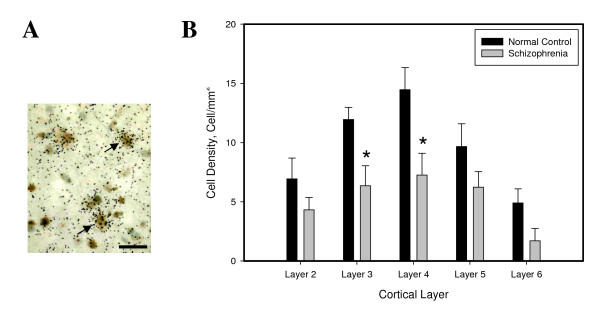
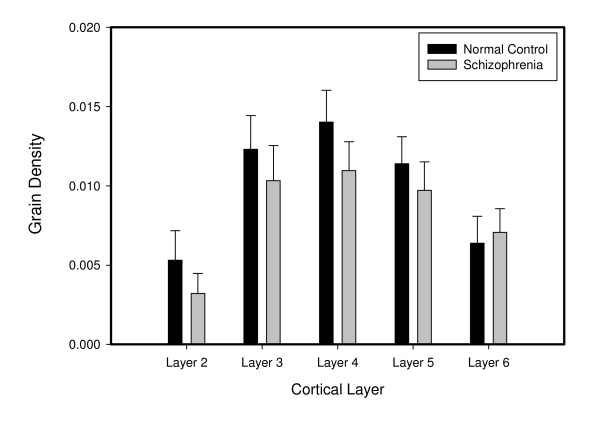
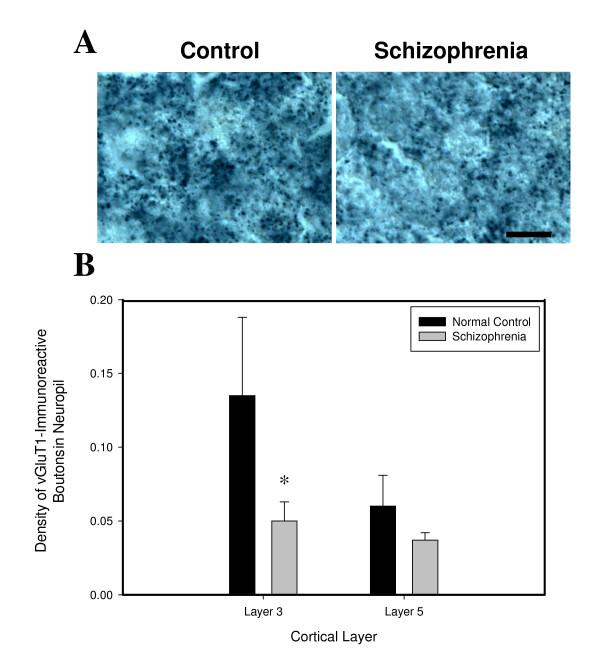
Background: We have previously reported that the expression of the messenger ribonucleic acid (mRNA) for the NR2A subunit of the N-methyl-D-aspartate (NMDA) class of glutamate receptor was decreased in a subset of inhibitory interneurons in the cerebral cortex in schizophrenia. In this study, we sought to determine whether a deficit in the expression of NR2A mRNA was present in the subset of interneurons that contain the calcium buffer parvalbumin (PV) and whether this deficit was associated with a reduction in glutamatergic inputs in the prefrontal cortex (PFC) in schizophrenia. Methods: We examined the expression of NR2A mRNA, labeled with a 35 S-tagged riboprobe, in neurons that expressed PV mRNA, visualized with a digoxigenin-labeled riboprobe via an immunoperoxidase reaction, in twenty schizophrenia and twenty matched normal control subjects. We also immunohistochemically labeled the glutamatergic axon terminals with an antibody against vGluT1. Results: The density of the PV neurons that expressed NR2A mRNA was significantly decreased by 48-50% in layers 3 and 4 in the subjects with schizophrenia, but the cellular expression of NR2A mRNA in the PV neurons that exhibited a detectable level of this transcript was unchanged. In addition, the density of vGluT1-immunoreactive boutons was significantly decreased by 79% in layer 3, but was unchanged in layer 5 of the PFC in schizophrenia. Conclusion: These findings suggest that glutamatergic neurotransmission via NR2A-containing NMDA receptors on PV neurons in the PFC may be deficient in schizophrenia. This may disinhibit the postsynaptic excitatory circuits, contributing to neuronal injury, aberrant information flow and PFC functional deficits in schizophrenia.
Overview
The claims and statistics of this paper haven’t been checked yet.
Free: it reads the open-access text and checks the first 5 claims that cite a source we can check. Create a free account to check every claim.
Integrity signals
Registry
Cites
Statistics
Figures
Verification
Claims the paper makes
The claims and statistics of this paper haven’t been checked yet.
Free: it reads the open-access text and checks the first 5 claims that cite a source we can check. Create a free account to check every claim.
Claims other papers make about this one
Each is checked against this paper’s own text: does it say what the citing paper says it does?
The cited source says what the claim attributes to it.
In the citing paper
“including the reduced density of NR2A-expressing PV interneurons in cortical layers 3 and 4 172”
From Mechanisms of synaptic transmission dysregulation in the prefrontal cortex: pathophysiological implications (2022) · cites this paper as [172]
In the citing paper
“Furthermore, given the role of PNNs in regulating the trafficking of glutamate receptors (Frischknecht et al., 2009; Sinagra et al., 2005), it is possible that PNN loss may contribute to a decrease of NMDA receptors on PVB-expressing neurons neurons reported in the prefrontal cortex of subjects with SZ (Bitanihirwe et al., 2009).”
From Losing the sugar coating: Potential impact of perineuronal net abnormalities on interneurons in schizophrenia (2015) · cites this paper as Bitanihirwe et al., 2009
In the citing paper
“The prefrontal cortex is a key node in the distributed cortical network recruited during WM (Owen et al. 2005;Fuster 2008) and exhibits altered inhibitory microcircuitry in schizophrenia (Lewis et al. 2005;Bitanihirwe et al. 2009).”
From Linking microcircuit dysfunction to cognitive impairment: Effects of disinhibition associated with schizophrenia in a cortical working memory model (2014) · cites this paper as Bitanihirwe et al. 2009
In the citing paper
“Both interneuron cell classes are altered in schizophrenia (Lewis et al. 2005;Morris et al. 2008;Bitanihirwe et al. 2009).”
From Linking microcircuit dysfunction to cognitive impairment: Effects of disinhibition associated with schizophrenia in a cortical working memory model (2014) · cites this paper as Bitanihirwe et al. 2009
Self-check
Percentages, sums and reported differences re-computed from the paper’s own numbers.
The self-check needs the paper’s full text.
Citations
Cites
Diagnostic Criteria for Use in Psychiatric Research
Feighner, J. P. (1972) · Archives of General Psychiatry · doi:10.1001/archpsyc.1972.01750190059011 · Cited by 5,715 · cited 1×
“[32] for the diagnosis of schizophrenia and DSM III-R criteria for the diagnosis of schizoaffective disorder.”
Krystal, J. H. (1994) · Archives of General Psychiatry · doi:10.1001/archpsyc.1994.03950030035004 · Cited by 3,330 · cited 1×
“It has long been known that treatment with NMDA receptor antagonists produces a syndrome that is highly reminiscent of the clinical picture of schizophrenia [41,42], and these data led to the NMDA receptor hypofunction model [43].”
Interneurons of the neocortical inhibitory system
Markram, H., Toledo-Rodriguez, M., Wang, Y., Gupta, A., Silberberg, G., & Wu, C. (2004) · Nature Reviews Neuroscience · doi:10.1038/nrn1519 · Cited by 2,954 · cited 1×
“Because connectionally and functionally distinct subpopulations of GABA neurons regulate different aspects of information flow in the cerebral cortex [21-23], an important question that must be addressed in order to truly appreciate the pathophysiologic consequences of altered glutamatergic modulation of GABA neuronal…”
Recent advances in the phencyclidine model of schizophrenia
(1991) · American Journal of Psychiatry · doi:10.1176/ajp.148.10.1301 · Cited by 2,904 · cited 1×
“It has long been known that treatment with NMDA receptor antagonists produces a syndrome that is highly reminiscent of the clinical picture of schizophrenia [41,42], and these data led to the NMDA receptor hypofunction model [43].”
Cortical inhibitory neurons and schizophrenia
Lewis, D. A., Hashimoto, T., & Volk, D. W. (2005) · Nature Reviews Neuroscience · doi:10.1038/nrn1648 · Cited by 2,297 · cited 2×
“Increasing evidence suggests that the subset of GABA cells that contain the calcium buffering protein parvalbumin (PV), which exhibit fast-spiking firing properties and target the perisomatic (basket cells) and axo-axonic (chandelier cells) compartments of pyramidal neurons [24,25], are functionally disturbed in schiz…”
Fuster, J. M. (1997) · Cited by 2,253
Neural synchrony in brain disorders: Relevance for cognitive dysfunctions and pathophysiology
Uhlhaas, P. J., & Singer, W. (2006) · Neuron · doi:10.1016/j.neuron.2006.09.020 · Cited by 2,194 · cited 1×
“In addition, PV neurons are known to play a critical role in the orchestration of oscillation of pyramidal cell circuits in the gamma frequency band (30-100 Hz), which is thought to be a mechanism that supports information integration [77-80].”
Glutamate receptor dysfunction and schizophrenia
Olney, J. W. (1995) · Archives of General Psychiatry · doi:10.1001/archpsyc.1995.03950240016004 · Cited by 1,685 · cited 3×
“It has long been known that treatment with NMDA receptor antagonists produces a syndrome that is highly reminiscent of the clinical picture of schizophrenia [41,42], and these data led to the NMDA receptor hypofunction model [43].”
Neuregulin 1 and Susceptibility to Schizophrenia
Stefansson, H., Petursson, H., Sigurdsson, E., Steinthorsdottir, V., Bjornsdottir, S., Sigmundsson, T., Ghosh, S., Brynjolfsson, J., Gunnarsdottir, S., Ivarsson, O., et al. (2002) · The American Journal of Human Genetics · doi:10.1086/342734 · Cited by 1,683 · cited 1×
“In the context of our finding, it is interesting to note that, a single polymorphism in the neuregulin-1 gene, a schizophrenia risk gene [55], has recently been reported to be associated with vGluT1 expression in human postmortem brains, with the at-risk allele predicting decreased expression of the glutamatergic mark…”
Decreased Dendritic Spine Density on Prefrontal Cortical Pyramidal Neurons in Schizophrenia
Glantz, L. A., & Lewis, D. A. (2000) · Archives of General Psychiatry · doi:10.1001/archpsyc.57.1.65 · Cited by 1,636 · cited 2×
“Because dendritic spines are the most common target of glutamatergic terminals [57], and because density of spines on layer 3 pyramidal cells has been found to be decreased by ~20% in schizophrenia [58], it would appear that our finding of reduced vGluT1 immunoreactivity reflects, at least in part, a loss of axon term…”
Research works printed but not linked: 1
- Baddeley AD Working memory 1988 Oxford: Oxford University Press
Cited by
Cortical parvalbumin interneurons and cognitive dysfunction in schizophrenia
Lewis, D. A., Curley, A. A., Glausier, J. R., & Volk, D. W. (2012) · Trends in Neurosciences · doi:10.1016/j.tins.2011.10.004 · Cited by 1,071
Wang, M., Yang, Y., Wang, C.-J., Gamo, N. J., Jin, L. E., Mazer, J. A., Morrison, J. H., Wang, X.-J., & Arnsten, A. F. T. (2013) · Neuron · doi:10.1016/j.neuron.2012.12.032 · Cited by 489
“Neuropathological studies of schizophrenia have shown extensive changes to dlPFC layer III, including loss of neuropil and spines (Glantz and Lewis, 2000; Selemon et al., 1995) and reductions in glutamate terminals onto GABAergic interneurons (Bitanihirwe et al., 2009).”
Oxidative stress in schizophrenia: An integrated approach
Bitanihirwe, B. K. Y., & Woo, T.-U. W. (2011) · Neuroscience & Biobehavioral Reviews · doi:10.1016/j.neubiorev.2010.10.008 · Cited by 472
Self-citationMechanisms governing activity-dependent synaptic pruning in the developing mammalian CNS
Faust, T. E., Gunner, G., & Schafer, D. P. (2021) · Nature Reviews Neuroscience · doi:10.1038/s41583-021-00507-y · Cited by 437
Sculpting Neural Circuits by Axon and Dendrite Pruning
Riccomagno, M. M., & Kolodkin, A. L. (2015) · Annual Review of Cell and Developmental Biology · doi:10.1146/annurev-cellbio-100913-013038 · Cited by 365
“This reduction in spine number and in the expression of the presynaptic marker vesicular glutamate transporter 1 is evident in layer III, but not layer V, of the PFC in patients with schizophrenia, suggesting layer specificity is part of this synaptic pruning phenotype (Bitanihirwe et al. 2009).”
Bossong, M. G., & Niesink, R. J. M. (2010) · Progress in Neurobiology · doi:10.1016/j.pneurobio.2010.06.010 · Cited by 333
“Recently, Bitanihirwe et al. (2009) have shown that the glutamatergic neurotransmission on GABA-ergic neurons in the PFC is deficient in schizophrenic patients.”
Yan, Z., & Rein, B. (2022) · Molecular Psychiatry · doi:10.1038/s41380-021-01092-3 · Cited by 300
“Postmortem schizophrenia studies have revealed supporting evidence [171], including the reduced density of NR2A-expressing PV interneurons in cortical layers 3 and 4 [172] and the reduced density of GAD67and NR2A-coexpressing neurons in layers 2 and 5 of the anterior cingulate cortex [173].”
NMDA receptors in nervous system diseases
Zhou, Q., & Sheng, M. (2013) · Neuropharmacology · doi:10.1016/j.neuropharm.2013.03.030 · Cited by 298
“subunit in particular) has been observed in a subpopulation of inhibitory neurons (notably those expressing parvalbumin) in postmortem samples of schizophrenia patients (Bitanihirwe et al., 2009).”
Mauney, S. A., Athanas, K. M., Pantazopoulos, H., Shaskan, N., Passeri, E., Berretta, S., & Woo, T.-U. W. (2013) · Biological Psychiatry · doi:10.1016/j.biopsych.2013.05.007 · Cited by 291
“In this context, because PV neurons in the cerebral cortex appear to be relatively intact in bipolar disorder (45, 46), the fact that PNN deficit was not observed in the subjects with bipolar disorder in this study is not unexpected.”
Self-citationThe origin of NMDA receptor hypofunction in schizophrenia
Nakazawa, K., & Sapkota, K. (2020) · Pharmacology & Therapeutics · doi:10.1016/j.pharmthera.2019.107426 · Cited by 275
“GABAergic neurons in both the prefrontal cortex (Bitanihirwe et al., 2009) and anterior cingulate cortex (Woo et al.”
Alterations in cortical interneurons and cognitive function in schizophrenia
Dienel, S. J., & Lewis, D. A. (2019) · Neurobiology of Disease · doi:10.1016/j.nbd.2018.06.020 · Cited by 272
Spontaneous Gamma Activity in Schizophrenia
Hirano, Y., Oribe, N., Kanba, S., Onitsuka, T., Nestor, P. G., & Spencer, K. M. (2015) · JAMA Psychiatry · doi:10.1001/jamapsychiatry.2014.2642 · Cited by 261
Alterations of cortical GABA neurons and network oscillations in schizophrenia
Gonzalez-Burgos, G., Hashimoto, T., & Lewis, D. A. (2010) · Current Psychiatry Reports · doi:10.1007/s11920-010-0124-8 · Cited by 260
“Similarly, in the cortex of adult humans, only about 30% of PV-positive neurons express NMDAR subunit mRNA [23].”
Murray, J. D., Anticevic, A., Gancsos, M., Ichinose, M., Corlett, P. R., Krystal, J. H., & Wang, X.-J. (2014) · Cerebral Cortex · doi:10.1093/cercor/bhs370 · Cited by 255
Cohen, S. M., Tsien, R. W., Goff, D. C., & Halassa, M. M. (2015) · Schizophrenia Research · doi:10.1016/j.schres.2014.12.026 · Cited by 232
“These results, in combination with the efficacy of an NR2A specific antagonist to reduce GAD67 and PV levels in cultured cortical neurons (Kinney et al., 2006), support the contention that NR2A-dependent glutamatergic input onto GABAergic interneurons contributes to reduced levels of GAD67 and PV expression characteri…”
InfluentialEpigenetic GABAergic targets in schizophrenia and bipolar disorder
Guidotti, A., Auta, J., Chen, Y., Davis, J. M., Dong, E., Gavin, D. P., Grayson, D. R., Matrisciano, F., Pinna, G., Satta, R., et al. (2011) · Neuropharmacology · doi:10.1016/j.neuropharm.2010.10.021 · Cited by 218
“…of nicotine acetylcholine receptor (nAChR) α4 and α7 subunits (Breese et al., 2000) and by a decrease in other proteins abundantly expressed in GABAergic neurons, such as the NMDA receptor subunit NR2A and the kainate receptor subunit GluR5 (Bitanihirwe et al., 2009; Woo et al., 2004, 2008).”
Rethinking schizophrenia in the context of normal neurodevelopment
Catts, V. S., Fung, S. J., Long, L. E., Joshi, D., Vercammen, A., Allen, K. M., Fillman, S. G., Rothmond, D. A., Sinclair, D., Tiwari, Y., et al. (2013) · Frontiers in Cellular Neuroscience · doi:10.3389/fncel.2013.00060 · Cited by 206
“expression of the calcium binding protein parvalbumin (Beasley and Reynolds, 1997; Reynolds and Beasley, 2001; Reynolds et al., 2002; Hashimoto et al., 2008a,b; Morris et al., 2008; Sakai et al., 2008; Bitanihirwe et al., 2009; Mellios et al., 2009; Fung et al., 2010) and the neuromodulatory peptide, somatostatin (Has…”
Parvalbumin interneuron vulnerability and brain disorders
Ruden, J. B., Dugan, L. L., & Konradi, C. (2021) · Neuropsychopharmacology · doi:10.1038/s41386-020-0778-9 · Cited by 194
The contribution of GABAergic dysfunction to neurodevelopmental disorders
Ramamoorthi, K., & Lin, Y. (2011) · Trends in Molecular Medicine · doi:10.1016/j.molmed.2011.03.003 · Cited by 166
“Postmortem studies of schizophrenia patients show decreases in NMDA (N-Methyl-D-aspartic) receptor expression on PV neurons [78, 79], which would result in a decreased inhibitory drive, decreases in Ramamoorthi and Lin Page 6”
Baseline gamma power during auditory steady-state stimulation in schizophrenia
M. Spencer, K. (2012) · Frontiers in Human Neuroscience · doi:10.3389/fnhum.2011.00190 · Cited by 155
“…studies have found evidence for decreased expression of NMDARs on inhibitory interneurons in individuals with schizophrenia (Woo et al., 2004; Bitanihirwe et al., 2009), and studies utilizing transcranial magnetic stimulation have reported signs of increased cortical excitability in…”
Berretta, S., Pantazopoulos, H., Markota, M., Brown, C., & Batzianouli, E. T. (2015) · Schizophrenia Research · doi:10.1016/j.schres.2014.12.040 · Cited by 152
Rotaru, D. C., Yoshino, H., Lewis, D. A., Ermentrout, G. B., & Gonzalez-Burgos, G. (2011) · The Journal of Neuroscience · doi:10.1523/jneurosci.1970-10.2011 · Cited by 151
“Similarly, in the cortex of adult human subjects, 70% of the PV-positive neurons have undetectable levels of NMDAR subunit mRNA (Bitanihirwe et al., 2009).”
Pre-frontal parvalbumin interneurons in schizophrenia: a meta-analysis of post-mortem studies
Kaar, S. J., Angelescu, I., Marques, T. R., & Howes, O. D. (2019) · Journal of Neural Transmission · doi:10.1007/s00702-019-02080-2 · Cited by 170
“This led to the exclusion of a number of studies with overlapping brains (Beasley et al. 2002; Bitanihirwe et al. 2009; Catts and Weickert 2012; Chung et al. 2016b; Enwright Iii et al. 2017; Hashimoto et al. 2005, 2008; Knable et al. 2004; Lewis 2000; Torrey et al. 2005).”
McNally, J. M., & McCarley, R. W. (2016) · Current Opinion in Psychiatry · doi:10.1097/yco.0000000000000244 · Cited by 144
“Specifically, lower expression of the NMDA receptor subunit 2A was found in dorsolateral prefrontal cortex parvalbumin neurons in schizophrenia individuals [69].”
Microglial Pruning of Synapses in the Prefrontal Cortex During Adolescence
Mallya, A. P., Wang, H.-D., Lee, H. N. R., & Deutch, A. Y. (2019) · Cerebral Cortex · doi:10.1093/cercor/bhy061 · Cited by 144
Synaptic GluN2A-Containing NMDA Receptors: From Physiology to Pathological Synaptic Plasticity
Franchini, L., Carrano, N., Luca, M. D., & Gardoni, F. (2020) · International Journal of Molecular Sciences · doi:10.3390/ijms21041538 · Cited by 135
Current findings and perspectives on aberrant neural oscillations in schizophrenia
Hirano, Y., & Uhlhaas, P. J. (2021) · Psychiatry and Clinical Neurosciences · doi:10.1111/pcn.13300 · Cited by 140
Bygrave, A. M., Masiulis, S., Nicholson, E., Berkemann, M., Barkus, C., Sprengel, R., Harrison, P. J., Kullmann, D. M., Bannerman, D. M., & Kätzel, D. (2016) · Translational Psychiatry · doi:10.1038/tp.2016.44 · Cited by 109
Cho, R. Y., Walker, C. P., Polizzotto, N. R., Wozny, T. A., Fissell, C., Chen, C.-M. A., & Lewis, D. A. (2015) · Cerebral Cortex · doi:10.1093/cercor/bht341 · Cited by 109
“The presence of NMDA receptors on the majority of fast-spiking interneurons prior to adolescence reduces to a minority by adulthood (Bitanihirwe et al. 2009; Wang and Gao 2009) while calcium-permeable AMPA receptors increases over the same period (Wang and Gao 2010).”
Carlson, G. C., Talbot, K., Halene, T. B., Gandal, M. J., Kazi, H. A., Schlosser, L., Phung, Q. H., Gur, R. E., Arnold, S. E., & Siegel, S. J. (2011) · Proceedings of the National Academy of Sciences · doi:10.1073/pnas.1109625108 · Cited by 103
Losing your inhibition: Linking cortical GABAergic interneurons to schizophrenia
Inan, M., Petros, T. J., & Anderson, S. A. (2013) · Neurobiology of Disease · doi:10.1016/j.nbd.2012.11.013 · Cited by 101
Gamma oscillation deficits and the onset and early progression of schizophrenia
Woo, T.-U. W., Spencer, K., & McCarley, R. W. (2010) · Harvard Review of Psychiatry · doi:10.3109/10673221003747609 · Cited by 96
Self-citationPerineuronal nets and schizophrenia: The importance of neuronal coatings
Bitanihirwe, B. K. Y., & Woo, T.-U. W. (2014) · Neuroscience & Biobehavioral Reviews · doi:10.1016/j.neubiorev.2014.03.018 · Cited by 95
Self-citationDiverse modes of NMDA receptor positive allosteric modulation: Mechanisms and consequences
Hackos, D. H., & Hanson, J. E. (2017) · Neuropharmacology · doi:10.1016/j.neuropharm.2016.07.037 · Cited by 93
“Further studies have found reduced expression of NMDARs (in particular the GluN2A subunit) in parvalbumin (PV)-expressing interneurons in postmortem samples of schizophrenia patients (Akbarian et al., 1996; Bitanihirwe et al., 2009).”
Molecular Profiles of Pyramidal Neurons in the Superior Temporal Cortex in Schizophrenia
Pietersen, C. Y., Mauney, S. A., Kim, S. S., Lim, M. P., Rooney, R. J., Goldstein, J. M., Petryshen, T. L., Seidman, L. J., Shenton, M. E., McCarley, R. W., et al. (2014) · Journal of Neurogenetics · doi:10.3109/01677063.2014.882918 · Cited by 87
“Third, in the prefrontal cortex, the density of glutamatergic axonal boutons, of which dendritic spines are their major targets, was sig-nifi cantly decreased by as much as 79% in layer 3 (but not in layer 5) in subjects with schizophrenia (Bitanihirwe et al., 2009).”
Self-citationRogasch, N. C., Daskalakis, Z. J., & Fitzgerald, P. B. (2014) · Schizophrenia Bulletin · doi:10.1093/schbul/sbt078 · Cited by 87
Hunt, M. J., & Kasicki, S. (2013) · Journal of Psychopharmacology · doi:10.1177/0269881113495117 · Cited by 83
“The NR2A subunit (mainly located at synaptic NMDAR) may be a more important target for schizophrenia (Bitanihirwe et al., 2009; Woo et al., 2008).”
The role of glutamatergic inputs onto parvalbumin-positive interneurons: relevance for schizophrenia
Rotaru, D. C., Lewis, D. A., & Gonzalez-Burgos, G. (2012) · Reviews in the Neurosciences · doi:10.1515/revneuro-2011-0059 · Cited by 80
“Similarly, in the cortex of adult human subjects, 70 % of the PV-positive neurons have undetectable levels of NMDAR subunit mRNA (Bitanihirwe et al. , 2009 ).”
DNA methylation and demethylation as targets for antipsychotic therapy
Guidotti, A., & Grayson, D. R. (2014) · Dialogues in Clinical Neuroscience · doi:10.31887/dcns.2014.16.3/aguidotti · Cited by 73
Optimization and Validation of a Visual Integration Test for Schizophrenia Research
Silverstein, S. M., Keane, B. P., Barch, D. M., Carter, C. S., Gold, J. M., Kovács, I., MacDonald, A. W., Ragland, J. D., & Strauss, M. E. (2011) · Schizophrenia Bulletin · doi:10.1093/schbul/sbr141 · Cited by 78
The first decade and beyond of transcriptional profiling in schizophrenia
Sequeira, P. A., Martin, M. V., & Vawter, M. P. (2012) · Neurobiology of Disease · doi:10.1016/j.nbd.2011.03.001 · Cited by 64
“…Mirnics et al., 2000; Straub et al., 2007; Vawter et al., 2001) Glutamate Increase VGLUT1, VGLUT2, EAAT1, EAAT2, NR2B (Bauer et al., 2008, 2010; Bitanihirwe et al., 2009; Dracheva et al., 2005; Hammond et al., 2010; Kristiansen et al., 2010a, 2010b; Oni-Orisan et al., 2008; Uezato et al.,…”
Labedi, A., Benali, A., Mix, A., Neubacher, U., & Funke, K. (2014) · Brain Stimulation · doi:10.1016/j.brs.2014.02.010 · Cited by 62
“Particularly the NR2A expression is reduced in cortical tissue of schizophrenics [51] and antagonists specific to this subunit induce a reduction in GAD67 and PV expression [37].”
Stansfield, K. H., Ruby, K. N., Soares, B. D., McGlothan, J. L., Liu, X., & Guilarte, T. R. (2015) · Translational Psychiatry · doi:10.1038/tp.2014.147 · Cited by 60
Koukouli, F., & Maskos, U. (2015) · Biochemical Pharmacology · doi:10.1016/j.bcp.2015.07.018 · Cited by 71
Lin, H., Hsu, F.-C., Baumann, B. H., Coulter, D. A., & Lynch, D. R. (2014) · Neurobiology of Disease · doi:10.1016/j.nbd.2013.11.021 · Cited by 59
“Glutamatergic hypofunction, especially NMDAR hypofunction, has been suggested to underlie the core symptoms of schizophrenia, including psychosis, negative symptoms and cognitive impairment (Belforte et al., 2010; Bitanihirwe et al., 2009; Carlen et al., 2012; Coyle, 2012; Javitt, 2012; Korotkova et al., 2010; Rotaru…”
Ahnaou, A., Huysmans, H., de Casteele, T. V., & Drinkenburg, W. H. I. M. (2017) · Translational Psychiatry · doi:10.1038/s41398-017-0002-9 · Cited by 63
Huang, X., Zheng, H., Lin, Z., Wang, K., Liu, X., Zhou, W., Meng, L., Huang, J., Yuan, K., & Niu, L. (2019) · IEEE Transactions on Ultrasonics Ferroelectrics and Frequency Control · doi:10.1109/tuffc.2019.2903896 · Cited by 56
“Previous studies have demonstrated an important role for GluN2A subunit in the development of Alzheimer’s disease [55], [56], schizophrenia [57], [58], and Huntington’s disease [59], [60].”
Jeevakumar, V., & Kroener, S. (2016) · Cerebral Cortex · doi:10.1093/cercor/bhu293 · Cited by 55
“2004), and PV cells specifically (Bitanihirwe et al. 2009), show reduced levels of NR2A mRNA.”
Transcriptomic evidence for immaturity of the prefrontal cortex in patients with schizophrenia
Hagihara, H., Ohira, K., Takao, K., & Miyakawa, T. (2014) · Molecular Brain · doi:10.1186/1756-6606-7-41 · Cited by 52
“Several lines of evidence show that expression levels of parvalbumin (PV), a marker of FS neurons, are decreased in the PFC of these patients [23-28].”
Savanthrapadian, S., Wolff, A. R., Logan, B. J., Eckert, M. J., Bilkey, D. K., & Abraham, W. C. (2013) · Hippocampus · doi:10.1002/hipo.22193 · Cited by 63
“, 2010), and that both GAD67 and NR2A expression are preferentially reduced in parvalbumin-containing neurons in postmortem schizophrenia brain (Hashimoto et al., 2003; Bitanihirwe et al., 2009).”
Wiescholleck, V., & Manahan‐Vaughan, D. (2013) · Neuropharmacology · doi:10.1016/j.neuropharm.2013.01.001 · Cited by 57
Cortical Opioid Markers in Schizophrenia and across Postnatal Development
Volk, D. W., Radchenkova, P. V., Walker, E. M., Sengupta, E. J., & Lewis, D. A. (2012) · Cerebral Cortex · doi:10.1093/cercor/bhr202 · Cited by 51
McNally, J. M., McCarley, R. W., & Brown, R. E. (2013) · Current Psychiatry Reports · doi:10.1007/s11920-012-0346-z · Cited by 47
NMDA receptor-dependent function and plasticity in inhibitory circuits
Moreau, A. W., & Kullmann, D. M. (2013) · Neuropharmacology · doi:10.1016/j.neuropharm.2013.03.004 · Cited by 50
“There is also evidence for deficient glutamatergic transmission to PVþ neurons mediated by GluN2Acontaining NMDARs in schizophrenia (Bitanihirwe et al., 2009).”
Specific Roles of NMDA Receptor Subunits in Mental Disorders
Yamamoto, H., Hagino, Y., Kasai, S., & Ikeda, K. (2015) · Current Molecular Medicine · doi:10.2174/1566524015666150330142807 · Cited by 56
“Interestingly, GluN2A mRNA expression is reduced to undetectable levels in approximately 50% of PV neurons in the prefrontal cortex in subjects with schizophrenia [48].”
Gene Expression Analysis Implicates a Death Receptor Pathway in Schizophrenia Pathology
Catts, V. S., & Shannon Weickert, C. (2012) · PLoS ONE · doi:10.1371/journal.pone.0035511 · Cited by 43
Cardis, R., Cabungcal, J.-H., Dwir, D., Do, K. Q., & Steullet, P. (2018) · Neurobiology of Disease · doi:10.1016/j.nbd.2017.10.006 · Cited by 42
“The high-risk polymorphisms of GT repeats on the GRIN2A promoter give rise to reduced transcription (Liu et al., 2015), and reduced GluN2A expression, have been reported in prefrontal cortex (Beneyto and Meador-Woodruff, 2008) and PVIs (Bitanihirwe et al., 2009).”
Algaidi, S. A. (2025) · Brain Research · doi:10.1016/j.brainres.2025.149461 · Cited by 40
Neurobiology of Schizophrenia Onset
Woo, T.-U. W. (2013) · Current topics in behavioral neurosciences · doi:10.1007/7854_2013_243 · Cited by 50
“In fact, we have found that the number of PV cells that express a detectable level of NR2A mRNA is reduced by as much as 50 % in subjects with schizophrenia (Bitanihirwe et al. 2009).”
Self-citationSun, Y., Cheng, X., Zhang, L., Hu, J. H., chen, Y., Zhan, L., & Gao, Z. (2016) · Molecular Neurobiology · doi:10.1007/s12035-016-9715-7 · Cited by 43
Bitanihirwe, B. K. Y., Mauney, S. A., & Woo, T.-U. W. (2016) · Biological Psychiatry · doi:10.1016/j.biopsych.2016.03.1047 · Cited by 37
Self-citationPafundo, D. E., Miyamae, T., Lewis, D. A., & González‐Burgos, G. (2018) · Biological Psychiatry · doi:10.1016/j.biopsych.2018.01.018 · Cited by 40
“However, 361 empirical support for NMDAR hypofunction in PV neurons in the cortex of subjects with 362 schizophrenia is scarce, and limited to two publications showing reduced levels of GluN2A 363 subunit mRNA at the PV neuron soma (75, 76).”
A conceptualized model linking matrix metalloproteinase-9 to schizophrenia pathogenesis
Bitanihirwe, B. K. Y., & Woo, T.-U. W. (2020) · Schizophrenia Research · doi:10.1016/j.schres.2019.12.015 · Cited by 38
Self-citationRegulation of the E/I-balance by the neural matrisome
Mueller-Buehl, C., Wegrzyn, D., Bauch, J., & Faissner, A. (2023) · Frontiers in Molecular Neuroscience · doi:10.3389/fnmol.2023.1102334 · Cited by 36
“It has been reported that the glutamatergic neurotransmission via NR2Acontaining NMDARs on parvalbumin-expressing interneurons in the cortex may be altered in schizophrenia (Bitanihirwe et al., 2009).”
Trip, D. S. L., van Oostrum, M., Memon, D., Frommelt, F., Baptista, D., Panneerselvam, K., Bradley, G., Licata, L., Hermjakob, H., Orchard, S. E., et al. (2025) · Nature Biotechnology · doi:10.1038/s41587-025-02659-z · Cited by 48
“Given the link of PV neurons with SCZ 111–115 , these observations suggest that AP2 and clathrin may be involved in a PV neuron-specific disruption of HCN channel trafficking with SCZ.”
Inta, D., Vogt, M. A., Perreau‐Lenz, S., Schneider, M., Pfeiffer, N., Wojcik, S. M., Spanagel, R., & Gass, P. (2011) · Behavioural Brain Research · doi:10.1016/j.bbr.2011.12.012 · Cited by 34
“[5] Bitanihirwe BK, Lim MP, Kelley JF, Kaneko T, Woo TU.”
Bygrave, A. M., Kilonzo, K., Kullmann, D. M., Bannerman, D. M., & Kätzel, D. (2019) · Frontiers in Psychiatry · doi:10.3389/fpsyt.2019.00835 · Cited by 43
Jones, N. C., O'Brien, T. J., & Carmant, L. (2014) · Neurobiology of Disease · doi:10.1016/j.nbd.2014.09.004 · Cited by 30
(Micro)Glia as Effectors of Cortical Volume Loss in Schizophrenia
Mallya, A. P., & Deutch, A. Y. (2018) · Schizophrenia Bulletin · doi:10.1093/schbul/sby088 · Cited by 34
Associations between adolescent cannabis use and brain structure in psychosis
Abush, H., Ghose, S., Enkevort, E. A. V., Clementz, B. A., Pearlson, G. D., Sweeney, J. A., Keshavan, M. S., Tamminga, C. A., & Ivleva, E. I. (2018) · Psychiatry Research Neuroimaging · doi:10.1016/j.pscychresns.2018.03.008 · Cited by 28
Dong, B., Yang, Y., Han, D., & Wang, Y. (2023) · Frontiers in Molecular Neuroscience · doi:10.3389/fnmol.2023.1174738 · Cited by 37
“Furthermore, results from postmortem brain studies measuring the expression of NMDAR subunits showed that in 49–73% of the GABAergic neurons in the prefrontal cortex (Bitanihirwe et al., 2009) and anterior cingulate cortex (Woo et al.”
Antipsychotic treatment modulates glutamate transport and NMDA receptor expression
Zink, M., Englisch, S., & Schmitt, A. (2014) · European Archives of Psychiatry and Clinical Neuroscience · doi:10.1007/s00406-014-0534-4 · Cited by 30
Strzelecki, D., Podgórski, M. T., Kałużyńska, O., Stefańczyk, L., Kotlicka‐Antczak, M., Gmitrowicz, A., & Grzelak, P. (2015) · International Journal of Molecular Sciences · doi:10.3390/ijms161024475 · Cited by 28
“receptor density on GABAergic interneurons [48].”
Hornig, T., Grüning, B. A., Kundu, K., Houwaart, T., Backofen, R., Biber, K. P. H., & Normann, C. (2017) · Genetics Research · doi:10.1017/s0016672316000148 · Cited by 28
“Disturbances in NMDA receptor function have been linked to memory and learning deficits and neuropsychiatric disorders such as schizophrenia, major depression and bipolar affective disorders (Zarate et al., 2006; Bitanihirwe et al., 2009; Li et al., 2011; Zhou & Sheng, 2013).”
Dzyubenko, E., Juckel, G., & Faissner, A. (2017) · Scientific Reports · doi:10.1038/s41598-017-11944-0 · Cited by 26
Arime, Y., Saitoh, Y., Ishikawa, M., Kamiyoshihara, C., Uchida, Y., Fujii, K., Takao, K., Akiyama, K., & Ohkawa, N. (2023) · Neuropsychopharmacology · doi:10.1038/s41386-023-01769-z · Cited by 30
MacKay, M.-A. B., Paylor, J. W., Wong, J. T. F., Winship, I. R., Baker, G. B., & Dursun, S. M. (2018) · Frontiers in Psychiatry · doi:10.3389/fpsyt.2018.00537 · Cited by 31
“For example, post-mortem analysis of the PFC of schizophrenia patients has shown a 50% reduction in the expression of the NR2A subunit within inhibitory interneurons that express parvalbumin, a calcium binding protein (109).”
Early-life lead exposure and neurodevelopmental disorders
Albores‐García, D., McGlothan, J. L., & Guilarte, T. R. (2021) · Current Opinion in Toxicology · doi:10.1016/j.cotox.2021.03.007 · Cited by 26
Aberrant mPFC GABAergic synaptic transmission and fear behavior in neuroligin-2 R215H knock-in mice
Chen, J., Dong, B., Feng, X., Jiang, D., Chen, G., Long, C., & Yang, L. (2020) · Brain Research · doi:10.1016/j.brainres.2020.146671 · Cited by 23
Esmaeili, B., & Grace, A. A. (2013) · Neuropsychopharmacology · doi:10.1038/npp.2013.64 · Cited by 23
How could N-Methyl-D-Aspartate Receptor Antagonists Lead to Excitation Instead of Inhibition?
Su, T., Lu, Y., Geng, Y., Lü, W., & Chen, Y. (2018) · Brain Science Advances · doi:10.26599/bsa.2018.2018.9050009 · Cited by 28
Long, L. E., Anderson, P., Frank, E., Shaw, A. D., Liu, S., Huang, X., Pinault, D., Karl, T., O'Brien, T. J., Weickert, C. S., et al. (2015) · PLoS ONE · doi:10.1371/journal.pone.0124114 · Cited by 27
Mihali, A., Subramani, S., Kaunitz, G. J., Rayport, S., & Gaisler‐Salomon, I. (2012) · Expert Review of Neurotherapeutics · doi:10.1586/ern.12.60 · Cited by 24
Kalweit, A. N., Amanpour-Gharaei, B., Colitti-Klausnitzer, J., & Manahan‐Vaughan, D. (2017) · Frontiers in Behavioral Neuroscience · doi:10.3389/fnbeh.2017.00036 · Cited by 28
“In line with this, changes in the regulation by NMDAR of fast-spiking (GABAergic) interneurons is believed to comprise an intrinsic mechanistic component of psychosis (Bitanihirwe et al., 2009; Belforte et al., 2010).”
Müller, S. L., Schreiber, J. A., Schepmann, D., Strutz‐Seebohm, N., Seebohm, G., & Wünsch, B. (2017) · European Journal of Medicinal Chemistry · doi:10.1016/j.ejmech.2017.02.018 · Cited by 22
“Different studies demonstrated the involvement of GluN2A subunit hypofunction in the pathophysiology of chronic schizophrenia [7,8].”
Current advancements of modelling schizophrenia using patient-derived induced pluripotent stem cells
Dubonyte, U., Asenjo-Martínez, A., Werge, T. M., Lage, K., & Kirkeby, A. (2022) · Acta Neuropathologica Communications · doi:10.1186/s40478-022-01460-2 · Cited by 24
Segnitz, N., Ferbert, T., Schmitt, A., Gass, P., Gebicke‐Haerter, P. J., & Zink, M. (2011) · Psychopharmacology · doi:10.1007/s00213-011-2262-z · Cited by 24
“2010), lower numbers of parvalbumin-positive GABAergic interneurons expressing NR2A (Bitanihirwe et al. 2009), and reduced expression of the NMDA-R-associated protein PSD95 (Funk et al.”
Bitanihirwe, B. K., Lim, M. P., & Woo, T. W. (2010) · Bipolar Disorders · doi:10.1111/j.1399-5618.2009.00785.x · Cited by 21
Self-citationAroniadou‐Anderjaska, V., Pidoplichko, V. I., Figueiredo, T. H., & Braga, M. F. M. (2018) · Neuroscience · doi:10.1016/j.neuroscience.2018.01.021 · Cited by 20
Balla, A., Ginsberg, S. D., Abbas, A. I., Sershen, H. W., & Javitt, D. C. (2020) · Biomarkers in Neuropsychiatry · doi:10.1016/j.bionps.2020.100019 · Cited by 18
N-Methyl- -Aspartate receptor and inflammation in dorsolateral prefrontal cortex in schizophrenia
Rahman, T., Purves-Tyson, T. D., Geddes, A. E., Huang, X., Newell, K. A., & Weickert, C. S. (2021) · Schizophrenia Research · doi:10.1016/j.schres.2021.11.045 · Cited by 18
Lee, M. T., Mouri, A., Kubota, H., Lee, H., Chang, M., Wu, C.-Y., Knutson, D. E., Mihovilovič, M. D., Cook, J. M., Sieghart, W., et al. (2022) · Biomedicine & Pharmacotherapy · doi:10.1016/j.biopha.2022.113022 · Cited by 19
Bitanihirwe, B. K. Y., & Woo, T.-U. W. (2014) · Psychiatry Research · doi:10.1016/j.psychres.2014.09.016 · Cited by 21
“The DIG-labeled PV mRNA probe utilized here has been used in previously published studies (Bitanihirwe et al., 2009; Bitanihirwe et al., 2010).”
InfluentialSelf-citationKing, M. V., Kurian, N., Qin, S., Παπαδοπούλου, Ν., Westerink, B. H. C., Cremers, T. I. F. H., Epping-Jordan, M. P., Poul, E. L., Ray, D. E., Fone, K. C. F., et al. (2013) · Neuropsychopharmacology · doi:10.1038/npp.2013.220 · Cited by 19
“…robust in schizophrenia (Corti et al, 2007; OniOrisan et al, 2008; Uezato et al, 2009; Eastwood and Harrison, 2010) and appear restricted to specific layers of the prefrontal cortex (Eastwood and Harrison, 2005; Bitanihirwe et al, 2009), whereas the amygdala remains unaffected (Varea et al, 2012).”
Peselmann, N., Schmitt, A., Gebicke‐Haerter, P. J., & Zink, M. (2012) · European Archives of Psychiatry and Clinical Neuroscience · doi:10.1007/s00406-012-0367-y · Cited by 19
Sociability development in mice with cell-specific deletion of the NMDA receptor NR1 subunit gene
Ferri, S. L., Pallathra, A. A., Kim, H., Dow, H. C., Raje, P., McMullen, M., Bilker, W. B., Siegel, S. J., Abel, T., & Brodkin, E. S. (2020) · Genes, Brain and Behavior · doi:10.1111/gbb.12624 · Cited by 15
“may play an important role in disorders such as autism spectrum disorder and schizophrenia.(29-44) Authors Sarah L.”
Alterations in Prefrontal Cortical Circuitry and Cognitive Dysfunction in Schizophrenia
Lewis, D. A., & Glausier, J. R. (2016) · Nebraska Symposium on Motivation/The Nebraska symposium on motivation · doi:10.1007/978-3-319-30596-7_3 · Cited by 15
Todd, J., Howard, Z. L., Auksztulewicz, R., & Salisbury, D. F. (2022) · Schizophrenia Bulletin · doi:10.1093/schbul/sbac153 · Cited by 12
Piyabhan, P., & Wetchateng, T. (2013) · PubMed · Cited by 13
Parvalbumin as a metal-dependent antioxidant
Permyakov, S. E., Kazakov, A. S., Avkhacheva, N. V., & Permyakov, E. A. (2014) · Cell Calcium · doi:10.1016/j.ceca.2014.03.001 · Cited by 15
Metadata
- Authors
- Bitanihirwe, B., Lim, M., Kelley, J., Kaneko, T., & Woo, T.
- Affiliations
- McLean Hospital (US)
- Kyoto University (JP)
- Beth Israel Deaconess Medical Center (US)
- Corresponding author
- Woo, TUW
- ORCID
- Kaneko, T
- Venue
- BMC Psychiatry
- Published
- 2009-11-16
- Volume
- 9
- Issue
- 1
- Pages
- 71-71
- ISSN
- 1471-244X (ISSN-L)
- PMC
- PMC2784456
- OpenAlex
- W2165329858
- Cited by
- 137
- References
- 92
- Citations by year
- 2026: 6 · 2025: 5 · 2024: 7 · 2023: 4 · 2022: 3 · 2021: 7 · 2020: 10 · 2019: 8 · 2018: 11 · 2017: 7 · 2016: 7 · 2015: 9 · 2014: 13 · 2013: 17 · 2012: 7
- FWCI
- 4.73
- Type
- journal article
- Language
- en
- Open access
- gold
- doi.org
- Licence
- Locations
- BMC Psychiatry (publishedVersion, cc-by)
- PubMed Central (publishedVersion, cc-by)
- PubMed (publishedVersion)
- DOAJ (DOAJ: Directory of Open Access Journals) (submittedVersion)
- Repository for Publications and Research Data (ETH Zurich) (submittedVersion, cc-by)
- ETH Zürich Research Collection (cc-by)
- Funders
- National Institutes of Health
- National Institute of Mental Health (MH068541, R01MH076060, R03MH068541, MH076060)
- Topics
- Health Sciences › Medicine › Psychiatry and Mental health › Schizophrenia research and treatment
- Life Sciences › Neuroscience › Cellular and Molecular Neuroscience › Neuroscience and Neuropharmacology Research
- Life Sciences › Biochemistry, Genetics and Molecular Biology › Biochemistry › Amino Acid Enzymes and Metabolism
- Keywords
- schizophrenia, parvalbumin interneurons, glutamatergic neurotransmission, prefrontal cortex, VGLUT1, inhibitory interneurons, disinhibition
- MeSH terms
- Cell Count, Digoxigenin, Humans, Immunohistochemistry, Interneurons, Neural Inhibition, Synaptic Transmission, Neurons, Parvalbumins, RNA, Messenger, Schizophrenia, Gene Expression, Receptors, N-Methyl-D-Aspartate, Prefrontal Cortex, Oligonucleotide Array Sequence Analysis, Gene Expression Profiling
About these checks
Registry, retraction, Cites and statistics results are computed, not judged, with one exception: a printed reference that no index lists is read once by a model before it counts as a citation error. Claims are extracted by a model and kept only when their quote appears verbatim in the text; each cited source is then checked, with a model’s help, for whether it says what the claim relies on. Those verdicts can be wrong — read the claim’s quote and the cited source before relying on one.
Statistics and arithmetic are recomputed, not judged.
Confidence bands are shown only for fields calibrated on our annotated test set. None is calibrated yet, so no band is shown.
What counts as a claim ›How we measure confidence ›How we check this ›
Are you an author, or do you see a problem with this page? Request a review
Data sources
Bibliographic data: Semantic Scholar, OpenAlex, Crossref.
Contains information from the Semantic Scholar Academic Graph Datasets, made available under the ODC Attribution License (ODC-BY 1.0).
Semantic Scholar’s data is described in: Kinney, R., et al. (2023). The Semantic Scholar Open Data Platform. arXiv:2301.10140.
