

A novel school-based intervention to improve nutrition knowledge in children: cluster randomised controlled trial
Open accessThe DOI matches its Crossref record; 46 of the 48 references it cites were found in a registry or an index.
Abstract
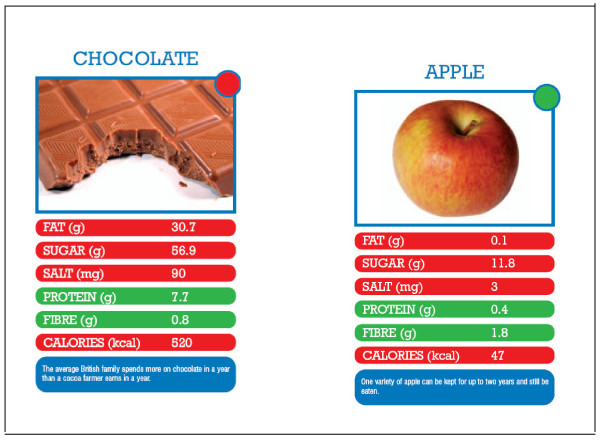
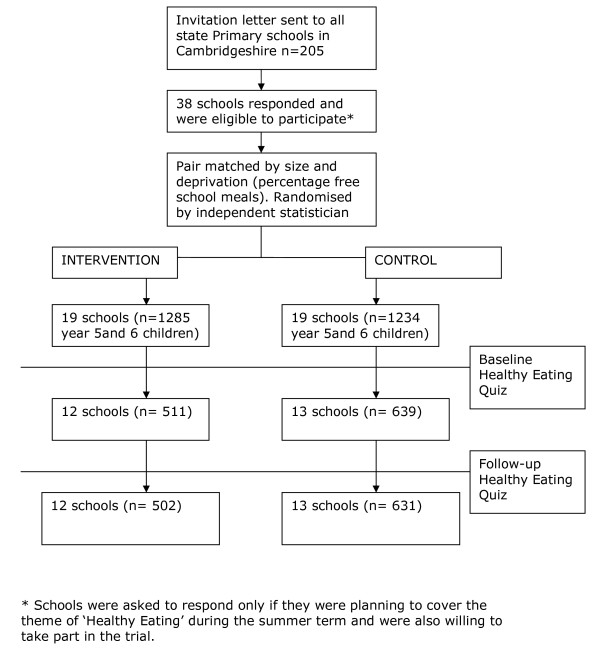
BACKGROUND: Improving nutrition knowledge among children may help them to make healthier food choices. The aim of this study was to assess the effectiveness and acceptability of a novel educational intervention to increase nutrition knowledge among primary school children. METHODS: We developed a card game 'Top Grub' and a 'healthy eating' curriculum for use in primary schools. Thirty-eight state primary schools comprising 2519 children in years 5 and 6 (aged 9-11 years) were recruited in a pragmatic cluster randomised controlled trial. The main outcome measures were change in nutrition knowledge scores, attitudes to healthy eating and acceptability of the intervention by children and teachers. RESULTS: Twelve intervention and 13 control schools (comprising 1133 children) completed the trial. The main reason for non-completion was time pressure of the school curriculum. Mean total nutrition knowledge score increased by 1.1 in intervention (baseline to follow-up: 28.3 to 29.2) and 0.3 in control schools (27.3 to 27.6). Total nutrition knowledge score at follow-up, adjusted for baseline score, deprivation, and school size, was higher in intervention than in control schools (mean difference = 1.1; 95% CI: 0.05 to 2.16; p = 0.042). At follow-up, more children in the intervention schools said they 'are currently eating a healthy diet' (39.6%) or 'would try to eat a healthy diet' (35.7%) than in control schools (34.4% and 31.7% respectively; chi-square test p < 0.001). Most children (75.5%) enjoyed playing the game and teachers considered it a useful resource. CONCLUSIONS: The 'Top Grub' card game facilitated the enjoyable delivery of nutrition education in a sample of UK primary school age children. Further studies should determine whether improvements in nutrition knowledge are sustained and lead to changes in dietary behaviour.
Overview
The claims and statistics of this paper haven’t been checked yet.
Free: it reads the open-access text and checks the first 5 claims that cite a source we can check. Create a free account to check every claim.
Integrity signals
Registry
Cites
Statistics
Figures
Verification
Claims the paper makes
The claims and statistics of this paper haven’t been checked yet.
Free: it reads the open-access text and checks the first 5 claims that cite a source we can check. Create a free account to check every claim.
Claims other papers make about this one
Each is checked against this paper’s own text: does it say what the citing paper says it does?
The source backs part of the claim, not all of it — or backs it for a different population, condition or comparison.
In the citing paper
“Modest improvements were also found in knowledge related to tasting and healthy-eating concepts, as well as in the number of foods recognized [49].”
From Effects of school-based nutrition literacy Intervention on obesity prevention in school-age students: a systematic review and meta-analysis (2026) · cites this paper as [49]
Experimental — accuracy not yet measuredThe source backs part of the claim, not all of it — or backs it for a different population, condition or comparison.
In the citing paper
“Including food and nutrition literacy, general nutrition knowledge, and obesity-related knowledge, generally improved following intervention, although the magnitude and consistency of effects varied across studies [43–55].”
From Effects of school-based nutrition literacy Intervention on obesity prevention in school-age students: a systematic review and meta-analysis (2026) · cites this paper as [49]
Experimental — accuracy not yet measuredThe source backs part of the claim, not all of it — or backs it for a different population, condition or comparison.
In the citing paper
“improved tasting-related behavioral determinants and intention to taste or eat healthily [49]”
From Effects of school-based nutrition literacy Intervention on obesity prevention in school-age students: a systematic review and meta-analysis (2026) · cites this paper as [49]
Experimental — accuracy not yet measuredThe source backs part of the claim, not all of it — or backs it for a different population, condition or comparison.
In the citing paper
“Across studies, curriculum content consistently addressed foundational nutrition knowledge, including food and nutrient concepts, healthy eating, food groups, daily caloric intake, hydration, obesity-related knowledge, and balanced diet principles [43, 49, 51, 53–55, 62, 63].”
From Effects of school-based nutrition literacy Intervention on obesity prevention in school-age students: a systematic review and meta-analysis (2026) · cites this paper as [49]
Experimental — accuracy not yet measuredThe source backs part of the claim, not all of it — or backs it for a different population, condition or comparison.
In the citing paper
“Modest improvements in affect-related behavioral determinants, such as intentions to try new foods and perceived social influences, were additionally reported [49].”
From Effects of school-based nutrition literacy Intervention on obesity prevention in school-age students: a systematic review and meta-analysis (2026) · cites this paper as [49]
Experimental — accuracy not yet measured
10 more claims about this paper
Create a free account to see every claim other papers make about this one.
Self-check
Percentages, sums and reported differences re-computed from the paper’s own numbers.
The self-check needs the paper’s full text.
Citations
Cites
Genetics of Food Intake Self-Regulation in Childhood: Literature Review and Research Opportunities
Faith, M. S., Carnell, S., & Kral, T. V. E. (2013) · Human Heredity · doi:10.1159/000353879 · Cited by 7,601
Diet, nutrition and the prevention of chronic diseases
Joint, W. (2002) · Medical Entomology and Zoology · Cited by 4,916
Obesity in children and young people: a crisis in public health
Lobstein, T., Baur, L., & Uauy, R. (2004) · Obesity Reviews · doi:10.1111/j.1467-789x.2004.00133.x · Cited by 3,801 · cited 1×
“Establishing healthy eating habits in young children may prevent various chronic health disorders in childhood and adult life, including obesity, diabetes, hypertension, cardiovascular disease, cancer and dental caries [6-8].”
BackgroundInterventions for preventing obesity in children
Brown, T., Moore, T. H., Hooper, L., Gao, Y., Zayegh, A., Ijaz, S., Elwenspoek, M., Foxen, S. C., Magee, L., O'Malley, C., et al. (2019) · Cochrane Database of Systematic Reviews · doi:10.1002/14651858.cd001871.pub4 · Cited by 2,982
McCance and Widdowson's The Composition of Foods
England, P. H. (2002) · Royal Society of Chemistry eBooks · doi:10.1039/9781849735551 · Cited by 2,209
Reducing Children's Television Viewing to Prevent Obesity: A Randomized Controlled Trial
Robinson, T. N. (1999) · JAMA · doi:10.1001/jama.282.16.1561 · Cited by 1,838 · cited 1×
“physical activity and nutrition behaviours [27-29] or focussed on only one dimension such as TV watching [32] or restricting drinking of carbonated drinks [33].”
BackgroundDiet, Nutrition, and the Prevention of Chronic Diseases
Leong, A. S.-Y. (1992) · Pathology · doi:10.1016/s0031-3025(16)36541-2 · Cited by 1,628
Designing and evaluating complex interventions to improve health care
Campbell, N. C., Murray, E., Darbyshire, J., Emery, J., Farmer, A., Griffiths, F., Guthrie, B., Lester, H., Wilson, P., & Kinmonth, A. L. (2007) · BMJ · doi:10.1136/bmj.39108.379965.be · Cited by 1,331 · cited 1×
“While increasing nutrition knowledge may be an important initial step, ensuring translation to behaviour change will likely require a more intensive intervention and more complex evaluation [40].”
BackgroundJanssen, I., Katzmarzyk, P. T., Boyce, W. F., Vereecken, C., Mulvihill, C., Roberts, C., Currie, C., Pickett, W., & The Health Behaviour in School‐Aged Children Obesity Working Group (2005) · Obesity Reviews · doi:10.1111/j.1467-789x.2005.00176.x · Cited by 1,169
McCance, R. A., & Widdowson, E. M. (1960) · Biblioteca Digital (Real Academia Nacional de Medicina) · Cited by 971
Research works printed but not linked: 5
- 11. National Social Marketing Centre for Excellence: Social Marketing Pocket Guide., 1 2005 [http://www.nsmcentre.org.uk/component/remository/ NSMC-Publications/Social-Marketing-Big-Pocket-guide/], (accessed Jan 2010).
- 20. Kjolhede C, Burrington C, Mitchell N, Quinn S, Kosinski S, Green A: Effect of an educational program on nutrition knowledge and awareness of the obesity epidemic among third grade children in rural schools. Obesity Research 2004, 12:A156.
- 25. Henry CJ, Warren JM: Family-centered, school-based intervention for the prevention of obesity in primary school aged children. Food Standards Agency 2001.
- 34. Bostrom M, Garbuck A, Nyberg G, Wikzen M, Karpmyr M, Marcus C: STOPP: Stockholm Obesity Prevention Project; a school-based obesity prevention among 6-10 year old children. Int J Obes Relat Metab Disord 2004, 28:S189.
- 46. Department for Education and Skills DfES: Maintained nursery and primary schools: school meal arrangements. 2005 [http://www.erpho.org.uk/ viewResource.aspx?id=9824], (accessed Jan 2010).
Cited by
Can games change children’s eating behaviour? A review of gamification and serious games
Chow, C. Y., Riantiningtyas, R. R., Kanstrup, M. B., Papavasileiou, M., Liem, D. G., & Olsen, A. (2019) · Food Quality and Preference · doi:10.1016/j.foodqual.2019.103823 · Cited by 194
Using a robot to personalise health education for children with diabetes type 1: A pilot study
Henkemans, O. B., Bierman, B. P. B., Janssen, J. B., Neerincx, M. A., Looije, R., van der Bosch, H., & van der Giessen, J. A. M. (2013) · Patient Education and Counseling · doi:10.1016/j.pec.2013.04.012 · Cited by 171
“Playing a game like the diabetes quiz allows the child to enhance their knowledge about health [17].”
BackgroundSuleiman-Martos, N., García-Lara, R. A., Martos-Cabrera, M. B., Albendín-García, L., Romero-Béjar, J. L., Cañadas-De la Fuente, G. A., & Gómez-Urquiza, J. L. (2021) · Nutrients · doi:10.3390/nu13072478 · Cited by 108
“[38] (2010), UK RCT N = 1133 children Age 9–11 years n CG = 631 n IG = 502 To increase nutrition knowledge CG: traditional healthy eating curriculum IG: “Top Grub”: card nutrition game 9 weeks Nutrition knowledge questionnaire Attitudes to healthy eating Baseline Nutrition knowledge Total score CG: 27.”
BackgroundViggiano, A., Viggiano, E., Costanzo, A. D., Viggiano, A., Andreozzi, E., Romano, V., Rianna, I., Vicidomini, C., Gargano, G., Incarnato, L., et al. (2014) · European Journal of Pediatrics · doi:10.1007/s00431-014-2381-8 · Cited by 150
Cotton, W., Dudley, D., Peralta, L., & Werkhoven, T. (2020) · Preventive Medicine Reports · doi:10.1016/j.pmedr.2020.101178 · Cited by 75
“…al., 2010; Amaro et al., 2006; Auld et al., 1998; Baranowski et al., 2000) and seven studies met between two and four of the assessment criteria (Anderson et al., 2005; Liquori et al., 1998; Fahlman et al., 2008; Govula et al., 2007; Prelip et al., 2012; Campbell et al., 2012; Friel et al., 1999).”
BackgroundInfluentialKey considerations for designing, conducting and analysing a cluster randomized trial
Hemming, K., & Taljaard, M. (2023) · International Journal of Epidemiology · doi:10.1093/ije/dyad064 · Cited by 111
“89 Essentially this consists of aggregating cluster-level outcomes by a summary statistic (such as the mean or proportion) and then using conventional analysis methods on these summary statistics (e.g. a t test 90 ).”
Moore, G. F., Littlecott, H., Turley, R., Waters, E. B., & Murphy, S. (2015) · BMC Public Health · doi:10.1186/s12889-015-2244-x · Cited by 103
“[65] argue that their intervention might have worked better in a deprived sample, stating that “baseline nutritional knowledge was already high and the potential effect size of our intervention could be larger in areas of greater deprivation”.”
BackgroundCharlton, K., Comerford, T., Deavin, N., & Walton, K. (2021) · Public Health Nutrition · doi:10.1017/s1368980020004024 · Cited by 90
“, 2010(75); Cambridgeshire, England; Health Enterprise East, NHS innovations hub for east England assisted in producing the card game and corresponding curriculum.”
BackgroundAceves‐Martins, M., Llauradó, E., Tarro, L., Moreno‐García, C. F., Escobar, T. G. T., Solà, R., & Giralt, M. (2016) · Nutrition Reviews · doi:10.1093/nutrit/nuw004 · Cited by 94
“First, only one publication consciously used and described social marketing as a methodological tool.(62) The lack of methodological descriptions in some”
MethodEpstein, D. S., Zemski, A. J., Enticott, J., & Barton, C. (2021) · JMIR Serious Games · doi:10.2196/23302 · Cited by 77
“Games that were pilot tested and whose designs were reiterated with target users resulted in better behavior change outcomes [22,27,29,41-43].”
InfluentialSyahrul, S., Kimura, R., Tsuda, A., Susanto, T., Saito, R., & Ahmad, F. (2016) · International Journal of Nursing Sciences · doi:10.1016/j.ijnss.2016.04.004 · Cited by 66
Peñalvo, J. L., Sotos‐Prieto, M., Santos-Beneit, G., Pocock, S., Redondo, J., & Fuster, V. (2013) · BMC Public Health · doi:10.1186/1471-2458-13-1208 · Cited by 59
Saraf, D. S., Nongkynrih, B., Pandav, C. S., Gupta, S. K., Shah, B., Kapoor, S. K., & Krishnan, A. (2012) · Asia Pacific Journal of Public Health · doi:10.1177/1010539512445053 · Cited by 50
Zhou, W.-J., Xu, X.-L., Li, G., Sharma, M., Qie, Y.-L., & Zhao, Y. (2016) · Global Health Promotion · doi:10.1177/1757975914552914 · Cited by 45
“used throughout this study, which was self-designed, had good validity, reliability, and readability (18,19).”
BackgroundMethodAntwi, J., Ohemeng, A. N., Boateng, L., Quaidoo, E. Y., & Bannerman, B. (2020) · Global Health Promotion · doi:10.1177/1757975920945241 · Cited by 49
Viggiano, E., Viggiano, A., Di Costanzo, A., Viggiano, A., Viggiano, A., Andreozzi, E., Romano, V., Vicidomini, C., Di Tuoro, D., Gargano, G., et al. (2018) · European Journal of Pediatrics · doi:10.1007/s00431-018-3091-4 · Cited by 47
Asakura, K., Mori, S., Sasaki, S., & Nishiwaki, Y. (2021) · Nutrition Journal · doi:10.1186/s12937-021-00751-z · Cited by 50
“reported an intervention study based on a program which included a card game and a package of classroom activities [21].”
BackgroundLessons Learned From 10 Years of Preschool Intervention for Health Promotion
Santos-Beneit, G., Fernández‐Jiménez, R., de Cos-Gandoy, A., Rodríguez, C., Carral, V., Bodega, P., de Miguel, M., Orrit, X., Haro, D., Peñalvo, J. L., et al. (2022) · Journal of the American College of Cardiology · doi:10.1016/j.jacc.2021.10.046 · Cited by 49
Evidence-based strategy for prevention of hidden hunger among adolescents in a suburb of Nigeria
Ibeanu, V. N., Edeh, C. G., & Ani, P. N. (2020) · BMC Public Health · doi:10.1186/s12889-020-09729-8 · Cited by 43
Parker, K., Nunns, M., Xiao, Z., Ford, T., & Ukoumunne, O. C. (2021) · BMC Medical Research Methodology · doi:10.1186/s12874-021-01348-0 · Cited by 41
Food literacy interventions in elementary schools: a systematic scoping review
Kelly, R. K., & Nash, R. (2021) · Journal of School Health · doi:10.1111/josh.13053 · Cited by 38
Gold, A., Larson, M., Tucker, J., & Strang, M. (2017) · Journal of School Health · doi:10.1111/josh.12478 · Cited by 33
Shen, M., Hu, M., & Sun, Z. (2015) · PLoS ONE · doi:10.1371/journal.pone.0145090 · Cited by 39
“conducted a game-oriented intervention on primary school students in UK and improved their nutrition knowledge compared with the control group [12].”
BackgroundKupolati, M. D., Gericke, G. J., & MacIntyre, U. E. (2015) · South African Journal of Education · doi:10.15700/saje.v35n2a1049 · Cited by 45
School-Based Nutrition Programs in the Eastern Mediterranean Region: A Systematic Review
Al‐Jawaldeh, A., Matbouli, D., Diab, S., Taktouk, M., Hojeij, L., Naalbandian, S., & Nasreddine, L. (2023) · International Journal of Environmental Research and Public Health · doi:10.3390/ijerph20227047 · Cited by 35
Measuring, evaluating, and documenting social marketing impact
Truong, V. D., Dam, D. X., Saunders, S. G., Pham, Q., Nguyen, H. T. H., & Tran, N. A. (2021) · Journal of Social Marketing · doi:10.1108/jsocm-11-2020-0224 · Cited by 30
Mogre, V., Sefogah, P. E., Alaofin, W. A., Oni, O. O., Gaa, P. K., Anie, H. A., & Tayo, B. O. (2024) · BMC Public Health · doi:10.1186/s12889-024-19200-7 · Cited by 33
“This is similar to previous studies conducted in Ghana [32, 33] as well as in North India and the UK [34, 38].”
ResultKabir, M. I., Rahman, M. B., Smith, W. T., Lusha, M. A. F., & Milton, A. H. (2015) · PLoS ONE · doi:10.1371/journal.pone.0134993 · Cited by 27
“A cluster-randomised controlled trial of a novel educational intervention to increase nutrition knowledge in 38 state primary school of Cambridgeshire, UK, comprising 2519 children in class 5 and 6 (aged 9–11 years) showed that the nutrition knowledge score was higher in intervention than in control schools [40].”
BackgroundSahota, P., Christian, M. S., Day, R. E., & Cocks, K. (2019) · Pilot and Feasibility Studies · doi:10.1186/s40814-019-0542-2 · Cited by 28
“Together, these three domains created an overall healthy lifestyle knowledge score to measure healthrelated knowledge of participating pupils [19].”
BackgroundPlayful educational interventions in children and adolescents’ health literacy: a systematic review
Ribeiro, S. M., Basso, M. B., Massignan, C., & Leal, S. C. (2023) · Health Promotion International · doi:10.1093/heapro/daad089 · Cited by 28
Augustine, L. F., Vazir, S., Rao, S. F., Rao, M. V., Laxmaiah, A., Ravinder, P., Rao, V. V., & Nair, K. M. (2012) · Public Health Nutrition · doi:10.1017/s1368980012000055 · Cited by 25
“Several studies assessing knowledge have been found to report on a questionnaire being ‘pre-tested’ without providing the statistical attributes that establish its reliability and validity (28–31) .”
Energy balance education in schools: The role of student knowledge
Chen, S., & Nam, Y. H. (2016) · European Physical Education Review · doi:10.1177/1356336x16641661 · Cited by 25
“As documented by previous research, other nutrition education or intervention programmes at the elementary school level (Lakshman et al., 2010; Morgan et al., 2014; Moss et al., 2013; Powers et al., 2005; Puma et al., 2013) and the secondary school level (Fahlman et al., 2008) have demonstrated…”
ResultGrimes, C. A., Booth, A., Khokhar, D., West, M. L., Margerison, C., Campbell, K. J., & Nowson, C. A. (2018) · Journal of Nutrition Education and Behavior · doi:10.1016/j.jneb.2018.04.002 · Cited by 21
Bashatah, A. (2020) · Nursing Open · doi:10.1002/nop2.572 · Cited by 19
“Evidence has also found that academia is one of the most common accessible settings for promoting health eating habits among students (Bashatah & Alahmary, 2020; Lakshman et al., 2010; Lobstein et al., 2004).”
BackgroundSproesser, G., Aulbach, M. B., Gültzow, T., & König, L. M. (2022) · Applied Psychology Health and Well-Being · doi:10.1111/aphw.12419 · Cited by 20
A Serious Game Approach to Improve Food Behavior in Families—A Pilot Study
Skouw, S., Suldrup, A., & Olsen, A. (2020) · Nutrients · doi:10.3390/nu12051415 · Cited by 22
Comparing Social and Intellectual Appeals to Reduce Disgust of Eating Crickets
Sheppard, B., & Frazer, P. (2015) · Studies in Arts and Humanities · doi:10.18193/sah.v1i2.29 · Cited by 19
Nutrition Educator Adoption and Implementation of an Experiential Foods Curriculum
Diker, A., Cunningham-Sabo, L. D., Bachman, K., Stacey, J. E., Walters, L. M., & Wells, L. M. (2013) · Journal of Nutrition Education and Behavior · doi:10.1016/j.jneb.2013.07.001 · Cited by 17
Chen, S., Zhu, X., Welk, G. J., Kim, Y., Lee, J. M., & Meier, N. F. (2013) · Journal of sport and health science/Journal of Sport and Health Science · doi:10.1016/j.jshs.2013.07.003 · Cited by 15
Quaidoo, E. Y., Ohemeng, A. N., Kushitor, M. K., & Antwi, J. (2022) · PLoS ONE · doi:10.1371/journal.pone.0262359 · Cited by 15
Nutritional status, physical activity and associated nutrition knowledge of primary school learners
Muderedzwa, T. M., & Matsungo, T. M. (2020) · Nutrition and Health · doi:10.1177/0260106020910625 · Cited by 15
“Low nutrition knowledge scores are usually associated with consumption of high-energy foods and unhealthy food choices among school-age children (Kigaru et al., 2015; Lakshman et al., 2010).”
BackgroundDiamantis, D. V., Shalit, A., Katsas, K., Zioga, E., Zota, D., Kastorini, C. M., Veloudaki, A., Kouvari, M., & Linos, A. (2023) · Nutrients · doi:10.3390/nu15245124 · Cited by 17
“Despite the prospect of web-based learning, its application in nutrition education for middle school children is limited, and primarily functions as a supplementary tool [32].”
BackgroundJacobs, K., Mash, R. J., Draper, C., Forbes, J., & Lambert, E. V. (2013) · South African Family Practice · doi:10.1080/20786204.2013.10874382 · Cited by 18
Results of the Italian project ‘GiochiAMO’ to improve nutrition and PA among children
D’Egidio, V., Lia, L., Sinopoli, A., Backhaus, I., Mannocci, A., Saulle, R., Sestili, C., Cocchiara, R. A., Bella, O. D., Yordanov, T., et al. (2019) · Journal of Public Health · doi:10.1093/pubmed/fdz129 · Cited by 14
A Theory-Based Contextual Nutrition Education Manual Enhanced Nutrition Teaching Skill
Kupolati, M. D., MacIntyre, U. E., & Gericke, G. J. (2018) · Frontiers in Public Health · doi:10.3389/fpubh.2018.00157 · Cited by 14
Harrison, K., Peralta, M., & STRONG Kids Team (2015) · Journal of Communication · doi:10.1111/jcom.12153 · Cited by 13
Konapur, A., Nair, M. K., Balakrishna, N., & Gavaravarapu, S. M. (2019) · Public Health Nutrition · doi:10.1017/s1368980019000521 · Cited by 13
School-based nutrition education: features and challenges for success
Kupolati, M. D., MacIntyre, U. E., & Gericke, G. J. (2014) · Nutrition & Food Science · doi:10.1108/nfs-01-2014-0001 · Cited by 12
Morgado, M. C., Sousa, M., Coelho, A. B., Vale, S., Costa, J. A., & Seabra, A. (2023) · Frontiers in Pediatrics · doi:10.3389/fped.2023.1251053 · Cited by 10
Bernardino, M. E., Sison, N. K., Bruce, J., Tiribelli, C., & Rosso, N. (2024) · Nutrients · doi:10.3390/nu16234035 · Cited by 10
“…in micronutrients such as vitamins and The fi ndings were consistent with previous research, which un-derscores a widespread gap in nutritional literacy among children in di ff erent countries [31–33] . minerals, dietary fiber, antioxidants, and phytochemicals, which help regulate bodily processes.”
Winzer, E., Wakolbinger, M., Schätzer, M., Blagusz, K., Rieder, A., Lechleitner, M., & Hoppichler, F. (2020) · European Journal of Public Health · doi:10.1093/eurpub/ckaa219 · Cited by 10
Jennings, L., Nepocatych, S., Ketcham, C. J., & Duffy, D. M. (2016) · Health Promotion Practice · doi:10.1177/1524839915627998 · Cited by 9
“Similar results were observed by Lakshman et al. (2010), who used a nutrition curriculum and nutrition-themed card game to improve knowledge and attitudes toward healthy eating.”
ResultWeber, K. S., Eitner, J., Dauben, L., Spörkel, O., Straßburger, K., Sommer, J., Kaiser, B., Buyken, A. E., Kronsbein, P., & Müssig, K. (2018) · Experimental and Clinical Endocrinology & Diabetes · doi:10.1055/a-0661-1919 · Cited by 10
Newton, G. S., Racey, M., Marquez, O., McKenney, A., Preyde, M., & Wosnick, D. (2019) · Journal of School Health · doi:10.1111/josh.12752 · Cited by 10
Cocchiara, R. A., Sestili, C., Bella, O. D., Backhaus, I., Sinopoli, A., D’Egidio, V., Lia, L., Saulle, R., Mannocci, A., & Torre, G. L. (2019) · Games for Health Journal · doi:10.1089/g4h.2019.0125 · Cited by 9
Merrotsy, A., McCarthy, A. L., Flack, J., Lacey, S., & Coppinger, T. C. (2019) · Public Health Nutrition · doi:10.1017/s1368980019001368 · Cited by 9
Effect of Game-Based Nutrition Education on Nutritional Knowledge of Preschool Children
Hassanzadeh-Rostami, Z., Mirshekari, M., Ranjbaran, H., Khosravi, S., & Faghih, S. (2018) · DOAJ (DOAJ: Directory of Open Access Journals) · Cited by 8
Comprehensive School Physical Activity Programming and Health Behavior Knowledge
Mattson, R. E., Burns, R. D., Brusseau, T. A., Metos, J., & Jordan, K. C. (2020) · Frontiers in Public Health · doi:10.3389/fpubh.2020.00321 · Cited by 7
The placemat protocol: Measuring preschoolers' healthy-meal schemas with pretend meals
Harrison, K., Peralta, M., Jacobsohn, G. C., & Grider, D. T. (2015) · Appetite · doi:10.1016/j.appet.2015.09.005 · Cited by 7
Ghosh, A., & Das, N. (2020) · Indian Journal of Community Medicine · doi:10.4103/ijcm.ijcm_347_19 · Cited by 7
“Several studies have been found to report knowledge questionnaire being “pretested” without providing the statistical attributes to establish its reliability and validity.[26-29] Measuring a multifaceted concept like nutrition knowledge may become difficult for subjects from economically deprived backgrounds, where no…”
BackgroundEarly Conceptual Knowledge About Food
Gandolini, M., Borghini, A., & Lafraire, J. (2024) · Review of Philosophy and Psychology · doi:10.1007/s13164-024-00742-z · Cited by 7
“Contributions in this field often endorse a narrow understanding of food knowledge that generally favors nutritional information (Lakshman et al. 2010; DeJesus et al. 2018, 2019 ), evaluative food categories (Nguyen 2007, 2012 ), or causal and quasi-scientific knowledge about the physiology of…”
Torre, G. L., Mannocci, A., Saulle, R., Sinopoli, A., D’Egidio, V., Sestili, C., Manfuso, R., & Masala, D. (2016) · PubMed · doi:10.7417/ct.2016.1947 · Cited by 6
Habib-Mourad, C. (2013) · Durham e-Theses (Durham University) · Cited by 12
Braga-Pontes, C., Pratas, E., Novo, Â., Domingues, B., Miguens, R., & Dias, S. S. (2020) · Current Research in Nutrition and Food Science Journal · doi:10.12944/crnfsj.10.3.24 · Cited by 7
Efectos de una intervención on line en conductas de autocuidado asociadas a la alimentación
Jaimovich, S., Campos, M. C. C., Bustos, J., Campos, M. S., Lillo, V., Herrera, L. M., & Arellano, V. (2015) · Enfermería Global · doi:10.6018/eglobal.14.3.206301 · Cited by 5
Irab, S. P., Flassy, M., Zainuri, A., Sinaga, E., Hidayat, R. R., Wandik, Y., & Putra, M. F. P. (2024) · Retos · doi:10.47197/retos.v58.107422 · Cited by 5
Methods to encourage healthy eating in children: Review of current findings
Moceviciene, R., & Zaborskis, A. (2013) · Baltic Journal of Health and Physical Activity · doi:10.2478/bjha-2013-0026 · Cited by 7
“HE campaign (provision of FV or their snacks daily, testing of healthy products, reduction of unhealthy foods) encouraging HE in young people was performed in 7 surveys [15, 34, 37, 39, 44, 54, 55].”
BackgroundMethodInfluentialNyapera, V. (2012) · Kenyatta University Institutional Repository (Kenyatta University) · Cited by 5
Atitsogbey, P., Kyereh, E., & Steiner‐Asiedu, M. (2025) · Scientific African · doi:10.1016/j.sciaf.2025.e02710 · Cited by 6
Céspedes, L. G., Fretes, G., Ríos, P., Estigarribia, G., Viveros, G., Aguilar, G., Joy, L., Pizarro, F., & Bangdiwala, S. I. (2020) · Revista Española de Nutrición Humana y Dietética · doi:10.14306/renhyd.24.4.1024 · Cited by 5
Purkat, M., & Devetak, I. (2025) · Center for Educational Policy Studies Journal · doi:10.26529/cepsj.1658 · Cited by 3
Inamori, P. M. D., & Lellis‐Santos, C. (2024) · AJP Advances in Physiology Education · doi:10.1152/advan.00044.2023 · Cited by 3
Jha, C., & Singh, V. (2023) · Indian Journal of Human Development · doi:10.1177/09737030241244578 · Cited by 3
“Such educative interventions that focus on nutrition parameters and physical activity-based behaviours among children can prove to be beneficial in managing and preventing childhood obesity as well (Flodmark et al., 2006; Lakshman et al., 2010).”
BackgroundResultComparing consumer decision skills in institutionalized vs family children
Almeida, P., & Agante, L. (2016) · Journal of Consumer Marketing · doi:10.1108/jcm-03-2015-1344 · Cited by 3
Sharma, S., Ikeda, J. P., & Fleming, S. E. (2012) · Body Image · doi:10.1016/j.bodyim.2012.07.008 · Cited by 5
Murimi, M., Chrisman, M., Hughes, K. D., Taylor, C. A., Kim, Y. S., & McAllister, T. (2014) · Health Education Journal · doi:10.1177/0017896914552000 · Cited by 3
“Lakshman et al. (2010) and Gates et al. (2011) found similar increases in adolescent nutrition knowledge.”
BackgroundFathonah, S., Sarwi, S., Rosidah, R. R., Handoyo, A., & Rahayu, D. T. B. (2019) · Vocational Education International Conference (VEIC) · doi:10.2991/assehr.k.191217.024 · Cited by 3
Adolescents' Nutrition and Physical Activity Knowledge and Practices.
Lebres, V. A. F. (2014) · Portuguese National Funding Agency for Science, Research and Technology (RCAAP Project by FCT) · doi:10.34626/ssme-9947 · Cited by 5
Mapping the socio-ecological influences on child food literacy: a systematic scoping review
Sahye‐Pudaruth, S., Haines, J., Martín, A., & Ma, D. W. L. (2026) · Systematic Reviews · doi:10.1186/s13643-026-03159-0 · Cited by 2
Feasibility of the Gaming Tool Food Quartet in Food-safety Education
堀川, 翔., Akamatsu, R., 堀口, 逸., & 丸井, 英. (2012) · The Japanese Journal of Nutrition and Dietetics · doi:10.5264/eiyogakuzashi.70.129 · Cited by 2
Middle school nutrition knowledge tool development and evaluation in North Carolina
Hodges, C., Roseno, A., Duffrin, M. W., & Stage, V. C. (2017) · Nutrition & Food Science · doi:10.1108/nfs-06-2016-0079 · Cited by 3
Sipko, T., Stefanik, M., Glibowski, E., Paluszak, A., & Kuczyński, M. (2017) · Physiotherapy Quarterly · doi:10.1515/physio-2016-0012 · Cited by 2
Bashatah, A., & Alahmary, K. A. (2020) · Nursing Research and Practice · doi:10.1155/2020/9809456 · Cited by 2
“Encouraging healthy dietary habits in young children may prevent various chronic health disorders in both childhood and adulthood, including obesity, diabetes, hypertension, cardiovascular disease, cancer, and dental caries [28,29].”
BackgroundNutrition knowledge competencies of intermediate and senior phase educators in Limpopo Province
Mbhenyane, X. G., Magoai, M. M., Mabapa, N. S., & Tambe, A. B. (2022) · South African Journal of Childhood Education · doi:10.4102/sajce.v12i1.1114 · Cited by 4
“Thus, the potential influence of the school environment in shaping desirable nutrition attitudes and practices among learners was not realised (Lakshman et al. 2010).”
BackgroundInfluentialdos Anjos, L. A., Almeida, D. D. J., de Sá, C. C. R., Fagundes, A. A., Voci, S. M., & da Silva, D. G. (2023) · Peer Review · doi:10.53660/718.prw1934 · Cited by 1
Moore, S. G., Lau, A. C. H., Greatbatch, S., Lamb, J., Pine, K., Tacheva, B., Parkinson, B., Pachaly, P., & Pachaly, B. (2025) · Health Education Journal · doi:10.1177/00178969251376219 · Cited by 1
“This is a new area not yet covered in the current evidence base which tends to focus instead on evaluating the use of games in education and their impact on (generalised) nutrition knowledge (i.e. overall healthy eating) (Chagas et al., 2020; Holzmann et al., 2019; Lakshman et al., 2010).”
Performance of gamification strategies in obesity management: A network meta-analysis
Jowono, J. N., Rampengan, D. D. C. H., Lele, J. A. J. M. N., Darma, D. S., Willyanto, S. E., Rampengan, J. A., Kadariswantiningsih, I. N., Goh, L. P. W., & Empitu, M. A. (2025) · Acta bio-medica dell'Ateneo parmense/Acta biomedica · doi:10.23750/abm.v96i6.17344 · Cited by 1
Sheppard, B. (2014) · eSource (Dublin Business School) · Cited by 2
Kapoor, R., & Sharma, M. K. (2026) · Research Square · doi:10.21203/rs.3.rs-8413351/v1 · Cited by 1
Posri, S., Powwattana, A., Lagampan, S., Chongsuwat, R., Boonmanunt, S. W., & Wongkampun, S. (2026) · BMC Public Health · doi:10.1186/s12889-026-27909-w
“Classroom teachers were the principal facilitators in 19 studies [43–49, 51–57, 59, 61–64], often after brief training.”
InfluentialFenz, S. (2011) · University of Vienna · doi:10.25365/thesis.16851 · Cited by 1
The contribution of psychosocial factors to socioeconomic differences in food purchasing
McKinnon, L. (2012) · Cited by 2
Exposure to food environments, diet and weight status in children
Cetateanu, A. (2014) · UEA Digital Repository (University of East Anglia) · Cited by 1
Impact of a nutrition education programme on the nutrition knowledge of grade R learners in Durban
Vermeer, S. I. (2015) · DUT Open Scholar (Durban University of Technology) · doi:10.51415/10321/1277 · Cited by 1
A Qualitative Analysis of Youth Feedback of Nutrition School Enrichment Kits in Lincoln, NE
Losey, R. A. (2010) · Lincoln (University of Nebraska) · Cited by 1
Comparative analysis of computer-based nutrition education in primary schools of Lahore and Vienna
Siddique, A. (2010) · University of Vienna · doi:10.25365/thesis.14187 · Cited by 1
Bumaryoum, N. (2015) · Open PRAIRIE (South Dakota State University) · doi:10.13140/rg.2.2.28531.14886 · Cited by 1
Metadata
- Authors
- Lakshman, R. R., Sharp, S. J., Ong, K. K., & Forouhi, N. G.
- Affiliations
- University of Cambridge (GB)
- Wellcome/MRC Institute of Metabolic Science (GB)
- Corresponding author
- Lakshman, Rajalakshmi R
- Venue
- BMC Public Health
- Published
- 2010-03-10
- Volume
- 10
- Issue
- 1
- Pages
- 123-123
- ISSN
- 1471-2458 (ISSN-L)
- PMC
- PMC2847978
- OpenAlex
- W2134997326
- Semantic Scholar
- 2c4b222f0bc500e56d9602bef636e02d7734375a
- Cited by
- 108
- References
- 48
- Citations by year
- 2026: 5 · 2025: 6 · 2024: 5 · 2023: 8 · 2022: 4 · 2021: 8 · 2020: 14 · 2019: 9 · 2018: 5 · 2017: 3 · 2016: 7 · 2015: 10 · 2014: 7 · 2013: 7 · 2012: 7
- FWCI
- 5.16
- Type
- journal article
- Language
- en
- Open access
- gold
- doi.org
- Licence
- cc-by
- creativecommons.org/licenses/by/2.0 (tdm)
- Locations
- BMC Public Health (publishedVersion, cc-by)
- PubMed Central (publishedVersion, cc-by)
- PubMed (publishedVersion)
- DOAJ (DOAJ: Directory of Open Access Journals) (submittedVersion)
- Apollo (University of Cambridge) (submittedVersion, cc-by)
- Funders
- Medical Research Council (MC_EX_G0701655)
- Economic and Social Research Council (ES/G007462/1)
- Topics
- Health Sciences › Nursing › Nutrition and Dietetics › Nutrition, Health and Food Behavior
- Health Sciences › Medicine › Public Health, Environmental and Occupational Health › School Health and Nursing Education
- Health Sciences › Medicine › Public Health, Environmental and Occupational Health › Obesity, Physical Activity, Diet
- Keywords
- nutrition knowledge, school-based intervention, elementary school students, card games, nutrition education, treatment acceptability, dietary behaviour
- MeSH terms
- Child, Diet, Female, Follow-Up Studies, United Kingdom, Health Education, Humans, Health Knowledge, Attitudes, Practice, Male, Play and Playthings, Surveys and Questionnaires, School Health Services, Nutrition Policy, Child Nutrition Sciences
About these checks
Registry, retraction, Cites and statistics results are computed, not judged, with one exception: a printed reference that no index lists is read once by a model before it counts as a citation error. Claims are extracted by a model and kept only when their quote appears verbatim in the text; each cited source is then checked, with a model’s help, for whether it says what the claim relies on. Those verdicts can be wrong — read the claim’s quote and the cited source before relying on one.
Statistics and arithmetic are recomputed, not judged.
Confidence bands are shown only for fields calibrated on our annotated test set. None is calibrated yet, so no band is shown.
What counts as a claim ›How we measure confidence ›How we check this ›
Are you an author, or do you see a problem with this page? Request a review
Data sources
Bibliographic data: Semantic Scholar, OpenAlex, Crossref.
Contains information from the Semantic Scholar Academic Graph Datasets, made available under the ODC Attribution License (ODC-BY 1.0).
Semantic Scholar’s data is described in: Kinney, R., et al. (2023). The Semantic Scholar Open Data Platform. arXiv:2301.10140.
