

Effect of breastfeeding promotion interventions on breastfeeding rates, with special focus on developing countries
Open accessThe DOI matches its Crossref record; 79 of the 81 references it cites were found in a registry or an index.
Abstract
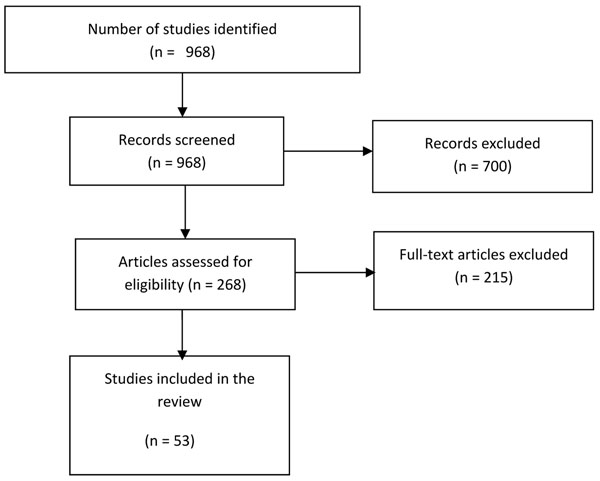
Background: Given the recognized benefits of breastfeeding for the health of the mother and infants, the World Health Organization (WHO) recommends exclusive breastfeeding (EBF) for the first six months of life. However, the prevalence of EBF is low globally in many of the developing and developed countries around the world. There is much interest in the effectiveness of breastfeeding promotion interventions on breastfeeding rates in early infancy. Methods: A systematic literature was conducted to identify all studies that evaluated the impact of breastfeeding promotional strategies on any breastfeeding and EBF rates at 4-6 weeks and at 6 months. Data were abstracted into a standard excel sheet by two authors. Meta-analyses were performed with different sub-group analyses. The overall evidence were graded according to the Child Health Epidemiology Reference Group (CHERG) rules using the adapted Grading of Recommendations, Assessment, Development and Evaluation (GRADE) criteria and recommendations made from developing country studies for inclusion into the Live Saved Tool (LiST) model. Results: After reviewing 968 abstracts, 268 studies were selected for potential inclusion, of which 53 randomized and quasi-randomized controlled trials were selected for full abstraction. Thirty two studies gave the outcome of EBF at 4-6 weeks postpartum. There was a statistically significant 43% increase in this outcome, with 89% and 20% significant increases in developing and developed countries respectively. Fifteen studies reported EBF outcomes at 6 months. There was an overall 137% increase, with a significant 6 times increase in EBF in developing countries, compared to 1.3 folds increase in developed country studies. Further sub-group analyses proved that prenatal counseling had a significant impact on breastfeeding outcomes at 4-6 weeks, while both prenatal and postnatal counseling were important for EBF at 6 months. Conclusion: Breastfeeding promotion interventions increased exclusive and any breastfeeding rates at 4-6 weeks and at 6 months. A relatively greater impact of these interventions was seen in developing countries with 1.89 and 6 folds increase in EBF rates at 4-6 weeks and at 6 months respectively.
Overview
The claims and statistics of this paper haven’t been checked yet.
Free: it reads the open-access text and checks the first 5 claims that cite a source we can check. Create a free account to check every claim.
Integrity signals
Registry
Cites
Statistics
Figures
Verification
Claims the paper makes
The claims and statistics of this paper haven’t been checked yet.
Free: it reads the open-access text and checks the first 5 claims that cite a source we can check. Create a free account to check every claim.
Claims other papers make about this one
Each is checked against this paper’s own text: does it say what the citing paper says it does?
The source backs part of the claim, not all of it — or backs it for a different population, condition or comparison.
In the citing paper
“According to systematic reviews and meta-analyses, breastfeeding support interventions that focus on prenatal/antenatal education and continuous long-term care reinforce the intention of women to breastfeed antenatally; such interventions are supportive of the duration and exclusivity of breastfeeding, and are characterized as effective [9,10,11,12,13,14,15,16,17].”
From Association between Breastfeeding Duration and Long-Term Midwifery-Led Support and Psychosocial Support: Outcomes from a Greek Non-Randomized Controlled Perinatal Health Intervention (2021) · cites this paper as [15]
Experimental — accuracy not yet measured
Self-check
Percentages, sums and reported differences re-computed from the paper’s own numbers.
The self-check needs the paper’s full text.
Citations
Cites
Grading quality of evidence and strength of recommendations
(2004) · BMJ · doi:10.1136/bmj.328.7454.1490 · Cited by 8,477
Breastfeeding and the Use of Human Milk
Breastfeeding, S. O. (2005) · Pediatrics · doi:10.1542/peds.2004-2491 · Cited by 5,323
Ross, C. E., Cohen, S., & Syme, S. L. (1986) · Contemporary Sociology · doi:10.2307/2071725 · Cited by 3,927
How many child deaths can we prevent this year?
Jones, G., Steketee, R. W., Black, R. E., Bhutta, Z. A., & Morris, S. S. (2003) · The Lancet · doi:10.1016/s0140-6736(03)13811-1 · Cited by 2,244
Self-citationHow many child deaths can we prevent this year?
(2003) · Child: Care, Health and Development · doi:10.1046/j.1365-2214.2003.00376_6.x · Cited by 1,580
Kramer, M. S., Chalmers, B., Hodnett, E. D., Sevkovskaya, Z., Dzikovich, I., Shapiro, S., Collet, J.-P., Vanilovich, I., Mezen, I., Ducruet, T., et al. (2001) · JAMA · doi:10.1001/jama.285.4.413 · Cited by 1,534
Effective Care in Pregnancy and Childbirth
Paintin, D. B. (1990) · BJOG: An International Journal of Obstetrics & Gynaecology · doi:10.1111/j.1471-0528.1990.tb02464.x · Cited by 1,330
Breastfeeding and the Use of Human Milk
Work Group on Breastfeeding (1997) · Pediatrics · doi:10.1542/peds.100.6.1035 · Cited by 1,234
Effective Care in Pregnancy and Childbirth
Newton, E. (1990) · Journal of Human Lactation · doi:10.1177/089033449000600329 · Cited by 985
Support for breastfeeding mothers
Britton, C., McCormick, F. M., Renfrew, M. J., Wade, A., & King, S. E. (2007) · Cochrane Database of Systematic Reviews · doi:10.1002/14651858.cd001141.pub3 · Cited by 567
Differences in morbidity between breast-fed and formula-fed infants
Dewey, K. G., Heinig, M. J., & Nommsen-Rivers, L. A. (1995) · The Journal of Pediatrics · doi:10.1016/s0022-3476(95)70395-0 · Cited by 514
Growth of Breast-Fed and Formula-Fed Infants From 0 to 18 Months: The DARLING Study
Dewey, K. G., Heinig, M. J., Nommsen, L. A., Peerson, J. M., & Lönnerdal, B. (1992) · Pediatrics · doi:10.1542/peds.89.6.1035 · Cited by 427
Morrow, A. L., Guerrero, M. L., Shults, J., Calva, J. J., Lutter, C., Bravo, J., Ruiz-Palacios, G., Morrow, R. C., & Butterfoss, F. D. (1999) · The Lancet · doi:10.1016/s0140-6736(98)08037-4 · Cited by 414
Haider, R., Ashworth, A., Kabir, I., & Huttly, S. R. (2000) · The Lancet · doi:10.1016/s0140-6736(00)03159-7 · Cited by 396
Dennis, C., HODNETT, E. D., Gallop, R., & CHALMERS, B. E. (2002) · PubMed Central · Cited by 383
Bhandari, N., Bahl, R., Mazumdar, S., Martines, J., Black, R. E., & Bhan, M. K. (2003) · The Lancet · doi:10.1016/s0140-6736(03)13134-0 · Cited by 376
Costs and effectiveness of community postnatal support workers: randomised controlled trial
Morrell, C. J. (2000) · BMJ · doi:10.1136/bmj.321.7261.593 · Cited by 229 · cited 4×
“Twenty studies included this outcome of any breastfeeding at 6 months [21,25,26,31,44,45,54,56,60,71-73, 77-82,84-86], of which two were from developing countries [25,84].”
BackgroundInfluentialNeurological differences between 9-year-old children fed breast-milk or formula-milk as babies
Lanting, C. I., Huisman, M., Boersma, E. R., Touwen, B. C. L., & Fidler, V (1994) · The Lancet · doi:10.1016/s0140-6736(94)90692-0 · Cited by 228
Breast-Feeding and Optimal Visual Development
Birch, E., Birch, D., Hoffman, D., Hale, L., Everett, M., & Uauy, R. (1993) · Journal of Pediatric Ophthalmology & Strabismus · doi:10.3928/0191-3913-19930101-09 · Cited by 213
Anderson, A. K., Damio, G., Young, S., Chapman, D. J., & Pérez-Escamilla, R. (2005) · Archives of Pediatrics & Adolescent Medicine · doi:10.1001/archpedi.159.9.836 · Cited by 208
Labarere, J., Gelbert-Baudino, N., Ayral, A.-S., Duc, C., Berchotteau, M., Bouchon, N., Schelstraete, C., Vittoz, J.-P., Francois, P., & Pons, J.-C. (2005) · Pediatrics · doi:10.1542/peds.2004-1362 · Cited by 201
Lactation Counseling Increases Exclusive Breast-Feeding Rates in Ghana
Aidam, B. A., Pérez‐Escamilla, R., & Lartey, A. A. (2005) · Journal of Nutrition · doi:10.1093/jn/135.7.1691 · Cited by 191
Treacher, T. T., & Caja, G. (2002) · Sheep Nutrition · doi:10.1079/9780851995953.0213 · Cited by 185
Chapman, D. J., Damio, G., Young, S., & Pérez-Escamilla, R. (2004) · Archives of Pediatrics & Adolescent Medicine · doi:10.1001/archpedi.158.9.897 · Cited by 182
Breastfeeding Duration, Costs, and Benefits of a Support Program for Low‐Income Breastfeeding Women
Pugh, L. C., Milligan, R. A., Frick, K. D., Spatz, D., & Bronner, Y. (2002) · Birth · doi:10.1046/j.1523-536x.2002.00169.x · Cited by 182
Standards for CHERG reviews of intervention effects on child survival
Walker, N., Fischer-Walker, C., Bryce, J., Bahl, R., Cousens, S., & Effects, W. F. T. C. R. G. O. I. (2010) · International Journal of Epidemiology · doi:10.1093/ije/dyq036 · Cited by 182 · cited 5×
“Our review incorporates both education and support studies, includes studies published after this review and also applies the Child Health Epidemiology Reference Group (CHERG) guidelines for inclusion of estimates into the Lives Saved Tool (LiST) model [33], especially on studies from developing countries.”
BackgroundMethodInfluentialSu, L.-L., Chong, Y.-S., Chan, Y.-H., Chan, Y.-S., Fok, D., Tun, K.-T., Ng, F. S. P., & Rauff, M. (2007) · BMJ · doi:10.1136/bmj.39279.656343.55 · Cited by 171
Changing Hospital Practices to Increase the Duration of Breastfeeding
Wright, A., Rice, S. A., & Wells, S. (1996) · PEDIATRICS · doi:10.1542/peds.97.5.669 · Cited by 154
Frank, D. A., Wirtz, S. J., Sorenson, J. R., & Heeren, T. (1987) · Pediatrics · doi:10.1542/peds.80.6.845 · Cited by 146
A comparison of social support variables between women who intend to breast or bottle feed
Matich, J. R., & Sims, L. S. (1992) · Social Science & Medicine · doi:10.1016/0277-9536(92)90260-w · Cited by 145
Caulfield, L. E., Gross, S. M., Bentley, M. E., Bronner, Y., Kessler, L., Jensen, J., Weathers, B., & Paige, D. M. (1998) · Journal of Human Lactation · doi:10.1177/089033449801400110 · Cited by 142
Postnatal home visits in teenage mothers: a randomised controlled trial
Quinlivan, J. A., Box, H., & Evans, S. F. (2003) · The Lancet · doi:10.1016/s0140-6736(03)12770-5 · Cited by 137
Postpartum Positioning and Attachment Education for Increasing Breastfeeding: A Randomized Trial
Henderson, A., Stamp, G., & Pincombe, J. (2001) · Birth · doi:10.1046/j.1523-536x.2001.00236.x · Cited by 117
Effect of early postnatal breastfeeding support: a cluster randomized community based trial
Kronborg, H., Væth, M., Olsen, J., Iversen, L., & Harder, I. (2007) · Acta Paediatrica · doi:10.1111/j.1651-2227.2007.00341.x · Cited by 106 · cited 2×
“Fifteen studies were found that looked at this outcome [31,38,50,52,54,60,64,66,68-74], of which six were from developing countries [38,64,66,68-70].”
BackgroundDuffy, E. P., Percival, P., & Kershaw, E. (1997) · Midwifery · doi:10.1016/s0266-6138(97)80005-8 · Cited by 106
Infant Feeding and Mental and Motor Development at 18 Months of Age in First Born Singletons
Florey, C. D. V., Leech, A. M., & Blackhall, A. (1995) · International Journal of Epidemiology · doi:10.1093/ije/24.supplement_1.s21 · Cited by 106
Graffy, J., Taylor, J., Williams, A., & Eldridge, S. (2004) · BMJ · doi:10.1136/bmj.328.7430.26 · Cited by 104
Nommsen‐Rivers, L. A., Mastergeorge, A. M., Hansen, R. L., Cullum, A. S., & Dewey, K. G. (2009) · Journal of Obstetric, Gynecologic & Neonatal Nursing · doi:10.1111/j.1552-6909.2009.01005.x · Cited by 104
Simple Antenatal Preparation to Improve Breastfeeding Practice: A Randomized Controlled Trial
Mattar, C. N., Chong, Y.-S., Chan, Y.-S., Chew, A., Tan, P., Chan, Y.-H., & Rauff, M. H.-J. (2007) · Obstetrics & Gynecology · doi:10.1097/01.aog.0000249613.15466.26 · Cited by 103
Forster, D., McLachlan, H., Lumley, J., Beanland, C., Waldenström, U., & Amir, L. (2004) · Birth · doi:10.1111/j.0730-7659.2004.00302.x · Cited by 102
Aksu, H., Küçük, M., & Düzgün, G. (2011) · The Journal of Maternal-Fetal & Neonatal Medicine · doi:10.3109/14767058.2010.497569 · Cited by 98 · cited 2×
“Fifteen studies were found that looked at this outcome [31,38,50,52,54,60,64,66,68-74], of which six were from developing countries [38,64,66,68-70].”
BackgroundFROOZANI, M. D., Permehzadeh, K., Motlagh, A. D., & Golestan, B. (1999) · Europe PMC (PubMed Central) · Cited by 97
Influences on Breast-Feeding by Lower-Income Women
Sciacca, J. P., Phipps, B. L., Dube, D. A., & Ratliff, M. I. (1995) · Journal of the American Dietetic Association · doi:10.1016/s0002-8223(95)00083-6 · Cited by 90
Evaluation of a community-based intervention to increase breastfeeding prevalence
McInnes, R., Love, J., & Stone, D. (2000) · Journal of Public Health · doi:10.1093/pubmed/22.2.138 · Cited by 88
Breast-feeding in a Low-Income Population: Program to Increase Incidence and Duration
Brent, N. B. (1995) · Archives of Pediatrics & Adolescent Medicine · doi:10.1001/archpedi.1995.02170200088014 · Cited by 86
The Effect of Postpartum Lactation Counseling on the Duration of Breast-feeding in Low-Income Women
Grossman, L. K. (1990) · Archives of Pediatrics & Adolescent Medicine · doi:10.1001/archpedi.1990.02150280093019 · Cited by 83
A PROSPECTIVE STUDY OF INDIVIDUAL COURSES OF BREAST FEEDING
SJÖLIN, S., HOFVANDER, Y., & HILLERVIK, C. (1979) · Acta Paediatrica · doi:10.1111/j.1651-2227.1979.tb05050.x · Cited by 81
Pugh, L. C., Serwint, J. R., Frick, K. D., Nanda, J. P., Sharps, P. W., Spatz, D. L., & Milligan, R. A. (2010) · Academic Pediatrics · doi:10.1016/j.acap.2009.07.005 · Cited by 81
Wiles, L. S. (1984) · Journal of Obstetric, Gynecologic & Neonatal Nursing · doi:10.1111/j.1552-6909.1984.tb01136.x · Cited by 78
Georgia's Breastfeeding Promotion Program for Low-Income Women
Ahluwalia, I. B., Tessaro, I., Grummer-Strawn, L. M., MacGowan, C., & Benton-Davis, S. (2000) · Pediatrics · doi:10.1542/peds.105.6.e85 · Cited by 76
Muirhead, P., Butcher, G., Rankin, J., & Munley, A. (2006) · Europe PMC (PubMed Central) · Cited by 73
Effects of Support on the Initiation and Duration of Breastfeeding
Gill, S. L., Reifsnider, E., & Lucke, J. F. (2007) · Western Journal of Nursing Research · doi:10.1177/0193945906297376 · Cited by 71
Randomized Trial of Postpartum Care After Hospital Discharge
Gagnon, A. J., Dougherty, G., Jimenez, V., & Leduc, N. (2002) · Pediatrics · doi:10.1542/peds.109.6.1074 · Cited by 68
Mcdonald, S., Henderson, J. J., Faulkner, S., Evans, S., & Hagan, R. (2010) · Midwifery · doi:10.1016/j.midw.2008.03.001 · Cited by 66
Effectiveness of a prenatal education programme on breastfeeding outcomes in Taiwan
Lin, S., Chien, L., Tai, C., & Lee, C. (2008) · Journal of Clinical Nursing · doi:10.1111/j.1365-2702.2006.01927.x · Cited by 62
Porteous, R., Kaufman, K., & Rush, J. (2000) · Journal of Human Lactation · doi:10.1177/089033440001600406 · Cited by 59
Petrova, A., Ayers, C., Stechna, S., Gerling, J. A., & Mehta, R. (2009) · Breastfeeding Medicine · doi:10.1089/bfm.2008.0126 · Cited by 58
A Quasi-Experimental Evaluation of a Breastfeeding Support Program for Low Income Women in Michigan
Olson, B. H., Haider, S. J., Vangjel, L., Bolton, T. A., & Gold, J. G. (2008) · Maternal and Child Health Journal · doi:10.1007/s10995-008-0430-5 · Cited by 53
Evaluating the effect of a breastfeeding consultant on the duration of breastfeeding.
Lynch, S. A., Am, K., Tg, H., & Coldman, A. J. (1986) · PubMed · Cited by 52
Perez-Escamilla, R. (1994) · Journal of Tropical Pediatrics · doi:10.1093/tropej/40.3.137 · Cited by 51
WALLACE, L. M., Dunn, O. M., Alder, E. M., Inch, S., Hills, R. K., & Law, S. M. (2005) · Midwifery · doi:10.1016/j.midw.2005.06.004 · Cited by 51
Lactation nurse increases duration of breast feeding.
Jones, D. A., & West, R. R. (1985) · Archives of Disease in Childhood · doi:10.1136/adc.60.8.772 · Cited by 48
Napoli, A. D., Lallo, D. D., C, F., C, F., E, A., & G, G. (2004) · Acta Paediatrica · doi:10.1080/08035250410028525 · Cited by 45
Chapman, D. J., Damio, G., & Pérez-Escamilla, R. (2004) · Journal of Human Lactation · doi:10.1177/0890334404269845 · Cited by 44
Hj, D., & Ashworth, A. (1987) · PubMed · Cited by 43
Hopkinson, J., & Konefal Gallagher, M. (2009) · Journal of Human Lactation · doi:10.1177/0890334409335482 · Cited by 40
Lin, C., Kuo, S., Lin, K., & Chang, T.-Y. (2008) · Journal of Clinical Nursing · doi:10.1111/j.1365-2702.2008.02289.x · Cited by 38
Jalil, F., KARLBERG, J. P. E., Hanson, L. Å., & Lindblad, B. S. (1989) · Acta Paediatrica · doi:10.1111/j.1651-2227.1989.tb11197.x · Cited by 38
Kupratakul, J., Taneepanichskul, S., Voramongkol, N., & Phupong, V. (2010) · PubMed · Cited by 35
Maternal grandmothers and support for breastfeeding
Winterburn, S., Jiwa, M., & Thompson, J. (2003) · eSpace (Curtin University) · Cited by 34
Barros, F. C., Halpern, R., Victora, C. G., Teixeira, A. M. B., & Béria, J. U. (1994) · Revista de Saúde Pública · doi:10.1590/s0034-89101994000400006 · Cited by 34
Evaluation of a peer counselling programme to sustain breastfeeding practice in Hong Kong
Wong, E. H., Nelson, E. A. S., Choi, K. C., Wong, K.-P., Ip, C., & Ho, L.-C. (2007) · International Breastfeeding Journal · doi:10.1186/1746-4358-2-12 · Cited by 31
Forster, D., McLachlan, H., Lumley, J., Beanland, C., Waldenström, U., Harris, H., Earl, D., & Dyson, K. (2003) · BMC Pregnancy and Childbirth · doi:10.1186/1471-2393-3-5 · Cited by 28
Lock, S. E. (1992) · Family & Community Health · doi:10.1097/00003727-199210000-00013 · Cited by 28
Mongeon, M., & Allard, R. (1995) · PubMed · Cited by 28
Palti, H., Valderama, C., Pogrund, R., Jarkoni, J., & KURTZMAN, C. (1988) · PubMed · Cited by 20
(1998) · PubMed · Cited by 15
Effects of Breastfeeding on the Baby and on Its Immune System
Hanson, L. Å., Wiedermann, U., Ashraf, R., Zaman, S., Adlerberth, I., Dahlgren, U. I., Wold, A. E., & Jalil, F. (1996) · Food and Nutrition Bulletin · doi:10.1177/156482659601700420 · Cited by 11
Research works printed but not linked: 6
- US Department of Health and Human Services Healthy People 2010 2000 Washington, DC: US Government Printing Office
- RevMan The Cochrane Colloboration. Review Manager (RevMan) 5 for Windows 2003 Oxford, England
- Langer A Intrapartum Social Support and EBFin Mexico Wellstart International, Expanded Promotion of Breastfeeding Program EBFPromotion: A Summary of Findings from EPB's Applied Research Program (1992-1996) 1996
- Neyzi O Results of an Educational Intervention Study on Promotion of Breastfeeding 1988 Istanbul, Turkey: Institute of Child Health, University of Istanbul and Barem Research Company
- Wrenn SE Effects of a model-based intervention on breastfeeding attrition [dissertation] 1997 University of Texas
- Aksu H Kucuk M Duzgun G The effect of postnatal breastfeeding education/support offered at home 3 days after delivery on breastfeeding duration and knowledge: a randomized trial J Matern Fetal Neonatal Med 2010 20608806
Cited by
Bhutta, Z. A., Das, J. K., Rizvi, A., Gaffey, M. F., Walker, N., Horton, S., Webb, P., Lartey, A., & Black, R. E. (2013) · The Lancet · doi:10.1016/s0140-6736(13)60996-4 · Cited by 3,093
Self-citationBreastfeeding promotion interventions and breastfeeding practices: a systematic review
Haroon, S., Das, J. K., Salam, R. A., Imdad, A., & Bhutta, Z. A. (2013) · BMC Public Health · doi:10.1186/1471-2458-13-s3-s20 · Cited by 460
Self-citationInterventions to improve breastfeeding outcomes: a systematic review and meta‐analysis
Sinha, B., Chowdhury, R., Sankar, M. J., Martines, J., Taneja, S., Mazumder, S., Rollins, N., Bahl, R., & Bhandari, N. (2015) · Acta Paediatrica · doi:10.1111/apa.13127 · Cited by 378
Preconception care: nutritional risks and interventions
Dean, S. V., Lassi, Z. S., Imam, A. M., & Bhutta, Z. A. (2014) · Reproductive Health · doi:10.1186/1742-4755-11-s3-s3 · Cited by 279
“iron supplementation during pregnancy can be a protective factor against low birth weight [203], and given”
BackgroundSelf-citationGlobal Nutrition Epidemiology and Trends
Bhutta, Z. A., & Salam, R. A. (2012) · Annals of Nutrition and Metabolism · doi:10.1159/000345167 · Cited by 167
Self-citation
Metadata
- Authors
- Imdad, A., Yakoob, M. Y., & Bhutta, Z. A.
- Affiliations
- Aga Khan University (PK)
- Corresponding author
- Bhutta, Zulfiqar A
- Venue
- BMC Public Health
- Published
- 2011-04-13
- Volume
- 11
- Issue
- S3
- Pages
- S24-S24
- ISSN
- 1471-2458 (ISSN-L)
- PMC
- PMC3231898
- OpenAlex
- W2046383760
- Semantic Scholar
- d2fc65eca719e896c2048c9382aac11516dcf725
- Cited by
- 288
- References
- 81
- Citations by year
- 2026: 7 · 2025: 7 · 2024: 9 · 2023: 9 · 2022: 19 · 2021: 21 · 2020: 30 · 2019: 26 · 2018: 28 · 2017: 25 · 2016: 23 · 2015: 17 · 2014: 21 · 2013: 25 · 2012: 18
- FWCI
- 16.15
- Type
- journal article
- Language
- en
- Open access
- gold
- doi.org
- Licence
- cc-by
- Locations
- BMC Public Health (publishedVersion, cc-by)
- Europe PMC (PubMed Central) (publishedVersion, cc-by)
- PubMed Central (publishedVersion, cc-by)
- PubMed (publishedVersion)
- eCommons - AKU (Aga Khan University) (submittedVersion)
- DOAJ (DOAJ: Directory of Open Access Journals) (submittedVersion)
- Funders
- Bill and Melinda Gates Foundation
- UNICEF
- Topics
- Health Sciences › Medicine › Epidemiology › Breastfeeding Practices and Influences
- Health Sciences › Medicine › Pediatrics, Perinatology and Child Health › Global Maternal and Child Health
- Health Sciences › Nursing › Nutrition and Dietetics › Infant Nutrition and Health
- Keywords
- breastfeeding promotion, exclusive breastfeeding, breastfeeding rates, prenatal counseling, postnatal counseling, infant feeding, developing countries, WHO guidelines, infant health
- MeSH terms
- Breast Feeding, Developing Countries, Female, Health Promotion, Humans, Infant, Time Factors, Program Evaluation, Randomized Controlled Trials as Topic
About these checks
Registry, retraction, Cites and statistics results are computed, not judged, with one exception: a printed reference that no index lists is read once by a model before it counts as a citation error. Claims are extracted by a model and kept only when their quote appears verbatim in the text; each cited source is then checked, with a model’s help, for whether it says what the claim relies on. Those verdicts can be wrong — read the claim’s quote and the cited source before relying on one.
Statistics and arithmetic are recomputed, not judged.
Confidence bands are shown only for fields calibrated on our annotated test set. None is calibrated yet, so no band is shown.
What counts as a claim ›How we measure confidence ›How we check this ›
Are you an author, or do you see a problem with this page? Request a review
Data sources
Bibliographic data: Semantic Scholar, OpenAlex, Crossref.
Contains information from the Semantic Scholar Academic Graph Datasets, made available under the ODC Attribution License (ODC-BY 1.0).
Semantic Scholar’s data is described in: Kinney, R., et al. (2023). The Semantic Scholar Open Data Platform. arXiv:2301.10140.
