

Impact of maternal education about complementary feeding and provision of complementary foods on child growth in developing countries
Open accessThe DOI matches its Crossref record; 44 of the 45 references it cites were found in a registry or an index.
Abstract
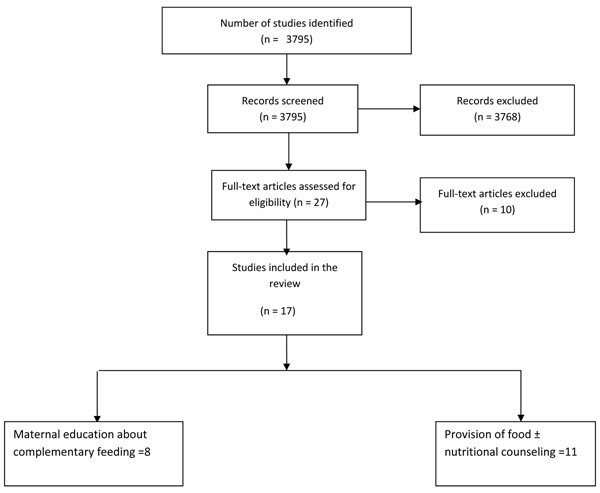
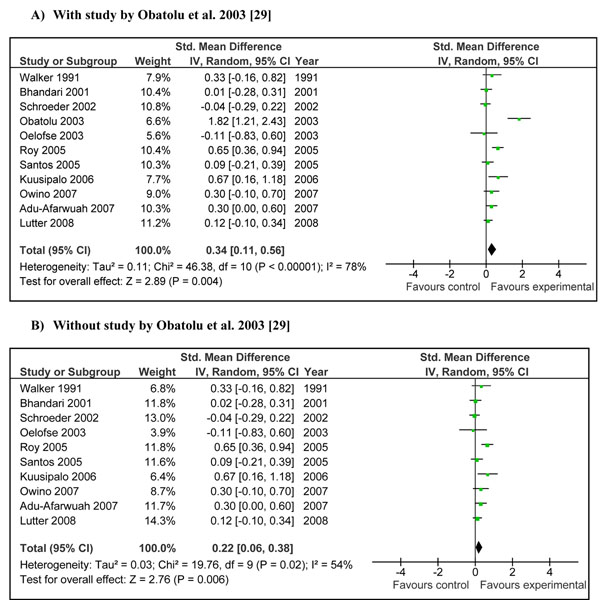
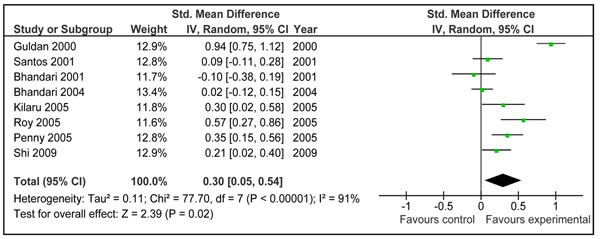
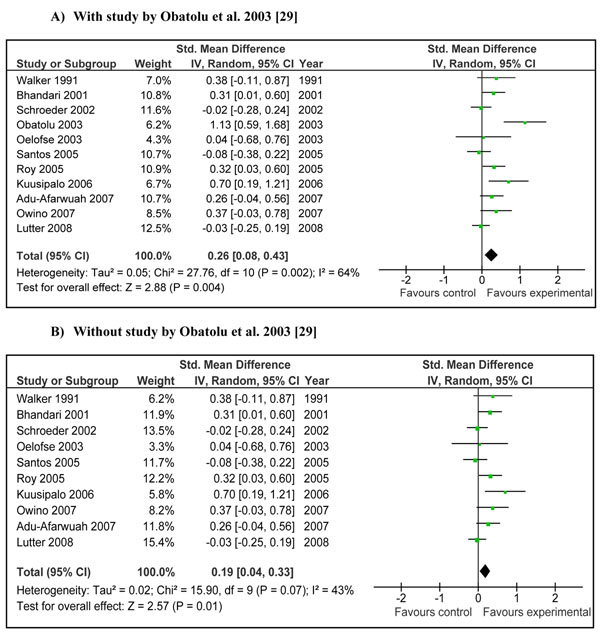
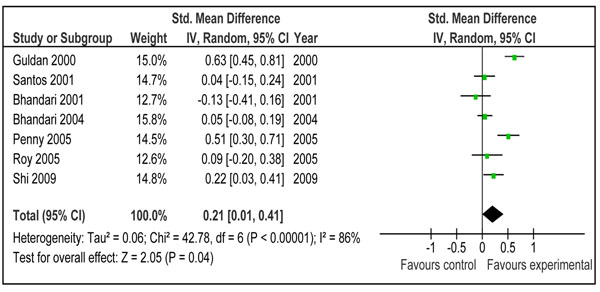
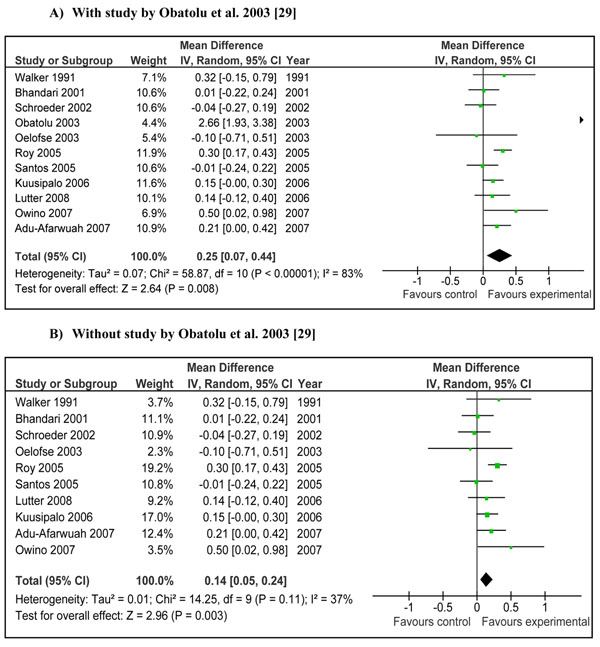
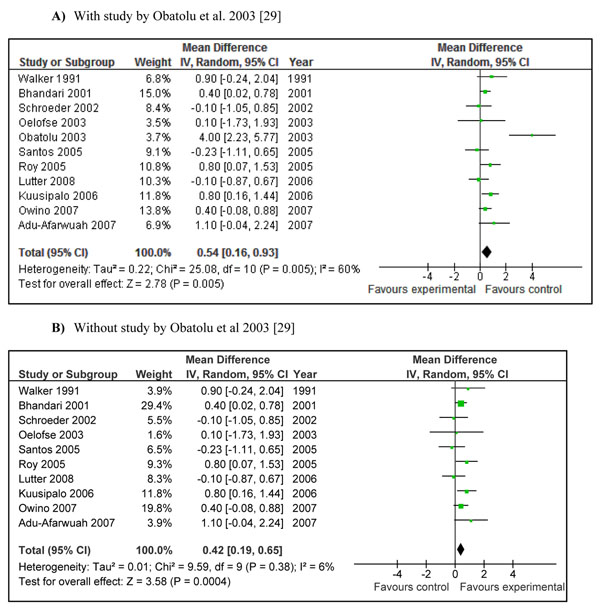
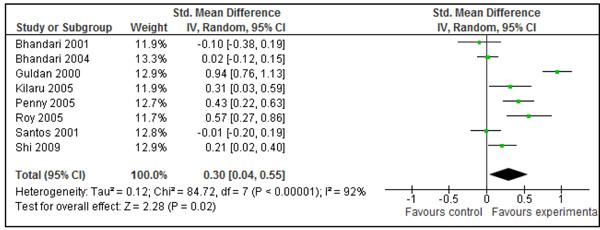
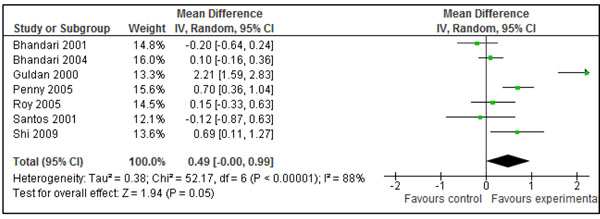
Background: Childhood undernutrition is prevalent in low and middle income countries. It is an important indirect cause of child mortality in these countries. According to an estimate, stunting (height for age Z score < -2) and wasting (weight for height Z score < -2) along with intrauterine growth restriction are responsible for about 2.1 million deaths worldwide in children < 5 years of age. This comprises 21 % of all deaths in this age group worldwide. The incidence of stunting is the highest in the first two years of life especially after six months of life when exclusive breastfeeding alone cannot fulfill the energy needs of a rapidly growing child. Complementary feeding for an infant refers to timely introduction of safe and nutritional foods in addition to breast-feeding (BF) i.e. clean and nutritionally rich additional foods introduced at about six months of infant age. Complementary feeding strategies encompass a wide variety of interventions designed to improve not only the quality and quantity of these foods but also improve the feeding behaviors. In this review, we evaluated the effectiveness of two most commonly applied strategies of complementary feeding i.e. timely provision of appropriate complementary foods (± nutritional counseling) and education to mothers about practices of complementary feeding on growth. Recommendations have been made for input to the Lives Saved Tool (LiST) model by following standardized guidelines developed by Child Health Epidemiology Reference Group (CHERG). Methods: We conducted a systematic review of published randomized and quasi-randomized trials on PubMed, Cochrane Library and WHO regional databases. The included studies were abstracted and graded according to study design, limitations, intervention details and outcome effects. The primary outcomes were change in weight and height during the study period among children 6-24 months of age. We hypothesized that provision of complementary food and education of mother about complementary food would significantly improve the nutritional status of the children in the intervention group compared to control. Meta-analyses were generated for change in weight and height by two methods. In the first instance, we pooled the results to get weighted mean difference (WMD) which helps to pool studies with different units of measurement and that of different duration. A second meta-analysis was conducted to get a pooled estimate in terms of actual increase in weight (kg) and length (cm) in relation to the intervention, for input into the LiST model. Results: After screening 3795 titles, we selected 17 studies for inclusion in the review. The included studies evaluated the impact of provision of complementary foods (±nutritional counseling) and of nutritional counseling alone. Both these interventions were found to result in a significant increase in weight [WMD 0.34 SD, 95% CI 0.11 – 0.56 and 0.30 SD, 95 % CI 0.05-0.54 respectively) and linear growth [WMD 0.26 SD, 95 % CI 0.08-0.43 and 0.21 SD, 95 % CI 0.01-0.41 respectively]. Pooled results for actual increase in weight in kilograms and length in centimeters showed that provision of appropriate complementary foods (±nutritional counseling) resulted in an extra gain of 0.25kg (±0.18) in weight and 0.54 cm (±0.38) in height in children aged 6-24 months. The overall quality grades for these estimates were that of ‘moderate’ level. These estimates have been recommended for inclusion in the Lives Saved Tool (LiST) model. Education of mother about complementary feeding led to an extra weight gain of 0.30 kg (±0.26) and a gain of 0.49 cm (±0.50) in height in the intervention group compared to control. These estimates had been recommended for inclusion in the LiST model with an overall quality grade assessment of ‘moderate’ level. Conclusion: Provision of appropriate complementary food, with or without nutritional education, and maternal nutritional counseling alone lead to significant increase in weight and height in children 6-24 months of age. These interventions can significantly reduce the risk of stunting in developing countries and are recommended for inclusion in the LiST tool.
Overview
The claims and statistics of this paper haven’t been checked yet.
Free: it reads the open-access text and checks the first 5 claims that cite a source we can check. Create a free account to check every claim.
Integrity signals
Registry
Cites
Statistics
Figures
Verification
Claims the paper makes
The claims and statistics of this paper haven’t been checked yet.
Free: it reads the open-access text and checks the first 5 claims that cite a source we can check. Create a free account to check every claim.
Claims other papers make about this one
Each is checked against this paper’s own text: does it say what the citing paper says it does?
The source backs part of the claim, not all of it — or backs it for a different population, condition or comparison.
In the citing paper
“Nutrition education on appropriate feeding and hygiene practices that target mothers of infants and young children has been reported to significantly improve knowledge, nutritional status, and minimize disease [16].”
From Effect of a Nutrition Education Intervention on Food Safety Knowledge, Attitudes and Practices of Mothers of Children under 5 Years in the Peri-Urban Areas of Bobo-Dioulasso: Before and after Study (2024) · cites this paper as [16]
Experimental — accuracy not yet measured
Self-check
Percentages, sums and reported differences re-computed from the paper’s own numbers.
The self-check needs the paper’s full text.
Citations
Cites
Statistical Power Analysis for the Behavioral Sciences
Muller, K. (1989) · Technometrics · doi:10.1080/00401706.1989.10488618 · Cited by 99,167
Statistical power analysis for the behavioral sciences
(1990) · Computers, Environment and Urban Systems · doi:10.1016/0198-9715(90)90050-4 · Cited by 65,269
Cochrane Handbook for Systematic Reviews of Interventions: Cochrane Book Series
(2008) · doi:10.1002/9780470712184 · Cited by 25,048
Grading quality of evidence and strength of recommendations
(2004) · BMJ · doi:10.1136/bmj.328.7454.1490 · Cited by 8,477 · cited 2×
“The available evidence was graded according to the Child Health Epidemiology Reference Group (CHERG) adaptation of the GRADE technique [8].”
MethodMaternal and child undernutrition: global and regional exposures and health consequences
Black, R. E., Allen, L. H., Bhutta, Z. A., Caulfield, L. E., de Onis, M., Ezzati, M., Mathers, C., & Rivera, J. (2008) · The Lancet · doi:10.1016/s0140-6736(07)61690-0 · Cited by 6,443 · cited 3×
“This comprises 21 % of all deaths in this age group worldwide [1].”
BackgroundSelf-citationMethods of Meta-Analysis: Correcting Error and Bias in Research Findings
Schmidt, F. L., & Hunter, J. E. (2015) · doi:10.4135/9781483398105 · Cited by 5,542
Methods of Meta-Analysis: Correcting Error and Bias in Research Findings.
Raudenbush, S. W., Hunter, J. E., & Schmidt, F. L. (1991) · Journal of the American Statistical Association · doi:10.2307/2289738 · Cited by 2,327
What works? Interventions for maternal and child undernutrition and survival
Bhutta, Z. A., Ahmed, T., Black, R. E., Cousens, S., Dewey, K., Giugliani, E., Haider, B. A., Kirkwood, B., Morris, S. S., Sachdev, H., et al. (2008) · The Lancet · doi:10.1016/s0140-6736(07)61693-6 · Cited by 2,258 · cited 7×
“In this way more studies were included compared to studies included in the review published in Lancet Under-nutrition Series [7].”
BackgroundResultInfluentialSelf-citationMeta-Analysis: Quantitative Methods for Research Synthesis
Rosenthal, R., & Wolf, F. M. (1987) · Contemporary Sociology · doi:10.2307/2071646 · Cited by 1,371
Dewey, K. G., & Adu‐Afarwuah, S. (2008) · Maternal & Child Nutrition · doi:10.1111/j.1740-8709.2007.00124.x · Cited by 948 · cited 7×
“These include nutritional counseling to mothers designed to promote healthy feeding practices, provision of complementary foods and supplementation with foods either fortified with multiple micronutrients or with increased energy content [3,6].”
BackgroundResultInfluentialGuiding principles for complementary feeding of the breastfed child
Dewey, K. G. (2003) · Revista Panamericana De Salud Publica-pan American Journal of Public Health · Cited by 908
Brown, K. H., Dewey, K. G., & Allen, L. (1998) · Cited by 838
Wolf, F. (1986) · doi:10.4135/9781412984980 · Cited by 784
Worldwide Timing of Growth Faltering: Implications for Nutritional Interventions
Shrimpton, R., Victora, C. G., de Onis, M., Lima, R. C., Blössner, M., & Clugston, G. (2001) · Pediatrics · doi:10.1542/peds.107.5.e75 · Cited by 722 · cited 1×
“The incidence of stunting is the highest in this period as children have high demand for nutrients and there are limitations in the quality and quantity of available foods, especially after exclusive breastfeeding [2,3].”
BackgroundReversibility of stunting: epidemiological findings in children from developing countries.
Martorell, R., Khan, L. K., & Schroeder, D. G. (1994) · PubMed · Cited by 515
Rivera, J. A., Sotres-Alvarez, D., Habicht, J.-P., Shamah, T., & Villalpando, S. (2004) · JAMA · doi:10.1001/jama.291.21.2563 · Cited by 390 · cited 1×
“fortified food vs. non-fortified food) [20-22].In the other two excluded studies; there was other co-intervention in the study group e.g. conditional cash transfer [23, 24 ].”
BackgroundPenny, M. E., Creed-Kanashiro, H. M., Robert, R. C., Narro, M. R., Caulfield, L. E., & Black, R. E. (2005) · The Lancet · doi:10.1016/s0140-6736(05)66426-4 · Cited by 345 · cited 6×
“There were a total of eight studies for the intervention of maternal education alone about complementary feeding practices [26,27, 31 ,32,35,37,39,40].”
BackgroundResultInfluentialAdu-Afarwuah, S., Lartey, A., Brown, K. H., Zlotkin, S., Briend, A., & Dewey, K. G. (2007) · The American Journal of Clinical Nutrition · doi:10.1093/ajcn/86.2.412 · Cited by 329 · cited 6×
“11 [25,26,28-30,33,34,36-38,41] RCT//quasi experimental Results are highly inflated by study by Obatolu et al.”
BackgroundMethodInfluentialImpact evaluation of a conditional cash transfer program: the Nicaraguan Red de Protección Social
Maluccio, J. A., & Flores, R. (2005) · Cited by 263
Bhandari, N., Mazumder, S., Bhan, M. K., Bahl, R., Martines, J., & Black, R. E. (2004) · The Journal of Nutrition · doi:10.1093/jn/134.9.2342 · Cited by 251
Lartey, A., Manu, A., Brown, K. H., Peerson, J. M., & Dewey, K. G. (1999) · The American Journal of Clinical Nutrition · doi:10.1093/ajcn/70.3.391 · Cited by 221 · cited 2×
“In two of these studies education approaches were evaluated [16,18] and in rest provision of complementary food (±nutritional counseling) was the main intervention [15,17,19].”
BackgroundGuldan, G. S., Fan, H.-C., Ma, X., Ni, Z.-Z., Xiang, X., & Tang, M.-Z. (2000) · The Journal of Nutrition · doi:10.1093/jn/130.5.1204 · Cited by 205
Standards for CHERG reviews of intervention effects on child survival
Walker, N., Fischer-Walker, C., Bryce, J., Bahl, R., Cousens, S., & Effects, W. F. T. C. R. G. O. I. (2010) · International Journal of Epidemiology · doi:10.1093/ije/dyq036 · Cited by 182 · cited 6×
“We abstracted the data into a standardized form [9] that included variables on study context, design and primary outcomes.”
BackgroundMethodInfluentialCaulfield, L. E., Huffman, S. L., & Piwoz, E. G. (1999) · Food and Nutrition Bulletin · doi:10.1177/156482659902000203 · Cited by 180 · cited 1×
“These include nutritional counseling to mothers designed to promote healthy feeding practices, provision of complementary foods and supplementation with foods either fortified with multiple micronutrients or with increased energy content [3,6].”
BackgroundNutrition Counseling Increases Weight Gain among Brazilian Children
Santos, I., Victora, C. G., Martines, J., Gonçalves, H., Gigante, D. P., Valle, N. J., & Pelto, G. (2001) · The Journal of Nutrition · doi:10.1093/jn/131.11.2866 · Cited by 175 · cited 7×
“There were a total of eight studies for the intervention of maternal education alone about complementary feeding practices [26,27,31,32,35,37,39,40].”
BackgroundMethodInfluentialSk, R., Fuchs, G. J., Mahmud, Z., Ara, G., Islam, S., Shafique, S., Akter, S. S., & Chakraborty, B. (2005) · PubMed · Cited by 151
Bhandari, N., Bahl, R., Nayyar, B., Khokhar, P., Rohde, J. E., & Bhan, M. K. (2001) · Journal of Nutrition · doi:10.1093/jn/131.7.1946 · Cited by 147 · cited 12×
“The direction of effect was in favor of intervention in all the studies except that in study by Bhandari et al. 2001.”
BackgroundMethodResultInfluentialShi, L., Zhang, J., Wang, Y., Caulfield, L. E., & Guyer, B. (2009) · Public Health Nutrition · doi:10.1017/s1368980009991364 · Cited by 139 · cited 8×
“There were a total of eight studies for the intervention of maternal education alone about complementary feeding practices [26,27,31,32,35,37,39,40].”
BackgroundMethodResultInfluentialWalker, S., Powell, C., Grantham‐McGregor, S., Himes, J., & Chang, S. (1991) · American Journal of Clinical Nutrition · doi:10.1093/ajcn/54.4.642 · Cited by 120
Vitolo, M. R., Bortolini, G. A., Feldens, C. A., & Drachler, M. D. L. (2005) · Cadernos de Saúde Pública · doi:10.1590/s0102-311x2005000500018 · Cited by 115
Growth and Micronutrient Status in Children Receiving a Fortified Complementary Food ,
Lutter, C. K., Rodríguez, A., Fuenmayor, G., Ávila, L. A. S., Sempértegui, F., & Escobar, J. (2008) · Journal of Nutrition · doi:10.1093/jn/138.2.379 · Cited by 99 · cited 8×
“11 [25,26,28-30,33,34,36-38,41] RCT//quasi experimental Results are highly inflated by study by Obatolu et al.”
BackgroundMethodInfluentialKuusipalo, H., Maleta, K., Briend, A., Manary, M., & Ashorn, P. (2006) · Journal of Pediatric Gastroenterology and Nutrition · doi:10.1097/01.mpg.0000235981.26700.d3 · Cited by 91 · cited 7×
“11 [25,26,28-30,33,34,36-38,41] RCT//quasi experimental Results are highly inflated by study by Obatolu et al.”
BackgroundMethodInfluentialCommunity-based nutrition education for improving infant growth in rural Karnataka.
Kilaru, A., Griffiths, P. L., Ganapathy, S., & Ghosh, S. (2005) · PubMed · Cited by 71
Oelofse, A., Van Raaij, J. M. A., Benade, A. J. S., Dhansay, M. A., Tolboom, J. J. M., & Hautvast, J. G. A. J. (2003) · International Journal of Food Sciences and Nutrition · doi:10.1080/0963748031000092161 · Cited by 71 · cited 7×
“11 [25,26,28-30,33,34,36-38,41] RCT//quasi experimental Results are highly inflated by study by Obatolu et al.”
BackgroundMethodInfluentialSchroeder, D. G., Pachón, H., Dearden, K. A., Ha, T. T., Lang, T. T., & Marsh, D. R. (2002) · Food and Nutrition Bulletin · doi:10.1177/15648265020234s208 · Cited by 68 · cited 8×
“11 [25,26,28-30,33,34,36-38,41] RCT//quasi experimental Results are highly inflated by study by Obatolu et al.”
BackgroundMethodInfluentialSazawal, S., Dhingra, U., Dhingra, P., Hiremath, G., Kumar, J., Sarkar, A., Menon, V. P., & Black, R. E. (2007) · BMJ · doi:10.1136/bmj.39035.482396.55 · Cited by 67 · cited 1×
“fortified food vs. non-fortified food) [ 20-22 ].In the other two excluded studies; there was other co-intervention in the study group e.g.”
BackgroundOwino, V. O., Kasonka, L., Sinkala, M., Wells, J. C. K., Eaton, S. D., Darch, T. S., Coward, A., Tomkins, A. M., & Filteau, S. (2007) · American Journal of Clinical Nutrition · doi:10.1093/ajcn/86.4.1094 · Cited by 65 · cited 7×
“11 [25,26,28-30,33,34,36-38,41] RCT//quasi experimental Results are highly inflated by study by Obatolu et al.”
BackgroundMethodInfluentialGrowth pattern of infants fed with a mixture of extruded malted maize and cowpea
Obatolu, V. A. (2003) · Nutrition · doi:10.1016/s0899-9007(02)01102-4 · Cited by 39 · cited 17×
“2003 [29] was one of the major contributor to summary estimate and heterogeneity (I(2)=64%).”
BackgroundMethodInfluentialHunter, J. E., & Schmidt, F. L. (1990) · Journal of International Crisis and Risk Communication Research · Cited by 39
Evaluation of the impact of a nutritional program for undernourished children in Brazil
Santos, I. S., Gigante, D. P., Coitinho, D. C., Haisma, H. H., Valle, N. C. J., & Valente, G. B. (2005) · Cadernos de Saúde Pública · doi:10.1590/s0102-311x2005000300011 · Cited by 34 · cited 7×
“11 [25,26,28-30,33,34,36-38,41] RCT//quasi experimental Results are highly inflated by study by Obatolu et al.”
BackgroundMethodInfluentialBeckett, C., Durnin, J. V. G. A., Aitchison, T. C., & Pollitt, E. (2000) · European Journal of Clinical Nutrition · doi:10.1038/sj.ejcn.1601005 · Cited by 28 · cited 1×
“non-fortified food) [20-22].”
Hossain, M., Wahed, M. A., & Ahmed, S. (2005) · Food and Nutrition Bulletin · doi:10.1177/156482650502600401 · Cited by 28 · cited 1×
“non-fortified food) [20-22].”
Experience with Complementary Feeding in the Foncodes Project
de Romaña, G. L. (2000) · Food and Nutrition Bulletin · doi:10.1177/156482650002100107 · Cited by 25
Gartner, A., Kameli, Y., Traissac, P., Dhur, A., Delpeuch, F., & Maire, B. (2007) · Nutrition · doi:10.1016/j.nut.2006.12.004 · Cited by 18
Research works printed but not linked: 2
- WHO Report of Informal Meeting to Review and Develop Indicators for Complementary Feeding 2002 Washington, D.C.
- Guyon A Quinn V Rambeloson Z Hainsworth M Using the Essential Nutrition Actions approach to improve the nutritional practices of women and children atscale in Antananarivo and Fianarantsoa provinces of Madagascar: results and trends 2000-2005. Final Report 2006 AED, LINKAGES
Cited by
Contextualising complementary feeding in a broader framework for stunting prevention
Stewart, C. P., Iannotti, L., Dewey, K. G., Michaelsen, K. F., & Onyango, A. W. (2013) · Maternal & Child Nutrition · doi:10.1111/mcn.12088 · Cited by 710
“Low caregiver education shows a strong and consistent relationship with poor child nutrition outcomes, and likely drives other caring practices associated with stunted development and growth (Semba et al. 2008; Imdad et al. 2011).”
BackgroundGlobal health and development in early childhood
Aboud, F. E., & Yousafzai, A. K. (2015) · Annual Review of Psychology · doi:10.1146/annurev-psych-010814-015128 · Cited by 398
“The provision of food to young children for 6 months or less, often fortified with extra proteins and micronutrients, led to greater gains in length with an effect size of d = 0.41 for the six studies conducted in food-insecure sites in Africa and South Asia (Imdad et al. 2011).”
BackgroundInfluentialVazir, S., Engle, P., Balakrishna, N., Griffiths, P. L., Johnson, S. L., Creed‐Kanashiro, H., Fernandez Rao, S., Shroff, M. R., & Bentley, M. E. (2013) · Maternal & Child Nutrition · doi:10.1111/j.1740-8709.2012.00413.x · Cited by 256
“Inappropriate infant-feeding and care practices also contribute to malnutrition and behavioural interventions can improve nutrition of infants and toddlers (Imdad et al. 2011).”
InfluentialHow Important is Parental Education for Child Nutrition?
Alderman, H., & Headey, D. D. (2017) · World Development · doi:10.1016/j.worlddev.2017.02.007 · Cited by 246
Lassi, Z. S., Das, J. K., Zahid, G., Imdad, A., & Bhutta, Z. A. (2013) · BMC Public Health · doi:10.1186/1471-2458-13-s3-s13 · Cited by 247
“[5], on the other hand, also included studies on children with moderate malnutrition.”
BackgroundResultSelf-citation
Metadata
- Authors
- Imdad, A., Yakoob, M. Y., & Bhutta, Z. A.
- Affiliations
- Aga Khan University (PK)
- Corresponding author
- Bhutta, Zulfiqar A
- Venue
- BMC Public Health
- Published
- 2011-04-13
- Volume
- 11
- Issue
- S3
- Pages
- S25-S25
- ISSN
- 1471-2458 (ISSN-L)
- PMC
- PMC3231899
- OpenAlex
- W2170491934
- Semantic Scholar
- 46679053a805f550ab212f5dac2f638456680d91
- Cited by
- 370
- References
- 45
- Citations by year
- 2026: 4 · 2025: 9 · 2024: 17 · 2023: 18 · 2022: 27 · 2021: 24 · 2020: 31 · 2019: 42 · 2018: 34 · 2017: 45 · 2016: 33 · 2015: 21 · 2014: 26 · 2013: 20 · 2012: 16
- FWCI
- 19.19
- Type
- journal article
- Language
- en
- Open access
- gold
- doi.org
- Licence
- cc-by
- Locations
- BMC Public Health (publishedVersion, cc-by)
- Europe PMC (PubMed Central) (publishedVersion, cc-by)
- PubMed Central (publishedVersion, cc-by)
- PubMed (publishedVersion)
- eCommons - AKU (Aga Khan University) (submittedVersion)
- DOAJ (DOAJ: Directory of Open Access Journals) (submittedVersion, cc-by-sa)
- Funders
- Bill and Melinda Gates Foundation
- UNICEF
- Topics
- Health Sciences › Nursing › Nutrition and Dietetics › Child Nutrition and Water Access
- Health Sciences › Medicine › Epidemiology › Breastfeeding Practices and Influences
- Health Sciences › Medicine › Pediatrics, Perinatology and Child Health › Global Maternal and Child Health
- Keywords
- complementary feeding, maternal education, child growth, child undernutrition, stunting, wasting, infant and young child nutrition, nutrition counseling, child mortality, low- and middle-income countries, 6-month-old infants
- MeSH terms
- Body Height, Body Weight, Developing Countries, Humans, Infant, Infant Nutritional Physiological Phenomena, Health Knowledge, Attitudes, Practice, Mothers, Randomized Controlled Trials as Topic, Directive Counseling
About these checks
Registry, retraction, Cites and statistics results are computed, not judged, with one exception: a printed reference that no index lists is read once by a model before it counts as a citation error. Claims are extracted by a model and kept only when their quote appears verbatim in the text; each cited source is then checked, with a model’s help, for whether it says what the claim relies on. Those verdicts can be wrong — read the claim’s quote and the cited source before relying on one.
Statistics and arithmetic are recomputed, not judged.
Confidence bands are shown only for fields calibrated on our annotated test set. None is calibrated yet, so no band is shown.
What counts as a claim ›How we measure confidence ›How we check this ›
Are you an author, or do you see a problem with this page? Request a review
Data sources
Bibliographic data: Semantic Scholar, OpenAlex, Crossref.
Contains information from the Semantic Scholar Academic Graph Datasets, made available under the ODC Attribution License (ODC-BY 1.0).
Semantic Scholar’s data is described in: Kinney, R., et al. (2023). The Semantic Scholar Open Data Platform. arXiv:2301.10140.
