

Are healthcare workers’ intentions to vaccinate related to their knowledge, beliefs and attitudes? a systematic review
Open accessThe DOI matches its Crossref record; 77 of the 78 references it cites were found in a registry or an index.
Abstract
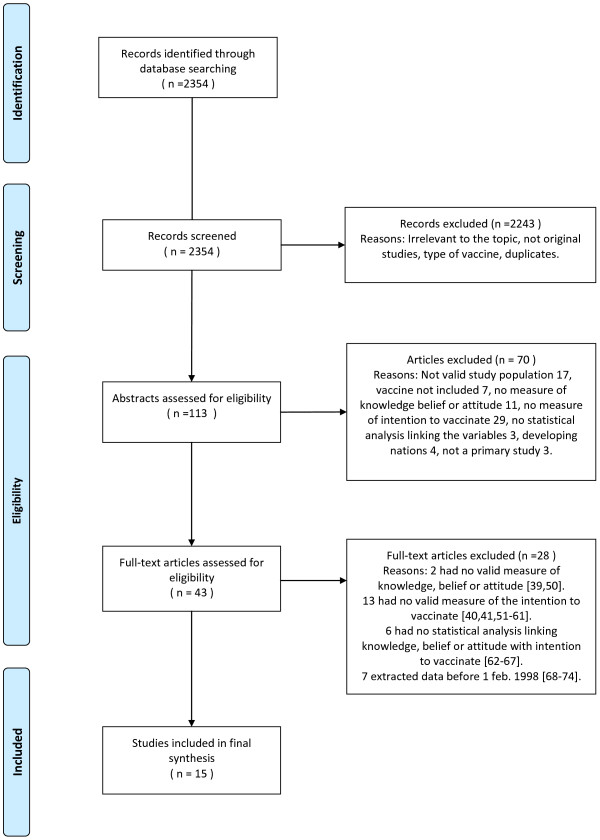
Background: The Summit of Independent European Vaccination Experts (SIEVE) recommended in 2007 that efforts be made to improve healthcare workers’ knowledge and beliefs about vaccines, and their attitudes towards them, to increase vaccination coverage. The aim of the study was to compile and analyze the areas of disagreement in the existing evidence about the relationship between healthcare workers’ knowledge, beliefs and attitudes about vaccines and their intentions to vaccinate the populations they serve. Methods: We conducted a systematic search in four electronic databases for studies published in any of seven different languages between February 1998 and June 2009. We included studies conducted in developed countries that used statistical methods to relate or associate the variables included in our research question. Two independent reviewers verified that the studies met the inclusion criteria, assessed the quality of the studies and extracted their relevant characteristics. The data were descriptively analyzed. Results: Of the 2354 references identified in the initial search, 15 studies met the inclusion criteria. The diversity in the study designs and in the methods used to measure the variables made it impossible to integrate the results, and each study had to be assessed individually. All the studies found an association in the direction postulated by the SIEVE experts: among healthcare workers, higher awareness, beliefs that are more aligned with scientific evidence and more favorable attitudes toward vaccination were associated with greater intentions to vaccinate. All the studies included were cross-sectional; thus, no causal relationship between the variables was established. Conclusion: The results suggest that interventions aimed at improving healthcare workers’ knowledge, beliefs and attitudes about vaccines should be encouraged, and their impact on vaccination coverage should be assessed.
Overview
The claims and statistics of this paper haven’t been checked yet.
Free: it reads the open-access text and checks the first 5 claims that cite a source we can check. Create a free account to check every claim.
Integrity signals
Registry
Cites
Statistics
Figures
Verification
Claims the paper makes
The claims and statistics of this paper haven’t been checked yet.
Free: it reads the open-access text and checks the first 5 claims that cite a source we can check. Create a free account to check every claim.
Claims other papers make about this one
Each is checked against this paper’s own text: does it say what the citing paper says it does?
The source backs part of the claim, not all of it — or backs it for a different population, condition or comparison.
In the citing paper
“The methodological quality of the studies was assessed using the Newcastle-Ottawa Scale, based on criteria related to selection and comparability between cohorts and related to study outcomes. The methodological quality of the cross-sectional studies was performed using the adapted Newcastle Ottawa for cross-sectional studies [20]. The evaluation was performed in pairs, by four reviewers and dis”
From The associations between screen time and mental health in adolescents: a systematic review (2023) · cites this paper as [20]
Experimental — accuracy not yet measuredThe cited source says what the claim attributes to it.
In the citing paper
“The NOS classification has been used in similar systematic reviews (Herzog et al., 2013; Moore et al., 2021).”
From Parental stress and mental health outcomes following very preterm birth: A systematic review of recent findings (2024) · cites this paper as Herzog et al., 2013
The cited source says what the claim attributes to it.
In the citing paper
“The present review uses the adapted Newcastle-Ottawa Scale for crosssectional studies (Herzog et al., 2013) to critically evaluate the risk of bias in the included studies.”
From Parental stress and mental health outcomes following very preterm birth: A systematic review of recent findings (2024) · cites this paper as Herzog et al., 2013
The cited source says what the claim attributes to it.
In the citing paper
“We used the Newcastle-Ottawa validated tool for the evaluation of internal validity of longitudinal studies (NOS) 32 and the adapted version for cross-sectional studies.33”
From Defining risk factors associated with difficult peripheral venous Cannulation: A systematic review and meta-analysis (2020) · cites this paper as [33]
The cited source says what the claim attributes to it.
In the citing paper
“All eligible studies were assessed for quality using an adapted version of the Newcastle-Ottawa quality assessment scale for cross-sectional studies, which was used to score the risk of bias for each study [29].”
From Problematic Social Media Use in Adolescents and Young Adults: Systematic Review and Meta-analysis. (2022) · cites this paper as [29]
1 more claim about this paper
Create a free account to see every claim other papers make about this one.
Self-check
Percentages, sums and reported differences re-computed from the paper’s own numbers.
The self-check needs the paper’s full text.
Citations
Cites
1 retracted
Wakefield, A., Murch, S., Anthony, A., Linnell, J., Casson, D., Malik, M., Berelowitz, M., Dhillon, A., Thomson, M., Harvey, P., et al. (1998) · The Lancet · doi:10.1016/s0140-6736(97)11096-0 · Cited by 3,006
RetractedDermyshi, E., Wang, Y., Yan, C., Hong, W., Qiu, G., Gong, X., & Zhang, T. (2017) · Neonatology · doi:10.1159/000454668 · Cited by 24,451
Meta-analysis of Observational Studies in Epidemiology<SUBTITLE>A Proposal for Reporting</SUBTITLE>
Stroup, D. F. (2000) · JAMA · doi:10.1001/jama.283.15.2008 · Cited by 20,623
Stang, A. (2010) · European Journal of Epidemiology · doi:10.1007/s10654-010-9491-z · Cited by 17,396 · cited 1×
“The tools used to determine the risk of bias and the quality of the studies included were based on the Newcastle-Ottawa scales, which are widely used for observational studies [37].”
MethodTen great public health achievements--United States, 1900-1999.
(1999) · PubMed · Cited by 662
Do Parents Understand Immunizations? A National Telephone Survey
Gellin, B. G., Maibach, E. W., Marcuse, E. K., & for the National Network for Immunization Information Steering Committee∥ (2000) · Pediatrics · doi:10.1542/peds.106.5.1097 · Cited by 512
Meta-analysis of Observational Studies in Epidemiology
Stroup, D. F., Berlin, J. A., Morton, S. C., Olkin, I., Williamson, G. D., Rennie, D., Moher, D., Becker, B. J., Sipe, T. A., & Thacker, S. B. (2000) · Cited by 473
Mills, E., Jadad, A. R., Ross, C., & Wilson, K. (2005) · Journal of Clinical Epidemiology · doi:10.1016/j.jclinepi.2005.09.002 · Cited by 374 · cited 2×
“It ́s also interesting to highlight that the knowledge, beliefs and attitude themes explored in the HCW in the included studies, do not differ from the barriers towards vaccination explored in the general population [6].”
BackgroundSmallpox: The Triumph over the Most Terrible of the Ministers of Death
Barquet, N., & Domingo, P. (1997) · Annals of Internal Medicine · doi:10.7326/0003-4819-127-8_part_1-199710150-00010 · Cited by 263
Factors influencing pandemic influenza vaccination of healthcare workers—A systematic review
Prematunge, C., Corace, K., McCarthy, A., Nair, R. C., Pugsley, R., & Garber, G. (2012) · Vaccine · doi:10.1016/j.vaccine.2012.05.018 · Cited by 186 · cited 1×
“Even HCW (healthcare workers) have low vaccine coverage, as is the case with the influenza vaccine, due to various factors, including knowledge about the disease, knowledge about the vaccine or past beliefs and past attitudes (related to influenza vaccination in previous seasons) [10,11].”
Background
Research works printed but not linked: 3
- Schmitt HJ Booy R Aston R Van Damme P Schumacher RF Campins M Rodrigo C Heikkinen T Weil-Oliver C Finn A Olcen P Fedson D Peltola H How to optimise the coverage rates of infant and adult immunisation in Europe BMC Med 2007 5 11 10.1186/1741-7015-5-11 17535430 PMC1903356 · DOI · Paper page
- Rivera JA Lo que Sócrates le diría a Woody Allen 2008 Madrid: Espasa Calpe
- World economic and social survey 2006 Diverging Growth and Development 2006 New York: United Nations Publications
Cited by
Items 801–900 of 1,001
Parental mentalization and children’s externalizing problems: A systematic review and meta-analysis
Nieto-Retuerto, M., de Cádiz, B. T. G., & Alonso‐Arbiol, I. (2024) · Development and Psychopathology · doi:10.1017/s0954579424001391 · Cited by 24
Mousavi, S. Z., Moshfeghinia, R., Vardanjani, H. M., & Sasani, M. R. (2024) · Clinical Imaging · doi:10.1016/j.clinimag.2024.110372 · Cited by 17
Ultra-Processed Food Intakes and Health Outcomes in Adults Older Than 60 Years: A Systematic Review
Shahatah, F. A., Hill, T. R., Fairley, A., & Watson, A. W. (2025) · Nutrition Reviews · doi:10.1093/nutrit/nuae223 · Cited by 21
“35 The NOS and adapted NOS consist of 8 questions across 3 domains: selection, comparability, and outcomes, and each question is rated up to 1 star, with the question about comparability rated by up to 2 stars.”
Evaluation of methodological quality of studies
Palmeri, V., Colamesta, V., & Torre, G. L. (2016) · DOAJ (DOAJ: Directory of Open Access Journals) · doi:10.14616/sands-2016-3-235241 · Cited by 29
Grund, J. M., Bryant, T. S., Toledo, C., Jackson, I. N., Curran, K., Zhou, S., Campo, J. M. D., Yang, L., Kivumbi, A., Li, P., et al. (2018) · AIDS and Behavior · doi:10.1007/s10461-018-2313-0 · Cited by 17
“Quality grading for observational studies used Newcastle–Ottawa or Newcastle–Ottawabased scales [18].”
BackgroundMethodAssociation between chondrocalcinosis and osteoarthritis: A systematic review and meta‐analysis
Wang, Y., Wei, J., Zeng, C., Xie, D., Li, H., Yang, T., Ding, X., Cui, Y., Xiong, Y., Li, J., et al. (2019) · International Journal of Rheumatic Diseases · doi:10.1111/1756-185x.13583 · Cited by 19
Liu, M., Wake, M. A., Wong, T. Y., He, M., Xiao, Y., Burgner, D. P., & Lycett, K. (2019) · Microcirculation · doi:10.1111/micc.12557 · Cited by 18
Association between Pet Ownership and Obesity: A Systematic Review and Meta-Analysis
Miyake, K., Kito, K., Kotemori, A., Sasaki, K., Yamamoto, J., Otagiri, Y., Nagasawa, M., Arata, S., Mogi, K., Kikusui, T., et al. (2020) · International Journal of Environmental Research and Public Health · doi:10.3390/ijerph17103498 · Cited by 21
Wijarnpreecha, K., Panjawatanan, P., Kroner, P. T., Cheungpasitporn, W., & Ungprasert, P. (2020) · Annals of Gastroenterology · doi:10.20524/aog.2020.0535 · Cited by 18
“The modified version of this scale as described by Herzog et al was used for cross-sectional studies [20].”
MethodUnderstanding therapists’ perceived determinants of trauma narrative use
Frank, H. E., Last, B. S., AlRabiah, R., Fishman, J., Rudd, B. N., Kratz, H. E., Harker, C. M., Fernandez-Marcote, S., Jackson, K., Comeau, C., et al. (2021) · Implementation Science Communications · doi:10.1186/s43058-021-00231-9 · Cited by 21
“Second, the restricted range in TN intentions precluded us from conducting a quantitative assessment of the association between intentions, beliefs, and EBI use, as other studies have done in the past [62].”
ResultThe relationship between obstructive sleep apnea with hearing and balance: A scoping review
Cheung, I. C.-W., Thorne, P. R., Hussain, S., Neeff, M., & Sommer, J. U. (2022) · Sleep Medicine · doi:10.1016/j.sleep.2022.04.005 · Cited by 20
Zaçe, D., Orfino, A., Viteritti, A. M., Versace, V., Pietro, M. L. D., & Ricciardi, W. (2021) · Journal of preventive medicine and hygiene · doi:10.15167/2421-4248/jpmh2022.63.1.2391 · Cited by 23
“The Newcastle-Ottawa Scale was used for cohort and case-control studies [16] and an adapted version of this scale for cross sectional studies [17].”
BackgroundMethodWild, H., Baek, Y., Shah, S., Gašević, D., & Owen, A. J. (2022) · Nutrition Reviews · doi:10.1093/nutrit/nuac050 · Cited by 20
Is Helicobacter Pylori a Reason for Unexplained Iron Deficiency Anemia: A Systematic Review
Saju, J. M., Mandal, N., Kham, N. I., Shahid, R., Naik, S. S., Ramphall, S., Rijal, S., Prakash, V., Ekladios, H., & Hamid, P. (2022) · Cureus · doi:10.7759/cureus.29112 · Cited by 21
“Table 3 demonstrates the risk of bias assessment for cross-sectional studies using the Adapted Newcastle Ottawa scale [13].”
MethodSiranart, N., Laohasurayotin, K., Phanthong, T., Sowalertrat, W., Ariyachaipanich, A., & Chokesuwattanaskul, R. (2023) · International Journal of Molecular Sciences · doi:10.3390/ijms24054887 · Cited by 18
“As indicated in Table 1, the Newcastle–Ottawa quality assessment scale and the modified Newcastle–Ottawa scale were used to assess the quality of the study for the case-control study, the result of interest for the cohort study, and the cross-sectional study, respectively [12,13].”
MethodAssociation between coffee consumption and risk of renal cell carcinoma: a meta‐analysis
Wijarnpreecha, K., Thongprayoon, C., Thamcharoen, N., Panjawatanan, P., & Cheungpasitporn, W. (2017) · Internal Medicine Journal · doi:10.1111/imj.13621 · Cited by 16
Chokesuwattanaskul, R., Thongprayoon, C., Bathini, T. J., Sharma, K., Watthanasuntorn, K., Lertjitbanjong, P., Pachariyanon, P., Prechawat, S., Mao, M. A., Torres‐Ortiz, A., et al. (2019) · Internal Medicine Journal · doi:10.1111/imj.14436 · Cited by 20
Hiluy, J. C., David, I. A., Dáquer, A. F. C., Duchesne, M., Volchan, E., & Appolinário, J. C. (2021) · Frontiers in Psychology · doi:10.3389/fpsyg.2021.619780 · Cited by 19
Fakherpour, A., Jahangiri, M., & Jansz, J. (2023) · PLOS ONE · doi:10.1371/journal.pone.0293129 · Cited by 15
Sleep-related breathing disorders during pregnancy: A systematic review and meta-analysis
Poletti, V., Hackethal, S., Castelnovo, A., Riccardi, S., Volpato, E., & Manconi, M. (2025) · Sleep Medicine Reviews · doi:10.1016/j.smrv.2025.102122 · Cited by 15
Role of optimism in adolescent mental health: a protocol for a systematic review
Uribe, F. A. R., Espejo, C. A. N., & Pedroso, J. D. S. (2020) · BMJ Open · doi:10.1136/bmjopen-2019-036177 · Cited by 25
Muchandifunga Trust Muchadeyi, Hernández-Villafuerte, K., & Schlander, M. (2022) · BMC Medical Research Methodology · doi:10.1186/s12874-022-01784-6 · Cited by 16
“Notably, a few SLRs (8%) of studies eliciting HSUVs [60–63] based their QA appraisal methods on those used in previous SLRs [21, 64, 65] or reviews [66, 67], in which the authors of those SLRs had used guidance from a previous SLR [68].”
BackgroundZhang, X., Xiao, X., Chen, P., Li, Y., Lv, X., & Yang, J. (2023) · Clinical and Translational Gastroenterology · doi:10.14309/ctg.0000000000000588 · Cited by 19
Hasani, W. S. R., Muhamad, N. A., Hanis, T. M., Maamor, N. H., Wee, C. X., Omar, M. A., Ganapathy, S. S., Karim, Z. A., & Musa, K. I. (2023) · PLoS ONE · doi:10.1371/journal.pone.0283879 · Cited by 19
“[18] for cross-sectional study design, where they assess the same three components (selection, comparability, and outcome) as the original version.”
BackgroundMeads, C., Zeeman, L., Sherriff, N., & Aranda, K. (2023) · Alcohol and Alcoholism · doi:10.1093/alcalc/agad029 · Cited by 15
Ma, W. C., Wang, H., Wen, Z., Liu, L., & Zhang, X. (2023) · Archives of Gerontology and Geriatrics · doi:10.1016/j.archger.2023.105087 · Cited by 25
Shin, J., Kim, K., Kim, H., Ko, H., Kim, B., Kim, M., Shin, K., & Kim, Y. H. (2023) · JDDG Journal der Deutschen Dermatologischen Gesellschaft · doi:10.1111/ddg.15135 · Cited by 23
Yong, S. J., Halim, A., Liu, S., Halim, M., Alshehri, A. A., Alshahrani, M. A., Alshahrani, M. M., Alfaraj, A. H., Alburaiky, L. M., Khamis, F. A., et al. (2023) · Autonomic Neuroscience · doi:10.1016/j.autneu.2023.103132 · Cited by 16
Platelet-to-Lymphocyte Ratio and Lymphocyte-to-Monocyte Ratio in Glaucoma: A Meta-Analysis
Chuang, S., & Chang, C.-H. (2024) · Biomarkers in Medicine · doi:10.2217/bmm-2023-0651 · Cited by 15
Deng, J., Liu, J., Luo, J., Pi, Y., Pan, J., Fu, Z., & Tang, X. (2024) · Child Abuse & Neglect · doi:10.1016/j.chiabu.2024.107052 · Cited by 18
Chienwichai, K., Phirom, S., Wuttiputhanun, T., Leelahavanichkul, A., Townamchai, N., Avihingsanon, Y., & Udomkarnjananun, S. (2024) · Systematic Reviews · doi:10.1186/s13643-024-02709-8 · Cited by 18
“The quality assessment process employed established tools: the Newcastle–Ottawa scale (NOS) for cohort studies [28, 29], the adapted NOS for cross-sectional studies [30], and the revised Cochrane risk-of-bias tool (RoB2) for randomized controlled trials [31].”
MethodLin, C., Su, Y.-C., Liu, J.-D., Su, H.-C., Chiang, T., Chiu, L., Lin, H., Chang, C., & Lin, P. (2024) · Nature and Science of Sleep · doi:10.2147/nss.s495883 · Cited by 16
“26 For clinical trials, the Cochrane risk of bias 2 (RoB 2) tool was used.”
Sekhar, L., Venguidesvarane, A. G., Thiruvengadam, G., Sharma, Y., Venugopal, V., Rengarajan, S., & Johnson, P. (2024) · PLoS ONE · doi:10.1371/journal.pone.0315464 · Cited by 15
Lin, S., Zhang, H., & Ma, A. (2018) · Journal of Affective Disorders · doi:10.1016/j.jad.2018.02.027 · Cited by 16
Nonalcoholic Fatty Liver Disease and Urolithiasis. A Systematic Review and Meta-Analysis
Wijarnpreecha, K., Lou, S. M., Panjawatanan, P., Sanguankeo, A., Pungpapong, S., Lukens, F., & Ungprasert, P. (2018) · Journal of Gastrointestinal and Liver Diseases · doi:10.15403/10.15403/jgld.2014.1121.274.nac · Cited by 18
Relationship between bariatric surgery and dental erosion: a systematic review
Quintella, M. C. M., Farias, T. M. C. P., Maior, J. R. S., Casado, B. G. D. S., Leão, R. D. S., & de Moraes, S. L. D. (2020) · Surgery for Obesity and Related Diseases · doi:10.1016/j.soard.2020.04.044 · Cited by 15
Mirza, A. A., Alharbi, A., Marzouki, H., Al‐Khatib, T., & Zawawi, F. (2020) · Otolaryngology · doi:10.1177/0194599820935442 · Cited by 19
Alexandrou, M. E., Theodorakopoulou, M. P., Boutou, A., Pella, E., Boulmpou, A., Papadopoulos, C. E., Zafeiridis, A., Papagianni, A. A., & Sarafidis, P. A. (2021) · Nephrology · doi:10.1111/nep.13951 · Cited by 17
“Quality assessment of included studies was performed independently by two reviewers (Maria-Eleni Alexandrou, Marieta Theodorakopoulou) using the Newcastle-Ottawa-Scale (NOS) for case–control and cohort studies and the modified NOS for cross-sectional studies.(22) The NOS uses eight items to evaluate relevant records;…”
MethodZarghami, A., Hussain, M. A., Campbell, J. A., Ezegbe, C., van der Mei, I. A. F., Taylor, B. V., & Claflin, S. B. (2022) · Multiple Sclerosis and Related Disorders · doi:10.1016/j.msard.2022.103562 · Cited by 16
“, 2022), and an adapted form of the NOS for cross-sectional studies (Herzog et al., 2013).”
Tekalign, T., Awoke, N., Eshetu, K., Walle, B. G., & Guta, M. T. (2022) · HIV Medicine · doi:10.1111/hiv.13271 · Cited by 15
“The quality of each study was assessed using the modified Newcastle- Ottawa Scale (NOS) for crosssectional studies [20].”
MethodMEFV Mutations in IBD Patients: A Systematic Review and Meta- analysis
Papadopoulos, V. P., Antoniadou, C., Ritis, K., & Skendros, P. (2022) · Journal of Gastrointestinal and Liver Diseases · doi:10.15403/jgld-4070 · Cited by 16
“For cross-sectional studies, a modified version of NOS was used [31].”
MethodSystematic Review and Meta-analysis: First Nations, Inuit, and Métis Youth Mental Health
Owais, S., Tsai, Z., Hill, T., Ospina, M. B., Wright, A. L., & Lieshout, R. J. V. (2022) · Journal of the American Academy of Child & Adolescent Psychiatry · doi:10.1016/j.jaac.2022.03.029 · Cited by 20
Leelakanok, N., Parmontree, P., Petchsomrit, A., & Methaneethorn, J. (2022) · International Journal of Clinical Pharmacy · doi:10.1007/s11096-022-01445-0 · Cited by 15
“The tools for the risk of bias for cross-sectional studies were modified from Newcastle–Ottawa Quality Assessment Scale [23] and the tool for qualitative studies was modified from the Critical Appraisal tool of qualitative studies from the Centre for Evidence-Based Medicine [24].”
MethodAbbasowa, L., & Heegaard, N. H. H. (2014) · Journal of Affective Disorders · doi:10.1016/j.jad.2014.06.050 · Cited by 17
“, 2013) and supplemented by an adapted version for cross-sectional studies (Herzog et al., 2013).”
MethodBuchan, S. A., Salway, T. J., Rosella, L. C., Crowcroft, N. S., Tran, D. T., & Kwong, J. C. (2016) · Influenza and Other Respiratory Viruses · doi:10.1111/irv.12400 · Cited by 15
“We used a Newcastle–Ottawa scale adapted for cross- sectional studies by Herzog et al.13 to assess the quality of included studies as they related to our outcome: the proportion tested who were influenza positive.”
MethodAssociation between urologic malignancies and end‐stage renal disease: A meta‐analysis
Kompotiatis, P., Thongprayoon, C., Manohar, S., Cheungpasitporn, W., Suarez, M. L. G., Craici, I. M., Mao, M. A., & Herrmann, S. M. (2017) · Nephrology · doi:10.1111/nep.13209 · Cited by 15
Periodontal condition of patients with Thalassemia Major: A systematic review and meta-analysis
Akcalı, A., Yıldız, M. S., Akcalı, Z., Huck, O., & Friedmann, A. (2019) · Archives of Oral Biology · doi:10.1016/j.archoralbio.2019.04.004 · Cited by 19
Impact of caffeine in hepatitis C virus infection: A systematic review and meta-analysis
Wijarnpreecha, K., Thongprayoon, C., & Ungprasert, P. (2017) · European Journal of Gastroenterology & Hepatology · doi:10.1097/meg.0000000000000757 · Cited by 14
Global prevalence of seasonal affective disorder by latitude: A systematic review and meta-analysis
Kim, K. M., Kim, J., Jung, S., Kim, H.-W., Kim, H., Son, E., Ko, D. S., Yoon, S., Kim, B. S., Kim, W. K., et al. (2025) · Journal of Affective Disorders · doi:10.1016/j.jad.2025.119807 · Cited by 23
Gidey, K., Niriayo, Y. L., Asgedom, S. W., & Lubetkin, E. I. (2025) · Health and Quality of Life Outcomes · doi:10.1186/s12955-025-02421-8 · Cited by 17
“Quality was assessed using the Newcastle-Ottawa scale (NOS) for cohort and case-control studies [25] and the adapted NOS tool for cross-sectional studies [26] (Appendix 2).”
Boonpheng, B., Thongprayoon, C., Wijarnpreecha, K., Medaura, J. A., Chebib, F. T., & Cheungpasitporn, W. (2018) · Nephrology · doi:10.1111/nep.13431 · Cited by 14
“was used for cross-sectional studies.(23) Review process and data extraction The two study investigators independently reviewed the titles and abstracts of all retrieved articles.”
MethodNutritional screening tool for critically ill children: a systematic review
Ventura, J. C., Silveira, T. T., Bechard, L. J., McKeever, L., Mehta, N. M., & Moreno, Y. M. F. (2021) · Nutrition Reviews · doi:10.1093/nutrit/nuab075 · Cited by 15
Tokavanich, N., Prasitlumkum, N., Mongkonsritragoon, W., Trongtorsak, A., Cheungpasitporn, W., & Chokesuwattanaskul, R. (2022) · Pacing and Clinical Electrophysiology · doi:10.1111/pace.14441 · Cited by 14
Goswami, S., Tseveenjav, B., & Kaila, M. (2022) · Acta Odontologica Scandinavica · doi:10.1080/00016357.2022.2095020 · Cited by 14
“Quality assessment of the included articles Quality of the included studies was evaluated using Newcastle-Ottawa Scale (NOS) for cohort, case-control [21] and adapted form of the NOS scale for cross-sectional studies [22].”
MethodSoh, K. C., Tay, Y. H., & Darjee, R. (2023) · Journal of Aggression Maltreatment & Trauma · doi:10.1080/10926771.2023.2186299 · Cited by 19
Gizachew, K. D., MYERS, B. J., Mihretu, A., & Teferra, S. (2024) · BMJ Open · doi:10.1136/bmjopen-2023-080657 · Cited by 17
Fuentes, J. J., Mayans, J., Guarro, M., Canosa, I., Mestre-Pintó, J. I., Fonseca, F., & Torrens, M. (2024) · BMC Psychiatry · doi:10.1186/s12888-024-05986-8 · Cited by 15
“This scale has also been adapted to evaluate the quality of cross-sectional studies [57], which were classified as low, fair, or good quality depending on their scores.”
MethodOh, Y.-M., Hong, S., Park, Y. J., & Baek, I. (2024) · Pediatric Allergy and Immunology · doi:10.1111/pai.14230 · Cited by 14
“17,18 Discrepancies were resolved through discussion, and additional consultations were sought, as needed.”
Tooth loss from the perspective of studies employing a life course approach: a systematic review
Drumond, V. Z., de Arruda, J. A. A., de Andrade, B. A. B., Silva, T. A., Mesquita, R. A., & Abreu, L. G. (2024) · Health Promotion International · doi:10.1093/heapro/daae112 · Cited by 15
Begum, S., Herrera-Restrepo, O., Rolland, C., Purushotham, S., Andani, A., Shah, H. A., & Kocaata, Z. (2024) · Human Vaccines & Immunotherapeutics · doi:10.1080/21645515.2024.2406613 · Cited by 14
Anneberg, O. M., Petersen, I. S. B., Jess, T., Freitas, M. B. D., & Jalili, M. (2025) · Clinical Nutrition · doi:10.1016/j.clnu.2025.02.019 · Cited by 14
Martínez‐Domínguez, S. J., García, S. G., Laredo, V., Gargallo-Puyuelo, C. J., Llera, B. G., de la Cruz, J. L., & Gomollón, F. (2023) · Cancers · doi:10.3390/cancers15133367 · Cited by 18
“A maximum of 1 star can be assigned to each item except for ascertainment of the exposure (selection), comparability, and assessment of the outcome (outcome section), with the maximum total score 10 stars [30].”
BackgroundThongprayoon, C., Cheungpasitporn, W., Thamcharoen, N., Ungprasert, P., Kittanamongkolchai, W., Mao, M. A., Sakhuja, A., Greason, K. L., & KASHANI, K. B. (2017) · PLoS ONE · doi:10.1371/journal.pone.0177157 · Cited by 14
Pay-for-Performance and Veteran Care in the VHA and the Community: a Systematic Review
Kondo, K. K., Wyse, J. J. B., Mendelson, A., Beard, G., Freeman, M., Low, A., & Kansagara, D. L. (2018) · Journal of General Internal Medicine · doi:10.1007/s11606-018-4444-4 · Cited by 16
León‐López, M., Montero‐Miralles, P., Cabanillas‐Balsera, D., Saúco‐Márquez, J. J., Martín-González, J., & Segura-Egea, J. J. (2025) · Journal of Clinical Medicine · doi:10.3390/jcm14165781 · Cited by 24
“The Newcastle–Ottawa Scale (NOS), adapted for cross-sectional studies [5,35], was used to assess the risk of bias in the included studies.”
Almadhoon, H. W., Ahmad, I., Lee, W. W. Y., Matthews, A., Carter, E., Otter, J. A., Lecky, D. M., Holmes, A. H., & Zhu, N. (2025) · Journal of Hospital Infection · doi:10.1016/j.jhin.2025.07.030 · Cited by 15
Kueh, M. T. W., Yeo, J. Q., Chen, Y., Chua, N. Y. Z., Koh, H. L., Khaw, S. P., Jabbar, H., Wang, J., Lee, K. S. S., Chin, Y. H., et al. (2026) · Liver International · doi:10.1111/liv.70747 · Cited by 17
Wijarnpreecha, K., Aby, E. S., Panjawatanan, P., Lapumnuaypol, K., Cheungpasitporn, W., Lukens, F. J., Harnois, D. M., & Ungprasert, P. (2021) · Annals of Gastroenterology · doi:10.20524/aog.2021.0612 · Cited by 17
“The modified Newcastle-Ottawa quality assessment scale was used to appraise the quality of the cross-sectional studies in 3 domains, including selection of the sample, comparability between the groups, and assessment of the outcomes [14].”
MethodIs there any association between dietary inflammatory index and quality of life? A systematic review
Golmohammadi, M., Kheirouri, S., Attari, V. E., Moludi, J., Sulistyowati, R., Nachvak, S. M., Mostafai, R., & Mansordehghan, M. (2022) · Frontiers in Nutrition · doi:10.3389/fnut.2022.1067468 · Cited by 15
“For assessment of the articles quality, the adapted version of the Newcastle–Ottawa Scale (NOS) checklist was used for crosssectional studies as it was shown in Supplementary Table 1 (25) and the Jadad checklist was used for experimental studies as it was shown in Supplementary Table 2 (26).”
MethodPriya, H., Barma, M. D., Purohit, B. M., Agarwal, D., Bhadauria, U. S., Tewari, N., Gupta, S., Mishra, D., Morankar, R., Mathur, V. P., et al. (2022) · Tobacco Use Insights · doi:10.1177/1179173x221137218 · Cited by 14
Oveisi, N., Cheng, V., Ellis, U. M., Peacock, S. J., McTaggart-Cowan, H. M., Brotto, L. A., Loree, J. M., Hanley, G. E., Gill, S., Rayar, M. S., et al. (2023) · Cancers · doi:10.3390/cancers15061707 · Cited by 13
“For cross-sectional studies, the following breakdown was used [21,22]: (1) “Good” (possible points range: 7–9); (2) “Fair” (possible points range: 4–6); and (3) “Poor” (possible points range: 0–3).”
Adverse cognitive effects of glucocorticoids: A systematic review of the literature
Spannenburg, L., & Reed, H. (2023) · Steroids · doi:10.1016/j.steroids.2023.109314 · Cited by 16
“Studies with total score ≤ 4 were considered low-quality, and those with scores ≥ 5 were considered high-quality [21,22].”
BackgroundCaro-Chang, L. A. M., & Fung, M. A. (2024) · Journal of Cutaneous Pathology · doi:10.1111/cup.14604 · Cited by 14
Home versus in-centre haemodialysis for people with kidney failure
Cheetham, M. S., Éthier, I., Krishnasamy, R., Cho, Y., Palmer, S. C., Johnson, D. W., Craig, J. C., Stroumza, P., Frantzen, L., Hegbrant, J., et al. (2024) · Cochrane Database of Systematic Reviews · doi:10.1002/14651858.cd009535.pub3 · Cited by 22
Xu, Y. H., Pouncey, A. L., Zhou, Z., Woodward, M., & Harris, K. (2024) · PLoS ONE · doi:10.1371/journal.pone.0300963 · Cited by 21
“This scale has also been adapted to be used in cross-sectional studies [9].”
Javaheri, A., Özcan, M., Moubarak, L., Smoyer, K. E., Rossulek, M. I., Revkin, J. H., Groarke, J. D., Tarasenko, L. C., & Kosiborod, M. (2024) · Heliyon · doi:10.1016/j.heliyon.2024.e35916 · Cited by 13
A systematic review and meta-analysis of the traumatogenic phenotype hypothesis of psychosis
Onyeama, F., Melegkovits, E. A., Yu, N., Parvez, A., Rodrigues, A., Billings, J., Kelleher, I., Cannon, M. D., & Bloomfield, M. (2024) · BJPsych Open · doi:10.1192/bjo.2024.52 · Cited by 15
Aiumtrakul, N., Thongprayoon, C., Yingchoncharoen, P., Wannaphut, C., Wathanavasin, W., Suppadungsuk, S., Krisanapan, P., & Cheungpasitporn, W. (2024) · Clinical Kidney Journal · doi:10.1093/ckj/sfae312 · Cited by 13
Lawler, T. P., Giurini, L., Carroll, C. B., Weiss, J. M., LoConte, N. K., & Andersen, S. W. (2025) · Social Science & Medicine · doi:10.1016/j.socscimed.2025.118212 · Cited by 13
Stewart, T. M., Hunter, S. C., & Rhodes, S. (2017) · Memory · doi:10.1080/09658211.2016.1275699 · Cited by 14
A systematic review of the caries prevalence among children living in Chernobyl fallout countries
Wolgin, M., Filina, N., Shakavets, N. V., Dvornyk, V. M., Lynch, E. J., & Kielbassa, A. M. (2019) · Scientific Reports · doi:10.1038/s41598-019-39755-5 · Cited by 13
Kiani, B., Rahmati, A. R., Bergquist, R. N., & Moghaddas, E. (2020) · The International Journal of Health Planning and Management · doi:10.1002/hpm.3010 · Cited by 14
Yazie, T. S., Kefale, B., & Molla, M. (2021) · Behavioural Neurology · doi:10.1155/2021/5586041 · Cited by 13
Słomka, A., Łęcka, M., & Styczyński, J. (2022) · Cancers · doi:10.3390/cancers14194936 · Cited by 13
“We assessed the methodological quality of the included studies by using the Newcastle– Ottawa (NOS) scale for case-control and cohort studies [27], adapted for cross-sectional studies [28].”
MethodA Longer Tpeak-Tend Interval Is Associated with a Higher Risk of Death: A Meta-Analysis
Braun, C. C., Zink, M. D., Gozdowsky, S., Hoffmann, J. M., Hochhausen, N., Röhl, A. B., Beckers, S. K., & Kork, F. (2023) · Journal of Clinical Medicine · doi:10.3390/jcm12030992 · Cited by 13
“was used to provide quality assessment for one cross-sectional study [23].”
MethodManagement of tuberculosis by healthcare practitioners in Pakistan: A systematic review
Braham, C. A., White, P. J., & Arinaminpathy, N. (2018) · PLoS ONE · doi:10.1371/journal.pone.0199413 · Cited by 18
Convertino, I., Salvadori, S., Pecori, A., Galiulo, M. T., Ferraro, S., Parrilli, M., Corona, T., Turchetti, G., Blandizzi, C., & Tuccori, M. (2018) · Drug Safety · doi:10.1007/s40264-018-0737-0 · Cited by 17
Dewa, L. H., Cecil, E. V., Eastwood, L., Darzi, A. W., & Aylin, P. P. (2018) · Systematic Reviews · doi:10.1186/s13643-018-0781-y · Cited by 15
“An amended version of the NOS will be used to assess quality in cross-sectional studies [26].”
MethodMoafa, H. N., van Kuijk, S. M. J., Franssen, G. H. L. M., Moukhyer, M. E., & Haak, H. R. (2019) · PLoS ONE · doi:10.1371/journal.pone.0226230 · Cited by 13
Male Gonadal Function After Pediatric Hematopoietic Stem Cell Transplantation: A Systematic Review
Mathiesen, S., Andrés‐Jensen, L., Nielsen, M. M., Sørensen, K., Ifversen, M., Jahnukainen, K., Juul, A., & Müller, K. (2022) · Transplantation and Cellular Therapy · doi:10.1016/j.jtct.2022.05.036 · Cited by 13
Abreu, T. C., Mackenbach, J. D., Heuvelman, F., Schoonmade, L. J., & Beulens, J. W. J. (2023) · SSM - Population Health · doi:10.1016/j.ssmph.2023.101559 · Cited by 16
“An adapted version of the NOS was used for the quality assessment of cross-sectional studies (Herzog et al., 2013) (Supplementary File 4).”
MethodTokavanich, N., Mongkonsritragoon, W., Sattawatthamrong, S., Techasatian, W., Siranart, N., Prasitlumkum, N., Navaravong, L., & Chokesuwattanaskul, R. (2023) · Journal of Cardiovascular Electrophysiology · doi:10.1111/jce.16144 · Cited by 14
Singh, A., Chaudhary, V., Kumari, S., Dhir, D., Devi, V., & Pal, B. (2024) · Epilepsy Research · doi:10.1016/j.eplepsyres.2024.107358 · Cited by 17
Choi, J., Han, I., Min, J., Yun, J., Kim, B., Shin, K., Kim, K., & Kim, Y. H. (2024) · JDDG Journal der Deutschen Dermatologischen Gesellschaft · doi:10.1111/ddg.15380 · Cited by 17
“17 The authors (J.C., I.H., and J.M.) conducted independent assessments of bias risk and evidence quality.”
BackgroundWomen`s sexual function during the postpartum period: A systematic review on measurement tools
Rezaei, N., Moghadam, Z. B., Tahmasebi, A., Taheri, S., & Namazi, M. (2024) · Medicine · doi:10.1097/md.0000000000038975 · Cited by 13
“[16,17] Risk of bias assessment was performed by 2 independent authors (NR, ST) and a third person [18] resolved any disagreements.”
MethodThe relationship between dietary sugar consumption and anxiety disorders: A systematic review
Wang, X., Wong, A. C. W., Sheng, Z., Wong, S. Y. S., & Yang, X. (2024) · Nutrition Bulletin · doi:10.1111/nbu.12702 · Cited by 12
“…using the Newcastle-Ottawa Scale (NOS) adapted for cross-sectional studies (with 9–10 being very good, 7–8 good, 5–6 satisfactory and 0–4 unsatis-factory) (Appendix 1; Herzog et al., 2013); the quality of included trials was evaluated by the updated Cochrane risk of bias tool (Sterne et al., 2019).”
MethodZhou, Q., Yin, S., Lei, X., Tian, Y., Lin, D., Wang, L., & Chen, Q. (2024) · Diabetology & Metabolic Syndrome · doi:10.1186/s13098-024-01405-w · Cited by 12
“For quality assessment of included studies, using Newcastle–Ottawa Scale (NOS) adapted for case–control and cross-sectional studies [15].”
MethodKim, J. H., Lee, J., Shim, S., & Cheon, K.-A. A. (2024) · EClinicalMedicine · doi:10.1016/j.eclinm.2024.102863 · Cited by 16
“22 The NOS evaluates the methodological quality of observational studies based on selection, comparability, and outcome/exposure criteria.”
Tan, Y. C. R. S., Zhang, X., Lv, X., Sun, Y.-N., Yang, J., & Xiao, X. (2025) · Digestive and Liver Disease · doi:10.1016/j.dld.2025.03.002 · Cited by 18
Georga, D., Zartaloudi, A., Saridi, M., Fradelos, Ε. C., Rouka, E. C., Sarafis, P., Mastrogiannis, D., & Toska, A. G. (2025) · Healthcare · doi:10.3390/healthcare13131605 · Cited by 15
“The assessment of the methodological quality of the studies was performed using the adapted Newcastle–Ottawa Scale for cross-sectional studies [46] and the corresponding scale for cohort studies [47].”
Metadata
- Authors
- Herzog, R., Álvarez-Pasquin, M. J., Díaz, C., Del Barrio, J. L., Estrada, J. M., & Gil, Á.
- Affiliations
- Madrid Health Service (ES)
- Agencia Laín Entralgo (ES)
- Venue
- BMC Public Health
- Published
- 2013-02-19
- Volume
- 13
- Issue
- 1
- Pages
- 154-154
- ISSN
- 1471-2458 (ISSN-L)
- PMC
- PMC3602084
- OpenAlex
- W1987319584
- Semantic Scholar
- fd7bd1060c48f806bd3030e5d6061719ad5ad04b
- Cited by
- 1,652
- References
- 78
- Citations by year
- 2026: 131 · 2025: 178 · 2024: 236 · 2023: 188 · 2022: 198 · 2021: 210 · 2020: 137 · 2019: 119 · 2018: 99 · 2017: 76 · 2016: 46 · 2015: 22 · 2014: 10
- FWCI
- 4.49
- Type
- journal article
- Language
- en
- Open access
- gold
- doi.org
- Licence
- Locations
- BMC Public Health (publishedVersion, cc-by)
- Europe PMC (PubMed Central) (publishedVersion, cc-by)
- PubMed Central (publishedVersion, cc-by)
- PubMed (publishedVersion)
- Topics
- Social Sciences › Health › Vaccine Coverage and Hesitancy
- Health Sciences › Medicine › Emergency Medicine › Intramuscular injections and effects
- Health Sciences › Health Professions › General Health Professions › Health Policy Implementation Science
- Keywords
- healthcare workers, vaccination intention, vaccine knowledge, vaccine beliefs, vaccine attitudes, vaccine hesitancy, vaccination coverage
- MeSH terms
- Attitude of Health Personnel, Health Personnel, Humans, Health Knowledge, Attitudes, Practice, Vaccination, Intention
About these checks
Registry, retraction, Cites and statistics results are computed, not judged, with one exception: a printed reference that no index lists is read once by a model before it counts as a citation error. Claims are extracted by a model and kept only when their quote appears verbatim in the text; each cited source is then checked, with a model’s help, for whether it says what the claim relies on. Those verdicts can be wrong — read the claim’s quote and the cited source before relying on one.
Statistics and arithmetic are recomputed, not judged.
Confidence bands are shown only for fields calibrated on our annotated test set. None is calibrated yet, so no band is shown.
What counts as a claim ›How we measure confidence ›How we check this ›
Are you an author, or do you see a problem with this page? Request a review
Data sources
Bibliographic data: Semantic Scholar, OpenAlex, Crossref.
Contains information from the Semantic Scholar Academic Graph Datasets, made available under the ODC Attribution License (ODC-BY 1.0).
Semantic Scholar’s data is described in: Kinney, R., et al. (2023). The Semantic Scholar Open Data Platform. arXiv:2301.10140.
