

Coverage, compliance and factors associated with utilization of iron supplementation during pregnancy in eight rural districts of Ethiopia: a cross-sectional study
Open accessThe DOI matches its Crossref record; 24 of the 24 references it cites were found in a registry or an index; 6 of the 29 sources its claims cite were checked for support.
Abstract
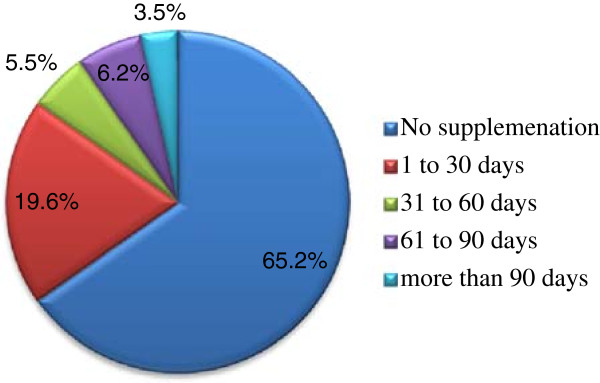
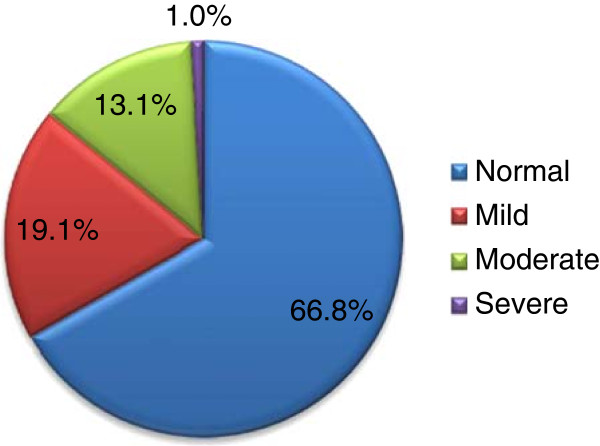
BACKGROUND: Despite the efforts to reduce iron deficiency during pregnancy, information on the coverage and factors associated with utilization of iron supplements is lacking. The study is intended to assess the coverage, compliance and factors associated with the use of prenatal iron supplements in eight rural districts of Ethiopia. METHODS: The study comprised two independent surveys conducted among pregnant women (n = 414) and women who gave birth in the preceding year of the survey (n = 1573). In both cases, respondents were selected using multistage sampling technique and data were collected via structured questionnaire. Predictors of iron supplement utilization (ranked categories of number of prenatal supplements taken) were identified using ordinal logistic regression. The outputs of the analysis are given using adjusted Odds Ratio (OR) with 95% Confidence Interval (CI). RESULTS: Among women who gave birth in the preceding year, 35.4% (95% CI: 31.3-39.5) were given/prescribed prenatal iron supplement during the index pregnancy and only 3.5% were supplemented for the recommended 91 or more days. Compared to women who had 4 or more ANC visits, those with 0, 1, 2 and 3 visits had 0.04, 0.33, 0.50 and 0.60 times less odds of iron supplement utilization, respectively. Women lacking comprehensive knowledge of anemia (OR = 0. 75 (95% CI: 0.57-0.97)) and those who weren't informed about the importance of iron supplementation during the pregnancy (OR = 0. 05 (95% CI: 0.04-0.07)) had significantly lower utilization. On the other hand, in pregnant women the prevalence of anemia was 33.2%. Among pregnant women who were given/prescribed supplements, the average level of compliance was 74.9% and about 25.1% had less than 70% adherence. The leading reported reasons for non-adherence were side-effects (63.3%) and forgetfulness (16.7%). CONCLUSION: Promoting early and frequent ANC, enhancing the quality of ANC counseling and promoting the knowledge of women on anemia are essential strategies for improving the utilization of iron supplements.
Overview
CoChat Summary
TL;DR
This cross-sectional study in eight rural Ethiopian districts found low prenatal iron supplementation coverage and very low completion of the recommended duration, despite iron supplementation being part of free ANC. Utilization was strongly tied to ANC attendance, anemia knowledge, and counseling, while among supplemented pregnant women adherence averaged 74.9%.
Key findings
- Among women who gave birth in the preceding year, 35.4% (95% CI: 31.3–39.5) were given/prescribed prenatal iron supplements, but only 3.5% received them for the recommended 91 or more days.
- Compared with women with 4 or more ANC visits, those with 0, 1, 2, and 3 visits had 0.04, 0.33, 0.50, and 0.60 times less odds of iron supplement utilization, respectively.
- Lack of comprehensive knowledge of anemia (OR = 0.75, 95% CI: 0.57–0.97) and not being informed about the importance of iron supplementation during pregnancy (OR = 0.05, 95% CI: 0.04–0.07) were associated with lower utilization.
- Among pregnant women, anemia prevalence was 33.2%; among those given/prescribed supplements, mean compliance was 74.9%, and 25.1% had less than 70% adherence. The leading reasons for non-adherence were side-effects (63.3%) and forgetfulness (16.7%).
Methods
- Two community-based cross-sectional surveys were conducted simultaneously in eight rural districts of Ethiopia in February–March 2012: one among women who gave birth in the preceding 12 months (n = 1573 target; 1563 analyzed) and one among currently pregnant women (n = 445 target; 414 analyzed).
- Participants were selected by multistage sampling with simple random sampling at kebele and household/participant selection stages; data came from pre-tested structured questionnaires, and hemoglobin was measured in pregnant women using HemoCue Hb 301.
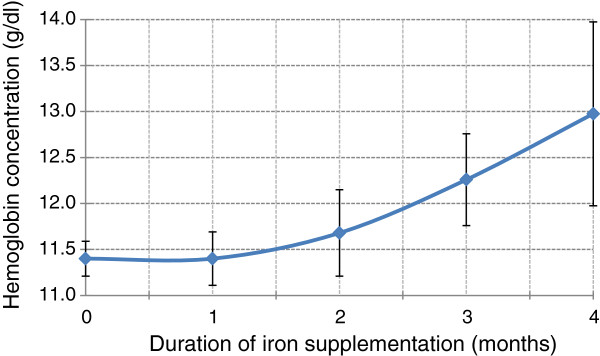
- Iron supplement utilization was analyzed as an ordinal outcome using ordinal logistic regression; hemoglobin–supplement duration association was assessed with linear regression, with survey-weighted descriptive analyses and PCA-derived wealth index.
Limitations
- The paper states that recall error about the number of supplements taken in the prior year is possible, which could have reduced precision.
- The paper states that relatively accessible districts were selected, so selection bias is likely and findings cannot be generalized beyond the study districts.
- The paper states that first-trimester pregnant women were underrepresented (1.5%), which might have overestimated anemia prevalence and iron supplement utilization.
Model-written summary. Check it against the paper before relying on it.
Integrity signals
Registry
Cites
Statistics
Figures
Verification
Claims the paper makes
3 Valid · 2 Not valid · 12 Not checked · 39 Own results and interpretations
At least one cited source doesn’t support this claim or points to a different paper, and none confirmed it — see the verdicts below.
In the paper
“Nonetheless, the reported level of compliance (75%) might have been overestimated as it is measured based on the self-reporting method.”
§ Coverage, compliance and factors associated with utilization of iron supplementation during pregnancy in eight rural districts of Ethiopia: a cross-sectional study > Discussion
What the sources say
- Not checked — no full text of the sourcecites [17] Schultink W Van der Ree M Matulessi P Gross R Low compliance with an iron-supplementation program: a study among pregnant women in Jakarta, Indonesia Am J Clin Nutr 1993 57 135 139 8424380 source
- Not matchedcites [18] Ibrahim ZM El-hamid SA Mikhail H Khattab MS Assessment of adherence to iron and folic acid Ssupplementation and prevalence of anemia in pregnant women Med J Cairo Univ 2011 79 2 115 121
Its entry has no title and year that we can search by.
- Disputedcites [15] Lutsey PL Dawe D Villate E Valencia S Lopez O Iron supplementation compliance among pregnant women in Bicol, Philippines Public Health Nutr 2007 11 1 76 82 doi:10.1017/S1368980007000237 17519048 sourceExperimental — accuracy not yet measured
Our copy reports no 75% compliance figure: the Compliance section gives self-reported pill consumption of 0.85 (85% of pills taken per month, with 40.3% of women reporting 100%) and a lower direct pill count of 0.70. On the self-report issue the paper takes the opposite position to the claim, stating that the strong correlation between the two consumption measures (r = 0.548, P < 0.01) 'supports the validity of the self-report, and suggests that social desirability or recall bias did not substantially influence our results'. The Conclusions only note the general limitation that 'much of the data was self-reported', without asserting overestimation, so the cited sentence's number and its inference are both unattributable to this source. (LLM, conf=0.68)
Checked by a reasoning model — may be wrong.
hedgedstates a possible cause- Asserted: passes — The authors put it forward as true.
- Checkable: passes — It can be checked against evidence.
- Load-bearing: unclear — It is unclear whether the paper’s conclusions depend on it.
- Based: passes — The paper gives a reason why it holds.
The sources with a verdict support this claim; the rest weren’t checked yet, have no full text we could read, or their verdicts aren’t rated yet.
In the paper
“Previous studies conducted in Cambodia [20] and Sweden [25] also came up with parallel findings.”
§ Coverage, compliance and factors associated with utilization of iron supplementation during pregnancy in eight rural districts of Ethiopia: a cross-sectional study > Discussion
What the sources say
- Not checked — no full text of the sourcecites [20] Lacerte P Pradipasen M Temcharoen P Imamee N Vorapongsathorn T Determinants of adherence to Iron/Folate supplementation during pregnancy in two provinces in Cambodia Asia Pac J Public Health 2011 23 3 315 323 10.1177/1010539511403133 21593006 source
- Supportedcites [25] Wulff M Ekstrom E Iron supplementation during pregnancy in Sweden: to what extent is the national recommendation followed? Acta Obstet Gynecol Scand 2003 82 7 628 635 10.1034/j.1600-0412.2003.00186.x 12790844 source
The Swedish study (Wulff & Ekström 2003) reports exactly this association: in 'Iron supplementation recommendation, adherence' women who received information on the rationale for supplementation used iron to a greater extent (88% vs 77%, p<0.01), and use rose with the perceived importance placed by the midwife (58% vs 94%). Under 'Factors associated with use of iron-containing supplements' the perceived importance of taking iron supplements was associated with use in 92% versus 33% of women, and the Discussion ('Use of iron-containing supplements') states there was an association between perceptions of importance and actual use, with the caveat that perception may partly justify rather than explain behaviour. The claim's phrasing 'awareness' maps onto the paper's information-received and perceived-importance variables, so the paraphrase is supported. (LLM, conf=0.85)
plainstates an association- Asserted: passes — The authors put it forward as true.
- Checkable: passes — It can be checked against evidence.
- Load-bearing: unclear — It is unclear whether the paper’s conclusions depend on it.
- Based: passes — The paper gives a reason why it holds.
The cited sources support only part of this claim — read each source’s verdict below.
In the paper
“Further, based on the power calculation formula [14] designed for ordinal logistic regression analysis, the available sample size is judged to be optimal for identifying the factors associated with utilization of iron supplementation with 95% confidence level and 90% power and small effect size (Odds Ratio (OR) of 1.5) to be detected.”
§ Coverage, compliance and factors associated with utilization of iron supplementation during pregnancy in eight rural districts of Ethiopia: a cross-sectional study > Methods > Sample size
What the sources say
- Partly supportedcites [14] Campbell MJ Julious SA Altman DG Estimating sample sizes for binary, ordered categorical and continuous outcomes in two group comparisons BMJ 1995 311 1145 1148 10.1136/bmj.311.7013.1145 7580713 PMC2551061 sourceExperimental — accuracy not yet measured
Our copy does supply a sample-size/power formula for ordered categorical outcomes expressed as an odds ratio, and Table III (Ordered categorical data) tabulates numerators at 90% power for odds ratios including 1·50 at the conventional 5% significance level, so the parameters cited (95% confidence, 90% power, OR 1·5) are within the source's worked framework. However, the source presents equation 6 as a formula for two-group comparisons of an ordered categorical outcome under a constant (proportional) odds ratio, with the Mann-Whitney U test as the corresponding best test — it is not a formula for ordinal logistic regression modelling of multiple factors associated with an outcome, and the paper's stated scope is 'studies comparing two groups of individuals' with binary, ordered categorical or continuous outcomes. The attribution of the formula to 'ordinal logistic regression analysis' used to judge adequacy for identifying associated factors therefore overstates what Campbell, Julious and Altman (1995) provide; the source also nowhere labels OR 1·5 a 'small' effect size. (LLM, conf=0.75)
plainstates an association- Asserted: passes — The authors put it forward as true.
- Checkable: passes — It can be checked against evidence.
- Load-bearing: passes — The paper’s conclusions depend on it.
- Based: passes — The paper gives a reason why it holds.
- Partly supported
A result the paper reports from its own data — it cites no other source for it, so there is none to check. The quote shows it is in the paper.
In the paper
“Compared to women who had the recommended 4 or more ANC visits, those with 0, 1, 2 and 3 visits had 0.04 (95% CI: 0.02-0.07), 0.33 (95% CI: 0.19-0.58), 0.50 (95% CI: 0.31-0.79) and 0.60 (95% CI: 0.44-0.80) times less odds of iron utilization, respectively.”
§ Coverage, compliance and factors associated with utilization of iron supplementation during pregnancy in eight rural districts of Ethiopia: a cross-sectional study > Results > Survey among women who gave birth in the last 12 months
plainstates an association- Asserted: passes — The authors put it forward as true.
- Checkable: passes — It can be checked against evidence.
- Load-bearing: passes — The paper’s conclusions depend on it.
- Based: passes — The paper gives a reason why it holds.
28 more claims
Create a free account to see all 56 claims and to verify the 8 references still open.
- Probably not a substantial claim. 14
- It may state two separate claims as one. 11
Claims other papers make about this one
Each is checked against this paper’s own text: does it say what the citing paper says it does?
The cited source says what the claim attributes to it.
In the citing paper
“But it was lower than the study conducted from India [25], Senegal [31], eight rural district of Ethiopia [32] and Bench Maji Zone, Ethiopia [33].”
Citations
Cites
WHO analysis of causes of maternal death: a systematic review
Khan, K. S., Wojdyla, D., Say, L., Gülmezoglu, A. M., & Van Look, P. F. (2006) · The Lancet · doi:10.1016/s0140-6736(06)68397-9 · Cited by 3,978
Ethiopia demographic and health survey, 2000
Central Statistical Agency, & Ethiopia (2017) · Cited by 3,873
Anemia and iron deficiency: effects on pregnancy outcome
Allen, L. H. (2000) · The American Journal of Clinical Nutrition · doi:10.1093/ajcn/71.5.1280s · Cited by 1,099 · cited 1×
“Several studies documented the consequences of maternal anemia including increased risk of maternal death, low birth weight and preterm birth [3].”
BackgroundComparative quantification of health risks conceptual framework and methodological issues
Murray, C. J., Ezzati, M., Lopez, A. D., Rodgers, A., & Vander Hoorn, S. (2003) · Population Health Metrics · doi:10.1186/1478-7954-1-1 · Cited by 887
Campbell, M. J., Julious, S. A., & Altman, D. G. (1995) · BMJ · doi:10.1136/bmj.311.7013.1145 · Cited by 476 · cited 1×
“Further, based on the power calculation formula [14] designed for ordinal logistic regression analysis, the available sample size is judged to be optimal for identifying the factors associated with utilization of iron supplementation with 95% confidence level and 90% power and small effect size (Odds Ratio (OR) of 1.”
MethodDeterminants of compliance with iron supplementation: Supplies, side effects, or psychology?
Galloway, R., & McGuire, J. (1994) · Social Science & Medicine · doi:10.1016/0277-9536(94)90135-x · Cited by 277 · cited 1×
“Appropriate orientation is known to raise psychological tolerance to side-effects [30].”
BackgroundHyder, S. M. Z., Persson, L. Å., Chowdhury, A. M. R., & Ekström, E. (2002) · PubMed · Cited by 161
Determinants of compliance with iron supplementation among pregnant women in Senegal
Seck, B. C., & Jackson, R. T. (2008) · Public Health Nutrition · doi:10.1017/s1368980007000924 · Cited by 154 · cited 3×
“Seck BC, Jackson RT: Determinants of compliance with iron supplementation among pregnant women in Senegal.”
BackgroundInfluentialPrevalence of Anaemia, Deficiencies of Iron and Folic Acid and Their Determinants in Ethiopian Women
Haidar, J. (2010) · Journal of Health, Population and Nutrition · doi:10.3329/jhpn.v28i4.6042 · Cited by 150 · cited 2×
“In Ethiopia many studies witnessed the public health significance of maternal anemia [6-10].”
Backgroundde Paz, R., Canales, M. Á., & Hernández, F. (2006) · Medicina Clínica · doi:10.1157/13090266 · Cited by 147
Research works printed but not linked: 7
- Benoist B De, McLean E, Egli I, Cogswell M Worldwide prevalence of anemia 1993–2005: WHO global database on anemia 2008 Geneva: WHO, CDC
- Stoltzfus RJ Mullany L Black RE Ezzati M, Lopez AD, Rodgers A, Murray C Iron deficiency anemia comparative quantification of health risks 2004 Volume 1 Geneva: WHO Press 163 209
- ORC Macro, Central Statistical Agency of Ethiopia Ethiopia demographic and health survey 2005 2006 Central Statistical Agency and ORC Macro: Addis Ababa and Calverton
- Federal Ministry of Health (FMOH) of Ethiopia National guideline for control and prevention of micronutrient deficiencies 2004 Addis Ababa: FMOH
- International Food Policy Research Institute Framework document for a national nutrition strategy for Ethiopia 2005 Addis Ababa: IFPRI
- Ibrahim ZM El-hamid SA Mikhail H Khattab MS Assessment of adherence to iron and folic acid Ssupplementation and prevalence of anemia in pregnant women Med J Cairo Univ 2011 79 2 115 121
- World Health Organization (WHO Iron deficiency anemia: assessment, prevention, and control 2001 Geneva: WHO press
Cited by
Items 101–153 of 153
Oliver, V., Wang, Y., Leung, S., Blythe, R. D., Glover‐Wright, C., Holloway-Brown, J., Bode, M., Pasricha, S., & Carvalho, N. (2025) · The Lancet Haematology · doi:10.1016/s2352-3026(25)00171-1 · Cited by 4
Haile, A., & Alemteshay, T. (2020) · doi:10.46619/fpns.2020.1-1005 · Cited by 4
Abeje, S., Yosef, Y., & Fikadu, Y. (2023) · SAGE Open Nursing · doi:10.1177/23779608231189964 · Cited by 6
“%) established prevalence from previous studies on utilization of iron supplementation during pregnancy in eight rural districts of Ethiopia (Gebremedhin et al., 2014), adding a 10% non-response rate.”
BackgroundMethodSyafitasari, J., Fitria, & Esitra (2019) · Proceeding International Conference · Cited by 4
Saronga, N., Burrows, T. L., Collins, C. E., Mosha, I. H., Sunguya, B. F., & Rollo, M. E. (2021) · Journal of Human Nutrition and Dietetics · doi:10.1111/jhn.12915 · Cited by 4
Engidaw, M. T., Lee, P. J., & Ahmed, F. (2025) · Women s Health · doi:10.1177/17455057251317547 · Cited by 11
Alelign, Z., Mekonnen, O., & Adugnaw, E. (2024) · Human Nutrition & Metabolism · doi:10.1016/j.hnm.2024.200245 · Cited by 3
Compliance of Iron Supplementation during pregnancy and factors effecting compliance.
Rashid, H., Saleem, S., Babar, K. M., Mahmood, K., Younis, H., & Maheen, S. (2019) · The Professional Medical Journal · doi:10.29309/tpmj/2019.26.12.3318 · Cited by 4
Adherence rate to iron folic acid supplementation among pregnant womenPreprint
Asmare, W. N. (2019) · bioRxiv (Cold Spring Harbor Laboratory) · doi:10.1101/535534 · Cited by 7
“This inconsistency may be due to cultural, geographical location and availability of drugs in the health center (16).”
BackgroundAgegnehu, C. D., Tesema, G. A., Teshale, A. B., Alem, A. Z., Yeshaw, Y., Kebede, S. A., & Liyew, A. M. (2020) · doi:10.21203/rs.3.rs-27876/v2 · Cited by 3
“Niang K, Faye A, Tine JAD, Diongue FB, Ndiaye B, Ndiaye MB, et al. Determinants of iron consumption among pregnant women in southern Senegal.”
BackgroundResultInfluentialShumi, L., Geda, A., & Bidira, K. (2024) · Health Science Reports · doi:10.1002/hsr2.1998 · Cited by 4
“15,16 21 Therefore, one of the major problems with iron ‐ folate supplementation in pregnancy is compliance.”
BackgroundYassin, M. A., Kumma, W. P., Haile, D. T., & Elilo, L. T. (2024) · Scientific Reports · doi:10.1038/s41598-024-79066-y · Cited by 15
Tolera, C., Tafesse, T., Dessalegn, R., & Amenu, D. (2024) · Health Science Reports · doi:10.1002/hsr2.1952 · Cited by 3
“…sub ‐ city of Addis Ababa, Ethiopia (AOR = 1.97; 95% CI = 1.24 – 3.13), Walaita, South Ethiopia (AOR = 0.15; 0.04 – 0.62), and eight rural districts of Ethiopia (OR = 0.75; 95% CI: 0.57) 8,16,23,24 all demonstrate a statistically significant correlation between anemia knowledge and the use of IFAS.”
BackgroundInfluentialYoung educated adult awareness regarding drug utilization and chemical composition during pregnancy
al., M. E. (2020) · International Journal of ADVANCED AND APPLIED SCIENCES · doi:10.21833/ijaas.2020.09.005 · Cited by 2
“4% of pregnant women used iron supplements (Gebremedhin et al., 2014).”
BackgroundResultInfluentialBancha, B., Petrose, L., Fanta, B. B., Endale, A., Delil, R., & Lodebo, M. (2019) · doi:10.21203/rs.2.19588/v1 · Cited by 2
“It is estimated that micronutrient deficiency is a global public health problem affecting two billion people worldwide (10,18), of which 500 million are women in their reproductive age (19).”
BackgroundIjaz, M., Ahmed, Z., & Khalid, N. (2024) · Global Knowledge, Memory and Communication · doi:10.1108/gkmc-08-2023-0314 · Cited by 3
Lee, C.-T., Jeng, C.-J., Yeh, L., Yen, M., Chen, S.-M., Lee, C., Lin, W., & Hsu, C.-S. (2016) · Food & Nutrition Research · doi:10.3402/fnr.v60.31047 · Cited by 3
“Ferrous sulfate is the most common iron supplement but it carries a major risk of noncompliance due to side effects (19, 20), most associated with gastrointestinal disturbances (8, 21).”
BackgroundWardhani, Z. O., Faisya, A. F., Misnaniarti, M., & Ikhsan, I. (2019) · Journal of Public Health in Africa · doi:10.4081/jphia.2019.1202 · Cited by 2
Side Effects of Daily versus Weekly Iron Supplementation in Pregnant Women
(2019) · Journal of the Bahrain Medical Society · doi:10.26715/jbms.2019.1_05022019 · Cited by 1
Early Marriage as a Risk Factor for Anemia and Low Birth Weight During the Covid-19 Pandemic
Utama, L. J., Widarta, W., Adiyasa, I. N., et al. (2023) · Jurnal Ilmiah Kesehatan (JIKA) · doi:10.36590/jika.v5i1.523 · Cited by 1
“Namun, kepatuhan umumnya rendah dengan variasi regional yang besar, 3,5% (Gebremedhin et al., 2014) hingga 76% (Abdillah et al., 2018), dan beberapa strategi yang diusulkan seperti fortifikasi pangan belum diterapkan.”
BackgroundEjara, D., Ferede, A., Shifa, J. E., Bekele, F., & Abate, K. H. (2024) · Scientific Reports · doi:10.1038/s41598-024-63111-x · Cited by 8
“According to several experts, non-compliance is one of the primary causes of national iron supplementation programs’ failure 13,14 .”
BackgroundReshid, M., & Anato, A. (2024) · Journal of Nutritional Science · doi:10.1017/jns.2024.59 · Cited by 17
Guye, A. H., Abera, L., Nigussie, T., Girma, D., Diriba, B. S., Dejene, H., Legesse, E., Iticha, D., & Adugna, L. (2025) · BMC Pregnancy and Childbirth · doi:10.1186/s12884-025-08295-4 · Cited by 3
“Cases : Pregnant women who started ANC services and take iron/folate supplements one month before data collection period from the selected health facilities and who take IFA tablets less than 4 days per week were considered as cases [4, 22, 26].”
Factors Influencing Antenatal Haematinics Prescription Behaviour of Physicians in Calabar, Nigeria
Akpan, U. B., Agan, T. U., Monjok, E. M., Okpara, C., & Etuk, S. J. (2017) · Open Access Macedonian Journal of Medical Sciences · doi:10.3889/oamjms.2017.036 · Cited by 1
“Previous studies have shown that educating the pregnant women on health issues by doctors is positively associated with increased adherence to iron medication [15, 16].”
BackgroundAli, S. H., & Abdo, Z. A. (2022) · American Journal of Health Research · doi:10.11648/j.ajhr.20221002.11 · Cited by 3
Romthira, S., Thinkhamrop, J., Chaiyarach, S., & Kreetiyutanont, S. (2020) · doi:10.21203/rs.3.rs-103713/v1 · Cited by 2
Agegnehu, C. D., Tesema, G. A., Teshale, A. B., Alem, A. Z., Yeshaw, Y., Kebede, S. A., & Liyew, A. M. (2020) · doi:10.21203/rs.3.rs-27876/v1 · Cited by 1
Merse, F., Fanta, A., & Hanfore, L. K. (2022) · Research Square · doi:10.21203/rs.3.rs-1516338/v1 · Cited by 1
Bancha, B., Petrose, L., Fanta, B. B., Endale, A., Delil, R., & Lodebo, M. (2020) · doi:10.21203/rs.2.19588/v2 · Cited by 1
Beressa, G., Lencha, B., Bosha, T., et al. (2022) · Research Square · doi:10.21203/rs.3.rs-1635467/v1 · Cited by 1
Messick, J. M. (2015) · KTH Publication Database DiVA (KTH Royal Institute of Technology)
Corrección de la anemia en el embarazo
Cánepa, A. L., Herrerín, A., Sande, V. R., Trombotti, M., Pizzarossa, A. C., & Sosa, L. (2015) · DOAJ (DOAJ: Directory of Open Access Journals)
Letters to the Editor: Adherence to iron supplementation in pregnancy
Ghembaza, A., Louinici, A., Titilayo, A., et al. (2017) · Malawi Medical Journal · doi:10.4314/mmj.v29i1.15
Kendre, G. V., & Shinde, R. D. (2020) · International Journal of Advanced Community Medicine · doi:10.33545/comed.2020.v3.i4a.167
Dare, A. A., Hosea, G. K., Kopdimma, G. B., et al. (2021) · World Journal of Innovative Research · doi:10.31871/wjir.10.4.15
Self-citationTareke, A. A., & Bekele, E. (2021) · Research Square · doi:10.21203/rs.3.rs-596119/v1
“Many studies tried to identify factors that determine iron supplementation during pregnancy among those: maternal age(8-10), educational status (11), the poorest wealth index(10, 11), frequency of ANC”
BackgroundResultSaranya, P., Subramaniam, A., & Ramalingam, P. (2023) · Cardiometry · doi:10.18137/cardiometry.2022.25.280-286
nissa, F., Hingoro, R., & Ahmed, W. (2022) · Pakistan Journal of Medical and Health Sciences · doi:10.53350/pjmhs22162537
Tareke, A. A., & Bekele, E. (2021) · Research Square · doi:10.21203/rs.3.rs-596119/v2
“Many studies tried to identify factors that determine iron supplementation during pregnancy among those: maternal age(8-10), educational status (11), the poorest wealth index(10, 11), frequency of ANC visits(8, 9, 11), family size (8), birth order, timing of ANC initiation (12, 13), perceived distance to health facili…”
BackgroundResultAssessing Adherence of Pregnant Women to Iron Supplementations in Sohag district
(2020) · The Egyptian Journal of Community Medicine · doi:10.21608/ejcm.2020.105488
Alemu, B. K., & Wolle, N. N. (2019) · Research Square · doi:10.21203/rs.2.13253/v1
“4% of pregnant women used iron supplements (16) and lower than study conducted at Addis Ababa (17) and Harar city (11) which showed that more than 90% and 84.”
Saini, K. G., Sahoo, V., Bhale, O., Gupta, N., Janardan, P. S., & Kulkarni, M. (2022) · World Journal of Advanced Research and Reviews · doi:10.30574/wjarr.2022.16.2.1151
“Forgetfulness, side effects, and metallic after taste are reported to be the barriers to adherence to the supplements [10] [11] [12].”
Development and testing of a nutrition education tool on iron supplementation for pregnant women
Mahundi, P., Pillay, K., & Wiles, N. L. (2023) · South African Journal of Clinical Nutrition · doi:10.1080/16070658.2023.2178199 · Cited by 2
Intervención educativa virtual sobre anemia en gestantes
Cazorla, C. G. T., Romaní, K. J. O., & Montalvo, Y. J. O. (2022) · Avances en Enfermería · doi:10.15446/av.enferm.v40n3.103792 · Cited by 1
Anato, A., & Reshid, M. (2024) · Research Square · doi:10.21203/rs.3.rs-3943153/v1
Adhikari, J., Ranjitkar, S., Manandhar, M., Timalsina, P., & Gachhadar, R. (2023) · Journal of Chitwan Medical College · doi:10.54530/jcmc.1334
Anaemia Interventions for Women of Reproductive Age: Estimated Unit Costs in 193 CountriesPreprint
Oliver, V., Wang, Y., Leung, S., et al. (2025) · SSRN Electronic Journal · doi:10.2139/ssrn.5196990
Godana, W., Temesgen, K., Gutema, B. T., Yeshitila, Y. G., Tessema, G. Y., Yohanis, T., Henauw, S. D., Cools, P., Levecke, B., & Abbeddou, S. (2025) · Maternal and Child Nutrition · doi:10.1111/mcn.70122 · Cited by 6
“In the analysis, adherence to IFA was categorized as adequate if reportedly taken for at least 4 days a week and inadequate if less than 4 days a week (Gebremedhin et al. 2014).”
Moeng, L. R., Kebaabetswe, P. M., Diseko, M., Zash, R., Mayondi, G. K., Mabuta, J., Mmalane, M. O., Makhema, J. M., Lockman, S., Lowenthal, E. D., et al. (2026) · Current Developments in Nutrition · doi:10.1016/j.cdnut.2026.107660
Yousuf, H. J., Omar, A. A., Ahmed, S. A., Omar, A. A., & Farah, A. A. (2026) · Research Square · doi:10.21203/rs.3.rs-9082298/v1
Tesfaye, A., Getu, F., Fekede, M., Mohamud, A., Deyib, A., Mekuria, S., & Walle, M. (2026) · Research Square · doi:10.21203/rs.3.rs-9428118/v1
Sood, S., Lakew, Y., Sheno, T. T., Jenbola, M., Ashenafi, J., Endrias, T., & Temesgen, H. T. (2026) · doi:10.12688/verixiv.3377.1
Metadata
- Authors
- Gebremedhin, S., Samuel, A., Mamo, G., Moges, T., & Assefa, T.
- Affiliations
- Hawassa University (ET)
- Ethiopian Public Health Institute (ET)
- Corresponding author
- Gebremedhin, Samson
- Venue
- BMC Public Health
- Published
- 2014-06-14
- Volume
- 14
- Issue
- 1
- Pages
- 607-607
- ISSN
- 1471-2458 (ISSN-L)
- PMC
- PMC4073172
- OpenAlex
- W2146945702
- Cited by
- 156
- References
- 23
- Citations by year
- 2026: 5 · 2025: 8 · 2024: 12 · 2023: 10 · 2022: 16 · 2021: 16 · 2020: 22 · 2019: 30 · 2018: 11 · 2017: 9 · 2016: 11 · 2015: 5 · 2014: 1
- FWCI
- 8.15
- Type
- journal article
- Language
- en
- Open access
- gold
- doi.org
- Licence
- Locations
- BMC Public Health (publishedVersion, cc-by)
- PubMed Central (publishedVersion, cc-by)
- PubMed (publishedVersion)
- Topics
- Health Sciences › Medicine › Pediatrics, Perinatology and Child Health › Global Maternal and Child Health
- Health Sciences › Medicine › Pediatrics, Perinatology and Child Health › Public Health and Nutrition
- Health Sciences › Medicine › Hematology › Iron Metabolism and Disorders
- Keywords
- iron supplementation in pregnancy, iron deficiency in pregnancy, supplement adherence, antenatal care visits, anemia in pregnancy, anemia knowledge, rural Ethiopia, pregnant women, adverse drug reactions
- MeSH terms
- Adult, Cross-Sectional Studies, Ethiopia, Female, Humans, Iron, Health Knowledge, Attitudes, Practice, Patient Compliance, Pregnancy, Pregnancy Complications, Hematologic, Prenatal Care, Surveys and Questionnaires, Rural Population, Prevalence, Logistic Models, Anemia, Iron-Deficiency, Dietary Supplements, Pregnant People, Young Adult
About these checks
Registry, retraction, Cites and statistics results are computed, not judged, with one exception: a printed reference that no index lists is read once by a model before it counts as a citation error. Claims are extracted by a model and kept only when their quote appears verbatim in the text; each cited source is then checked, with a model’s help, for whether it says what the claim relies on. Those verdicts can be wrong — read the claim’s quote and the cited source before relying on one.
The claim verdicts this report counts are experimental: their accuracy is not yet measured.
A language model drew the claims from the paper on 2026-10-10, under version 3 of the claim definition (model deepseek-v4.1-flash, prompt extract-v3).
A second model labelled each claim on 2026-10-10 (model jev-1.13-20260917, definition revision gold-guideline-v0.2).
Cited sources are checked with a language model’s help (qwen3.8-omni-flash).
Statistics and arithmetic are recomputed, not judged.
Confidence bands are shown only for fields calibrated on our annotated test set. None is calibrated yet, so no band is shown.
What counts as a claim ›How we measure confidence ›How we check this ›
Are you an author, or do you see a problem with this page? Request a review
Data sources
Bibliographic data: Semantic Scholar, OpenAlex, Crossref.
Contains information from the Semantic Scholar Academic Graph Datasets, made available under the ODC Attribution License (ODC-BY 1.0).
Semantic Scholar’s data is described in: Kinney, R., et al. (2023). The Semantic Scholar Open Data Platform. arXiv:2301.10140.
