

Prevalence of obstructive sleep apnea in Asian adults: a systematic review of the literature
Open accessThe DOI matches its Crossref record; 38 of the 38 references it cites were found in a registry or an index.
Abstract
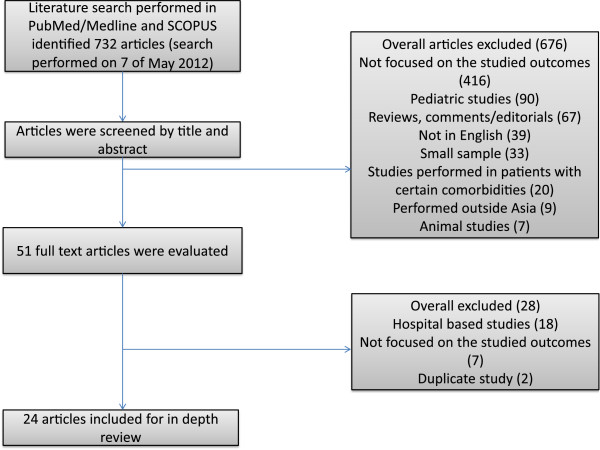
BACKGROUND: Obstructive sleep apnea (OSA) is a common disease, affecting approximately 2% of women and 4% of men residing in Western communities. No systematically reviewed data are available about the prevalence of this disease in Asia, the most heavily populated continent. METHODS: PubMed/Medline, Scopus and Google Scholar were searched for articles published from 1993 to May 2012 that reported the prevalence of OSA diagnosed via sleep monitoring and the prevalence of patients at risk for OSA as assessed by symptomatology and/or sleep questionnaires. We have also searched abstract database of major pulmonary and sleep scientific societies for relevant abstracts presented from 2010 to 2012. The following inclusion criteria were used: articles published in English, age ≥ 18 years, ≥ 100 participants in studies using sleep monitoring for the diagnosis of OSA, ≥ 300 participants in studies using questionnaires to detect patients at high risk for OSA. EXCLUSION CRITERIA: duplicate publications, studies reporting the prevalence of central sleep apnea only, hospital based studies as well as studies assessing OSA prevalence among patients with resistant arterial hypertension, chronic kidney disease, heart failure and in patients with concomitant neurological disease. RESULTS: Twenty four articles were found to meet the inclusion criteria, covering 47,957 subjects (26,042 men and 21,915 women) and four relevant abstracts were noted. OSA prevalence ranged from 3.7% to 97.3%. Male gender, older age, a higher BMI and waist to hip ratio, greater neck circumference, arterial hypertension, smoking, snoring and daytime sleepiness were associated with OSA. Sample size, difference between the populations studied and the fact that some works included patients with a high pre-test probability of OSA explain the difference in prevalence rates. CONCLUSION: This systematic review highlights the lack of data regarding the prevalence of OSA in Asians. Only a few studies provide an approximate estimate of the OSA burden in some Asian communities.
Overview
The claims and statistics of this paper haven’t been checked yet.
Free: it reads the open-access text and checks the first 5 claims that cite a source we can check. Create a free account to check every claim.
Integrity signals
Registry
Cites
Statistics
Figures
Verification
Claims the paper makes
The claims and statistics of this paper haven’t been checked yet.
Free: it reads the open-access text and checks the first 5 claims that cite a source we can check. Create a free account to check every claim.
Claims other papers make about this one
Each is checked against this paper’s own text: does it say what the citing paper says it does?
The cited source says what the claim attributes to it.
In the citing paper
“Neck circumference (NC) or collar size is associated with OSA in adults.184,528–534”
From International Consensus Statement on Obstructive Sleep Apnea (2023) · cites this paper as [531]
Self-check
Percentages, sums and reported differences re-computed from the paper’s own numbers.
The self-check needs the paper’s full text.
Citations
Cites
Preferred Reporting Items for Systematic Reviews and Meta-Analyses: the PRISMA statement
Moher, D., Liberati, A., Tetzlaff, J., Altman, D. G., & for the PRISMA Group (2009) · BMJ · doi:10.1136/bmj.b2535 · Cited by 83,823
Preferred Reporting Items for Systematic Reviews and Meta-Analyses: The PRISMA Statement
Moher, D., Liberati, A., Tetzlaff, J., Altman, D. G., & The PRISMA Group (2009) · PLoS Medicine · doi:10.1371/journal.pmed.1000097 · Cited by 64,042 · cited 1×
“The systematic review was performed according to the key tenets of the PRISMA guidance for systematic reviews [5].”
MethodPreferred reporting items for systematic reviews and meta-analyses: the PRISMA Statement.
(2009) · PubMed Central · Cited by 44,859
Preferred Reporting Items for Systematic Reviews and Meta-Analyses: The PRISMA Statement
Moher, D., Liberati, A., Tetzlaff, J., & Altman, D. G. (2009) · Journal of Clinical Epidemiology · doi:10.1016/j.jclinepi.2009.06.005 · Cited by 19,575
A New Method for Measuring Daytime Sleepiness: The Epworth Sleepiness Scale
Johns, M. W. (1991) · Sleep · doi:10.1093/sleep/14.6.540 · Cited by 17,364 · cited 20×
“Another flaw is that questionnaires such as the ESS cannot rule out other sleep disorders; in fact this scale was primarily invented to detect EDS [3], and not OSA or patients at high risk for OSA.”
BackgroundMethodInfluentialMcNicholas, W. T., Strohl, K. P., White, D. P., Levy, P. A., Schmidt, W., Wheatley, J. R., Redline, S. S., Carley, D. W., Buysse, D. J., Young, T. B., et al. (1999) · PubMed · Cited by 3,665
Systematic reviews: CRD's guidance for undertaking reviews in health care
Tacconelli, E. (2010) · The Lancet Infectious Diseases · doi:10.1016/s1473-3099(10)70065-7 · Cited by 3,245
Using the Berlin Questionnaire To Identify Patients at Risk for the Sleep Apnea Syndrome
Netzer, N. C., Stoohs, R. A., Netzer, C. M., Clark, K., & Strohl, K. P. (1999) · Annals of Internal Medicine · doi:10.7326/0003-4819-131-7-199910050-00002 · Cited by 2,973 · cited 2×
“Netzer NC, Stoohs RA, Netzer CM, Clark K, Strohl KP: Using the Berlin Questionnaire to identify patients at risk for the sleep apnea syndrome.”
MethodPrevalence of Sleep-disordered Breathing in Middle-aged Korean Men and Women
Kim, J., In, K., Kim, J., You, S., Kang, K., Shim, J., Lee, S., Lee, J., Lee, S., Park, C., et al. (2004) · American Journal of Respiratory and Critical Care Medicine · doi:10.1164/rccm.200404-519oc · Cited by 516 · cited 5×
“[31]; 2004 Korea Cross-Sectional study using home sleep study or PSG n- 457 Males- 67.”
BackgroundMethodInfluential
Cited by
Prevalence of obstructive sleep apnea in the general population: A systematic review
Senaratna, C. V., Perret, J. L., Lodge, C. J., Lowe, A. J., Campbell, B. E., Matheson, M. C., Hamilton, G. S., & Dharmage, S. C. (2017) · Sleep Medicine Reviews · doi:10.1016/j.smrv.2016.07.002 · Cited by 2,581
International Consensus Statement on Obstructive Sleep Apnea
Chang, J. L., Goldberg, A. N., Alt, J. A., Mohammed, A., Ashbrook, L., Auckley, D., Ayappa, I., Bakhtiar, H., Barrera, J. E., Bartley, B. L., et al. (2023) · International Forum of Allergy & Rhinology · doi:10.1002/alr.23079 · Cited by 350
Disparities and genetic risk factors in obstructive sleep apnea
Dudley, K. A., & Patel, S. R. (2016) · Sleep Medicine · doi:10.1016/j.sleep.2015.01.015 · Cited by 211
“9% to 24% [71].”
BackgroundSleep Apnea and Cancer: Analysis of a Nationwide Population Sample
Gozal, D., Ham, S. A., & Mokhlesi, B. (2016) · Sleep · doi:10.5665/sleep.6004 · Cited by 199
Nonalcoholic fatty liver disease and vascular disease: State-of-the-art
Fargion, S. (2014) · World Journal of Gastroenterology · doi:10.3748/wjg.v20.i37.13306 · Cited by 196
Carnethon, M. R., De Chavez, P. J., Zee, P. C., Kim, K.-Y. A., Liu, K., Goldberger, J. J., Ng, J., & Knutson, K. L. (2016) · Sleep Medicine · doi:10.1016/j.sleep.2015.07.005 · Cited by 193
“Prior studies have observed similar or even higher rates of sleep apnea among Asians despite lower BMI [30], which may be attributable to differences in craniofacial structure resulting in a smaller airway [31].”
BackgroundInfluentialKo, C.-Y., Liu, Q.-Q., Su, H.-Z., Zhang, H.-P., Fan, J.-M., Yang, J.-H., Hu, A.-K., Liu, Y.-Q., Chou, D., & Zeng, Y.-M. (2019) · Clinical Science · doi:10.1042/cs20180891 · Cited by 172
Dantas, A. B. D. A., Gonçalves, F. M., Martins, A. A., Alves, G. Â. D. S., Stechman‐Neto, J., Corrêa, C. D. C., Santos, R. S., Nascimento, W. V., de Araújo, C. M., & Taveira, K. V. M. (2023) · Sleep And Breathing · doi:10.1007/s11325-023-02810-7 · Cited by 166
“Etiologies includes neuromuscular, anatomical, mechanical, and chemical factors [3, 4] and can be classified as mild, moderate, or severe [5].”
BackgroundResultShen, Y.-L., Liu, W.-T., Lee, K.-Y., Chuang, H.-C., Chen, H.-W., & Chuang, K.-J. (2018) · Environmental Pollution · doi:10.1016/j.envpol.2017.10.052 · Cited by 112
Myofunctional therapy (oropharyngeal exercises) for obstructive sleep apnoea
Rueda, J.-R., Mugueta-Aguinaga, I., Vilaró, J., & Rueda-Etxebarria, M. (2020) · Cochrane Database of Systematic Reviews · doi:10.1002/14651858.cd013449.pub2 · Cited by 161
Biomarkers associated with obstructive sleep apnea: A scoping review
Canto, G. D. L., Pachêco‐Pereira, C., Aydınöz, S., Major, P. W., Flores‐Mir, C., & Gozal, D. (2014) · Sleep Medicine Reviews · doi:10.1016/j.smrv.2014.11.004 · Cited by 113
Matsumoto, T., & Chin, K. (2019) · Respiratory Investigation · doi:10.1016/j.resinv.2019.01.008 · Cited by 107
Obstructive sleep apnea in adults
Faber, J., Faber, C., & Faber, A. P. (2019) · Dental Press Journal of Orthodontics · doi:10.1590/2177-6709.24.3.099-109.sar · Cited by 119
Remmers, J. E. (1984) · American Review of Respiratory Disease · doi:10.1164/arrd.1984.130.2.153 · Cited by 82
Ghavami, T., Kazeminia, M., Ahmadi, N., & Rajati, F. (2023) · Journal of PeriAnesthesia Nursing · doi:10.1016/j.jopan.2023.01.018 · Cited by 81
War is the Enemy of Health. Pulmonary, Critical Care, and Sleep Medicine in War-Torn Syria
Sahloul, M. Z., MONLA-HASSAN, J. M., Sankari, A., Kherallah, M., Atassi, B., Badr, S. M., Abbara, A., & Sparrow, A. (2016) · Annals of the American Thoracic Society · doi:10.1513/annalsats.201510-661ps · Cited by 67
Systematic review and meta-analysis of the prevalence of obstructive sleep apnea in Indian adults
Suri, T. M., Ghosh, T., Mittal, S., Hadda, V., Madan, K., & Mohan, A. (2023) · Sleep Medicine Reviews · doi:10.1016/j.smrv.2023.101829 · Cited by 78
Knowledge, attitude, and practice regarding obstructive sleep apnea among primary care physicians
Devaraj, N. K. (2020) · Sleep And Breathing · doi:10.1007/s11325-020-02040-1 · Cited by 62
Jackson, C. L., Kawachi, I. I., Redline, S. S., Juon, H., & Hu, F. B. (2014) · BMC Public Health · doi:10.1186/1471-2458-14-552 · Cited by 59
“Since some research suggests that short sleep associated with insomnia may have the most adverse effects on health [51,52] it would be important for future studies to further consider the influence of short sleep and sleep disturbances on specific health outcomes among Asian Americans.”
InfluentialComorbidities and risk of mortality in patients with sleep apnea
Chiang, C., Chen, Y., Wang, K.-L., Su, V. Y., Wu, L.-A., Perng, D., Chang, S.-C., Chen, Y.-M., Chen, T., & Chou, K. (2017) · Annals of Medicine · doi:10.1080/07853890.2017.1282167 · Cited by 60
Moridian, P., Shoeibi, A., Khodatars, M., Jafari, M., Pachori, R. B., Khadem, A. A., Alizadehsani, R., & Ling, S. H. (2022) · Wiley Interdisciplinary Reviews Data Mining and Knowledge Discovery · doi:10.1002/widm.1478 · Cited by 64
“It causes a sudden and frequent reduction in blood oxygen level, which may lead to awakening from sleep and reduce sleep quality (Abrishami et al., 2010; Franklin & Lindberg, 2015; Mirrakhimov et al., 2013).”
BackgroundPolesel, D. N., Hirotsu, C., Nozoe, K. T., Boin, A. C., Bittencourt, L., Tufik, S., Andersen, M. L., & Hachul, H. (2015) · Menopause · doi:10.1097/gme.0000000000000406 · Cited by 55
“Anthropometric parameters, such as neck circumference and waist circumference, are associated with severity of OSAS.(64,65) Moreover, abdominal obesity is considered an independent risk factor for predicting sleep duration and sleep disorders.”
BackgroundEffects of Bedroom Environmental Conditions on the Severity of Obstructive Sleep Apnea
Lappharat, S., Taneepanichskul, N., Reutrakul, S., & Chirakalwasan, N. (2018) · Journal of Clinical Sleep Medicine · doi:10.5664/jcsm.7046 · Cited by 57
Menon, D., Sukumaran, S., Varma, R., & Radhakrishnan, A. (2017) · Acta Neurologica Scandinavica · doi:10.1111/ane.12740 · Cited by 49
Lin, Y., Liu, P., Lin, S., Chuang, L., Ho, W., Chou, Y.-T., Juan, K.-C., Lo, M., Chu, P., & Chen, N. (2016) · Sleep And Breathing · doi:10.1007/s11325-016-1376-2 · Cited by 53
“Obstructive sleep apnea (OSA) is a disorder that affects 2–4 % of adults in the general population of Taiwan and worldwide [1, 2].”
BackgroundPrevalence of Obstructive Sleep Apnea in the Young Adult Population: A Systematic Review
Zasadzińska-Stempniak, K., Zajączkiewicz, H., & Kukwa, A. (2024) · Journal of Clinical Medicine · doi:10.3390/jcm13051386 · Cited by 67
“Previous systematic reviews predominantly included the middle-aged population, approximately aged 30–70 years [15,16].”
BackgroundResultInfluentialSleep Bruxism and Sleep-Disordered Breathing: A Systematic Review
Canto, G. D. L., Singh, V., Gozal, D., Major, P. W., & Flores‐Mir, C. (2018) · Journal of Oral & Facial Pain and Headache · doi:10.11607/ofph.1294 · Cited by 59
Maniaci, A., Riela, P. M., Iannella, G., Lechien, J. R., Mantia, I. L., VINCENTIIS, M. D., Cammaroto, G., Calvo‐Henríquez, C., Luca, M. D., Chiesa-Estomba, C. M., et al. (2023) · Life · doi:10.3390/life13030702 · Cited by 54
“A systematic review of the prevalence of OSA in an Asian population reported interesting data on highly related features, such as gender, older age, BMI increase, and arterial hypertension, that significantly correlated with the onset of sleep breathing disorders and severity [4].”
BackgroundZhang, R., Zhang, P., Zhao, F., Han, X., & Ji, L. (2016) · Diabetes Technology & Therapeutics · doi:10.1089/dia.2015.0433 · Cited by 52
“9% to 86%, which is considerably higher than that in the general population.(5,6) Some recent evidence suggests a possible association of OSA and chronic diabetes complications.”
Liu, W., Wu, H., Juang, J.-N., Wisniewski, A. P., Lee, H., Wu, D., & Lo, Y.-L. (2017) · PLoS ONE · doi:10.1371/journal.pone.0176991 · Cited by 48
Köseoğlu, S., Özcan, K. M., İkincioğulları, A., Çetin, M. A., Yildirim, E., & Dere, H. (2015) · Advances in Clinical and Experimental Medicine · doi:10.17219/acem/58969 · Cited by 57
Chu, C.-A., Chen, Y., Chang, K. C., Wu, W., & Özçakar, L. (2021) · Frontiers in Physiology · doi:10.3389/fphys.2021.654667 · Cited by 45
Wang, J., Zhang, H., Wu, C., Han, J., Guo, Z.-Z., Jia, C., Yang, L., Hao, Y., Xu, K., Liu, X., et al. (2015) · West Indian Medical Journal · doi:10.7727/wimj.2014.054 · Cited by 41
“Epidemiological studies (2) have shown that OSAS patients often have cardiovascular risk factors such as hypertension, hyperlipidaemia and obesity; half (51.”
BackgroundInfluentialNami, M., Mehrabi, S., Borhani‐Haghighi, A., & Derman, S. (2015) · Journal of Integrative Neuroscience · doi:10.1142/s0219635215500144 · Cited by 42
Sleep disorders increase the risk of osteoporosis: a nationwide population-based cohort study
Yen, C.-M., Kuo, C.-L., Lin, M., Lee, C.-F., Lin, K., Lin, C., Chang, S., Sung, F., & Kao, C. (2014) · Sleep Medicine · doi:10.1016/j.sleep.2014.07.005 · Cited by 41
“In New Zealand, the prevalence of obstructive sleep apnea is higher among men [14].”
BackgroundObstructive Sleep Apnea Patients Having Surgery Are Less Associated with Glaucoma
Chen, H.-Y., Chang, Y.-C., Lin, C.-C., Sung, F.-C., & Chen, W. (2014) · Journal of Ophthalmology · doi:10.1155/2014/838912 · Cited by 38
“In one recent review article, the authors highlight the lack of data regarding the prevalence of OSA in Asians [17].”
BackgroundSun, M., Lee, C., Liao, Y. J., & Sun, C. (2018) · Acta Ophthalmologica · doi:10.1111/aos.13832 · Cited by 41
Singh, A., Prasad, R., Garg, R., Kant, S., Hosmane, G. B., Dubey, A., Agarwal, A., & Verma, R. K. (2017) · Monaldi Archives for Chest Disease · doi:10.4081/monaldi.2017.773 · Cited by 44
The prediction of obstructive sleep apnea severity based on anthropometric and Mallampati indices
Amra, B., Pirpiran, M., Soltaninejad, F., Penzel, T., Fietze, I., & Schoebel, C. (2019) · Journal of Research in Medical Sciences · doi:10.4103/jrms.jrms_653_18 · Cited by 33
“useful, the results for various races and populations are different.[10,11] INTRODUCTION”
BackgroundÖzer, C., Etcibaşı, S., & Öztürk, L. (2014) · Europe PMC (PubMed Central) · Cited by 33
Chen, X., Pensuksan, W. C., Lohsoonthorn, V., Lertmaharit, S., Gelaye, B., & Williams, M. A. (2014) · International Journal of Social Science Studies · doi:10.11114/ijsss.v2i3.439 · Cited by 43
“A recent systematic review has highlighted the lack of data regarding the prevalence of OSA in Asia (Mirrakhimov et al., 2013).”
BackgroundBrutto, Ó. H. D., Mera, R. M., Jaime, R. F., & Castillo, P. R. (2013) · Journal of Stroke and Cerebrovascular Diseases · doi:10.1016/j.jstrokecerebrovasdis.2013.08.020 · Cited by 31
“in industrialized nations, there is scarce evidence of their prevalence and public health impact in the developing world.(8-10) Moreover, people living in developing countries usually do not seek medical attention for sleep disorders, as demonstrated in a large series of patients attending an outpatient neurologic cli…”
BackgroundLo, K., Chiang, L.-L., Hsu, S.-M., Tsai, C.-Y., Wu, D., Chou, C.-J., Chuang, H., & Liu, W. (2021) · The Science of The Total Environment · doi:10.1016/j.scitotenv.2021.147291 · Cited by 34
Relationship of obstructive sleep apnoea severity and subclinical systemic atherosclerosis
Kim, S., Lee, K. Y., Kim, N. H., Abbott, R. D., Kim, C., Lee, S. K., Kim, S. H., & Shin, C. (2019) · European Respiratory Journal · doi:10.1183/13993003.00959-2019 · Cited by 32
Liu, W., Lee, K., Lee, H., Chuang, H., Wu, D., Juang, J.-N., & Chuang, K.-J. (2015) · The Science of The Total Environment · doi:10.1016/j.scitotenv.2015.10.135 · Cited by 33
“It affects as much as 17% of U.S. adults (Young et al., 1993), 59% of Taiwanese adults (Chuang et al., 2008) and may bemore prevalent in Asian adults (Mirrakhimov et al., 2013).”
BackgroundAdult obstructive sleep apnoea and the larynx
Novakovic, D., & MacKay, S. G. (2015) · Current Opinion in Otolaryngology & Head & Neck Surgery · doi:10.1097/moo.0000000000000209 · Cited by 30
“Excessive body weight and age are recognized risk factors, but race does not appear to be [2].”
BackgroundBostancı, A., Turhan, M., & Bozkurt, S. (2017) · Methods of Information in Medicine · doi:10.3414/me16-01-0084 · Cited by 33
“Indeed, in a recent review study the lack of data regarding the prevalence of OSA in Asians was specifically highlighted [39], a similar case to that in Turkey.”
ResultZhang, Y., Lin, Y., Zhang, J., Li, L., Liu, X., Wang, T., & Gao, Z. (2018) · Sleep And Breathing · doi:10.1007/s11325-018-1687-6 · Cited by 35
“older age [32], it can be inferred that comorbidity might, in part, explain the sex and age discrepancy in the association between type 2 diabetes and insomnia.”
BackgroundAmbulatory Blood Pressure Monitoring in Chinese Patients with Obstructive Sleep Apnea
Ma, Y., Sun, S., Peng, C., Fang, Y., & THOMAS, R. J. (2017) · Journal of Clinical Sleep Medicine · doi:10.5664/jcsm.6498 · Cited by 24
“The office BP was the average of three BPs measured in the sitting position during the visit closest to the ABPM: (1) daytime BP, during 09:00 to 11:00 in the clinic office; (2) night BP, approximately at 21:00 to 22:00 in the sleep laboratory before patients were connected to the recording system; and (3), around 07:…”
Devaraj, U., Pinto, A. M., Ramachandran, P., Joseph, B., & D′souza, G. (2018) · Lung India · doi:10.4103/lungindia.lungindia_433_17 · Cited by 30
“[1] Mirrakhimov et al. have concluded from a systematic review of 47,957 participants, that there is a paucity of prevalence studies from Asia.”
BackgroundObstructive sleep apnea and risk of aortic dissection: A meta-analysis of observational studies
Zhou, X., Liu, F., Zhang, W., Wang, G., Guo, D., Fu, W., & Wang, L. (2018) · Vascular · doi:10.1177/1708538118766102 · Cited by 28
“3% of OSA in Asians, reported in a systematic review.(27) Consequently, it seems to be unsatisfied to compare the prevalence of OSA in AD people and that in community people.”
BackgroundTsai, C.-Y., Liu, W., Lin, Y.-T., Lin, S., Houghton, R., Hsu, W.-H., Wu, D., Lee, H., Wu, C.-J., Li, L.-Y. J., et al. (2021) · Informatics for Health and Social Care · doi:10.1080/17538157.2021.2007930 · Cited by 27
“14 Although these questionnaires have been found to have high sensitivity for OSAS screening, they exhibited low specificity in all severity groups.”
BackgroundDuan, X., Zheng, M., Zhao, W., Huang, J., Lao, L., Li, H., Lu, J., Chen, W., Liu, X., & Deng, H. (2022) · Frontiers in Medicine · doi:10.3389/fmed.2022.799792 · Cited by 31
Prevalence of obstructive sleep apnea in an Asian bariatric population: an underdiagnosed dilemma
Loo, G. H., Rajan, R., Tamil, A. M., & Kosai, N. R. (2020) · Surgery for Obesity and Related Diseases · doi:10.1016/j.soard.2020.02.003 · Cited by 31
AlQattan, H. T., Al‐Omairah, H. A., Al-Hashash, K., Almutairi, F. S., Al-Mutairat, M., Alajmi, M. S., Mohammad, A., Alterki, A., & Ziyab, A. H. (2021) · Frontiers in Neurology · doi:10.3389/fneur.2021.620799 · Cited by 28
Sun, J., Hu, J., Tu, C., Zhong, A., & Xu, H. (2015) · PLoS ONE · doi:10.1371/journal.pone.0135942 · Cited by 23
Tóthová, Ľ., Hodosy, J., Mucska, I., & Celec, P. (2013) · Sleep And Breathing · doi:10.1007/s11325-013-0919-z · Cited by 23
“Obstructive sleep apnea syndrome (OSAS) is a sleep-related breathing disorder with increasing prevalence worldwide [1].”
BackgroundRen, L., Wang, K., Shen, H., Xu, Y., Wang, J., & Chen, R. (2019) · Medicine · doi:10.1097/md.0000000000016344 · Cited by 24
“whereas in stroke cases, OSA prevalence ranges from 30% to as high as 80%.([19,35]) In clinic, attention should be paid to stroke patients with OSA.”
BackgroundMyofunctional therapy (oropharyngeal exercises) for obstructive sleep apnoea
Rueda, J.-R., Mugueta-Aguinaga, I., Vilaró, J., & Rueda-Etxebarria, M. (2019) · Cochrane Database of Systematic Reviews · doi:10.1002/14651858.cd013449 · Cited by 25
Sleep quality of Singapore residents: findings from the 2016 Singapore mental health study
Lee, Y. Y., Lau, J. H., Vaingankar, J. A., Sambasivam, R., Shafie, S., Chua, B. Y., Chow, W. L., Abdin, E., & Subramaniam, M. (2022) · Sleep Medicine X · doi:10.1016/j.sleepx.2022.100043 · Cited by 25
A Scientometric Review of Obstructive Sleep Apnea and Obesity
Neoh, M. J. Y., Carollo, A., Lim, M., Dimitriou, D., & Esposito, G. (2023) · Applied Sciences · doi:10.3390/app13020753 · Cited by 22
Tripathi, A., Bagchi, S., Singh, J. P., Tripathi, S., Gupta, N. K., & Arora, V. (2017) · Journal of Prosthodontics · doi:10.1111/jopr.12654 · Cited by 18
Goyal, A., Puthangot, A., & Pakhare, A. P. (2017) · Sleep and Vigilance · doi:10.1007/s41782-017-0028-3 · Cited by 19
Ng, J. H., Song, Y. L., & Yap, A. U. (2019) · Journal of Oral Rehabilitation · doi:10.1111/joor.12854 · Cited by 21
Alexandropoulou, A., Vavougios, G. D., Hatzoglou, C., Gourgoulianis, K. I., & Zarogiannis, S. G. (2019) · Medicina · doi:10.3390/medicina55080468 · Cited by 21
“indicate that the exact determination of OSAS prevalence is difficult due to different methodological approaches [3,8,9].”
BackgroundLin, Y., Liu, P., & Chu, P. (2017) · Europe PMC (PubMed Central) · doi:10.6515/acs20170825a · Cited by 25
Obstructive Sleep Apnea: A Look towards Micro-RNAs as Biomarkers of the Future
Moriondo, G., Soccio, P., Tondo, P., Scioscia, G., Sabato, R., Barbaro, M. P. F., & Lacedonia, D. (2022) · Biology · doi:10.3390/biology12010066 · Cited by 18
Uncovering the sleep disorders among young doctors
Yasin, R., Muntham, D., & Chirakalwasan, N. (2016) · Sleep And Breathing · doi:10.1007/s11325-016-1380-6 · Cited by 21
Suri, J., Suri, J., Arora, R., Gupta, M., & Adhikari, T. (2018) · The Journal of Obstetrics and Gynecology of India · doi:10.1007/s13224-018-1134-4 · Cited by 17
“The epidemiological risk factors are obesity, male gender and increasing age [9].”
BackgroundThe Prevalence of Sleep Apnea in Iran: a Systematic Review and Meta-Analysis.
Sarokhani, M., Goli, M., Salarvand, S., & Gheshlagh, R. G. (2019) · PubMed Central · Cited by 22
Update on Research and Practices in Major Sleep Disorders: Part I. Obstructive Sleep Apnea Syndrome
Chaiard, J., & Weaver, T. E. (2019) · Journal of Nursing Scholarship · doi:10.1111/jnu.12489 · Cited by 25
Dieu, H. D. T., Vo-Thi-Kim, A., Tran-Van, H., & Duong‐Quy, S. (2020) · Multidisciplinary Respiratory Medicine · doi:10.4081/mrm.2020.468 · Cited by 23
“Obstructive sleep apnea (OSA] is one of the sleep disorders affecting a large number of population worldwide [1-3].”
BackgroundSleep Apnea and Inflammation – Getting a Good Night’s Sleep with Omega-3 Supplementation
Scorza, F. A., Cavalheiro, É. A., Scorza, C. A., Galduróz, J. C. F., Tufik, S. B., & Andersen, M. L. (2013) · Frontiers in Neurology · doi:10.3389/fneur.2013.00193 · Cited by 17
Tailored treatment strategies for obstructive sleep apnea
Shin, W. C., Jen, R., Li, Y., & Malhotra, A. (2015) · Respiratory Investigation · doi:10.1016/j.resinv.2015.09.007 · Cited by 17
“[8] Mirrakhimov AE, Sooronbaev T, Mirrakhimov EM.”
ResultSun, M., Liao, Y. J., Lin, C.-C., Chiang, R. P., & Wei, J. C. (2018) · Eye · doi:10.1038/s41433-018-0088-1 · Cited by 15
Abdissa, D. (2020) · Journal of Clinical & Translational Endocrinology · doi:10.1016/j.jcte.2020.100234 · Cited by 24
“According to previous studies obesity, old age, male sex, diabetic retinopathy, hypertension, smoking and alcohol intake are the risk factors for OSA [11,12],[13].”
MethodPensuksan, W. C., Chen, X., Lohsoonthorn, V., Lertmaharit, S., Gelaye, B., & Williams, M. A. (2013) · American Journal of Hypertension · doi:10.1093/ajh/hpt194 · Cited by 21
Sleep apnea syndrome and restless legs syndrome in kidney transplant recipients
Mahmoodnia, L., Naini, A. E., Amra, B., & Taheri, S. (2015) · Advanced Biomedical Research · doi:10.4103/2277-9175.166142 · Cited by 15
Cao, X., Gu, Y., Fu, J., Quynh, V. T., Zhang, Q., Liu, L., Meng, G., Yao, Z., Wu, H., Bao, X., et al. (2019) · QJM · doi:10.1093/qjmed/hcz178 · Cited by 15
Symptoms and risk for obstructive sleep apnea among sample of Saudi Arabian adults
Alruwaili, H., Ahmed, A. E., Fatani, A. S., Al‐Otaibi, K., AL-Jahdali, S., Ali, Y. Z., Al-Harbi, A., Baharoon, S. A., Khan, M., & Al-Jahdali, H. H. (2015) · Sleep and Biological Rhythms · doi:10.1111/sbr.12124 · Cited by 16
Tomooka, K., Tanigawa, T., Sakurai, S., Maruyama, K., Eguchi, E., Nishioka, S., Miyoshi, N., Kakuto, H., Shimizu, G., Yamaoka, D., et al. (2017) · Journal of Oral Rehabilitation · doi:10.1111/joor.12526 · Cited by 16
“that was ranged from 8 4% to 26 9% in Asian populations (5).”
BackgroundTsai, C.-Y., Kuan, Y., Hsu, W.-H., Lin, Y.-T., Hsu, C.-R., Lo, K., Hsu, W.-H., Majumdar, A., Liu, Y.-S., Hsu, S.-M., et al. (2021) · Diagnostics · doi:10.3390/diagnostics12010050 · Cited by 14
“By contrast, a review study analyzing 24 articles that focused on OSA prevalence in Asian populations revealed that this disease was disproportionately more common in men than in women [39].”
ResultGupta, A., Kaur, J., Shukla, G., Bhullar, K. K., Lamo, P., Biju, K., Agarwal, A., Srivastava, A. K., & Sharma, G. (2023) · Sleep Medicine · doi:10.1016/j.sleep.2023.04.020 · Cited by 17
Obstructive sleep apnea‐related symptoms in J apanese people with Down syndrome
Ono, J., Chishaki, A. S., Ohkusa, T., Sawatari, H., Nishizaka, M., & Ando, S. (2015) · Nursing and Health Sciences · doi:10.1111/nhs.12206 · Cited by 17
D’Ambrosio, C. M., & Redline, S. S. (2013) · Springer eBooks · doi:10.1007/978-1-4614-9527-7_1 · Cited by 16
Kim, T., Choi, H., Lee, J., & Kim, J. (2022) · International Journal of Environmental Research and Public Health · doi:10.3390/ijerph19148398 · Cited by 16
“The estimated prevalence of OSA is approximately 4–14% in Asian populations and is much higher among obese individuals [2].”
BackgroundThe prevalence of high risk of obstructive sleep apnea in patients with allergic rhinitis
Wongvilairat, S., Assanasen, P., Banhiran, W., Tantilipikorn, P., & Bunnag, C. (2022) · Asian Pacific Journal of Allergy and Immunology · doi:10.12932/ap-141218-0458 · Cited by 15
“6,7,18 However, in patients with AR, the prevalence of OSA is unclear, although one study reported a prevalence rate of approximately 36%.”
Tang, S., Zhu, J., Zhao, D., Mo, H., Zeng, Z., Xiong, M., Dong, M., & Hu, K. (2020) · Brain Research Bulletin · doi:10.1016/j.brainresbull.2020.08.027 · Cited by 14
Lee, C., Yeung, L., Jen, C. K., Sun, M., & Sun, C. (2021) · Ophthalmic Epidemiology · doi:10.1080/09286586.2021.1925306 · Cited by 13
Orexin A improves the cognitive impairment induced by chronic intermittent hypoxia in mice
Zhu, J., Tang, S., Zhao, D., Zeng, Z., Mo, H., & Hu, K. (2021) · Brain Research Bulletin · doi:10.1016/j.brainresbull.2021.05.022 · Cited by 12
Chen, W., Feng, J., Wang, Y., Wang, C., & Dong, Z. (2021) · Nature and Science of Sleep · doi:10.2147/nss.s316674 · Cited by 15
Wakabayashi, H., & Matsushima, M. (2015) · The journal of nutrition health & aging · doi:10.1007/s12603-015-0587-8 · Cited by 13
“Increased neck circumference has been associated with obstructive sleep apnea (1-3), metabolic syndrome (3-9), insulin resistance (3, 6, 10-11), obesity (5, 9, 12-14) and visceral adipose tissue (6, 11, 15).”
Shoib, S., Ullah, I., Nagendrappa, S., Taseer, A. R., Berardis, D. D., Singh, M., & Asghar, M. S. (2022) · Annals of Medicine and Surgery · doi:10.1016/j.amsu.2022.104056 · Cited by 19
Kimoff, R. J. (2015) · Elsevier eBooks · doi:10.1016/b978-1-4557-3383-5.00088-9 · Cited by 13
Does positive airway pressure therapy improve olfactory function?
Köseoğlu, S., Derin, S., Yilmaz, M., Kutlu, G., & Şahan, M. (2017) · International Forum of Allergy & Rhinology · doi:10.1002/alr.21923 · Cited by 12
Epidemiology of Sleep Medicine
Amara, A. W., & Maddox, M. H. (2016) · Elsevier eBooks · doi:10.1016/b978-0-323-24288-2.00062-3 · Cited by 13
Epidemiology: Principles and Application in Sleep Medicine
Partinen, M., & Kronholm, E. (2017) · Springer eBooks · doi:10.1007/978-1-4939-6578-6_28 · Cited by 15
Eow, P. Y., Lin, K. Y., Kohli, S., & Math, S. Y. (2021) · Imaging Science in Dentistry · doi:10.5624/isd.20210193 · Cited by 12
Risk of suicide after a diagnosis of sleep apnea: A nationwide longitudinal study
Chu, C., Huang, K., Bai, Y., Su, T., Tsai, S., Chen, T., Hsu, J.-W., Liang, C., & Chen, M. (2023) · Journal of Psychiatric Research · doi:10.1016/j.jpsychires.2023.03.028 · Cited by 9
Awareness of obstructive sleep apnea among critical care physicians in Sharkia Governorate, Egypt
Embarak, S., Zake, L. G., Abd-El-Azem, W. G., & Sileem, A. E. (2020) · Egyptian Journal of Bronchology · doi:10.1186/s43168-020-00005-2 · Cited by 12
Metadata
- Authors
- Mirrakhimov, A. E., Sooronbaev, T., & Mirrakhimov, E. M.
- Affiliations
- Kyrgyz State Medical Academy (KG)
- National Center of Cardiology and Internal Medicine (KG)
- Corresponding author
- Mirrakhimov, Aibek E
- Venue
- BMC Pulmonary Medicine
- Published
- 2013-02-23
- Volume
- 13
- Issue
- 1
- Pages
- 10-10
- ISSN
- 1471-2466 (ISSN-L)
- PMC
- PMC3585751
- OpenAlex
- W2040843169
- Semantic Scholar
- ebc0566a6c9976955301eb5bf5ce1f98dcd3b179
- Cited by
- 206
- References
- 38
- Citations by year
- 2026: 3 · 2025: 12 · 2024: 15 · 2023: 20 · 2022: 15 · 2021: 21 · 2020: 17 · 2019: 18 · 2018: 11 · 2017: 18 · 2016: 9 · 2015: 22 · 2014: 13 · 2013: 10
- FWCI
- 1.98
- Type
- journal article
- Language
- en
- Open access
- gold
- doi.org
- Licence
- cc-by
- creativecommons.org/licenses/by/2.0 (tdm)
- Locations
- BMC Pulmonary Medicine (publishedVersion, cc-by)
- Europe PMC (PubMed Central) (publishedVersion, cc-by)
- PubMed Central (publishedVersion, cc-by)
- PubMed (publishedVersion)
- DOAJ (DOAJ: Directory of Open Access Journals) (submittedVersion)
- Topics
- Health Sciences › Medicine › Physiology (medical) › Obstructive Sleep Apnea Research
- Social Sciences › Psychology › Experimental and Cognitive Psychology › Sleep and related disorders
- Life Sciences › Neuroscience › Endocrine and Autonomic Systems › Neuroscience of respiration and sleep
- Keywords
- obstructive sleep apnea, prevalence, Asian adults, risk factors, sleep monitoring, OSA screening questionnaires, snoring, daytime sleepiness, obesity, hypertension, smoking, sex differences
- MeSH terms
- Adult, Asia, Female, Humans, Male, Risk Factors, Prevalence, Sleep Apnea, Obstructive, Asian People
About these checks
Registry, retraction, Cites and statistics results are computed, not judged, with one exception: a printed reference that no index lists is read once by a model before it counts as a citation error. Claims are extracted by a model and kept only when their quote appears verbatim in the text; each cited source is then checked, with a model’s help, for whether it says what the claim relies on. Those verdicts can be wrong — read the claim’s quote and the cited source before relying on one.
Statistics and arithmetic are recomputed, not judged.
Confidence bands are shown only for fields calibrated on our annotated test set. None is calibrated yet, so no band is shown.
What counts as a claim ›How we measure confidence ›How we check this ›
Are you an author, or do you see a problem with this page? Request a review
Data sources
Bibliographic data: Semantic Scholar, OpenAlex, Crossref.
Contains information from the Semantic Scholar Academic Graph Datasets, made available under the ODC Attribution License (ODC-BY 1.0).
Semantic Scholar’s data is described in: Kinney, R., et al. (2023). The Semantic Scholar Open Data Platform. arXiv:2301.10140.
