

Prevalence of obstructive sleep apnea in Asian adults: a systematic review of the literature
Open accessThe DOI matches its Crossref record; 38 of the 38 references it cites were found in a registry or an index.
Abstract
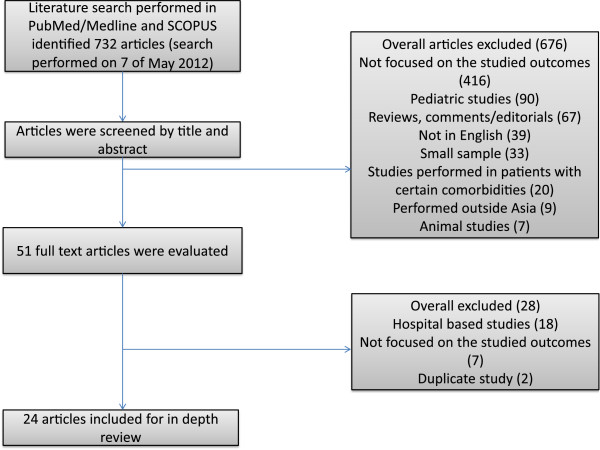
BACKGROUND: Obstructive sleep apnea (OSA) is a common disease, affecting approximately 2% of women and 4% of men residing in Western communities. No systematically reviewed data are available about the prevalence of this disease in Asia, the most heavily populated continent. METHODS: PubMed/Medline, Scopus and Google Scholar were searched for articles published from 1993 to May 2012 that reported the prevalence of OSA diagnosed via sleep monitoring and the prevalence of patients at risk for OSA as assessed by symptomatology and/or sleep questionnaires. We have also searched abstract database of major pulmonary and sleep scientific societies for relevant abstracts presented from 2010 to 2012. The following inclusion criteria were used: articles published in English, age ≥ 18 years, ≥ 100 participants in studies using sleep monitoring for the diagnosis of OSA, ≥ 300 participants in studies using questionnaires to detect patients at high risk for OSA. EXCLUSION CRITERIA: duplicate publications, studies reporting the prevalence of central sleep apnea only, hospital based studies as well as studies assessing OSA prevalence among patients with resistant arterial hypertension, chronic kidney disease, heart failure and in patients with concomitant neurological disease. RESULTS: Twenty four articles were found to meet the inclusion criteria, covering 47,957 subjects (26,042 men and 21,915 women) and four relevant abstracts were noted. OSA prevalence ranged from 3.7% to 97.3%. Male gender, older age, a higher BMI and waist to hip ratio, greater neck circumference, arterial hypertension, smoking, snoring and daytime sleepiness were associated with OSA. Sample size, difference between the populations studied and the fact that some works included patients with a high pre-test probability of OSA explain the difference in prevalence rates. CONCLUSION: This systematic review highlights the lack of data regarding the prevalence of OSA in Asians. Only a few studies provide an approximate estimate of the OSA burden in some Asian communities.
Overview
The claims and statistics of this paper haven’t been checked yet.
Free: it reads the open-access text and checks the first 5 claims that cite a source we can check. Create a free account to check every claim.
Integrity signals
Registry
Cites
Statistics
Figures
Verification
Claims the paper makes
The claims and statistics of this paper haven’t been checked yet.
Free: it reads the open-access text and checks the first 5 claims that cite a source we can check. Create a free account to check every claim.
Claims other papers make about this one
Each is checked against this paper’s own text: does it say what the citing paper says it does?
The cited source says what the claim attributes to it.
In the citing paper
“Neck circumference (NC) or collar size is associated with OSA in adults.184,528–534”
From International Consensus Statement on Obstructive Sleep Apnea (2023) · cites this paper as [531]
Self-check
Percentages, sums and reported differences re-computed from the paper’s own numbers.
The self-check needs the paper’s full text.
Citations
Cites
Preferred Reporting Items for Systematic Reviews and Meta-Analyses: the PRISMA statement
Moher, D., Liberati, A., Tetzlaff, J., Altman, D. G., & for the PRISMA Group (2009) · BMJ · doi:10.1136/bmj.b2535 · Cited by 83,823
Preferred Reporting Items for Systematic Reviews and Meta-Analyses: The PRISMA Statement
Moher, D., Liberati, A., Tetzlaff, J., Altman, D. G., & The PRISMA Group (2009) · PLoS Medicine · doi:10.1371/journal.pmed.1000097 · Cited by 64,042 · cited 1×
“The systematic review was performed according to the key tenets of the PRISMA guidance for systematic reviews [5].”
MethodPreferred reporting items for systematic reviews and meta-analyses: the PRISMA Statement.
(2009) · PubMed Central · Cited by 44,859
Preferred Reporting Items for Systematic Reviews and Meta-Analyses: The PRISMA Statement
Moher, D., Liberati, A., Tetzlaff, J., & Altman, D. G. (2009) · Journal of Clinical Epidemiology · doi:10.1016/j.jclinepi.2009.06.005 · Cited by 19,575
A New Method for Measuring Daytime Sleepiness: The Epworth Sleepiness Scale
Johns, M. W. (1991) · Sleep · doi:10.1093/sleep/14.6.540 · Cited by 17,364 · cited 20×
“Another flaw is that questionnaires such as the ESS cannot rule out other sleep disorders; in fact this scale was primarily invented to detect EDS [3], and not OSA or patients at high risk for OSA.”
BackgroundMethodInfluentialMcNicholas, W. T., Strohl, K. P., White, D. P., Levy, P. A., Schmidt, W., Wheatley, J. R., Redline, S. S., Carley, D. W., Buysse, D. J., Young, T. B., et al. (1999) · PubMed · Cited by 3,665
Systematic reviews: CRD's guidance for undertaking reviews in health care
Tacconelli, E. (2010) · The Lancet Infectious Diseases · doi:10.1016/s1473-3099(10)70065-7 · Cited by 3,245
Using the Berlin Questionnaire To Identify Patients at Risk for the Sleep Apnea Syndrome
Netzer, N. C., Stoohs, R. A., Netzer, C. M., Clark, K., & Strohl, K. P. (1999) · Annals of Internal Medicine · doi:10.7326/0003-4819-131-7-199910050-00002 · Cited by 2,973 · cited 2×
“Netzer NC, Stoohs RA, Netzer CM, Clark K, Strohl KP: Using the Berlin Questionnaire to identify patients at risk for the sleep apnea syndrome.”
MethodPrevalence of Sleep-disordered Breathing in Middle-aged Korean Men and Women
Kim, J., In, K., Kim, J., You, S., Kang, K., Shim, J., Lee, S., Lee, J., Lee, S., Park, C., et al. (2004) · American Journal of Respiratory and Critical Care Medicine · doi:10.1164/rccm.200404-519oc · Cited by 516 · cited 5×
“[31]; 2004 Korea Cross-Sectional study using home sleep study or PSG n- 457 Males- 67.”
BackgroundMethodInfluential
Cited by
Items 101–200 of 208
Factores de riesgo y asociados al síndrome de apnea-hipopnea obstructiva del sueño (SAHOS)
Páez-Moya, S., & Vega-Osorio, P. A. (2017) · Revista de la Facultad de Medicina · doi:10.15446/revfacmed.v65n1sup.59646 · Cited by 19
Machine learning methods for adult OSAHS risk prediction
Ge, S., Wu, K., Li, S., Li, R., & Yang, C. (2024) · BMC Health Services Research · doi:10.1186/s12913-024-11081-1 · Cited by 11
“The clinical features of the disease are snoring during sleep, repeated episodes of upper respiratory tract failure resulting in intermittent hypoxia, accompanied by symptoms of sleep fragmentation and daytime sleepiness [3].”
BackgroundA nationwide study on the prevalence and contributing factors of obstructive sleep apnea in Iran
Sadeghniiat‐Haghighi, K., Akbarpour, S., Behkar, A., Moradzadeh, R., Alemohammad, Z. B., Forouzan, N., Mouseli, A., Amirifard, H., & Najafi, A. (2023) · Scientific Reports · doi:10.1038/s41598-023-44229-w · Cited by 8
“Moreover, Iran is among the Asian countries with the most significant prevalence of OSA, that could be attributable to Iran’s high obesity prevalence and body mass index 23 .”
BackgroundDesalu, O. O., Onyedum, C. C., Adeoti, A. O., Fadare, J. O., Sanya, E. O., Fawale, B., & Bello, H. A. (2017) · Malawi Medical Journal · doi:10.4314/mmj.v29i2.20 · Cited by 9
Sohail, R., Hayat, S., Tariq, J., Ashraf, D., Karim, M., Rizvi, B. E., Saad, S., Alam, M. K., & Qamruddin, I. (2020) · Work · doi:10.3233/wor-203312 · Cited by 11
Dashzeveg, S., Oka, Y., Purevtogtokh, M., Tumurbaatar, E., Lkhagvasuren, B., Luvsannorov, O., & Boldbaatar, D. (2021) · International Journal of Environmental Research and Public Health · doi:10.3390/ijerph182212032 · Cited by 8
The association between body mass index and risk of obstructive sleep apnea among patients with HIV
Asgari, S., Najafi, A., Sadeghniiat‐Haghighi, K., Gholamypour, Z., & Akbarpour, S. (2021) · Journal of Research in Medical Sciences · doi:10.4103/jrms.jrms_803_20 · Cited by 8
Chen, N.-H., Hang, L., & Lin, C.-M. (2015) · Sleep and Biological Rhythms · doi:10.1007/s41105-015-0007-9 · Cited by 8
Advancing precision health discovery in a genetically diverse health system
Haas, R., Margolis, M. P., Wei, A., Yamaguchi, T. N., Feng, J. A., Tran, T., Tozzo, V., Queen, K. J., Mootor, M. F. E., Patil, V., et al. (2026) · Cell · doi:10.1016/j.cell.2026.03.007 · Cited by 8
Chen, T., Chung, C., Chang, H., Kao, Y., Chang, S., Kuo, T. B. J., Yang, C. C. H., Chien, W., & Tzeng, N. (2021) · Scientific Reports · doi:10.1038/s41598-021-91988-5 · Cited by 7
Hu, K.-Y., Tseng, P., Hsu, W., Lee, P., Tu, C., Chen, C.-C., Lee, Y., Chiu, H., Wu, M., & Peng, C. (2024) · Journal of Clinical Sleep Medicine · doi:10.5664/jcsm.11028 · Cited by 9
Otuyama, L. J., Rizzi, C. F., Piovezan, R. D., Werli, K. S., Brasil, E. L., Sukys-Claudino, L., Tufik, S. B., & Poyares, D. R. (2013) · Medical Hypotheses · doi:10.1016/j.mehy.2013.06.024 · Cited by 7
“estimated a prevalence of 4% [2,3], and recent studies haveshown a higher prevalence,ranging from 20% to 30% [4–6].”
BackgroundObstructive sleep apnoea in adults
Gíslason, Þ., & Sunnergren, O. (2014) · European Respiratory Society eBooks · doi:10.1183/2312508x.10013113 · Cited by 8
“However in a recent review on the prevalence of OSA in Asian adults, it was concluded that data is lacking to estimate the burden of OSA [68].”
BackgroundA simple and validated test for detecting patients with OSA
Yurtseven, N. (2021) · Annals of Cardiac Anaesthesia · doi:10.4103/aca.aca_205_20 · Cited by 7
“gender, advanced age, higher body mass index (BMI), greater waist‐to‐hip ratio and neck circumference, illiteracy, smoking, and alcohol intake.[2] OSA is associated with endothelial dysfunction, inflammation, oxidative stress, and blood pressure fluctuations, which increase cardiac and vascular complications in these…”
BackgroundSleep apnea in patients with chronic kidney disease: a single center experience
Sekercioglu, N., Curtis, B., Murphy, S. W., & Barrett, B. J. (2014) · Renal Failure · doi:10.3109/0886022x.2014.962408 · Cited by 7
Tawaranurak, K., Leelasawatsuk, P., & Chaiyarukjirakun, V. (2019) · Journal of Health Science and Medical Research · doi:10.31584/jhsmr.201965 · Cited by 9
“1%, in regards to the differences in upper airway shape and genioglossal muscle activity during the awake state, craniofacial morphology, and pattern of fat deposition.(1-3,16,17) In this study, the male-to-female ratio was 2.”
BackgroundRelation between body mass index and obstructive sleep apnea
Decleva, D., Amaral, R., Kim, L. J., Tufik, S. B., & Andersen, M. L. (2013) · Sleep And Breathing · doi:10.1007/s11325-013-0844-1 · Cited by 8
“Dear Editor Obstructive sleep apnea (OSA) is a multifactorial sleep disorder associated to different risk factors, including excess body weight, male gender, older age, neck circumference, body mass index (BMI), and high blood pressure [1, 2].”
BackgroundKuo, N.-Y., Tsai, H.-J., Tsai, S., & Yang, A. C. (2024) · Journal of Medical Internet Research · doi:10.2196/51615 · Cited by 9
“In a telephone survey of 4011 Taiwanese people, 51.9% reported snoring symptoms, and 2.6% were observed to have sleep apnea [14], indicating many potential patients may still be undiagnosed and untreated compared with other Asian regions [15].”
InfluentialTatsuno, I., Gerlier, L. C., Olivieri, A., Baker‐Knight, J., & Lamotte, M. (2024) · BMJ Public Health · doi:10.1136/bmjph-2023-000302 · Cited by 7
Dasgupta, S. (2025) · OMICS A Journal of Integrative Biology · doi:10.1089/omi.2025.0010 · Cited by 6
“For instance, a study on Asian populations suggested that the prevalence of OSA in adult subjects ranges from 3 – 97% (Mirrakhimov et al., 2013).”
Prevalence of Obstructive Sleep Apnea Symptoms Among the Adult Population in Al-Ahsa, Saudi Arabia
Alsultan, A., Sahlawi, M. A. A., & Agha, M. A. E.-S. (2022) · Cureus · doi:10.7759/cureus.31082 · Cited by 10
“Several papers indicated obesity as one of the major risk factors for OSA [11,13-15,19].”
BackgroundTing, H., Liou, C., Shih, T., Wang, C.-H., Chang, S.-Y., Chung, A., Lee, J.-F., Wang, L., Huang, R., & Lee, S. (2015) · Sleep And Breathing · doi:10.1007/s11325-015-1132-z · Cited by 7
Hill, E. A., Sawatari, H., Nishizaka, M., Fairley, D. M., Chishaki, A. S., Funakoshi, K., Riha, R. L., & Ando, S. (2020) · American Journal on Intellectual and Developmental Disabilities · doi:10.1352/1944-7558-125.4.260 · Cited by 6
Longlalerng, K., Nakeaw, A., Charawae, A.-E., Reantong, P., Prangyim, U., & Jeenduang, N. (2021) · Sleep Science · doi:10.5935/1984-0063.20200076 · Cited by 7
“The most severe form of SRBDs is OSA, which ranges from 3.7-93.3% prevalence in Asian adults depending on age, gender, body composition, and comorbidities 4 .”
BackgroundInfluentialKhan, M. S., Bawany, F. I., Khan, A., Hussain, M., Ali, S. S., Shah, S. R., & Lashari, M. N. (2014) · Sleep And Breathing · doi:10.1007/s11325-014-1018-5 · Cited by 8
“3 % [8].”
Golshah, A., Imani, M. M., Sadeghi, M., Chalkhooshg, M. K., Brühl, A. B., Bahmani, L. S., & Brand, S. (2023) · Life · doi:10.3390/life13010149 · Cited by 8
“Obesity, smoking, alcohol consumption, higher age, and male gender can be the risk factors for OSA [6].”
Backgroundde Miguel‐Díez, J., Carrasco‐Garrido, P., Jiménez‐García, R., Puente‐Maestu, L., Hernández‐Barrera, V., & López‐de‐Andrés, A. (2015) · Sleep And Breathing · doi:10.1007/s11325-014-1104-8 · Cited by 7
“Obstructive sleep apnea (OSA) is a common medical condition and a form of sleep-disordered breathing characterized by recurrent episodes of partial or complete airway obstruction, nocturnal hypoxemia, and sleep fragmentation [1, 2].”
BackgroundFageeh, Y. A., Basurrah, M. A., AlZahrani, J. A., Alzahrani, A. A., Aljuaid, G. M., Sulimani, A. M. A., Maghrabi, N. I., Alharthi, A. H., & Alzahrani, K. T. (2022) · Medical Science · doi:10.54905/disssi/v26i130/ms566e2661 · Cited by 5
Rasool, G., Alenezi, W. A. A., Alanazi, R., Almadai, H. A., & Alsharif, N. N. (2024) · Cureus · doi:10.7759/cureus.51529 · Cited by 5
Obstructive Sleep Apnea in the Workplace
Zhang, C., Berger, M. B., Rielly, A., Malhotra, A., & Kales, S. N. (2016) · Elsevier eBooks · doi:10.1016/b978-0-323-24288-2.00079-9 · Cited by 10
Tsai, C.-Y., Huang, H.-T., Liu, M., Cheng, W.-H., Hsu, W.-H., Majumdar, A., Lee, K., Feng, P., Tseng, C., Chen, K.-Y., et al. (2023) · Atmospheric Pollution Research · doi:10.1016/j.apr.2023.101886 · Cited by 4
Theerakittikul, T., Chaiard, J., & Deeluea, J. (2021) · Journal of Health Research · doi:10.1108/jhr-07-2020-0260 · Cited by 6
Adnan, M. M., Kassim, N. K., Rasid, N. M. M., Ibrahim, H. A., Ramli, R. B., Ghani, N., & Hanafi, M. H. (2022) · Bangladesh Journal of Medical Science · doi:10.3329/bjms.v21i2.58071 · Cited by 6
Liu, W.-N., Lin, K.-H., Tsai, K., Chu, C., Chang, Y., Kwon, Y., & Lin, G. (2023) · World Journal of Clinical Cases · doi:10.12998/wjcc.v11.i30.7309 · Cited by 4
[Alterations of respiratory resistance in patients with obstructive sleep apnea hypopnea syndrome].
Cai, Z., Li, T., Lü, X., Wang, Y., Wang, X., & Xu, T. (2018) · Europe PMC (PubMed Central) · doi:10.3969/j.issn.1673-4254.2018.06.20 · Cited by 4
Mortadi, N. A., Khassawneh, B. Y., Khasawneh, L., Alzoubi, O., & Alzoubi, K. H. (2022) · International Journal of Dentistry · doi:10.1155/2022/5283406 · Cited by 4
“Daytime sleepiness, insomnia, nocturia, and morning headaches are symptoms of OSA [5, 6].”
Omega-3 intake in people with obstructive sleep apnea: Beauty sleep for the heart
Scorza, F. A., Cavalheiro, É. A., Scorza, C. A., Galduróz, J. C. F., Tufik, S. B., & Andersen, M. L. (2013) · Epilepsy & Behavior · doi:10.1016/j.yebeh.2013.07.029 · Cited by 4
Spousal sleep behaviors and obstructive sleep apnea risk: effects on couples’ self-rated health
Lee, K. (2024) · Sleep And Breathing · doi:10.1007/s11325-024-03171-5 · Cited by 3
Park, S. I., Choi, W., Lee, C., Kim, H. Y., & Jung, Y. G. (2025) · Nature and Science of Sleep · doi:10.2147/nss.s487341 · Cited by 5
Sleep-Related Breathing Disorders
Espiritu, J. R. D. (2015) · Springer eBooks · doi:10.1007/978-3-319-18054-0_3 · Cited by 3
Chou, T., Hsu, H.-C., Twu, C., Huang, W., Huang, H., Weng, S., & Chen, M. (2023) · Nature and Science of Sleep · doi:10.2147/nss.s434278 · Cited by 3
“29 In our study, the prevalence of OSAS was also detected higher in 954 patients (69.5”
BackgroundInfluentialChen, W., Zhang, X., Parmar, C. D., Wang, Y., Yang, W., Pan, J., Dong, Z., & Wang, C. (2021) · Journal of Metabolic and Bariatric Surgery · doi:10.17476/jmbs.2021.10.1.14 · Cited by 4
“sleep fragmentation, morning headaches and excessive daytime sleepiness and some patients with OSA may be asymptomatic [4,5].”
BackgroundHaldar, P., Prasad, K., Kant, S., Dwivedi, S. N., Vibha, D., Pandit, A. K., Srivastava, A. K., Kumar, A., Ikram, M. A., & Tiemeier, H. W. (2022) · Sleep And Breathing · doi:10.1007/s11325-022-02725-9 · Cited by 5
Chien, R., Chen, Z., Wang, P., Liu, W., Chen, Y.-Y., Chen, Y.-L., Majumdar, A., Kang, J., Lee, K., Cheng, W.-H., et al. (2025) · Atmospheric Pollution Research · doi:10.1016/j.apr.2025.102603 · Cited by 2
Gheshlagh, R. G., Aghahosseini, S. S., & Ebrahimi, H. (2025) · Sleep And Breathing · doi:10.1007/s11325-025-03529-3 · Cited by 3
“Several systematic reviews have focused on the prevalence of obstructive sleep apnea (OSA) in the general population [13, 14].”
Risk factors for obstructive sleep apnea in socio-demographic groups of the population of Chuvashia
Голенков, А. В., KURAKINA, N. G., VECHERKINA, M. I., Наумова, Т. В., & Филоненко, А. В. (2020) · S S Korsakov Journal of Neurology and Psychiatry · doi:10.17116/jnevro202012009274 · Cited by 4
Diagnostic Accuracy of Different Machine Learning Algorithms for Obstructive Sleep Apnea
Kim, H.-W., Park, E., Kim, D. J., Mun, S. J., Kim, J., Lee, G.-H., & Cho, J. W. (2020) · Journal of Sleep Medicine · doi:10.13078/jsm.200022 · Cited by 2
“작성자의 주관에 의존할 수밖에 없으며, 주로 서양인들을 기 반으로 하여 만들어진 도구로 동양인에 바로 적용하기 위해 서는 유효성 검증을 거쳐야 하는 단점이 있다.(10,11) 머신 러닝(machine learning)은 인공지능을 구현할 수 있 는 한 분야로서 대용량의 데이터를 구체적인 알고리즘을 적 용하여 컴퓨터를 통해 학습시키고 분석 작업을 수행할 수 있도록 기술을 개발하는 과정이다.”
Prevalence of Obstructive Sleep Apnea in Gulf Countries - A literature review
Alzahrani, M. K. (2023) · Journal of Pioneering Medical Science · doi:10.61091/jpms20231216 · Cited by 2
“Individuals with OSA may have symptoms such as fatigue, excessive daytime sleepiness, insomnia, or morning headaches [2–4].”
BackgroundJo, W.-J., Kim, J.-M., Choi, E.-S., Lee, S. M., & Ryu, J. S. (2025) · Healthcare · doi:10.3390/healthcare13121448 · Cited by 2
“This discrepancy, compared to general population prevalence rates of 9–38%, underscores both a lack of recognition of OSA symptoms and challenges in diagnostic accessibility [66,67].”
Aalaei, S., Amini, M., Rezaeitalab, F., Asadpour, H., Tabesh, H., Khoshrounejad, F., Eslami, S., & Saleh, L. A. (2021) · PLoS ONE · doi:10.1371/journal.pone.0244496 · Cited by 3
Xue, Z. H., Ding, W., Ge, L., & Zhang, Q. (2021) · Experimental and Therapeutic Medicine · doi:10.3892/etm.2021.10140 · Cited by 2
Shrestha, I., Shrestha, D., Bista, R., & Bista, M. (2022) · Journal of Chitwan Medical College · doi:10.54530/jcmc.563 · Cited by 2
Prevalence of Obesity among Adults Visiting Otorhinolaryngology Clinics for Snoring
Alhedaithy, A. A., Aldilaijan, K., Alnosair, A., & Jebakumar, A. Z. (2024) · Saudi Journal of Otorhinolaryngology Head and Neck Surgery · doi:10.4103/sjoh.sjoh_77_23 · Cited by 2
Sonsuwan, N., Rujimethabhas, K., & Sawanyawisuth, K. (2015) · Sleep Disorders · doi:10.1155/2015/690425 · Cited by 2
“Data regardingOSA and RFA treatments in Thai or oriental patients are limited [9].”
Sleep Apnea Hypopnea Syndrome: leading role of the orthodontist
Menéndez, M. G., Zaldívar, V., José, R., & Gonzalez, E. A. V. (2014) · Revista Habanera de Ciencias Médicas · Cited by 3
Evaluation of Fat Tissue Deposition Within the Tongue Via Near-Infrared Interactance
Ando, E., Shigeta, Y., Ishikawa, C., Shigemoto, S., Ogawa, T., Clark, G. T., & Enciso, R. (2019) · Journal of Dental Sleep Medicine · doi:10.15331/jdsm.7100 · Cited by 2
Mishra, T., Bose, M., Misra, D., Devi, E., & Mohapatra, D. (2023) · Al-Rafidain Journal of Medical Sciences · doi:10.54133/ajms.v5i1s.252 · Cited by 1
Indicação dos aparelhos intraorais no tratamento de pacientes com distúrbios do sono
Krein, C. (2024) · Journal of Multidisciplinary Dentistry · doi:10.46875/jmd.v12i1.970 · Cited by 1
Jeong, W., Song, M. J., Shin, J. H., & Kim, J. H. (2025) · Journal of Clinical Medicine · doi:10.3390/jcm14113616 · Cited by 1
“Furthermore, a systematic review of studies from various countries—including those in Europe, North America, Australia, Latin America, East Asia, and South Asia—reported that the prevalence of OSA ranges from 13% to 33% in men and from 6% to 19% in women [34].”
Tsai, H., Cheng, K.-H., Lin, P., Hsu, Y., & Chen, S. (2025) · PLoS ONE · doi:10.1371/journal.pone.0330080 · Cited by 1
“Although approximately 2% of women and 4% of men in Western populations are estimated to have OSA [20,21], there is a lack of systematic data on its prevalence in Asian populations [22].”
Thuy, P. T., Châu, L. B., & Luong, T. D. (2025) · Sleep And Breathing · doi:10.1007/s11325-025-03478-x · Cited by 1
Cai, F., Hong, W., Xiong, C., She, N., Lu, R., Shi, Y., & Ren, X. (2025) · Respiratory Medicine · doi:10.1016/j.rmed.2025.108609 · Cited by 1
Khan, K. A., Qureshi, S. U., & Khan, Z. N. (2026) · Northwest journal of medical sciences. · doi:10.69723/njms.05.01.0640 · Cited by 1
Bharali, B., & Mahapatro, M. (2020) · International Journal of Scientific and Research Publications · doi:10.29322/ijsrp.10.02.2020.p9827 · Cited by 1
Mirwan, D. M., & Margo, E. (2020) · Jurnal Biomedika dan Kesehatan · doi:10.18051/jbiomedkes.2020.v3.58-62 · Cited by 1
“Hal ini seiring dengan pertambahan usia maka prevalensi OSA meningkat 2 sampai 3 kali lipat pada usia lanjut dibandingkan pada usia pertengahan.(3, 20, 21) Dari hasil penelitian dengan uji Chisquare didapatkan nilai p=1.”
BackgroundDesigning an Intelligent System for Diagnosing Type of Sleep Apnea and Determining Its Severity
Kohzadi, Z., Safdari, R., & Sadeghniiat‐Haghighi, K. (2021) · Frontiers in Health Informatics · doi:10.30699/fhi.v10i1.287 · Cited by 1
“This disorder has a high prevalence in males, elderly people, people who have high waist-to-hip ratio, high neck circumference, and high body mass index, and cigarette smokers [5-8].”
BackgroundRespiratory muscle training for obstructive sleep apnoea
Rueda-Etxebarria, M., Mugueta-Aguinaga, I., Rueda, J.-R., & Lascurain‐Aguirrebeña, I. (2021) · Cochrane Database of Systematic Reviews · doi:10.1002/14651858.cd015039 · Cited by 2
Trần, X. Q., Nguyen, H. T. H., Banh, T. N. T., & Võ, P. M. T. (2023) · Tạp chí Y Dược học Cần Thơ · doi:10.58490/ctump.2023i6.978 · Cited by 1
“According to Basheer Y. Khassawneh (2018) [4], we chose d=0.01 and p=0.054 as the proportion of students at risk of OSA.”
BackgroundInfluentialSleep apnea screening through a news portal using the STOP-bang questionnaire
Solomons, D., Schönfeld, D., Arias, S., Vigo, D. E., Azpiazu, M., & Pérez-Chada, D. (2025) · Sleep And Breathing · doi:10.1007/s11325-025-03253-y · Cited by 2
ETHNOS END OBSTRUCTIVE APNEA/HYPOPNEA SYNDROME (foreign literature review)
Алексеевич, Г. В., Shnayder, N. A., NIKOLAEVA, T. Y., Анатольевна, Д. Э., Филипповна, С. С., Александровна, Г. Е., ALEXEEVA, O. V., PAVLOV, Y. M., & EFREMOVA, A. I. (2017) · The Bulletin of Contemporary Clinical Medicine · doi:10.20969/vskm.2017.10(4).74-80 · Cited by 1
Increased age adversely affects the therapeutic effect of CPAP treatment for olfactory functions
Dinç, A. S. K., Çayönü, M., Duyar, S. Ş., & Fırat, S. (2019) · Sleep And Breathing · doi:10.1007/s11325-019-01889-1 · Cited by 1
Diabetes – the history of research and treatment
Baranowska-Jurkun, A., Stefanowicz-Rutkowska, M. M., Matuszewski, W., & Bandurska-Stankiewicz, E. M. (2020) · Polish Annals of Medicine · doi:10.29089/2020.20.00096 · Cited by 4
Rocha, A. L., Wagner, L. E., & Paiva, D. N. (2021) · PubMed Central · doi:10.5935/1984-0063.20200058 · Cited by 2
Knisely, K., Sanders, C. B., Edrissi, C. K., Rathfoot, C. A., Poupore, N. S., Bailey-Taylor, M. J., Stewart, B., & Nathaniel, T. I. (2022) · Journal of Vascular Nursing · doi:10.1016/j.jvn.2022.01.003 · Cited by 1
Lin, K. Y., Eow, P. Y., Kohli, S., & Math, S. Y. (2022) · Clinics and Practice · doi:10.3390/clinpract12030034 · Cited by 1
Park, S., Kim, S. Y., & Kim, H. J. (2023) · Sleep And Breathing · doi:10.1007/s11325-023-02785-5 · Cited by 1
“The prevalence of OSA in the adult population of Western communities is >2%, representing one of the most common sleep-breathing disorders [1, 2].”
BackgroundAini, N., Marta, O. F. D., Setyowati, L., Mashfufa, E. W., & Octary, T. (2023) · Jurnal Aisyah Jurnal Ilmu Kesehatan · doi:10.30604/jika.v8i1.1539 · Cited by 2
The development of pictorial tools for obstructive sleep apnoea syndrome
Ghiassi, R. (2014) · Spiral (Imperial College London) · doi:10.25560/24435 · Cited by 1
Obstructive Sleep Apnea and Sodium Intake
Mirrakhimov, A. E., & Mirrakhimov, E. M. (2013) · CHEST Journal · doi:10.1378/chest.13-0925
Self-citationNegative expiratory pressure test: A new method to detect upper airway flow limitation – a review
de Oliveira, L. V. F. (2013) · Medical Science and Technology · doi:10.12659/mst.889916
Schorr, F. (2015) · Digital Library of Theses and Dissertations (Universidade de São Paulo) · doi:10.11606/t.5.2015.tde-06082015-143937
The Far Eastern Asian Experience
Toh, S. T., & Agrawal, V. K. (2016) · Springer eBooks · doi:10.1007/978-3-319-34040-1_24
Dulger, S. U., & Solmaz, F. (2018) · Turkiye Klinikleri Archives of Lung · doi:10.5336/archlung.2018-60354
“AHİ med (min-max) 22,6 (5,3-88,3) TABLO 1: Obstrüktif uyku apne ve kontrol gruplarında değerlendirilen parametreler.”
Predictors of excessive daytime sleepiness in patients with obstructive sleep apnea syndrome
Tsai, T.-Y., Liao, H.-T., & Lin, D.-Y. (2019) · Taiwanese Journal of Psychiatry · doi:10.4103/tpsy.tpsy_5_19
Anand, H., Adhikari, T., & Bano, G. (2017) · Indian Journal of Sleep Medicine · doi:10.5005/jp-journals-10069-0011
“The risk factors include obesity, male sex, increasing age, and pregnancy.(2) The SDB is associated with several cardiovascular complications including hypertension.”
BackgroundVitasari, D. N., Siswantining, T., & Kamelia, T. (2019) · Journal of Physics Conference Series · doi:10.1088/1742-6596/1321/2/022108
Lin, S., Tsai, C.-Y., & Liu, W. (2020) · medRxiv · doi:10.1101/2020.07.28.20164053
“In addition, studies have demonstrated that OSA adversely affects multiple organs and systems, with particular relevance to cardiovascular diseases [7, 8].”
Risk Screening of Obstructive Sleep Apnea Syndrome by Body Profiles via Random Forests ModelPreprint
Tsai, C.-Y., Liu, W., Lin, Y.-T., Lin, S., Majumdar, A., Houghton, R., Wu, D., Lee, H., Wu, C.-J., Li, L.-Y. J., et al. (2020) · doi:10.21203/rs.3.rs-22545/v1
“In addition to these tests, there are a variety of questionnaires designed on the basis of the clinical prediction rules, such as: the Berlin questionnaire, Epworth Sleepiness Scale, and the STOP-Bang questionnaire (14).”
BackgroundVélez, G., & Reinaldo, L. (2011) · Americanae (AECID Library)
Keel, P. (2014) · Springer eBooks · doi:10.1007/978-3-642-55430-8_1
Alshehri, A. A., Hakami, F., Gadi, W. H., Darraj, H., Hamdi, S., Awaf, M., Hakami, A., & Zogel, B. A. (2023) · Cureus · doi:10.7759/cureus.36135
“Focusing on published studies on Asian adults, the reported prevalence of OSA ranged from 3.7% to 97.3% [27].”
BackgroundInfluentialRole of Tongue Fat in The Pathogenesis of Obstructive Sleep Apnea: Review Article
Elfeires, A. A. A., Emara, T. A., El-Malt, A. E., Nada, M. G., & Abdulmageed, A. (2023) · The Egyptian Journal of Hospital Medicine · doi:10.21608/ejhm.2023.296402
Lappharat, S. (2017) · Chula Digiverse · doi:10.58837/chula.the.2017.498
Tang, W., Li, F., Huang, R., & Liu, P. (2023) · Frontiers in Neurology · doi:10.3389/fneur.2023.1305580
Longlalerng, K., Watanasiripakdee, S., Jeenduang, N., Habuddha, V., Piya-amornphan, N., & Damchuai, T. (2024) · Sleep Science · doi:10.1055/s-0043-1777708 · Cited by 2
“The latter is the most severe form of SDB, with a prevalence of 3.7 to 97.3% in Asian adults.”
BackgroundInfluentialEvaluation of a Pre-operative clinic's sleep apnea screening
Abella, I. G., Spector, A. R., Blitz, J. D., & Bowers, M. (2024) · Perioperative Care and Operating Room Management · doi:10.1016/j.pcorm.2024.100377
Tantirittiporn, W., Sonsuwan, N., Powcharoen, W., Jotikasthira, D., Sastraruji, T., Khongkhunthian, P., Kuharattanachai, K., & Tripuwabhrut, K. (2024) · Biomedical Sciences and Clinical Medicine · doi:10.12982/bscm.2024.06
Huang, S., Chang, W.-J., Tung, P., Liao, T.-W., Liu, G.-H., Lin, S., Hu, H., Chen, N., Fang, J., & Chuang, L. (2024) · Research Square · doi:10.21203/rs.3.rs-4370108/v1
Alotaibi, L. B., Alotaibi, A. B., & Alkholaiwi, F. (2024) · Saudi Journal of Otorhinolaryngology Head and Neck Surgery · doi:10.4103/sjoh.sjoh_73_23 · Cited by 1
Metadata
- Authors
- Mirrakhimov, A. E., Sooronbaev, T., & Mirrakhimov, E. M.
- Affiliations
- Kyrgyz State Medical Academy (KG)
- National Center of Cardiology and Internal Medicine (KG)
- Corresponding author
- Mirrakhimov, Aibek E
- Venue
- BMC Pulmonary Medicine
- Published
- 2013-02-23
- Volume
- 13
- Issue
- 1
- Pages
- 10-10
- ISSN
- 1471-2466 (ISSN-L)
- PMC
- PMC3585751
- OpenAlex
- W2040843169
- Semantic Scholar
- ebc0566a6c9976955301eb5bf5ce1f98dcd3b179
- Cited by
- 206
- References
- 38
- Citations by year
- 2026: 3 · 2025: 12 · 2024: 15 · 2023: 20 · 2022: 15 · 2021: 21 · 2020: 17 · 2019: 18 · 2018: 11 · 2017: 18 · 2016: 9 · 2015: 22 · 2014: 13 · 2013: 10
- FWCI
- 1.98
- Type
- journal article
- Language
- en
- Open access
- gold
- doi.org
- Licence
- cc-by
- creativecommons.org/licenses/by/2.0 (tdm)
- Locations
- BMC Pulmonary Medicine (publishedVersion, cc-by)
- Europe PMC (PubMed Central) (publishedVersion, cc-by)
- PubMed Central (publishedVersion, cc-by)
- PubMed (publishedVersion)
- DOAJ (DOAJ: Directory of Open Access Journals) (submittedVersion)
- Topics
- Health Sciences › Medicine › Physiology (medical) › Obstructive Sleep Apnea Research
- Social Sciences › Psychology › Experimental and Cognitive Psychology › Sleep and related disorders
- Life Sciences › Neuroscience › Endocrine and Autonomic Systems › Neuroscience of respiration and sleep
- Keywords
- obstructive sleep apnea, prevalence, Asian adults, risk factors, sleep monitoring, OSA screening questionnaires, snoring, daytime sleepiness, obesity, hypertension, smoking, sex differences
- MeSH terms
- Adult, Asia, Female, Humans, Male, Risk Factors, Prevalence, Sleep Apnea, Obstructive, Asian People
About these checks
Registry, retraction, Cites and statistics results are computed, not judged, with one exception: a printed reference that no index lists is read once by a model before it counts as a citation error. Claims are extracted by a model and kept only when their quote appears verbatim in the text; each cited source is then checked, with a model’s help, for whether it says what the claim relies on. Those verdicts can be wrong — read the claim’s quote and the cited source before relying on one.
Statistics and arithmetic are recomputed, not judged.
Confidence bands are shown only for fields calibrated on our annotated test set. None is calibrated yet, so no band is shown.
What counts as a claim ›How we measure confidence ›How we check this ›
Are you an author, or do you see a problem with this page? Request a review
Data sources
Bibliographic data: Semantic Scholar, OpenAlex, Crossref.
Contains information from the Semantic Scholar Academic Graph Datasets, made available under the ODC Attribution License (ODC-BY 1.0).
Semantic Scholar’s data is described in: Kinney, R., et al. (2023). The Semantic Scholar Open Data Platform. arXiv:2301.10140.
