

Reduced thoracolumbar fascia shear strain in human chronic low back pain
Open accessThe DOI matches its Crossref record; 31 of the 32 references it cites were found in a registry or an index.
Abstract
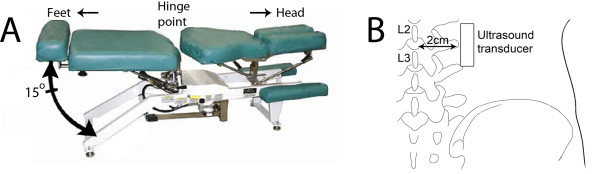
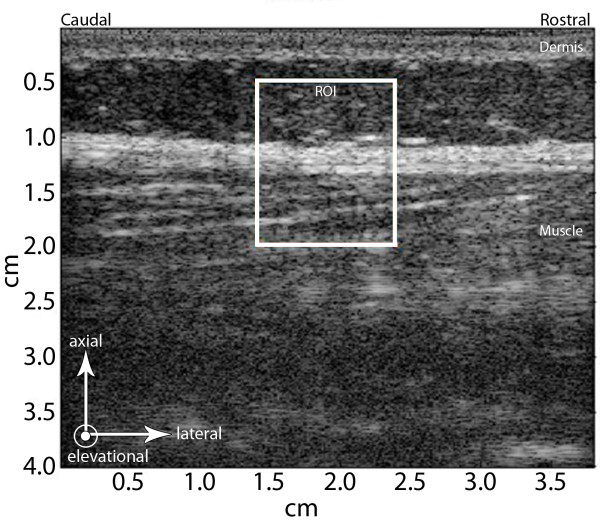
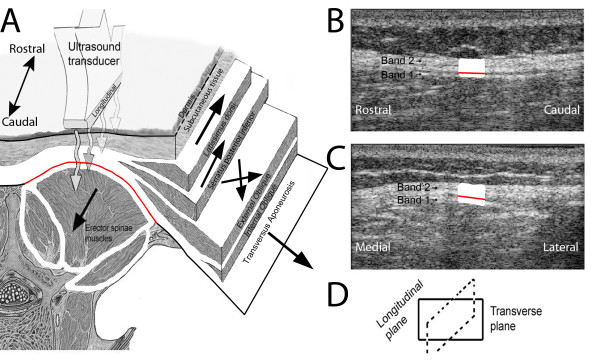
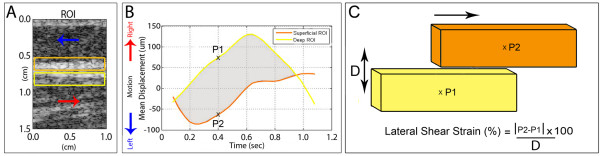
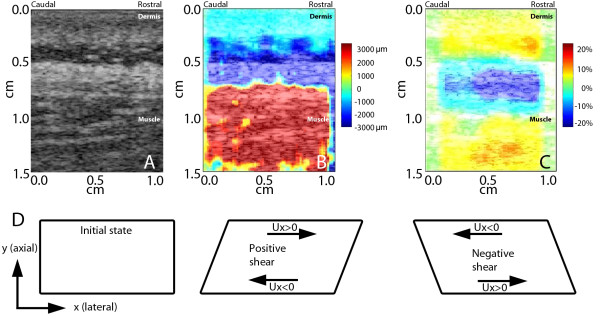
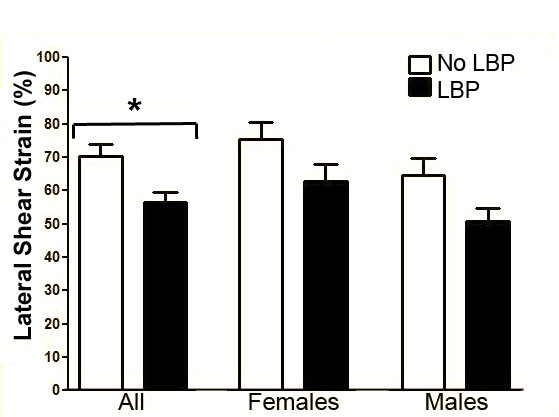
BACKGROUND: The role played by the thoracolumbar fascia in chronic low back pain (LBP) is poorly understood. The thoracolumbar fascia is composed of dense connective tissue layers separated by layers of loose connective tissue that normally allow the dense layers to glide past one another during trunk motion. The goal of this study was to quantify shear plane motion within the thoracolumbar fascia using ultrasound elasticity imaging in human subjects with and without chronic low back pain (LBP). METHODS: We tested 121 human subjects, 50 without LBP and 71 with LBP of greater than 12 months duration. In each subject, an ultrasound cine-recording was acquired on the right and left sides of the back during passive trunk flexion using a motorized articulated table with the hinge point of the table at L4-5 and the ultrasound probe located longitudinally 2 cm lateral to the midline at the level of the L2-3 interspace. Tissue displacement within the thoracolumbar fascia was calculated using cross correlation techniques and shear strain was derived from this displacement data. Additional measures included standard range of motion and physical performance evaluations as well as ultrasound measurement of perimuscular connective tissue thickness and echogenicity. RESULTS: Thoracolumbar fascia shear strain was reduced in the LBP group compared with the No-LBP group (56.4% ± 3.1% vs. 70.2% ± 3.6% respectively, p < .01). There was no evidence that this difference was sex-specific (group by sex interaction p = .09), although overall, males had significantly lower shear strain than females (p = .02). Significant correlations were found in male subjects between thoracolumbar fascia shear strain and the following variables: perimuscular connective tissue thickness (r = -0.45, p <.001), echogenicity (r = -0.28, p < .05), trunk flexion range of motion (r = 0.36, p < .01), trunk extension range of motion (r = 0.41, p < .01), repeated forward bend task duration (r = -0.54, p < .0001) and repeated sit-to-stand task duration (r = -0.45, p < .001). CONCLUSION: Thoracolumbar fascia shear strain was ~20% lower in human subjects with chronic low back pain. This reduction of shear plane motion may be due to abnormal trunk movement patterns and/or intrinsic connective tissue pathology. There appears to be some sex-related differences in thoracolumbar fascia shear strain that may also play a role in altered connective tissue function.
Overview
The claims and statistics of this paper haven’t been checked yet.
Free: it reads the open-access text and checks the first 5 claims that cite a source we can check. Create a free account to check every claim.
Integrity signals
Registry
Cites
Statistics
Figures
Verification
Claims the paper makes
The claims and statistics of this paper haven’t been checked yet.
Free: it reads the open-access text and checks the first 5 claims that cite a source we can check. Create a free account to check every claim.
Claims other papers make about this one
Each is checked against this paper’s own text: does it say what the citing paper says it does?
The cited source says what the claim attributes to it.
In the citing paper
“An example of this was demonstrated in human subjects with chronic low-back pain who were shown to have reduced shear strain within layers of the thoracolumbar fascia compared with control subjects without low-back pain [3].”
From Fascia Mobility, Proprioception, and Myofascial Pain. (2021) · cites this paper as [3]
The cited source says what the claim attributes to it.
In the citing paper
“Fascial planes are separated by planes of “loose” connective tissue that allows the fasciae to glide past one another [1,3].”
From Fascia Mobility, Proprioception, and Myofascial Pain. (2021) · cites this paper as [3]
Self-check
Percentages, sums and reported differences re-computed from the paper’s own numbers.
The self-check needs the paper’s full text.
Citations
Cites
The short-form McGill pain questionnaire
Melzack, R. (1987) · Pain · doi:10.1016/0304-3959(87)91074-8 · Cited by 4,368
Oswestry Low Back Pain Disability Questionnaire
(2007) · Encyclopedia of Pain · doi:10.1007/978-3-540-29805-2_3023 · Cited by 3,954
A short questionnaire for the measurement of habitual physical activity in epidemiological studies
Baecke, J., Burema, J., & Frijters, J. (1982) · The American Journal of Clinical Nutrition · doi:10.1093/ajcn/36.5.936 · Cited by 3,945 · cited 1×
“In addition, both groups completed the Baecke physical activity level questionnaire [11].”
MethodElastography: A quantitative method for imaging the elasticity of biological tissues
Ophir, J. (1991) · Ultrasonic Imaging · doi:10.1016/0161-7346(91)90079-w · Cited by 3,776 · cited 1×
“Tissue displacements between successive ultrasound frames were estimated from the “raw” ultrasonic radio frequency (RF) data using cross-correlation techniques [14,15] with a 1 mm window incremented with a 90% overlap.”
MethodGrading the severity of chronic pain
Von Korff, M., Ormel, J., Keefe, F. J., & Dworkin, S. F. (1992) · Pain · doi:10.1016/0304-3959(92)90154-4 · Cited by 3,022
Measuring Functioning and Well-Being: The Medical Outcomes Study Approach
Stewart, A., & Ware, J. (1992) · doi:10.7249/cb361 · Cited by 2,689 · cited 1×
“The Medical Outcomes Survey (MOS) was used as a general health, physical and mental quality of life measure for all subjects, with higher scores correlating with better health [13].”
MethodKonofagou, E., & Ophir, J. (1998) · Ultrasound in Medicine & Biology · doi:10.1016/s0301-5629(98)00109-4 · Cited by 444 · cited 1×
“Tissue displacements between successive ultrasound frames were estimated from the “raw” ultrasonic radio frequency (RF) data using cross-correlation techniques [14,15] with a 1 mm window incremented with a 90% overlap.”
MethodSelf-citationA hypothesis of chronic back pain: ligament subfailure injuries lead to muscle control dysfunction
Panjabi, M. M. (2006) · European Spine Journal · doi:10.1007/s00586-005-0925-3 · Cited by 423
Studying the Natural History of Back Pain
Korff, M. V. (1994) · Spine · doi:10.1097/00007632-199409151-00005 · Cited by 405
MacDonald, D., Moseley, L. G., & Hodges, P. W. (2009) · Pain · doi:10.1016/j.pain.2008.12.002 · Cited by 368 · cited 1×
“Given that the dense connective tissue layers within the thoracolumbar fascia are aponeuroses connected to dorsal and ventral trunk muscles, one plausible explanation for our findings is that reduced shear strain results from impaired neuromuscular control and recruitment patterns of these muscles during trunk movemen…”
Background
Research works printed but not linked: 4
- Miller RP Kori SH Todd DD The tampa scale. Unpublished report Tampa, FL 1991
- Langevin HM Stevens-Tuttle D Fox JR Badger GJ Bouffard NA Krag MH Wu J Henry SM Ultrasound evidence of altered lumbar connective tissue structure in human subjects with chronic low back pain BMC Musculoskelet Disord 2009 10 151 10.1186/1471-2474-10-151 19958536 PMC2796643 · DOI · Paper page
- Tillman LJ Cummings GS Currier DP, Nelson RM Biologic mechanisms of connective tissue mutability Dynamics of human biologic tissues contemporary perspectives in rehabilitation 1992 F.A. Davis, Philadelphia
- Cummings GS Tillman LJ Currier DP, Nelson RM Remodeling of dense connective tissue in normal adult tissues Dynamics of human biologic tissues contemporary perspectives in rehabilitation 1992 F.A. Davis, Philadelphia
Cited by
Items 301–382 of 382
Anticipating the 5th International Fascia Research Congress
Shockett, S., & FINDLEY, T. W. (2018) · Journal of Bodywork and Movement Therapies · doi:10.1016/j.jbmt.2018.03.001
An Integrated Approach to Treatment of Chronic Low Back Pain: Based on Neuroscience of Pain
Wang, S. (2017) · Journal of Complementary Medicine & Alternative Healthcare · doi:10.19080/jcmah.2017.02.555581
“Injecting inflammatory substances into thoracolumbar fascia tissue in in-vivo condition resulted in strong pain, in comparison to injecting into muscle tissue, which supports the concept that the nociception from fascia is the source of low back pain (Table 1), [34].”
BackgroundPhysiology of the Fascia from the Clinical Point of View
Luomala, T., & Pihlman, M. (2017) · Elsevier eBooks · doi:10.1016/b978-0-7020-6659-7.00003-0
Sergueef, N., & Nelson, K. E. (2015) · Elsevier eBooks · doi:10.1016/b978-2-8101-0159-7.00001-3
Faszien als sensomotorisches Netzwerk und deren Beziehung zu chronischen Rückenschmerzen
Bitterlich, K., & Anders, C. (2020) · Physikalische Medizin Rehabilitationsmedizin Kurortmedizin · doi:10.1055/a-1299-1598 · Cited by 1
“Helene Langevin stellte während einer solchen Versuchsreihe an Rückenschmerzpatienten und Gesunden im Vergleich nach Korrektur des BMI fest, dass die Probanden mit Rückenschmerzen bis zu 25 % dickeres perimuskuläres Bindegewebe aufwiesen [86].”
BackgroundHan, S.-W. (2020) · Archives of Orthopedic and Sports Physical Therapy · doi:10.24332/aospt.2020.16.2.06
Tiefe Gewebe und Rückenschmerzen: Reizung der Fascia thoracolumbalis durch hypertone Kochsalzlösung
Schilder, A., Hoheisel, U., Magerl, W., Benrath, J., Klein, T., & Treede, R. (2014) · Der Schmerz
Neuroanatomie und Neurophysiologie der Motorik – Wechselwirkungen des sensomotorischen Systems
Laube, W. (2021) · Springer eBooks · doi:10.1007/978-3-662-60493-9_2
Yu, X., Chiang, M.-H., Zhu, G., Xu, F.-Y., Liu, Z., Su, L., Zheng, H., Chen, Z., Chen, Q., Fen, G., et al. (2022) · Research Square · doi:10.21203/rs.3.rs-1468777/v1
(2014) · Alternative and Complementary Therapies · doi:10.1089/act.2014.20510
Luomala, T., & Pihlman, M. (2017) · Elsevier eBooks · doi:10.1016/b978-0-7020-6659-7.00004-2
Suda, M., Kimura, H. J., Kobayashi, T., Suzuki, S., Fukui, S., & Obata, H. (2022) · Research Square · doi:10.21203/rs.3.rs-1522248/v1
Brandl, A., Egner, C., Reer, R., Schmidt, T., & Schleip, R. (2022) · Research Square · doi:10.21203/rs.3.rs-2168688/v1
Der klinische Denkprozess in der FBL Klein-Vogelbach Functional Kinetics
Bacha, S., Rostin, U., & Spirgi-Gantert, I. (2022) · FBL Klein-Vogelbach · doi:10.1007/978-3-662-63600-8_5
Horwood, A., & Chockalingam, N. (2023) · Elsevier eBooks · doi:10.1016/b978-0-323-85212-8.00003-1 · Cited by 1
Lietz–Kijak, D., Bitenc-Jasiejko, A., Skomro, P., Konior, K., Kijak, K., Kowacka, M., & Śliwiński, Z. (2023) · doi:10.56984/8zg07b3b3 · Cited by 1
Psychosomatic background of cervical spine pain assessed during the Covid-19 pandemic period
Rąglewska, P., Dembiński, J., & Straburzyńska‐Lupa, A. (2023) · Physiotherapy Review · doi:10.5114/phr.2023.128859
The effect of Vojta therapy on gait parameters in a patient with multiple sclerosis – a case study
Argier, Ł. M. (2023) · Physiotherapy Review · doi:10.5114/phr.2023.128860
Braga, S. G. (2023) · Digital Library of Theses and Dissertations (Universidade de São Paulo) · doi:10.11606/d.109.2023.tde-31072023-072551
Faszien: Was ist übrig von dem Hype?
Schleip, R. (2023) · Zeitschrift für Komplementärmedizin · doi:10.1055/a-2162-1932
“…betont und darauf hingewiesen, dass die unterschiedlichen Verbindungsar keit (bis zum 100Fachen seines Eigenge Der fasziale Rückenschmerz wird – gegenüber ei nem primär muskulären – nach diesen Untersu chungen typischerweise als brennend, pochend und stechend sowie mit einer höheren affektiven”
BackgroundAhmed, F. (2024) · Journal of chemical health risks · doi:10.52783/jchr.v14.i01.3303
Navot, S., Carmeli, E., Sasson, A. M., Hendler, I., & Kalichman, L. (2024) · Journal of Bodywork and Movement Therapies · doi:10.1016/j.jbmt.2024.04.032
Brandl, A., Engel, R., Egner, C., Schleip, R., & Schubert, C. (2024) · Research Square · doi:10.21203/rs.3.rs-4544491/v1
Weber, P., Klingler, W., Schleip, R., Weber, N., & Joisten, C. (2024) · Cureus · doi:10.7759/cureus.69337 · Cited by 1
“The respective flexibility was calculated based on the difference in the upper and lower inclinometers in degrees [26-29].”
MethodResultBehandlung einer „frozen shoulder“ nach dem Fasziendistorsionsmodell
Boss, R., & Bangerter, C. (2024) · Manuelle Medizin · doi:10.1007/s00337-024-01105-6
Expert opinion on heat therapy for teenagers’ musculoskeletal pain management
Rodríguez‐Maruri, G., Celotto, S., Guidi, D., Hirschmüller, A., & González, G. S. (2024) · Annals of Translational Medicine · doi:10.21037/atm-23-1931 · Cited by 1
“Also, thoracolumbar fascia increased thickness and hampered shear motion mobility can be responsible of fascial scarring in chronic low back pain (55,56).”
Dones, V. C., Rosario, C. J. D., Co, A. J., Agbayani, S. J., Cabrera, P., Dellosa, E. I., Ibo, D. R., Pagente, I. S., Sua, A., Almazan, C. P. J., et al. (2025) · Journal of Bodywork & Movement Therapies · doi:10.1016/j.jbmt.2025.02.019
Veränderungen der thorakolumbalen Faszie beim Rückenschmerz: Henne oder Ei?
Schleip, R. (2025) · Manuelle Medizin · doi:10.1007/s00337-025-01147-4
Noninvasive Compartmental Pressure Assessment With iCare in Healthy Individuals of Different Ages
Guo, J., Zhang, J., Du, K., Shi, B., Dong, W., Zhang, Y., & Hou, Z. (2025) · Orthopaedic Surgery · doi:10.1111/os.70078
Baxter, A. L., Etnoyer-Slaski, J. L., Williams, J. A. R., Swartout, K. M., Cohen, L. L., & Lawson, M. L. (2025) · Frontiers in Pain Research · doi:10.3389/fpain.2025.1612572 · Cited by 1
“Non-speci fi c mechanical low back pain has no de fi nitive radiologic fi ndings (27) and is variably attributed to dysfunction of the paraspinal muscles, neuromotor instability, and fascial in fl ammation (28), with central pain sensitization and psychologic components (29, 30).”
van Amstel, R. N., Noten, K., Malone, S., & Vaes, P. (2025) · Journal of Back and Musculoskeletal Rehabilitation · doi:10.1177/10538127251358730 · Cited by 1
“18,19 The sliding mobility magnitude of the thoracolumbar fascia over the paraspinal muscles is correlated with the thoracolumbar fascia thickness (r = − .45), its echogenicity (r = .28), FROM (r = .36), and EROM (r = .41), 18 and paraspinal muscle activity deviations.”
Osteopathie bei degenerativen Wirbelsäulenerkrankungen
Peuker, E. T., & Kamp, R. (2025) · Die Wirbelsäule · doi:10.1055/a-2445-2450
Zeng, Z., Cartier, M., Zhao, X., Chen, P., Meng, X., Sheng, Z., Satarpour, M., Cormack, J. M., Bean, A., Nussbaum, R., et al. (2025) · Medical Physics · doi:10.1002/mp.17931
Pujar, V., & Huddar, V. (2025) · Physiotherapy - The Journal of Indian Association of Physiotherapists · doi:10.4103/pjiap.pjiap_184_24
Baxter, A. L., Etnoyer-Slaski, J. L., Tucker, O., Williams, J. A. R., Swartout, K. M., Cohen, L. L., & Lawson, M. L. (2025) · Frontiers in Pain Research · doi:10.3389/fpain.2025.1625420 · Cited by 1
“Mechanical low back pain dysfunction typically affects multiple vertebral lengths of muscle and a larger area of overlying fascia (10, 19).”
InfluentialPirmansyah, A., Utami, M. P., & Zanariah (2025) · JURNAL LENTERA ILMIAH KESEHATAN · doi:10.52120/jlik.v3i2.125
Evans, V., Behr, M., Masani, K., & Kumbhare, D. A. (2020) · Figshare · doi:10.6084/m9.figshare.13467371
Ashikuzzaman, M., Alam, M. J., El-Desoky, A., Oluyemi, E. T., Myers, K. S., Ambinder, E. B., & Bell, M. A. L. (2026) · IEEE Transactions on Ultrasonics · doi:10.1109/tuson.2026.3651730
“…[13], [14], [15], [16], liver tissue characterization and fibrosis staging [17], [18], [19], [20], [21], cardiovascular [22], [23] and neural [24], [25] health monitoring, myofascial dysfunction quantification [26], [27], [28], [29], [30], and kidney [31] or thyroid [32] pathology assessments.”
Schleip, R., Overmann, L., Müller, M., Warneke, K., Siegel, S. D., Bartsch, K., Pohl, T., Bensamoun, S. F., Haïat, G., & Brandl, A. (2026) · European Spine Journal · doi:10.1007/s00586-026-10298-4
Oishi, K., Maki, J., Mitoma, T., Ooba, H., Sakata, S., Nakato, H., Suemori, A., Yorozu, M., Mieda, Y., Kusume, T., et al. (2026) · BJOG An International Journal of Obstetrics & Gynaecology · doi:10.1111/1471-0528.70171
Neuroimmune interactions in fascia and myofiber regeneration: a narrative review
van Amstel, R. N., Schipholt, I. J. L., Weide, G., Pool‐Goudzwaard, A., & Jaspers, R. T. (2026) · Musculoskeletal Science and Practice · doi:10.1016/j.msksp.2026.103507 · Cited by 1
Luo, J., Leveille, L. A., West, N., Azim, F. T., Bhatnagar, T., & LAUDER, G. R. (2026) · Cureus · doi:10.7759/cureus.105076
Pallarès-López, R., Folgado, D., Magana-Salgado, U., Rosendorf, J., Ryu, E., Feigin, M., Gamboa, H. F. S., Daniel, L., Anthony, B., & Namburi, P. (2026) · Scientific Data · doi:10.1038/s41597-026-07019-3 · Cited by 3
“These differential tissue motions are not captured directly by external kinematics, and understanding them could inform mechanisms underlying movement dysfunction 1–3 , force transmission in the body 4–6 , and general motor skill 7 .”
Analysis of physical therapy in lumbosacral pain syndromes
Kuliński, W., & Grzegorski, A. (2026) · Acta Balneologica · doi:10.36740/abal202601101
Elastic fiber-mediated hierarchical bundling of collagen fibers in subcutaneous fascia
Togashi, K., Sakamoto, T., Ikeda, M., Maeda, N., Watanabe, T., Takahashi, N., Shin, Y., & Imamura, Y. (2026) · Connective Tissue Research · doi:10.1080/03008207.2026.2661977 · Cited by 1
Sono‐Anatomy and Histology of the Deep Fasciae in the Upper Limb
Pirri, C., Pirri, N., Petrelli, L., Macchi, V., Porzionato, A., De, R., Stecco, C., & Özçakar, L. (2026) · Journal of Ultrasound in Medicine · doi:10.1002/jum.70292
Chen, C., & Suputtitada, A. (2026) · Molecular Pain · doi:10.1177/17448069261453185
“5,9 At the cellular level, mechanotransduction provides the biological interface linking mechanical stimuli to cellular responses.”
Feng, Y., Li, Y., 撒忠秋, Bai, Z., Mao, F., & Yu, J. (2026) · Frontiers in Surgery · doi:10.3389/fsurg.2026.1787353
MRI and Ultrasound of the Thoracolumbar Fascia in the Setting of Degenerative Spinal Diseases
Martonovich, N., Luca, C. D., Fede, C., Angelini, A., Ruggieri, P., Behrbalk, E., Stecco, C., & Pirri, C. (2026) · Medicina · doi:10.3390/medicina62061045
Carballo, A. (2026) · Frontiers in Physiology · doi:10.3389/fphys.2026.1779725
Multidimensional Analysis of the Clinical Spectrum and Symptom Burden of Unexplained Myofascial Pain
Sikdar, S., DeStefano, S., Guzmán‐Pavón, M. J., Hsu, Y.-L., Lee, S. H., Srbely, J. Z., Shah, J., Rosenberger, W., Acuña, S. A., Assefa, Y. M., et al. (2026) · Archives of Physical Medicine and Rehabilitation · doi:10.1016/j.apmr.2026.05.014 · Cited by 2
Jeon, H., Park, S. Y., Bang, S., Tae, K., & Lee, H. (2026) · Healthcare · doi:10.3390/healthcare14121606 · Cited by 2
“Previous studies have linked fascial mobility to functional movement and pain conditions [30,31].”
Schleip, R., Seifert, S., Egner, C., Brandl, A., & Overmann, L. (2026) · Journal of Bodywork and Movement Therapies · doi:10.1016/j.jbmt.2026.06.009
Tomita, N., Croteau, D., Cardinal, M. R., Choinière, M., Benhaïm, L., Raby, S., Boulanger, A., Runquist, J., Gaudreault, N., Cloutier, G., et al. (2026) · European Radiology Experimental · doi:10.1186/s41747-026-00754-7 · Cited by 1
“Vining et al observed sex-speci fi c improvements in ShS after 8 weeks of chiropractic care using an ultrasound-displacement-based technique [21, 51].”
InfluentialVariable Impedance Control for Force Tracking in Multi-Mode Robotic Back Massage
Xu, J., Ren, C., Kong, X., & Chen, S. (2026) · Sensors · doi:10.3390/s26134115
“Because massage occurs directly on sensitive, non-homogeneous skin and muscle surfaces, it demands continuous, gentle force regulation and rapid adaptation to surface contours [8,41].”
Faszienorientierte Therapieformen
(2026) · Elsevier eBooks · doi:10.1016/b978-3-437-55038-6.00007-5
Ponciano, T., & João, F. (2026) · Journal of Bodywork and Movement Therapies · doi:10.1016/j.jbmt.2026.07.030
(2026) · Elsevier eBooks · doi:10.1016/b978-3-437-55038-6.00005-1
Acute Oral Hydration and Thoracolumbar Fascia Stiffness in Healthy Adults
Borecka, B., Gonçalves, C., Wang, H., Ciborowski, D., Senderek, T., & Trybulski, R. (2026) · Journal of Clinical Medicine · doi:10.3390/jcm15145624
“Human imaging studies have more consistently shown thoracolumbar fascial mechanical differences in relation to chronic low back pain, posture, movement, stretching, and myofascial intervention than in relation to acute systemic hydration [3,16,17,19,41].”
Raczek, C., & Driscoll, M. (2026) · Journal of the mechanical behavior of biomedical materials/Journal of mechanical behavior of biomedical materials · doi:10.1016/j.jmbbm.2026.107561
de Vasconcelos, C. M., da Silva, F. C., Schleip, R., Henrique, R. C., & Silva, M. F. (2026) · Journal of Bodywork and Movement Therapies · doi:10.1016/j.jbmt.2026.07.056
Kimura, H., Asaka, R., Kobayashi, T., & Obata, H. (2026) · Journal of Functional Morphology and Kinesiology · doi:10.3390/jfmk11030308 · Cited by 1
Vom gestörten faszialen Gleitenzur gezielten Intervention
Brandl, A. (2026) · Osteopathische Medizin · doi:10.1016/s1615-9071(26)00069-9
Wilke, J., Debertshaeuser, J., & Konrad, F. (2026) · Sports Medicine - Open · doi:10.1186/s40798-026-01064-3
“The two studies on shear strain [20, 28] both reported on association with pain.”
Otsuka, S., Tamaki, Y., Umemoto, K., Hatayama, N., & Naito, M. (2026) · Physiological Reports · doi:10.14814/phy2.71063
Fascial tissue and osteoarthritis: from biology to clinical implications
BONOMI, S., Giannuzzi, D., Scaglione, A., Capolongo, V., Castelli, L., Paolucci, T., Giovannini, S., Ronconi, G., Via, A. G., Oliva, F., et al. (2026) · Muscles Ligaments and Tendons Journal · doi:10.32098/mltj_2026_7053
“3) , especially when hyaluronic acid-rich areas allow for slippage between layers [39,40] .”
Arai, M., & Shiratani, T. (2026) · Journal of Bodywork and Movement Therapies · doi:10.1016/j.jbmt.2026.08.016
Overmann, L., Verleger, C., Schleip, R., Brandl, A., Veeck, C., Weber, P., Löw, R., & Bartsch, K. (2026) · Pilot and Feasibility Studies · doi:10.21203/rs.3.rs-10424683/v1
Wang, B., Hu, Y., Xie, Y., & Eungpinichpong, W. (2026) · Muscles Ligaments and Tendons Journal · doi:10.32098/mltj_2026_7464
“…to observe abnormalities such as changes in TLF thickness [11] or in fascia deformation [12] in patients with LBP, which may affect the function of the lower back muscles and cause LBP. Biomechanical studies have found that the compliance of the TLF in patients with chronic LBP is reduced [13] .”
Wang, H., Hai, B., Li, H., Mao, Q., Ma, H., Li, G., Zhang, Y., Wang, M., & Wang, W. (2026) · Journal of Neuroimmunology · doi:10.1016/j.jneuroim.2026.579100
Hasan, T. (2026) · Surgical and Radiologic Anatomy · doi:10.1007/s00276-026-04011-9
Thoracolumbar Fascia Remodeling in Lumbar Spinal Stenosis: Translational Orthopedic Perspectives
Fede, C., Luca, C. D., Clair, C., Martonovich, N., Angelini, A., Ruggieri, P., & Stecco, C. (2026) · International Journal of Molecular Sciences · doi:10.3390/ijms27198562
Hojo, E., Ito, D., Sui, Y., Shan, X., Rossman, P. J., Manduca, A., Powell, G. M., An, K., Ehman, R. L., Nanda, S., et al. (2026) · European Radiology Experimental · doi:10.1186/s41747-026-00812-0
“Noninvasive imaging approaches, including ultrasound shear wave elastography and MRE-based SII, have begun to quantify these mechanical abnormalities in vivo [7, 15, 67].”
Sono‐Anatomy and Histology of the Deep Fasciae in the Lower Limb
Pirri, C., Pirri, N., Petrelli, L., Macchi, V., Porzionato, A., De, R., Stecco, C., & Özçakar, L. (2026) · Journal of Ultrasound in Medicine · doi:10.1002/jum.70463
Karahan, Z. C., & Uluğ, N. (2026) · International Journal of Clinical Practice · doi:10.1155/ijcp/4819980
Kao, A. R., Loghmani, M. T., & Gerling, G. J. (2026) · Annals of Biomedical Engineering · doi:10.1007/s10439-026-04373-6
Çördükçü, H. N., & Kurul, R. (2026) · Northwestern Medical Journal · doi:10.54307/nwmj.2026.269
“Under conditions of mechanical loading, microtrauma, and fatigue-related stress, inflammatory responses may develop within the connective tissue (5).”
Influential
Metadata
- Authors
- Langevin, H. M., Fox, J. R., Koptiuch, C., Badger, G. J., Greenan- Naumann, A. C., Bouffard, N. A., Konofagou, E. E., Lee, W.-N., Triano, J. J., & Henry, S. M.
- Affiliations
- University of Vermont (US)
- Columbia University (US)
- Canadian Memorial Chiropractic College (CA)
- Venue
- BMC Musculoskeletal Disorders
- Published
- 2011-09-19
- Volume
- 12
- Issue
- 1
- Pages
- 203-203
- ISSN
- 1471-2474 (ISSN-L)
- PMC
- PMC3189915
- OpenAlex
- W2043941665
- Cited by
- 383
- References
- 32
- Citations by year
- 2026: 47 · 2025: 36 · 2024: 41 · 2023: 34 · 2022: 33 · 2021: 34 · 2020: 36 · 2019: 22 · 2018: 17 · 2017: 16 · 2016: 21 · 2015: 18 · 2014: 20 · 2013: 6 · 2012: 2
- FWCI
- 4.30
- Type
- journal article
- Language
- en
- Open access
- gold
- doi.org
- Licence
- Locations
- BMC Musculoskeletal Disorders (publishedVersion, cc-by)
- Europe PMC (PubMed Central) (publishedVersion, cc-by)
- PubMed Central (publishedVersion, cc-by)
- PubMed (publishedVersion)
- DOAJ (DOAJ: Directory of Open Access Journals) (submittedVersion, cc-by-sa)
- The HKU Scholars Hub (University of Hong Kong) (submittedVersion)
- Funders
- University of Vermont (RR00109)
- National Institutes of Health (5r21at004059-02, RR-00109, MO1 RR00109)
- National Center for Complementary and Alternative Medicine
- National Center for Research Resources (MO1RR00109, M01RR000109)
- National Center for Complementary and Integrative Health (R01AT003479, R21 AT004059)
- Topics
- Health Sciences › Health Professions › Physical Therapy, Sports Therapy and Rehabilitation › Myofascial pain diagnosis and treatment
- Health Sciences › Medicine › Radiology, Nuclear Medicine and Imaging › Ultrasound Imaging and Elastography
- Health Sciences › Health Professions › Physical Therapy, Sports Therapy and Rehabilitation › Musculoskeletal pain and rehabilitation
- Keywords
- chronic low back pain, thoracolumbar fascia, shear strain, ultrasound elastography, trunk range of motion, sit-to-stand performance, sex differences, trunk flexion, trunk extension, sit-to-stand
- MeSH terms
- Adult, Chronic Disease, Fascia, Female, Humans, Lumbar Vertebrae, Male, Middle Aged, Motor Activity, Sprains and Strains, Thoracic Vertebrae, Ultrasonography, Range of Motion, Articular, Weight-Bearing, Low Back Pain, Shear Strength
About these checks
Registry, retraction, Cites and statistics results are computed, not judged, with one exception: a printed reference that no index lists is read once by a model before it counts as a citation error. Claims are extracted by a model and kept only when their quote appears verbatim in the text; each cited source is then checked, with a model’s help, for whether it says what the claim relies on. Those verdicts can be wrong — read the claim’s quote and the cited source before relying on one.
Statistics and arithmetic are recomputed, not judged.
Confidence bands are shown only for fields calibrated on our annotated test set. None is calibrated yet, so no band is shown.
What counts as a claim ›How we measure confidence ›How we check this ›
Are you an author, or do you see a problem with this page? Request a review
Data sources
Bibliographic data: Semantic Scholar, OpenAlex, Crossref.
Contains information from the Semantic Scholar Academic Graph Datasets, made available under the ODC Attribution License (ODC-BY 1.0).
Semantic Scholar’s data is described in: Kinney, R., et al. (2023). The Semantic Scholar Open Data Platform. arXiv:2301.10140.
