

RNase H-dependent PCR (rhPCR): improved specificity and single nucleotide polymorphism detection using blocked cleavable primers
Open accessThe DOI matches its Crossref record; 53 of the 57 references it cites were found in a registry or an index.
Abstract
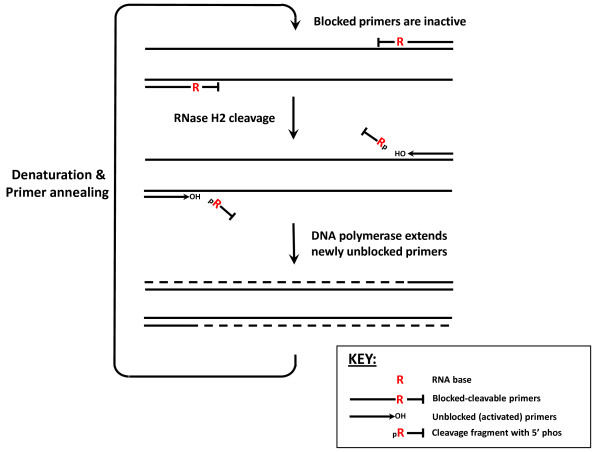
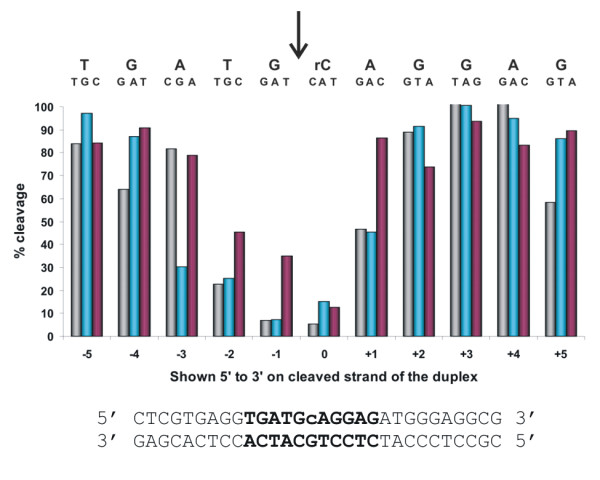
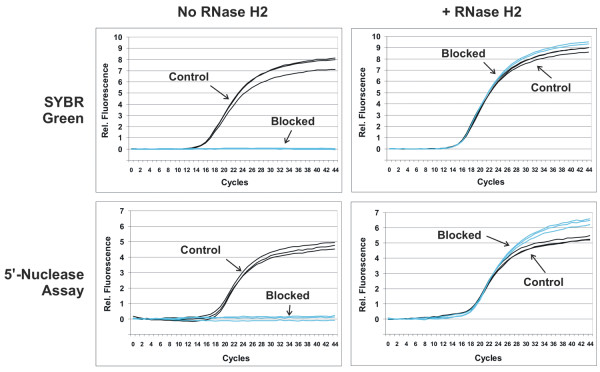
Background: The polymerase chain reaction (PCR) is commonly used to detect the presence of nucleic acid sequences both in research and diagnostic settings. While high specificity is often achieved, biological requirements sometimes necessitate that primers are placed in suboptimal locations which lead to problems with the formation of primer dimers and/or misamplification of homologous sequences. Results: Pyrococcus abyssi (P.a.) RNase H2 was used to enable PCR to be performed using blocked primers containing a single ribonucleotide residue which are activated via cleavage by the enzyme (rhPCR). Cleavage occurs 5'-to the RNA base following primer hybridization to the target DNA. The requirement of the primer to first hybridize with the target sequence to gain activity eliminates the formation of primer-dimers and greatly reduces misamplification of closely related sequences. Mismatches near the scissile linkage decrease the efficiency of cleavage by RNase H2, further increasing the specificity of the assay. When applied to the detection of single nucleotide polymorphisms (SNPs), rhPCR was found to be far more sensitive than standard allele-specific PCR. In general, the best discrimination occurs when the mismatch is placed at the RNA:DNA base pair. Conclusion: rhPCR eliminates the formation of primer dimers and markedly improves the specificity of PCR with respect to off-target amplification. These advantages of the assay should find utility in challenging qPCR applications such as genotyping, high level multiplex assays and rare allele detection.
Overview
The claims and statistics of this paper haven’t been checked yet.
Free: it reads the open-access text and checks the first 5 claims that cite a source we can check. Create a free account to check every claim.
Integrity signals
Registry
Cites
Statistics
Figures
Verification
Claims the paper makes
The claims and statistics of this paper haven’t been checked yet.
Free: it reads the open-access text and checks the first 5 claims that cite a source we can check. Create a free account to check every claim.
Claims other papers make about this one
Each is checked against this paper’s own text: does it say what the citing paper says it does?
The cited source doesn’t support the claim as written.
In the citing paper
“This amplification technology requires that the primer properly hybridize to a target site before amplification. Mismatches between target and primer prevent unblocking, thereby increasing specificity and eliminating primers dimers33.”
From A high-fidelity Cas9 mutant delivered as a ribonucleoprotein complex enables efficient gene editing in human hematopoietic stem and progenitor cells (2018) · cites this paper as [33]
Checked by a reasoning model — may be wrong.
Experimental — accuracy not yet measured
Self-check
Percentages, sums and reported differences re-computed from the paper’s own numbers.
The self-check needs the paper’s full text.
Citations
Cites
The MIQE guidelines: minimum information for publication of quantitative real-time PCR experiments
Bustin, S. A., Benes, V., Garson, J. A., Hellemans, J., Huggett, J., Kubista, M., Mueller, R., Nolan, T., Pfaffl, M. W., Shipley, G. L., et al. (2009) · Clinical Chemistry · doi:10.1373/clinchem.2008.112797 · Cited by 16,303 · cited 1×
“The quantification cycle number (Cq) was determined using the absolute quantification/2 derivative method [26].”
MethodMolecular Beacons: Probes that Fluoresce upon Hybridization
Tyagi, S., & Kramer, F. R. (1996) · Nature Biotechnology · doi:10.1038/nbt0396-303 · Cited by 4,155 · cited 1×
“Separation of the reporter and quencher due to cleavage of the probe by the 5’-nuclease activity of the DNA polymerase leads to an increase of fluorescence and a detectable signal [1-3].”
BackgroundHolland, P. M., Abramson, R. D., Watson, R., & Gelfand, D. H. (1991) · Proceedings of the National Academy of Sciences · doi:10.1073/pnas.88.16.7276 · Cited by 2,693 · cited 2×
“The most common format for detection concurrent with unbiased amplification is the 5’-nuclease assay [1,17].”
BackgroundAnalysis of any point mutation in DNA. The amplification refractory mutation system (ARMS)
Newton, C. R., Graham, A., Heptinstall, L. E., Powell, S. J., Summers, C., Kalsheker, N., Smith, J. C., & Markham, A. F. (1989) · Nucleic Acids Research · doi:10.1093/nar/17.7.2503 · Cited by 2,475
Pregnancies from biopsied human preimplantation embryos sexed by Y-specific DNA amplification
Handyside, A. H., Kontogianni, E. H., Hardy, K., & Winston, R. M. L. (1990) · Nature · doi:10.1038/344768a0 · Cited by 1,604
Allelic discrimination using fluorogenic probes and the 5′ nuclease assay
Livak, K. J. (1999) · Genetic Analysis: Biomolecular Engineering · doi:10.1016/s1050-3862(98)00019-9 · Cited by 1,379 · cited 1×
“The most common format for detection concurrent with unbiased amplification is the 5’-nuclease assay [1,17].”
BackgroundA Ligase-Mediated Gene Detection Technique
Landegren, U., Kaiser, R., Sanders, J., & Hood, L. (1988) · Science · doi:10.1126/science.3413476 · Cited by 828 · cited 1×
“Oligonucleotide ligation assays (OLAs) employ two oligonucleotides (an acceptor oligonucleotide with a reactive 3’-hydroxyl group and a donor oligonucleotide with a 5’-phosphate) which are designed to hybridize adjacent to each other on a complementary target nucleic acid so that DNA ligase can join the two fragments…”
Method3'-Minor groove binder-DNA probes increase sequence specificity at PCR extension temperatures
Kutyavin, I. V. (2000) · Nucleic Acids Research · doi:10.1093/nar/28.2.655 · Cited by 797 · cited 1×
“To achieve binding of the probe under conditions of the extension reaction with temperatures typically between 55°C and 70°C, modified bases such as locked nucleic acids (LNAs) or pendant groups such as a minor groove binder (MGB) are incorporated into the oligonucleotide to increase the Tm [18-20].”
BackgroundAllelic discrimination using fluorogenic probes and the 5' nuclease assay
Foitzi, T. (1999) · Medical Entomology and Zoology · Cited by 783
Prevention of pre-PCR mis-priming and primer dimerization improves low-copy-number amplifications
Chou, Q., Russell, M., Birch, D. E., Raymond, J., & Bloch, W. (1992) · Nucleic Acids Research · doi:10.1093/nar/20.7.1717 · Cited by 740 · cited 1×
“Formation of primer-dimers and off-target amplification are common problems in PCR [4-6].”
Background
Research works printed but not linked: 4
- Will SG Modified Nucleic Acid Amplification Primers 1999 vol. N/A. United States: Roche Molecular Systems, Inc., Pleasanton, California, United States
- Liu Q Sommer SS Serial coupling of restriction cleavage and extension for nucleic acid amplification 2006 USA: City of Hope
- Sagawa H Kobayashi E Kato I Method of detecting nucleotide polymorphism 2006 United States: Takara Bio Inc., Shiga, Japan
- Winger EE Kessler DJ Hargrove DE Real time homogenous nucleotide assay 1998 vol. N/A. United States: Edward E. Winger, Alameda, California, United States
Cited by
Neoantigen vaccine generates intratumoral T cell responses in phase Ib glioblastoma trial
Keskin, D. B., Anandappa, A. J., Sun, J., Tirosh, I., Mathewson, N. D., Li, S., Oliveira, G., Giobbie-Hurder, A., Felt, K., Gjini, E., et al. (2019) · Nature · doi:10.1038/s41586-018-0792-9 · Cited by 1,432
Vakulskas, C. A., Dever, D. P., Rettig, G. R., Turk, R., Jacobi, A. M., Collingwood, M. A., Bode, N. M., McNeill, M. S., Yan, S., Camarena, J., et al. (2018) · Nature Medicine · doi:10.1038/s41591-018-0137-0 · Cited by 782
Self-citationNatural killer cells in antitumour adoptive cell immunotherapy
Laskowski, T. J., Biederstädt, A., & Rezvani, K. (2022) · Nature Reviews Cancer · doi:10.1038/s41568-022-00491-0 · Cited by 773
Targeting a cytokine checkpoint enhances the fitness of armored cord blood CAR-NK cells
Daher, M., Basar, R., Gokdemir, E., Baran, N., Uprety, N., Nunez Cortes, A. K., Mendt, M., Kerbauy, L. N., Banerjee, P. P., Shanley, M., et al. (2021) · Blood · doi:10.1182/blood.2020007748 · Cited by 300
Self-citationLatrophilins Function as Heterophilic Cell-adhesion Molecules by Binding to Teneurins
Boucard, A. A., Maxeiner, S., & Südhof, T. C. (2014) · Journal of Biological Chemistry · doi:10.1074/jbc.m113.504779 · Cited by 186
Diagnostics based on nucleic acid sequence variant profiling: PCR, hybridization, and NGS approaches
Khodakov, D., Wang, C., & Zhang, D. Y. (2016) · Advanced Drug Delivery Reviews · doi:10.1016/j.addr.2016.04.005 · Cited by 155
Alternative splicing of interleukin-33 and type 2 inflammation in asthma
Gordon, E. D., Simpson, L. J., Rios, C. L., Ringel, L., Lachowicz-Scroggins, M. E., Peters, M. C., Wesolowska-Andersen, A., Gonzalez, J. R., MacLeod, H. J., Christian, L. S., et al. (2016) · Proceedings of the National Academy of Sciences · doi:10.1073/pnas.1601914113 · Cited by 153
“quantitative PCR (qPCR) was used to quantitatively measure IL33 spliced transcripts (30).”
MethodLiu, S., Iorgulescu, J. B., Li, S., Borji, M., Barrera-Lopez, I. A., Shanmugam, V., Lyu, H., Morriss, J. W., Garcia, Z. N., Murray, E., et al. (2022) · Immunity · doi:10.1016/j.immuni.2022.09.002 · Cited by 148
Park, S. H., Lee, C. M., Dever, D. P., Davis, T. H., Camarena, J., Srifa, W., Zhang, Y., Paikari, A., Chang, A. K., Porteus, M. H., et al. (2019) · Nucleic Acids Research · doi:10.1093/nar/gkz475 · Cited by 148
“After delivering the RNP of R-66 SCD gRNA with WT Cas9 into peripheral blood SCD CD34+ HSPCs, the offtarget activity at the 57 COSMID predicted sites (including the 5 GUIDE-Seq identified sites) was quantified at Day 2 and 12 post-electroporation using rhAmpSeqTM (Integrated DNA Technologies), a multiplex RNase H-depe…”
MethodNext-generation cell therapies: the emerging role of CAR-NK cells
Başar, R., Daher, M., & Rezvani, K. (2020) · Blood Advances · doi:10.1182/bloodadvances.2020002547 · Cited by 155
Wu, L. R., Chen, S. X., Wu, Y., Patel, A. A., & Zhang, D. Y. (2017) · Nature Biomedical Engineering · doi:10.1038/s41551-017-0126-5 · Cited by 143
Comparison of three PCR-based assays for SNP genotyping in plants
Broccanello, C., Chiodi, C., Funk, A., McGrath, J. M., Panella, L. W., & Stevanato, P. (2018) · Plant Methods · doi:10.1186/s13007-018-0295-6 · Cited by 130
“This method uses RNase H2 to activate primers after successful binding to their target sites, reducing primer dimer formation and improving the specificity of the reaction [11].”
Engineering the next generation of CAR-NK immunotherapies
Biederstädt, A., & Rezvani, K. (2021) · International Journal of Hematology · doi:10.1007/s12185-021-03209-4 · Cited by 119
Pharmacological interventions enhance virus-free generation of TRAC-replaced CAR T cells
Kath, J., Du, W., Pruene, A., Braun, T., Thommandru, B., Turk, R., Sturgeon, M. L., Kurgan, G. L., Amini, L., Stein, M., et al. (2022) · Molecular Therapy - Methods & Clinical Development · doi:10.1016/j.omtm.2022.03.018 · Cited by 99
“Sequencing libraries were then prepared using a previously described rhAmpSeq amplification-based method (IDT, Coralville, USA).(72,73) Briefly, locus-specific amplification was performed for 14 cycles followed by a 1 SPRI bead clean-up (Beckman-Coulter).”
MethodOff-target effects in CRISPR-Cas genome editing for human therapeutics: Progress and challenges
Kalter, N., Fuster‐García, C., Silva, A., Ronco-Díaz, V., Roncelli, S., Turchiano, G., Gorodkin, J., Cathomen, T., Benabdellah, K., Lee, C. M., et al. (2025) · Molecular Therapy — Nucleic Acids · doi:10.1016/j.omtn.2025.102636 · Cited by 134
“A state-of-the-art approach utilizes targeted amplification, such as the rhAmpSeq method, 122 followed by deep sequencing, enabling the detection of even rare editing events.”
Comparison of TaqMan, KASP and rhAmp SNP genotyping platforms in hexaploid wheat
Ayalew, H., Tsang, P. W., Chu, C., Wang, J., Liu, S., Chen, C., & Ma, X. (2019) · PLoS ONE · doi:10.1371/journal.pone.0217222 · Cited by 91
Wang, L., Sadri, M., Giraud, D., & Zempleni, J. (2018) · Journal of Nutrition · doi:10.1093/jn/nxx024 · Cited by 91
“failed to detect bovine miRs in compromised human plasma samples (43, 45).”
BackgroundZou, C., Karn, A., Reisch, B. I., Nguyen, A., Sun, Y. A., Bao, Y., Campbell, M. S., Church, D. M., Williams, S. R., Xu, X., et al. (2020) · Nature Communications · doi:10.1038/s41467-019-14280-1 · Cited by 100
Lopes, R., & Prasad, M. K. (2024) · Frontiers in Bioengineering and Biotechnology · doi:10.3389/fbioe.2023.1339189 · Cited by 82
Atkins, A., Chung, C.-H., Allen, A. G., Dampier, W., Gurrola, T. E., Sariyer, I. K., Nonnemacher, M. R., & Wigdahl, B. L. (2021) · Frontiers in Genome Editing · doi:10.3389/fgeed.2021.673022 · Cited by 90
A highly efficient transgene knock-in technology in clinically relevant cell types
Allen, A. G., Khan, S., Margulies, C. M., Viswanathan, R., Lele, S. S., Blaha, L. C., Scott, S. N., Izzo, K. M., Gerew, A., Pattali, R. K., et al. (2023) · Nature Biotechnology · doi:10.1038/s41587-023-01779-8 · Cited by 77
“Candidate off-target sites from each of the three specificity assays were then assessed in T cells using a multiplex PCR-NGS rhAmpSeq method 24 to determine whether any off-target candidates could be verified.”
InfluentialShapiro, J., Iancu, O., Jacobi, A. M., McNeill, M. S., Turk, R., Rettig, G. R., Amit, I., Tovin-Recht, A., Yakhini, Z., Behlke, M. A., et al. (2020) · Molecular Therapy - Methods & Clinical Development · doi:10.1016/j.omtm.2020.04.027 · Cited by 70
“It was recently shown that the rhAmpSeq technology can simultaneously quantify off-target genome-editing events in a single multiplex reaction (amplifying up to 5,000 genomic loci), thereby enabling comprehensive characterization of off-target activity for the desired gRNAs.(27)”
BackgroundMethodSelf-citationNon-viral chimeric antigen receptor (CAR) T cells going viral
Balke‐Want, H., Keerthi, V., Cadiñanos-Garai, A., Fowler, C., Gkitsas-Long, N., Brown, A. K., Tunuguntla, R. H., Abou‐El‐Enein, M., & Feldman, S. A. (2023) · Immuno-Oncology Technology · doi:10.1016/j.iotech.2023.100375 · Cited by 90
“Volume 18 - Issue C - 2023 generate target amplicons, improving target specificity and eliminating primer dimers, and allowing for multiplex reactions.(29,78) DSBs caused by CRISPR-based gene editing can result in translocations.”
BackgroundMethodTomé‐Carneiro, J., Fernández-Alonso, N., Tomás‐Zapico, C., Visioli, F., Iglesias‐Gutiérrez, E., & Dávalos, A. (2018) · Pharmacological Research · doi:10.1016/j.phrs.2018.04.003 · Cited by 73
Utilization of KASP technology for wheat improvement
Kaur, B., Mavi, G. S., Gill, M. S., & Saini, D. K. (2020) · Cereal Research Communications · doi:10.1007/s42976-020-00057-6 · Cited by 64
Next-generation cell therapies: the emerging role of CAR-NK cells
Başar, R., Daher, M., & Rezvani, K. (2020) · Hematology · doi:10.1182/hematology.2020002547 · Cited by 62
Engineered natural killer cells for cancer therapy
Biederstädt, A., & Rezvani, K. (2025) · Cancer Cell · doi:10.1016/j.ccell.2025.09.013 · Cited by 69
New high-sensitive rhAmp method for A1 allele detection in A2 milk samples
Giglioti, R., Gutmanis, G., Katiki, L. M., Okino, C. H., Oliveira, M. C. D. S., & Filho, A. E. V. (2020) · Food Chemistry · doi:10.1016/j.foodchem.2020.126167 · Cited by 65
“Alternatively, the rhAmp® method uses RNase H2 to activate primers after they have become successfully bound to their target sites, reducing primer dimer formation and improving the specificity of the reaction (Dobosy et al., 2011).”
MethodIn vivo prime editing rescues alternating hemiplegia of childhood in mice
Sousa, A. A., Terrey, M., Sakai, H. A., Simmons, C. Q., Arystarkhova, E., Morsci, N. S., Anderson, L. C., Xie, J., Suri‐Payer, F., Laux, L. C., et al. (2025) · Cell · doi:10.1016/j.cell.2025.06.038 · Cited by 59
Amit, I., Iancu, O., Levy-Jurgenson, A., Kurgan, G., McNeill, M., Rettig, G. R., Allen, D. G., Breier, D., Haim, N. B., Wang, Y., et al. (2021) · Nature Communications · doi:10.1038/s41467-021-22417-4 · Cited by 47
Li, S., Sun, J., Allesøe, R. L., Datta, K., Bao, Y., Oliveira, G., Forman, J., Jin, R., Olsen, L. R., Keskin, D. B., et al. (2019) · Nature Protocols · doi:10.1038/s41596-019-0195-x · Cited by 45
Blair, S. D., Matheson, D., He, Y., & Goss, G. G. (2016) · Conservation Physiology · doi:10.1093/conphys/cow010 · Cited by 41
“To navigate this obstacle confidently, we used the RNase H-Dependent qPCR technique and, in doing so, designed rhqPCR primers for grayling and trout, which are blocked and cleavable by the addition of a specific enzyme, RNase H2, according to the manufacturer’s protocol (Integrated DNA Technologies, Coralville, IA, US…”
BackgroundMethodInfluentialIntegrative genotyping of cancer and immune phenotypes by long-read sequencing
Penter, L., Borji, M., Nagler, A., Lyu, H., Lu, W. S., Cieri, N., Maurer, K., Oliveira, G., Al’Khafaji, A. M., Garimella, K. V., et al. (2024) · Nature Communications · doi:10.1038/s41467-023-44137-7 · Cited by 46
“GoT cDNA served as input for generation of targeted amplicon libraries with an index PCR using locus-speci fi c reverse primers. scRNA-seq libraries and the GoT amplicon library were sequenced together using the Illumina NextSeq 1000 system with a P2-100 cycle kit (read 1 26 cycles, read 2 90 cycles, index 1 10 cycles,…”
MethodInfluentialSmekalova, E. M., Martínez, M. G., Combe, E., Kumar, A., Dejene, S., Leboeuf, D., Chen, C., Dorkin, J. R., Shuang, L. S., Kieft, S., et al. (2023) · Molecular Therapy — Nucleic Acids · doi:10.1016/j.omtn.2023.102112 · Cited by 47
“In this study, using the rhAmpSeq CRISPR analysis system, 40,41 we were able to perform a much more thorough assessment; 685 potential off-target sites were evaluated for g37 and 499 off-target sites were evaluated for g40.”
MethodWagner, S. A., Roberson, D., Boland, J. F., Yeager, M., Cullen, M., Mirabello, L. J., Dunn, S. T., Walker, J. L., Zuna, R. E., Schiffman, M., et al. (2019) · Journal of Clinical Microbiology · doi:10.1128/jcm.01794-18 · Cited by 40
“The rhPCR primers are likely to be more sensitive to underlying nucleotide variants due to their inherent highly specific nature (25), which may lead to poor S1 amplification efficiency and potential type “dropout.”
BackgroundRole of NGS and SNP genotyping methods in sugarcane improvement programs
Manimekalai, R., Suresh, G., Kurup, H. G., Athiappan, S., & Kandalam, M. (2020) · Critical Reviews in Biotechnology · doi:10.1080/07388551.2020.1765730 · Cited by 44
“The rhAmp method, which is based on RNase H2-dependent PCR (rhPCR), uses RNase H2 to activate primers after successful binding to their target sites, reduces primer dimer formation, and improves the specificity of the reaction [121].”
MethodTraditional trapping methods outperform eDNA sampling for introduced semi-aquatic snakes
Rose, J. P., Wademan, C., Weir, S., Wood, J. S., & Todd, B. D. (2019) · PLoS ONE · doi:10.1371/journal.pone.0219244 · Cited by 44
Gene editing without ex vivo culture evades genotoxicity in human hematopoietic stem cells
Zeng, J., Nguyen, M. A., Liu, P., da Silva, L. F., Levesque, S., Lin, L. Y., Justus, D. G., Petri, K., Clement, K., Porter, S. N., et al. (2024) · Cell stem cell · doi:10.1016/j.stem.2024.11.001 · Cited by 41
Rapid Detection of rpoB Gene Mutations Conferring Rifampin Resistance in Mycobacterium tuberculosis
Ao, W., Aldous, S., Woodruff, E., Hicke, B. J., Rea, L., Kreiswirth, B. N., & JENISON, R. D. (2012) · Journal of Clinical Microbiology · doi:10.1128/jcm.00208-12 · Cited by 33
“67 RNase H2 used here has very little activity at temperatures below 40C and is highly active at 65C, the 68 temperature required for HDA to amplify target sequences optimally (10).”
BackgroundMethodThe Order Thermococcales and the Family Thermococcaceae
Schut, G. J., Lipscomb, G. L., Han, Y., Notey, J. S., Kelly, R. M., & Adams, M. W. W. (2014) · Springer eBooks · doi:10.1007/978-3-642-38954-2_324 · Cited by 37
Fromm, B., Tosar, J. P., Lu, Y., Halushka, M. K., & Witwer, K. W. (2018) · Journal of Nutrition · doi:10.1093/jn/nxy144 · Cited by 36
Malpartida-Cardenas, K., Rodríguez-Manzano, J., Yu, L., Delves, M. J., Nguon, C., Chotivanich, K., Baum, J., & Georgiou, P. (2018) · Analytical Chemistry · doi:10.1021/acs.analchem.8b02416 · Cited by 34
Başar, R., Daher, M., Uprety, N., Gokdemir, E., Alsuliman, A., Ensley, E. L., Ozcan, G., Mendt, M. C., Sanabria, M. H., Kerbauy, L. N., et al. (2020) · Blood Advances · doi:10.1182/bloodadvances.2020001977 · Cited by 34
Self-citationA DNA methylation-based liquid biopsy for triple-negative breast cancer
Cristall, K., Bidard, F., Pierga, J., Rauh, M. J., Popova, T. G., Sebbag, C., Lantz, O. J., Stern, M., & Mueller, C. R. (2021) · npj Precision Oncology · doi:10.1038/s41698-021-00198-9 · Cited by 33
Introduction to Marker-Assisted Selection in Wheat Breeding
Pandurangan, S., Workman, C., Nilsen, K. T., & Kumar, S. (2021) · Springer protocols handbooks/Springer protocols · doi:10.1007/978-1-0716-1526-3_3 · Cited by 48
Brault, J., Liu, T., Liu, S., Lawson, A., Choi, U., Kozhushko, N., Bzhilyanskaya, V., Pavel-Dinu, M., Meis, R. J., Eckhaus, M., et al. (2023) · Frontiers in Immunology · doi:10.3389/fimmu.2022.1067417 · Cited by 38
RART-LAMP: One-Step Extraction-Free Method for Genotyping within 40 min
Zhang, Z., Guan, L., Yao, J., Li, L., Liu, C., Guo, Y., & Xie, G. (2023) · Analytical Chemistry · doi:10.1021/acs.analchem.3c02232 · Cited by 28
Cahoon, A. B., Nauss, J., Stanley, C. D., & Qureshi, G. A. (2017) · Genes · doi:10.3390/genes8020080 · Cited by 30
“Deep sequencing and HRM had produced conflicting or statistically questionable results so another technique, rhPCR, was used to determine if RNA editing was creating differences between psbI DNA and mRNA [39].”
ResultInfluentialKang, T. H., Lee, C., Delidakis, G., Jung, J., Goff, O. R.-L., Lee, J., Kim, J. E., Charab, W., Bruhns, P., & Georgiou, G. (2019) · Frontiers in Immunology · doi:10.3389/fimmu.2019.00562 · Cited by 33
“In vitro Cell-Based Assays FCGR3A SNP Genotyping As previously described (46, 47), FCGR3A genes were specifically amplified using the following primers, 5-TCC AAA AGC CAC ACT CAA AGA CAG CGC-3 and 5-GAT GGT GAT GTT CAC AGT CTC T-3 and the sequence of amplified FCGR3A was analyzed.”
MethodModified “Allele-Specific qPCR” Method for SNP Genotyping Based on FRET
Kalendar, R., Baidyussen, A., Serikbay, D., Zotova, L., Khassanova, G., Kuzbakova, M., Jatayev, S., Hu, Y.-G., Schramm, C., Anderson, P., et al. (2021) · Frontiers in Plant Science · doi:10.3389/fpls.2021.747886 · Cited by 23
“During amplification cycling, polymerase extension leads to degradation of the rhAmp probe, and a fluorescent signal is released (Dobosy et al., 2011; Massa et al., 2021).”
BackgroundAllen, D. G., Weiss, L. E., Saguy, A., Rosenberg, M., Iancu, O., Matalon, O., Lee, C. M., Beider, K., Nagler, A., Shechtman, Y., et al. (2022) · The CRISPR Journal · doi:10.1089/crispr.2021.0128 · Cited by 26
“rhAmpSeq primer amplification depends on perfect-match hybridization to the target DNA and subsequent recognition of the RNA/DNA hybrid duplex by RNase H2 to cleave the target-matched primers that contain an RNA base and polymerase-blocking modification and allow for locus-specific amplification.(43) Primers were desi…”
MethodBlair, S. D., & Glover, C. N. (2019) · Hydrobiologia · doi:10.1007/s10750-019-3948-1 · Cited by 26
“Using the RNase H-Dependent qPCR technique (Integrated DNA Technologies, Coralville, IA, USA; Dobosy et al., 2011; Blair et al., 2016), gene-specific rhqPCR primers were designed for rainbow trout hsp70a (AB176854.”
MethodHicke, B. J., Pasko, C., Groves, B., Ager, E. P. C., Corpuz, M., Frech, G. C., Munns, D., Smith, W., Warcup, A., Denys, G. A., et al. (2012) · Journal of Clinical Microbiology · doi:10.1128/jcm.00621-12 · Cited by 23
“PCR instruments used for moderately complex molecular diagnoses use microfluidics that require high manufacturing precision, precise temperature control for thermal cycling, and sophisticated optics for fluorescence detection.”
BackgroundInfluentialDu, W., Ge, J.-H., Li, J.-J., Tang, L., Yu, R., & Jiang, J. (2018) · Analytica Chimica Acta · doi:10.1016/j.aca.2018.10.068 · Cited by 23
Guertler, P., Pallarz, S., Belter, A., Eckermann, K. N., & Grohmann, L. (2023) · Food Control · doi:10.1016/j.foodcont.2023.109869 · Cited by 25
Current and Future Pathotyping Platforms for Plasmodiophora brassicae in Canada
Tso, H. H., Galindo‐González, L., & Strelkov, S. E. (2021) · Plants · doi:10.3390/plants10071446 · Cited by 22
“An RNase H2 enzymatic activity error consistent with this result has been previously noted [64]; inaccurate RNase H2 cleavage may occur in a mismatch in the target sequence, but at a much lower frequency relative to the target match.”
BackgroundArnaoutova, I., Aratyn-Schaus, Y., Zhang, L., Packer, M. S., Chen, H., Lee, C., Gautam, S., Gregoire, F. M., Leboeuf, D., Boulé, S., et al. (2024) · Nature Communications · doi:10.1038/s41467-024-54108-1 · Cited by 22
Therapeutic gene editing strategies using CRISPR-Cas9 for the β-hemoglobinopathies
Papizan, J. B., Porter, S. N., Sharma, A., & Pruett‐Miller, S. M. (2020) · Journal of Biomedical Research · doi:10.7555/jbr.34.20200096 · Cited by 25
“As mentioned above, transient expression of CRISPR reagents via RNP delivery has been shown to reduce off-target editing[155].”
BackgroundMultiplexed engineering and precision gene editing in cellular immunotherapy
Biederstädt, A., Manzar, G. S., & Daher, M. (2022) · Frontiers in Immunology · doi:10.3389/fimmu.2022.1063303 · Cited by 20
Clare, S. J., Driskill, M., Millar, T. R., Chagné, D., Montanari, S., Thomson, S. J., Espley, R. V., Muńoz, P., Benevenuto, J., Zhao, D., et al. (2024) · Frontiers in Horticulture · doi:10.3389/fhort.2023.1339310 · Cited by 20
A High-Performing and Cost-Effective SNP Genotyping Method Using rhPCR and Universal Reporters
Beltz, K. R., Tsang, D., Wang, J., Rose, S. D., Bao, Y., Wang, Y., Larkin, K., Rupp, S. M., Schrepfer, D., Datta, K., et al. (2018) · Advances in Bioscience and Biotechnology · doi:10.4236/abb.2018.99034 · Cited by 19
“Mutant Taq DNA Polymerase While the RNase H2 enzyme exhibits significant differences in the rate of enzymatic cleavage of an RNA base in the presence or absence of a mismatch RNA-DNA heteroduplex [2], the rhAmp SNP assay also requires a DNA polymerase to complete allele-specific PCR.”
BackgroundMethodSelf-citationYang, Z., Le, J., Hutter, D., Bradley, K. M., Overton, B., McLendon, C., & Benner, S. A. (2020) · Biology Methods and Protocols · doi:10.1093/biomethods/bpaa004 · Cited by 19
Srivastava, R. K., Satyavathi, C. T., Mahendrakar, M. D., Singh, R. B., Kumar, S., Govindaraj, M., & Ghazi, I. A. (2021) · Frontiers in Genetics · doi:10.3389/fgene.2021.723472 · Cited by 20
Genetic Diversity of Wild and Cultivated Muscadine Grapes (Vitis rotundifolia Michx.)
Buck, K., & Worthington, M. L. (2022) · Frontiers in Plant Science · doi:10.3389/fpls.2022.852130 · Cited by 18
Weidner, C., Edelmann, S., Moor, D., Lieske, K., Cristian, S., Jacchia, S., Sacco, M. G., Mazzara, M., Lämke, J., Eckermann, K. N., et al. (2022) · Food Analytical Methods · doi:10.1007/s12161-022-02237-y · Cited by 20
“The rhPCR could be as well an alternative approach (Dobosy et al. 2011).”
Zeng, Y., Koo, K. M., Shen, A., Hu, J., & Trau, M. (2020) · Small · doi:10.1002/smll.202006370 · Cited by 18
CALITAS: A CRISPR-Cas-aware ALigner for In silico off-TArget Search
Fennell, T. J., Zhang, D., Isik, M., Wang, T., Gotta, G. M., Wilson, C. J., & Marco, E. (2021) · The CRISPR Journal · doi:10.1089/crispr.2020.0036 · Cited by 18
Lietard, J., Damha, M. J., & Somoza, M. M. (2019) · Biochemistry · doi:10.1021/acs.biochem.9b00806 · Cited by 17
“45,46 The origin of di ff ering cleavage e ffi ciencies remains elusive, but DNA and RNA microarrays are expected to be suitable platforms to provide clues about the binding and recognition pro fi le of RNA-cleaving enzymes.”
Rapid and accurate detection of SARS-CoV-2 using the RHAM technology
Xiao, Z., Liu, X., Kang, X., Feng, Y., Zheng, L., & Chen, C. (2023) · Scientific Reports · doi:10.1038/s41598-023-49733-7 · Cited by 19
Microhaplotype deep sequencing assays to capture Plasmodium vivax infection lineages
Kleinecke, M., Sutanto, E., Rumaseb, A., Hoon, K. S., Trimarsanto, H., Osborne, A., Manrique, P., Peters, T., Hawkes, D., Benavente, E. D., et al. (2025) · Nature Communications · doi:10.1038/s41467-025-62357-x · Cited by 19
“Allplotsweregeneratedusingdataonindependent infections with sample sizes shown within the plots. the need for pre-ampli fi cation steps relative to standard AmpSeq as it minimizes spurious primer-primer interactions and off-target ampli fi cation 27 .”
Huang, D., Liu, Y., Wang, G. A., Lv, S., Tan, Y., & Li, F. (2026) · Chemical Society Reviews · doi:10.1039/d5cs01006c · Cited by 21
Pavel-Dinu, M., Gardner, C. L., Nakauchi, Y., Kawai, T., Delmonte, O. M., Palterer, B., Bosticardo, M., Pala, F., Viel, S., Malech, H. L., et al. (2024) · Blood Advances · doi:10.1182/bloodadvances.2023011766 · Cited by 17
“The top 48 putative off-target (OT) sites for RAG2 were identi fi ed using CRISPR OT sites with mismatches, insertions, and deletions (COSMID) 35 and were tested using rhAmpSeq 36,37 (Integrated DNA Technologies).”
MethodNakauchi, M., Takashita, E., Fujisaki, S., Shirakura, M., Ogawa, R., Morita, H., Miura, H. S., Saito, S., Watanabe, S., Odagiri, T., et al. (2020) · Influenza and Other Respiratory Viruses · doi:10.1111/irv.12728 · Cited by 15
Genetic analysis of North American Phragmites australis guides management approaches
Lindsay, D. L., Freeland, J. R., Gong, P., Guan, X., Harms, N. E., Kowalski, K. P., Lance, R. F., Oh, D., Sartain, B., & Wendell, D. L. (2022) · Aquatic Botany · doi:10.1016/j.aquabot.2022.103589 · Cited by 14
Edri, A., Haim, N. B., Hailu, A., Brycman, N., Berhani-Zipori, O., Rifman, J., Cohen, S., Yackoubov, D., Rosenberg, M., Simantov, R., et al. (2023) · International Journal of Molecular Sciences · doi:10.3390/ijms242417231 · Cited by 16
“Subsequently, we used rhAmpSeq to quantify off-target activity in edited cells, focusing on the previously detected OTSs [44].”
MethodApplications of CRISPR/Cas as a Toolbox for Hepatitis B Virus Detection and Therapeutics
Kumar, A., Combe, E., Mougené, L., Zoulim, F., & Testoni, B. (2024) · Viruses · doi:10.3390/v16101565 · Cited by 19
“Nevertheless, the aforementioned observations highlight the potential of EEs to achieve HBV silencing, paving the way for innovative treatments that could potentially offer a functional HBV cure.”
BackgroundDNA Sequence Dimorphisms in Populations of the Clubroot Pathogen Plasmodiophora brassicae
Yang, Y., Zuzak, K., Harding, M. W., Strelkov, S. E., Hwang, S., Feindel, D., & Feng, J. (2018) · Plant Disease · doi:10.1094/pdis-02-18-0225-re · Cited by 14
Expression of Staphylococcus aureus Virulence Factors in Atopic Dermatitis
Poh, S. E., Koh, W. L. C., Lim, S. Y. D., Wang, E. C. E., Yew, Y. W., Common, J., Oon, H. H. B., & Li, H. (2022) · JID Innovations · doi:10.1016/j.xjidi.2022.100130 · Cited by 17
“This ensures high fidelity hybridization of the primer and dramatically reduces the formation of primer dimers—a major side reaction in multiplex PCR that interferes with qPCR signal (Dobosy et al., 2011; Li et al., 2019).”
BackgroundLiu, Z., Pan, S., Wu, P., Li, M., & Liang, D. (2023) · Molecules · doi:10.3390/molecules28135200 · Cited by 13
“A polymerase chain reaction (PCR) combined with the high-resolution melting method has also been applied to identify β-CN variants [15,16].”
MethodSingle‐molecule detection of cancer mutations using a novel PCR‐LDR‐qPCR assay
Ruiz, C., Huang, J., Giardina, S. F., Feinberg, P. B., Mirza, A. H., Bacolod, M. D., Soper, S. A., & Barany, F. (2020) · Human Mutation · doi:10.1002/humu.23987 · Cited by 14
Erbe, A. K., Wang, W., Gallenberger, M., Hank, J. A., & Sondel, P. M. (2016) · Methods in molecular biology · doi:10.1007/978-1-4939-3684-7_4 · Cited by 14
Ribarits, A., Narendja, F. M., Stepanek, W., & Hochegger, R. (2020) · Agronomy · doi:10.3390/agronomy11010061 · Cited by 15
Meng, J., Li, C., Wang, Y., Bian, Z., Chu, P., Zhai, S., Yang, D., Song, S., Li, Y., Jiang, Z., et al. (2022) · Frontiers in Cellular and Infection Microbiology · doi:10.3389/fcimb.2022.1034762 · Cited by 11
“Furthermore, the hydrolytic mechanism of the RNase H2 enzyme is activated (Dobosy et al., 2011), cleaving the probe and separating the reporter dye from the quencher, resulting in the release of the fluorescent signal.”
BackgroundDing, X., Wang, Y., Gui, Y., & Yang, C. (2024) · Advanced Science · doi:10.1002/advs.202401988 · Cited by 10
McAllister, C. H., Fortier, C. E., Onge, K. R. S., Sacchi, B. M., Nawrot, M. J., Locke, T. R., & Cooke, J. E. K. (2017) · Tree Physiology · doi:10.1093/treephys/tpx147 · Cited by 11
“RNase H2-mediated cleavage of the primer is optimal when the RNA nucleotide and the flanking DNA nucleotides are perfectly matched to the template DNA (Dobosy et al. 2011).”
BackgroundMethodInfluentialGenotyping tools and resources to assess peanut germplasm: smut-resistant landraces as a case study
Massa, A. N., Bressano, M., Soave, J. H., Buteler, M. I., Seijo, G. R., Sobolev, V. S., Orner, V. A., Oddino, C. M., Soave, S. J., Faustinelli, P. C., et al. (2021) · PeerJ · doi:10.7717/peerj.10581 · Cited by 11
“A PCR allelic discrimination platform called rhAmp SNP genotyping (Beltz et al., 2018; Dobosy et al., 2011) was further applied to validate selected SNPs in a larger number of individuals per accession.”
MethodKoo, K. M., Farhana, F. Z., Ross, A. G., & Shiddiky, M. J. A. (2025) · Analytical Chemistry · doi:10.1021/acs.analchem.4c05771 · Cited by 11
Ding, X., Yin, K., Chen, J., Wang, K., & Liu, C. (2019) · Chemical Communications · doi:10.1039/c9cc06296c · Cited by 10
Maxeiner, S., Sester, M., & Krasteva‐Christ, G. (2019) · Biology of Sex Differences · doi:10.1186/s13293-019-0279-x · Cited by 10
New sensitive methods for fraud detection in buffalo dairy products
Azevedo, B. T., Filho, A. E. V., Gutmanis, G., Verı́ssimo, C. J., Katiki, L. M., Okino, C. H., Oliveira, M. C. D. S., & Giglioti, R. (2021) · International Dairy Journal · doi:10.1016/j.idairyj.2021.105013 · Cited by 10
Protocol: rhPCR and SNaPshot assays to distinguish Plasmodiophora brassicae pathotype clusters
Tso, H. H., Galindo‐González, L., Locke, T. R., & Strelkov, S. E. (2022) · Plant Methods · doi:10.1186/s13007-022-00923-w · Cited by 10
Quantifying allele-specific CRISPR editing activity with CRISPECTOR2.0
Assa, G., Kalter, N., Rosenberg, M., Beck, A., Markovich, O., Gontmakher, T., Hendel, A., & Yakhini, Z. (2024) · Nucleic Acids Research · doi:10.1093/nar/gkae651 · Cited by 13
“One method of quantifying the CRISPR-Cas9 activity at the off-target sites to assess their potency, in a cellular context, involves employing targeted multiplex PCR, using specifically designed primers (such as rhAmpSeq), to selectively amplify the putative OTA loci ( 16 ,17 ).”
MethodLuo, S., Chen, Y., Li, Z., Zhang, X., & Liu, Y. (2025) · Biosensors and Bioelectronics · doi:10.1016/j.bios.2025.117760 · Cited by 9
Legal and practical challenges to authorization of gene edited plants in the EU
Sowa, S., Twardowski, T., Woźniak, E., & Zimny, T. (2020) · New Biotechnology · doi:10.1016/j.nbt.2020.10.008 · Cited by 12
Hasegawa, T., Hapsari, D., & Iwahashi, H. (2021) · PeerJ · doi:10.7717/peerj.11851 · Cited by 9
“For this, we focused on the technique of RNase H-dependent PCR (rhPCR) (Dobosy et al., 2001).”
MethodHung, Y. P., Chebib, I. A., Bredella, M. A., Berner, E. A., Taylor-Black, Q., Choy, E., Cote, G. M., Chen, Y., MacDonald, S. M., Schwab, J. H., et al. (2023) · Modern Pathology · doi:10.1016/j.modpat.2022.100069 · Cited by 10
Song, Z., Hu, K., Rao, J., Cheng, B., Xu, L., An, R., & Liang, X. (2023) · Analytical Chemistry · doi:10.1021/acs.analchem.3c02274 · Cited by 8
Labbé, G., Rankin, M. A., Robertson, J. A., Moffat, J., Giang, E., Lee, L. K., Ziebell, K. A., MacKinnon, J., Laing, C., Parmley, E. J., et al. (2018) · Journal of Microbiological Methods · doi:10.1016/j.mimet.2018.12.021 · Cited by 8
Lin, H.-H., Chung, H., Lin, T., Chang, C.-K., Perng, C., Hung, K.-S., Yanagihara, K., Shang, H., & Jian, M. (2025) · Diagnostics · doi:10.3390/diagnostics15121445 · Cited by 7
“However, conventional primer design can take over two weeks [22], extended by reagent synthesis at biotechnology companies, such as Integrated DNA Technologies, Inc. (IDT) [23], and validation procedures.”
White, N., Chalk, J. A., Hu, Y., Pins, S. M., Joseph, C. R., Antoniou, P., Wimberger, S., Svensson, S., Caetano-Silva, S. P., Mudde, A. C. A., et al. (2025) · Nature Communications · doi:10.1038/s41467-025-65182-4 · Cited by 10
Metadata
- Authors
- Dobosy, J. R., Rose, S. D., Beltz, K. R., Rupp, S. M., Powers, K. M., Behlke, M. A., & Walder, J. A.
- Affiliations
- Integrated DNA Technologies (United States) (US)
- Corresponding author
- Behlke, Mark A
- Venue
- BMC Biotechnology
- Published
- 2011-08-10
- Volume
- 11
- Issue
- 1
- Pages
- 80-80
- ISSN
- 1472-6750 (ISSN-L)
- PMC
- PMC3224242
- OpenAlex
- W2033609627
- Semantic Scholar
- 4238227fe6b44664ffc8c4e825d6b59f075d284a
- Cited by
- 184
- References
- 57
- Citations by year
- 2026: 24 · 2025: 21 · 2024: 16 · 2023: 18 · 2022: 14 · 2021: 23 · 2020: 20 · 2019: 14 · 2018: 13 · 2017: 8 · 2016: 6 · 2014: 2 · 2013: 2 · 2012: 2
- FWCI
- 0.78
- Type
- journal article
- Language
- en
- Open access
- gold
- doi.org
- Licence
- cc-by
- Locations
- BMC Biotechnology (publishedVersion, cc-by)
- Europe PMC (PubMed Central) (publishedVersion, cc-by)
- PubMed Central (publishedVersion, cc-by)
- PubMed (publishedVersion)
- DOAJ (DOAJ: Directory of Open Access Journals) (submittedVersion, cc-by-sa)
- Topics
- Life Sciences › Biochemistry, Genetics and Molecular Biology › Molecular Biology › Molecular Biology Techniques and Applications
- Life Sciences › Biochemistry, Genetics and Molecular Biology › Molecular Biology › DNA and Nucleic Acid Chemistry
- Life Sciences › Biochemistry, Genetics and Molecular Biology › Molecular Biology › CRISPR and Genetic Engineering
- Keywords
- RNase H2, Pyrococcus abyssi, primer dimers, PCR specificity, single nucleotide polymorphism detection, mismatch discrimination, off-target amplification, allele-specific PCR, genotyping, multiplex PCR
- MeSH terms
- Base Sequence, Enzyme Stability, Humans, Molecular Sequence Data, Nucleic Acid Hybridization, Sensitivity and Specificity, Temperature, Polymerase Chain Reaction, Ribonuclease H, DNA Primers, Polymorphism, Single Nucleotide, Pyrococcus abyssi
About these checks
Registry, retraction, Cites and statistics results are computed, not judged, with one exception: a printed reference that no index lists is read once by a model before it counts as a citation error. Claims are extracted by a model and kept only when their quote appears verbatim in the text; each cited source is then checked, with a model’s help, for whether it says what the claim relies on. Those verdicts can be wrong — read the claim’s quote and the cited source before relying on one.
Statistics and arithmetic are recomputed, not judged.
Confidence bands are shown only for fields calibrated on our annotated test set. None is calibrated yet, so no band is shown.
What counts as a claim ›How we measure confidence ›How we check this ›
Are you an author, or do you see a problem with this page? Request a review
Data sources
Bibliographic data: Semantic Scholar, OpenAlex, Crossref.
Contains information from the Semantic Scholar Academic Graph Datasets, made available under the ODC Attribution License (ODC-BY 1.0).
Semantic Scholar’s data is described in: Kinney, R., et al. (2023). The Semantic Scholar Open Data Platform. arXiv:2301.10140.
