

RNase H-dependent PCR (rhPCR): improved specificity and single nucleotide polymorphism detection using blocked cleavable primers
Open accessThe DOI matches its Crossref record; 53 of the 57 references it cites were found in a registry or an index.
Abstract
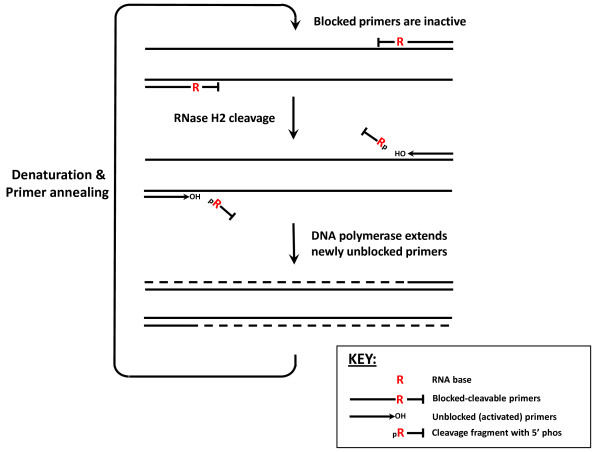
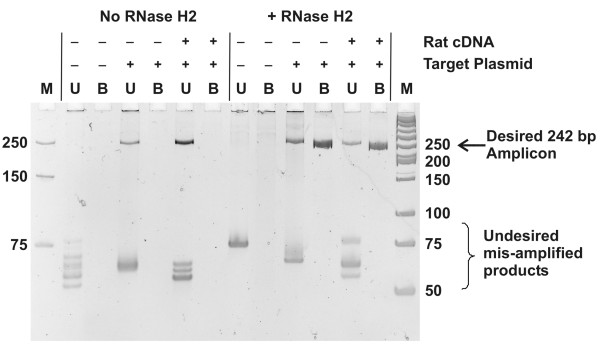
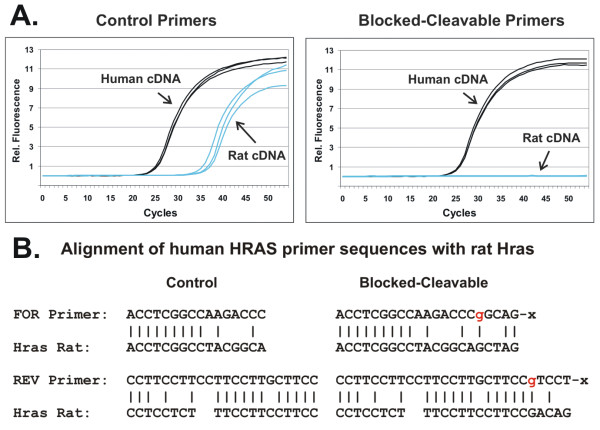
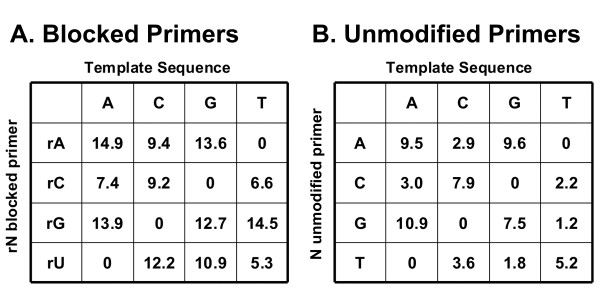
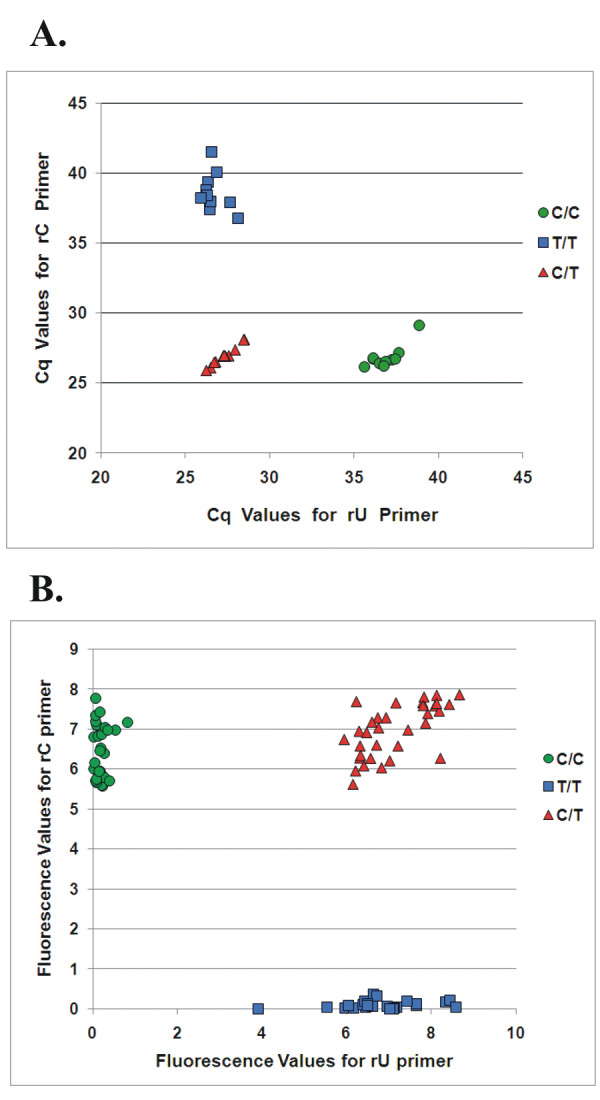
Background: The polymerase chain reaction (PCR) is commonly used to detect the presence of nucleic acid sequences both in research and diagnostic settings. While high specificity is often achieved, biological requirements sometimes necessitate that primers are placed in suboptimal locations which lead to problems with the formation of primer dimers and/or misamplification of homologous sequences. Results: Pyrococcus abyssi (P.a.) RNase H2 was used to enable PCR to be performed using blocked primers containing a single ribonucleotide residue which are activated via cleavage by the enzyme (rhPCR). Cleavage occurs 5'-to the RNA base following primer hybridization to the target DNA. The requirement of the primer to first hybridize with the target sequence to gain activity eliminates the formation of primer-dimers and greatly reduces misamplification of closely related sequences. Mismatches near the scissile linkage decrease the efficiency of cleavage by RNase H2, further increasing the specificity of the assay. When applied to the detection of single nucleotide polymorphisms (SNPs), rhPCR was found to be far more sensitive than standard allele-specific PCR. In general, the best discrimination occurs when the mismatch is placed at the RNA:DNA base pair. Conclusion: rhPCR eliminates the formation of primer dimers and markedly improves the specificity of PCR with respect to off-target amplification. These advantages of the assay should find utility in challenging qPCR applications such as genotyping, high level multiplex assays and rare allele detection.
Overview
The claims and statistics of this paper haven’t been checked yet.
Free: it reads the open-access text and checks the first 5 claims that cite a source we can check. Create a free account to check every claim.
Integrity signals
Registry
Cites
Statistics
Figures
Verification
Claims the paper makes
The claims and statistics of this paper haven’t been checked yet.
Free: it reads the open-access text and checks the first 5 claims that cite a source we can check. Create a free account to check every claim.
Claims other papers make about this one
Each is checked against this paper’s own text: does it say what the citing paper says it does?
The cited source doesn’t support the claim as written.
In the citing paper
“This amplification technology requires that the primer properly hybridize to a target site before amplification. Mismatches between target and primer prevent unblocking, thereby increasing specificity and eliminating primers dimers33.”
From A high-fidelity Cas9 mutant delivered as a ribonucleoprotein complex enables efficient gene editing in human hematopoietic stem and progenitor cells (2018) · cites this paper as [33]
Checked by a reasoning model — may be wrong.
Experimental — accuracy not yet measured
Self-check
Percentages, sums and reported differences re-computed from the paper’s own numbers.
The self-check needs the paper’s full text.
Citations
Cites
The MIQE guidelines: minimum information for publication of quantitative real-time PCR experiments
Bustin, S. A., Benes, V., Garson, J. A., Hellemans, J., Huggett, J., Kubista, M., Mueller, R., Nolan, T., Pfaffl, M. W., Shipley, G. L., et al. (2009) · Clinical Chemistry · doi:10.1373/clinchem.2008.112797 · Cited by 16,303 · cited 1×
“The quantification cycle number (Cq) was determined using the absolute quantification/2 derivative method [26].”
MethodMolecular Beacons: Probes that Fluoresce upon Hybridization
Tyagi, S., & Kramer, F. R. (1996) · Nature Biotechnology · doi:10.1038/nbt0396-303 · Cited by 4,155 · cited 1×
“Separation of the reporter and quencher due to cleavage of the probe by the 5’-nuclease activity of the DNA polymerase leads to an increase of fluorescence and a detectable signal [1-3].”
BackgroundHolland, P. M., Abramson, R. D., Watson, R., & Gelfand, D. H. (1991) · Proceedings of the National Academy of Sciences · doi:10.1073/pnas.88.16.7276 · Cited by 2,693 · cited 2×
“The most common format for detection concurrent with unbiased amplification is the 5’-nuclease assay [1,17].”
BackgroundAnalysis of any point mutation in DNA. The amplification refractory mutation system (ARMS)
Newton, C. R., Graham, A., Heptinstall, L. E., Powell, S. J., Summers, C., Kalsheker, N., Smith, J. C., & Markham, A. F. (1989) · Nucleic Acids Research · doi:10.1093/nar/17.7.2503 · Cited by 2,475
Pregnancies from biopsied human preimplantation embryos sexed by Y-specific DNA amplification
Handyside, A. H., Kontogianni, E. H., Hardy, K., & Winston, R. M. L. (1990) · Nature · doi:10.1038/344768a0 · Cited by 1,604
Allelic discrimination using fluorogenic probes and the 5′ nuclease assay
Livak, K. J. (1999) · Genetic Analysis: Biomolecular Engineering · doi:10.1016/s1050-3862(98)00019-9 · Cited by 1,379 · cited 1×
“The most common format for detection concurrent with unbiased amplification is the 5’-nuclease assay [1,17].”
BackgroundA Ligase-Mediated Gene Detection Technique
Landegren, U., Kaiser, R., Sanders, J., & Hood, L. (1988) · Science · doi:10.1126/science.3413476 · Cited by 828 · cited 1×
“Oligonucleotide ligation assays (OLAs) employ two oligonucleotides (an acceptor oligonucleotide with a reactive 3’-hydroxyl group and a donor oligonucleotide with a 5’-phosphate) which are designed to hybridize adjacent to each other on a complementary target nucleic acid so that DNA ligase can join the two fragments…”
Method3'-Minor groove binder-DNA probes increase sequence specificity at PCR extension temperatures
Kutyavin, I. V. (2000) · Nucleic Acids Research · doi:10.1093/nar/28.2.655 · Cited by 797 · cited 1×
“To achieve binding of the probe under conditions of the extension reaction with temperatures typically between 55°C and 70°C, modified bases such as locked nucleic acids (LNAs) or pendant groups such as a minor groove binder (MGB) are incorporated into the oligonucleotide to increase the Tm [18-20].”
BackgroundAllelic discrimination using fluorogenic probes and the 5' nuclease assay
Foitzi, T. (1999) · Medical Entomology and Zoology · Cited by 783
Prevention of pre-PCR mis-priming and primer dimerization improves low-copy-number amplifications
Chou, Q., Russell, M., Birch, D. E., Raymond, J., & Bloch, W. (1992) · Nucleic Acids Research · doi:10.1093/nar/20.7.1717 · Cited by 740 · cited 1×
“Formation of primer-dimers and off-target amplification are common problems in PCR [4-6].”
Background
Research works printed but not linked: 4
- Will SG Modified Nucleic Acid Amplification Primers 1999 vol. N/A. United States: Roche Molecular Systems, Inc., Pleasanton, California, United States
- Liu Q Sommer SS Serial coupling of restriction cleavage and extension for nucleic acid amplification 2006 USA: City of Hope
- Sagawa H Kobayashi E Kato I Method of detecting nucleotide polymorphism 2006 United States: Takara Bio Inc., Shiga, Japan
- Winger EE Kessler DJ Hargrove DE Real time homogenous nucleotide assay 1998 vol. N/A. United States: Edward E. Winger, Alameda, California, United States
Cited by
Items 101–178 of 178
TCR validation toward gene therapy for cancer
Green, E. W., Bunse, L., Bozza, M., Sanghvi, K., & Platten, M. (2019) · Methods in enzymology on CD-ROM/Methods in enzymology · doi:10.1016/bs.mie.2019.10.010 · Cited by 10
Gao, Y., Sridhar, A., Bernard, N., He, B., Zhang, H., Pirotte, S., Desmecht, S., Vancsok, C., Boutier, M., Suárez, N. M., et al. (2023) · Virus Evolution · doi:10.1093/ve/vead003 · Cited by 8
Kinney, K. J., Jia, K., Zhang, H., Schmaljohn, E., Osborne, T., Thommandru, B., Murugan, K., Peña, A. S., West, S. C., Chen, S., et al. (2026) · Nature Communications · doi:10.1038/s41467-026-74623-7 · Cited by 6
Self-citationZanatta, C. B., Narendja, F. M., Jawhary, H. E., Sleymane, G. A., Subburaj, S., Nodari, R. O., & Agapito-Tenfen, S. Z. (2025) · International Journal of Molecular Sciences · doi:10.3390/ijms26073308 · Cited by 6
“Recent advancements in PCR-based assays, such as loop-mediated isothermal amplification [23], ligase chain reaction [24], the incorporation of RNase H2 in rhAmp technology [25,26], and high-resolution melting [27], demonstrate improvements in detection capabilities.”
Cabanski, C. R., Yang, E., Stewart, M. D., Allen, J. D., Connolly, J. E., Dugan, U., Greenberg, P. D., Mackall, C. L., June, C. H., Marson, A., et al. (2025) · Journal for ImmunoTherapy of Cancer · doi:10.1136/jitc-2024-011301 · Cited by 8
“Quantitative assessments such as flow cytometry, qPCR, or sequencing-based assays (eg, GUIDE-seq 33 or RhAmpSeq 34 ) can accurately measure the presence and abundance of edited cells.”
Liu, Z., Zhao, C., Zhao, G., Xiong, S., Ma, Y., & Zheng, M. (2021) · Analytical Biochemistry · doi:10.1016/j.ab.2021.114169 · Cited by 6
Rapid RNase H-dependent PCR lateral flow assay for the detection of red snapper
Kwawukume, S., Velez, F. J., Kandula, N., Williams, D. W., Cui, L., & Singh, P. R. (2023) · Food Bioscience · doi:10.1016/j.fbio.2023.103390 · Cited by 6
Okano, H., Baba, M., Yamasaki, T., Hidese, R., Fujiwara, S., Yanagihara, I., Ujiiye, T., Hayashi, T., Kojima, K., Takita, T., et al. (2017) · Biochemical and Biophysical Research Communications · doi:10.1016/j.bbrc.2017.04.030 · Cited by 6
Jiang, Y., Mai, G., Li, L., Yao, J., & Zhang, Z. (2025) · Talanta · doi:10.1016/j.talanta.2025.128934 · Cited by 6
Application of molecular methods for potato disease diagnosis: a review
Jiang, J., Feindel, W., Harding, M., Feindel, D., Bajema, S., & Feng, J. (2024) · Canadian Journal of Plant Pathology · doi:10.1080/07060661.2024.2310023 · Cited by 5
“Dobosy et al. (2011) have reported that the rhPCR technique exhibits superior efficacy in detecting SNPs when compared to the conventional allele-specific PCR.”
Nam, H., Lee, E. Y., Yang, H., Lee, K., kwak, T., Kim, D., Kim, H. M., Yang, M., Yang, Y., Son, S., et al. (2024) · Biology Methods and Protocols · doi:10.1093/biomethods/bpae041 · Cited by 6
“The principle of integrating RNase H2 into PCR (rhPCR) has been previously explored and demonstrated to enhance the specificity of PCR detection by mitigating off-target amplifications [41].”
Development of STARP Marker Platform for Flexible SNP Genotyping in Sugarbeet
Tehseen, M. M., Zheng, Y., Wyatt, N. A., Bolton, M. D., Yang, S., Xu, S. S., Li, X., & Chu, C. (2023) · Agronomy · doi:10.3390/agronomy13051359 · Cited by 5
Yu, J., Antić, Ž., van Reijmersdal, S. V., Hoischen, A., Sonneveld, E., Waanders, E., & Kuiper, R. P. (2017) · Leukemia & lymphoma/Leukemia and lymphoma · doi:10.1080/10428194.2017.1390232 · Cited by 5
“In order to validate low-level mosaic variants identified by the smMIP-based consensus variant calling approach, RNase H2 based PCR (rhPCR) assays were performed (Figure S2) [14].”
MethodZuzak, K., Yang, Y., Kimmel, N., Harding, M. W., Feindel, D., & Feng, J. (2017) · Botany · doi:10.1139/cjb-2017-0152 · Cited by 5
“Based on the aligned sequences, RNase Hdependent PCR primers were manually designed according to Dobosy et al. (2011) and the rhPCR guide (Integrated DNA Technologies 2017). rhPCR was conducted on each sample in 20-µL reaction containing 1 mU RNase H2 (Integrated DNA Technologies) for each primer…”
BackgroundMethodInfluentialA new quantitative real-time PCR method to measure human miRNAs using the PROMER technology
Nam, Y.-H., kwak, T., Kim, H. M., Jeon, S., Bae, S., Yang, Y., Son, S., Cha, W., Yang, M., Lee, E. Y., et al. (2024) · Biochemical and Biophysical Research Communications · doi:10.1016/j.bbrc.2024.151069 · Cited by 5
Zhong, G., Zhao, Z., He, Y., Yu, X., Yang, T., Liu, H., Li, S., Cha, C., Luo, M., & Huang, B. (2025) · Microbiology Spectrum · doi:10.1128/spectrum.03418-24 · Cited by 4
“The Pluslife Rapid SARS-CoV-2 assay is a new generation of molecular POCT product, utilizing Pluslife’s proprietary RNase Hybridization-Assisted amplification (RHAM) technology (13, 14).”
Redox-driven ADAR1 activation promotes Okazaki fragment maturation and DNA replication integrity
Chen, B., Sun, G., Kloeber, J. A., Xiao, H., Ouyang, Y., Zhao, F., Li, Y., Xu, S., Dragojevic, S., Wu, Z., et al. (2026) · Nature Structural & Molecular Biology · doi:10.1038/s41594-025-01736-w · Cited by 4
“A single RNA–DNA base-pair mismatch can inhibit cleavage approximately tenfold 17 .”
Challenges for Accurate Quantification of RNA
Hasegawa, T., Hapsari, D., & Iwahashi, H. (2021) · Reviews in Agricultural Science · doi:10.7831/ras.9.0_1 · Cited by 4
“RNase H-dependent PCR (rhPCR) is one of the methods used to prevent non-specific amplification [73, 74] (Fig.”
MethodHiggins, O., & Smith, T. (2021) · International Journal of Molecular Sciences · doi:10.3390/ijms22116061 · Cited by 4
“RNase H2dependant PCR (rhPCR) is another two-oligonucleotide real-time PCR system that enables SNP detection using blocked primers with RNA residues that are cleaved upon target hybridisation by a thermostable RNase H2 enzyme [43].”
BackgroundIsothermal amplification of specific sequences
Tong, Y. (2014) · Elsevier eBooks · doi:10.1533/9780857099167.1.69 · Cited by 5
CRISPR-Cas Gene Perturbation and Editing in Human Induced Pluripotent Stem Cells
van Essen, M. J., Riepsaame, J., & Jacob, J. (2021) · The CRISPR Journal · doi:10.1089/crispr.2021.0063 · Cited by 5
Jiang, J., Feindel, W., Harding, M. W., Feindel, D., Bajema, S., & Feng, J. (2022) · Plant Disease · doi:10.1094/pdis-08-22-1809-re · Cited by 4
Yao, J., Zhang, Z., Tian, S., Luo, N., Tan, J. J., Zhang, Y., Gu, S., & Xia, Q. (2023) · Microbiology Spectrum · doi:10.1128/spectrum.01125-23 · Cited by 4
“Leveraging these properties can be designed for the target sequence, reducing the formation of primer dimers, improving specificity, enabling multiplex PCR with multiple primers, and facilitating the simultane ous detection of SNP (30).”
BackgroundHigh-Throughput Diagnostic Assay for a Highly Prevalent Cardiomyopathy-Associated MYBPC3 Variant
Barefield, D. Y., Lynch, T. L., Jagadeesan, A., Sanagala, T., & Sadayappan, S. (2016) · Journal of Molecular Biomarkers & Diagnosis · doi:10.4172/2155-9929.1000303 · Cited by 4
“Septal E' was used to calculate E/E' ratio [32,33].”
MethodCrissman, J. W., Lin, Y., Separa, K., Duquette, M., Cohen, M., Velasquez, C., & Cujec, T. P. (2020) · PLoS ONE · doi:10.1371/journal.pone.0241803 · Cited by 4
Rodgers, T. W., Olson, J. R., & Mock, K. E. (2019) · Methods in Ecology and Evolution · doi:10.1111/2041-210x.13187 · Cited by 4
“…detection rhPCR uses cleavable blocked primers in combination with the enzyme RNase H2 to confer increase specificity to PCR or qPCR re‐ actions (Dobosy et al., 2011). rhPCR primers include a 3’ C3 spacer blocking modification that prevents primer extension by the poly‐ merase, and a single…”
MethodHighly multiplexed mRNA quantitation with CRISPR-Cas13Preprint
Kang, B., Zhang, J., Schwoerer, M. P., Nelson, A. N., Schoeman, E., Guo, A., Ploß, A., & Myhrvold, C. (2023) · bioRxiv (Cold Spring Harbor Laboratory) · doi:10.1101/2023.08.16.553527 · Cited by 4
“After cDNA synthesis, samples are pre-amplified in a multiplexed format using an RNase H2-dependent PCR (rhPCR) protocol to increase assay sensitivity and to incorporate a T7 promoter sequence into target amplicons 10 .”
Multiplexed, universal probe-based rare variant detection with USE-PCR
Alvarado, J., Jacky, L., Yurk, D., Aguiar, A., Belitz, P., & Schwartz, J. J. (2025) · Scientific Reports · doi:10.1038/s41598-025-08814-5 · Cited by 3
Nagata, F., Lo, C., Saito, S., Matsuura, R., Watanuki, S., Hosomichi, K., Sasaki, S., Kawata, R., Shimizu, H., Sone, T., et al. (2025) · HLA · doi:10.1111/tan.70333 · Cited by 3
“The results of the present study will enable the development of new disease-related genetic diagnostic methods using SNP genotyping techniques such as the KASP assay [71, 72], SNP genotyping using minor groove binder probes [73], and RNase H-dependent PCR (rhPCR) [74].”
Anchored random reverse primer sequencing for quantitative detection of novel gene fusions
Xiu, X., Wu, Y., Li, J., Lin, D., Sun, X., Su, X., Weng, Z., Zuo, X., Yang, X., Fan, C., et al. (2026) · Nature Biomedical Engineering · doi:10.1038/s41551-025-01564-9 · Cited by 4
“11-77–11-79).”
Ao, W., Clifford, A., Corpuz, M., & JENISON, R. D. (2017) · PLoS ONE · doi:10.1371/journal.pone.0171915 · Cited by 3
Characterization of Genetic Diversity Using Molecular Markers
Perera, L., & Manimekalai, R. (2021) · Compendium of plant genomes · doi:10.1007/978-3-030-76649-8_5 · Cited by 3
Detection of rpoB Gene Mutations Using Helicase-Dependent Amplification
Ao, W., & JENISON, R. D. (2013) · Methods in molecular biology · doi:10.1007/978-1-62703-535-4_7 · Cited by 3
Bezerra, D. D. S., Neves, B. G., Guedes, S. F. F., Regis, W. F. M., Stipp, R. N., & Rodrigues, L. K. A. (2019) · Journal of Health & Biological Sciences · doi:10.12662/2317-3076jhbs.v7i2.2562.p145-151.2019 · Cited by 3
Smirnova, E. V., Barsova, E. V., Varlamov, D. A., Kramarov, V. M., Blagodatskikh, K. А., & Ignatov, K. B. (2025) · Biomolecules · doi:10.3390/biom15091313 · Cited by 2
“The cloning, expression, and purification of recombinant Pa RNase H2 are fully described in [25].”
White, N., Hu, Y., Chalk, J. A., Kurgan, G., Naseem, A., Schmaljohn, E., Sturgeon, M. L., Cavazza, A., Thrasher, A. J., & Turchiano, G. (2026) · Nucleic Acids Research · doi:10.1093/nar/gkag318 · Cited by 3
“It has been previously reported that canonical rhAmpSeq uses fixed P5/P7 ends on target-specific primers (Forward, P5; Reverse, P7) during amplicon sequencing [ 36 , 37 ], which can result in some translocation events forming not compatible products (i.e. P5/P5; P7/P7) [ 34 ].”
Nagler, A., Sud, A., Ghannam, J. Y., Pomerance, L., Robles-Oteíza, C., Afeyan, A. B., Weir, J. A., Russell, A. J. C., Lu, W. S., Orden, M. V., et al. (2026) · Nature Biotechnology · doi:10.1038/s41587-026-03194-1 · Cited by 3
Novel CRISPR-based sequence specific enrichment methods for target loci and single base mutations
Steele, J. L., Stevens, R. C., Cabrera, O. A., Bassill, G. J., Cramer, S. M., Guzmán, F., & Shuber, A. P. (2020) · PLoS ONE · doi:10.1371/journal.pone.0243781 · Cited by 2
SNPSelect: A scalable and flexible targeted sequence-based genotyping solution
Hogers, R. C. J., de Ruiter, M., Huvenaars, K. H. J., van der Poel, H. J. A., Janssen, A., van Eijk, M. J. T., & van Orsouw, N. J. (2018) · PLoS ONE · doi:10.1371/journal.pone.0205577 · Cited by 2
NanoString Technology for Human Papillomavirus Typing
Rajeevan, M. S., Patel, S. S., Li, T., & Unger, E. R. (2021) · Viruses · doi:10.3390/v13020188 · Cited by 2
“TypeSeq utilizes rhPCR primers [27] in Stage 1 PCR for type-specificity but”
MethodCui, J., & Zempleni, J. (2018) · Journal of Nutrition · doi:10.1093/jn/nxy145 · Cited by 2
rhPCR-Lateral flow assay for the onsite detection of Pacific white shrimp
Kandula, N., Kwawukume, S., Williams, D. W., & Singh, P. R. (2025) · Journal of Food Composition and Analysis · doi:10.1016/j.jfca.2025.107648 · Cited by 1
Zhang, Y., Liang, X., Yao, J., Liu, W. Y., Zhang, N., Zhang, Z., & Xia, Q. (2025) · PLoS neglected tropical diseases · doi:10.1371/journal.pntd.0013109 · Cited by 1
“JJoseph R. Dobosy et al. first applied RNase HII in RNase H dependent PCR (rhPCR), utilizing thermostable RNase HII for probe cleavage that breaks the DNA backbone at the 5’ side of a ribonucleotide sequence, yielding a 3’ hydroxyl group and a 5’ phosphate end [28,30,31].”
Rapid on-site SNP discrimination across diverse mutational contexts
Lee, J., Sung, D., Woo, C. H., Kim, B. K., & Lee, J. W. (2025) · Biosensors and Bioelectronics · doi:10.1016/j.bios.2025.118176 · Cited by 1
Zhu, Z., Si, Z., Xue, J., Liu, D., Cao, J., Zhu, Y., Zhang, Y., Zhang, K., Yang, L., & Wang, H. (2026) · Sensors and Actuators B Chemical · doi:10.1016/j.snb.2026.140179 · Cited by 1
Avasthi, K. K., Yim, K. H., Kim, Y., Echevarria, P. M. R., Darst, L., Abreu, N., Zea, K., Hayes, M. T., Vosoughi, A., Manley, B. J., et al. (2026) · Molecular Diagnosis & Therapy · doi:10.1007/s40291-026-00865-2 · Cited by 1
“To ensure the specificity of the amplification within this 56-target assay, we employed RNase H-dependent PCR (rhPCR) technology [15].”
Malau‐Aduli, A. E. O., Pewan, S. B., Mwangi, F. W., & Otto, J. R. (2026) · PLoS ONE · doi:10.1371/journal.pone.0339573 · Cited by 2
“A more recent method, known as the RNase H2-dependent PCR (rhPCR) (17], shows potential in SNP genotyping, but still requires further testing for broader application [16].”
Sándorová, L., Pajor, F., Egerszegi, I., Bodnár, Á., Bodó, S., & Stéger, V. (2026) · Agriculture · doi:10.3390/agriculture16080822 · Cited by 1
Plasmid‐Based Donor Templates for Nonviral CRISPR/Cas9‐Mediated Gene Knock‐In in Human T Cells
Senger, K., Akhmetzyanova, I., Haley, B., Rutz, S., & Oh, S. A. (2022) · Current Protocols · doi:10.1002/cpz1.538 · Cited by 1
“In the absence of reliable antibodies for these analyses, or in the event that a loss of protein expression is an unlikely outcome, then the targeted region should be PCRamplified for after Cas9-RNP delivery and assessed for the frequency of indels, using direct sequencing and/or methods such as RNase-H-dependent PCR…”
MethodMo, J., Wang, W., Wang, Y., Cheng, H., Li, X., & Wang, B. (2023) · JSFA reports · doi:10.1002/jsf2.136 · Cited by 1
Rivero, J., Cutillas, C., & Callejón, R. (2024) · Animals · doi:10.3390/ani14111545 · Cited by 2
“This technology is based on the RNase H2-dependent polymerase chain reaction (rhPCR) and universal reporters [24].”
MethodBlair, S. D. (2016) · ERA: Education and Research Archive (University of Alberta) · doi:10.7939/r3542jd7x · Cited by 1
Detection and Quantification of Genome Editing Events in Preclinical and Clinical Studies
Falaleeva, M., Tsai, S. Q., Meyer, K. E., & Lu, Y. (2024) · Wiley eBooks · doi:10.1002/9781119852810.ch14 · Cited by 1
Targeted TCR Amplification from Single-Cell cDNA Libraries
Li, S., & Livak, K. J. (2019) · Methods in molecular biology · doi:10.1007/978-1-4939-9240-9_13
Brisbane River Expressways as Landscape Urbanism
Thomas, G. S. (2001)
Liu, M. (2021) · Faculty Opinions – Post-Publication Peer Review of the Biomedical Literature · doi:10.3410/f.739102169.793581690
McCarthy, A. (2020) · Carleton University's Institutional Repository (MacOdrum Library, Carleton University) · doi:10.22215/etd/2020-14245 · Cited by 1
Mapping and identification of QTLs for low light tolerance traits in grapevine
Ji, X., Shi, M., Liu, F., Wang, X., Wang, Z., & Wang, H. (2025) · BMC Plant Biology · doi:10.1186/s12870-025-06968-y
“AmpSeq and rhAmpSeq are recently developed amplicon-based genotyping technologies, but they require primer screening and design, as well as multiplex PCR, which increases technical complexity and introduces uncertainty due to variable amplification efficiency, even with rhPCR technology [14].”
Tan, J., Zhang, X., Wei, X., Fu, Y., Jiang, Y., Ding, Y., & Ding, M. (2025) · Microchemical Journal · doi:10.1016/j.microc.2025.115219
Hu, X., Huang, J. S., Yuan, J., Sun, Y., Wang, Y., Hu, Z., Jiang, J., Wang, Z., Wang, B. Y., Long, M., et al. (2026) · Cell Reports · doi:10.1016/j.celrep.2025.116882 · Cited by 1
Fan, W., Oh, T. G., Crossley, L., Robbins, H., He, M., Dai, Y. D., Truitt, M., Atkins, A. R., Downes, M., & Evans, R. M. (2026) · Proceedings of the National Academy of Sciences · doi:10.1073/pnas.2535453123
Arrayed dual-gRNA CRISPR screening platform for C9orf72 repeat expansion excision in patient iPSCs
Arogundade, O. A., Lam, K. J. K., Brown, K. A., Jain, T., Issagholian-Lewin, P. O., Huang, C., Hudson, T. R., Briseno, K., Wyman, S. K., Krishnappa, N., et al. (2026) · Molecular Therapy Advances · doi:10.1016/j.omta.2026.201741
“We had to turn to WGS because other validated cell-based methods did not work in iPSCs (e.g., GUIDE-seq 45 caused iPSC death, which prevented data collection) or were impractical across thousands of low-confidence off-targets (rhAmpSeq 46 ).”
Modeling and correction of SCID-X1 using CRISPR-Cas9 homology-directed repair in human HSPCs
Knop, O., Haim, N. B., Kalter, N., Rosenberg, M., Breier, D., Baider, K., Lee, Y. N., Adam, E., Somekh, I., Nagler, A., et al. (2026) · Molecular Therapy — Nucleic Acids · doi:10.1016/j.omtn.2026.102941
Aguilera-Diaz, A., Feinberg, P. B., Huang, J., Spier, E., Barany, F., & Bacolod, M. D. (2026) · Journal of Personalized Medicine · doi:10.3390/jpm16050269
“Paired with RNase H2-dependent primer gating [28], which ensures amplification only when primers correctly hybridize, and the inclusion of uracil-DNA glycosylase [29] to remove incompletely converted bases, the workflow achieves high specificity and reproducibility.”
Zhao, Y., Wang, Z., Zhang, M., Zhao, X., Yan, B., Ma, Y. X., Song, Z.-G., Wan, Z., & Zhang, C. (2026) · Analytical Chemistry · doi:10.1021/acs.analchem.6c01601
Dong, J., Shi, J., Zhao, J., Chen, X., Zhan, G., Du, F., Cui, X., Wang, W., Ding, S., & Tang, Z. (2026) · Biosensors and Bioelectronics · doi:10.1016/j.bios.2026.118914
A Neural Network–Enabled, Enzymatic cfDNA Methylation Assay for Colorectal Cancer Early Detection
Bacolod, M. D., Aguilera-Diaz, A., Feinberg, P. B., Fani, S., Huang, J., & Barany, F. (2026) · Cancer Prevention Research · doi:10.1158/1940-6207.capr-26-0072 · Cited by 1
Artificial intelligence (AI) for polymerase chain reaction (PCR): A state-of-the-art review
Andaluz, S., Lv, A., Yu, P., Hui, W., Shen, R., Liu, T.-M., Brito, M., Mak, P., Martins, R. P., & Jia, Y. (2026) · Biomedical Instrumentation · doi:10.1016/j.bmi.2026.100052
Kwawukume, S., Kandula, N., Cui, L., & Singh, P. R. (2026) · Food Chemistry Molecular Sciences · doi:10.1016/j.fochms.2026.100434
“RNase H2-dependent PCR (rhPCR) addresses this by using primers containing an internal RNA base and a 3 ′ blocking modification, which gets cleaved by RNase H2 enzyme only upon perfect primer-template hybridization (Dobosy et al., 2011).”
Dudău, M., Rădoi, M. P., Popescu, I. D., Constantin, N., Cismasiu, V. B., Săvoaia, M., Enciu, A., Tănase, C., & Codrici, E. (2026) · Frontiers in Bioscience-Landmark · doi:10.31083/fbl51339
A long-hidden prevalent PCR artifact and its application in DNA library screeningPreprint
Jiang, X., Jørgensen, T. S., Wang, F., Lien, A., Gren, T., Munro, L. J., Zhang, H., & Weber, T. (2026) · bioRxiv (Cold Spring Harbor Laboratory) · doi:10.64898/2026.07.17.737729
Jang, W. S., Lee, E., Ko, S.-Y., & Lim, C. S. (2026) · Frontiers in Chemistry · doi:10.3389/fchem.2026.1942908
“To address this limitation, we applied the principle of RNase HII-dependent PCR (rhPCR), originally developed by Dobosy et al. (2011), to the RT-LAMP primer system.”
Estep, A. S., Sanscrainte, N. D., Pagac, A. A., Geden, C. J., & Burgess, E. R. (2026) · Scientific Reports · doi:10.1038/s41598-026-74046-w
Tian, Y., Wong, J., Ionescu, F., Zhang, J., Soupir, A., Kohli, M., & Wang, L. (2026) · The Journal of Liquid Biopsy · doi:10.1016/j.jlb.2026.100672
“All primers were designed using rhPCR chemistry [16].”
Metadata
- Authors
- Dobosy, J. R., Rose, S. D., Beltz, K. R., Rupp, S. M., Powers, K. M., Behlke, M. A., & Walder, J. A.
- Affiliations
- Integrated DNA Technologies (United States) (US)
- Corresponding author
- Behlke, Mark A
- Venue
- BMC Biotechnology
- Published
- 2011-08-10
- Volume
- 11
- Issue
- 1
- Pages
- 80-80
- ISSN
- 1472-6750 (ISSN-L)
- PMC
- PMC3224242
- OpenAlex
- W2033609627
- Semantic Scholar
- 4238227fe6b44664ffc8c4e825d6b59f075d284a
- Cited by
- 184
- References
- 57
- Citations by year
- 2026: 24 · 2025: 21 · 2024: 16 · 2023: 18 · 2022: 14 · 2021: 23 · 2020: 20 · 2019: 14 · 2018: 13 · 2017: 8 · 2016: 6 · 2014: 2 · 2013: 2 · 2012: 2
- FWCI
- 0.78
- Type
- journal article
- Language
- en
- Open access
- gold
- doi.org
- Licence
- cc-by
- Locations
- BMC Biotechnology (publishedVersion, cc-by)
- Europe PMC (PubMed Central) (publishedVersion, cc-by)
- PubMed Central (publishedVersion, cc-by)
- PubMed (publishedVersion)
- DOAJ (DOAJ: Directory of Open Access Journals) (submittedVersion, cc-by-sa)
- Topics
- Life Sciences › Biochemistry, Genetics and Molecular Biology › Molecular Biology › Molecular Biology Techniques and Applications
- Life Sciences › Biochemistry, Genetics and Molecular Biology › Molecular Biology › DNA and Nucleic Acid Chemistry
- Life Sciences › Biochemistry, Genetics and Molecular Biology › Molecular Biology › CRISPR and Genetic Engineering
- Keywords
- RNase H2, Pyrococcus abyssi, primer dimers, PCR specificity, single nucleotide polymorphism detection, mismatch discrimination, off-target amplification, allele-specific PCR, genotyping, multiplex PCR
- MeSH terms
- Base Sequence, Enzyme Stability, Humans, Molecular Sequence Data, Nucleic Acid Hybridization, Sensitivity and Specificity, Temperature, Polymerase Chain Reaction, Ribonuclease H, DNA Primers, Polymorphism, Single Nucleotide, Pyrococcus abyssi
About these checks
Registry, retraction, Cites and statistics results are computed, not judged, with one exception: a printed reference that no index lists is read once by a model before it counts as a citation error. Claims are extracted by a model and kept only when their quote appears verbatim in the text; each cited source is then checked, with a model’s help, for whether it says what the claim relies on. Those verdicts can be wrong — read the claim’s quote and the cited source before relying on one.
Statistics and arithmetic are recomputed, not judged.
Confidence bands are shown only for fields calibrated on our annotated test set. None is calibrated yet, so no band is shown.
What counts as a claim ›How we measure confidence ›How we check this ›
Are you an author, or do you see a problem with this page? Request a review
Data sources
Bibliographic data: Semantic Scholar, OpenAlex, Crossref.
Contains information from the Semantic Scholar Academic Graph Datasets, made available under the ODC Attribution License (ODC-BY 1.0).
Semantic Scholar’s data is described in: Kinney, R., et al. (2023). The Semantic Scholar Open Data Platform. arXiv:2301.10140.
