

RNase H-dependent PCR (rhPCR): improved specificity and single nucleotide polymorphism detection using blocked cleavable primers
Open accessThe DOI matches its Crossref record; 53 of the 57 references it cites were found in a registry or an index.
Abstract
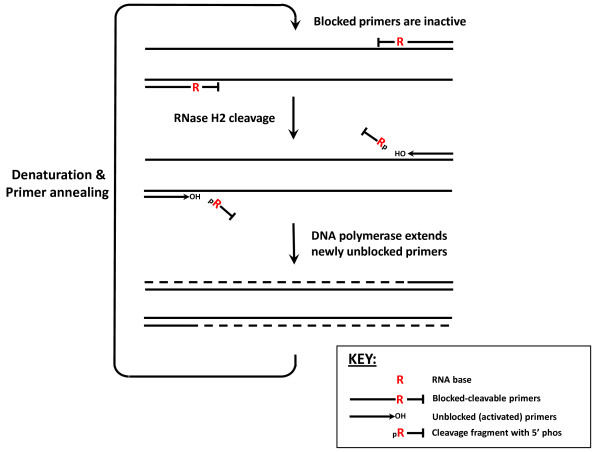
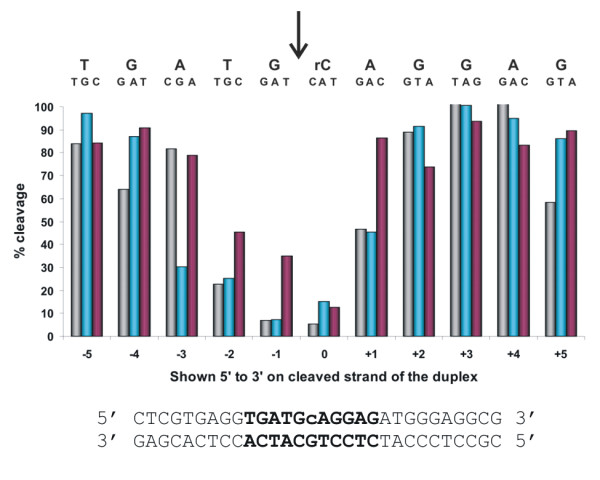
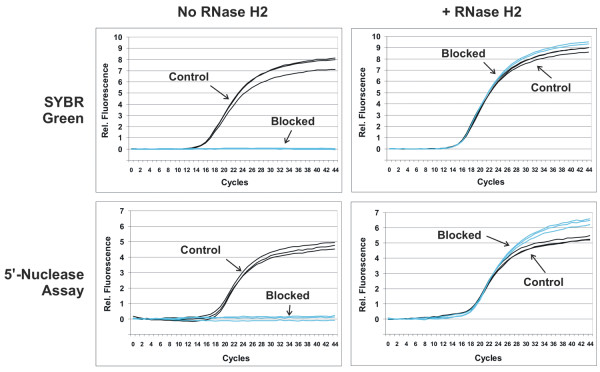
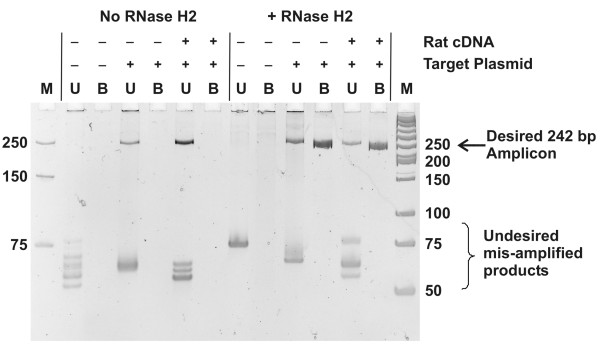
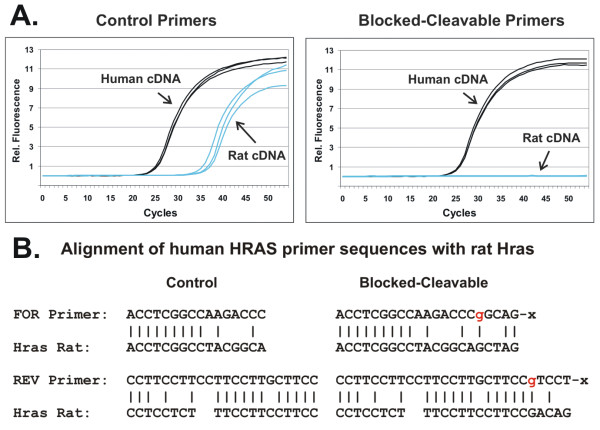
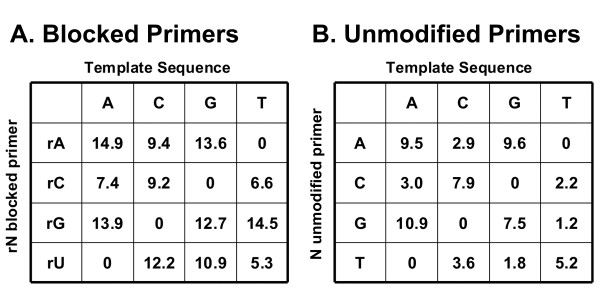
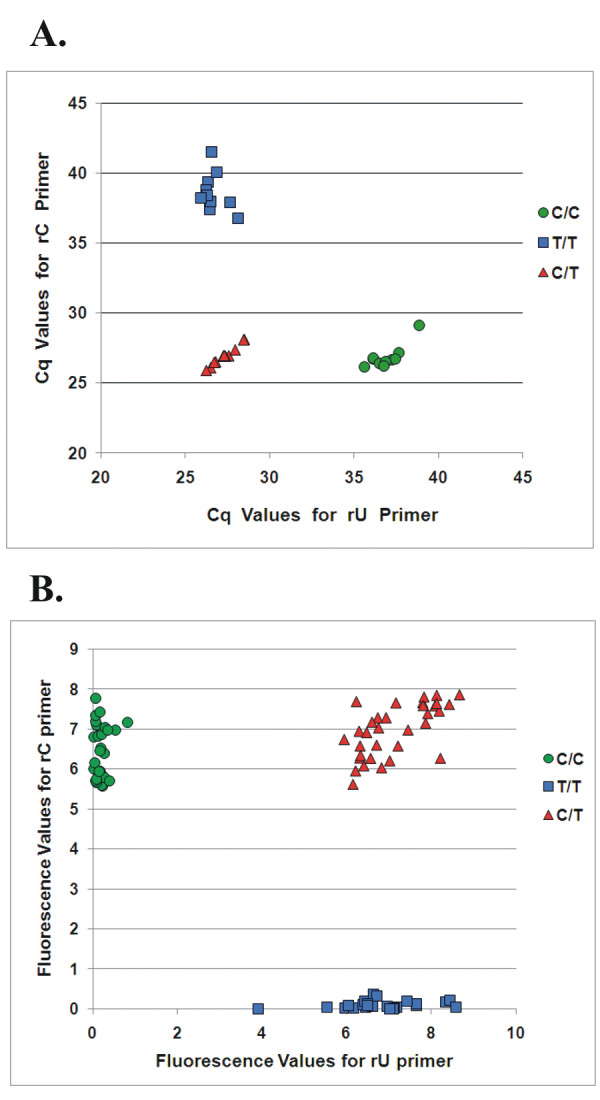
Background: The polymerase chain reaction (PCR) is commonly used to detect the presence of nucleic acid sequences both in research and diagnostic settings. While high specificity is often achieved, biological requirements sometimes necessitate that primers are placed in suboptimal locations which lead to problems with the formation of primer dimers and/or misamplification of homologous sequences. Results: Pyrococcus abyssi (P.a.) RNase H2 was used to enable PCR to be performed using blocked primers containing a single ribonucleotide residue which are activated via cleavage by the enzyme (rhPCR). Cleavage occurs 5'-to the RNA base following primer hybridization to the target DNA. The requirement of the primer to first hybridize with the target sequence to gain activity eliminates the formation of primer-dimers and greatly reduces misamplification of closely related sequences. Mismatches near the scissile linkage decrease the efficiency of cleavage by RNase H2, further increasing the specificity of the assay. When applied to the detection of single nucleotide polymorphisms (SNPs), rhPCR was found to be far more sensitive than standard allele-specific PCR. In general, the best discrimination occurs when the mismatch is placed at the RNA:DNA base pair. Conclusion: rhPCR eliminates the formation of primer dimers and markedly improves the specificity of PCR with respect to off-target amplification. These advantages of the assay should find utility in challenging qPCR applications such as genotyping, high level multiplex assays and rare allele detection.
Overview
The claims and statistics of this paper haven’t been checked yet.
Free: it reads the open-access text and checks the first 5 claims that cite a source we can check. Create a free account to check every claim.
Integrity signals
Registry
Cites
Statistics
Figures
Verification
Claims the paper makes
The claims and statistics of this paper haven’t been checked yet.
Free: it reads the open-access text and checks the first 5 claims that cite a source we can check. Create a free account to check every claim.
Claims other papers make about this one
Each is checked against this paper’s own text: does it say what the citing paper says it does?
The cited source doesn’t support the claim as written.
In the citing paper
“This amplification technology requires that the primer properly hybridize to a target site before amplification. Mismatches between target and primer prevent unblocking, thereby increasing specificity and eliminating primers dimers33.”
From A high-fidelity Cas9 mutant delivered as a ribonucleoprotein complex enables efficient gene editing in human hematopoietic stem and progenitor cells (2018) · cites this paper as [33]
Checked by a reasoning model — may be wrong.
Experimental — accuracy not yet measured
Self-check
Percentages, sums and reported differences re-computed from the paper’s own numbers.
The self-check needs the paper’s full text.
Citations
Cites
The MIQE guidelines: minimum information for publication of quantitative real-time PCR experiments
Bustin, S. A., Benes, V., Garson, J. A., Hellemans, J., Huggett, J., Kubista, M., Mueller, R., Nolan, T., Pfaffl, M. W., Shipley, G. L., et al. (2009) · Clinical Chemistry · doi:10.1373/clinchem.2008.112797 · Cited by 16,303 · cited 1×
“The quantification cycle number (Cq) was determined using the absolute quantification/2 derivative method [26].”
MethodMolecular Beacons: Probes that Fluoresce upon Hybridization
Tyagi, S., & Kramer, F. R. (1996) · Nature Biotechnology · doi:10.1038/nbt0396-303 · Cited by 4,155 · cited 1×
“Separation of the reporter and quencher due to cleavage of the probe by the 5’-nuclease activity of the DNA polymerase leads to an increase of fluorescence and a detectable signal [1-3].”
BackgroundHolland, P. M., Abramson, R. D., Watson, R., & Gelfand, D. H. (1991) · Proceedings of the National Academy of Sciences · doi:10.1073/pnas.88.16.7276 · Cited by 2,693 · cited 2×
“The most common format for detection concurrent with unbiased amplification is the 5’-nuclease assay [1,17].”
BackgroundAnalysis of any point mutation in DNA. The amplification refractory mutation system (ARMS)
Newton, C. R., Graham, A., Heptinstall, L. E., Powell, S. J., Summers, C., Kalsheker, N., Smith, J. C., & Markham, A. F. (1989) · Nucleic Acids Research · doi:10.1093/nar/17.7.2503 · Cited by 2,475
Pregnancies from biopsied human preimplantation embryos sexed by Y-specific DNA amplification
Handyside, A. H., Kontogianni, E. H., Hardy, K., & Winston, R. M. L. (1990) · Nature · doi:10.1038/344768a0 · Cited by 1,604
Allelic discrimination using fluorogenic probes and the 5′ nuclease assay
Livak, K. J. (1999) · Genetic Analysis: Biomolecular Engineering · doi:10.1016/s1050-3862(98)00019-9 · Cited by 1,379 · cited 1×
“The most common format for detection concurrent with unbiased amplification is the 5’-nuclease assay [1,17].”
BackgroundA Ligase-Mediated Gene Detection Technique
Landegren, U., Kaiser, R., Sanders, J., & Hood, L. (1988) · Science · doi:10.1126/science.3413476 · Cited by 828 · cited 1×
“Oligonucleotide ligation assays (OLAs) employ two oligonucleotides (an acceptor oligonucleotide with a reactive 3’-hydroxyl group and a donor oligonucleotide with a 5’-phosphate) which are designed to hybridize adjacent to each other on a complementary target nucleic acid so that DNA ligase can join the two fragments…”
Method3'-Minor groove binder-DNA probes increase sequence specificity at PCR extension temperatures
Kutyavin, I. V. (2000) · Nucleic Acids Research · doi:10.1093/nar/28.2.655 · Cited by 797 · cited 1×
“To achieve binding of the probe under conditions of the extension reaction with temperatures typically between 55°C and 70°C, modified bases such as locked nucleic acids (LNAs) or pendant groups such as a minor groove binder (MGB) are incorporated into the oligonucleotide to increase the Tm [18-20].”
BackgroundAllelic discrimination using fluorogenic probes and the 5' nuclease assay
Foitzi, T. (1999) · Medical Entomology and Zoology · Cited by 783
Prevention of pre-PCR mis-priming and primer dimerization improves low-copy-number amplifications
Chou, Q., Russell, M., Birch, D. E., Raymond, J., & Bloch, W. (1992) · Nucleic Acids Research · doi:10.1093/nar/20.7.1717 · Cited by 740 · cited 1×
“Formation of primer-dimers and off-target amplification are common problems in PCR [4-6].”
BackgroundSNP Genotyping: Technologies and Biomedical Applications
Kim, S., & Misra, A. (2007) · Annual Review of Biomedical Engineering · doi:10.1146/annurev.bioeng.9.060906.152037 · Cited by 622 · cited 1×
“A wide variety of approaches have been employed to confer single-base specificity to PCR assays with the goal of detecting single nucleotide polymorphisms (SNPs) [15,16].”
BackgroundAboul-ela, F., Koh, D., Tinoco, I., & Martin, F. H. (1985) · Nucleic Acids Research · doi:10.1093/nar/13.13.4811 · Cited by 428
Mismatch amplification mutation assay (MAMA): application to the c-H-ras gene.
Cha, R. S., Zarbl, H., Keohavong, P., & Thilly, W. G. (1992) · Genome Research · doi:10.1101/gr.2.1.14 · Cited by 378 · cited 1×
“Assays can be improved by incorporating modified bases or by introducing a secondary mismatch within the primer [21-24].”
BackgroundAutomated DNA diagnostics using an ELISA-based oligonucleotide ligation assay.
Nickerson, D. A., Kaiser, R., Lappin, S., Stewart, J., Hood, L., & Landegren, U. (1990) · Proceedings of the National Academy of Sciences · doi:10.1073/pnas.87.22.8923 · Cited by 291 · cited 1×
“Oligonucleotide ligation assays (OLAs) employ two oligonucleotides (an acceptor oligonucleotide with a reactive 3’-hydroxyl group and a donor oligonucleotide with a 5’-phosphate) which are designed to hybridize adjacent to each other on a complementary target nucleic acid so that DNA ligase can join the two fragments…”
Wu, D. Y., & Wallace, R. B. (1989) · Genomics · doi:10.1016/0888-7543(89)90280-2 · Cited by 259 · cited 1×
“Oligonucleotide ligation assays (OLAs) employ two oligonucleotides (an acceptor oligonucleotide with a reactive 3’-hydroxyl group and a donor oligonucleotide with a 5’-phosphate) which are designed to hybridize adjacent to each other on a complementary target nucleic acid so that DNA ligase can join the two fragments…”
MethodReal-time assays with molecular beacons and other fluorescent nucleic acid hybridization probes
Marras, S. A. E., Tyagi, S., & Kramer, F. R. (2006) · Clinica Chimica Acta · doi:10.1016/j.cccn.2005.04.037 · Cited by 225 · cited 1×
“Separation of the reporter and quencher due to cleavage of the probe by the 5’-nuclease activity of the DNA polymerase leads to an increase of fluorescence and a detectable signal [1-3].”
BackgroundLatorra, D., Campbell, K., Wolter, A., & Hurley, J. M. (2003) · Human Mutation · doi:10.1002/humu.10228 · Cited by 214 · cited 1×
“Assays can be improved by incorporating modified bases or by introducing a secondary mismatch within the primer [21-24].”
BackgroundKellogg, D. E., Рыбалкин, И. Н., Chen, S., Mukhamedova, N. M., Vlasik, T. N., Siebert, P. D., & Chenchik, A. A. (1994) · PubMed · Cited by 205
Rydberg, B., & Game, J. (2002) · Proceedings of the National Academy of Sciences · doi:10.1073/pnas.262591699 · Cited by 191 · cited 1×
“RNase H2 plays an important role in the removal of RNA residues misincorporated into DNA due either to incomplete removal of RNA primers used to initiate DNA synthesis or polymerase errors [41-45].”
BackgroundAn integrated analysis of the genome of the hyperthermophilic archaeon Pyrococcus abyssi
Cohen, G. N., Barbe, V., Flament, D., Galperin, M., Heilig, R., Lecompte, O., Poch, O., Prieur, D., Quérellou, J., Ripp, R., et al. (2003) · Molecular Microbiology · doi:10.1046/j.1365-2958.2003.03381.x · Cited by 182 · cited 1×
“Briefly, the sequence was obtained from public databases [25] and the open reading frame was codon optimized for expression in E.”
MethodReal-time genotyping with oligonucleotide probes containing locked nucleic acids
Ugozzoli, L. A., Latorra, D., Pucket, R., Arar, K., & Hamby, K. (2003) · Analytical Biochemistry · doi:10.1016/j.ab.2003.09.003 · Cited by 168 · cited 1×
“To achieve binding of the probe under conditions of the extension reaction with temperatures typically between 55°C and 70°C, modified bases such as locked nucleic acids (LNAs) or pendant groups such as a minor groove binder (MGB) are incorporated into the oligonucleotide to increase the Tm [18-20].”
BackgroundBirch, D. E., Kolmodin, L., Wong, J., Zangenberg, G. A., Zoccoli, M. A., McKinney, N., & Young, K. K. Y. (1996) · Nature · doi:10.1038/381445a0 · Cited by 164 · cited 1×
“Use of a chemically or antibody inactivated “hot-start” polymerase can alleviate mis-priming at low temperature, but at significant additional cost [11-14].”
BackgroundLi, H., Cui, X., & Arnheim, N. (1990) · Proceedings of the National Academy of Sciences · doi:10.1073/pnas.87.12.4580 · Cited by 136 · cited 1×
“Formation of primer-dimers and off-target amplification are common problems in PCR [4-6].”
BackgroundDNA and RNA ligases: structural variations and shared mechanisms
Pascal, J. M. (2008) · Current Opinion in Structural Biology · doi:10.1016/j.sbi.2007.12.008 · Cited by 121 · cited 1×
“Cleavage of the donor oligonucleotide by RNase H2 will result in a 5’-ribophosphate, which will also function efficiently in ligation [55].”
BackgroundEder, P. S., Walder, R. Y., & Walder, J. A. (1993) · Biochimie · doi:10.1016/0300-9084(93)90033-o · Cited by 119 · cited 1×
“RNase H2 plays an important role in the removal of RNA residues misincorporated into DNA due either to incomplete removal of RNA primers used to initiate DNA synthesis or polymerase errors [41-45].”
BackgroundSelf-citationEder, P. S., & Walder, J. A. (1991) · Journal of Biological Chemistry · doi:10.1016/s0021-9258(18)38142-0 · Cited by 114 · cited 1×
“Consistent with its role in DNA repair, Type II RNase H enzymes are also able to cleave substrates where there is an RNA:DNA base pair mismatch, but at a rate reduced compared to the corresponding perfect duplex [31,32,46-48].”
BackgroundSelf-citationKinetic analysis of Escherichia coli RNase H using DNA-RNA-DNA/DNA substrates.
Hogrefe, H. H., Hogrefe, R. I., Walder, R. Y., & Walder, J. A. (1990) · Journal of Biological Chemistry · doi:10.1016/s0021-9258(19)39397-4 · Cited by 104 · cited 1×
“At least 3 consecutive RNA residues are required, and 4 for a high level of catalytic activity [39].”
BackgroundSelf-citationJunction ribonuclease: An activity in Okazaki fragment processing
Murante, R. S., Henricksen, L. A., & Bambara, R. A. (1998) · Proceedings of the National Academy of Sciences · doi:10.1073/pnas.95.5.2244 · Cited by 85 · cited 1×
“RNase H2 plays an important role in the removal of RNA residues misincorporated into DNA due either to incomplete removal of RNA primers used to initiate DNA synthesis or polymerase errors [41-45].”
BackgroundAdvantages of a New Taq DNA Polymerase in Multiplex PCR and Time-Release PCR
Kebelmann-Betzing, C., Seeger, K., Dragon, S., Schmitt, G., Möricke, A., Schild, T. A., Henze, G., & Beyermann, B. (1998) · BioTechniques · doi:10.2144/98241pf01 · Cited by 71 · cited 1×
“Use of a chemically or antibody inactivated “hot-start” polymerase can alleviate mis-priming at low temperature, but at significant additional cost [11-14].”
BackgroundLightCycler qPCR optimisation for low copy number target DNA
Teo, I. A., Choi, J.-W., Morlese, J. F., Taylor, G. M., & Shaunak, S. (2002) · Journal of Immunological Methods · doi:10.1016/s0022-1759(02)00218-1 · Cited by 68 · cited 1×
“Formation of primer-dimers and off-target amplification are common problems in PCR [4-6].”
BackgroundEvaluation of the performance of LNA and MGB probes in 5′-nuclease PCR assays
Letertre, C., Pérelle, S., Dilasser, F., Arar, K., & Fach, P. (2003) · Molecular and Cellular Probes · doi:10.1016/j.mcp.2003.08.004 · Cited by 66 · cited 1×
“To achieve binding of the probe under conditions of the extension reaction with temperatures typically between 55°C and 70°C, modified bases such as locked nucleic acids (LNAs) or pendant groups such as a minor groove binder (MGB) are incorporated into the oligonucleotide to increase the Tm [18-20].”
BackgroundPyrophosphorolysis-Activated Polymerization (PAP): Application to Allele-Specific Amplification
Liu, Q., & Sommer, S. S. (2000) · BioTechniques · doi:10.2144/00295rr03 · Cited by 64 · cited 2×
“A 3’-terminal dideoxynucleotide has been utilized in most studies [34,35].”
MethodDual-Color Detection of DNA Sequence Variants by Ligase-Mediated Analysis
Samiotaki, M. K., Kwiatkowski, M., Parik, J., & Landegren, U. D. (1994) · Genomics · doi:10.1006/geno.1994.1159 · Cited by 61 · cited 1×
“Oligonucleotide ligation assays (OLAs) employ two oligonucleotides (an acceptor oligonucleotide with a reactive 3’-hydroxyl group and a donor oligonucleotide with a 5’-phosphate) which are designed to hybridize adjacent to each other on a complementary target nucleic acid so that DNA ligase can join the two fragments…”
MethodSequence Variation in Genes and Genomic DNA: Methods for Large-Scale Analysis
Mir, K. U., & Southern, E. M. (2000) · Annual Review of Genomics and Human Genetics · doi:10.1146/annurev.genom.1.1.329 · Cited by 59 · cited 1×
“A wide variety of approaches have been employed to confer single-base specificity to PCR assays with the goal of detecting single nucleotide polymorphisms (SNPs) [15,16].”
BackgroundMizuguchi, H., Nakatsuji, M., Fujiwara, S., Takagi, M., & Imanaka, T. (1999) · The Journal of Biochemistry · doi:10.1093/oxfordjournals.jbchem.a022514 · Cited by 56 · cited 1×
“Use of a chemically or antibody inactivated “hot-start” polymerase can alleviate mis-priming at low temperature, but at significant additional cost [11-14].”
BackgroundRumbaugh, J. A., Murante, R. S., Shi, S., & Bambara, R. A. (1997) · Journal of Biological Chemistry · doi:10.1074/jbc.272.36.22591 · Cited by 55 · cited 1×
“RNase H2 plays an important role in the removal of RNA residues misincorporated into DNA due either to incomplete removal of RNA primers used to initiate DNA synthesis or polymerase errors [41-45].”
BackgroundMeslet-Cladiére, L., Norais, C., Kuhn, J., Briffotaux, J., Sloostra, J. W., Ferrari, E., Hübscher, U., Flament, D., & Myllykallio, H. (2007) · Journal of Molecular Biology · doi:10.1016/j.jmb.2007.06.056 · Cited by 54 · cited 1×
“The rnhb gene coding for the Type II RNase H from Pyrococcus abyssi has been identified previously [27,28].”
BackgroundAutomated "hot start" PCR using mineral oil and paraffin wax.
Bassam, B. J., & Caetano‐Anollés, G. (1993) · PubMed · Cited by 49
Zagorowska, I., Kuusela, S., & Lonnberg, H. (1998) · Nucleic Acids Research · doi:10.1093/nar/26.14.3392 · Cited by 47 · cited 1×
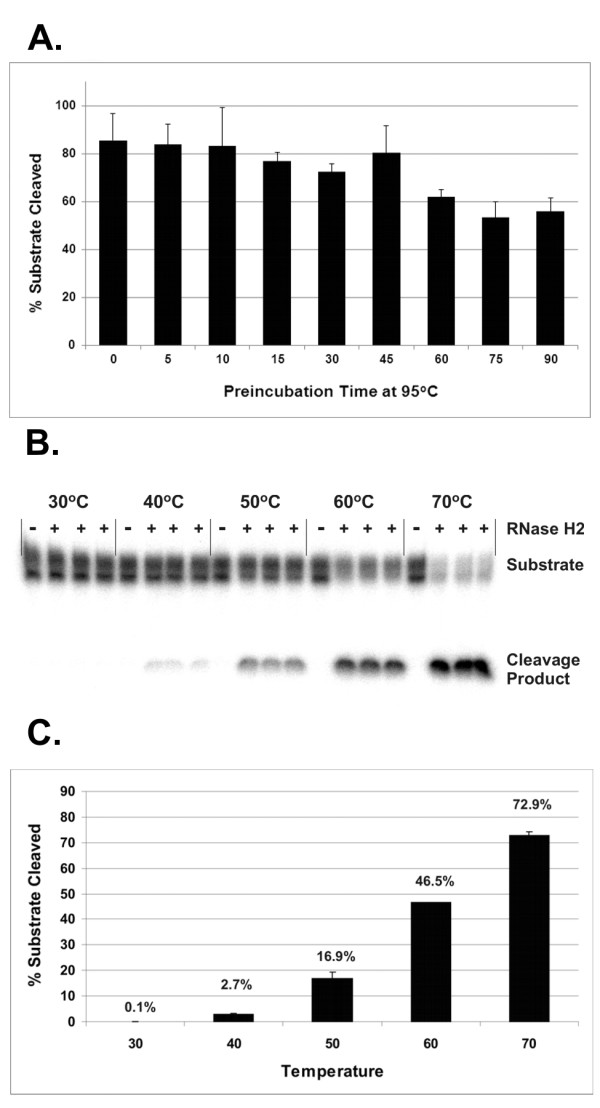
“Although divalent cations (including Mg) can facilitate water catalyzed hydrolysis of RNA containing oligonucleotides, especially at elevated temperatures [40], non-enzymatic degradation of primers containing a single RNA residue under thermocycling conditions used in PCR is negligible.”
BackgroundGene Cloning and Characterization of Recombinant RNase HII from a Hyperthermophilic Archaeon
Haruki, M., Hayashi, K., Kochi, T., Muroya, A., Koga, Y., Morikawa, M., Imanaka, T., & Kanaya, S. (1998) · Journal of Bacteriology · doi:10.1128/jb.180.23.6207-6214.1998 · Cited by 40 · cited 3×
“As with other Type II RNase H enzymes [29,30], P.”
BackgroundMethodSato, A., Kanai, A., Itaya, M., & Tomita, M. (2003) · Biochemical and Biophysical Research Communications · doi:10.1016/j.bbrc.2003.08.003 · Cited by 39 · cited 1×
“RNase H2 plays an important role in the removal of RNA residues misincorporated into DNA due either to incomplete removal of RNA primers used to initiate DNA synthesis or polymerase errors [41-45].”
BackgroundIncreased PCR sensitivity by using paraffin wax as a reaction mix overlay
Hébert, B., Bergeron, J., Potworowski, É. F., & Tijssen, P. (1993) · Molecular and Cellular Probes · doi:10.1006/mcpr.1993.1036 · Cited by 35 · cited 1×
“Physical barrier methods can be used to separate reaction components until an elevated temperature is reached [9,10].”
Improvements to Bead-Based Oligonucleotide Ligation SNP Genotyping Assays
Bruse, S., Moreau, M., Azaro, M. A., Zimmerman, R., & Brzustowicz, L. M. (2008) · BioTechniques · doi:10.2144/000112960 · Cited by 35 · cited 1×
“Oligonucleotide ligation assays (OLAs) employ two oligonucleotides (an acceptor oligonucleotide with a reactive 3’-hydroxyl group and a donor oligonucleotide with a 5’-phosphate) which are designed to hybridize adjacent to each other on a complementary target nucleic acid so that DNA ligase can join the two fragments…”
MethodLiu, Q. (2002) · Nucleic Acids Research · doi:10.1093/nar/30.2.598 · Cited by 32 · cited 2×
“A 3’-terminal dideoxynucleotide has been utilized in most studies [34,35].”
MethodNakitandwe, J., Trognitz, F., & Trognitz, B. R. (2007) · Plant Methods · doi:10.1186/1746-4811-3-2 · Cited by 22 · cited 1×
“Assays can be improved by incorporating modified bases or by introducing a secondary mismatch within the primer [21-24].”
BackgroundMetal Ion Binding and Enzymatic Mechanism of Methanococcus jannaschii RNase HII
Lai, B., Li, Y., Cao, A., & Lai, L. (2002) · Biochemistry · doi:10.1021/bi026960a · Cited by 22 · cited 3×
“As with other Type II RNase H enzymes [29,30], P.”
BackgroundMethodStructure-Specific Nuclease Activities of Pyrococcus abyssi RNase HII
Laz, S. L., Goaziou, A. L., & Henneke, G. (2010) · Journal of Bacteriology · doi:10.1128/jb.00268-10 · Cited by 21
Liu, X., Hou, J., & Liu, J. (2009) · Analytical Biochemistry · doi:10.1016/j.ab.2009.10.042 · Cited by 15 · cited 3×
“Consistent with its role in DNA repair, Type II RNase H enzymes are also able to cleave substrates where there is an RNA:DNA base pair mismatch, but at a rate reduced compared to the corresponding perfect duplex [31,32,46-48].”
BackgroundMethodHou, J., Liu, X., Pei, D., & Liu, J. (2007) · Biochemical and Biophysical Research Communications · doi:10.1016/j.bbrc.2007.03.075 · Cited by 13 · cited 2×
“Consistent with its role in DNA repair, Type II RNase H enzymes are also able to cleave substrates where there is an RNA:DNA base pair mismatch, but at a rate reduced compared to the corresponding perfect duplex [31,32,46-48].”
BackgroundSNP analysis using catacleave probes
Harvey, J. J., Brant, S. R., Knutson, J. R., & Han, M. K. (2008) · Journal of Clinical Laboratory Analysis · doi:10.1002/jcla.20240 · Cited by 10 · cited 2×
“Consistent with its role in DNA repair, Type II RNase H enzymes are also able to cleave substrates where there is an RNA:DNA base pair mismatch, but at a rate reduced compared to the corresponding perfect duplex [31,32,46-48].”
BackgroundUgozzoli, L. A., Latorra, D., Pucket, R., Arar, K., & Hamby, K. (2004) · Analytical Biochemistry · doi:10.1016/j.ab.2004.03.001 · Cited by 8
Hou, J., Liu, X., Wang, J., Liu, J., & Duan, T. (2007) · Analytical Biochemistry · doi:10.1016/j.ab.2007.09.002 · Cited by 6 · cited 1×
“) have been used for SNP detection where a Molecular Beacon having a single RNA residue specific for the mutation site was cleaved following PCR in an end-point assay [32,48,49].”
MethodHou, J., Liu, X., Zheng, Y., & Liu, J. (2007) · Oligonucleotides · doi:10.1089/oli.2007.0090 · Cited by 2 · cited 2×
“Consistent with its role in DNA repair, Type II RNase H enzymes are also able to cleave substrates where there is an RNA:DNA base pair mismatch, but at a rate reduced compared to the corresponding perfect duplex [31,32,46-48].”
BackgroundMethod
Research works printed but not linked: 4
- Will SG Modified Nucleic Acid Amplification Primers 1999 vol. N/A. United States: Roche Molecular Systems, Inc., Pleasanton, California, United States
- Liu Q Sommer SS Serial coupling of restriction cleavage and extension for nucleic acid amplification 2006 USA: City of Hope
- Sagawa H Kobayashi E Kato I Method of detecting nucleotide polymorphism 2006 United States: Takara Bio Inc., Shiga, Japan
- Winger EE Kessler DJ Hargrove DE Real time homogenous nucleotide assay 1998 vol. N/A. United States: Edward E. Winger, Alameda, California, United States
Cited by
Neoantigen vaccine generates intratumoral T cell responses in phase Ib glioblastoma trial
Keskin, D. B., Anandappa, A. J., Sun, J., Tirosh, I., Mathewson, N. D., Li, S., Oliveira, G., Giobbie-Hurder, A., Felt, K., Gjini, E., et al. (2019) · Nature · doi:10.1038/s41586-018-0792-9 · Cited by 1,432
Vakulskas, C. A., Dever, D. P., Rettig, G. R., Turk, R., Jacobi, A. M., Collingwood, M. A., Bode, N. M., McNeill, M. S., Yan, S., Camarena, J., et al. (2018) · Nature Medicine · doi:10.1038/s41591-018-0137-0 · Cited by 782
Self-citationNatural killer cells in antitumour adoptive cell immunotherapy
Laskowski, T. J., Biederstädt, A., & Rezvani, K. (2022) · Nature Reviews Cancer · doi:10.1038/s41568-022-00491-0 · Cited by 773
Targeting a cytokine checkpoint enhances the fitness of armored cord blood CAR-NK cells
Daher, M., Basar, R., Gokdemir, E., Baran, N., Uprety, N., Nunez Cortes, A. K., Mendt, M., Kerbauy, L. N., Banerjee, P. P., Shanley, M., et al. (2021) · Blood · doi:10.1182/blood.2020007748 · Cited by 300
Self-citationLatrophilins Function as Heterophilic Cell-adhesion Molecules by Binding to Teneurins
Boucard, A. A., Maxeiner, S., & Südhof, T. C. (2014) · Journal of Biological Chemistry · doi:10.1074/jbc.m113.504779 · Cited by 186
Metadata
- Authors
- Dobosy, J. R., Rose, S. D., Beltz, K. R., Rupp, S. M., Powers, K. M., Behlke, M. A., & Walder, J. A.
- Affiliations
- Integrated DNA Technologies (United States) (US)
- Corresponding author
- Behlke, Mark A
- Venue
- BMC Biotechnology
- Published
- 2011-08-10
- Volume
- 11
- Issue
- 1
- Pages
- 80-80
- ISSN
- 1472-6750 (ISSN-L)
- PMC
- PMC3224242
- OpenAlex
- W2033609627
- Semantic Scholar
- 4238227fe6b44664ffc8c4e825d6b59f075d284a
- Cited by
- 184
- References
- 57
- Citations by year
- 2026: 24 · 2025: 21 · 2024: 16 · 2023: 18 · 2022: 14 · 2021: 23 · 2020: 20 · 2019: 14 · 2018: 13 · 2017: 8 · 2016: 6 · 2014: 2 · 2013: 2 · 2012: 2
- FWCI
- 0.78
- Type
- journal article
- Language
- en
- Open access
- gold
- doi.org
- Licence
- cc-by
- Locations
- BMC Biotechnology (publishedVersion, cc-by)
- Europe PMC (PubMed Central) (publishedVersion, cc-by)
- PubMed Central (publishedVersion, cc-by)
- PubMed (publishedVersion)
- DOAJ (DOAJ: Directory of Open Access Journals) (submittedVersion, cc-by-sa)
- Topics
- Life Sciences › Biochemistry, Genetics and Molecular Biology › Molecular Biology › Molecular Biology Techniques and Applications
- Life Sciences › Biochemistry, Genetics and Molecular Biology › Molecular Biology › DNA and Nucleic Acid Chemistry
- Life Sciences › Biochemistry, Genetics and Molecular Biology › Molecular Biology › CRISPR and Genetic Engineering
- Keywords
- RNase H2, Pyrococcus abyssi, primer dimers, PCR specificity, single nucleotide polymorphism detection, mismatch discrimination, off-target amplification, allele-specific PCR, genotyping, multiplex PCR
- MeSH terms
- Base Sequence, Enzyme Stability, Humans, Molecular Sequence Data, Nucleic Acid Hybridization, Sensitivity and Specificity, Temperature, Polymerase Chain Reaction, Ribonuclease H, DNA Primers, Polymorphism, Single Nucleotide, Pyrococcus abyssi
About these checks
Registry, retraction, Cites and statistics results are computed, not judged, with one exception: a printed reference that no index lists is read once by a model before it counts as a citation error. Claims are extracted by a model and kept only when their quote appears verbatim in the text; each cited source is then checked, with a model’s help, for whether it says what the claim relies on. Those verdicts can be wrong — read the claim’s quote and the cited source before relying on one.
Statistics and arithmetic are recomputed, not judged.
Confidence bands are shown only for fields calibrated on our annotated test set. None is calibrated yet, so no band is shown.
What counts as a claim ›How we measure confidence ›How we check this ›
Are you an author, or do you see a problem with this page? Request a review
Data sources
Bibliographic data: Semantic Scholar, OpenAlex, Crossref.
Contains information from the Semantic Scholar Academic Graph Datasets, made available under the ODC Attribution License (ODC-BY 1.0).
Semantic Scholar’s data is described in: Kinney, R., et al. (2023). The Semantic Scholar Open Data Platform. arXiv:2301.10140.
