

Interaction of perfluorooctanoic acid with human serum albumin
Open accessThe DOI matches its Crossref record; 33 of the 33 references it cites were found in a registry or an index.
Abstract
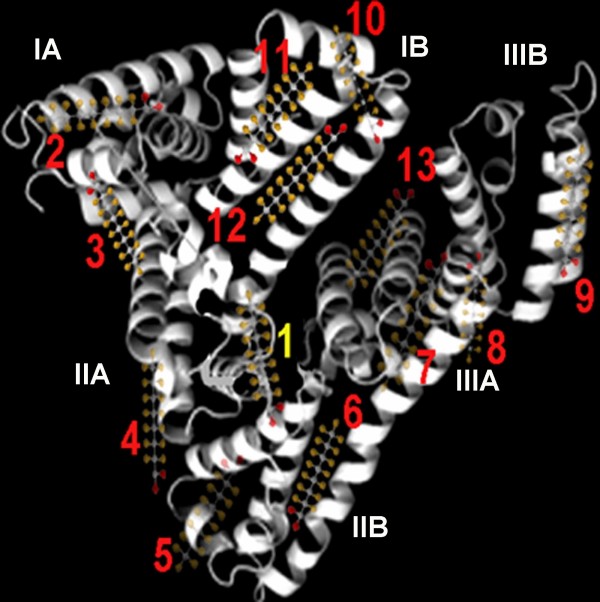
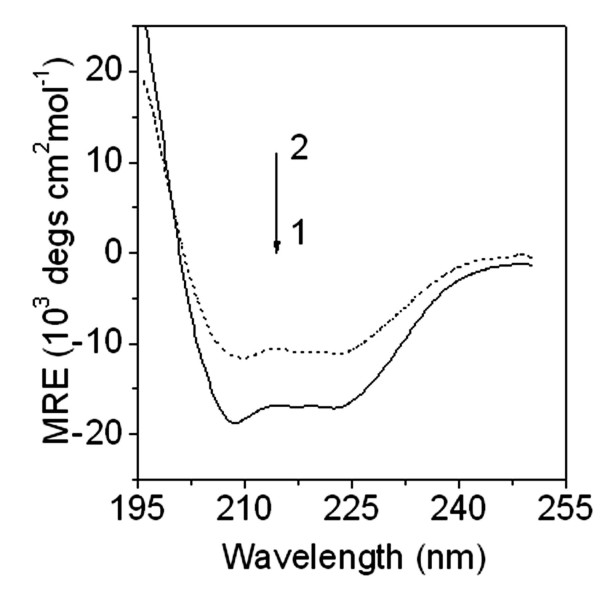
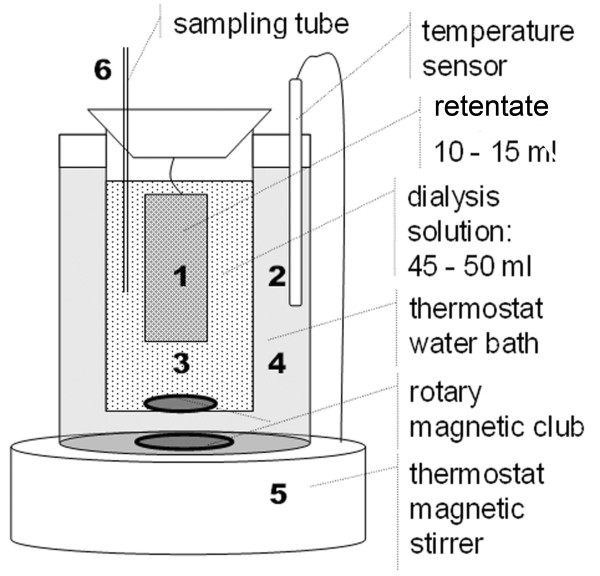
Background: Recently, perfluorooctanoic acid (PFOA) has become a significant issue in many aspects of environmental ecology, toxicology, pathology and life sciences because it may have serious effects on the endocrine, immune and nervous systems and can lead to embryonic deformities and other diseases. Human serum albumin (HSA) is the major protein component of blood plasma and is called a multifunctional plasma carrier protein because of its ability to bind an unusually broad spectrum of ligands. Results: The interaction of PFOA with HSA was investigated in the normal physiological condition by equilibrium dialysis, fluorospectrometry, isothermal titration calorimetry (ITC) and circular dichroism (CD). The non-covalent interaction is resulted from hydrogen bond, van der Waals force and hydrophobic stack. PFOA binding to HSA accorded with two-step binding model with the saturation binding numbers of PFOA, only 1 in the hydrophobic intracavity of HSA and 12 on the exposed outer surface. The interaction of PFOA with HSA is spontaneous and results in change of HSA conformation. The possible binding sites were speculated. Conclusion: The present work suggested a characterization method for the intermolecular weak interaction. It is potentially useful for elucidating the toxigenicity of perfluorochemicals when combined with biomolecular function effect, transmembrane transport, toxicological testing and the other experiments.
Overview
The claims and statistics of this paper haven’t been checked yet.
Free: it reads the open-access text and checks the first 5 claims that cite a source we can check. Create a free account to check every claim.
Integrity signals
Registry
Cites
Statistics
Figures
Verification
Claims the paper makes
The claims and statistics of this paper haven’t been checked yet.
Free: it reads the open-access text and checks the first 5 claims that cite a source we can check. Create a free account to check every claim.
Claims other papers make about this one
Each is checked against this paper’s own text: does it say what the citing paper says it does?
The cited source says what the claim attributes to it.
In the citing paper
“Several studies reported that PFCAs and PFSAs bind with serum albumin proteins noncovalently through specific site binding or non-specific surface adsorption [15,16,17,18].”
From In-Vitro and In-Silico Assessment of Per- and Polyfluoroalkyl Substances (PFAS) in Aqueous Film-Forming Foam (AFFF) Binding to Human Serum Albumin (2021) · cites this paper as [16]
Self-check
Percentages, sums and reported differences re-computed from the paper’s own numbers.
The self-check needs the paper’s full text.
Citations
Cites
Atomic structure and chemistry of human serum albumin
He, X. M., & Carter, D. C. (1992) · Nature · doi:10.1038/358209a0 · Cited by 3,824
Molecular aspects of ligand binding to serum albumin.
Kragh-Hansen, U. (1981) · Pharmacological Reviews · doi:10.1016/s0031-6997(25)06849-8 · Cited by 1,544 · cited 1×
“Binding to HSA facilitates their transport throughout the circulation [15].”
BackgroundBhattacharya, A. A., Grüne, T., & Curry, S. (2000) · Journal of Molecular Biology · doi:10.1006/jmbi.2000.4158 · Cited by 905 · cited 3×
“HSA is consisted of three homologous all α-helical domains (I–III), each divided into two subdomains [14].”
BackgroundInfluentialThe Developmental Toxicity of Perfluoroalkyl Acids and Their Derivatives
Lau, C., Butenhoff, J. L., & Rogers, J. M. (2004) · Toxicology and Applied Pharmacology · doi:10.1016/j.taap.2003.11.031 · Cited by 867 · cited 1×
“water [2], biological bodies [3], human tissues [4] and foods [5].”
BackgroundIncardona, J. P., Collier, T. K., & Scholz, N. L. (2004) · Toxicology and Applied Pharmacology · doi:10.1016/j.taap.2003.11.026 · Cited by 833 · cited 1×
“biomolecular function effect [29], cell membrane transport of contaminant [30] and toxicological testing [ 31 ], it is more helpful for elucidating the toxigenicity of perfluorochemicals.”
BackgroundKärrman, A., Ericson, I., van Bavel, B., Darnerud, P. O., Aune, M., Glynn, A., Lignell, S., & Lindström, G. (2007) · Environmental Health Perspectives · doi:10.1289/ehp.9491 · Cited by 470
Calafat, A. M., Kuklenyik, Z., Reidy, J. A., Caudill, S. P., Tully, J. S., & Needham, L. L. (2007) · Environmental Science & Technology · doi:10.1021/es062686m · Cited by 454 · cited 1×
“Sampling studies have revealed the presence of PFOA in the bloods of over 90% of US residents [ 6 ].”
BackgroundBinding of Perfluorooctanoic Acid to Rat and Human Plasma Proteins
Han, X., Snow, T. A., Kemper, R. A., & Jepson, G. W. (2003) · Chemical Research in Toxicology · doi:10.1021/tx034005w · Cited by 408 · cited 1×
“Bindings of PFOA to biomacromolecular such as rat and Human plasma proteins [20], rat liver-form and kidneyform alpha 2u-globulins [21], have been investigated at room temperature.”
BackgroundAbbott, B. D., Wolf, C. J., Schmid, J. E., Das, K. P., Zehr, R. D., Helfant, L., Nakayama, S., Lindstrom, A. B., Strynar, M. J., & Lau, C. (2007) · Toxicological Sciences · doi:10.1093/toxsci/kfm110 · Cited by 263 · cited 1×
“It may have serious effects on the endocrine, immune and nervous systems and it can be delivered to the fetus through the umbilical cord and can accumulate [7].”
BackgroundMartin, M. T., Brennan, R. J., Hu, W., Ayanoglu, E., Lau, C., Ren, H., Wood, C. R., Corton, J. C., Kavlock, R. J., & Dix, D. J. (2007) · Toxicological Sciences · doi:10.1093/toxsci/kfm065 · Cited by 249 · cited 1×
“It can also cause cancers of the liver, testis, pancreatic and mammary glands [8], and can lead to embryonic deformities and other diseases [9,10].”
BackgroundMaestri, L., Negri, S., Ferrari, M., Ghittori, S., Fabris, F., Danesino, P., & Imbriani, M. (2006) · Rapid Communications in Mass Spectrometry · doi:10.1002/rcm.2661 · Cited by 227 · cited 1×
“water [2], biological bodies [3], human tissues [4] and foods [5].”
BackgroundA Global Mass Balance Analysis of the Source of Perfluorocarboxylic Acids in the Arctic Ocean
Wania, F. (2007) · Environmental Science & Technology · doi:10.1021/es070124c · Cited by 221 · cited 1×
“water [ 2 ], biological bodies [3], human tissues [4] and foods [5].”
BackgroundMethyl parathion interaction with human and bovine serum albumin
Silva, D., Cortez, C. M., Cunha-Bastos, J., & Louro, S. R. W. (2004) · Toxicology Letters · doi:10.1016/j.toxlet.2003.10.014 · Cited by 220 · cited 1×
“arazine [16], ochratoxin [17], methyl parathion [ 18 ] and arsenic [19].”
BackgroundNon-covalent interactions between iodo-perfluorocarbons and hydrogen bond acceptors
Cabot, R., & Hunter, C. A. (2009) · Chemical Communications · doi:10.1039/b822284c · Cited by 170 · cited 1×
“Fifteen electrophilic F-groups in PFOA can attract strongly the lone pair electrons of polar side groups of peptide chain, e.g. FN and FO halogen bonding [ 28 ].”
BackgroundExposure Assessment and Risk Characterization for Perfluorooctanoate in Selected Consumer Articles
Washburn, S. T., Bingman, T. S., Braithwaite, S. K., Buck, R. C., Buxton, L. W., Clewell, H. J., Haroun, L. A., Kester, J. E., Rickard, R. W., & Shipp, A. M. (2005) · Environmental Science & Technology · doi:10.1021/es048353b · Cited by 163 · cited 1×
“In recent years, PFOA has become a significant issue in many aspects of environmental ecology, toxicology, pathology and life sciences [11,12].”
BackgroundMaras, M., Vanparys, C., Muylle, F., Robbens, J., Berger, U., Barber, J. L., Blust, R., & De Coen, W. (2006) · Environmental Health Perspectives · doi:10.1289/ehp.8149 · Cited by 154 · cited 1×
“It can also cause cancers of the liver, testis, pancreatic and mammary glands [8], and can lead to embryonic deformities and other diseases [9,10].”
BackgroundBinding of PFOS to Serum Albumin and DNA: Insight into the Molecular Toxicity of Perfluorochemicals
Zhang, X., Chen, L., Fei, X.-C., Ma, Y.-S., & Gao, H.-W. (2009) · BMC Molecular Biology · doi:10.1186/1471-2199-10-16 · Cited by 119 · cited 1×
“The interaction of organic contaminants and HSA is always affected by various environmental conditions such as pH, strength and temperature [22].”
BackgroundSelf-citationInteraction of nano-TiO2 with lysozyme: insights into the enzyme toxicity of nanosized particles
Xu, Z., Liu, X.-W., Ma, Y., & Gao, H. (2009) · Environmental Science and Pollution Research · doi:10.1007/s11356-009-0153-1 · Cited by 102
Self-citationBerger, V., Gabriel, A.-F., Sergent, T., Trouet, A., Larondelle, Y., & Schneider, Y. (2003) · Toxicology Letters · doi:10.1016/s0378-4274(03)00043-2 · Cited by 95 · cited 1×
“arazine [16], ochratoxin [17], methyl parathion [18] and arsenic [19].”
BackgroundMolecular Basis of Resistance to HIV-1 Protease Inhibition: A Plausible Hypothesis
Luque, I., Todd, M. J., Gómez, J., Semo, N. M., & Freire, E. (1998) · Biochemistry · doi:10.1021/bi9802521 · Cited by 87 · cited 1×
“The ITC measurement may provide information on thermodynamic quantities such as enthalpy and heat capacity changes during the molecular interaction directly from the heat produced by the reaction, and have been used to study, for example, protein interactions [25], DNA triplex formation [26] and HIV protease activity…”
Differential expression of chicken hepatic genes responsive to PFOA and PFOS
Yeung, L. W. Y., Guruge, K. S., Yamanaka, N., Miyazaki, S., & Lam, P. K. S. (2007) · Toxicology · doi:10.1016/j.tox.2007.05.004 · Cited by 85 · cited 1×
“It can also cause cancers of the liver, testis, pancreatic and mammary glands [8], and can lead to embryonic deformities and other diseases [9, 10 ].”
BackgroundKamiya, M., Torigoe, H., Shindo, H., & Sarai, A. (1996) · Journal of the American Chemical Society · doi:10.1021/ja952287j · Cited by 69 · cited 1×
“The ITC measurement may provide information on thermodynamic quantities such as enthalpy and heat capacity changes during the molecular interaction directly from the heat produced by the reaction, and have been used to study, for example, protein interactions [25], DNA triplex formation [26] and HIV protease activity…”
Purcell, M., Neault, J. F., Malonga, H., Arakawa, H., Carpentier, R., & Tajmir‐Riahi, H. A. (2001) · Biochimica et Biophysica Acta (BBA) - Protein Structure and Molecular Enzymology · doi:10.1016/s0167-4838(01)00229-1 · Cited by 68
Cooper, A., McAlpine, A. S., & Stockley, P. G. (1994) · FEBS Letters · doi:10.1016/0014-5793(94)00579-6 · Cited by 45 · cited 1×
“The ITC measurement may provide information on thermodynamic quantities such as enthalpy and heat capacity changes during the molecular interaction directly from the heat produced by the reaction, and have been used to study, for example, protein interactions [25], DNA triplex formation [26] and HIV protease activity…”
Lu, L., Gao, H., Ren, J.-R., Chen, L., Li, Y., Zhao, J., Zhao, H., & Yuan, Y. (2007) · BMC Structural Biology · doi:10.1186/1472-6807-7-16 · Cited by 43
Self-citationPotential Protein Toxicity of Synthetic Pigments: Binding of Poncean S to Human Serum Albumin
Gao, H., Xu, Q., Chen, L., Wang, S., Wang, Y., Wu, L., & Yuan, Y. (2007) · Biophysical Journal · doi:10.1529/biophysj.107.120865 · Cited by 39 · cited 2×
“fonic azo ligand [23], the PFOA binding to HSA doesn't”
BackgroundSelf-citationPotential enzyme toxicity of perfluorooctanoic acid
Wu, L., Chen, L., Song, C., Liu, X.-W., Deng, H., Gao, N., & Gao, H. (2008) · Amino Acids · doi:10.1007/s00726-008-0217-4 · Cited by 35 · cited 1×
“The detailed analytical procedure was described by [32].”
MethodSelf-citationBinding of Perfluorooctanoic Acid to Rat Liver‐form and Kidney‐form α2u‐Globulins
Han, X., Hinderliter, P. M., Snow, T. A., & Jepson, G. W. (2004) · Drug and Chemical Toxicology · doi:10.1081/dct-200039725 · Cited by 32 · cited 1×
“Bindings of PFOA to biomacromolecular such as rat and Human plasma proteins [20], rat liver-form and kidneyform alpha 2u-globulins [21], have been investigated at room temperature.”
BackgroundUddin, S. J., Shilpi, J. A., Murshid, G. M. M., Rahman, A. A., Sarder, M., & Alam, M. A. (2004) · Journal of Biological Sciences · doi:10.3923/jbs.2004.609.612 · Cited by 28 · cited 1×
“arazine [16], ochratoxin [17], methyl parathion [18] and arsenic [19].”
BackgroundMOLECULAR RECOGNITION OF DNA TARGETING SMALL MOLECULE DRUGS
Yang, M. (1998) · Journal of Peking University(Health Sciences) · Cited by 10
New Techniques Aim to Thwart Terrorists
Bhattacharjee, Y. (2005) · Science · doi:10.1126/science.309.5742.1810b · Cited by 5
Safer Alternative Could Replace Widespread Contaminant
Service, R. F. (2005) · Science · doi:10.1126/science.309.5742.1810a · Cited by 2
DuPont Settlement to Fund Test of Potential Toxics
Stokstad, E. (2006) · Science · doi:10.1126/science.311.5757.26a · Cited by 1 · cited 1×
“Background It is well known that the Teflon event involving the Dupont Company of USA drew serious international attention to perfluorooctanoic acid (PFOA) [1]; PFOA is formed from the raw materials used in the production of Teflon-lined non-stick cooking appliances.”
Background
Cited by
Bioaccumulation of Perfluorinated Alkyl Acids: Observations and Models
Ng, C. A., & Hungerbühler, K. (2014) · Environmental Science & Technology · doi:10.1021/es404008g · Cited by 393
Drug–protein binding: a critical review of analytical tools
Vuignier, K., Schappler, J., Veuthey, J.-L., Carrupt, P.-A., & Martel, S. (2010) · Analytical and Bioanalytical Chemistry · doi:10.1007/s00216-010-3737-1 · Cited by 389
“interaction with a defined target (strong interaction), and only few have reported interactions of smallmolecular-weight drugs with plasma proteins (polyphenol– BSA [118], Ni–HSA [119], penicillins–HSA [94], surfactants–HSA [120]).”
BackgroundRenal elimination of perfluorocarboxylates (PFCAs)
Han, X., Nabb, D. L., Russell, M. H., Kennedy, G. L., & Rickard, R. W. (2012) · Chemical Research in Toxicology · doi:10.1021/tx200363w · Cited by 250
Gao, K., Zhuang, T., Liu, X., Fu, J., Zhang, J., Fu, J., Wang, L., Zhang, A., Liang, Y., Song, M., et al. (2019) · Environmental Science & Technology · doi:10.1021/acs.est.9b00715 · Cited by 231
Beesoon, S., & Martin, J. W. (2015) · Environmental Science & Technology · doi:10.1021/es505399w · Cited by 223
Metadata
- Authors
- Wu, L.-L., Gao, H.-W., Gao, N.-Y., Chen, F.-F., & Chen, L.
- Affiliations
- Tongji University (CN)
- Corresponding author
- Chen, Ling
- ORCID
- Chen, Ling
- Venue
- BMC Structural Biology
- Published
- 2009-05-14
- Volume
- 9
- Issue
- 1
- Pages
- 31-31
- ISSN
- 1472-6807 (ISSN-L)
- PMC
- PMC2688008
- OpenAlex
- W2123206621
- Cited by
- 81
- References
- 33
- Citations by year
- 2026: 2 · 2025: 4 · 2024: 3 · 2023: 7 · 2022: 5 · 2021: 9 · 2020: 3 · 2019: 7 · 2018: 6 · 2017: 4 · 2016: 1 · 2015: 5 · 2014: 7 · 2013: 3 · 2012: 5
- FWCI
- 1.88
- Type
- journal article
- Language
- en
- Open access
- hybrid
- doi.org
- Licence
- cc-by
- Locations
- BMC Structural Biology (publishedVersion, cc-by)
- Europe PMC (PubMed Central) (publishedVersion, cc-by)
- PubMed Central (publishedVersion, cc-by)
- PubMed (publishedVersion)
- Funders
- University of Science and Technology of China
- Topics
- Life Sciences › Biochemistry, Genetics and Molecular Biology › Molecular Biology › Protein Interaction Studies and Fluorescence Analysis
- Physical Sciences › Environmental Science › Environmental Chemistry › Per- and polyfluoroalkyl substances research
- Life Sciences › Biochemistry, Genetics and Molecular Biology › Molecular Biology › Protein Structure and Dynamics
- Keywords
- perfluorooctanoic acid, human serum albumin, protein-ligand binding, binding sites, protein conformational change, non-covalent interactions, hydrophobic stacking, binding isotherms, endocrine disruption
- MeSH terms
- Binding Sites, Caprylates, Fluorocarbons, Humans, Protein Binding, Serum Albumin
About these checks
Registry, retraction, Cites and statistics results are computed, not judged, with one exception: a printed reference that no index lists is read once by a model before it counts as a citation error. Claims are extracted by a model and kept only when their quote appears verbatim in the text; each cited source is then checked, with a model’s help, for whether it says what the claim relies on. Those verdicts can be wrong — read the claim’s quote and the cited source before relying on one.
Statistics and arithmetic are recomputed, not judged.
Confidence bands are shown only for fields calibrated on our annotated test set. None is calibrated yet, so no band is shown.
What counts as a claim ›How we measure confidence ›How we check this ›
Are you an author, or do you see a problem with this page? Request a review
Data sources
Bibliographic data: Semantic Scholar, OpenAlex, Crossref.
Contains information from the Semantic Scholar Academic Graph Datasets, made available under the ODC Attribution License (ODC-BY 1.0).
Semantic Scholar’s data is described in: Kinney, R., et al. (2023). The Semantic Scholar Open Data Platform. arXiv:2301.10140.
