

Interaction of perfluorooctanoic acid with human serum albumin
Open accessThe DOI matches its Crossref record; 33 of the 33 references it cites were found in a registry or an index.
Abstract
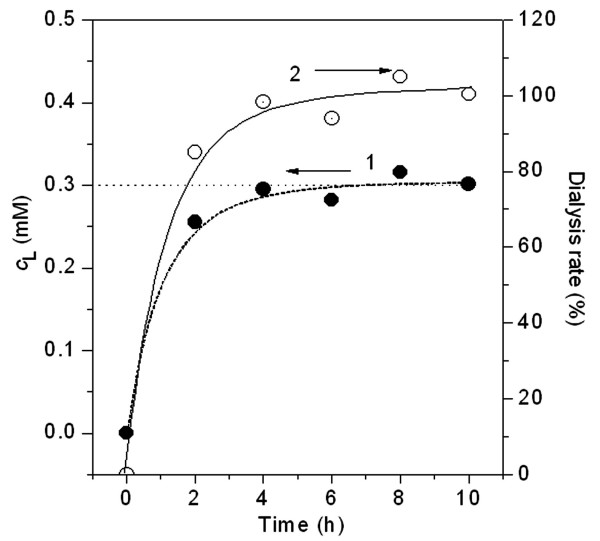
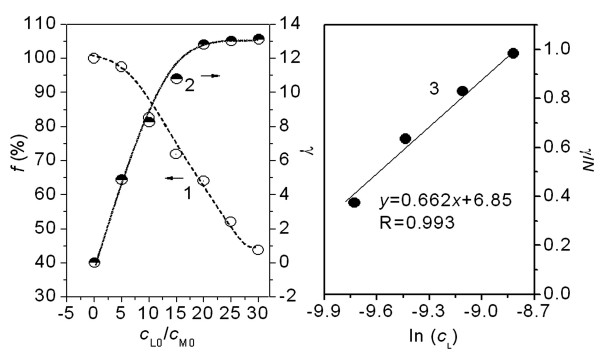
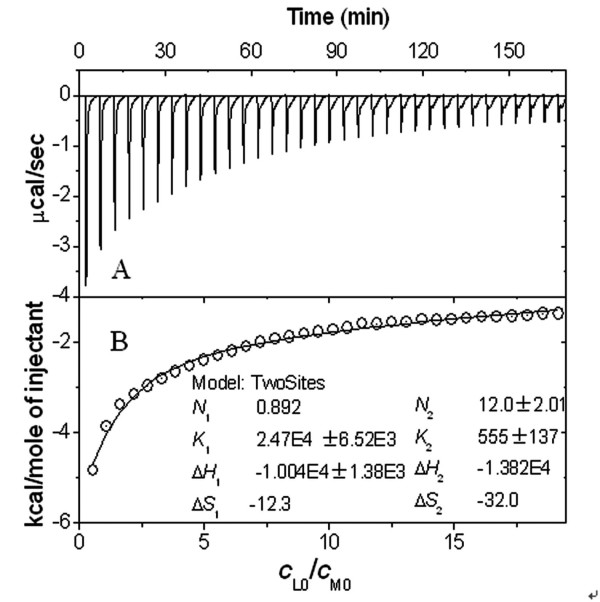
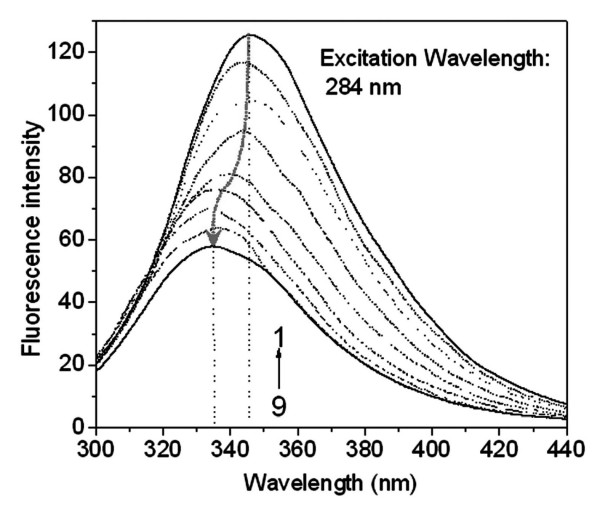
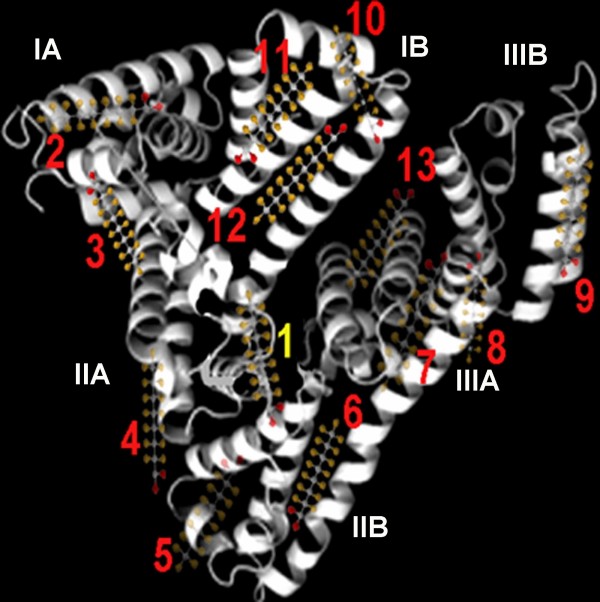
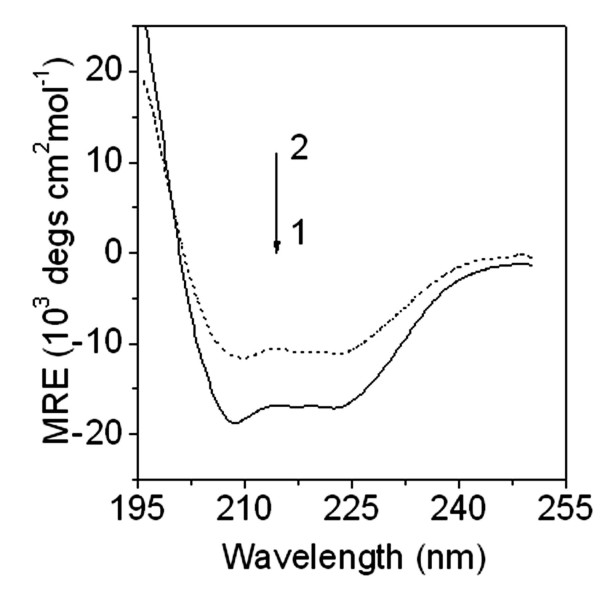
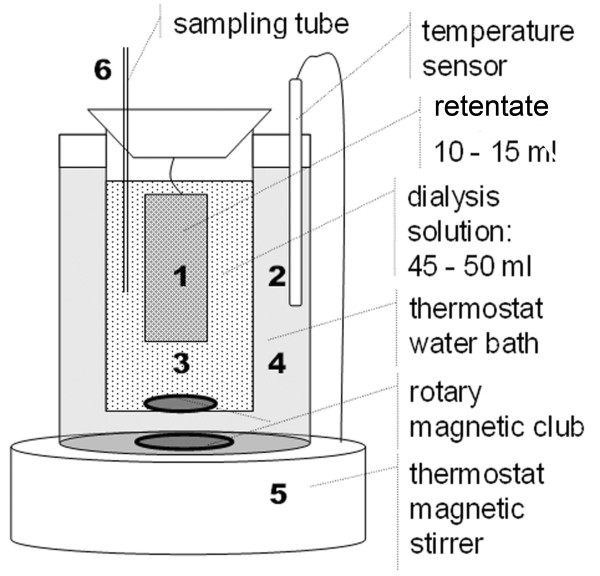
Background: Recently, perfluorooctanoic acid (PFOA) has become a significant issue in many aspects of environmental ecology, toxicology, pathology and life sciences because it may have serious effects on the endocrine, immune and nervous systems and can lead to embryonic deformities and other diseases. Human serum albumin (HSA) is the major protein component of blood plasma and is called a multifunctional plasma carrier protein because of its ability to bind an unusually broad spectrum of ligands. Results: The interaction of PFOA with HSA was investigated in the normal physiological condition by equilibrium dialysis, fluorospectrometry, isothermal titration calorimetry (ITC) and circular dichroism (CD). The non-covalent interaction is resulted from hydrogen bond, van der Waals force and hydrophobic stack. PFOA binding to HSA accorded with two-step binding model with the saturation binding numbers of PFOA, only 1 in the hydrophobic intracavity of HSA and 12 on the exposed outer surface. The interaction of PFOA with HSA is spontaneous and results in change of HSA conformation. The possible binding sites were speculated. Conclusion: The present work suggested a characterization method for the intermolecular weak interaction. It is potentially useful for elucidating the toxigenicity of perfluorochemicals when combined with biomolecular function effect, transmembrane transport, toxicological testing and the other experiments.
Overview
The claims and statistics of this paper haven’t been checked yet.
Free: it reads the open-access text and checks the first 5 claims that cite a source we can check. Create a free account to check every claim.
Integrity signals
Registry
Cites
Statistics
Figures
Verification
Claims the paper makes
The claims and statistics of this paper haven’t been checked yet.
Free: it reads the open-access text and checks the first 5 claims that cite a source we can check. Create a free account to check every claim.
Claims other papers make about this one
Each is checked against this paper’s own text: does it say what the citing paper says it does?
The cited source says what the claim attributes to it.
In the citing paper
“Several studies reported that PFCAs and PFSAs bind with serum albumin proteins noncovalently through specific site binding or non-specific surface adsorption [15,16,17,18].”
From In-Vitro and In-Silico Assessment of Per- and Polyfluoroalkyl Substances (PFAS) in Aqueous Film-Forming Foam (AFFF) Binding to Human Serum Albumin (2021) · cites this paper as [16]
Self-check
Percentages, sums and reported differences re-computed from the paper’s own numbers.
The self-check needs the paper’s full text.
Citations
Cites
Atomic structure and chemistry of human serum albumin
He, X. M., & Carter, D. C. (1992) · Nature · doi:10.1038/358209a0 · Cited by 3,824
Molecular aspects of ligand binding to serum albumin.
Kragh-Hansen, U. (1981) · Pharmacological Reviews · doi:10.1016/s0031-6997(25)06849-8 · Cited by 1,544 · cited 1×
“Binding to HSA facilitates their transport throughout the circulation [15].”
BackgroundBhattacharya, A. A., Grüne, T., & Curry, S. (2000) · Journal of Molecular Biology · doi:10.1006/jmbi.2000.4158 · Cited by 905 · cited 3×
“HSA is consisted of three homologous all α-helical domains (I–III), each divided into two subdomains [14].”
BackgroundInfluentialThe Developmental Toxicity of Perfluoroalkyl Acids and Their Derivatives
Lau, C., Butenhoff, J. L., & Rogers, J. M. (2004) · Toxicology and Applied Pharmacology · doi:10.1016/j.taap.2003.11.031 · Cited by 867 · cited 1×
“water [2], biological bodies [3], human tissues [4] and foods [5].”
BackgroundIncardona, J. P., Collier, T. K., & Scholz, N. L. (2004) · Toxicology and Applied Pharmacology · doi:10.1016/j.taap.2003.11.026 · Cited by 833 · cited 1×
“biomolecular function effect [29], cell membrane transport of contaminant [30] and toxicological testing [ 31 ], it is more helpful for elucidating the toxigenicity of perfluorochemicals.”
BackgroundKärrman, A., Ericson, I., van Bavel, B., Darnerud, P. O., Aune, M., Glynn, A., Lignell, S., & Lindström, G. (2007) · Environmental Health Perspectives · doi:10.1289/ehp.9491 · Cited by 470
Calafat, A. M., Kuklenyik, Z., Reidy, J. A., Caudill, S. P., Tully, J. S., & Needham, L. L. (2007) · Environmental Science & Technology · doi:10.1021/es062686m · Cited by 454 · cited 1×
“Sampling studies have revealed the presence of PFOA in the bloods of over 90% of US residents [ 6 ].”
BackgroundBinding of Perfluorooctanoic Acid to Rat and Human Plasma Proteins
Han, X., Snow, T. A., Kemper, R. A., & Jepson, G. W. (2003) · Chemical Research in Toxicology · doi:10.1021/tx034005w · Cited by 408 · cited 1×
“Bindings of PFOA to biomacromolecular such as rat and Human plasma proteins [20], rat liver-form and kidneyform alpha 2u-globulins [21], have been investigated at room temperature.”
BackgroundAbbott, B. D., Wolf, C. J., Schmid, J. E., Das, K. P., Zehr, R. D., Helfant, L., Nakayama, S., Lindstrom, A. B., Strynar, M. J., & Lau, C. (2007) · Toxicological Sciences · doi:10.1093/toxsci/kfm110 · Cited by 263 · cited 1×
“It may have serious effects on the endocrine, immune and nervous systems and it can be delivered to the fetus through the umbilical cord and can accumulate [7].”
BackgroundMartin, M. T., Brennan, R. J., Hu, W., Ayanoglu, E., Lau, C., Ren, H., Wood, C. R., Corton, J. C., Kavlock, R. J., & Dix, D. J. (2007) · Toxicological Sciences · doi:10.1093/toxsci/kfm065 · Cited by 249 · cited 1×
“It can also cause cancers of the liver, testis, pancreatic and mammary glands [8], and can lead to embryonic deformities and other diseases [9,10].”
Background
Cited by
Bioaccumulation of Perfluorinated Alkyl Acids: Observations and Models
Ng, C. A., & Hungerbühler, K. (2014) · Environmental Science & Technology · doi:10.1021/es404008g · Cited by 393
Drug–protein binding: a critical review of analytical tools
Vuignier, K., Schappler, J., Veuthey, J.-L., Carrupt, P.-A., & Martel, S. (2010) · Analytical and Bioanalytical Chemistry · doi:10.1007/s00216-010-3737-1 · Cited by 389
“interaction with a defined target (strong interaction), and only few have reported interactions of smallmolecular-weight drugs with plasma proteins (polyphenol– BSA [118], Ni–HSA [119], penicillins–HSA [94], surfactants–HSA [120]).”
BackgroundRenal elimination of perfluorocarboxylates (PFCAs)
Han, X., Nabb, D. L., Russell, M. H., Kennedy, G. L., & Rickard, R. W. (2012) · Chemical Research in Toxicology · doi:10.1021/tx200363w · Cited by 250
Gao, K., Zhuang, T., Liu, X., Fu, J., Zhang, J., Fu, J., Wang, L., Zhang, A., Liang, Y., Song, M., et al. (2019) · Environmental Science & Technology · doi:10.1021/acs.est.9b00715 · Cited by 231
Beesoon, S., & Martin, J. W. (2015) · Environmental Science & Technology · doi:10.1021/es505399w · Cited by 223
Bischel, H. N., MacManus-Spencer, L. A., Zhang, C., & Luthy, R. G. (2011) · Environmental Toxicology and Chemistry · doi:10.1002/etc.647 · Cited by 182
Gao, Y., Fu, J., Cao, H., Wang, Y., Zhang, A., Liang, Y., Wang, T., Zhao, C., & Jiang, G. (2015) · Environmental Science & Technology · doi:10.1021/acs.est.5b00778 · Cited by 178
Qin, P., Liu, R., Pan, X., Fang, X., & Mou, Y. (2010) · Journal of Agricultural and Food Chemistry · doi:10.1021/jf100412q · Cited by 167
Lu, Y., Meng, L., Ma, D., Cao, H., Liang, Y., Liu, H., Wang, Y., & Jiang, G. (2021) · Environmental Pollution · doi:10.1016/j.envpol.2021.116460 · Cited by 129
Ng, C. A., & Hungerbuehler, K. (2015) · Environmental Science & Technology · doi:10.1021/acs.est.5b03000 · Cited by 125
Compagni, R. D., Gabrielli, M., Polesel, F., Turolla, A., Trapp, S., Vezzaro, L., & Antonelli, M. (2019) · Chemosphere · doi:10.1016/j.chemosphere.2019.125185 · Cited by 121
Perfluorooctanoic Acid Exposure and Thyroid Disease in Community and Worker Cohorts
Winquist, A., & Steenland, K. (2014) · Epidemiology · doi:10.1097/ede.0000000000000040 · Cited by 110
“Smoked and quit 8,899 (31) 1,297 (35) 10,196 (32)”
Specific Accumulation of Lipid Droplets in Hepatocyte Nuclei of PFOA-exposed BALB/c Mice
Wang, L., Wang, Y., Liang, Y., Li, J., Liu, Y., Zhang, J., Zhang, A., Fu, J., & Jiang, G. (2013) · Scientific Reports · doi:10.1038/srep02174 · Cited by 98
Zhong, W., Zhang, L., Cui, Y., Chen, M., & Zhu, L. (2019) · Science of The Total Environment · doi:10.1016/j.scitotenv.2018.08.099 · Cited by 98
Chen, H., He, P., Rao, H., Wang, F., Liu, H., & Yao, J. (2014) · Chemosphere · doi:10.1016/j.chemosphere.2014.11.040 · Cited by 96
Turner, B. D., Sloan, S. W., & Currell, G. R. (2019) · Chemosphere · doi:10.1016/j.chemosphere.2019.04.139 · Cited by 92
Khazaee, M., Christie, E., Cheng, W., Michalsen, M., Field, J., & Ng, C. (2021) · Toxics · doi:10.3390/toxics9030045 · Cited by 79
Jain, R. B., & Ducatman, A. (2019) · Environmental Research · doi:10.1016/j.envres.2019.04.034 · Cited by 88
Alesio, J. L., Slitt, A., & Bothun, G. D. (2022) · Chemosphere · doi:10.1016/j.chemosphere.2021.131979 · Cited by 91
Survey of the year 2009: applications of isothermal titration calorimetry
Falconer, R. J., & Collins, B. M. (2010) · Journal of Molecular Recognition · doi:10.1002/jmr.1073 · Cited by 89
Cheng, W., & Ng, C. A. (2017) · Environmental Science & Technology · doi:10.1021/acs.est.7b02602 · Cited by 81
Chi, Q., Li, Z., Huang, J., Ma, J., & Wang, X. (2018) · Chemosphere · doi:10.1016/j.chemosphere.2018.01.152 · Cited by 87
Jackson, T. W., Scheibly, C. M., Polera, M. E., & Belcher, S. M. (2021) · Environmental Science & Technology · doi:10.1021/acs.est.1c01200 · Cited by 87
Albumin Inhibits Pseudomonas aeruginosa Quorum Sensing and Alters Polymicrobial Interactions
Smith, A. C., Rice, A. M., Sutton, B., Gabrilska, R. A., Wessel, A. K., Whiteley, M., & Rumbaugh, K. P. (2017) · Infection and Immunity · doi:10.1128/iai.00116-17 · Cited by 83
Tan, X., Sawczyk, M., Chang, Y.-X., Wang, Y., Usman, A., Fu, C., Král, P., Peng, H., Zhang, C., & Whittaker, A. K. (2022) · Macromolecules · doi:10.1021/acs.macromol.1c02435 · Cited by 82
Petro, E. M. L., D’Hollander, W., Covaci, A., Bervoets, L., Fransén, E., Neubourg, D. D., Pauw, I. D., Leroy, J., Jorssen, E. P. A., & Bols, P. E. J. (2014) · The Science of The Total Environment · doi:10.1016/j.scitotenv.2014.07.028 · Cited by 82
Umbilical cord blood levels of perfluoroalkyl acids and polybrominated flame retardants
Arbuckle, T. E., Kubwabo, C., WALKER, M. C., Davis, K. A., Lalonde, K., Kosarac, I., Wen, S. W., & Arnold, D. L. (2012) · International Journal of Hygiene and Environmental Health · doi:10.1016/j.ijheh.2012.03.004 · Cited by 82
Unveiling the binding mode of perfluorooctanoic acid to human serum albumin
Maso, L., Trande, M., Liberi, S., Moro, G., Daems, E., Linciano, S., Sobott, F., Covaceuszach, S., Cassetta, A., Fasolato, S., et al. (2021) · Protein Science · doi:10.1002/pro.4036 · Cited by 75
Allendorf, F., Berger, U., Goss, K.-U., & Ulrich, N. (2019) · Environmental Science: Processes & Impacts · doi:10.1039/c9em00290a · Cited by 74
Yi, S., Zhu, L., & Mabury, S. A. (2020) · Environmental Science & Technology · doi:10.1021/acs.est.9b05258 · Cited by 60
Liu, X., Fang, M., Xu, F., & Chen, D. (2019) · TrAC Trends in Analytical Chemistry · doi:10.1016/j.trac.2019.05.017 · Cited by 63
Worley, R. R., Yang, X., & Fisher, J. (2017) · Toxicology and Applied Pharmacology · doi:10.1016/j.taap.2017.07.001 · Cited by 56
“PFOA is readily absorbed in the gastrointestinal tract (Butenhoff et al., 2004b; Andersen et al., 2006), highly bound to human serum albumin (Wu et al., 2009; Salvalaglio et al., 2010), not metabolized (Ophaug and Singer, 1980; Butenhoff et al., 2004a; Kennedy et al., 2004; Fasano et al., 2006),…”
Wan, C., Han, R., Liu, L., Zhang, F., Li, F., Xiang, M., & Ding, W. (2016) · Toxicology and Applied Pharmacology · doi:10.1016/j.taap.2016.01.023 · Cited by 60
“Data in humans and animals demonstrate ready absorption of PFOS and distribution of the chemical throughout the body by noncovalent binding to serum albumin (Wu et al., 2009).”
BackgroundSheng, N., Wang, J., Guo, Y., Wang, J., & Dai, J. (2020) · Chemical Research in Toxicology · doi:10.1021/acs.chemrestox.0c00075 · Cited by 58
Sakolish, C., Chen, Z., Dalaijamts, C., Mitra, K., Liu, Y., Fulton, T., Wade, T. L., Kelly, E. J., Rusyn, I., & Chiu, W. A. (2020) · Toxicology in Vitro · doi:10.1016/j.tiv.2019.104752 · Cited by 51
Qureshi, M. A., & Javed, S. (2022) · Scientific Reports · doi:10.1038/s41598-022-06375-5 · Cited by 55
Woskie, S. R., Gore, R., & Steenland, K. (2012) · Annals of Occupational Hygiene · doi:10.1093/annhyg/mes023 · Cited by 50
“PFOA binds to serum proteins (Han et al., 2003; Jones et al., 2003; Wu et al., 2009).”
Li, W., Hu, Y., & Bischel, H. N. (2021) · Toxics · doi:10.3390/toxics9030063 · Cited by 53
Potential toxicity of sulfanilamide antibiotic: Binding of sulfamethazine to human serum albumin
Chen, J., Zhou, X., Zhang, Y., & Gao, H. (2012) · The Science of The Total Environment · doi:10.1016/j.scitotenv.2012.06.003 · Cited by 50
Self-citationCrisalli, A. M., Cai, A., & Cho, B. P. (2023) · Chemical Research in Toxicology · doi:10.1021/acs.chemrestox.3c00011 · Cited by 40
Fei, X., Song, C., & Gao, H. (2010) · Journal of Hazardous Materials · doi:10.1016/j.jhazmat.2010.08.007 · Cited by 40
“The mechanisms of toxicty of exogenous chemicals have been elucidated by many studies, hich have often focused on characterizing interactions with taret molecules [1–5], errors in protein expression [6], alteration of ene sequences [7] and dose–effect relationships [8].”
BackgroundSelf-citationInteraction of human serum albumin with uremic toxins: a thermodynamic study
Yu, S., Schuchardt, M., Tölle, M., van der Giet, M., Zidek, W., Dzubiella, J., & Ballauff, M. (2017) · RSC Advances · doi:10.1039/c7ra02838e · Cited by 36
Effects of biofilms on the retention and transport of PFOA in saturated porous media
Fu, J., Gao, B., Xu, H., Hao, S., Ren, J., Wu, J., & Sun, Y. (2022) · Journal of Hazardous Materials · doi:10.1016/j.jhazmat.2022.130392 · Cited by 35
Potential enzyme toxicity of perfluorooctanoic acid
Wu, L., Chen, L., Song, C., Liu, X.-W., Deng, H., Gao, N., & Gao, H. (2008) · Amino Acids · doi:10.1007/s00726-008-0217-4 · Cited by 35
Self-citationRecent advances in CE analysis of antibiotics and its use as chiral selectors
Domínguez‐Vega, E., Pérez‐Fernández, V., Crego, A. L., García, M. Á., & Marina, M. L. (2013) · Electrophoresis · doi:10.1002/elps.201300347 · Cited by 34
Binding of serum albumin to perfluorooctanoic acid reduced cytotoxicity
Yang, Y.-D., Tian, R., & Lu, N. (2023) · The Science of The Total Environment · doi:10.1016/j.scitotenv.2023.162738 · Cited by 34
β-Cyclodextrin Reverses Binding of Perfluorooctanoic Acid to Human Serum Albumin
Weiss-Errico, M. J., Mikšovská, J., & Ο'Shea, K. Ε. (2018) · Chemical Research in Toxicology · doi:10.1021/acs.chemrestox.8b00002 · Cited by 30
Yadav, A., Vuković, L., & Narayan, M. (2024) · Journal of the American Chemical Society · doi:10.1021/jacs.4c02934 · Cited by 28
Qian, Y., Zhou, X., Chen, J., & Zhang, Y. (2012) · Molecules · doi:10.3390/molecules17066821 · Cited by 28
“Moreover, there is evidence of secondary structural change of HSA induced by its interaction with exogenous chemicals which will affect the physiological function of HSA [14].”
BackgroundMetabolism and Pharmacokinetics
Kudo, N. (2015) · Molecular and integrative toxicology · doi:10.1007/978-3-319-15518-0_6 · Cited by 28
“Some studies suggest that there are two groups of binding sites on serum albumin, namely, high affinity site and low affinity site (Wu et al. 2009; MacManus-Spencer et al. 2010; Bischel et al. 2010).”
BackgroundMethodInfluentialPFASs in the General Population
Kato, K., Ye, X., & Calafat, A. M. (2015) · Molecular and integrative toxicology · doi:10.1007/978-3-319-15518-0_3 · Cited by 29
Fluorinated Chemicals and the Impacts of Anthropogenic Use
Adams, D. E. C., & Halden, R. U. (2010) · doi:10.1021/bk-2010-1048.ch027 · Cited by 27
Kerger, B. D., Copeland, T. L., & DeCaprio, A. P. (2011) · Drug and Chemical Toxicology · doi:10.3109/01480545.2011.582502 · Cited by 24
“Finally, “reverse causation” hypotheses have been proposed, in which higher serum cholesterol/ triglyceride levels lead to higher serum PFOA, possibly via displacement of protein-bound PFOA from albumin and/or β-lipoprotein (Han et al., 2003; Olsen and Zobel, 2007; Chen and Guo, 2009; Wu et al., 2009).”
BackgroundChen, H., Wang, Q., Cai, Y., Yuan, R., Wang, F., & Zhou, B. (2020) · International Journal of Environmental Research and Public Health · doi:10.3390/ijerph17041319 · Cited by 23
“[40] reported that PFOA binding decreased the β-sheet content of HSA, but increased the α-helix content by 15%.”
BackgroundLiu, W., Lai, Y., Chan, H., Li, S., Lin, C., Liu, C.-K., Tsou, H., & Liu, T. (2018) · PLoS ONE · doi:10.1371/journal.pone.0200271 · Cited by 22
Starnes, H. M., Green, A. J., Reif, D. M., & Belcher, S. M. (2024) · Toxicological Sciences · doi:10.1093/toxsci/kfae124 · Cited by 21
“…studies, as a result of differences in methodologies and experimental conditions (Klevens and Ellenbogen 1954; Han et al. 2003; Chen and Guo 2009; Wu et al. 2009, 2024; Bischel et al. 2010; MacManus-Spencer et al. 2010; Allendorf et al. 2019; Chen et al. 2020; Jackson et al. 2021; Li et al.…”
Song, C., Gao, N., & Gao, H. (2010) · Molecular BioSystems · doi:10.1039/b921810f · Cited by 21
Self-citationPerfluoroalkane sulfonyl fluorides non-covalently bind to human serum albumin at Sudlow’s sites
Jin, Z., Chi, M., He, Q., Pan, Y., & Sun, C. (2018) · Toxicology Letters · doi:10.1016/j.toxlet.2018.11.001 · Cited by 20
Nilsson, S., Smurthwaite, K. S., Aylward, L. L., Kay, M. P., Toms, L.-M. L., King, L., Marrington, S., Kirk, M., Mueller, J. F., & Bräunig, J. (2022) · Environmental Research · doi:10.1016/j.envres.2022.114370 · Cited by 19
Orhan, Z., Yılmaz, M., Aydoğan, Ş., Taşkın, M., & İncekara, Ü. (2021) · Optik · doi:10.1016/j.ijleo.2021.167069 · Cited by 19
Chen, J., Zhou, X., Zhang, Y., Qian, Y., & Gao, H. (2012) · Amino Acids · doi:10.1007/s00726-012-1215-0 · Cited by 14
“All of the DH0 values were much less than 60 kcal/mol, so the acidic pharmaceuticals-HSA interactions were non-covalent (Wu et al. 2009).”
BackgroundInfluentialSelf-citationJain, R. B. (2020) · Environmental Pollution · doi:10.1016/j.envpol.2020.114458 · Cited by 13
Daems, E., Moro, G., Berghmans, H., Moretto, L. M., Dewilde, S., Angelini, A., Sobott, F., & Wael, K. D. (2021) · The Analyst · doi:10.1039/d0an02005b · Cited by 11
Huo, C., Zhao, Q., Liu, R., Li, X., He, F., Jing, M., Wan, J., & Zong, W. (2023) · Toxics · doi:10.3390/toxics11020136 · Cited by 10
“The value of ∆H was much less than 60 kcal m−1, indicating that the interaction between IND and SOD was non-covalent [46].”
BackgroundQin, C., Lu, Y.-X., Borch, T., Yang, L.-L., Li, Y.-W., Zhao, H.-M., Hu, X., Gao, Y., Xiang, L., Mo, C.-H., et al. (2022) · Journal of Agricultural and Food Chemistry · doi:10.1021/acs.jafc.2c04597 · Cited by 11
Integrated PBPK modelling for PFOA exposure and risk assessment
Karakoltzidis, A., Karakitsios, S., Gabriel, C., & Sarigiannis, D. A. (2025) · Environmental Research · doi:10.1016/j.envres.2025.121947 · Cited by 9
Good, S. L., Antwi-Boasiako, C., González-Alvarez, M. E., Buol, B. M., Baumgard, L. H., Keating, A. F., & Charbonnet, J. A. (2025) · Toxicological Sciences · doi:10.1093/toxsci/kfaf013 · Cited by 8
“PFOA electrostatically binds to specific sites on serum albumin, inducing conformational changes that can alter affinity for transported compounds, including nutrients and pharmaceuticals (Wu et al. 2009).”
Cheng, W., & Ng, C. A. (2021) · Chemical Research in Toxicology · doi:10.1021/acs.chemrestox.1c00193 · Cited by 8
Study on the binding interaction between perfluoroalkyl acids and DNA
Cao, J., Wei, Y., Cheng, Y., & Guo, L.-H. (2013) · Environmental Science and Pollution Research · doi:10.1007/s11356-013-1760-4 · Cited by 8
“Noncovalent interactions of PFOS with BSA alter its secondary conformation, and such changes inhibit the physiological function of BSA to transport vitamin B2 (Wu et al. 2009).”
Qin, C., Xiang, L., Wang, Y., Yu, P.-F., Meng, C., Li, Y.-W., Zhao, H.-M., Hu, X., Gao, Y., & Mo, C.-H. (2023) · The Science of The Total Environment · doi:10.1016/j.scitotenv.2023.167392 · Cited by 7
Lamichhane, H. B., Innes, E. S., & Arrigan, D. W. M. (2025) · Electrochimica Acta · doi:10.1016/j.electacta.2025.147182 · Cited by 5
The Impact of Forever Chemicals on Protein Structure and Function
Hasenoehrl, E. J., Kelly, W., Kwansa-Aidoo, K., Larson, J. D., Tokmina‐Lukaszewska, M., Sourab, R. D., Walker, R. A., & Bothner, B. B. (2026) · International Journal of Molecular Sciences · doi:10.3390/ijms27052265 · Cited by 4
“In the past two decades, numerous reports have confirmed that some PFAS bind to albumins [23,25,28,29,36,44–51].”
Starnes, H. M., & Belcher, S. M. (2026) · Journal of Xenobiotics · doi:10.3390/jox16020054 · Cited by 3
“Although equilibrium dialysis is simple and low-cost, equilibration is slow, typically requiring 4–120 h [35,55,73,74,76–79, 103, 105].”
Characterization of PFAS Binding Effects on Protein Structure Using Collision-Induced Unfolding
Kukoyi, E. O., & Lee, K. W. (2025) · Chemical Research in Toxicology · doi:10.1021/acs.chemrestox.5c00183 · Cited by 3
Lamichhane, H. B., & Arrigan, D. W. M. (2024) · The Analyst · doi:10.1039/d3an02164e · Cited by 3
Methods to Isolate Proteins from Detergent-containing Solutions for Proteome Analysis
Crowell, A. M. J. (2014) · DalSpace (Dalhousie University) · Cited by 2
Kanmani, S., & Kanmani, S. (2023) · Journal of Hazardous Toxic and Radioactive Waste · doi:10.1061/jhtrbp.hzeng-1219 · Cited by 2
Errico, M. J. (2018) · FIU - Digital Commons (Florida International University) · doi:10.25148/etd.fidc006877 · Cited by 2
Pham, P. C. (2023) · UNSWorks (UNSW Sydney) · doi:10.26190/unsworks/24959 · Cited by 2
Cheng, W. (2021) · D-Scholarship@Pitt (University of Pittsburgh) · Cited by 1
Native mass spectrometry approaches to study zinc-binding plasma proteins
Martin, E. M. (2026) · Warwick Research Archive Portal (University of Warwick) · doi:10.82444/warw.33934747
Erratum to: Study on the binding interaction between perfluoroalkyl acids and DNA
Cao, J., Wei, Y., Cheng, Y., & Guo, L. (2014) · Environmental Science and Pollution Research · doi:10.1007/s11356-014-3113-3
“Noncovalent interactions of PFOS with BSA alter its secondary conformation, and such changes inhibit the physiological function of BSA to transport vitamin B2 (Wu et al. 2009).”
BackgroundNowroozi, M., Noori, M. Y., & Mosawi, S. H. (2024) · Afghanistan Journal of Basic Medical Science · doi:10.62134/ajbms/v2.i2.khatamuni.5
Wu, X., Chen, Y., Zheng, L., Guo, H., Wang, L., Cai, R., & Du, E. (2026) · Journal of Molecular Structure · doi:10.1016/j.molstruc.2026.146413
19F NMR Reveals Multiple Modes of PFAS Binding to Human Serum Albumin and Bovine Beta-Lactoglobulin
Faber, K. A., Hanson, M., Pomerantz, W. C. K., & Arnold, W. A. (2026) · ACS ES&T Toxicology · doi:10.1021/acsesttox.6c00092
Metadata
- Authors
- Wu, L.-L., Gao, H.-W., Gao, N.-Y., Chen, F.-F., & Chen, L.
- Affiliations
- Tongji University (CN)
- Corresponding author
- Chen, Ling
- ORCID
- Chen, Ling
- Venue
- BMC Structural Biology
- Published
- 2009-05-14
- Volume
- 9
- Issue
- 1
- Pages
- 31-31
- ISSN
- 1472-6807 (ISSN-L)
- PMC
- PMC2688008
- OpenAlex
- W2123206621
- Cited by
- 81
- References
- 33
- Citations by year
- 2026: 2 · 2025: 4 · 2024: 3 · 2023: 7 · 2022: 5 · 2021: 9 · 2020: 3 · 2019: 7 · 2018: 6 · 2017: 4 · 2016: 1 · 2015: 5 · 2014: 7 · 2013: 3 · 2012: 5
- FWCI
- 1.88
- Type
- journal article
- Language
- en
- Open access
- hybrid
- doi.org
- Licence
- cc-by
- Locations
- BMC Structural Biology (publishedVersion, cc-by)
- Europe PMC (PubMed Central) (publishedVersion, cc-by)
- PubMed Central (publishedVersion, cc-by)
- PubMed (publishedVersion)
- Funders
- University of Science and Technology of China
- Topics
- Life Sciences › Biochemistry, Genetics and Molecular Biology › Molecular Biology › Protein Interaction Studies and Fluorescence Analysis
- Physical Sciences › Environmental Science › Environmental Chemistry › Per- and polyfluoroalkyl substances research
- Life Sciences › Biochemistry, Genetics and Molecular Biology › Molecular Biology › Protein Structure and Dynamics
- Keywords
- perfluorooctanoic acid, human serum albumin, protein-ligand binding, binding sites, protein conformational change, non-covalent interactions, hydrophobic stacking, binding isotherms, endocrine disruption
- MeSH terms
- Binding Sites, Caprylates, Fluorocarbons, Humans, Protein Binding, Serum Albumin
About these checks
Registry, retraction, Cites and statistics results are computed, not judged, with one exception: a printed reference that no index lists is read once by a model before it counts as a citation error. Claims are extracted by a model and kept only when their quote appears verbatim in the text; each cited source is then checked, with a model’s help, for whether it says what the claim relies on. Those verdicts can be wrong — read the claim’s quote and the cited source before relying on one.
Statistics and arithmetic are recomputed, not judged.
Confidence bands are shown only for fields calibrated on our annotated test set. None is calibrated yet, so no band is shown.
What counts as a claim ›How we measure confidence ›How we check this ›
Are you an author, or do you see a problem with this page? Request a review
Data sources
Bibliographic data: Semantic Scholar, OpenAlex, Crossref.
Contains information from the Semantic Scholar Academic Graph Datasets, made available under the ODC Attribution License (ODC-BY 1.0).
Semantic Scholar’s data is described in: Kinney, R., et al. (2023). The Semantic Scholar Open Data Platform. arXiv:2301.10140.
